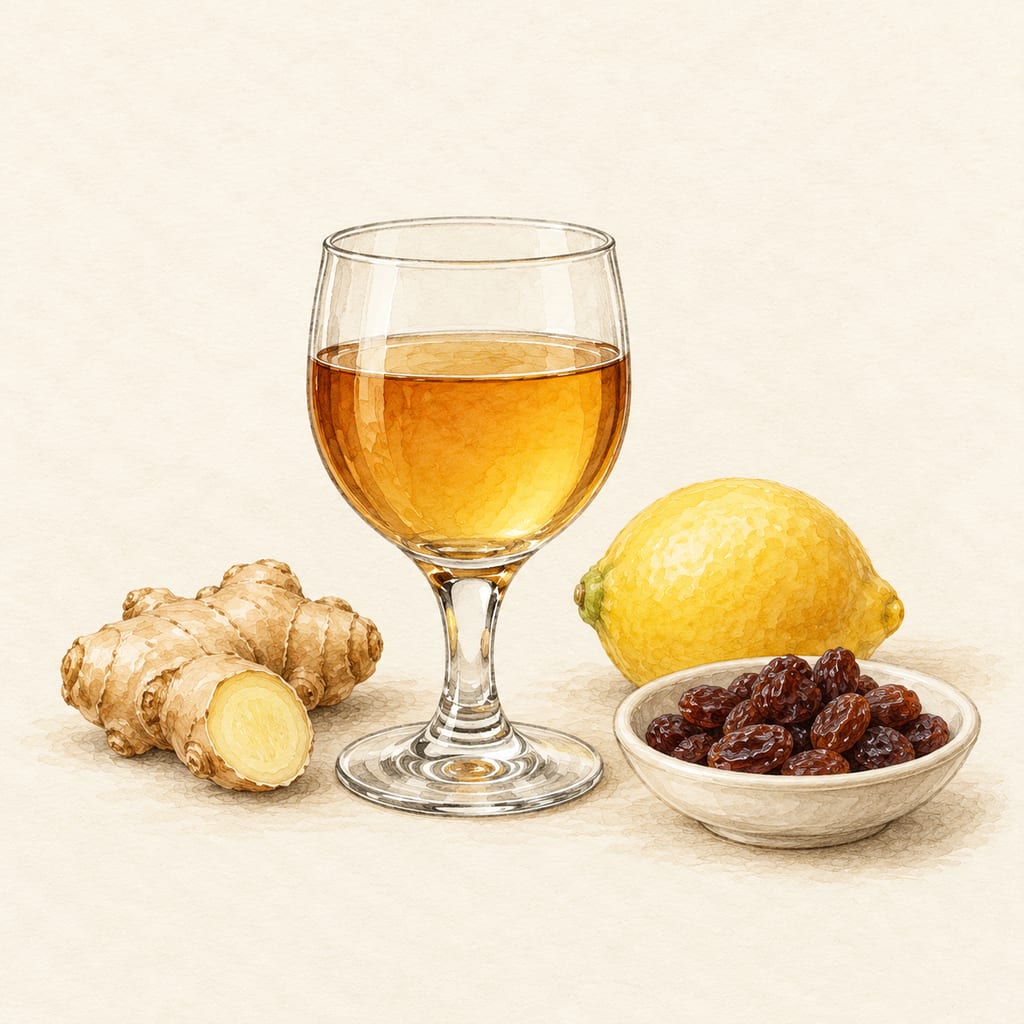
Ginger wine, cask-matured on raisins
A Victorian household wine of boiled sugar, lemon and bruised ginger, worked on raisins in a cask for a fortnight and finished with brandy, made nine gallons at a time.
 FermenteaWhere food goes to change
Modern method
Ginger beer
A one-liter teaching recipe ferments bruised ginger, lemon, sugar and cream of tartar with measured baker’s or ale yeast, then conditions the drink briefly in PET bottles before refrigeration.
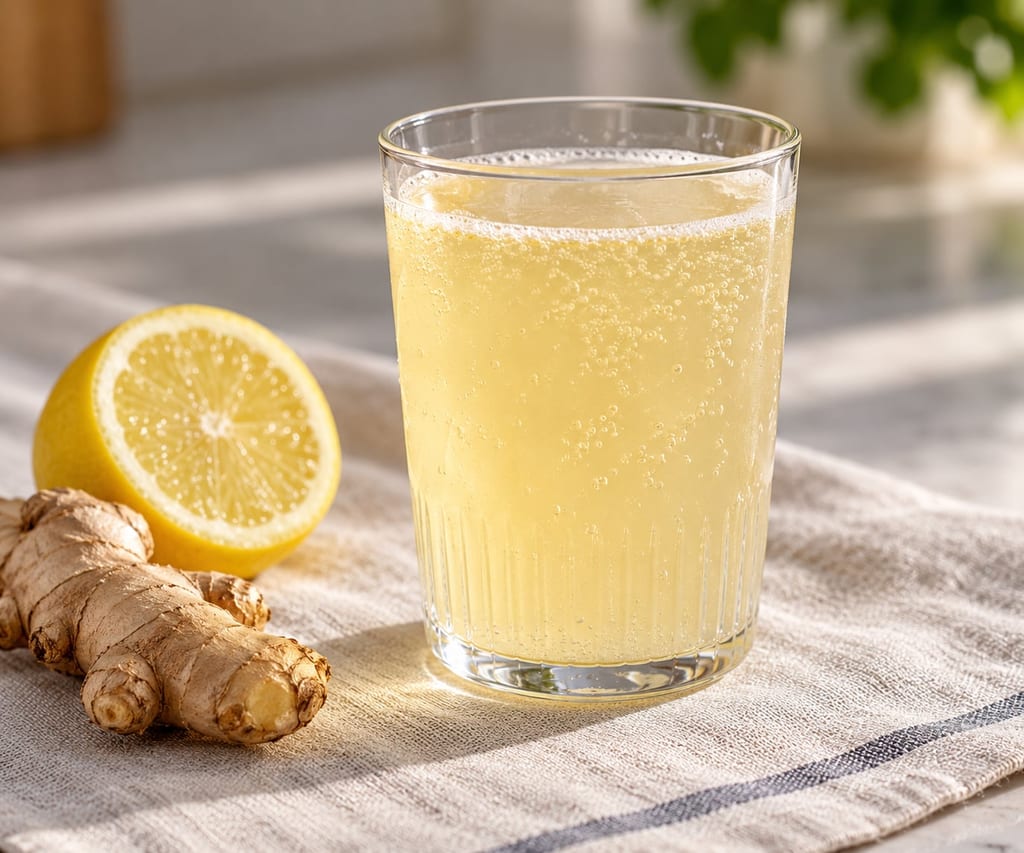
Ginger beer is a drink made from ginger, sugar and water, traditionally involving fermentation and often flavoured with citrus or other spices.
Modern commercial ginger beer varies enormously. Some products are simply ginger-flavoured carbonated soft drinks. Others are brewed using yeast, mixed cultures or conventional brewing processes.
This recipe preserves a specific British educational preparation published in 2008 by the National Centre for Biotechnology Education at the University of Reading.
It deliberately uses ordinary baker's yeast or dried ale yeast rather than the traditional mixed microbial culture known as a ginger beer plant.
The result is a relatively simple way of demonstrating fermentation, carbonation and the effects of ingredients on microorganisms.
It is not an attempt to reconstruct a precise eighteenth-century recipe.
The quantity of yeast, controlled cooling stage and use of plastic bottles are features of the modern teaching method.
Ginger beer developed in England during the eighteenth century.
Its commercial growth was closely tied to developments in bottled drinks and the availability of containers able to withstand carbonation.
Strong earthenware bottles became important because they could retain liquid and gas.
Bristol-glazed stoneware was particularly suitable for transporting bottled fermented beverages.
The drink subsequently became a major British commercial product and was exported overseas.
An important regulatory milestone occurred in 1855, when British excise regulations imposed an alcohol limit of 2% for the relevant drink category.
By the late nineteenth century, ginger beer was part of a much wider British culture of lightly fermented drinks.
Commercial brewers, street sellers and household producers all participated in its production.
By 1935, more than 3,000 ginger-beer manufacturers were reported in the United Kingdom.
The eventual spread of industrial soft-drink carbonation helped replace some traditional fermentation methods with manufactured carbonated beverages.
This history helps explain why the modern phrase ginger beer does not reliably identify a fermented product.
A can of ginger-flavoured carbonated soda and a live yeast-fermented ginger beer may taste similar, but their manufacturing processes are fundamentally different.
Use either the measured dried yeast or the fresh yeast alternative, not both.
The original source specifies approximately 130 g ginger after peeling when starting with 150 g fresh ginger.
Additional spices are mentioned as optional variations but are not part of the core measured formula.
Ginger, Zingiber officinale, is a tropical plant cultivated for its underground rhizome.
Although it is commonly called ginger root, the culinary portion is botanically a rhizome rather than a true root.
Fresh ginger contains aromatic terpenes, pungent gingerols, starch and other compounds.
The pungency is different from that of chilli.
Ginger's characteristic heat is associated with gingerols and related compounds, while chillies depend principally on capsaicinoids.
Processing changes ginger chemistry.
Drying can promote the formation of shogaols, while heating can alter the relative concentration of gingerols and other compounds.
A ginger beer made from freshly bruised slices will therefore differ from one produced using dried ginger powder or cooked ginger syrup.
The original method deliberately uses fresh ginger.
The lemon supplies citric acid and aromatic oils from its zest.
Cream of tartar is potassium hydrogen tartrate, an acidic salt associated with tartaric acid.
Together they influence the initial acidity of the drink.
Acidity contributes flavour and can inhibit certain microorganisms.
However, these ingredients do not eliminate every microbial hazard.
Yeast can tolerate moderately acidic environments, allowing fermentation to proceed even when some bacteria are inhibited.
The exact initial pH is not provided in the recipe.
No final pH measurement is reported either.
The mixture's sourness should not be mistaken for a validated microbiological specification.
Prepare a sharp knife, chopping board, lemon zester, rolling pin, clean plastic bag, large heat-safe bowl or jug, thermometer, clean cloth, sieve, funnel and plastic beverage bottles.
The bottles specified are food-grade PET plastic.
A suitable food-use sanitising solution is also included.
The original teaching protocol explicitly warns against glass bottles.
This is not a cosmetic preference: the bottle conditioning stage can produce substantial carbon dioxide pressure.
Peel 150 g fresh ginger.
Cut it into slices approximately 3–5 mm thick.
Place the slices in a strong, clean plastic bag.
Bruise them thoroughly with a rolling pin.
Bruising ruptures plant tissues and increases access to aromatic compounds.
It allows hot water to extract more flavour without requiring the ginger to be ground into a fine pulp.
Remove the lemon zest.
Squeeze the juice.
Place the ginger, zest and juice in a large heat-safe bowl or jug.
Choose a clean vessel with enough space for stirring and subsequent yeast activity.
Add 140 g sugar and 4 g cream of tartar.
The recipe permits brown or white sugar.
These ingredients dissolve in the hot-water stage.
Boil 1 litre water.
Carefully pour it over the ginger and other ingredients.
Stir.
The hot liquid extracts flavour, dissolves the sugar and changes the thermal conditions of the raw ingredients.
It is not intended as a complete sterilisation of the entire process.
Cover with a clean cloth.
Allow the mixture to cool to 25–30°C.
The documented estimate is 60–90 minutes.
Use a thermometer rather than estimating the temperature solely by touching the vessel.
Adding yeast to excessively hot liquid can damage or kill it.
While the liquid cools, clean and sanitise food-grade PET bottles.
Follow the sanitiser's instructions and rinse where required.
Cleaning removes visible soil and deposits; sanitation reduces microbial contamination.
One does not replace the other.
Add 4 g dried baker's or ale yeast, or 8 g fresh yeast, to the cooled ginger mixture.
Stir until the yeast is dispersed.
Cover the vessel again with a clean cloth.
Leave in a warm place for 24 hours.
The source does not give an exact numeric temperature for this first stage.
Yeast metabolises available sugars and produces carbon dioxide and ethanol.
The liquid may become slightly cloudy or develop surface activity.
After the initial fermentation, remove accumulated yeast from the surface where necessary.
Leave the heavy sediment behind when transferring the liquid.
Strain the ginger beer into the prepared PET bottles.
Leave 3–5 cm headspace.
The stated headspace provides room for gas and liquid movement but does not guarantee a safe pressure.
Allow fermentation to continue at approximately 21°C for no more than 48 hours.
This is the most important controlled timing in the recipe.
Carbon dioxide accumulates during this period.
The original protocol specifically warns that excessive pressure can make bottles burst.
Move the bottles to the refrigerator within the stated maximum conditioning period.
Consume within six days, following the original educational method.
Cold storage slows yeast activity, but viable yeast may remain.
The method has not been validated to guarantee a particular ABV or pressure.
The main organism is ordinarily Saccharomyces cerevisiae.
Baker's yeast metabolises sugars through glycolysis and alcoholic fermentation.
The principal products include ethanol and carbon dioxide.
The drink becomes carbonated when carbon dioxide dissolves into the liquid under pressure.
Fermentation may also generate smaller quantities of glycerol, organic acids and flavour-active compounds.
However, this recipe is not designed to develop the same complex microbial ecosystem as a ginger beer plant.
It uses a comparatively large measured dose of yeast to establish fermentation quickly.
Other microorganisms may enter with ingredients or equipment, but they are not intentional components of the formula.
The relatively acidic starting liquid and the yeast inoculum help shape the competitive environment.
Neither guarantees sterility.
Historically, some ginger beer was fermented using a mixed culture called the ginger beer plant, sometimes associated with the name beeswine.
This is not simply a collection of ginger slices.
It is a microbial association containing yeasts and bacteria.
The culture was studied by H. Marshall Ward, whose substantial investigation appeared in 1892.
The historical ginger beer plant has been described as containing a yeast and a lactic-acid bacterium in a stable association.
Scientific names used in historical and modern descriptions can differ because microbial taxonomy has changed.
A genuine mixed culture can produce a different balance of fermentation metabolites from ordinary baker's yeast alone.
It may contribute lactic acid as well as ethanol and carbon dioxide.
The present educational recipe deliberately avoids requiring that specialised culture.
These two processes should remain separate variants within the ginger beer family, not be described as identical brewing methods.
Ginger's pungency is not produced entirely by fermentation.
Much of it comes from compounds already present in the rhizome.
Bruising increases extraction.
Hot water dissolves and disperses flavour compounds.
Fermentation then contributes acidity, dissolved gas and additional aroma.
The resulting sensation combines the chemical heat of ginger with the physical bite of carbonation.
Lemon acidity adds another dimension.
This explains why a ginger beer can have considerable bite without containing chilli.
The original educational article also discusses the relative pungency of gingerols, shogaols, zingerone and capsaicin.
Those comparisons help distinguish ginger from other pungent ingredients but should not be interpreted as exact predictions of how hot a particular drink will taste.
British ginger beer recipes can include juniper, liquorice, chilli, vanilla, cardamom, cloves, fennel or other aromatics.
Some use grated ginger instead of bruised slices.
Others boil the ginger for longer before adding yeast.
Jamaican ginger beer commonly uses a different balance of spices and may use lime rather than lemon.
Not every Jamaican preparation is fermented; some are non-fermented ginger beverages.
Modern ginger bugs are another distinct family of wild microbial starters.
A ginger bug relies on microorganisms associated with ginger, sugar and the preparation environment.
Its population is not equivalent to the measured baker's yeast used here.
These versions may share a recognisable ginger-drink flavour while differing in fermentation chemistry, alcohol development and safety requirements.
Serve chilled.
Its sharp, sweet flavour works well with savoury food, particularly richly seasoned dishes where acidity and carbonation provide contrast.
Ginger beer can accompany sandwiches, grilled food, spicy dishes and snacks.
It is also used as a mixer, although the alcohol content of a fermented homemade version must not be assumed zero.
The fresh ginger character is strongest in a relatively young drink.
Longer fermentation may reduce sweetness and increase alcohol, but the original recipe does not permit indefinite fermentation.
Little gas develops: Yeast may have been damaged by hot liquid, or fermentation conditions may have been unsuitable.
The drink tastes too sweet: Sugar remains when fermentation is short. Do not extend bottle conditioning beyond the documented limit merely to reduce sweetness.
The PET bottle becomes extremely hard: This indicates substantial pressure and requires careful handling.
The liquid becomes cloudy: Yeast suspension can cause haze.
Sediment forms: Yeast and ginger particles may settle during refrigeration.
Visible mould or putrid odour: Reject the batch.
The drink tastes alcoholic: Ethanol production is expected, but flavour does not quantify ABV.
Do not use ordinary glass bottles for this educational method.
The source explicitly specifies plastic bottles because active fermentation generates pressure.
The bottle-conditioning period is limited to 48 hours near 21°C.
Refrigeration and consumption within six days are part of the documented safety instructions.
The recipe has no measured alcohol endpoint, and the original description of low alcohol must not be treated as proof that every batch remains below a particular percentage.
For demonstrations involving children, the possibility of alcohol production must be made clear.
The teaching recipe is modern. Ginger beer originated in England in the mid-18th century and has a documented British commercial history, but this formula is not presented as a historical recipe.
Yield 1 L before straining · Scaling: source batch only
The recipe continues fermenting after bottling and explicitly warns that pressure can make bottles explode.
Hazard sourceYeast ferments sugar, but this household method does not report an alcohol assay.
Hazard sourceUse the source-specified plastic PET bottles, limit the room-temperature bottle stage to 48 hours, refrigerate, and consume within the source's six-day period.
Control sourceDo not use glass bottles: the recipe source warns that fermentation pressure can make them explode.
The source describes the drink as low in alcohol but does not give a measured alcohol content; it is not established as alcohol-free.
The source does not give a measurable carbonation or alcohol endpoint. Follow its short bottle-conditioning and refrigeration schedule; time alone does not prove a specific alcohol level.
The source places ginger-beer's historical origin in England but this modern teaching formula is not claimed as an historic preparation.
A modern one-liter recipe published by a UK science-education resource; not a claim that this particular formula is traditional.
A Victorian household wine of boiled sugar, lemon and bruised ginger, worked on raisins in a cask for a fortnight and finished with brandy, made nine gallons at a time.
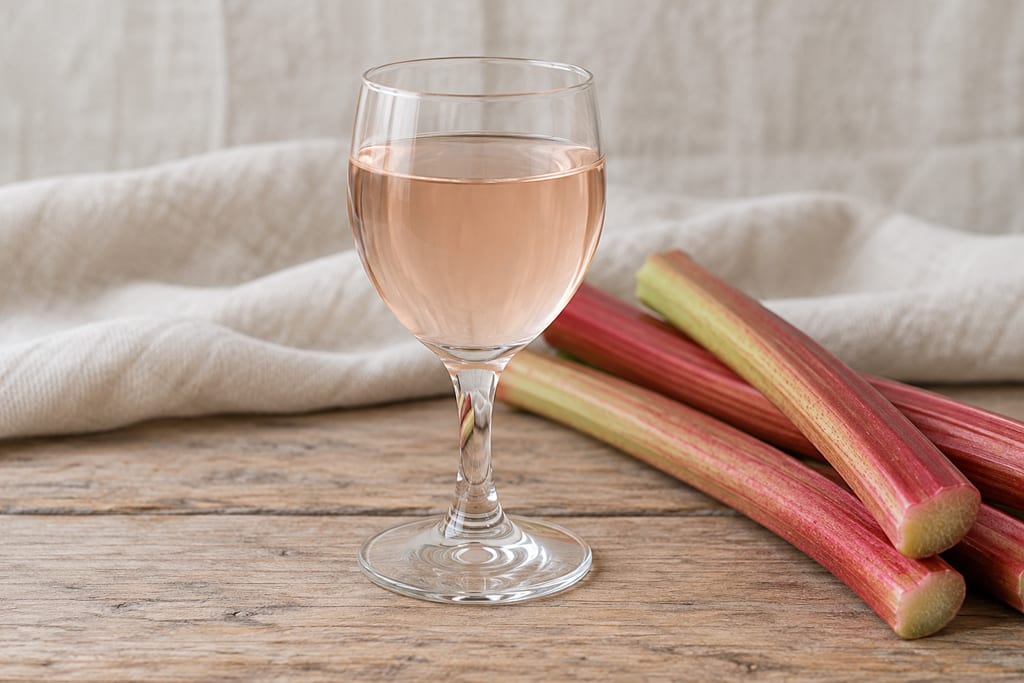
S. O. Beeton’s 1861 household book records rhubarb wine made with rhubarb pulp, water, loaf sugar, lemon rind and isinglass; its historical directions do not establish a safe modern fermentation endpoint.
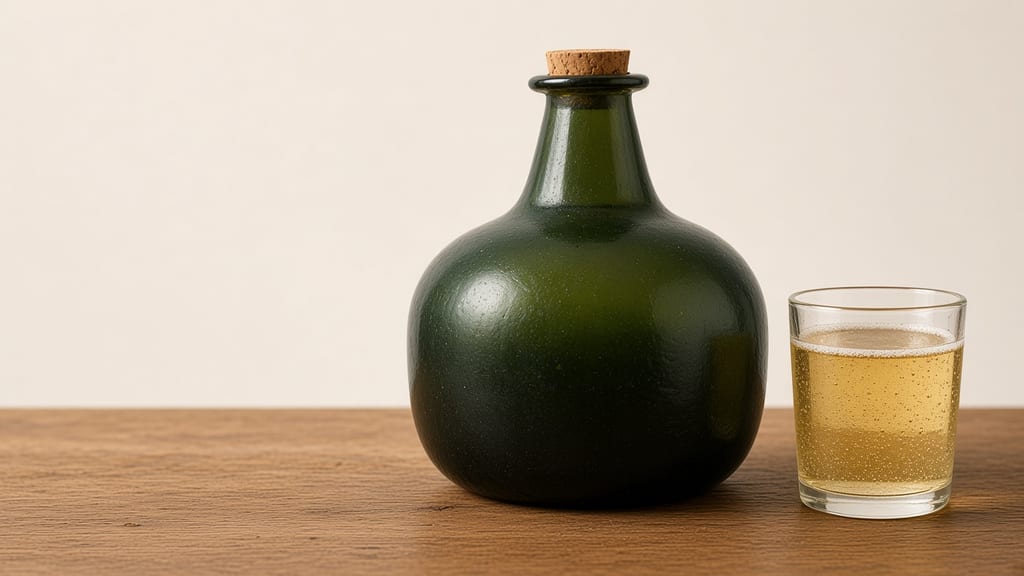
A lightly sparkling cider bottled before it had finished fermenting, as Sir Paul Neile described it in 1664, with a measured modern method for safe bottle conditioning.
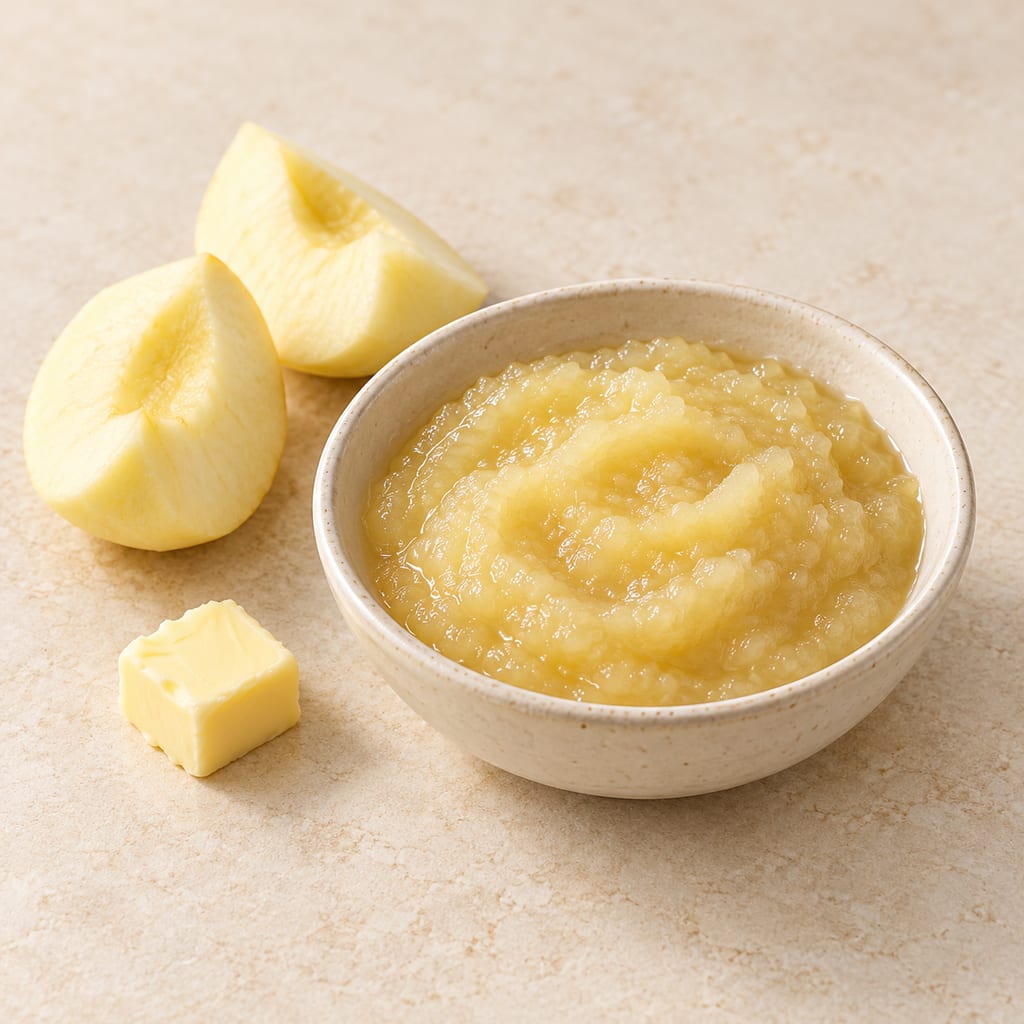
Apple sauce for goose and pork is a plain English accompaniment: cooked apples pulped with water, then sweetened with sugar and finished with a little butter.
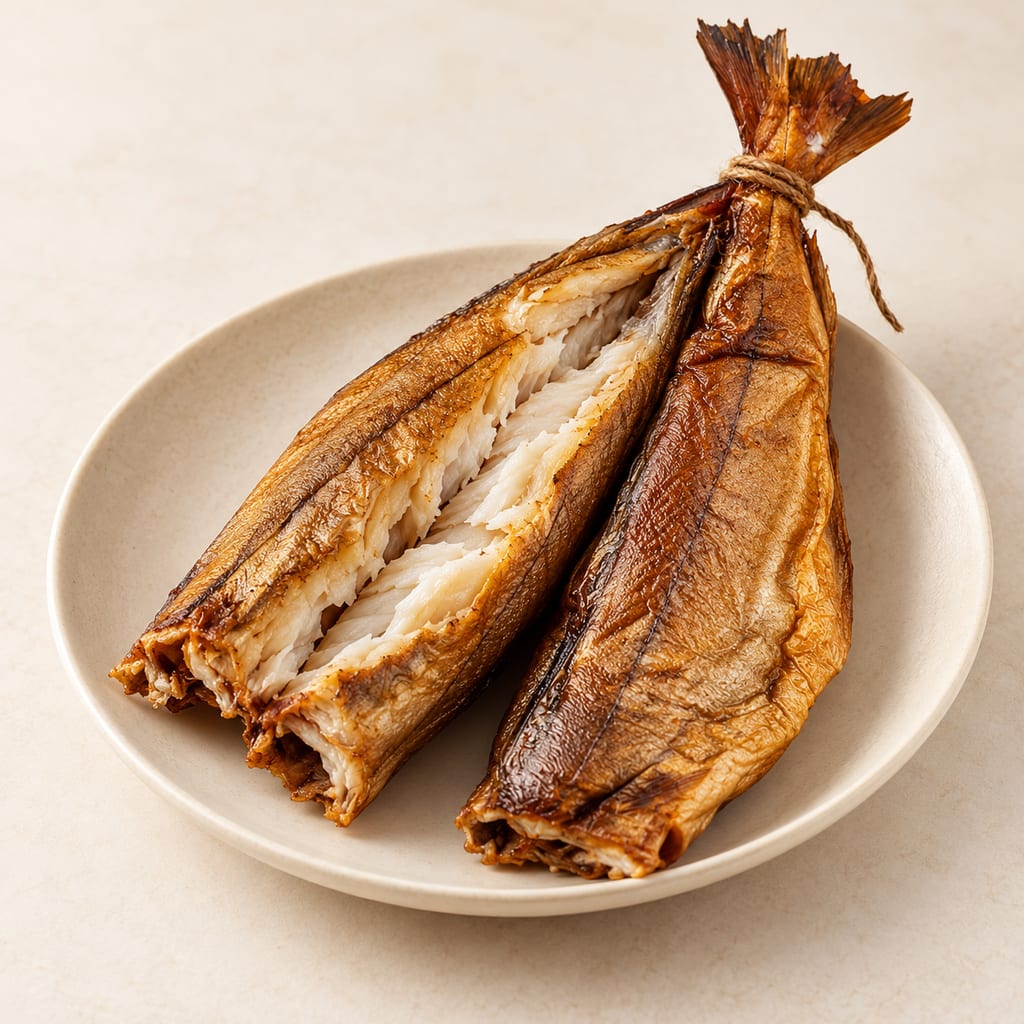
Arbroath smokies are whole haddock dry-salted, paired by the tail and hot-smoked in a protected coastal area. Their recorded history links Auchmithie and Arbroath, though the exact origin is unsettled.
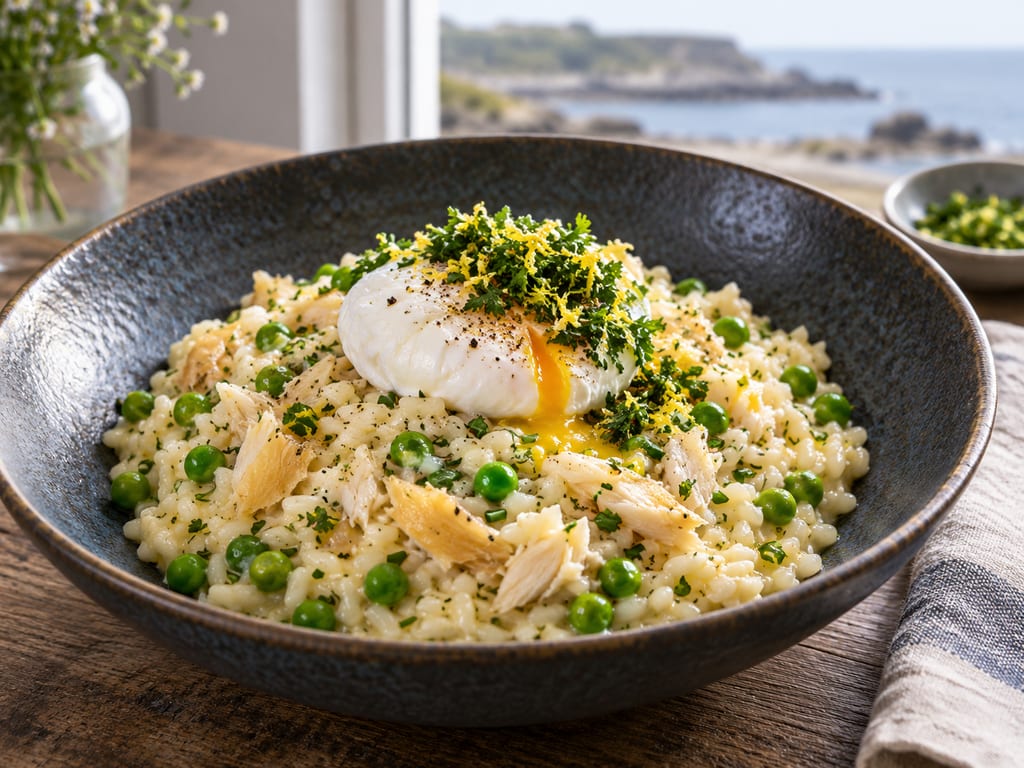
A four-serving risotto published in the 2014 Arbroath Smokie Trail booklet and credited to Hayley Wilkes. It cooks with finished Arbroath smokies; it does not describe smoking fish.
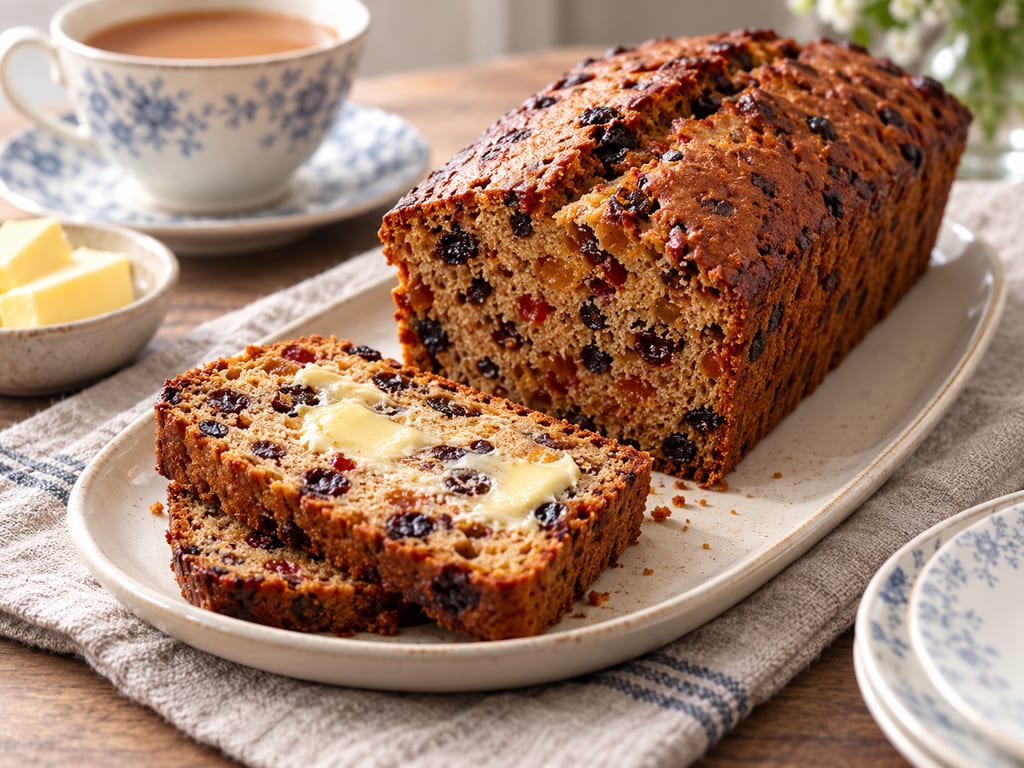
Bara brith is Wales’s speckled fruit loaf, made in both yeasted bread forms and the widely served modern tea-loaf style. This version soaks dried fruit in strong tea before mixing it with self-raising flour, spice, sugar and egg.
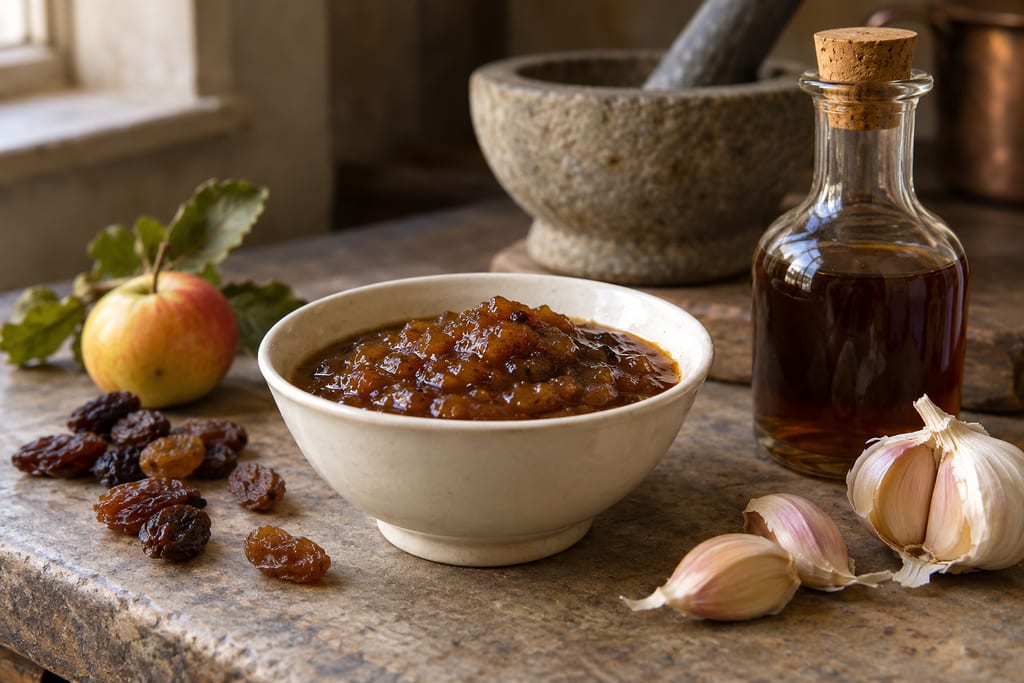
Eliza Acton's Bengal receipt for chetney sauce: stoned raisins and a hard acid fruit pounded with brown sugar, ginger, salt, cayenne and garlic, then thinned with vinegar to the consistence of thick cream.
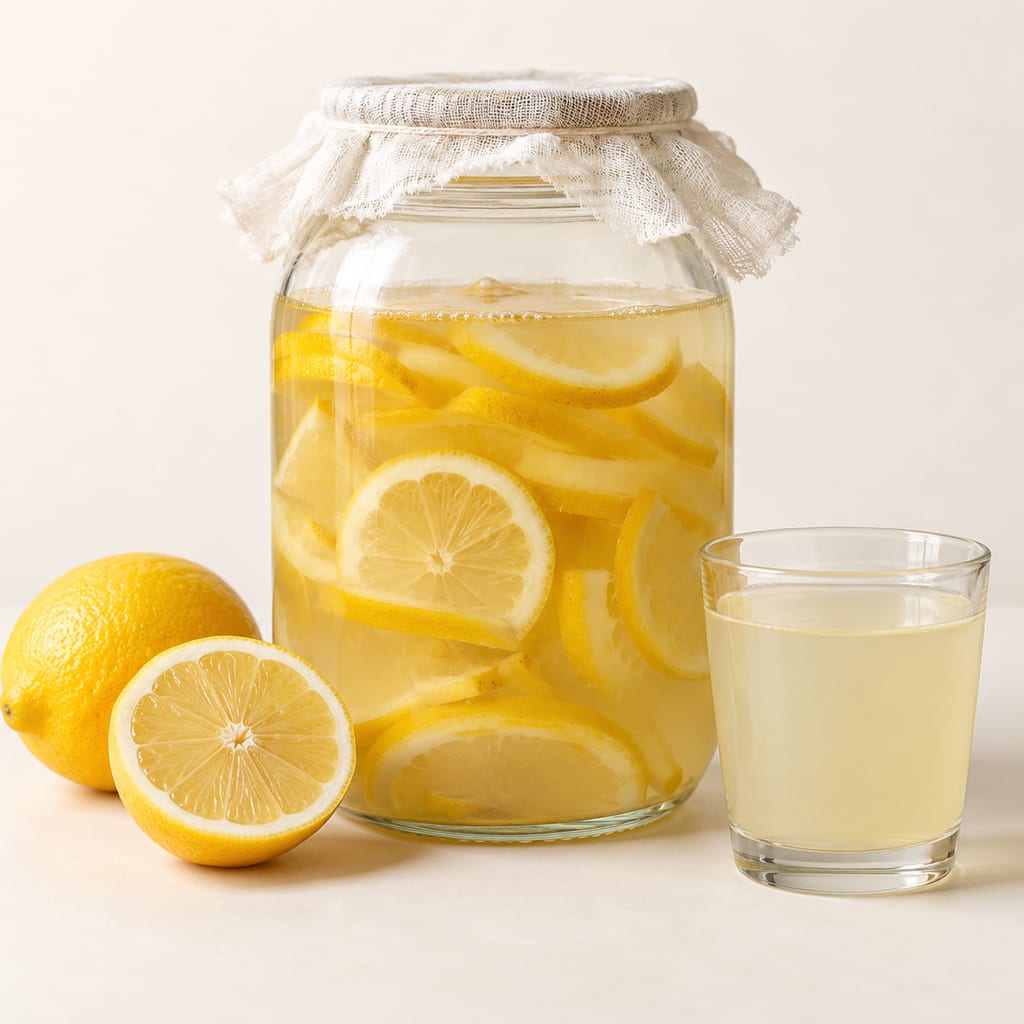
A lightly fizzy lemon drink made from peel-on lemons, water and sugar, held in a covered jar, bottled and kept going with small sugar and peel additions.
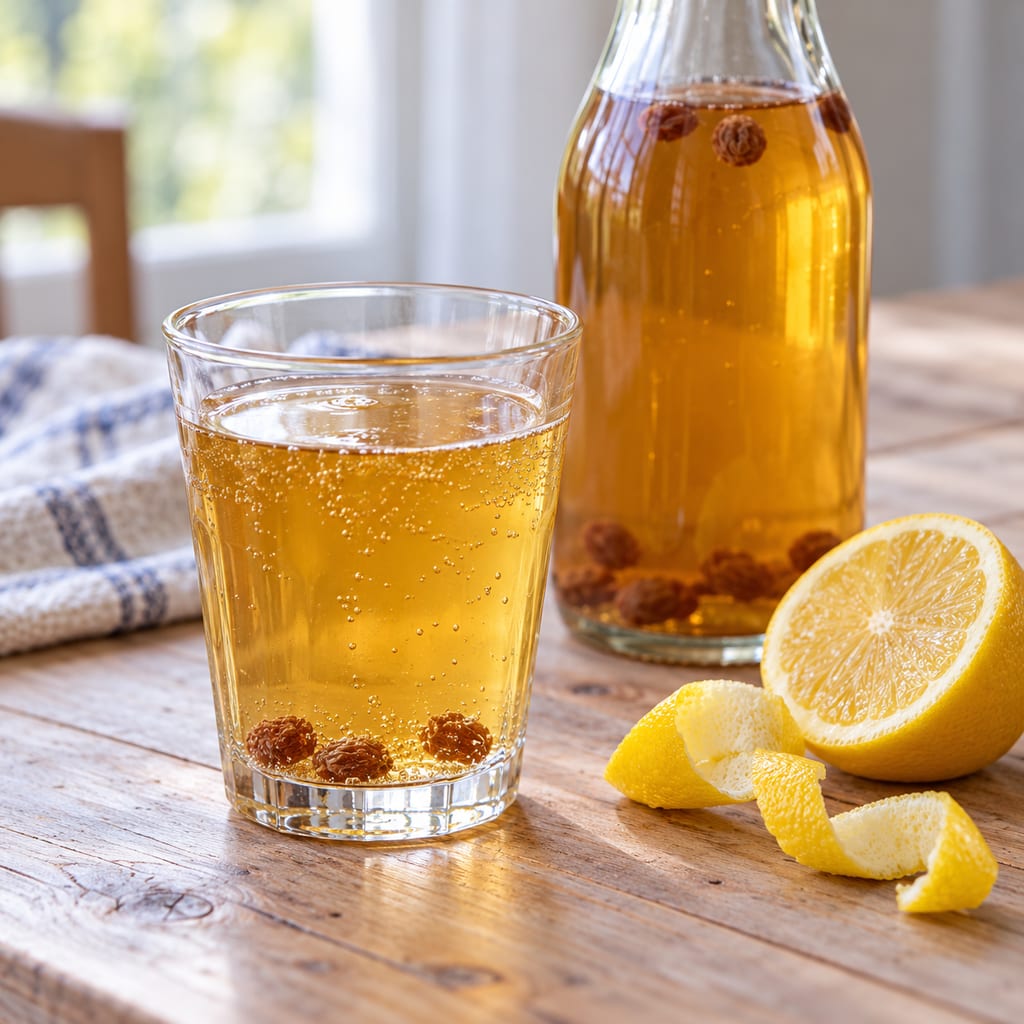
A lightly fermented Finnish May Day drink of lemon, white and brown sugar and a little yeast, bottled with raisins that rise as the carbonation builds.

Jun is a fermented tea drink made with green tea and honey instead of the sweetened tea of kombucha. Its culture identity and origin are not established, and sealed bottles can build pressure and alcohol.
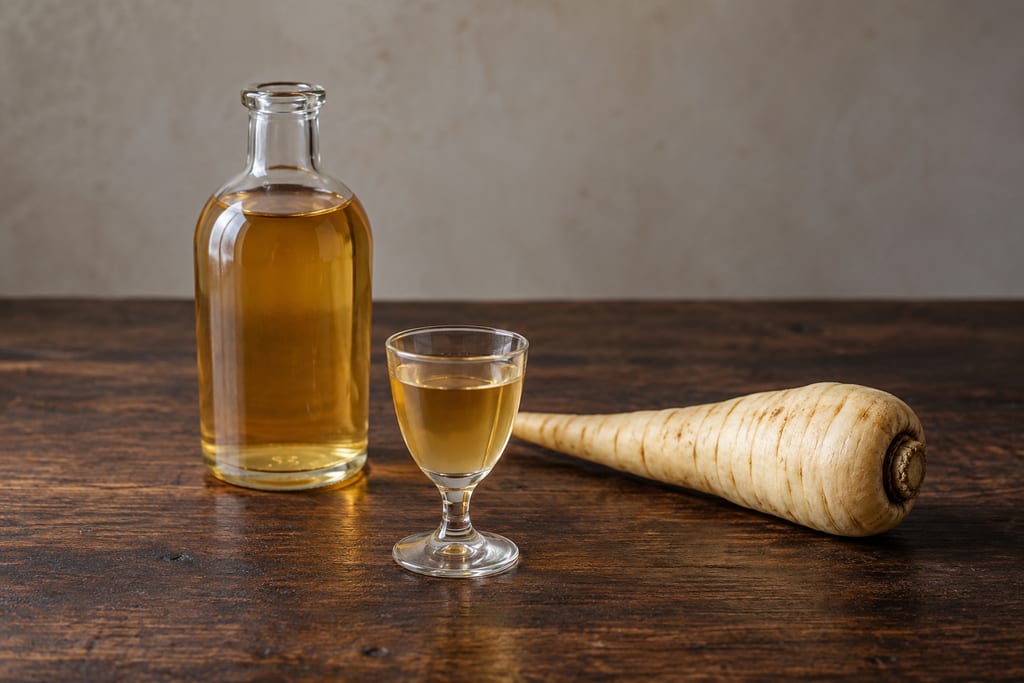
Wright's 1909 compilation records a parsnip wine made from boiled roots, sugar and a little yeast. The liquor spends ten days in a tub, then twelve months in a cask topped up daily only while the wine works over.
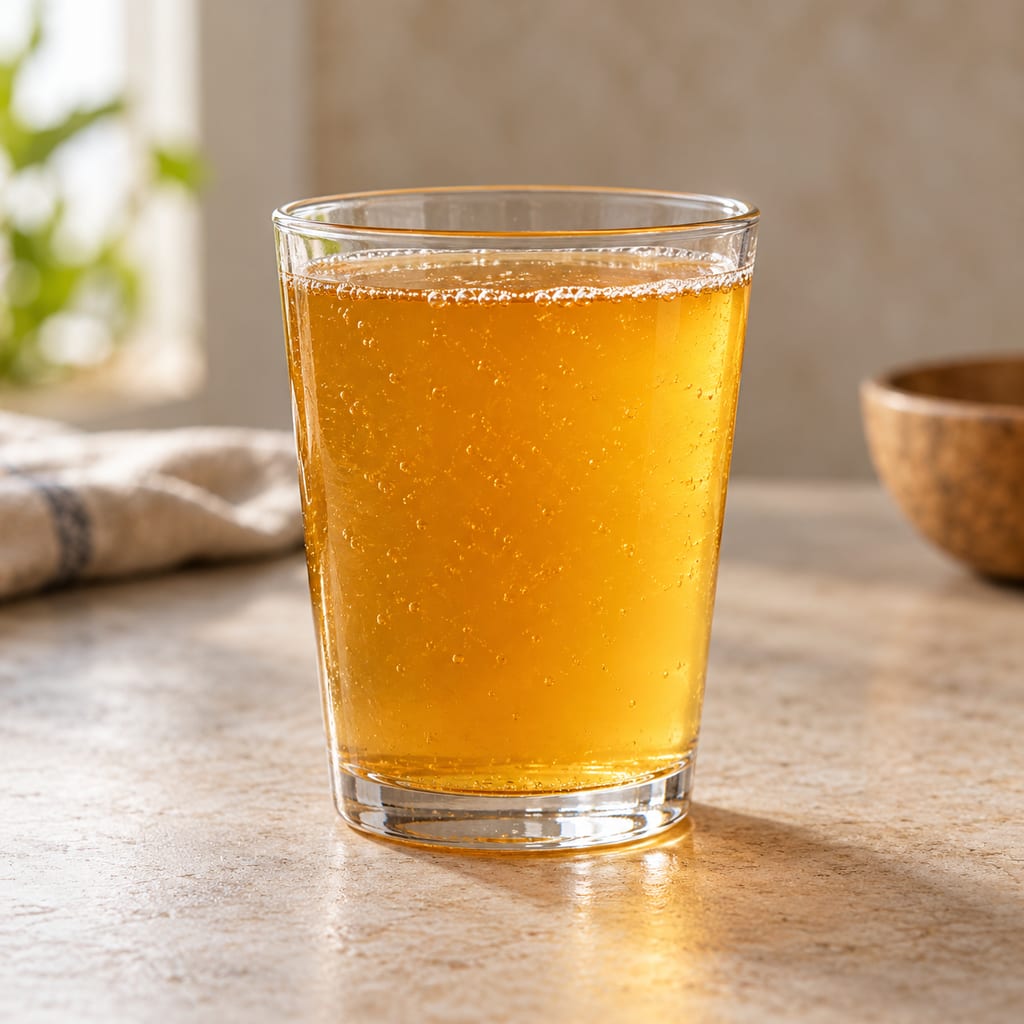
An Oregon State food-science lab formula ferments pineapple skin and piloncillo with jalapeño and warm spices for three to five days, then strains and refrigerates it. The handout reports wide alcohol variability.
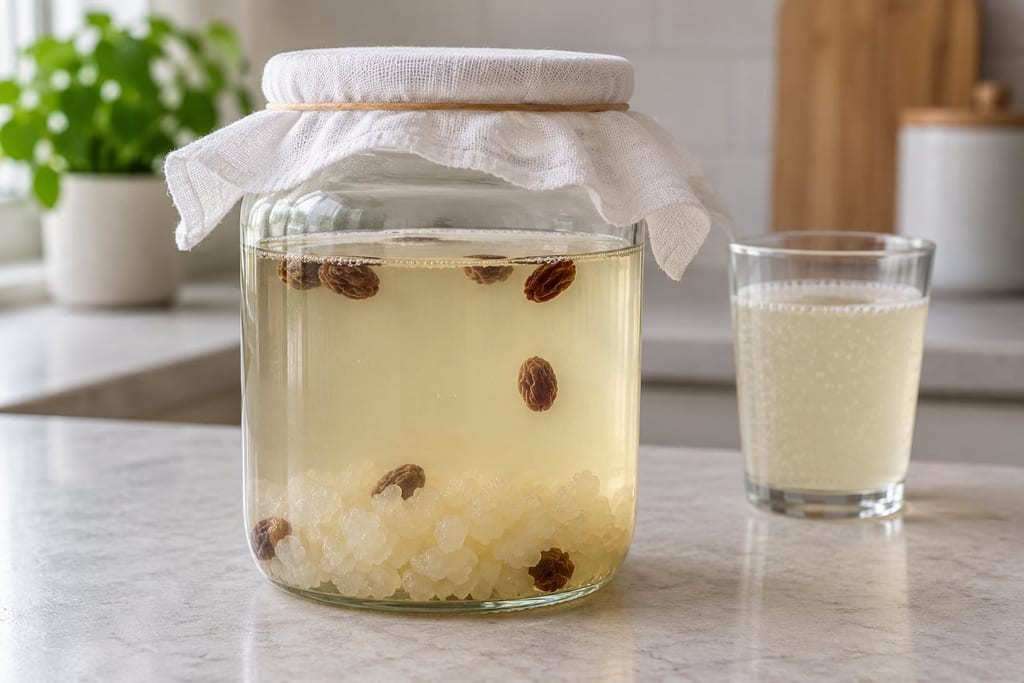
Water kefir grains culture lightly sweetened water into a tart, faintly fizzy drink, with raisins added as an optional dried-fruit nutrient. Alcohol, acidity and fermentation rate vary batch to batch.

A gelling polysaccharide extracted from red seaweeds, sold as kanten strips or powder; it sets firm at a low concentration and stays solid until about 85 °C.

A Dominican table and seasoning condiment of sour orange juice, mixed with lime and salt and bottled raw; garlic, oregano or a hot pepper may be added for meat or a spicier bottle.

Cicerbita alpina is an alpine perennial whose tender shoots and leaves have been eaten raw or cooked. Sámi milk preparations and modern Carnian dishes are distinct uses, with serious identification and preservation limits.

Japanese skipjack tuna cooked, then repeatedly smoked and dried over a wood fire by the hand-fired tebiyama method into a hard block for shaving into dashi: the first stage of katsuobushi.

A Swedish-style spirit vinegar made by fermenting neutral alcohol with live vinegar bacteria, with a separate guide to commercial ättika strengths.

A yeast-raised wheat ring shaped from a firm dough, briefly boiled and baked. This source-batch formula gives a gently malted crust and a chewy crumb.

A warm dip of garlic, anchovy and olive oil, often enriched with butter, that Piedmont serves over a flame with raw and cooked vegetables and bread.

Bechamel is a white sauce of milk thickened with a butter and flour roux, one of the French mother sauces, and the base from which Mornay and other cheese and cream sauces are made.
No community contributions have been published for this entry yet.
Sign in to contribute. Published comments and photos are free to read.
Science in School / National Centre for Biotechnology Education, University of ReadingInspiration · Process · History · Safety · Location
Ginger beer: a traditional fermented low-alcohol drinkOne-liter formula with ginger, lemon, sugar, cream of tartar and 4 g dried or 8 g fresh yeast
Cooling, 24-hour primary fermentation, PET bottling with headspace, up to 48-hour bottle stage near 21°C, refrigeration and six-day consumption window
Source warns against glass bottles because active fermentation can cause explosions
History of ginger beer in England and Britain; distinct traditional mixed ginger-beer-plant culture from this recipe's pure-yeast method
Cited in: What is traditional fermented ginger beer?; Ginger beer's documented history; Ingredients; Understanding the ginger; Why the lemon and cream of tartar matter; Equipment; 1. Prepare the ginger; 2. Prepare the lemon; 3. Add sugar and cream of tartar; 4. Extract with boiling water; 5. Cool; 6. Prepare the bottles; 7. Add yeast; 8. Primary fermentation; 9. Skim and strain; 10. Bottle conditioning; 11. Refrigerate; The microbiology of baker's-yeast ginger beer; The genuine ginger beer plant; Why ginger beer is pungent; Variations and regional developments; Serving ginger beer; Troubleshooting; Safety
University of ReadingInspiration
University of Reading — National Centre for Biotechnology EducationUniversity of Reading — National Centre for Biotechnology Education
Clemson Cooperative ExtensionMethod · Safety
Clemson Cooperative Extension — Cleaning and Sanitation for the HomebrewerClemson Cooperative Extension — Cleaning and Sanitation for the Homebrewer
Cited in: Safety