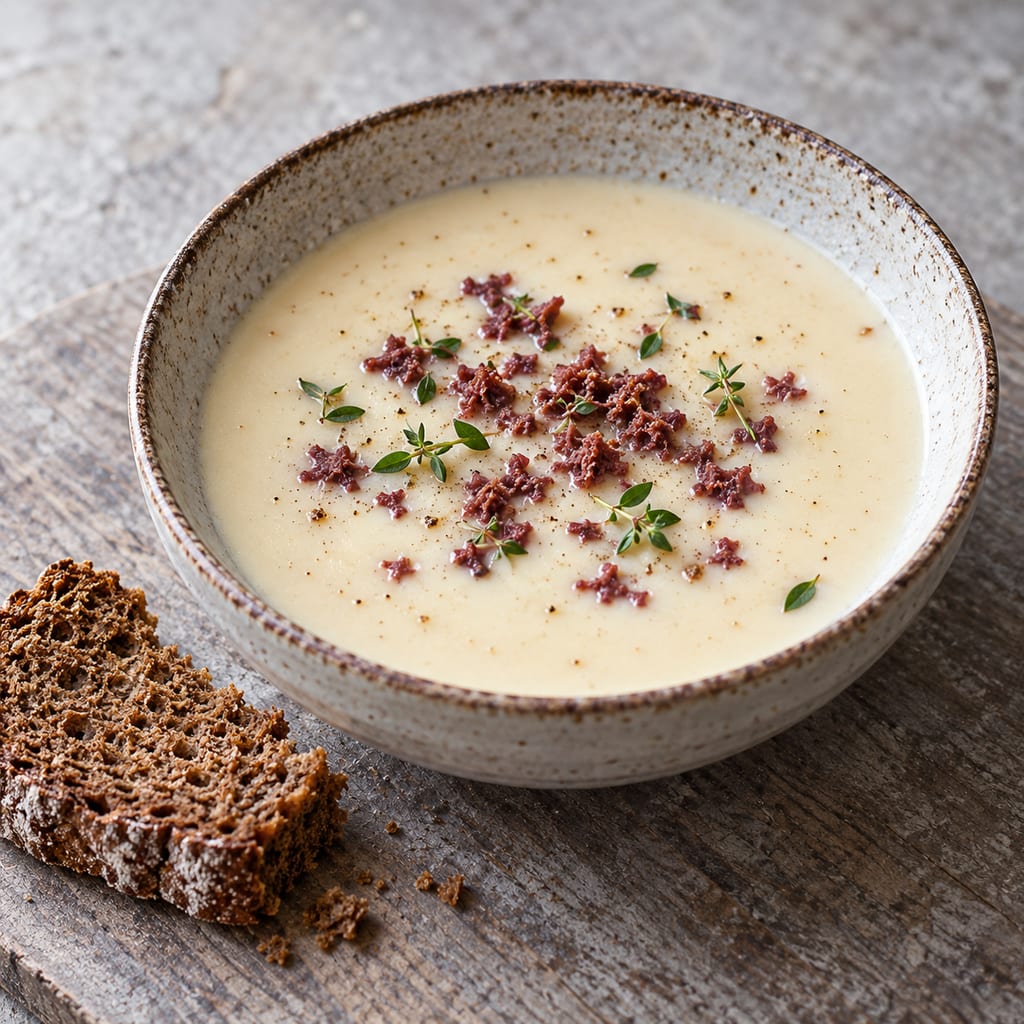
Cold-smoked reindeer soup
Kylmäsavuporokeitto is a creamy cold-smoked reindeer soup with onion, stock and cheese, served with bread.
 FermenteaWhere food goes to change
Traditional method
Sima (vappusima)
A lightly fermented Finnish May Day drink of lemon, white and brown sugar and a little yeast, bottled with raisins that rise as the carbonation builds.
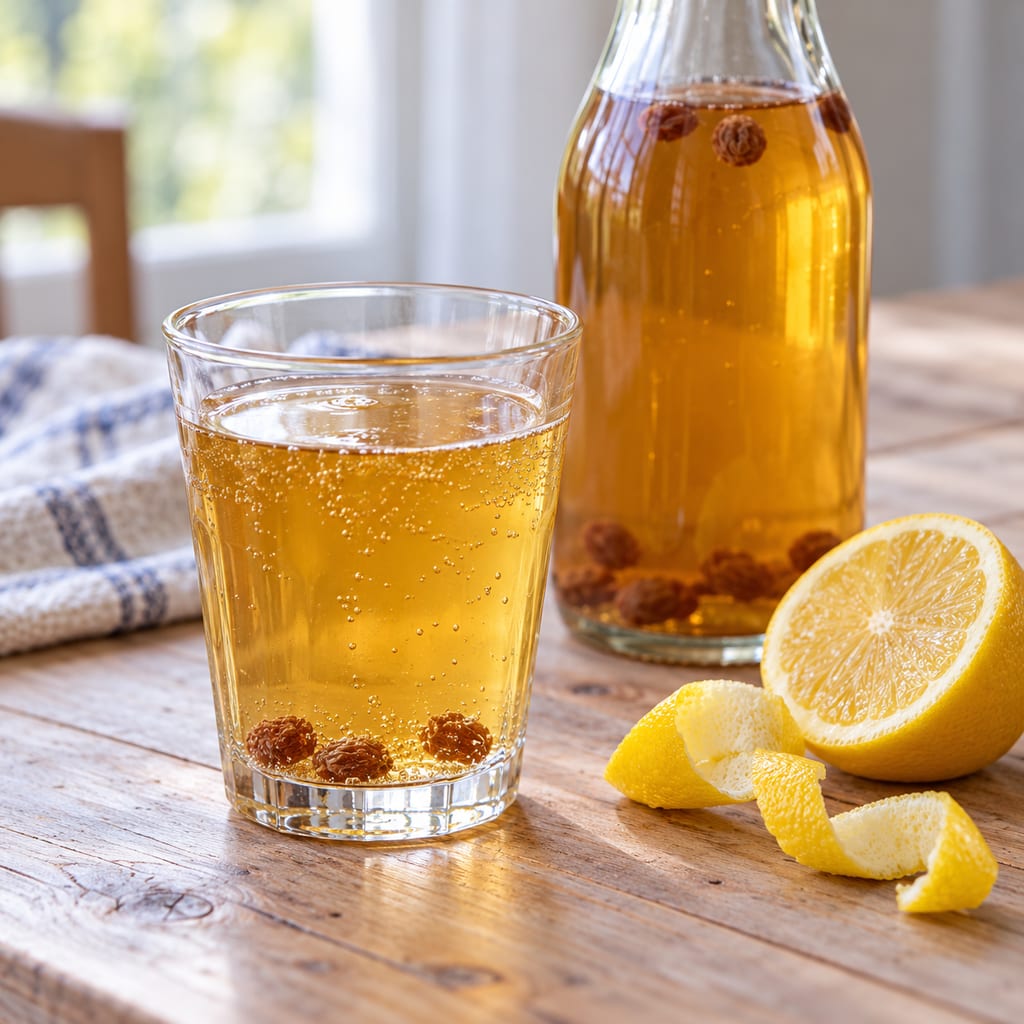
Sima is a sweet, lightly fermented Finnish drink made with water, sugar, lemon and a small quantity of yeast. It is especially associated with Vappu, the Finnish celebration of May Day on 1 May, when homemade sima is commonly served with doughnuts, funnel cakes and other festive foods.
The drink is normally pale golden to amber, lightly sparkling, sweet and citrus-scented. Brown sugar contributes much of the colour, while lemon supplies acidity and a fresh aroma.
Unlike a conventional beer, modern Finnish sima is not made primarily from malted grain. Unlike traditional honey mead, the common contemporary recipe uses white and brown sugar rather than relying on honey as its principal fermentable ingredient.
A characteristic visual feature is the presence of raisins, which are added during bottling and may float as gas bubbles attach to their surfaces.
The finished drink is often described as almost non-alcoholic. That is a culinary description, not a guarantee of zero alcohol: this recipe uses live yeast and fermentable sugar, and its alcohol content is not measured.
The modern Finnish drink shares its name with older Nordic fermented beverages associated with honey.
The history of the word and the modern recipe must be distinguished.
In older Finnish usage, sima could refer to a honey-related drink and sometimes to sweet liquid more generally. Finnish folk poetry uses the word in contexts associated with sweetness and honey.
The modern lemon-and-sugar drink has a more recent documented history.
Sweet, yeast-fermented sima resembling the present beverage was being prepared in Finland during the eighteenth century. Early forms were associated particularly with wealthier households because sugar and honey were expensive ingredients.
The Finnish word appears in written language by 1702, while historical accounts connect later household preparations to the circulation of eighteenth-century cookbooks. A frequently discussed influence is the Swedish cook Cajsa Warg, whose important cookbook appeared in 1755.
The exact date of invention of today's five-litre lemon recipe is not established.
During the nineteenth century, changes in the availability and cost of sugar helped move sima beyond affluent households. It became increasingly accessible as a seasonal refreshment.
Its strong association with Vappu developed particularly around the transition from the nineteenth to the twentieth century, when temperance movements promoted festive drinks with little alcohol.
Modern Vappu incorporates several traditions: the coming of spring, student celebrations and workers' May Day events. Sima became a drink capable of belonging to all these occasions.
It would be misleading to describe modern lemon sima as an unchanged Viking recipe. The historical honey drinks and the contemporary sugar-and-lemon beverage share cultural and linguistic connections, but they are not identical formulations.
The quantities below follow the five-litre Finnish household formula.
The recorded version uses 300 g of each sugar as its baseline, while the original Finnish recipe permits 300–350 g of each.
The exact number of raisins is not specified. Bottle volume and bottle count are likewise not fixed.
Do not turn the small yeast measure into a precise number of grams without weighing it. The original measure is a small lump of fresh yeast, described as approximately one-fifth of a teaspoon.
Yeast requires fermentable carbohydrates.
Sucrose, the principal sugar in both the white sugar and brown sugar used here, can be hydrolysed by yeast enzymes into glucose and fructose.
The yeast can then metabolise these simpler sugars.
White sugar has a relatively neutral flavour. Brown sugar contributes colour and additional flavour compounds from its molasses-containing fraction.
Finnish fariinisokeri is a particular brown-sugar product; a substitute may differ in moisture and molasses composition.
Changing the balance of white and brown sugar therefore affects appearance and flavour even if the total sugar quantity remains constant.
Lemon, Citrus limon, has several roles.
Its juice and flesh contribute citric acid, lowering the initial pH and balancing the sweetness.
The yellow zest contains aromatic oils, particularly limonene and other volatile compounds.
The white pith contains compounds that can contribute bitterness. This explains the instruction to remove the yellow zest separately, discard the white pith, and retain the fruit flesh.
The hot-water extraction stage releases flavour without requiring the lemons to be boiled for a prolonged period.
Baker's yeast, commonly Saccharomyces cerevisiae, converts sugars into carbon dioxide and ethanol.
A very small amount is used because the intended product is lightly fermented and retains considerable sweetness.
The exact fermentation outcome still depends on yeast activity, temperature, nutrient availability and the time allowed.
A small starting dose does not impose a fixed alcohol limit.
Raisins contribute a little additional sugar and fruit material.
Their most familiar function is visual: as carbon dioxide bubbles adhere to the fruit, the raisins can rise.
This is a traditional cue for carbonation development, not an instrument for measuring ABV, pH or bottle pressure.
Use a large heat-safe container, preferably with capacity exceeding the five-litre liquid volume.
A saucepan is needed for heating part of the water.
Other useful equipment includes a vegetable peeler, knife, stirring spoon, thermometer, sieve, funnel and clean bottles.
Bottles must be appropriate for fermented beverages and able to accommodate the intended handling procedure.
For a home preparation without measured pressure control, suitable plastic beverage bottles provide a practical way to observe excessive pressure buildup. The original Finnish household methods also describe glass bottles, but pressure-related breakage is a serious concern.
Wash both lemons with hot water.
Peel off the yellow zest in strips, taking care to leave most of the bitter white pith behind.
Remove the remaining white pith from the fruit.
Slice the peeled lemons.
Place the yellow zest and lemon slices in the main brewing container.
This separates the aromatic citrus oils from much of the pith that could otherwise make the drink unpleasantly bitter.
Add 300–350 g white sugar and 300–350 g brown sugar.
Mix the ingredients sufficiently to distribute the sugar around the lemon.
There is no need to add yeast at this stage.
Bring half of the 5 litres water to a boil.
Pour the hot water over the lemon and sugar mixture.
Stir until the sugars dissolve.
Cover and allow the liquid to stand briefly.
This extracts citrus flavour and dissolves the fermentable sugars.
Pour in the remaining half of the water, cold.
Mix thoroughly.
Adding cold water reduces the temperature of the hot sugar solution.
Allow the liquid to reach approximately 37°C, described in the Finnish recipe as hand-warm.
Add the small quantity of fresh yeast—approximately ⅕ teaspoon.
Stir gently to disperse.
The temperature matters because excessive heat can damage yeast cells.
The original recipe does not establish a controlled yeast rehydration or propagation procedure.
Cover the container.
Leave it at room temperature for one day.
The source does not specify a numeric room-temperature range.
The yeast begins metabolising available sugars.
Carbon dioxide may become visible, and the drink may develop a mild fermentation aroma.
An active first day does not establish a measured alcohol concentration.
Place a few raisins and 1 teaspoon sugar in each clean bottle.
The exact bottle volume is not specified, so this is the original recipe's per-bottle instruction, not a standardised priming rate per litre.
This is important: the same sugar addition in differently sized bottles can produce different carbonation conditions.
Strain the sima to remove the lemon pieces and zest.
Transfer the liquid to the bottles using a clean funnel.
Leave sufficient headspace for safe bottle handling.
The original Finnish sources do not specify an exact numerical headspace.
Do not improvise airtight warm storage.
Close the bottles loosely.
Move them to a cool place.
The documented timing is approximately one week in cool conditions or three days at room temperature.
The instruction to keep caps loose is deliberate. Fermentation continues after bottling, generating more carbon dioxide.
The drink is traditionally regarded as ready when the raisins float, but this does not mean fermentation has definitely stopped.
Refrigerate when ready.
The Finnish household storage guidance recommends consumption within approximately one week after readiness.
Serve chilled.
Continue to treat the bottles as potentially pressurised, even in the refrigerator.
The method and ingredients are documented by Finnish home-economics and food producers. The five-litre recipe must not be confused with the separate four-litre Valio formulation, whose ingredient quantities are different.
The principal transformation is yeast fermentation of sugar.
In simplified terms, glucose is metabolised to produce ethanol, carbon dioxide and energy.
The carbon dioxide partly escapes from the primary fermentation container.
During bottle conditioning, some remains dissolved in the liquid and produces the characteristic sparkling sensation.
The amount of carbon dioxide retained depends on pressure, temperature and the remaining fermentable sugar.
Colder liquid generally holds dissolved carbon dioxide more readily than warmer liquid under the same pressure.
Yeast also produces smaller quantities of organic acids, glycerol and flavour-active compounds.
These can contribute subtle aromatic complexity even in a brief fermentation.
The lemon supplies considerable acidity before yeast activity begins, so the sourness of sima should not be confused with evidence of a lactic-acid bacterial fermentation.
Unlike kombucha or kefir, the documented recipe does not intentionally employ a mixed culture of bacteria and yeast.
The original recipe contains a substantial quantity of sugar.
Only part of it is consumed during the short intended fermentation period.
The remaining sugar gives the drink its characteristic sweet flavour.
This is different from brewing a fully attenuated alcoholic beverage in which yeast is allowed to metabolise most available fermentable sugars.
Because sugar remains and yeast may remain viable, fermentation can continue after bottling.
That is precisely why bottle pressure and alcohol accumulation require attention.
The short recipe timetable does not impose a scientifically established upper limit for either.
The original Finnish recipe explicitly permits replacing one lemon with a blood grapefruit, ordinary grapefruit or two limes.
Fresh mint can also be added during the hot-water extraction stage.
Another suggestion is to add two rosemary sprigs when using grapefruit.
Modern Finnish sima also includes strawberry, blueberry and ginger variations.
These belong to the same beverage family when their principal method remains sweet, lightly yeast-fermented liquid, but the added fruit changes sugar composition, acidity and aroma.
Fruit variations should retain their own exact recipe measurements rather than inheriting the lemon batch uncritically.
An additional distinction is between homemade sima and industrially produced bottled Vappu drinks. Commercial formulations may use controlled fermentation, filtration, stabilisation or other methods that produce a more consistent shelf life and alcohol content.
The classic setting is a Vappu table or spring picnic.
Sima is served chilled alongside munkki, Finnish doughnuts, and tippaleipä, delicate fried funnel cakes dusted with sugar.
It also accompanies savoury picnic food.
Finnish May Day meals can include potato salad, sausages, meatballs, pickled fish and bread.
The sweet citrus flavour offers contrast to salty and fatty foods.
Families may prepare sima ahead of the celebration, allowing the bottled drink to become lightly sparkling in time for Vappu.
It is as much a seasonal social custom as a stand-alone soft drink.
thisisFINLAND
A light haze is common in unfiltered homemade sima.
Small bubbles and mild effervescence are expected.
The raisins may rise as bubbles accumulate around them.
A colour ranging from pale gold to amber reflects differences in sugar selection and concentration.
A severely unpleasant, putrid aroma, visible mould or other clear contamination is grounds for rejecting a batch.
Excessive bottle swelling indicates dangerous pressure buildup.
Do not use bottle hardness, floating raisins or taste as a precise substitute for pressure or alcohol measurement.
Sima contains live yeast and substantial sugar. It is therefore incorrect to guarantee that the result is alcohol-free.
Its ABV is unmeasured in this household recipe.
Pressure is the other major concern.
Carbon dioxide can continue accumulating after bottling, particularly if the drink remains warm.
The documented method deliberately uses loose closures while fermentation continues.
Use appropriate beverage containers and monitor their condition. Avoid handling visibly overpressurised bottles in a way that could cause injury.
The Finnish household recipe is not a commercially validated low-alcohol beverage process.
Refrigeration slows fermentation but does not necessarily stop it immediately.
Finnish home-economics recipes associate sima with spring Vappu / May Day traditions. This record follows one contemporary five-liter preparation and does not claim an origin date.
Yield 5 L · Scaling: source batch only
The Finnish recipe source warns that pressure grows while fermentation continues and recommends loose caps before the ferment slows.
Hazard sourceThe method adds yeast to ferment a substantial sugar solution but reports no alcohol measurement; residual alcohol is uncertain.
Hazard sourceUse the source's loose-cap and cool-storage method during the bottle stage; monitor bottles because fermentation continues after bottling. Refrigerate when the recipe is ready and use within the stated week.
Control sourceSima is yeast-fermented; its alcohol level is not measured and must not be assumed to be zero.
Pressure can rise in the bottles. The source calls for loose caps during fermentation; no measured pressure endpoint or pressure-rated packaging is documented.
Raisins floating to the surface is the source's serving cue, not proof of alcohol level or microbiological safety.
The sources associate this preparation with Finland's Vappu season; no narrower place or origin is stated.
Kylmäsavuporokeitto is a creamy cold-smoked reindeer soup with onion, stock and cheese, served with bread.

Finnish pea soup simmers dried peas with palvikinkku or a vegetable alternative, then is served with mustard and chopped onion.
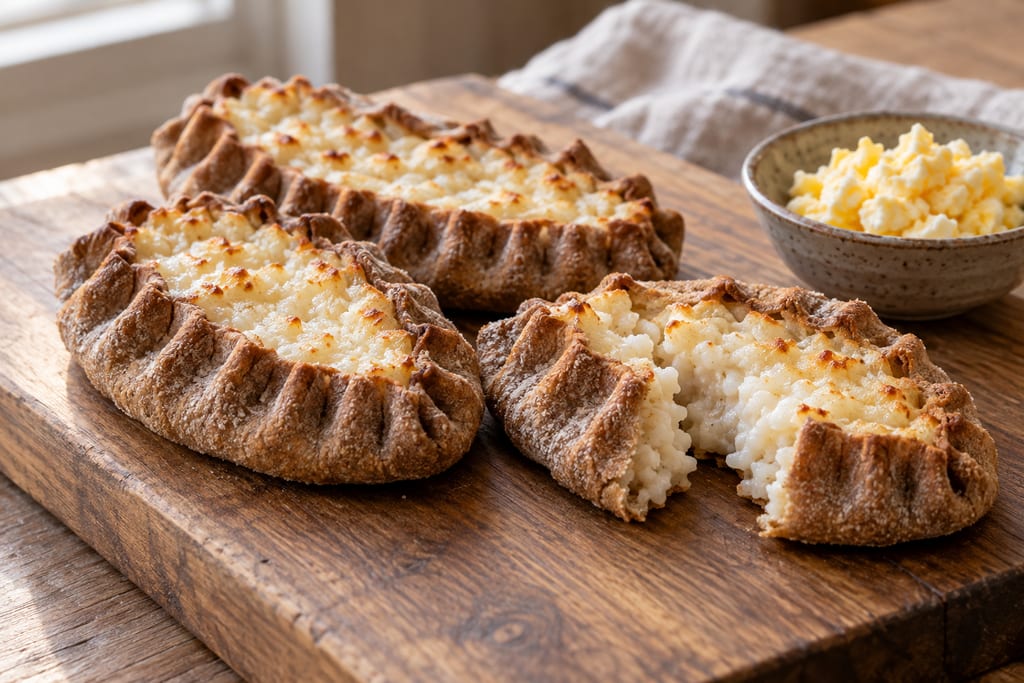
Karjalanpiirakka are open, pleated rye-and-wheat pastries filled with creamy rice porridge, baked hot and brushed with butter and milk.
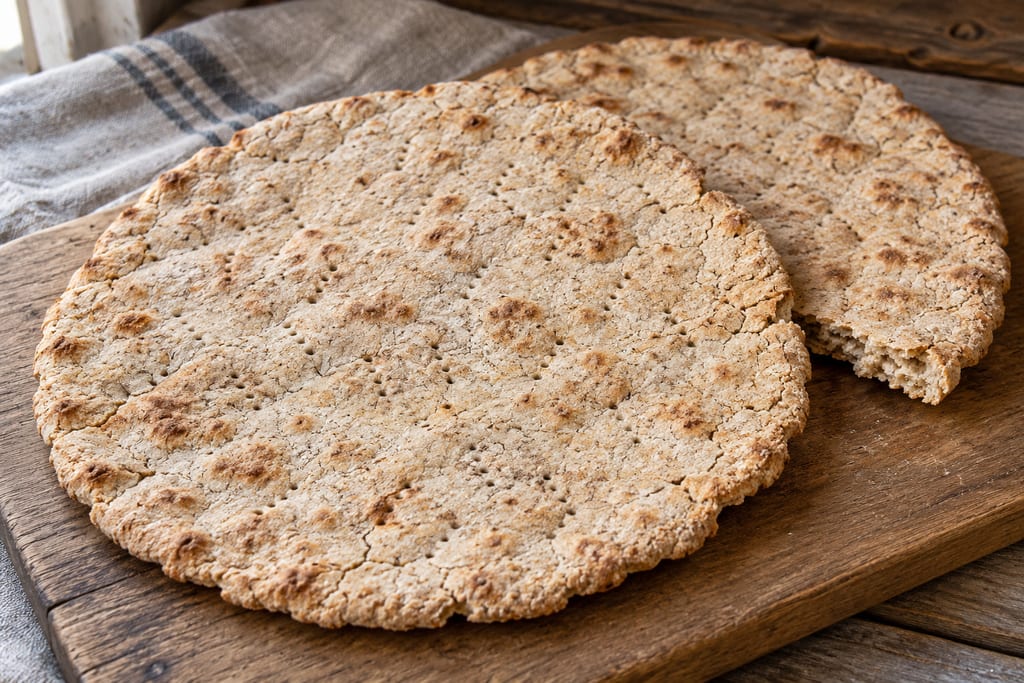
Two barley flatbreads made with cold dough and baked rapidly on a hot sheet, following Timo Lepistö's northern Finnish formula.
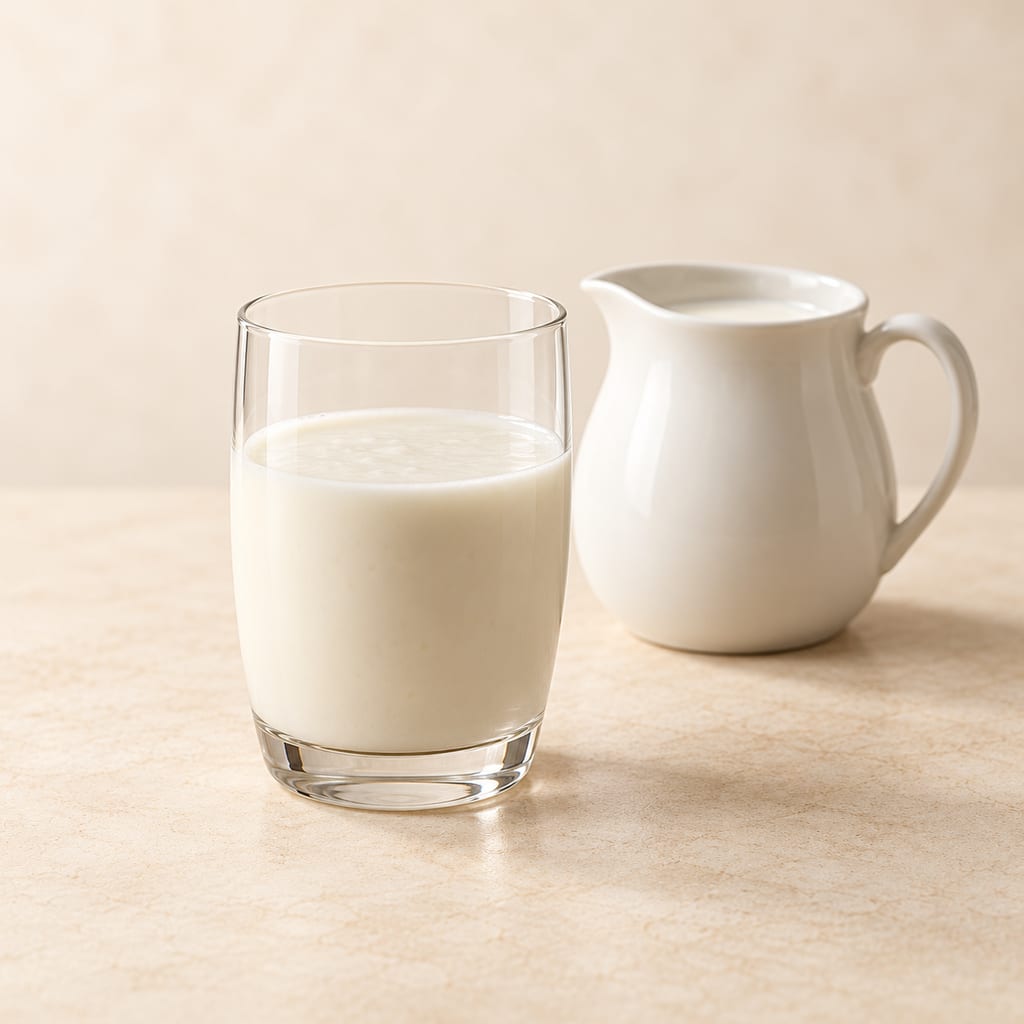
A thin cultured-milk drink made with a commercial countertop starter. Finnish piimä is a mealtime sour milk with distinct regional traditions.
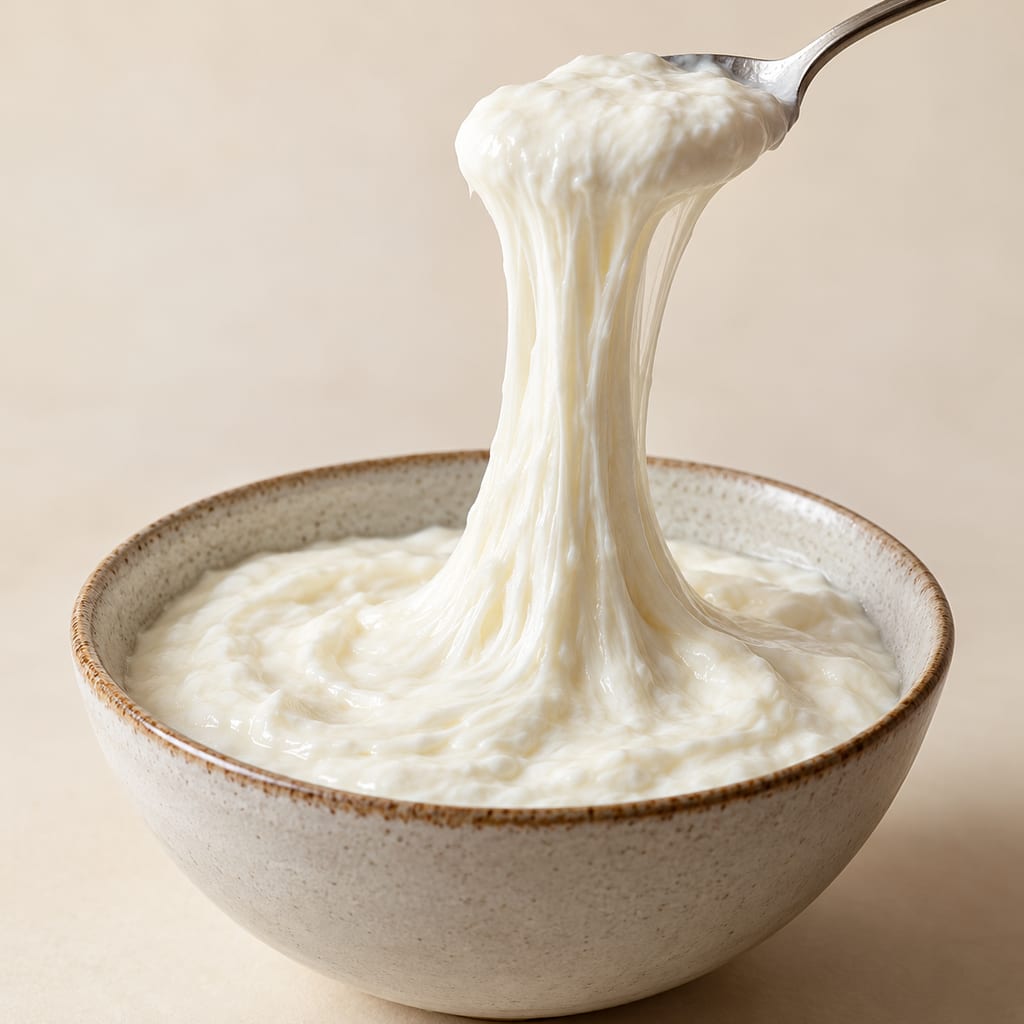
Pitkäpiimä is a Finnish cultured milk whose defining trait is a long, stretchy, ropy texture. It is closely related to viili and is made by lactic fermentation with a specific culture.
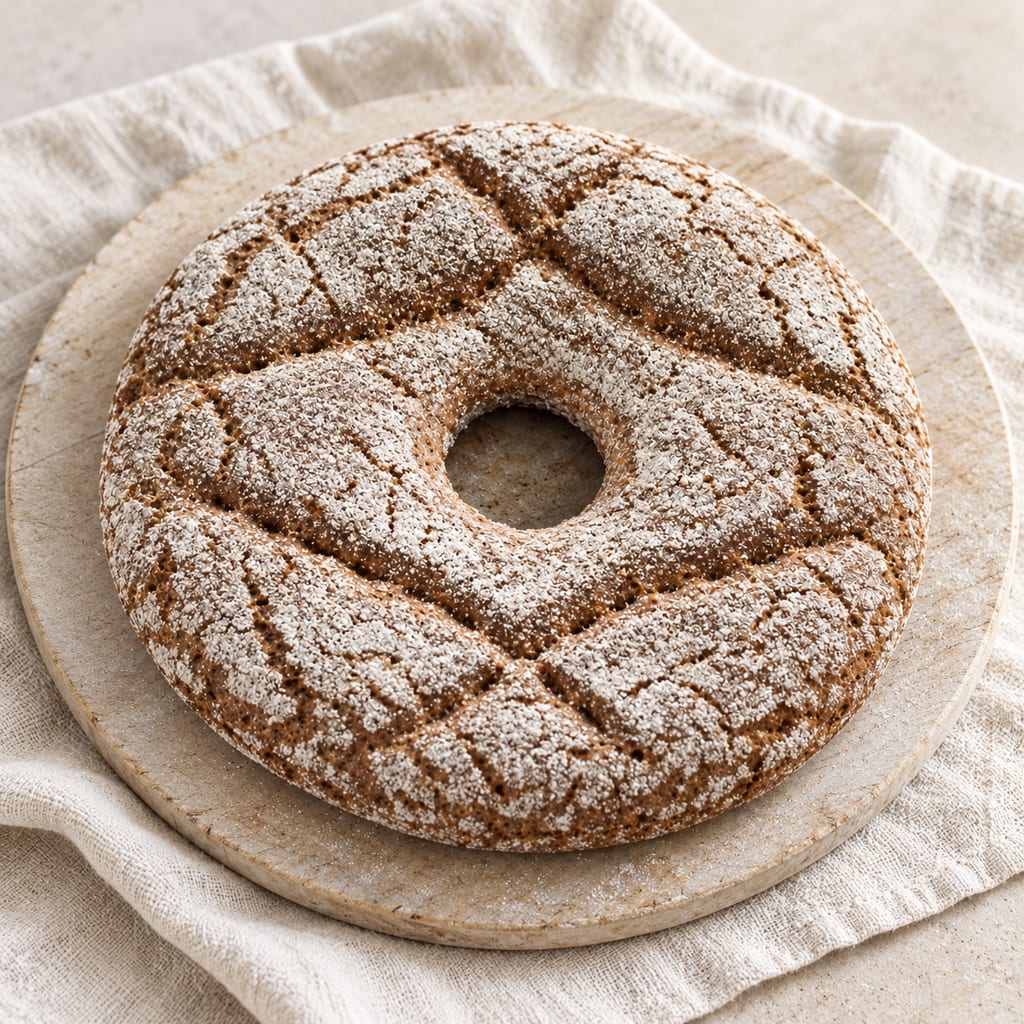
A Finnish rye sourdough shaped here as two flat ring loaves, made from rye flour, water, salt and an established rye leaven.

Salted mushrooms are a traditional wild-mushroom preserve, especially of Finnish and Russian milk caps, made by layering boiled mushrooms with coarse salt or keeping them under brine, and kept cold.
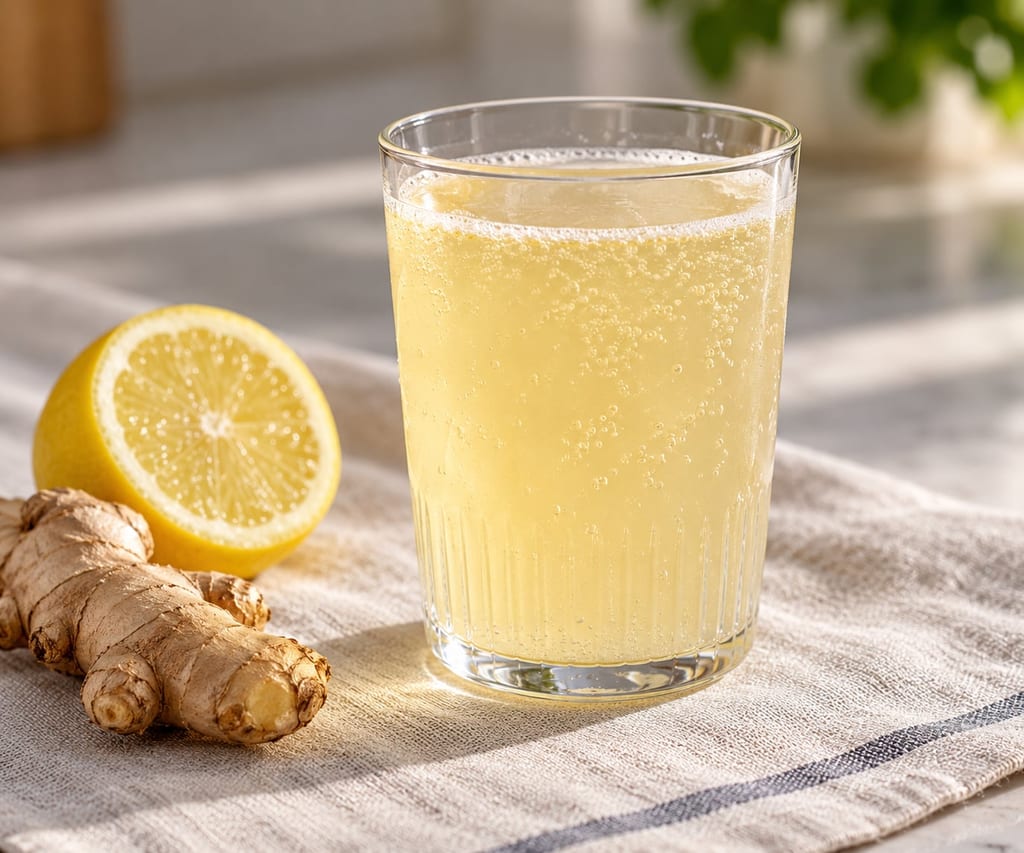
A one-liter teaching recipe ferments bruised ginger, lemon, sugar and cream of tartar with measured baker’s or ale yeast, then conditions the drink briefly in PET bottles before refrigeration.
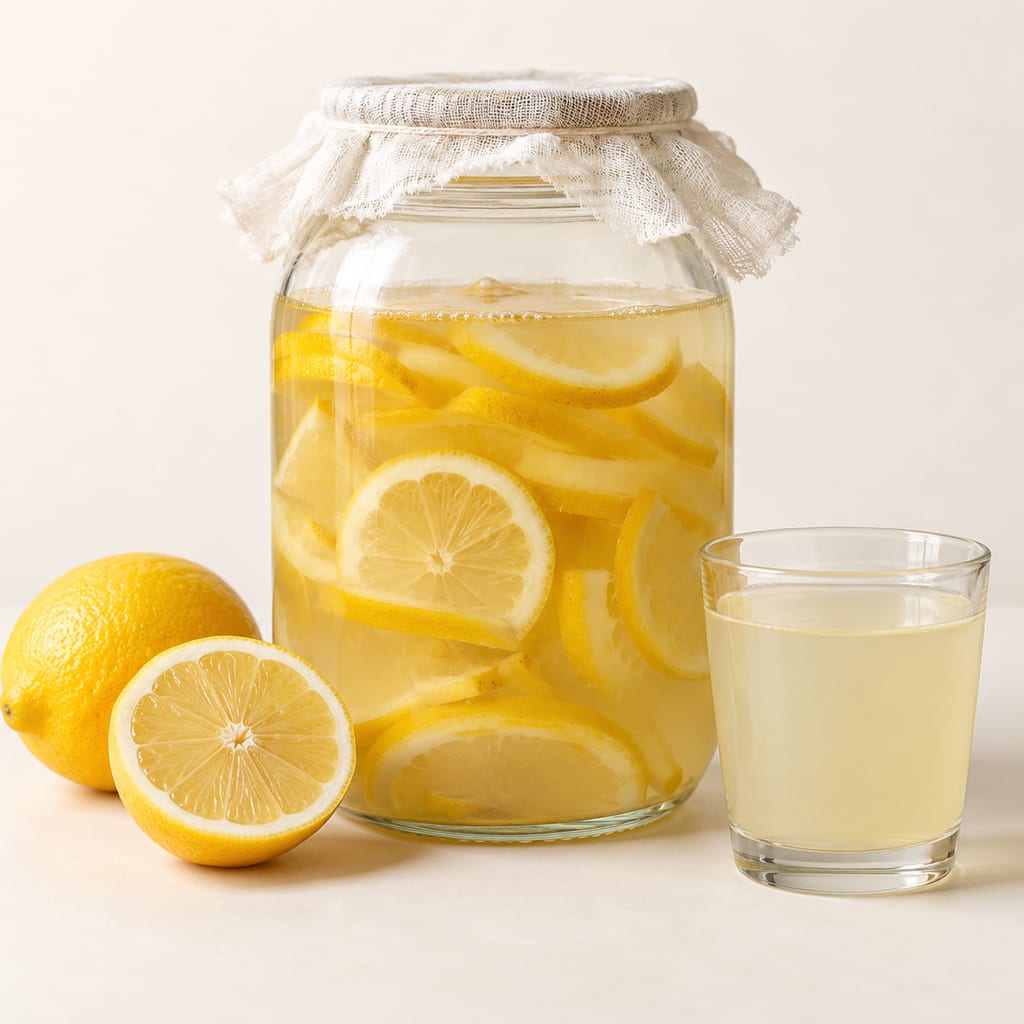
A lightly fizzy lemon drink made from peel-on lemons, water and sugar, held in a covered jar, bottled and kept going with small sugar and peel additions.
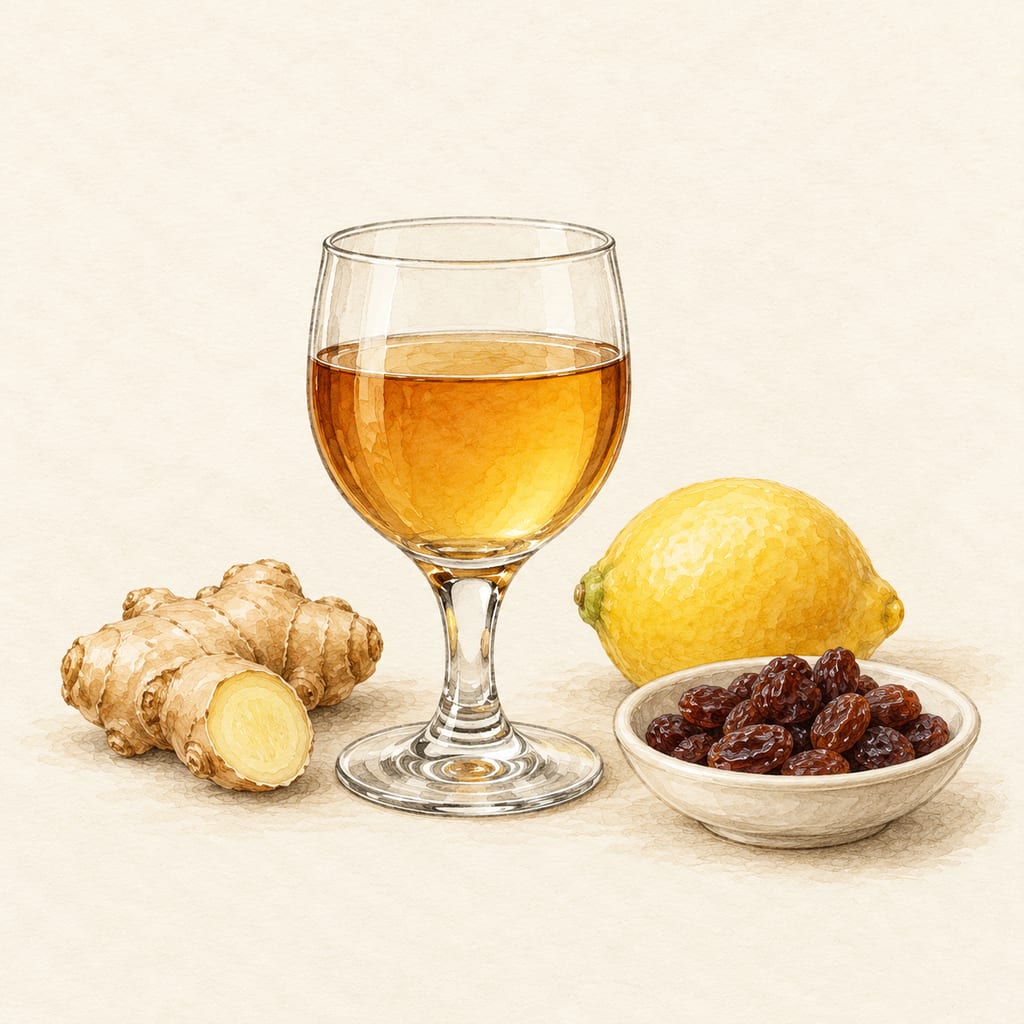
A Victorian household wine of boiled sugar, lemon and bruised ginger, worked on raisins in a cask for a fortnight and finished with brandy, made nine gallons at a time.

Jun is a fermented tea drink made with green tea and honey instead of the sweetened tea of kombucha. Its culture identity and origin are not established, and sealed bottles can build pressure and alcohol.
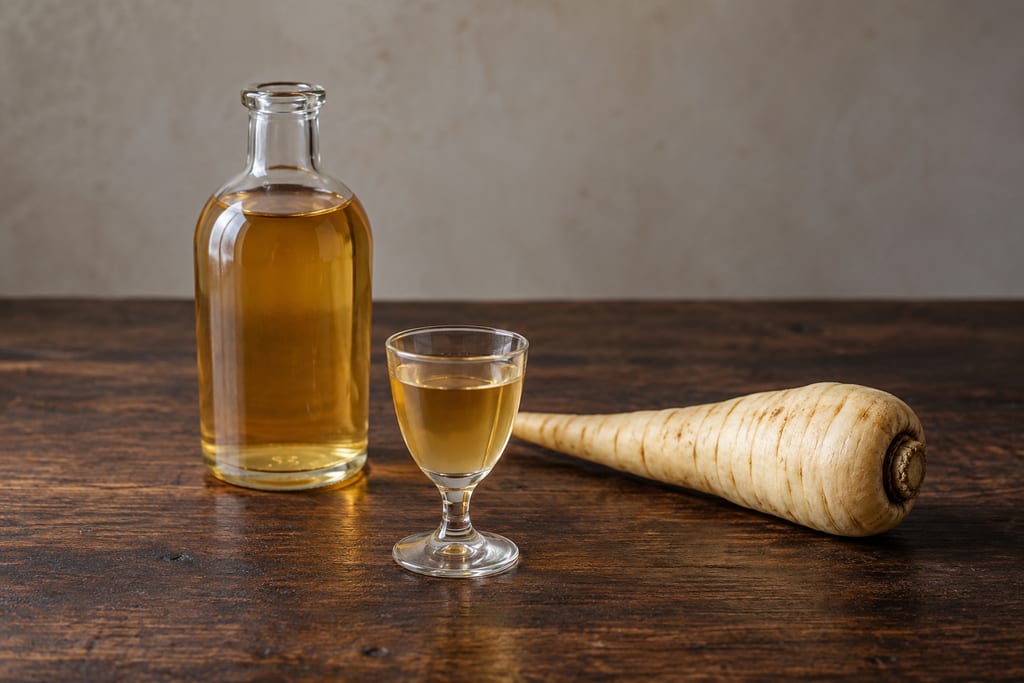
Wright's 1909 compilation records a parsnip wine made from boiled roots, sugar and a little yeast. The liquor spends ten days in a tub, then twelve months in a cask topped up daily only while the wine works over.
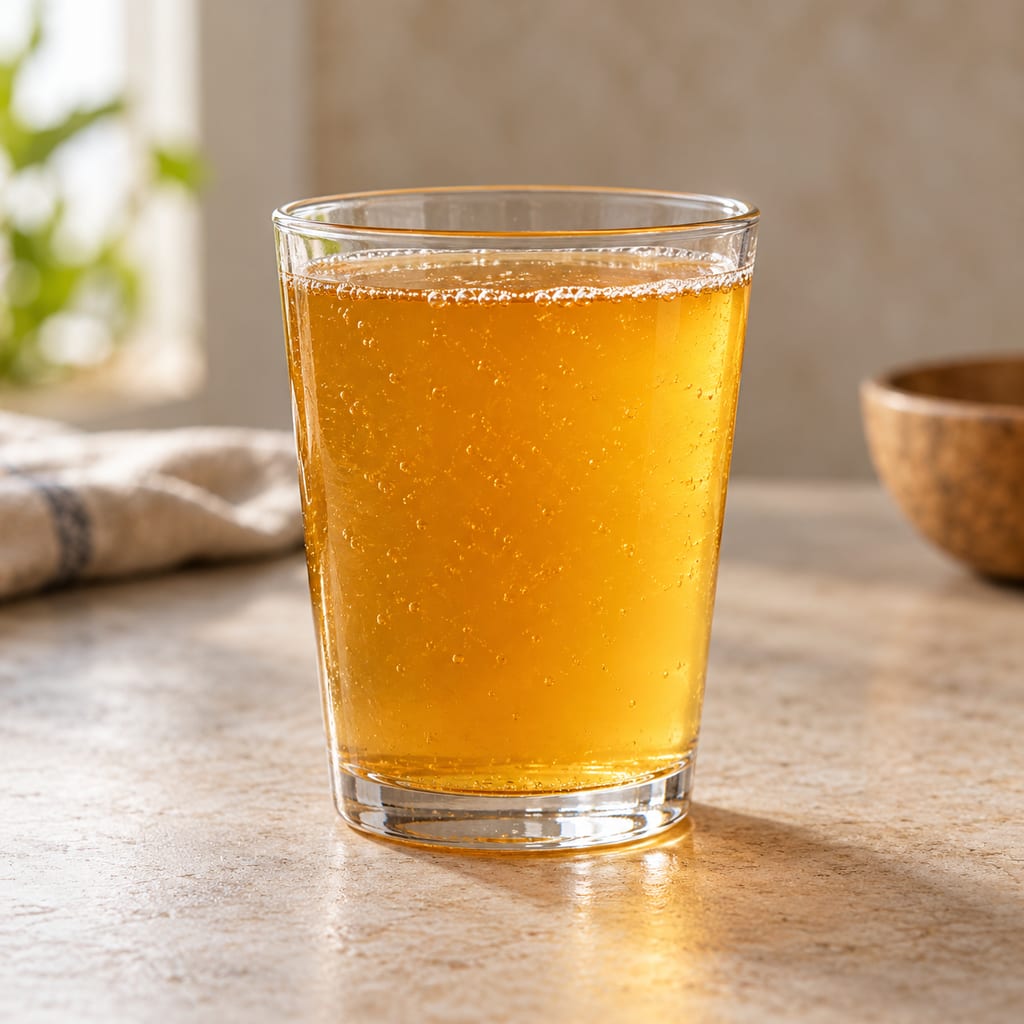
An Oregon State food-science lab formula ferments pineapple skin and piloncillo with jalapeño and warm spices for three to five days, then strains and refrigerates it. The handout reports wide alcohol variability.
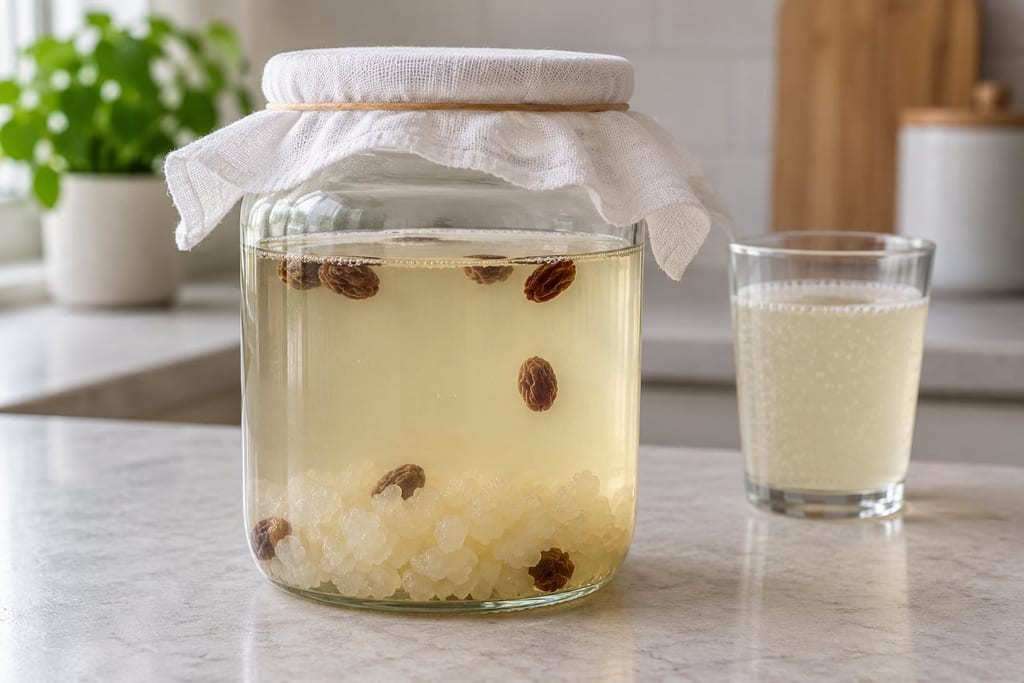
Water kefir grains culture lightly sweetened water into a tart, faintly fizzy drink, with raisins added as an optional dried-fruit nutrient. Alcohol, acidity and fermentation rate vary batch to batch.

A gelling polysaccharide extracted from red seaweeds, sold as kanten strips or powder; it sets firm at a low concentration and stays solid until about 85 °C.

A Dominican table and seasoning condiment of sour orange juice, mixed with lime and salt and bottled raw; garlic, oregano or a hot pepper may be added for meat or a spicier bottle.

Cicerbita alpina is an alpine perennial whose tender shoots and leaves have been eaten raw or cooked. Sámi milk preparations and modern Carnian dishes are distinct uses, with serious identification and preservation limits.

Japanese skipjack tuna cooked, then repeatedly smoked and dried over a wood fire by the hand-fired tebiyama method into a hard block for shaving into dashi: the first stage of katsuobushi.

A Swedish-style spirit vinegar made by fermenting neutral alcohol with live vinegar bacteria, with a separate guide to commercial ättika strengths.

A yeast-raised wheat ring shaped from a firm dough, briefly boiled and baked. This source-batch formula gives a gently malted crust and a chewy crumb.

A warm dip of garlic, anchovy and olive oil, often enriched with butter, that Piedmont serves over a flame with raw and cooked vegetables and bread.

Bechamel is a white sauce of milk thickened with a butter and flour roux, one of the French mother sauces, and the base from which Mornay and other cheese and cream sauces are made.
No community contributions have been published for this entry yet.
Sign in to contribute. Published comments and photos are free to read.
Martat (Martha Organization), FinlandInspiration · Process · History · Location · Safety
SimaFive-liter formula: 2 lemons, 5 L water, 300–350 g white sugar, 300–350 g brown sugar and 1/5 tsp yeast
Boil half the water, add the sugars and lemon, dilute with cold water, pitch yeast at hand-warm temperature and ferment one day at room temperature
Bottle with raisins and 1 tsp sugar, cap loosely and ferment around three days at room temperature or about a week in the cold
Martat associates sima with Vappu and identifies the recipe as a traditional spring treat.
Cited in: What is sima?; The history of sima: from honey drink to Vappu refreshment; Ingredients; White and brown sugar; Lemon; Yeast; Raisins; Equipment; 1. Prepare the lemons; 2. Add the sugars; 3. Dissolve with hot water; 4. Add cold water; 5. Cool and add yeast; 6. Primary fermentation; 7. Prepare the bottles; 8. Strain and bottle; 9. Secondary fermentation; 10. Refrigerate and serve; What happens during fermentation?; Why the drink remains sweet; Variations across Finland; How sima is served; Recognising normal changes and problems; Safety and alcohol
ValioProcess · Safety · Location
Sima5 L batch method and 24-hour first ferment
Pressure increases during bottle fermentation; use loose caps and release pressure from swing-top bottles when needed
The source gives about three days at room temperature or a week refrigerated and about one week refrigerated storage after readiness.
Cited in: Ingredients; Equipment; 10. Refrigerate and serve; Variations across Finland; How sima is served; Recognising normal changes and problems
Finnish Institute for the LanguagesHistory
Finnish Institute for the Languages — Sima and tippaleipäFinnish Institute for the Languages — Sima and tippaleipä
Cited in: The history of sima: from honey drink to Vappu refreshment
YleHistory
Yle — The history of sima and VappuYle — The history of sima and Vappu
Cited in: The history of sima: from honey drink to Vappu refreshment
ThisisFINLANDHistory
ThisisFINLAND — May Day food traditionsThisisFINLAND — May Day food traditions
Cited in: The history of sima: from honey drink to Vappu refreshment