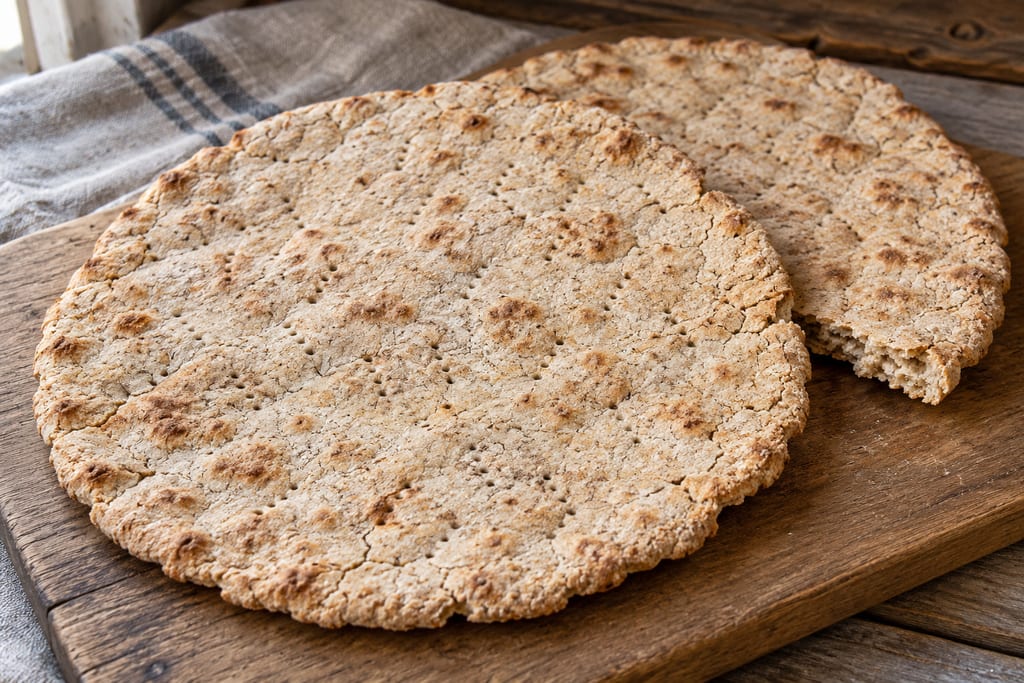
Lapland barley rieska
Two barley flatbreads made with cold dough and baked rapidly on a hot sheet, following Timo Lepistö's northern Finnish formula.
 FermenteaWhere food goes to change
Karelian pasty · Karelian pie
Karjalanpiirakka are open, pleated rye-and-wheat pastries filled with creamy rice porridge, baked hot and brushed with butter and milk.
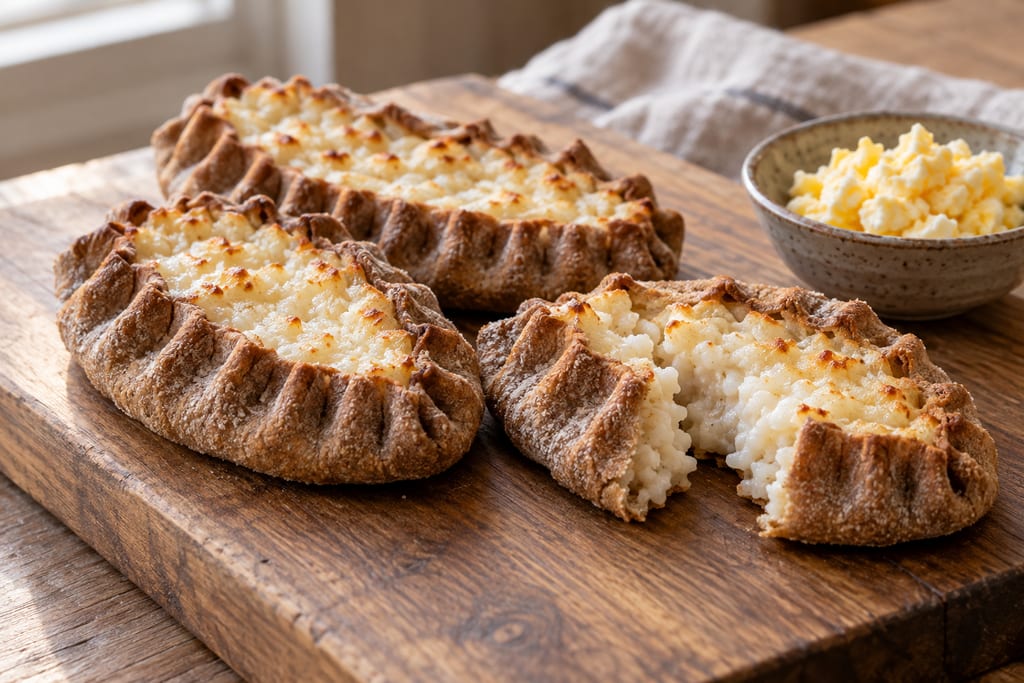
Karjalanpiirakka has a thin, open rye-and-wheat crust folded and pleated around porridge. This recipe follows Valio's Finnish 40-piece batch. The Martat home-economics recipe documents a similar small-batch method from North Karelia. The EU product specification recognizes rice, barley and potato fillings, but this page covers the rice version only.
Cooked rice is the safety-sensitive part of this recipe. Bacillus cereus spores may survive cooking, grow as rice cools slowly and form a heat-resistant toxin. The Finnish Food Authority advises starting cooling immediately, reaching +6°C within four hours, and keeping the food at +4–6°C. Divide the porridge into shallow dishes, preferably about 5 cm deep, so it cools faster. Keep it refrigerated until filling the pastries. Do not rely on the later high-temperature bake to make improperly cooled porridge safe.
The EU application reports a first written reference from 1686 and describes the pastry spreading into present-day eastern Finland during the 17th and 18th centuries. It was later carried more widely by people displaced from Finnish Karelia during the Second World War. Earlier fillings included barley; rice became a familiar filling, while potato remains a separate version. The EU's Traditional Speciality Guaranteed status protects a traditional name and method or composition, not an exclusive geographic origin.
The EU registration application cites a first written reference from 1686 and describes karjalanpiirakka spreading into present-day eastern Finland in the 17th and 18th centuries. Rice is a familiar modern filling; older versions also used barley, while potato and other fillings remain distinct variants.
Yield 40 pies · Scaling: source batch only
Spores can survive cooking and grow while rice porridge cools slowly; the vomiting toxin can resist normal reheating.
Hazard sourceStart cooling the porridge immediately. Divide it into shallow containers, preferably about 5 cm deep, and cool to +6°C within 4 hours; then store at +4–6°C until use.
Control sourceBake the filled pastries at the source temperature and time; do not use baking to rescue porridge that was cooled or held improperly, because the toxin can resist normal heating.
Control sourceRice porridge must be cooled promptly and kept cold before filling the pastries. Slow cooling can let Bacillus cereus grow, and its vomiting toxin may survive reheating and baking.
The cooling limit is taken from Finnish Food Authority guidance for cooked food; this home batch does not establish a storage life after cooling.
The name and pastry are associated with Karelia; the EU TSG records a traditional method and composition, not a geographically exclusive place of origin.
The recipe sources document Finnish preparations and the pastry's spread across Finland; this does not claim exclusive production there.
Two barley flatbreads made with cold dough and baked rapidly on a hot sheet, following Timo Lepistö's northern Finnish formula.
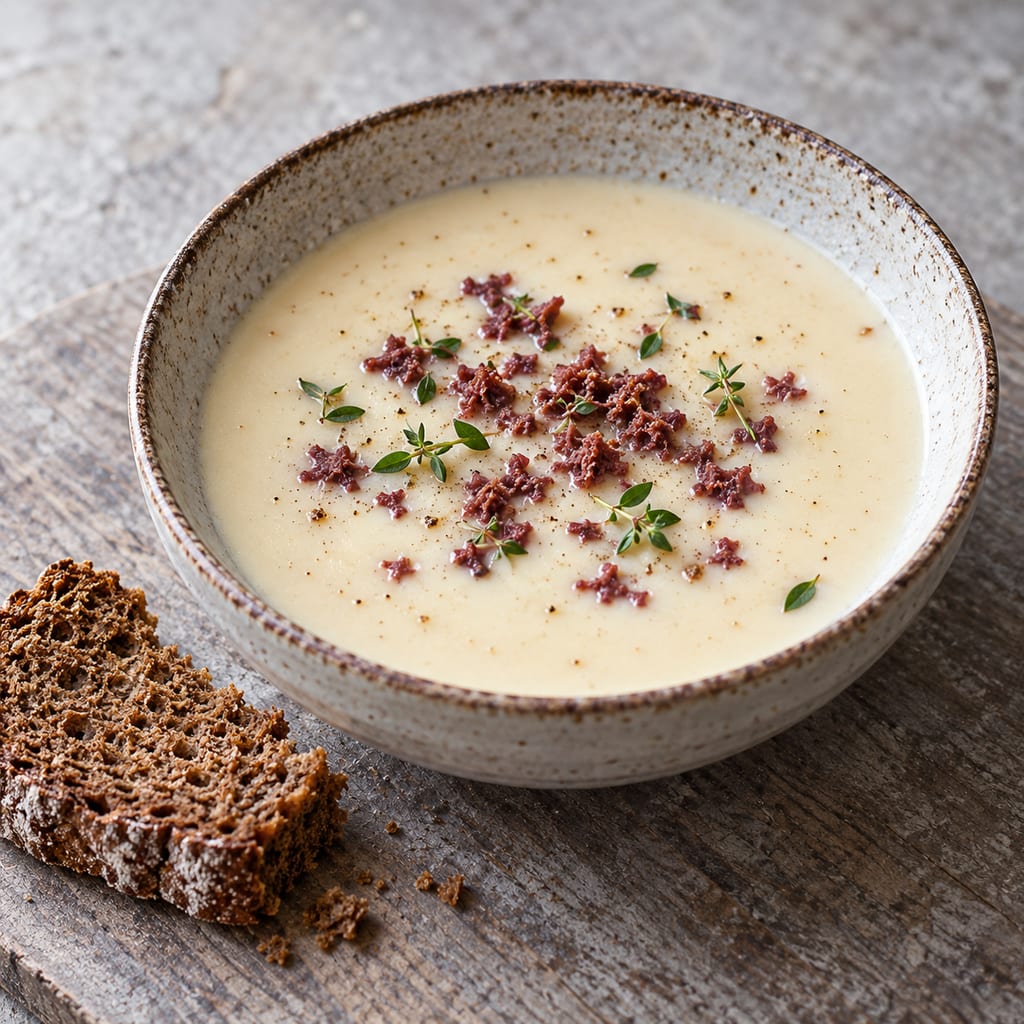
Kylmäsavuporokeitto is a creamy cold-smoked reindeer soup with onion, stock and cheese, served with bread.

Finnish pea soup simmers dried peas with palvikinkku or a vegetable alternative, then is served with mustard and chopped onion.
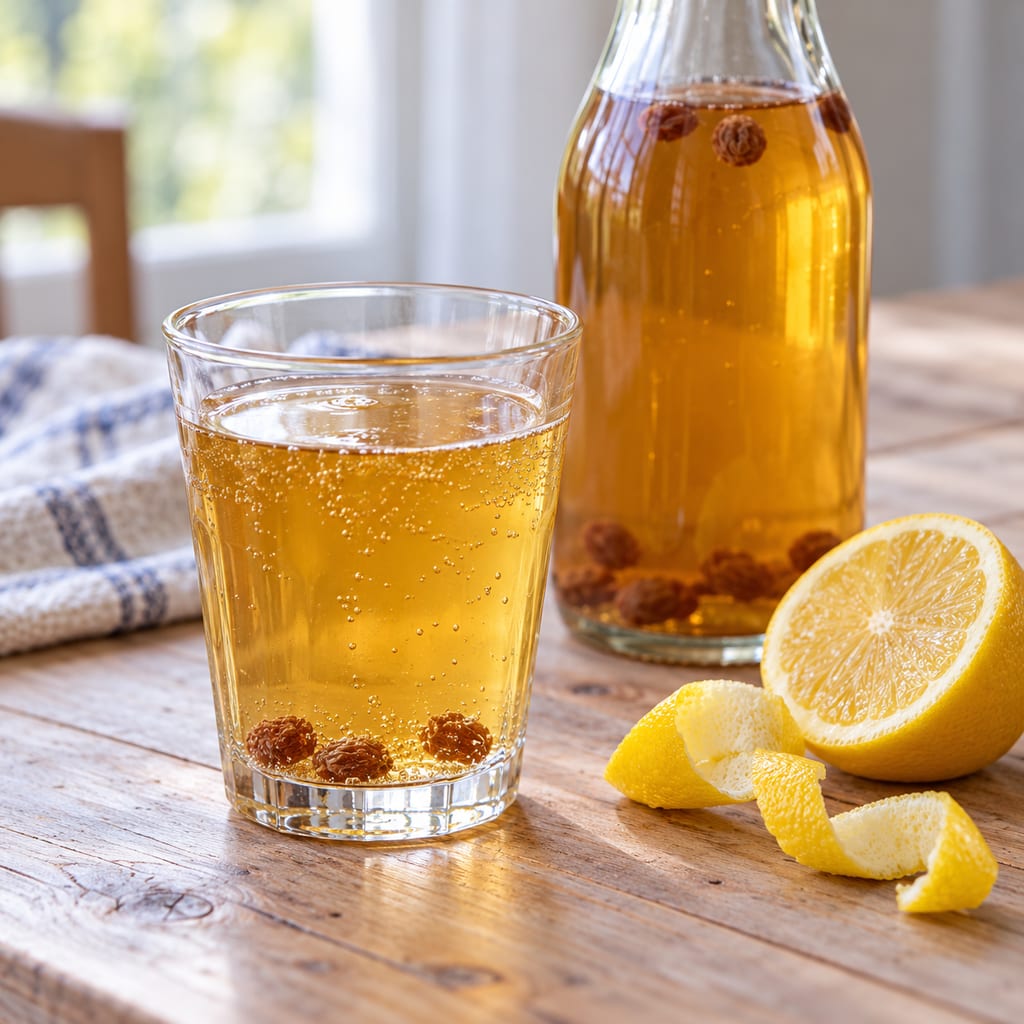
A lightly fermented Finnish May Day drink of lemon, white and brown sugar and a little yeast, bottled with raisins that rise as the carbonation builds.
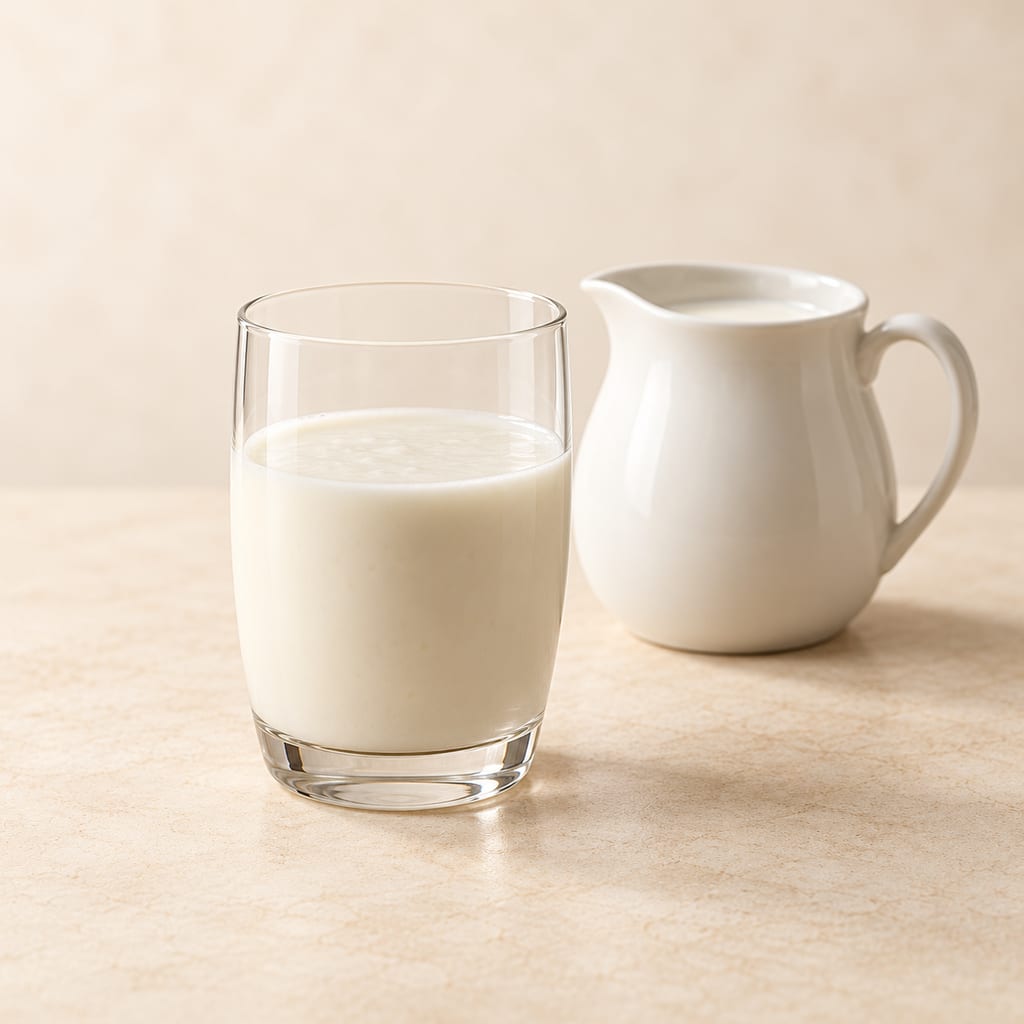
A thin cultured-milk drink made with a commercial countertop starter. Finnish piimä is a mealtime sour milk with distinct regional traditions.
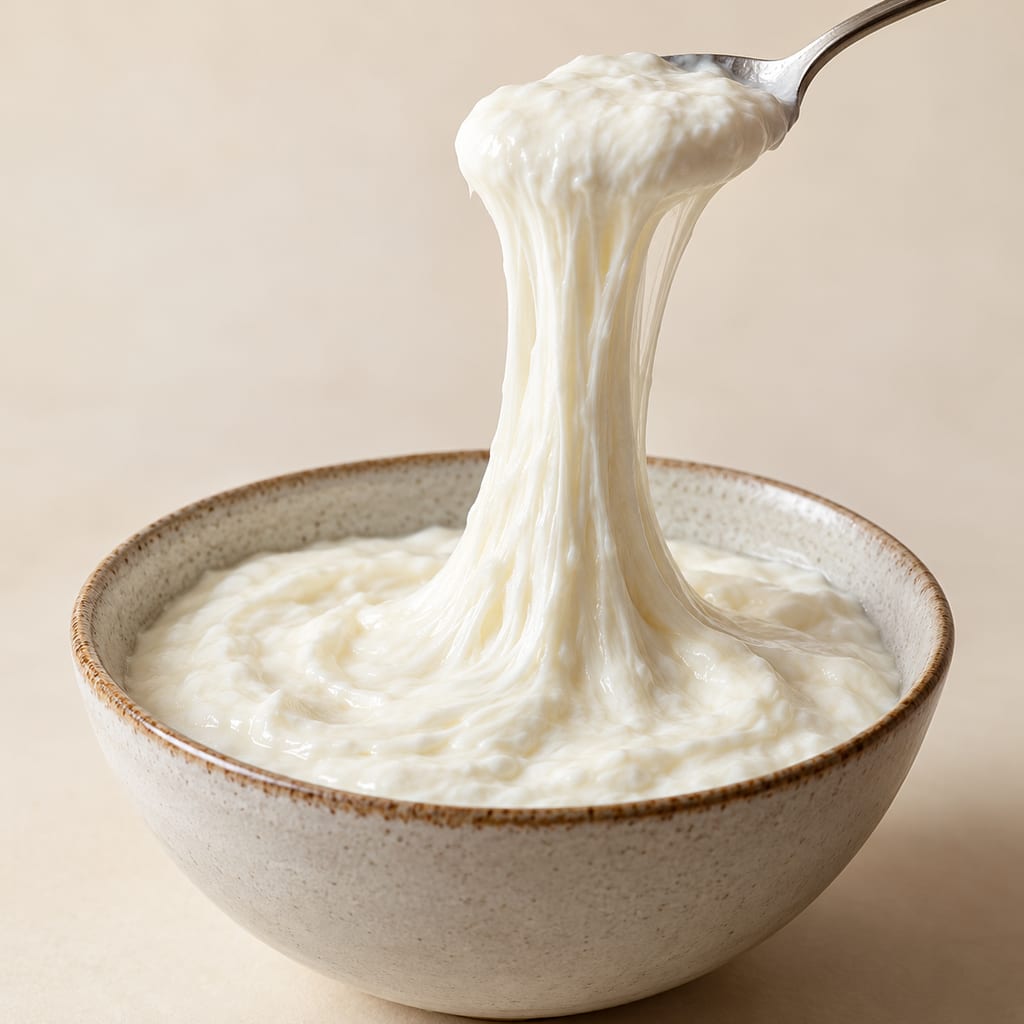
Pitkäpiimä is a Finnish cultured milk whose defining trait is a long, stretchy, ropy texture. It is closely related to viili and is made by lactic fermentation with a specific culture.
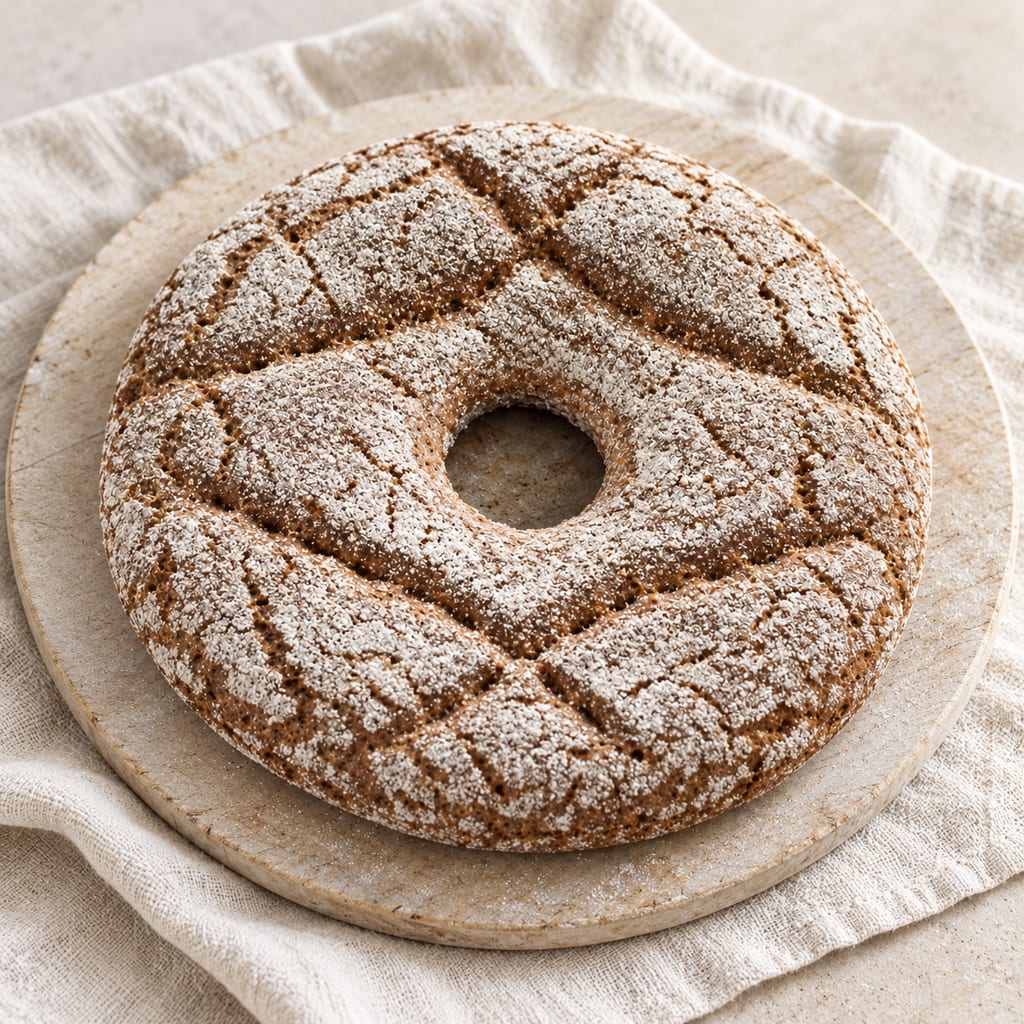
A Finnish rye sourdough shaped here as two flat ring loaves, made from rye flour, water, salt and an established rye leaven.

Salted mushrooms are a traditional wild-mushroom preserve, especially of Finnish and Russian milk caps, made by layering boiled mushrooms with coarse salt or keeping them under brine, and kept cold.
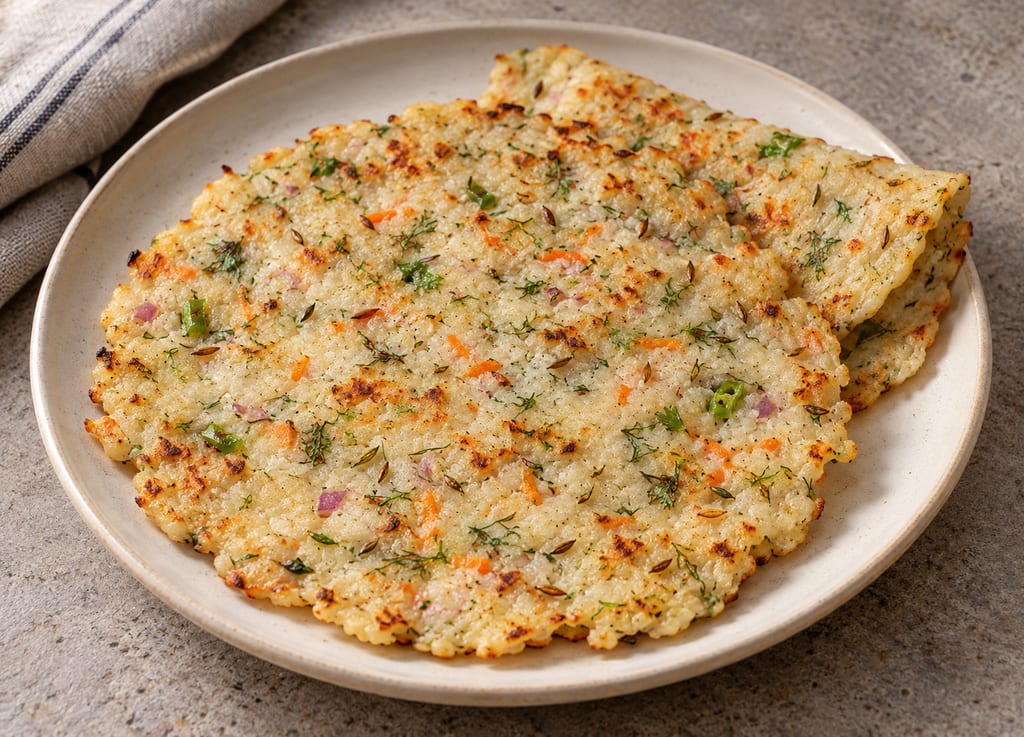
This Karnataka-style akki rotti mixes fine rice flour with vegetables, coconut, herbs and spices, then hand-pats and griddle-cooks the dough.
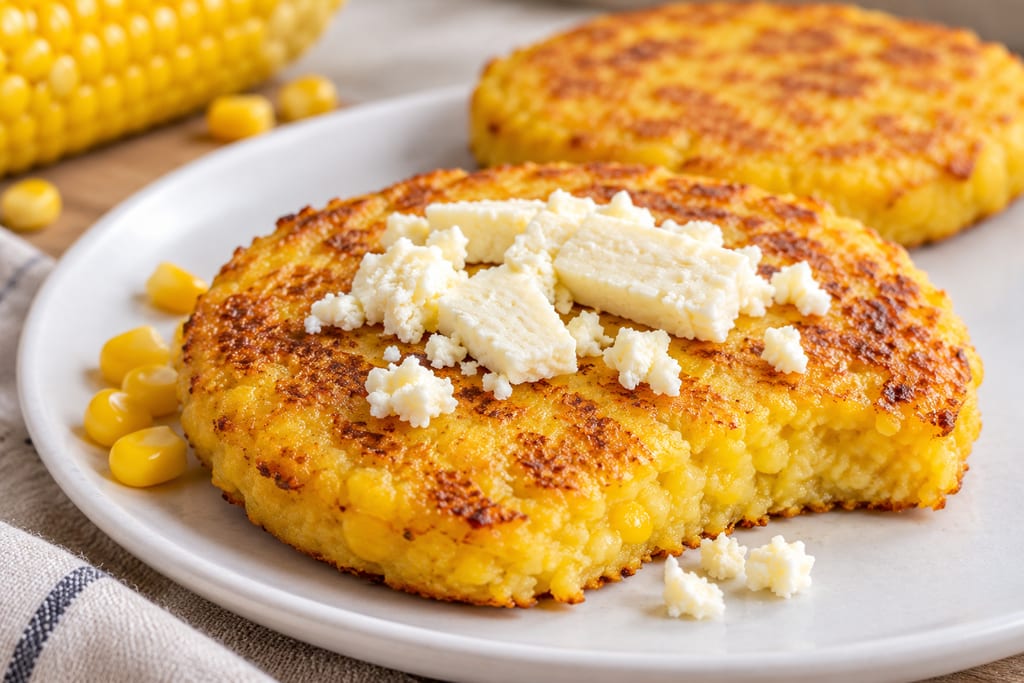
A Colombian Andean griddle cake made from fresh sweet-corn batter, cooked in butter and served with white cheese.
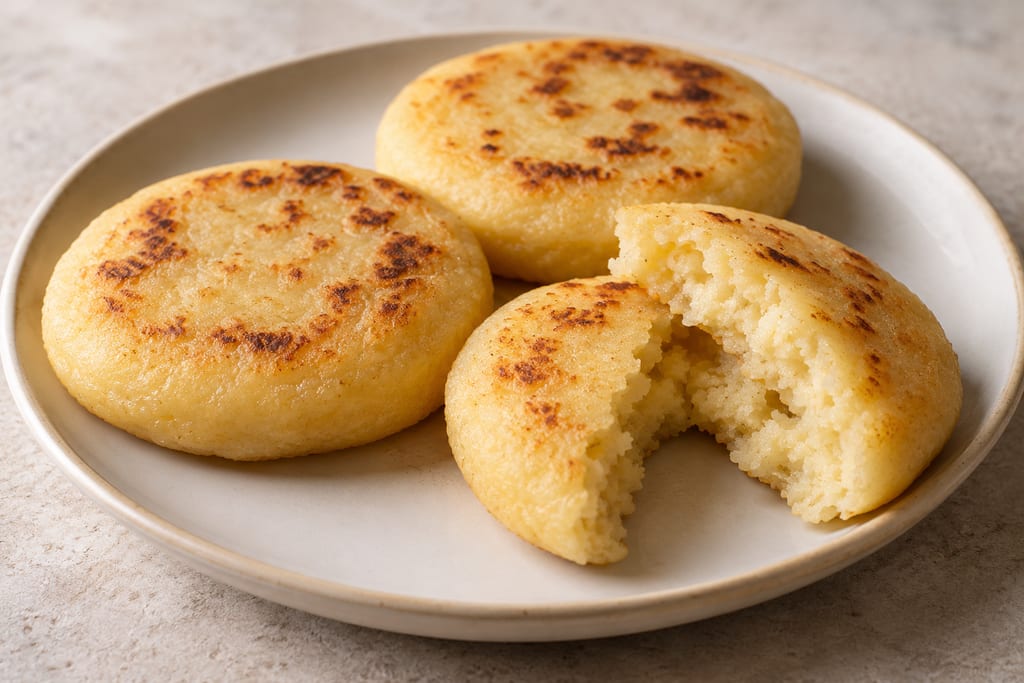
This household version combines precooked corn flour, warm water and salt, then cooks thick rounds on a lightly oiled skillet or griddle. It is one source-specific arepa method, not a universal Colombian or Venezuelan formula.
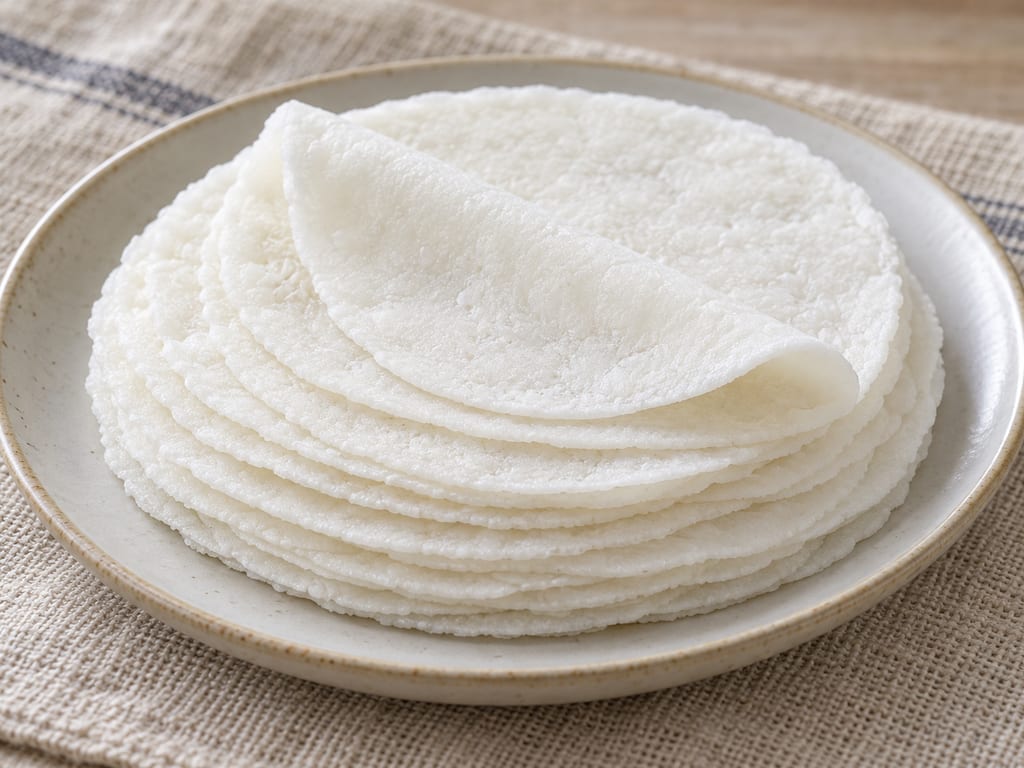
Thin Malabar rice-flour rounds made from roasted rice flour cooked into salted boiling water, kneaded after cooling, and rolled to about 1 mm. They cook on a hot griddle without taking on colour.
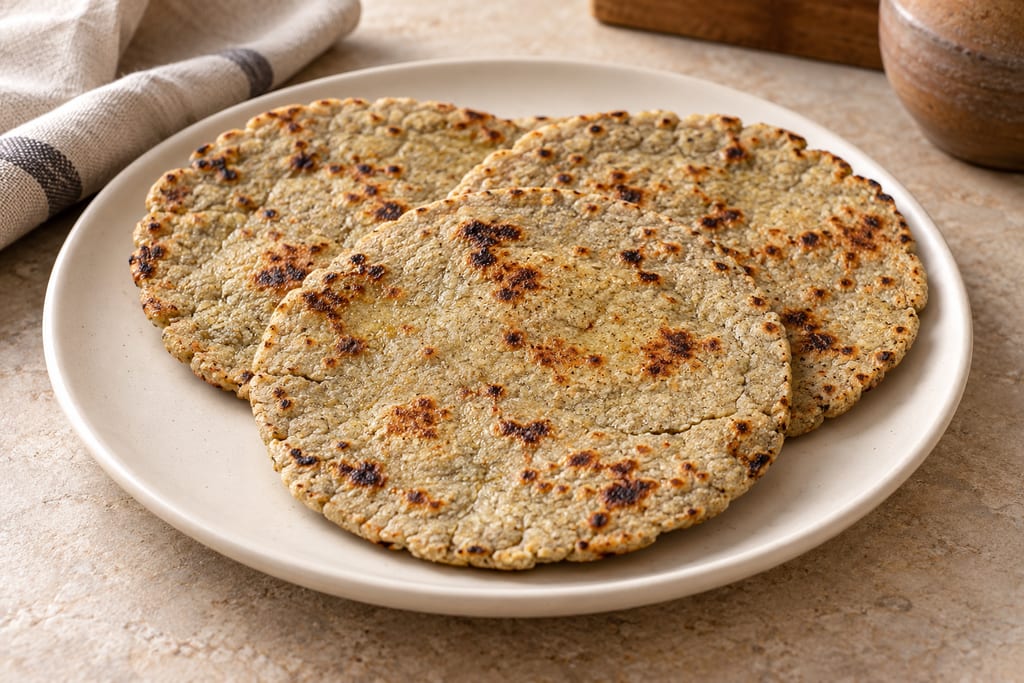
A pearl-millet flatbread shaped between sheets and cooked on a hot tawa. This home batch makes eight.
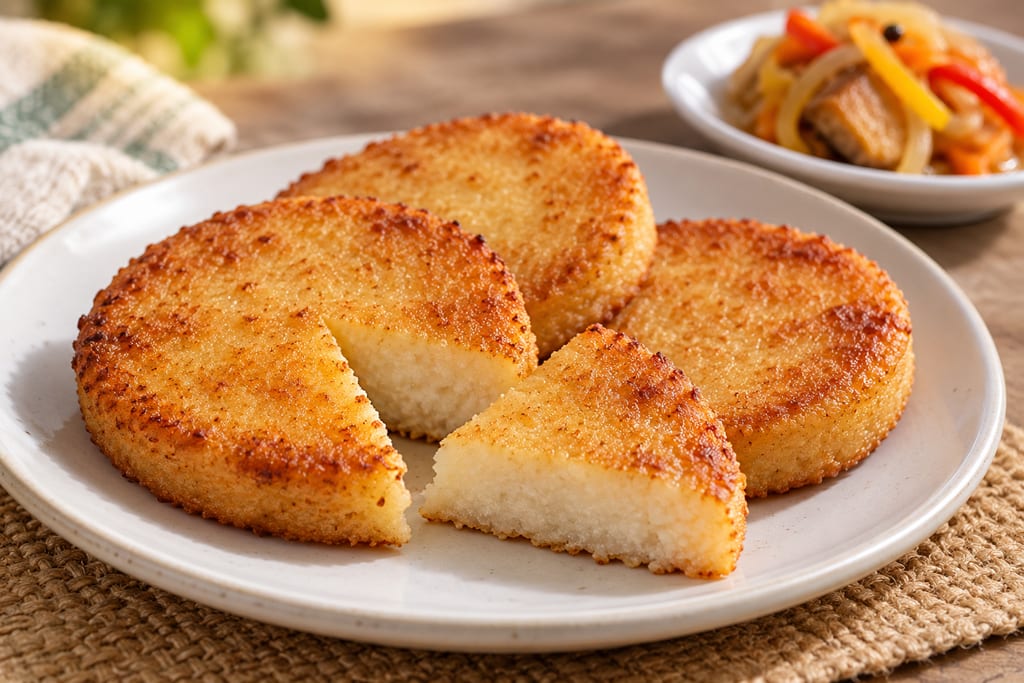
A serving method for approved, prepared bammy rounds: soak them in coconut milk and refry until golden. It does not process raw cassava.
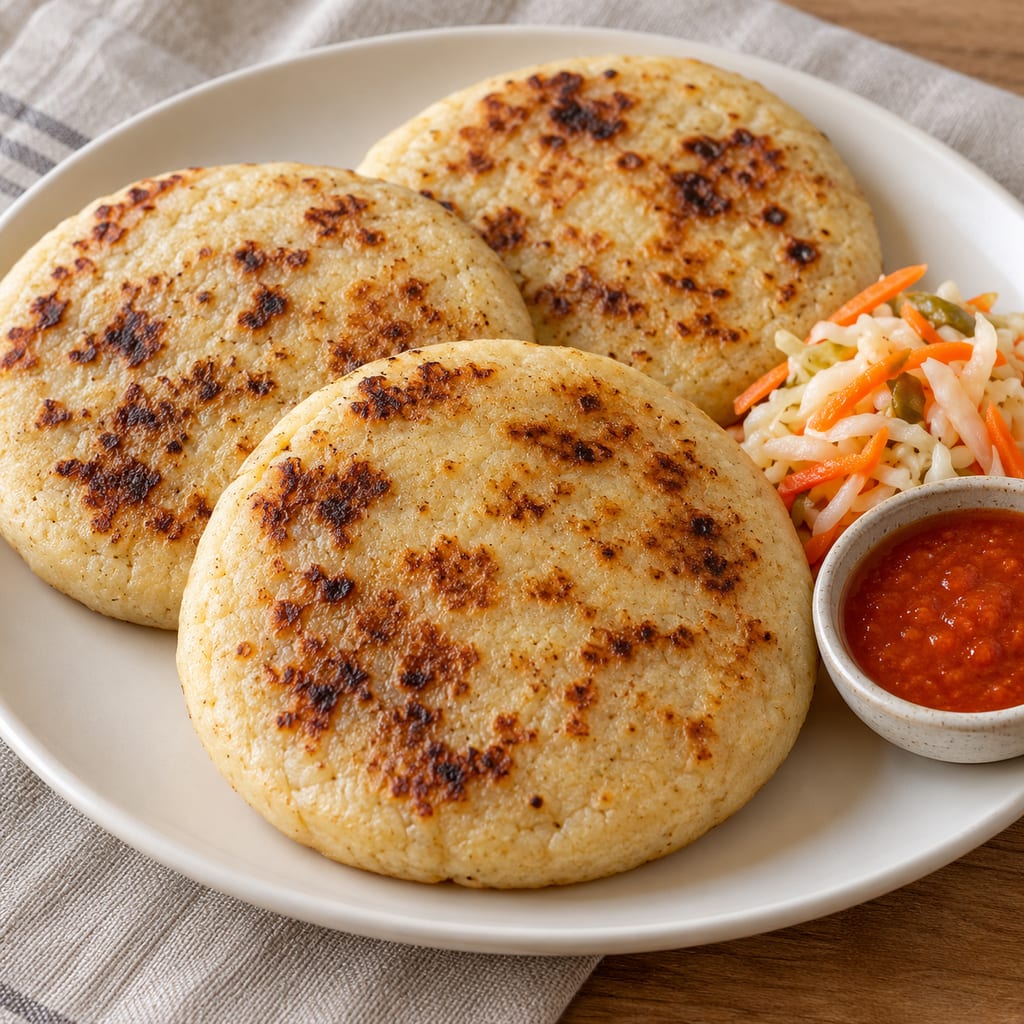
Salvadoran-style masa harina cakes filled with refried beans and cheese, sealed and cooked on an oiled skillet.
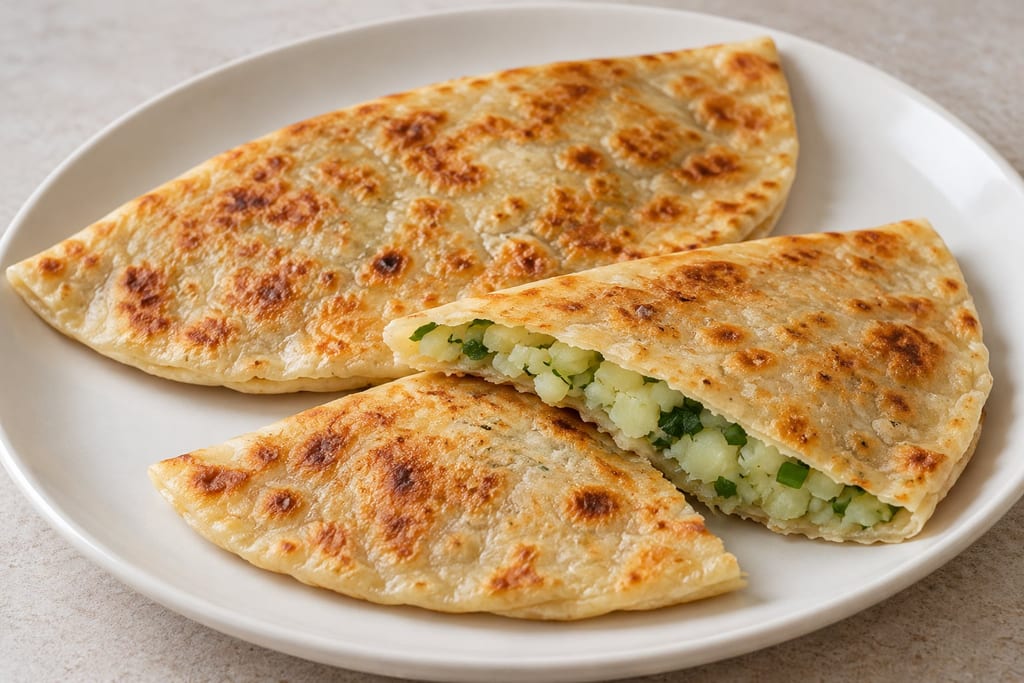
A thin, unleavened Afghan flatbread filled with mashed potato, scallion and cilantro, folded and pan-browned. This version uses a dough made from scratch.

A gelling polysaccharide extracted from red seaweeds, sold as kanten strips or powder; it sets firm at a low concentration and stays solid until about 85 °C.

A Dominican table and seasoning condiment of sour orange juice, mixed with lime and salt and bottled raw; garlic, oregano or a hot pepper may be added for meat or a spicier bottle.

Cicerbita alpina is an alpine perennial whose tender shoots and leaves have been eaten raw or cooked. Sámi milk preparations and modern Carnian dishes are distinct uses, with serious identification and preservation limits.

Japanese skipjack tuna cooked, then repeatedly smoked and dried over a wood fire by the hand-fired tebiyama method into a hard block for shaving into dashi: the first stage of katsuobushi.

A Swedish-style spirit vinegar made by fermenting neutral alcohol with live vinegar bacteria, with a separate guide to commercial ättika strengths.

A yeast-raised wheat ring shaped from a firm dough, briefly boiled and baked. This source-batch formula gives a gently malted crust and a chewy crumb.

A warm dip of garlic, anchovy and olive oil, often enriched with butter, that Piedmont serves over a flame with raw and cooked vegetables and bread.

Bechamel is a white sauce of milk thickened with a butter and flour roux, one of the French mother sauces, and the base from which Mornay and other cheese and cream sauces are made.
No community contributions have been published for this entry yet.
Sign in to contribute. Published comments and photos are free to read.
ValioMethod · Ingredients
KarjalanpiirakatForty-piece rye-and-wheat crust recipe with cooked rice porridge; exact ingredients, portioning, thin rolling, pleating, 275–300°C bake for 10–12 minutes and butter-milk finish.
Cited in: A rice-filled Karelian pastry
Suurpellon Martat / Suurpelto MarthasMethod · Context
Karelian pasties (Karjalanpiirakat in Finnish)North Karelian and Finnish association; thin rye-and-wheat crust, rice filling, porridge-cooking and pleating method, and butter-milk brushing.
Cited in: A rice-filled Karelian pastry
European Commission / Official Journal of the European UnionMethod · History · Context
Product specification of a Traditional Speciality Guaranteed: KarjalanpiirakkaThe registered method permits rice, barley or potato fillings; describes nearly translucent rye or wheat dough, crimped edges and a 250–300°C bake for 15–20 minutes. It records the product's wider historical spread and its TSG status as a method/composition protection, not a geographically exclusive origin.
Cited in: A rice-filled Karelian pastry; Karelia and the recorded history
European Commission / Official Journal of the European UnionHistory
Commission Regulation (EC) No 317/2003Entered Karjalanpiirakka as a Traditional Speciality Guaranteed in the EU register in 2003.
European Commission / Official Journal of the European CommunitiesHistory
Application for registration: KarjalanpiirakkaThe registration application reports a first written reference to karjalanpiirakka in 1686 and describes spread in the 17th and 18th centuries.
Cited in: Karelia and the recorded history
Finnish Food Authority (Ruokavirasto)Safety
Bacillus cereusB. cereus spores can survive heating and grow as cooked food cools; cooked rice is a common vehicle; the vomiting-form toxin is heat-resistant. The authority advises cooling cooked food to +6°C within four hours and storing it at +4–6°C.
Cited in: Cook and cool the rice porridge
Finnish Food Authority (Ruokavirasto)Safety
CoolingCooling should start immediately; thinner layers cool faster, preferably about 5 cm and under 10 cm; cooled food must then be refrigerated.
Cited in: Cook and cool the rice porridge
ThisisFINLAND / Ministry for Foreign Affairs of FinlandHistory · Context
Rolling out pies, rye bread and other essential eastern Finnish recipesKarelian pies were historically made with barley, rice was used on special occasions, and they later became familiar across Finland; home-scale porridge method and egg-butter accompaniment.
European CommissionHistory · Context
Geographical indications and quality schemes explainedTraditional Speciality Guaranteed status recognizes traditional methods or composition and is not linked to a specific geographical area.
Cited in: Karelia and the recorded history