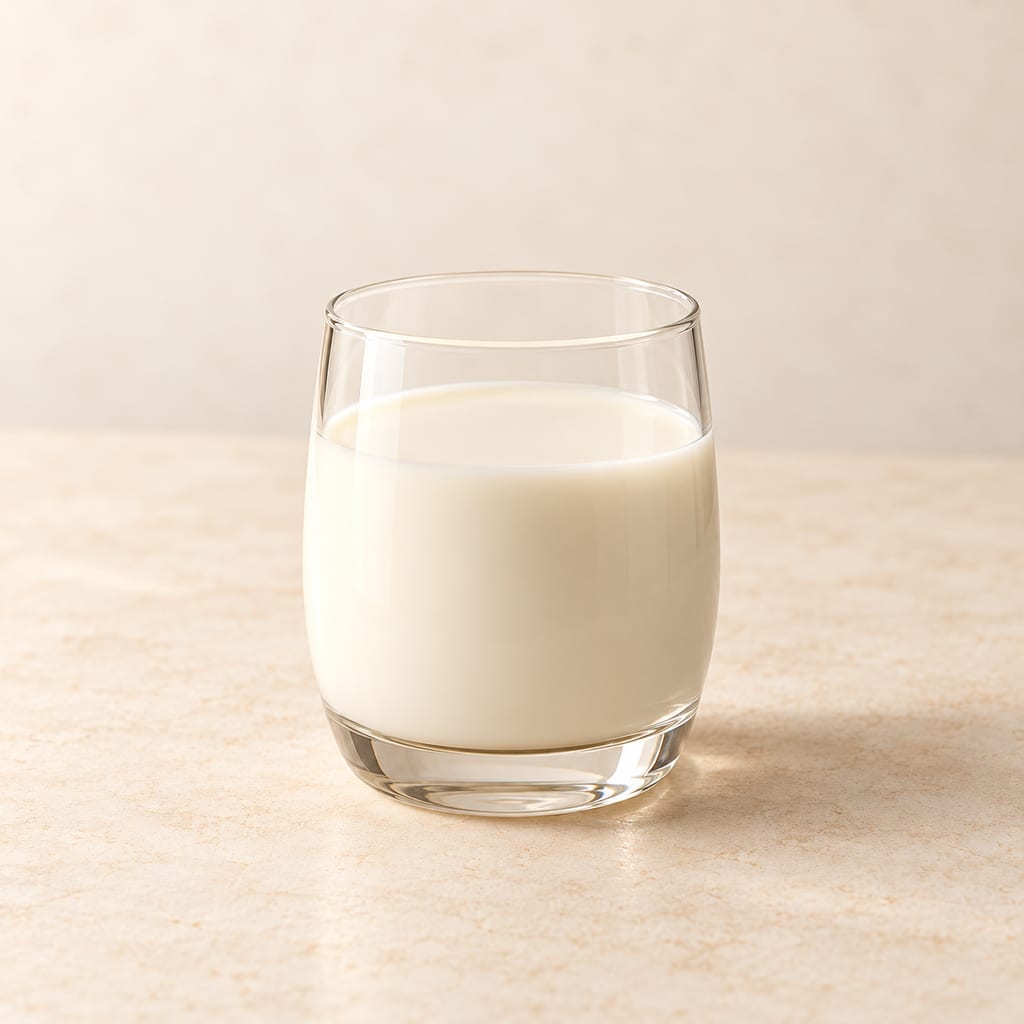
Pasteurized whole milk
Full-fat milk given conventional pasteurization, selected in linked cultured-milk and cheese methods for its composition and treatment.
 FermenteaWhere food goes to change
Modern adaptation
Piimä
A thin cultured-milk drink made with a commercial countertop starter. Finnish piimä is a mealtime sour milk with distinct regional traditions.
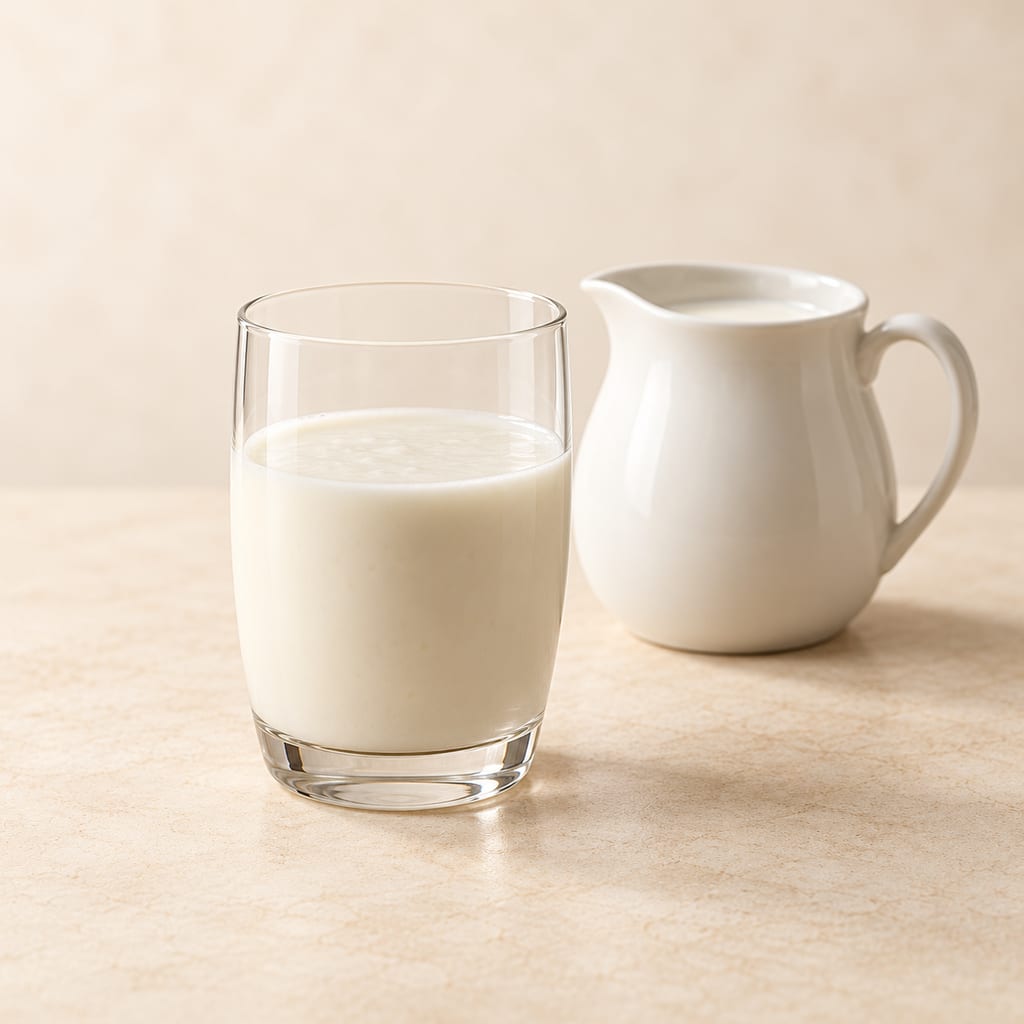
Piimä is a Finnish sour-milk food familiar as a drink with meals. Its acidity gives it a different place at the table from plain milk, while its body can range across distinct household and commercial preparations. The Finnish word is often translated as buttermilk, but that English name needs context: milk cultured into a sour drink and liquid left after churning cream have different histories of manufacture.
The preparation here uses a modern commercial countertop culture. An established batch inoculates pasteurized whole milk, which sets at room temperature before refrigeration. It offers a small home make under a supplier’s specified conditions, rather than a reconstruction of every Finnish food called piimä.
The wider food belongs to a dairy repertoire that includes drinkable sour milk, long or stretchy forms and spoonable curds. Their differences become clearer when followed through their ingredients, vessels and treatment. Sourness alone does not explain whether a portion pours from a jug, stretches from a spoon or contains pieces of curd.
In North Savo household dairying, cream was skimmed for butter and the remaining milk, called kurri, became piimä. The family obtained more than one food from the milk supply: cream could follow the butter-making route, while the remaining milk could be soured.
Piimä extended with water and other dairy products became sintu, a thirst-quenching drink. Kokkelipiimä occupied another role as a spoonable food eaten with milk or piimä. These preparations made different uses of cultured dairy within household meals.
The material setting is visible in the museum’s objects. A low wooden vessel called a kehlo served in souring milk into piimä or viili and in cream skimming. It links the management of the milk’s surface cream with the vessels used in household fermentation. Those recorded uses belong to a regional account; they do not supply one standardized modern fat content or starter formula.
Cream and skimmed milk also lead to different kinds of buttermilk. When cream is churned, agitation brings its fat globules together into butter grains. Liquid separates from those grains and can be drained away. When milk is cultured into piimä, acidification instead changes the milk proteins and the body of the whole liquid. A churn and a setting vessel therefore do different work, even within one dairy household.
This distinction helps with the English word on a recipe label. “Buttermilk” can point toward the liquid from butter making or toward a cultured dairy drink. The starting material and the operations tell more than the translation alone. In the countertop preparation, no butter is churned and no butter grains are removed: the milk remains together while its culture develops the sour taste and set.
The Kuopio collection includes a nineteenth-century piimähinkki, a wood-and-birch-bark vessel for liquids with an opening closed by a plug. A late nineteenth-century piimäleili, constructed from wooden staves, gives another view of sour milk beyond the setting vessel. The museum explicitly connects the leili with carrying piimä as provisions to the hayfield.
These objects make a practical distinction between making, holding and carrying a food. A broad, low vessel suits different work from a closed container taken out with a meal. Piimä’s place in daily life included that movement between household and workplace, alongside its place on the table.
Diluted sour milk was also a mealtime drink and provisions during work or hunting. The drink did not have to be presented as a separate dessert or treated as a special occasion food. Its carrying vessels and dilution place it among the ordinary foods used while other work continued.
Older Finnish sour-milk practice differed by region. In western Finland, an added starter produced a smooth, stretchy liquid. In the east, milk left to sour naturally produced a curdled preparation called kokkelipiimä. Spoonable kokkelipiimä could be eaten with milk or piimä.
The distinction concerns process and eating texture as well as geography. A maintained starter introduces organisms from an existing culture, while spontaneous souring leaves a different route by which organisms enter and develop. A stretchy liquid is also a different physical food from curd pieces eaten with a spoon.
The present counterpart begins with pasteurized whole milk and an established purchased culture, while the North Savo account starts with milk from which cream had been removed. The continuity lies in making sour dairy food; the exact ingredients and operations still need their own descriptions.
The countertop starter is the active ingredient in the home preparation. A spoonful from a previous successful batch carries its culture into fresh milk. Milk supplies the new batch’s water, proteins, fat and milk sugar; the inoculum begins the biological change that makes it a cultured food.
The purchased Piimä starter used here belongs to a group of mesophilic countertop cultures. Mesophilic refers to growth under moderate temperature conditions, which is why this supplier’s routine does not use a heated yogurt incubator. Its instructions still specify a temperature range: an ordinary room needs to fall within it rather than merely feel comfortable to the cook.
The recipe selects pasteurized whole milk. Whole milk keeps dairy fat in the starting material, unlike the historical cream-skimmed milk described in the museum account. This choice affects what enters the gel and the richness of the dairy food, without implying a fixed finished composition.
The previous batch is therefore doing a different job from the fresh milk. One supplies the ongoing culture; the other supplies most of the material that the culture will transform.
Lactic-acid bacteria convert milk sugar into lactic acid. As the milk becomes more acidic, casein particles lose some of the interactions that keep them dispersed and begin forming a network. The network retains water and fat, giving the fermented milk a body that the starting liquid did not have.
Acidification also changes the mineral environment associated with the proteins. Gel formation is consequently more involved than adding a sour flavour to unchanged milk. The acidity and protein structure develop together, turning a freely flowing liquid into a soft material with some ability to hold its shape.
In the countertop set, biological acid production and physical gel formation work together. Fresh milk supplies the material for the network; culturing changes the conditions in which that network forms.
The gel also retains much of the milk’s liquid. This preparation has no cloth-draining stage to remove whey and concentrate the curd. Its body comes from the cultured structure and the starting milk, rather than from the separate concentration step used to make a drained fresh cheese.
Long, ropy texture has another contributor besides the acid-formed protein gel. Some lactic cultures produce extracellular polysaccharides, often shortened to EPS. These are polymers made by the bacteria outside their cells. Their type, amount and interaction with the milk gel influence how the food flows and stretches.
Experimental ropy fermented milks have shown different degrees of ropiness despite all forming acid milk gels. Texture involved both the protein structure and the contribution of the culture’s polysaccharides.
Their Nordic comparison names Finnish viili among related commercial products. It is evidence for a mechanism in ropy cultured milk, not proof that every piimä has that texture or contains the same organisms. The older western description of a stretchy sour milk and the laboratory explanation can illuminate one another while remaining distinct kinds of evidence.
An undisturbed cultured-milk gel behaves differently from the same material after vigorous stirring. General yogurt rheology describes how the gel yields under force and becomes thinner as it is worked. The texture in a setting vessel and the texture after pouring are therefore different observations of a food’s structure.
This makes the supplier’s gentle tilt a useful way to observe the set without beating it apart. The check asks how the mass moves. It precedes the separate refrigeration stage, after which the cultured milk can be portioned for eating and for the next batch.
Cooling also has a biological role. General cultured-milk science describes refrigeration as slowing fermentation, rather than instantly stopping all activity. Continued acid production after the main set is called post-acidification and can affect sourness and whey separation. This helps explain why making a set and keeping a finished cultured milk are separate parts of the work.
Neither movement nor cold treatment adds a new ingredient. They change the conditions and handling of a structure that the milk and culture have already begun forming.
Current Finnish piimä is milk fermented with lactic cultures, served as a mealtime drink, cold snack and cooking ingredient. Commercial ranges include formulations with additional cultures. Those contemporary products show that a familiar food name can cover deliberate manufacturer choices; their labels are not a list of organisms for the separate countertop starter.
Its kitchen uses extend beyond drinking. Piimä can provide the dairy base of a cold sauce, enter a bread dough or become part of a cake mixture. The food carries acidity and liquid into those dishes, together with its milk components.
At the table, this makes it useful in more than one form. A glass remains a drink alongside other foods; a dressing distributes the cultured dairy through a dish; a baked preparation incorporates it into another structure altogether. Those uses explain why a fermented-milk food can remain recognizable as piimä even when the cook no longer serves it from a jug.
A contemporary saaristolaisleipä, or archipelago bread, combines piimä with yeast, malt, rye and wheat flours, bran and dark sweeteners. Piimä is the dough’s dairy liquid, alongside ingredients that bring grain and sweetness. The bread is then served in slices with accompaniments such as butter, cheese or fish. This is a documented contemporary use, rather than evidence that one bread formula dates the sour-milk drink.
Piimäkakku offers a different baking role. Cultured milk enters a spiced cake mixture with flour, sugar, fat, fruit preserve and baking soda. The named food appears as an ingredient within a sweet bake, rather than being poured alongside it. The two test-kitchen examples show that using piimä in baking need not mean one type of dough or one route to leavening.
A mint piimä dressing served with falafel places it in a cold savoury preparation. Mint, seasoning and a little honey accompany the cultured dairy. Here its fluid body allows it to become a sauce around another food. These examples suggest different kitchen functions without requiring the home culture to reproduce a commercial product’s exact composition.
The selected routine uses an already established batch; dry-starter activation is separate. After setting and chilling, some cultured milk is reserved for another make. The supplier’s regular reculturing advice concerns maintaining that starter, not a universal shelf life for the finished food.
Use pasteurized milk, sanitized equipment and prompt refrigeration. Pasteurization does not prevent contamination afterward through a vessel, utensil or hands. The supplier gives no species list, measured acidity endpoint or product-specific refrigerated storage duration.
The nineteenth-century vessels establish use by that period, not an invention date.
Piimä belongs to Finnish everyday meals, where sour milk has long been drunk alongside food. Western Finnish households used a starter to produce smooth, stretchy sour milk; eastern households also made the curdled, naturally soured kokkelipiimä. It was often diluted with water and carried on working days or hunting trips. Nineteenth-century wooden carrying vessels in Kuopio's museum collection document this use, including a late-century piimäleili associated with taking sour milk to the hayfield. This countertop preparation uses a modern commercial culture rather than reproducing those regional household methods.
Scaling: source batch only
Milk, cream and finished cultured dairy can be contaminated by unsanitized equipment.
Hazard sourceUse pasteurized dairy and cleaned, sanitized equipment; refrigerate the finished product.
Control sourceUse pasteurized milk and sanitized containers and utensils. Keep the cultured milk away from raw-milk utensils and refrigerate it after setting.
Piimä countertop culture — Retained cultured milk starts the next batch. The supplier identifies the culture by food name, without species or strain composition.
Refrigerate for at least 6 hours after setting.
Association of piimä as a food; the commercial countertop culture is not documented as a historical Finnish household culture.
Full-fat milk given conventional pasteurization, selected in linked cultured-milk and cheese methods for its composition and treatment.
Follow milk into cheese, cultured drinks, butter, dried curds and sweets: a journey through the animals, seasons and household decisions behind the world's dairy foods.
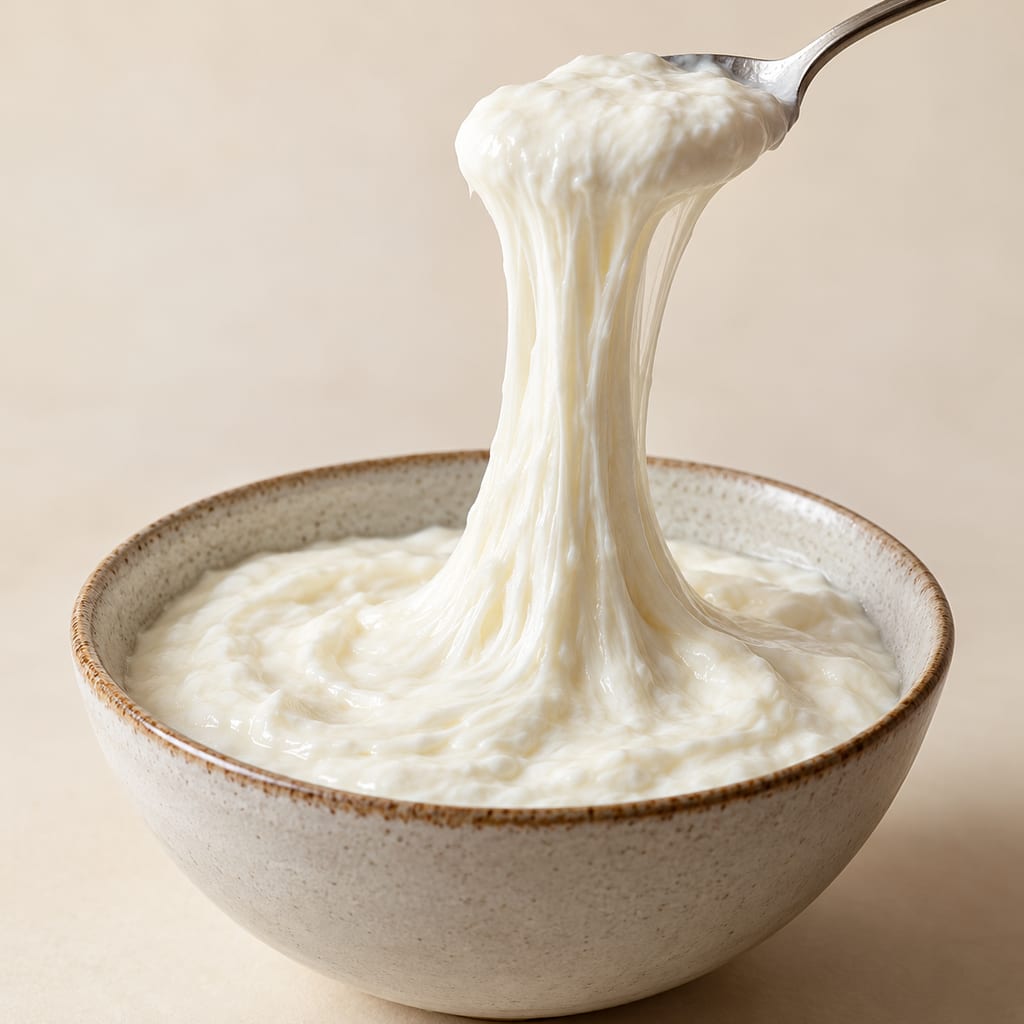
Pitkäpiimä is a Finnish cultured milk whose defining trait is a long, stretchy, ropy texture. It is closely related to viili and is made by lactic fermentation with a specific culture.
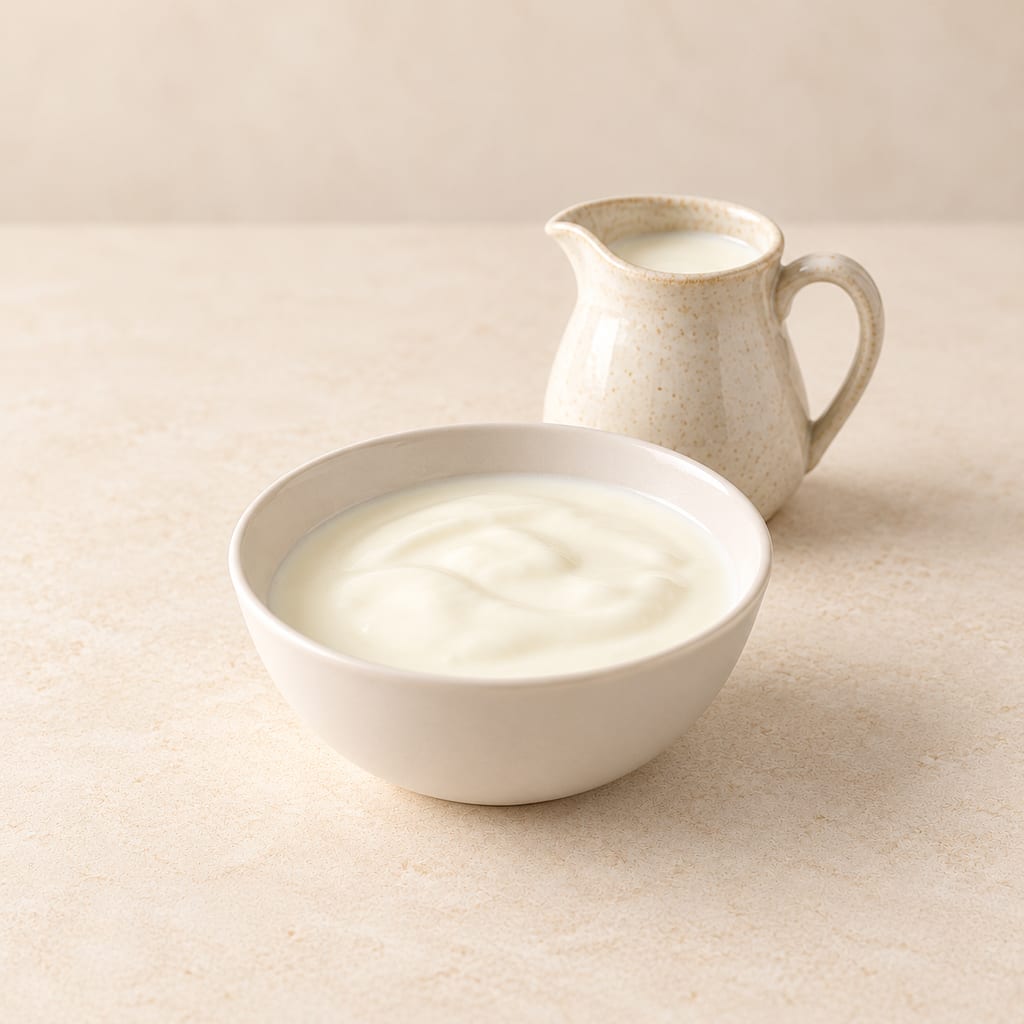
Viili is a Finnish cultured milk with a soft set and, in its western form, a stretchy texture. This small recurring batch uses a spoonful of previously cultured viili.
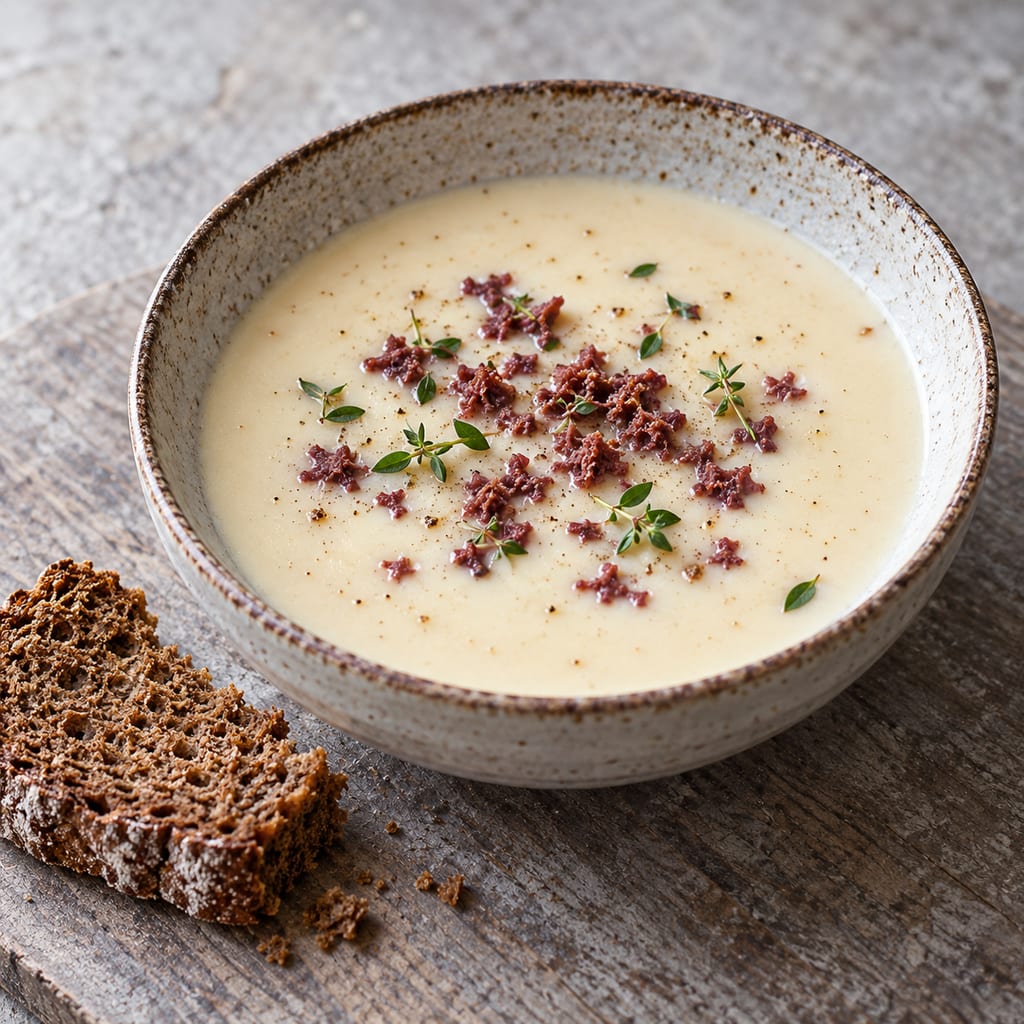
Kylmäsavuporokeitto is a creamy cold-smoked reindeer soup with onion, stock and cheese, served with bread.

Finnish pea soup simmers dried peas with palvikinkku or a vegetable alternative, then is served with mustard and chopped onion.
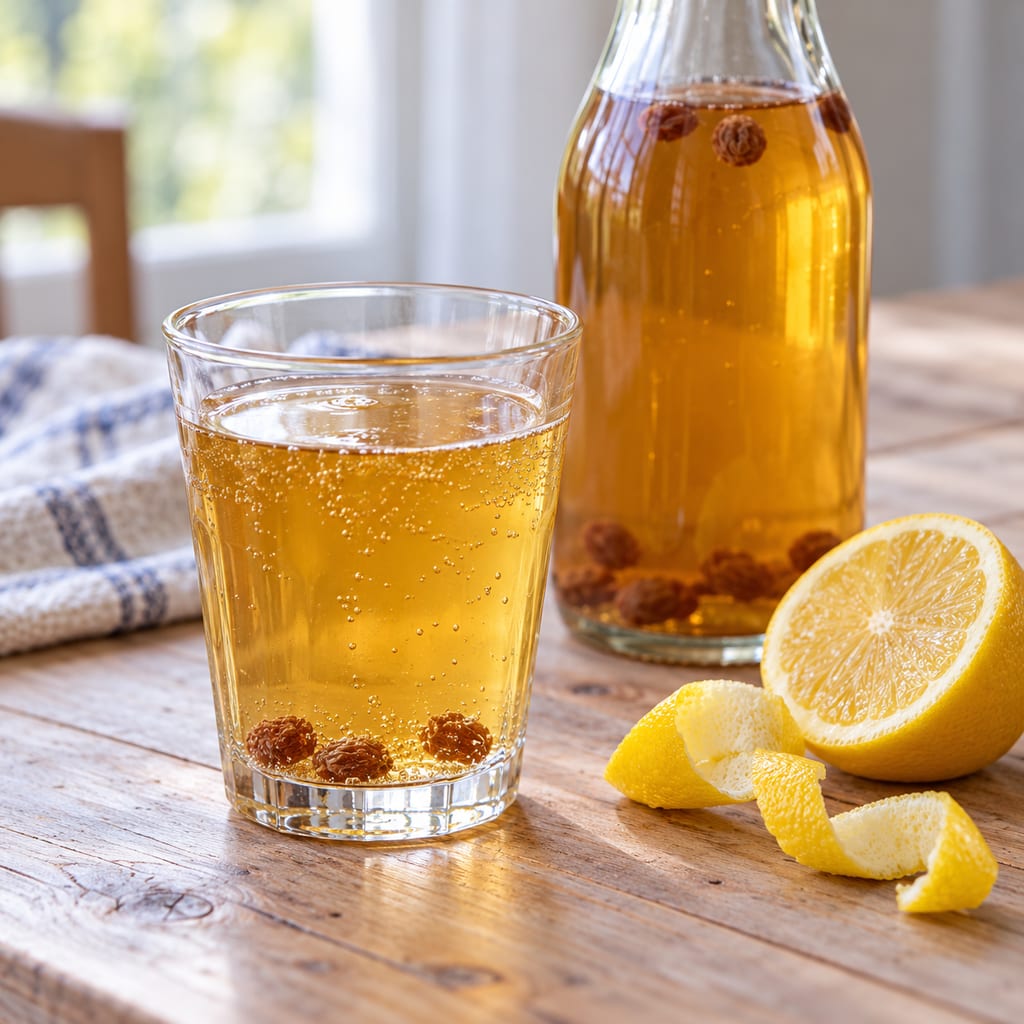
A lightly fermented Finnish May Day drink of lemon, white and brown sugar and a little yeast, bottled with raisins that rise as the carbonation builds.
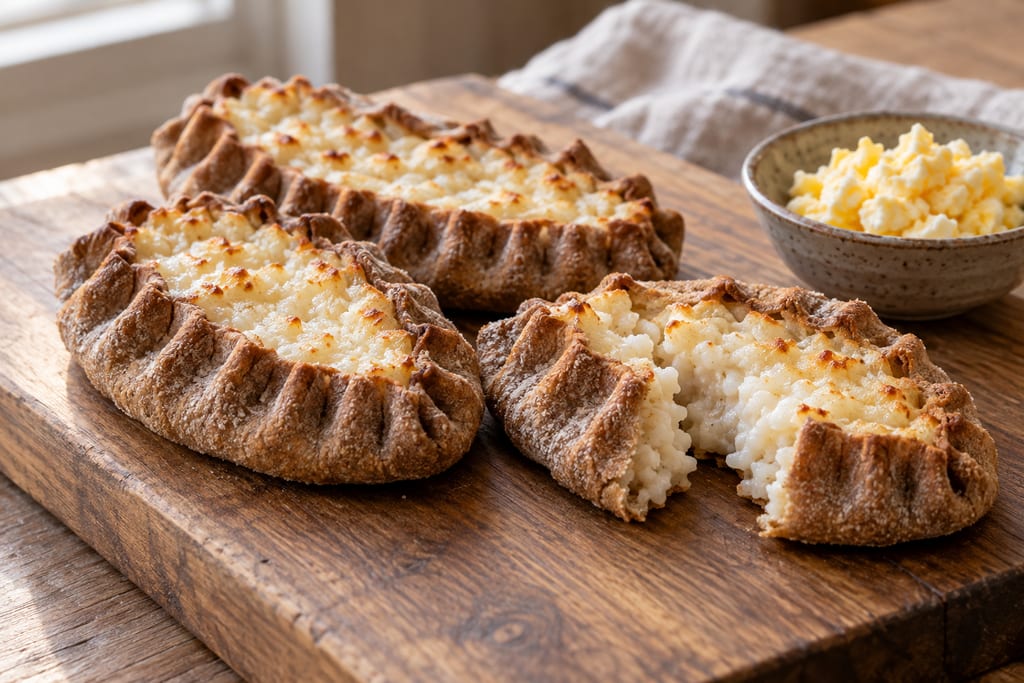
Karjalanpiirakka are open, pleated rye-and-wheat pastries filled with creamy rice porridge, baked hot and brushed with butter and milk.
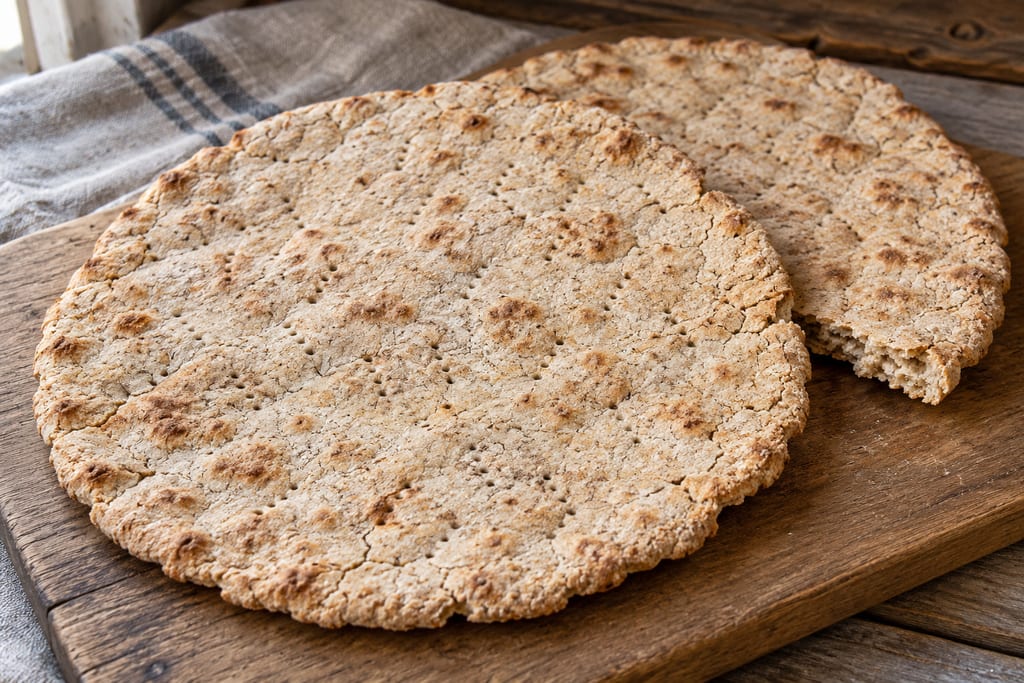
Two barley flatbreads made with cold dough and baked rapidly on a hot sheet, following Timo Lepistö's northern Finnish formula.
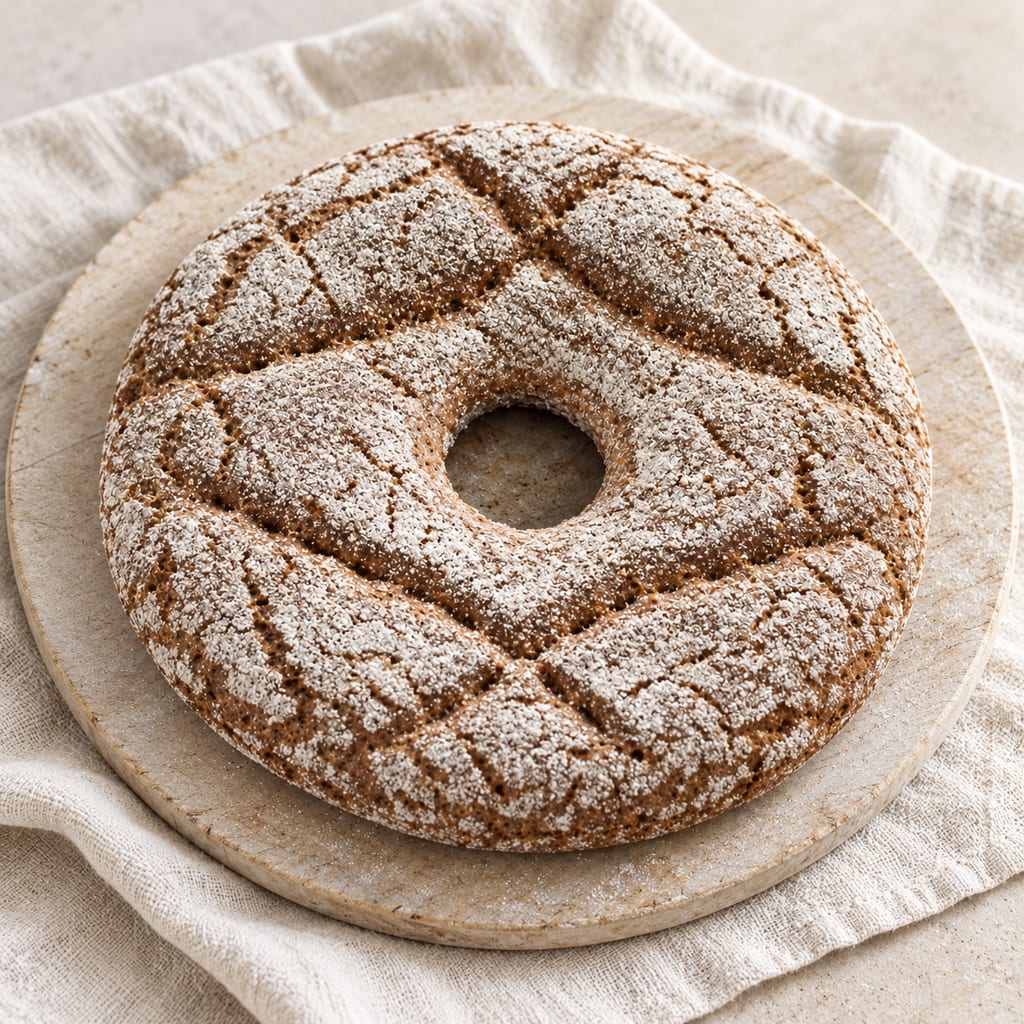
A Finnish rye sourdough shaped here as two flat ring loaves, made from rye flour, water, salt and an established rye leaven.
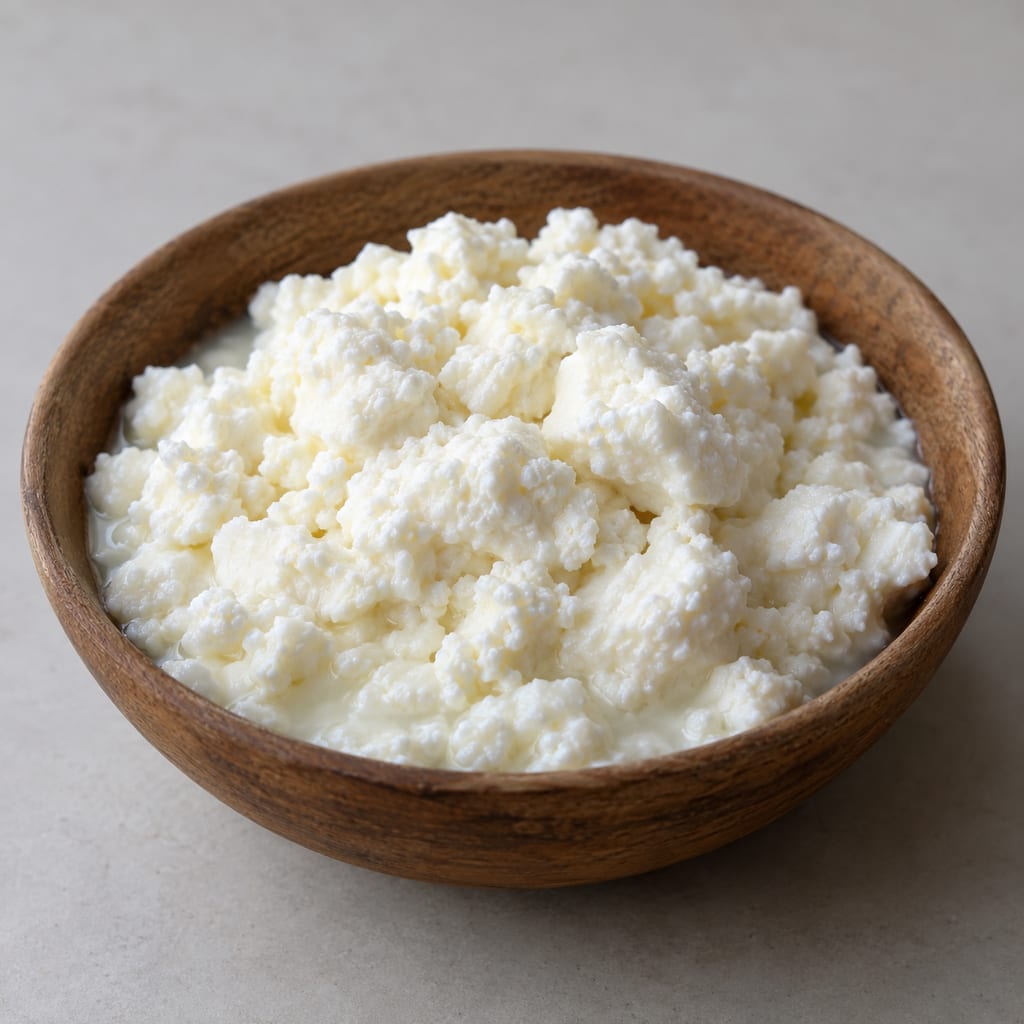
Aarts is a soft Mongolian curd made by draining boiled fermented yogurt; it remains wet, unlike aaruul, which is dried.
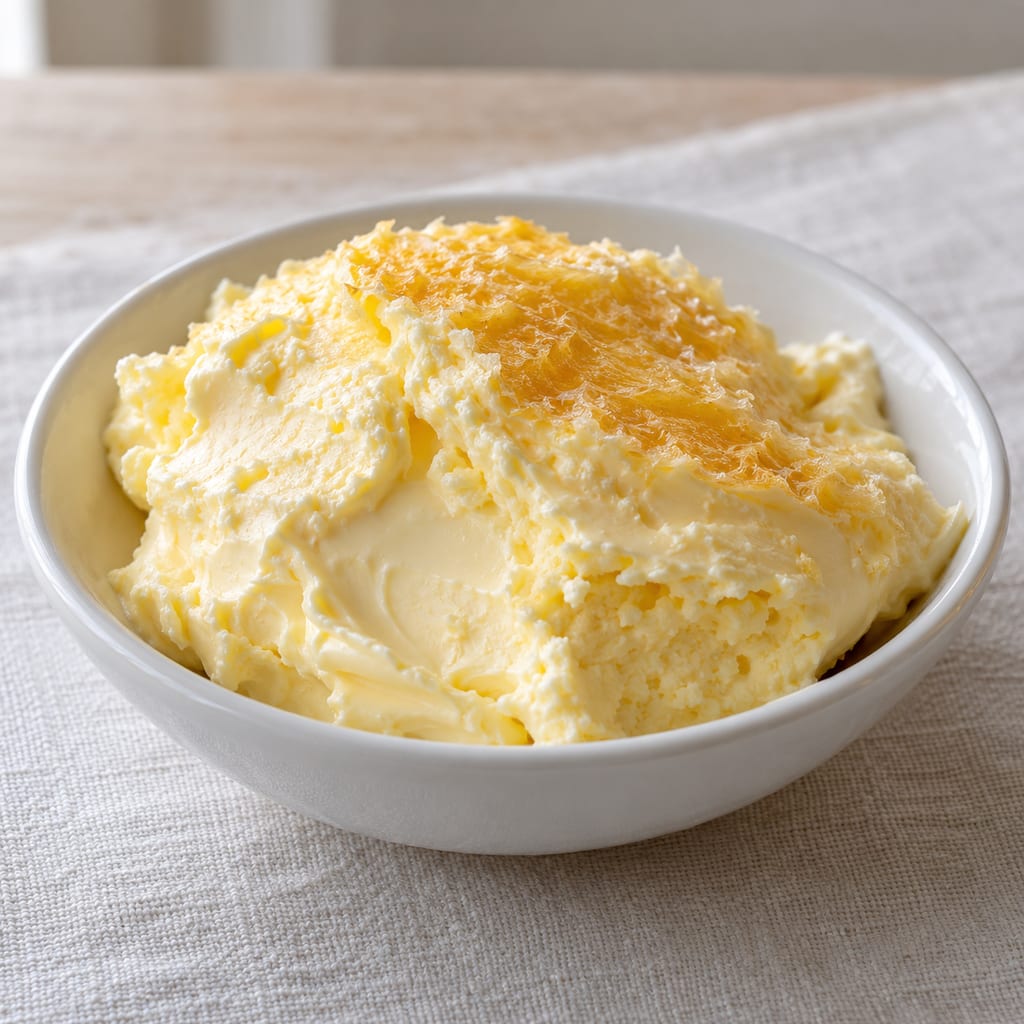
High-fat cream scalded below boiling for at least an hour until a thick crust forms, then cooled hard so the crust sets and the cream beneath thickens.
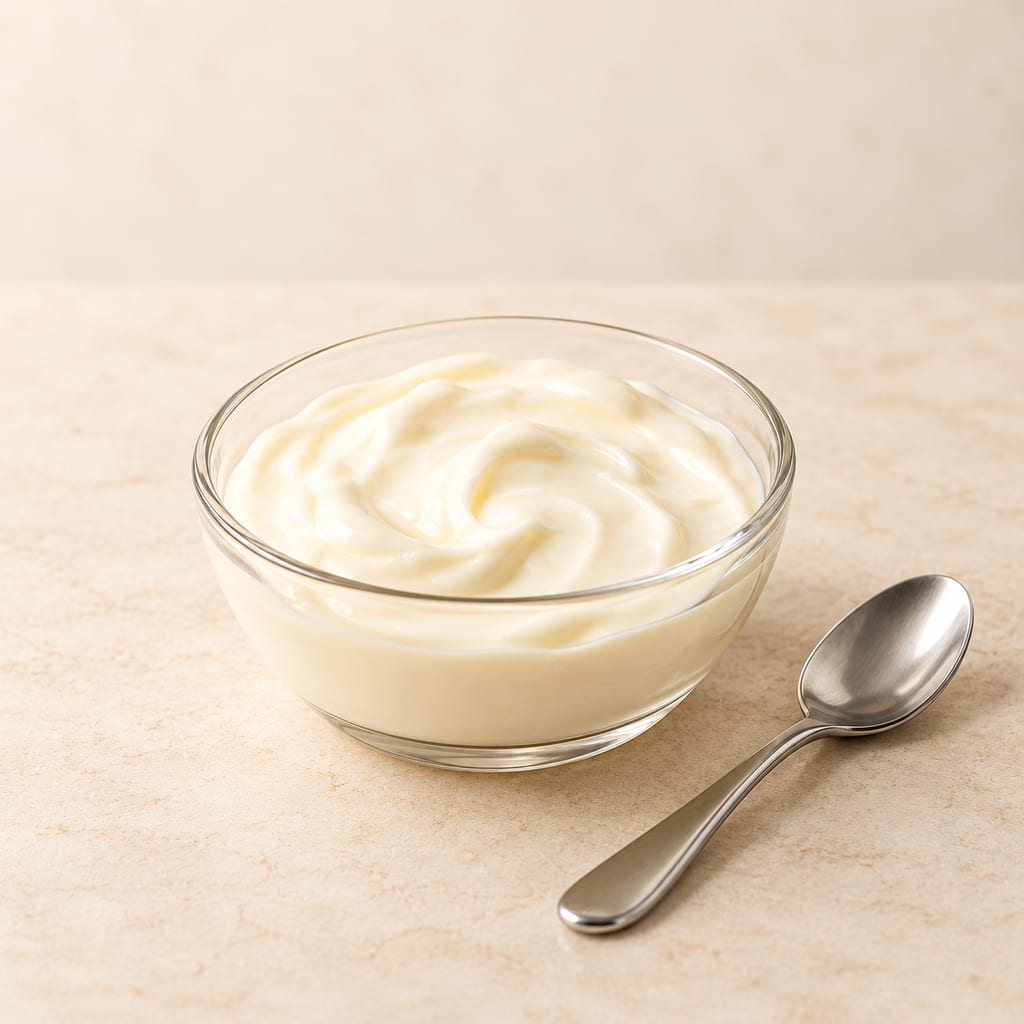
Crème fraîche is cream soured by lactic cultures into a thick, mild topping. It suits fruit and desserts as well as soups, sauces and other savoury dishes.
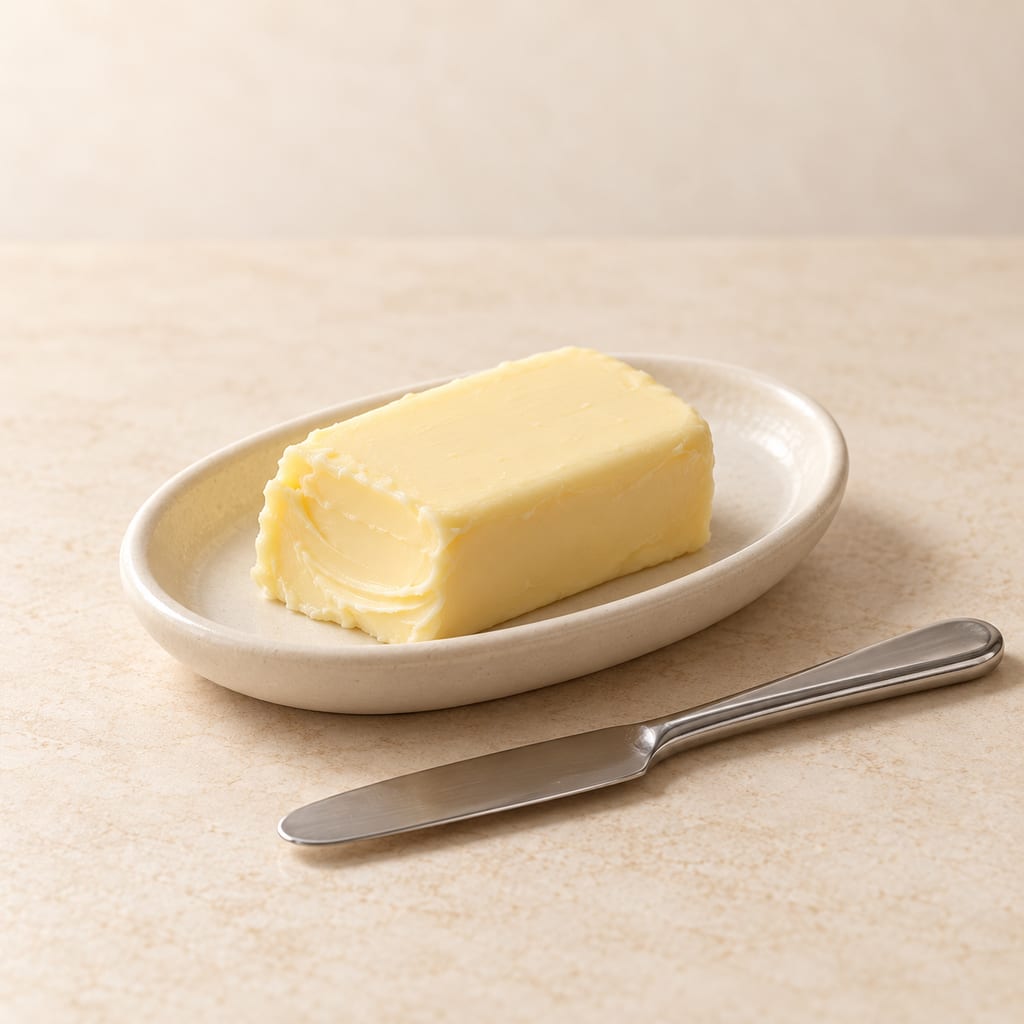
Cultured butter is churned from cream soured with lactic cultures. Its lightly tart flavour comes from the cultured cream, which separates into butter grains and buttermilk.
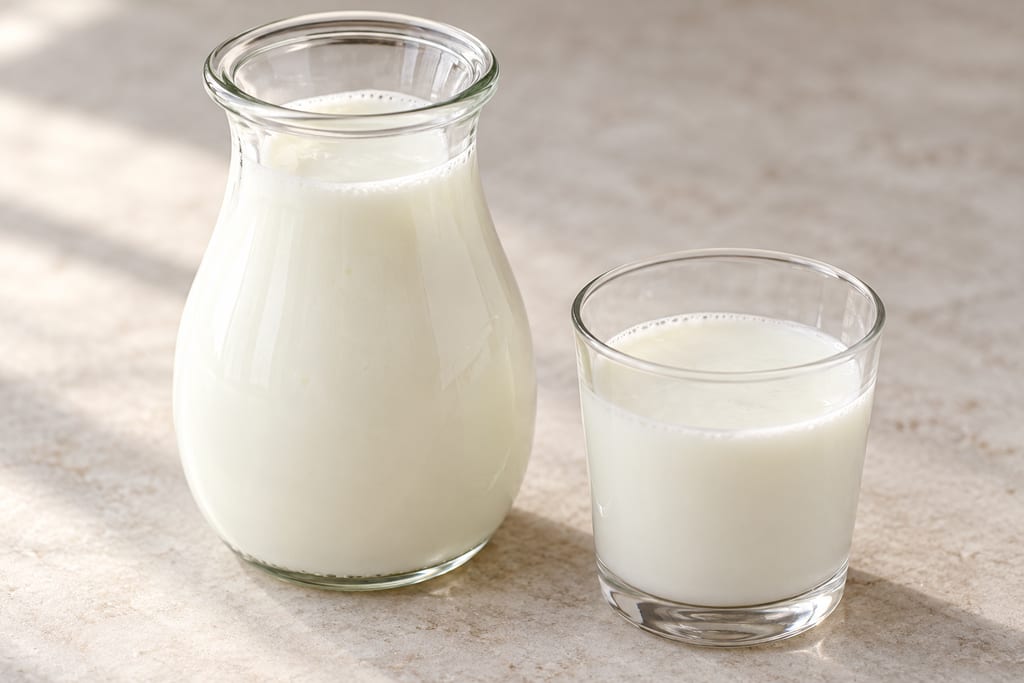
Cultured buttermilk is skim milk soured with a lactic starter into a tangy drink. This Canadian home method sets the milk without churning cream.
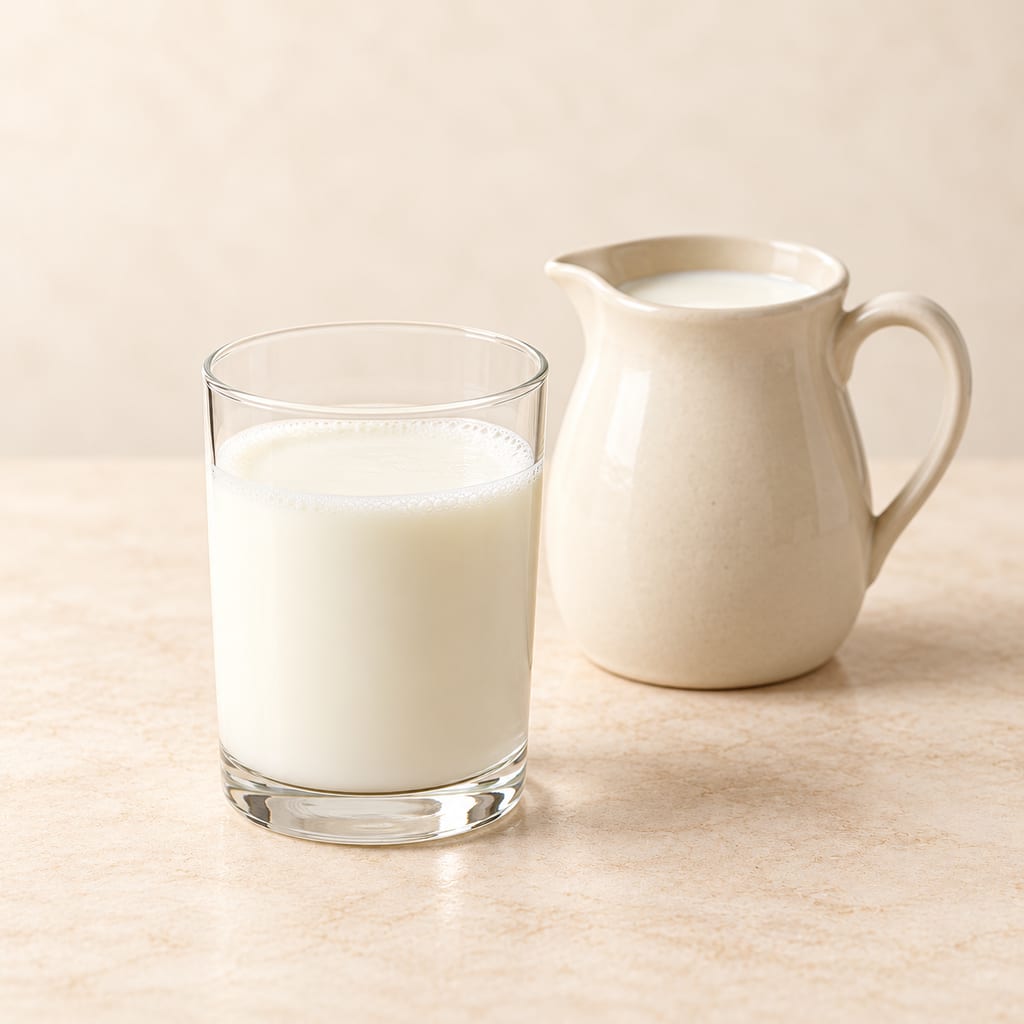
Milk thickened with a packet of buttermilk culture makes a tangy drink and a baking ingredient. This warm-incubated version uses whole milk.
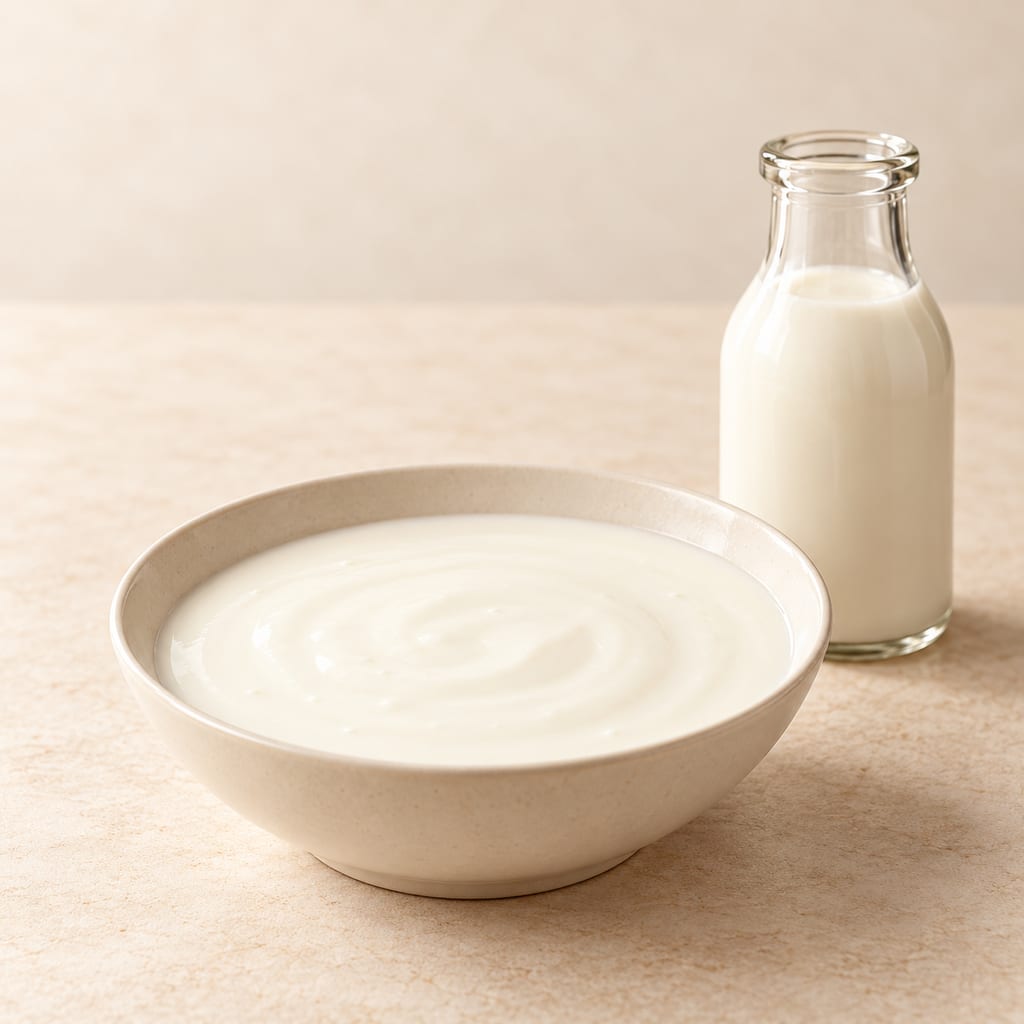
Filmjölk is a Swedish cultured milk with mild acidity and a spoonable body. This recurring batch uses filmjölk from the previous batch to culture fresh milk.
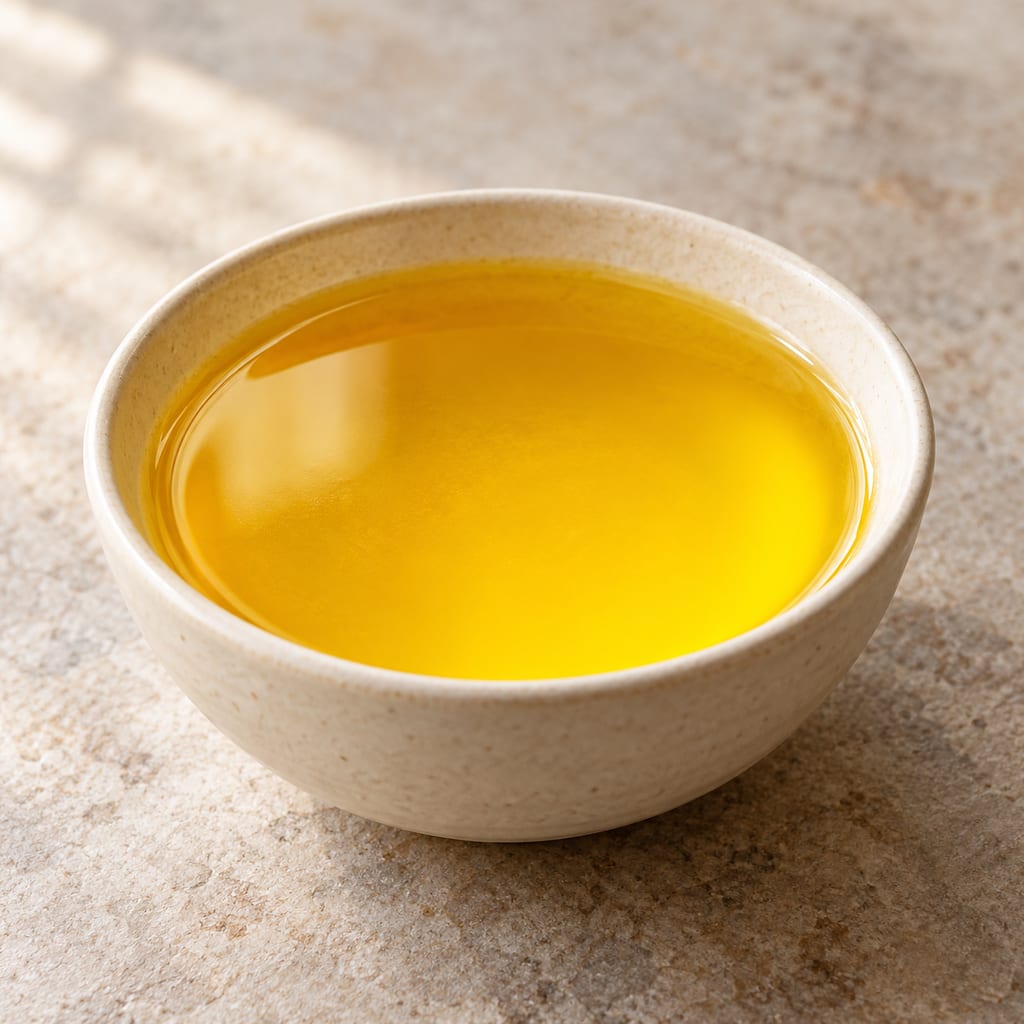
Butter heated until most water leaves and the milk solids separate, giving a fat that keeps far longer than butter. Rendering applies the same heat to animal tissue to make lard and tallow.

A Cap-Pelé boucanière is an Acadian herring-smoking building. The documented Willie Niles example is a one-storey wood-frame structure with a ridge smoke vent and interior bays for hanging fish-bearing cannes.

Achcharu is a family of Sri Lankan vinegar pickles made with mixed vegetables or seasonal fruit and a piquant spice dressing. This version is a quick, refrigerated, non-fermented mixed-vegetable pickle.

The acocote is a long, hollowed and dried gourd used to draw aguamiel from a mature maguey. It is a harvesting tool: the sap is transferred to a separate vessel before it ferments into pulque.

Adrak murabba preserves young ginger in sugar syrup, a sweet South Asian preparation recorded in Indian cookery and food-processing sources.

Parkia biglobosa seeds are fermented into regional West African seasonings, including nététou, iru, dawadawa and soumbala. The yellow fruit pulp is a separate food, and names and methods vary by place.

Japanese reddish-brown vinegar from sake lees matured about three years, turned to vinegar by acetic bacteria; the vinegar of Handa and Edomae sushi rice.

A refined common-wheat flour blended for a broad range of baking; its protein and behavior vary with wheat, milling and market.

The almond mushroom, Agaricus subrufescens, was cultivated in eastern North America in the 1800s, lost its market, and returned as a cultivated mushroom from Brazil, where it is grown under several names.
No community contributions have been published for this entry yet.
Sign in to contribute. Published comments and photos are free to read.
Cultures for HealthInspiration · Process
How to Make Viili, Filmjölk, Matsoni, and Piimä YogurtRoutine-batch section: 1 cup milk, 1 tablespoon previous batch, 70–77°F for 12–18 hours, texture check, refrigeration for at least 6 hours; distinct dry-starter activation procedure.
Cited in: Sour milk at the Finnish table; Western long milk and eastern curds; The modern starter and its milk; A set changes when it is moved; Keeping the culture and handling the food
Agriculture CanadaSafety · Process
Home-made dairy products, Publication 1669Pages 3–4: sanitation prevents bacterial contamination; pasteurized dairy and finished products must not touch unsanitized equipment, raw-milk utensils or hands.
General hygiene, pasteurization and post-pasteurization contamination; not Piimä-specific process validation.
Cited in: Milk after the cream was removed; Keeping the culture and handling the food
Loimaa-SeuraHistory · Use
Milk and Butter (museum display text)Traditional Finnish dairy cows; milk consumed mainly by children and the elderly; in Western Finland a starter produced smooth, stretchy buttermilk, in the East milk soured naturally into curdled kokkelipiimä; piimä usually mixed with water; common mealtime and work-day drink.
Cited in: A drink that travelled to work; Western long milk and eastern curds; What makes some cultured milks stretchy
Wikipedia (Finnish)Identity · History
PiimäRetained secondary lead; regional identity in the reader-facing text is supported by Loimaa-Seura and the Kuopio museum.
thisisFINLAND (Ministry for Foreign Affairs of Finland)Use · History
Demystifying Finnish dairy foodPiimä is a Finnish sour milk close to buttermilk, commonly drunk with meals.
Cited in: Sour milk at the Finnish table
Arla Pro SuomiImage reference
PiimäPiimä pictured in drinking glasses; separate Finnish home method used only as a visual reference, without transferring its process figures.
Kuopio City / Kuopio Quarter MuseumHistory · Use
Savolaisherkut ja arjen antimetThe museum dates a piimähinkki to the nineteenth century and a piimäleili to the late nineteenth century, connecting sour milk in the latter with hayfield provisions; this is material evidence of use, not an origin date.
Cited in: Sour milk at the Finnish table; Milk after the cream was removed; A drink that travelled to work; Western long milk and eastern curds; Keeping the culture and handling the food
Annual Transactions of the Nordic Rheology Society 27Context
Rheological analysis of ropy fermented milkPolysaccharides, acid milk gels and differences in ropy texture; experimental Nordic comparisons, not the countertop starter’s species.
Cited in: What makes some cultured milks stretchy
Tetra PakContext
Dairy Processing Handbook: The chemistry of milkMilk constituents, protein network, acidity and minerals, fat globules, cream/butter transformation.
Cited in: Sour milk at the Finnish table; Milk after the cream was removed; The modern starter and its milk; Acidification changes the proteins
University of Wisconsin Center for Dairy ResearchContext
Yogurt Monograph Series: Sensory PropertiesGeneral post-acidification and the distinct sensory properties of thickness and creaminess.
Cited in: A set changes when it is moved
University of Wisconsin Center for Dairy ResearchContext
Yogurt Monograph Series: RheologyHow stirring and applied force change the flow of a cultured-milk gel.
Cited in: A set changes when it is moved
ValioContext
SaaristolaisleipäPiimä in a contemporary malt-and-grain archipelago bread, with yeast and bread accompaniments.
Cited in: Malt bread, spiced cake and a cold dressing
ValioContext
PiimäkakkuPiimä in a contemporary spiced cake with fruit preserve and baking soda.
Cited in: Malt bread, spiced cake and a cold dressing
ValioContext
Falafel & Minttuinen piimädressingPiimä in a cold mint dressing served with falafel.
Cited in: Malt bread, spiced cake and a cold dressing