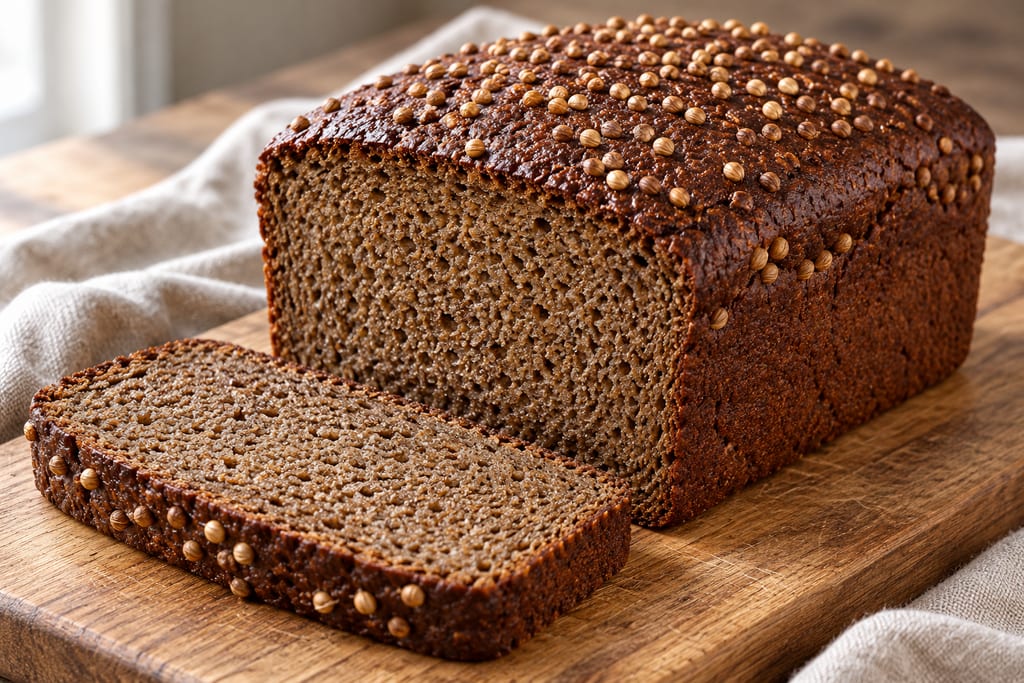
Rye bread won a national-food vote held for Finland's 2017 independence centenary. ThisisFINLAND reports that almost 40,000 people voted in autumn 2016, with nearly 10,000 choosing rye bread. That dated event documents its modern cultural standing; it does not establish when rye bread or this recipe first appeared.
The same article describes bakers preserving a portion of sourdough as a root for later batches. This continuing practice links successive bakes, but the age or family history of a starter does not prove its safety. The source method's bubbling and aroma cues remain readiness observations rather than microbiological tests.
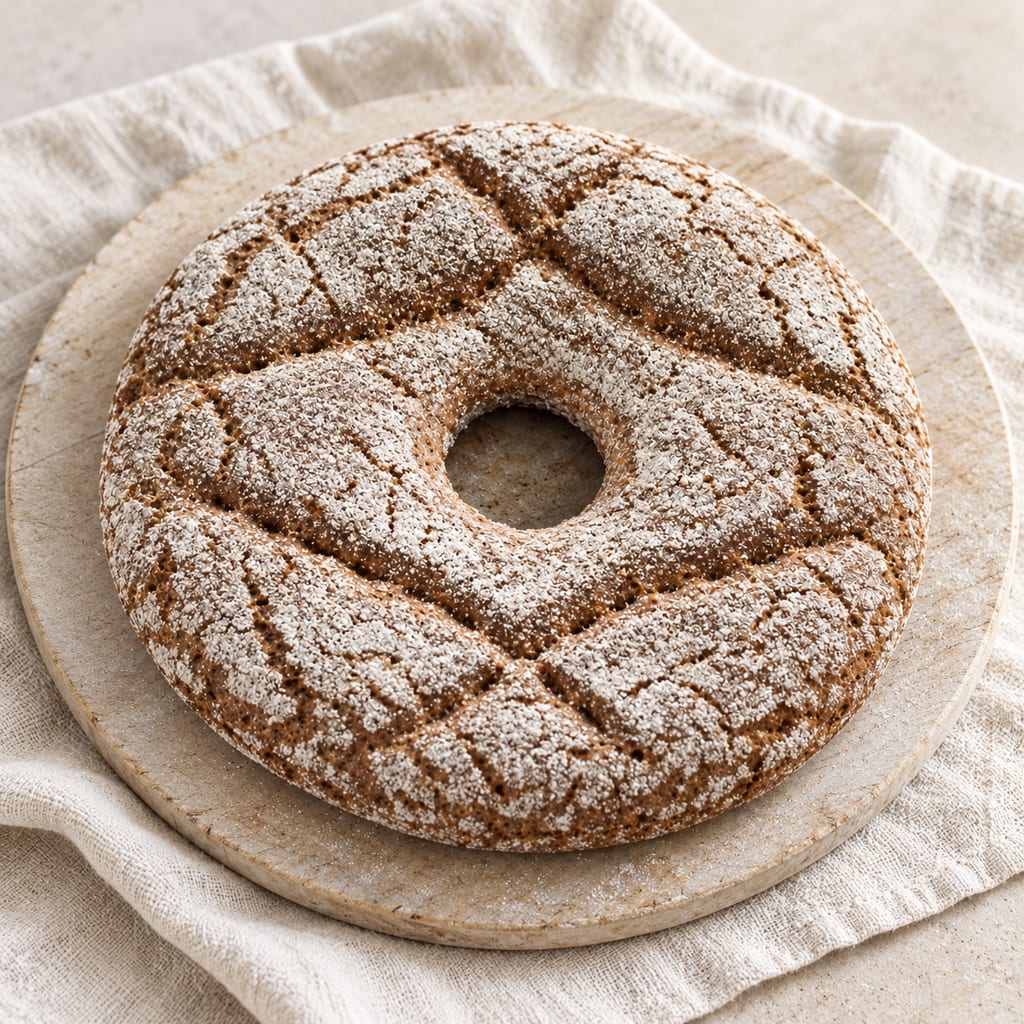
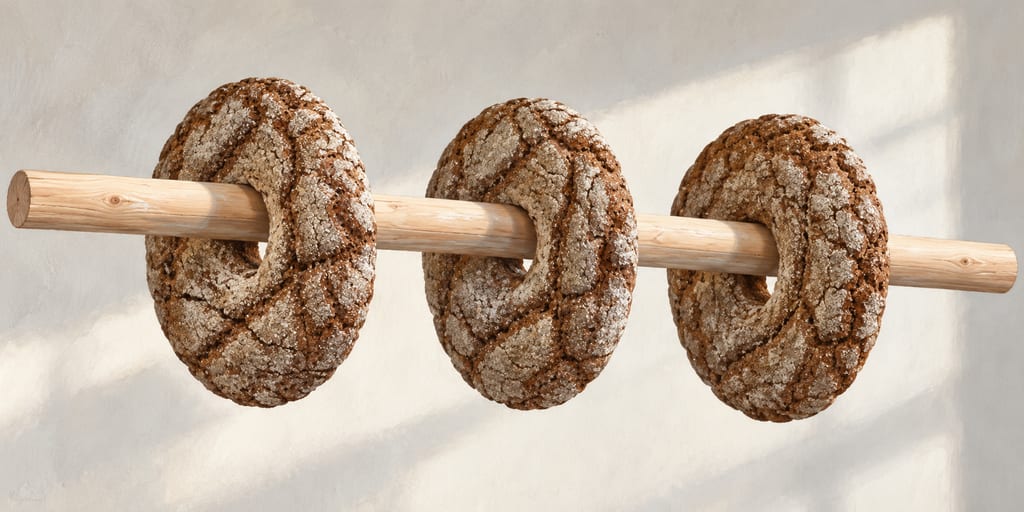
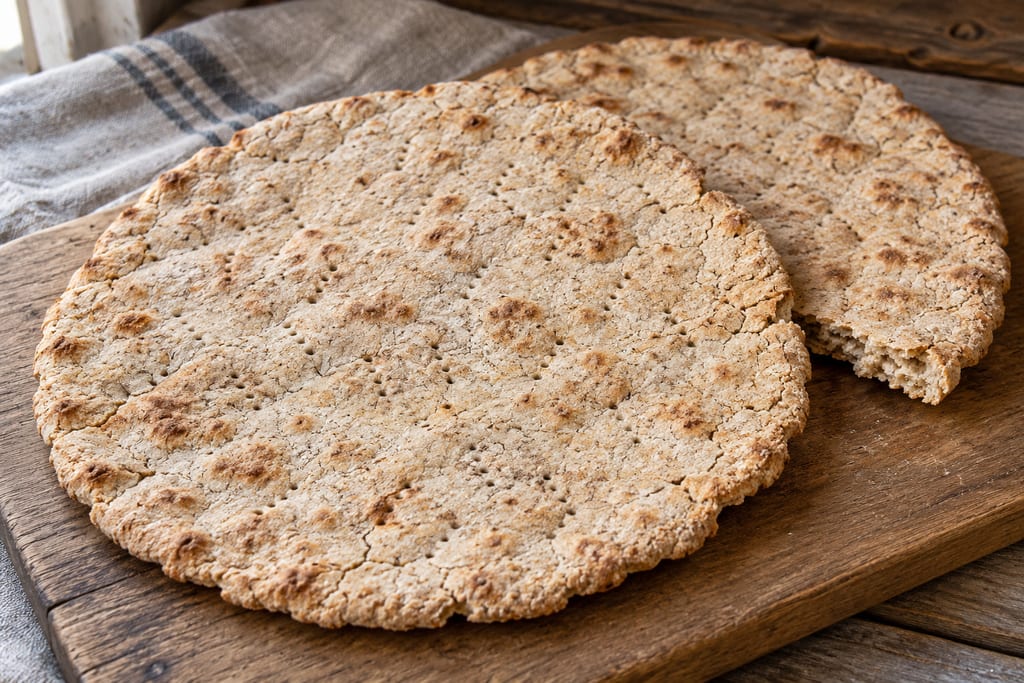
Ruisleipä includes more than one loaf shape. ThisisFINLAND distinguishes eastern Finland's round limppu from the flatter western reikäleipä, traditionally threaded onto poles suspended below the ceiling. The two flat loaves with central holes in this recipe follow that ring form.
The pole-storage account is historical context, not a tested storage instruction for this household bake. This page keeps the Martha Association's republished quantities and fermentation schedule without assigning a birthplace, a first attestation or a finished-bread shelf life.
Rye bread is a longstanding Finnish staple. Eastern Finland is associated with round limppu, while western Finland is associated with flat reikäleipä; this version uses the ring-loaf form. No first attestation for this specific formula is established here.
Ingredients
Yield 2 loaves · Scaling: source batch only
Rye flourUse 3 tablespoons in the first starter mix and 2 tablespoons for the day-three feed.
74 mL5 tbsp as recorded
Lukewarm waterUse 3 tablespoons in the first starter mix and 2 tablespoons for the day-three feed.
74 mL5 tbsp as recorded
Rye sourdough starterUse an established starter, or make one from the flour and water above over four days.
1 dl
about
Lukewarm water2 dl for the first sourdough phase and 6 dl for the dough.
8 dl
Rye flourMix with the starter and 2 dl water in the first sourdough phase.
2 dl
Rye flourFor the dough; the source gives a range of 1.6–1.8 litres, approximately 1 kg, depending on flour.
1.7 L
source range 1.6–1.8 litres
Salt
7.4 mL½ tbsp as recorded
range 1/2–1 tablespoon
Method
Risks and precautions · Standard risk
Use a clean jar and utensils for starter preparation. The cited recipe does not give a defined starter temperature or microbiological endpoint; aroma and bubbling are source cues for readiness, not safety tests.
If you do not have an established rye starter, mix 3 tablespoons rye flour with 3 tablespoons lukewarm water in a small glass jar. Cover loosely and leave in a warm place for two days.
On day three, stir in 2 tablespoons each of rye flour and lukewarm water. Cover loosely and leave in the same place for one more day. The young starter is ready for use on day four; its flavour strengthens with repeated use.
For the first sourdough phase, mix 2 dl lukewarm water, about 1 dl starter and 2 dl rye flour to a smooth paste. Cover loosely and leave warm overnight, or until bubbling properly with a mild sour aroma.
Add 6 dl lukewarm water and 1/2–1 tablespoon salt to the sourdough and stir until the salt dissolves. Mix in 1.6–1.8 litres rye flour a little at a time; flour absorption varies. Knead vigorously by hand for at least 10 minutes or mechanically for 5 minutes, until smooth and quite firm.
Cover the dough with a cloth and leave it in a warm place until doubled, about 3–6 hours depending on temperature. Save a portion of dough in the bowl as starter for the next bake.
Turn the dough onto a well-floured surface and knead it vigorously several times. Divide into two pieces and shape each as a flat round loaf with a central hole. Set them on a baking sheet, cover with a cloth and proof for 2–3 hours, depending on warmth. A light finger press should spring back quickly. Prick the surface with a fork.
Bake the ring loaves at 225 °C for 20–30 minutes. Cool the bread under a thick cloth.
Conditions
Yield2 loaves
Active time30 min
Fermentation15–19 h
Places
Finland
Documented preparation · Country evidence
The recipe is republished as Finnish sourdough rye bread. This country-level link does not claim a single place of origin.
A simple wooden pole stores Finnish ring-shaped rye loaves by passing the pole through each loaf’s central hole. Finnish accounts describe the poles as ceiling-suspended and connect the hole-shaped loaf with a tradition of drying bread.
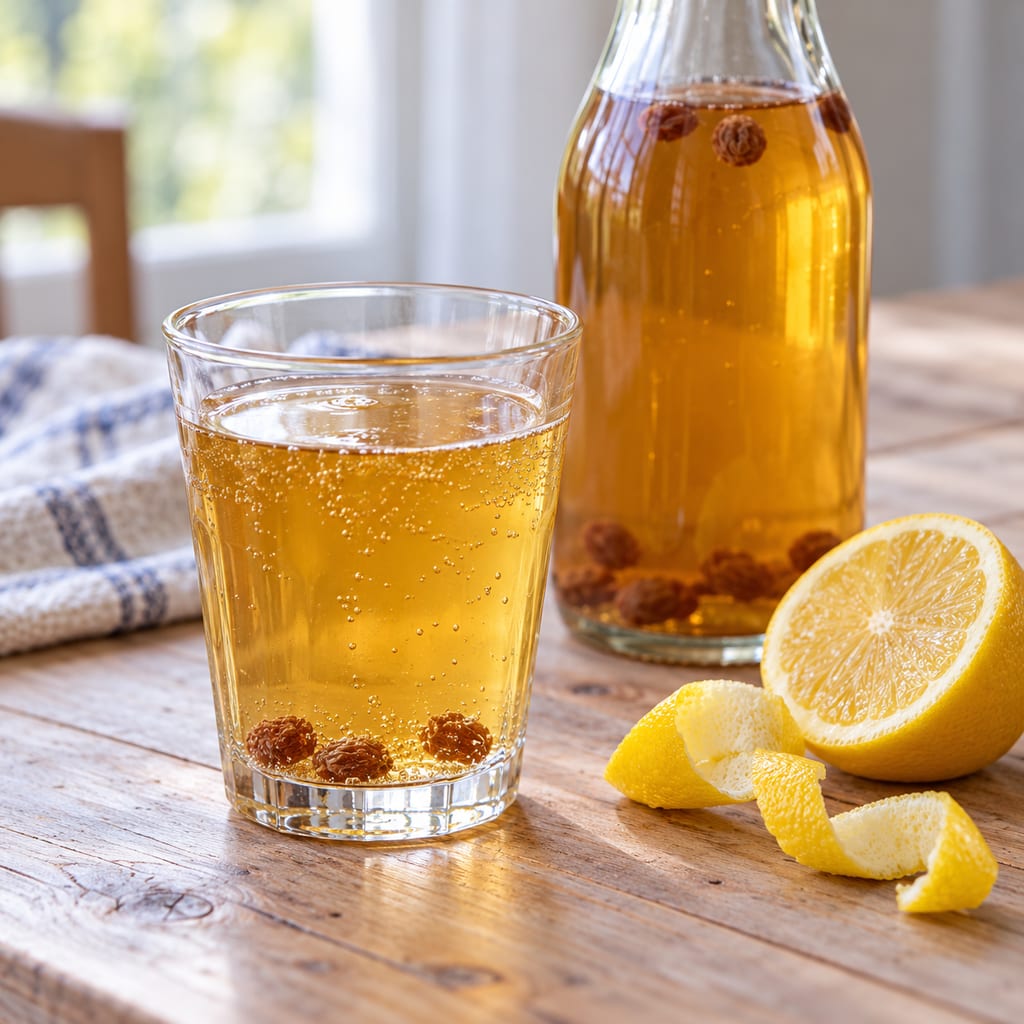
A lightly fermented Finnish May Day drink of lemon, white and brown sugar and a little yeast, bottled with raisins that rise as the carbonation builds.
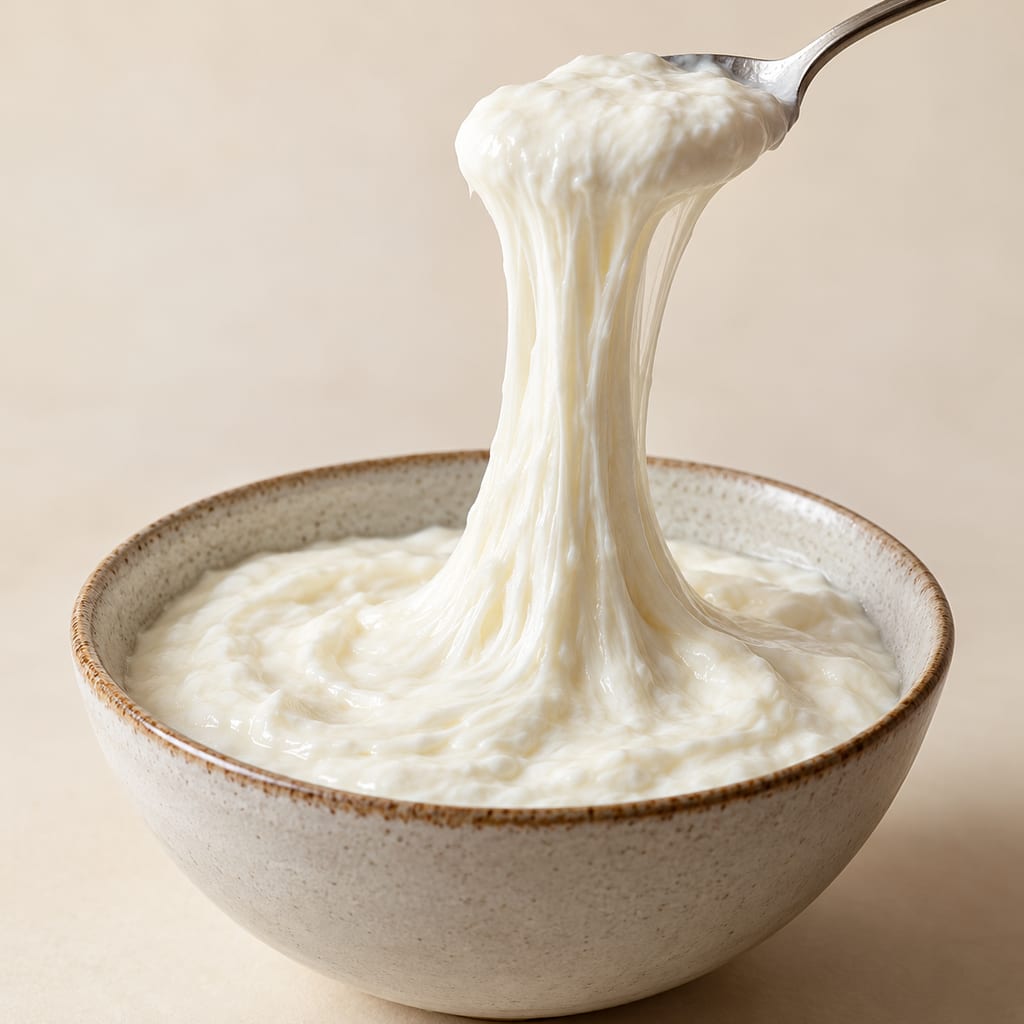
Pitkäpiimä is a Finnish cultured milk whose defining trait is a long, stretchy, ropy texture. It is closely related to viili and is made by lactic fermentation with a specific culture.
Salted mushrooms are a traditional wild-mushroom preserve, especially of Finnish and Russian milk caps, made by layering boiled mushrooms with coarse salt or keeping them under brine, and kept cold.
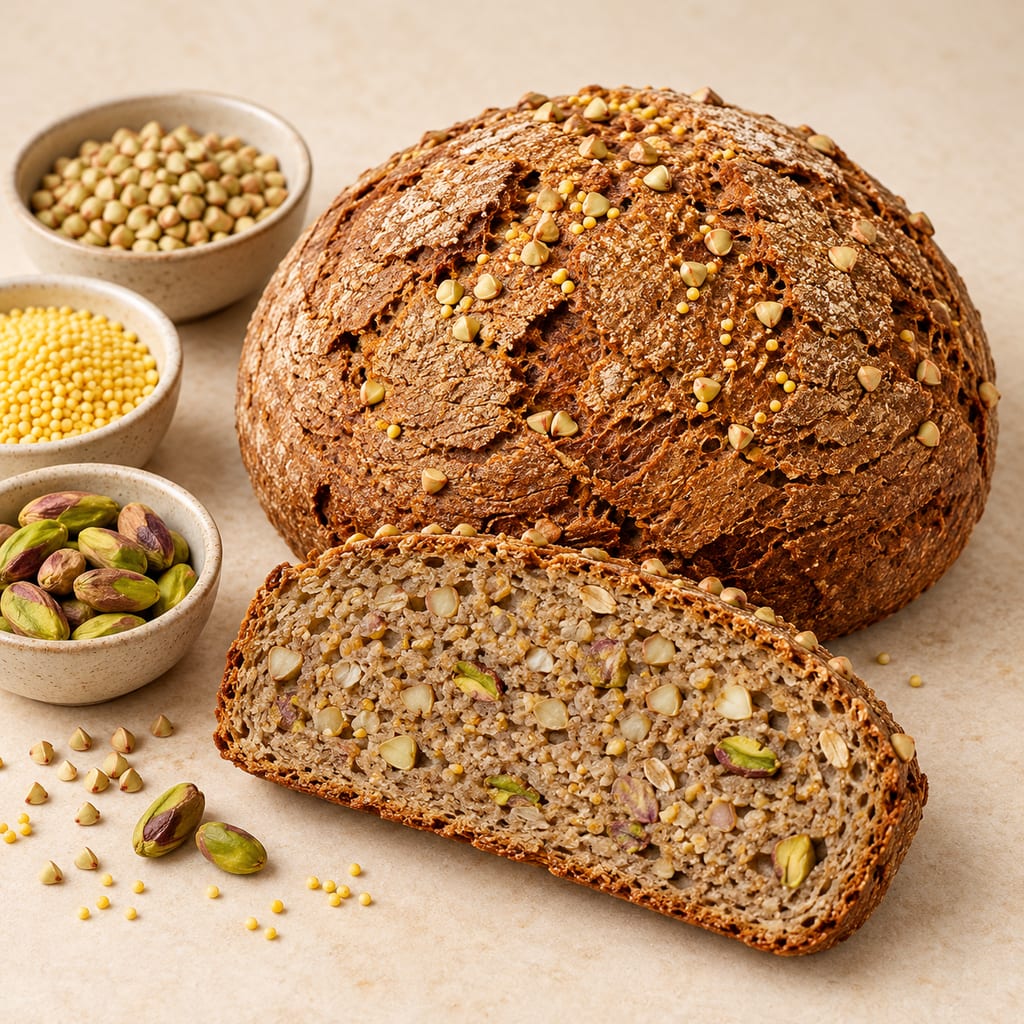
A gluten-free sourdough loaf of about 1 kg. A buckwheat and quinoa starter leavens a dough with cooked whole buckwheat groats, millet and a dark gluten-free bread mix, baked in a lidded pot.
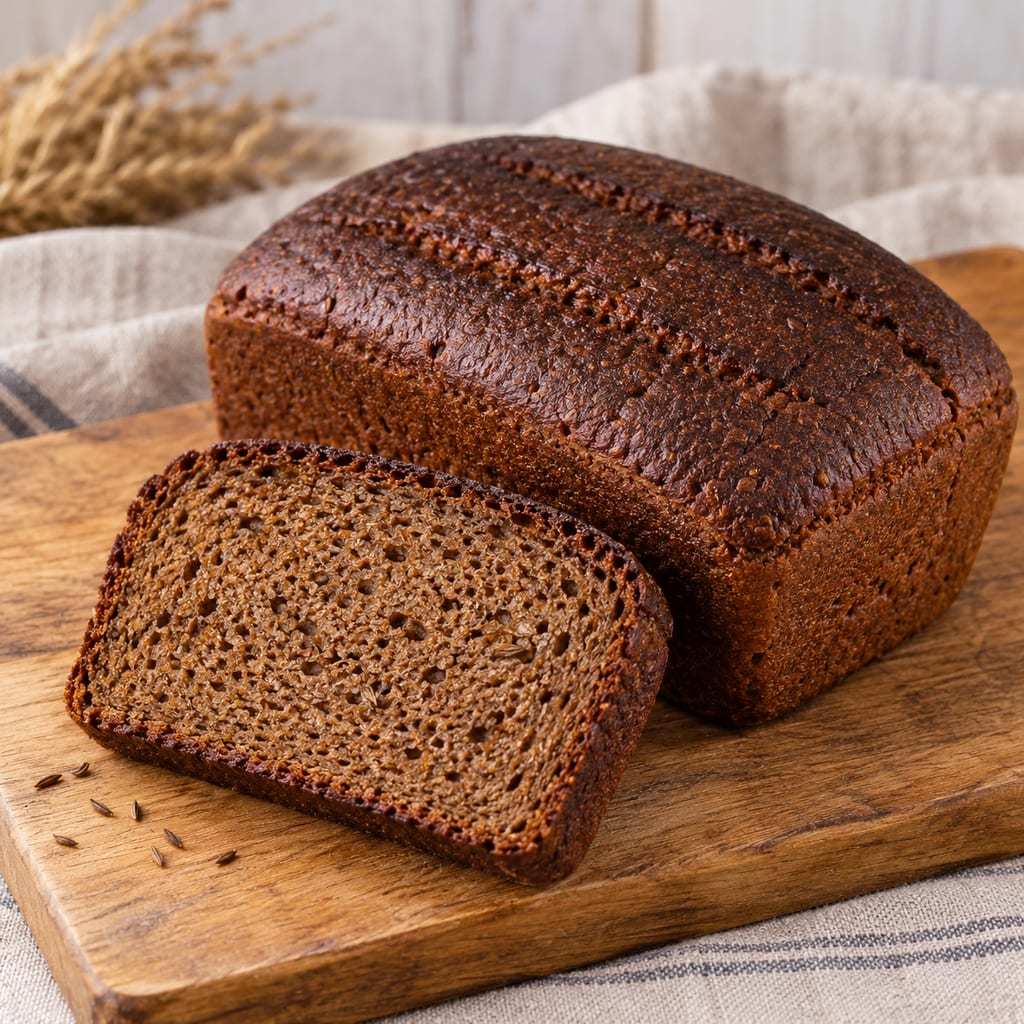
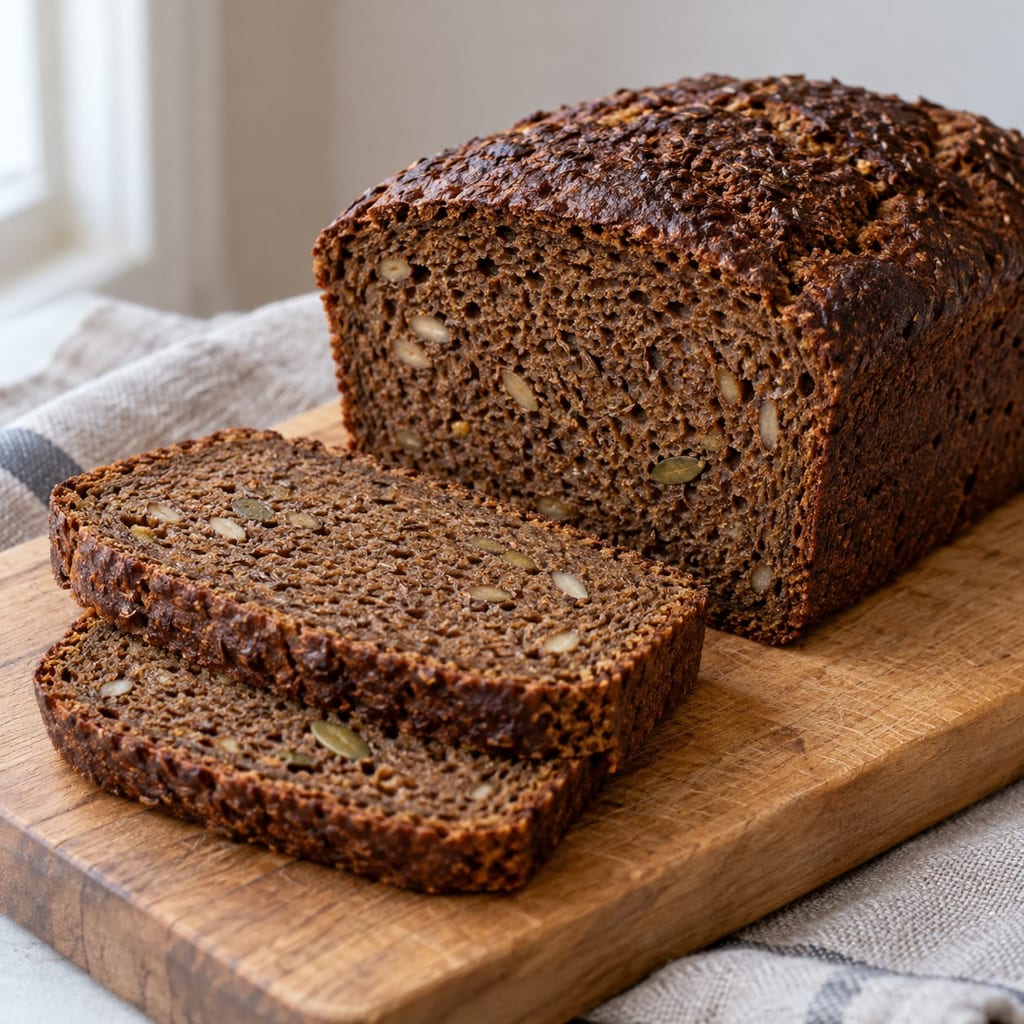
This Estonian rye loaf uses a sourdough preferment, a rye scald and soaked seeds, with a small amount of baker’s yeast. Two tins bake through a staged hot-to-moderate oven schedule.
A ripe sourdough starter leavens this modern low-handling loaf. Three hourly folds organize the sticky dough before a long refrigerator rest, final proof and covered bake.
This home sourdough adaptation borrows Pan de Cea’s wheat-forward loaf and central fenda while using a domestic oven and a separately documented modern formula.
February 2017 report documents the independence-centenary national-food vote: almost 40,000 voted in autumn 2016, nearly 10,000 for rye bread.
Chef Henri Alén describes saving a portion of leaven as a root for future batches; this is cultural transmission evidence, not microbiological validation or a first attestation.
Finnish Refugee Council visual-aid credits identify this as a public-domain rye-bread image, but the direct source page was inaccessible. Individual rights and exact ring-loaf subject remain unconfirmed; not counted.
Primary museum record explicitly Public Domain, no known copyright restrictions; collection Osuusliike Elanto, identifier 200233; N192892, file km002x/km002xcz.tif, file ID 2341657.
Describes Elanto's best-selling 1932 rural rye hole-bread at Hämeentie 11–13. Commons has a conflicting CC BY-SA label, so retain primary rights evidence. Finna large source image request hit access challenge; no visual verification, no reference count or generation.
Regional food-culture account links nearly daily eastern oven heating with varied baking and includes soft rye bread, rieska and pies in Kymenlaakso's foodways.
This adds a named regional context, not the Martha Association ring-loaf's birthplace, exact formula, shelf life or a universal Finnish practice. Save source-only partial research; no method change or image retry.