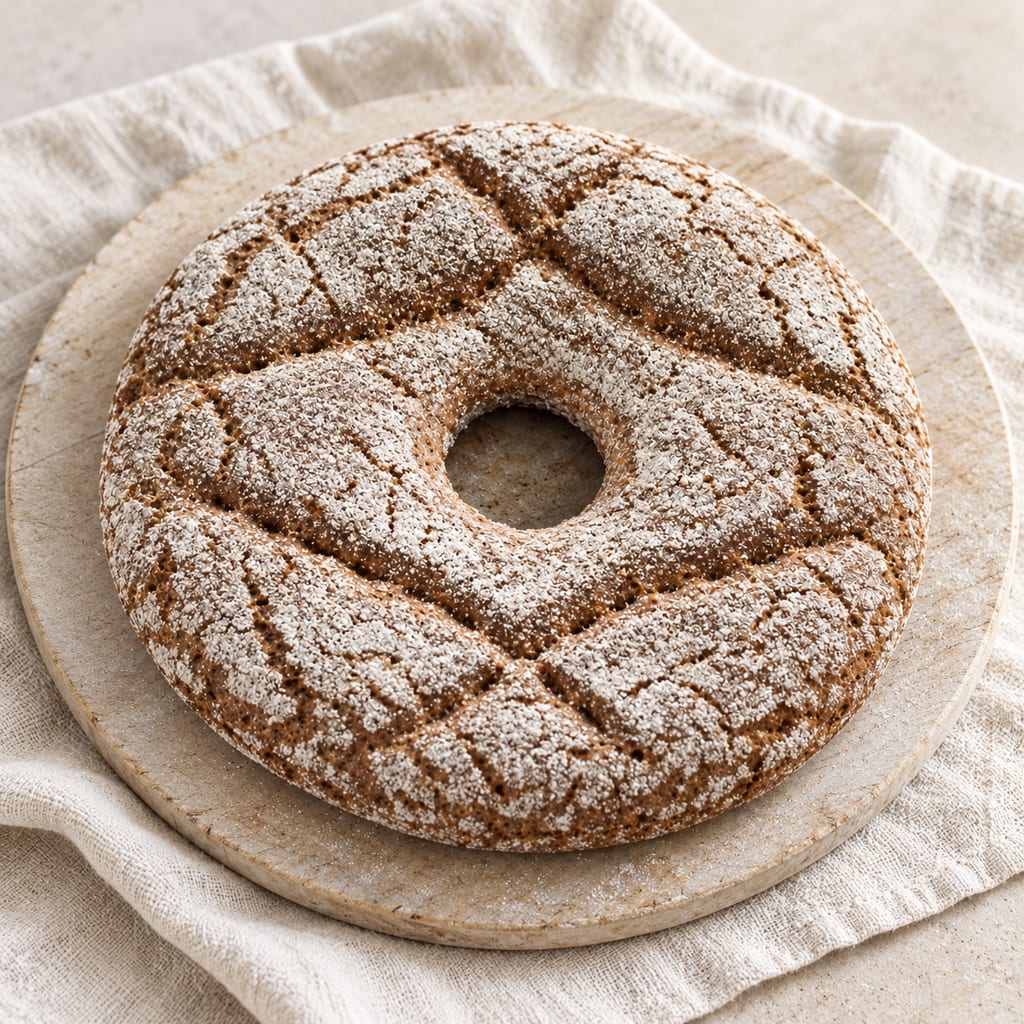
Ruisleipä (Finnish sourdough rye bread)
A Finnish rye sourdough shaped here as two flat ring loaves, made from rye flour, water, salt and an established rye leaven.
 FermenteaWhere food goes to change
Equipment · Drying poles and racks
Hanging rack for ring loaves · Reikäleipä pole
A simple wooden pole stores Finnish ring-shaped rye loaves by passing the pole through each loaf’s central hole. Finnish accounts describe the poles as ceiling-suspended and connect the hole-shaped loaf with a tradition of drying bread.
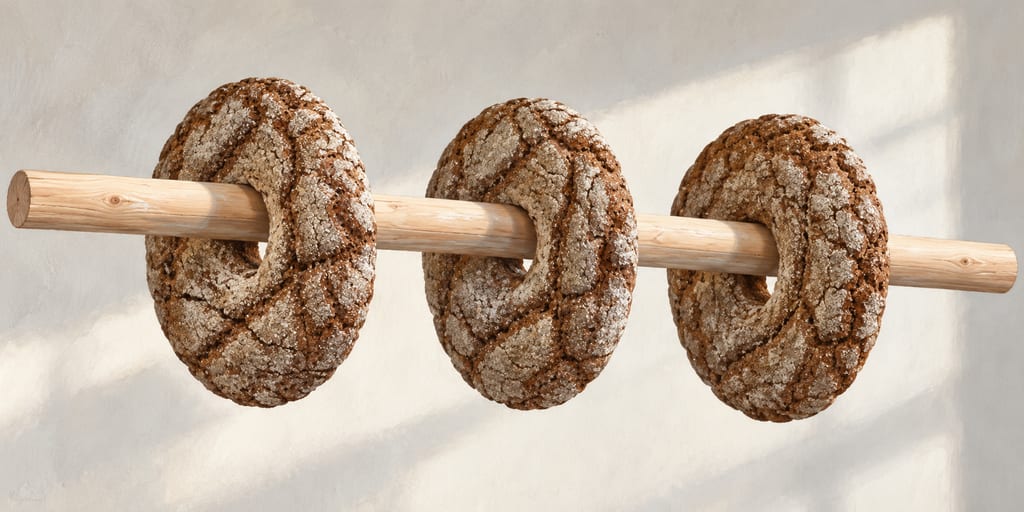
Reikäleipä is a flat, round rye loaf with a hole in its centre. A wooden pole passed through that opening turns the loaf's shape into a way of storing it: several breads can sit along one horizontal rod, held clear of a shelf. Finnish accounts describe poles suspended under the ceiling, while a contemporary photograph shows ring loaves threaded directly onto a plain wooden pole.
The pole is an uncomplicated piece of equipment. Its documented form is a length of wood that supports the breads through their holes. The exact wood species, dimensions, attachments, and support design are not established. The photograph shows the pole and loaves, not a construction method.
The shape belongs to a broader Finnish rye-bread tradition. Finnish national accounts distinguish eastern round loaves from western flat discs with a hole, and describe the latter as traditionally stored on poles beneath the ceiling. Historical baking patterns also differ: frequent baking in the east contrasted with less frequent sessions in the west, where dried bread was eaten; ring loaves could be hung to dry. These regional patterns are historical descriptions, not rules for every household or a claim that all ring bread was dried.
The hole therefore has a practical storage role in addition to defining the loaf's form. Hanging breads on a pole keeps them together and accessible, and the Finnish record connects the arrangement with drying. No single drying duration, target texture, or storage life is established, so none can be assigned to the pole.
The documented form is a wooden pole threaded through loaf holes; the written description places poles beneath the ceiling. The references do not date the pole, specify its measurements or wood, describe how it was made or acquired, or give care instructions. The linked photograph is credited to Ismo Pekkarinen/Lehtikuva and presents a contemporary storage arrangement, not an archaeological object or evidence for a particular old house. The generated illustration is an editorial depiction based on that documented form, not a documentary image.
Finnish rye-bread accounts describe central-hole loaves stored on poles, including poles suspended under the ceiling.
No wood species, pole length or diameter, load limit, support design, or specific room dimensions are established; these should not be inferred from the photograph.
Source →The pole is a way to store or hang ring loaves; no single drying time or storage life is established.
Source →The accounts describe reikäleipä and poles for storing ring loaves at country level; they do not pin this practice to a more precise locality.
A Finnish rye sourdough shaped here as two flat ring loaves, made from rye flour, water, salt and an established rye leaven.
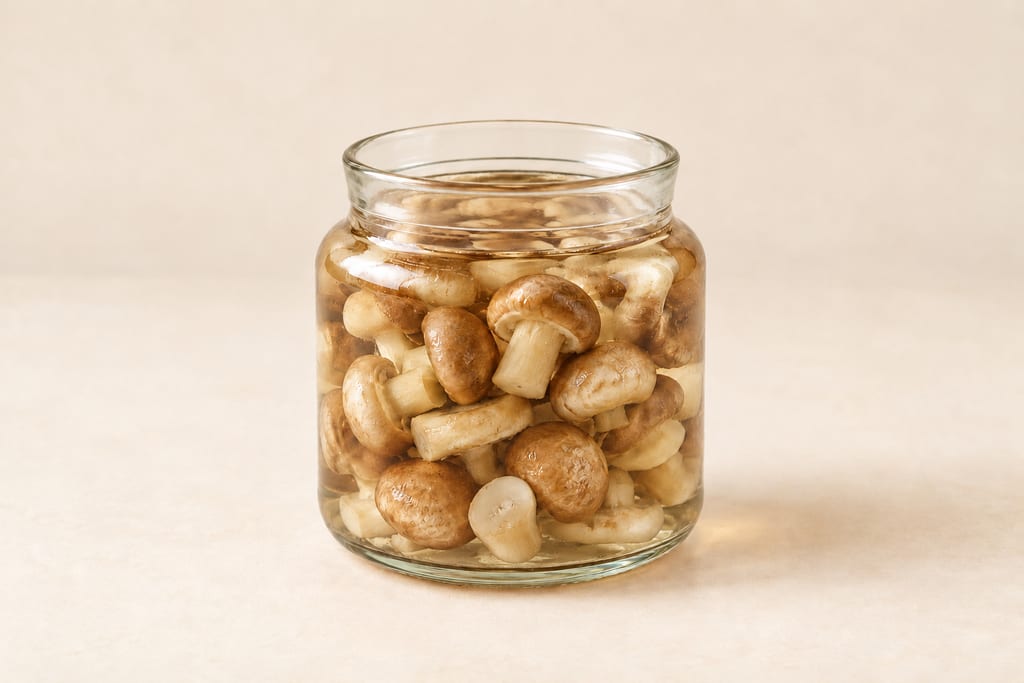
A clean, heat-tolerant food jar holds hot ingredients or liquor when a method calls for it. Its temperature limits depend on its design and maker; a jar does not make food shelf-stable.
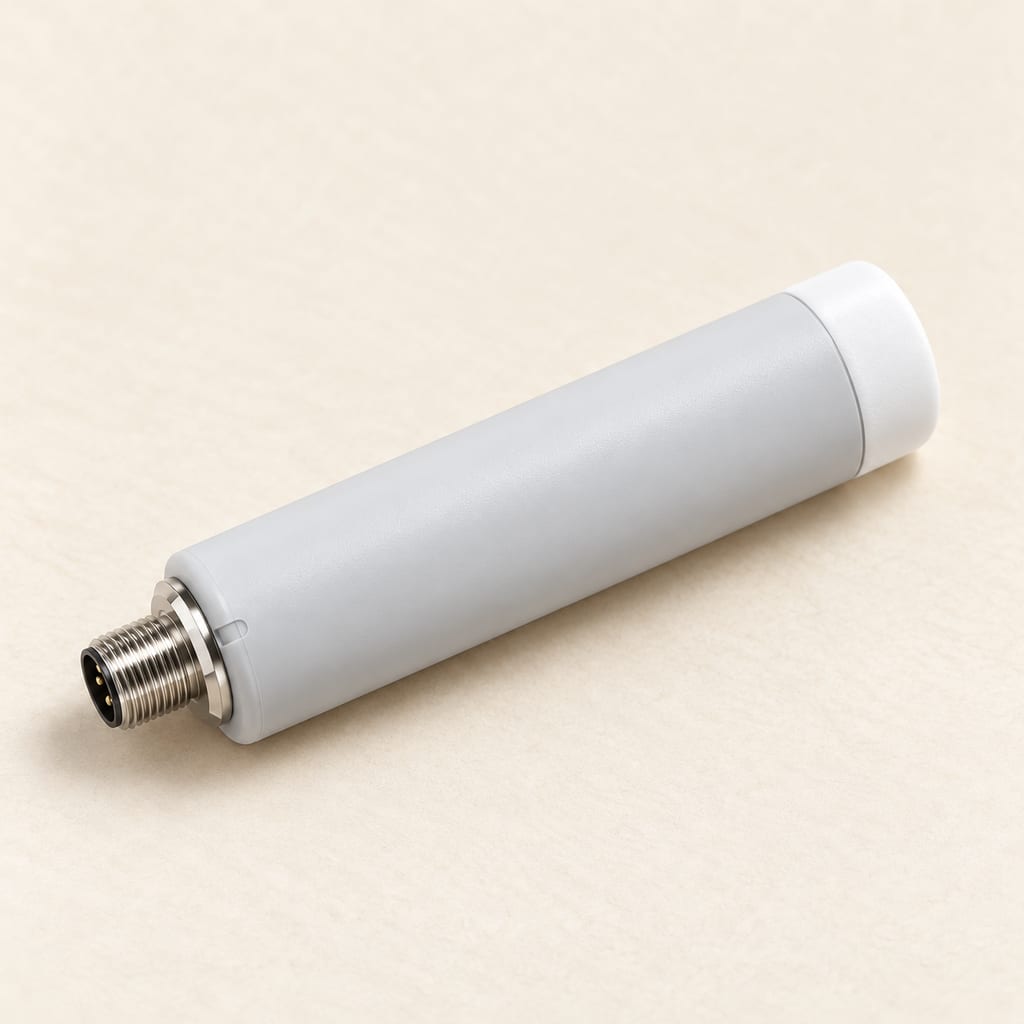
A gas-phase instrument for measuring carbon dioxide concentration. Contemporary probes such as the Vaisala GMP251 use infrared sensing; a CO₂ reading is not a bubble count or an alcohol assay.
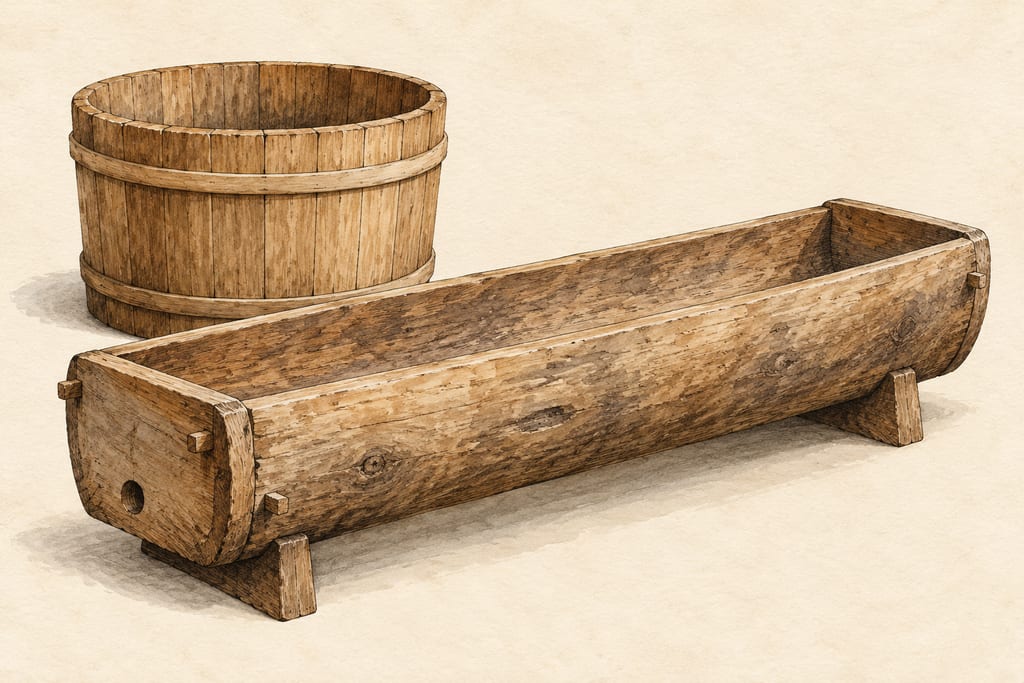
A Finnish sahti kuurna is a long trough for straining mash into wort. It is distinct from the wooden mash tub; historic wooden forms include a hollowed log.
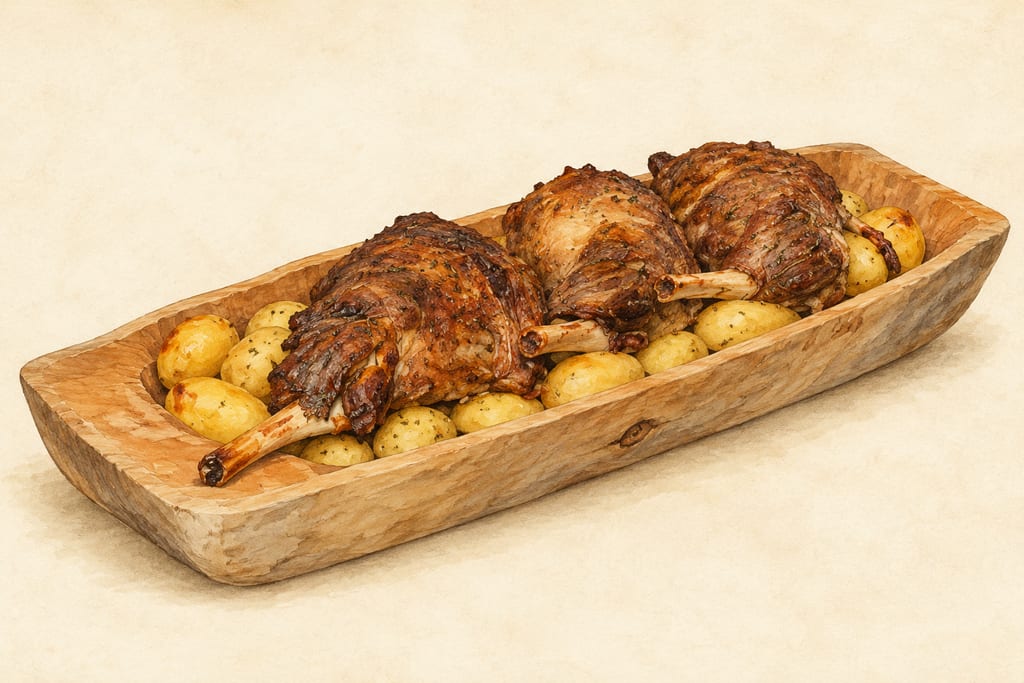
A long birch-log roasting trough used for Lemi särä, the slow-roasted lamb and potato dish of South Karelia, Finland.
No community contributions have been published for this entry yet.
Sign in to contribute. Published comments and photos are free to read.
thisisFINLAND, Ministry for Foreign Affairs of FinlandForm · Traditional use · Geography
The root of Finnish rye breadReikäleipä is a flat round rye loaf with a central hole, traditionally stored on poles suspended under the ceiling.
The article distinguishes the western hole-shaped loaf from eastern round loaves without a hole.
Cited in: A hole made useful; Bread storage in Finland; Form and limits
thisisFINLAND, Ministry for Foreign Affairs of FinlandForm · Documented use · Historical context · Image reference
We love Finnish rye bread: A baking story that stretches across borders and generationsThe photograph caption describes several ring loaves arranged on a wooden pole and says a loaf with a central hole can be stored there.
The article describes historical east-west differences in Finnish baking frequency and dried versus soft bread.
Cited in: A hole made useful; Bread storage in Finland; Form and limits