← Equipment

Equipment · Strainers, moulds and hoops

Finnish sahti kuurna and wooden mash tub

kuurna · sahti kuurna · wooden mash tub

Loading ratings…

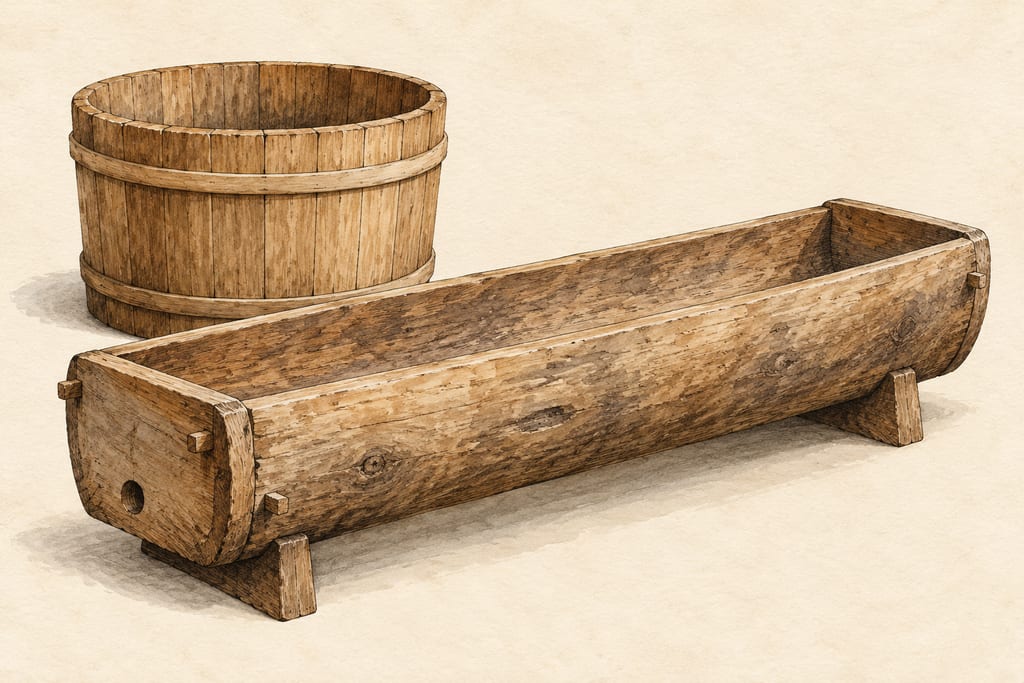
A Finnish sahti kuurna is a long trough for straining mash into wort. It is distinct from the wooden mash tub; historic wooden forms include a hollowed log.

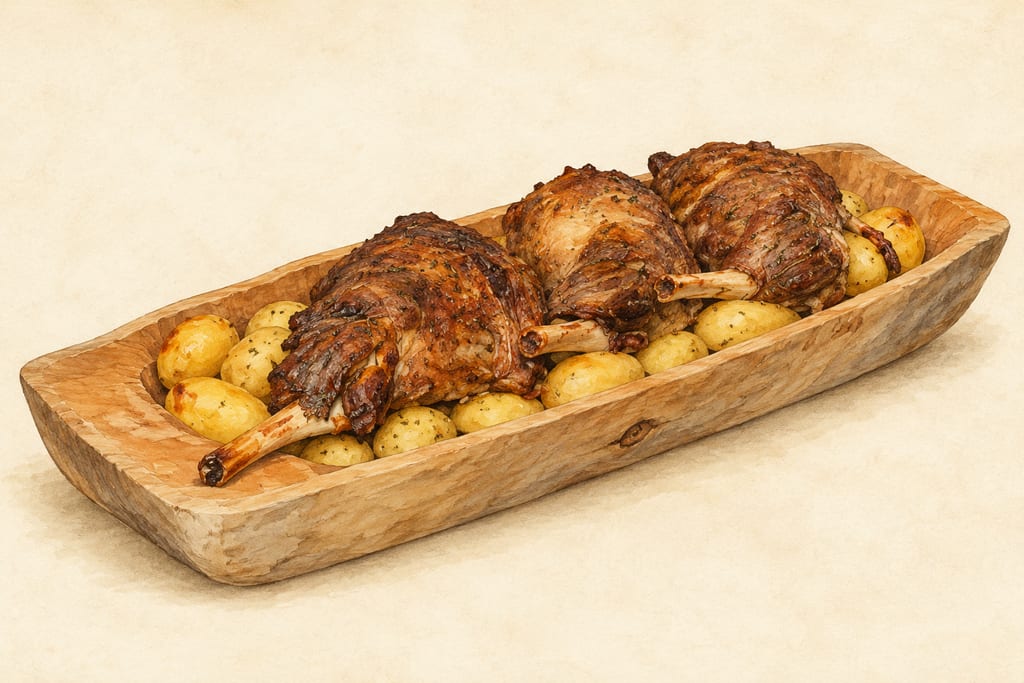
Editorial historical illustration of a Finnish wooden sahti kuurna beside a separate wooden mash tub; the kuurna shows one documented form, not a universal pattern.

Two vessels, two stages

Finnish farmhouse brewing uses two distinct wooden vessels in the traditional arrangement: a tub for mashing malt and a separate long vessel called a kuurna for lautering, or straining the mash to collect wort. The mash tub holds the grain and hot brewing water while mashing takes place. The kuurna receives the mash afterward; wort drains from it into a separate receiving vessel. Neither is automatically the fermentation vessel.

The kuurna’s job is physical separation. Grain solids remain in the trough while the sweet liquid runs through the filter and out through an opening. This clarifies why the vessel’s bottom arrangement and drainage matter more than a lid or an airtight seal: it is an open draining tool, not a closed fermenter.

Sources for this section

A carved trough and its filter bed

A Finnish National Museum record describes a specific kuurna hollowed thin from one piece of wood. Board ends fit into grooves; curved braces, crosspieces and wooden pins with a wedge hold the end structure together. The catalog measures this object at 148 by 51 by 41 centimetres, with maximum dimensions of 152 by 66 centimetres. These measurements belong to that one artifact, not to a standard design or capacity.

In the museum’s recorded brewing method, crosspieces lie across the base to hold a filter bed above the bottom. Rye straw and, for example, juniper branches cover the supports; mash is poured over them and filtered wort drains through a hole at one end into a tub. A juniper bed can contribute its woody, needle-like aroma as well as hold back grain, but its use is not universal. One documented brewer instead used a wire screen in a steel kuurna and preferred the resulting beer without the sharper juniper note.

Sources for this section

Household craft and changing materials

The long trough is distinctive because it follows the work of farmhouse brewing rather than the shape of modern brewery tanks. Hollowed-log kuurna are documented as a traditional form; a later field report describes a modern steel example preserving that low, elongated outline. The modern example is evidence of adaptation, not a reason to replace the documented wooden vessel in an image of the traditional form.

The wooden mash tub remains separate in the record: its role is to hold the grain-and-water mash before lautering. Sources confirm wooden tubs but do not establish a single size, species or joinery pattern. This page pairs the two tools for their shared brewing sequence without suggesting that they are one object.

Sources for this section

Places, dates and what remains unknown

Finnish museum records locate a used kuurna at Korvenkylä, Säkylä (Antintalo). A photograph catalogued as sahti-making at Noitala, Hollola, is dated 1900–1909 and shows the long wooden trough in a working scene. These records anchor particular use associations; they do not establish a single birthplace for the kuurna or a date when the design began.

The sources do not give a standard capacity, exact dimensions for the accompanying mash tub, present-day maker, purchase route or care routine. They also do not establish that all brewers use juniper, that all kuurna are made from one tree species, or that a kuurna carries out fermentation. The vessel is best understood through the documented sequence and the individual examples, not by treating one specimen as a universal pattern.

Sources for this section

History

Finnish museum records and a photograph dated 1900–1909 document kuurna in beer and sahti production. The sources do not establish when the vessel was invented or first used.

Equipment details

CapacityThe Finnish National Museum gives dimensions for one kuurna but no capacity; no standard volume is established for this item.
Size41 cm tall One Finnish National Museum kuurna is catalogued as 148 × 51 × 41 cm, with maximum dimensions 152 × 66 cm. These are measurements of that object, not a standard. The wooden mash tub is a separate vessel and is not dimensioned in the inspected sources.
PowerNo power The vessels are unpowered; the museum record describes wort draining through an end opening into a receiver.
How you get oneNot established The sources describe historic and current forms but do not identify a present-day maker or retail route for a traditional wooden kuurna or mash tub.
CareNo inspected source gives a cleaning, seasoning, repair or storage routine for these vessels; no care procedure is inferred.

Made of

  • Wood — Kuurna body
    A museum-catalogued example is carved thin from one piece of wood, with separately fitted end boards, end braces and crossbars secured by wooden pegs and wedges.
  • Wood — Mash tub
    Farmhouse brewing sources document wooden mash tubs; the inspected sources do not establish one universal species, joinery, size or profile.
  • Rye straw and juniper branches — Documented filter bed
    A Finnish museum record describes wooden crosspieces supporting rye straw and, for example, juniper branches. Other documented brewers use different filters.

Limits

The kuurna is a mash-straining vessel in the described sequence, not necessarily the vessel in which sahti ferments; documented brewers collect wort separately before fermentation.

Source →

Places

Finland

Traditional use · Country evidence

The sources document Finnish sahti practice; they do not establish the kuurna's origin or exclusive use in Finland.

Korvenkylä, Säkylä (Antintalo)

Historical attestation · Locality evidence

The Finnish National Museum record names this use location for one kuurna; it is not a claim that the item was manufactured there.

Noitala, Hollola (Hottola)

Historical attestation · Locality evidence

The source photograph records sahti-making and a kuurna at this named locality; photographer is unknown.

Related

Community

No community contributions have been published for this entry yet.

Share what you made

Sign in to contribute. Published comments and photos are free to read.

Sources