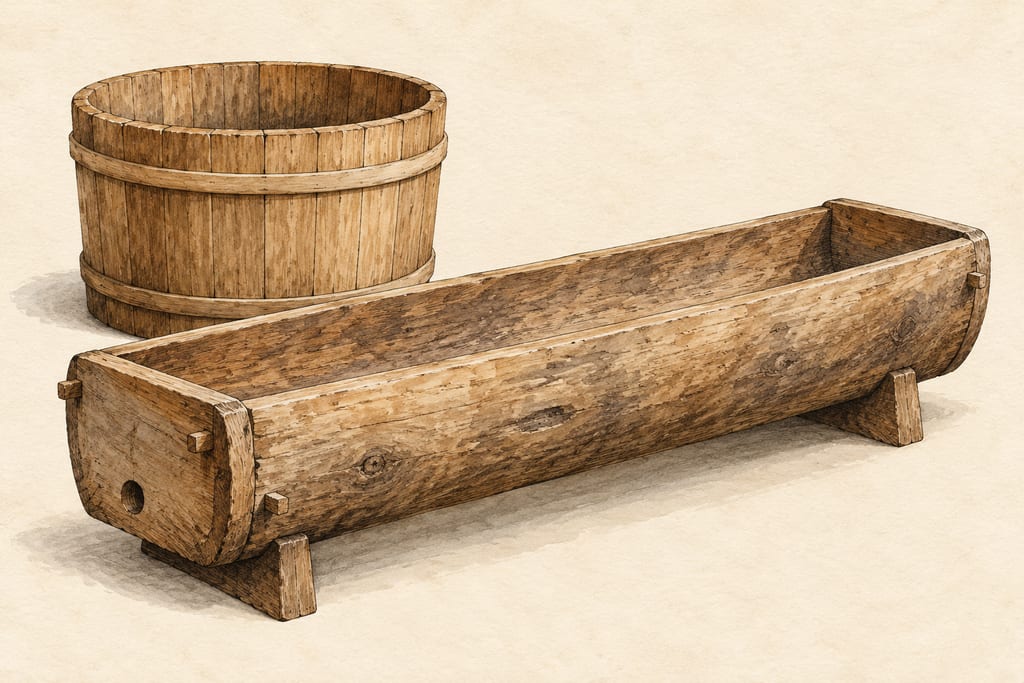
A carved birch-log trough
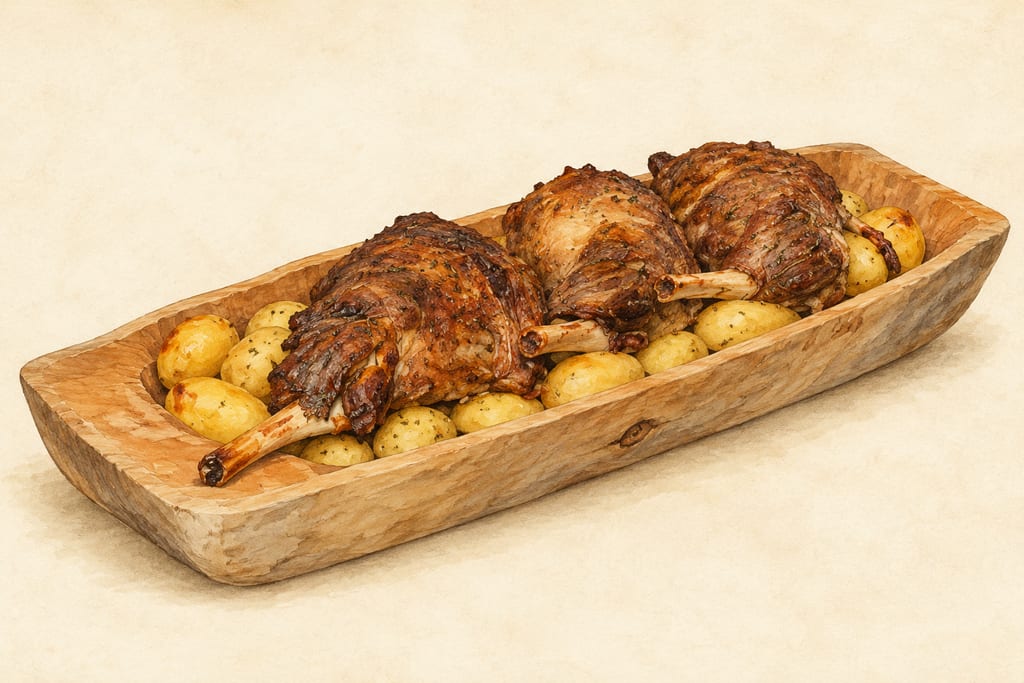
The Finnish name for the roasting vessel is säräkaukalo. The Lemi Local Heritage Society describes it as a trough made from a birch-tree log; Finland's living-heritage inventory likewise says the Lemi bowl is carved from birch wood. This is a one-piece wooden basin, not a coopered barrel or a metal roasting pan. Its elongated, open form holds the meat during slow oven cooking and keeps the preparation associated with its serving vessel.
The sources do not give a standard size, capacity, exact wood-carving method or care instructions. A specific trough should not be reconstructed from measurements that the sources do not provide.
Sources for this section
Use in Lemi särä
The trough is used for särä, a Lemi dish of salted lamb roasted in a wood-fired oven. The heritage inventory describes the meat resting on alder sticks in the bowl, with partly boiled potatoes added underneath later; the entire preparation, including heating the oven, takes about nine hours. The Lemi Local Heritage Society also describes the long birch trough as the vessel in which the lamb is roasted and served.
This is a cooking vessel, not a fermentation jar. The related Särä recipe page is linked below so the equipment and dish remain distinct.
Sources for this section
Older draining holes
The inventory records a change in the trough's form. Older Lemi bowls had small holes fitted with plugs so cooking fat could be drained into a separate container; bowls with holes have since fallen out of use. The same account distinguishes the Lemi bowl from an open-ended meat bowl used in Ruokolahti. These are documented local differences, not interchangeable details to add to every särä trough.
The inventory places the tradition in Lemi, South Karelia, and says the traditional wooden-trough method is fading even as the dish remains in use. It does not date the bowl's origin or establish where any particular example was carved.
Sources for this section
History
The Lemi särä bowl is carved from birch. The Finnish living-heritage inventory distinguishes it from an open-ended bowl used in nearby Ruokolahti and records older Lemi bowls with plugged holes for draining cooking fat. Those holed bowls have fallen out of use; the tradition of cooking and serving särä in the Lemi trough continues.
Equipment details
PowerNo power The wooden trough itself has no powered mechanism; the local heritage society describes roasting in a wood-fired oven.
How you get oneNot established The heritage sources describe the carved wooden form but do not say how a household obtains or commissions a trough today.
Made of
- Birch — trough body
The local heritage society describes the särä vessel as a trough made from a birch-tree log; the national inventory specifies birch wood.
Places
Lemi
Traditional use · Locality evidenceThe sources identify the Lemi särä trough and its ongoing local food tradition; this is a place of use, not a claim about where a particular trough was made.