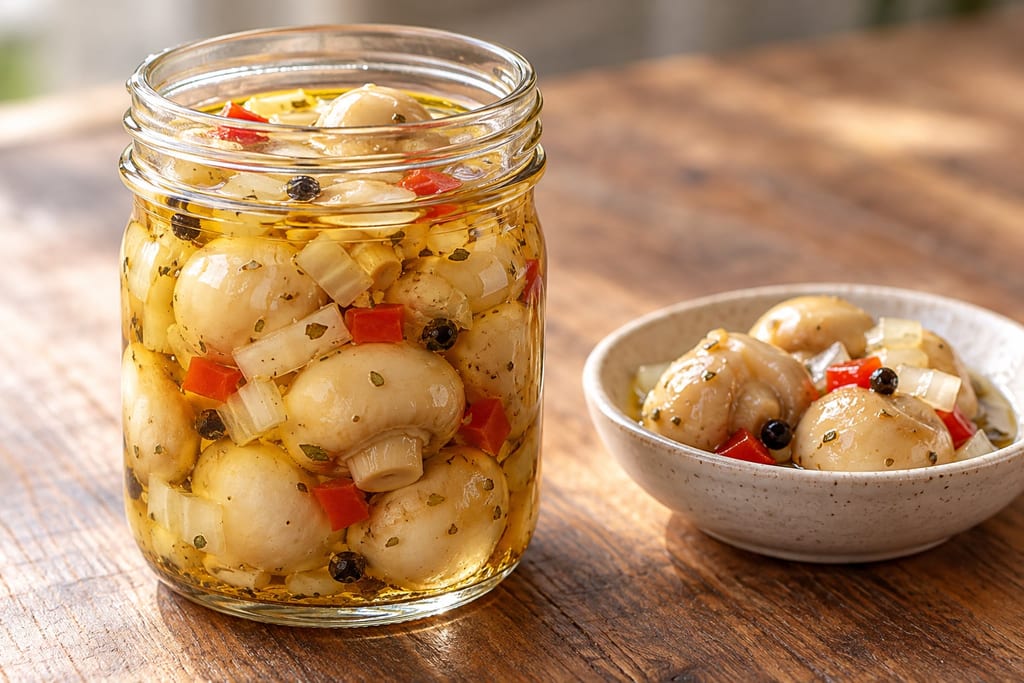
Eastern European Vinegar-Pickled Mushrooms
Small edible mushrooms are briefly cooked and packed in a seasoned vinegar marinade, a sweet-sour preserve served cold in Poland and neighbouring cuisines.
 FermenteaWhere food goes to change
Equipment · food-and-preserving-jars
A clean, heat-tolerant food jar holds hot ingredients or liquor when a method calls for it. Its temperature limits depend on its design and maker; a jar does not make food shelf-stable.
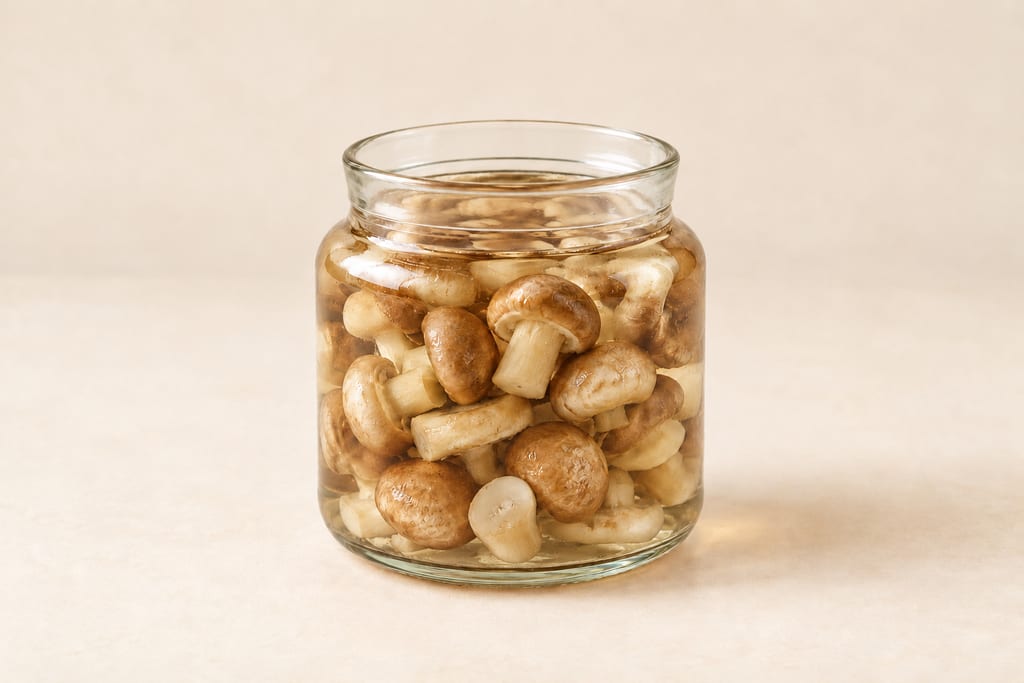
This record uses “clean heatproof jar” as a practical equipment description, not the name of one standardized design. The vessel is a food-contact jar that is clean and suitable for the temperature a particular method asks it to receive. Shape, capacity, wall thickness, glass formulation and closure vary by product; the word glass alone does not certify a safe fill temperature.
The container holds food and liquid. It does not create acidity, cool food at a controlled rate, seal it hermetically or validate a preservation process. Treat the maker's instructions as part of the equipment specification, especially when hot contents are involved.
Arla Finland’s vinegar-mushroom recipe shows the jar's role. It cooks cleaned mushrooms in a dry pan until their released liquid evaporates, puts them into clean glass jars, and pours over boiled vinegar, sugar, water and salt liquor until they are covered. The recipe cools the jars uncovered, closes them and refrigerates the mushrooms for at least 24 hours before serving.
The supplied Nordic atlas calls for a clean heatproof jar; the current Arla page says clean glass jars. That supports a jar selected for this recipe's hot liquor, not a claim that any glass jar can take hot liquid. The recipe is refrigerated and gives no long-term storage life.
Ball's jar instructions say to inspect for cracks or nicks, wash before use, and avoid putting hot food or liquid into a jar that has not been heated first. They also warn against setting a hot filled jar on a cold, hard surface. Those are manufacturer instructions for its products, not a universal temperature specification for all jars.
University of Minnesota Extension makes a related point for a different process: hot-fill-hold containers must be designed for high temperatures. That is not the Arla refrigerated-mushroom method. The practical lesson is to match the jar to the heat exposure and follow the product instructions; a generic label cannot replace them.
Auckland Museum records one Perfect Seal preserving jar made in Canada. The object record describes an aqua glass body, glass lid and hinged wire closure, with dimensions of 195 by 92 millimetres. It does not date manufacture or give a heat rating. It is an example of jar construction, not the unnamed jar in Arla's recipe.
Food jars have different forms and closures. This page does not identify one brand, capacity, origin or model; it describes the clean jar selected for a specified hot-liquid use.
A closed jar does not make food shelf-stable. The documented mushrooms are cooled and refrigerated, and the recipe supplies no validated canning process or long-term storage period. Do not treat a hot pour, a lid or a vacuum that may form during cooling as proof that an untested food is safe at room temperature.
For this use, the jar holds mushrooms and liquor while they cool and chill. Follow the recipe's refrigeration direction and the maker's temperature and handling instructions; use an applicable tested process if shelf-stable storage is intended.
A current Arla Finland recipe uses clean glass jars for refrigerated vinegar mushrooms. An Auckland Museum record documents a Canada-made Perfect Seal preserving jar but gives no manufacture date or heat rating. These examples do not establish an origin story.
Heat tolerance is product-specific; the word glass alone does not establish that a jar can receive hot food or liquor.
Source →The documented Finnish mushroom use is cooled and refrigerated; a jar and hot vinegar liquor do not by themselves create validated shelf-stable canning.
Source →The Auckland Museum jar is a Canadian-made form with glass and metal parts, but its record gives neither manufacture date nor heat rating.
Source →Arla Finland's vinegar-mushroom recipe directs use of clean glass jars for refrigerated storage; this is a documented example, not an origin claim.
Small edible mushrooms are briefly cooked and packed in a seasoned vinegar marinade, a sweet-sour preserve served cold in Poland and neighbouring cuisines.
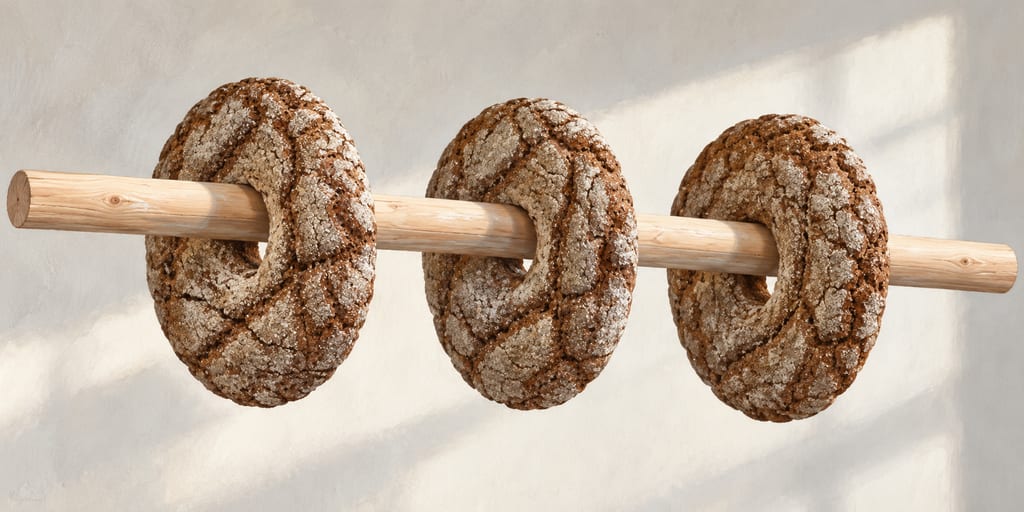
A simple wooden pole stores Finnish ring-shaped rye loaves by passing the pole through each loaf’s central hole. Finnish accounts describe the poles as ceiling-suspended and connect the hole-shaped loaf with a tradition of drying bread.
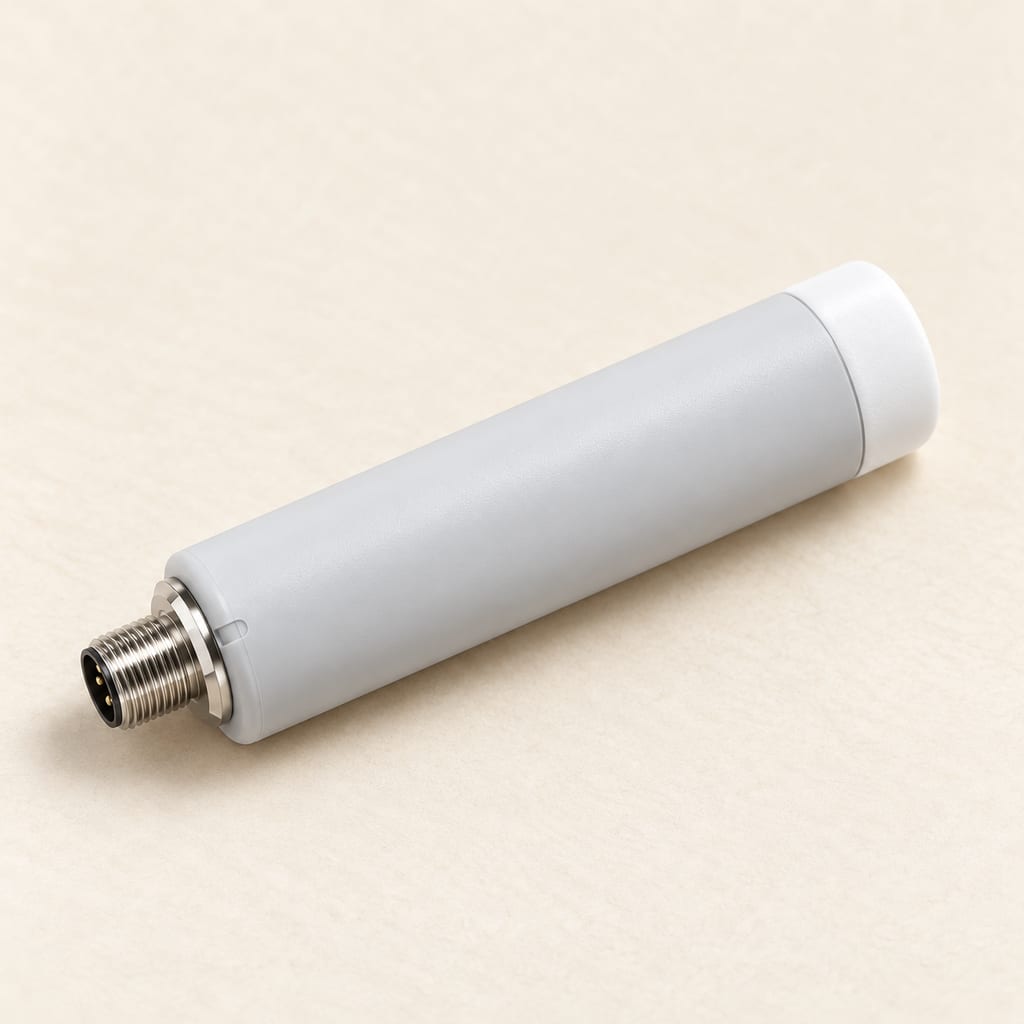
A gas-phase instrument for measuring carbon dioxide concentration. Contemporary probes such as the Vaisala GMP251 use infrared sensing; a CO₂ reading is not a bubble count or an alcohol assay.
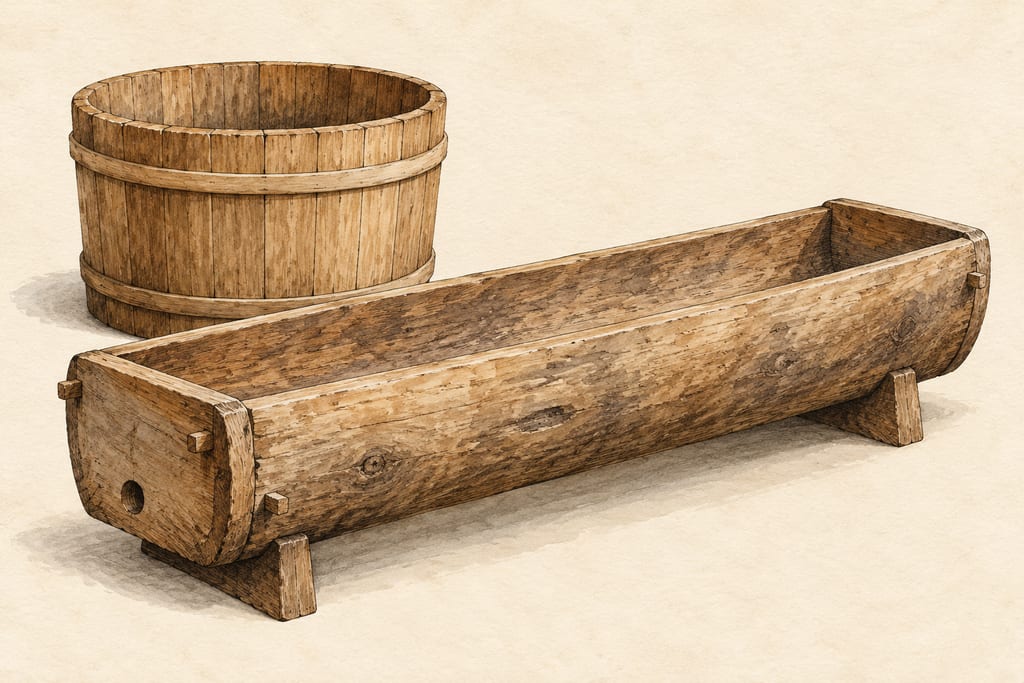
A Finnish sahti kuurna is a long trough for straining mash into wort. It is distinct from the wooden mash tub; historic wooden forms include a hollowed log.
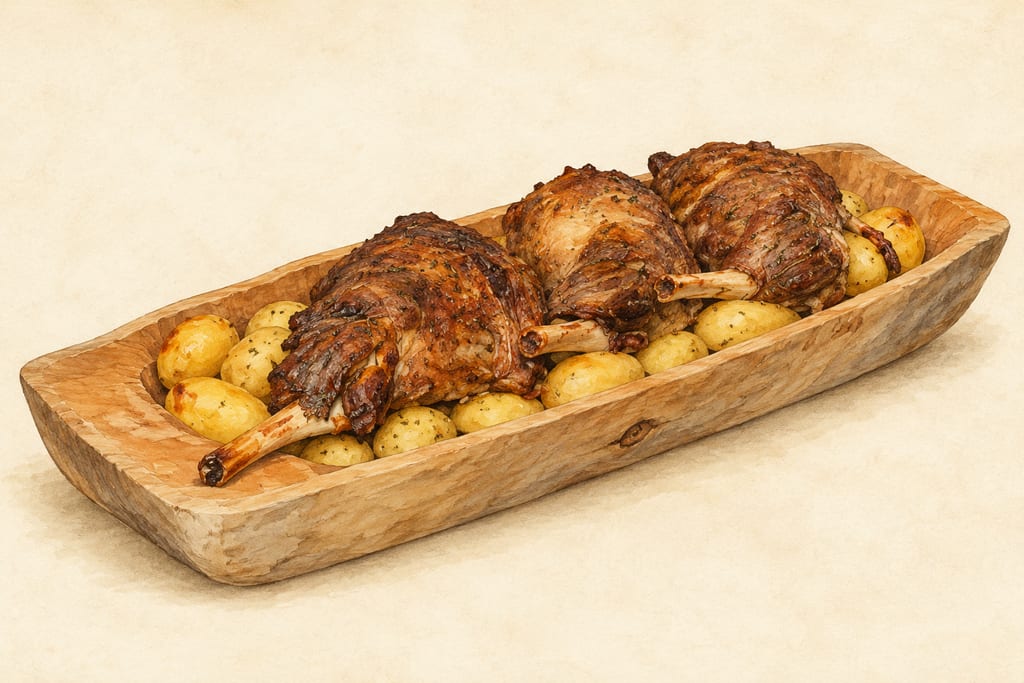
A long birch-log roasting trough used for Lemi särä, the slow-roasted lamb and potato dish of South Karelia, Finland.
No community contributions have been published for this entry yet.
Sign in to contribute. Published comments and photos are free to read.
Arla FinlandDocumented use · Jar material · Use stage · Refrigerated storage
Etikkasienet (Finnish vinegar mushrooms)The recipe puts cooked mushrooms into clean glass jars, covers them with boiled vinegar liquor, cools them uncovered, then closes and refrigerates them for at least 24 hours.
This is a refrigerated recipe and gives no pantry storage life.
Cited in: A documented Finnish use; Different jars, different evidence; A container is not a preservation process
Ball® Mason JarsJar selection · Cleaning · Hot fill care
Canning Use & CareThe manufacturer says to inspect jars for nicks or cracks and wash before use.
Its directions warn against putting hot liquids or foods into jars without heating the jars first and against placing hot filled jars on cold, hard surfaces; these are product-specific directions, not a universal temperature rating.
Cited in: What “heatproof jar” means here; Select and handle by the maker's instructions
Auckland Museum Tāmaki Paenga HiraForm · Materials · Image reference · Historical example
Jar, preserving (object 1970.185, col.2595)The museum documents a Perfect Seal preserving jar made in Canada, with glass body, glass lid and hinged wire closure; recorded dimensions are 195 × 92 mm and its manufacture date is not established.
The record does not call the object heatproof or establish a hot-fill use.
The front-view image is licensed CC BY 4.0 by Auckland Museum.
Cited in: Different jars, different evidence
University of Minnesota ExtensionHeat rated container context · Process limits
Preserving food using hot-fill holdFor its separate hot-fill-hold process, UMN says containers must be designed to withstand high temperatures.
Hot-fill hold is not the Arla refrigerated-mushroom method and is not a process this jar record validates.
Cited in: What “heatproof jar” means here; Select and handle by the maker's instructions; A container is not a preservation process