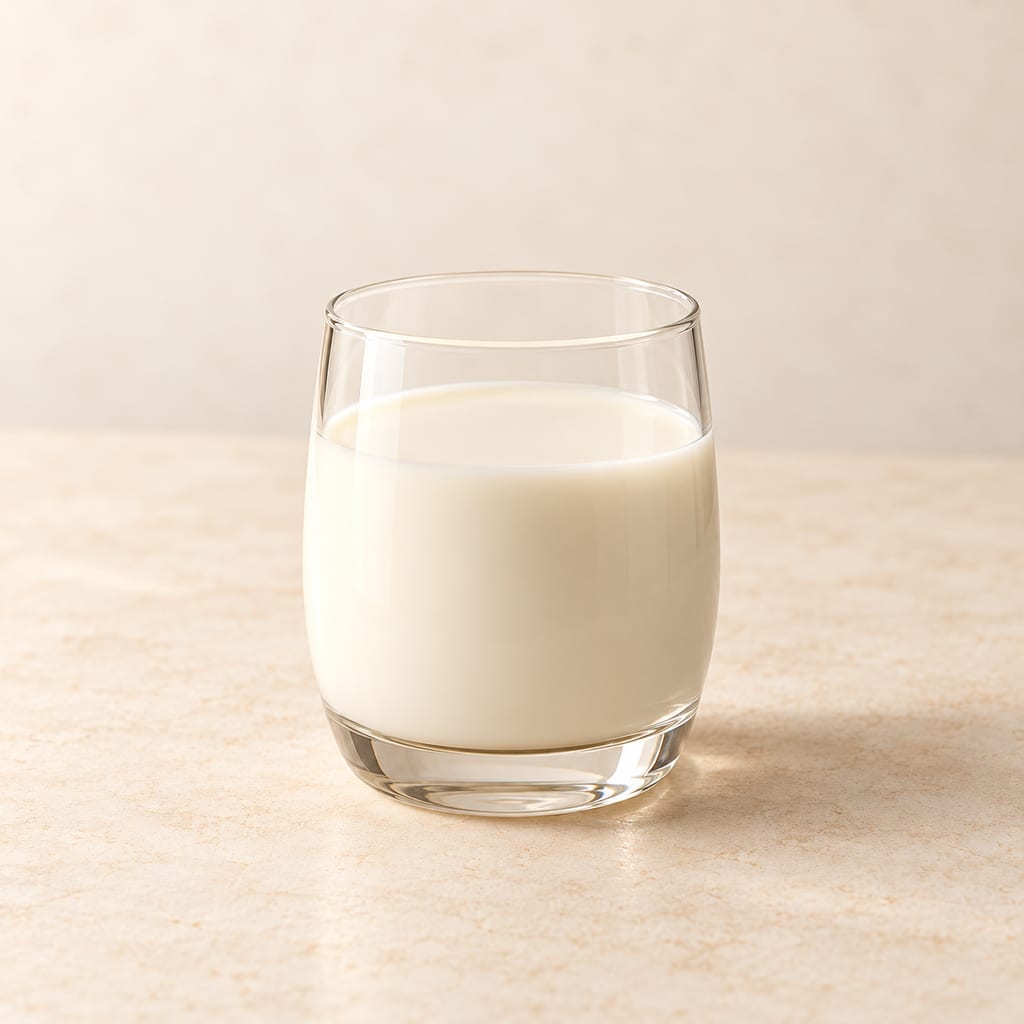
Pasteurized whole milk
Full-fat milk given conventional pasteurization, selected in linked cultured-milk and cheese methods for its composition and treatment.
 FermenteaWhere food goes to change
Modern method
Viili is a Finnish cultured milk with a soft set and, in its western form, a stretchy texture. This small recurring batch uses a spoonful of previously cultured viili.
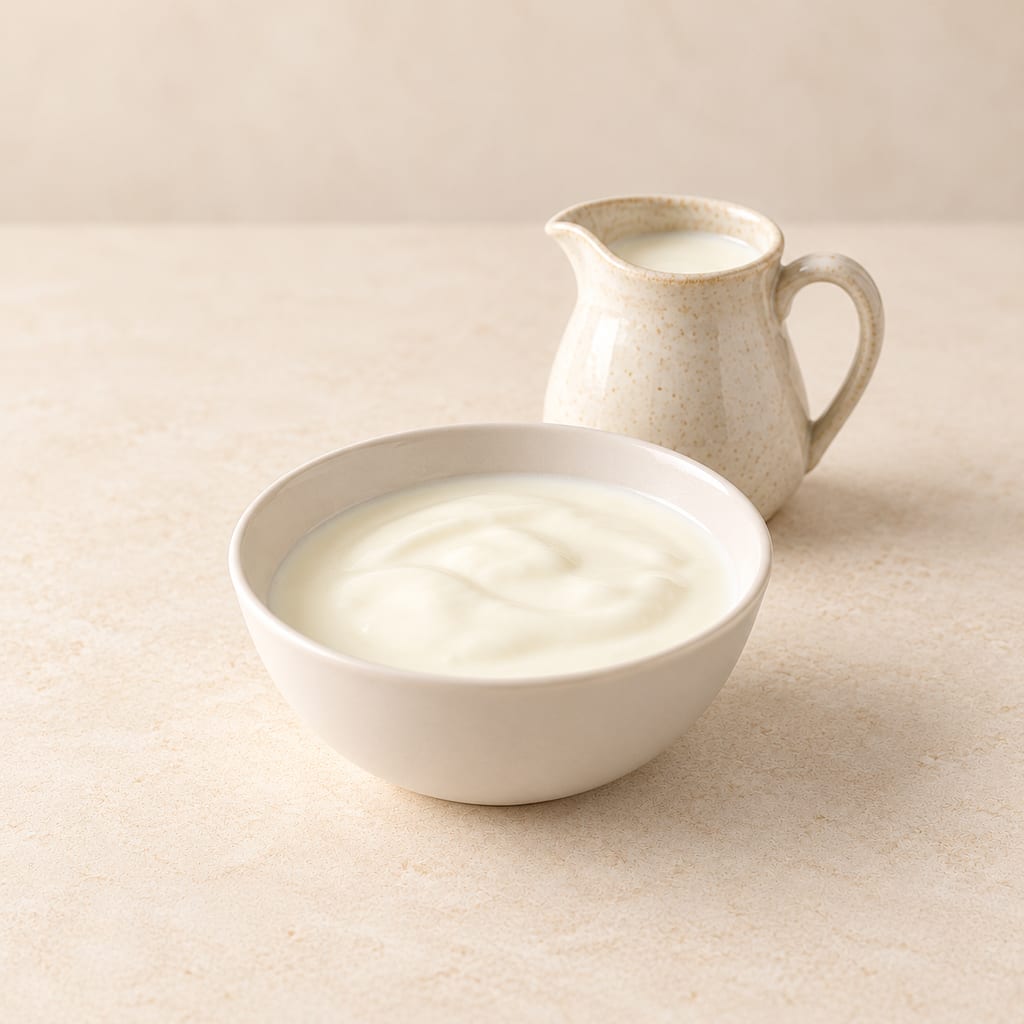
Viili is a Finnish cultured milk served cold from a cup or bowl. Its defining contrast is between a mild, clean sourness and a body that can be both spoonable and elastic. In the western Finnish style, a spoonful may draw into a long, glossy thread; in eastern traditions, especially Savo and Karelia, cooks also made a shorter, more brittle sour milk that breaks cleanly. Those are related regional results, not two stages of one universal method. The word viili names a family of cultured milks whose texture depends on the milk and the living culture as well as on how the set is disturbed.
A traditional surface may carry a pale cream layer with a fine, velvety growth of Geotrichum candidum. That surface organism is part of the documented character of traditional viili, but it is not a cue to improvise with an unidentified growth in a home batch. Many commercial products are made from pasteurized milk with selected cultures, and some are homogenized or made without a visible fungal layer. A smooth, unbroken top therefore does not by itself mean that a product has lost its identity. The version here is a small home batch inoculated with a spoonful of the previous batch; the supplier does not identify that starter's species or promise that it recreates every traditional surface feature.
The difference between viili and ordinary yogurt is not simply thickness. Yogurt commonly relies on thermophilic cultures and a warmer incubation; viili belongs to the mesophilic, cooler-fermenting Nordic milk family. It is also not filmjölk under another name: the two share a broad regional context and can be eaten at breakfast, but their cultures and resulting textures differ. Nor should viili be confused with cheese: the milk is cultured and set in its serving container, without cutting, draining, pressing or aging the curd.
Viili belongs to Finland's long practice of turning fresh milk into foods that could be kept and eaten after milking. Valio describes it as a traditional summer treat prepared at home and served with talkkuna, cinnamon or sugar. Talkkuna is a toasted grain preparation eaten as an accompaniment; in this setting it adds a dry, nutty contrast to the cool, soft milk. The seasonal setting matters: viili's home method uses a moderate room-temperature culture rather than the heated incubation used for many yogurts. That makes the product intelligible as a household food shaped around available milk and ordinary indoor conditions, while it does not establish a precise date or single place of invention.
The geographical distinctions are unusually visible in texture. Valio describes western Finnish starter strains as producing the stretchy form and records a shorter, cuttable sour milk in Savo and Karelia. It calls current shop-bought viilis long-milk in structure, reflecting the western style. This is a useful description of regional difference, not evidence that all eastern households used one recipe or that today's retail products preserve an unchanged historic culture. Household fermentation varies with the maintained starter, milk treatment and the conditions of the room; a regional name can cover more variation than a single measured formula.
The historical record available here supports continuity of practice and a modern commercial milestone, not a secure origin story. Valio dates the start of its own viili production to the 1960s and the introduction of berry- and fruit-flavoured products in the 1980s. Those dates belong to one producer's product history. They do not date the first Finnish viili. The sources examined do not establish the earliest written attestation, so an exact century or a named inventor would overstate what is known. A cautious account can still say that homemade summer viili was part of Finnish food practice and that commercial production later widened the forms available to shoppers.
Related Nordic milks help explain the setting but should not be collapsed into one recipe. Swedish långfil and Norwegian tettemelk are also mesophilic cultured milks with distinctive textures; Finland's own piimä and pitk piimä names cover other related products. Similarity reflects a regional repertoire of preserving and souring milk, but the organisms and preparation details are not interchangeable merely because a product is ropy or spoonable. This recipe remains the specific recurring-batch method for viili documented by its supplier.
Milk is a water-based mixture containing lactose, proteins, fat and minerals. During lactic fermentation, starter bacteria use lactose and release lactic acid. As acidity rises, casein proteins lose some of the conditions that keep them dispersed and gather into a network that thickens the milk. In a set-style product, that network forms in the container and remains largely undisturbed; stirring or eating it changes its structure. This is why a gentle tilt is a useful observation in the supplied home method, while vigorous mixing can make the same batch feel more fluid or ropy.
Viili's signature stretch is associated with extracellular polysaccharides, often shortened to EPS: long carbohydrate molecules made by particular lactic-acid bacterial strains and released into the milk. These polymers increase viscosity and can connect the spoonful into threads. A recent study of bacteria isolated from viili natural starters describes a mesophilic community and emphasizes that EPS output varies with strain and conditions. The practical implication is that two starters, even if both are called viili, need not make identical ropes. The amount of starter, its history of transfer, the milk and the incubation environment all shape how much acid and texture develop.
Traditional viili can also host G. candidum on the surface. It is a yeast-like, filamentous fungus found on other dairy foods as well, and the Canadian Dairy Commission describes the thin velvety layer and mild aroma associated with it in viili. This surface growth is biologically distinct from the lactic bacteria working through the milk. The bacteria acidify the milk and influence its body; the surface organism grows where oxygen is available and contributes to the top layer and aroma. Commercial products can omit the surface growth, so it is a feature of some styles rather than a universal requirement.
Fermentation is not the same as a guarantee of safety. Acidification can restrain many unwanted organisms, but a successful set or pleasant smell cannot identify every contaminant. The recipe uses pasteurized milk, clean equipment and prompt refrigeration after the culture has set. Its visual tilt test tells the cook about texture only. The listed 12–18 hours and 70–77°F belong to this supplier's home method; they are not a universal viili specification or a validated safety process.
The two ingredients have different jobs. Pasteurized whole milk supplies lactose for the culture, casein and whey proteins for the soft set, and fat for the rounded, creamy taste. Whole milk is the choice in the supplier's recurring-batch directions; the record does not support treating a plant drink, low-fat milk or UHT milk as an automatic substitute. Milk treatment affects structure: homogenization breaks fat globules into smaller particles and changes how cream rises, while the traditional surface layer described by Valio and the Canadian Dairy Commission is associated with unhomogenized milk. The recipe's instruction to avoid ultra-high-temperature milk is specific to its supplier method, not a claim that every commercial viili must be made from the same retail milk.
The spoonful of viili is an active back-slopping culture: a portion from a previous batch seeds fresh milk. Back-slopping is economical and continuous, but the culture is a community rather than a precisely identified packet. Its balance can shift with repeated transfers, handling and conditions. The supplier's weekly reculturing advice is part of maintaining its own culture; it does not prove the identity or stability of a starter over indefinite generations. If the starter has been stored beyond the supplier's instructions or has an uncertain history, this formula does not supply a test that can certify it.
Starting with cold milk keeps the method simple and avoids a separate heating-and-cooling stage. Stirring in the starter distributes it, after which covering the vessel limits exposure to household dust while still allowing the supplier's suggested towel or filter cover. The actual temperature range, 70–77°F (21–25°C), is moderate rather than hot. A stable place matters because the time is a range: the method asks for checks every few hours and gives 12–18 hours, not an exact clock time independent of conditions. In a cool room the set can take longer; the record does not authorize extending it without limit or inventing another target.
The gentle tilt check is a practical way to see whether the milk has formed one coherent soft mass. Once it does, closing the container and chilling for at least six hours firms the set and slows further culturing. Refrigeration is a control on continued microbial activity, not an undoing of fermentation. Reserving a spoonful before serving leaves the next batch's inoculum. Use clean hands and utensils throughout, keep the finished milk refrigerated and avoid presenting texture, aroma or surface appearance as a safety test. The source does not give a validated home-batch shelf life, so follow the starter supplier's current storage guidance and discard food when handling or storage has been uncertain.
Viili is usually eaten chilled as a breakfast or snack, with its cultured milk as the main event. A spoon makes clear whether the batch is short or stretchy: cutting into portions preserves a neater spoonful, while stirring can draw the ropy body into strands. In Finland, talkkuna, cinnamon and sugar are documented traditional accompaniments. Valio also suggests berries, fruit, jam, cardamom, muesli, nuts and seeds. These add sweetness, crunch or aroma without changing what the base milk is. Honey and sugar sweeten the mild acidity; fruit adds moisture and its own acidity, so it is simplest to add toppings at serving rather than treat them as fermentation ingredients.
Modern commercial viili includes different fat levels, lactose-reduced products and flavoured versions. The Canadian Dairy Commission also notes products made from homogenized milk and products without surface mould. Valio records fruit and berry flavours entering its own range in the 1980s. Such varieties adapt the food to current retail preferences and production controls; a fruit-on-the-bottom cup is not evidence of an older household formula. The set, top layer and flavor can differ from a home batch because commercial milk may be standardized, homogenized or otherwise processed and because selected cultures are not necessarily the same as a household starter.
Viili can be used where its tang and soft body make sense: the Canadian Dairy Commission lists chilled toppings, smoothies and baking. In baking, it brings cultured-milk acidity and moisture; it should not be assumed to behave exactly like buttermilk or yogurt in every formula, since thickness and acidity vary. For a first tasting, plain viili makes its own distinctions easiest to notice: mild sourness, a cream-rich upper layer when the milk allows one, and a body that may cling to the spoon or pull into threads. A topping then becomes a choice, not a cover for a failed batch.
A softly set, mildly sour milk is the expected result of this home method. The length of a strand is not a quality score: traditional western viili is associated with ropiness, while shorter eastern forms are documented too, and cultures differ in their EPS production. A batch that sets but is less elastic may reflect the particular starter rather than a simple mistake. A skin or cream layer depends on the milk and its treatment; a surface without visible mould is compatible with some modern products, although that observation alone says nothing about safety.
Use the method's own checks to follow its process: the milk should be pasteurized, the inoculum mixed in, the vessel held in the stated room-temperature range, the set checked by tilting, then chilled. If it has not formed the described mass within the stated interval, the source gives no validated troubleshooting chart that would let us diagnose it from appearance alone. Avoid adding extra starter, changing the temperature, or extending the culture on the assumption that any of those adjustments is harmless. A new batch depends on the health and identity of the carried culture, neither of which can be established by stretch alone.
Commercial shelf-life figures must not be copied onto the home batch. The Canadian Dairy Commission gives a typical 14-day figure at 4°C for manufactured viili and expressly says shelf life varies by manufacturer. That is a product-category reference, not a tested storage limit for this one-cup back-slopped method. Keep the homemade batch cold after setting, use clean serving utensils and follow the starter supplier's storage instructions. When those conditions are unknown, this recipe offers no sensory rule that substitutes for them.
Viili was a summer food made at home in Finland and eaten with talkkuna, cinnamon or sugar. Western Finnish cultures made a stretchy milk; Savo and Karelia also made a short, cuttable form. Valio began making viili commercially in the 1960s. Traditional viili combines lactic bacteria with the surface fungus Geotrichum candidum, which forms a velvety cream layer. The supplier method below cultures a recurring batch in pasteurized whole milk.
Scaling: source batch only
Unsanitized utensils and containers can introduce bacteria into pasteurized dairy.
Hazard sourceWash and sanitize equipment before use, and keep pasteurized dairy away from unsanitized utensils.
Control sourceUse pasteurized whole milk and refrigerate the set batch for at least 6 hours.
Control sourceUnsanitized equipment can contaminate the milk; wash and sanitize the jar and utensils before starting.
Use pasteurized milk and refrigerate after culturing; the thickened texture is the process endpoint, not a test for contamination.
Viili from the previous batch — Active recurring starter. The supplier gives no species-level composition for this product.
Full-fat milk given conventional pasteurization, selected in linked cultured-milk and cheese methods for its composition and treatment.
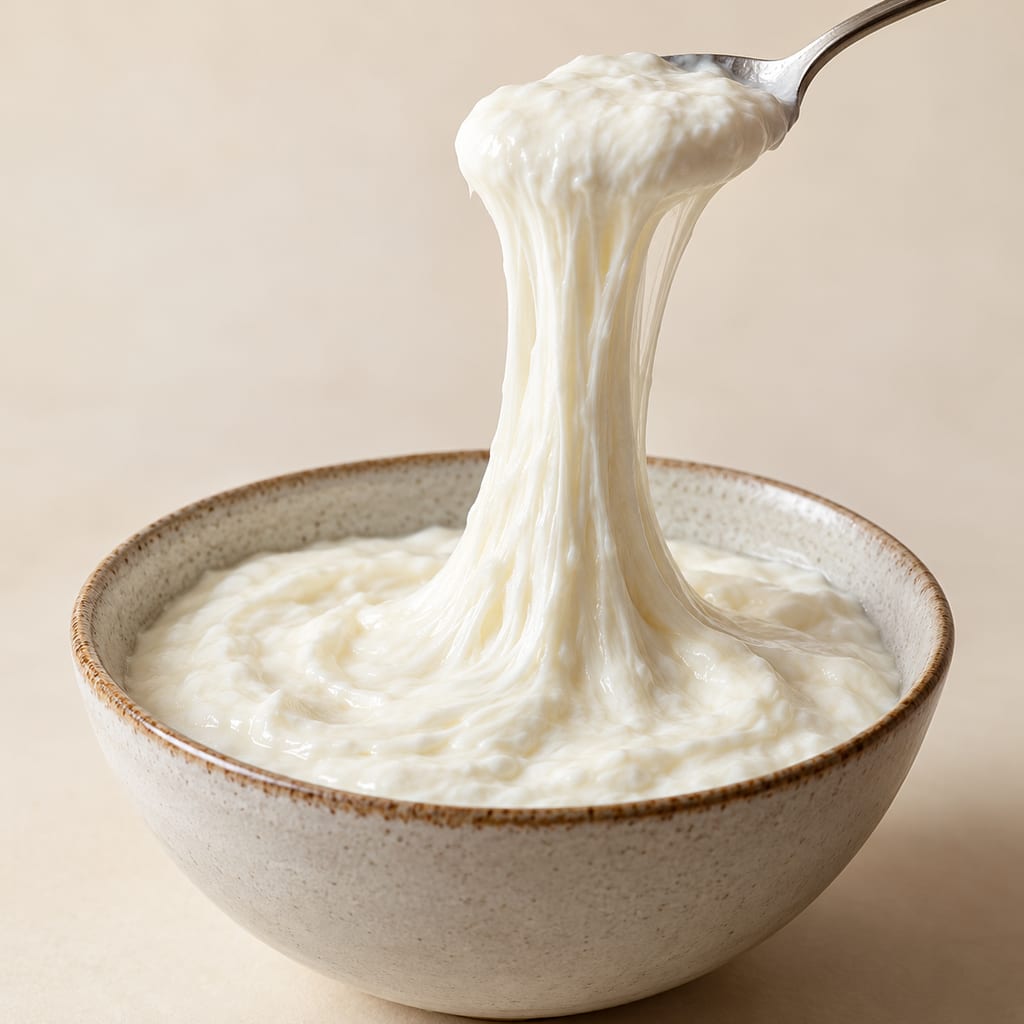
Pitkäpiimä is a Finnish cultured milk whose defining trait is a long, stretchy, ropy texture. It is closely related to viili and is made by lactic fermentation with a specific culture.
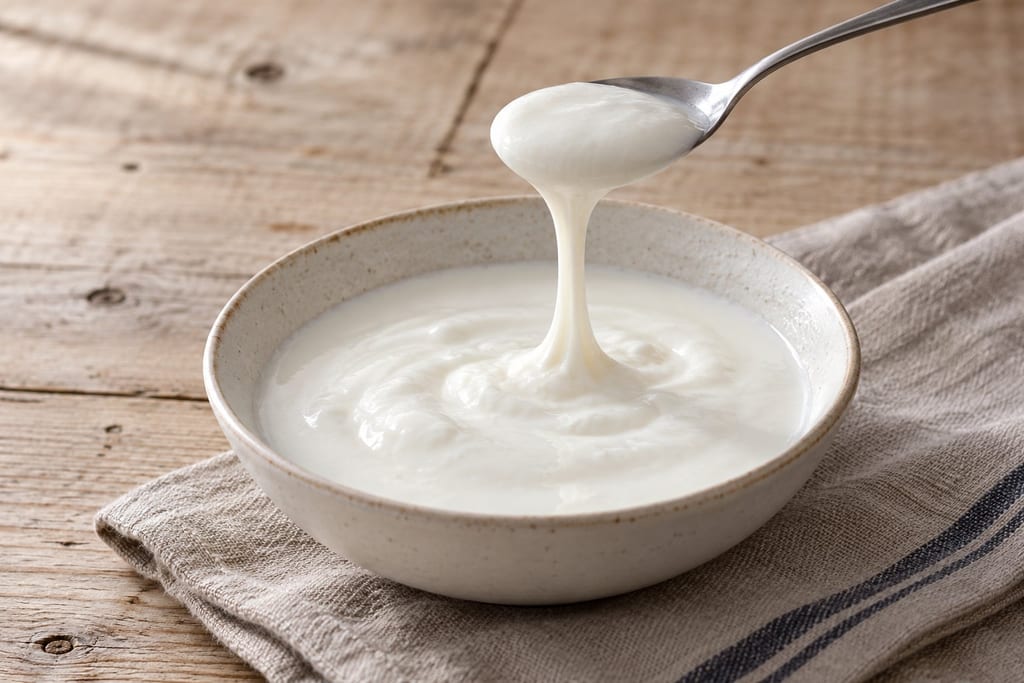
Långfil and tettemelk are traditional Swedish and Norwegian cultured milks with a mild sour taste and a stretchy texture produced by ropy lactic acid bacteria.
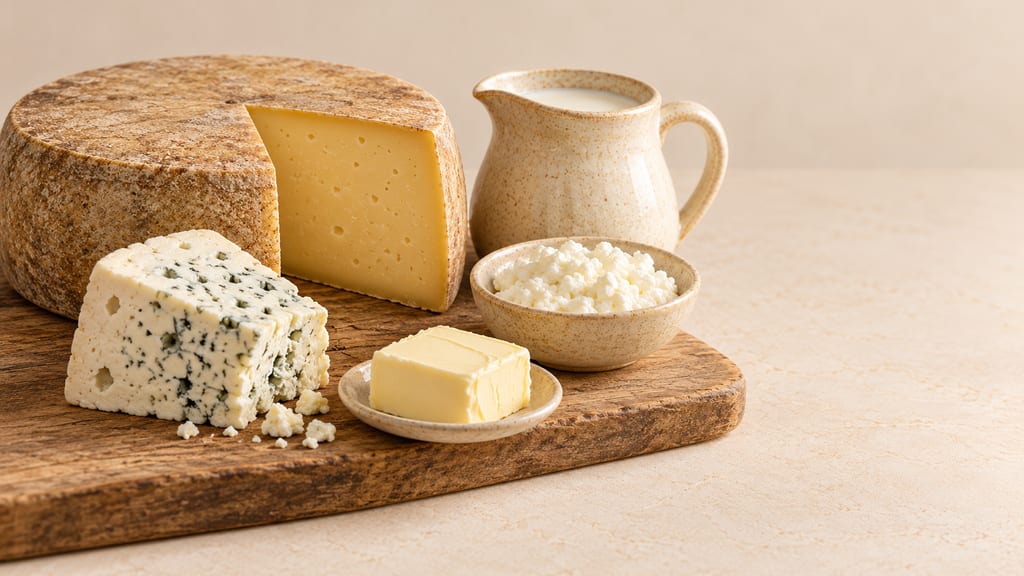
Follow milk into cheese, cultured drinks, butter, dried curds and sweets: a journey through the animals, seasons and household decisions behind the world's dairy foods.
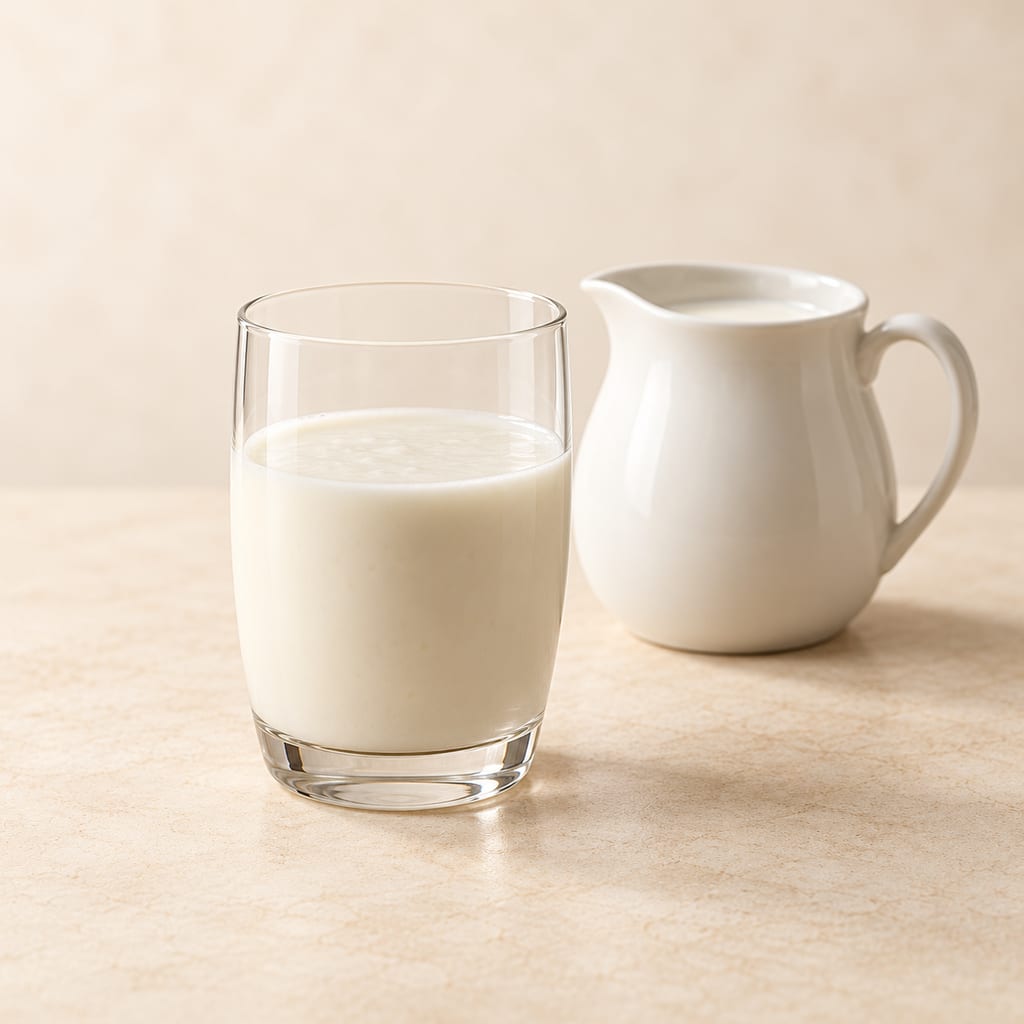
A thin cultured-milk drink made with a commercial countertop starter. Finnish piimä is a mealtime sour milk with distinct regional traditions.
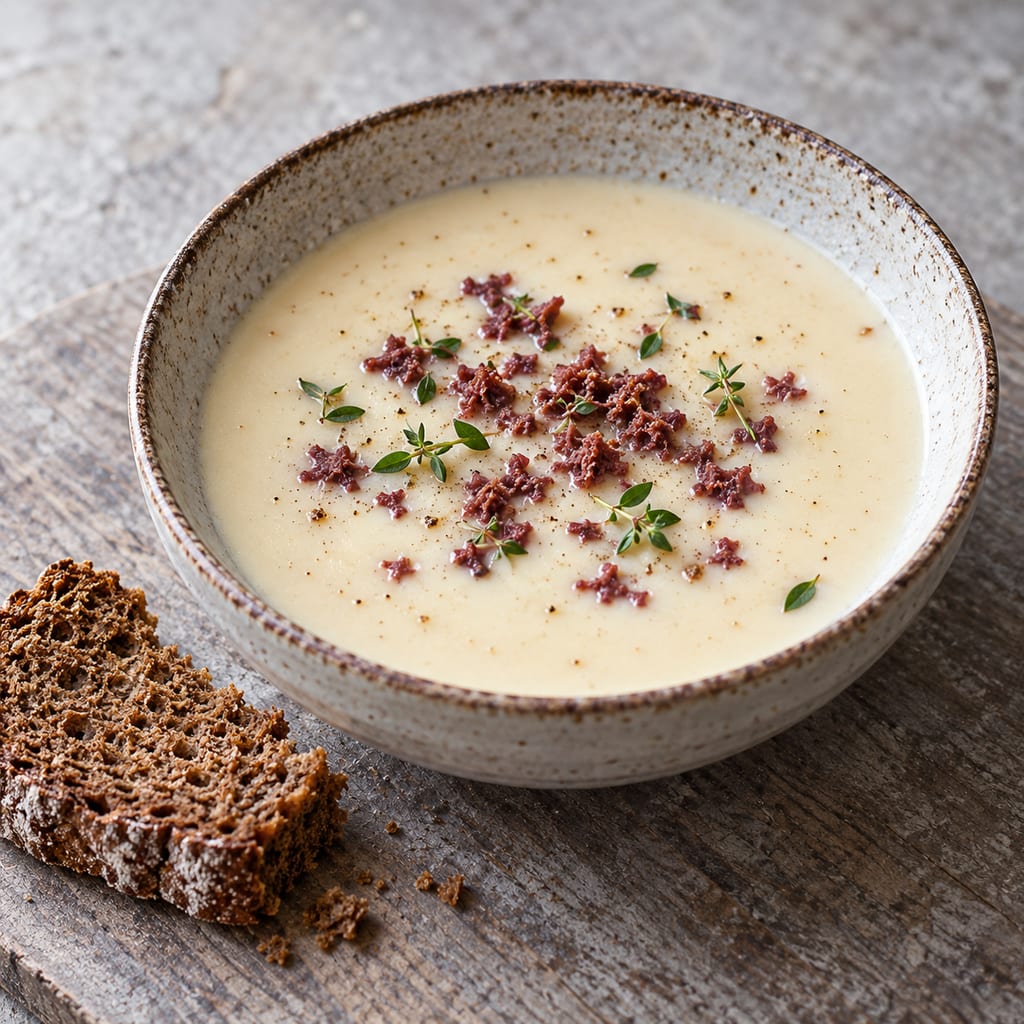
Kylmäsavuporokeitto is a creamy cold-smoked reindeer soup with onion, stock and cheese, served with bread.

Finnish pea soup simmers dried peas with palvikinkku or a vegetable alternative, then is served with mustard and chopped onion.
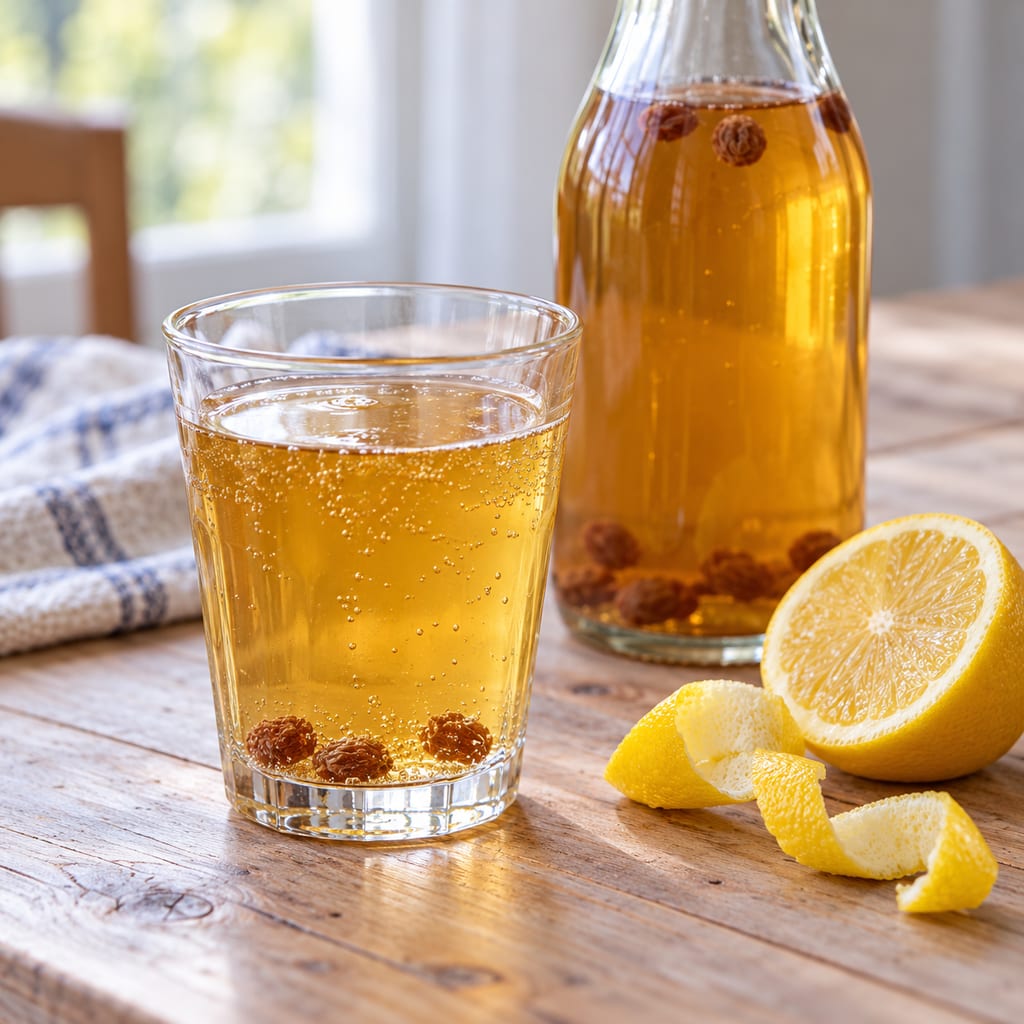
A lightly fermented Finnish May Day drink of lemon, white and brown sugar and a little yeast, bottled with raisins that rise as the carbonation builds.
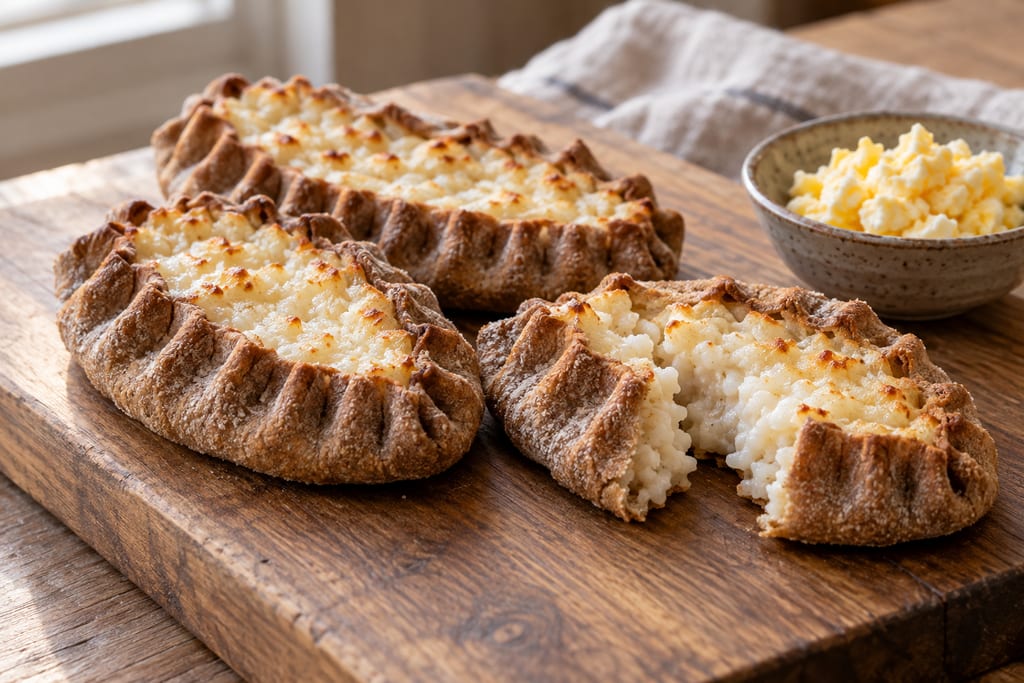
Karjalanpiirakka are open, pleated rye-and-wheat pastries filled with creamy rice porridge, baked hot and brushed with butter and milk.
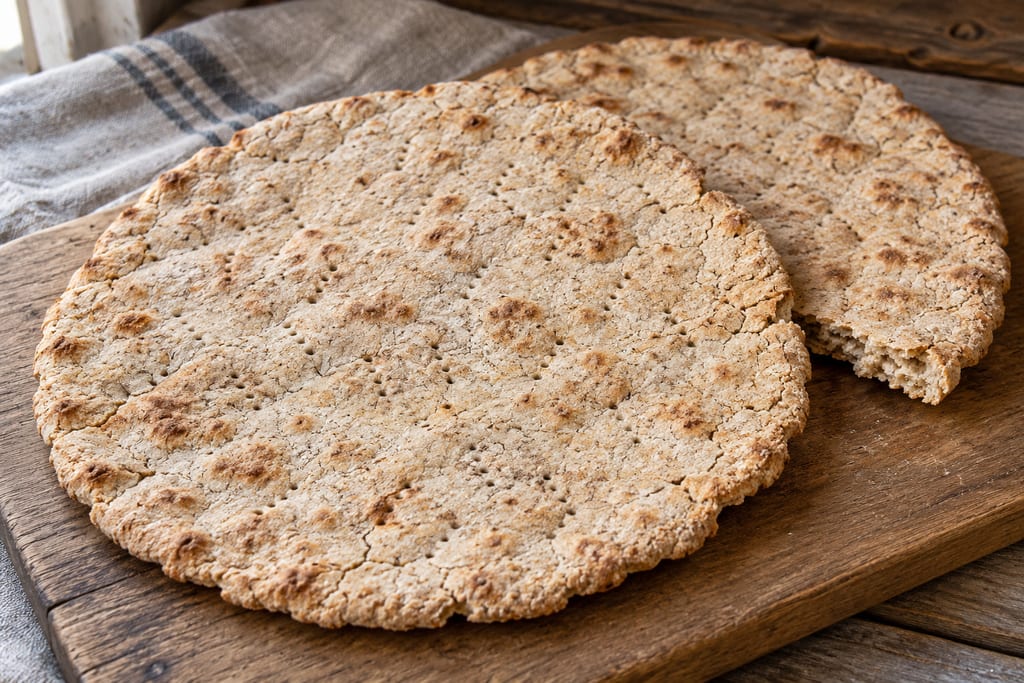
Two barley flatbreads made with cold dough and baked rapidly on a hot sheet, following Timo Lepistö's northern Finnish formula.
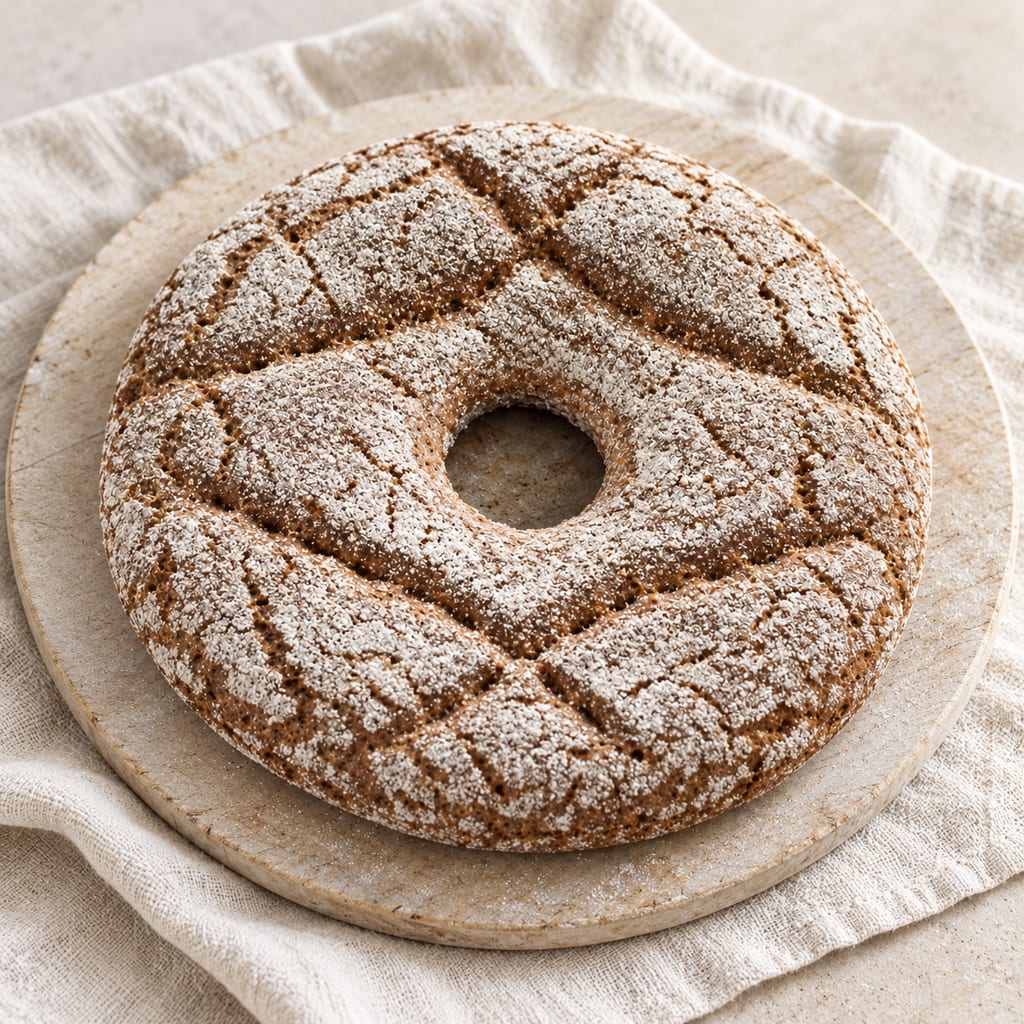
A Finnish rye sourdough shaped here as two flat ring loaves, made from rye flour, water, salt and an established rye leaven.

Salted mushrooms are a traditional wild-mushroom preserve, especially of Finnish and Russian milk caps, made by layering boiled mushrooms with coarse salt or keeping them under brine, and kept cold.
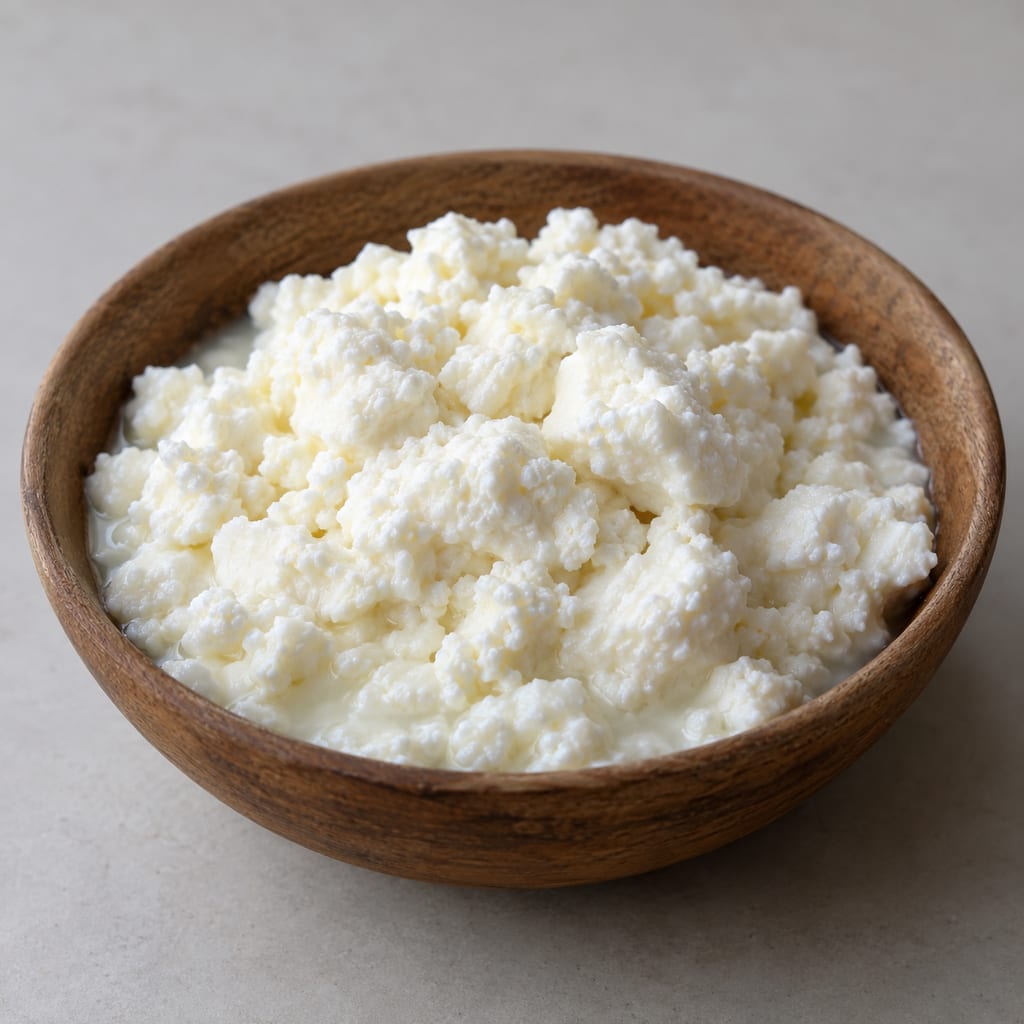
Aarts is a soft Mongolian curd made by draining boiled fermented yogurt; it remains wet, unlike aaruul, which is dried.
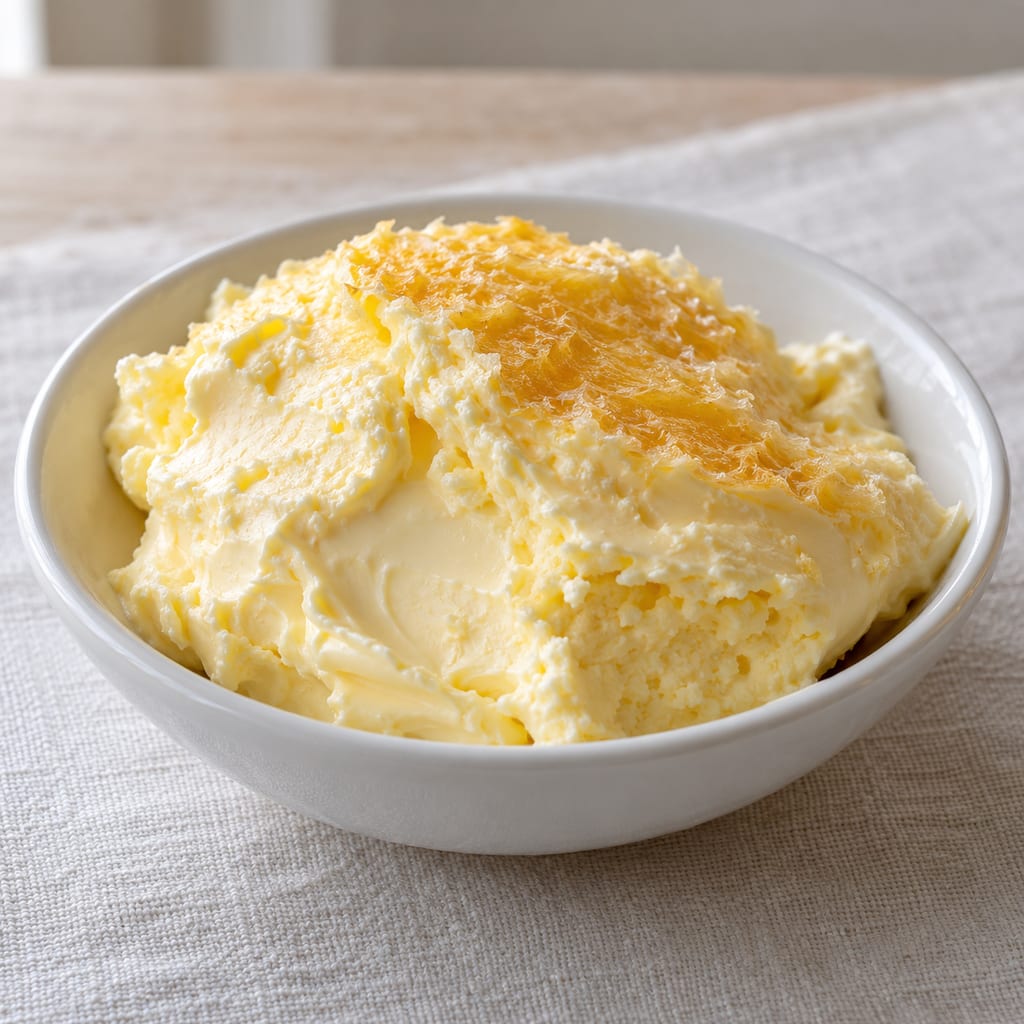
High-fat cream scalded below boiling for at least an hour until a thick crust forms, then cooled hard so the crust sets and the cream beneath thickens.
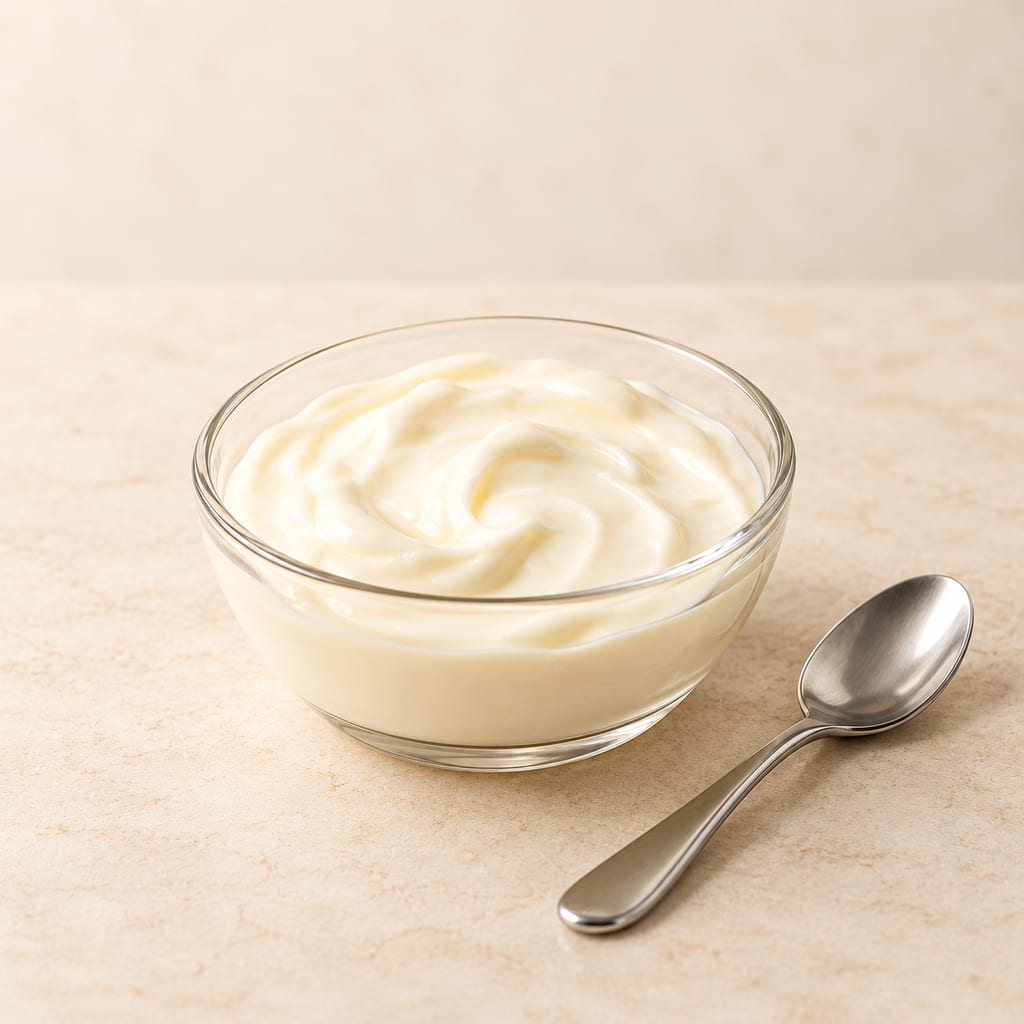
Crème fraîche is cream soured by lactic cultures into a thick, mild topping. It suits fruit and desserts as well as soups, sauces and other savoury dishes.
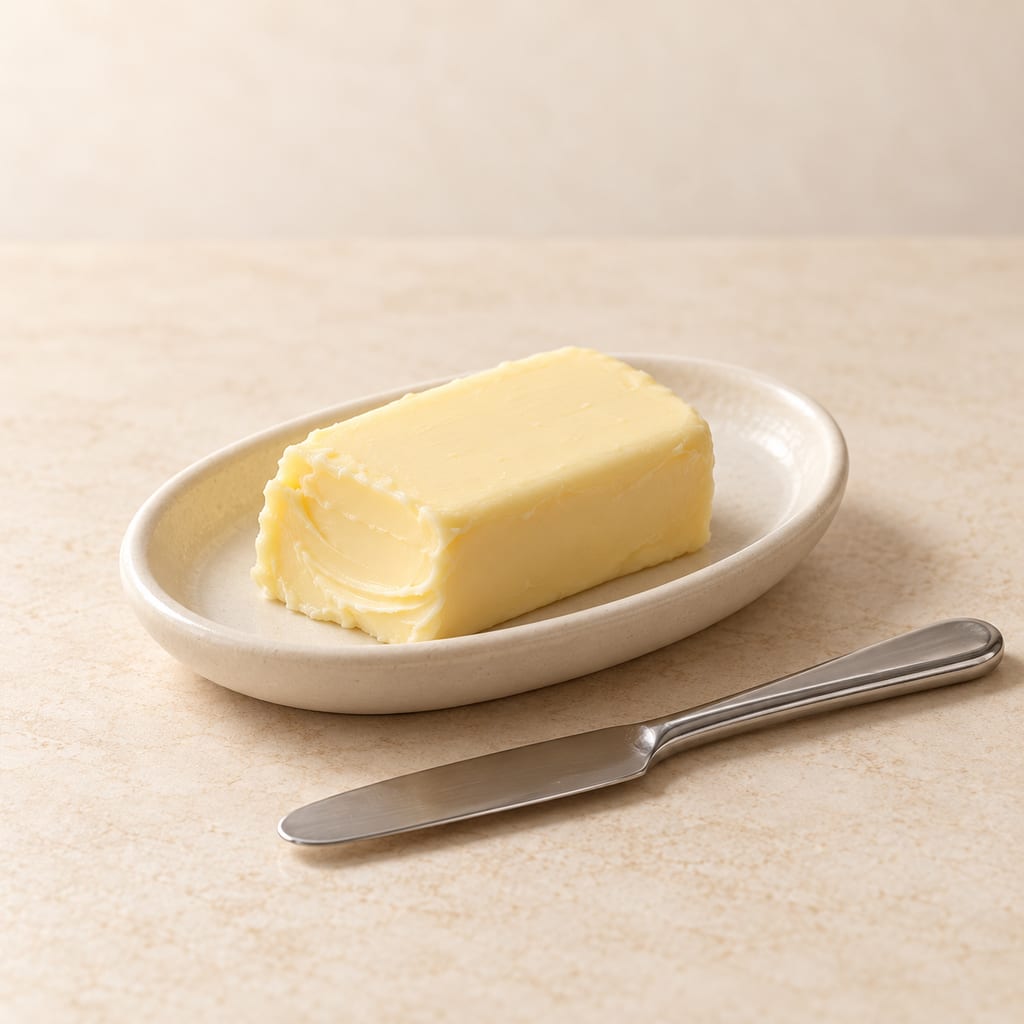
Cultured butter is churned from cream soured with lactic cultures. Its lightly tart flavour comes from the cultured cream, which separates into butter grains and buttermilk.
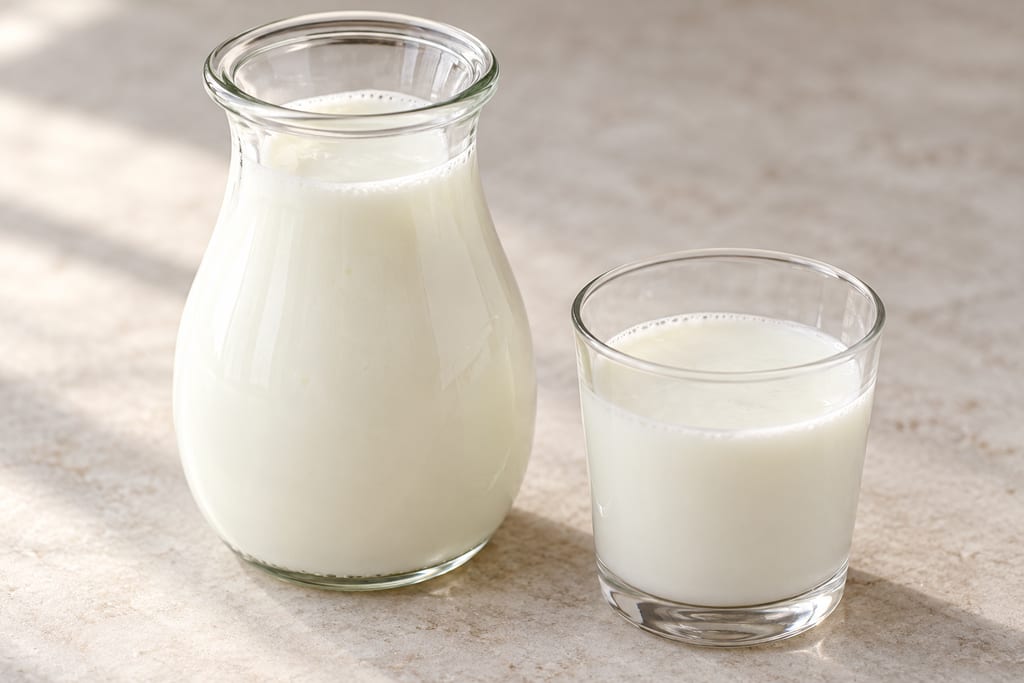
Cultured buttermilk is skim milk soured with a lactic starter into a tangy drink. This Canadian home method sets the milk without churning cream.
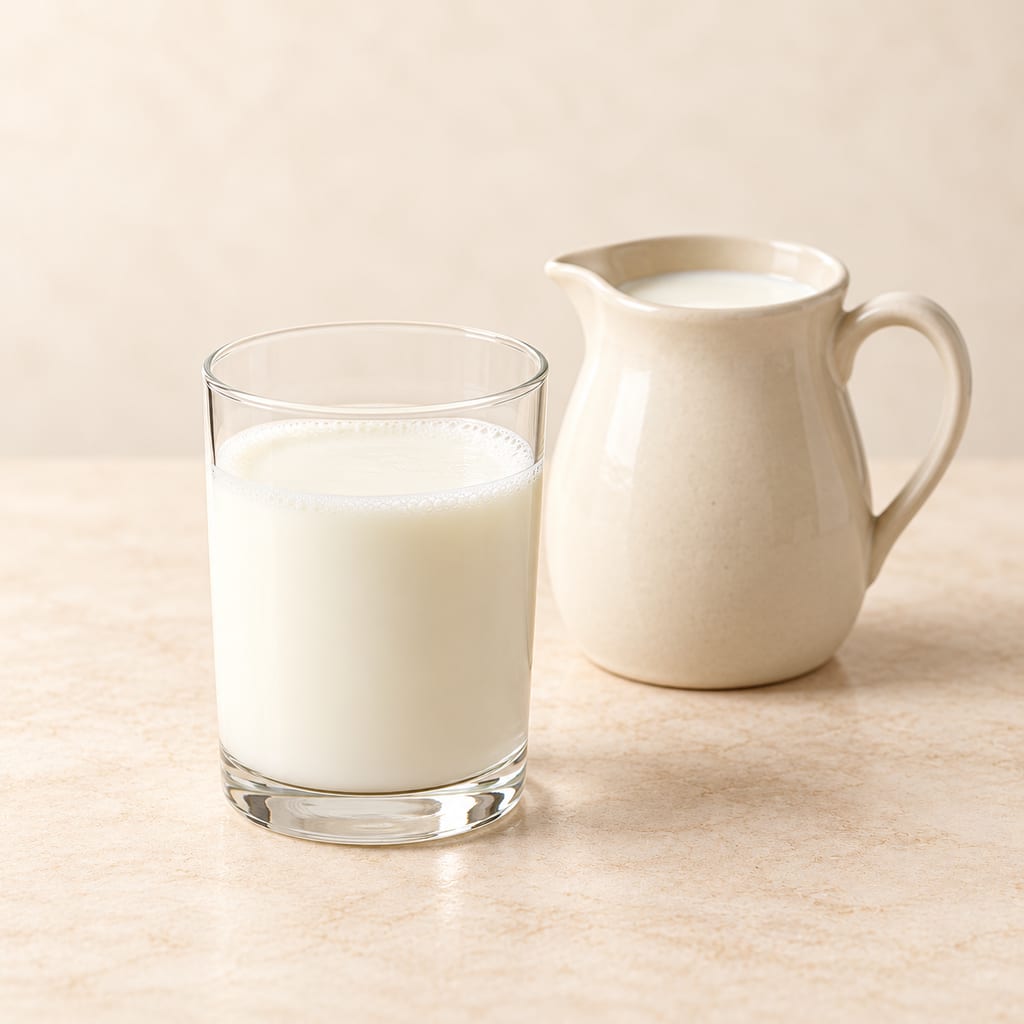
Milk thickened with a packet of buttermilk culture makes a tangy drink and a baking ingredient. This warm-incubated version uses whole milk.
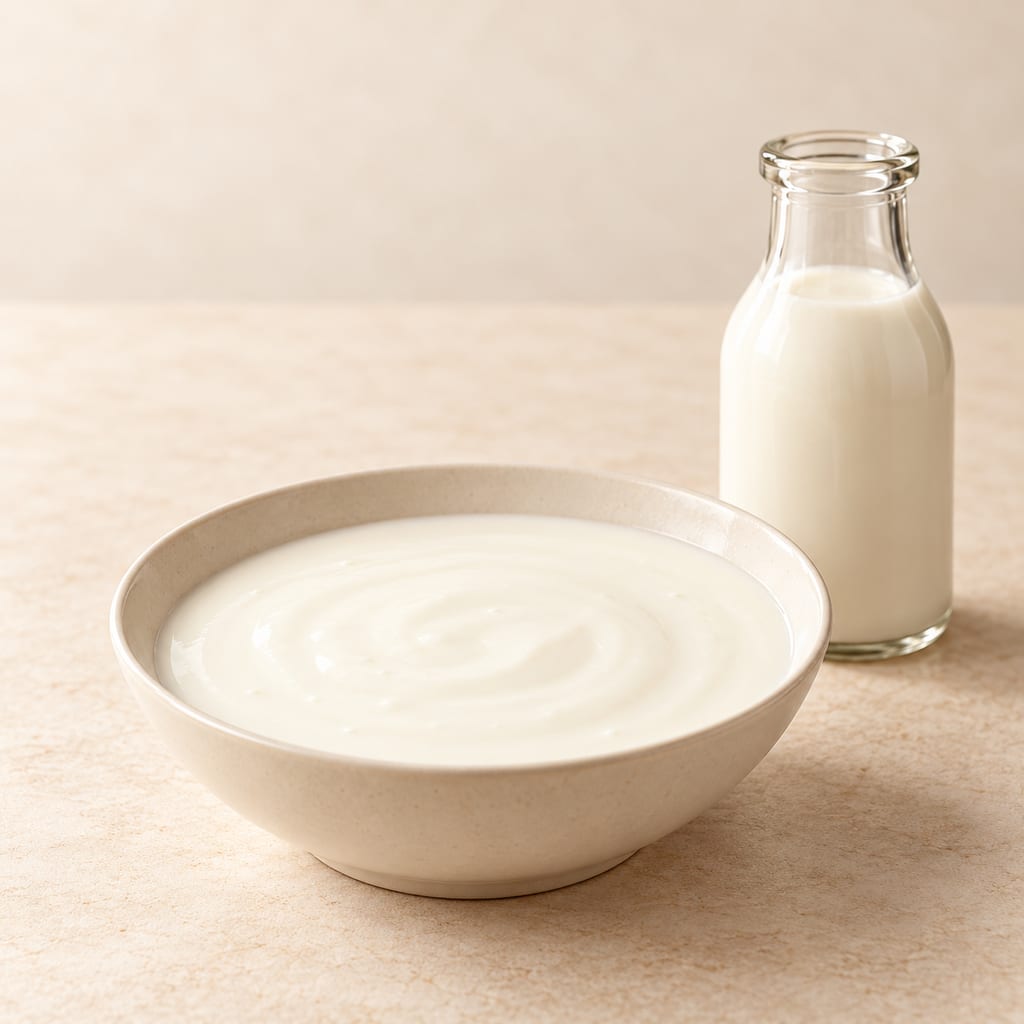
Filmjölk is a Swedish cultured milk with mild acidity and a spoonable body. This recurring batch uses filmjölk from the previous batch to culture fresh milk.
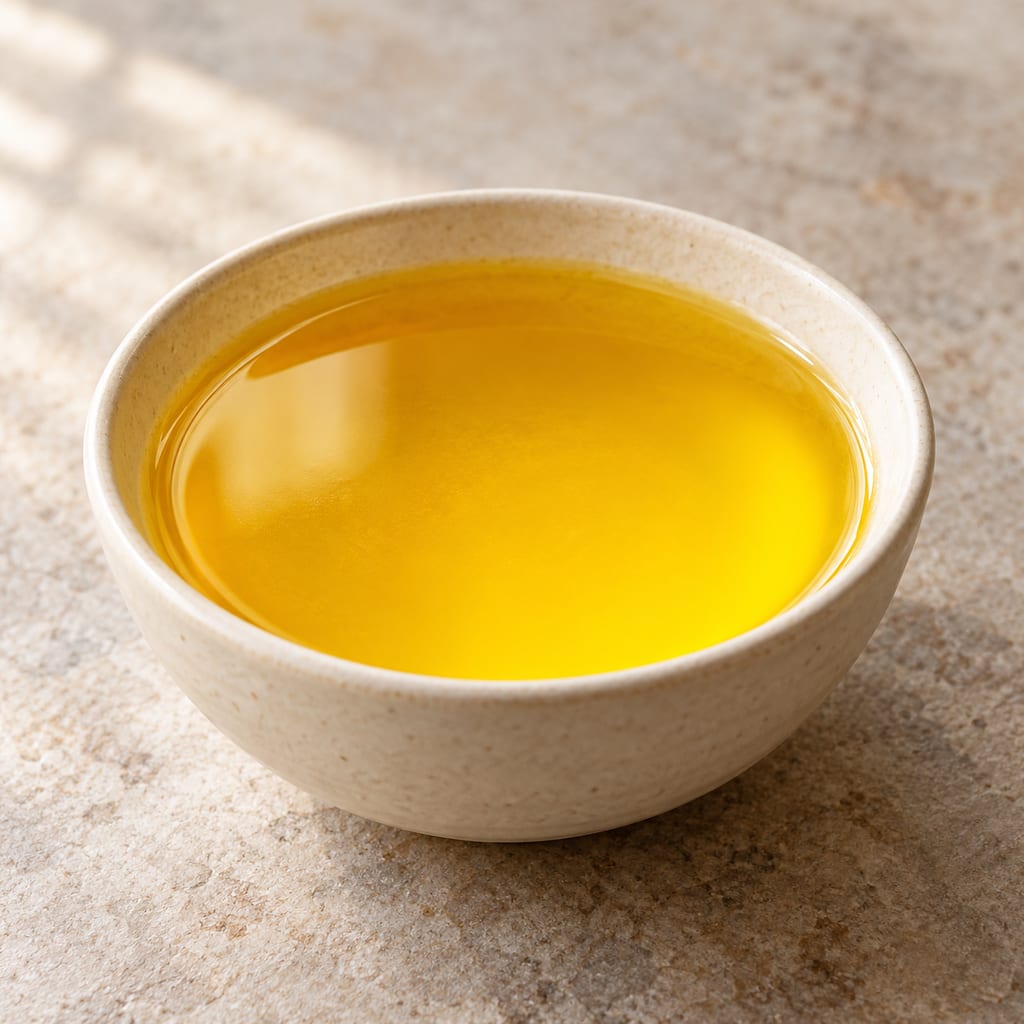
Butter heated until most water leaves and the milk solids separate, giving a fat that keeps far longer than butter. Rendering applies the same heat to animal tissue to make lard and tallow.
No community contributions have been published for this entry yet.
Sign in to contribute. Published comments and photos are free to read.
Cultures for HealthInspiration · Process
How to Make Viili, Filmjölk, Matsoni, and Piimä YogurtNamed countertop cultures, milk ratio, room-temperature range and reculturing process.
Cited in: Why the culture thickens and stretches milk; The milk, the retained starter and the slow set; Reading the result without overinterpreting it
Agriculture CanadaSafety · Process
Home-made dairy products, Publication 1669Dairy process and handling context.
Cited in: Why the culture thickens and stretches milk; The milk, the retained starter and the slow set; Reading the result without overinterpreting it
WikipediaHistory · Identity · Culture
ViiliViili as a mesophilic Nordic fermented milk found chiefly in Finland and Sweden; Geotrichum candidum velvet surface; Lactococcus lactis subsp. cremoris and the exopolysaccharide viilian behind the long texture; modern production with pasteurized milk and lab cultures; kermaviili cream variant.
Canadian Dairy CommissionHistory · Use · Storage
Fermented Milk ProductsViili as a traditional Finnish fermented milk from unhomogenized milk with a cream layer and a velvety Geotrichum candidum surface; eaten with a tablespoon so it can be cut, stirring makes it ropy; mild acidity, thick body; typical manufactured shelf life of 14 days at 4°C; eaten chilled like yogurt, in smoothies and baking.
Cited in: A milk that holds a soft set; Household summer food and regional styles; Why the culture thickens and stretches milk; The milk, the retained starter and the slow set; Serving, flavouring and modern forms; Reading the result without overinterpreting it
ValioHistory · Identity · Geography
ViilitFinnish regional textures, summer household use and Valio production from the 1960s.
Cited in: A milk that holds a soft set; Household summer food and regional styles; Serving, flavouring and modern forms
Journal of Food Processing & BeveragesCulture
From “Viili” Towards “Termoviili”, a Novel Type of Fermented MilkTraditional viili combines mesophilic lactic acid bacteria and Geotrichum candidum. Experimental termoviili is a different culture system.
FoodsScience · Culture
Technological and Enzymatic Characterization of Autochthonous Lactic Acid Bacteria Isolated from Viili Natural StartersViili is traditionally made by spontaneous fermentation or back-slopping with mesophilic lactic acid bacteria and yeast-like fungi; EPS-producing strains contribute to ropy texture, with strain and environmental variation.
Cited in: A milk that holds a soft set; Why the culture thickens and stretches milk