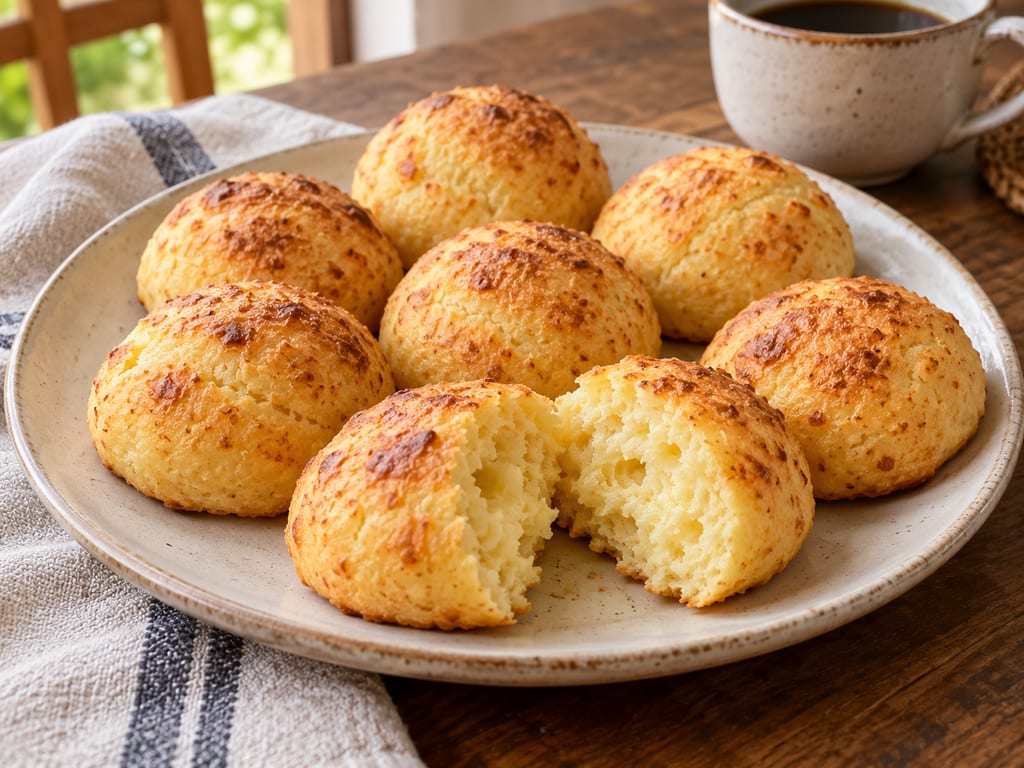
Almojábanas
Small Colombian cheese breads made with precooked corn flour, queso fresco, mozzarella, eggs, milk and baking powder. This documented home version makes eight breads and is served warm.
 FermenteaWhere food goes to change
Arepa de chócolo · Arepa de chócolo · Colombian sweet-corn arepa
A Colombian Andean griddle cake made from fresh sweet-corn batter, cooked in butter and served with white cheese.
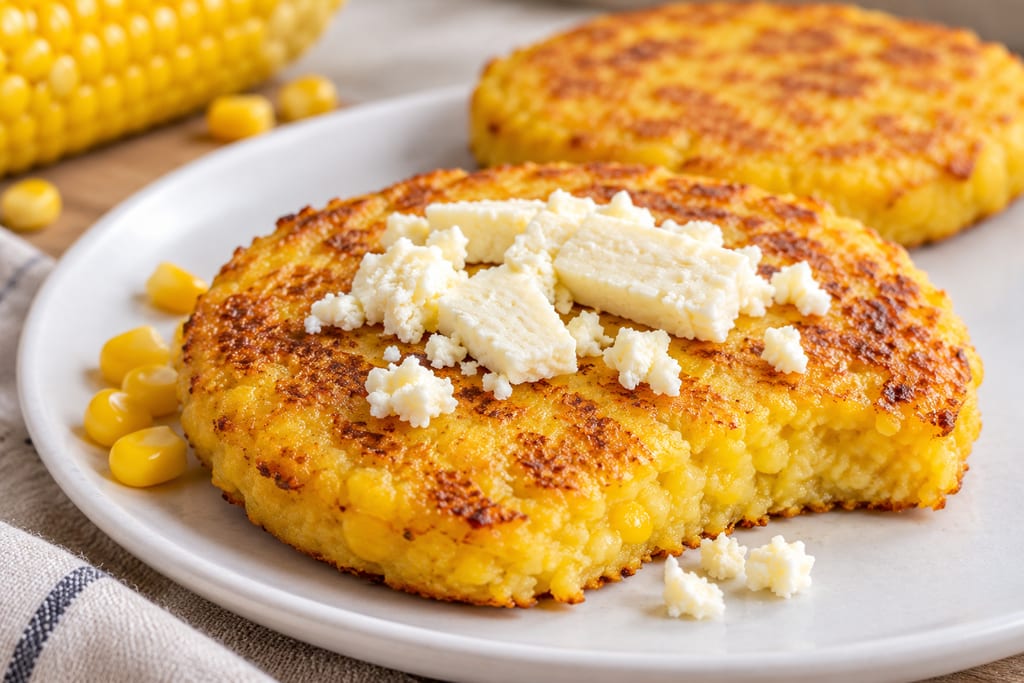
Arepa de choclo, also called arepa de chócolo, is a Colombian arepa made here from fresh sweet-corn kernels. Erica Dinho associates her recipe with the Andean region of Colombia and describes it as a home, street-food and restaurant preparation served for breakfast or as a snack with butter and cheese.
This is a different method from the archive's published arepa made with precooked corn flour. Dinho's base batter begins with fresh corn, sugar and salt; it does not start with rehydrated masarepa. The recipe's optional tip allows a little cornmeal or masarepa only when the fresh-corn batter is too thin. That troubleshooting adjustment does not change the identity of the source formula.
Measure 5 cups of fresh corn kernels after removing them from the cobs. The source stresses freshness because these arepas rely on the corn itself for their texture and moisture. It does not give an equivalent weight, so the recipe keeps the source's cup measure rather than converting it.
Blend the kernels with ½ teaspoon sugar and salt to taste until a thick batter just forms. The source warns that this batter can be delicate. If it is too thin, Dinho suggests adding a couple of tablespoons of cornmeal or masarepa. She does not list that adjustment as part of the base ingredient quantities.
Melt some of the 3 tablespoons unsalted butter in a large cast-iron skillet or on a griddle over medium heat. Spoon about ¼ cup batter onto the surface for each cake. Cook the underside until golden, about 3 minutes, then turn carefully with a spatula and cook the other side for about 3 minutes.
Continue with the remaining batter, adding more butter as needed. The printed directions give per-cake times but do not say how many cakes the 5-cup batch produces. The recipe card lists a total cooking time of 1 hour 10 minutes, which it does not reconcile with its per-cake schedule; allow for your pan capacity and batch size rather than treating that header as a precise promise.
Dinho also describes starting the cakes on the stove and finishing them in the oven to help prevent breakage. In this route, cook the underside until golden, about 2 minutes, then put the pan in the oven and broil for 3 to 4 minutes, until lightly browned. The source does not specify a broiler setting or temperature. Use an oven-safe pan and protect hands from its hot handle.
The recipe card reports 4 servings but does not give the number of arepas. Serve the cakes immediately with butter and queso fresco or another white cheese on top. If the batch is cooked before serving, the author says to cover it loosely with foil to keep it warm; no longer-term storage interval is supplied.
Universidad de Antioquia includes arepa de chócolo in its culinary-heritage recipe series. It describes the dish as made from tender corn rather than the precooked flour used in many everyday arepas, cites a 2012 regional cookbook, and gives a yield of six to eight cakes. The accessible page omits the ingredient list, so the university version supplies no batch of its own. It is a different rendering from Dinho's four-serving card, and the two are not merged here.
Erica Dinho presents this sweet-corn arepa as a Colombian food associated with the Andean region and with home, street-food and restaurant settings. The recipe uses fresh kernels, unlike the separate precooked-corn-flour arepa formula in this archive. Universidad de Antioquia lists a version in its culinary-heritage recipe series, citing a 2012 regional cookbook. Dinho's account supports this modern regional association but does not establish a precise origin date or one standard recipe for all arepas de chócolo.
Yield 4 servings · Scaling: source batch only
The batter cooks in melted butter on a hot skillet or griddle, with an optional broiler finish.
Hazard sourceUse a stable skillet or griddle, turn the delicate cakes with a spatula, and protect hands from hot butter, pan and broiler surfaces.
Control sourceThe recipe source provides visual browning cues and approximate times but no measured internal endpoint or numeric cooking temperature.
Erica Dinho identifies this fresh-corn preparation with the Andean region of Colombia. This source supports a regional association, not a precise birthplace or a single formula for all arepas de chócolo.
Small Colombian cheese breads made with precooked corn flour, queso fresco, mozzarella, eggs, milk and baking powder. This documented home version makes eight breads and is served warm.
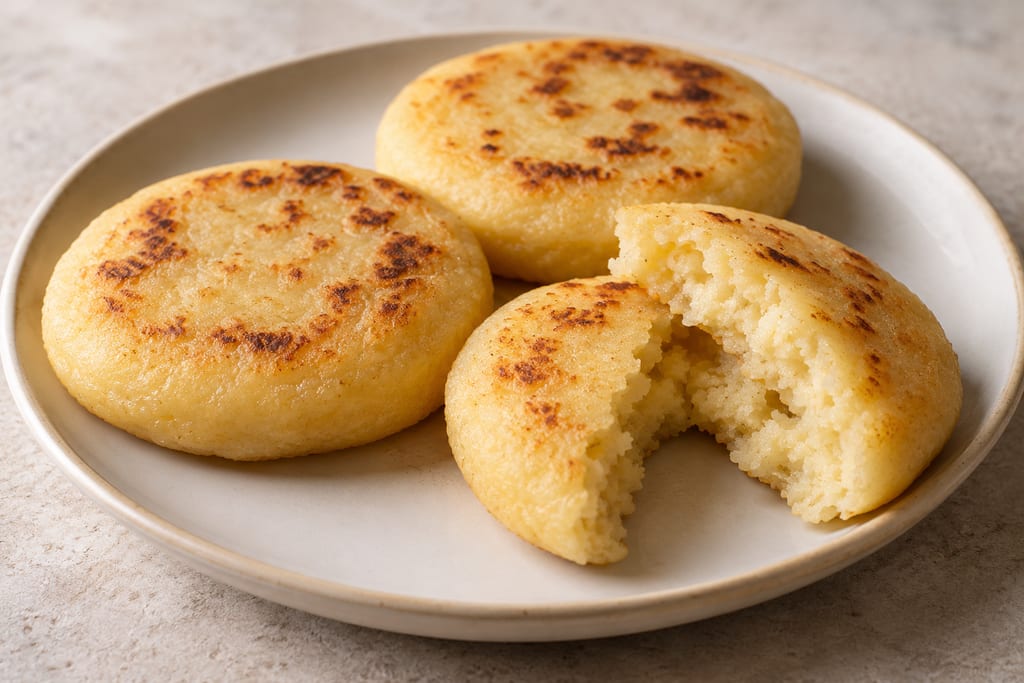
This household version combines precooked corn flour, warm water and salt, then cooks thick rounds on a lightly oiled skillet or griddle. It is one source-specific arepa method, not a universal Colombian or Venezuelan formula.
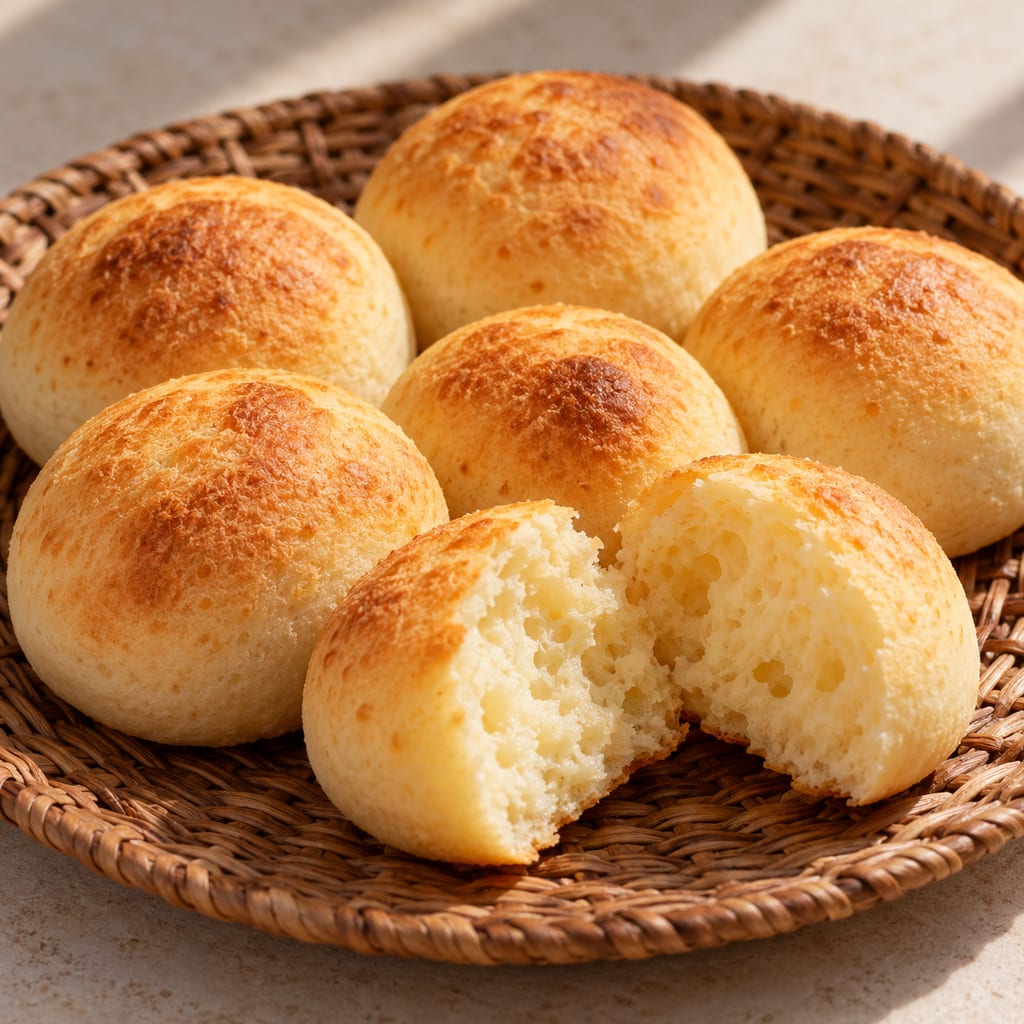
Colombian cheese breads made from cassava starch, precooked cornmeal, queso fresco or quesito, feta and egg; this source's version makes 12 warm, round rolls.
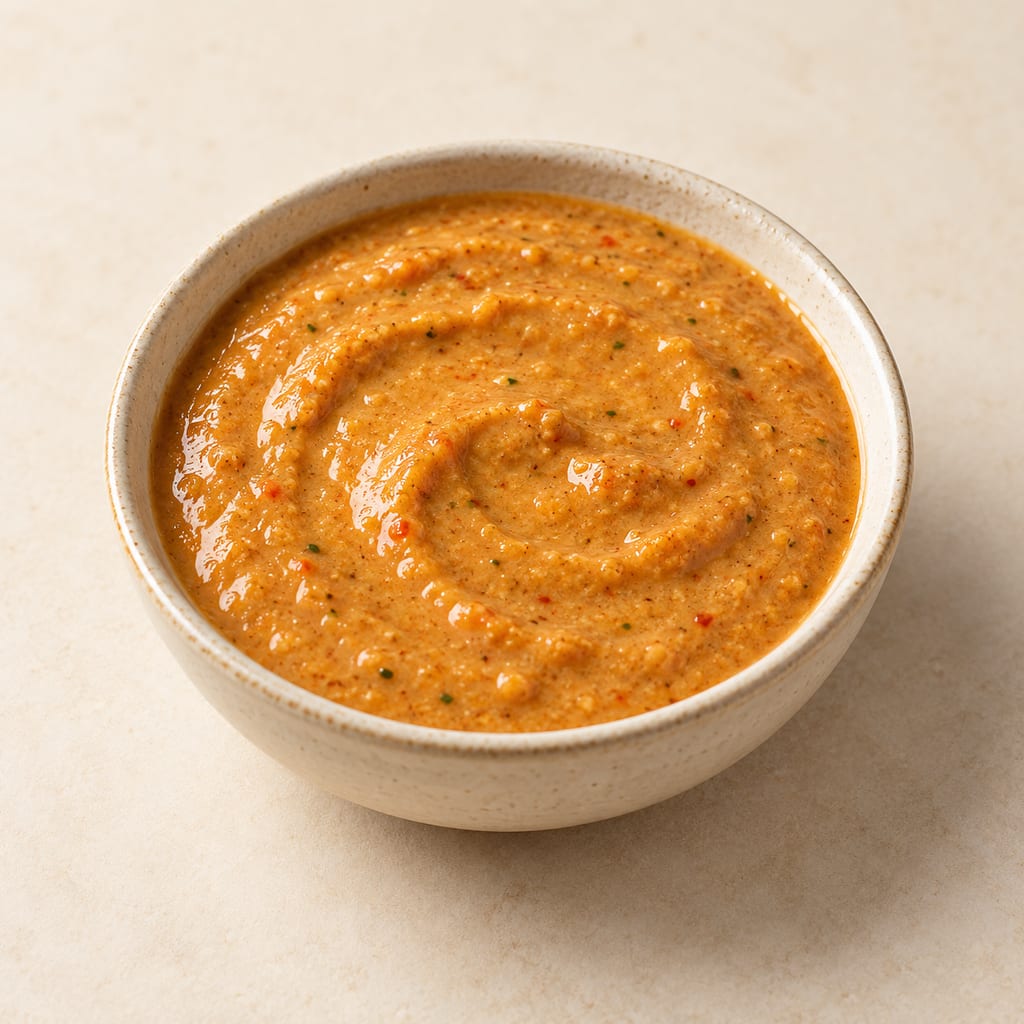
A spicy peanut hot sauce from the Popayán and Cauca region of Colombia, traditionally served with pipián empanadas and tamales.
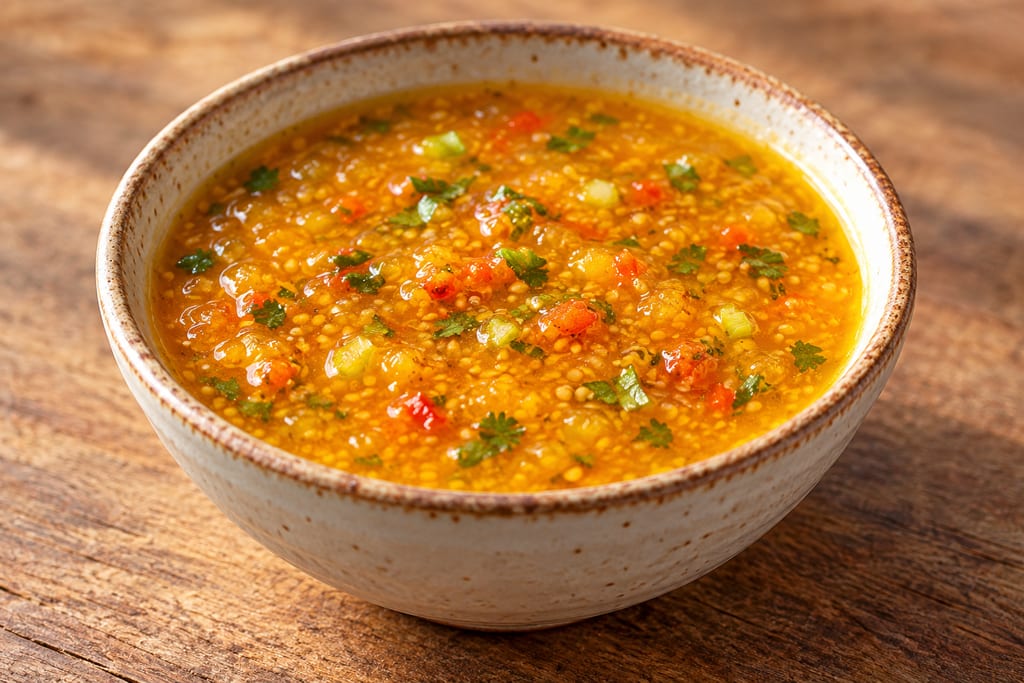
A sweet, tart and spicy Colombian sauce of uchuva, the yellow physalis fruit, with hot pepper, scallion, cilantro and lime.
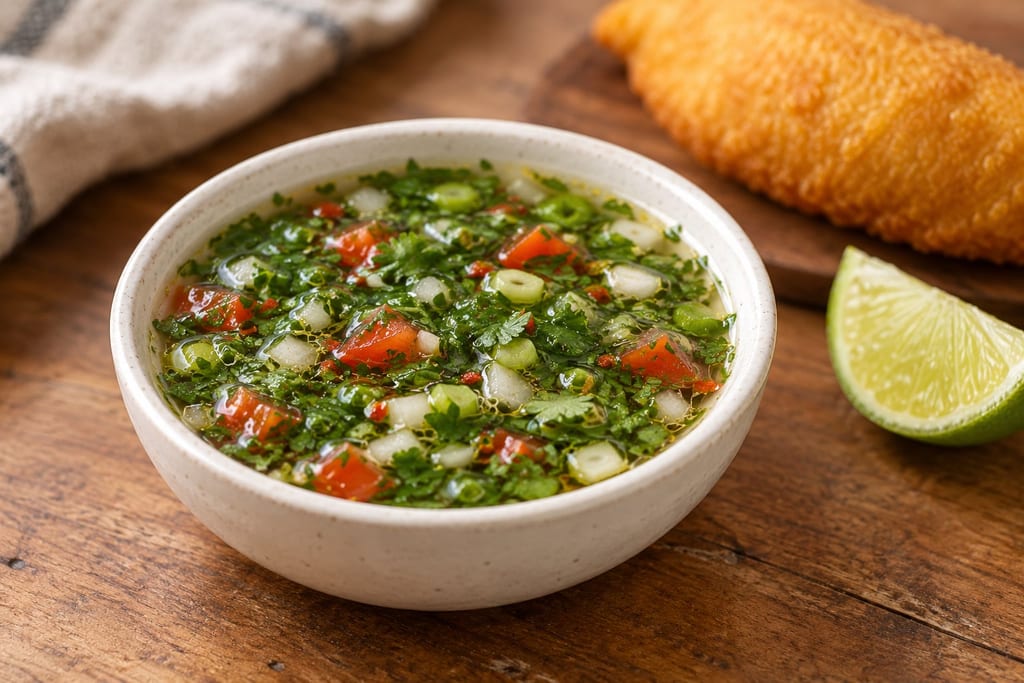
A fresh Colombian table condiment of chopped herbs, scallion and tomato in a vinegar and chile base, served beside fried and filled dishes.
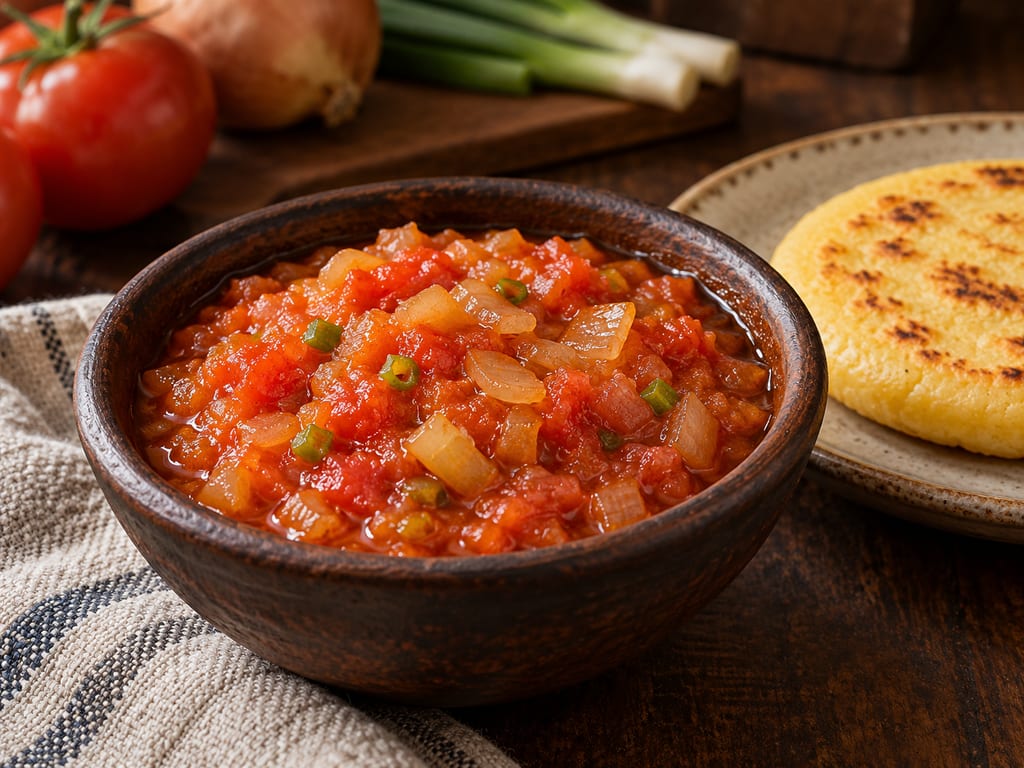
A slow-cooked Colombian sauce of tomato, onion and scallion that serves as the base of many dishes and as a topping for arepas and patacones.
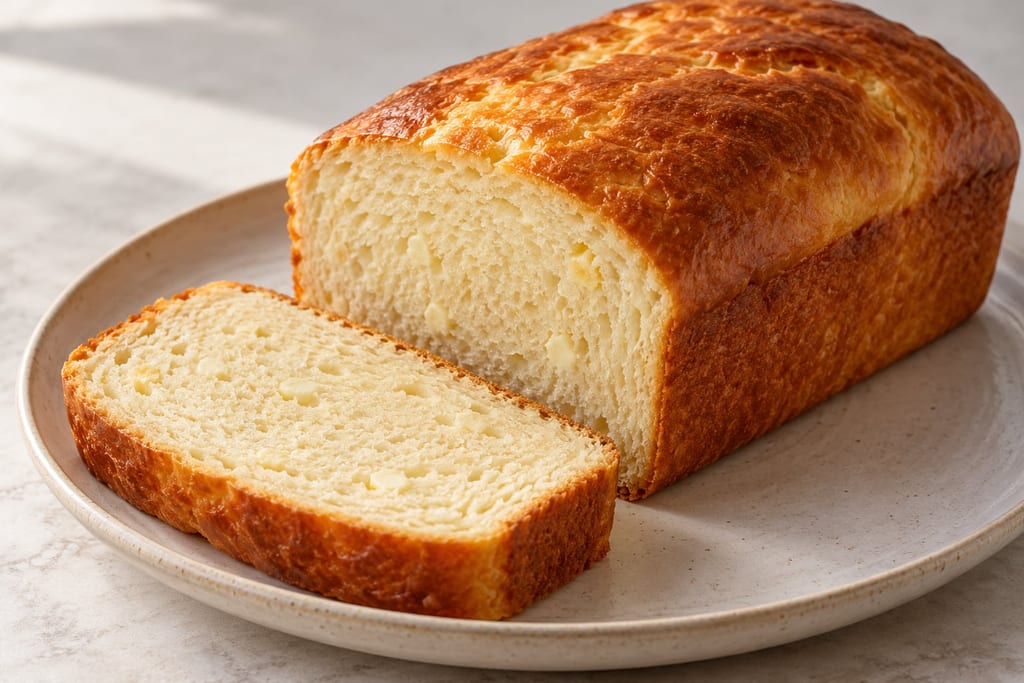
A soft Colombian wheat loaf enriched with milk powder, butter and crumbled fresh cheese.
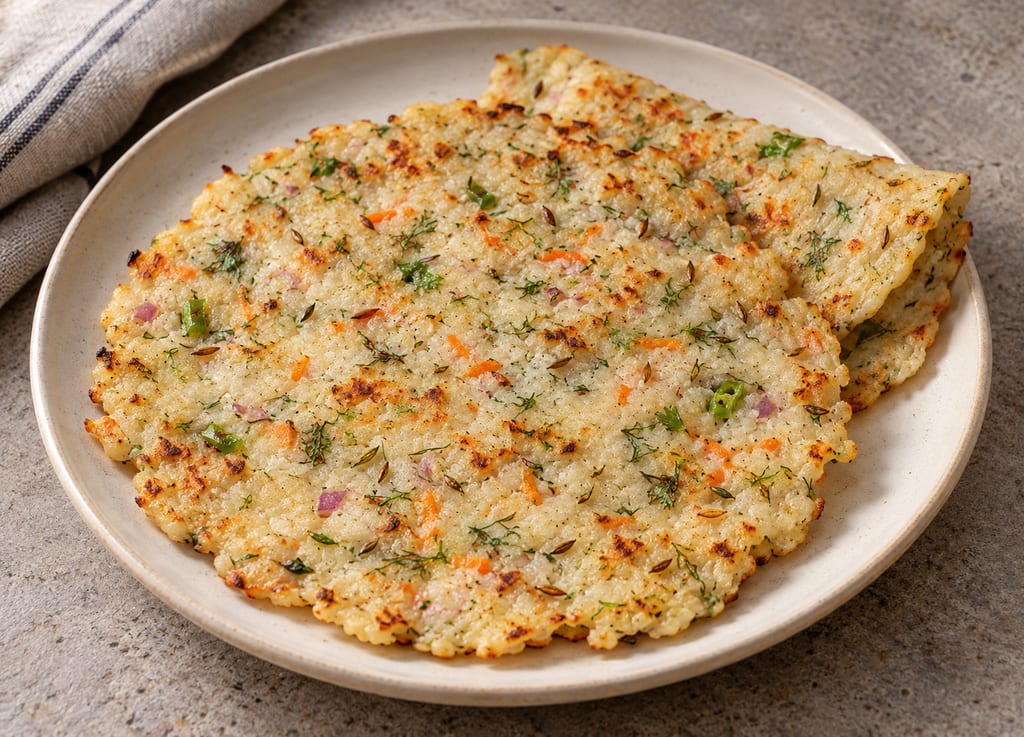
This Karnataka-style akki rotti mixes fine rice flour with vegetables, coconut, herbs and spices, then hand-pats and griddle-cooks the dough.
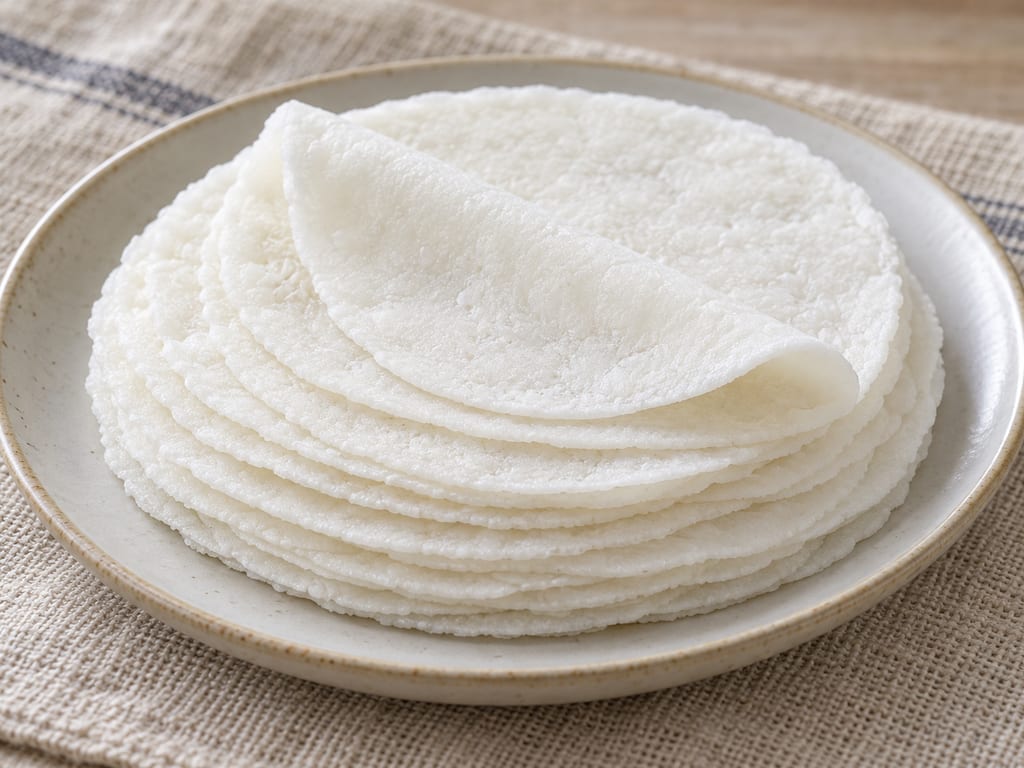
Thin Malabar rice-flour rounds made from roasted rice flour cooked into salted boiling water, kneaded after cooling, and rolled to about 1 mm. They cook on a hot griddle without taking on colour.
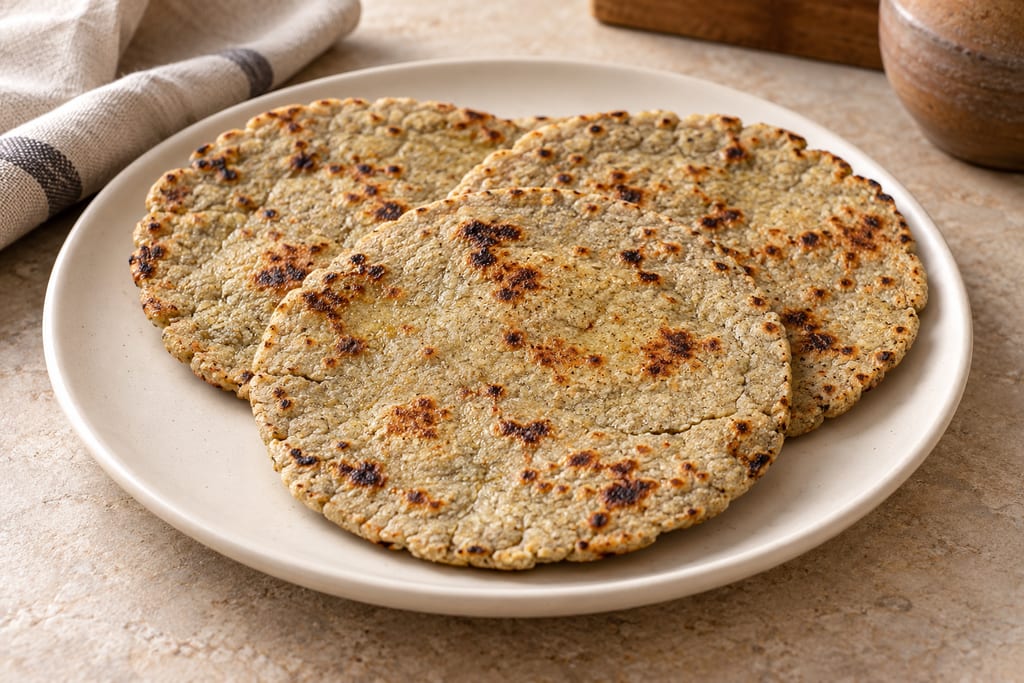
A pearl-millet flatbread shaped between sheets and cooked on a hot tawa. This home batch makes eight.
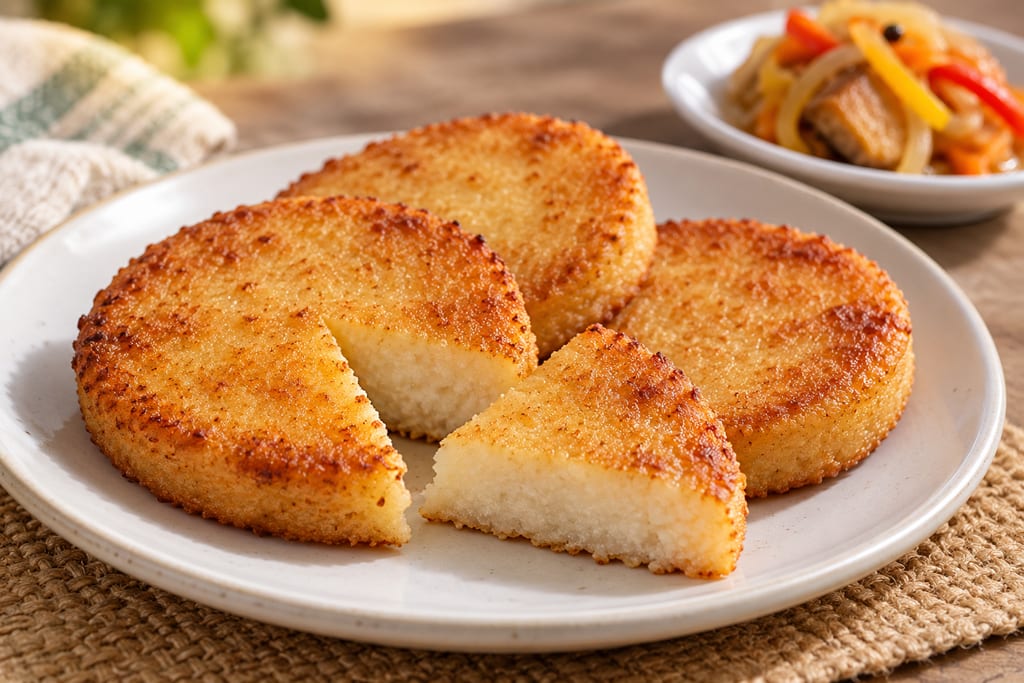
A serving method for approved, prepared bammy rounds: soak them in coconut milk and refry until golden. It does not process raw cassava.
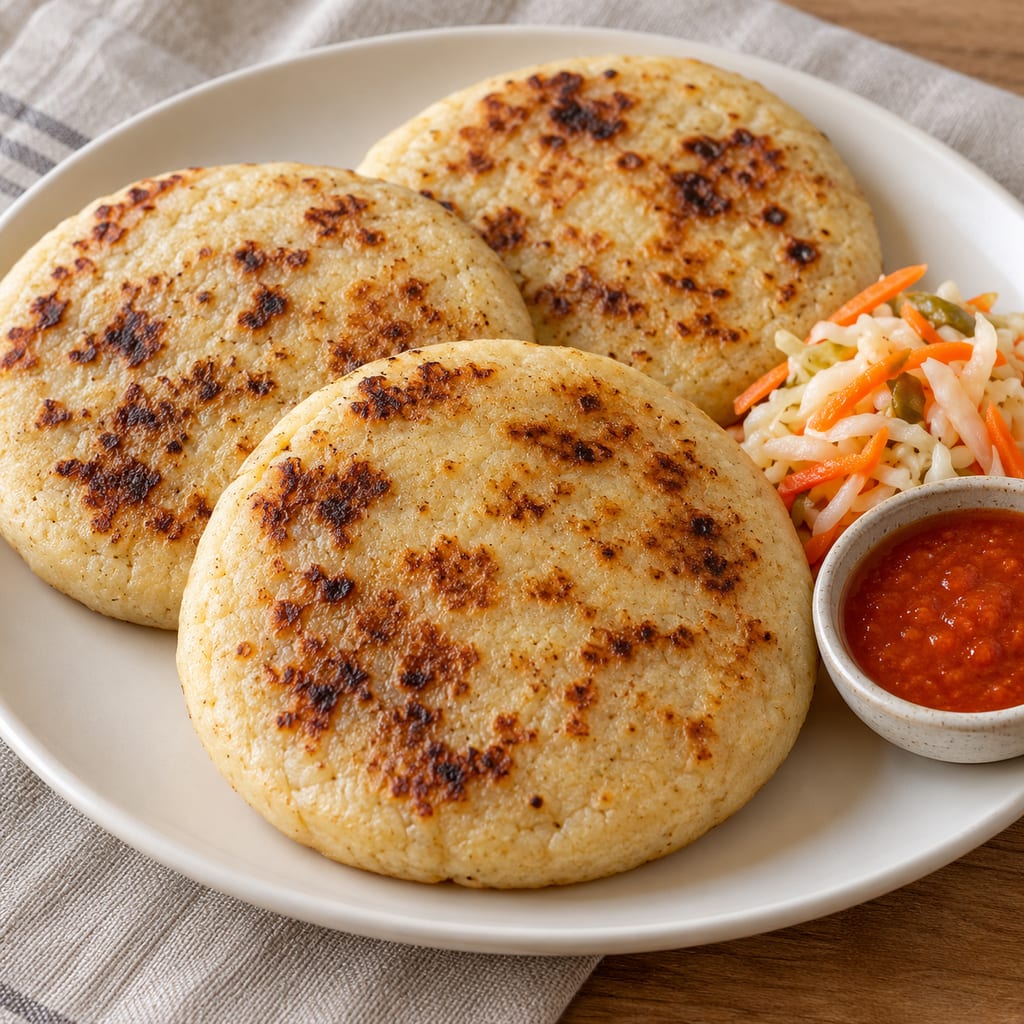
Salvadoran-style masa harina cakes filled with refried beans and cheese, sealed and cooked on an oiled skillet.
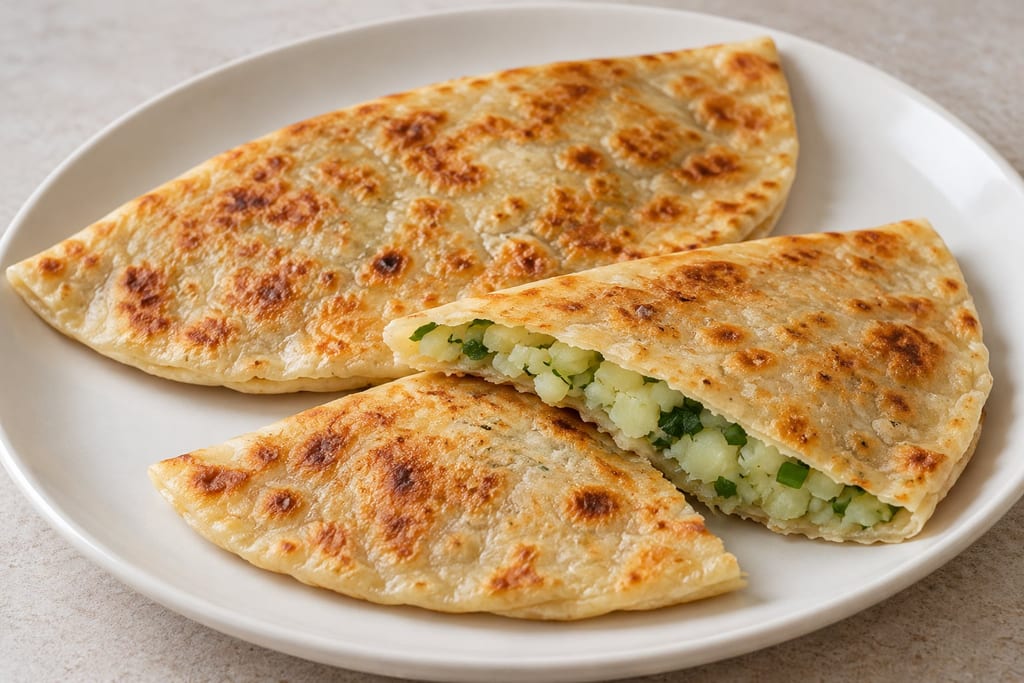
A thin, unleavened Afghan flatbread filled with mashed potato, scallion and cilantro, folded and pan-browned. This version uses a dough made from scratch.
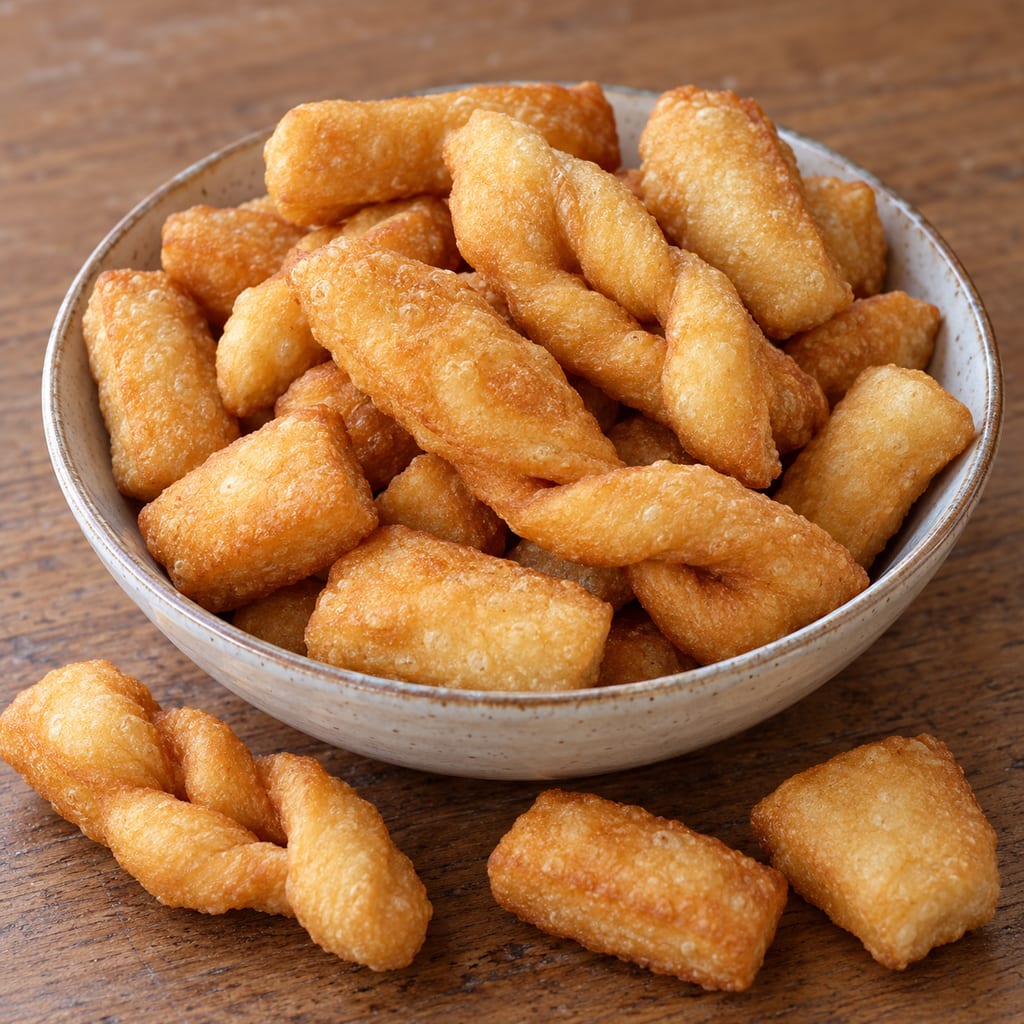
Firm Mongolian fried pastries made from an unyeasted wheat dough enriched with butter and sweetened with sugar; the dense dough is rested, cut or knotted, and fried until golden.
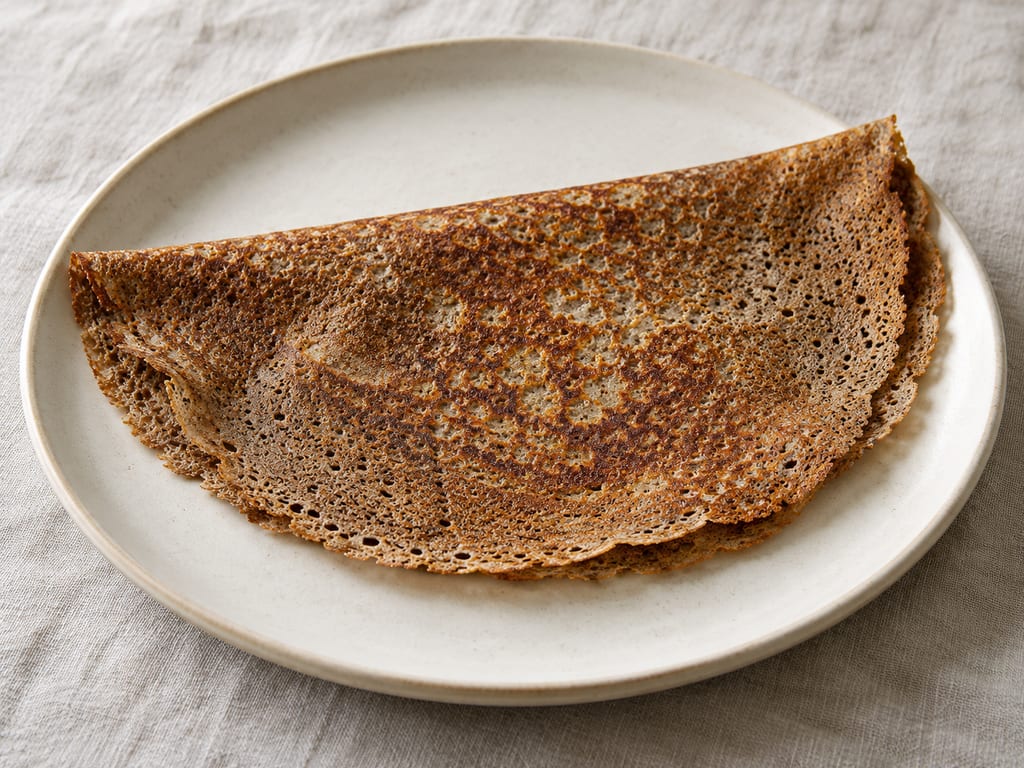
A thin Brittany galette made from buckwheat flour, water and Guérande salt. This Atelier de la Crêpe method rests the batter in a refrigerator before cooking it on a hot crêpière.
No community contributions have been published for this entry yet.
Sign in to contribute. Published comments and photos are free to read.
My Colombian RecipesRecipe · Method · Ingredients · Geography · Modern use
Arepas de Choclo (Colombian Corn Cakes)The current recipe card lists 5 cups fresh corn kernels, 1/2 teaspoon sugar, salt to taste, 3 tablespoons unsalted butter plus more as needed, and queso fresco or white cheese to serve; it states 4 servings.
The source says to blend the corn, sugar and salt until a thick batter forms, melt the butter in a large cast-iron skillet or griddle over medium heat, and use about 1/4 cup batter per arepa.
The stovetop path cooks each underside golden for about 3 minutes, then turns and cooks the other side for about 3 minutes. Its optional oven path cooks the underside about 2 minutes and broils in the oven for 3 to 4 minutes until lightly browned.
The author recommends very fresh corn, says cornmeal or masarepa may be added by a couple of tablespoons if the batter is too thin, and describes the cakes as delicate to turn. She associates them with the Andean region of Colombia and serving them with butter and Colombian quesito.
The recipe card reports 10 minutes preparation, 1 hour 10 minutes cooking and 1 hour 20 minutes total, a cook-time figure not reconciled by the per-arepa directions; the page does not give an individual cake count.
Cited in: Fresh-corn arepas; Choose very fresh corn; Cook on a skillet or griddle; Optional oven finish; Serve warm
Universidad de AntioquiaContext · History
Arepas de chócoloThe university's recipe page describes arepa de chócolo as made from tender corn rather than precooked flour, cites a 2012 regional cookbook, and gives a yield of six to eight cakes.
The accessible rendering omits the ingredient list, so it supplies no batch of its own.
Cited in: A university rendering