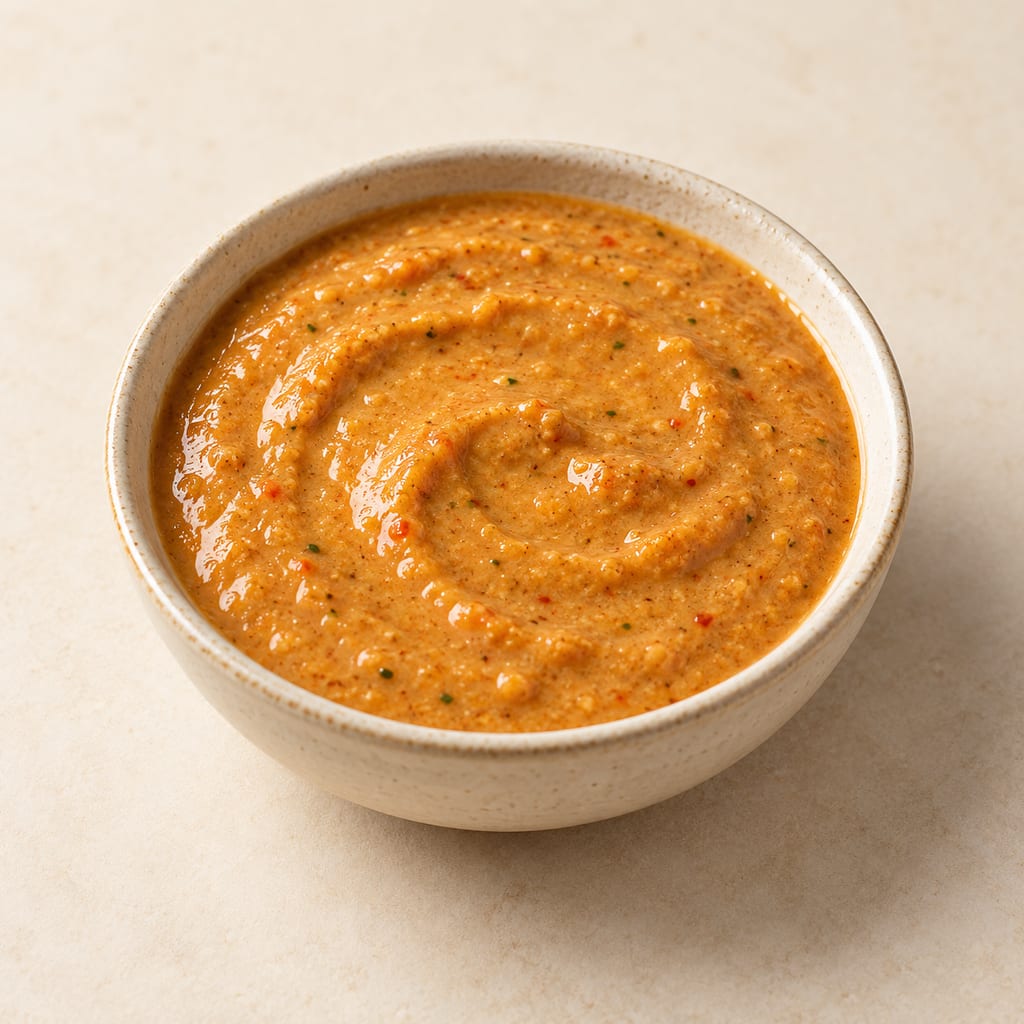
Ají de maní
A spicy peanut hot sauce from the Popayán and Cauca region of Colombia, traditionally served with pipián empanadas and tamales.
 FermenteaWhere food goes to change
Traditional method
Hogao criollo · Colombian creole sauce · Colombian tomato and onion sauce
A slow-cooked Colombian sauce of tomato, onion and scallion that serves as the base of many dishes and as a topping for arepas and patacones.
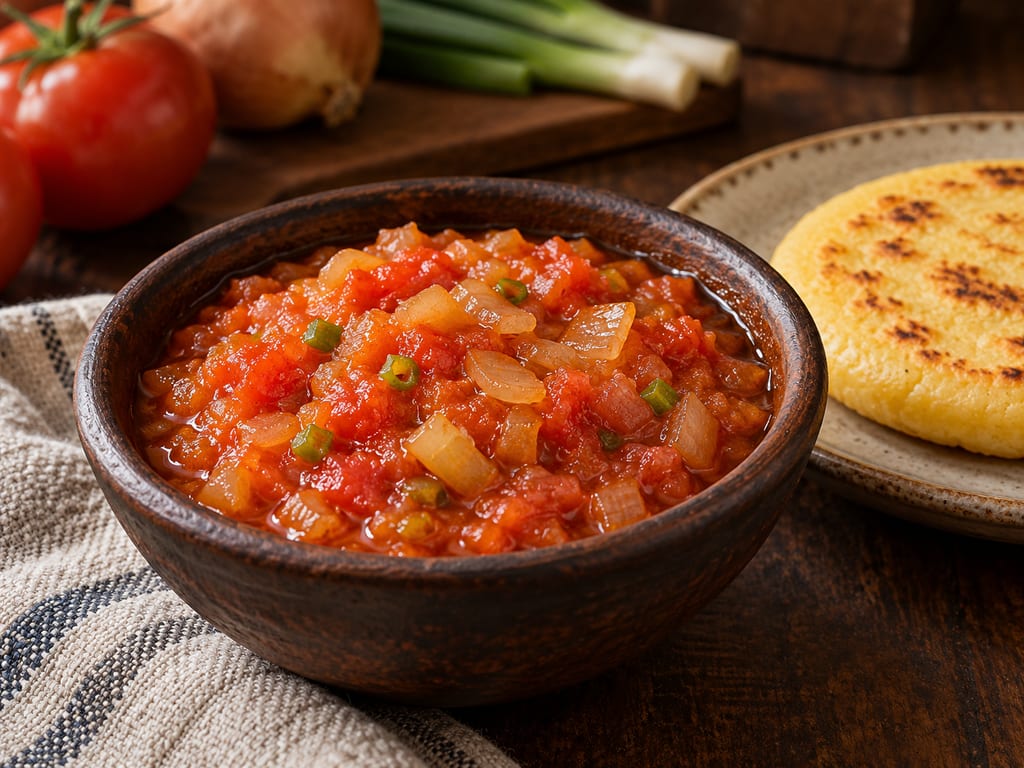
Hogao is a cooked sauce of tomato, onion and scallion. It is used as the foundation of many Colombian dishes and also served as a topping, most often with arepas and patacones. It is not hot; spicy condiments such as ají are served separately.
The page describes hogao as a basis of national cooking, served with arepas, ajiaco, bandeja paisa, tamales, empanadas, patacones and sancocho.
The page traces hogao to the Spanish sofrito, a base of garlic, onion and pepper that appears in many stews. Spanish colonisation brought the base to America, where cooks added tomato, which the page says was domesticated in the Andes and was widely grown by the Aztecs in Mexico.
The page does not name the cooks who first added tomato to the base, and records the change only as a colonial-era development.
Tomato, onion, scallion and garlic are sautéed in oil over medium heat for about five minutes. The heat is then lowered, the sauce is seasoned and covered, and it simmers for thirty minutes. The page stresses that low heat lets the ingredients combine and the flavours fuse.
The page calls the traditional method an oil cauldron and advises ripe, fresh ingredients. It notes that the sauce keeps for several days in the refrigerator and can be frozen.
The page identifies traditional hogao with junca onion, which it treats as a scallion, and says the scallion originates in Southeast Asia and is widely grown in Wales. Other cooks use red or yellow onion. Recipes without scallion are described as less traditional.
In Antioquia, in the north-west, hogao is made with tomato, scallion and salt. In Valle del Cauca, in the south-west, garlic and paprika are added. In Huila and Tolima the page adds garlic, parsley, annatto and cumin. In the Cundiboyacense highlands of the Andes, cooks use scallion, tomato, butter, milk and grated cheese.
Other areas may add chicken broth, cilantro or oregano. The page also lists related sauces elsewhere in the Caribbean and Latin America, including recao in Puerto Rico and sauces in the Dominican Republic, Mexico and Argentina.
The page traces hogao to the Spanish sofrito of garlic, onion and pepper, brought to America in colonial times, and says tomato was added after the Spanish arrived. It says the tomato was domesticated in the Andes, and that the name comes from the verbs ahogar and rehogar, glossed as choking or jumping, because the ingredients are sautéed before being stewed. The name's origin is the page's own gloss and is not dated.
Yield 4 servings · Scaling: source batch only
Described as a basis of national cooking; the source names regional versions in Antioquia, Valle del Cauca, Huila and Tolima, and the Cundiboyacense highlands.
A spicy peanut hot sauce from the Popayán and Cauca region of Colombia, traditionally served with pipián empanadas and tamales.
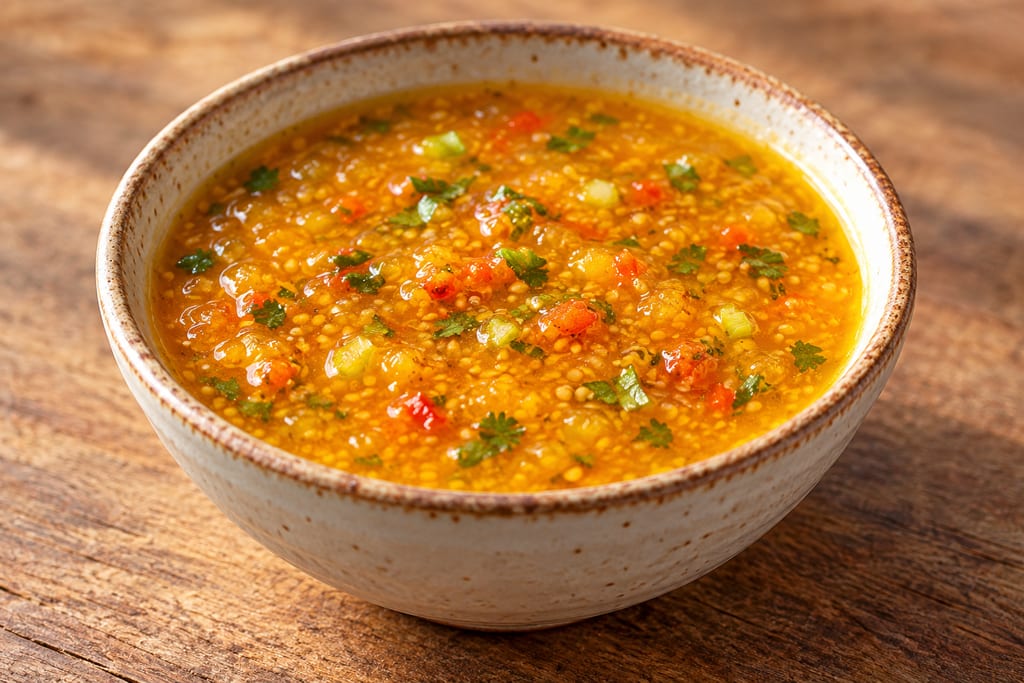
A sweet, tart and spicy Colombian sauce of uchuva, the yellow physalis fruit, with hot pepper, scallion, cilantro and lime.
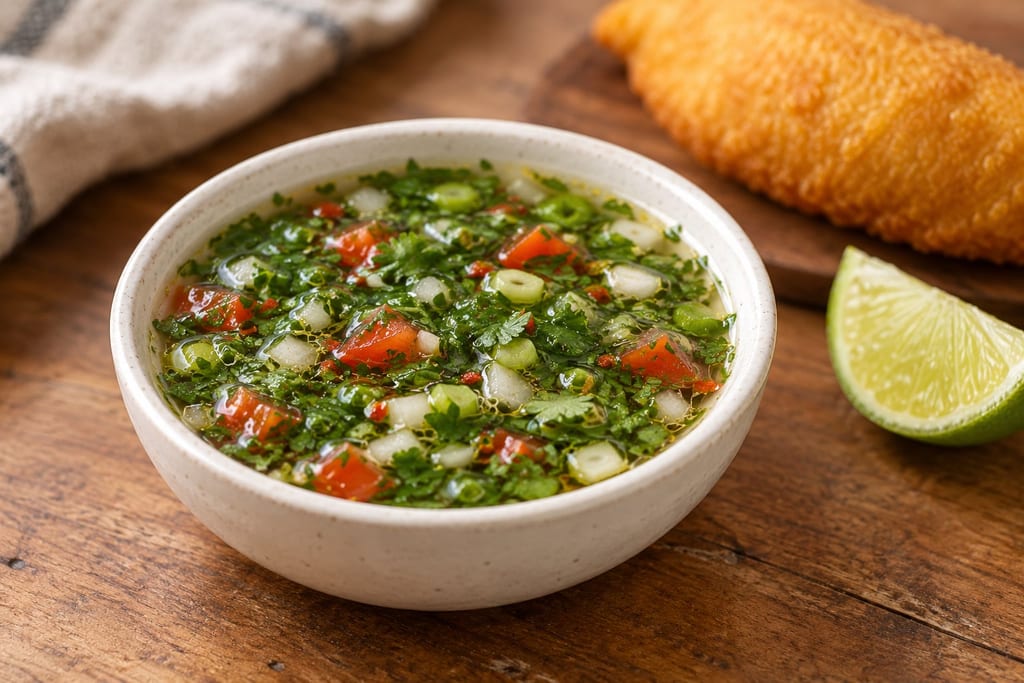
A fresh Colombian table condiment of chopped herbs, scallion and tomato in a vinegar and chile base, served beside fried and filled dishes.
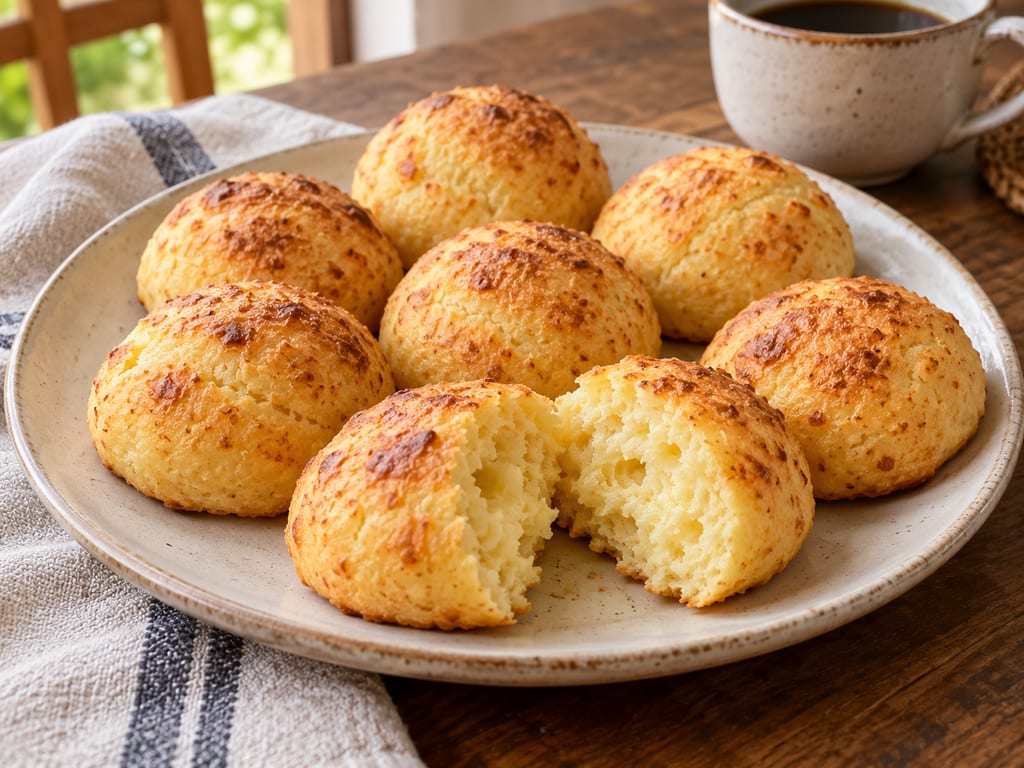
Small Colombian cheese breads made with precooked corn flour, queso fresco, mozzarella, eggs, milk and baking powder. This documented home version makes eight breads and is served warm.
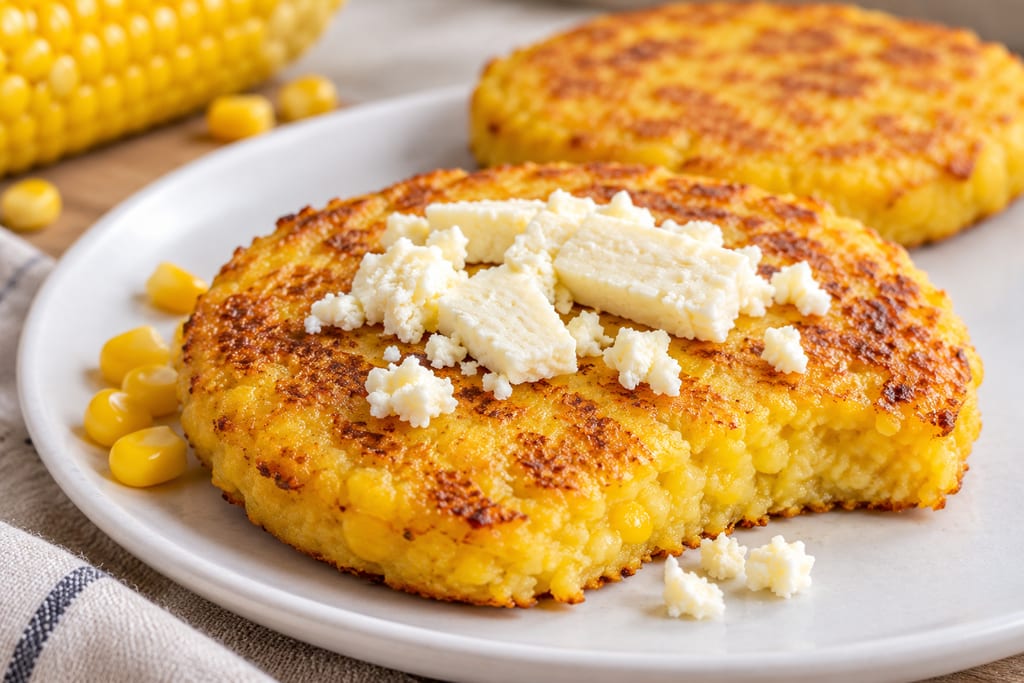
A Colombian Andean griddle cake made from fresh sweet-corn batter, cooked in butter and served with white cheese.
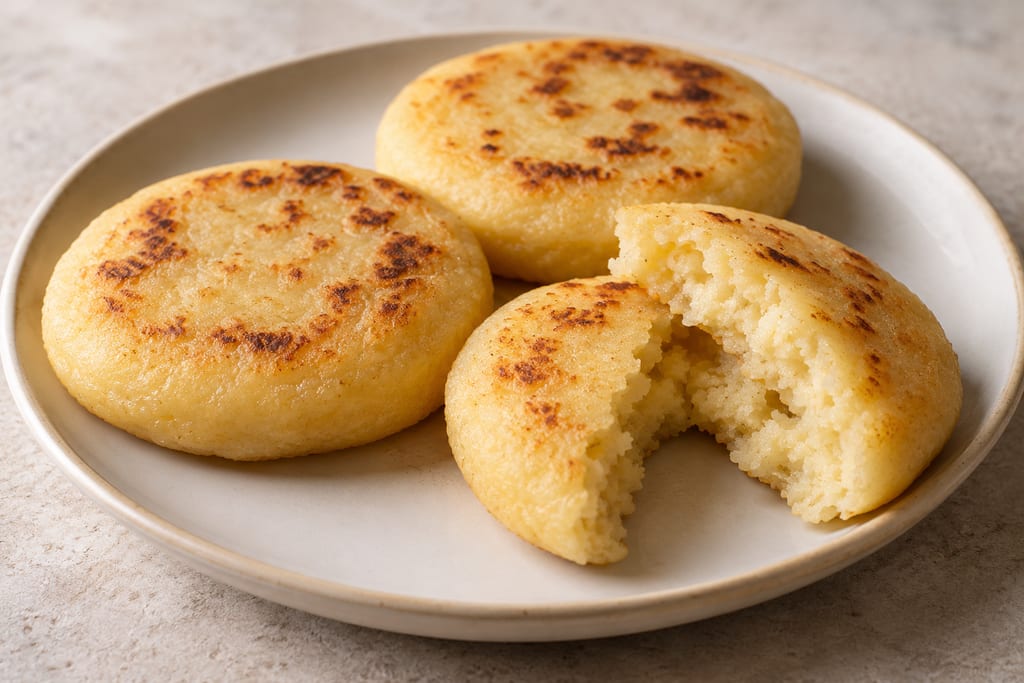
This household version combines precooked corn flour, warm water and salt, then cooks thick rounds on a lightly oiled skillet or griddle. It is one source-specific arepa method, not a universal Colombian or Venezuelan formula.
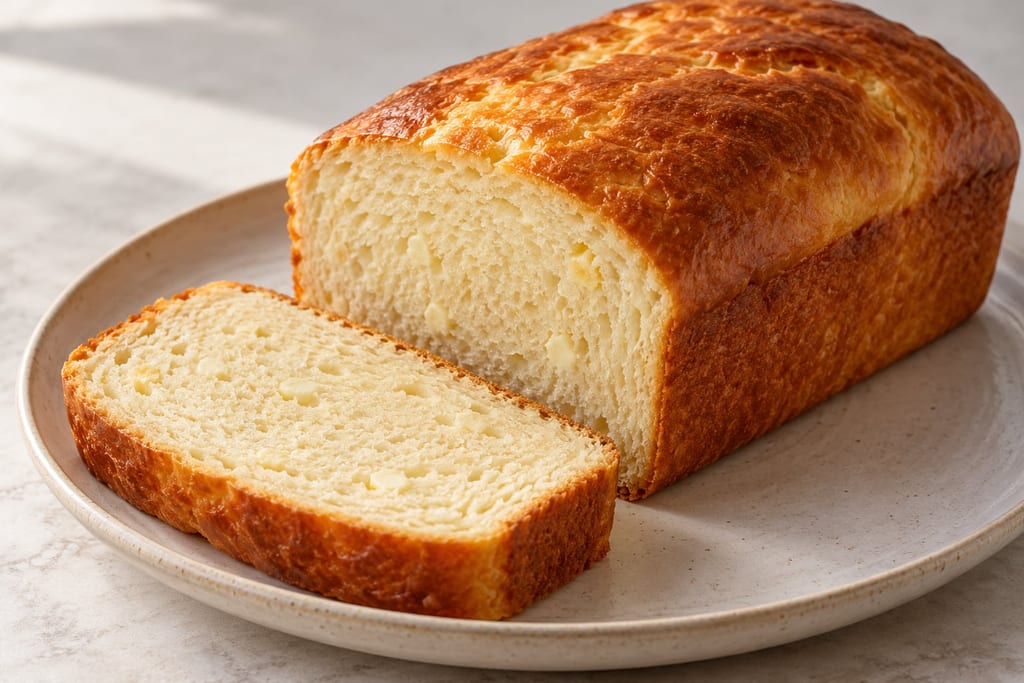
A soft Colombian wheat loaf enriched with milk powder, butter and crumbled fresh cheese.
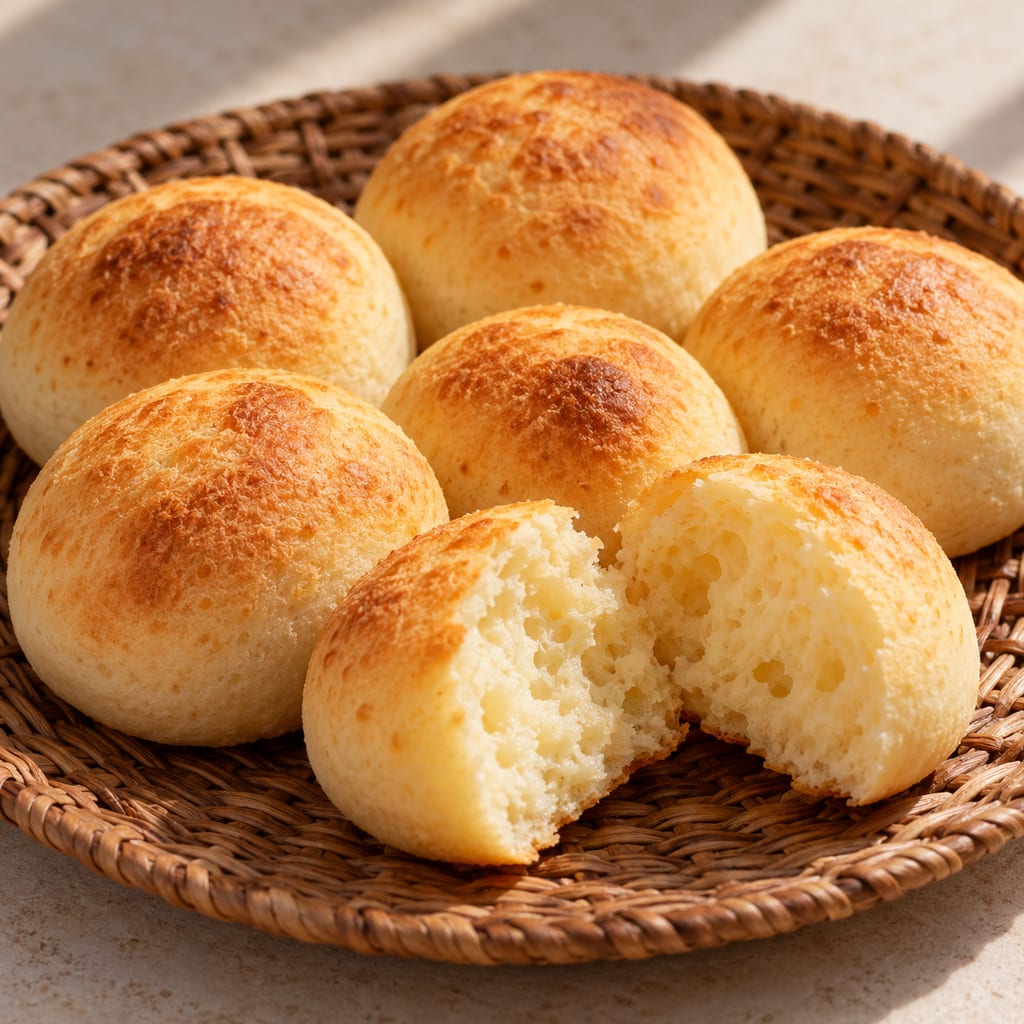
Colombian cheese breads made from cassava starch, precooked cornmeal, queso fresco or quesito, feta and egg; this source's version makes 12 warm, round rolls.
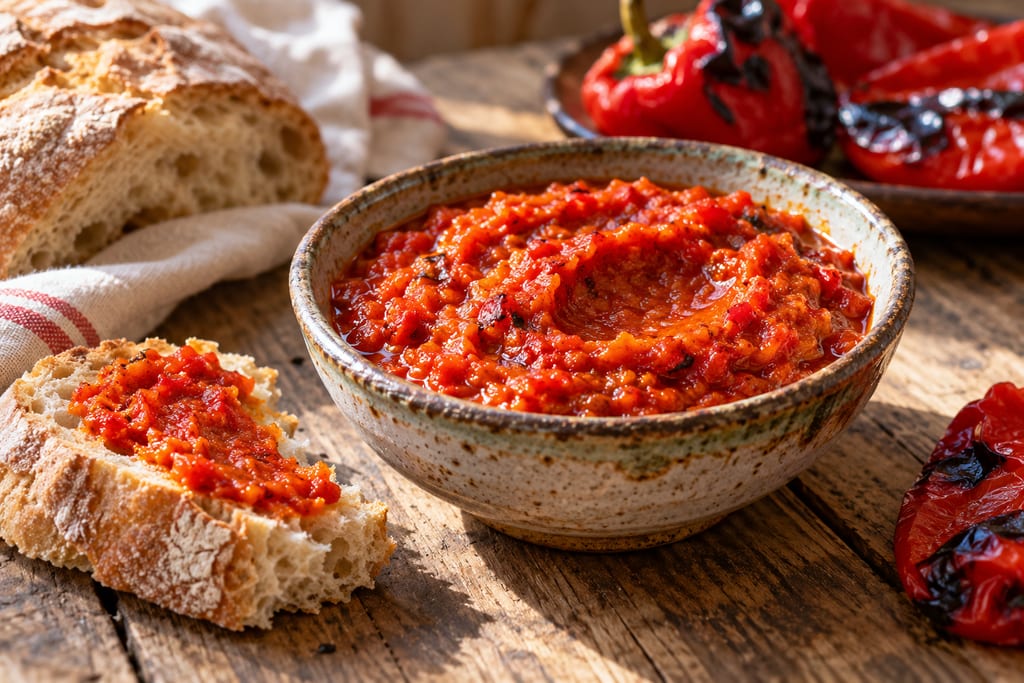
Ajvar is a cooked Balkan pepper preserve built around roasted red peppers, peeled, drained, ground and slowly fried with oil and seasoning. Leskovac’s protected version is a pepper specialty; regional versions vary.
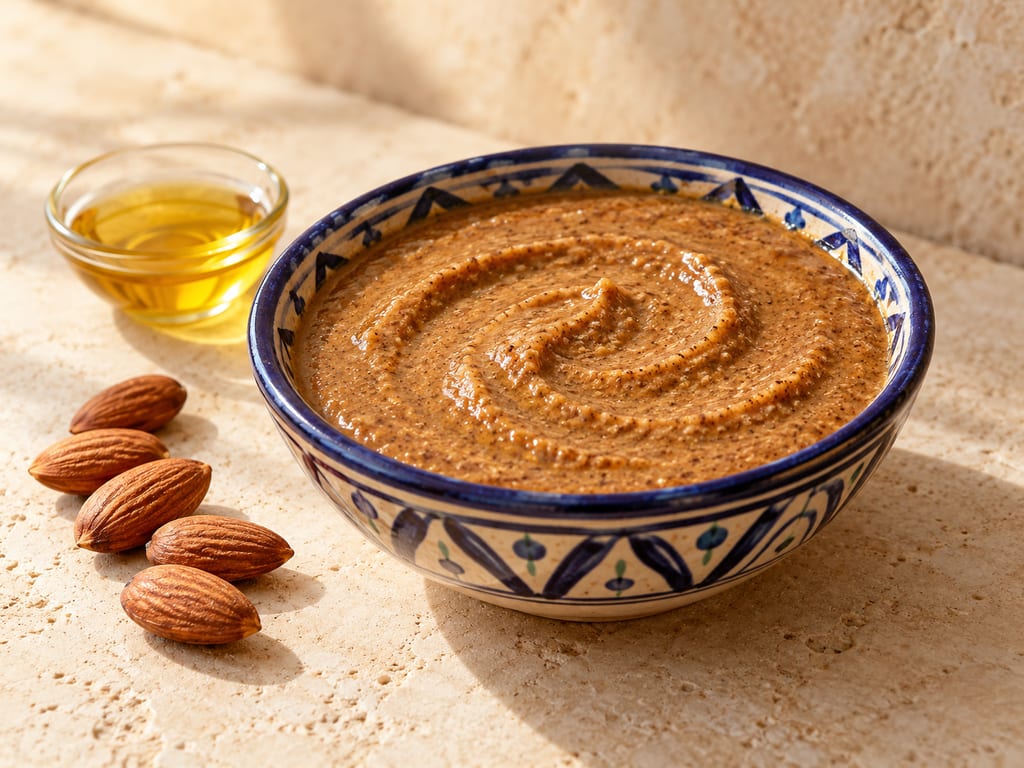
Amlou is a nutty, lightly sweet Moroccan spread of roasted almonds, culinary argan oil and honey. The almonds are ground first, then loosened with oil and sweetened; the balance can range from a thick spread to a dip.
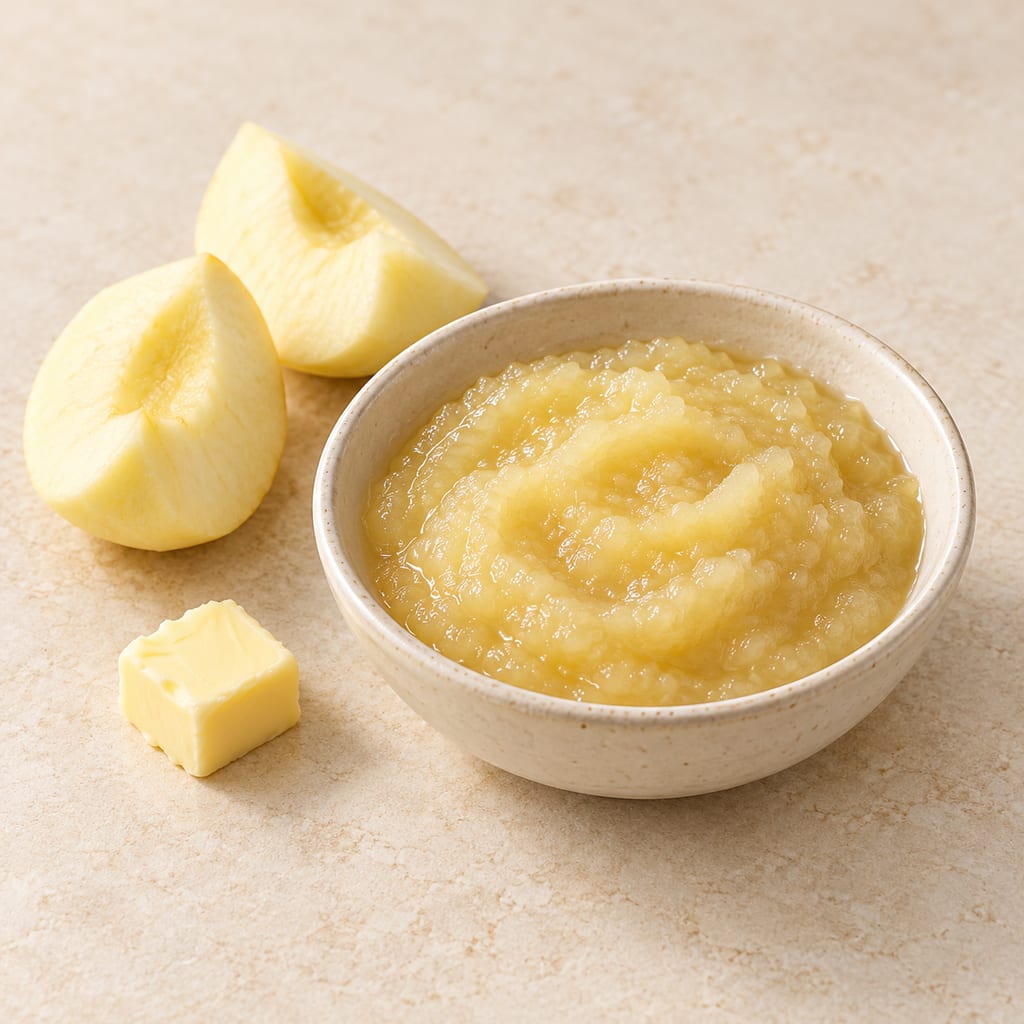
Apple sauce for goose and pork is a plain English accompaniment: cooked apples pulped with water, then sweetened with sugar and finished with a little butter.

A warm dip of garlic, anchovy and olive oil, often enriched with butter, that Piedmont serves over a flame with raw and cooked vegetables and bread.
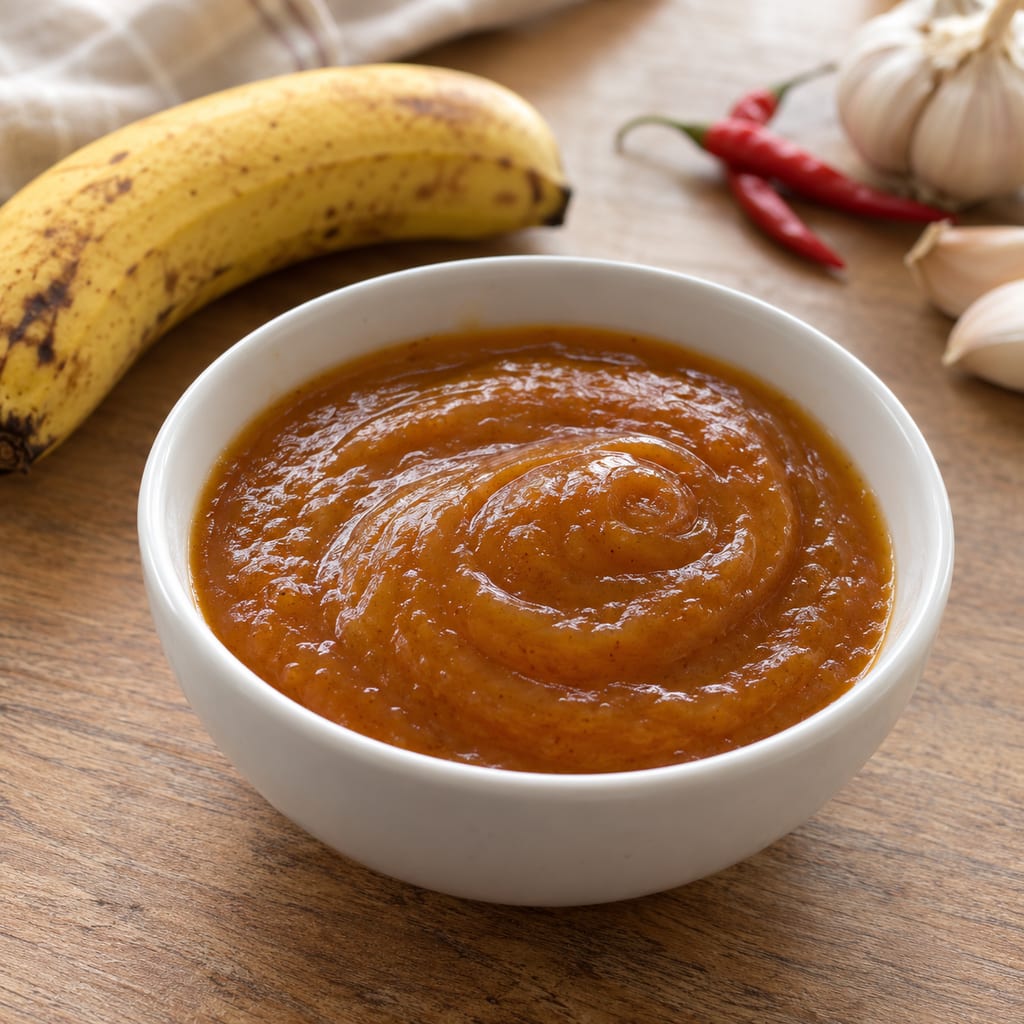
A sweet-hot table sauce of ripe banana simmered with vinegar, sugar, onion, garlic and fresh chilli, in the manner of Philippine banana ketchup. An untested development batch of about 500 g.
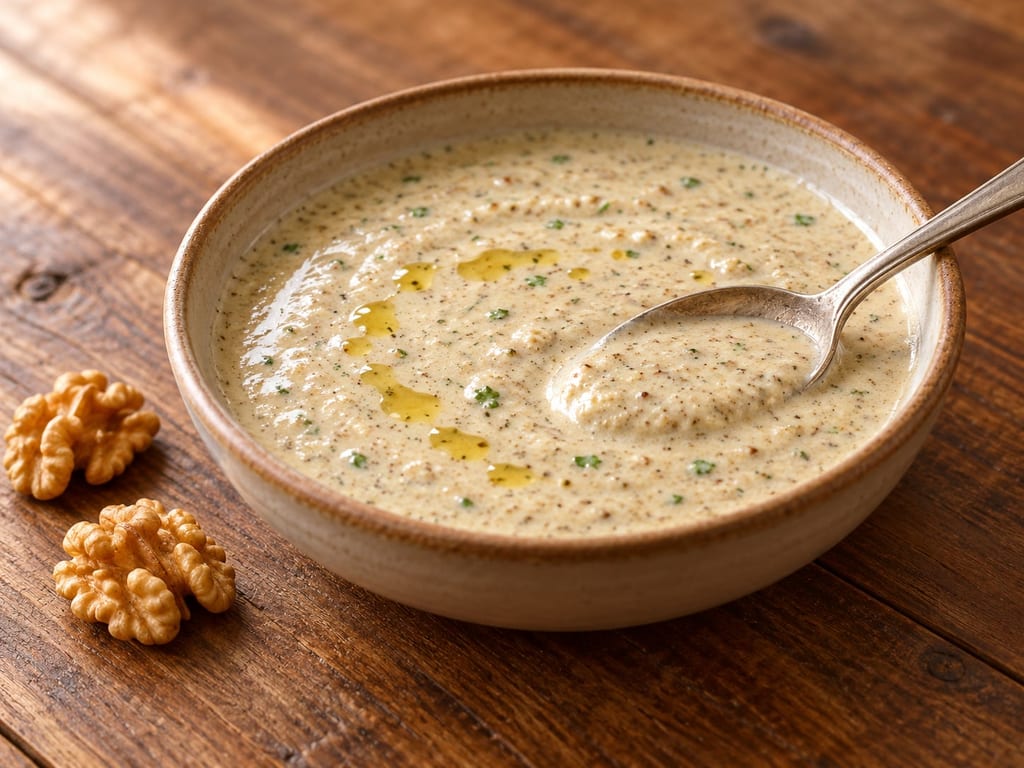
A Georgian walnut sauce of ground walnuts, garlic, vinegar and spices, thinned with water or broth. It is served with poultry, vegetables and bread, and is the sauce of the dish satsivi.
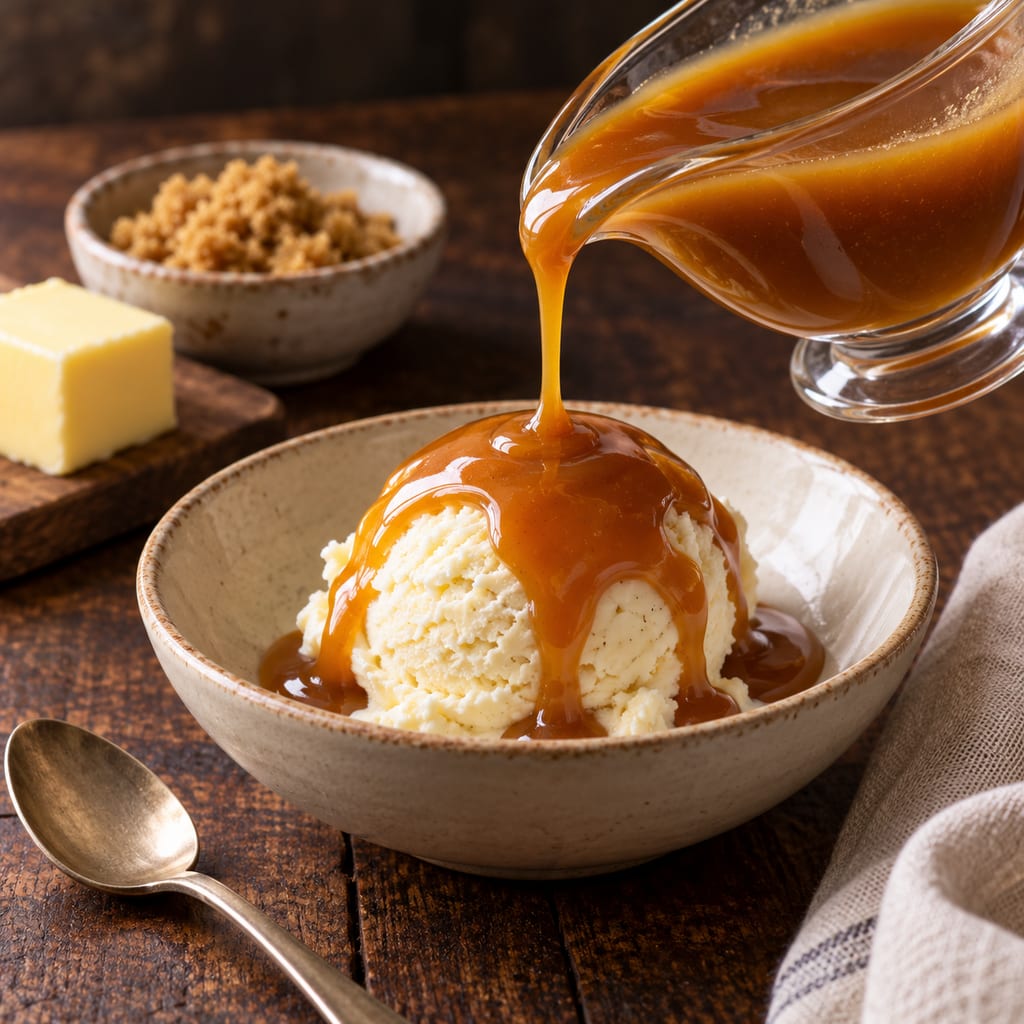
A pourable dessert sauce of brown sugar, butter and cream, with a little corn syrup and salt. It is the sauce form of the butterscotch confection and is made without water, unlike caramel.
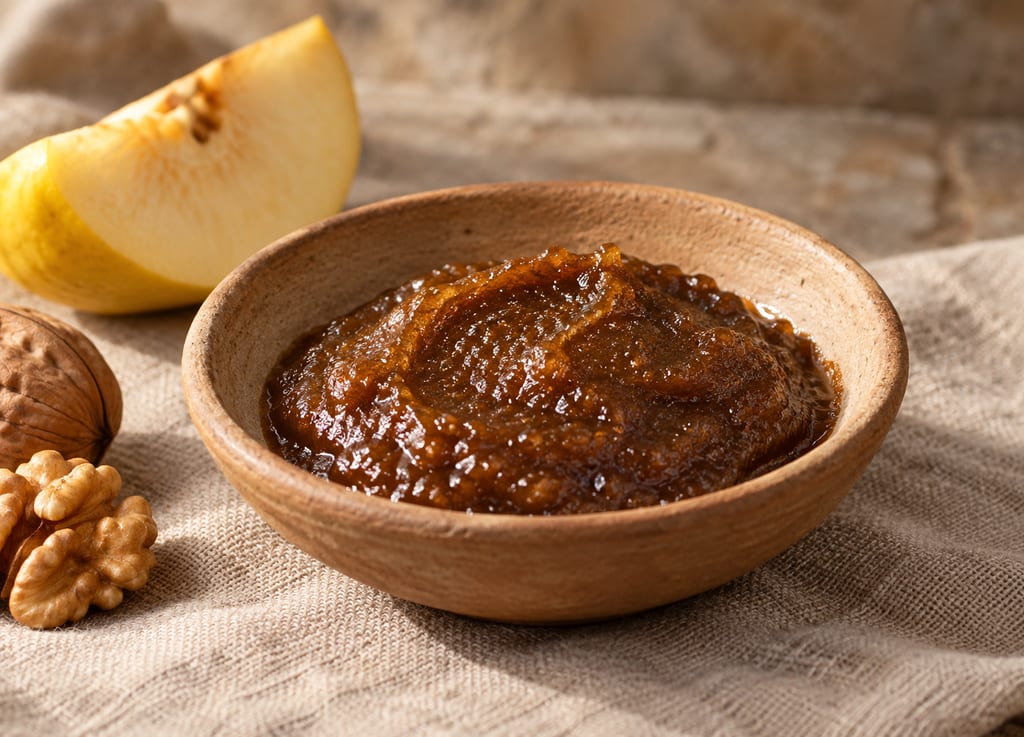
Byzantine murrī is a cooked imitation of murrī from the medieval Arabic repertoire, made from scorched honey, toasted bread, walnuts, quince, carob and spices rather than from a long grain fermentation.

A gelling polysaccharide extracted from red seaweeds, sold as kanten strips or powder; it sets firm at a low concentration and stays solid until about 85 °C.

A Dominican table and seasoning condiment of sour orange juice, mixed with lime and salt and bottled raw; garlic, oregano or a hot pepper may be added for meat or a spicier bottle.

Cicerbita alpina is an alpine perennial whose tender shoots and leaves have been eaten raw or cooked. Sámi milk preparations and modern Carnian dishes are distinct uses, with serious identification and preservation limits.

Japanese skipjack tuna cooked, then repeatedly smoked and dried over a wood fire by the hand-fired tebiyama method into a hard block for shaving into dashi: the first stage of katsuobushi.

A Swedish-style spirit vinegar made by fermenting neutral alcohol with live vinegar bacteria, with a separate guide to commercial ättika strengths.

A yeast-raised wheat ring shaped from a firm dough, briefly boiled and baked. This source-batch formula gives a gently malted crust and a chewy crumb.

Bechamel is a white sauce of milk thickened with a butter and flour roux, one of the French mother sauces, and the base from which Mornay and other cheese and cream sauces are made.
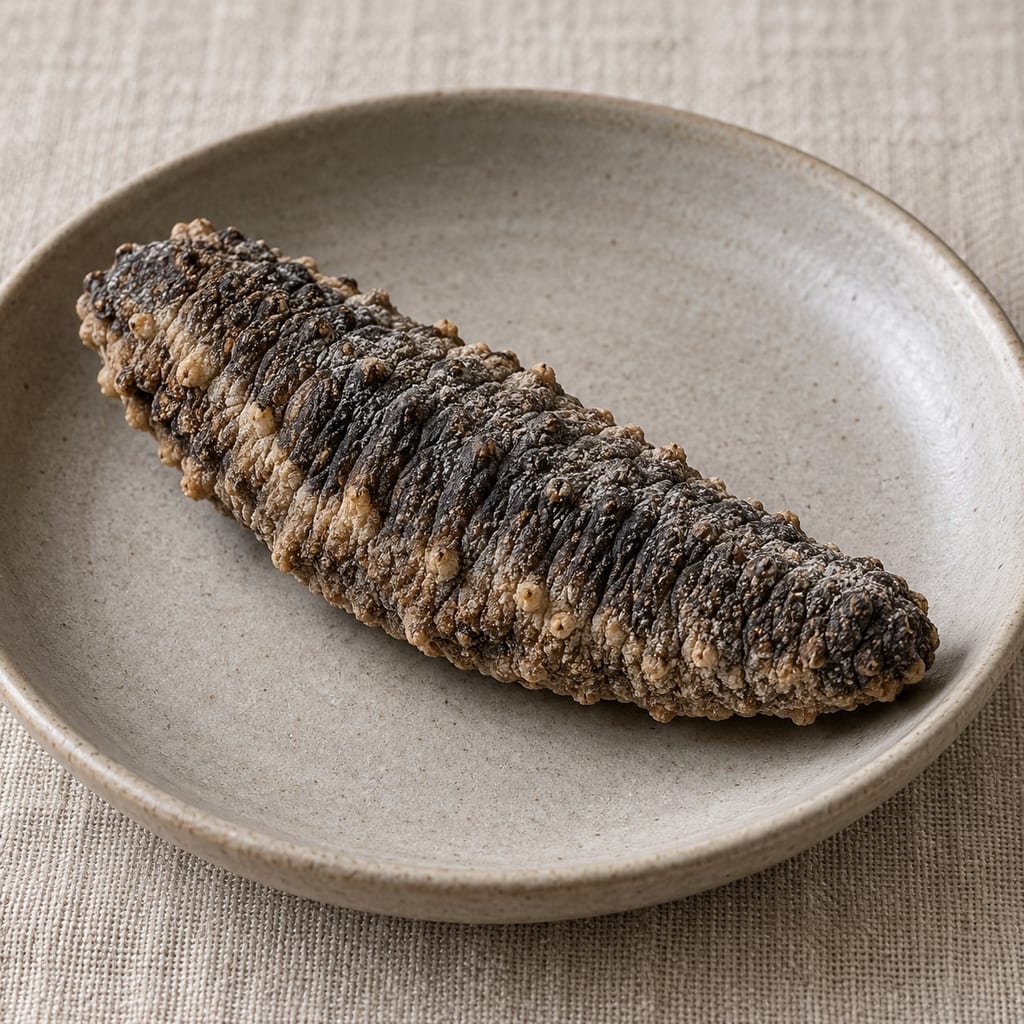
Sea cucumber cleaned, boiled and dried, sometimes with smoke, into a long-keeping trade product; Makassan processing in Arnhem Land is documented from at least the eighteenth century.
No community contributions have been published for this entry yet.
Sign in to contribute. Published comments and photos are free to read.
196 FlavorsMethod · History
Hogao (Criollo Sauce)Ingredients and method
Sofrito origin and tomato
Name gloss
Regional variants
Uses
Cited in: A base before it is a condiment; Sofrito and the tomato; Method; Onion and scallion; Regional versions