Biga
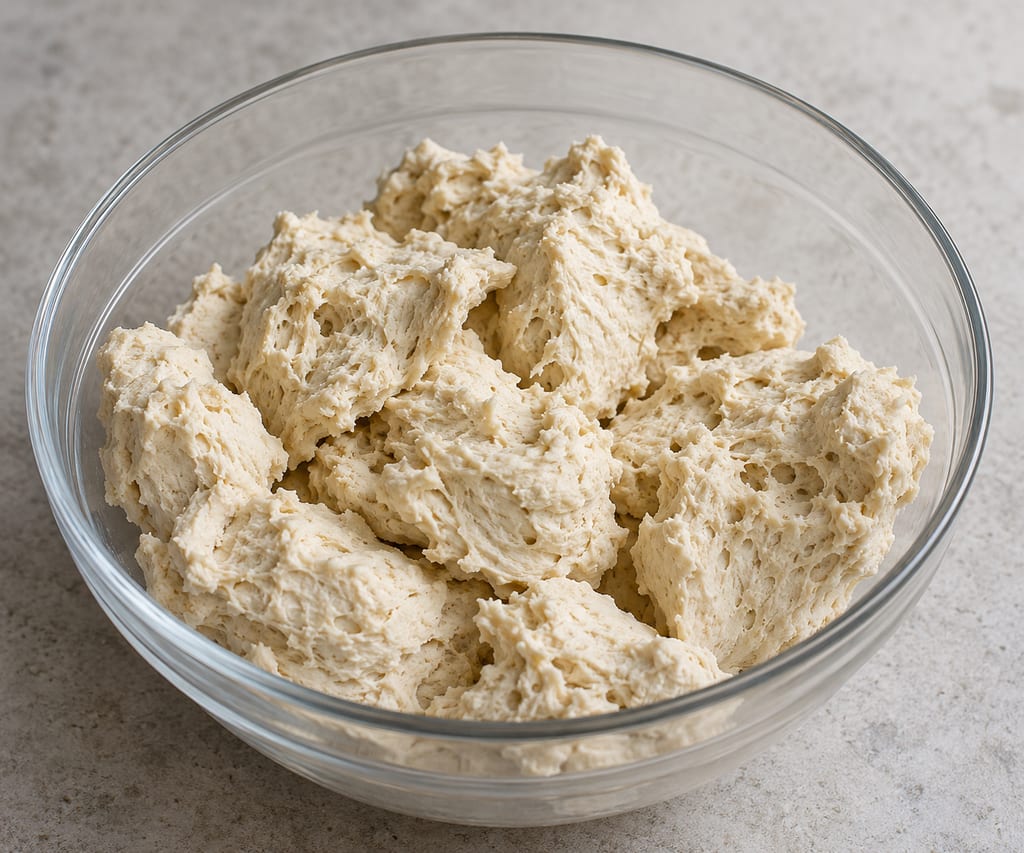
Biga is an Italian bread preferment of flour, water and a little yeast, usually a stiff unsalted mass of about 45 per cent water, fermented ahead and then mixed into the final dough.
 FermenteaWhere food goes to change
Historical attestation
Scottish barm · flour barm · Scotch barm method · Parisian barm · Parisian flour barm
Scotch barm is a Scottish bakery ferment grown in a malt-and-scalded-flour medium and renewed with mature barm from the last batch to leaven successive bread sponges.
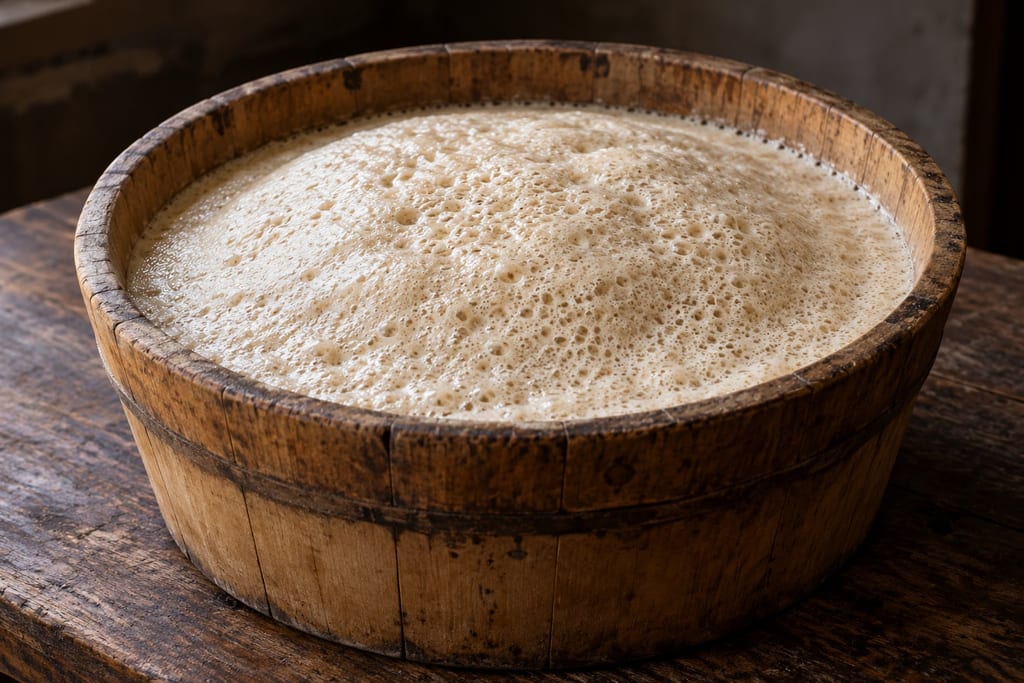
Scotch barm was the leaven of the Scottish bakehouse: a ferment grown in a prepared cereal liquid, kept going from one batch to the next and used to raise bread sponges. In its best-known form, Parisian barm, the baker made a fresh medium of water, malt and scalded flour, sometimes with hops, and seeded it with a portion of mature barm from the last batch. The new medium fermented and gave the leaven for the next day's bread. It was a maintained bakery culture, not foam skimmed from a brewery.
Barm itself had several meanings. In older English and Scots it was the yeasty foam of brewing, and Scottish bakers also used it for yeast cultivated in the bakery on its own. In 1890 Robert Wells set Parisian barm against commercial German yeast and called it the form most common in Scotland, and the 1900 US Department of Agriculture bulletin used Scotch barm method for the whole chain of mashing, fermenting, sponge and dough. The name could mean the ferment or the system built round it.
Parisian barm was one Scottish form among several. Bakers also spoke of virgin barm and compound barm: compound barm leaned on malt and hops and looked more like a brewing ferment, while virgin barm could be started without a kept inoculum. Authors used the words differently, so the actual procedure is a better guide than the name. Parisian barm is a name from Scottish bakery writing, and nothing shows the ferment began in Paris.
The working ferment held yeasts and acid-making bacteria, in proportions that depended on the stock, the preparation and its history. A modern wholegrain barm culture isolated from a living starter contained a yeast reported as Saccharomyces dairensis and a bacterium reported as an atypical Lactobacillus brevis, now placed in Levilactobacillus, but that is one later culture and not an inventory of nineteenth-century bakeries. Scotch barm was for raising bread, not for drinking or eating.
Scottish barm grew up in a baking economy that needed dependable yeast. Earlier bakers could take yeast-rich froth from brewing and distilling, and bakeries developed ways to grow their own. In Scots, store meant mature fermenting material kept back to start the next batch; the Dictionary of the Scots Language gives it as old yeast used to grow a fresh supply. A bakery's barm therefore need not have been fresh brewery foam, because it could be made and renewed by passing on part of an established stock.
The best-dated account is Robert Wells's 1890 manual. He describes preparing malt liquor, boiling hops, scalding flour, letting the mixture stand and then adding half a gallon of already prepared barm; the new barm foams and is used after further fermentation. He names Parisian barm as the Scottish favourite and describes its use in Scottish half and quarter sponges. A Scottish recipe in the Old Scottish Recipes collection tells of bakers forming societies to make their own yeast when brewery and distillery supplies were hard to get, with hop liquor, flour and a reserved quantity of old store, and it tells the baker to keep enough for the next batch; the date of the edition online is not firmly established.
In 1897 Frederick Vine discussed Scottish barm baking in Practical Bread-making, and William Rubel's reading of the book notes that Scottish bakers used several named barms and that their development is unsettled. Helen Atwater's 1900 USDA bulletin, drawing on William Jago's 1895 research, names the Scotch barm method, separates virgin barm from Parisian barm and describes the staged malt, scalded flour, fermentation and sponge. The 1911 Encyclopaedia Britannica likewise names flour barm, sponge and dough as a Scottish system.
It stayed important into the twentieth century. On 8 May 1917, in a wartime debate on yeast, a government minister told the House of Commons that Scottish bakers used Parisian barm far more than ordinary commercial yeast, a statement and not an audited census. The Scottish National Dictionary keeps accounts from 1948 and 1957, one of which says a soldier baker brought the method from France, without primary proof. The tradition is well attested by the late nineteenth century, while the place of invention, the original date and the route of transmission are open.
Scotch barm joins two processes: preparing a cereal medium with enzymes, and fermenting that medium. Malt brings the enzymes. In malted grain alpha-amylase cuts starch internally into dextrins and shorter chains and beta-amylase releases maltose from the chain ends, so the mix gains the sugars that microbes can use. Malt is a source of fermentable food as well as flavour.
Scalding changes how readily the enzymes reach the starch. Heated in water, starch granules swell and gelatinise. Historical recipes combine hot liquid with flour and let the mixture cool before adding mature barm, which keeps the heat treatment apart from the fermentation. Timing matters, because too much heat destroys malt enzymes and kills the organisms in the kept barm. The sugar profile depends on the malt, flour, water, temperature and time, and cannot be read off an old recipe.
Mature barm is added to the cooled medium. This transfers living organisms from one batch to the next, backslopping. Yeasts take the sugars through glycolysis; pyruvate becomes acetaldehyde and carbon dioxide, and alcohol dehydrogenase makes ethanol while regenerating NAD+. The gas produces the foaming and the lift in bread. Continued transfer into fresh mash keeps activity going as long as the population stays alive and conditions suit.
Lactic bacteria can add a good deal. They make lactic acid and sometimes acetic acid, ethanol and carbon dioxide, depending on the organism and substrate, and the acid changes flavour and affects cereal enzymes and gluten. The 1987 patent culture was a yeast that did not ferment maltose paired with a bacterium that could, which suggests a division of the sugars, but it describes one identified culture and not all historical barms. Hops, present in some recipes, affect flavour and microbial selection but are no guarantee of safe fermentation. The final ferment mixes residual sugars, organic acids, ethanol, gas, cells and cereal breakdown products, and which dominates depends on the stock and not on the name.
Wells begins Parisian barm with a fresh medium. Crushed malt is steeped in warm water, hops are boiled in a separate pan, and enough flour is stirred in to make a workable mix. The hot hop liquor is strained over the malt liquor and flour and scalds the cereal. His batch uses one gallon of water at 140 F for two pounds of crushed malt, with three gallons of water boiled with two ounces of hops. He gives no flour weight, telling the baker to add as much as stirs well. These are historical production quantities, not modern validated instructions.
Each part has a job. Malt supplies enzymes and nutrients, flour more starch, and water makes extraction and microbial growth possible. Heat opens the starch and changes the body of the mixture. Hops, from brewing practice, add flavour and may check some microbes. The kept barm is the inoculum; without it the process becomes an attempt to start fermentation from whatever the materials and the bakehouse carry, which is a different and less predictable operation.
In Wells's method the scalded mixture stands overnight, his example running from about 5 p.m. to 5 a.m. under a covering of sacks, and the old barm goes in the next morning, after the hot treatment, so the culture never meets boiling liquid. Wells puts the barm ready roughly ten to twelve hours after stocking, when a clear, rounded foam, a bell top, stands on the surface. Other methods run differently: the 1911 Britannica describes a virgin barm developing for several days. These schedules belong to different processes and are not blended here.
The baker used part of the mature barm to raise a flour-and-water sponge. Scottish bakeries worked half and quarter sponges; the Scots dictionary explains that a quarter sponge starts with about a quarter of the water in the finished dough. Wells makes a firm first sponge with barm and flour and adds water, salt and flour in later stages. The sponge multiplies the leaven before the final dough, keeping the barm culture separate from the bread.
A portion of mature stock must be kept for the next batch, and Wells also stresses cleanliness and keeping grease and soured dairy out of the barm. Monica Spiller's modern reconstruction uses malted whole wheat, flour, water and an established culture, with controlled mashing and a separate stock fermentation. It is a useful comparison but differs from any historical recipe, and neither the old instructions nor the reconstruction is a validated household procedure.
Scottish bakers used related systems under names that did not always mean the same thing: Parisian barm, virgin barm, compound barm, and in broader writing Scotch or flour barm. Parisian barm generally meant a prepared flour-and-malt medium seeded with mature stock. Compound barm leaned on malt and hops. Virgin barm was a way to start a ferment without the same maintained inoculum. Authors classified them differently, so the original procedure is the better guide.
Wells says Parisian barm was especially common in Scotland. The 1900 bulletin separates virgin from Parisian barm and notes that the latter can be seeded with old barm or ordinary yeast. The 1911 Britannica gives a large virgin barm of malt, hops, flour, sugar and water maturing over several days. Even within the Scottish system, ingredients and schedules varied, and the batches were sized for commercial bakeries.
Parisian barm is prominent in records from the west of Scotland. The Scottish National Dictionary reproduces a statement from the Scottish Association of Master Bakers' 1948 yearbook on its prevalence there, and cites Andrew Kirkland's 1903 Bakehouse on lactic flavour in Scottish bread. A 1957 account claimed a soldier baker brought the method from France to Edinburgh, which remains a reported tradition. Wells also mentions earlier potato ferments and the rise of imported commercial yeast, so bakery practice changed over time, and no single description holds for the Highlands, Lowlands, islands and city bakeries alike.
Modern reconstructions differ again: Spiller's whole wheat barm uses enzyme-active wheat malt and a maintained sourdough-type stock under controlled conditions, and the 1987 patent describes specific laboratory-identified organisms. They are modern adaptations and do not prove the microbial identity of historical stocks. Campbeltown barm biscuits and barm cakes are different foods that share the word barm.
Scotch barm was a working bakery ferment. The baker kept it separately, put a portion in a flour-and-water sponge, used the developed sponge for the dough and kept the rest as the inoculum for the next cycle. One stock could support successive bakings without fresh brewer's yeast each time.
The bread belonged to Scottish city bakeries in the nineteenth and early twentieth centuries. The 1911 Britannica describes Scottish loaves as often tall, narrow and brick-shaped, good-looking and keeping well, with a flavour tied to malt and fermentation; those are finished breads under particular methods, shaped as much by flour strength, salt, sponge, handling and oven as by the barm.
Bakers valued propagating leaven in the bakehouse, since a mature stock could seed a far larger fresh medium that in turn seeded the sponge, at the cost of extra preparation and labour. Atwater's 1900 bulletin questioned whether the process always paid once labour and losses were counted. Flavour was also argued over: Vine called Scottish loaves relatively acid and salty, Kirkland disputed that Parisian barm made them sour, and the Britannica described a sharpness short of sourness. No single acidity or taste fits every loaf.
Raw barm is not food and must not be tasted to judge whether it is ready. The bread was baked before it was eaten.
Bakers judged barm by visible activity. Wells describes a foaming surface that develops after mature barm goes into the prepared medium, with a clear, rounded foam showing readiness in his method. Gas shows that organisms are active but not which ones, and a barm rich in lactic bacteria can turn acid without gassing as fast as a yeast-dominated one, so there is no universal appearance.
A weak barm may come from an inactive kept culture, unsuitable nutrients, temperature trouble or too much heat before inoculation. Adding living stock to a medium that is still too hot damages it, while slow cooling and long holding of a nutrient-rich cereal mix let unwanted microbes grow. Old recipes give temperatures by bakery experience, so they are hard to reproduce reliably.
Historical bakers separated mature stock from contaminated residue. Wells insists on cleanliness and warns against grease or soured dairy in the barm, and another Scottish recipe distinguishes deliberately kept stock from material left in a badly cleaned vessel. Keeping a chosen portion of mature culture is not the same as letting food residues pile up, but old instructions show concern for contamination and are not microbiological validation.
A pH reading shows acid, not which organisms made it, and does not show pathogens are absent. The pH targets in Spiller's whole wheat method belong to that reconstruction and are not validated thresholds for every Scotch barm; the patent reports properties of identified experimental organisms and does not prove arbitrary spontaneous starters safe.
Discard a ferment with mould, odd colour or a putrid smell; do not rescue it with more flour or malt, and do not take the lack of such signs as proof of safety. Raw flour can carry pathogenic E. coli and Salmonella, and warm hydrated cereal mixes need hygiene. A kept stock also drifts: grain, malt, water, inoculation level, temperature and timing all change it, and repeated backslopping does not guarantee a constant community. Nineteenth-century records give no pH, acidity or microbial counts, and none are invented here. Use the historical record for ingredients, stages and observations, and not as stand-alone safety instruction for a household.
Documented in Scotland in 1890; invention date and place unknown.
Raw flour can carry pathogenic E. coli and the warm, hydrated mixture supports growth; fermentation does not show it is gone.
Hazard sourceRaw flour can carry Salmonella; barm must not be tasted.
Hazard sourceTime, temperature, hygiene and the kept stock all shape the ferment; a good foam does not show unwanted microbes are absent.
Hazard sourceRepeated backslopping can change the microbial community or admit contaminants.
Hazard sourceDo not taste or eat the raw barm; use it only to leaven bread that is baked.
Control sourceKeep vessels clean; keep grease and soured dairy out, as Wells advises.
Control sourceWash hands, utensils and surfaces after handling flour and keep it from ready-to-eat food.
Control sourceDiscard a ferment with mould, odd colour or a putrid smell instead of adding flour or malt.
Control sourceThis is a transcribed nineteenth-century bakery process, not a recommended home-fermentation recipe.
It needs half an imperial gallon of established barm and cannot be started without it.
Wells does not name the malted cereal, the flour weight, the microbes in the inoculum or the fermentation temperature.
A bell-top foam is not a validated sign of safe acidity or absence of pathogens.
The hot treatment does not sterilise the whole medium; flour, equipment and the kept stock can add microbes.
The overnight stand comes before inoculation and is not part of the 10 to 12 hour fermentation.
Hops are no substitute for sanitation.
Contains wheat gluten.
Do not rescue contaminated ferment by removing the surface or adding more flour or malt.
The pH values and temperatures in modern barm studies are not limits for Wells's preparation.
No shelf life or safe refreshment interval is established.
Region-level; no place of origin is claimed.
Documented Scottish bakery use.
Kirkland's Bakehouse is cited in the Scottish National Dictionary.
A bakers' yearbook account of prevalence.
The reported French soldier-baker origin is unproven.
Spiller's patent culture and whole wheat barm bread method.
Biga is an Italian bread preferment of flour, water and a little yeast, usually a stiff unsalted mass of about 45 per cent water, fermented ahead and then mixed into the final dough.
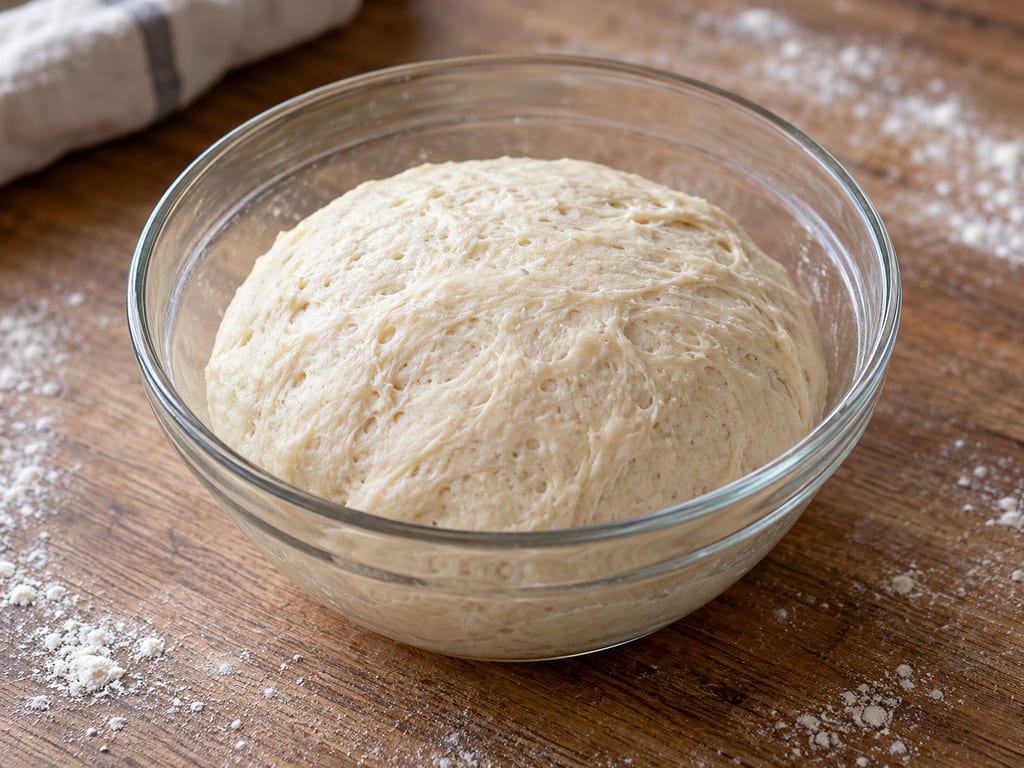
Pâte fermentée is a bread preferment made from salted, yeasted dough set aside to ferment and mixed into a later batch, carrying developed dough and fermentation products with it.
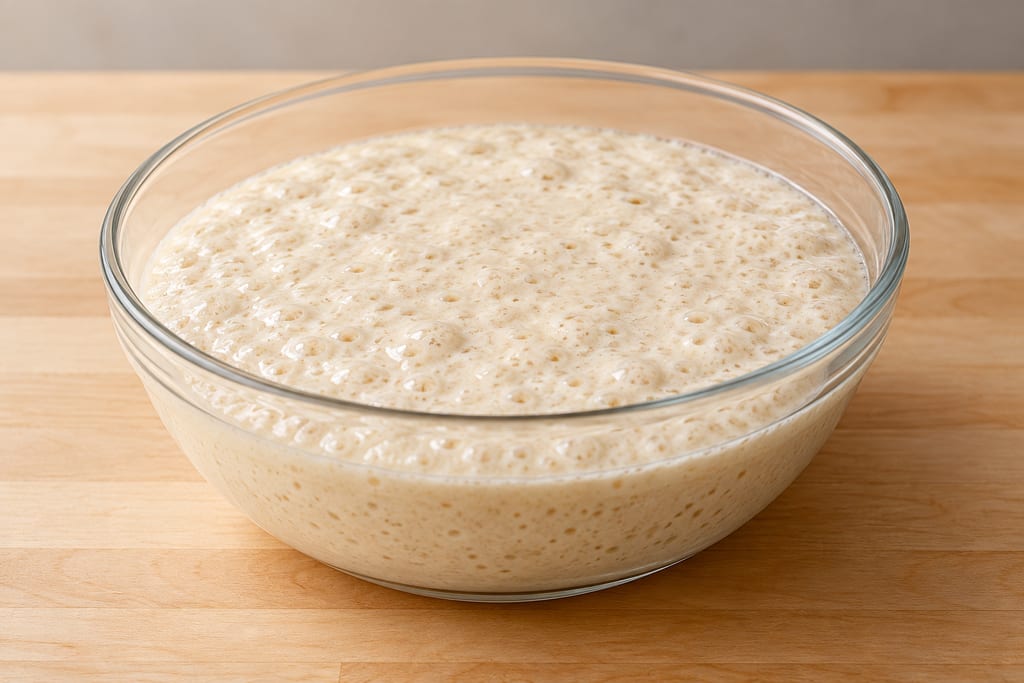
Poolish is a loose, unsalted bread preferment of roughly equal weights of wheat flour and water with a pinch of baker's yeast, left to ripen before it goes into the final dough.
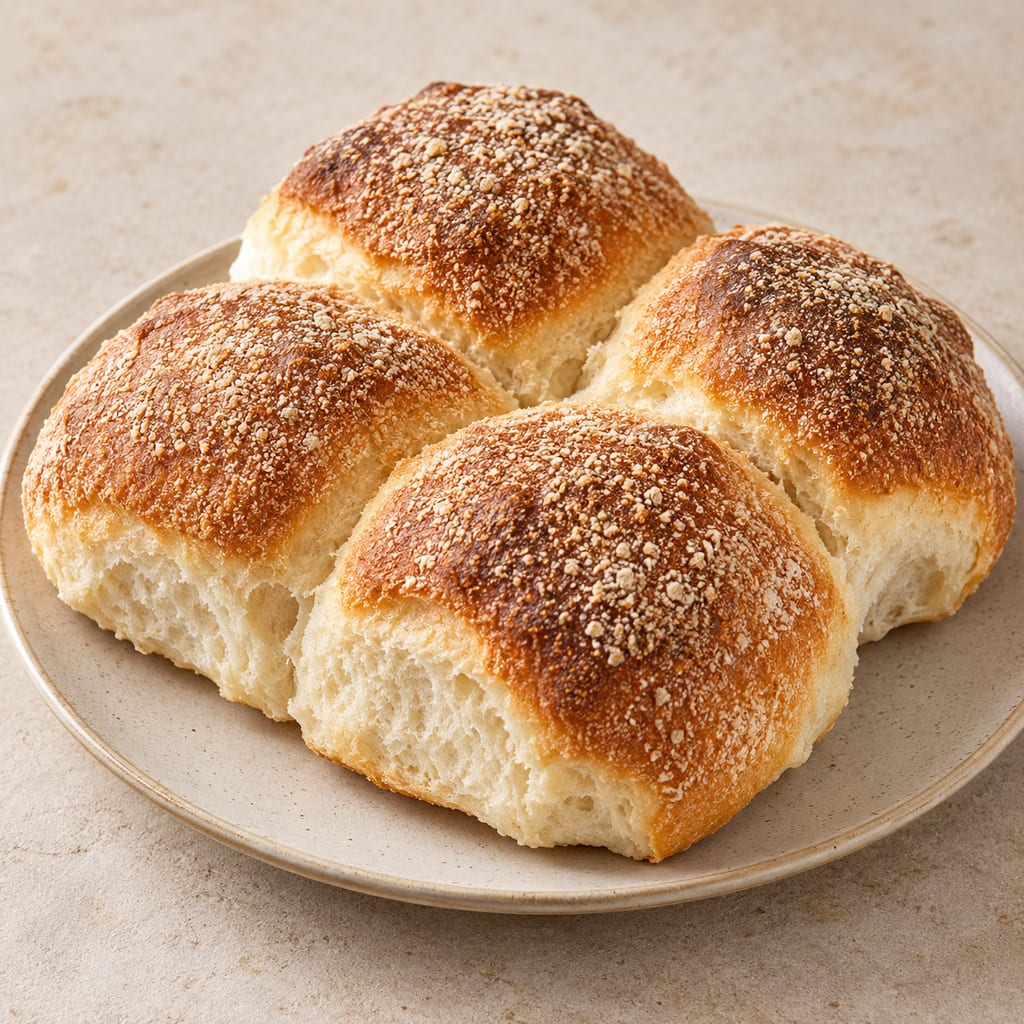
A wet, cold-fermented wheat dough is coated in rice flour and baked close together at high heat for Glasgow-style rolls with a crisp, dark crust and light interior.
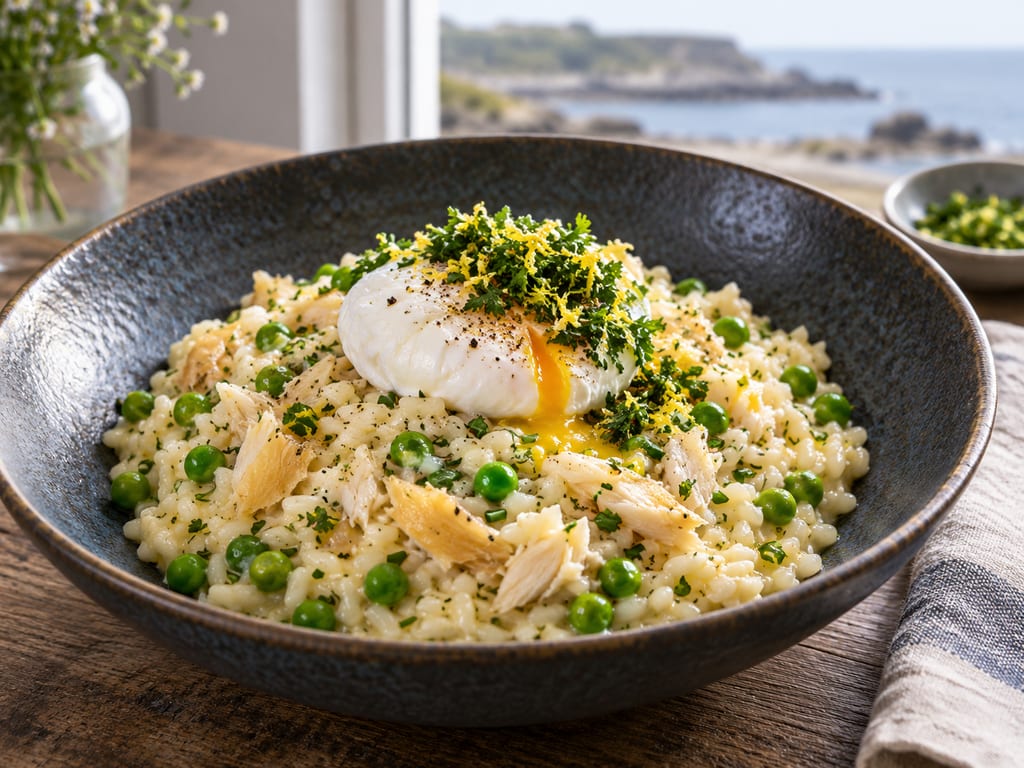
A four-serving risotto published in the 2014 Arbroath Smokie Trail booklet and credited to Hayley Wilkes. It cooks with finished Arbroath smokies; it does not describe smoking fish.
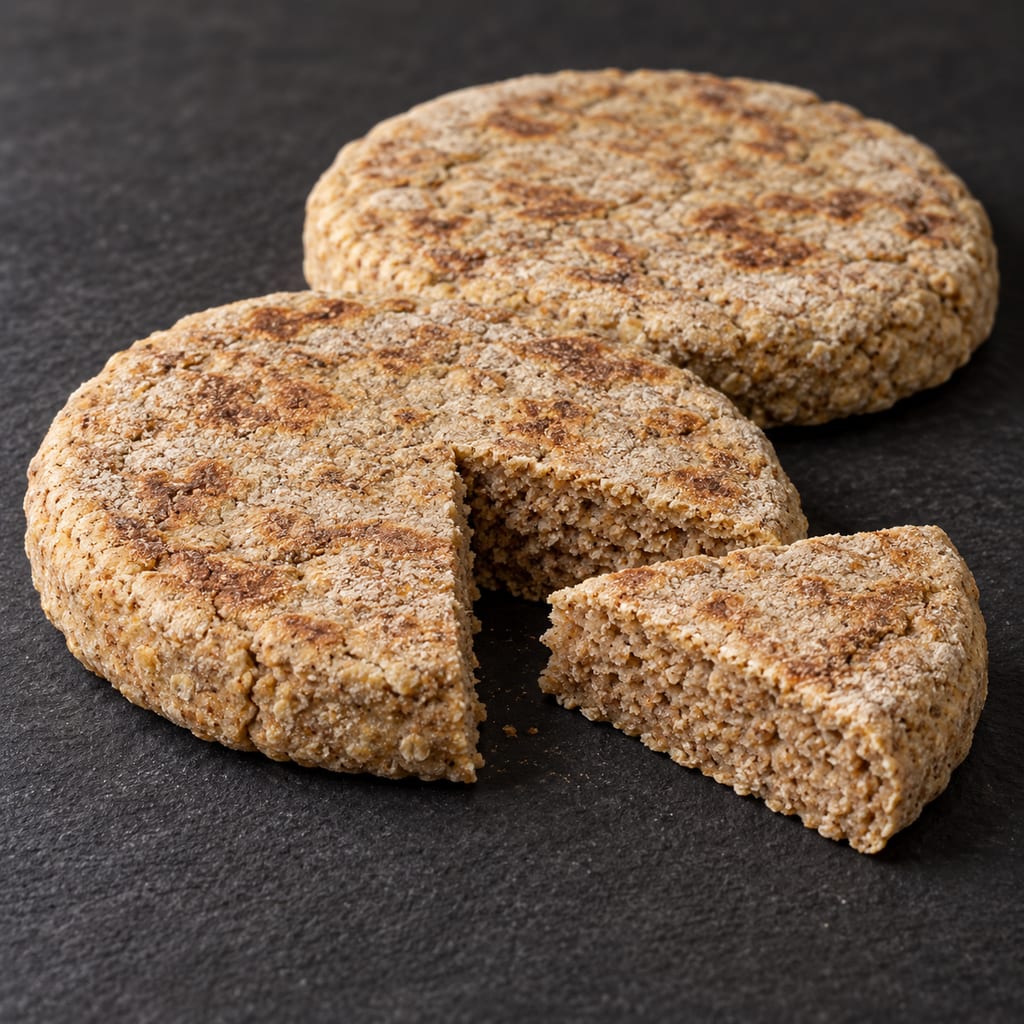
Two round, chemically raised bannocks made with equal weights of white flour and beremeal, barley flour or oat flour, following Anne Johnson's Orkney formula.
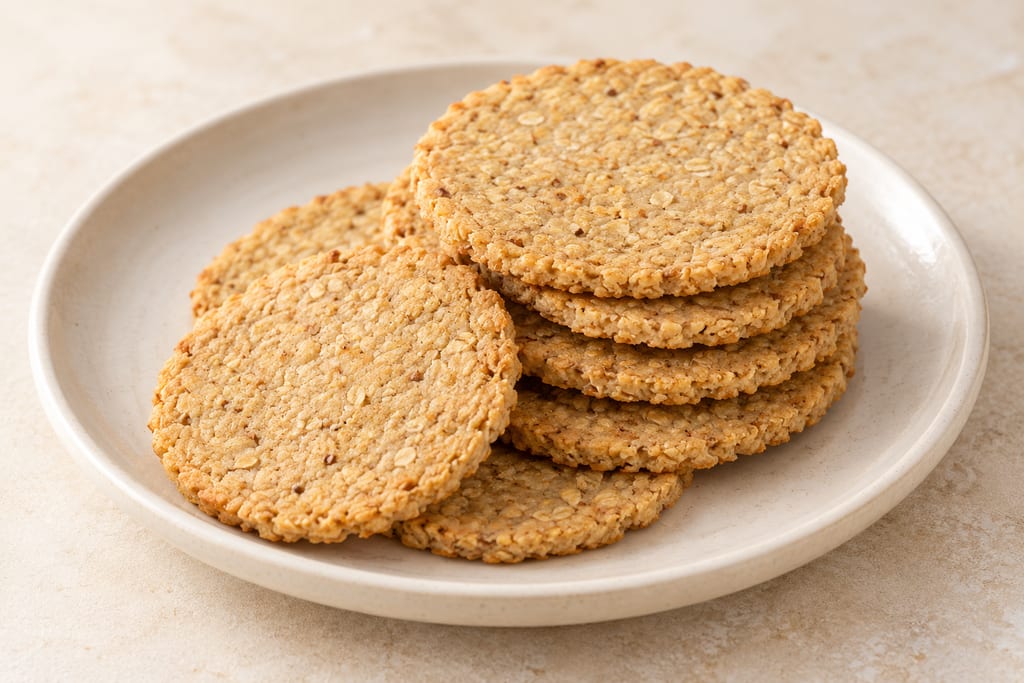
A thin Scottish oatcake of medium oatmeal, butter, salt, bicarbonate of soda and boiling water. This measured oven adaptation differs from older girdle methods and soft, yeasted Staffordshire oatcakes.
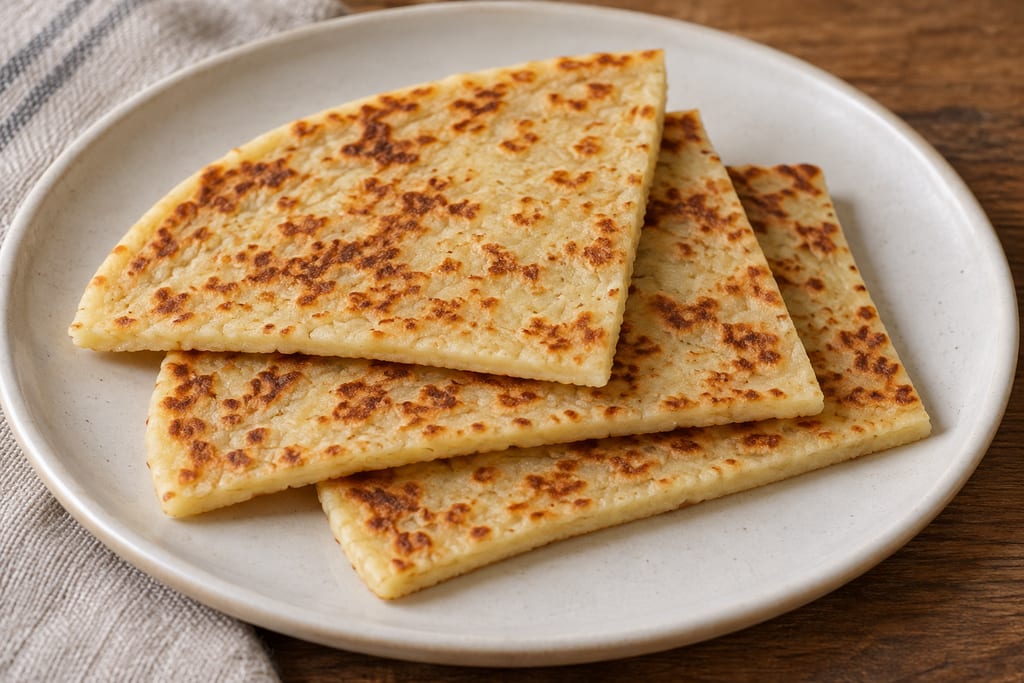
Scottish Scran’s batch combines boiled potatoes, butter and flour, then cooks three thin rounds on a dry pan.
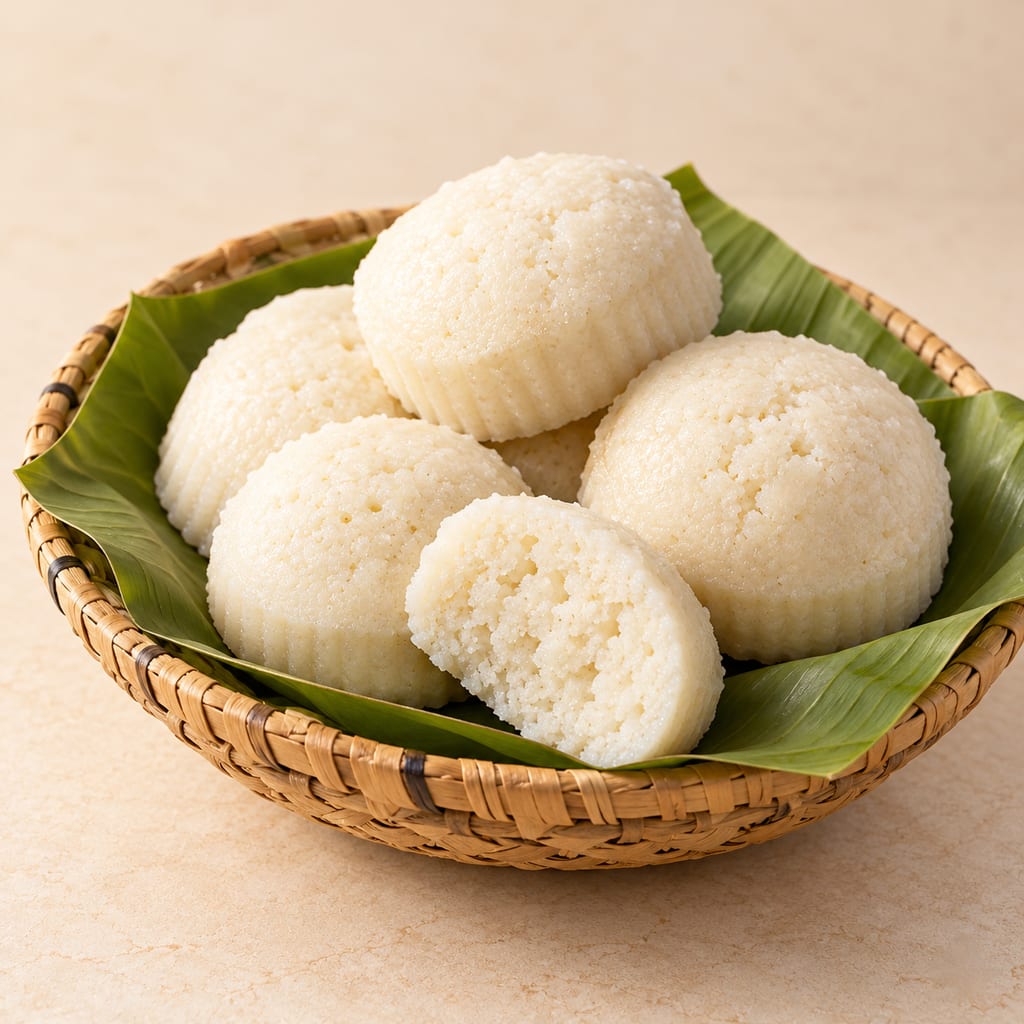
Soft, lightly tangy steamed cereal bread documented across Benin and Togo. This page gives one measured rice-flour research method; maize-based Ablo and mixed-grain versions remain distinct traditions.
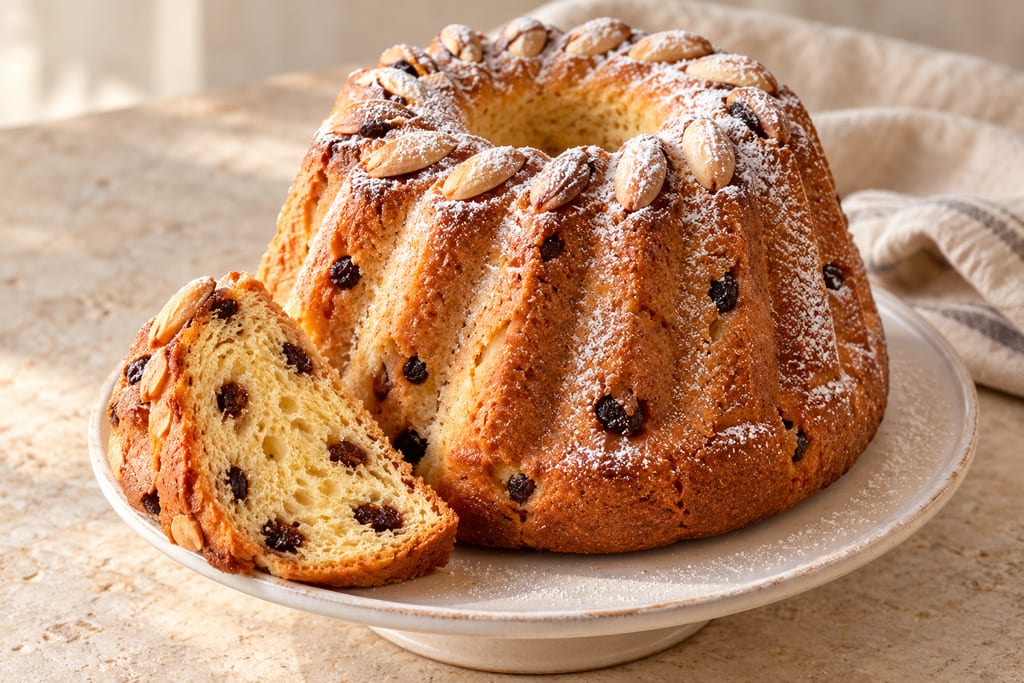
An enriched Alsatian yeast ring with raisins and almonds, kneaded with butter, proofed in a fluted mould and baked until browned.
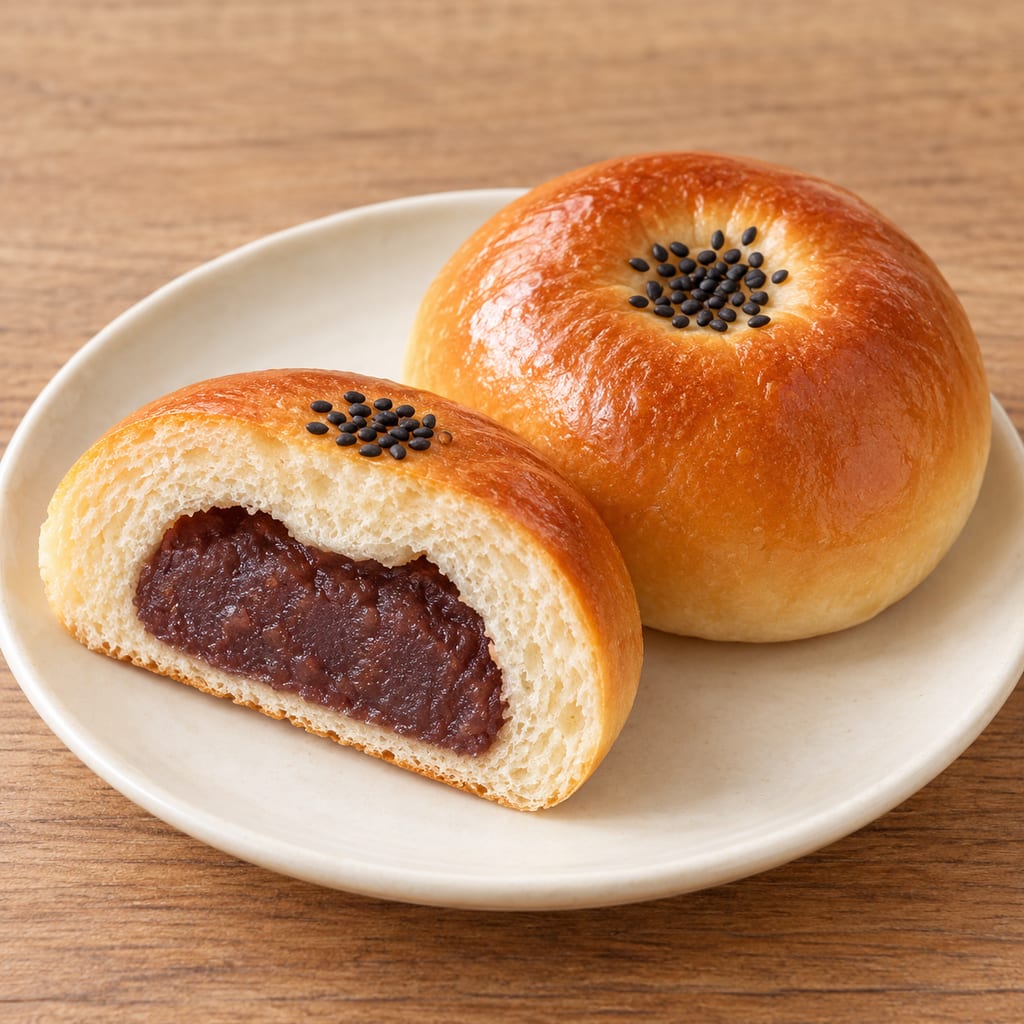
Anpan is a soft wheat bun filled with sweet red-bean paste and finished with egg wash and black sesame. This dough rises with commercial instant yeast.
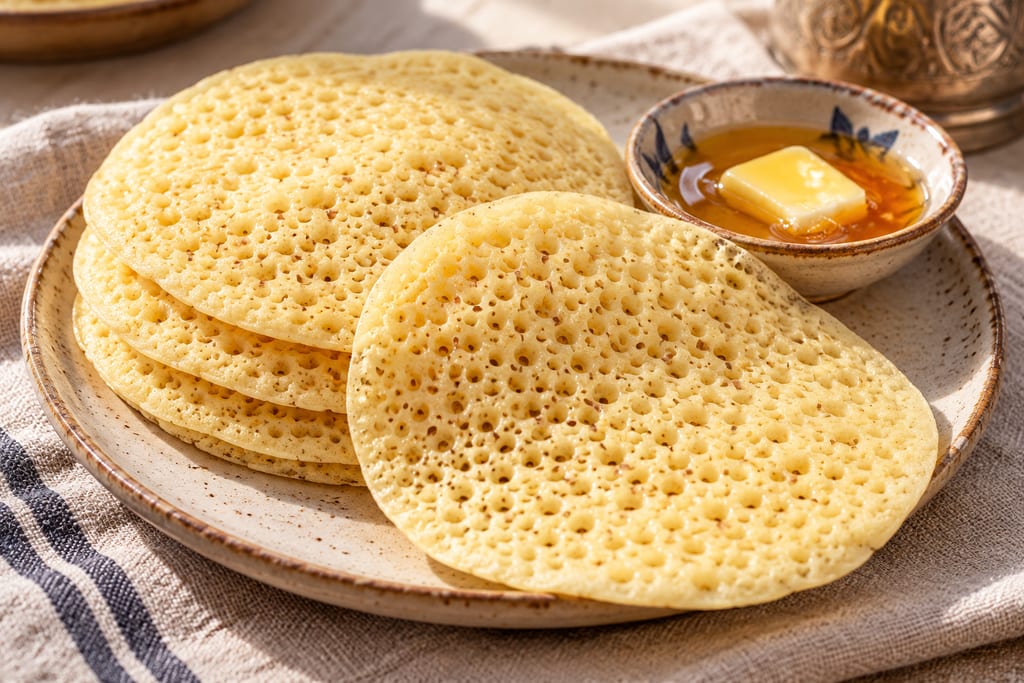
Moroccan semolina pancakes made from a thin yeast batter, rested until foamy and cooked on one side until the surface sets with a honeycomb of holes. This source-specific batch makes sixteen 5-inch pancakes.
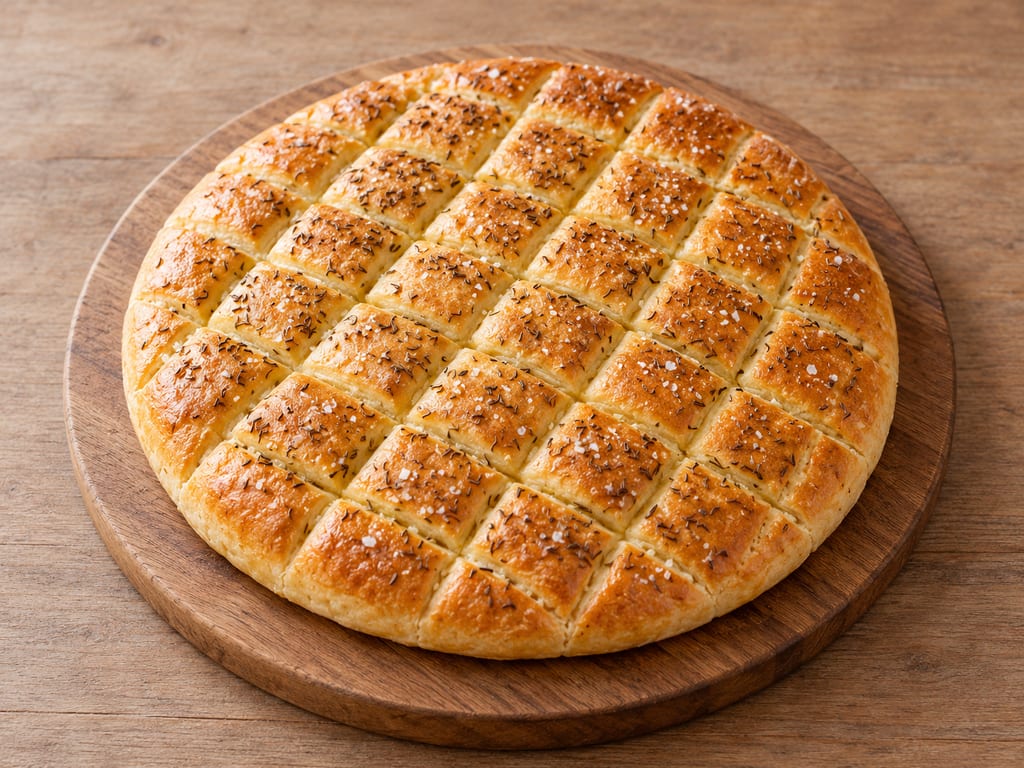
A round Slovenian flatbread scored in a grid and topped with caraway and coarse salt.
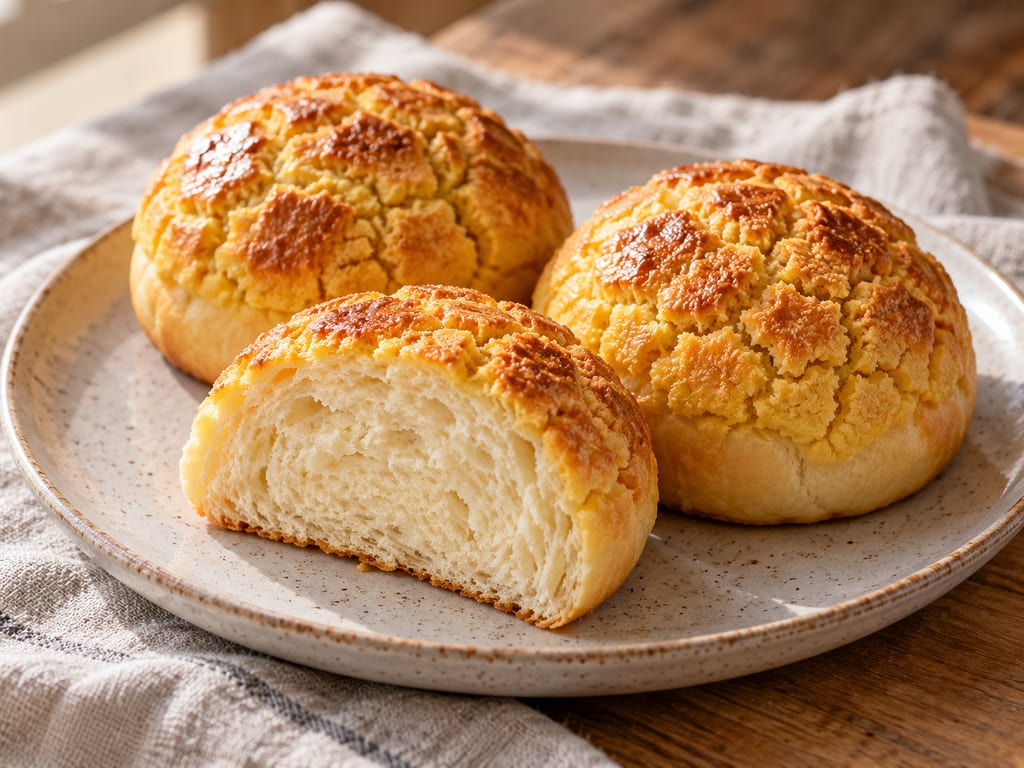
Hong Kong-style pineapple buns have soft yeast dough beneath a crisp, sweet pastry topping.
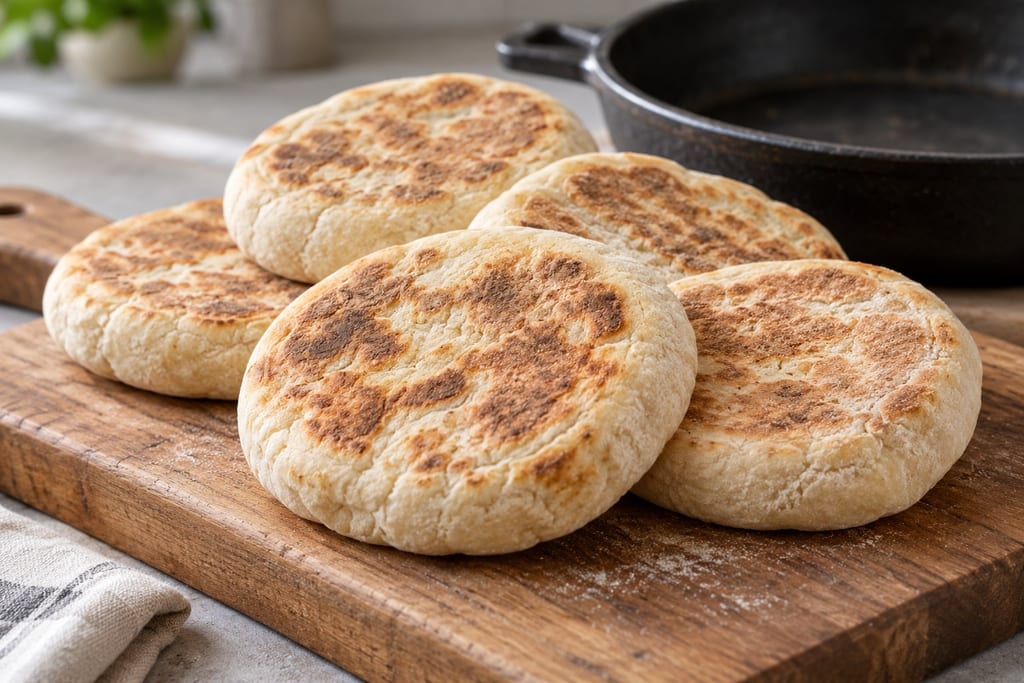
Sweet-potato wheat breads with fresh yeast, browned in a pan and finished in the oven. This is the bread component of Teleculinária's scrambled-egg dish.
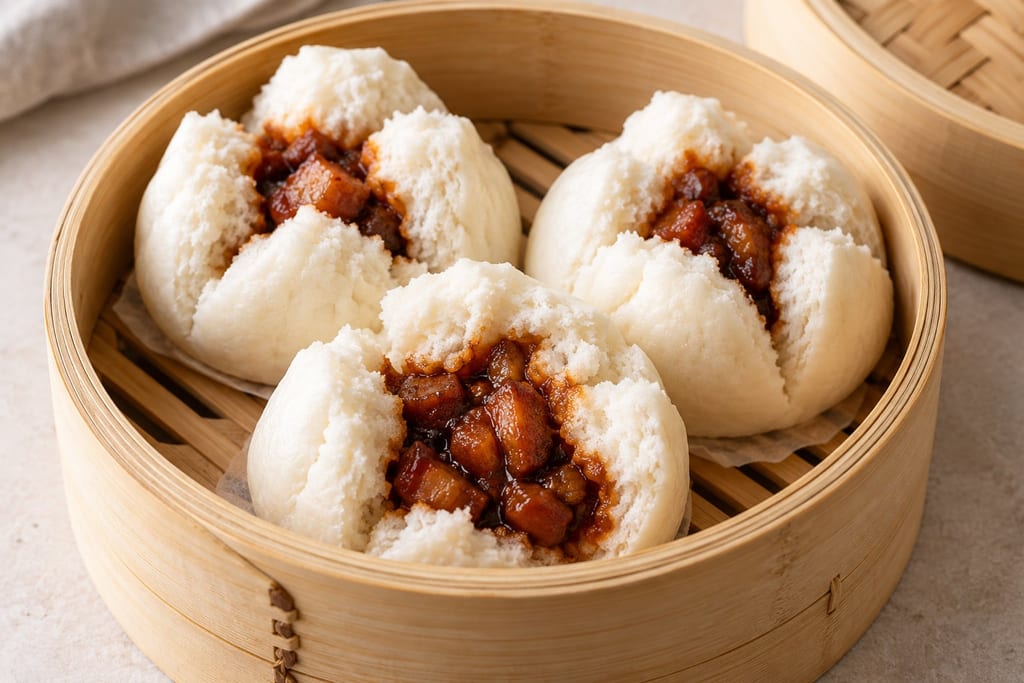
Fourteen fluffy steamed buns filled with cooked char siu and a thickened oyster-soy sauce.

A Cap-Pelé boucanière is an Acadian herring-smoking building. The documented Willie Niles example is a one-storey wood-frame structure with a ridge smoke vent and interior bays for hanging fish-bearing cannes.

Achcharu is a family of Sri Lankan vinegar pickles made with mixed vegetables or seasonal fruit and a piquant spice dressing. This version is a quick, refrigerated, non-fermented mixed-vegetable pickle.

The acocote is a long, hollowed and dried gourd used to draw aguamiel from a mature maguey. It is a harvesting tool: the sap is transferred to a separate vessel before it ferments into pulque.

Adrak murabba preserves young ginger in sugar syrup, a sweet South Asian preparation recorded in Indian cookery and food-processing sources.

Parkia biglobosa seeds are fermented into regional West African seasonings, including nététou, iru, dawadawa and soumbala. The yellow fruit pulp is a separate food, and names and methods vary by place.

Japanese reddish-brown vinegar from sake lees matured about three years, turned to vinegar by acetic bacteria; the vinegar of Handa and Edomae sushi rice.

A refined common-wheat flour blended for a broad range of baking; its protein and behavior vary with wheat, milling and market.

The almond mushroom, Agaricus subrufescens, was cultivated in eastern North America in the 1800s, lost its market, and returned as a cultivated mushroom from Brazil, where it is grown under several names.
No community contributions have been published for this entry yet.
Sign in to contribute. Published comments and photos are free to read.
Crosby Lockwood and Son, digitised by Project GutenbergMethod · History
The Bread and Biscuit Baker's and Sugar-Boiler's Assistant, second edition (1890)Parisian barm formula: 2 lb crushed malt, 1 gallon water at 140 F, 3 gallons water boiled with 2 oz hops, flour, half a gallon of barm
overnight stand, then 10 to 12 hours to a bell top
Parisian barm as the barm most used in Scotland
Cited in: What Scotch barm is; A bakery that grew its own yeast; Malt, scalding and the stock; How Wells made it; Names and variations; The bread it made; Reading results and problems
Wellcome CollectionHistory
The Bread and Biscuit Baker's and Sugar-Boiler's Assistant (catalogue record)digitised copy of Wells's manual
J. B. Baillière et fils, 1897, via WikisourceHistory
Le pain et la panification, p. 110examination of Parisian barm
Cited in: What Scotch barm is
J. B. Baillière et fils, 1897, via WikisourceHistory
Le pain et la panification, p. 291Scottish flour barm, sponge and dough
J. B. Baillière et fils, 1897, via WikisourceHistory
Le pain et la panification, p. 292maturation and stocking of flour barm
Cited in: Reading results and problems
J. B. Baillière et fils, 1897, via WikisourceScience
Le pain et la panification, p. 293microbiology of Scottish Parisian barm
Cited in: What Scotch barm is; Malt, scalding and the stock
Dictionaries of the Scots LanguageHistory
Paris (Scottish National Dictionary)Parisian barm in the west of Scotland; 1903, 1948 and 1957 accounts
Cited in: What Scotch barm is; A bakery that grew its own yeast; How Wells made it; Names and variations; The bread it made
Dictionaries of the Scots LanguageHistory
Store (Scottish National Dictionary)store as old yeast used to grow a fresh supply
Cited in: A bakery that grew its own yeast; How Wells made it
WikisourceHistory · Variation
Bread, Encyclopaedia Britannica, eleventh edition (1911)flour barm, sponge and dough as a Scottish system; virgin barm over several days
Cited in: A bakery that grew its own yeast; How Wells made it; Names and variations; The bread it made
UK Parliament, HansardHistory
House of Commons debate, 8 May 1917minister states Scottish bakers used Parisian barm extensively
Cited in: A bakery that grew its own yeast
William Rubel, The Magic of FireHistory
Practical Bread-making (1897), reviewScottish bakers used several named barm preparations
Cited in: A bakery that grew its own yeast; Names and variations; The bread it made
US Patent and Trademark OfficeScience
US4666719A: Admixture of a Lactobacillus brevis and a Saccharomyces dairensis for a wholegrain barmwholegrain barm culture with Saccharomyces dairensis and an atypical Lactobacillus brevis
Cited in: What Scotch barm is; Malt, scalding and the stock; Names and variations; Reading results and problems
Whole Grain ConnectionScience
Introducing Barm Bread (2010)modern whole wheat barm method
Cited in: Malt, scalding and the stock
Whole Grain ConnectionScience · Variation
Whole Wheat Barm Bread: Method for Professional Bakersmalted whole wheat, flour, water and an established culture; controlled mashing and stock fermentation
Cited in: Malt, scalding and the stock; How Wells made it; Names and variations; Reading results and problems
Centers for Disease Control and PreventionSafety
Raw Flour and Doughraw flour can carry E. coli and Salmonella; do not taste raw dough
Cited in: The bread it made; Reading results and problems
U.S. Food and Drug AdministrationSafety
Handling Flour Safely: What You Need to Knowkeep flour away from ready-to-eat food
Cited in: Reading results and problems