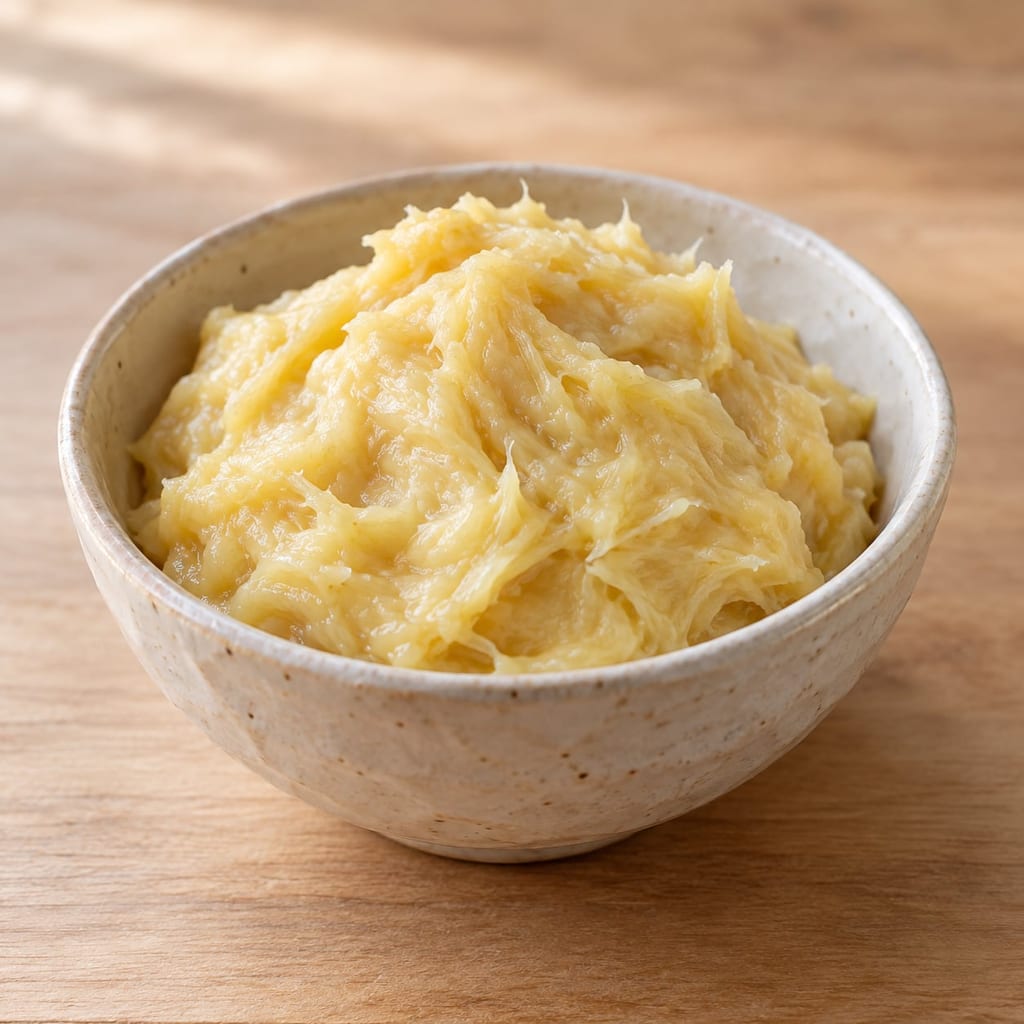
Tempoyak (fermented durian paste)
Durian flesh is mashed with salt and fermented in a covered container as a Malay condiment or cooking ingredient.
 FermenteaWhere food goes to change
Modern method
Mandai
Cempedak inner rind is cut, salted and submerged in water for a short spontaneous fermentation used in Kalimantan home cooking.
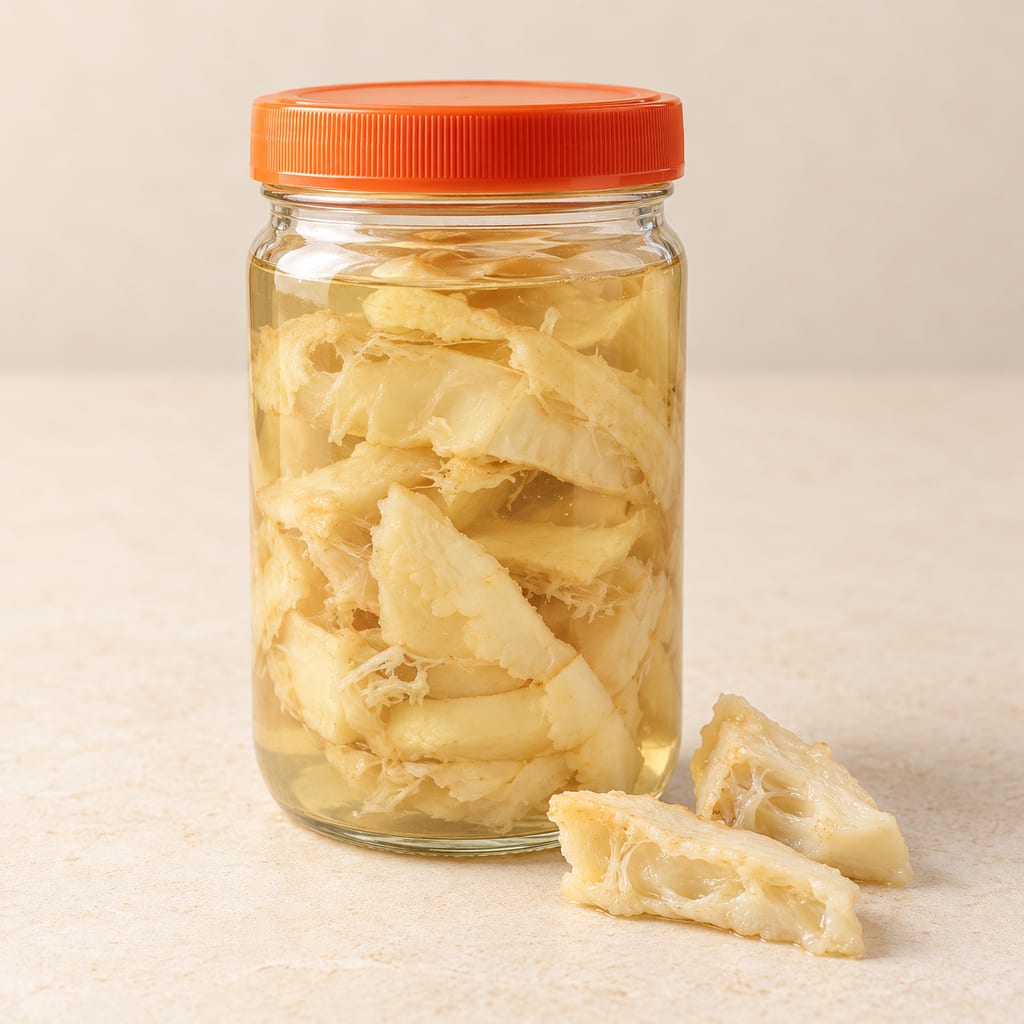
Mandai is a traditional fermented food made from the inner rind of the cempedak fruit, an aromatic tropical fruit closely related to jackfruit.
Cempedak belongs to the mulberry family, Moraceae. Its accepted botanical name is generally Artocarpus integer, although Artocarpus champeden appears frequently in older literature and contemporary research.
The fruit contains sweet aromatic flesh surrounding its seeds, enclosed within a thick, textured rind.
Mandai uses the pale, firm inner part of that rind rather than the sweet fruit flesh.
The rind is cleaned, salted and left in a covered container, sometimes submerged in brine, until it develops a different flavour and texture.
Fresh inner cempedak rind is relatively bland and firm. Fermented mandai becomes sourer, saltier and more savoury, with a fibrous texture that makes it particularly suitable for frying.
Its Indonesian name is simply mandai. In Banjar usage, mandai tiwadak associates the preparation with cempedak, which is locally called tiwadak.
This specific recipe is a short household preparation documented by a cook in Pontianak, West Kalimantan.
It is not the same as the substantially saltier, longer-aged preparations documented elsewhere in Kalimantan.
Mandai is strongly associated with the Banjar people of South Kalimantan, although cempedak-rind dishes and related methods occur elsewhere on the island.
The food developed as a way to use a portion of the fruit that might otherwise have been discarded.
Cempedak flesh is sweet, aromatic and immediately attractive to eat. Its rind is less appealing when fresh, but still contains useful plant material.
Fermentation transforms this part of the fruit into a separate savoury ingredient.
The practice belongs to a broader tradition of preserving seasonal foods through salting and fermentation.
The exact date of mandai's invention is not known.
There is evidence of intergenerational transmission and established regional use, but no verified first manufacture or historical document fixing its origin to a particular century.
The continued sale of mandai in jars and its presence in home cooking demonstrate that it remains a living food rather than an obsolete preservation experiment.
The important distinction is between three portions of cempedak:
The outer skin is tough and often covered with small raised projections.
Beneath it lies the paler inner rind or pith.
Inside the fruit are the sweet edible portions surrounding the seeds.
Mandai uses the inner rind, sometimes called dami in regional descriptions.
The outer rough skin is removed.
The sweet flesh and seeds are separated for other uses.
This matters because a photograph of fried cempedak fruit flesh is not necessarily a photograph of mandai.
The two can look superficially similar after frying, but they are different foods.
Pontianak household batch.
Ingredient: Prepared cempedak inner rind — Quantity: 1 kg
Ingredient: Salt — Quantity: Approximately 50 g, described as about 3 tablespoons
Ingredient: Water — Quantity: Approximately 1 litre, or sufficient to cover
The tablespoon measure and gram quantity come from the same household account, but their equivalence depends on the type of salt.
For reproducible measurement, the 50 g mass is the clearer quantity.
The water amount is approximate. The actual requirement depends on the container and the way the rind is packed.
There is no separate bacterial starter.
The process relies on spontaneous fermentation.
The rind provides plant carbohydrates, fibre and residual nutrients.
Its structure is more fibrous than the fruit flesh.
That structure contributes to the chewy texture of the finished food.
Salt draws water from the rind and influences the organisms capable of growing in the ferment.
The household recipe uses approximately 50 g salt for 1 kg rind and approximately 1 litre water.
This should not be simplified into a guaranteed final 5% salt concentration.
Water enters and leaves the rind, and the salt distributes between the liquid and plant tissue.
The final concentration in the brine and in the rind is not measured.
Water helps keep the pieces submerged.
Submersion restricts exposure to surface air and creates an environment in which particular microorganisms can become dominant.
The water must be suitable for food preparation.
The household process uses a cutting board, knife, washing equipment and a clean jar with a lid.
Cempedak releases sticky latex.
Oil applied to a knife or gloves can make preparation easier.
The oil is a handling aid and is not included as a measured fermentation ingredient.
The jar must be able to accommodate the rind and covering liquid.
Cut through the cempedak rind and separate the inner fruit contents.
Remove the sweet fruit flesh and seeds.
These can be used separately.
Cut the empty rind into manageable sections.
Remove the rough outer skin, retaining the inner pale material.
The source does not specify one universal piece dimension.
Wash the trimmed rind to reduce sticky latex and surface residues.
Drain the pieces.
The rind should no longer be heavily coated in sticky sap.
Rub approximately 50 g salt through 1 kg prepared rind.
The source allows the salted rind to rest for approximately one hour or overnight.
These are alternative household resting periods, not two consecutive stages.
Salt begins drawing moisture from the plant tissue.
Place the salted rind in a clean jar.
Add approximately 1 litre water, or sufficient water to cover the pieces.
Keep the rind below the liquid surface.
Close the jar as described in the household recipe and leave it under ambient conditions.
The recorded preparation takes 3–4 days.
The cook reports that some people prefer the product after two or three days, while the characteristic flavour is especially noticeable by day four.
No numerical fermentation temperature is given.
The record also does not supply a measured final pH.
A vessel should not be permitted to build dangerous pressure; fermentation containers need an appropriate gas-management arrangement.
Take out the amount of mandai needed for cooking.
Depending on how salty it tastes, it may be rinsed or otherwise prepared for the dish.
The original household recipe is a preservation preparation, not a fully specified cooking recipe for fried mandai.
Mandai is associated with lactic-acid fermentation.
Lactic-acid bacteria can metabolize available carbohydrates, producing lactic acid and other metabolites.
Research on mandai has identified organisms historically called Lactobacillus plantarum and Lactobacillus casei, as well as other lactic-acid bacteria.
Current taxonomy places some of these organisms in revised genera, including Lactiplantibacillus.
These names identify microorganisms detected in studies, not a guarantee that every jar will contain the same strains.
As suitable bacteria metabolize available sugars, organic acids accumulate.
This can lower the pH and create the characteristic tartness.
Salt concentration, temperature, raw material and competing organisms influence the process.
Because the household recipe is spontaneous, its microbiology can vary.
Salt and fermentation alter the plant tissue.
Water movement changes the condition of the cells.
Microbial and endogenous enzymes may further influence the material.
The final texture is often flexible and chewy rather than freshly crisp.
Some mandai studies have investigated lactic-acid bacteria with probiotic potential.
That is not equivalent to demonstrating that every traditional jar of mandai provides a clinically validated probiotic benefit.
Strain identity, viability, dose and health outcomes would need to be established.
Cooking mandai by frying also changes the survival of microorganisms.
The short Pontianak recipe uses approximately 50 g salt and 1 litre water for 1 kg rind.
Published traditional-process reviews describe substantially different conditions.
One research summary records 25% salting and seven days of fermentation.
Another documents 12–14 days or longer, sometimes extending toward a month.
Salt concentrations ranging approximately 5–25% appear in descriptions of different methods.
These are not minor seasoning substitutions.
High salt concentrations can inhibit many microorganisms, including some lactic-acid bacteria, and change the balance between fermentation and salt preservation.
The result can be much saltier and develop different flavour characteristics.
The different methods belong on the same mandai page as documented variants, rather than being falsely combined into one standardized recipe.
Researchers have investigated producing mandai with selected lactic-acid bacteria.
One study used Lactobacillus casei strain Shirota as a starter, with separate spontaneous-fermentation batches for comparison.
Its process included blanching or boiling pieces of rind, cooling, inoculating selected batches and controlling the fermentation environment.
Other studies have investigated drying mandai after fermentation to make powders or seasoning ingredients.
These are experimental modifications intended to improve consistency or examine changes in composition.
They should not be treated as evidence that every traditional Banjar preparation uses commercial cultures.
Mandai is normally cooked before serving.
A familiar preparation involves draining and frying pieces of mandai.
The exterior becomes browned while the interior retains a distinctive fibrous bite.
Fried mandai is commonly eaten with rice, chilli relish and other accompaniments.
Mandai can be stir-fried with onion, garlic, chilli and soy sauce.
This combines the sour, salty preserved ingredient with aromatic seasonings.
Mandai may be incorporated into a chilli-based sambal.
The fermented rind contributes both texture and flavour.
Another preparation involves cooking or drying seasoned mandai into a relatively dry shredded mixture.
Pieces can be coated with seasoned flour and fried.
This creates a crisp exterior around the fermented rind.
These dishes are related applications of one ingredient. They are not separate fermentation methods.
A characteristic sour aroma and progressive texture change can indicate fermentation is occurring.
The pieces should remain recognisable as cempedak rind.
The appearance of bubbles may indicate gas-producing microbial activity.
However, the household method does not provide an objective, measured safety endpoint.
A sour smell alone cannot prove that the product is safe.
Pieces floating above the liquid: Exposed surfaces can allow unwanted growth.
Unexpected mould: Fuzzy growth on the rind or surface requires rejection rather than casual removal.
Strong putrid odours: These suggest deterioration.
Excessive softening: The rind may become unpleasantly mushy.
Very salty flavour: High-salt variants may be intended to be rinsed or cooked before serving.
Pressure buildup: A tightly closed jar can accumulate gas.
No acidity development: This may indicate that the desired microorganisms did not become dominant, but the source provides no numerical correction procedure.
The original household recipe does not establish a final pH, storage temperature or validated shelf life.
Its creator states that the household batch was consumed in less than a month and mentions adding salt for longer keeping.
That is not a tested instruction for room-temperature storage.
The short fermentation, approximate saltwater formulation and uncontrolled ambient temperature require caution.
For modern commercial production, the process should be validated for the actual substrate, salt concentration, fermentation conditions and intended storage.
The household recipe is valuable documentation, but it has not been validated as a safe process.
Mandai demonstrates how fermentation can transform an overlooked part of a tropical fruit into a valued regional ingredient.
Its identity depends as much on the fruit anatomy and later cooking as on microbial activity.
The different Banjar and Kalimantan preparations also show that mandai is not one rigid salt-and-time formula.
It is an evolving food tradition with short household ferments, heavily salted preserved forms and modern starter-culture research.
A Pontianak home cook identifies mandai as a Kalimantan cempedak-rind ferment; a peer-reviewed review documents regional traditional production. This record follows the author’s four-day home batch.
Scaling: source batch only
Contaminated equipment or uncontrolled fermentation can compromise the batch; the recipe is not professionally validated.
Hazard sourceUse clean food-grade equipment and follow the source method. Recipe-specific validated limits are not supplied; do not treat taste or appearance as proof of safety.
Control sourceThe home recipe gives no post-fermentation storage method or validated shelf life; its author only says the household batch was consumed in under a month and that extra salt can extend keeping time.
The Cookpad author from Pontianak describes mandai as a Kalimantan use of cempedak peel; academic research documents the regional fermentation.
Durian flesh is mashed with salt and fermented in a covered container as a Malay condiment or cooking ingredient.
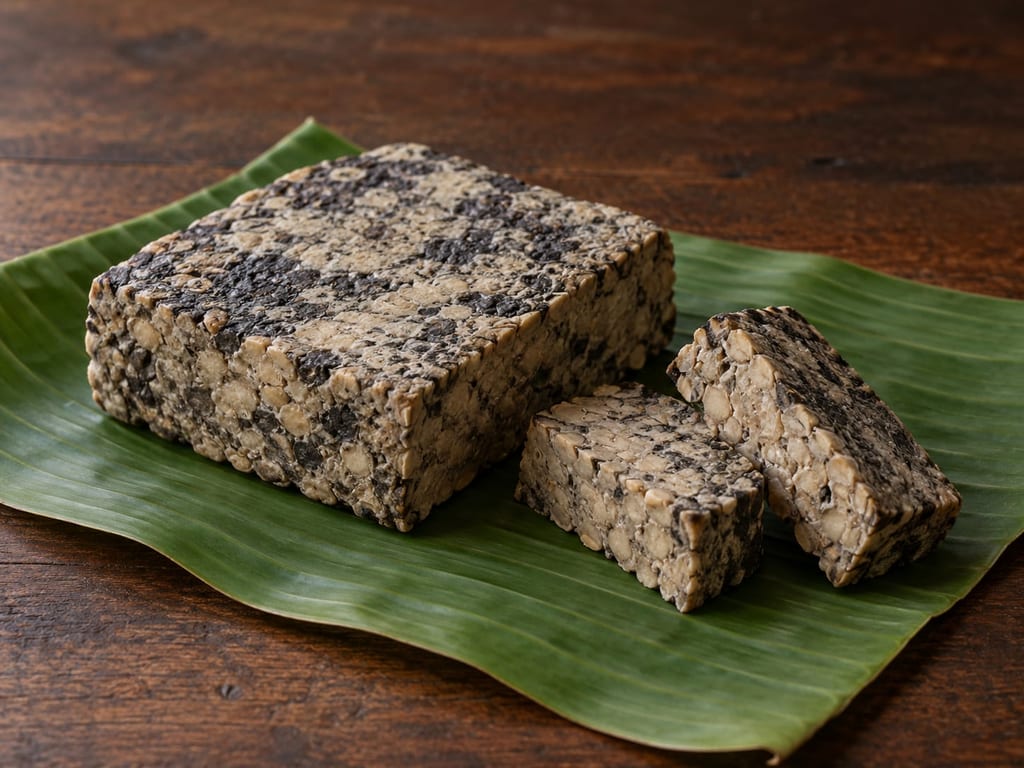
Black oncom is a mould-fermented cake made from defatted peanut cake, pressed to about 2 cm, steamed and then incubated for a day at ambient temperature.
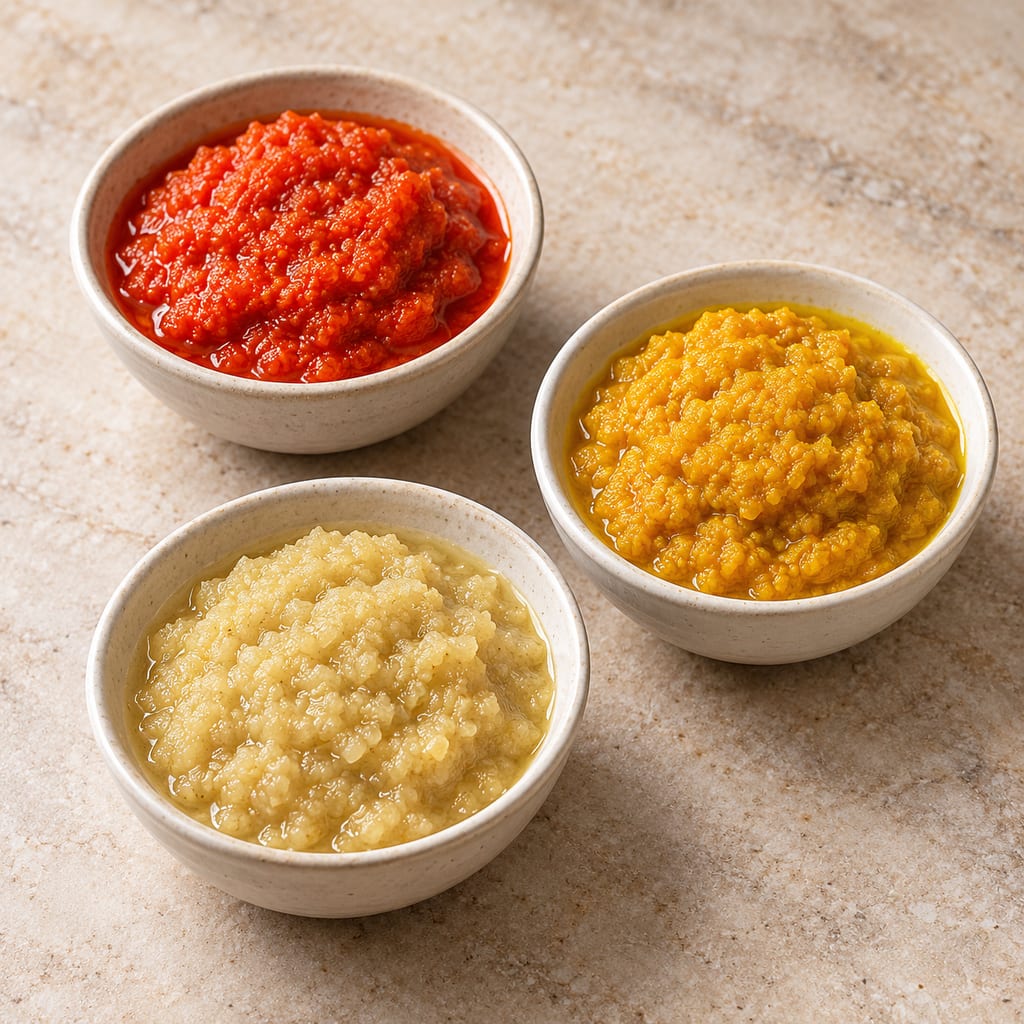
Bumbu dasar are the ground spice bases of Indonesian cooking: a white paste of shallot, garlic and salt, with chile added for red and turmeric for yellow, cooked into dishes.
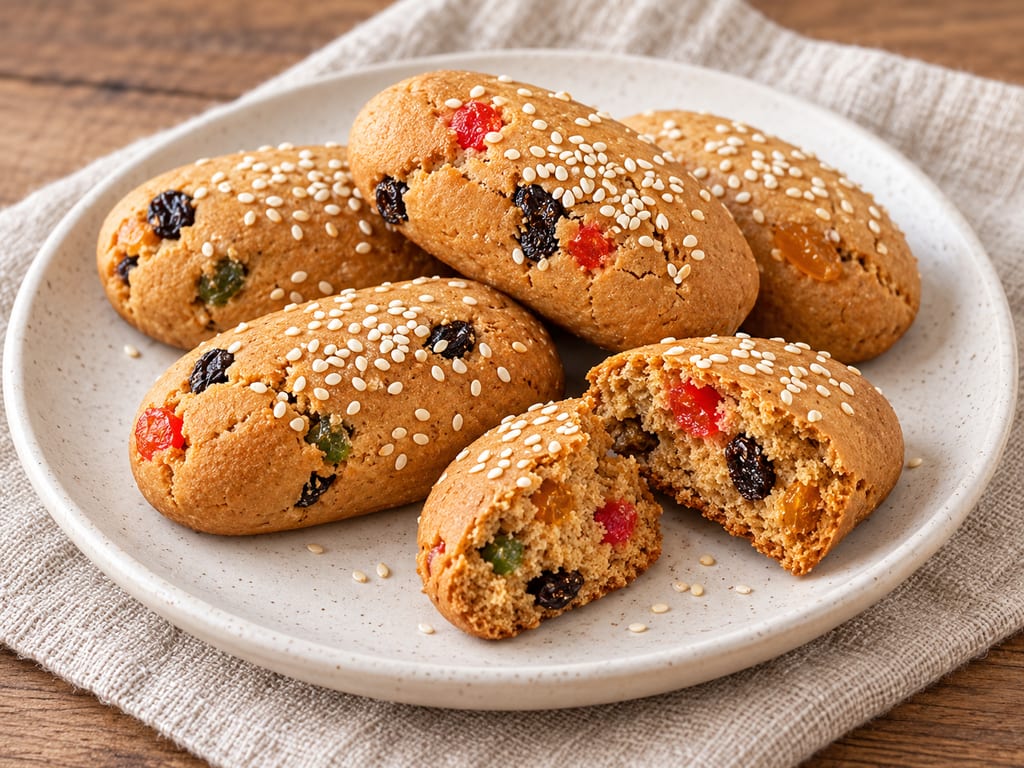
An Indonesian palm-sugar and cinnamon quick bread with dried fruit and sesame.
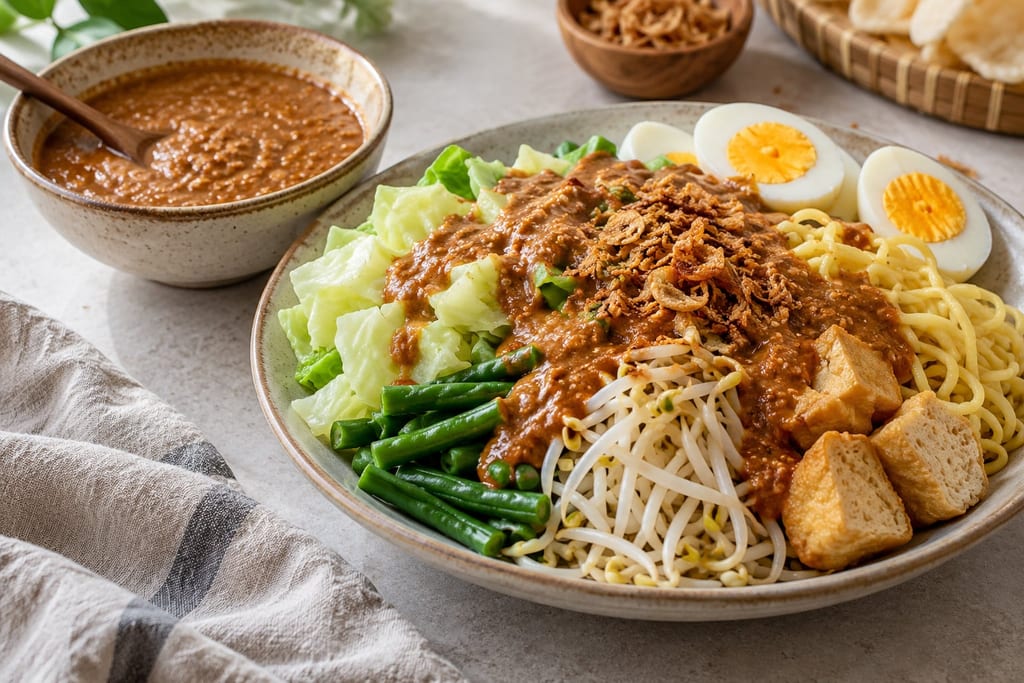
A cooked peanut sauce of ground roasted peanuts, aromatics, shrimp paste and coconut cream, as made for gado-gado; pecel and Malaysian satay sauces are close relatives with different formulas.
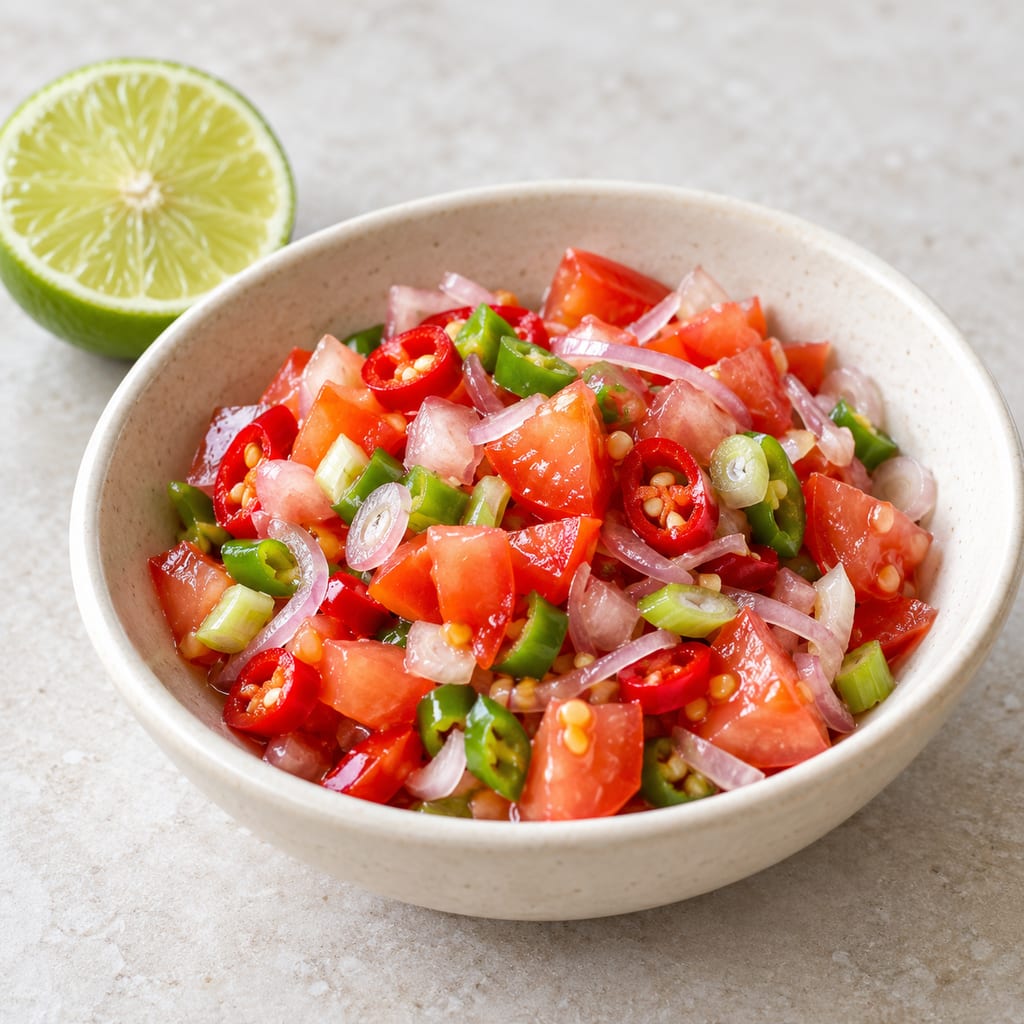
Dabu-dabu is a raw North Sulawesi relish of chopped chillies, shallot, scallion and tomato, dressed with salt and lime juice or coconut oil.

Martabak manis is a thick Indonesian griddle pancake with a porous, honeycomb crumb, cooked under a lid and finished with butter and sweet toppings.
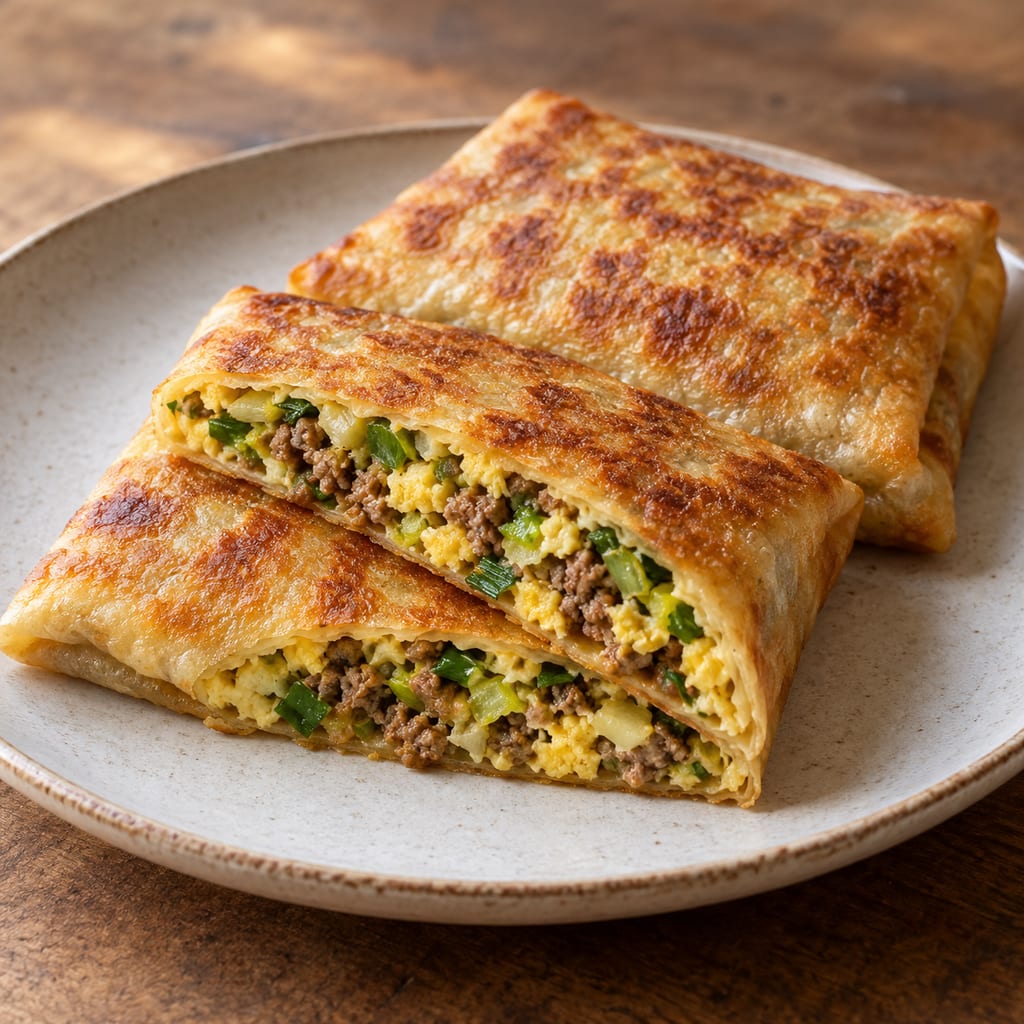
A Javanese-style Indonesian savoury parcel of thin rested wheat dough folded around curry-seasoned beef and egg, then cooked in an oiled skillet.
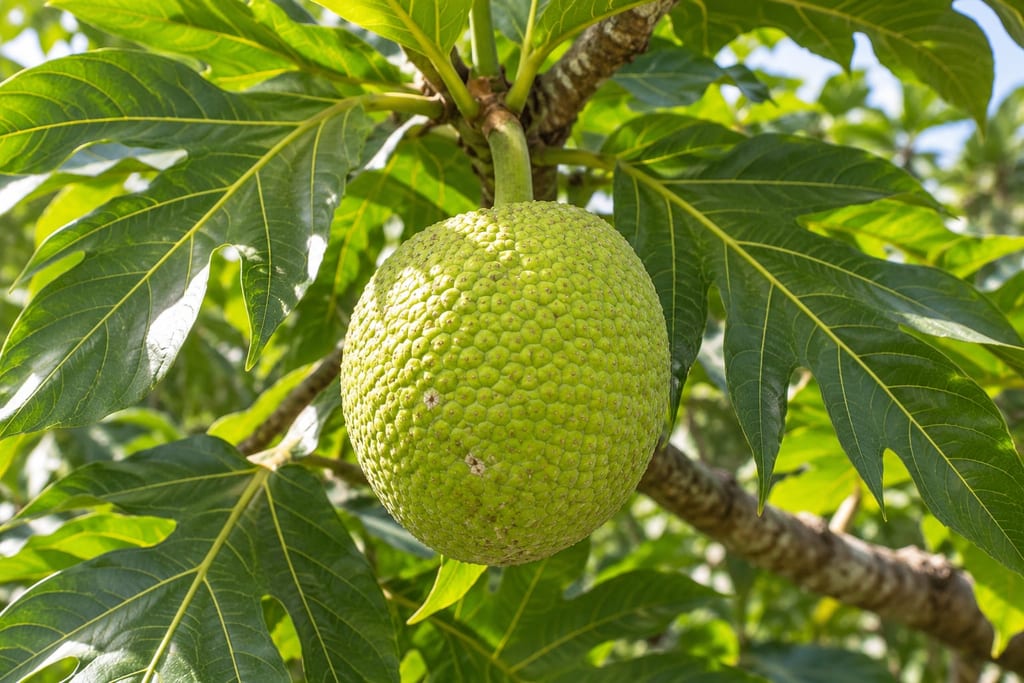
Kosraean preserved breadfruit called furo in a 1919 ethnographic monograph. Two historical pit methods are recorded; the sources give no validated household process.
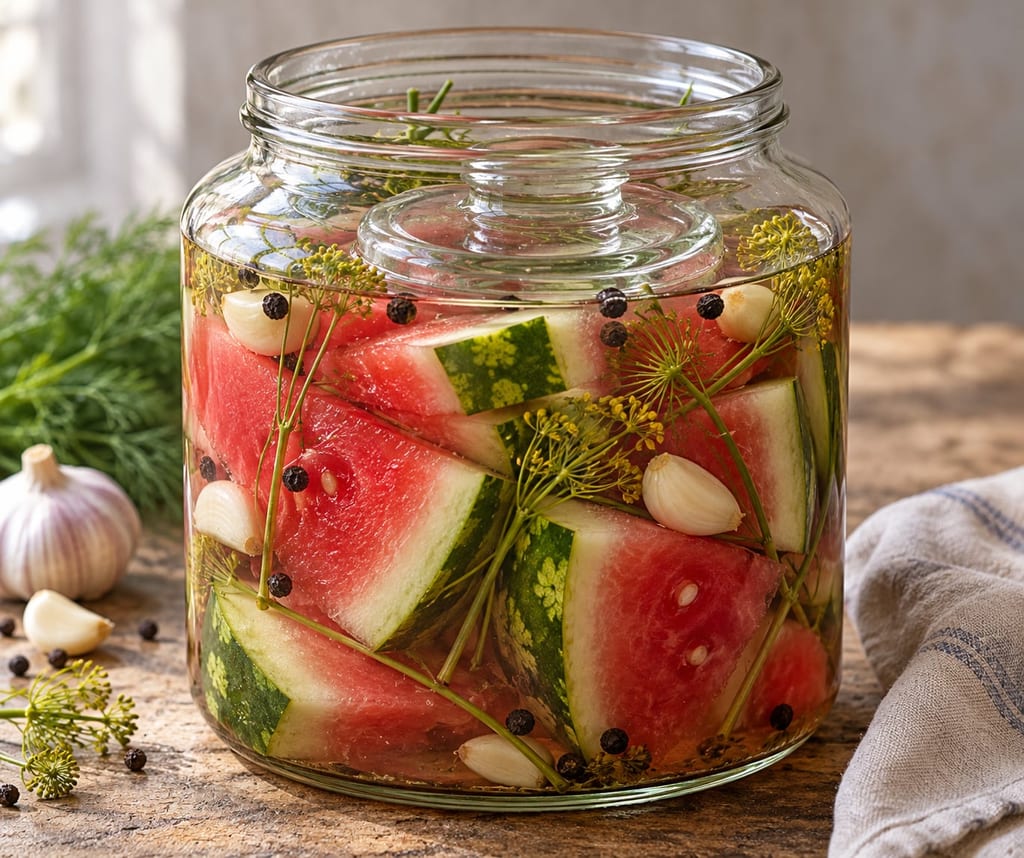
Watermelon pieces with rind ferment in a dill, garlic and pepper brine in a family preparation linked to Kishinev, Moldova.
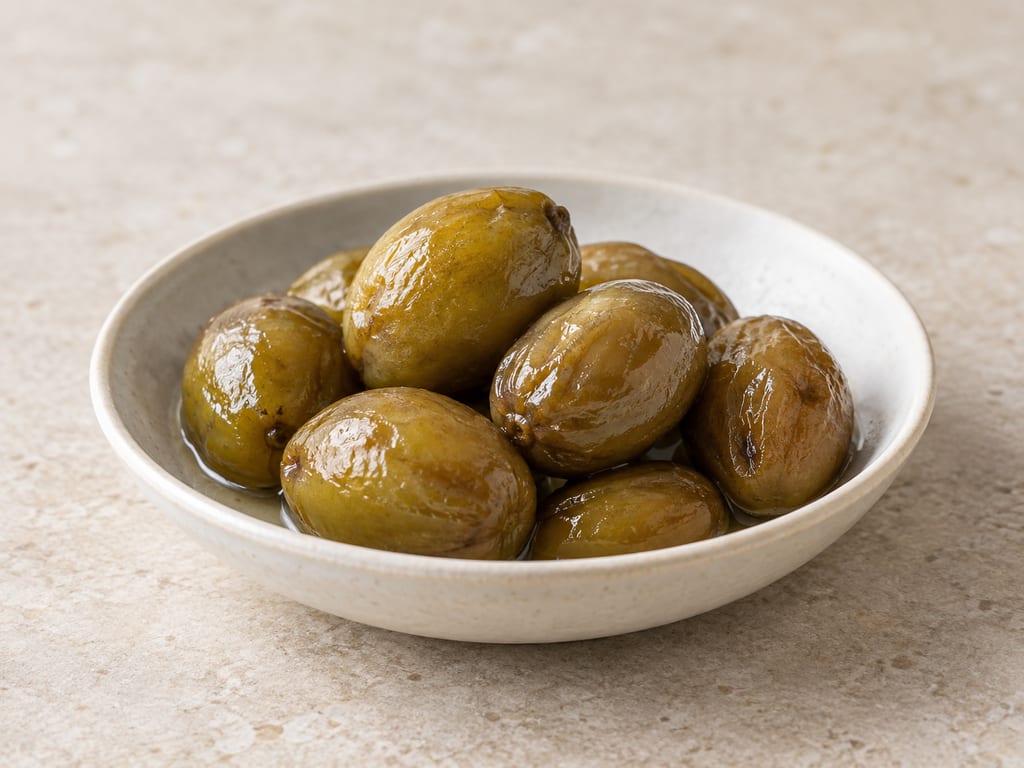
Mature Spanish plums are covered with a 20% volume salt solution and fermented under shade for ten days.

Mochenye yabloki are whole apples held under prepared liquid for several weeks. Russian sources from 1892 and 1959 describe the method. It is not the same as vinegar pickling.
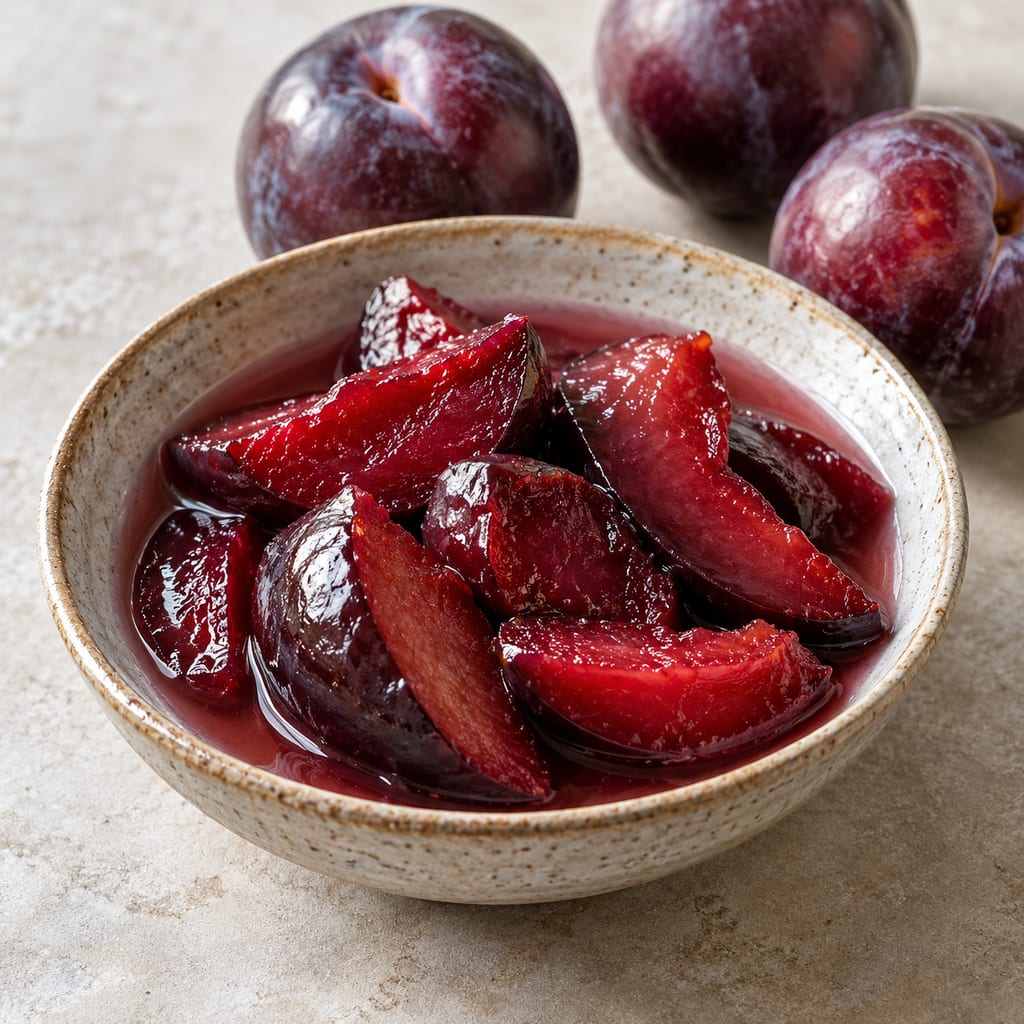
Pitted ripe plums release their own juice under a 2% salt cure, then ferment while weighted below the liquid.
No community contributions have been published for this entry yet.
Sign in to contribute. Published comments and photos are free to read.
Cookpad; Mena AndrianaInspiration
Mandai (Fermentasi Kulit Cempedak)Pontianak/Kalimantan household context; 1 kg rind, salt, water, salting rest and 3–4 day method.
Cited in: What is mandai?; What part of the fruit is used?; Ingredients; Cempedak rind; Salt; Water; Equipment; 1. Open the fruit; 2. Trim the rind; 3. Wash; 4. Apply salt; 5. Pack the jar; 6. Ferment; 7. Remove and prepare for cooking; How mandai is eaten; Fried mandai; Oseng mandai; Sambal mandai; Mandai serundeng; Crispy mandai; How to judge the batch; Problems
Journal of Ethnic FoodsGeography
Nutritional, chemical, and prospect of “mandai,” traditional fermented food of KalimantanKalimantan tradition and microbial fermentation context; it also describes higher-salt variants that are not substituted into this home recipe.
Cited in: What is mandai?; History and cultural setting; What part of the fruit is used?; Ingredients; Cempedak rind; Salt; Water; Equipment; 6. Ferment; The microbiology of mandai; Why the rind becomes sour; Changes in texture; Does it become probiotic?; A major regional difference: salt concentration; Modern starter-culture studies; How to judge the batch; Safety and storage; Why mandai matters
University of Minnesota ExtensionSafety
Preserving food at home: FermentationGeneral advice on equipment, brine coverage and acidity monitoring; not validation of this recipe.
Cited in: Problems; Safety and storage
Cited in: What is mandai?; History and cultural setting; A major regional difference: salt concentration; Modern starter-culture studies; How mandai is eaten; Fried mandai; Oseng mandai; Sambal mandai; Mandai serundeng; Crispy mandai; Why mandai matters
Cited in: The microbiology of mandai; Why the rind becomes sour; Changes in texture; Does it become probiotic?
Cited in: The microbiology of mandai; Why the rind becomes sour; Changes in texture; Does it become probiotic?