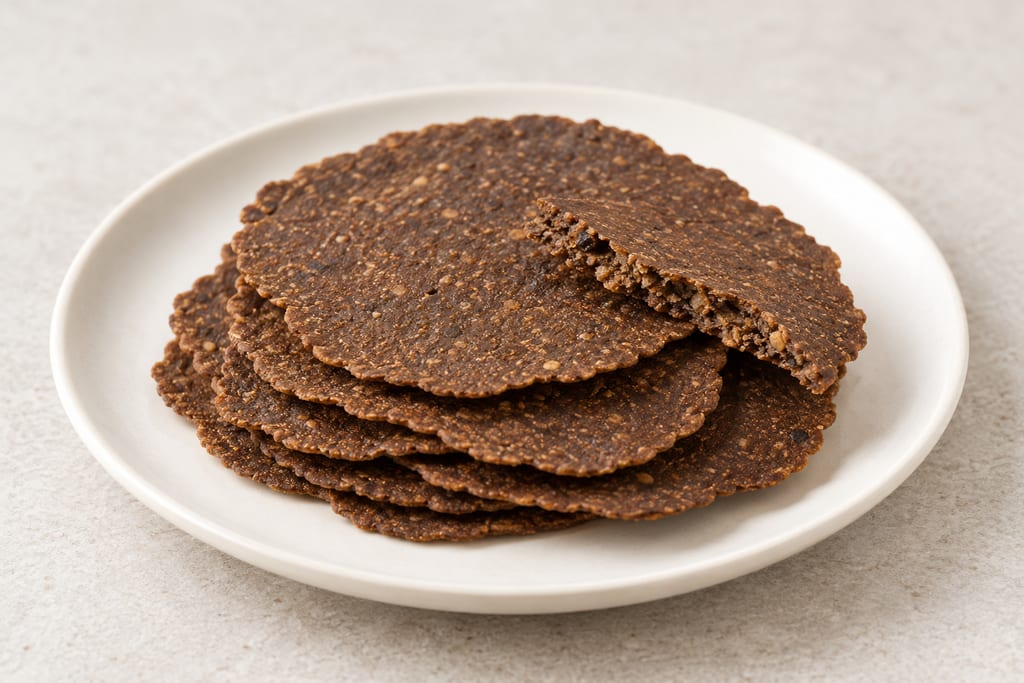
Black soybean thua nao with Bacillus subtilis
Black soybeans cooked, inoculated with a named Bacillus subtilis culture and fermented warm and humid into northern Thailand's thua nao, then optionally dried into thin discs.
 FermenteaWhere food goes to change
Traditional method
มะกอกน้ำดอง (Ma-kork-nam-dorng)
Mature Spanish plums are covered with a 20% volume salt solution and fermented under shade for ten days.
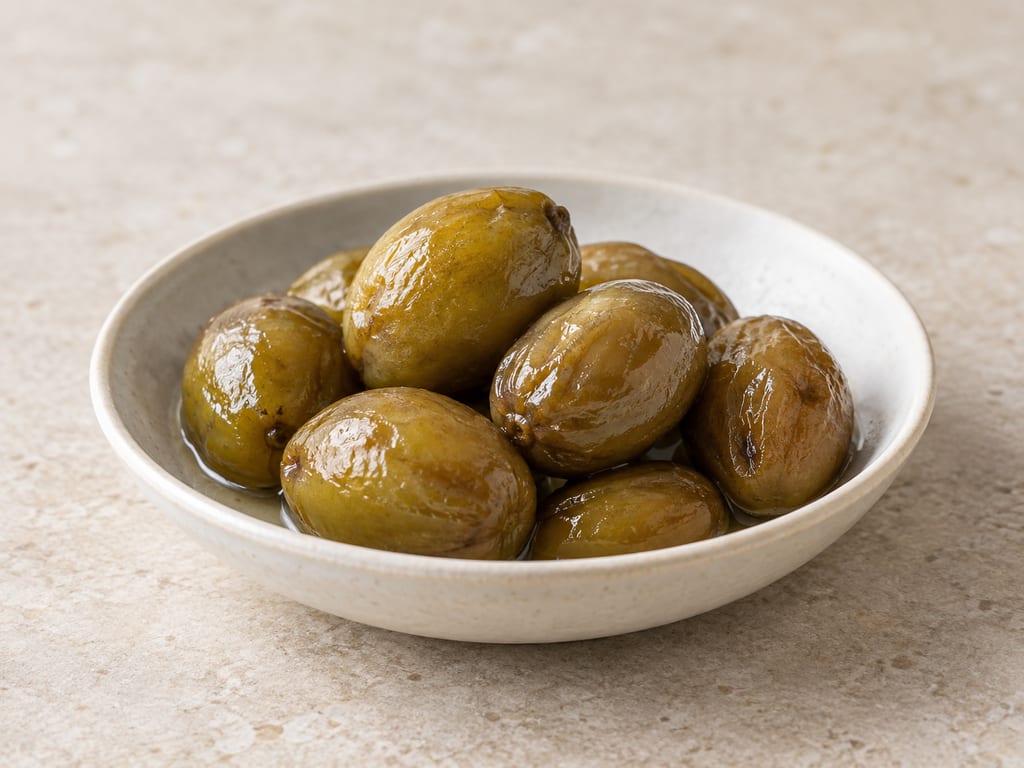
Ma-kork-nam-dorng is a Thai preserved-fruit preparation made by immersing mature fruits called ma-kork nam in a strong salt solution.
The name is written มะกอกน้ำดอง in Thai.
The resulting fruit is described as brownish-green, sour and salty.
It is eaten as a condiment and may be served with sugar.
The method was documented by Japan's International Research Center for Agricultural Sciences (JIRCAS) in its database of fermented foods of Thailand.
The database identifies the fruit as Spanish plum, Spondias purpurea.
That botanical identification deserves careful handling. The local names makok and similar terms are used for more than one fruit in Southeast Asia, while Spondias purpurea is botanically associated primarily with tropical America.
The research record should therefore retain the JIRCAS species identification as reported, but not treat every Thai fruit marketed as makok as the same species.
A producer or recipe editor should establish the fruit's identity before attempting substitution.
Spondias purpurea belongs to the family Anacardiaceae, which also includes mango and cashew.
Its commonly used English names include Spanish plum and red mombin.
The species is native to the tropical Americas, broadly from Mexico towards northern South America.
It has been introduced into several other tropical regions.
A Southeast Asian plant-resources reference records its introduction into the Philippines during the sixteenth century and notes that other Spondias fruits are more commonly cultivated in much of Southeast Asia.
This makes the Thai fermented-food database's species identification interesting, but not necessarily straightforward.
The fruit's historical movement into Southeast Asia is part of wider crop exchanges.
However, that does not establish when the particular Thai salt-pickling preparation first developed.
One possibility is that the name covers related fruits used in similar preparations. That possibility needs field identification, not guesswork.
For Fermentea, the correct treatment is to keep the published species field and add a taxonomic-verification note.
The preparation is documented as part of Thai home-industry food processing.
That establishes contemporary regional use.
The available sources do not provide an invention date or a named province of origin.
Nor do they demonstrate that this particular strong-salt method existed in Thailand before the introduction of the relevant fruit.
Fruit preservation is widespread throughout Southeast Asia.
Salting, pickling, drying, candying and fermentation are all used to manage seasonal harvests and produce strongly flavoured condiments.
Green and mature fruits are particularly suitable for some salt-pickling traditions because their firm tissues can withstand prolonged contact with brine.
The sour-salty result also fits the broader regional preference for condiments that balance sweetness, acidity, salt and pungency.
However, similar culinary roles do not prove a shared historical origin.
The entry should therefore be placed geographically in Thailand, with its finer regional history recorded as unknown.
Mature Spanish plums — As required; no weight supplied — Main fruit
Salt — 2 parts by volume — Strong brine
Water — 10 parts by volume — Dissolves salt and covers fruit
Sugar for serving — Optional; no quantity supplied — Balances acidity and salinity
The mixture is a 20% volume-based salt solution, prepared using two parts salt to ten parts water.
These are the recorded quantities.
They should not be silently converted to 20% salt by mass.
The method of measuring a volume of granular salt introduces uncertainty because salt density changes with crystal size and packing.
The original source does not provide a final sodium chloride concentration, water activity or pH.
Many familiar vegetable-fermentation recipes use relatively modest salt concentrations.
This fruit preparation uses a much larger amount of salt relative to water.
A strong salt environment changes how the fruit and microorganisms behave.
Water moves from the fruit into the brine.
Salt penetrates tissues over time.
The high salinity suppresses many microorganisms that would grow in a less saline environment.
However, salt resistance varies substantially among microorganisms.
Some bacteria, yeasts and archaea tolerate or require high salt concentrations.
The presence of a strong brine therefore does not establish that fermentation is impossible, but it does make the likely microbiology different from that of an ordinary low-salt cabbage ferment.
Crucially, the JIRCAS record gives no identified microorganisms.
It is therefore incorrect to claim confidently that Lactiplantibacillus plantarum or another particular species is responsible for this product.
It is also incorrect to claim that measured lactic acid has been demonstrated.
The process is recorded as fermentation, but the exact microbial pathway remains unestablished.
Choose mature fruit of the type identified in the original preparation.
Do not confuse maturity with advanced deterioration.
The fruit should be sound, without obvious rot, extensive bruising or mould.
The source does not supply a fruit-size specification.
Mature green fruit may retain considerable firmness, which influences how quickly salt enters its tissues.
Wash the fruit thoroughly.
Remove adhering soil, plant debris and other contamination.
The preparation does not specify peeling, slicing or removal of the stone.
Consequently, the fruits are treated as whole unless a verified source for a particular regional variant states otherwise.
Allow the washed fruit to drain.
This prevents uncontrolled quantities of wash water from diluting the brine.
The original method does not supply a drying period.
Use a clean food-grade bowl or container sufficiently large to hold the fruit and brine.
Avoid reactive materials that are unsuitable for contact with salt and acidic food.
The documented process uses a bowl covered with cheesecloth.
Measure two volume parts salt.
Measure ten volume parts water.
Dissolve the salt in the water as thoroughly as possible.
The final solution is described in the research record as 20% v/v.
Do not add a fictitious gram-per-litre figure: the actual salt mass has not been established.
Place the washed fruit in the container.
Pour in enough salt solution to cover it.
All fruit should remain in contact with the brine.
The record does not specify a fermentation weight, but prolonged exposure of fruit above the liquid would create different conditions from the documented immersion method.
Cover the bowl with cheesecloth.
The cloth helps exclude some dust and insects while allowing gas exchange.
It is not an airtight lid.
Keep the container protected from contamination.
Place the container in shade.
Leave for 10 days.
The original source does not state a numerical ambient temperature.
Nor does it describe daily stirring, brine replacement or a particular degree of sunlight exposure beyond shade.
These omissions should remain visible rather than being filled with invented instructions.
After the documented period, the expected product is brownish-green and sour-salty.
These are descriptive characteristics.
They do not establish a validated endpoint based on acidity, salt penetration or microbial counts.
The fruit is eaten as a condiment.
Sugar may be added when serving.
No exact amount of sugar is specified.
The source does not define how long the sugar should remain in contact with the fruit before eating.
Fruit tissues contain cells filled with water, organic acids, sugars and other soluble compounds.
The surrounding salt solution creates an osmotic gradient.
Water tends to move from the tissues into the more concentrated external solution.
Salt can move inward, although the rate depends on the skin, tissue structure, temperature and time.
These movements change texture and flavour.
The fruit becomes more saline.
Some soluble compounds may move into the brine.
The surface can change colour as pigments react with oxygen, acidity and other conditions.
The extent of these changes has not been analytically quantified for this recipe.
The brownish-green appearance is recorded as a characteristic of the finished product, not a chemical measurement.
Spondias fruits can be tart before preservation.
That starting sourness must be distinguished from sourness produced by fermentation.
An already acidic fruit can taste sour after immersion in salt even if little additional organic acid has been produced.
This is a central difficulty when interpreting the product's fermentation status.
A chemical investigation would need to measure initial and final pH, titratable acidity and relevant microbial populations.
The current record does not provide those values.
Consequently, the appropriate classification is traditional salted fruit, fermentation mechanism unestablished.
This is more accurate than automatically calling it lactic-acid fermentation.
Preservation can result from several interacting conditions.
High salinity reduces water availability.
Natural fruit acidity can inhibit certain microorganisms.
Tissue changes affect microbial access to nutrients.
If the environment becomes sufficiently restrictive, many organisms cannot multiply effectively.
That is a different mechanism from relying on substantial lactic-acid production.
A food may be described traditionally as fermented while much of its preservation actually depends on salting.
Without microbial or chemical analysis, the relative contributions cannot be established.
This is not a criticism of the traditional product. It is a distinction between culinary terminology and measured food science.
Salted tropical fruit condiments are widespread across South and Southeast Asia.
Different preparations use green mango, hog plum, tamarind, gooseberry and other sour fruits.
Some incorporate sugar or chilli.
Others are preserved in vinegar, syrup or brine.
These are related culinary techniques but cannot be substituted as if the fruits were botanically identical.
In particular, a Thai product sold as makok may use a different Spondias species from the one identified in the JIRCAS record.
Species verification matters because fruit skin, seed size, flesh firmness and natural acidity differ.
A substitution may change salt penetration and the final sensory result.
The finished fruit is described as sour and salty.
It may be eaten with sugar.
The sweetness balances both the natural and developed sourness and the substantial salinity.
It can be understood as a preserved-fruit accompaniment rather than a sweet dessert.
The source does not document a particular meat dish, rice preparation or ceremonial serving context.
It would be inappropriate to invent one.
A modern recipe developer might explore the condiment with other Thai foods, but that should be labelled recipe development rather than historically documented use.
The fruit's stone or seed structure also matters when eating it. The whole fruit is not necessarily consumed in its entirety.
JIRCAS reports a storage life of 3–6 months.
It does not provide the storage temperature, container specification or tested microbiological basis for that statement.
The interval must therefore be presented as a reported traditional shelf-life range, not as validated ambient-storage advice.
The source does not establish whether the fruit is packed in fresh brine, kept in the original liquid or repackaged before sale.
Such details materially affect preservation.
For a household preparation lacking validated storage instructions, refrigerated handling is the more cautious approach, but refrigeration alone does not validate an otherwise uncertain process.
Fruit remains greenish and firm: May be consistent with the expected product.
Brine becomes cloudy: Possible, but not proof of desirable fermentation.
Fruit develops a brownish-green colour: The recorded appearance of the finished food.
The fruit remains strongly salty: Expected from the documented brine formulation.
A visibly fuzzy growth appears: Reject the affected batch.
Fruit becomes slimy or rotten: Reject it.
An unpleasant putrid odour develops: Reject the batch.
No noticeable gas appears: The source does not specify gas production as an endpoint. Absence of bubbles cannot establish failure or success.
The traditional method supplies a 2:10 salt-to-water volume ratio and a 10-day shaded holding period.
It does not give a numeric temperature, starting pH, final pH, water activity or identified fermentation microorganisms.
Nor does it provide process validation sufficient to guarantee the reported storage period.
Future research should determine the exact fruit species used by producers, measure the finished brine composition and examine whether significant microbial fermentation actually takes place.
Until then, the record should preserve the traditional description without asserting an unsupported lactic-acid mechanism.
JIRCAS documents ma-kork-nam-dorng as a Thai household fermented fruit product. The database reports microorganisms as unavailable, so the record preserves the source’s general fermentation label without asserting a specific microbial pathway.
Scaling: source batch only
Contaminated equipment or uncontrolled fermentation can compromise a batch; this recipe has not been professionally validated.
Hazard sourceUse clean food-grade equipment and follow the cited method. General guidance is not recipe-specific validation; taste or appearance alone is not proof of safety.
Control sourceJIRCAS lists a 3–6 month storage life but gives no storage method or temperature; do not infer ambient shelf storage.
JIRCAS lists this product in its Thai fermented-food database, gives its Thai name and method, and describes household production; no narrower locale is given.
Black soybeans cooked, inoculated with a named Bacillus subtilis culture and fermented warm and humid into northern Thailand's thua nao, then optionally dried into thin discs.
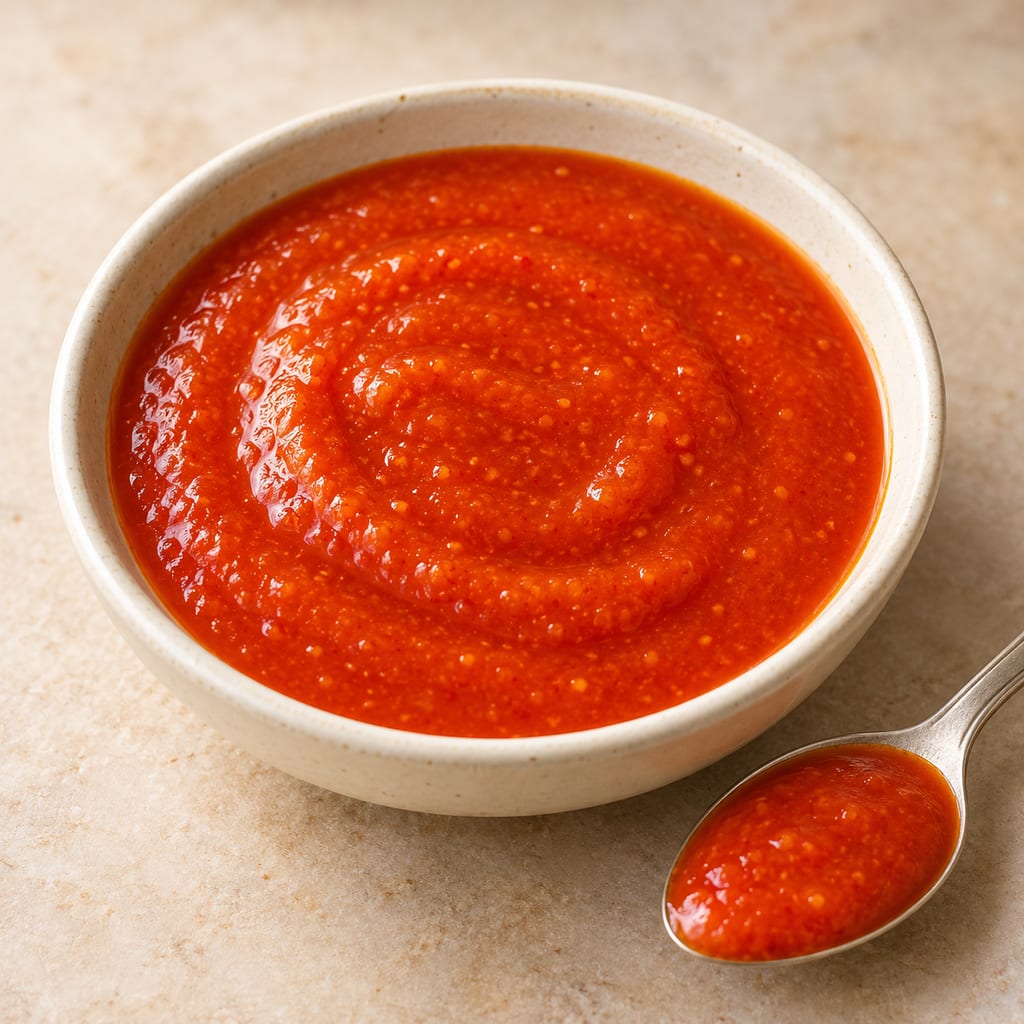
Ripe red chillies, garlic, labelled 5% vinegar, sugar, water and salt are blended, simmered and blended smooth into a cooked chilli sauce.
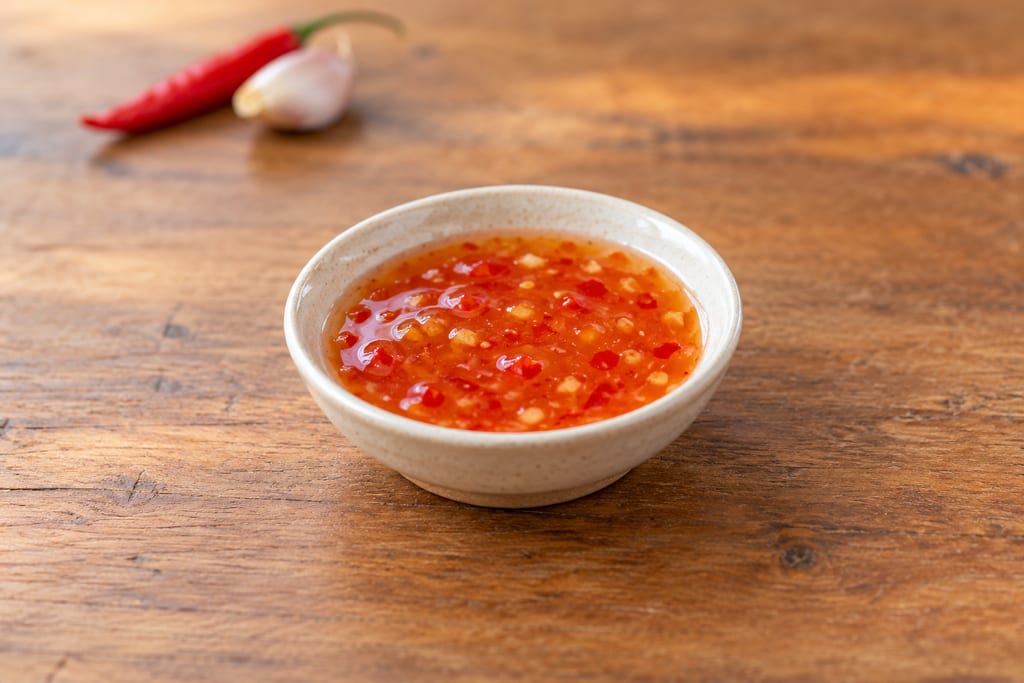
A cooked Thai-style sweet chilli dip combines red chillies, garlic, sugar and vinegar, then uses a small cornflour slurry to give this batch a glossy, spoonable body.
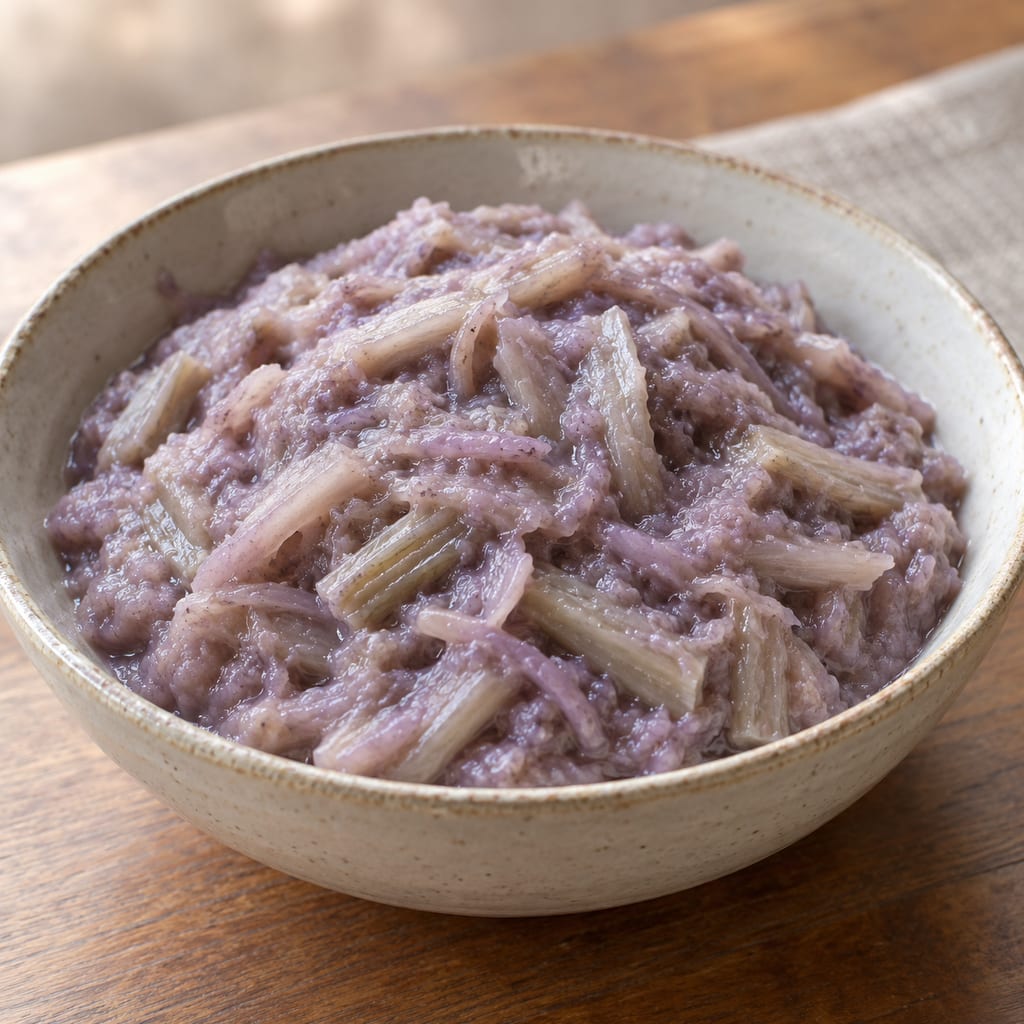
Thai pickle of young taro leaf stalks, salted, kneaded and held in rice-washing water in an earthen jar at room temperature. JIRCAS records it as a home-level product with no validated endpoint.

A cultural account of luk niang dong, a Thai djenkol-bean pickle associated with southern Thailand. Not a recipe or eating recommendation: sources do not establish that pickling controls djenkolism.

Northern Thai fermented tea leaf: Assam tea leaves tied in bundles, steamed, packed in a lined tank and held under weight for three to four months. Eaten after meals.
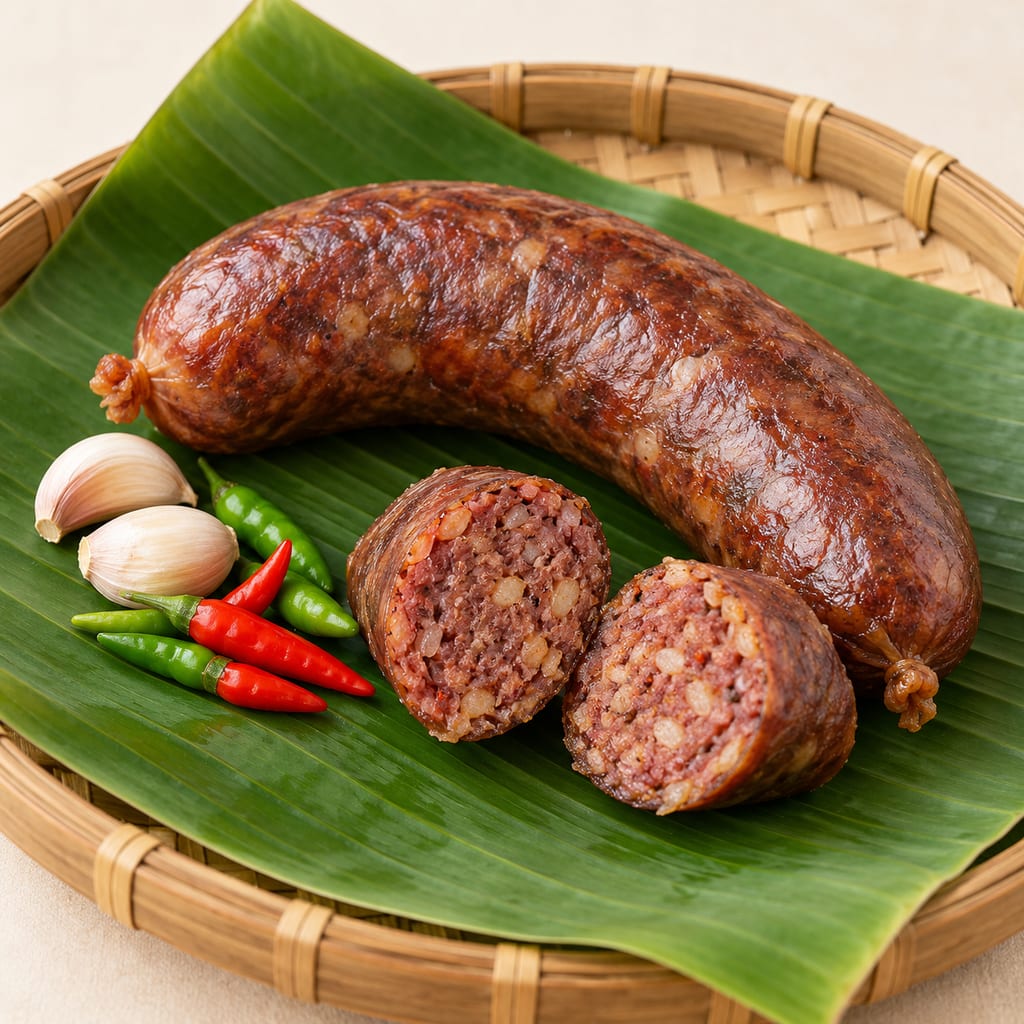
Mum is a Thai family of fermented meat preparations with distinct pork Mam-moo and beef Mam-neua forms. Sources document ingredients, casing and serving traditions, but not a validated home process.

Naem is a Thai sour pork preparation made with minced pork, rind or ear, glutinous rice, garlic and salt. Its documented room-temperature method has no validated food-safety endpoint.
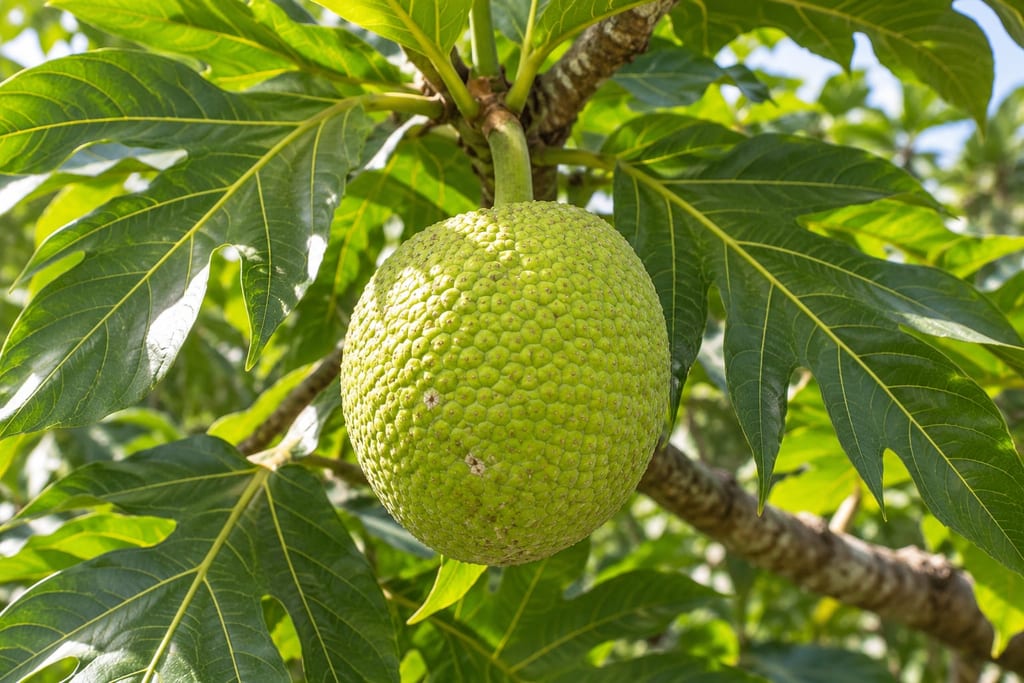
Kosraean preserved breadfruit called furo in a 1919 ethnographic monograph. Two historical pit methods are recorded; the sources give no validated household process.
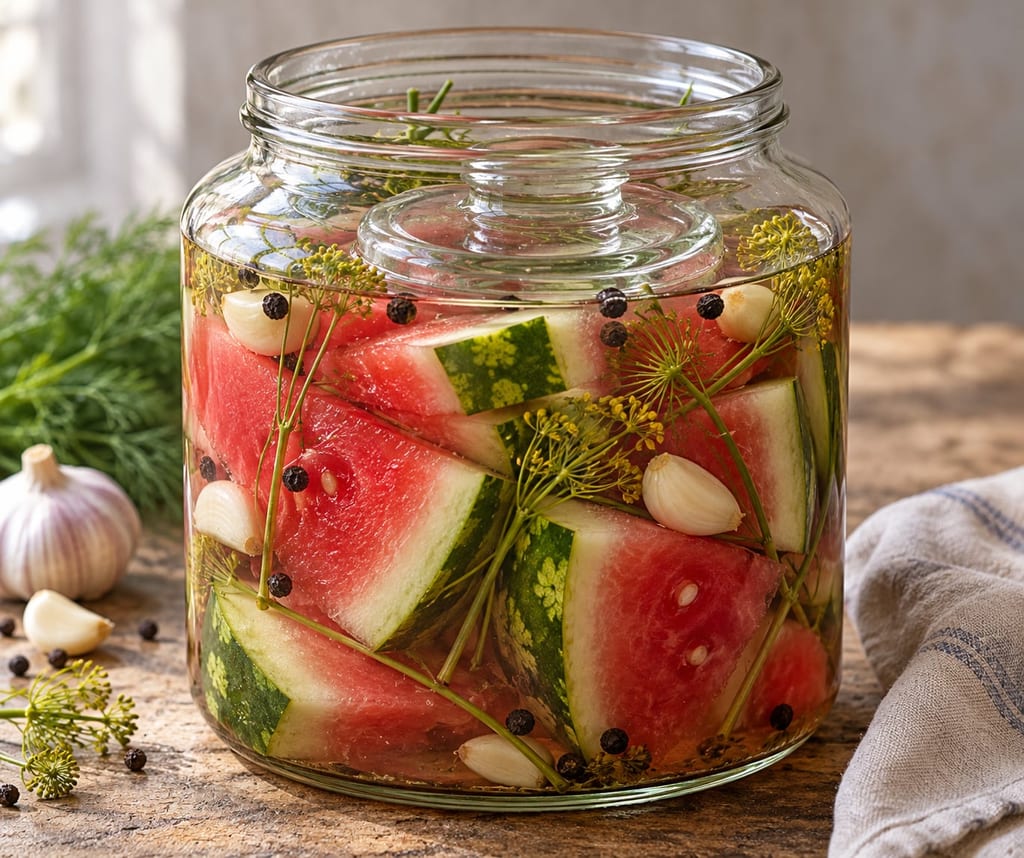
Watermelon pieces with rind ferment in a dill, garlic and pepper brine in a family preparation linked to Kishinev, Moldova.
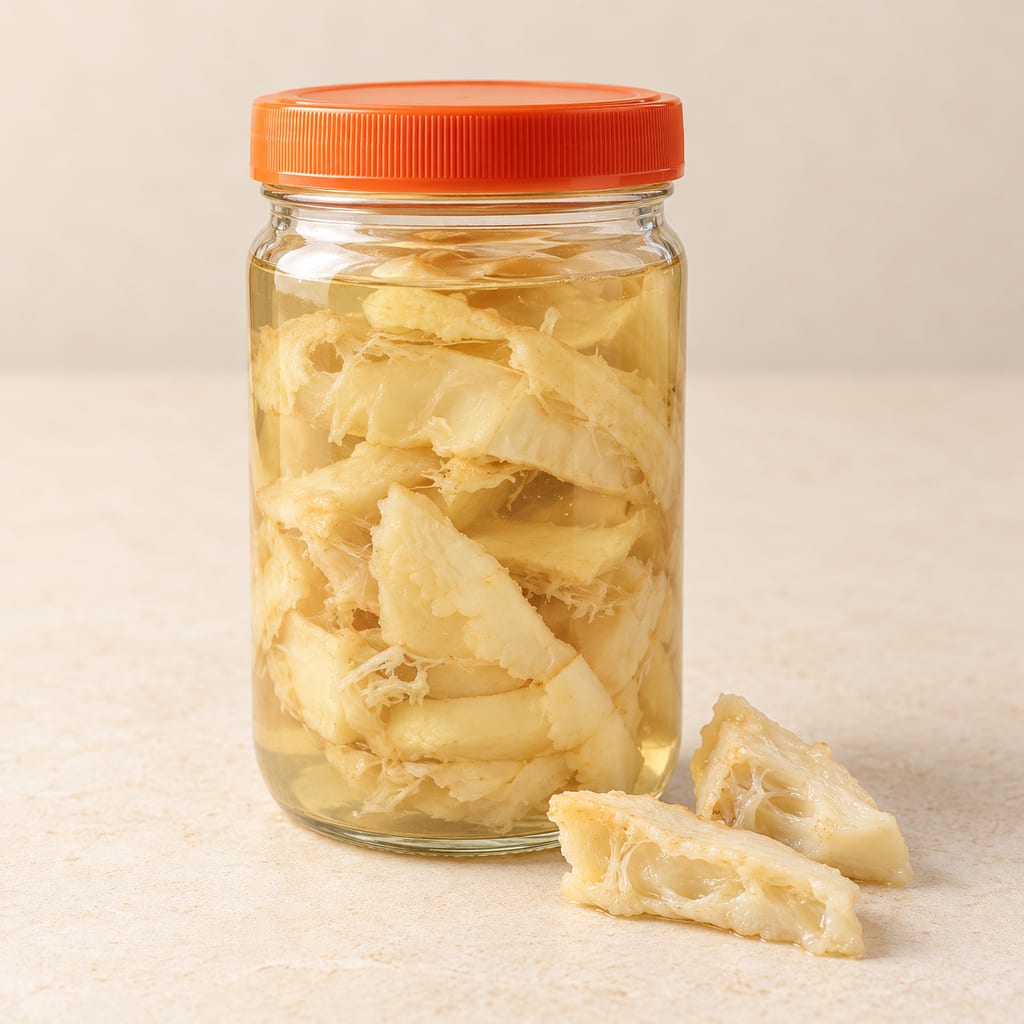
Cempedak inner rind is cut, salted and submerged in water for a short spontaneous fermentation used in Kalimantan home cooking.

Mochenye yabloki are whole apples held under prepared liquid for several weeks. Russian sources from 1892 and 1959 describe the method. It is not the same as vinegar pickling.
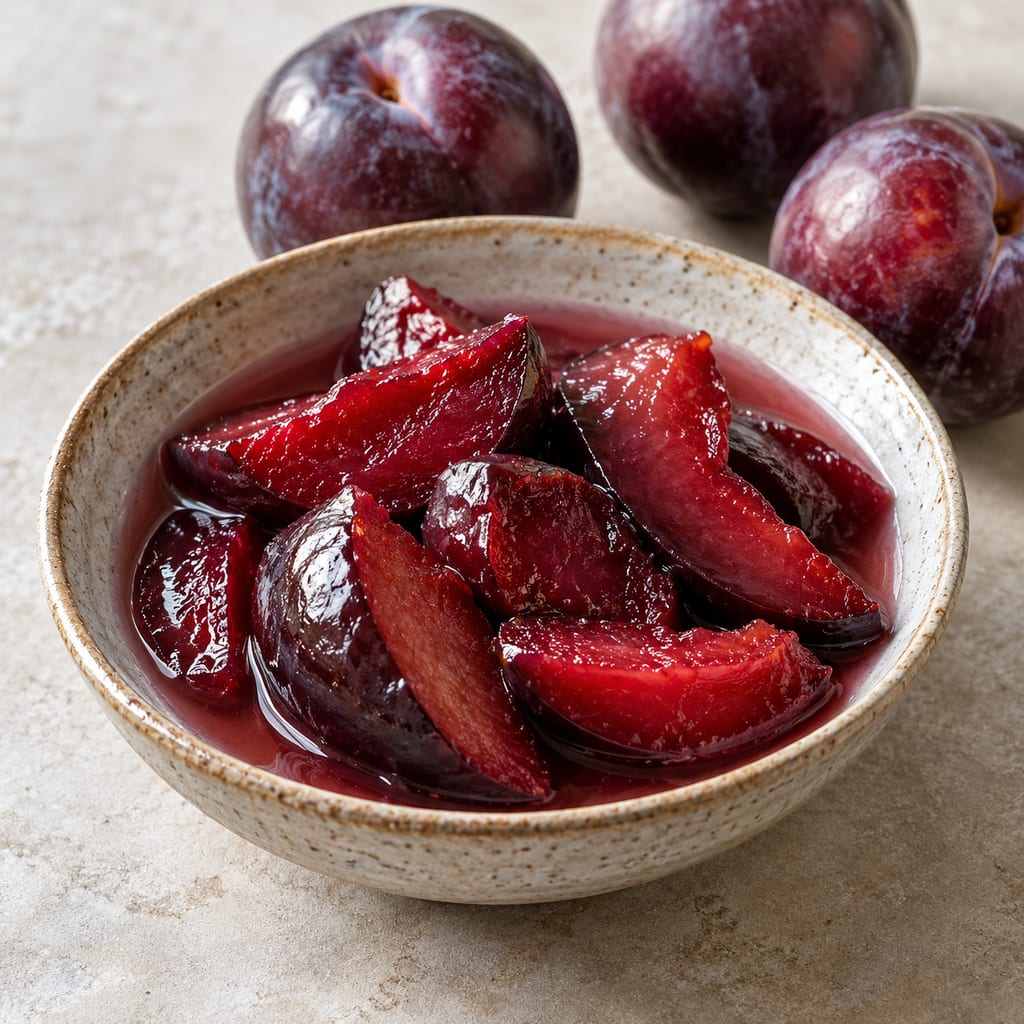
Pitted ripe plums release their own juice under a 2% salt cure, then ferment while weighted below the liquid.
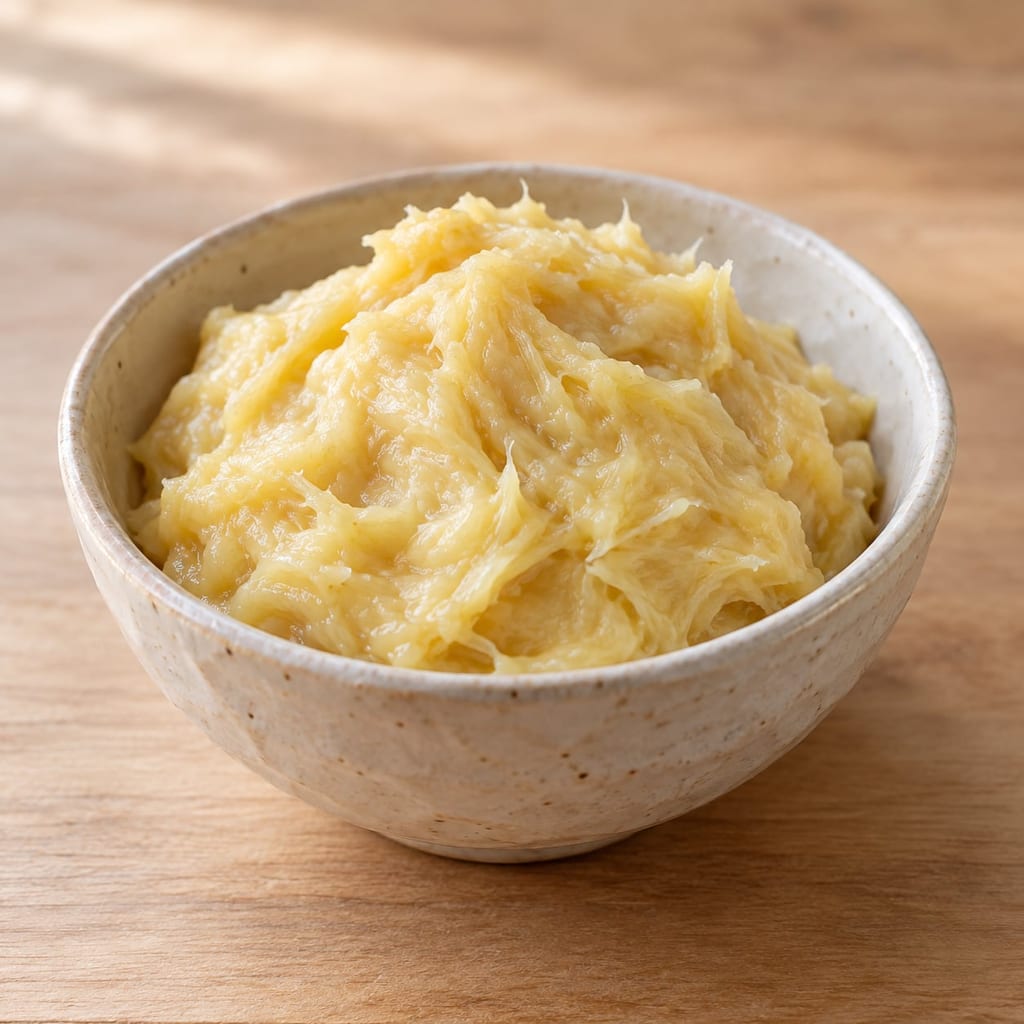
Durian flesh is mashed with salt and fermented in a covered container as a Malay condiment or cooking ingredient.
No community contributions have been published for this entry yet.
Sign in to contribute. Published comments and photos are free to read.
Japan International Research Center for Agricultural Sciences (JIRCAS)Inspiration · Geography
Ma-kork-nam-dorngThai name, fruit identity, salt-water ratio, 10-day shaded fermentation, household production and uses.
Cited in: What is ma-kork-nam-dorng?; Historical context in Thailand; Ingredients; Why the brine is unusual; Stage 1 — Select mature fruit; Stage 2 — Wash; Stage 3 — Drain; Stage 4 — Prepare the vessel; Stage 5 — Prepare the salt solution; Stage 6 — Submerge the fruit; Stage 7 — Cover; Stage 8 — Hold under shade; Stage 9 — Assess the fruit; Stage 10 — Serve; What happens to the fruit tissue?; Acidification versus naturally sour fruit; Why strong salt may preserve without extensive fermentation; Regional comparisons; How the condiment is eaten; Storage; Troubleshooting and quality; Safety and unresolved questions
University of Minnesota ExtensionSafety
Preserving food at home: FermentationGeneral fermentation guidance; it does not validate this particular recipe.
Cited in: What happens to the fruit tissue?; Acidification versus naturally sour fruit; Why strong salt may preserve without extensive fermentation; Safety and unresolved questions
Plants of the World Online, KewIdentity
Spondias purpureaAccepted name and native range of Spondias purpurea
Cited in: The fruit and its botanical background
PROSEAIdentity · Use
Spondias purpurea: uses and regional distributionUses and South-East Asian distribution of the species
Cited in: The fruit and its botanical background; Regional comparisons
Plants of the World Online, KewIdentity
Spondias pinnataThe comparison species that complicates the Thai name makok
Cited in: The fruit and its botanical background; Safety and unresolved questions