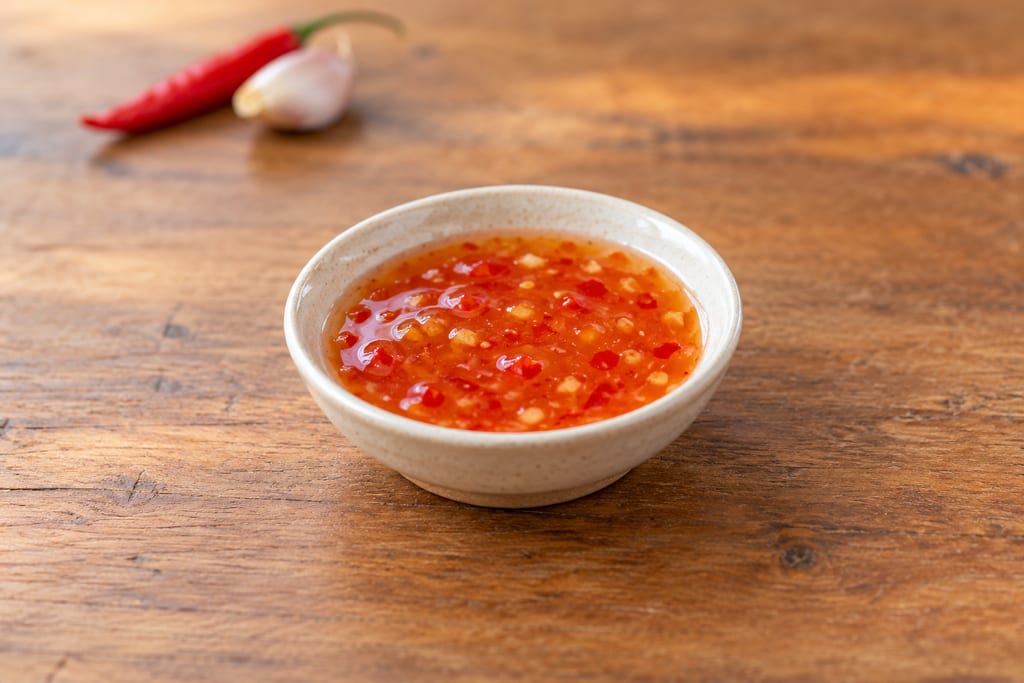
Cooked sweet chilli sauce
A cooked Thai-style sweet chilli dip combines red chillies, garlic, sugar and vinegar, then uses a small cornflour slurry to give this batch a glossy, spoonable body.
 FermenteaWhere food goes to change
Modern adaptation
Cooked sriracha-style chilli-garlic sauce · Homemade sriracha-style sauce
Ripe red chillies, garlic, labelled 5% vinegar, sugar, water and salt are blended, simmered and blended smooth into a cooked chilli sauce.
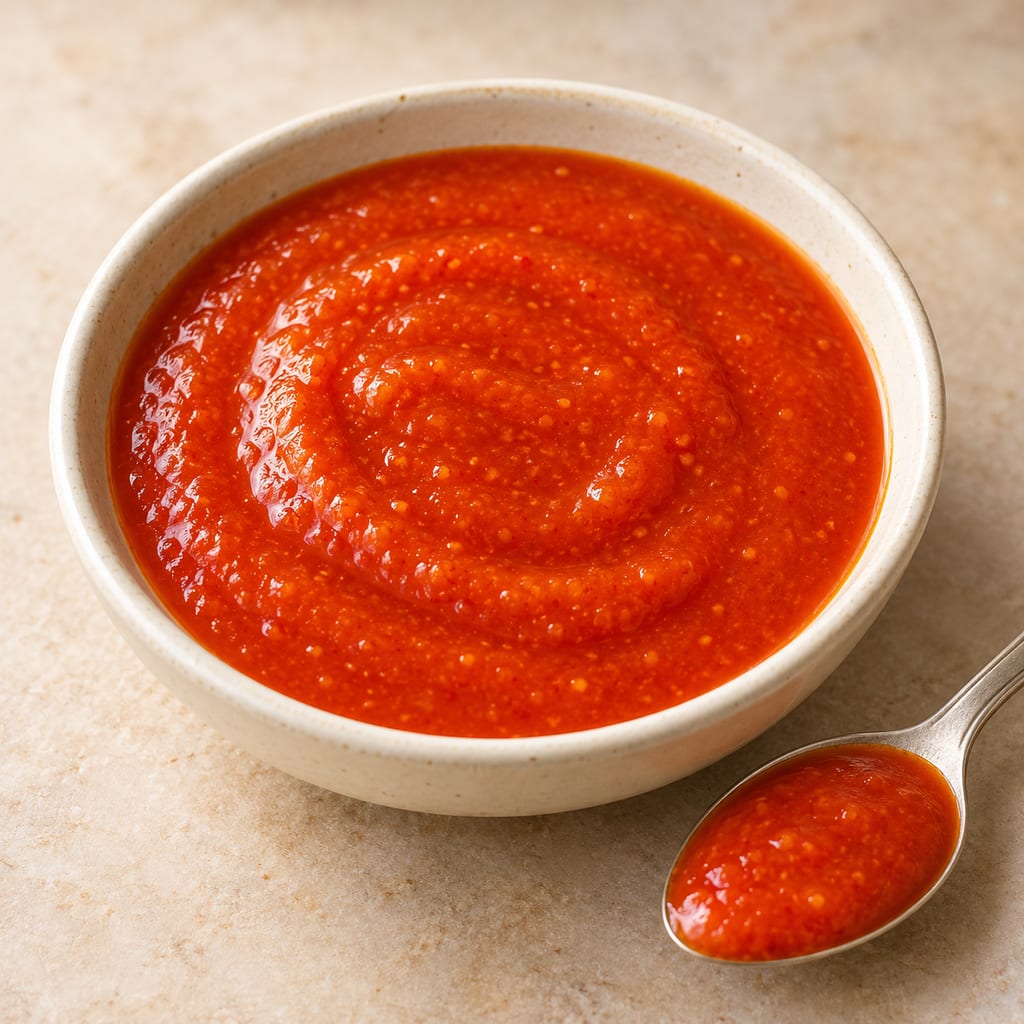
Sriracha-style sauce is a smooth red chilli sauce sharpened with vinegar and garlic, sweetened a little and salted, thick enough to squeeze in a line. The name now covers a wide range of bottles. Sriraja Panich, the Thai maker, describes its sauce as made from selected red peppers, Thai garlic, sugar, vinegar and sea salt, with pickled garlic in its process. Nestlé's MAGGI range in India even includes a ‘Sriracha Style Tangy Tomato Chilli Sauce’, a sign of how far the word has travelled from any single recipe.
So choose the target before cooking, then compare chilli type, garlic character, texture, acidity and sweetness against it. This formula makes a cooked chilli-garlic-vinegar sauce. It is not the identical product of Sriraja Panich or of Huy Fong, and it is not fermented. Ripe red chillies, mild to medium, are the body: 250 g of a 455 g starting mass, about 55%. Garlic, 35 g, is the second flavour, and vinegar labelled 5% acidity, 85 g, gives an acid of known strength. Sugar (45 g, about 10%) and salt (10 g, about 2%) round and season it, and 30 g water helps the blender turn the raw mix into a purée.
The order is simple and each step earns its place. Blending everything raw first means the chilli, garlic, vinegar, sugar and salt cook together as one purée. A gentle 15-minute simmer, stirred so nothing catches, cooks the raw chilli and garlic. A second blend once it is cooked makes it smooth, and a fine sieve, if you use one, takes out skins and seeds for a finer sauce. Adjust the thickness at the end with a little water. Pepper variety, how much pulp is strained out and how the garlic is treated change the result far more than a few grams either way.
Fermented chilli sauces are a separate process. Fermenting the chilli before blending needs a defined vegetable fermentation method, monitored as it goes and then blended and finished, and even a successful fermentation does not by itself make a diluted, blended, bottled sauce shelf-stable. This sauce is simply cooked. Cool it promptly, refrigerate it and freeze what you will not use soon. The formula is untested: it has not been made in a test kitchen, compared against a target bottle or checked for keeping. Keep it at 4°C or colder where practical and use it within 48 hours, a planning convention borrowed from leftovers advice, never a shelf life; it is not for room-temperature storage or canning.
Sriracha is a place name, and the word covers a family of related chilli-garlic table sauces rather than one formula. Si Racha, in Chonburi on the Thai coast, is the place the name points to. Sriraja Panich is one named maker with its own heritage account. It is a brand within the family, not the family itself.
Products sold abroad under the name may use different chillies, garlic handling, vinegar, sugar, texture and fermentation. A bottled sauce from one maker is therefore one record, and each product needs its own evidence. The cooked formula above stays separate from every named producer.
The maker dates its sauce to 1935, in Trok Laem Fan in Si Racha District, when Thanom Chakkapak made it for family seafood meals and shared it with neighbours. The company also states that THAITHEPAROS PLC acquired it in 1984. That is a company account of its own history, not independent proof of a single origin for every sauce called Sriracha.
A Si Racha municipal local wisdom register traces a recipe through Kim Sua Timkrachang and later family members, and estimates the tradition at more than a century old. Its account rests on family recollection rather than archival evidence, and it describes a broader local lineage than one brand. The 1935 business origin and the older local lineage are different claims and should not be merged into one date.
The maker states that its sauce uses red goat peppers, Thai garlic pickled for seven days, sugar, vinegar and sea salt, and that selected chillies are aged for at least three months before blending. Those are brand statements. They do not say whether the aging is spontaneous fermentation, controlled fermentation or another maturation, and they give no starter, salt percentage, pH endpoint, temperature or shelf-life method.
The garlic pickle is a separate component, and the statement does not say whether it is fermented or vinegar pickled. Vinegar may acidify a sauce, but the timing and amount of vinegar are not given, and vinegar alone does not establish that storage is safe. A marketing line such as no artificial preservatives is not a validated control.
The brand account is enough to describe a sequence of chilli selection, aging, pickled garlic and blending, but not enough to reproduce the product. Equipment, batch scale and fermentation controls are undisclosed. A home version built on an assumed fermentation would invent controls the evidence does not give, so this page offers no fermented home recipe.
The formula above is an untested development recipe with a refrigerated, short-keeping handling statement. It is a cooked, non-fermented adaptation, not a reconstruction of the Si Racha product. Taste, aroma and visible activity do not establish safety, and a shelf-stable product would need process-specific formulation and qualified validation.
Archival evidence is needed to test the municipal register's family recollections against the 1935 business account. Product-specific technical disclosures and Thai-language food-safety guidance would show whether the aging step is a fermentation and which controls apply to it. Until then, the cooked formula stays a development recipe and the named-brand process stays a brand statement.
This exact formulation is a contemporary adaptation, separate from the documented regional food style. The available evidence does not date the wider tradition.
Scaling: source batch only
The newly mixed formula has no measured keeping period; general leftovers advice is used as a conservative handling convention, not as process validation.
Hazard sourceKeep the refrigerator at 0–5°C; cool and refrigerate promptly; eat within 48 hours or freeze. This general guidance does not validate the formula's shelf life.
Control sourceThe reported 48-hour handling period is general leftovers guidance, not a measured shelf life for this formula. Refrigerate promptly or freeze; do not store at room temperature or can.
An untested modern adaptation inspired by Thai sriracha-style products; not a claim that this is Sriraja Panich or a specific household formula.
A cooked Thai-style sweet chilli dip combines red chillies, garlic, sugar and vinegar, then uses a small cornflour slurry to give this batch a glossy, spoonable body.
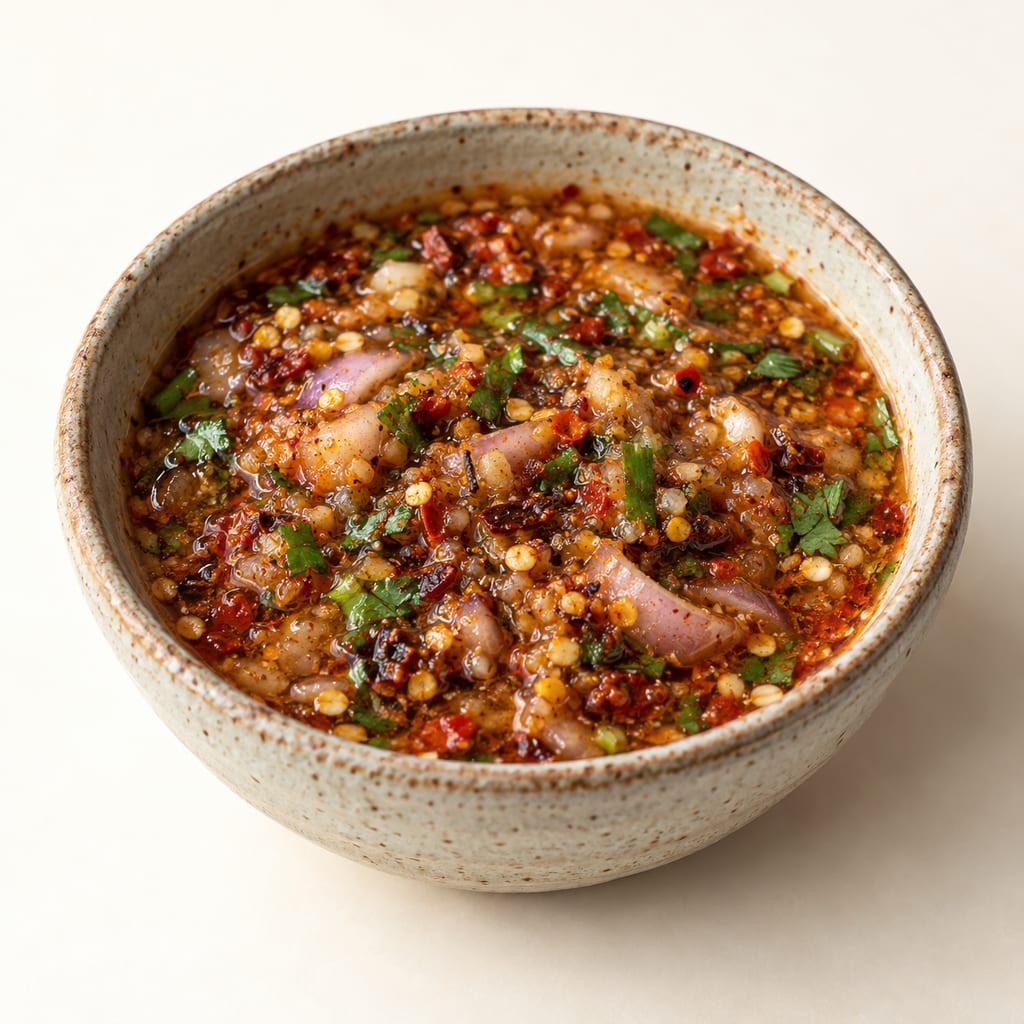
Roasted chillies, shallot and garlic are pounded and loosened with fermented and plain fish sauce, boiled water and lime into a sharp Isan dip for grilled meat and fish.
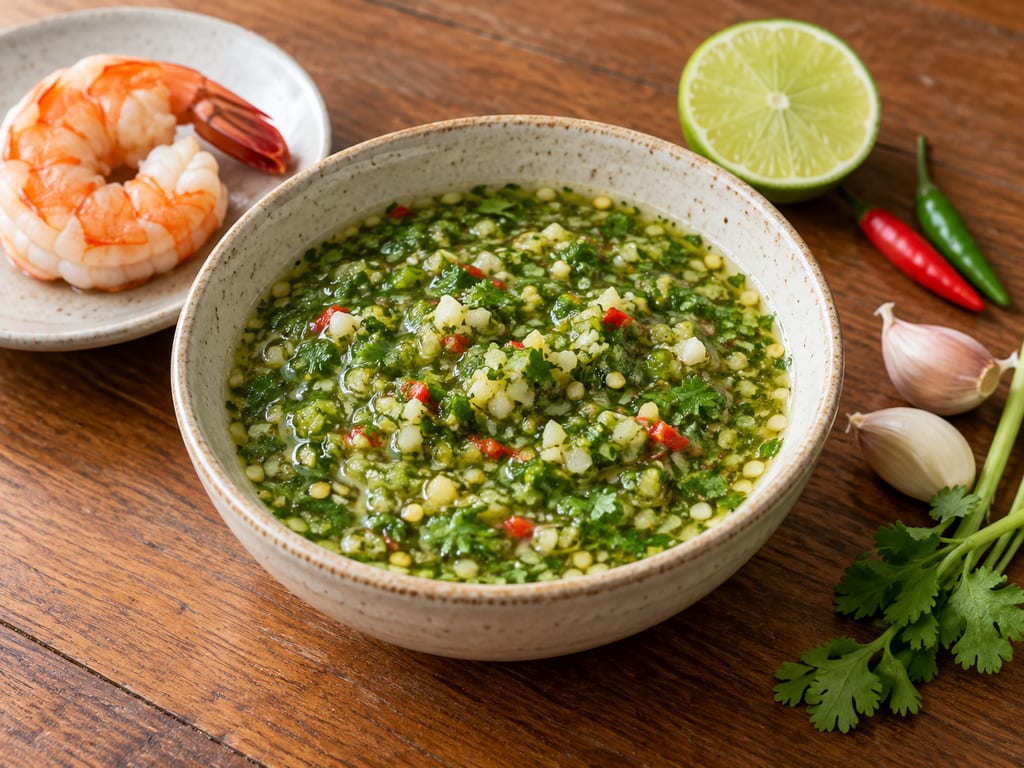
A Thai seafood dipping sauce of chiles, garlic, cilantro stems, fish sauce, lime juice and palm sugar, pounded or briefly blended for a coarse texture.
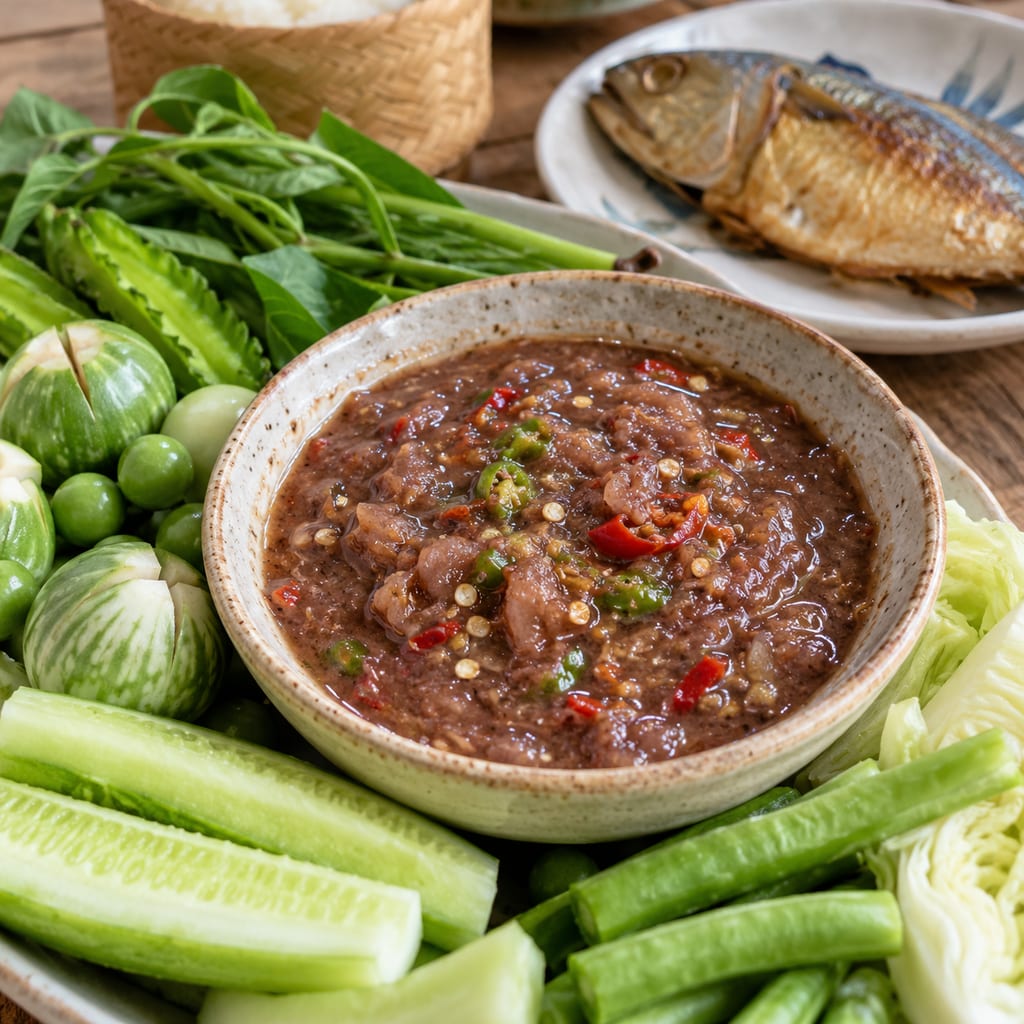
Nam prik kapi is a Thai dip of matured shrimp paste pounded with garlic, bird's eye chilli and lime or tamarind, eaten with vegetables and rice.
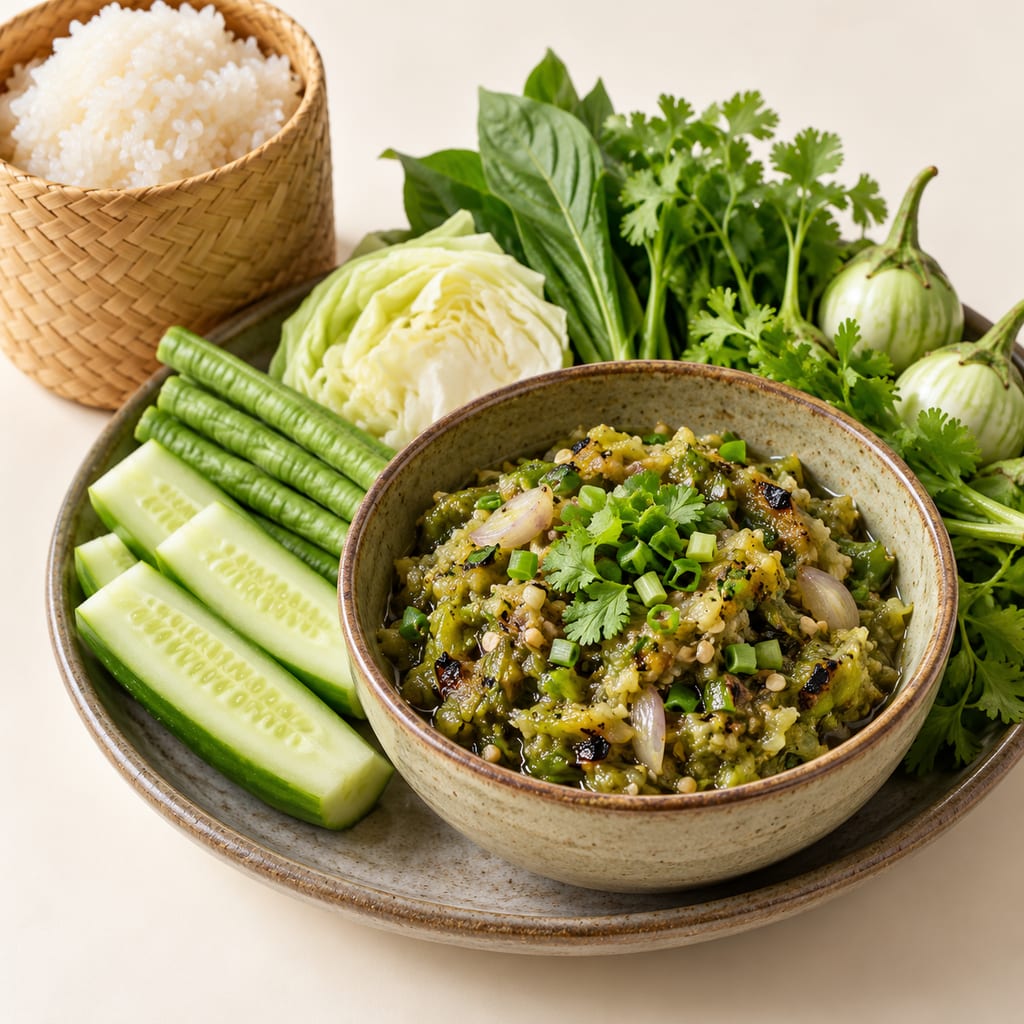
Grilled young green chillies, shallots and garlic are pounded with salt into a coarse northern Thai dip, finished with coriander and spring onion and eaten with sticky rice and vegetables.
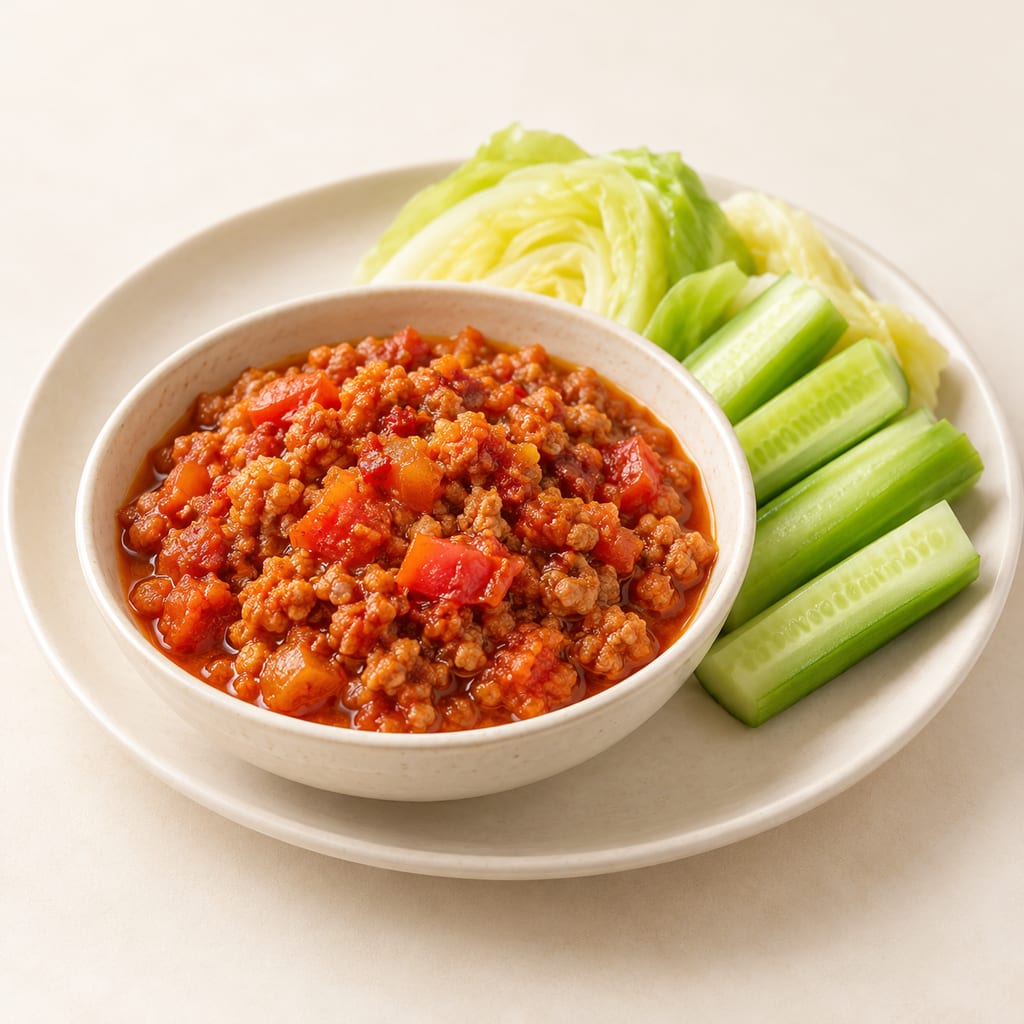
Nam prik ong is a cooked Northern Thai dip of chilli, tomato and minced pork, seasoned with fermented soybean and eaten with vegetables, pork rind and eggs.
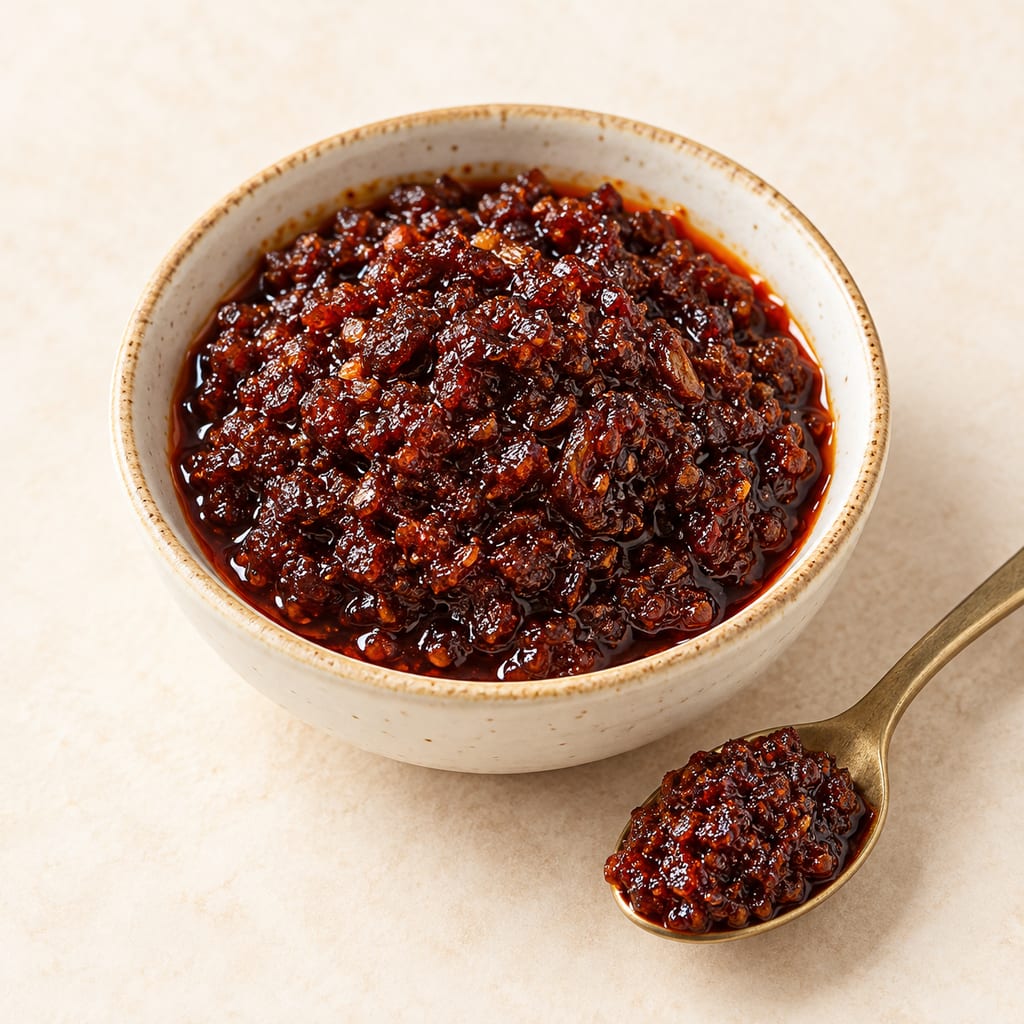
Nam prik pao is a Thai roasted chilli paste, sweet, salty and sour with only mild heat, used as a dip, a spread and a seasoning for cooked dishes.
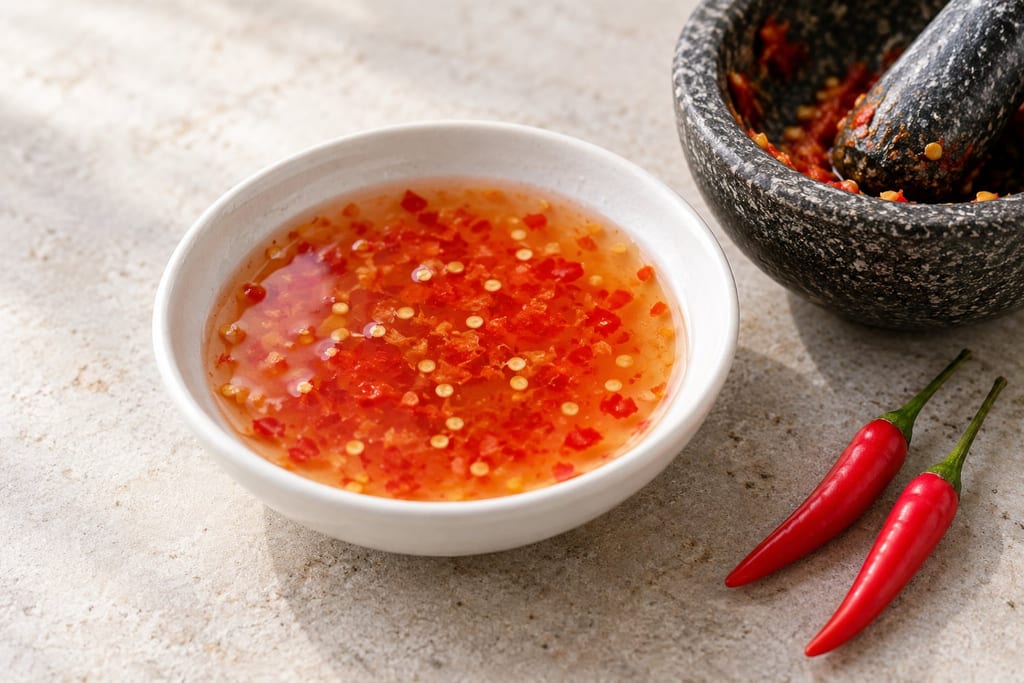
Pailin Chongchitnant's fresh prik nam som card pounds two or three Thai chillies, optionally with garlic, before stirring in white vinegar; charring is a separate optional step.
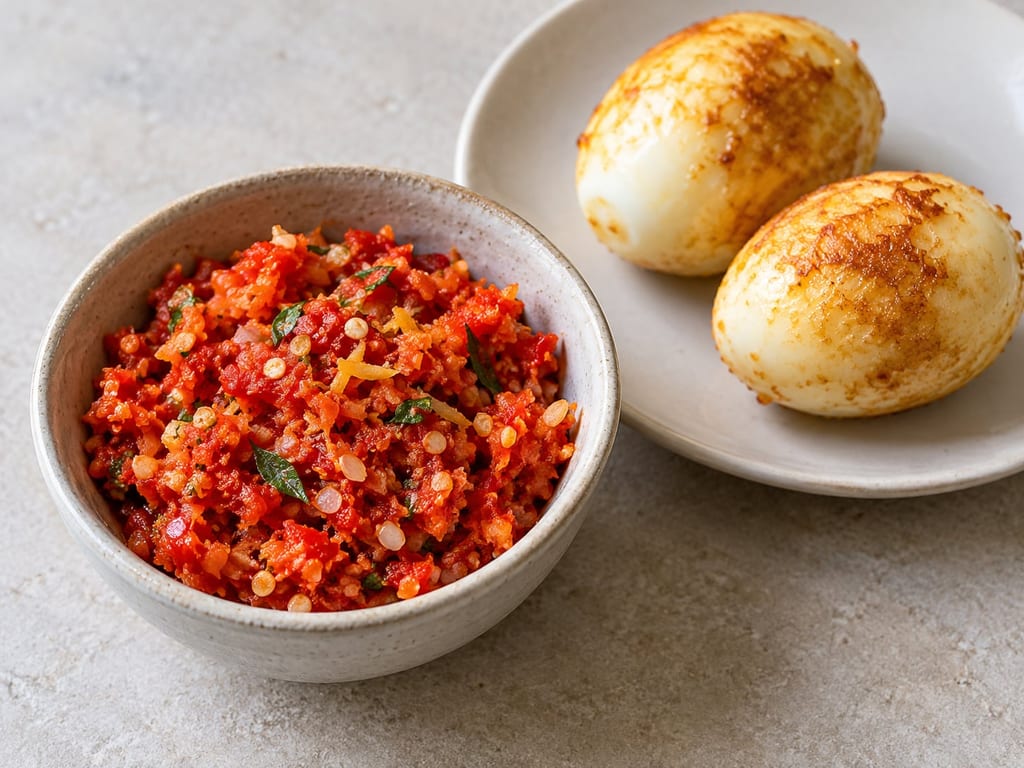
Ai-manas is described as a very hot chilli paste served with Timorese meals. One published version blends fresh chillies, shallots, garlic, Thai basil, ginger, lemon and salt, and serves it with eggs. Sources do not establish a standard formula, precise birthplace or earliest date.
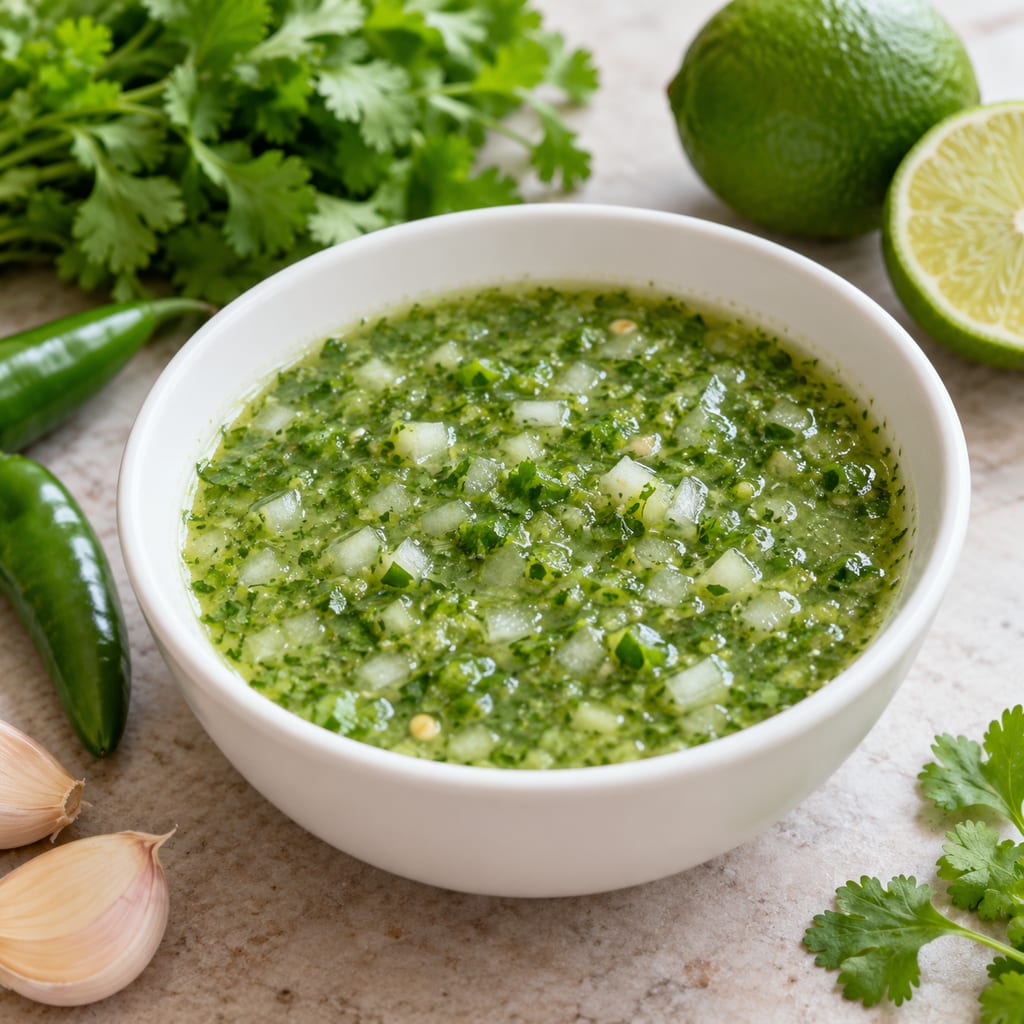
A fresh, uncooked Ecuadorian table sauce of hot pepper, cilantro, garlic and lime, served with most everyday dishes.
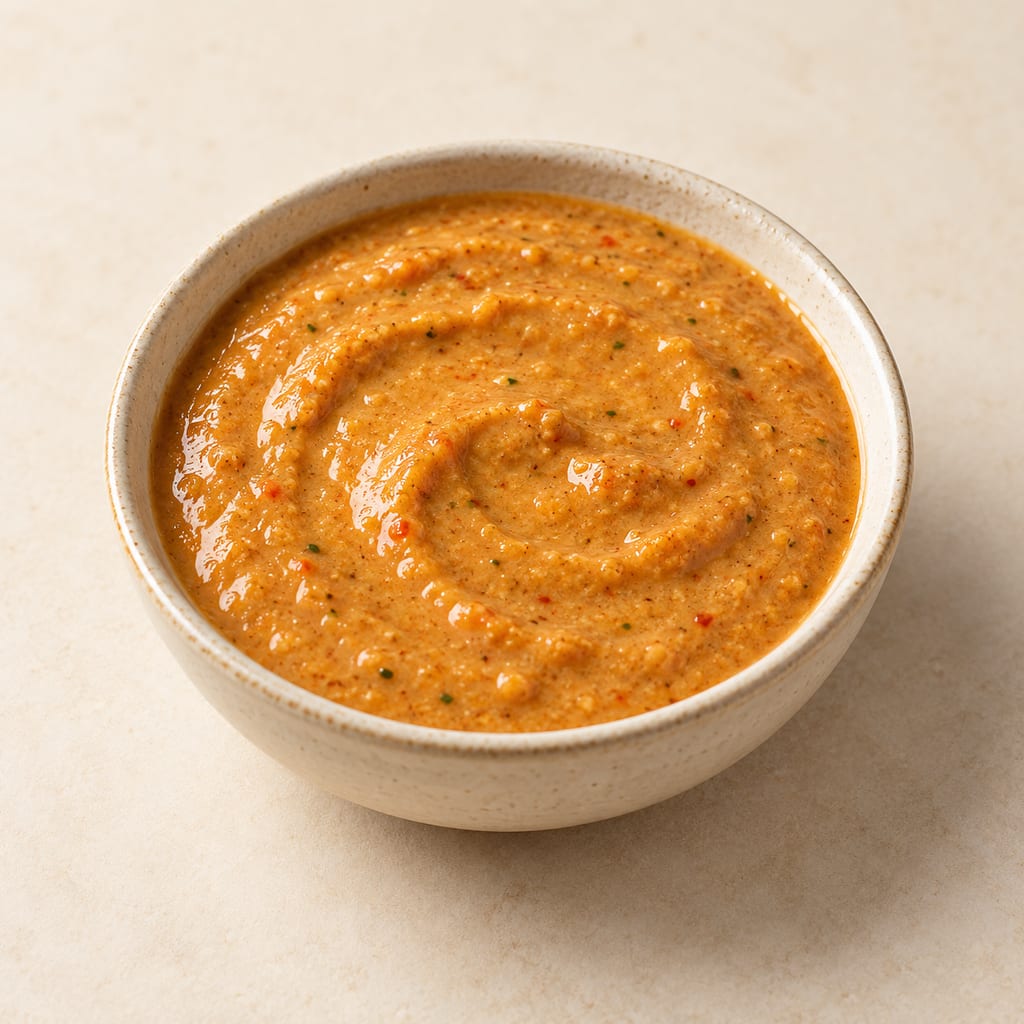
A spicy peanut hot sauce from the Popayán and Cauca region of Colombia, traditionally served with pipián empanadas and tamales.
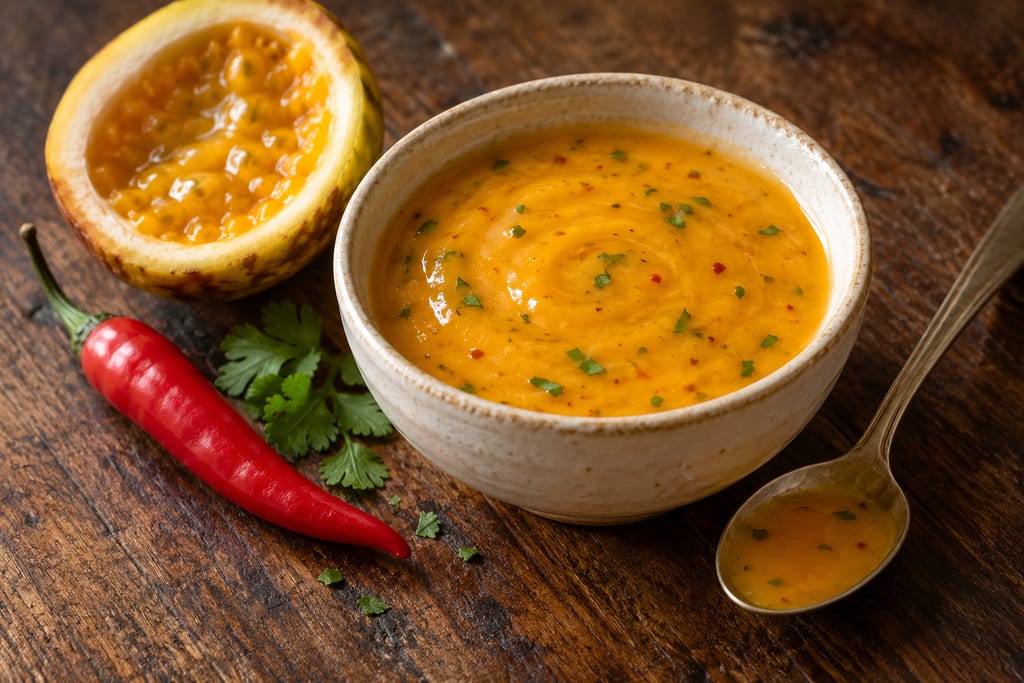
A contemporary Ecuadorian hot sauce that pairs passion fruit juice with boiled chile peppers, oil and lime.
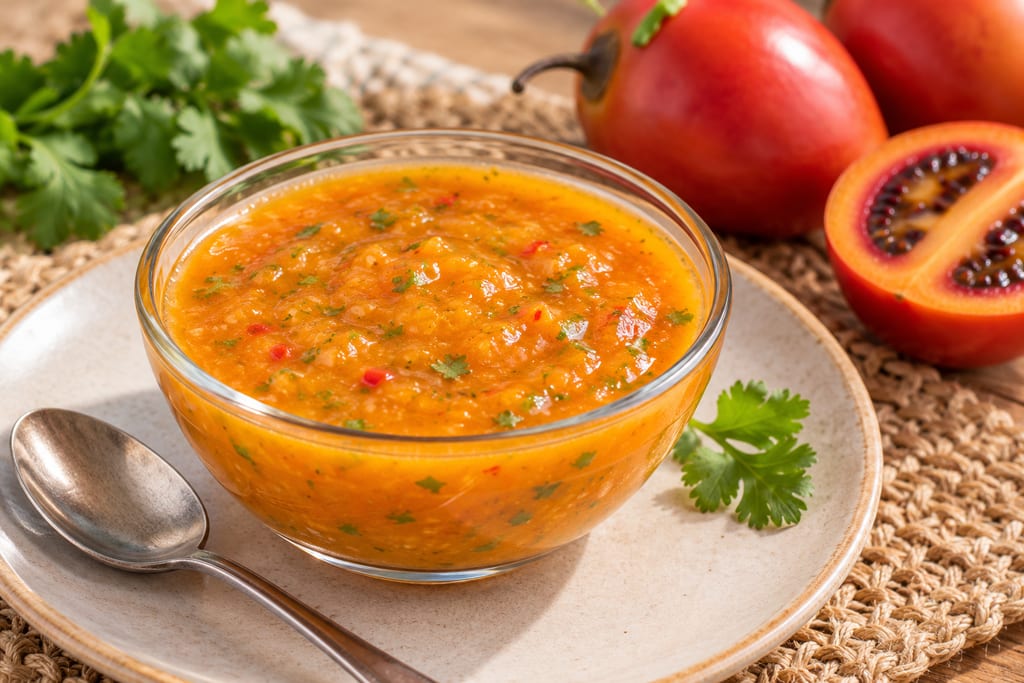
An Ecuadorian hot sauce built on tamarillo, a tart fruit that gives a sharper, fleshier base than ordinary tomato salsa.
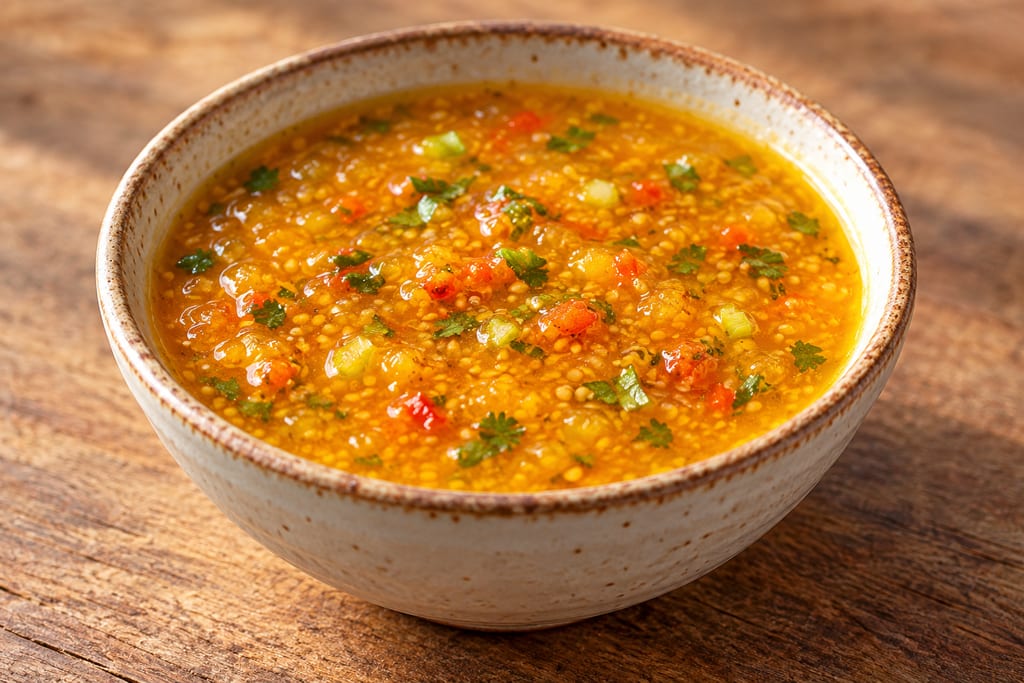
A sweet, tart and spicy Colombian sauce of uchuva, the yellow physalis fruit, with hot pepper, scallion, cilantro and lime.
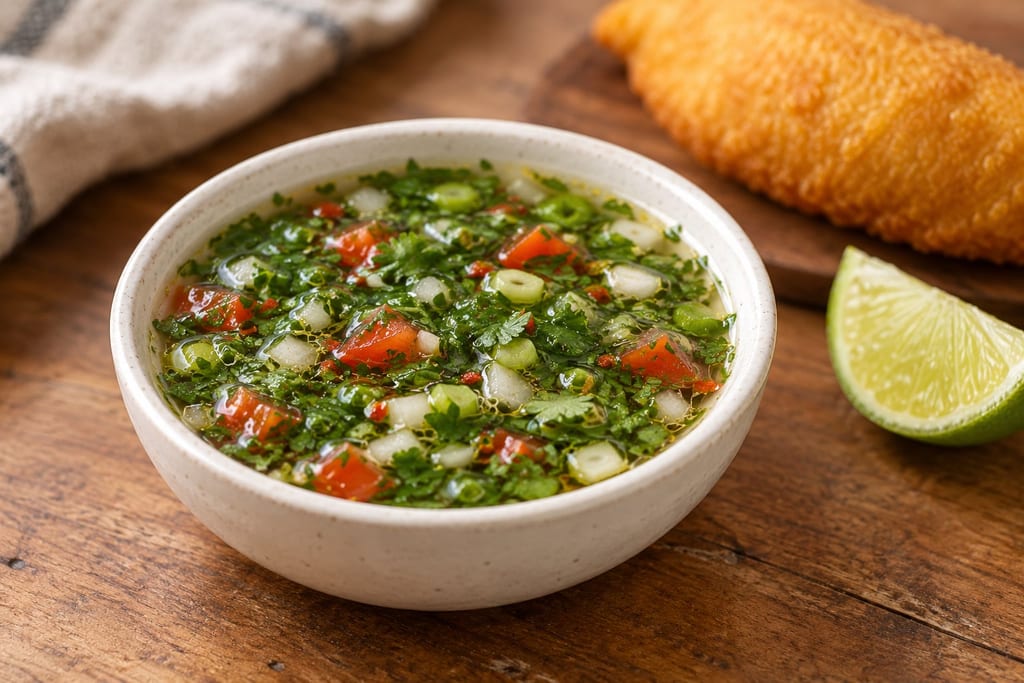
A fresh Colombian table condiment of chopped herbs, scallion and tomato in a vinegar and chile base, served beside fried and filled dishes.
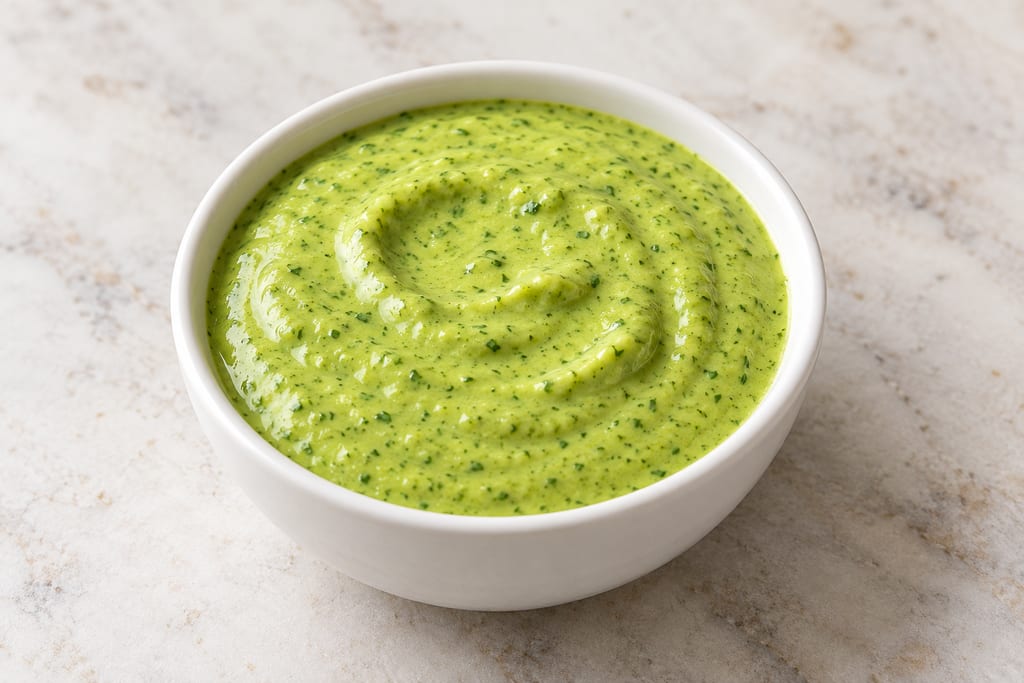
Ají verde is a Peruvian green sauce of coriander, chilli, onion and garlic in a mayonnaise or cheese base. It is best known through Peruvian restaurant cooking abroad.
No community contributions have been published for this entry yet.
Sign in to contribute. Published comments and photos are free to read.
Nestlé India (MAGGI brand site, maggi.in)
Our Range, MAGGI sauces (maggi.in)Cited in: A name that covers many bottles
ThaiTheparos Public Company LimitedHistory · Inspiration
Sriraja Panich The Taste of the Original — FAQThe maker traces its own name to Si Racha in Chonburi and describes its early use with seafood.
The maker's product uses red goat peppers, Thai garlic pickled for seven days, sugar, vinegar and sea salt; its account says selected chillies are aged for at least three months. These facts describe that brand, not this home formula.
Cited in: A name that covers many bottles; What the maker says about process; Why this page gives no fermented home method
Food Standards Agency (published on GOV.UK)Safety
How to chill, freeze and defrost food safelyGeneral refrigerator range and leftovers guidance; not a measured life for this recipe.
Cited in: Blend, simmer, blend again; Why this page gives no fermented home method
ThaiTheparos PLC / Sriraja PanichHistory · Process
The origin of Sriraja PanichCompany account: the sauce began in 1935 in Trok Laem Fan, Si Racha District, Chonburi, made by Thanom Chakkapak for family seafood meals.
Company account: THAITHEPAROS PLC acquired the company in 1984. The page states the aging and pickling steps but gives no technical specification.
Cited in: Place name, sauce family and brand; Competing origin accounts; What the maker says about process
ThaiTheparos PLC / Sriraja PanichHistory
Sriraja Panich heritage (Thai-language company page)Parallel company narrative of the same origin; not an independent historical source.
Cited in: Competing origin accounts
Thailand Foundation, Ministry of Foreign AffairsComparison · Context
Sriracha: Adding FlavorThai local sauces are presented as distinct from the US product, with generalised flavour distinctions and no formula.
Cited in: Place name, sauce family and brand
Si Racha MunicipalityHistory · Oral tradition
Making Si Racha Chili Sauce (Si Racha Municipality Local Wisdom Register, Thai text)A recipe lineage traced through Kim Sua Timkrachang and later family members, resting on family recollection rather than archival proof, estimated at more than a century old.
Names several local brands and says Sriraja Panich and Golden Mountain share a recipe lineage.
Cited in: Competing origin accounts; Why this page gives no fermented home method; Open questions
Burapha UniversityContext
The Management of Community Enterprise: A Case Study of Pa Pu Chili SauceA qualitative study of a Si Racha chilli-sauce community enterprise; it is not a recipe or process specification.