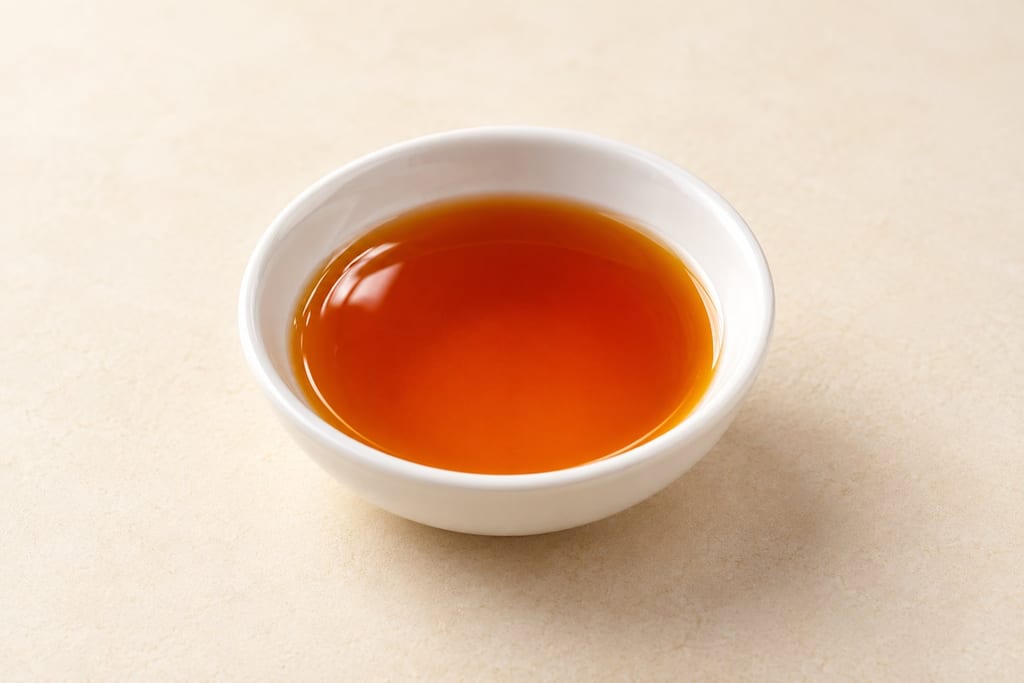
Fish sauce
Fish sauce is a clear, salty seasoning made by maturing fish with salt and drawing off the liquid. The broad family includes distinct regional sauces rather than one interchangeable method.
 FermenteaWhere food goes to change
น้ำพริกเผา (nam phrik phao) · Thai roasted chilli paste · Thai chilli jam · nam phrik phao
Nam prik pao is a Thai roasted chilli paste, sweet, salty and sour with only mild heat, used as a dip, a spread and a seasoning for cooked dishes.
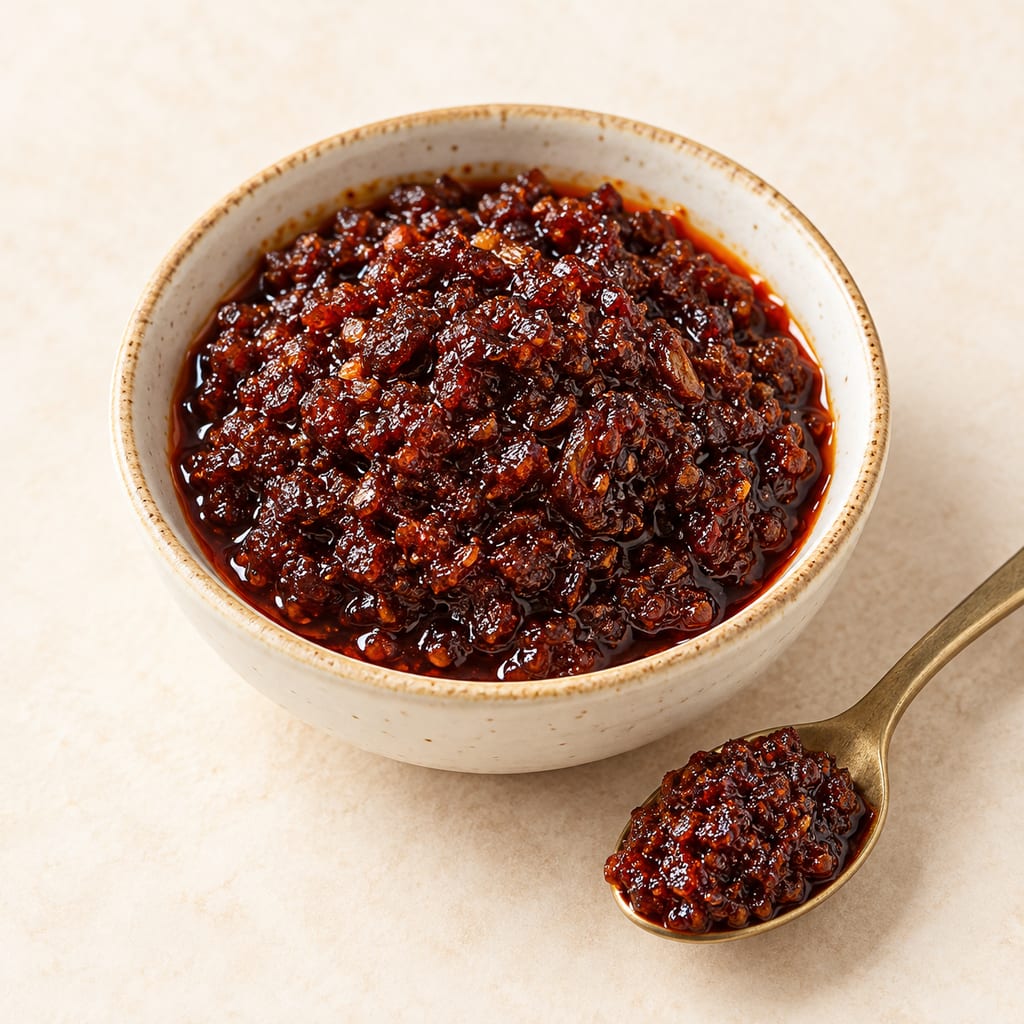
Nam prik pao (Thai: น้ำพริกเผา) is a dark, roasted chilli paste. The name breaks into three words: nam, water or relish, prik, chilli, and pao, roasted. It is also sold and cooked as Thai chilli jam or chilli paste in oil. It belongs to the large Thai family of nam prik, chilli relishes that appear in small saucers beside a meal, but it differs from most of them in one way: it works as a seasoning that is cooked into dishes, not only as a dip.
Its flavour is balanced rather than fierce. Roasted dried chillies give a smoky, rounded heat; sugar sweetens it, tamarind adds a little sourness, and fish sauce and shrimp paste carry salt and savour. The Thai PBS recipe aims for a sweet-salty paste with only mild heat.
The Thai PBS method roasts the aromatics and the chillies before blending. Dried chillies are soaked, seeded and cut small. Shallots and garlic go into a dry pan and are roasted until fragrant and cooked, with light charring allowed. The chillies are roasted until cooked and charred. Everything is then blended smooth with shrimp paste, sugar, fish sauce and about two spoons of tamarind juice, and the cook tastes and adjusts, adding sugar for sweetness or fish sauce for salt.
Roasting does two jobs. It removes the raw edge of garlic and shallot and turns their sugars toward caramel, and it chars the chillies, which gives the smoky depth the paste is known for. A second account describes the same ingredients as traditionally roasted or grilled but now usually fried, with dried shrimp added and the frying oil stirred back in until the paste is thick and jam-like. These are different routes to a similar paste, and the amounts and times are missing or differ in each. Neither account says which route is older.
The shrimp paste and fish sauce are fermented products, but the paste itself is not a ferment. It is cooked and blended, and no stage depends on microbes working in it.
Thai PBS cooks with it in two ways: stir-fried chicken with cashew nuts, where the chicken is coated in more paste at the end, and a spaghetti stir-fried with tom yum flavours and snakehead fish. It is also eaten with steamed rice. Other accounts add tom yum and tom kha soups, the squid salad phla pla muek, salad dressings, a peanut sauce, and a spread on toast, like jam. These are modern and home-cooking uses reported by the cited pages; none of them is dated.
As a table condiment it sits with the rest of the nam prik: a spoonful to season plain rice, vegetables or grilled food.
The Thai PBS recipe gives almost no measurements: no weights for the chillies, garlic, shallots, shrimp paste, sugar or fish sauce, and no roasting times. The claim that the paste keeps well in the refrigerator for a long time has no number behind it, and the other account's claim of many months is a home-cooking statement, not a tested storage life. Because the paste is moist, keep it cold and treat any storage period as unknown.
The sources also give no origin, no region and no date, so nothing here claims where or when nam prik pao began.
No cited source dates nam prik pao. One recipe account notes that the ingredients were traditionally roasted or grilled and are now usually fried; a Thai PBS cooking programme of 20 December 2025 presents the roast-and-blend version.
Scaling: source batch only
The sources call the paste long-keeping when refrigerated but give no acidity, water activity or tested storage life.
Hazard sourceKeep refrigerated; no validated storage limit is available.
Control sourceNo source tests how long this paste keeps. The claim that it lasts a long time in the refrigerator is a home-cooking statement without a tested limit, and smell or taste does not show that it is safe.
A country-level association; the sources name no region of origin and give no date.
Fish sauce is a clear, salty seasoning made by maturing fish with salt and drawing off the liquid. The broad family includes distinct regional sauces rather than one interchangeable method.
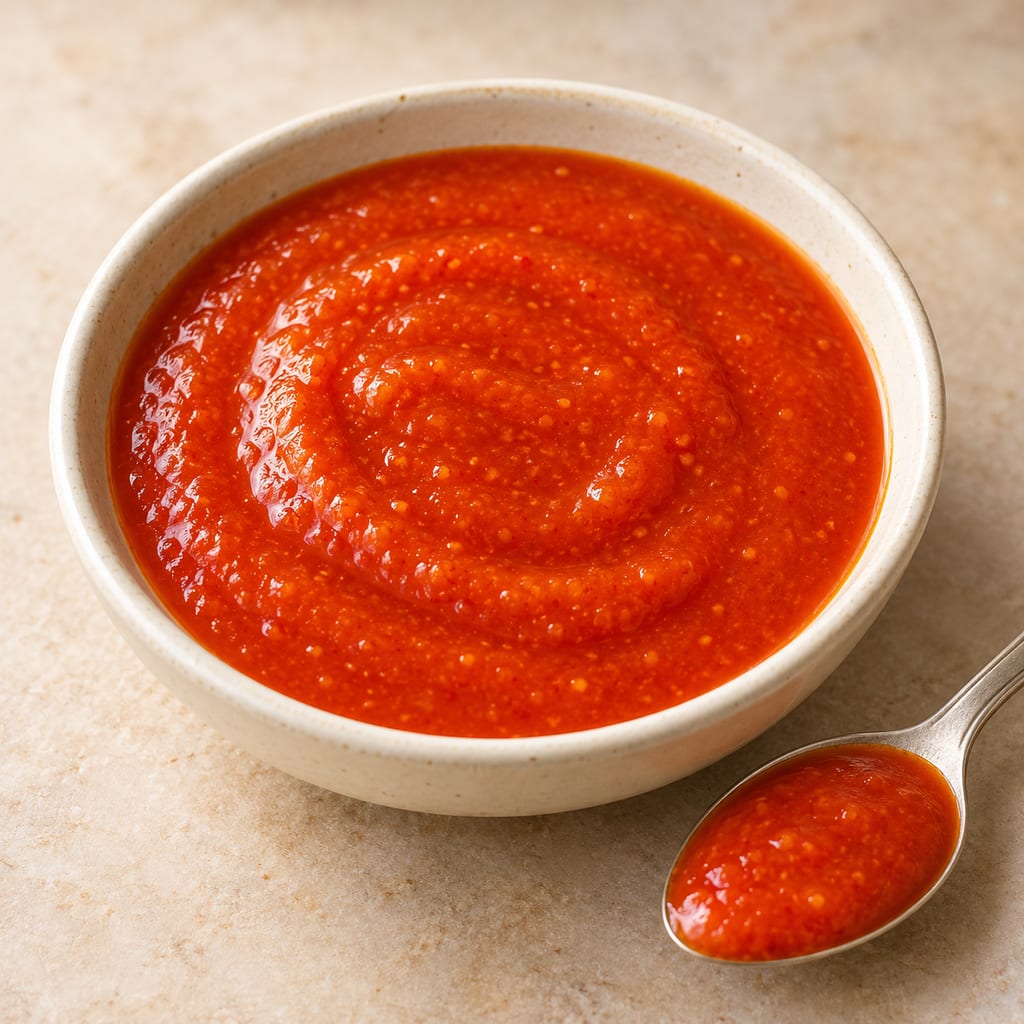
Ripe red chillies, garlic, labelled 5% vinegar, sugar, water and salt are blended, simmered and blended smooth into a cooked chilli sauce.
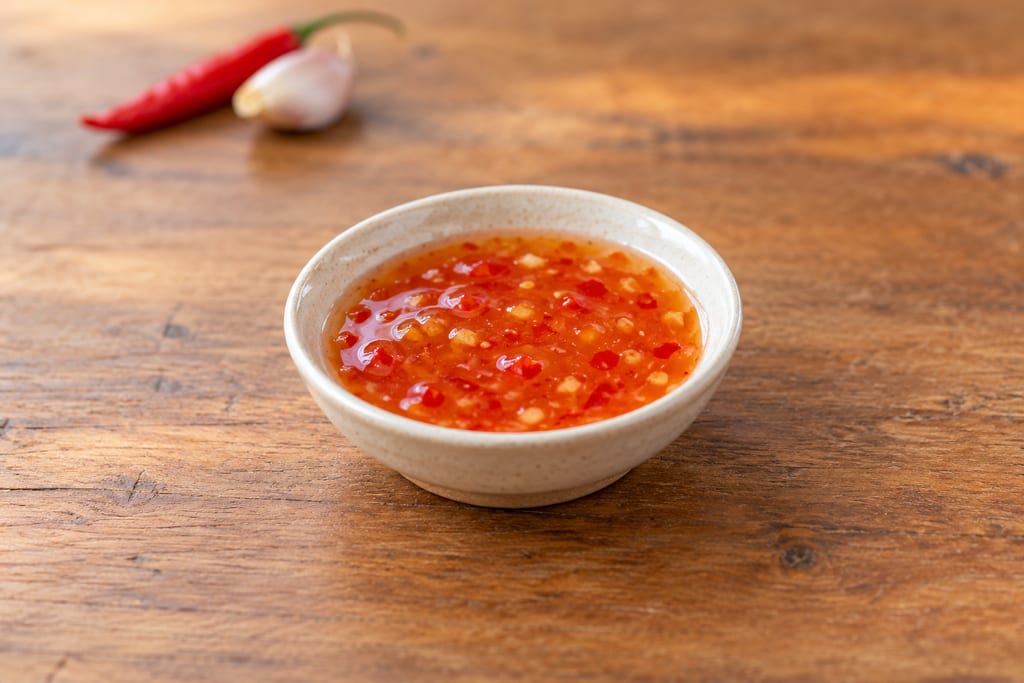
A cooked Thai-style sweet chilli dip combines red chillies, garlic, sugar and vinegar, then uses a small cornflour slurry to give this batch a glossy, spoonable body.
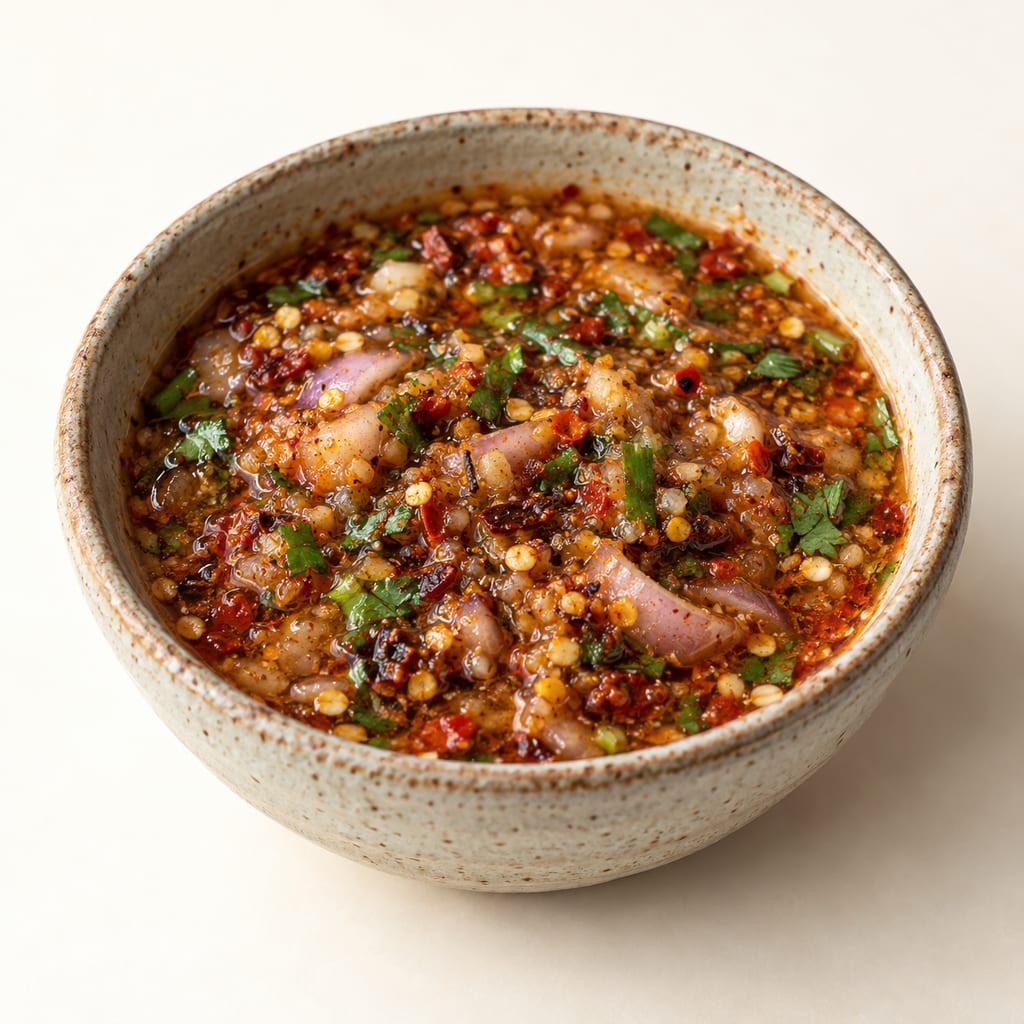
Roasted chillies, shallot and garlic are pounded and loosened with fermented and plain fish sauce, boiled water and lime into a sharp Isan dip for grilled meat and fish.
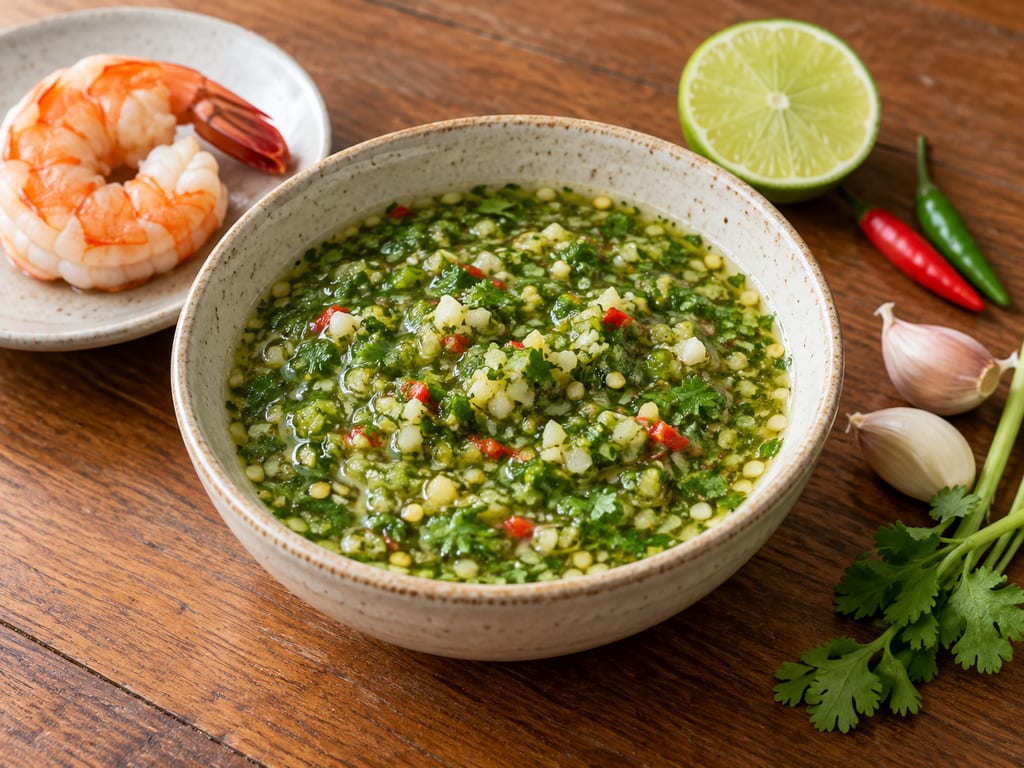
A Thai seafood dipping sauce of chiles, garlic, cilantro stems, fish sauce, lime juice and palm sugar, pounded or briefly blended for a coarse texture.
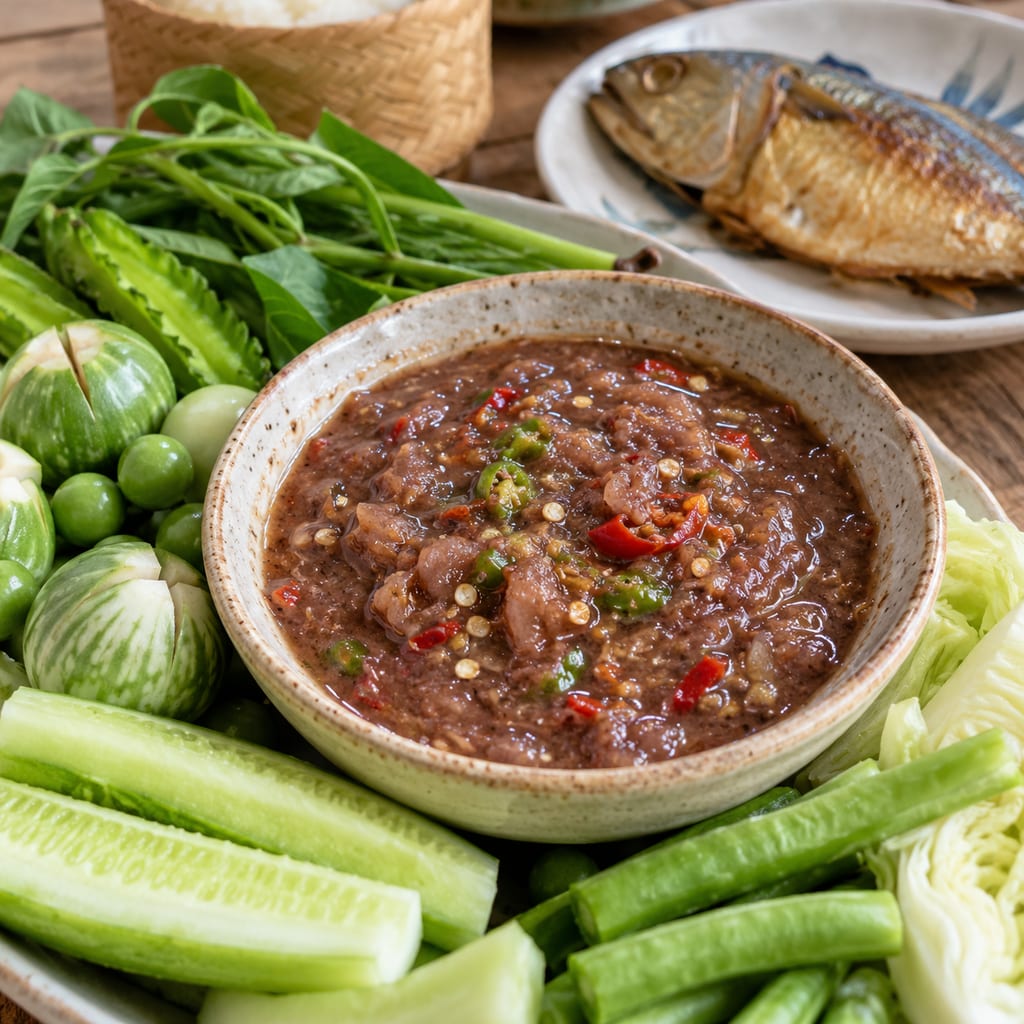
Nam prik kapi is a Thai dip of matured shrimp paste pounded with garlic, bird's eye chilli and lime or tamarind, eaten with vegetables and rice.
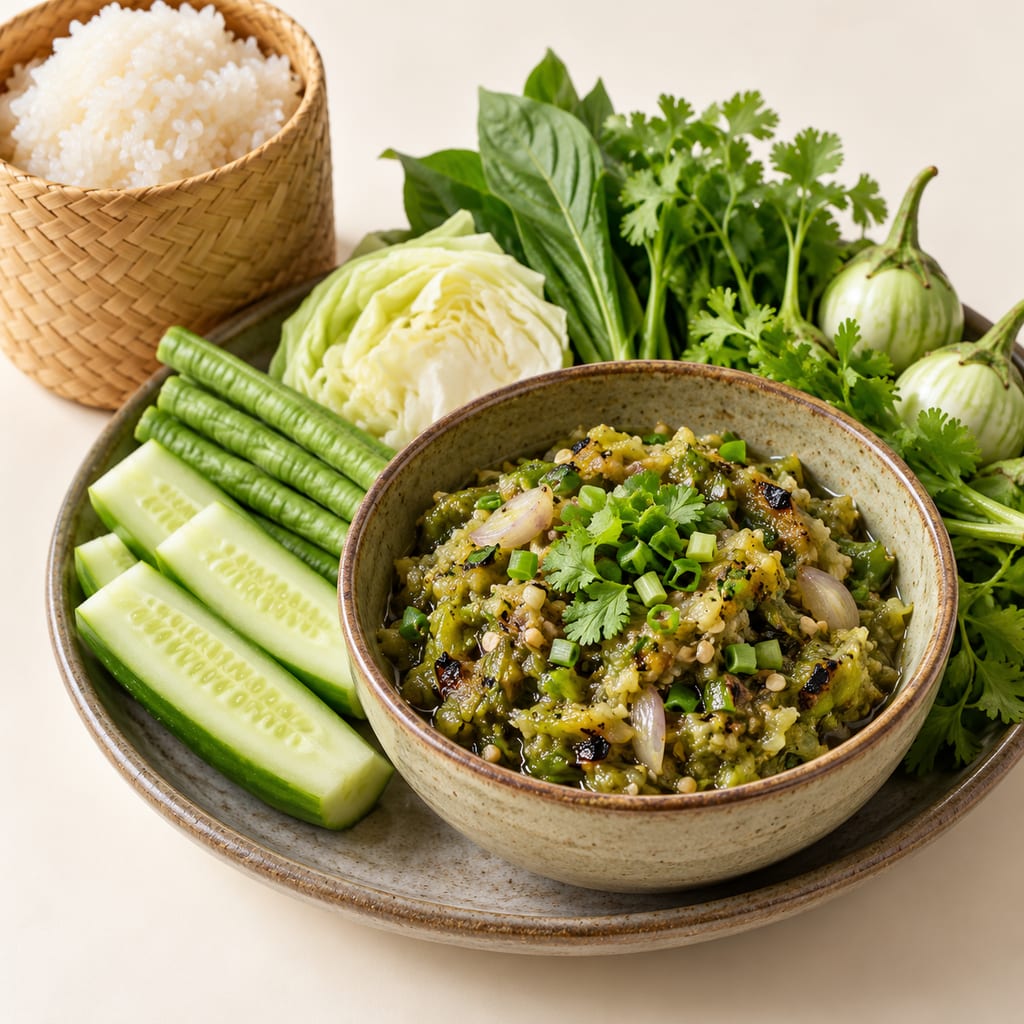
Grilled young green chillies, shallots and garlic are pounded with salt into a coarse northern Thai dip, finished with coriander and spring onion and eaten with sticky rice and vegetables.
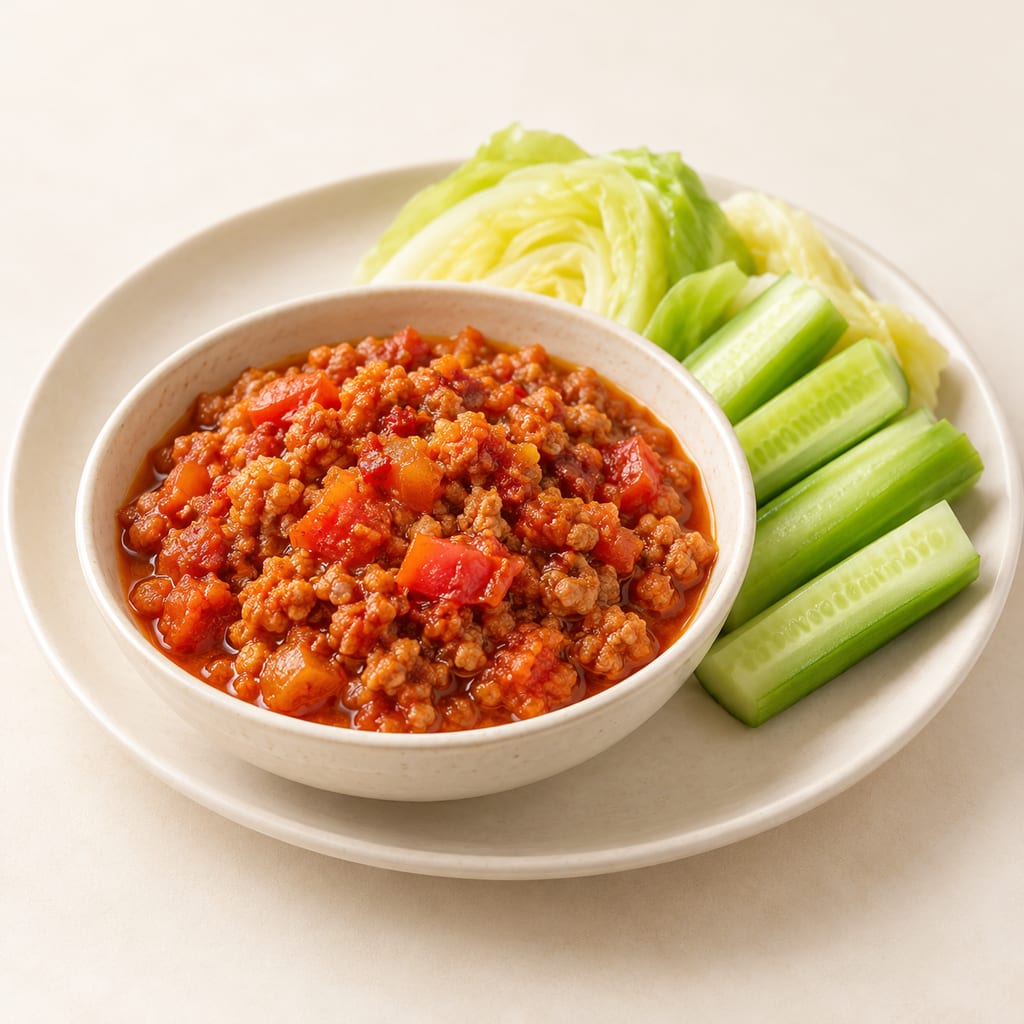
Nam prik ong is a cooked Northern Thai dip of chilli, tomato and minced pork, seasoned with fermented soybean and eaten with vegetables, pork rind and eggs.
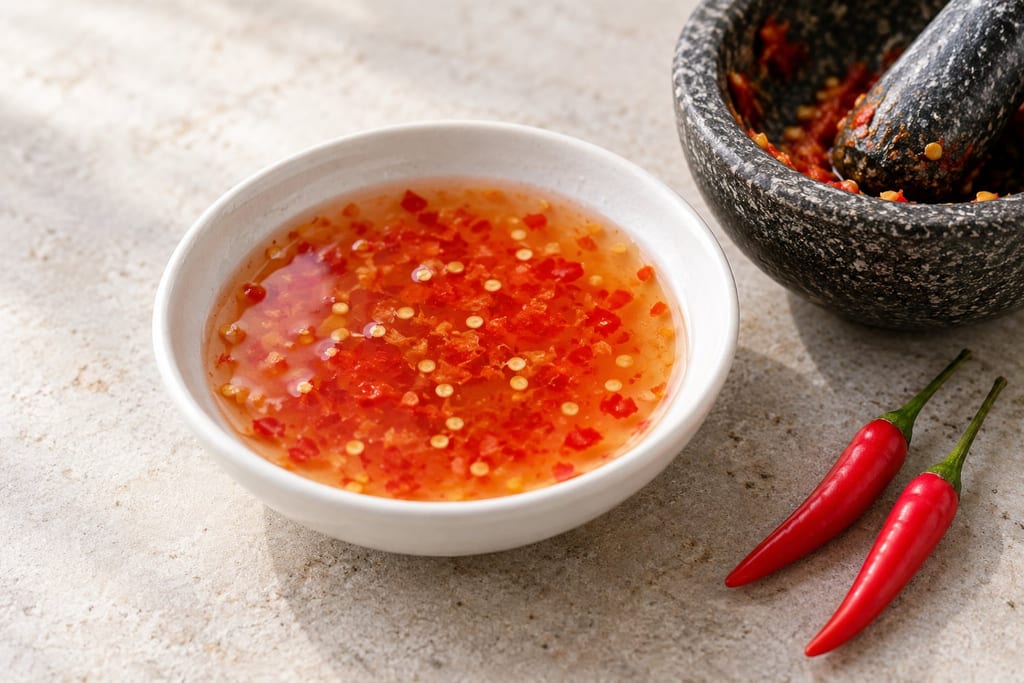
Pailin Chongchitnant's fresh prik nam som card pounds two or three Thai chillies, optionally with garlic, before stirring in white vinegar; charring is a separate optional step.
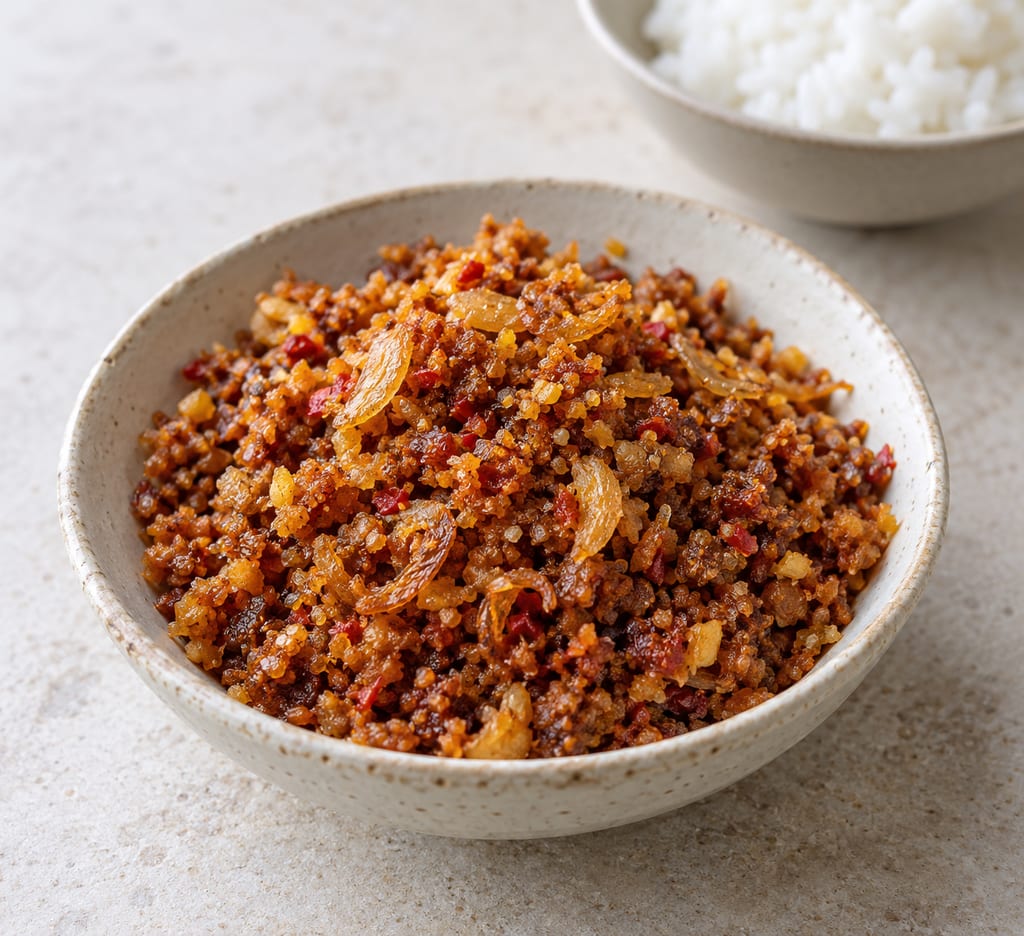
A Myanmar relish of dried shrimp, fried eschalot and garlic, chilli, turmeric, tamarind and ngapi. Naomi Duguid’s published recipe makes about 1 cup; it contains crustacean shellfish.
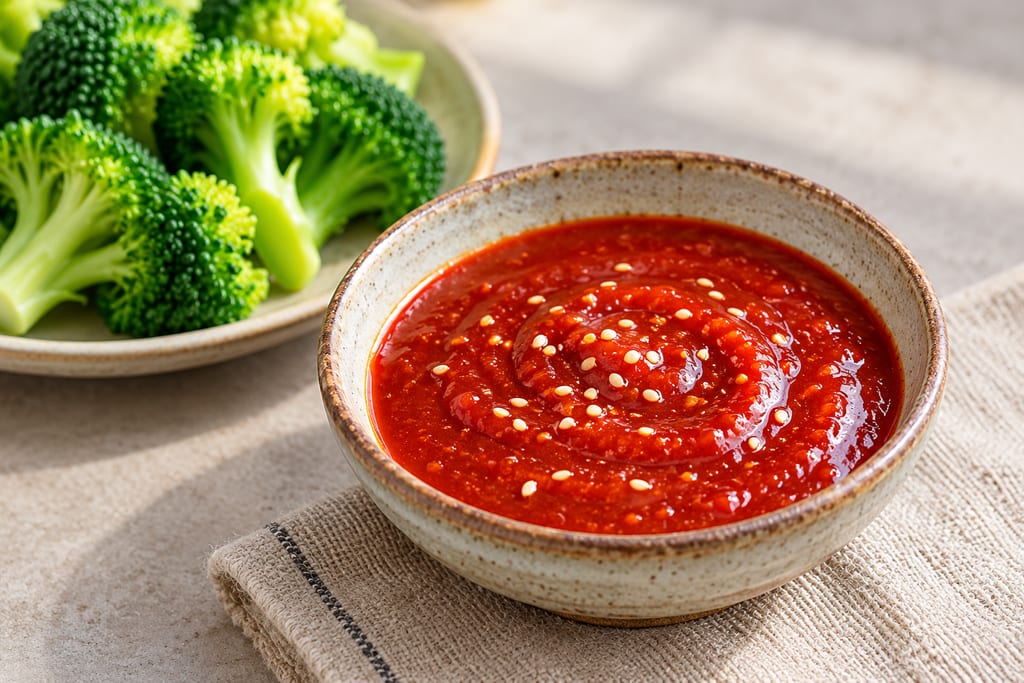
Chogochujang is a Korean sweet-sour sauce made by seasoning gochujang with vinegar and sugar. This development batch adds water and toasted sesame seeds, with optional garlic for the portion being served.
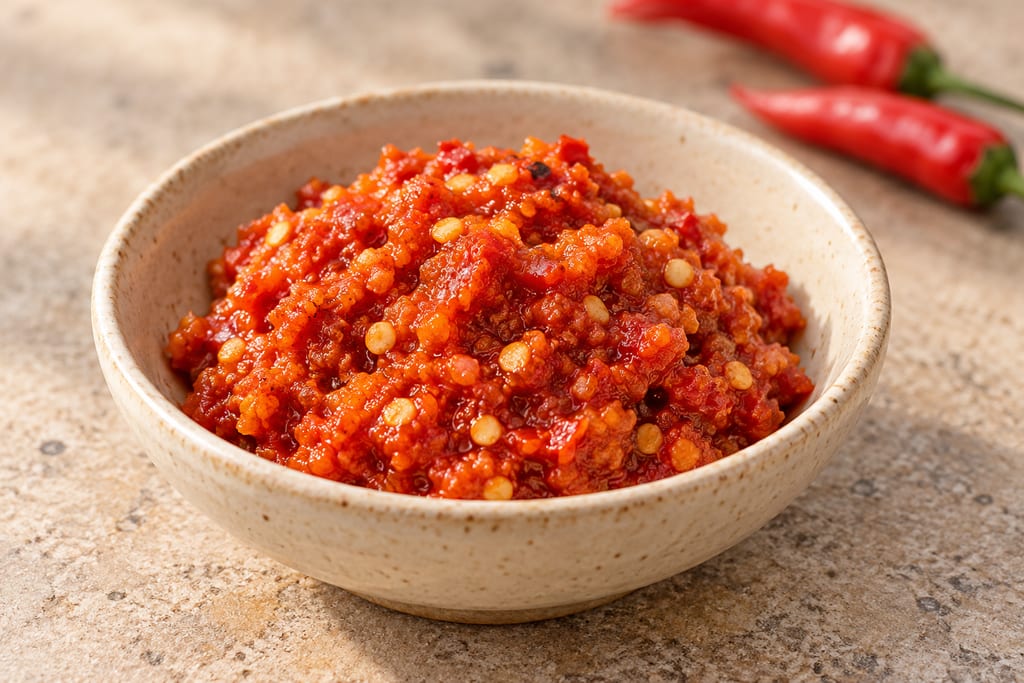
Dinanche, or donne' dinanche, is a Chamorro hot pepper paste of crushed chillies that Guam cooks use on its own or stir into fina'denne'. Its versions range from pepper alone to ones with eggplant, miso or coconut milk.
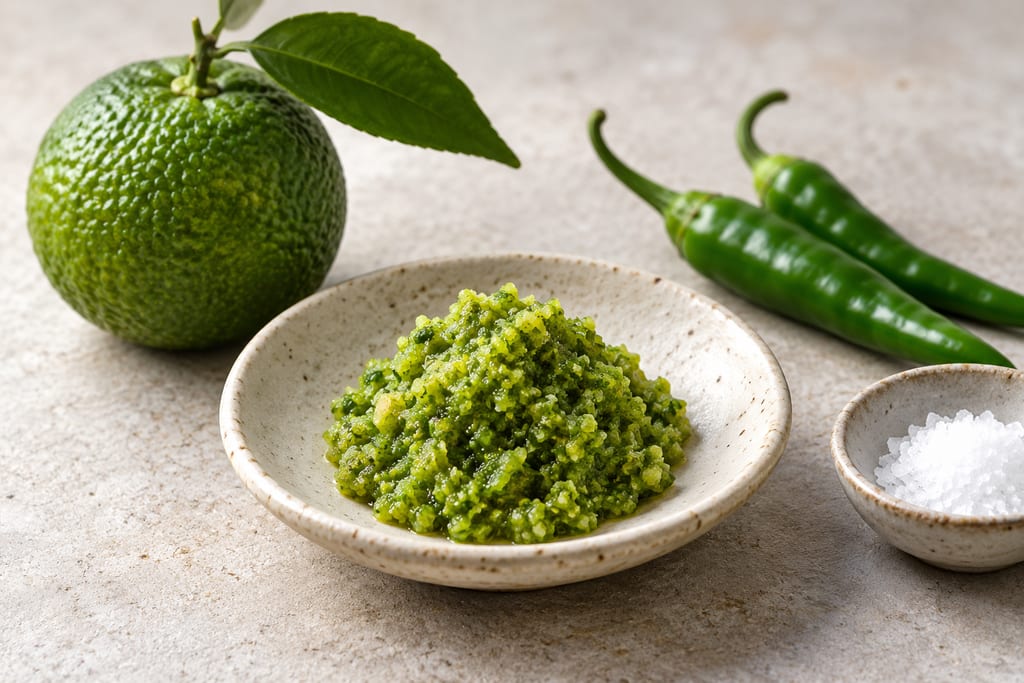
A fresh, uncooked yuzu and green chilli paste inspired by Kyushu’s yuzu kosho, made here as an untested small-batch seasoning rather than a preservation formula.
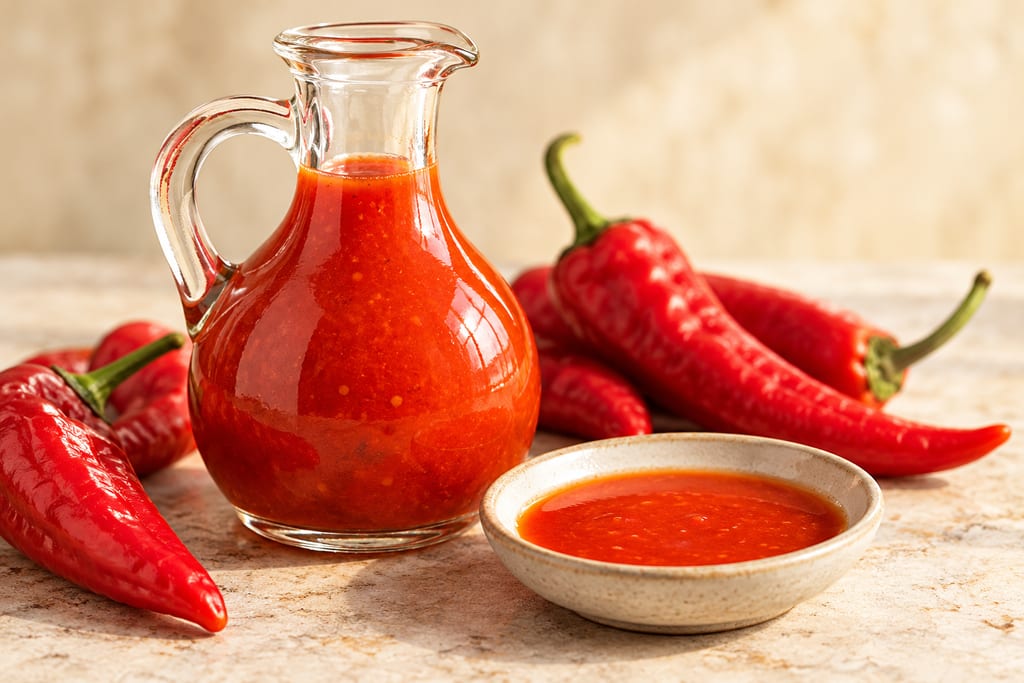
Fresh hot peppers ferment beneath a measured salt brine, then become a bright, tangy sauce blended from the peppers and their liquor.
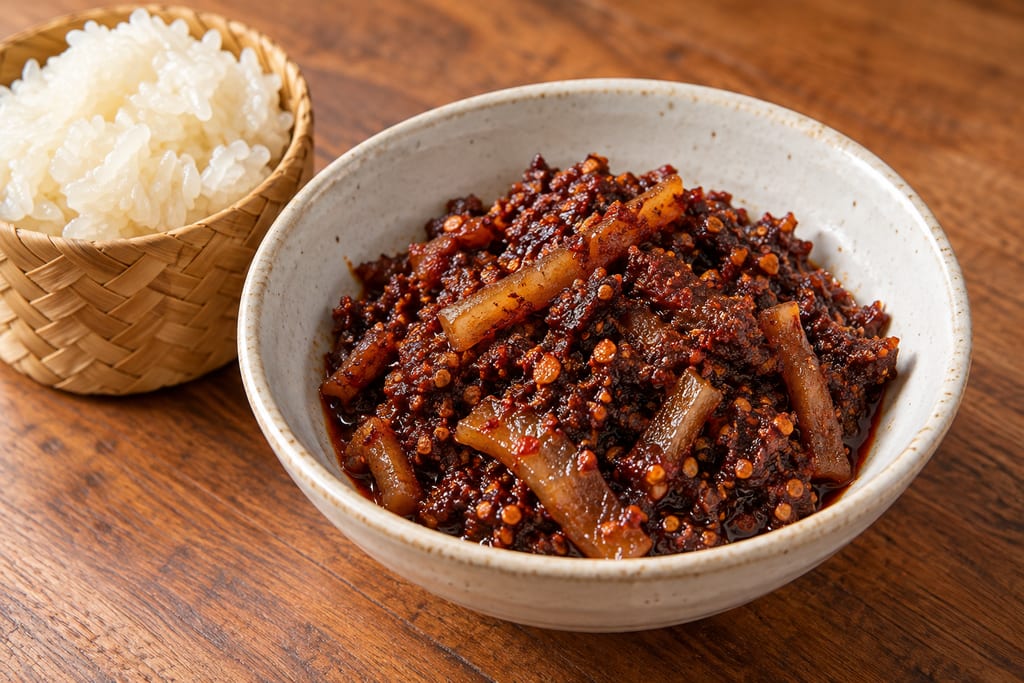
Jeow bong is a Lao paste of dried chilli, shallot, garlic and galangal cooked with buffalo or cow skin, a Luang Prabang specialty eaten with sticky rice and grilled meat.
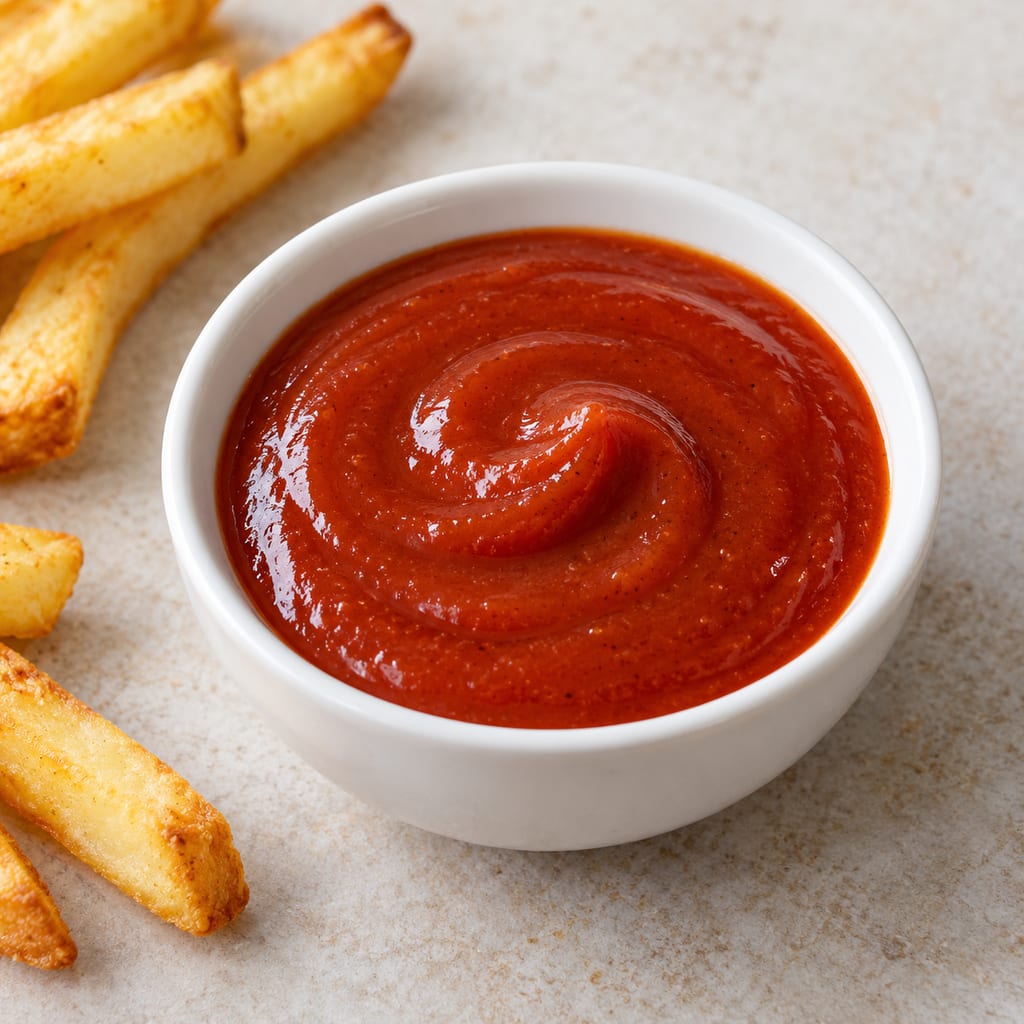
A modern tomato condiment sharpened with the spicy, savoury tang associated with kimchi; this measured version whisk-mixes prepared ketchup and commercial kimchi seasoning.
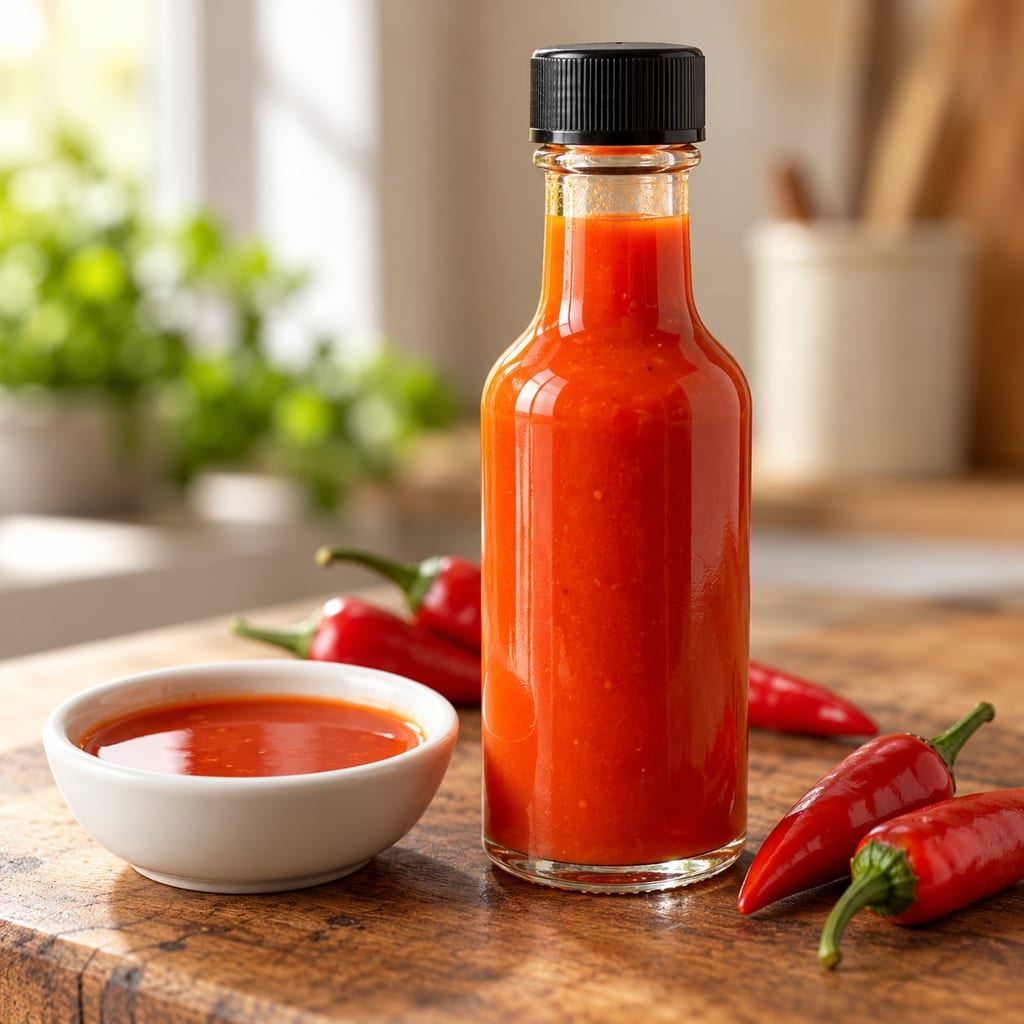
Documentary account of Louisiana pepper sauces, using TABASCO's published barrel-aged commercial process as one specific example; the source does not provide a validated home recipe.
No community contributions have been published for this entry yet.
Sign in to contribute. Published comments and photos are free to read.
Thai Public Broadcasting Service, EatamAreMethod · Uses
กินอยู่คือ - น้ำพริกเผาสูตรเด็ด (EatamAre: a recommended nam prik pao recipe)Ingredients: dried chillies, garlic, shallots, shrimp paste wrapped in pandan leaf, sugar, fish sauce, tamarind juice (about two spoons).
Method: soak, deseed and cut the chillies; dry-roast shallots and garlic; roast the chillies until charred; blend with the other ingredients; adjust sweetness and saltiness; mild heat.
Used in stir-fried chicken with cashew nuts and in a tom yum-flavoured spaghetti with snakehead fish; also eaten with steamed rice.
Stored in the refrigerator and said to keep for a long time, with no duration given. Broadcast 20 December 2025.
Cited in: A paste that seasons as well as dips; Roast, then blend; How it is used; What is not recorded
Rachel Cooks ThaiVariations · Uses
Thai roasted chili paste (nam prik pao)Nam means water or relish, prik chilli and pao roasted; also called chilli paste in oil or chilli jam.
Version with dried chillies, fried shallots and garlic, dried shrimp, shrimp paste, tamarind, fish sauce and palm sugar; frying oil is added back for a jam-like consistency; traditionally roasted or grilled, now usually fried.
Used in tom yum, tom kha, stir-fries, salad dressings, peanut sauce, as a relish and as a spread on toast; refrigerate after opening, lasts many months.
Cited in: A paste that seasons as well as dips; Roast, then blend; How it is used; What is not recorded
WikipediaContext · Uses
Nam phrikNam phrik is a family of Thai chilli sauces served in small saucers beside a meal as a dip or condiment, with regional types.
Nam phrik phao is sweetened with sugar and contains roasted chillies and tamarind; it is used as an ingredient in tom yum and in the squid salad phla pla muek, and is popular as a spread on bread or toast.
Cited in: A paste that seasons as well as dips; How it is used