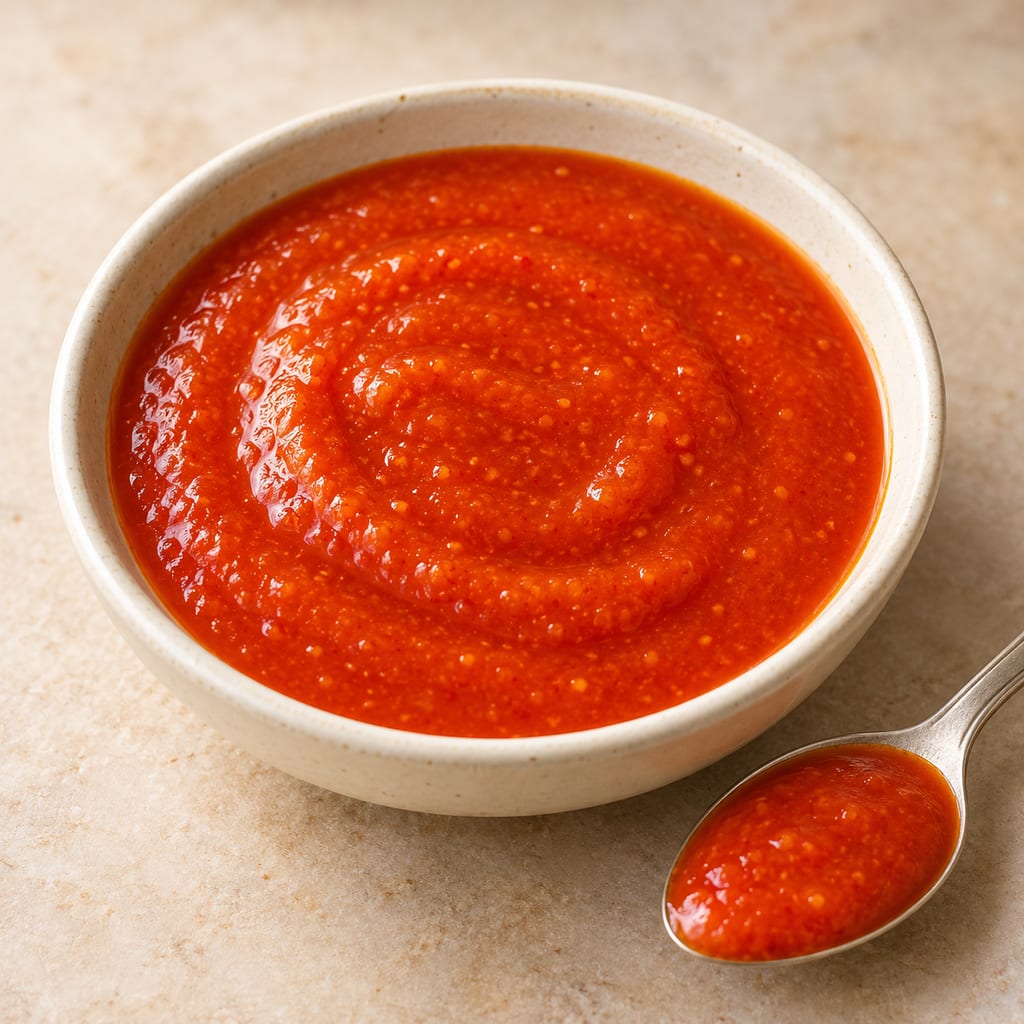
Cooked sriracha-style garlic-chilli sauce
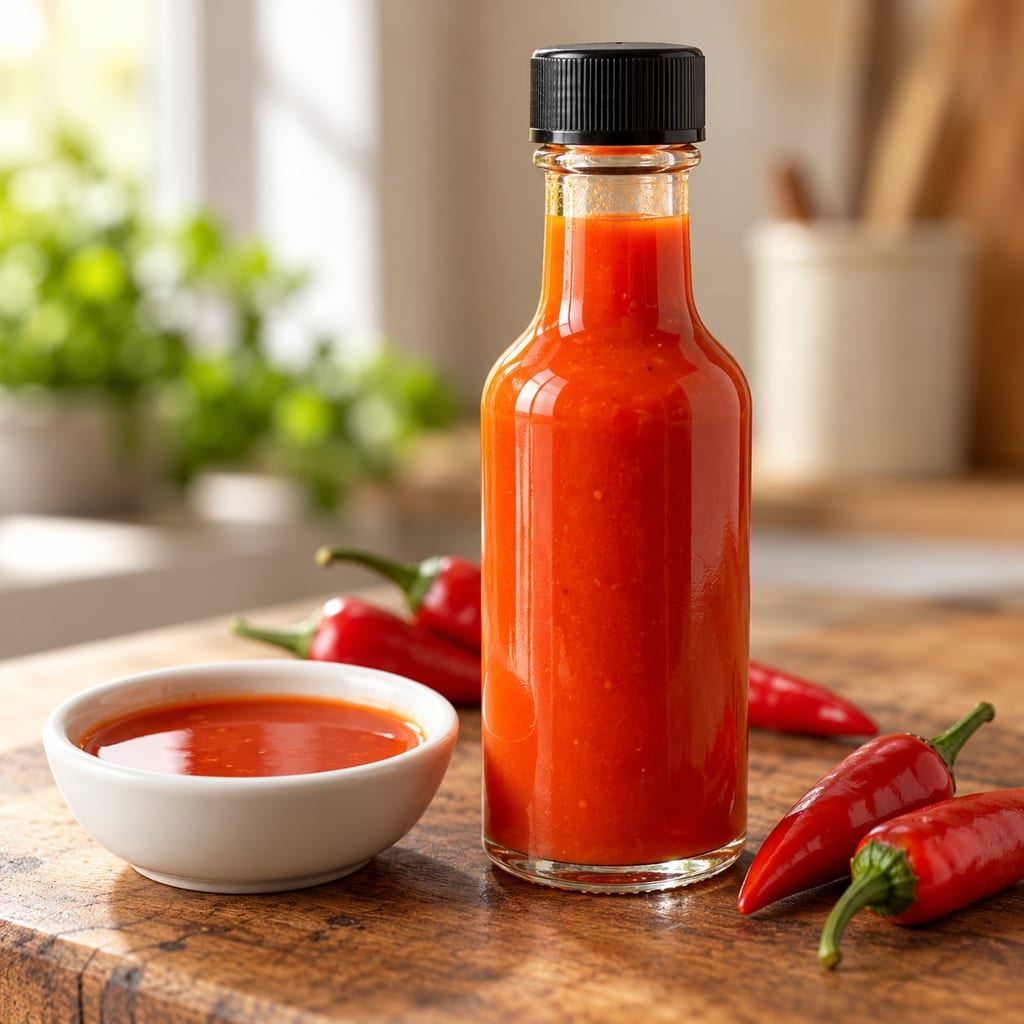
Ripe red chillies, garlic, labelled 5% vinegar, sugar, water and salt are blended, simmered and blended smooth into a cooked chilli sauce.
 FermenteaWhere food goes to change
น้ำพริกกะปิ (nam phrik kapi) · nam phrik kapi · Thai shrimp paste dip
Nam prik kapi is a Thai dip of matured shrimp paste pounded with garlic, bird's eye chilli and lime or tamarind, eaten with vegetables and rice.
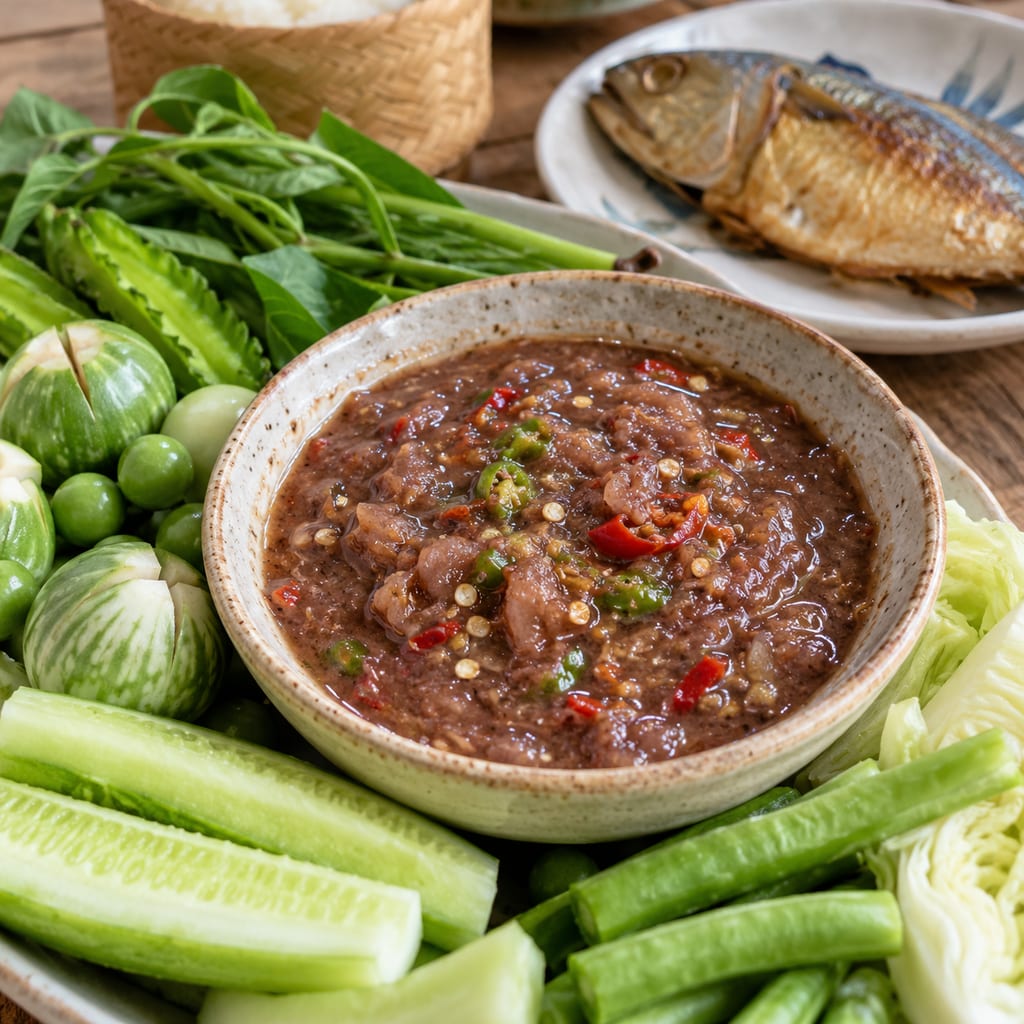
Nam prik kapi (Thai: น้ำพริกกะปิ) is one of the best-known Thai nam prik, the chilli relishes served in small saucers beside a meal. Its base is kapi, a fermented shrimp paste. The Japanese research centre JIRCAS describes the dip as kapi mixed with garlic, bird's eye chilli and lime juice or tamarind, with the exact ingredients depending on local practice and taste. The central Thai type is also described with pea eggplant.
It is eaten with vegetables and rice. In central Thailand a typical partner is fried pla thu, the short mackerel, which gives a hot, sour, salty paste something plain and rich to lean on.
All of the fermentation happens before the dip is made. Kapi is made from small saltwater or brackish-water shrimp mixed with salt, dried in the sun, pounded to a sticky paste and packed into jars or vats, where it ferments for at least four months with low salt or six months with high salt. JIRCAS gives a shelf life of 12 to 18 months for the paste.
The dip simply mixes that matured paste with fresh garlic, chilli and a souring ingredient, so it adds no fermentation stage of its own. The lime or tamarind lifts the paste's heavy savoury, shrimp flavour, and the chilli and garlic add heat. The paste's long shelf life belongs to the paste: there is no evidence that a dip with fresh ingredients keeps as long, so a freshly mixed dip should be treated as a fresh preparation.
A study in Samut Songkhram Province documents a local variant called nam prik kapi cha-karm. It uses shrimp paste from Khlong Khon, leaves of cha-karm (sea blite, Suaeda maritima) grown locally, and coconut milk. Researchers interviewed experts and residents in three sub-districts and surveyed how people ate it. They found the dish popular among middle-aged people and handed down in families over several generations.
It is served with blanched cha-karm leaves and coconut milk, and sometimes with fried mackerel or fried eggs. The study documents a local tradition. It is not a national standard for nam prik kapi, and its abstract gives no full recipe or storage test.
JIRCAS names a close relative, kapi-kua, a spicy paste pounded from kapi with chilli, galangal, lemongrass, shallots, garlic and kaffir lime peel and used to make soups. Kapi is also cooked into fried rice. Both are separate preparations from the dip.
Neither source gives quantities, an order of work, a yield or a date, so nothing here fixes a standard recipe or an origin.
No cited source dates nam prik kapi. The cha-karm variant is described as passed down through several generations of families in Samut Songkhram, and the study found it popular among middle-aged people.
Scaling: source batch only
The dip adds fresh garlic, chilli and lime to the paste. Nothing shows that it keeps as long as the matured paste does.
Hazard sourceTreat the mixed dip as a fresh preparation; no tested storage limit exists.
Control sourceThe shrimp paste is shellfish and an allergen. The keeping qualities of matured paste do not transfer to a freshly mixed dip, and smell or taste does not show that the dip is safe.
A general encyclopedia entry places the dip in central Thailand; no date or exact origin is given.
A field study of the cha-karm variant in the Khlong Khon, Khao Yi San and Phra Nam Daeng sub-districts; it documents a local variant, not the origin of the dip.
Ripe red chillies, garlic, labelled 5% vinegar, sugar, water and salt are blended, simmered and blended smooth into a cooked chilli sauce.
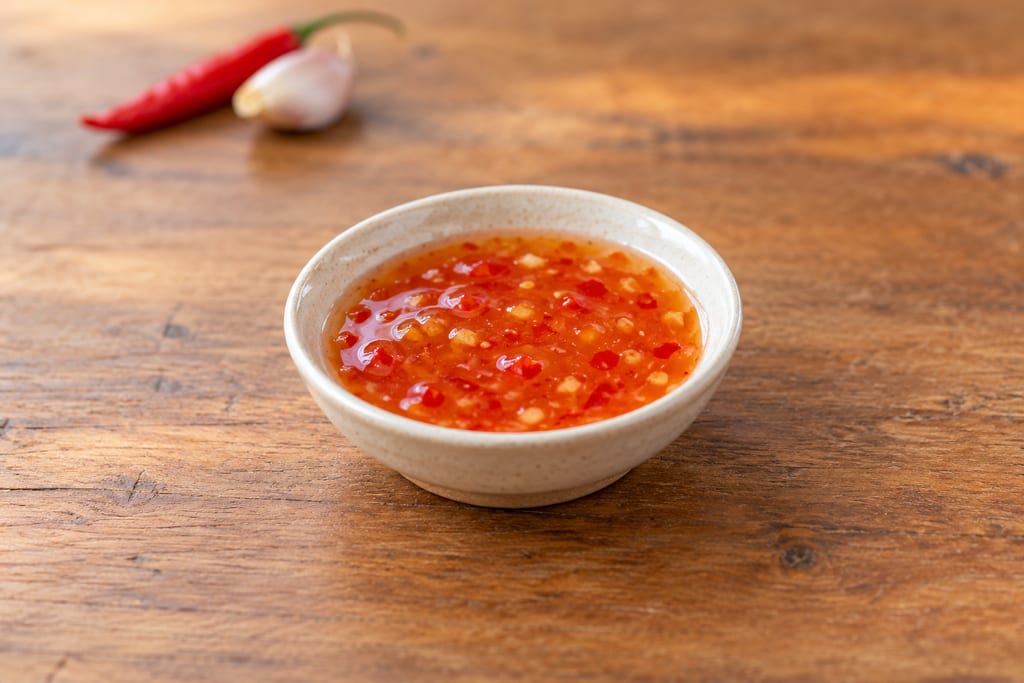
A cooked Thai-style sweet chilli dip combines red chillies, garlic, sugar and vinegar, then uses a small cornflour slurry to give this batch a glossy, spoonable body.
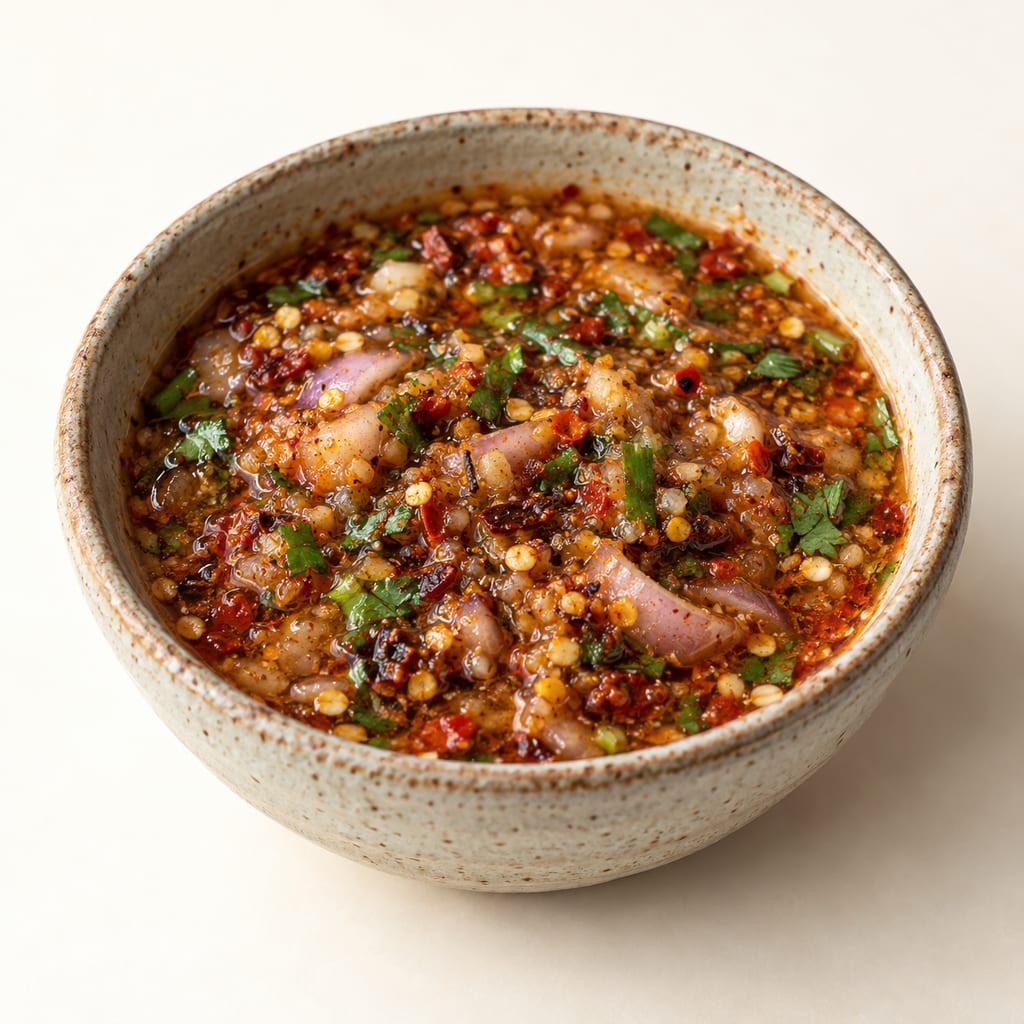
Roasted chillies, shallot and garlic are pounded and loosened with fermented and plain fish sauce, boiled water and lime into a sharp Isan dip for grilled meat and fish.
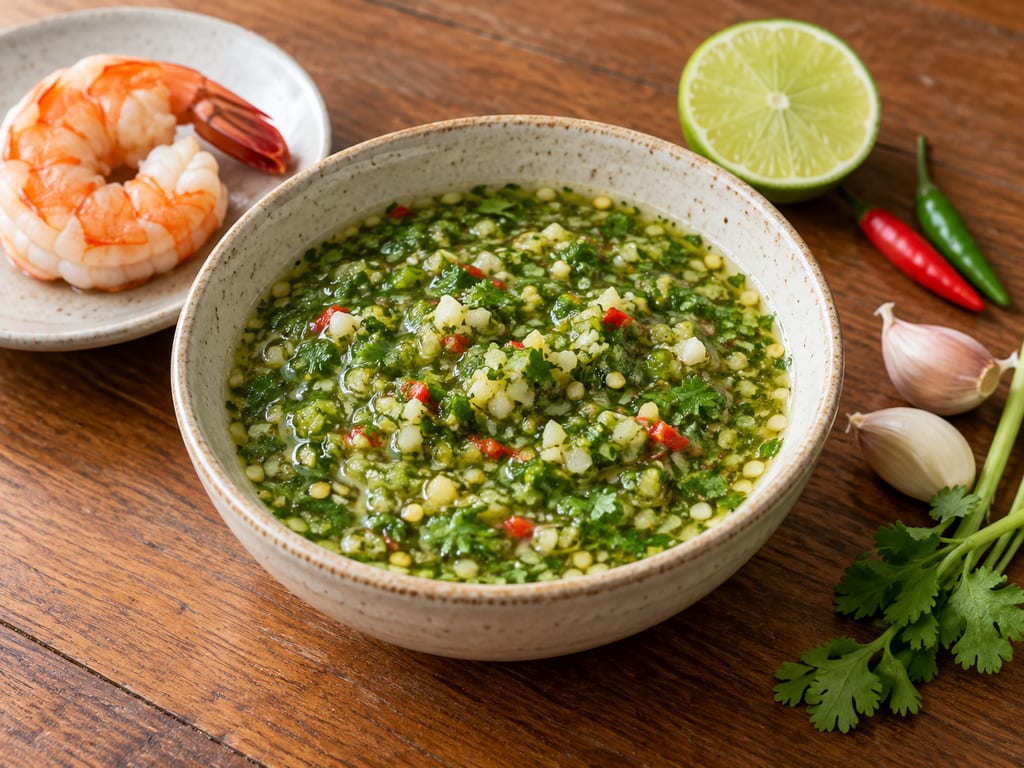
A Thai seafood dipping sauce of chiles, garlic, cilantro stems, fish sauce, lime juice and palm sugar, pounded or briefly blended for a coarse texture.
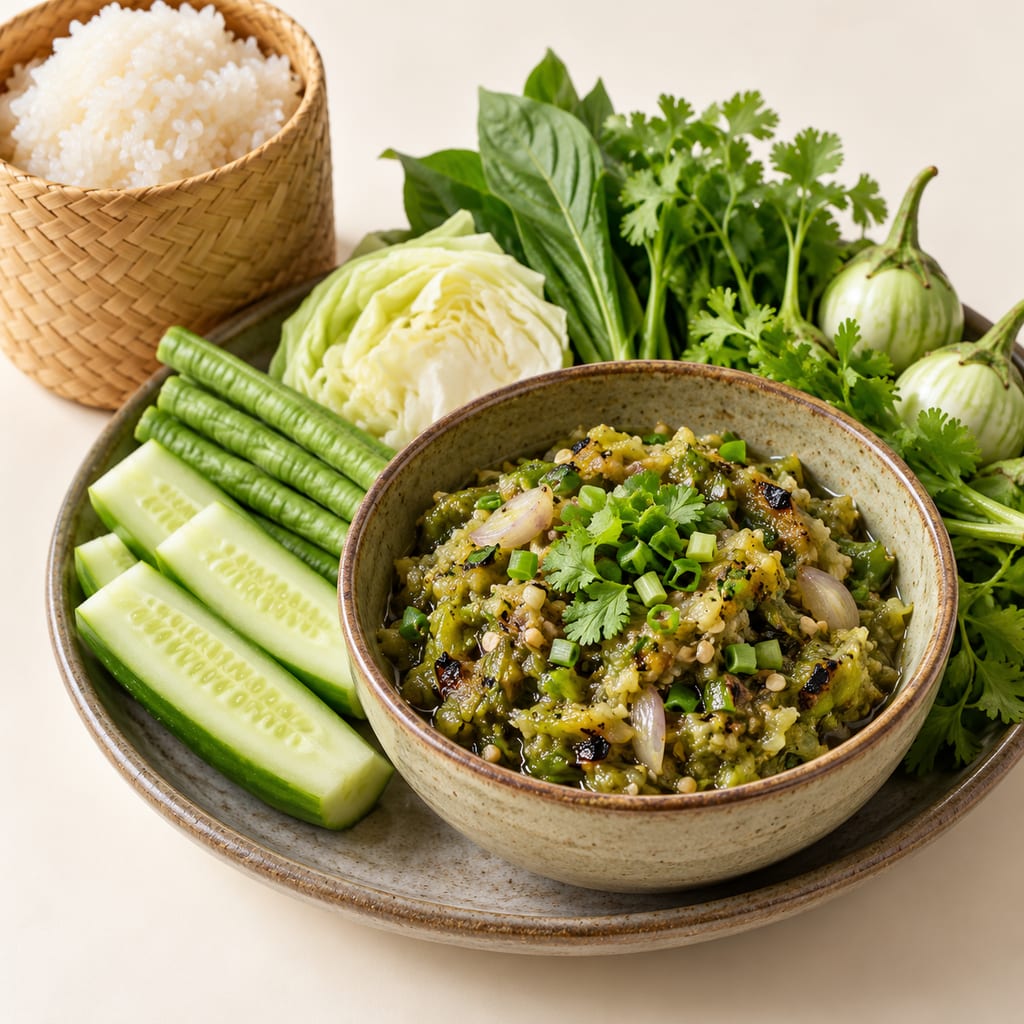
Grilled young green chillies, shallots and garlic are pounded with salt into a coarse northern Thai dip, finished with coriander and spring onion and eaten with sticky rice and vegetables.
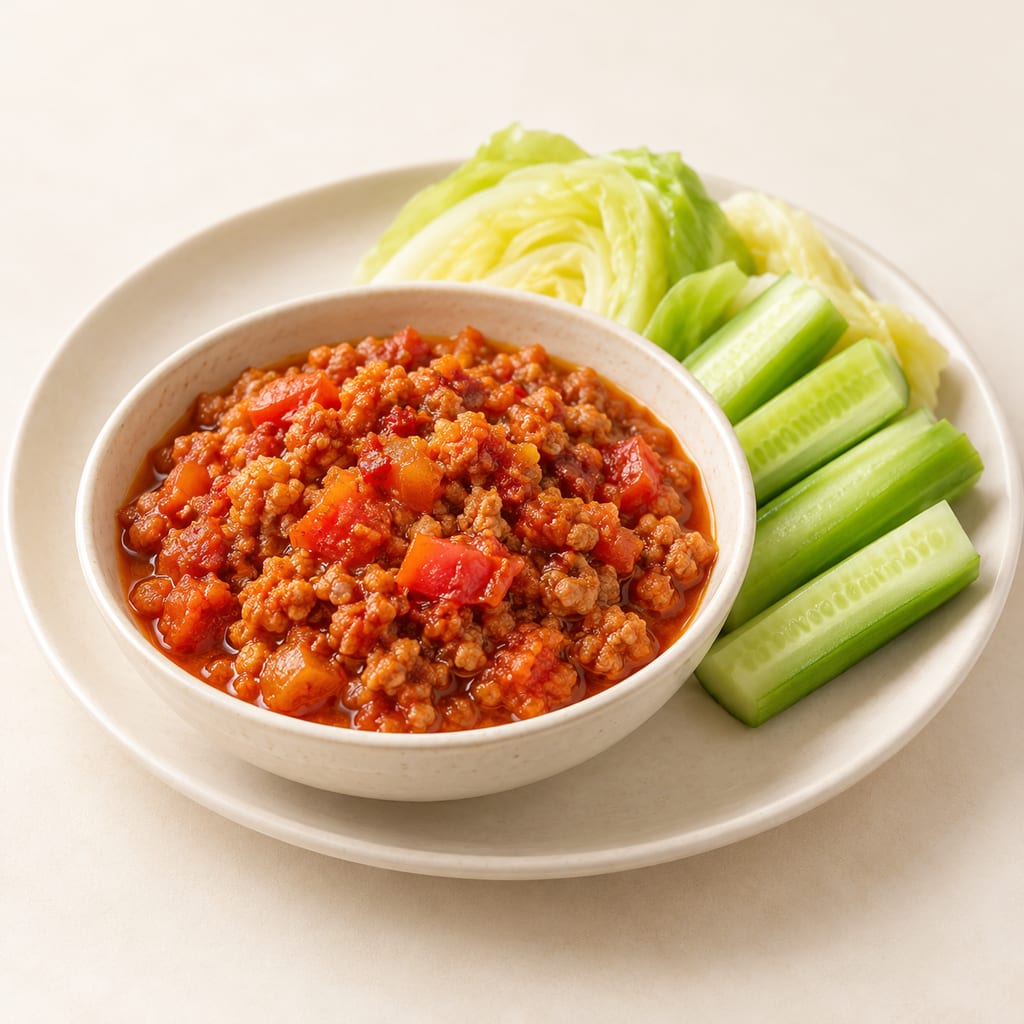
Nam prik ong is a cooked Northern Thai dip of chilli, tomato and minced pork, seasoned with fermented soybean and eaten with vegetables, pork rind and eggs.
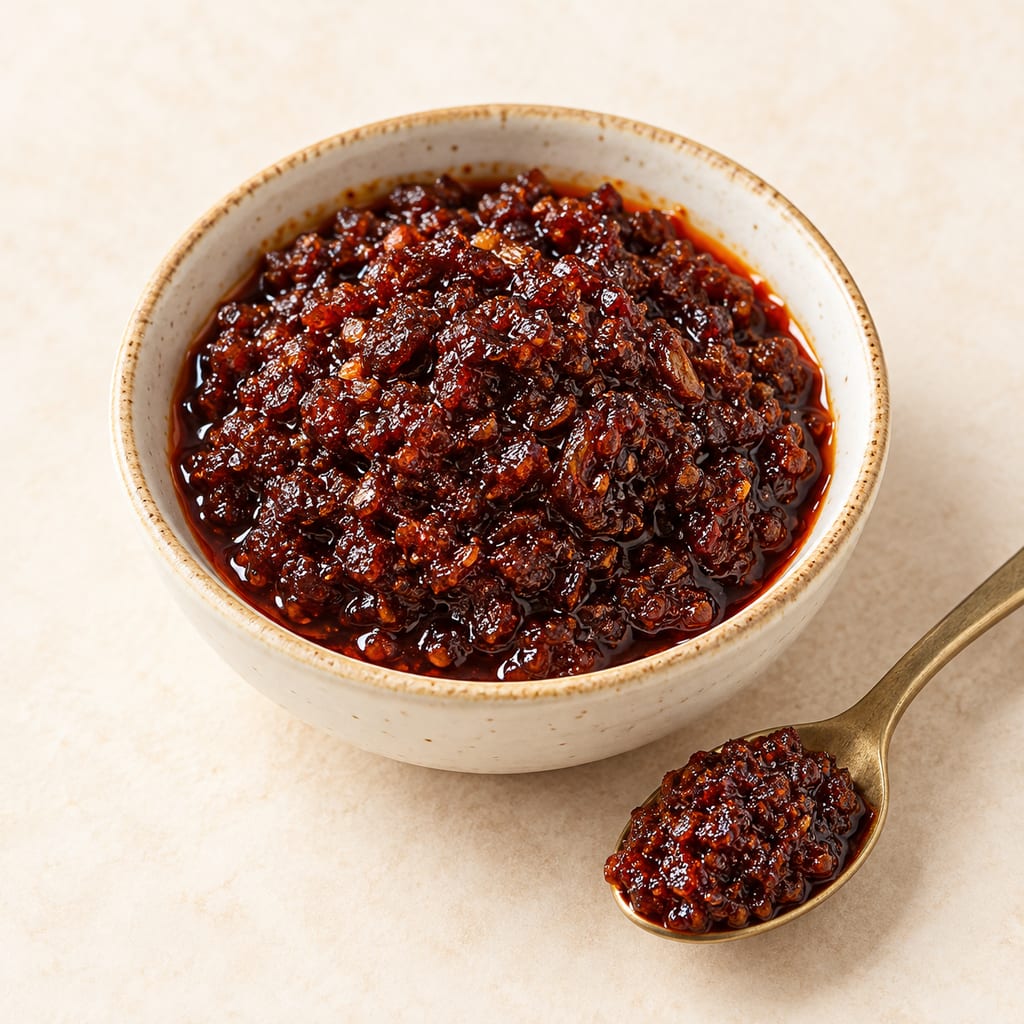
Nam prik pao is a Thai roasted chilli paste, sweet, salty and sour with only mild heat, used as a dip, a spread and a seasoning for cooked dishes.
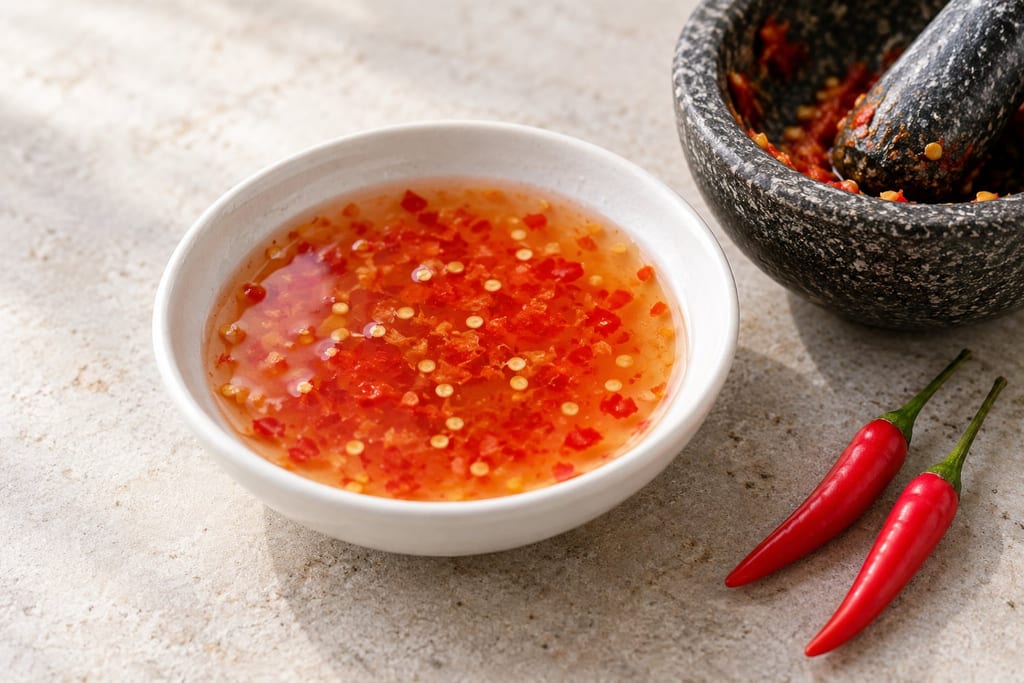
Pailin Chongchitnant's fresh prik nam som card pounds two or three Thai chillies, optionally with garlic, before stirring in white vinegar; charring is a separate optional step.
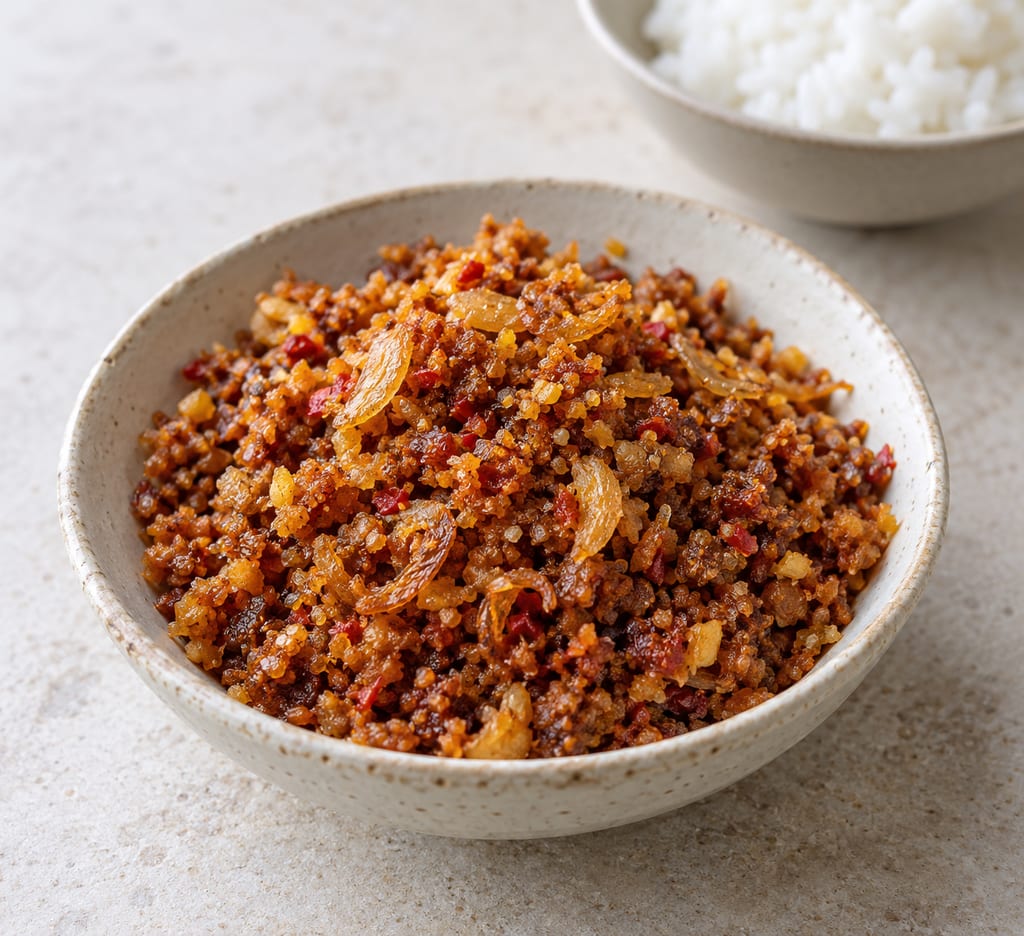
A Myanmar relish of dried shrimp, fried eschalot and garlic, chilli, turmeric, tamarind and ngapi. Naomi Duguid’s published recipe makes about 1 cup; it contains crustacean shellfish.
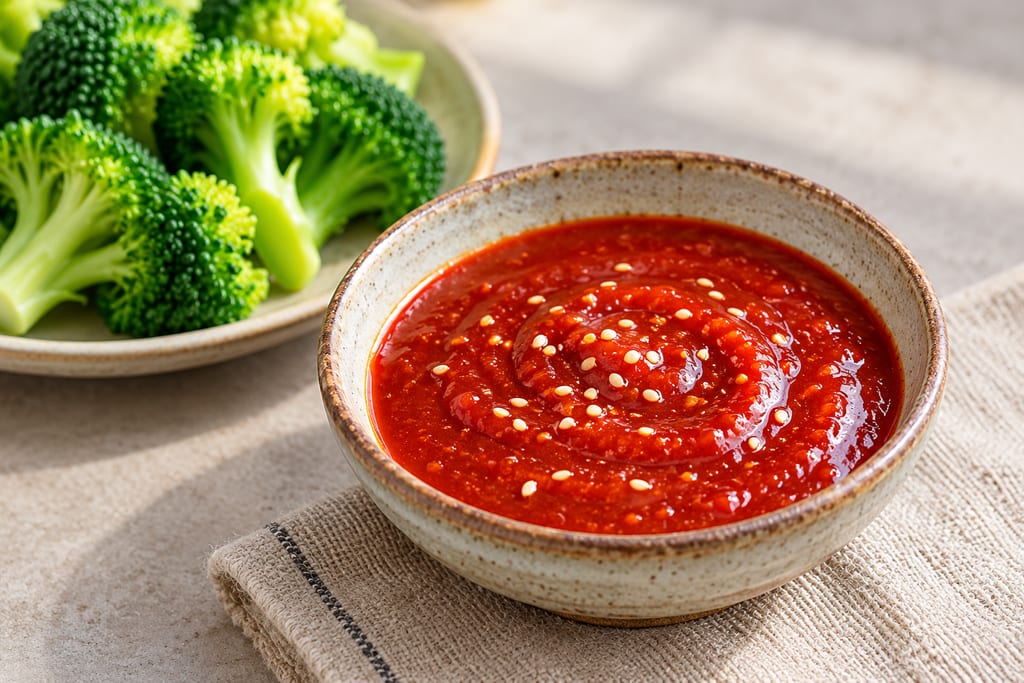
Chogochujang is a Korean sweet-sour sauce made by seasoning gochujang with vinegar and sugar. This development batch adds water and toasted sesame seeds, with optional garlic for the portion being served.
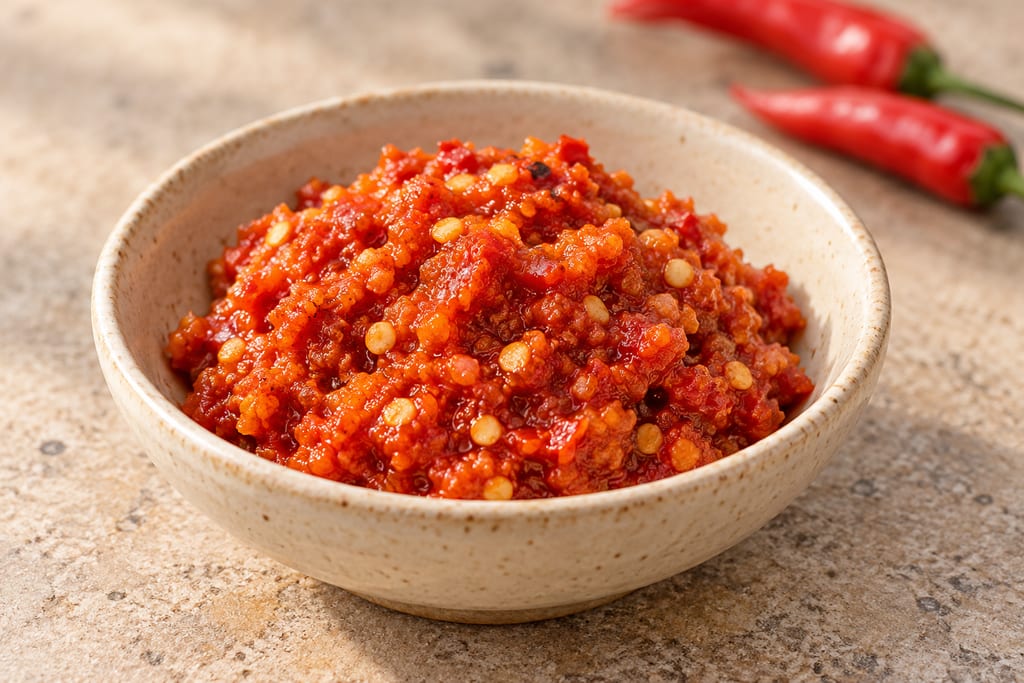
Dinanche, or donne' dinanche, is a Chamorro hot pepper paste of crushed chillies that Guam cooks use on its own or stir into fina'denne'. Its versions range from pepper alone to ones with eggplant, miso or coconut milk.
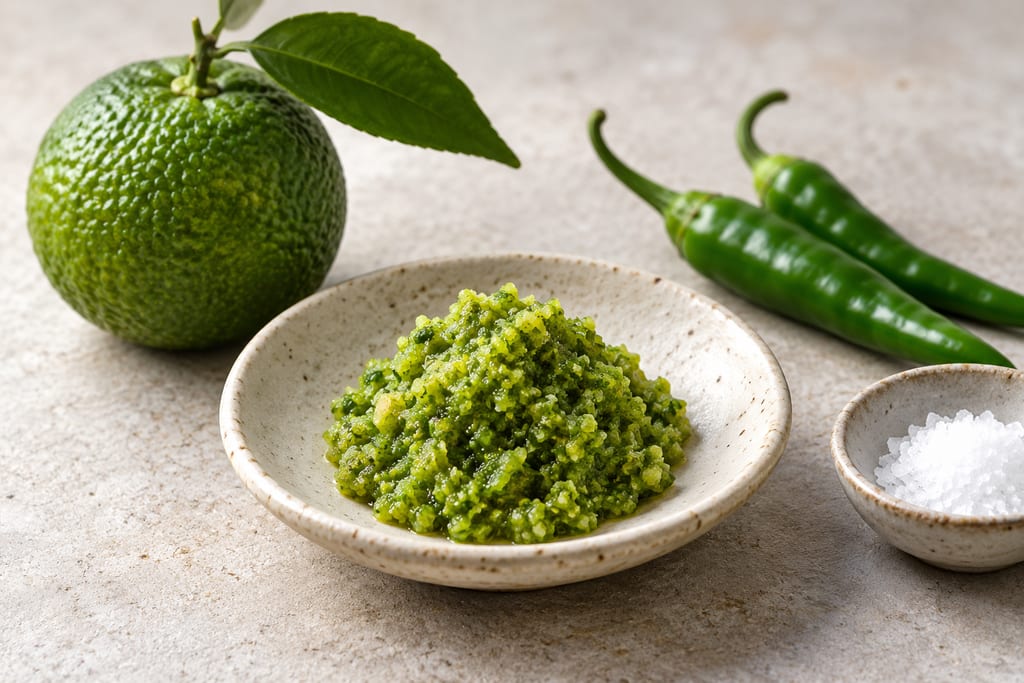
A fresh, uncooked yuzu and green chilli paste inspired by Kyushu’s yuzu kosho, made here as an untested small-batch seasoning rather than a preservation formula.
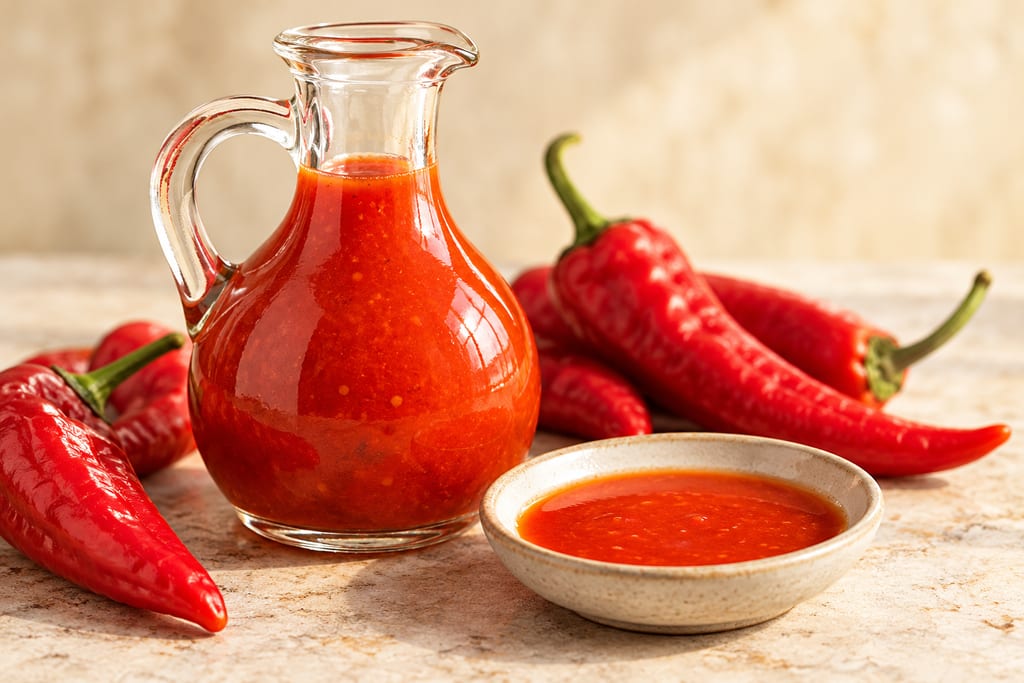
Fresh hot peppers ferment beneath a measured salt brine, then become a bright, tangy sauce blended from the peppers and their liquor.
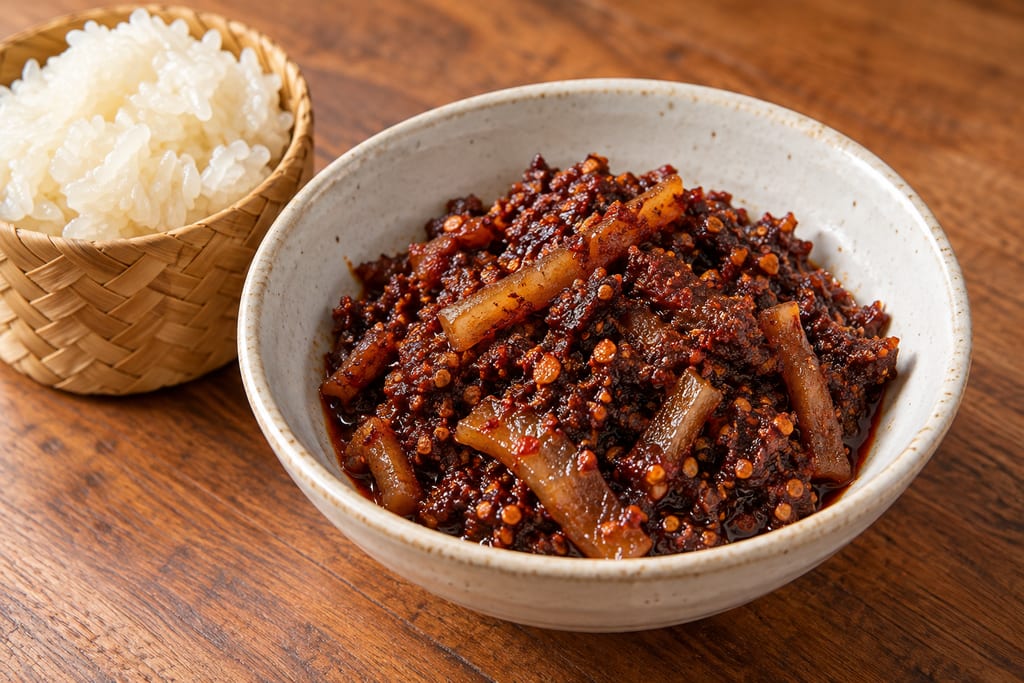
Jeow bong is a Lao paste of dried chilli, shallot, garlic and galangal cooked with buffalo or cow skin, a Luang Prabang specialty eaten with sticky rice and grilled meat.
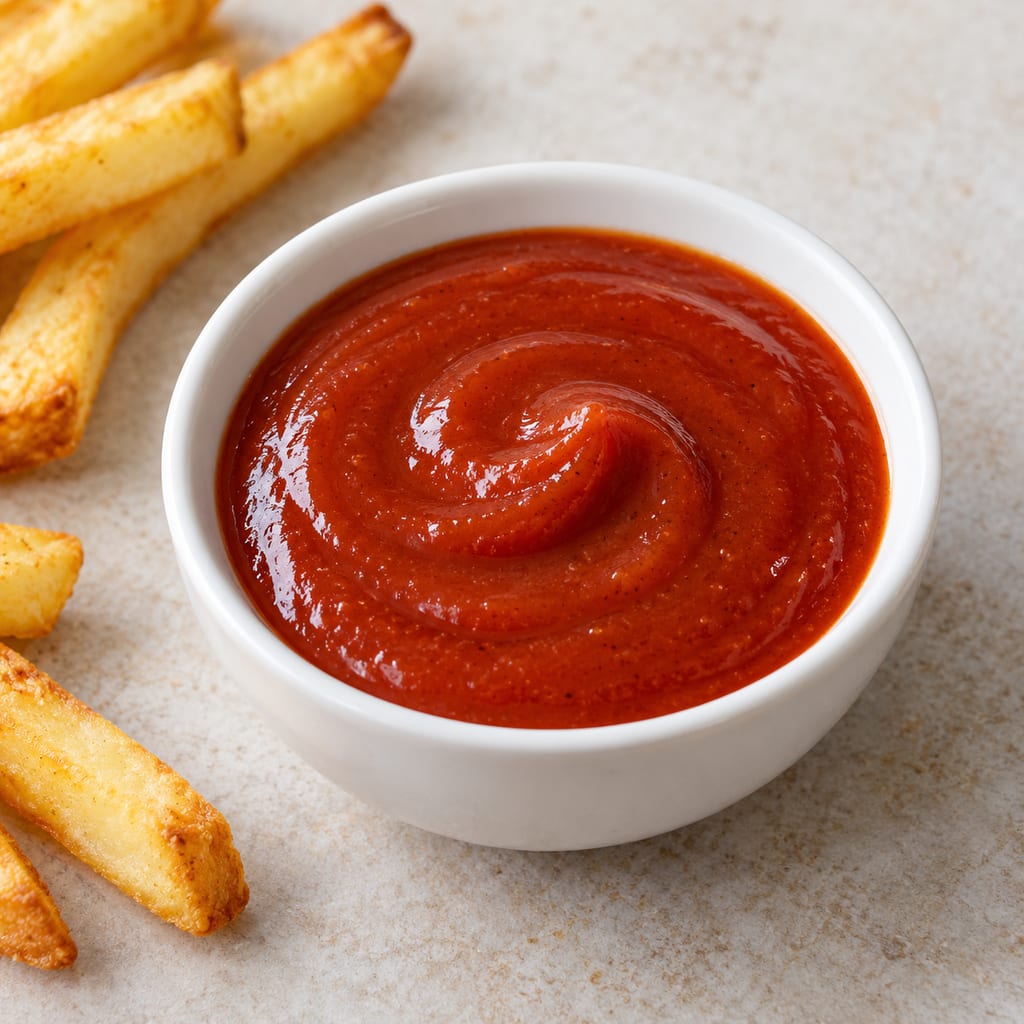
A modern tomato condiment sharpened with the spicy, savoury tang associated with kimchi; this measured version whisk-mixes prepared ketchup and commercial kimchi seasoning.
Documentary account of Louisiana pepper sauces, using TABASCO's published barrel-aged commercial process as one specific example; the source does not provide a validated home recipe.
No community contributions have been published for this entry yet.
Sign in to contribute. Published comments and photos are free to read.
Japan International Research Center for Agricultural SciencesMethod · Uses · Safety
Database of Fermented Foods of Thailand: Ka-piNam prik kapi is kapi mixed with garlic, bird's eye chilli and lime juice or tamarind; ingredients vary with local practice and taste; no steps or quantities are given.
It is used as a dip for vegetables, eaten with rice.
Kapi is made from small saltwater or brackish-water shrimp and salt, sun-dried, pounded and fermented for at least four months (low salt) or six months (high salt).
Kapi-kua, a chilli paste pounded from kapi, is a related preparation used for soups.
Cited in: A dip built on shrimp paste; The ferment is the paste, not the dip; Related preparations and what is missing
Journal of Thai Food Culture, Suan Dusit School of Culinary ArtsVariations · Uses
The Study on The Local Wisdom of Food: Nam Prik Kapi Cha-Karm (Suaeda maritima) in Samut SongKharm ProvinceNam prik kapi cha-karm is a local variant made with Khlong Khon shrimp paste, locally grown cha-karm (Suaeda maritima) leaves and coconut milk.
Study by interview and questionnaire in Khlong Khon, Khao Yi San and Phra Nam Daeng sub-districts of Samut Songkhram; the dish is popular among middle-aged people and has been handed down through generations.
Served with blanched cha-karm, coconut milk and sometimes fried mackerel or fried eggs.
Cited in: Nam prik kapi cha-karm in Samut Songkhram; Related preparations and what is missing
WikipediaContext
Nam phrikNam phrik is a family of Thai chilli sauces served in small saucers beside the main dish as a dip or condiment.
Nam phrik kapi is the central Thai type made with shrimp paste, lime, chillies and often pea eggplant, eaten with fried pla thu and vegetables.
Cited in: A dip built on shrimp paste