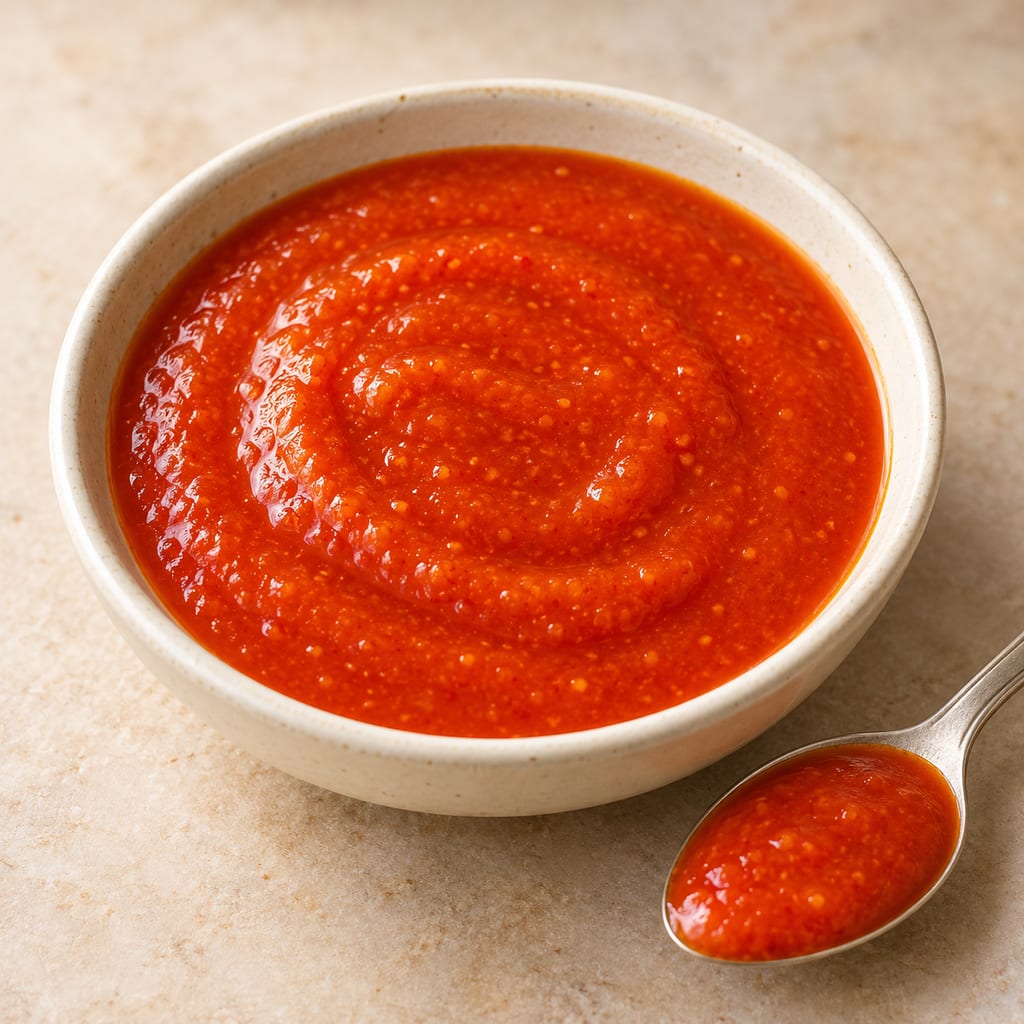
Cooked sriracha-style garlic-chilli sauce
Ripe red chillies, garlic, labelled 5% vinegar, sugar, water and salt are blended, simmered and blended smooth into a cooked chilli sauce.
 FermenteaWhere food goes to change
Modern method
Prik nam som (พริกน้ำส้ม) · Prik nam som · Chili vinegar
Pailin Chongchitnant's fresh prik nam som card pounds two or three Thai chillies, optionally with garlic, before stirring in white vinegar; charring is a separate optional step.
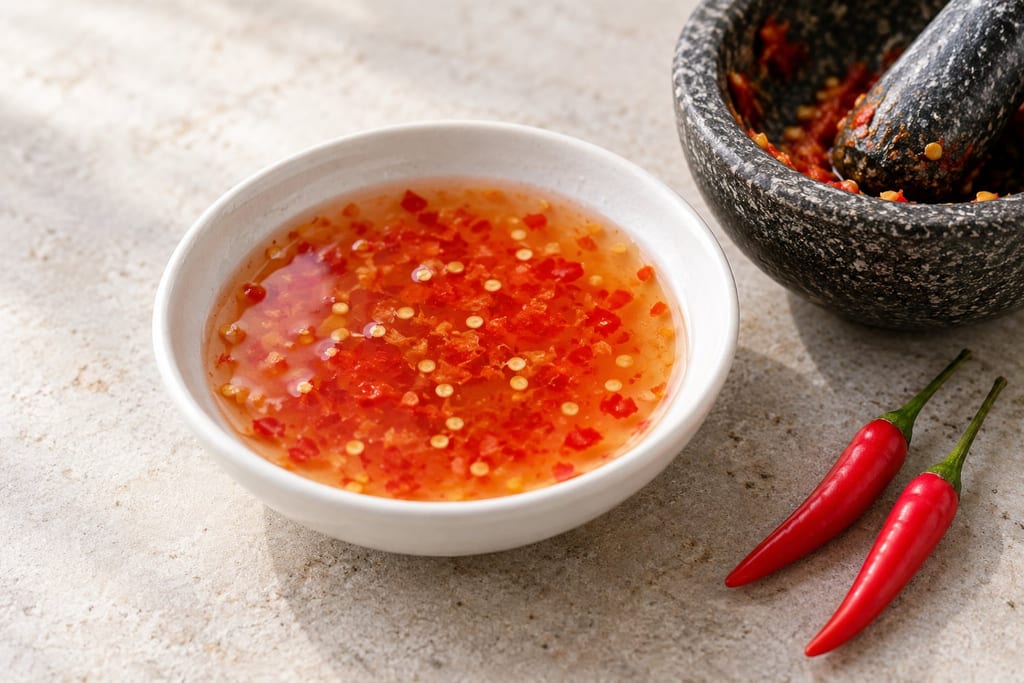
Prik nam som (Thai: พริกน้ำส้ม) is one of the essential table condiments of Thai cooking. At its simplest, it is a combination of chilli and vinegar. It provides an immediate sour and spicy accent to dishes that may otherwise be rich, salty, sweet or oily.
The name is descriptive. Prik (พริก) means chilli, and nam som (น้ำส้ม) refers to vinegar in this culinary context.
Unlike fermented chilli sauce, prik nam som is normally assembled from fresh chillies and prepared vinegar. The recipe does not require a microbial fermentation stage.
The version preserved here is a pounded preparation using Thai chillies, optional garlic and white vinegar. Its method is deliberately brief. A mortar and pestle breaks up the chillies before the vinegar is added.
A separate optional step chars the chillies and garlic in a dry pan before pounding.
Both preparations belong to the same family; charring changes aroma but does not create an independent traditional dish.
Thai meals frequently involve additional seasonings placed on the table so diners can adjust their food.
This is especially common with noodle dishes.
A familiar condiment arrangement is khrueang prung (เครื่องปรุง), often translated as a set of seasonings.
The components commonly include chilli powder, sugar, fish sauce and chilli vinegar.
Not every restaurant or noodle stall presents the same assortment, but the underlying practice is to allow diners to adjust sweetness, saltiness, sourness and heat.
Prik nam som has a particularly important role because its acidity can alter the perceived balance of an entire dish.
A noodle dish that tastes heavy may become brighter after a small addition.
The vinegar does not simply make it sour.
It can make existing flavours seem more distinct and reduce the impression of greasiness.
This practical function explains why the condiment is so common.
The specific invention date of prik nam som is unknown.
Thai cuisine has a long history of combining sour and pungent ingredients, but a claim that this exact chilli-vinegar formula originated during a particular royal reign or in a particular city would require specific evidence.
Chillies themselves are New World plants introduced to Asia through global trade after European contact with the Americas.
The presence of chillies in modern Thai cuisine therefore cannot be projected unchanged into the earliest periods of Thai history.
Vinegar production has a much broader history across Asia and elsewhere.
Prepared vinegar may be made from rice, other grains, fruit or other fermentable raw materials.
However, this condiment is produced by combining finished vinegar with chillies.
Its own preparation is not a fermentation.
The modern source used for the recipe documents its role in contemporary Thai table culture, especially with noodle dishes. It does not establish an earliest written attestation.
Yield: approximately ¼ cup. Published recipe metadata: 5 minutes preparation and 3 minutes cooking when using the optional charred method.
The short ingredient list is a defining characteristic of this preparation.
It does not require added sugar, fish sauce or salt in the documented version.
Those ingredients are present elsewhere in a Thai condiment assortment and may be added to the main dish separately.
The simplicity helps preserve the vinegar's distinctive role: immediate acidity with chilli heat.
Thai chillies are commonly associated with small, pungent fruits belonging to Capsicum species, especially varieties of Capsicum annuum and Capsicum frutescens.
The common name does not identify one universally fixed cultivar.
Different Thai chillies can vary substantially in size, aroma and heat.
The pungency is primarily associated with capsaicinoids, including capsaicin and dihydrocapsaicin.
These compounds interact with receptors that produce the sensation of heat.
They are not temperature-dependent in the ordinary culinary sense: chilli can taste hot even when the sauce is cold.
The chilli also provides plant acids, sugars, pigments and volatile aroma compounds.
Green and red chillies may produce different flavour impressions because of ripeness.
A green chilli may taste more grassy or vegetal.
A red ripe chilli can develop a fruitier character.
The source's flexible quantity of two or three chillies acknowledges differences in heat and personal preference.
White vinegar supplies acetic acid in water.
The exact concentration depends on the commercial product.
The recipe does not specify the vinegar's acidity percentage.
Therefore no final pH or acid concentration should be invented.
Acetic acid contributes sour taste and a sharp aroma.
It also changes the flavour balance of the chillies.
Vinegar can extract some soluble compounds from the crushed chilli tissue.
However, the degree of extraction depends on surface area, time, temperature and the chemical properties of the compounds.
Capsaicin is relatively poorly soluble in water compared with many polar flavour compounds.
Consequently, the mixture's heat depends partly on suspended chilli particles as well as compounds dissolved into the liquid.
This explains why a pounded sauce tastes different from a clear vinegar that has merely been infused with intact chilli pieces.
When chillies are pounded, their cell walls and membranes are disrupted.
Juice, seeds and fragments of skin become part of the sauce.
The mortar produces a textured paste rather than a perfectly uniform liquid.
The resulting surface area permits rapid contact between the chilli tissue and vinegar.
The vinegar also distributes the chilli through the condiment.
This produces a sauce with visible suspended material and a relatively immediate impact when added to food.
The source's mortar method is particularly suitable for a small batch.
A blender may be used for larger quantities, but a small amount can be difficult for blades to engage properly.
The pounding technique also allows control over texture.
1. Select the chillies. Use two or three suitable Thai chillies. Remove spoiled or damaged material before preparation.
2. Prepare optional garlic. Peel one clove if using it. The garlic is an optional flavour addition, not a preservation requirement.
3. Decide whether to char. For the charred version, place the chillies and optional garlic in a dry pan over high heat.
4. Char both sides if selected. Allow darkened spots to form on one side, then turn the ingredients. The source gives no numeric pan temperature.
5. Pound the chillies. Transfer the raw or charred ingredients to a mortar. Work them with a pestle until mostly fine.
6. Add the vinegar. Pour in ¼ cup white vinegar.
7. Mix thoroughly. Use the pestle to stir the liquid and crushed ingredients together.
8. Serve as a fresh table condiment. The original pounded method has no required resting or fermentation period.
The separate sliced-chilli method described by the same culinary source uses a 15-minute vinegar infusion. That is not part of the selected pounded recipe and should remain a variant.
The raw version emphasises the fresh chilli character.
Its aroma can be grassy, sharp and immediately pungent.
The charred version develops additional flavours through heating.
High-temperature contact can produce toasted and lightly smoky aromatic notes.
Some fresh volatile compounds may be reduced, while other heat-derived aromas appear.
The chilli's skin may soften or darken.
Charred garlic also differs from raw garlic.
Heating changes its sulfur chemistry and can reduce the perception of harsh raw pungency.
The two versions serve similar culinary functions but offer different sensory results.
They belong on one recipe page because the principal ingredients and preparation remain closely related.
Another common form consists of sliced chillies in clear vinegar.
The sliced preparation may use milder chillies than the pounded version.
Serrano peppers can be used where traditional Thai varieties are unavailable.
The sauce is less thick because the chilli remains in recognisable pieces.
The diner can add only the vinegar, chilli slices or both.
The documented sliced version rests for at least 15 minutes before serving.
This is a rapid infusion or pickle-like preparation.
It is not evidence of microbial fermentation during those minutes.
The condiment is particularly familiar with Thai noodle dishes.
Pad see ew (ผัดซีอิ๊ว) is a stir-fried noodle preparation using soy sauce and other seasonings. The vinegar's acidity balances the richness of the noodles and cooking oil.
Rad na (ราดหน้า) is a noodle dish served with a thickened savoury gravy. Chilli vinegar brings contrast to the soft noodles and substantial sauce.
Boat noodles, kuai tiao ruea (ก๋วยเตี๋ยวเรือ), can have a rich, concentrated broth. Adding chilli vinegar changes the balance without requiring the cook to alter the entire pot.
Khǎo khā mǔ (ข้าวขาหมู), pork leg stew served with rice, also benefits from a sharp chilli-vinegar accompaniment.
These combinations illustrate a shared principle: sourness can balance fat, sweetness and concentrated savouriness.
Thai condiments sometimes appear superficially similar because they contain chopped chillies.
Prik nam pla (พริกน้ำปลา) uses fish sauce and chillies, often with lime and other additions.
It is primarily salty and savoury.
Prik nam som is primarily sour.
The two can be offered together because they allow different adjustments.
One adds salt and umami.
The other adds acidity.
A table-condiment system works partly because these functions remain separate.
The eater can adjust a dish without relying on one premixed sauce to provide every flavour.
Although vinegar itself is produced through fermentation, combining vinegar with fresh chilli does not automatically initiate a new fermented food.
Commercial vinegar has already undergone a process that converts ethanol into acetic acid.
The condiment is assembled by crushing plant material and mixing it into that prepared acidic liquid.
No microbial culture is intentionally cultivated.
No new fermentation duration is specified.
This makes the correct database classification non-fermented condiment containing a fermented ingredient.
The distinction is useful across many cuisines. Soy sauce, vinegar and fish sauce can contribute fermentation-derived flavours to dishes that are not themselves fermented.
If the condiment is overwhelmingly pungent, the chilli variety or quantity may be too strong for the intended dish.
The source allows adjusting the number of chillies.
If it lacks chilli character, insufficient crushing may leave too little flavour distributed through the vinegar.
A coarse paste can be appropriate, but a completely intact chilli releases flavour differently.
If the sauce tastes too sharply acidic, the intended balance may depend on using a smaller amount at the table rather than changing the entire recipe.
A sauce made with heavily charred chilli may taste more roasted than fresh.
That is an expected variant, provided the ingredients were not burned to an unpleasant bitter state.
This is a fresh condiment.
The source makes a broad statement about long refrigerated storage, but it does not establish a validated microbial shelf life for the exact preparation.
Commercial white vinegar is acidic, but the final acidity of a mixture containing fresh chilli and garlic has not been measured in the record.
The amount and composition of plant material can change the final mixture.
The recipe should therefore not be represented as a shelf-stable canned preserve.
Use clean utensils and suitable food-grade containers.
Refrigeration is appropriate for leftovers, but no exact validated storage duration is established by the cited recipe.
Pailin Chongchitnant's contemporary page describes prik nam som as a Thai table condiment. It is a modern recipe account, not an earliest attestation or origin record.
Yield 0.25 cup · Scaling: source batch only
The source card also states indefinite refrigeration, but this is not a validated storage limit. Vinegar acidity and a tested keeping period are not established by the recipe.
The author presents prik nam som as a Thai table condiment; this page does not establish an origin place.
Ripe red chillies, garlic, labelled 5% vinegar, sugar, water and salt are blended, simmered and blended smooth into a cooked chilli sauce.
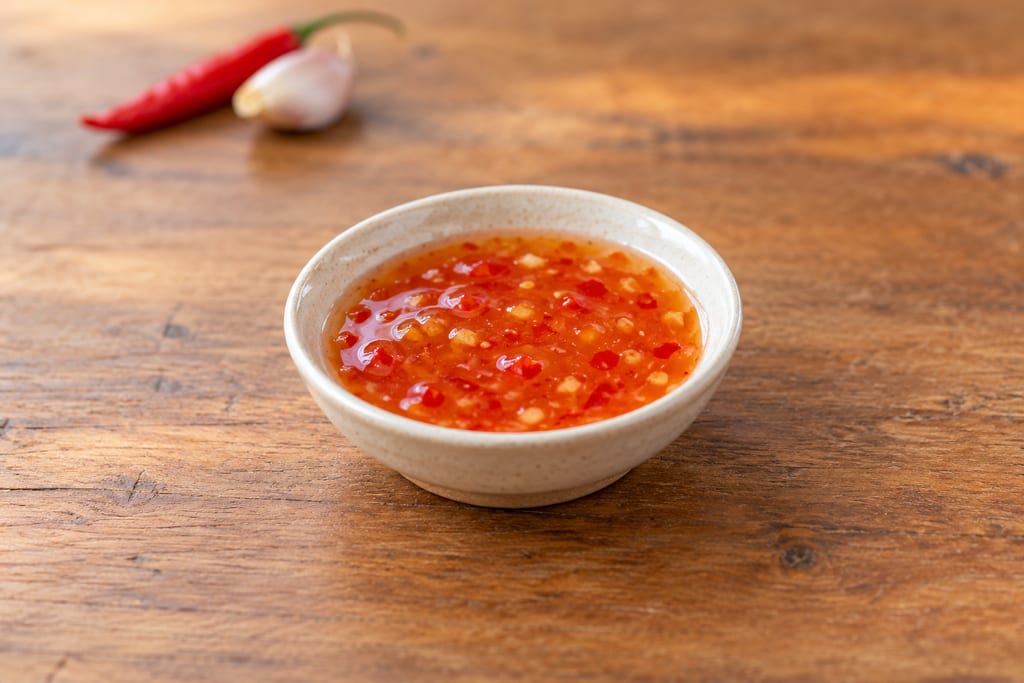
A cooked Thai-style sweet chilli dip combines red chillies, garlic, sugar and vinegar, then uses a small cornflour slurry to give this batch a glossy, spoonable body.
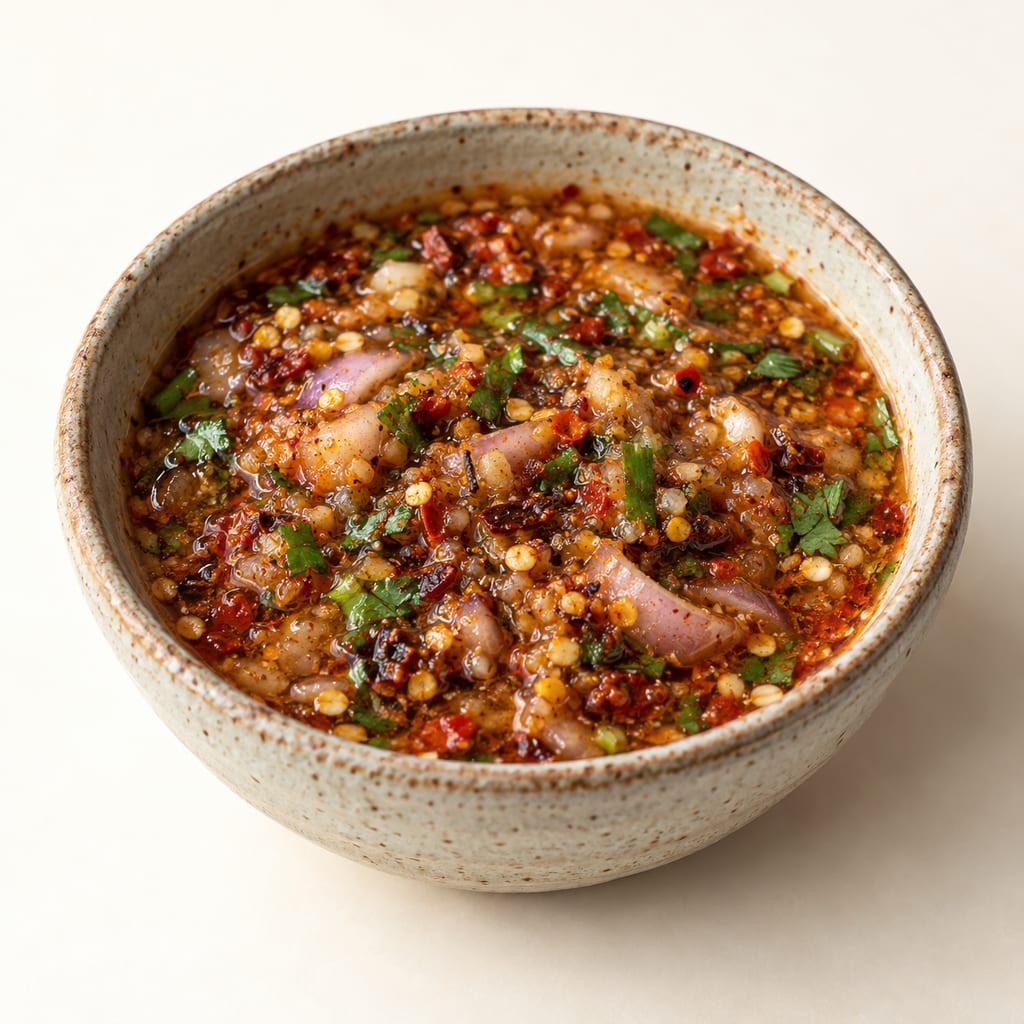
Roasted chillies, shallot and garlic are pounded and loosened with fermented and plain fish sauce, boiled water and lime into a sharp Isan dip for grilled meat and fish.
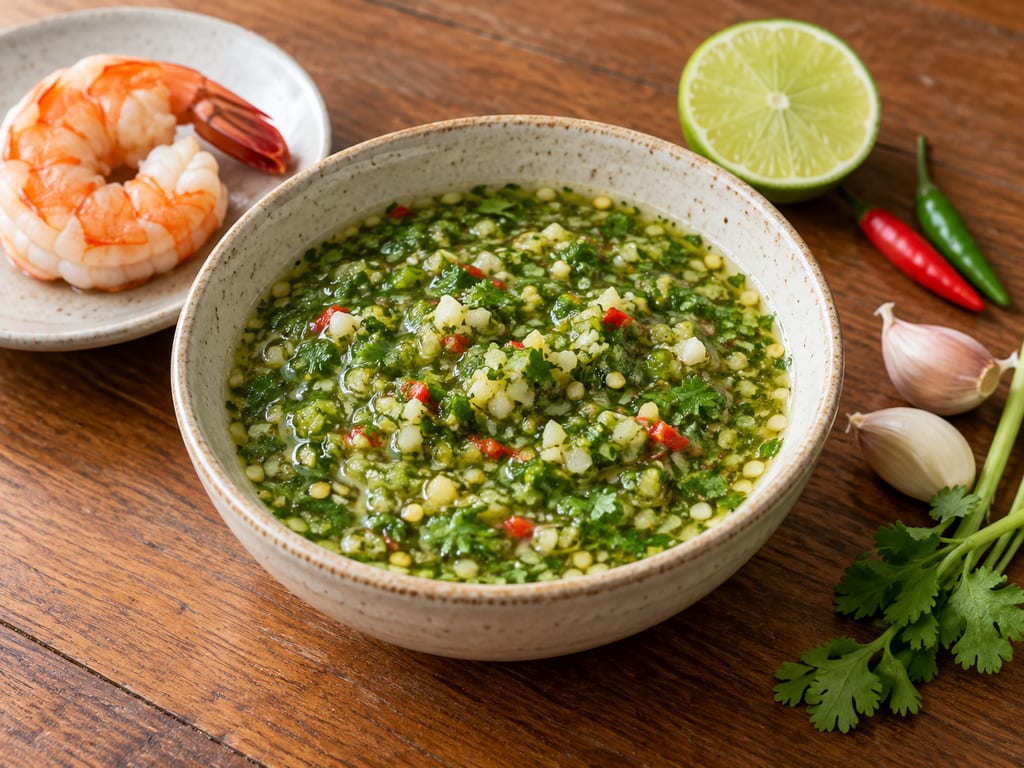
A Thai seafood dipping sauce of chiles, garlic, cilantro stems, fish sauce, lime juice and palm sugar, pounded or briefly blended for a coarse texture.
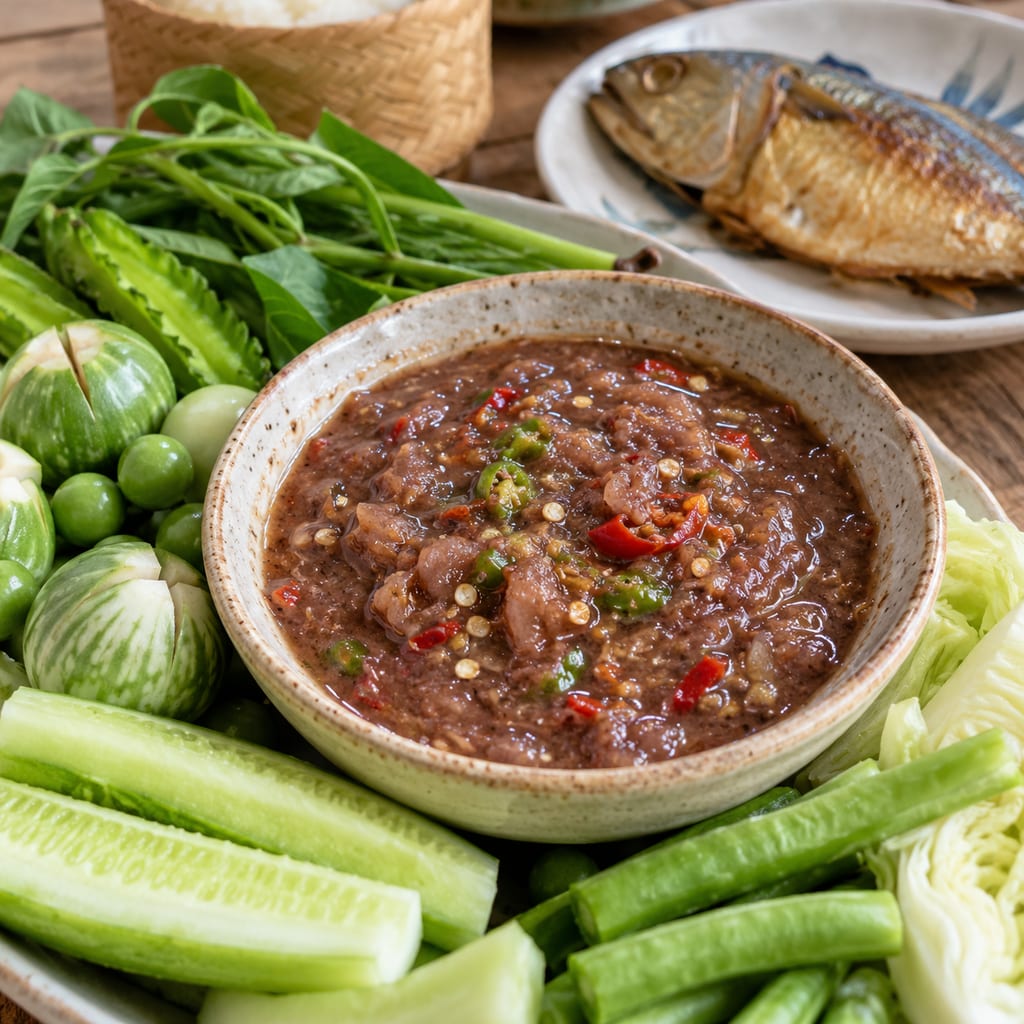
Nam prik kapi is a Thai dip of matured shrimp paste pounded with garlic, bird's eye chilli and lime or tamarind, eaten with vegetables and rice.
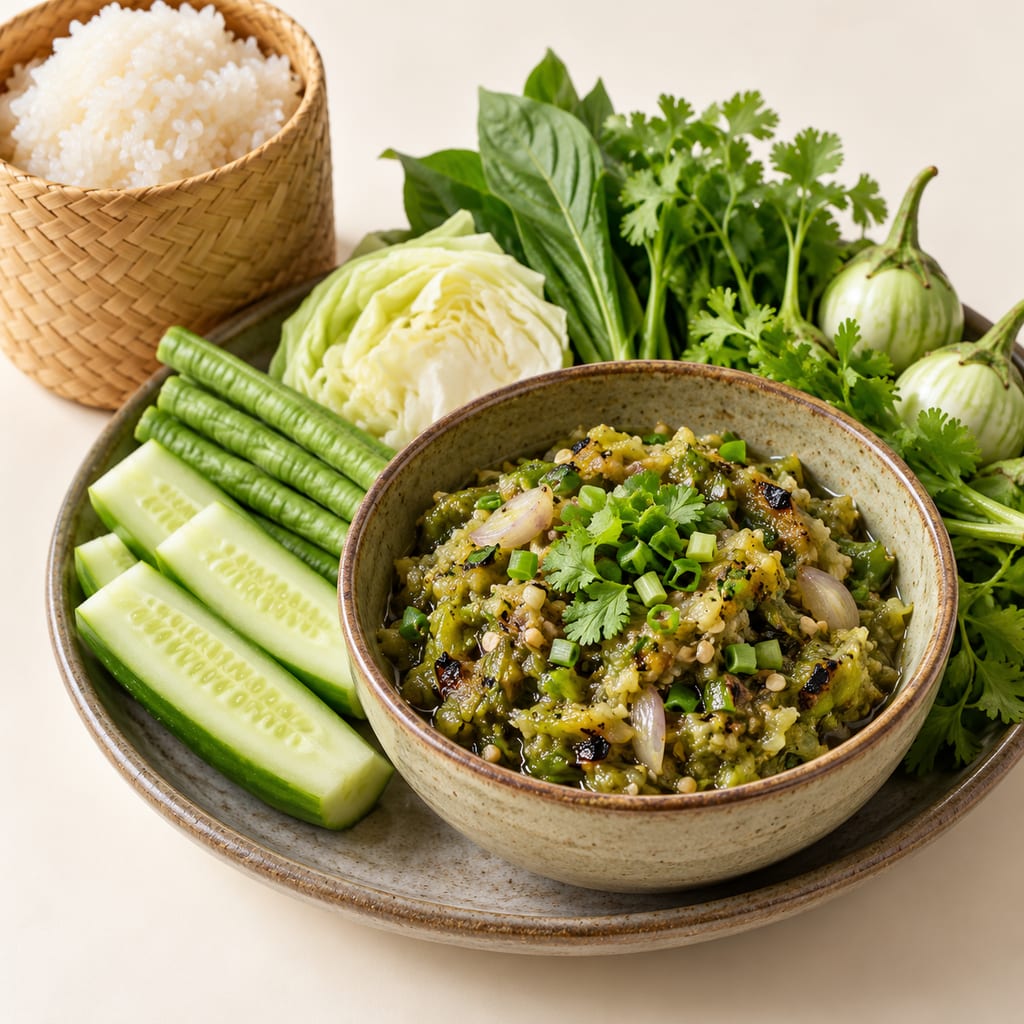
Grilled young green chillies, shallots and garlic are pounded with salt into a coarse northern Thai dip, finished with coriander and spring onion and eaten with sticky rice and vegetables.
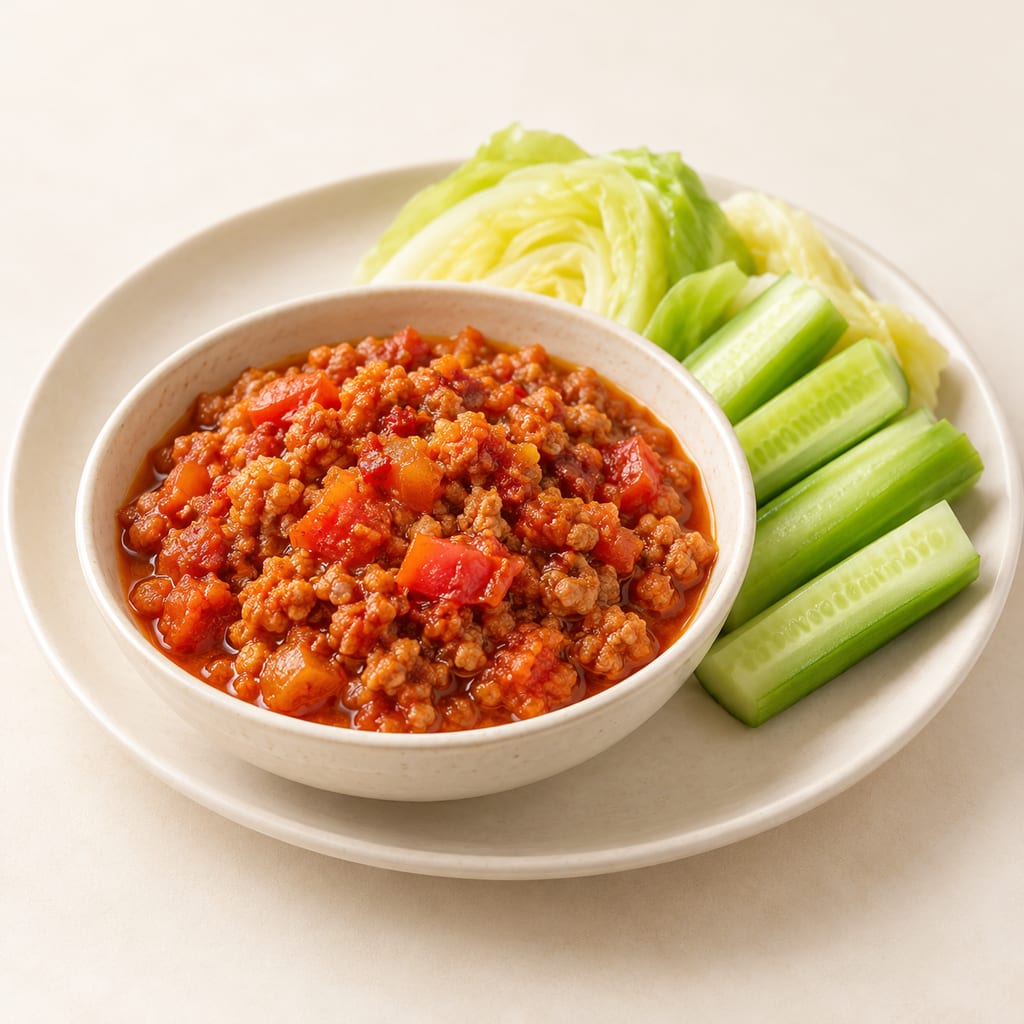
Nam prik ong is a cooked Northern Thai dip of chilli, tomato and minced pork, seasoned with fermented soybean and eaten with vegetables, pork rind and eggs.
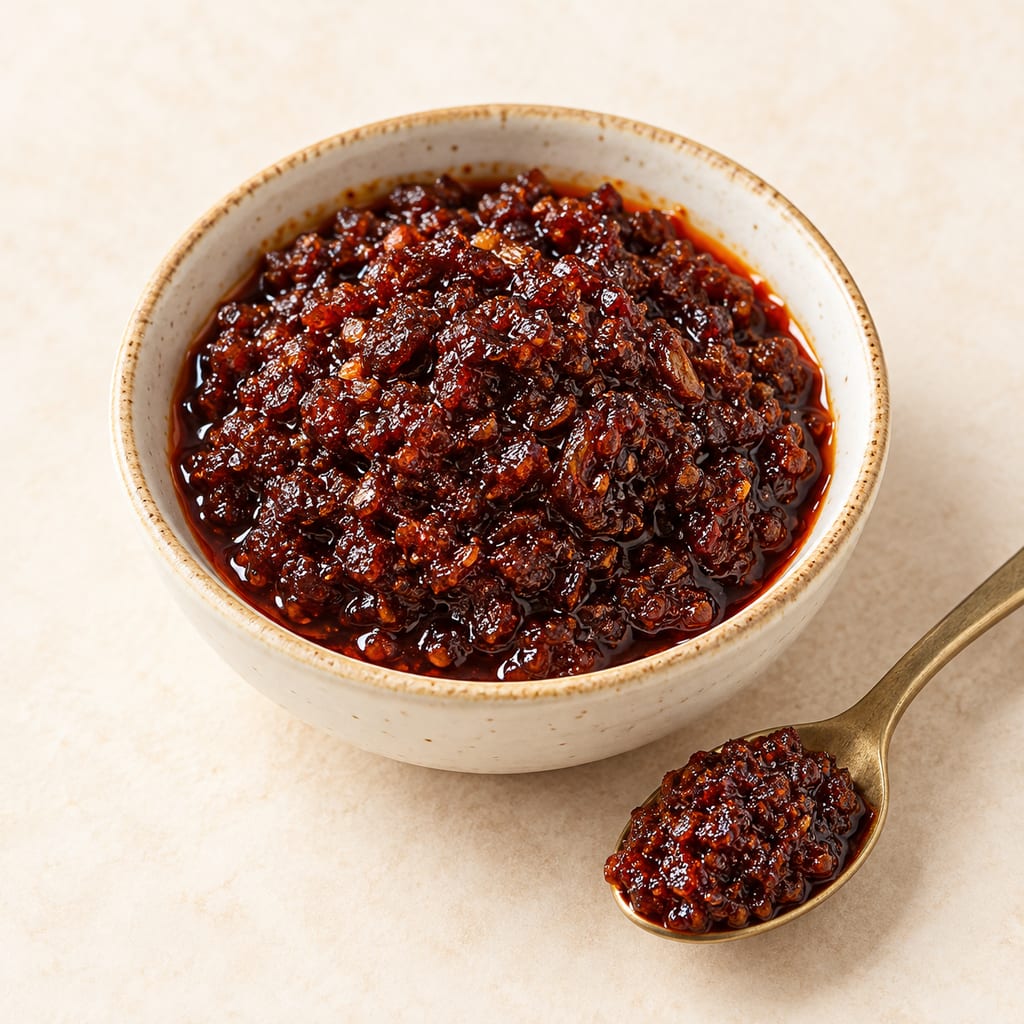
Nam prik pao is a Thai roasted chilli paste, sweet, salty and sour with only mild heat, used as a dip, a spread and a seasoning for cooked dishes.
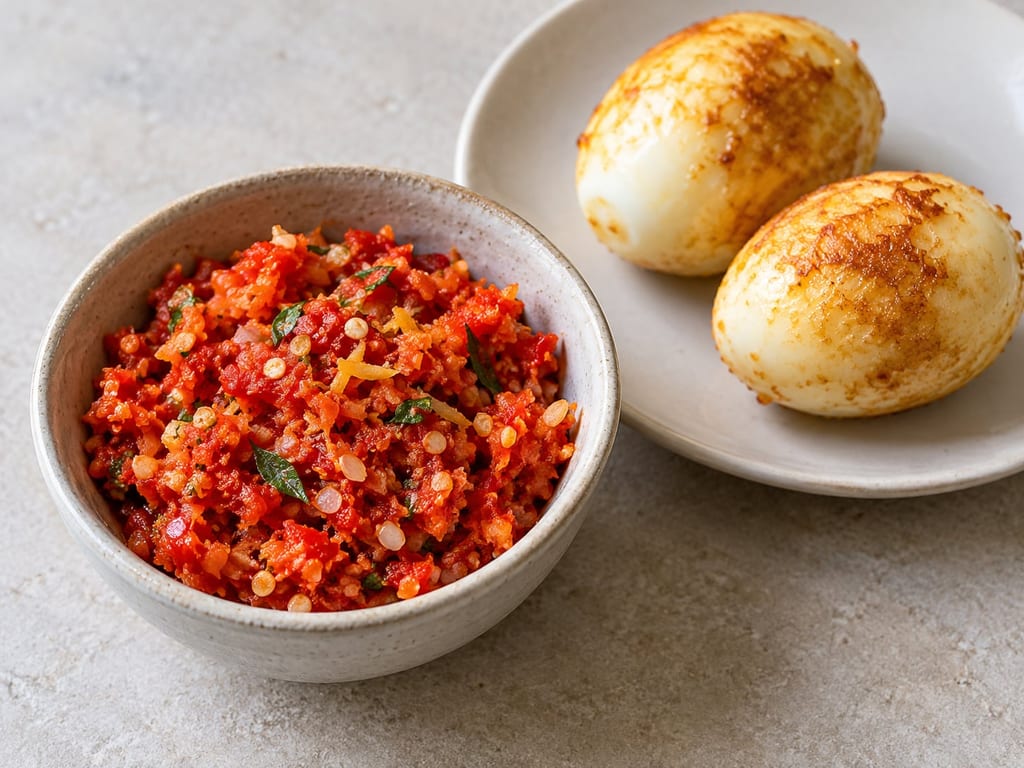
Ai-manas is described as a very hot chilli paste served with Timorese meals. One published version blends fresh chillies, shallots, garlic, Thai basil, ginger, lemon and salt, and serves it with eggs. Sources do not establish a standard formula, precise birthplace or earliest date.
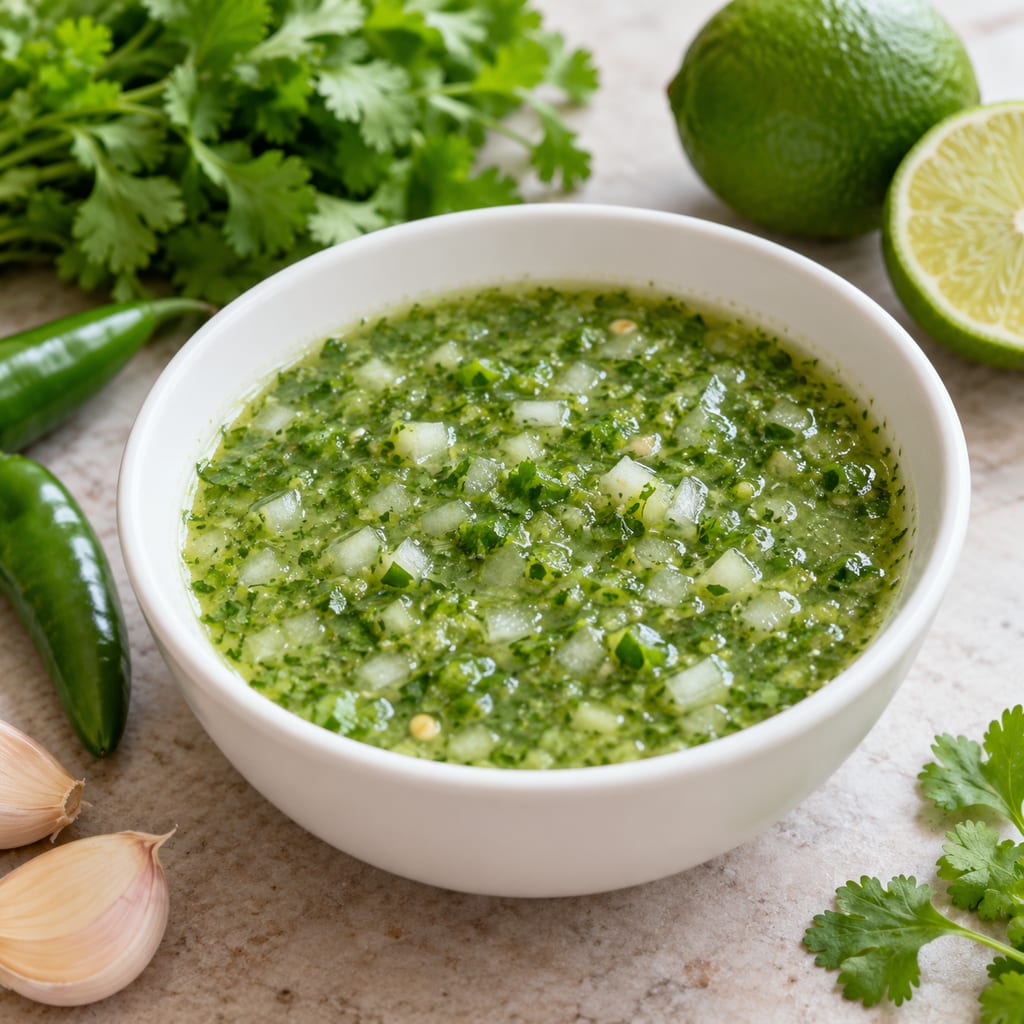
A fresh, uncooked Ecuadorian table sauce of hot pepper, cilantro, garlic and lime, served with most everyday dishes.
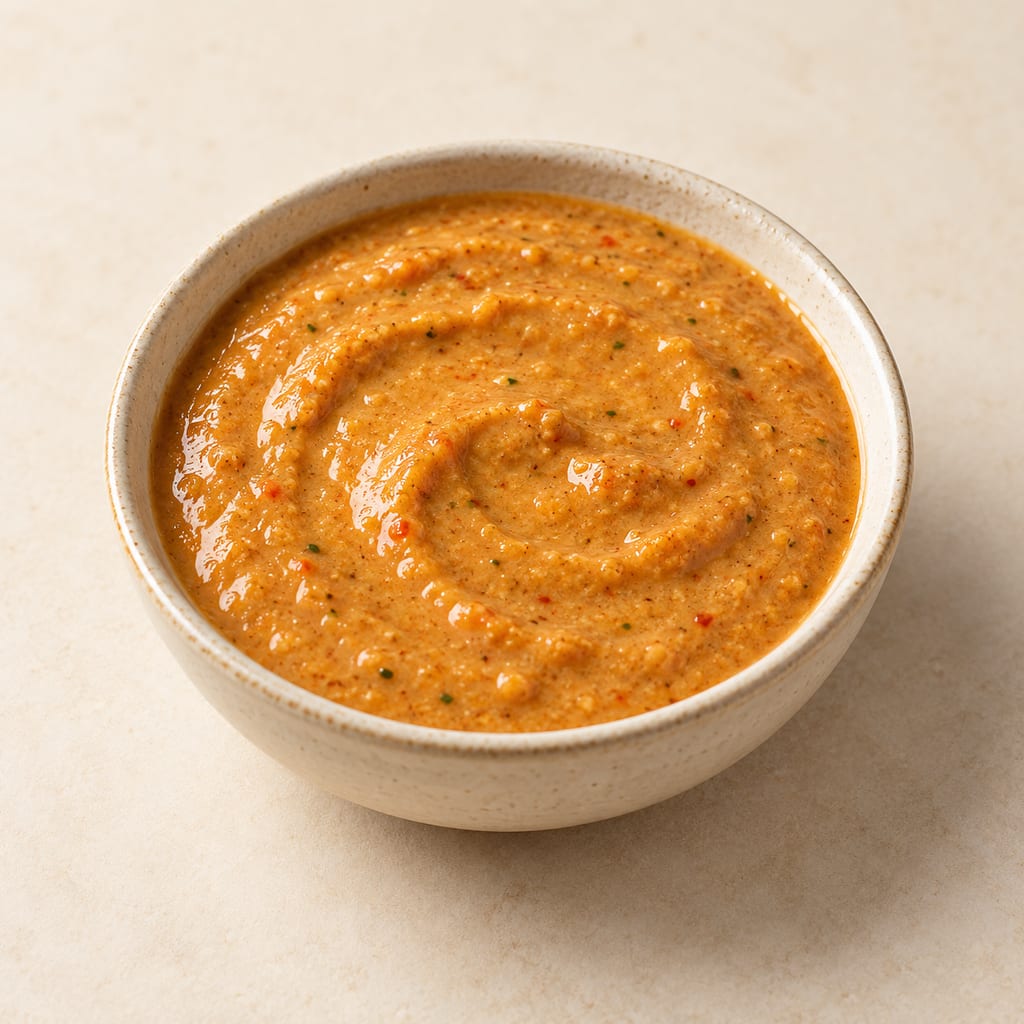
A spicy peanut hot sauce from the Popayán and Cauca region of Colombia, traditionally served with pipián empanadas and tamales.
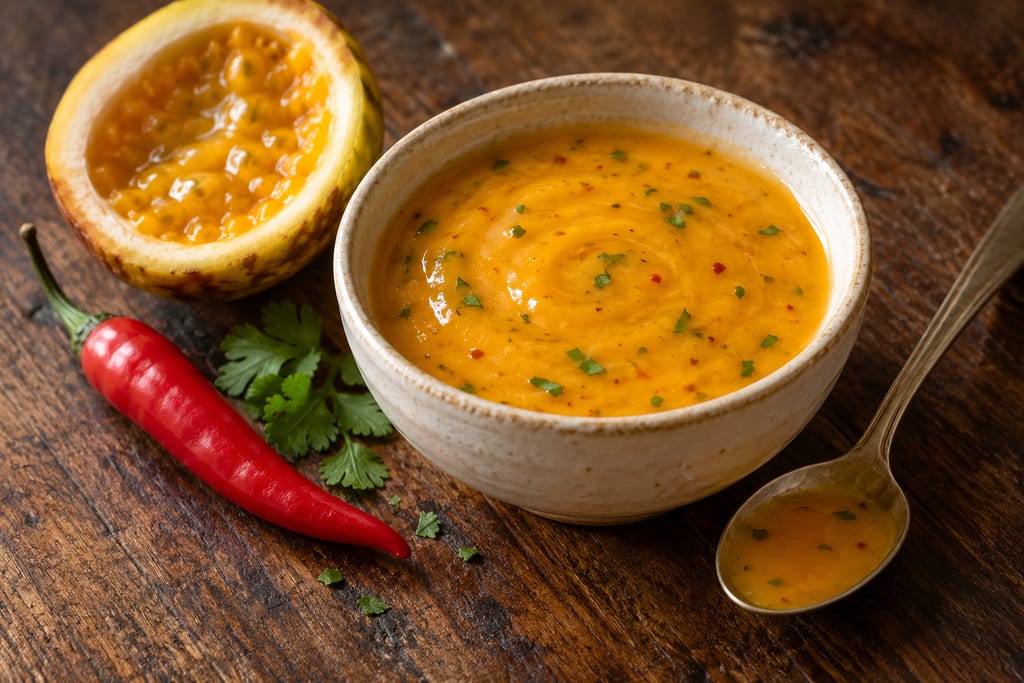
A contemporary Ecuadorian hot sauce that pairs passion fruit juice with boiled chile peppers, oil and lime.
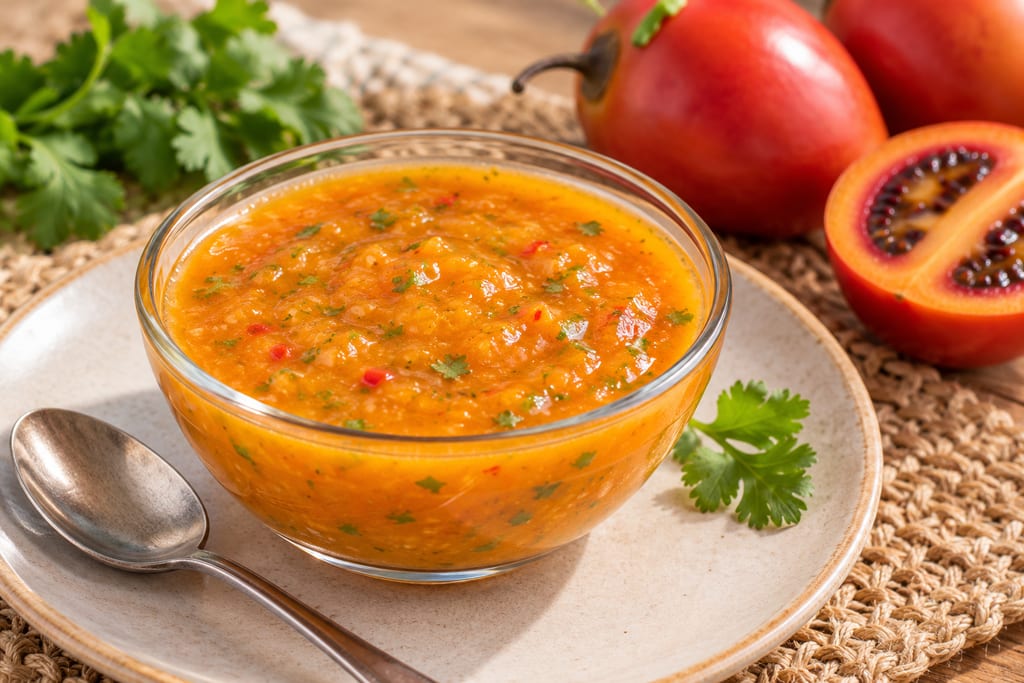
An Ecuadorian hot sauce built on tamarillo, a tart fruit that gives a sharper, fleshier base than ordinary tomato salsa.
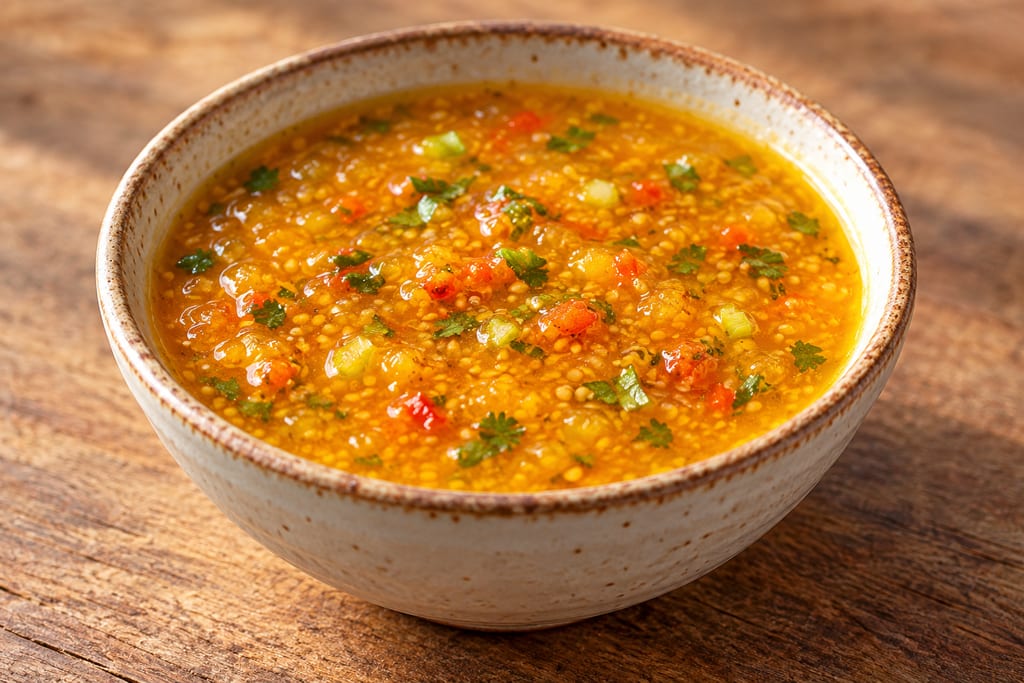
A sweet, tart and spicy Colombian sauce of uchuva, the yellow physalis fruit, with hot pepper, scallion, cilantro and lime.
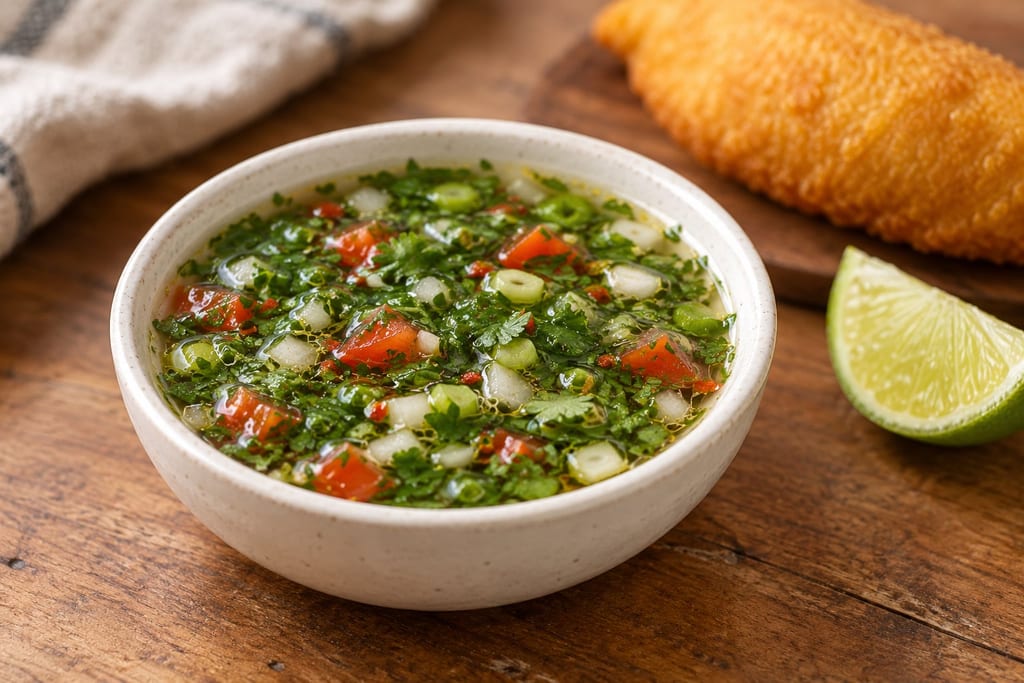
A fresh Colombian table condiment of chopped herbs, scallion and tomato in a vinegar and chile base, served beside fried and filled dishes.
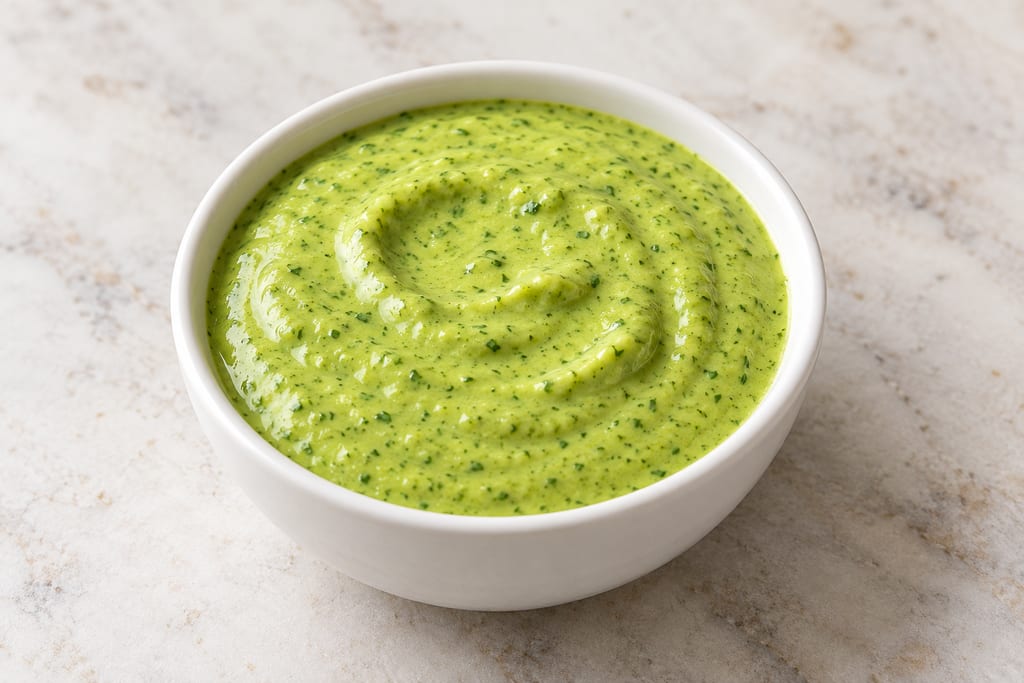
Ají verde is a Peruvian green sauce of coriander, chilli, onion and garlic in a mayonnaise or cheese base. It is best known through Peruvian restaurant cooking abroad.
No community contributions have been published for this entry yet.
Sign in to contribute. Published comments and photos are free to read.
Hot Thai KitchenRecipe · Identity · Method · Use · Geography
Essential Thai Condiment: Chili Vinegar (Prik Nam Som)Recipe-card quantities and one-quarter-cup yield
optional charring, pounded method and larger-batch blender suggestion
five-minute prep and three-minute cook metadata
separate sliced variation and source storage wording treated as unvalidated
Cited in: Overview; Prik nam som in Thai food culture; Historical evidence and limitations; Ingredients — the documented pounded version; What the chillies contribute; What the vinegar contributes; Why pounding changes the sauce; The documented recipe method; Raw versus charred prik nam som; The sliced-chilli variation; Where prik nam som is used; The difference between prik nam som and nam prik nam pla; Why it is not fermented; Troubleshooting flavour and texture; Storage and safety
Thai chilli varieties and capsaicinoid backgroundScience
Thai chilli varieties and capsaicinoid background — Know the PepperCited by the written account for this record.
Cited in: What the chillies contribute; Troubleshooting flavour and texture