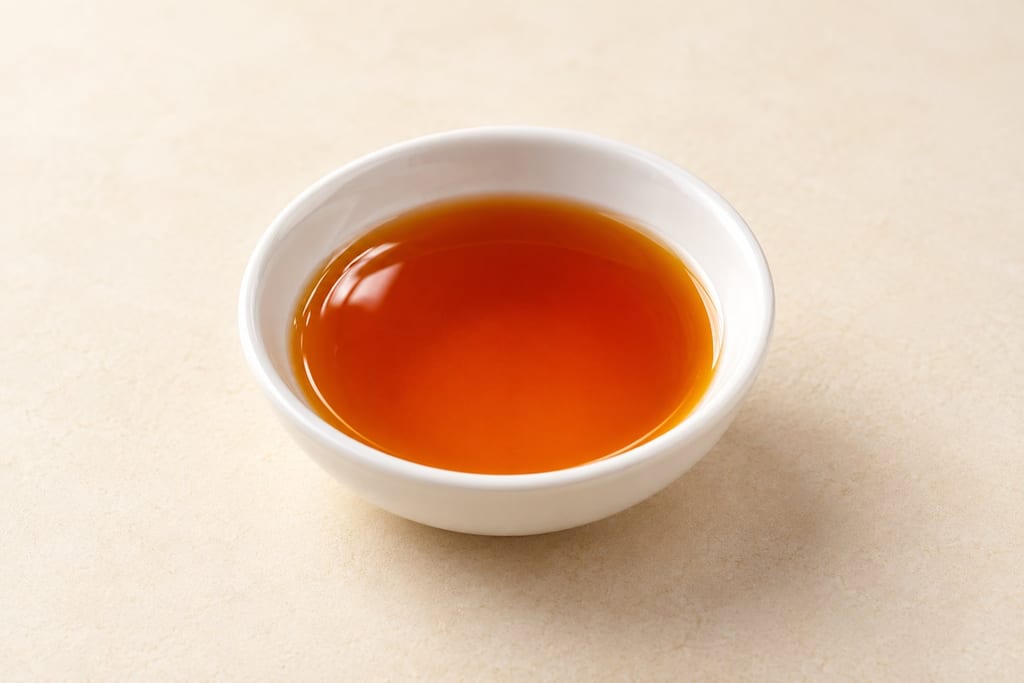
Fish sauce
Fish sauce is a clear, salty seasoning made by maturing fish with salt and drawing off the liquid. The broad family includes distinct regional sauces rather than one interchangeable method.
 FermenteaWhere food goes to change
Modern method
nam jim seafood · Thai seafood sauce
A Thai seafood dipping sauce of chiles, garlic, cilantro stems, fish sauce, lime juice and palm sugar, pounded or briefly blended for a coarse texture.
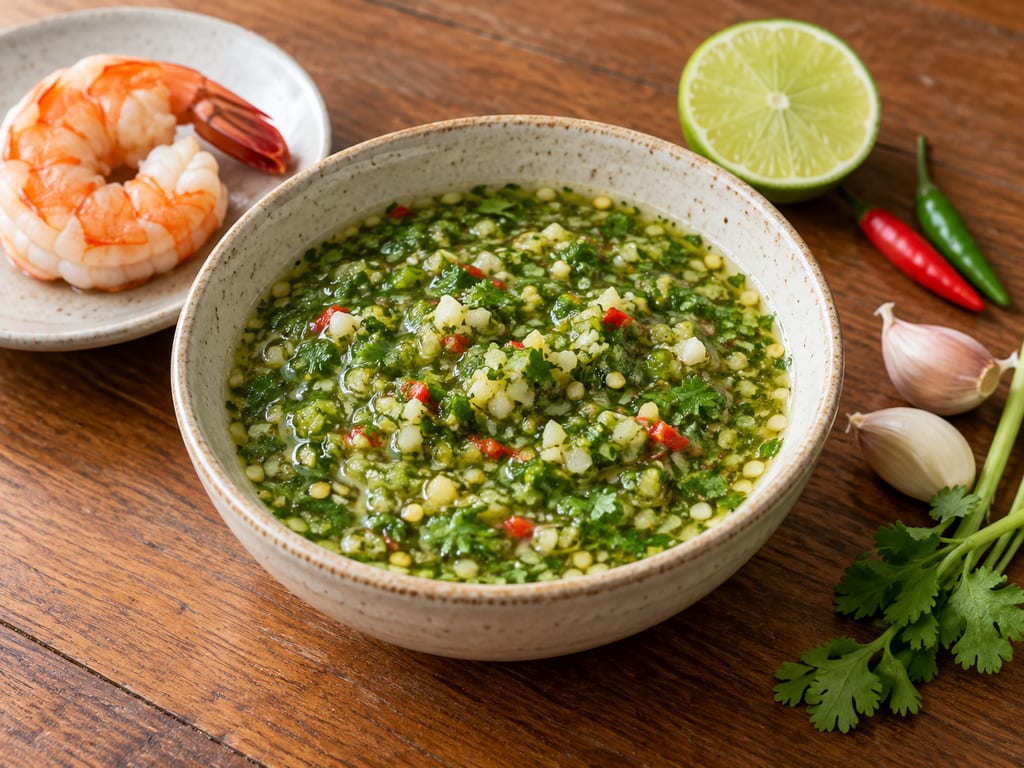
Nam jim seafood (Thai: น้ำจิ้มซีฟู้ด) is a sharp, salty, spicy and aromatic dipping sauce served with seafood throughout Thailand. It is made by pounding fresh chilli, garlic and coriander stems or roots, then combining them with fish sauce, lime juice and sugar.
The name is straightforward. Nam jim (น้ำจิ้ม) means dipping sauce, while seafood is an English loanword commonly used in the Thai name of the preparation.
The sauce is especially associated with simply cooked seafood: grilled, steamed, boiled or otherwise prepared prawns, crab, squid and fish.
Rather than masking the seafood, the sauce supplies an intense contrast. The lime cuts through richness, chilli adds heat, garlic contributes pungency, and fish sauce deepens the savoury character.
Although fish sauce is normally a fermented ingredient, the finished nam jim seafood is a fresh, non-fermented condiment. Its preparation does not require growing microorganisms or waiting for fermentation.
Thai cuisine has many dipping sauces, each developed around particular foods and flavour balances.
The general category nam jim is broad.
Some sauces accompany grilled meat.
Others are associated with chicken, seafood, fried foods or hot pots.
For example, nam jim jaew is a tart, savoury sauce commonly associated with grilled meat and often contains toasted rice powder.
Nam jim gai is a sweet chilli sauce often served with fried chicken.
Prik nam pla uses chillies and fish sauce, commonly with lime and other additions.
Nam jim seafood belongs to this wider system, but its balance is especially suited to seafood.
The sauce is strongly acidic and often relatively hot.
Its use is particularly effective where the seafood is cooked simply and retains its own delicate flavour.
The diner can dip individual pieces into the sauce, adjusting the intensity with each bite.
The precise invention date of nam jim seafood is unknown.
Modern Thai culinary writing documents the sauce as an established part of seafood dining, both in restaurants and at home.
It appears throughout contemporary Thai food culture, rather than belonging to one securely documented village of origin.
The use of fish sauce, lime, garlic and chilli reflects broader Thai seasoning traditions.
However, the separate historical development of those ingredients should not be confused with the invention date of the finished sauce.
Chillies reached Southeast Asia after their movement from the Americas.
Fish-sauce production has much older histories in several parts of Asia.
Lime and other citrus fruits have long been important sources of acidity in regional cooking.
These ingredients eventually came together in the flavour combinations familiar today.
The source recipe is a contemporary formulation by Thai cooking educator Pailin Chongchitnant. It documents a recognisable Thai seafood sauce but does not claim to reproduce the first known version.
The original record uses two chillies in its main ingredient quantity while noting that the total can be increased to five.
It also specifies six coriander stems, with a range of six to seven.
The yield is not stated.
The mixture's final volume cannot be inferred precisely from the liquid ingredients because crushed garlic, chilli and coriander contribute additional volume.
The traditional form of this sauce often uses coriander roots with some attached stems.
Coriander is Coriandrum sativum.
Its roots have a strong aromatic character, especially when crushed.
The stems also carry flavour, although their aroma and texture are not identical to those of the roots.
In many countries, coriander is sold without its roots.
The recipe therefore uses stems as a practical substitute.
Chopping them before pounding exposes their tissues and helps them combine with the garlic and chilli.
The resulting green fragments also contribute to the sauce's appearance.
A sauce made with green chillies and coriander is often vivid green.
Using red chillies creates a different appearance and may change the aroma slightly.
Lime juice is central to the sauce.
It contributes citric acid and characteristic citrus aroma.
The relevant citrus fruit is commonly a lime belonging to the Citrus group, although specific cultivars vary geographically.
Fresh lime juice provides both acidity and volatile aroma compounds.
Bottled lime juice may offer acidity but can have a different aromatic character.
The documented recipe specifically favours fresh juice.
The amount is substantial relative to the fish sauce: three tablespoons lime juice to two tablespoons fish sauce.
This establishes the sauce's sour-forward character.
The exact pH is not supplied.
The lime juice's acidity can also vary depending on fruit maturity and variety.
Consequently, the ingredient ratio does not establish a validated preservation endpoint.
Fish sauce contributes both salt and umami.
Thai fish sauce is commonly called nam pla (น้ำปลา).
Traditional fish sauces are made through salting and maturation of fish, often anchovy-like species.
Proteins break down into peptides and free amino acids during processing.
Glutamate and other nitrogen-containing compounds contribute savouriness.
The sauce may also contain characteristic aromas from its fermentation and maturation.
When fish sauce is added to nam jim seafood, these flavours become part of the fresh condiment.
However, the assembled sauce is not subjected to its own intentional fermentation.
This distinction matters for recipe classification.
A food can contain a fermented ingredient without being fermented itself.
Palm sugar provides sweetness.
In Thai cooking, palm sugar can have a more rounded flavour than refined white sugar.
Its composition depends on the palm species and method of production.
The original recipe uses one tablespoon, finely chopped.
Chopping helps it dissolve when pounded with the aromatic ingredients.
Sweetness balances the acidity of the lime and the saltiness of the fish sauce.
The aim is not to produce a sweet chilli sauce.
Instead, sugar moderates the sharpness enough to create a coherent dipping sauce.
The source permits light brown sugar as an alternative.
This is a practical substitution, not proof that the two sugars have identical flavour.
The source uses a mortar and pestle.
Garlic, chilli and coriander are pounded together into a paste.
The physical disruption releases plant juices and aromatic compounds.
Pounding also creates a sauce with fine particles suspended in liquid.
Unlike a completely smooth purée, the finished nam jim seafood should retain some visible texture.
Seeds and fragments of chilli can remain.
The source offers a blender alternative for larger batches.
However, it warns against blending the mixture until completely smooth.
Excessive blending can change the appearance and mouthfeel.
The mortar also works better for small amounts, where a large blender may not engage the ingredients properly.
1. Prepare the produce. Wash the chillies and coriander. Peel the four garlic cloves and chop the six or seven coriander stems.
2. Select the chilli quantity. Use two to five Thai chillies according to their heat and the intended serving.
3. Begin pounding. Place the garlic, chilli and coriander stems in a mortar.
4. Form the aromatic paste. Pound until the ingredients are finely broken down. The sauce should not contain large uncrushed garlic pieces.
5. Incorporate the sugar. Add one tablespoon finely chopped palm sugar and continue pounding until it has dissolved into the paste.
6. Add the fish sauce. Mix in two tablespoons.
7. Add fresh lime juice. Pour in three tablespoons and use the pestle to mix the components thoroughly.
8. Adjust the balance. The source permits changes to sweetness or acidity according to taste. It also mentions adding a small quantity of water where the flavour is excessively concentrated, but the canonical ingredient list does not include a measured water addition.
9. Serve fresh. The sauce is ready without a cooking or fermentation period.
The recipe's metadata lists preparation and cooking times even though its actual method includes no cooking stage. The source does not explain this discrepancy. The actual steps should determine how the recipe is classified.
Green chillies are common in nam jim seafood, especially when the desired appearance is a bright green sauce.
They can contribute a more grassy character.
Red ripe chillies may taste fruitier and give the condiment a reddish colour.
The colour may also be affected by the amount of coriander.
Both versions belong to the same sauce family.
A separate recipe record is unnecessary if only the chilli ripeness changes.
The important distinction is that the overall balance of lime, fish sauce, garlic, chilli and sweetness remains recognisable.
Some regional and household versions use coriander roots instead of stems.
Others may include more garlic or different chilli varieties.
Mint can be used as a substitute where coriander is unwanted.
Palm sugar may be replaced by light brown sugar.
Some modern versions use a blender rather than a mortar.
These variations change the aromatic emphasis and texture.
A blended version may be more uniform.
A pounded version can have a coarser, more traditional texture.
None of these variations requires a fermentation stage.
Nam jim seafood is particularly associated with prawns, crab, squid and fish.
A plate of boiled prawns may be served with a small bowl of the sauce.
The diner removes the shell and dips the prawn into the condiment.
Crab meat also benefits from the strong lime-and-garlic character.
Steamed fish can be served with the sauce alongside or spooned over the finished fish.
Grilled seafood provides a different contrast because smoky or roasted flavours interact with the bright acidity.
The sauce is less necessary where seafood is already heavily seasoned throughout a composed dish.
For example, a seafood curry or strongly flavoured stir-fry may have its own complete seasoning balance.
That is why nam jim seafood is especially prominent with comparatively simple seafood preparations.
Salt, acid, sugar and chilli affect flavour perception differently.
Salt enhances some savoury impressions.
Acid stimulates sour taste and increases salivation.
Sugar moderates the perception of acid and chilli heat.
Capsaicinoids produce a trigeminal sensation of heat rather than a conventional taste alone.
Garlic contributes pungent sulfur compounds.
Coriander contributes fresh herbal aroma.
The sauce is therefore a combination of gustatory sensations, aroma and chemesthetic heat.
Its impact is much greater than would be predicted from acidity alone.
This is why a small quantity can substantially transform a bite of seafood.
If the sauce tastes too salty, the fish sauce may dominate or the lime and sugar balance may be insufficient.
If it tastes overwhelmingly sour, the original lime quantity may be too strong for the particular fruit or serving context.
If the garlic is harsh, larger pieces may not have been crushed sufficiently.
If the sauce lacks chilli heat, the chilli variety or quantity may be too mild.
If a blender produces a completely smooth green liquid, it has gone beyond the intended coarse texture.
The source recommends retaining visible small pieces and seeds.
A muted green colour after storage is not automatically evidence of spoilage. Plant pigments and volatile compounds change over time.
However, colour alone cannot establish safety.
This is an uncooked sauce containing fresh plant material.
The fish sauce may be a stable commercial ingredient, but the finished mixture is not automatically shelf-stable.
The author recommends refrigerated storage and gives approximately one week as practical kitchen guidance.
That is not an independently validated shelf-life study.
A producer selling the sauce would need to assess the actual formulation, acidity, hygiene and packaging.
The presence of fresh lime juice does not establish one universal pH.
The sauce should not be canned or stored at room temperature on the assumption that citrus alone makes it safe.
The recipe card gives two to five Thai chillies, to taste. The author describes green chillies as slightly grassier and red chillies as fruitier, and permits other hot chillies. This is a flexible flavour range, not a measured heat rating; the page gives no Scoville value.
The quantity lets a cook adjust the dip's pungency to preference. A mild or hot result cannot be inferred from count alone because chilli varieties differ.
The name varies by region. A Cultural Map Thailand entry for a community in Chanthaburi preserves an informant's use of prik kleua for a coastal chilli-and-salt dip served with seafood. The entry adds that some central areas more often say nam jim seafood and some southern areas say nam jim prik manao. It also offers an eastern fishing-community origin as a hypothesis, not as dated history, and rests on one named informant. Hot Thai Kitchen separately separates nam jim, a dipping sauce, from nam prik, a chilli relish; that is the cook's own category explanation, not a rule that every Thai speaker applies in the same way.
Bottled and community versions exist beside the fresh dip. A Thai government technology-transfer record describes a Songkhla community product made with local nipa vinegar, nipa honey and green chilli, then heated and bottled. A Srinakharinwirot University abstract reports a sensory study of bottled seafood sauce with a panel of 30, and a Kasetsart University record confirms a 2016 project on seafood-sauce formulation and production. The full university report and the project results could not be retrieved, so ratio units, processing conditions and storage results are unknown. These records show that bottled versions have been studied. They do not provide a home bottling process or a shelf life for the fresh dip.
The author presents nam jim seafood as a Thai seafood sauce and describes it as an accompaniment for seafood. This page does not establish an origin date or a historical first attestation.
Scaling: source batch only
The recipe includes fish sauce, and FDA identifies fish among major food allergens in the United States.
Hazard sourceThe author recommends sealed refrigeration and says the sauce keeps at least one week; this is author guidance, not an independently validated shelf life.
This formula includes fish sauce. People who avoid fish because of an allergy should not use it; check labels for any substitute or accompanying seafood.
The named Thai sauce and its seafood use are documented by the recipe author; this is not an origin claim.
Fish sauce is a clear, salty seasoning made by maturing fish with salt and drawing off the liquid. The broad family includes distinct regional sauces rather than one interchangeable method.
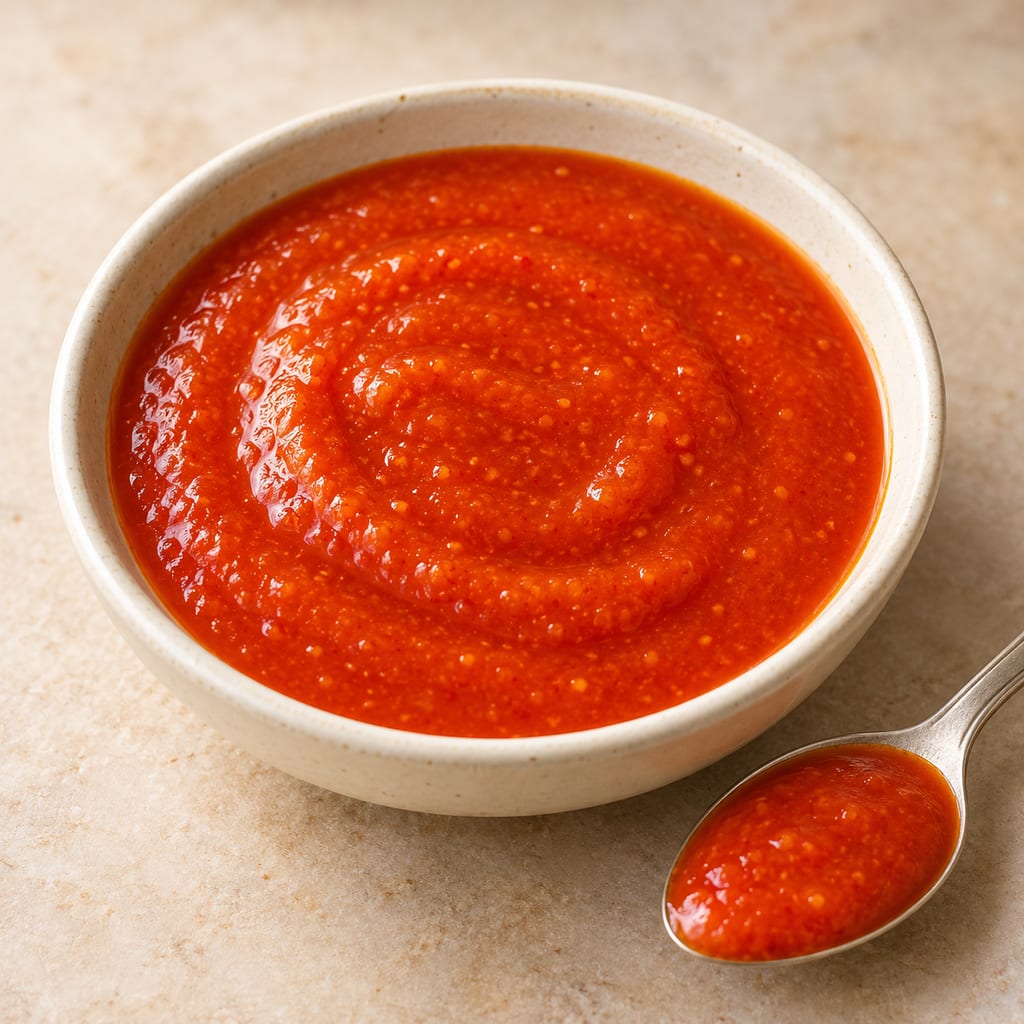
Ripe red chillies, garlic, labelled 5% vinegar, sugar, water and salt are blended, simmered and blended smooth into a cooked chilli sauce.
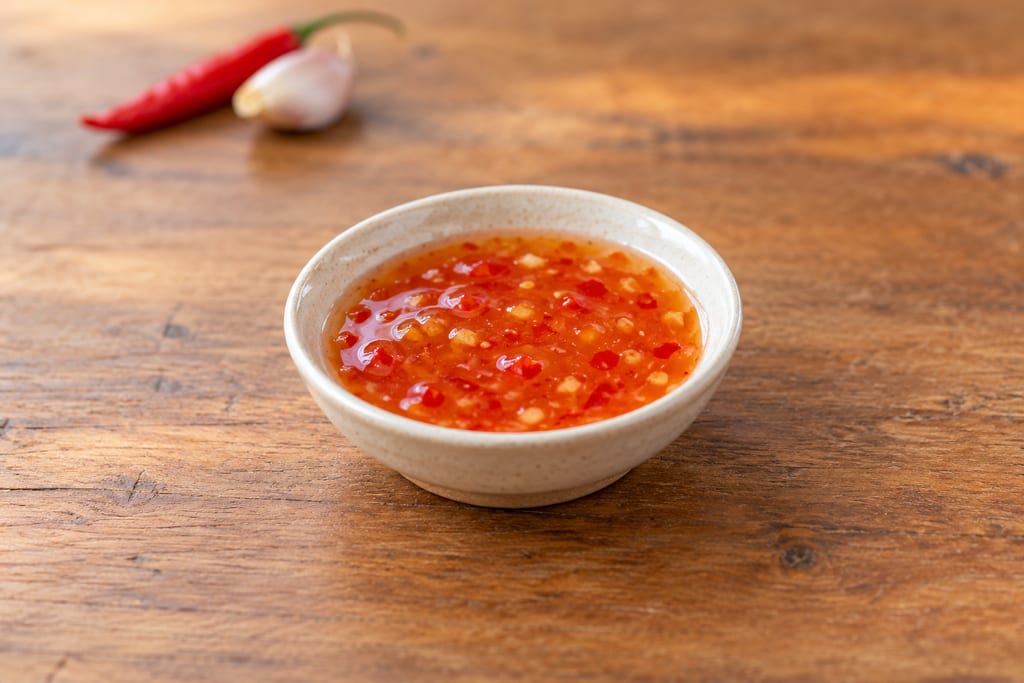
A cooked Thai-style sweet chilli dip combines red chillies, garlic, sugar and vinegar, then uses a small cornflour slurry to give this batch a glossy, spoonable body.
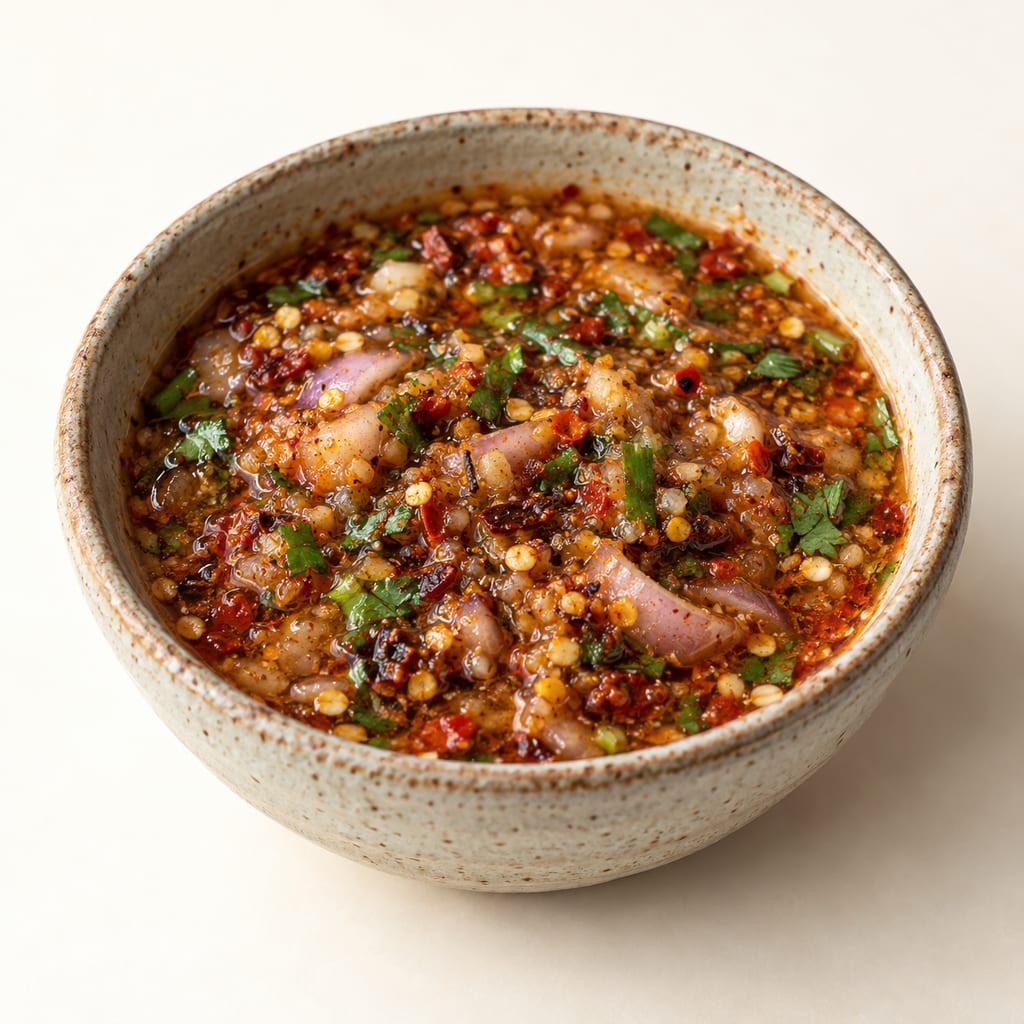
Roasted chillies, shallot and garlic are pounded and loosened with fermented and plain fish sauce, boiled water and lime into a sharp Isan dip for grilled meat and fish.
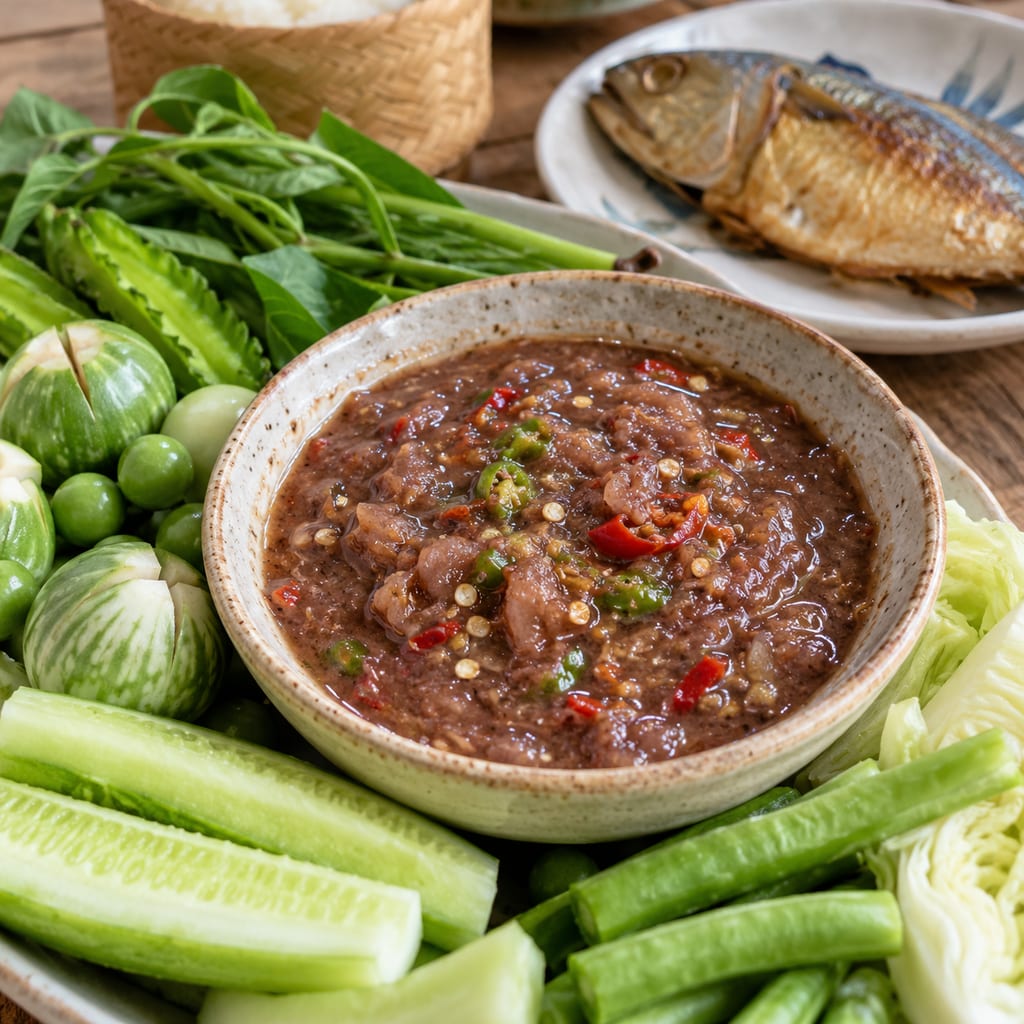
Nam prik kapi is a Thai dip of matured shrimp paste pounded with garlic, bird's eye chilli and lime or tamarind, eaten with vegetables and rice.
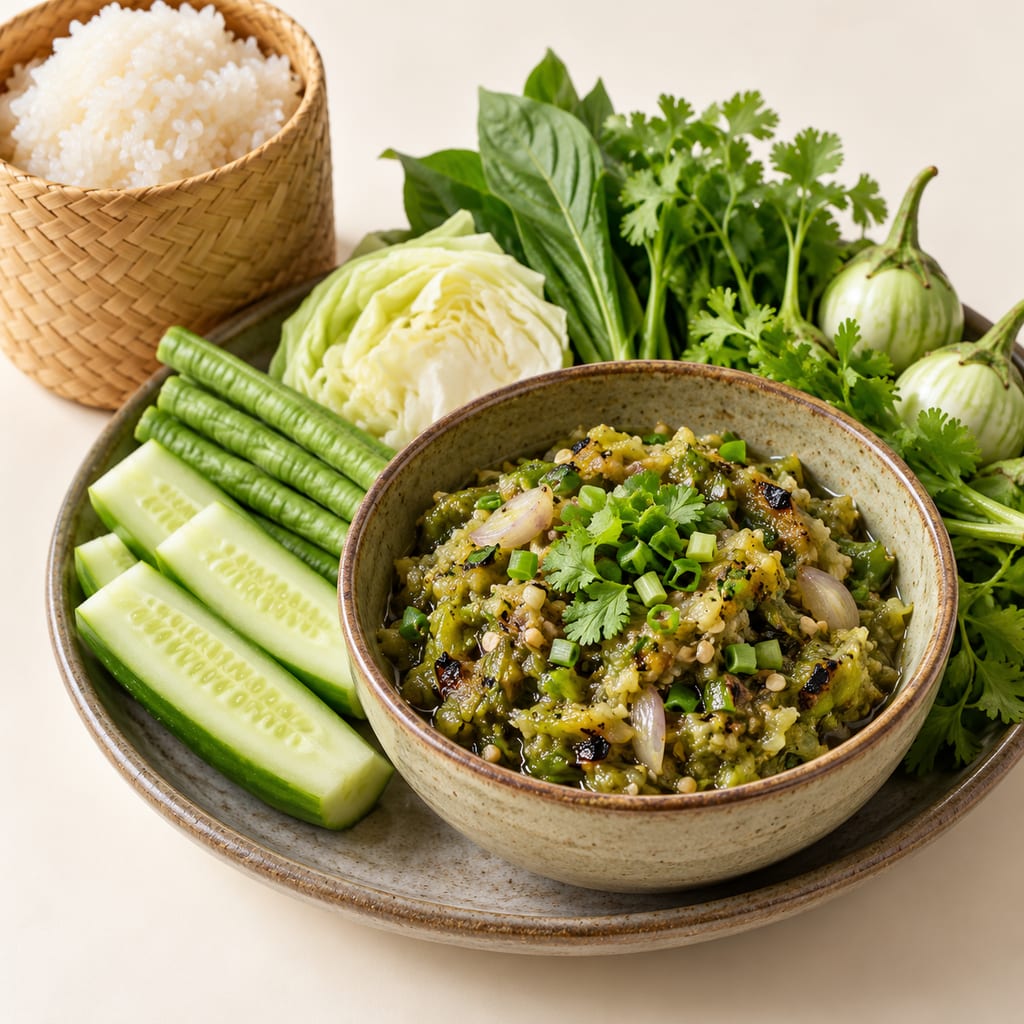
Grilled young green chillies, shallots and garlic are pounded with salt into a coarse northern Thai dip, finished with coriander and spring onion and eaten with sticky rice and vegetables.
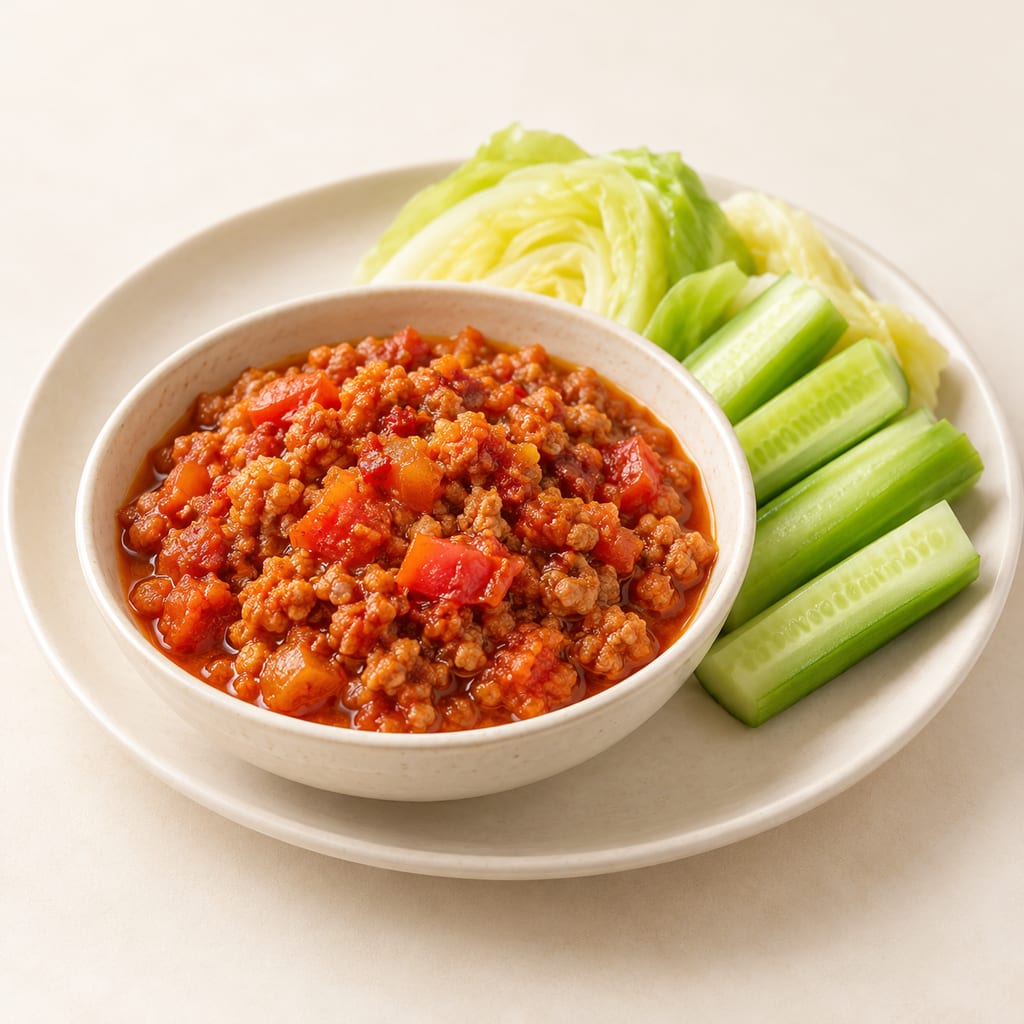
Nam prik ong is a cooked Northern Thai dip of chilli, tomato and minced pork, seasoned with fermented soybean and eaten with vegetables, pork rind and eggs.
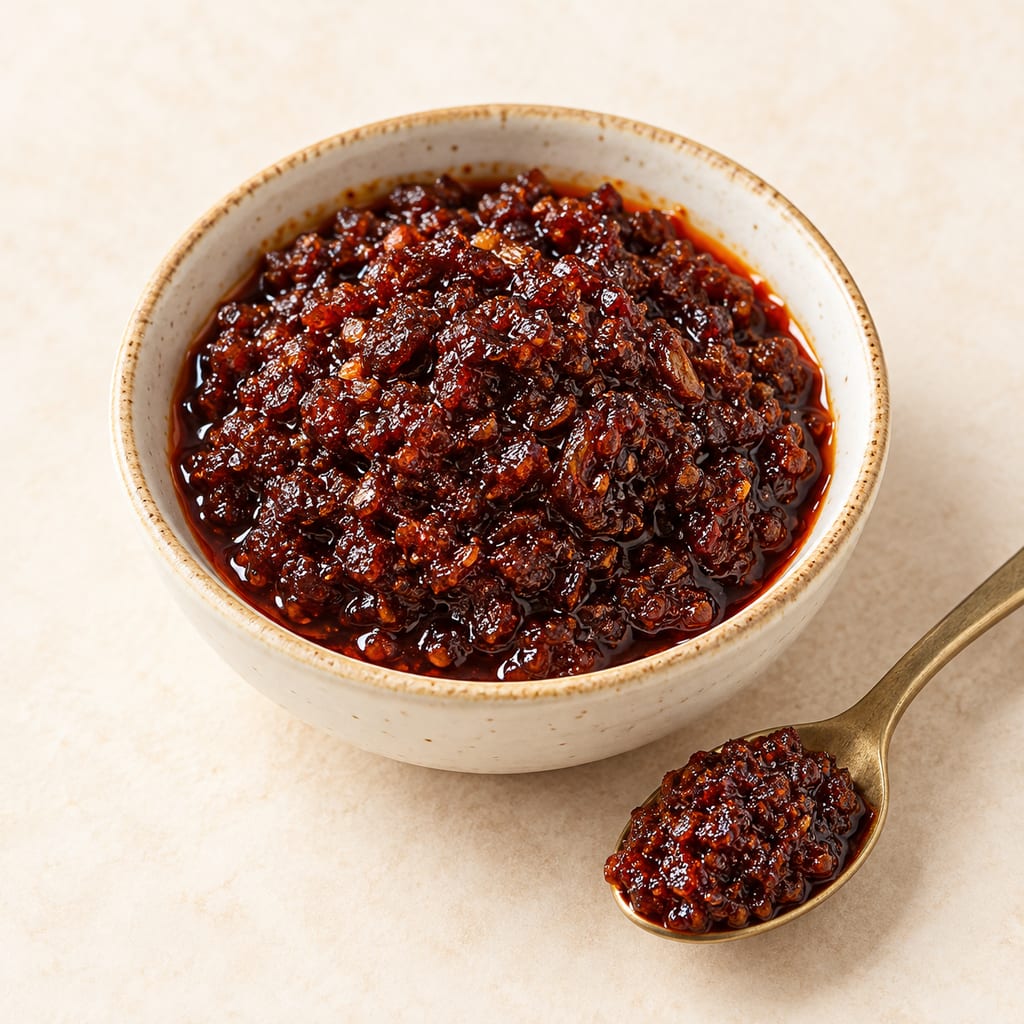
Nam prik pao is a Thai roasted chilli paste, sweet, salty and sour with only mild heat, used as a dip, a spread and a seasoning for cooked dishes.
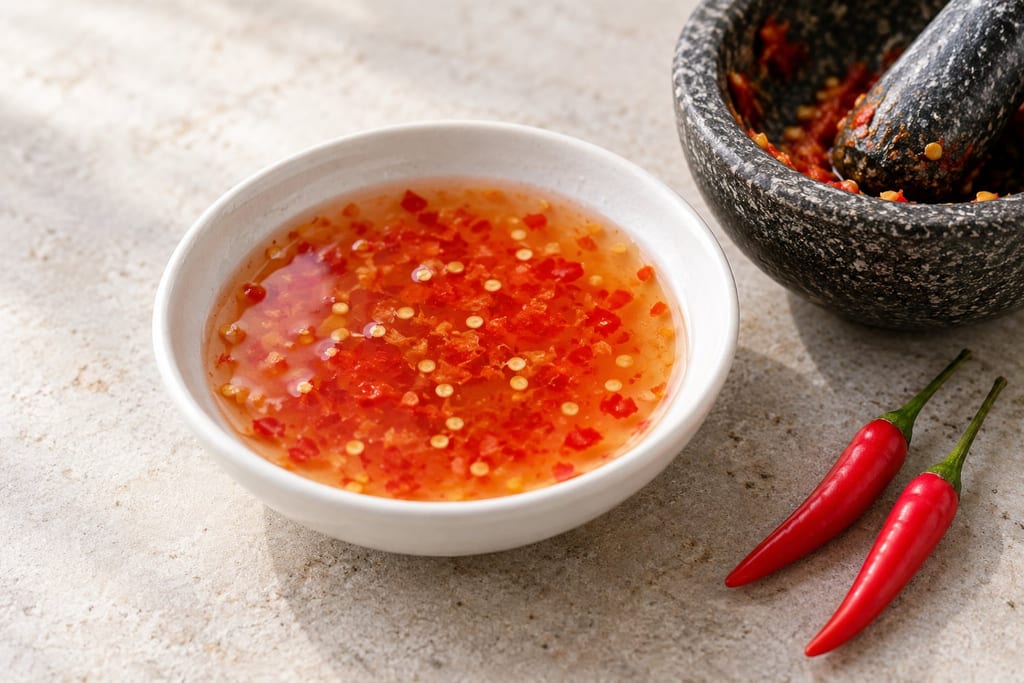
Pailin Chongchitnant's fresh prik nam som card pounds two or three Thai chillies, optionally with garlic, before stirring in white vinegar; charring is a separate optional step.
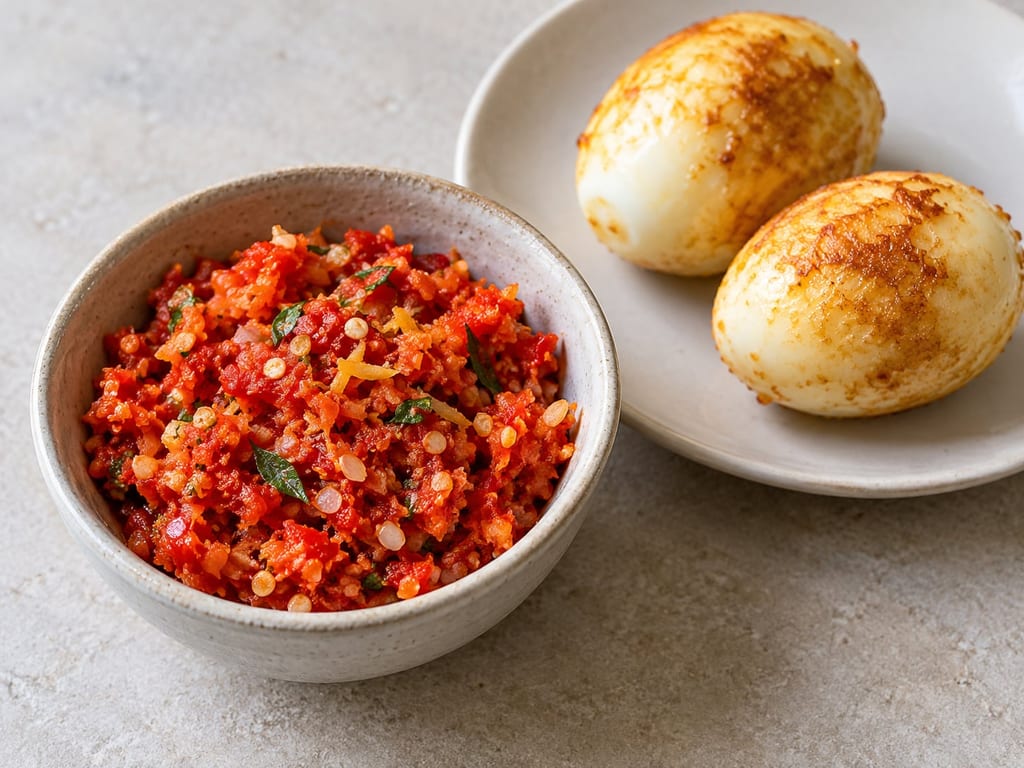
Ai-manas is described as a very hot chilli paste served with Timorese meals. One published version blends fresh chillies, shallots, garlic, Thai basil, ginger, lemon and salt, and serves it with eggs. Sources do not establish a standard formula, precise birthplace or earliest date.
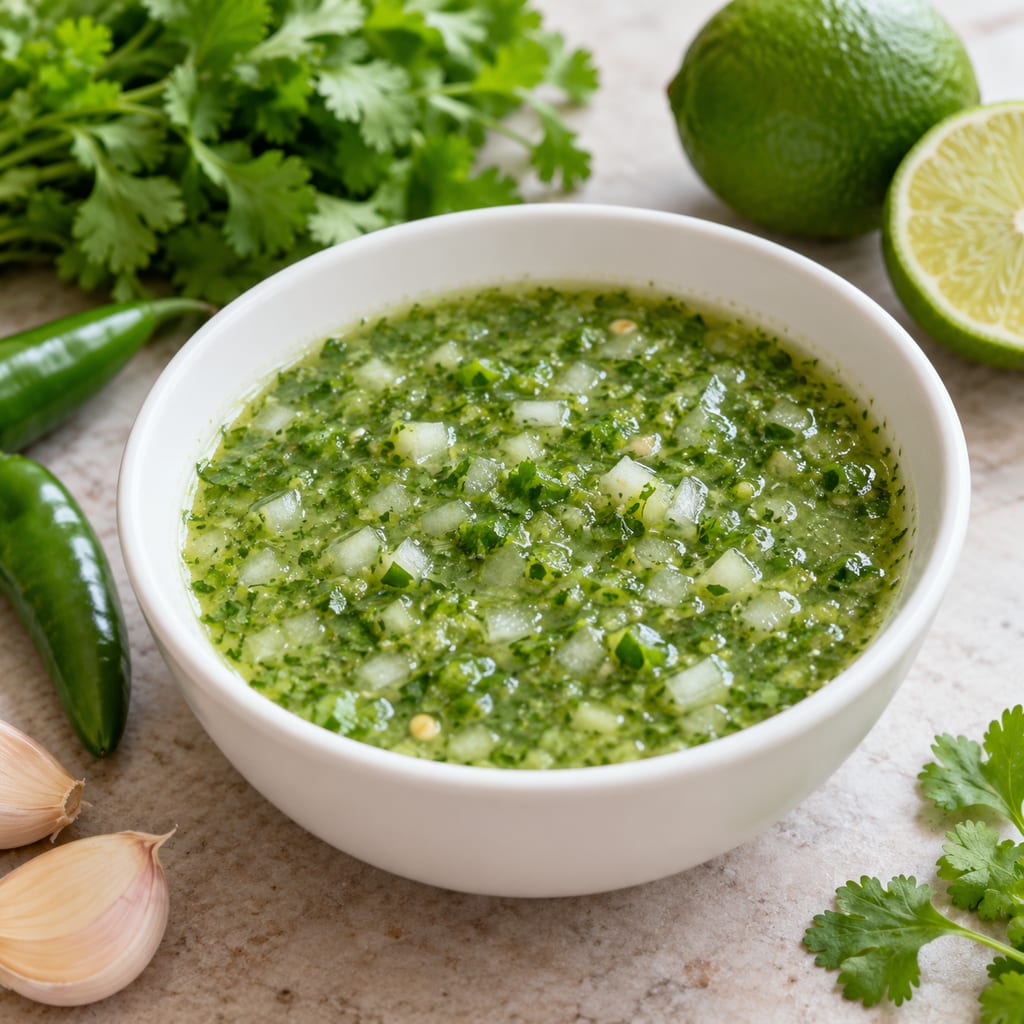
A fresh, uncooked Ecuadorian table sauce of hot pepper, cilantro, garlic and lime, served with most everyday dishes.
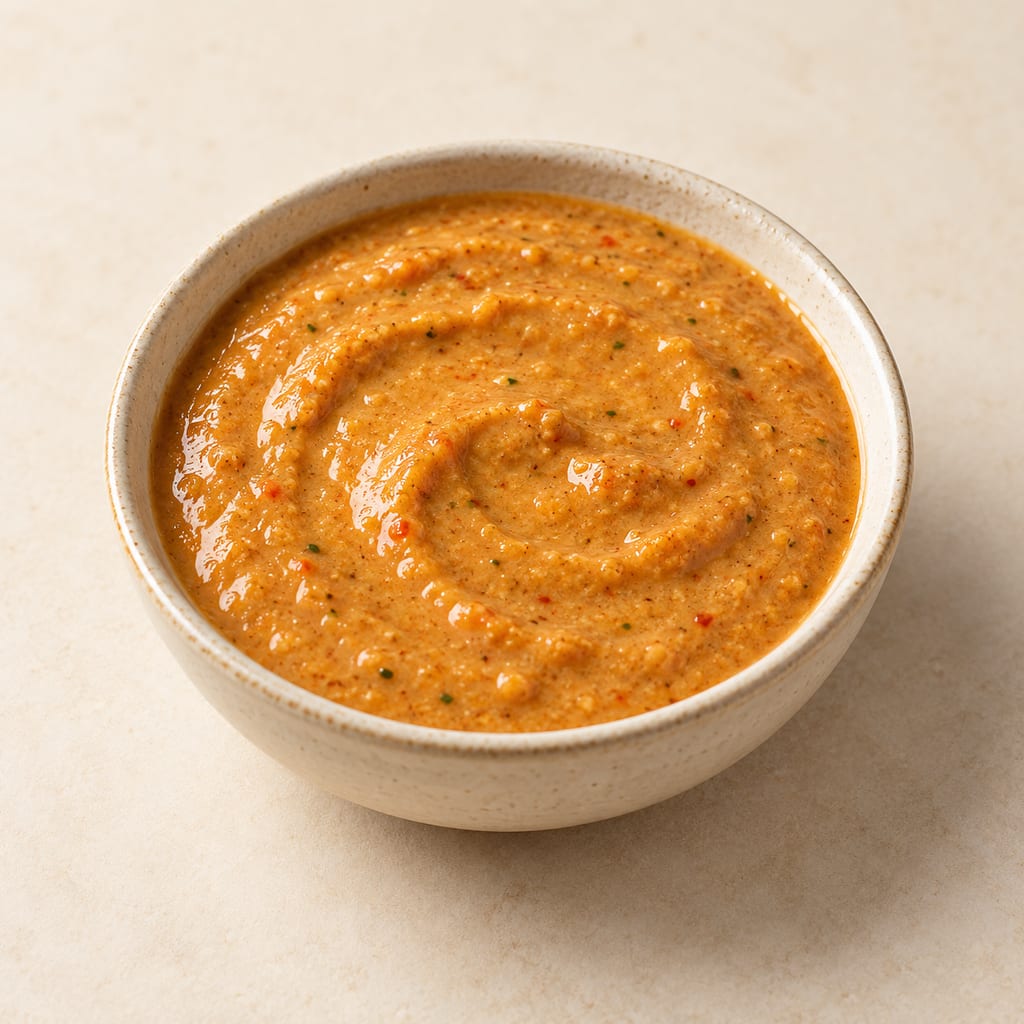
A spicy peanut hot sauce from the Popayán and Cauca region of Colombia, traditionally served with pipián empanadas and tamales.
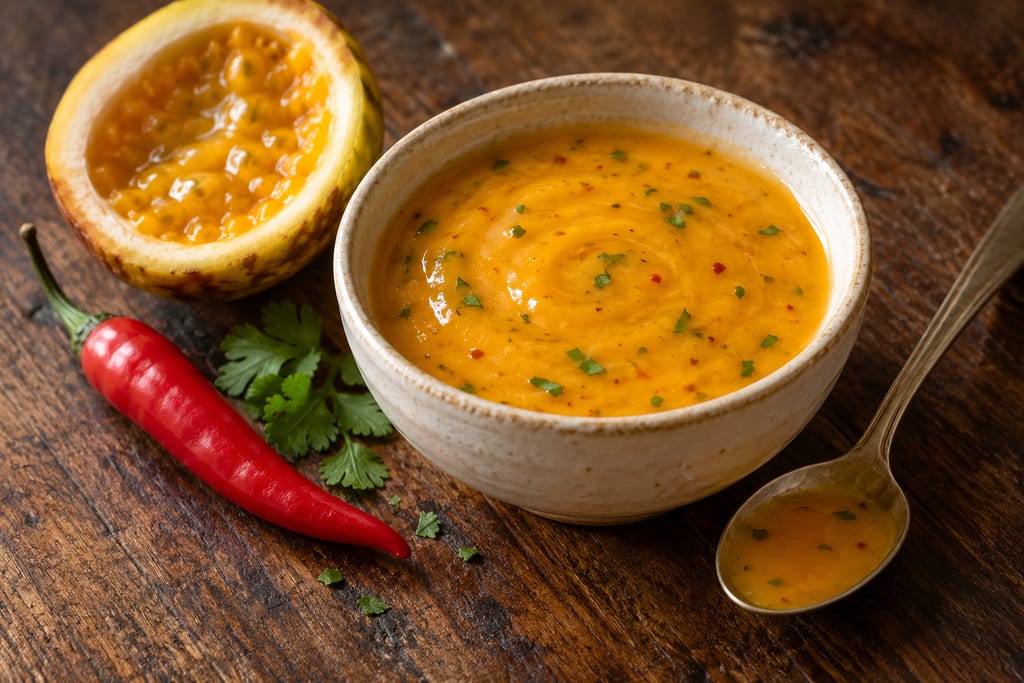
A contemporary Ecuadorian hot sauce that pairs passion fruit juice with boiled chile peppers, oil and lime.
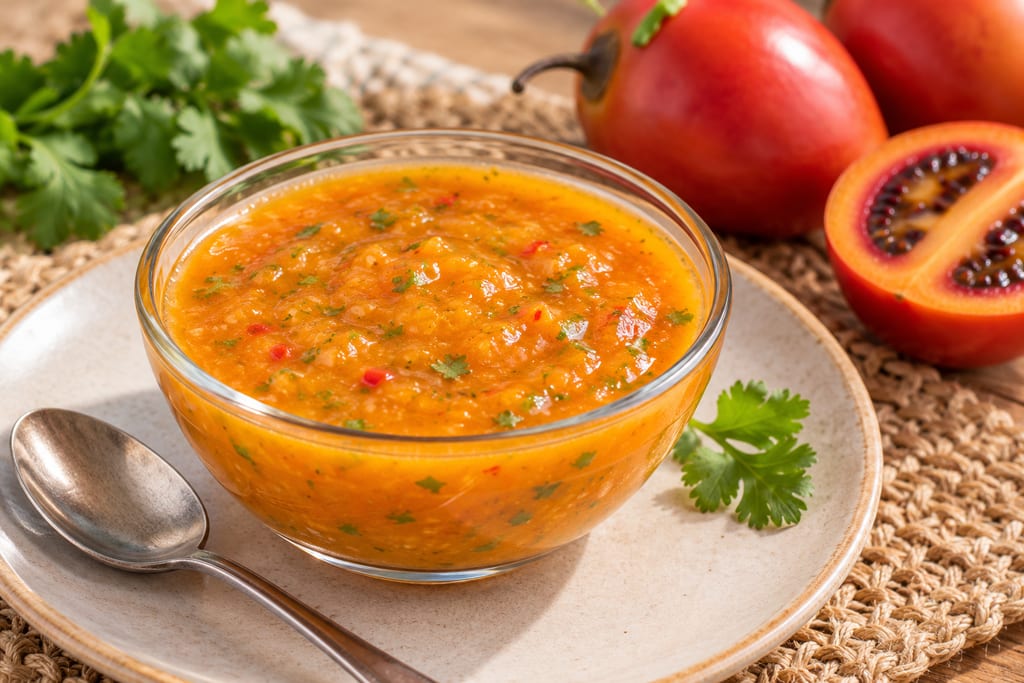
An Ecuadorian hot sauce built on tamarillo, a tart fruit that gives a sharper, fleshier base than ordinary tomato salsa.
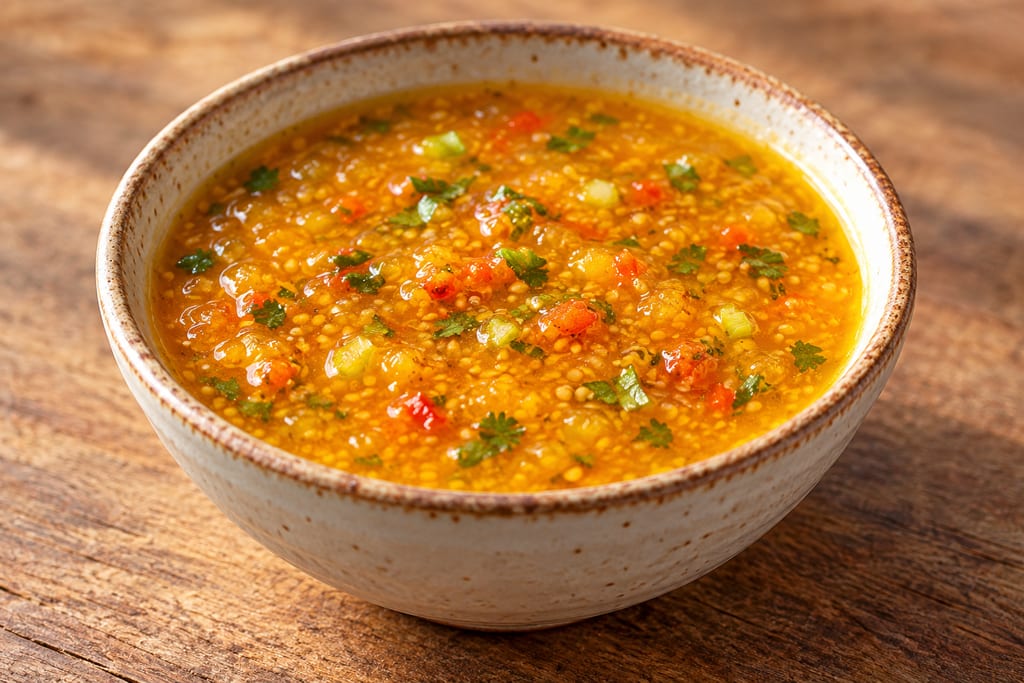
A sweet, tart and spicy Colombian sauce of uchuva, the yellow physalis fruit, with hot pepper, scallion, cilantro and lime.
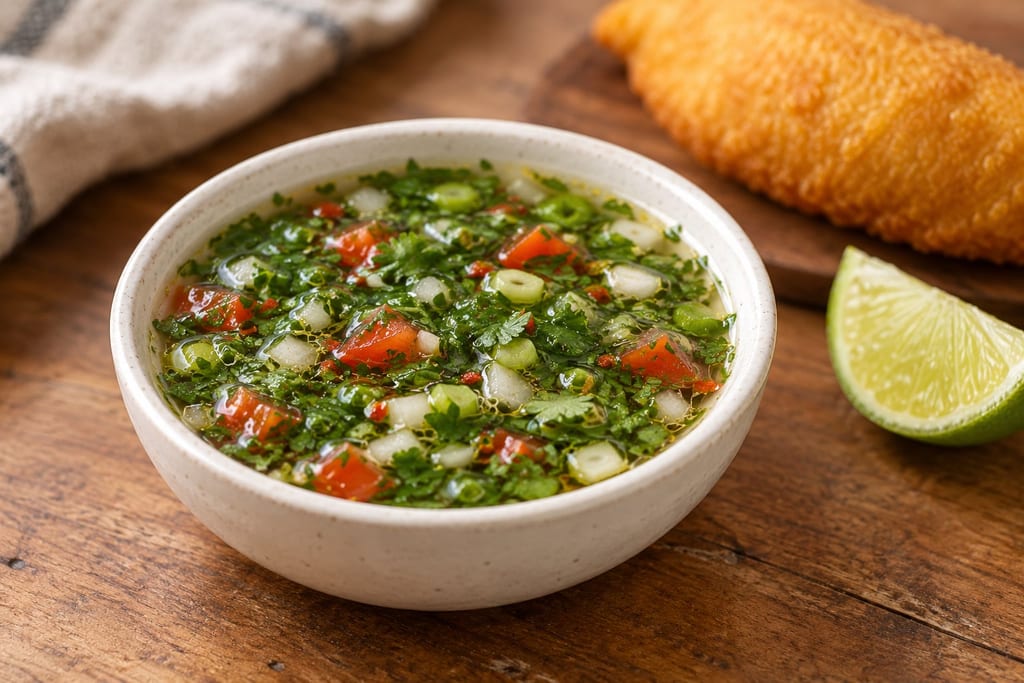
A fresh Colombian table condiment of chopped herbs, scallion and tomato in a vinegar and chile base, served beside fried and filled dishes.
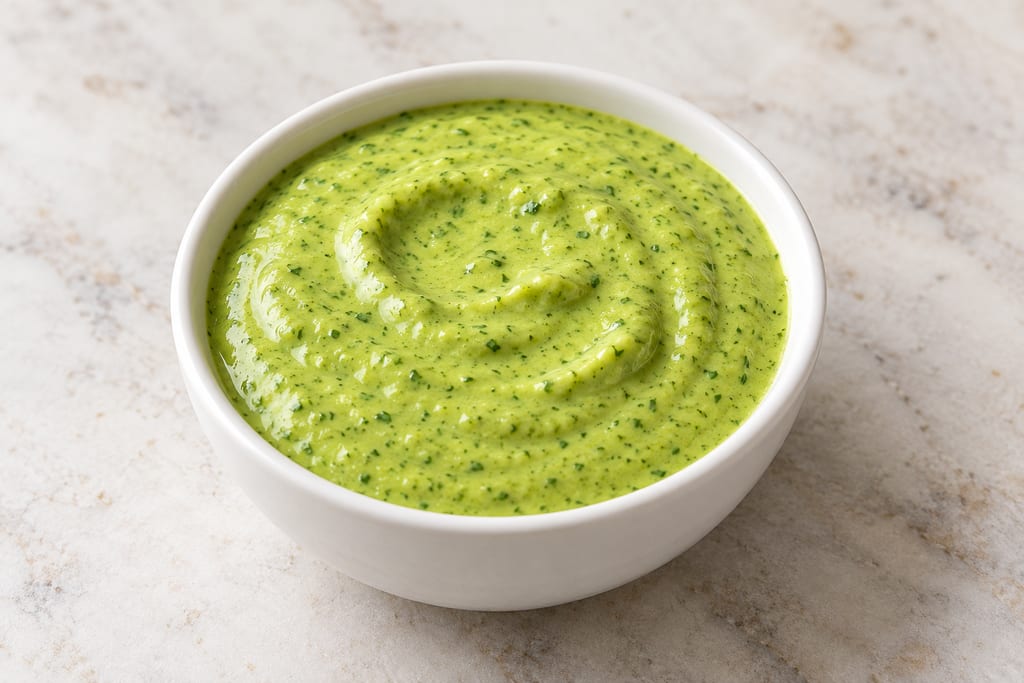
Ají verde is a Peruvian green sauce of coriander, chilli, onion and garlic in a mayonnaise or cheese base. It is best known through Peruvian restaurant cooking abroad.
No community contributions have been published for this entry yet.
Sign in to contribute. Published comments and photos are free to read.
Hot Thai KitchenInspiration · Recipe · Use · Geography
The Thai Sauce You Need for Seafood (nam jim seafood)Recipe card JSON-LD names author Pailin Chongchitnant and gives ingredients, mortar and blender stages, preparation metadata, and Thai seafood context. Direct HTTP page fetch succeeded; the web reader returned 402. The page metadata listed prepTime PT10M and cookTime PT5M, but no cooking step was present.
Cited in: Overview; Nam jim in Thai culinary culture; History and what is actually attested; Ingredients — the documented formulation; Why coriander stems are used; The importance of fresh lime; Fish sauce: the fermented ingredient; Palm sugar and the balance of flavour; How pounding changes the result; Documented preparation; Green versus red nam jim seafood; Other ingredient variations; How it is actually eaten; The chemistry of perceived balance; Troubleshooting; Safety and storage; Chilli heat and the author's range
Hot Thai KitchenContext
Hot Thai Kitchen — Thai Fish Sauce Selection and UseCited by the written account for this record.
Cited in: Fish sauce: the fermented ingredient
Tai-Thai TimesHistory
Tai-Thai Times — Thai Table Condiment CultureCited by the written account for this record.
Cited in: Nam jim in Thai culinary culture; History and what is actually attested; How it is actually eaten
U.S. Food and Drug AdministrationAllergen context
Food Allergies: What You Need to KnowFDA identifies fish among the major food allergens in the United States. This general context does not replace checking the ingredients of a specific product.
Hot Thai KitchenContext
5 Essential Thai Sauces to Enhance Your MealThe same cook distinguishes nam jim (dipping sauce) from nam prik (chilli relish); a category explanation, not a rule all speakers apply identically.
Cited in: Regional names and bottled variants
Cultural Map ThailandVariations · History
น้ำจิ้มซีฟู้ดมะปี๊ด / Mapeed Seafood Sauce (record KP-22000-00021)A Chanthaburi informant uses prik kleua for a coastal chilli-and-salt dip served with seafood; some central areas more often say nam jim seafood and some southern areas nam jim prik manao; an eastern fishing-community origin is offered as a hypothesis, not dated history.
Cited in: Regional names and bottled variants
Thai Ministry of Higher Education, Science, Research and Innovation; Clinic TechnologyVariations
Project 3508: seafood dipping sauce technology transferA Songkhla community product uses local nipa vinegar, nipa honey and green chilli, then a heat-and-bottle process.
Cited in: Regional names and bottled variants
Srinakharinwirot University, Department of Home EconomicsVariations
The development of seafood sauce bottledAn abstract reports a sensory study of bottled seafood sauce with a panel of 30; the full report was not retrievable, so ratio units, processing and storage results are unknown.
Cited in: Regional names and bottled variants
Kasetsart University Research ForestVariations
การพัฒนาสูตรและกระบวนการผลิตน้ำจิ้มซีฟู้ดProject metadata confirms a 2016 project on seafood-sauce formulation and production; no methods or results are given.
Cited in: Regional names and bottled variants