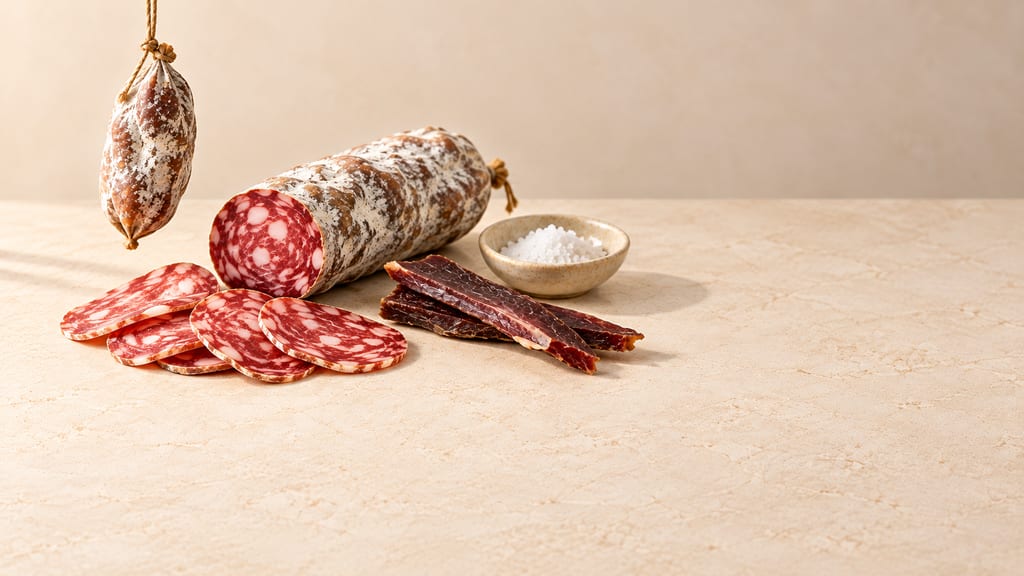
Fermented meat around the world
Dry salami, sour pork with rice, matured sheep and aged blubber follow different paths from animal to food. Their stories connect microbes with climate, slaughter, migration and the meals people share.
 FermenteaWhere food goes to change
แหนม · Naem Moo-som
Naem is a Thai sour pork preparation made with minced pork, rind or ear, glutinous rice, garlic and salt. Its documented room-temperature method has no validated food-safety endpoint.

Naem, also called Naem Moo-som, is a sour fermented pork preparation made on a small scale in Thailand. The mixture combines minced red pork with cooked pork rind or, in some places, pork ear; cooked glutinous rice, garlic, salt and pepper are also listed. Portions are wrapped in plastic film or bags and then tightly in banana leaves. The documented method does not use an intestine.
The preparation is described as a red, solid food with a sour and slightly salty taste. It is eaten as a side dish or condiment with fresh ginger and green vegetables. No dated first attestation or more precise birthplace is established here. The documented room-temperature fermentation has no validated food-safety endpoint.
Pork rind is about 20–30% of the minced-meat weight. Cooked glutinous rice is listed at 7–10%, with a separate 7–8% by-weight-of-meat note for a short fermentation. The basis for the general 7–10% figure is not stated, so the figures remain distinct. Less rice is described as taking longer to produce the desired flavour; that adjustment is not a safety control.
Salt is normally 2–3% of the mixed ingredients. The JIRCAS record says less than 2% spoils easily and more than 3% tastes too salty. Those are product observations, not a validated pathogen-control range. Pepper is listed at 0–0.05%, without a denominator. Potassium nitrate is listed at 0–200 ppm, also without a denominator or a formulation and verification method. These figures describe the record; they are not instructions for dosing a home batch.
Trim and mince pork. Clean, boil and shred the rind into strips about 2–4 cm long; boiled pork ear can replace it. Mix the rice, pepper and nitrate, then combine that mixture with the pork and rind. Divide the mixture into portions, wrap them in film or bags, then enclose each tightly in banana leaves. Whole bird’s-eye chilli is optional.
Fermentation is listed as 3–4 days in the overview and 3–5 days in the method. The method gives room temperature without a numeric range. No organisms, measured acidity or water-activity result, or pathogen-reduction study is reported. The listed 1–2 week storage life has no stated conditions. The account does not establish that time, sourness or salt makes a batch safe, give household storage instructions, or say whether the finished preparation is eaten raw or cooked.
Raw consumption is not established as safe. The Japanese-language JIRCAS entry specifically notes Trichinella spiralis risk and says some avoid Naem raw; it also mentions stir-fried uses. CDC advises cooking meat to safe internal temperatures with a thermometer, and FoodSafety.gov lists 160°F (71°C) for ground meat and sausage. That general cooking endpoint is consumer guidance for a cooked serving; it does not validate the preceding room-temperature fermentation. This page preserves the recorded method as a historical account, not a ready-to-eat process.
Naem Moo-som is a sour fermented pork preparation made on a small scale in Thailand. It is eaten as a side dish or condiment with fresh ginger and green vegetables. No dated first attestation or precise birthplace is established here.
Scaling: source batch only
The method describes minced pork held at room temperature for several days but provides no product-specific pathogen-reduction validation, measured acidification endpoint or other validated lethality control. The record cannot establish that this process makes a batch safe to eat.
Hazard sourceJIRCAS's Japanese-language Naem entry notes Trichinella spiralis risk and says some avoid raw consumption. CDC identifies raw or undercooked contaminated meat as a trichinellosis risk. The documented 3–5 day room-temperature period has no validated endpoint establishing raw-ready safety.
Hazard sourceIf serving a cooked ground-pork portion, cook the center to at least 160°F (71°C) and verify with a food thermometer. This general cooking endpoint does not validate the preceding fermentation.
Control sourceThis method has no validated food-safety endpoint. The 3–5 day room-temperature period and reported salt percentage do not establish pathogen control or ready-to-eat safety. The listed 0–200 ppm potassium nitrate has no stated basis and is not a dosing instruction.
The Japanese-language JIRCAS Naem entry notes Trichinella spiralis risk and says some avoid eating Naem raw. Do not treat the 3–5 day room-temperature fermentation, sourness or salt level as evidence that raw consumption is safe.
For a cooked ground-pork serving, FoodSafety.gov lists 160°F (71°C) internal temperature, checked with a food thermometer. This consumer cooking guidance is not a validated Naem fermentation process.
JIRCAS documents a Thai preparation; this is not a claim of birthplace.
Dry salami, sour pork with rice, matured sheep and aged blubber follow different paths from animal to food. Their stories connect microbes with climate, slaughter, migration and the meals people share.
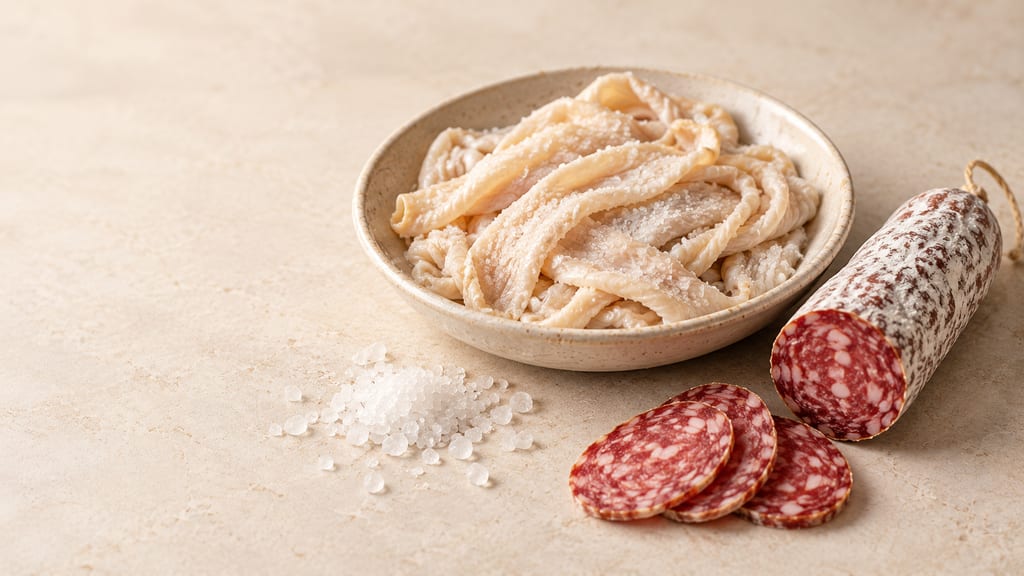
Gut, stomach, bladder, caul and skin have held food for as long as recipes have been written down. Which part of the animal a cook chose still decides a food's shape, how it dries and smokes, and how it is eaten.
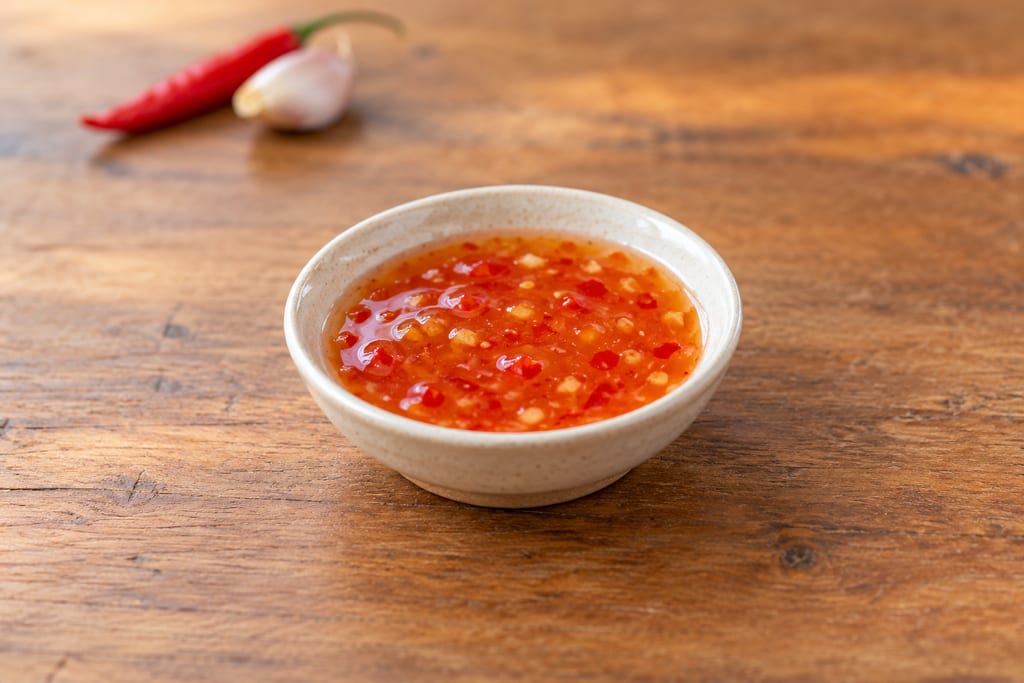
A cooked Thai-style sweet chilli dip combines red chillies, garlic, sugar and vinegar, then uses a small cornflour slurry to give this batch a glossy, spoonable body.
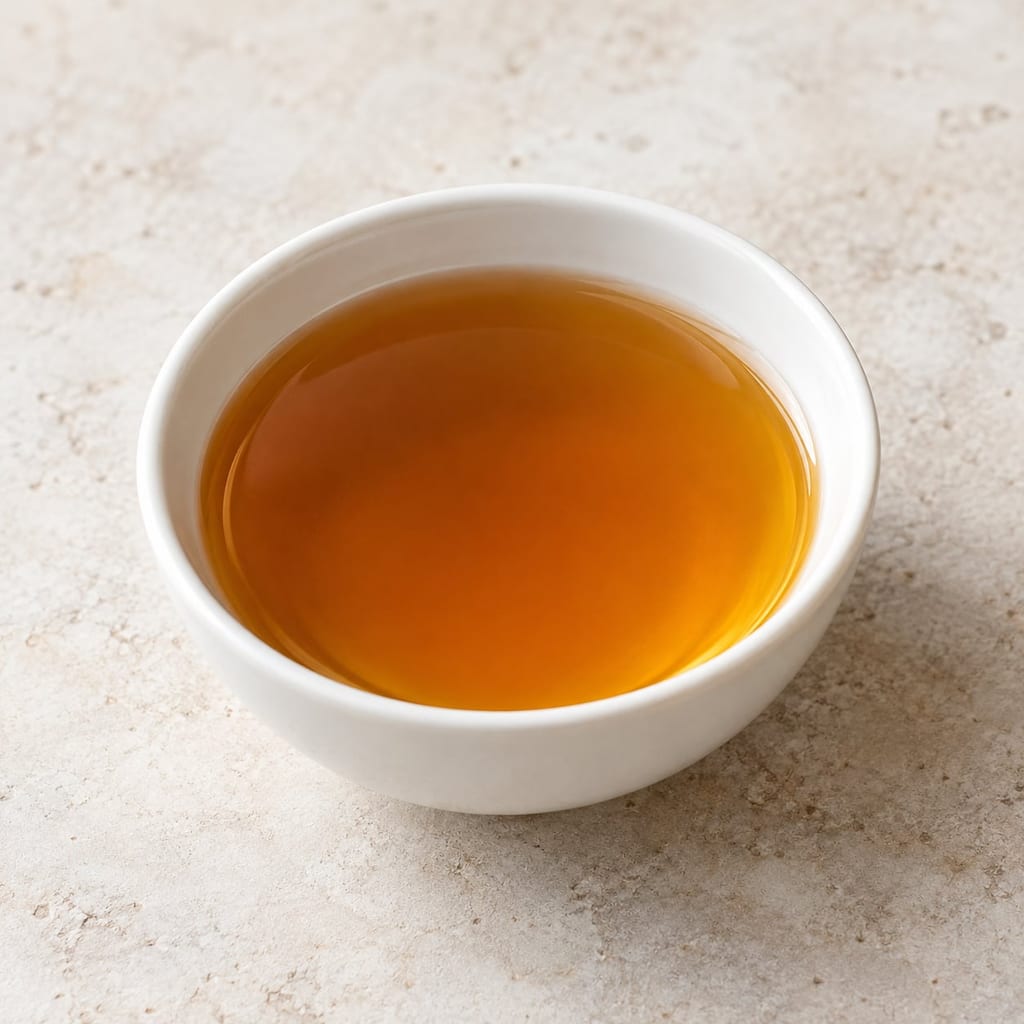
Thai fish sauce is a clear yellow-brown seasoning drawn from salted fish. Tank maturation produces a first extract, with further brine extractions giving other grades.
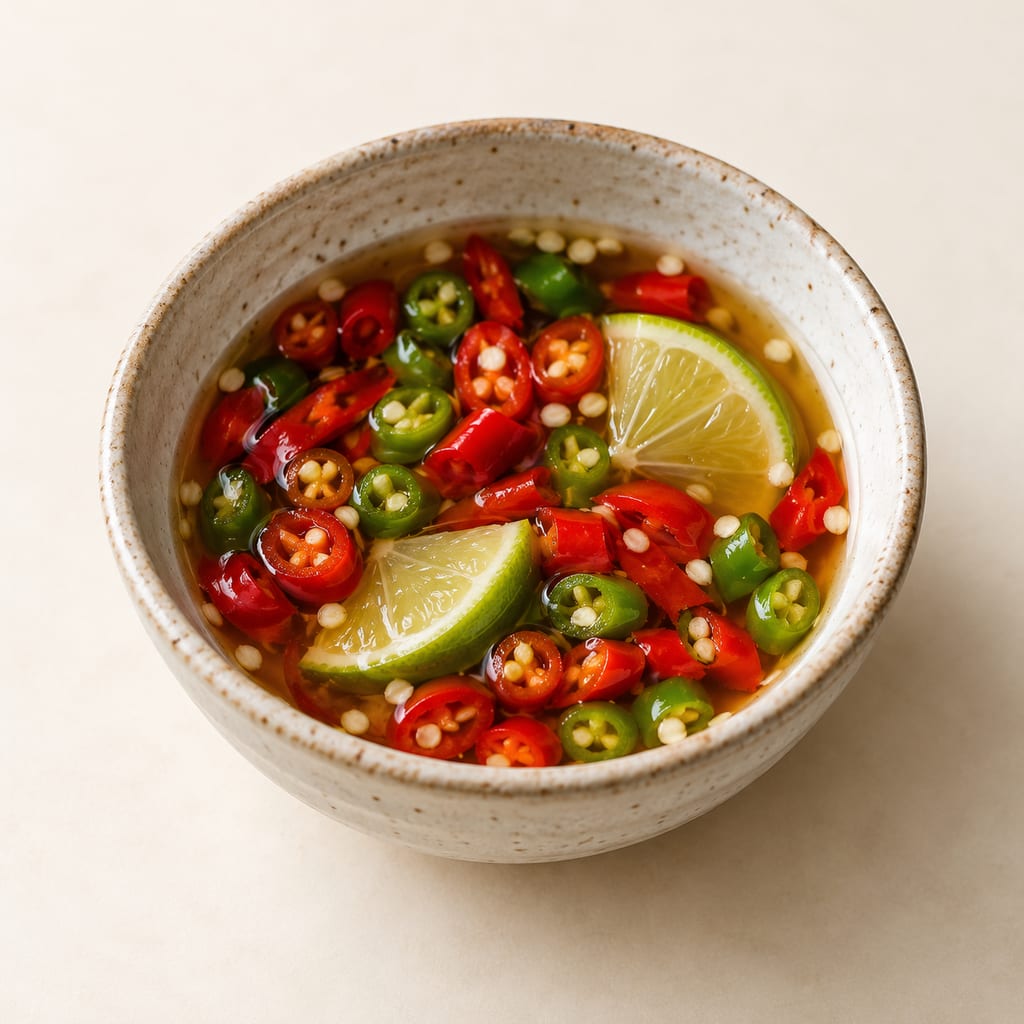
Fresh sliced chillies, fish sauce and lime form a sharp Thai table condiment. Spoon a little alongside rice, eggs or other cooked dishes.
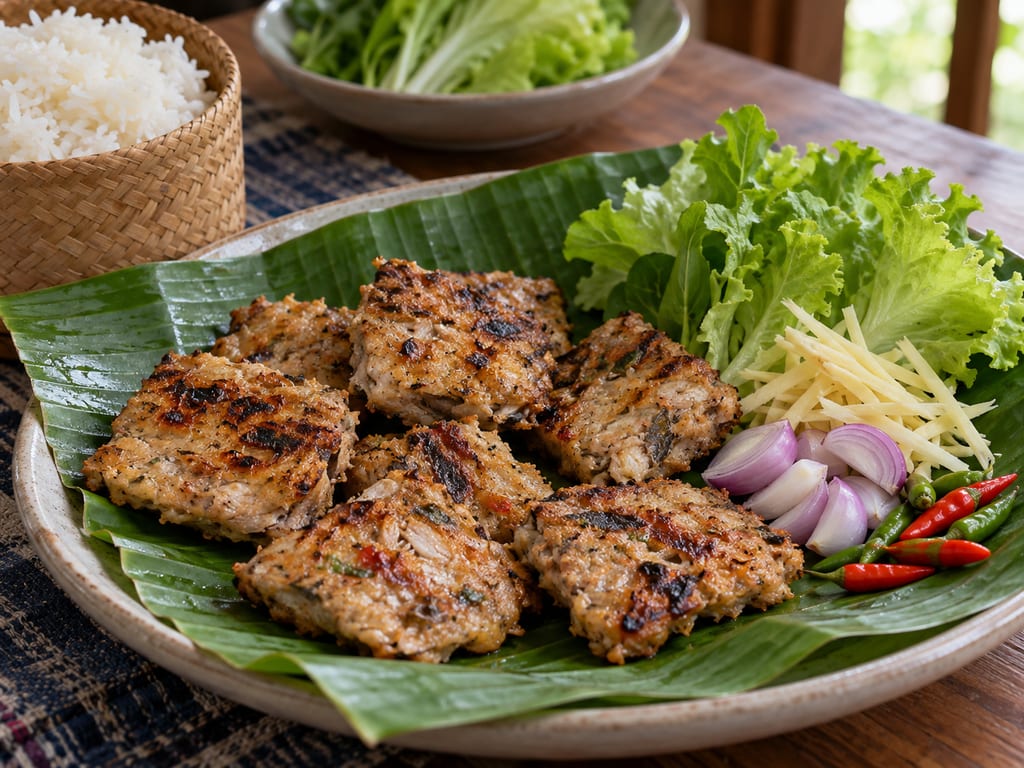
Som-fak is a Thai fermented freshwater-fish cake. JIRCAS records its ingredients, proportions, wrapping and 3–5-day fermentation, but does not validate a safe household process or endpoint.

A 2023–2025 proof-of-concept made separate fermented extracts from beef heart and lung with Staphylococcus xylosus and protease. It reports supervised pilot findings, not a validated household method or a blended heart-and-lung formula.
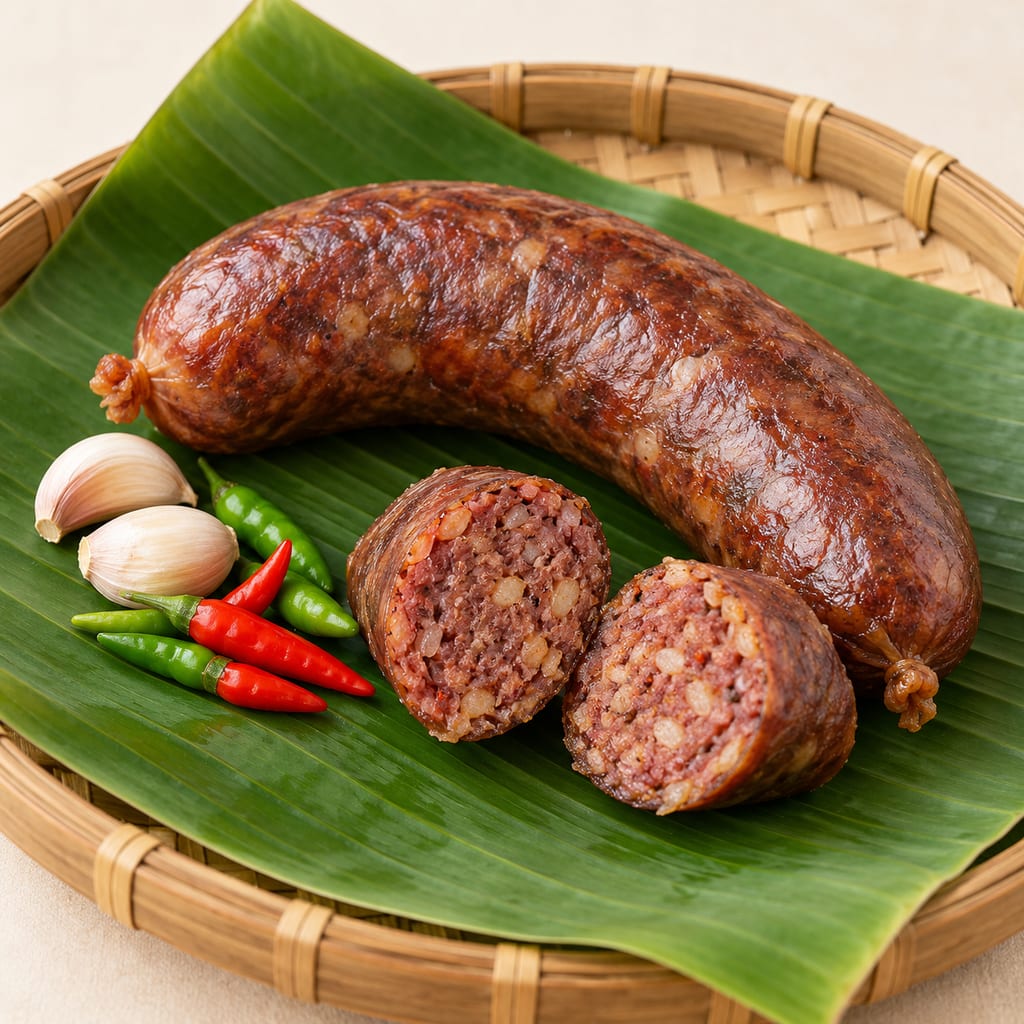
Mum is a Thai family of fermented meat preparations with distinct pork Mam-moo and beef Mam-neua forms. Sources document ingredients, casing and serving traditions, but not a validated home process.
A Tujia sour pork preparation documented in southeastern Chongqing. Its rice-flour pork method is distinct from the wider suān ròu forms; a sixth-century pork-zha text is an earlier attestation, not proof of direct continuity.
No community contributions have been published for this entry yet.
Sign in to contribute. Published comments and photos are free to read.
Japan International Research Center for Agricultural Sciences (JIRCAS)Process · Inspiration
NaemThai and English names; Naem Moo-som local name; listed ingredients and source-reported amounts, including their stated or unstated bases.
Method: pork trimming and mincing; boiling and shredding rind or ear; mixing, portioning and wrapping; room-temperature fermentation for 3–5 days, with an overview field giving 3–4 days.
Lists microorganisms as unavailable; provides no validated food-safety endpoint, pathogen-reduction validation or final storage conditions. Its 1–2 week storage-life field has no stated conditions.
Cited in: A sour pork preparation wrapped without a gut; What the recorded quantities mean; The source method and its limits
Japan International Research Center for Agricultural Sciences (JIRCAS)Safety · Consumption
Naem (Thai fermented food database, Japanese-language entry)The Japanese-language entry states that some people avoid raw Naem because of the risk of Trichinella spiralis.
It also describes cooked uses, including stir-frying with vegetables or egg; it does not validate the safety of the English entry's room-temperature method.
Cited in: The source method and its limits
Centers for Disease Control and Prevention (CDC)Safety
How to Prevent TrichinellosisCDC says raw or undercooked meat contaminated with Trichinella can cause trichinellosis and recommends cooking meat to safe internal temperatures with a food thermometer.
CDC states curing (salting), drying, smoking or microwaving alone does not consistently kill Trichinella; this source does not test or validate the Naem fermentation described here.
Cited in: The source method and its limits
FoodSafety.govSafety · Cooking
Cook to a Safe Minimum Internal TemperatureThe consumer chart lists an internal temperature of 160°F (71°C) for ground meat and sausage and instructs users to check with a food thermometer; this is cooking guidance, not validation of Naem fermentation.
Cited in: The source method and its limits