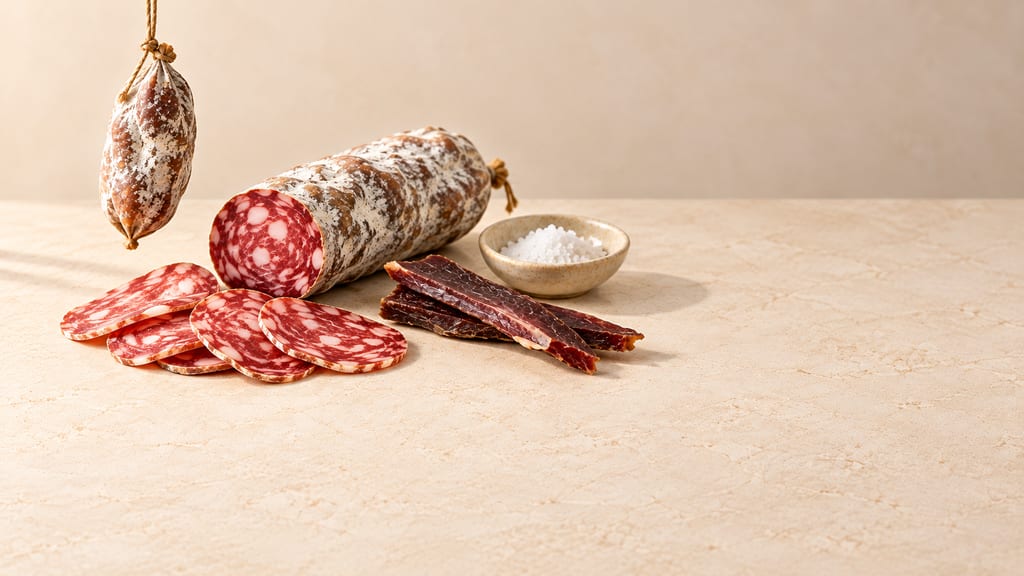
Fermented meat around the world
Dry salami, sour pork with rice, matured sheep and aged blubber follow different paths from animal to food. Their stories connect microbes with climate, slaughter, migration and the meals people share.
 FermenteaWhere food goes to change
ส้มฟัก · Som-fug · Plaa-fak · Plaa-mak · Fak-som
Som-fak is a Thai fermented freshwater-fish cake. JIRCAS records its ingredients, proportions, wrapping and 3–5-day fermentation, but does not validate a safe household process or endpoint.
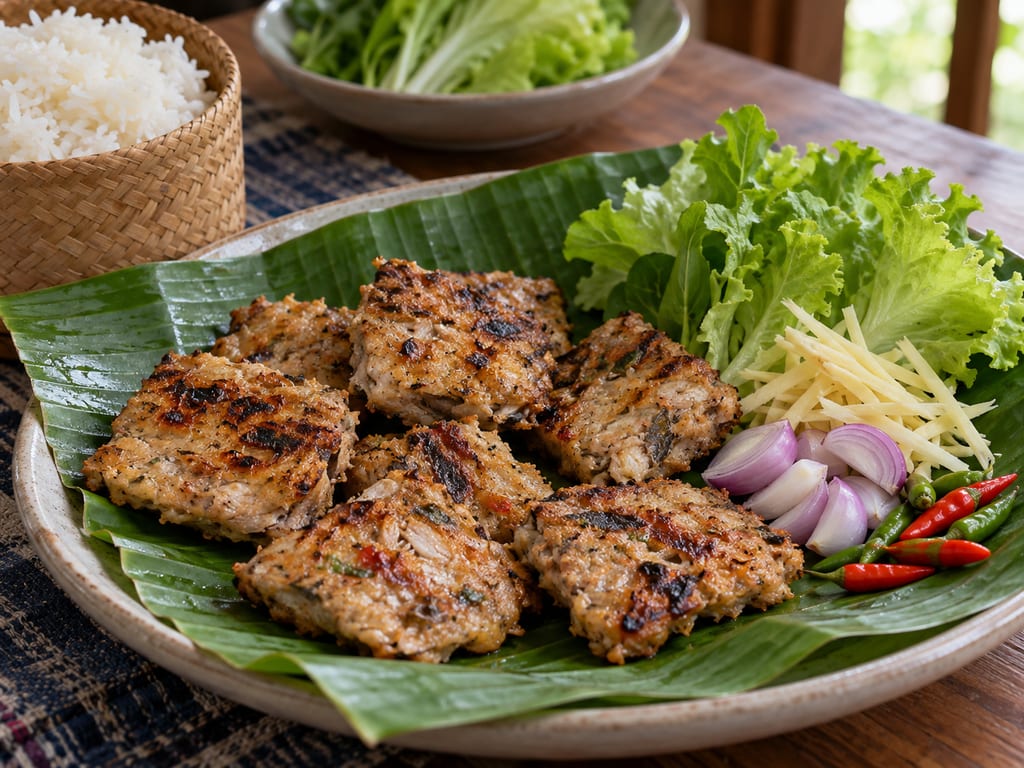
Som-fak is a sour fermented fish cake made from freshwater fish. JIRCAS records Som-fak as a northeastern name, Plaa-fak in the north, Plaa-mak in the east and Fak-som in parts of the northeast. Those names describe a regional vocabulary, not one claimed point of origin.
The fish is minced and kneaded with cooked rice, garlic and salt until the mixture gels into a sticky paste. It is divided into small portions and wrapped in banana leaves or plastic sheet. The finished cake is slightly sour and salty, firm and elastic. Its colour can vary with the fish species and how completely blood is removed.
The JIRCAS entry lists ten fish commonly used: Channa micropeltes (Cha-do), Kryptopterus bleekeri (Neua-orn), Notopterus borneensis (Sa-tue), N. chitala (Kraai), N. notopterus (Sa-laad), Pangasius hypophthalmus (Sa-waai), P. larnaudi (Tay-poh), Probarbus jullieni (Yee-sok), Wallagonia attu (Kao) and W. miostoma (Kao-dam). The record names options rather than one interchangeable fish; it does not give species-specific batches.
The ingredient ratios are recorded as printed: fish to rice 6:1, garlic 20:1 and salt 20:1. The page does not state whether the ratios are by weight or volume, and it does not spell out the direction for the garlic and salt figures. A batch size and finished yield are also absent. These gaps prevent exact scaling.
Filleting removes skin and blood before the flesh is pressed in a cloth bag to squeeze out water. For thin-bodied fish such as Plaa-kraai and Plaa-sa-laad, the flesh may be scraped from the skin instead. Minced fish is then kneaded with cooked rice, garlic and salt until a sticky gel forms.
The mixture is divided into small portions and wrapped tightly in banana leaves or plastic sheet. The JIRCAS method gives a fermentation period of 3–5 days but does not state temperature or a measured completion point. It describes shrinkage and some liquid leakage during fermentation. Too little salt is associated in the account with rapid acidity, poor maturation, an unacceptable fishy odour and a soft, soggy texture; these are quality observations, not safety controls.
Som-fak is served with lettuce, ginger, shallots, chilli and roasted peanuts. Another described serving is grilled in banana leaves with rice. The account provides no grill temperature, cooking duration or finished internal temperature, so this variation is not a measured kill step.
The source gives a two-week storage-life field but its method says to eat the product within a few days. Neither statement names storage conditions. The record therefore gives no household storage instruction.
FDA guidance treats parasites in uncooked or undercooked seafood as a potential hazard and notes that freshwater fish may carry trematode hazards. It also states that brining and pickling may reduce parasite hazards without eliminating them. This general seafood guidance does not assess each of the fish species listed for Som-fak or validate its fermentation method. No product-specific parasite control, pathogen-reduction result, measured acidification endpoint or storage plan is supplied.
Som-fak is a Thai fermented freshwater fish cake with local names including Som-fak in the northeast, Plaa-fak in the north and Plaa-mak in the east. The database lists home-industry production and servings with lettuce, ginger, shallots, chilli and roasted peanuts, as well as grilling in banana leaves with rice. No dated first attestation or precise birthplace is established.
Scaling: source batch only
The preparation starts with freshwater fish and includes an uncooked fermented serving as well as a grilled version. FDA guidance identifies parasite hazards in uncooked or undercooked seafood and notes that freshwater fish may have trematode hazards; it does not assess every species listed for Som-fak.
Hazard sourceThe method gives a 3–5 day fermentation duration but no product-specific pathogen-reduction study, measured acidity or validated control plan. The duration alone does not establish safety.
Hazard sourceThe JIRCAS description is not a validated food-safety process. It does not show that 3–5 days of fermentation makes the fish safe to eat uncooked.
FDA guidance says brining and pickling may reduce parasite hazards but do not eliminate them. That general guidance does not validate Som-fak or establish a control for any of its listed fish species.
The source describes grilling as one serving method but gives no cooking time or endpoint. The fermented version must not be presented as proven ready to eat.
The database documents Som-fak in Thailand, not a single birthplace.
Som-fak is listed as a northeastern local name; this does not establish origin.
Plaa-fak is listed as a northern local name; this does not establish origin.
Plaa-mak is listed as an eastern local name; this does not establish origin.
Dry salami, sour pork with rice, matured sheep and aged blubber follow different paths from animal to food. Their stories connect microbes with climate, slaughter, migration and the meals people share.
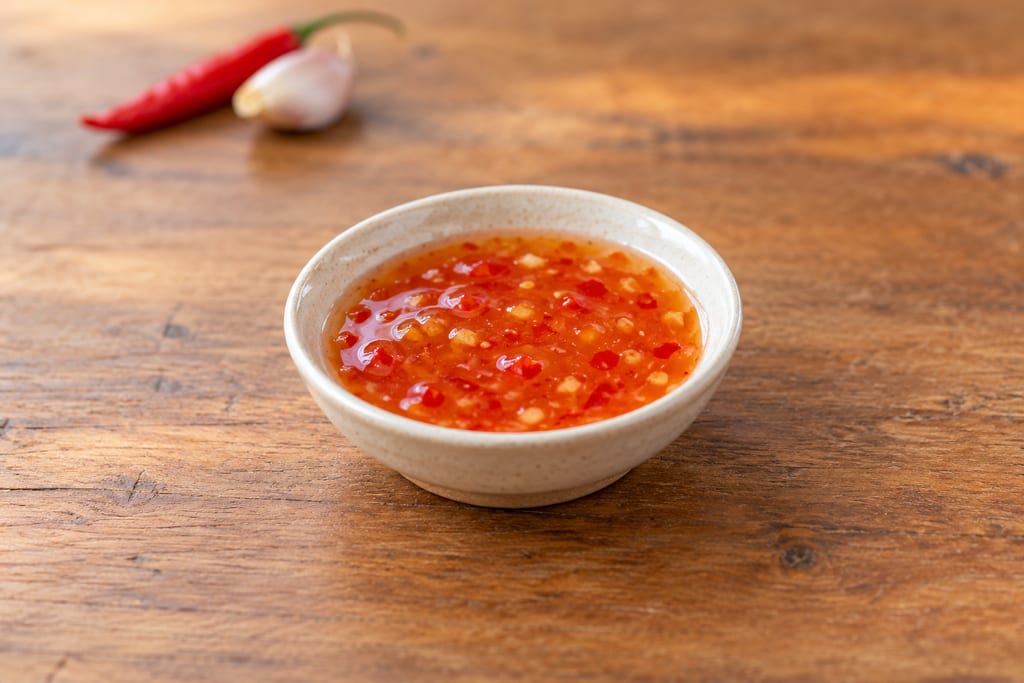
A cooked Thai-style sweet chilli dip combines red chillies, garlic, sugar and vinegar, then uses a small cornflour slurry to give this batch a glossy, spoonable body.

Naem is a Thai sour pork preparation made with minced pork, rind or ear, glutinous rice, garlic and salt. Its documented room-temperature method has no validated food-safety endpoint.
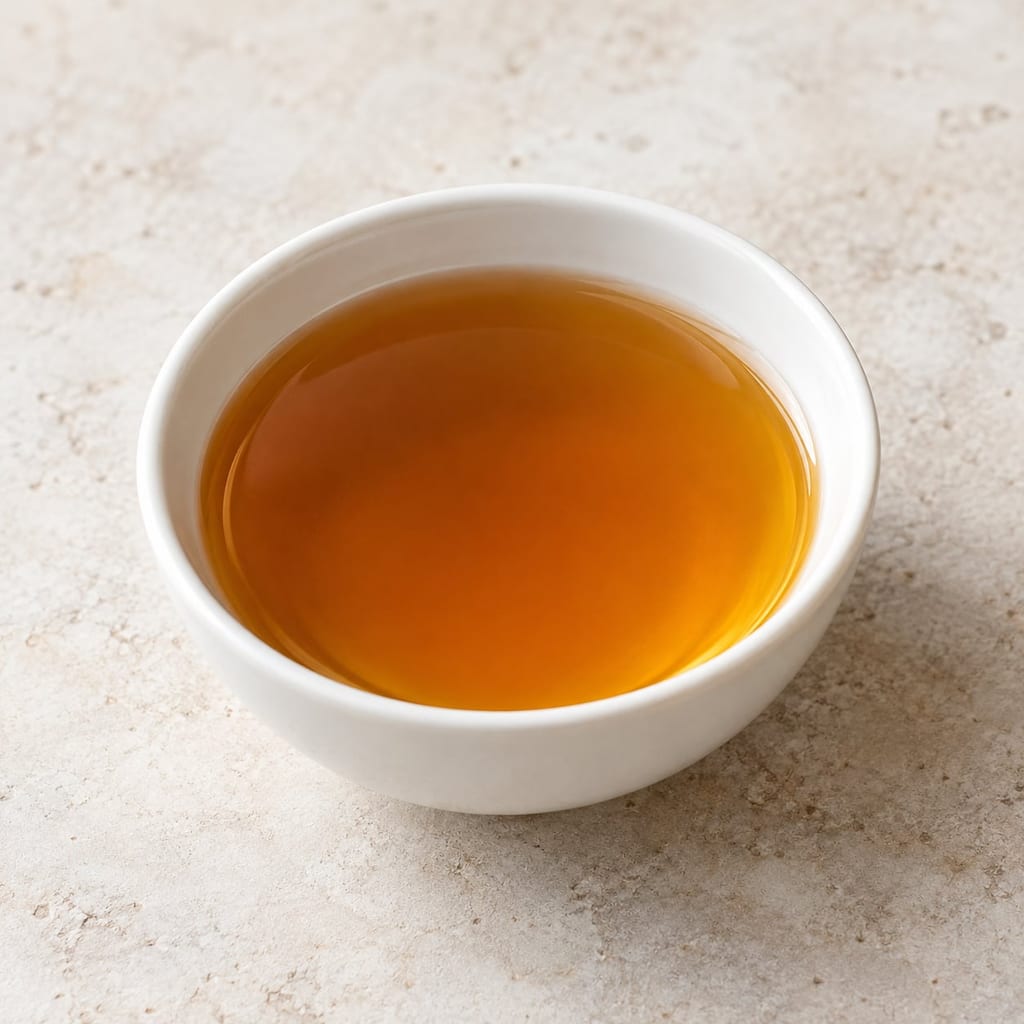
Thai fish sauce is a clear yellow-brown seasoning drawn from salted fish. Tank maturation produces a first extract, with further brine extractions giving other grades.
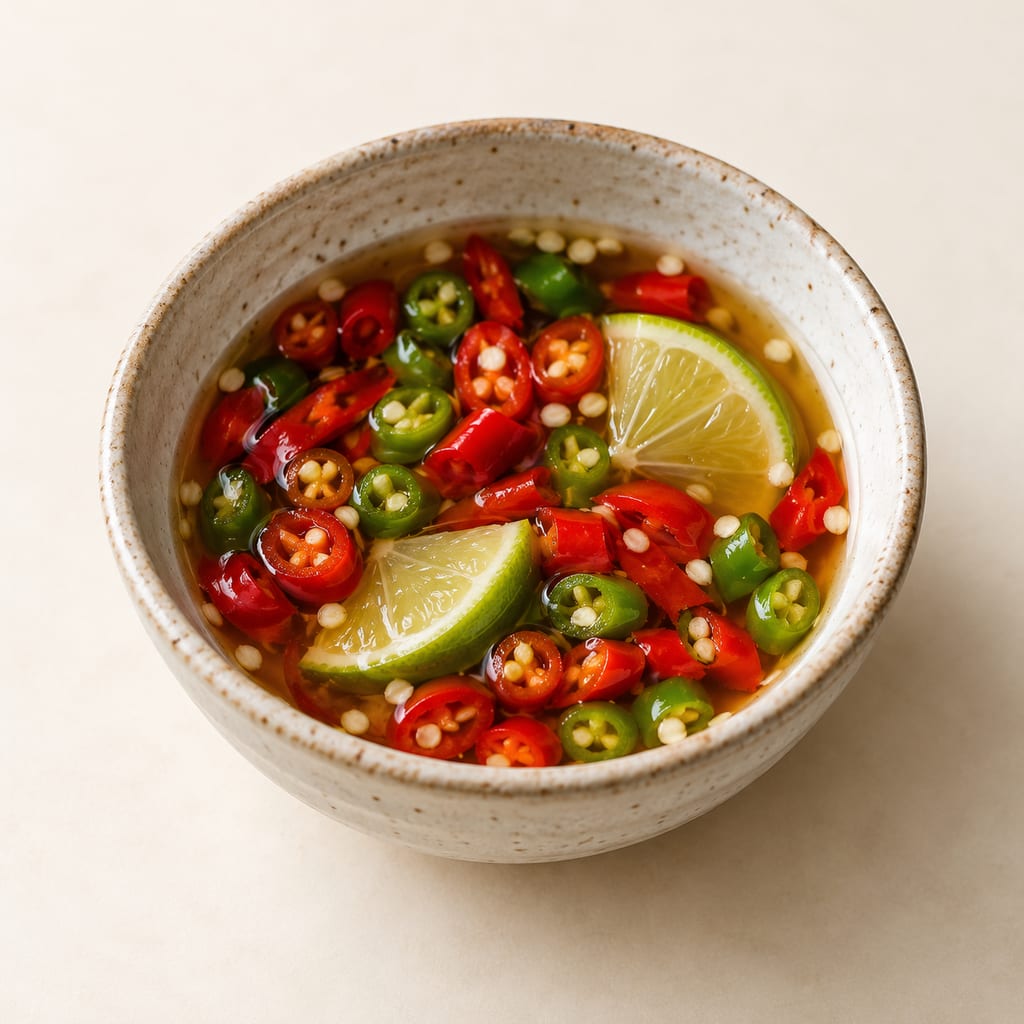
Fresh sliced chillies, fish sauce and lime form a sharp Thai table condiment. Spoon a little alongside rice, eggs or other cooked dishes.
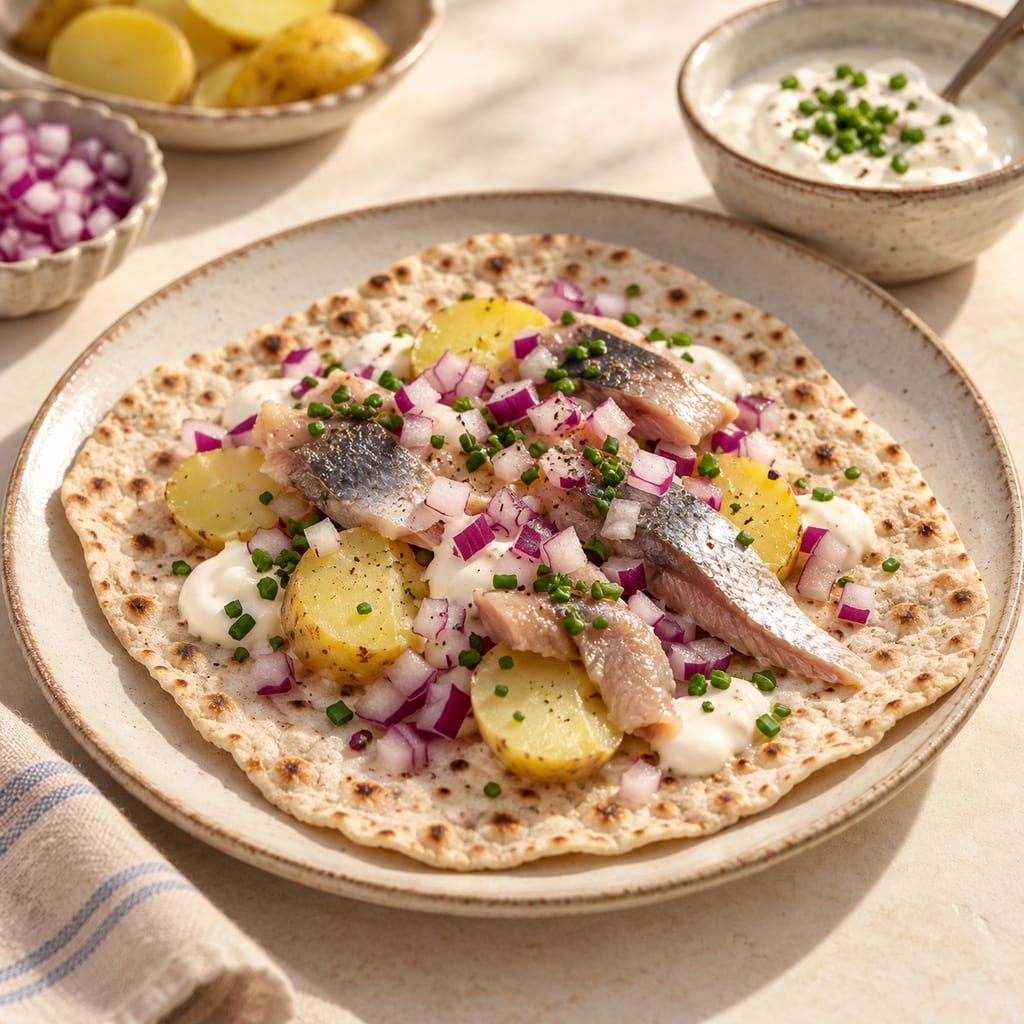
A Swedish late-summer meal of commercially prepared surströmming, tunnbröd, potatoes, onion and cultured cream. This is a serving preparation; the specialist fish fermentation is not made at home here.
A concrete fermentation tank installed below ground at a Senegalese fish-processing site was documented as an adaptation that emulated the older practice of burying fish during fermentation.

A documentary account of Icelandic hákarl, fermented and dried Greenland shark. It describes cultural context and one production study, not a home preparation method.
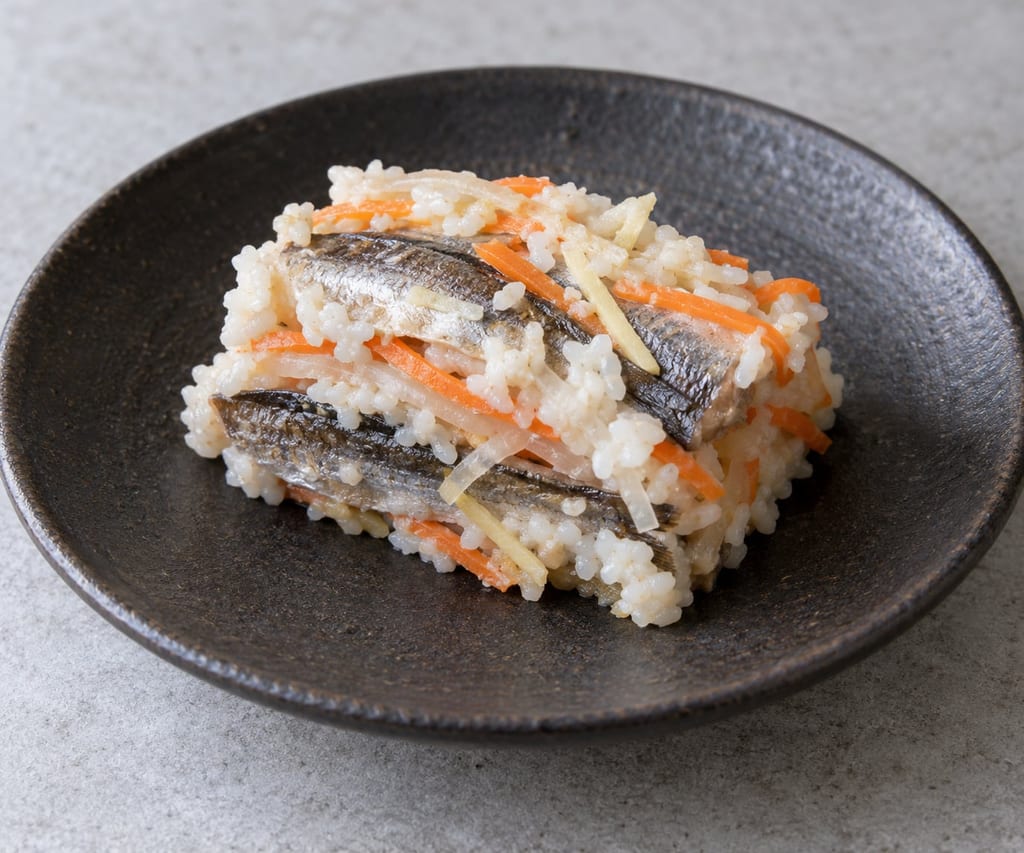
Hokkaido izushi layers fish, vegetables, rice and kōji for cold-season lactic fermentation. This MAFF recipe uses small hatahata with a vinegar pretreatment; it is one regional household formula, not a universal izushi method.
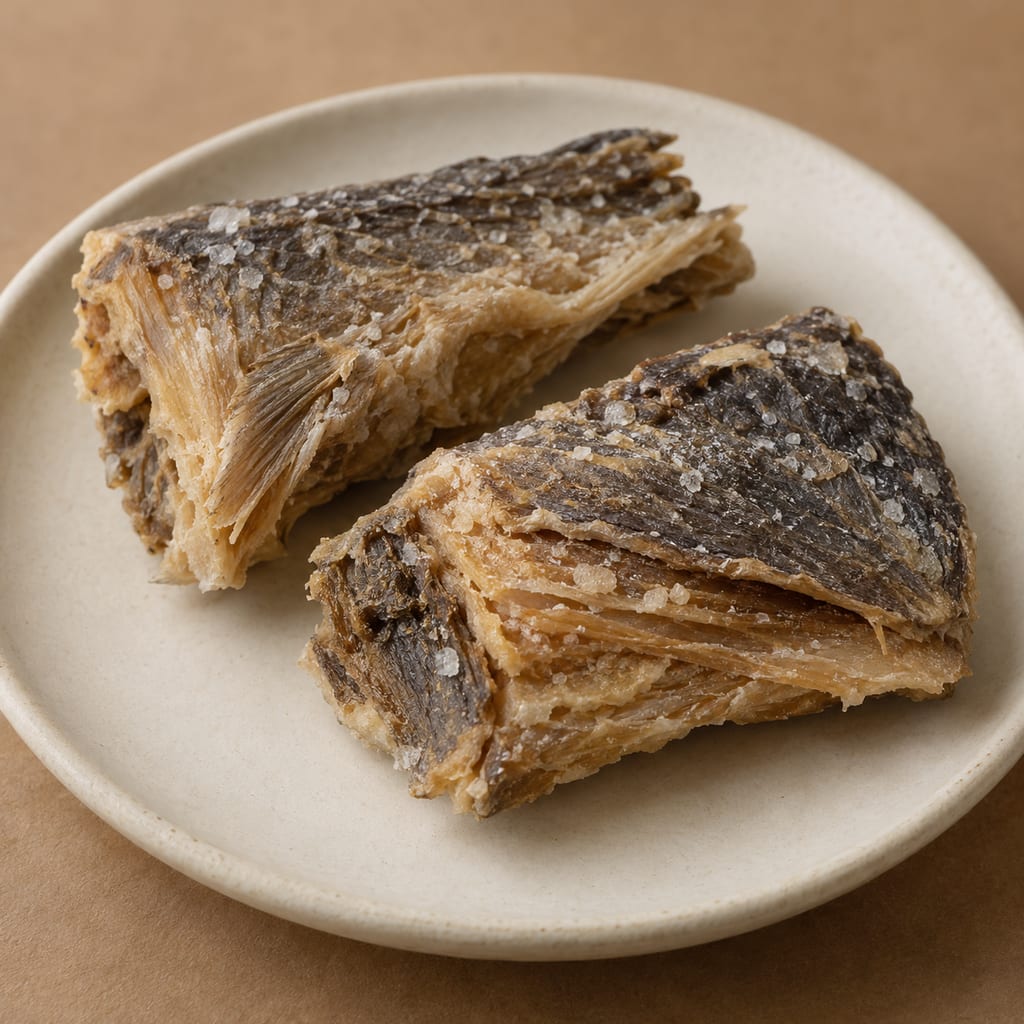
Lanhouin is a strongly flavoured fermented fish condiment documented in coastal West Africa, including southern Benin. This page records one published research reproduction as evidence, not as a validated home-preservation recipe.
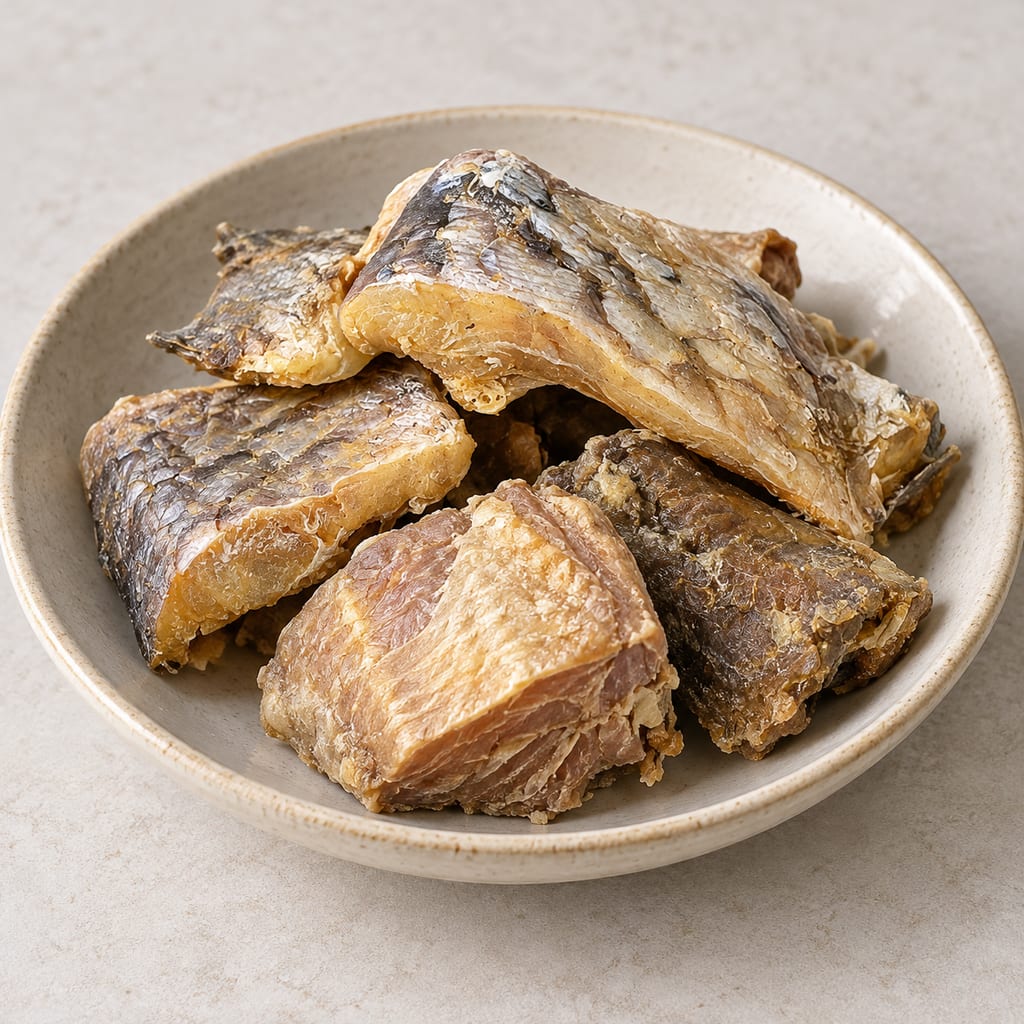
Momone is a Ghanaian salted and fermented fish condiment made from varied marine fish. Historical surveys describe both semi-dried and drier products, with salting and drying methods differing across coastal communities.
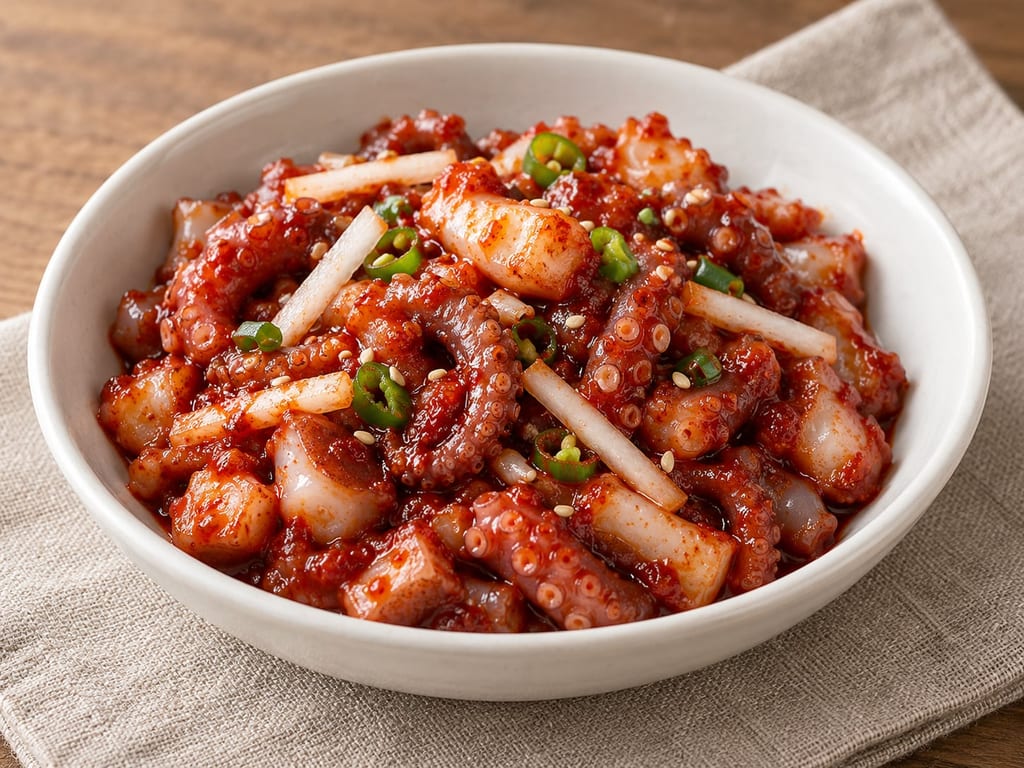
Nakji jeotgal is Korean salted octopus, served among jeotgal varieties with rice. This entry documents the dish and one creator’s quick-home version; it does not provide a household preparation method.
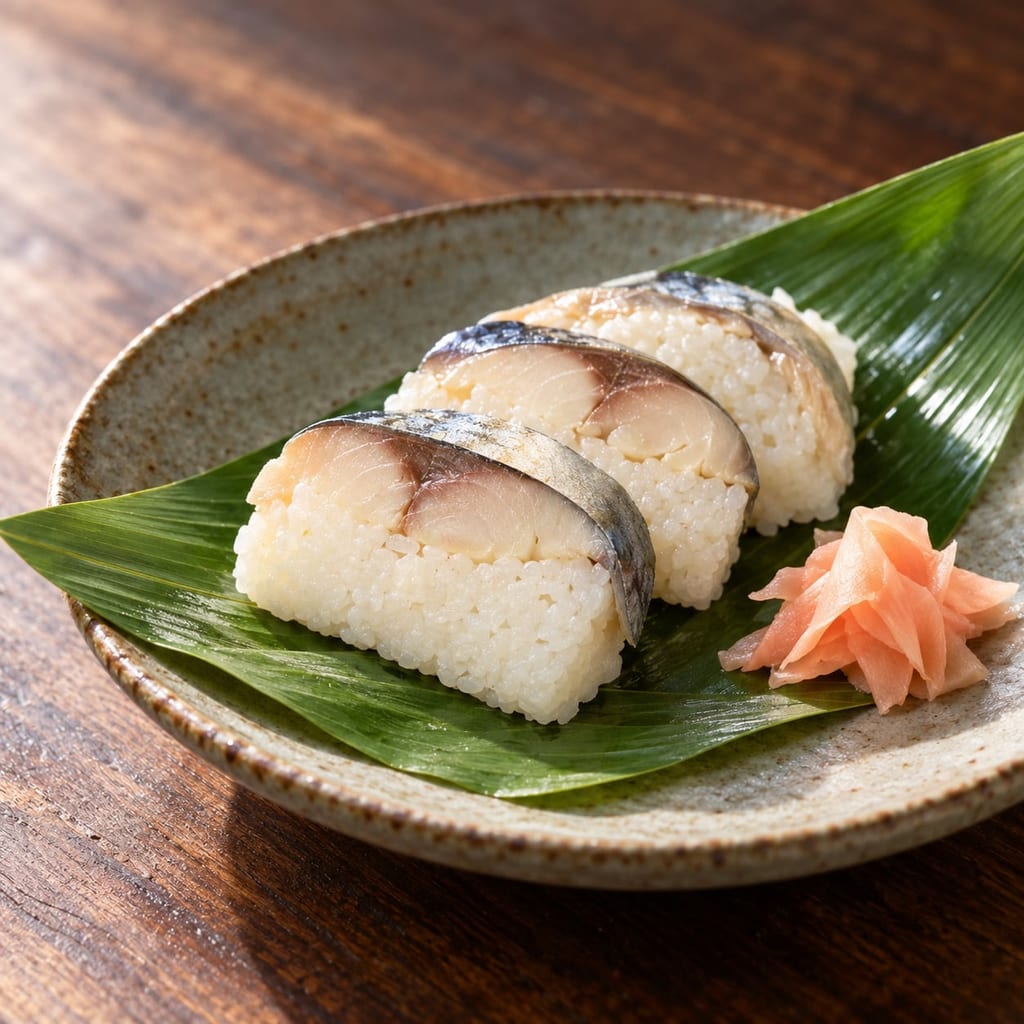
A documentary account of Japanese narezushi, a family of salted-fish and rice ferments. This entry preserves the East Kishu (Mie) source’s identity and regional context without providing a household preparation method.
No community contributions have been published for this entry yet.
Sign in to contribute. Published comments and photos are free to read.
Japan International Research Center for Agricultural Sciences (JIRCAS)Process · Inspiration
Som-fakThai name; regional local names; freshwater fish product; list of ten fish species; ingredient names and ratios, including bases not stated.
Method: fillet and remove skin/blood, scrape some thin-bodied fish, squeeze in cloth, mince, combine with rice/garlic/salt until gelled and sticky, wrap in banana leaf or plastic, ferment 3–5 days.
Texture, colour variations, home-industry production, two different storage statements, raw-style and grilled uses, and organisms reported across named literature. The entry does not specify a product-specific safety endpoint.
Cited in: A Thai fish cake with several local names; Fish and measured proportions; From fillet to wrapped portions; Serving and safety limits
U.S. Food and Drug AdministrationSafety
Fish and Fishery Products Hazards and Controls Guidance, June 2022 EditionChapter 5: parasites in uncooked or undercooked seafood can be a health hazard; freshwater fish may have trematode hazards, with species and aquaculture conditions relevant to assessment.
Chapter 5: brining and pickling may reduce, but do not eliminate, parasite hazards. This general guidance does not validate Som-fak or each fish species listed by JIRCAS.
Cited in: Serving and safety limits