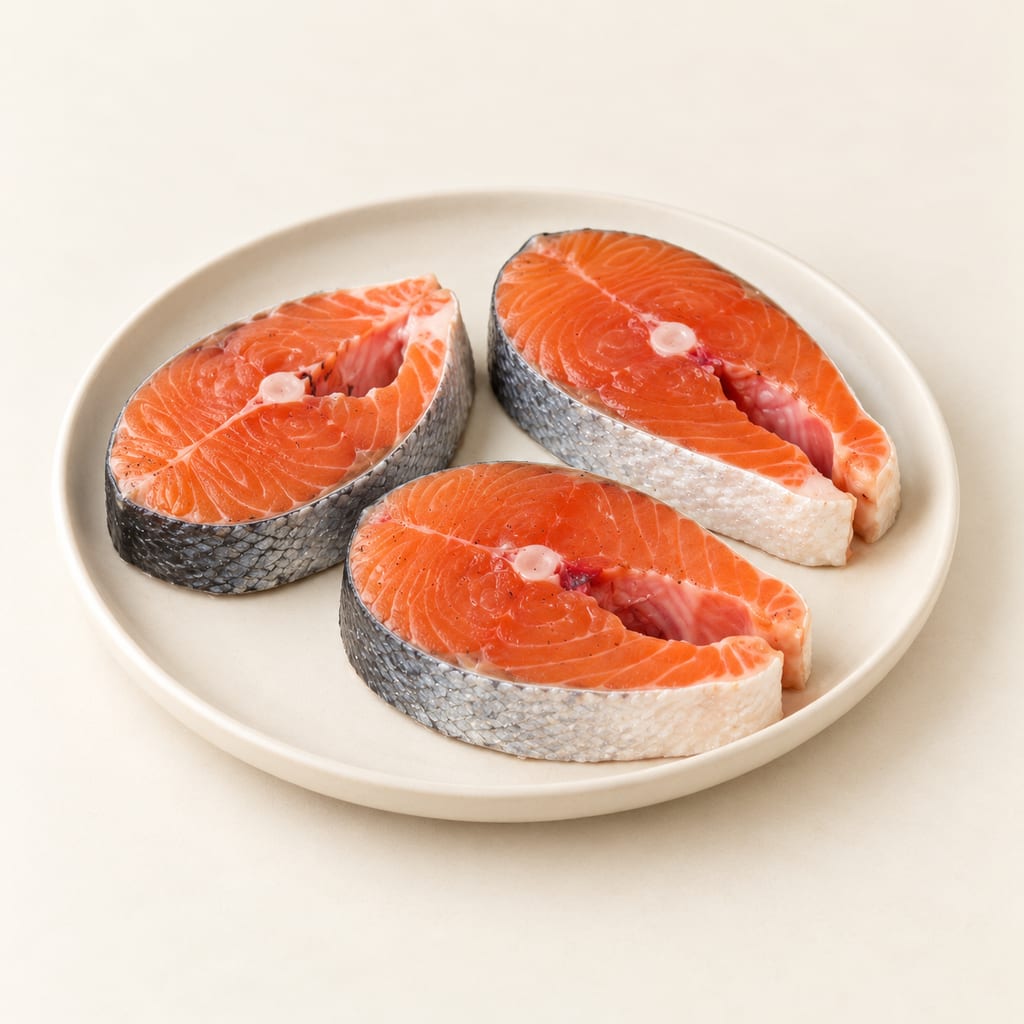
Fish
Fish is a broad raw ingredient whose species, cut and condition shape its texture, fat content and use. It can become a meal’s main portion or the raw material for distinct salted, dried and fermented preparations.
 FermenteaWhere food goes to change
Traditional method
น้ำปลา (nam pla) · Nam-plaa · Nam-plaa-dee · Nam-plaa-sod
Thai fish sauce is a clear yellow-brown seasoning drawn from salted fish. Tank maturation produces a first extract, with further brine extractions giving other grades.
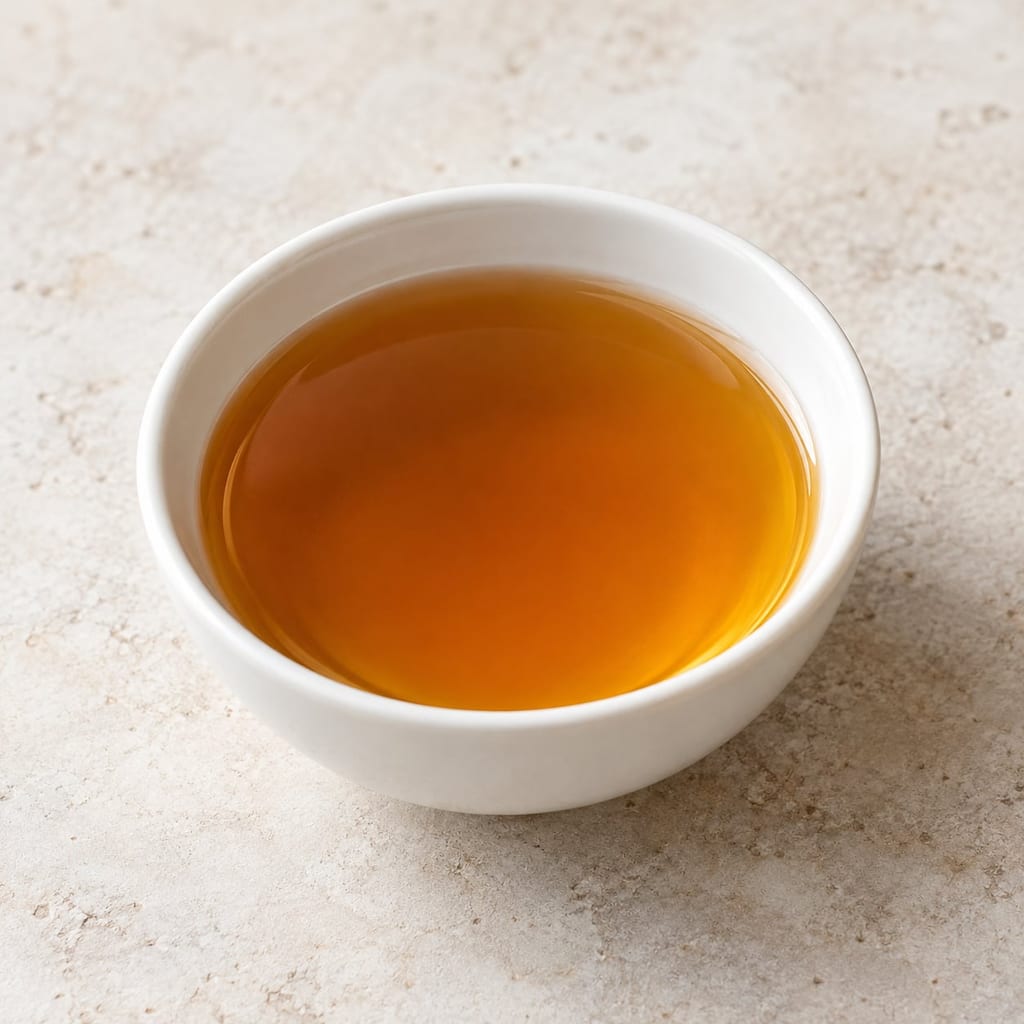
Nam pla, น้ำปลา, carries fish into a dish without carrying the fish's original shape. The finished sauce is a clear yellow to brownish-yellow liquid, salty and recognizably fish-derived. Its appearance is very different from a jar of intact salted fish or an opaque paste. Liquid is separated from the matured material and used as a concentrated seasoning, both during cooking and at the table.
The sauce is more than a way to add salt. Fish tissue changes during maturation, and dissolved compounds accompany the salt into the food being seasoned. Clarity describes the liquid's physical form; it does not mean that the liquid is chemically simple. Nor does a clear bottle reveal the fish species, the age of the mash, or whether the contents are a first extraction or a blend of several grades.
Thai nam pla can begin with freshwater, brackish-water or marine fish. Its identity rests on the salted, matured liquid seasoning, rather than on one compulsory fish species. Anchovies have a prominent place in the commercial histories of coastal manufacturers, while household descriptions allow a wider range of small fish. Fish selection connects the sauce to a catch and a place even when the finished condiment travels far from both.
A central Thai cultural account describes small fish salted in jars or earthenware vessels, then the clear liquid skimmed for seasoning. It also places industrial production in coastal provinces such as Chonburi, Rayong and Trat. These two scales belong in the same story, but they make different demands on a maker: a jar can be opened and skimmed, whereas a large tank requires planned access to liquid and material that may remain in it for months.
Tiparos dates its founder’s trials with fish and salt in earthen jars to 1913. Its history describes selecting anchovies, selling the sauce locally and moving into larger wooden vessels before establishing a factory at Hokkien Wharf, Chonburi, in 1919. That company chronology gives a concrete example of production expanding around a selected raw material. The trial jar and the factory belong to the same manufacturer’s story, rather than marking the beginning of all Thai fish sauce.
A later industry snapshot comes from a Chulalongkorn University accounting thesis published in 1982. Its abstract distinguishes fermentation in provincial factories from blending and distribution in Bangkok. It also identifies the financial burden of waiting for a product to mature. Long production time ties up containers, raw material and money before the liquid can be sold. That economic dimension helps explain why extraction grades and blending matter alongside flavour.
Another producer, Squid Brand, dates its foundation by Tien Nithipitigan to 1944. Its present production account emphasizes fresh anchovies, sea salt and eighteen months of fermentation, with facilities in Samut Prakan and Samut Songkhram. These choices give a commercial bottle a defined production identity within nam pla’s broader range. A producer can build its reputation around one fish and one maturation practice while the food category includes other materials and methods.
In the tank account, fish are washed, combined with salt and held in a wooden or cement vessel. A weight keeps the fish below the brine. Maturation is followed by withdrawal of the clear liquid, either from the surface or through a spigot near the bottom. That first separation provides a liquid already distinct from the fish residue left in the tank.
The residue can then be extracted again with concentrated brine. The resulting liquids are blended with different proportions of the first liquid to make different grades. This sequence is more informative than a simple distinction between expensive and inexpensive sauce: grades can reflect the history of extraction and blending, not just the name printed on a bottle. The 1982 industry account also describes repeated extraction, while recording additional practices specific to its period and businesses.
Extraction and maturation should not be collapsed into one operation. Waiting allows biochemical change in the fish mixture; drawing off liquid separates material physically. Adding extraction brine changes what is being recovered from the remaining solids. Blending combines already distinct liquids. These operations help explain how one mass of salted fish can give several products, and why a first extract and a later blend should not be described as though they were the same measured batch.
The fish's own enzymes contribute to the conversion of tissue into sauce. Proteinases, also called proteases, cut proteins into smaller peptides and amino acids. Autolysis is the action of an organism's own enzymes on its tissues. In fish-sauce making, that process helps make material from the fish available in a soluble form rather than leaving all of it in intact flesh.
Experiments on Indian anchovy, Stolephorus indicus, caught off Chonburi examined this activity directly. The researchers ground fish or prepared enzyme extracts and tested their behaviour under controlled conditions. Increasing sodium chloride reduced measured activity, but did not abolish every form of protein breakdown in the tested systems. This gives a more useful picture than saying either that salt stops all enzymes or that salt makes no difference.
Proteolysis changes the form in which the fish’s nitrogen is held. A large protein can be cut into peptides, which are shorter chains of amino acids; further cutting releases individual amino acids. Breaking a chain and drawing liquid out of a tank are different operations. The first changes molecules, while the second collects a mixture containing compounds already dissolved in it. That distinction explains why a finer filter cannot substitute for the time and reactions that make the liquid a seasoning.
The salt-rich tank is a selective environment. Organisms that cannot tolerate its conditions decline, while those better adapted to salinity may persist and become more prominent. A starter is not added in the tank method described here. The fish and its surroundings provide the starting material for a community that changes as the mixture matures.
Researchers studying Korean anchovy sauce followed this succession alongside changes in dissolved metabolites. Different temperature treatments produced different community histories and amino-acid patterns. This comparison helps explain the underlying process: adding salt does not leave a biologically unchanging mixture, and elapsed time alone does not describe what has happened inside a vessel. Temperature and formulation influence the course of maturation together.
Enzymes and microorganisms play connected roles. Some protein-cutting enzymes come from fish tissues. Microorganisms can supply other enzymes and transform compounds through their own metabolism. A sauce can therefore contain products of the fish’s autolysis and of microbial activity at the same time. Autolysis does not require the fish to remain alive; enzymes already present in its tissues carry out reactions after death.
This relationship makes maturation more complex than the extraction of flavour from intact flesh. Some compounds dissolve as they are released, and some become material for further reactions. The liquid gathers products of those changes. Its composition depends on what is broken down and what happens to the resulting compounds, as well as on how much liquid is finally separated from the solids.
A 2022 study adds a narrower observation about Thai products. Researchers isolated twelve tetracocci from nam pla, pla ra and kung chom and screened them for lipolytic activity, the breakdown of fats. Most showed activity in the laboratory media used. The abstract also reports broth tests with coconut oil, lard and palm oil, and identifies the highest-activity isolate as one from kung chom. These results establish that some bacteria recovered from the three products can act on fats under test conditions. They do not give a fermentation schedule, show that the same strains dominate every batch, or establish how much they contribute to nam pla’s flavour in production.
The tank description gives a broad fish-to-salt range, from 5:1 to 1:1, without a stated weight or volume basis, and a maturation range of five to eighteen months. The central Thai household account describes a different jar method, including a very different ratio written in parts and a shorter stated period. These are separate descriptions. Averaging their figures would produce a method that neither account actually documents.
A ratio also says less than it first appears to say. It relates the named inputs, but does not by itself describe how much liquid is present later, how evenly salt is distributed, or what concentration exists in the liquid around the fish. A later extraction using brine adds another stage with its own material balance. Fish-to-salt ratio, finished sauce salt content and salt in the water phase are different quantities; a number from one cannot quietly stand in for the others.
The central Thai account describes one way to darken and round the seasoning: cook cane or palm sugar until deeply coloured, add it to boiling fish sauce, then cool and strain. The operation occurs after the fish-derived liquid exists. It is a finishing practice in that account, rather than proof that sugar must be present during every nam pla fermentation.
This finishing practice changes how the seasoning reaches the table. Sugar is cooked until strongly coloured before it meets the fish-derived liquid; cooling and straining follow. The resulting condiment combines material developed during fish maturation with a separately cooked ingredient. Its colour has more than one possible contributor, and its clarity also depends on the removal of suspended particles. The unsweetened tank preparation and this finished sauce consequently have different ingredient histories.
The tank method includes filtering and sun exposure before storage. Filtering holds back particles while allowing liquid to pass; dissolved salt, amino acids and other soluble compounds remain with the sauce. Sun exposure belongs to its described finishing sequence. The two actions are therefore different kinds of work, even though both take place after the long maturation in the vessel.
Nam pla can season a dish in the pan or let the diner adjust it at the table. A dipping condiment is one especially visible use. In nam pla phrik, fish sauce combines with chilli and lime; some versions include sliced garlic and shallot, while another uses chilli flakes. These additions make a new table preparation from finished nam pla. They do not describe how the base sauce was fermented.
In a contemporary chef interview, Sujira “Aom” Pongmorn places the condiment beside rice meals, fried eggs, omelettes and other egg dishes. Rice is an important part of that account: the sharp, salty condiment is eaten with food that gives it context, rather than approached as an isolated mouthful. Chilli, citrus and aromatics change the balance at the table while the sauce provides its fish-derived seasoning.
A small condiment bowl also lets diners season portions individually. The cook may have already used nam pla in a dish, yet the table mixture introduces chilli, citrus and aromatics at the moment of eating. These are two uses of one base seasoning: flavour distributed during cooking and a sharper accompaniment added to a mouthful. The fish sauce links the two without requiring the entire meal to share one level of intensity.
Thailand's Ministry of Public Health issued Notification No. 203 in 2000, describing fish sauce as a salty liquid seasoning and dividing it into fish-derived, other-animal-derived and mixed categories. It expressly leaves budu outside its scope. This is a dated document, read in an unofficial English translation, and not a consolidated statement of current Thai law; later amendments were not checked.
A Thai-language booklet attributed to the Department of Fisheries, known here through a library-hosted transcription whose edition and date were not established, discusses both small freshwater fish and marine anchovies. It sets small-scale production against larger coastal businesses and names earthen jars among the fermentation vessels. Its differing ingredient proportions and maturation periods are evidence of separate production accounts and not of one interchangeable home method. The notification's categories do not turn the booklet's process descriptions into validated household instructions, and freshwater and marine raw materials each need their own hazard assessment.
Histamine is a relevant concern when fish capable of forming it is used. Some bacteria that produce it tolerate salt, and heat or freezing cannot remove histamine already formed. Raw-material handling therefore matters before the sauce has acquired the appearance of a finished condiment. A later filter, a long wait or a clear bottle does not undo the history of the fish.
Covered and submerged seafood also requires control of pathogen growth and toxin formation. General seafood guidance explains those hazards and possible control strategies, but it does not validate this nam pla account. The broad input ratio is not a substitute for a process-specific plan, and the production duration is not a demonstrated endpoint for safety. Smell, taste, colour, clarity and bubbling cannot establish that a batch is safe.
Measured yield, the strength and quantity of extraction brine, the duration of sun exposure and final household storage conditions are not established for this tank method. No numerical maturation temperature or validated completion endpoint is supplied. Laboratory enzyme results and separately formulated Korean sauce experiments explain mechanisms; they do not provide operating limits for this Thai preparation. Its broad ratio and duration ranges require process-specific assessment before being used as a reproducible household method.
Nam pla is a Thai seasoning used during cooking and at the table, and as a base for dipping sauces. Fish from freshwater, brackish water and the sea can be used. This range of raw material makes it a family of sauces rather than a single species preparation.
Tank production separates a first liquid from the salted fish, followed by further brine extractions of the residue. Blending those extracts with the first liquid produces different grades.
Scaling: source batch only
Some fish used for sauce can accumulate histamine during handling and fermentation; salt-tolerant bacteria can contribute.
Hazard sourceReduced-oxygen fish products require controls for growth and toxin formation; the tank description supplies no validated control plan.
Hazard sourceChill susceptible raw fish promptly after harvest and maintain temperature control before processing.
Control sourceFor fish susceptible to histamine formation, keep raw material chilled before processing. Salting does not by itself stop histamine formation, and heating or freezing cannot remove histamine already present.
No humidity limit is supplied by source.
JIRCAS database records Thai process, not birthplace.
Fish is a broad raw ingredient whose species, cut and condition shape its texture, fat content and use. It can become a meal’s main portion or the raw material for distinct salted, dried and fermented preparations.
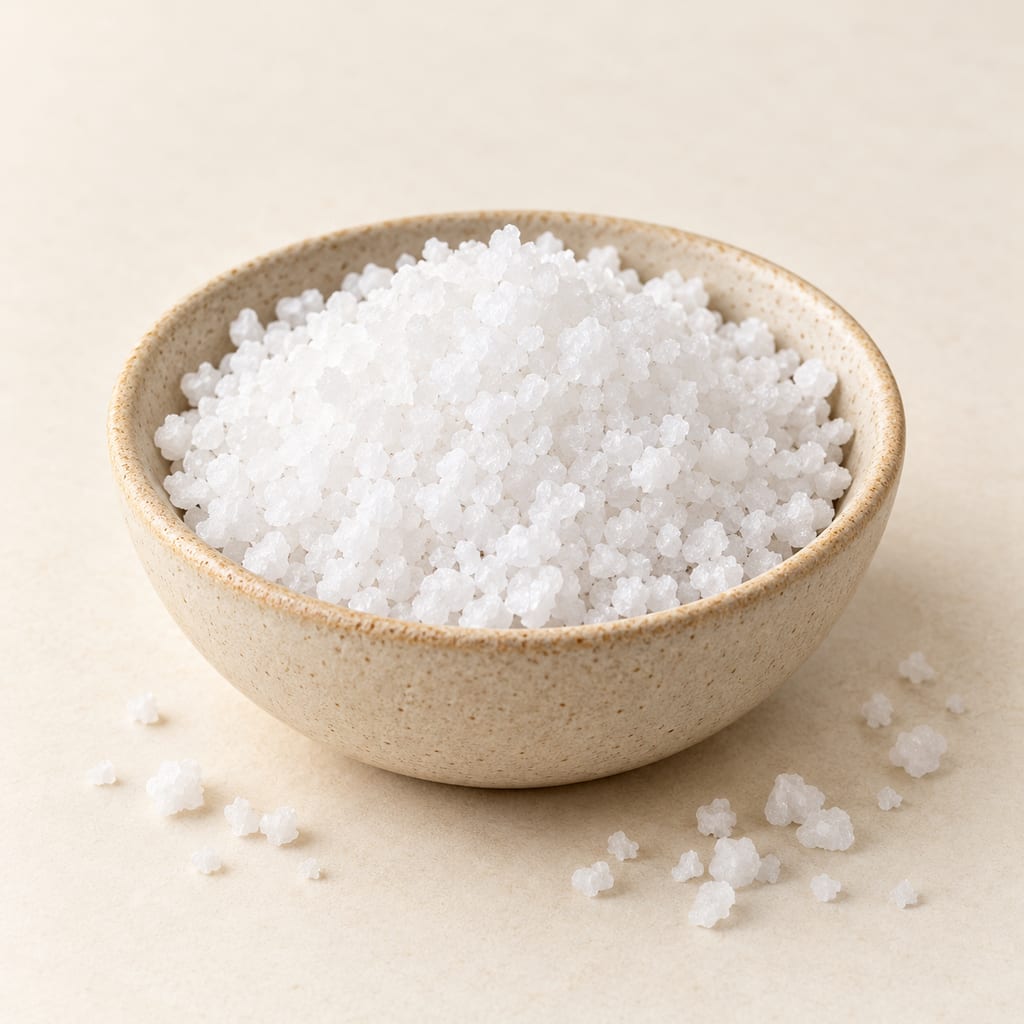
Food-grade sodium chloride seasons food and changes water movement in brines and cures; crystal size and the recipe's measurement method matter.

Thai nam pla ferments fish and salt in more than one kind of vessel. Sources document earthenware jars alongside larger wooden or cement tanks; no single shape, capacity or construction detail applies to every maker.

Dry salami, sour pork with rice, matured sheep and aged blubber follow different paths from animal to food. Their stories connect microbes with climate, slaughter, migration and the meals people share.
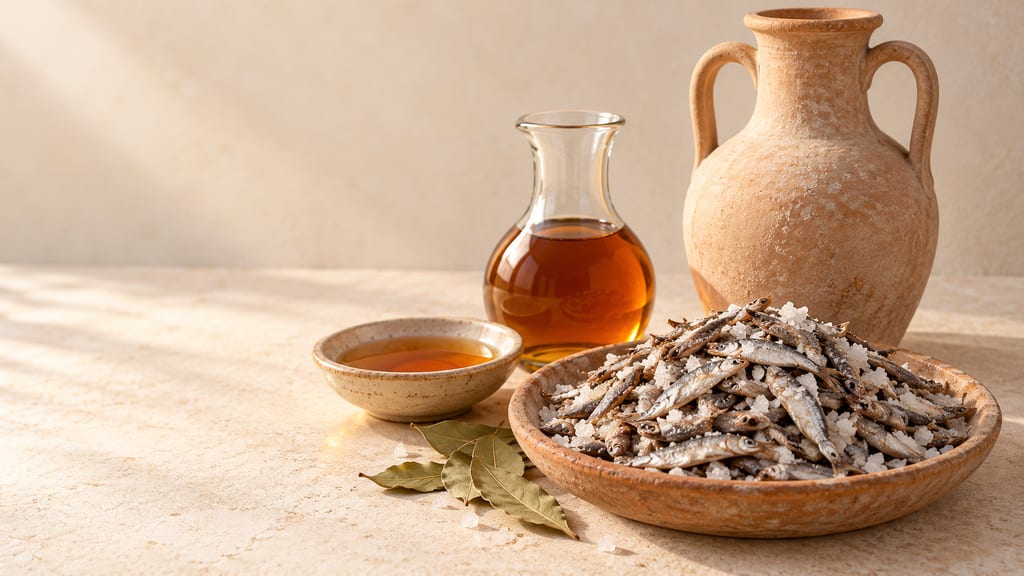
Garum, nước mắm, nam pla and patis share ways of turning fish into a savoury liquid, yet each belongs to its own food culture. This account follows ancient sauces, Asian and Japanese fish sauces, colatura and koji garums.
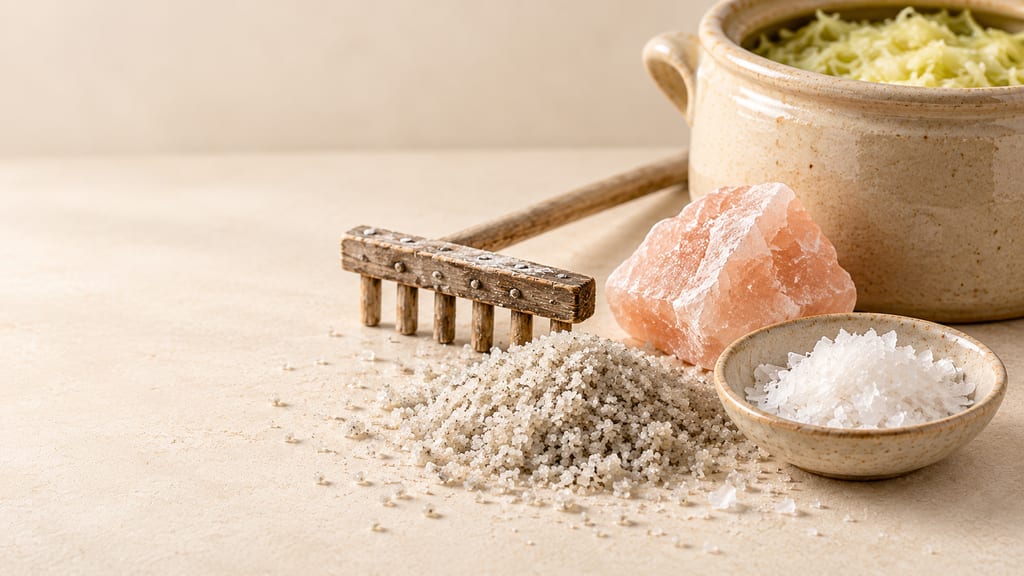
Salt seasons a meal, shapes fermentation and preserves food. Its history follows the people who mine, harvest, trade and transform it, and the choices hidden inside an ordinary packet.
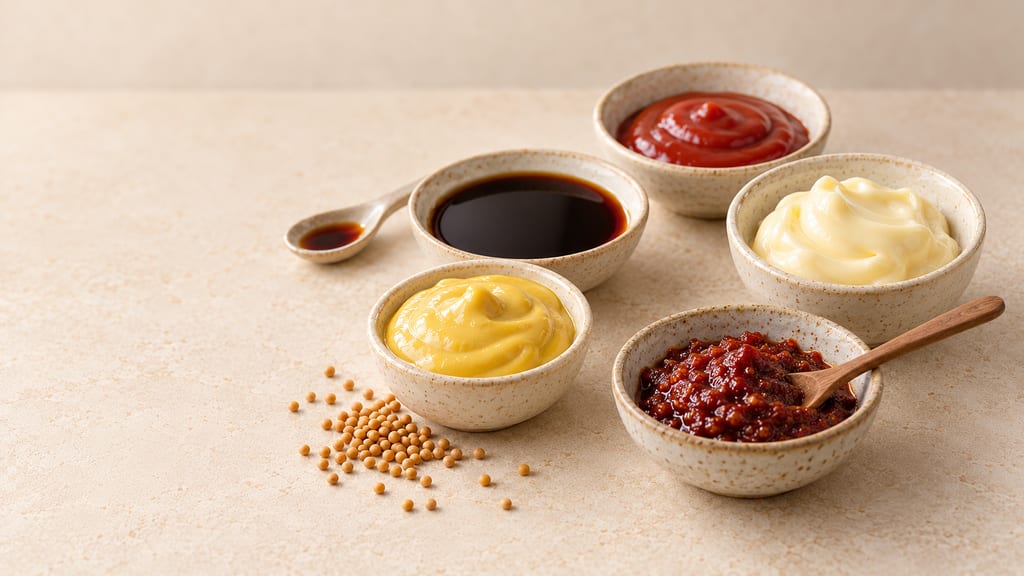
Ketchup, mayonnaise and mustard are three kinds of kitchen engineering. This guide shows how each works, compares real bottles instead of national clichés, then follows the sauces of Asia, the Caucasus, Europe, the Americas and Africa.
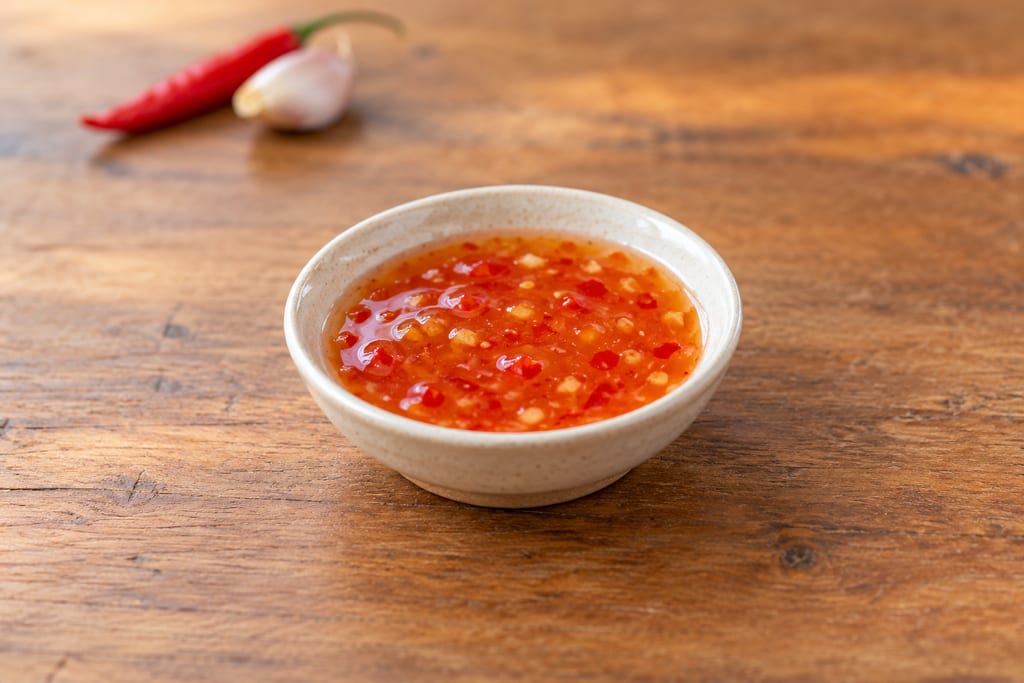
A cooked Thai-style sweet chilli dip combines red chillies, garlic, sugar and vinegar, then uses a small cornflour slurry to give this batch a glossy, spoonable body.

Naem is a Thai sour pork preparation made with minced pork, rind or ear, glutinous rice, garlic and salt. Its documented room-temperature method has no validated food-safety endpoint.
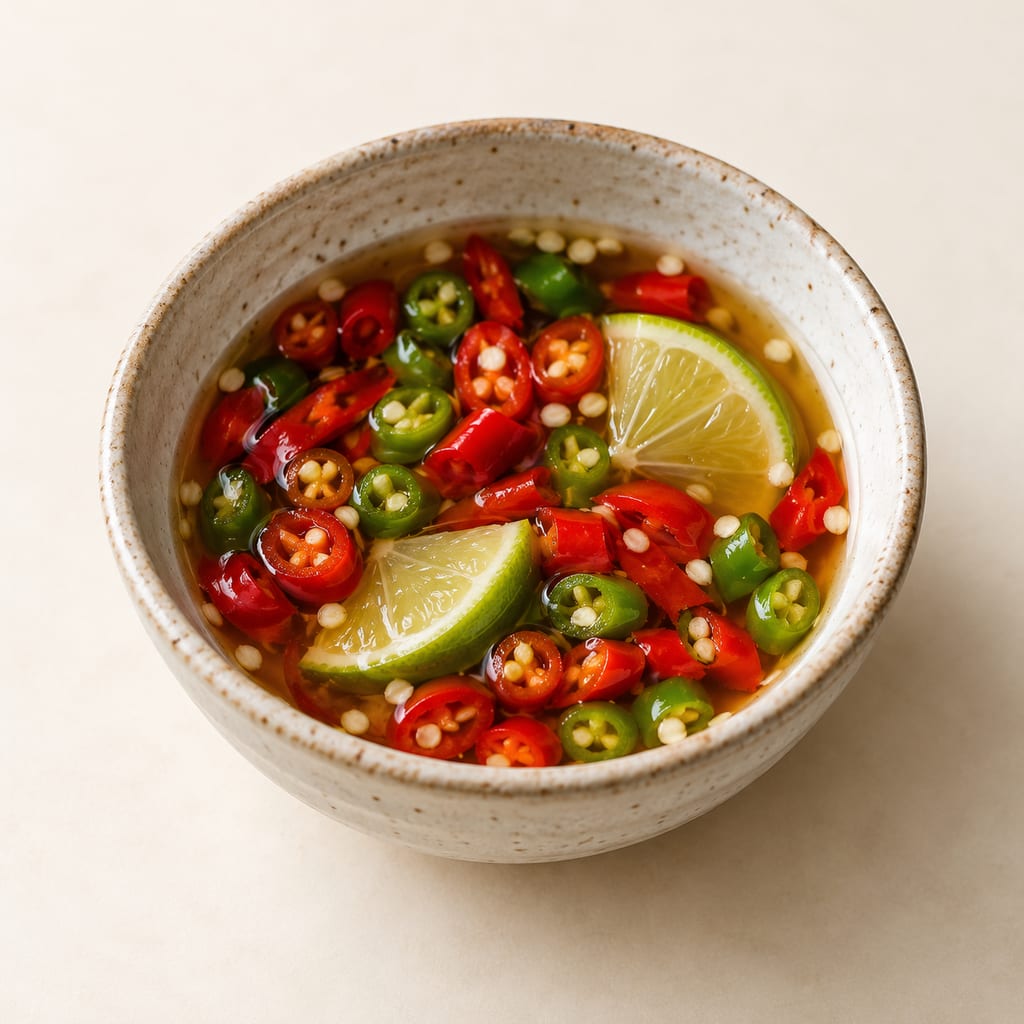
Fresh sliced chillies, fish sauce and lime form a sharp Thai table condiment. Spoon a little alongside rice, eggs or other cooked dishes.
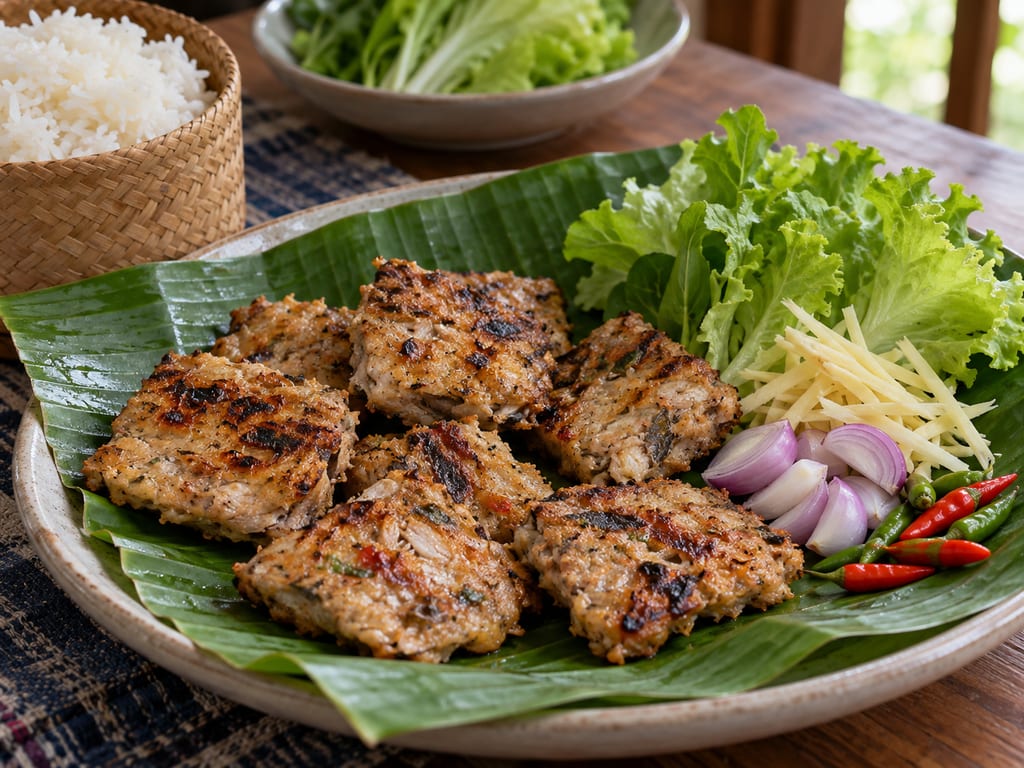
Som-fak is a Thai fermented freshwater-fish cake. JIRCAS records its ingredients, proportions, wrapping and 3–5-day fermentation, but does not validate a safe household process or endpoint.
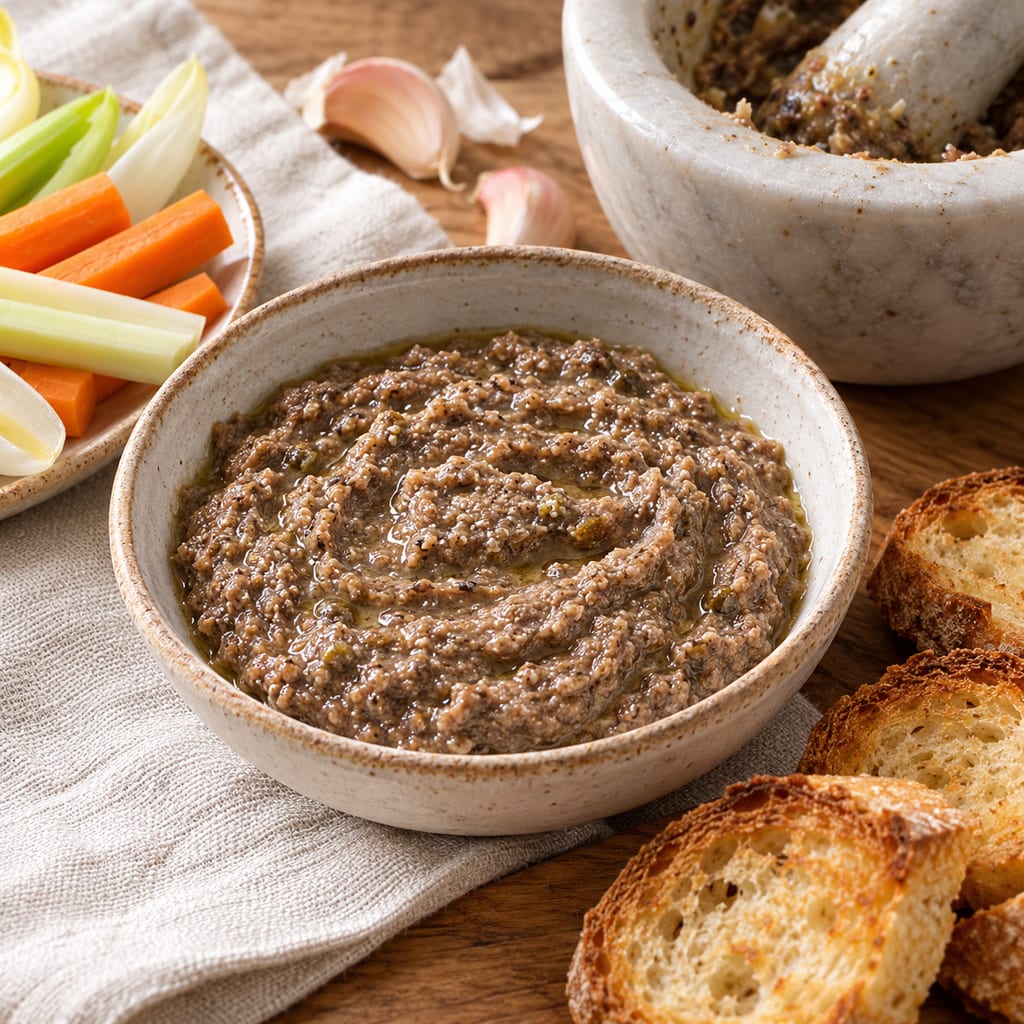
A Provencal dip of anchovies, garlic, capers and olive oil, pounded or blended to a creamy paste and served with raw vegetables, bread and eggs.
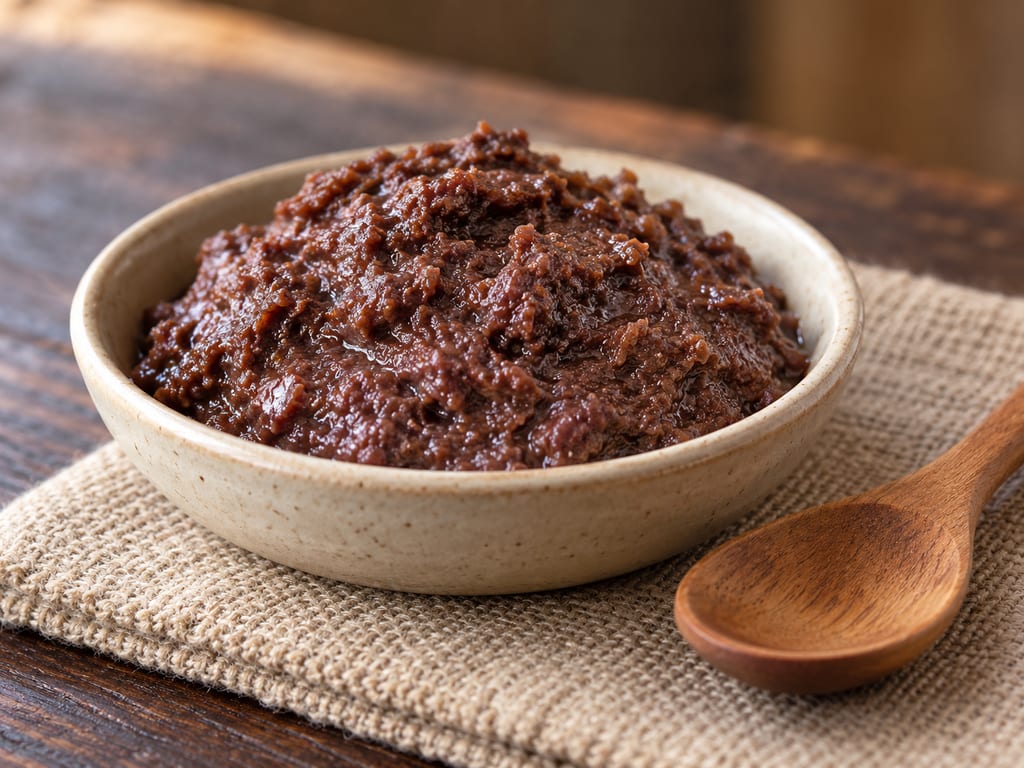
Bagoong isda is a Philippine fish paste: whole small fish salted and left to ferment for a month or more in earthen jars. It is the fish counterpart of bagoong alamang.
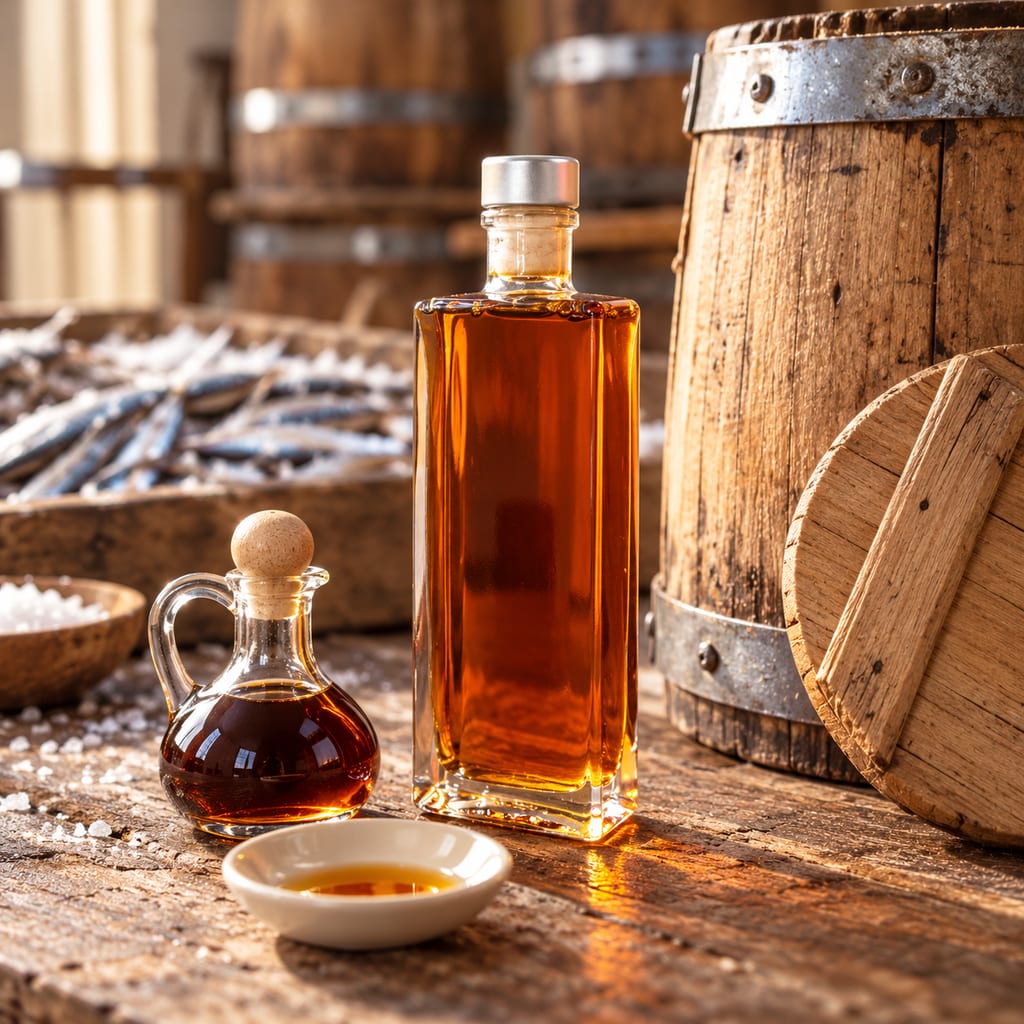
Colatura di alici is the amber liquid drained from salted anchovies matured in wooden containers in Cetara, on the Amalfi coast of Campania, and sold under a protected designation of origin.
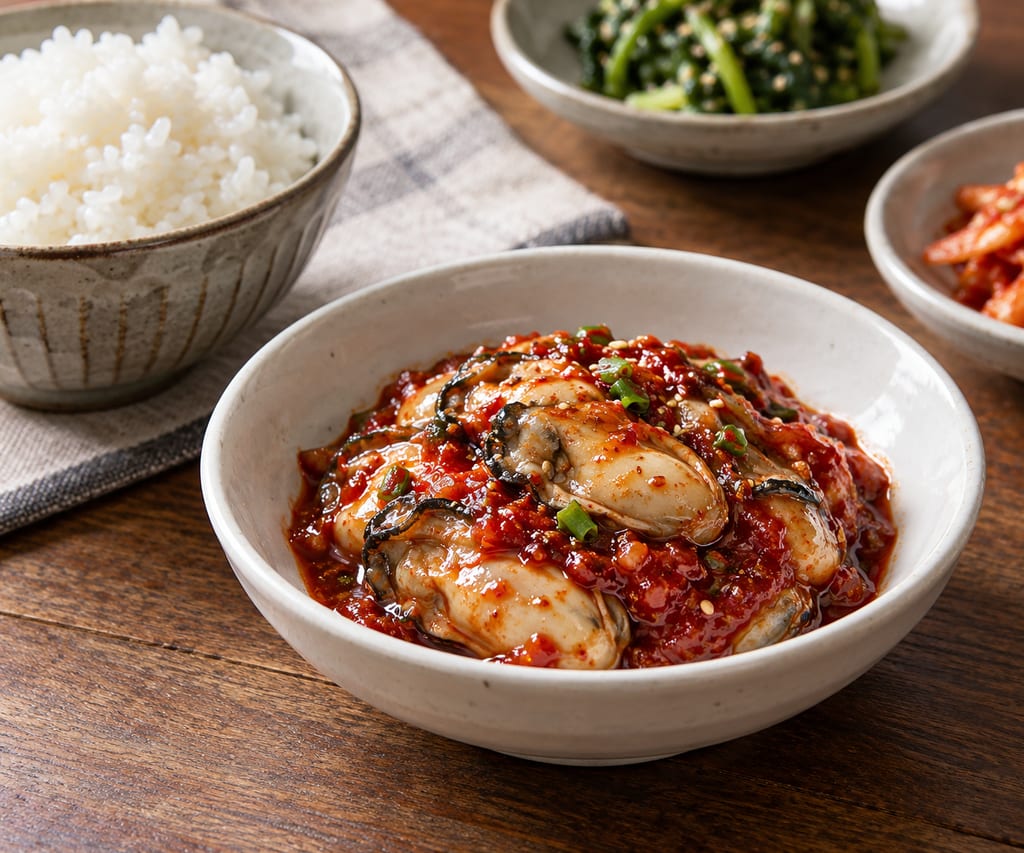
A Korean salted-oyster jeotgal seasoned with chili, associated especially with Seosan and Ganwoldo. This page records its food culture, not a household preparation method.
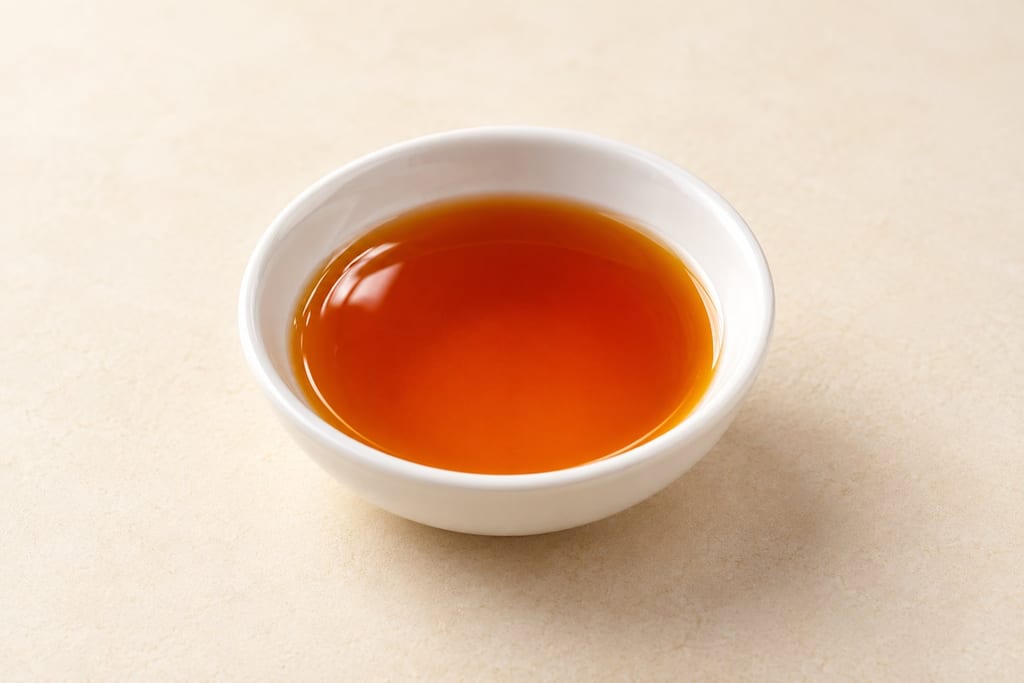
Fish sauce is a clear, salty seasoning made by maturing fish with salt and drawing off the liquid. The broad family includes distinct regional sauces rather than one interchangeable method.
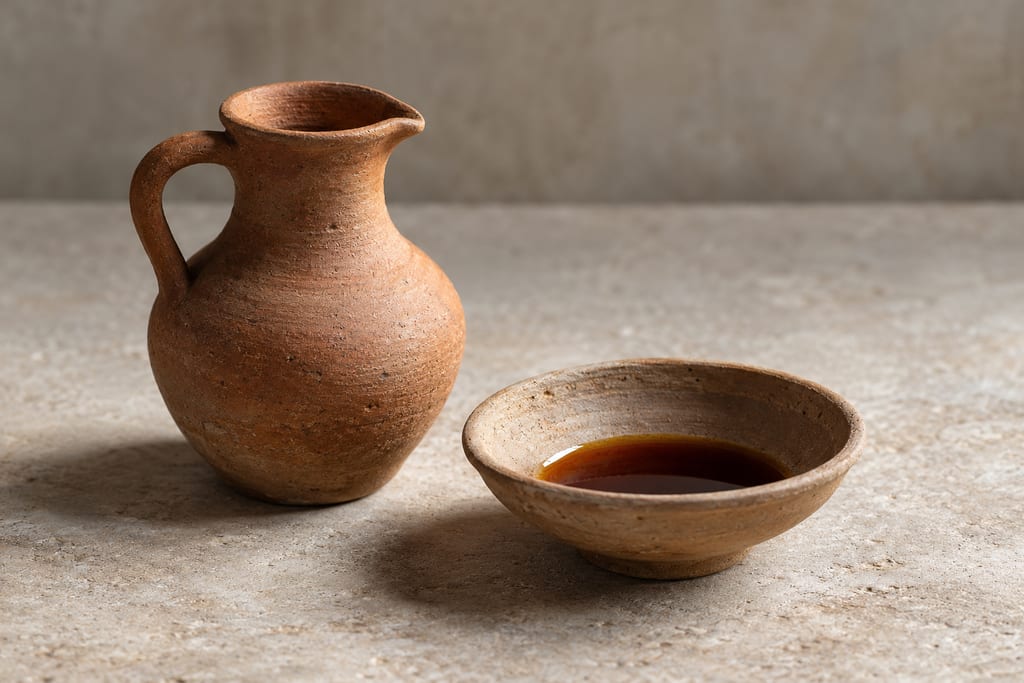
Garum, Greek garos and Latin liquamen, was the fish sauce of the ancient Mediterranean: fish and viscera salted and left in the sun, then drained off as a savoury liquid.
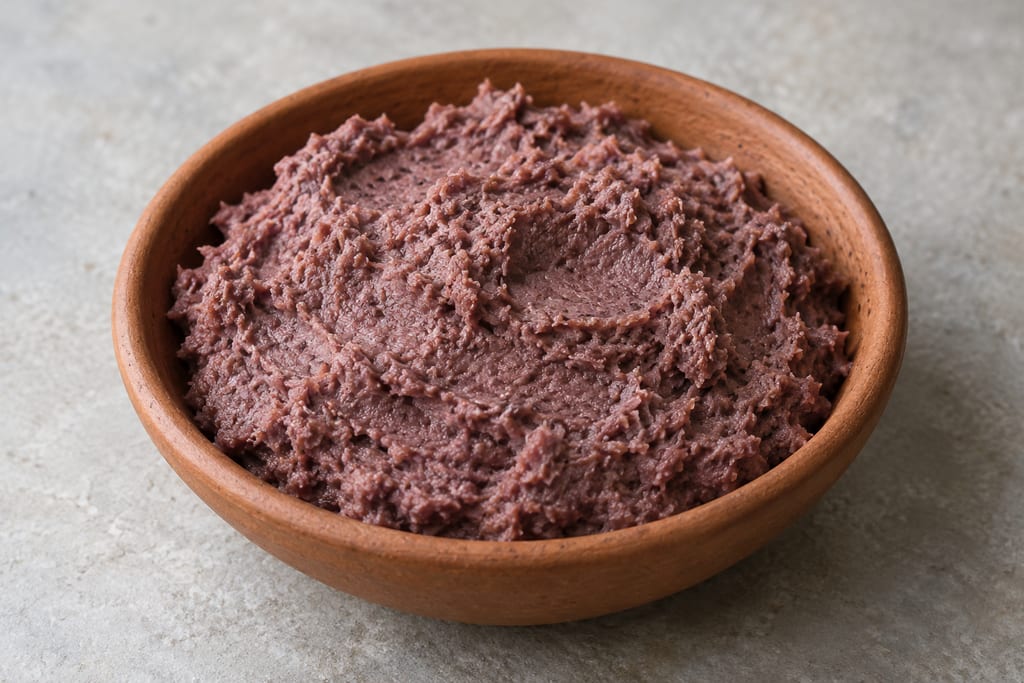
Guinamos is a shrimp paste made on Guimaras in the Philippines: small shrimp salted by hand, sun-dried and trodden by foot until it turns smooth.
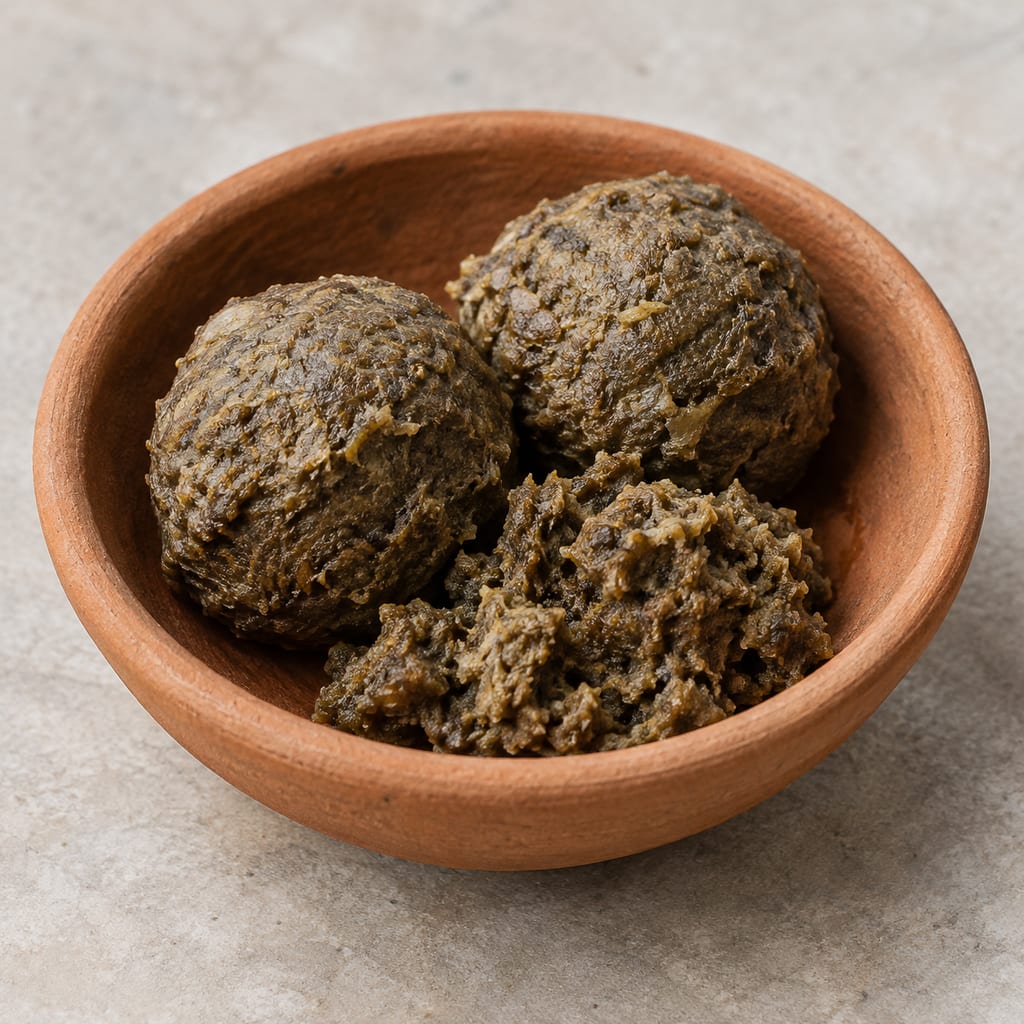
Manipuri fermented fish-and-aroid paste, formed into balls or kept in an earthen pot, used to season Manipuri dishes. Its method is documented in outline only.
No community contributions have been published for this entry yet.
Sign in to contribute. Published comments and photos are free to read.
Japan International Research Center for Agricultural SciencesInspiration · Process
Nam-plaaThai name and local romanizations; freshwater, brackish and marine fish; weighted tanks, 5:1–1:1 fish-to-salt range, 5–18 months, first and subsequent extractions, use in cooking and dipping.
Lists microbial groups including Bacillus, Micrococcus, Sarcina and Tetragenococcus alongside fish-sauce production.
Lists a general two-year storage life but does not give household storage conditions.
The fish-to-salt range is stated without a weight or volume basis.
Cited in: A clear liquid with the work of a whole fish behind it; A first liquid, then further grades; A salty environment still has a microbial life; Different scales begin with different proportions; Finishing can change the sauce after fermentation; At a Thai table, intensity becomes an ingredient; Notes on preparation and safety
U.S. FDASafety
Fish and Fishery Products Hazards and ControlsHistamine, pathogen and botulism hazards require process-specific controls.
BC Centre for Disease ControlSafety
Safety of Fermented Foods: Section 3.5 FesikhBotulism outbreaks with uneviscerated fermented salted fish; biogenic amine issues.
U.S. Food and Drug AdministrationSafety
Fish and Fishery Products Hazards and Controls Guidance, Chapter 7: Scombrotoxin (Histamine) FormationPages 113–115: susceptible fish, salt-tolerant histamine producers, rapid chilling, and heat/freezing do not remove preformed histamine.
Cited in: Notes on preparation and safety
U.S. Food and Drug AdministrationSafety
Fish and Fishery Products Hazards and Controls Guidance, Chapter 13: Clostridium botulinum Toxin FormationPages 245–247: reduced-oxygen seafood hazards and control strategies. Does not validate this tank method.
Cited in: Notes on preparation and safety
Princess Maha Chakri Sirindhorn Anthropology Centre / Thailand Cultural Encyclopedia
น้ำปลาHousehold jar account, sugar finishing and industrial coastal provinces.
Cited in: A clear liquid with the work of a whole fish behind it; From household jars to a coastal industry; Different scales begin with different proportions; Finishing can change the sauce after fermentation
Tiparos / Tang Sang Hah
ประวัติความเป็นมาAttributed corporate chronology 1913/1919; earthen jars, fish selection, wooden vats, Chonburi factory.
Cited in: From household jars to a coastal industry
Chulalongkorn University
การศึกษาปัญหาต้นทุนการผลิตน้ำปลาพื้นเมือง / A study on production cost of fish sauceDate-bound industry account, extraction grades, provincial fermentation/Bangkok blending and production-time financing.
Cited in: From household jars to a coastal industry; A first liquid, then further grades
Food Chemistry 98
Autolytic activity and biochemical characteristics of endogenous proteinases in Indian anchovy (Stolephorus indicus)Autolysis, salt effects and enzyme-assay scope; not tank temperature recommendation.
Cited in: The fish already contains part of the machinery
PLOS ONE
Effects of Temperature on Bacterial Communities and Metabolites during Fermentation of Myeolchi-AekjeotExplicitly Korean experimental comparison of succession and metabolites, not Thai tank community.
Cited in: A salty environment still has a microbial life
MICHELIN Guide Thailand
How to Make Thai Fish Sauce Dip Like a MICHELIN RestaurantChef account of nam pla phrik ingredients, rice and egg pairings; not base sauce manufacture.
Cited in: At a Thai table, intensity becomes an ingredient
Thai Fishsauce Factory (Squid Brand) Co., Ltd.
About UsAttributed foundation in 1944, founder, anchovies/sea salt, eighteen-month process and named production provinces. Promotional rankings and safety assurances excluded.
Cited in: From household jars to a coastal industry
Journal of Fisheries and Environment, Faculty of Fisheries, Kasetsart UniversityResearch
Characterization and Lipolytic Activity of Staphylococcus Strains Isolated from Thai Fermented Fish ProductsMahidol University record provides the paper's abstract: 12 tetracocci isolated from nam pla, pla ra and kung chom were tested for lipolytic activity; most showed activity in the assay media.
The abstract reports broth assays with coconut oil, lard and palm oil at 37°C for 24 hours, and identifies the highest-activity isolate as coming from kung chom. This is laboratory assay evidence, not a nam pla production schedule, safety control, or demonstration that the measured activity governs flavour in every sauce.
Cited in: A salty environment still has a microbial life
Thailand Food and Drug Administration / Ministry of Public HealthRegulation
Notification No. 203 B.E. 2543 (2000), Re: Fish SauceFish sauce is a salty liquid seasoning, divided into fish-derived, other-animal-derived and mixed categories.
The notification expressly excludes budu from its scope.
Read in an unofficial English translation, clauses 2 and 3 only; later amendments were not verified.
Cited in: Product categories and a fisheries booklet
Department of Fisheries, Thailand; library-hosted transcriptionProcess
การผลิตน้ำปลาด้วยวิธีการหมักแบบธรรมชาติ [Natural fish-sauce production by fermentation]Discusses small freshwater fish and marine anchovies, contrasts local with larger coastal production and names earthen jars among the vessels.
Gives varying ingredient proportions and maturation periods; the original edition and date were not established.
Cited in: Product categories and a fisheries booklet