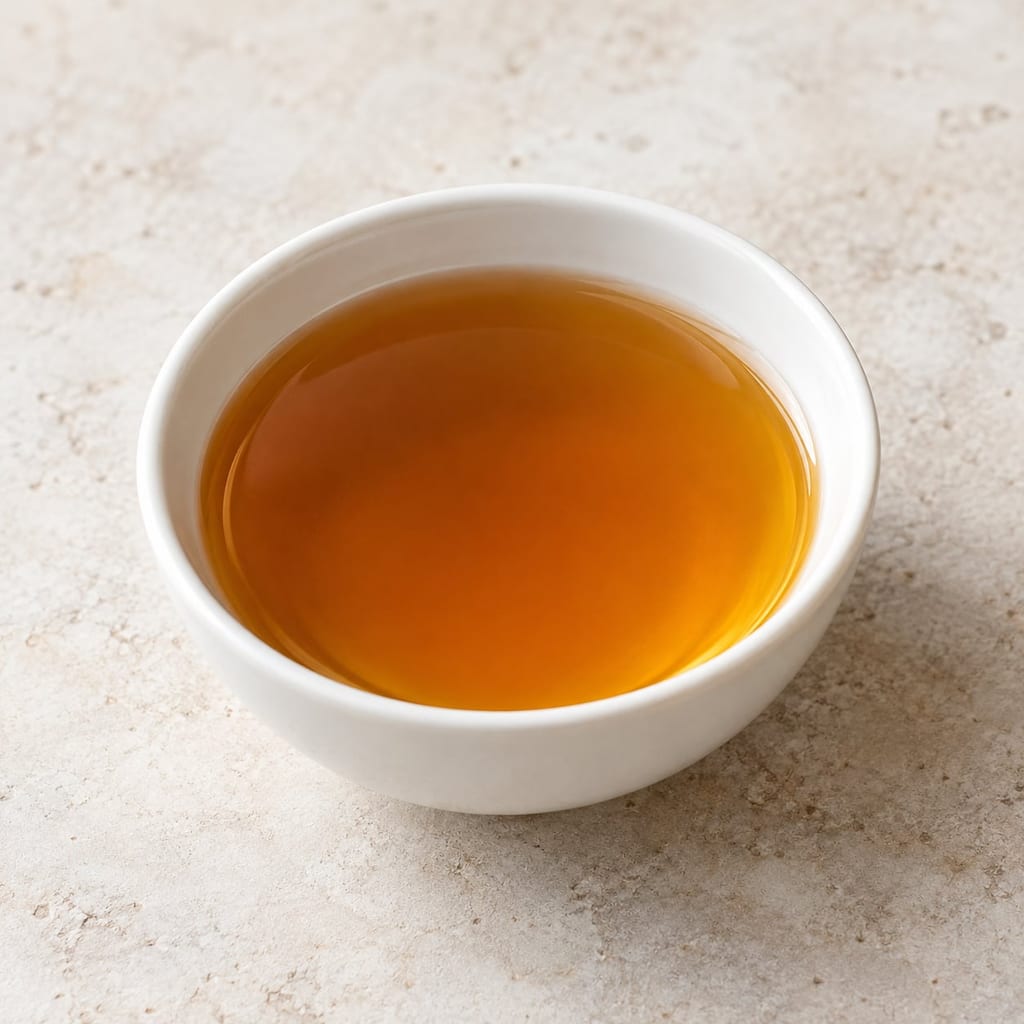
Nam pla
Thai fish sauce is a clear yellow-brown seasoning drawn from salted fish. Tank maturation produces a first extract, with further brine extractions giving other grades.
 FermenteaWhere food goes to change
Substrates
Fish is a broad raw ingredient whose species, cut and condition shape its texture, fat content and use. It can become a meal’s main portion or the raw material for distinct salted, dried and fermented preparations.
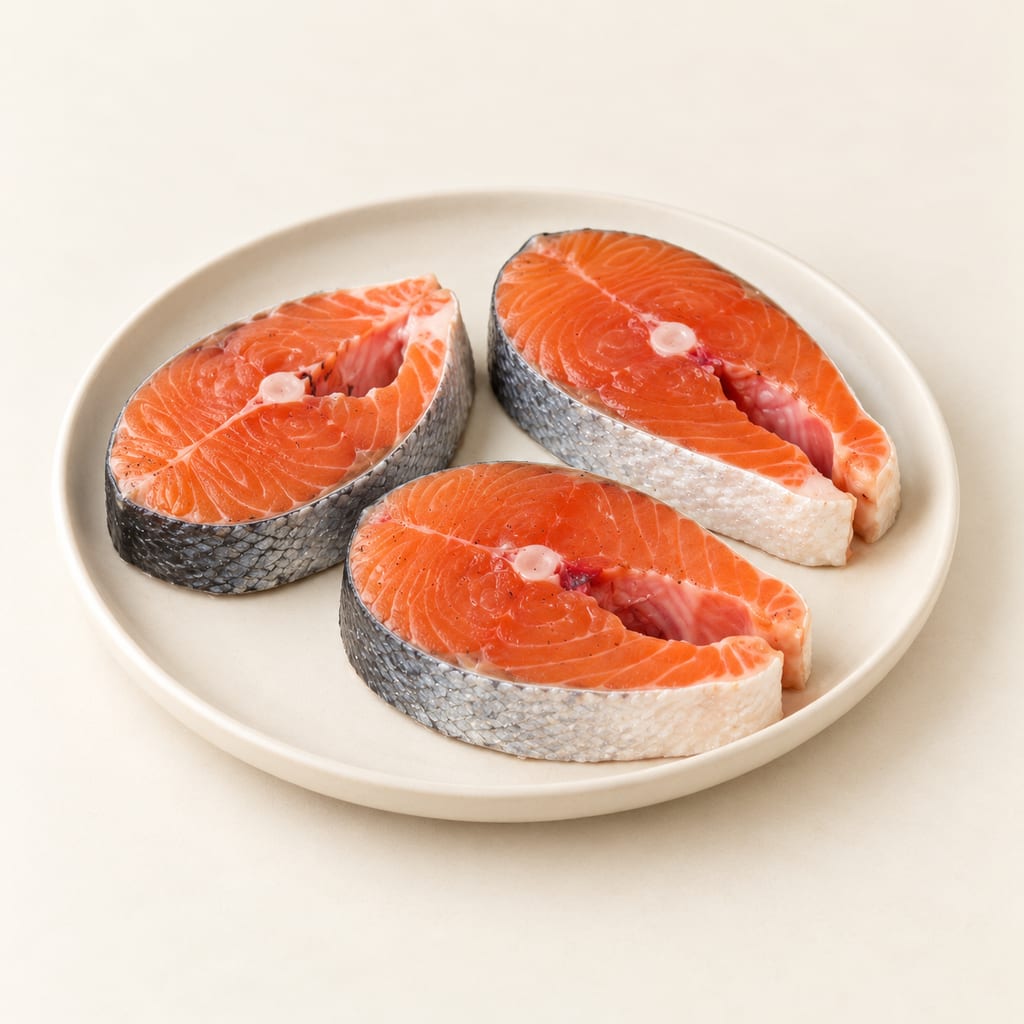
Fish on a kitchen bench may be a small whole animal, a thick steak or a boneless fillet. Those forms bring different proportions of flesh, skin, bone and internal tissue into a preparation. The word fish identifies a broad raw material, while the species and cut tell the cook much more about what will actually go into the vessel.
This page concerns edible finfish. Crustaceans and molluscs have their own identities, even though all may appear together at a seafood counter. A salmon portion, an anchovy and a freshwater carp also deserve their own names. Their shared place in this category does not make their texture, fat content or suitability for a particular preserve identical.
Fish can enter a meal as its main piece of food or become the source of a seasoning. The Thai nam-plaa record, for example, lists freshwater, brackish-water and marine fish as possible raw materials. The finished sauce is a separate preparation: a fish-derived liquid with its own method, composition and uses.
Fish bones inside transport jars preserve a history that a vanished liquid cannot tell by itself. Amphorae recovered from the Ma‘agan Mikhael B shipwreck off the Carmel coast contained remains of small fish. The wreck dates from the middle of the seventh to the middle of the eighth century AD. Its cargo connects fish preservation with transport, storage and the movement of food between waters and settlements.
The identified remains included freshwater and marine groups. The researchers interpreted some freshwater fish as likely originating in the Sea of Galilee, with another assemblage pointing towards the Nile system. They proposed that vessels had been reused for different preserved products. This is a reconstruction from bones, containers and geographical distributions, rather than a surviving written recipe.
The jars leave several possibilities open: some contents may have been salted fish pieces, paste or remnants of sauce. They also leave uncertain whether particular products were cargo for sale or provisions for the crew. What survives is evidence of preserved fish moving through a regional network, not a single birthplace or an unbroken recipe linking every later fish sauce.
Fish muscle has an arrangement that becomes especially clear when cooked. Blocks of muscle lie between thin sheets of connective tissue; these blocks become the flakes that a fork separates. In white-fleshed fish such as cod, the layers run from the backbone towards the skin. The connective tissue makes up a smaller share of the muscle than in a typical beef cut, helping explain the difference in tenderness.
A fillet also contains different muscle regions. Cod and haddock have a relatively small strip of dark muscle beneath the skin, while fish such as herring and mackerel have a larger proportion. Dark and pale flesh differ in composition. Cutting away a visible strip, retaining the skin or using the whole animal changes which tissues enter the food.
This matters when a method names whole fish rather than fillets. Bones, skin and viscera are not simply extra fillet weight. They change the material being handled, and internal tissues can contribute digestive enzymes. A preparation based on whole small fish cannot be reconstructed merely by exchanging the same mass of trimmed flesh without checking what the method requires.
Water is the main constituent of fresh fish flesh. Much of it is held within the muscle structure, alongside proteins and dissolved compounds. Fat varies markedly among species and within a fish, so a single nutrient profile cannot describe the entire ingredient. A lean white fillet and an oily fish offer different starting materials even before seasoning or cooking begins.
Feeding and reproductive condition contribute to those differences. Fish draw on stored reserves when food intake falls or they prepare to reproduce. Season therefore affects more than availability at market: it can change the balance of fat and water in the flesh. Composition can also differ between the head end and the tail of one fish.
Handling after capture changes water retention too. During prolonged chilled or frozen storage, muscle proteins can become less able to hold water, which is lost as drip carrying dissolved substances. The quantity of liquid released is therefore connected to tissue condition and storage history. It is not simply water that was added by a cook.
Fish does not become chemically inactive when it is caught. Its muscle passes through rigor mortis, becoming stiff before relaxing again. Species, physical condition, temperature and handling all influence this sequence. The stage at which a fish is cut, frozen or cooked can affect the eventual texture and how the flesh holds together.
Enzymes already present in the fish also continue acting. Autolysis means self-digestion: tissue components are broken down by the animal’s own enzymes. This differs from changes caused by growing bacteria. Both can contribute to deterioration, and their relative importance varies among fish and storage conditions. Softening is therefore not evidence of one universal microbial process.
Microorganisms associated with the skin, gills and gut form another part of the picture. Their presence and later growth depend on the environment and handling. Clean working practices and temperature control address this changing raw material. A desired transformation in a documented preparation still needs its own controls; the existence of enzymes in fresh fish is not a method for holding it warm.
In a salted fish preparation, protein breakdown can contribute to a very different use of the original animal. Proteases cut long protein molecules into shorter peptides, and further enzyme action can release free amino acids. Some of these dissolved compounds contribute savoury taste. The result is a change in the chemical form of fish protein, alongside visible softening and liquid separation.
A study of Korean salted anchovies followed both bacterial communities and metabolites during maturation. Amino-acid patterns changed over time, and different temperatures were associated with different communities and chemical trajectories. Some compounds increased while others later declined. Maturation is therefore a sequence of changes, rather than a steady rise in every desirable component.
Thai nam-plaa production also includes extraction and separation. The recorded method draws off liquid from the fish-and-salt mixture, filters it and treats later brine extracts as different grades. Drawing off and filtering are physical operations. They select a liquid fraction from a changing mixture; they should not be described as microorganisms performing the separation.
Fermented fish does not always become liquid. K. M. Essuman’s survey in several African countries recorded whole and cut fish products used both as food and as condiments. The surveyed methods combined fermentation with salting and drying in different ways. A retained piece of fish has a different place in a meal from a clear sauce, even when both have undergone biological change.
The Korean myeolchi-jeot record likewise gives a role to both the fish portion and the liquid. They are seasonings, including in kimchi-making. The fish is still part of the preparation’s identity. Removing it from the description would turn a particular salted anchovy food into an incomplete account of liquid alone.
Nam-plaa is described as a clear yellow to brownish-yellow seasoning with salty taste and a fish aroma. Its uses include cooking, table seasoning and dipping sauces. These examples show the range of outcomes: an animal can remain visible in pieces, be incorporated into another food, or contribute dissolved flavour to a pourable condiment. Each finished product needs its own page and method.
Protein breakdown is only part of the chemistry. Fish lipids can undergo oxidation and hydrolysis, producing compounds that alter aroma, flavour and sometimes texture. Oxidation involves reactions with oxygen; hydrolysis splits lipid molecules. These pathways differ from the enzyme reactions that release amino acids from protein.
Fatty fish are particularly susceptible to quality loss through lipid degradation, including during unsuitable frozen storage. Some reactions are chemical, while others involve enzymes from the fish or microorganisms. Species, tissue and storage conditions affect their relative contributions. An oily fish therefore brings a different quality problem from a lean fillet, alongside its different culinary character.
Rancid odours and flavours are relevant signs of quality loss, but sensory impressions answer a limited question. A pleasant smell does not establish the absence of a pathogen or toxin. Keeping quality and safety distinct allows the reader to understand both a disappointing flavour and the controls that cannot be replaced by tasting.
The useful purchase description begins with species, form and intended use. Whole, gutted, skin-on and boneless describe materially different fish. A recipe may depend on a small animal used whole, a particular muscle cut or a named species. Those details deserve to remain visible rather than disappear into a shopping line that says only fish.
Fat content and tissue structure help explain culinary differences, but they do not alone establish an acceptable substitution. A replacement can also change the hazards that need assessment. FDA’s seafood guidance organizes potential hazards by species and processing operation, reflecting the fact that fish is too broad a label for one safety profile.
The nam-plaa inventory demonstrates documented variety within one sauce tradition. It does not authorize every fish for every method, nor make a supplier’s fillet equivalent to a whole-fish formulation. Where a source gives a broad category without a species or cut, that lack of detail should remain explicit until suitable evidence identifies it.
Fresh fish needs prompt cold handling and protection from contamination. FDA’s consumer advice says to refrigerate seafood at 40°F or below if it will be used within two days of purchase, and otherwise freeze it. That advice concerns fresh seafood handling. It does not supply a shelf life for a salted jar, a dried product or an extracted sauce.
Histamine is a particular concern in susceptible fish, rather than a property of every species. Bacteria can convert the fish’s histidine into histamine when conditions permit. Once formed, histamine is not removed by ordinary cooking, freezing, pickling, salting or smoking. Starting with compromised fish cannot be remedied simply by adding a preservation stage.
Other hazards depend on species, source waters and process. Parasites matter in some raw or undercooked preparations; certain fish and regions have natural-toxin hazards. Uneviscerated preserved fish can present botulism concerns under unsuitable processing conditions. A general ingredient page cannot turn those different questions into one salt percentage, holding time or appearance test.
Fish contains proteins that can cause allergic reactions. In United States packaged-food labelling, fish and Crustacean shellfish are separate major-allergen categories, and the fish species must be identified. That distinction is useful beyond a shopping list: a broad seafood description can conceal which animal supplied a food’s protein.
A sauce or paste made from fish remains a fish-derived product. Cooking, salting or fermentation should not be assumed to remove the allergy concern. Read the formulation of the finished food, including seasonings added to another dish. The fact that no piece of fish remains visible in a liquid does not identify which proteins or ingredients it contains.
Fish has no single culinary origin, species, nutrient profile or preservation method. The geographical examples here concern documented uses and particular historical remains, not the birthplace of the category. A broad source ingredient line is retained at that precision; it does not establish a species-specific substitution or a validated home fermentation.
fish
Broad raw-fish category with marine, brackish and freshwater sources. Thai sauce use does not establish the source or origin of an unspecified fish batch.
Thai fish sauce is a clear yellow-brown seasoning drawn from salted fish. Tank maturation produces a first extract, with further brine extractions giving other grades.
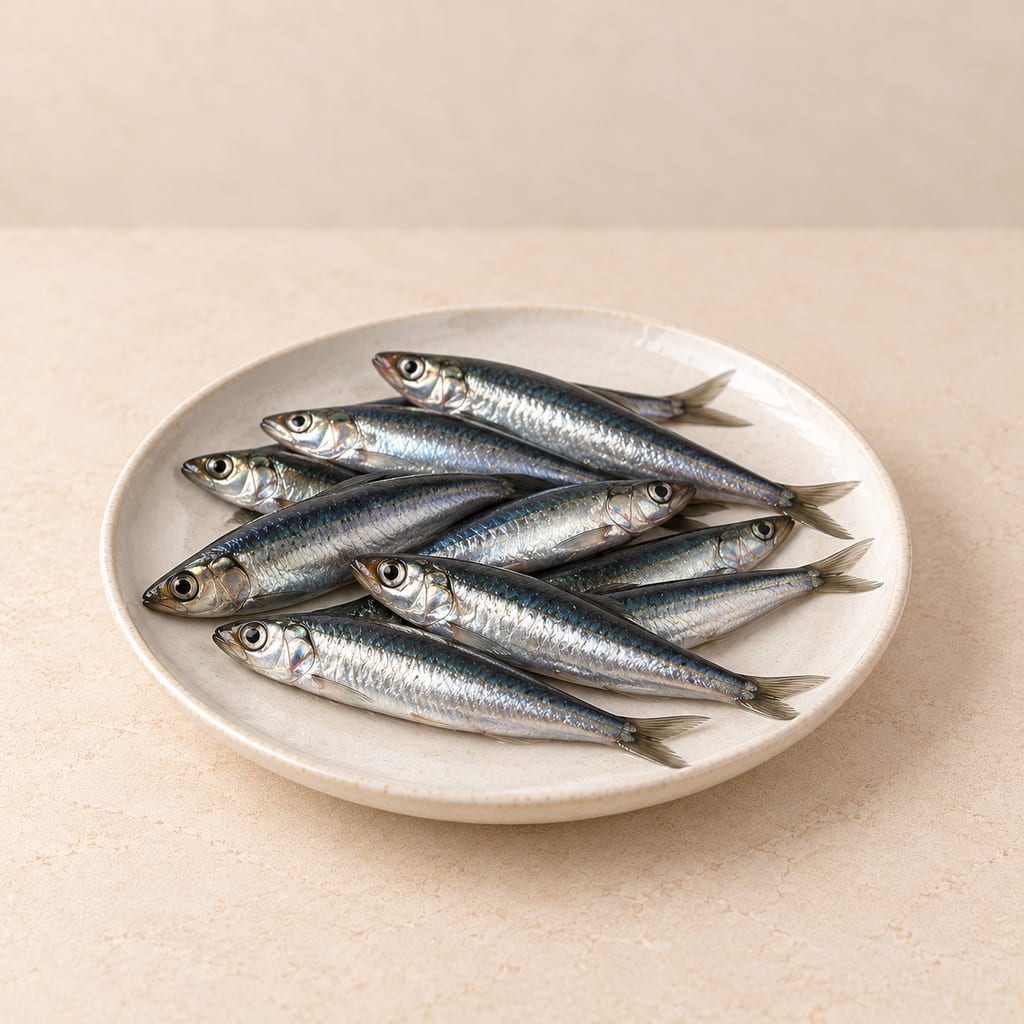
Anchovies are small schooling sea fish of the family Engraulidae, eaten fresh or dried and above all salted: as fillets in oil, whole salted fish or fish sauce.
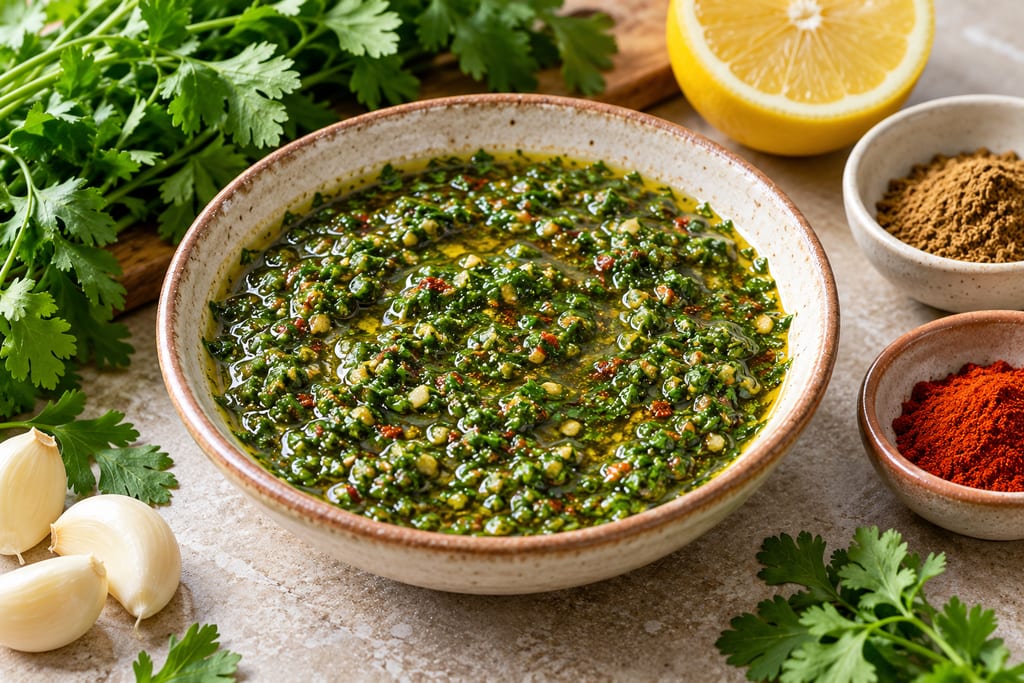
Fresh chermoula is a chopped-herb Moroccan-style sauce of coriander, parsley, garlic, lemon, olive oil and warm spices, made here as an explicitly untested development formula.
No community contributions have been published for this entry yet.
Sign in to contribute. Published comments and photos are free to read.
CDC Yellow Book
Food Poisoning from Marine ToxinsScombroid/histamine formation in susceptible fish and persistence after cooking, freezing, pickling, salting and smoking.
Cited in: Cold handling and hazards belong to the actual fish
U.S. Food and Drug Administration
Selecting and Serving Fresh and Frozen Seafood SafelyFresh seafood refrigerated at 40°F or below if used within two days of purchase; otherwise freeze. Not a cured-product shelf life.
Cited in: Cold handling and hazards belong to the actual fish
PLOS ONE; PubMed Central
Effects of Temperature on Bacterial Communities and Metabolites during Fermentation of Myeolchi-Aekjeot, a Traditional Korean Fermented Anchovy SauceExperimental salted-anchovy community and metabolite trajectories; endogenous/exogenous enzyme proteolysis and amino-acid changes. Not a general safety validation.
Cited in: From fish protein to a seasoning liquid
Japan International Research Center for Agricultural Sciences (JIRCAS)
Nam-plaaEntry identifies Thai น้ำปลา / nam-plaa and local terms Nam-plaa-dee and Nam-plaa-sod.
Entry permits freshwater, brackish-water, and marine fish; its historical species list uses source spellings and includes genus-only entries.
The entry describes one Thai product family and a particular method; its salt ratios, durations, extractions, and organism list are not universal fish-sauce instructions or a universal microbiome.
Cited in: A broad ingredient with many different bodies; From fish protein to a seasoning liquid; Salted pieces, dried fish and sauces; Choosing a fish for the named preparation; Notes on this category
FAO-hosted Torry Advisory Note 38, Ministry of Technology, Torry Research Station
The Composition of FishFish muscle is arranged in blocks separated by connective tissue, with light and dark muscle regions.
Water and protein are more stable than fat in the historical sample; composition varies by species, season, feeding, and individual condition.
Numeric ranges in the note are old, bounded guide values, not universal contemporary nutrient values.
Cited in: A broad ingredient with many different bodies; Why a fillet separates into flakes; Water, protein and changing fat reserves; Choosing a fish for the named preparation
FAO Fisheries Technical Paper 348
Quality and quality changes in fresh fish — Chapter 5, Post-mortem changes in fishAutolysis and bacterial spoilage are distinguishable post-mortem processes; their relative importance varies.
Fish muscle enzymes can soften tissue; lipid oxidation and hydrolysis can damage odor, flavor, and texture.
Do not convert the report into home storage limits or treat sensory observations as proof of safety.
Cited in: Why a fillet separates into flakes; A changing tissue after capture; Fat changes through a different set of reactions
FAO Fisheries Technical Paper 329
Fermented fish in Africa: A study on processing, marketing and consumption — Chapter 2, Processing methodsThe survey describes varied artisanal processes and products often retaining fish pieces, alongside condiment use.
These are regional observations in that report, not a claim about all African fish foods.
Cited in: Salted pieces, dried fish and sauces
Korean Traditional Knowledge Portal
Myeolchi Jeot (Salted/Fermented anchovies)Myeolchi jeot is a named salted/fermented anchovy product; the page describes fish and extracted liquid use in seasoning and kimchi.
The portal's catalog date and bibliography dates do not establish the food's origin date.
Cited in: Salted pieces, dried fish and sauces
European Journal of Archaeology, 26(3), pp. 320-340; open access under CC BY
First Evidence of Trade in Galilean Salted Fish on the Carmel Coast in the Early Islamic PeriodAuthors infer a regional salted-fish production/trade connection from fish remains in transport vessels, linking freshwater source and coastal distribution.
Paper does not establish one global origin for salted fish or fish sauce; ancient product terminology must be kept distinct.
Cited in: Fish carried beyond the landing place; Notes on this category
U.S. Food and Drug Administration
Fish and Fishery Products Hazards and Controls Guidance, June 2022 EditionFDA frames seafood hazards by species and process; vertebrate fish and invertebrate species are distinguished.
Parasite, histamine, and natural toxin examples depend on species, geography, handling, or preparation; do not assign every hazard to every fish.
This is U.S. processor guidance. Do not turn its control values into unsourced consumer advice.
Cited in: Choosing a fish for the named preparation; Cold handling and hazards belong to the actual fish; Notes on this category
U.S. Food and Drug Administration
Food AllergiesFDA treats fish and Crustacean shellfish as separate major-allergen categories and gives species-declaration examples for fish labels.
Jurisdiction-specific labeling information, not personalized medical advice.
Cited in: A broad ingredient with many different bodies; Fish allergy and the name on a label
GoodlokResearch intake · Producer description
Goodlok Play — Fish garumGoodlok describes fresh fish trimmings as a raw input to its Fish garum; the fish species is not identified.
The inspected package label names fish bones, a different form from the webpage's trimmings. The two descriptions remain separate producer evidence and do not establish a substitution or canonical recipe method.