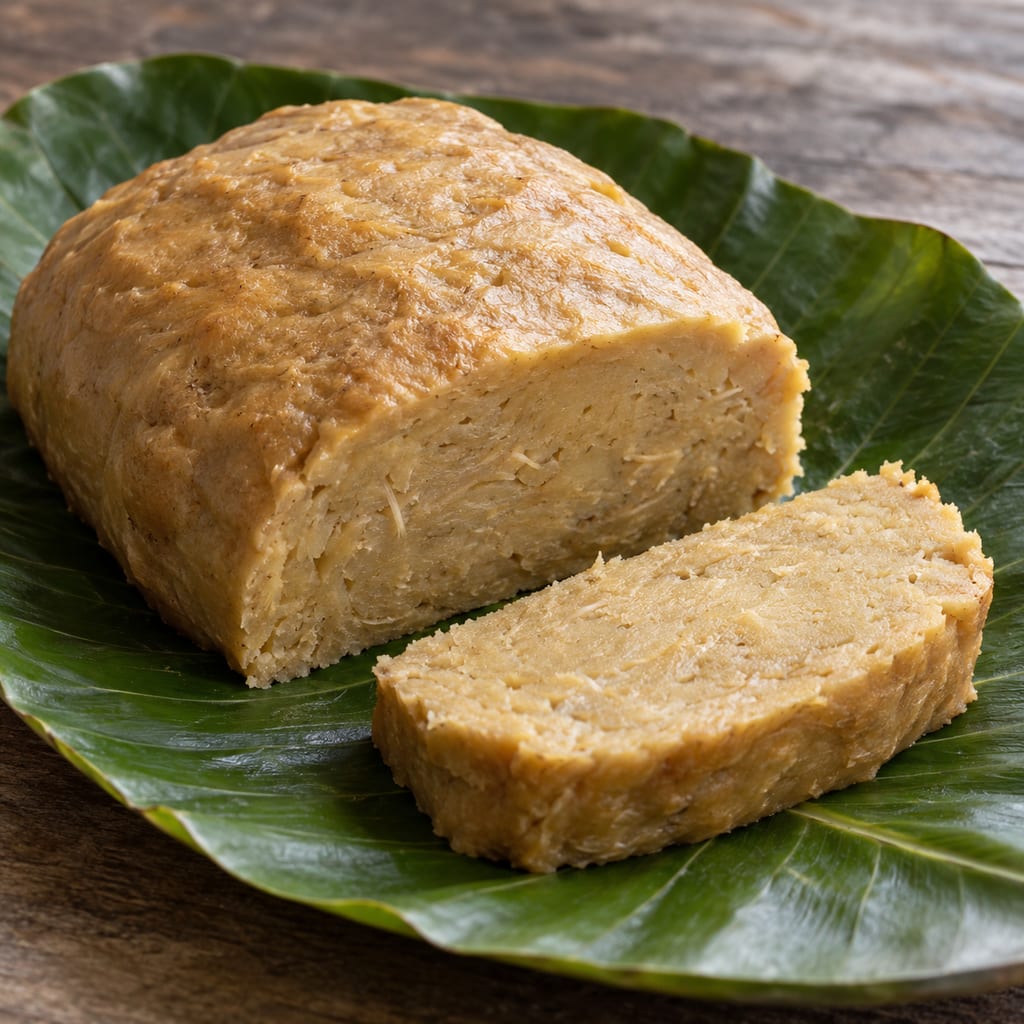
Pohnpeian mahr (fermented breadfruit)
Pohnpeian mahr is breadfruit preserved in an earthen pit as an off-season reserve, then kneaded and prepared as bread. The FAO and NTBG accounts give no validated method or storage limit.
 FermenteaWhere food goes to change
Furo
Kosraean preserved breadfruit called furo in a 1919 ethnographic monograph. Two historical pit methods are recorded; the sources give no validated household process.
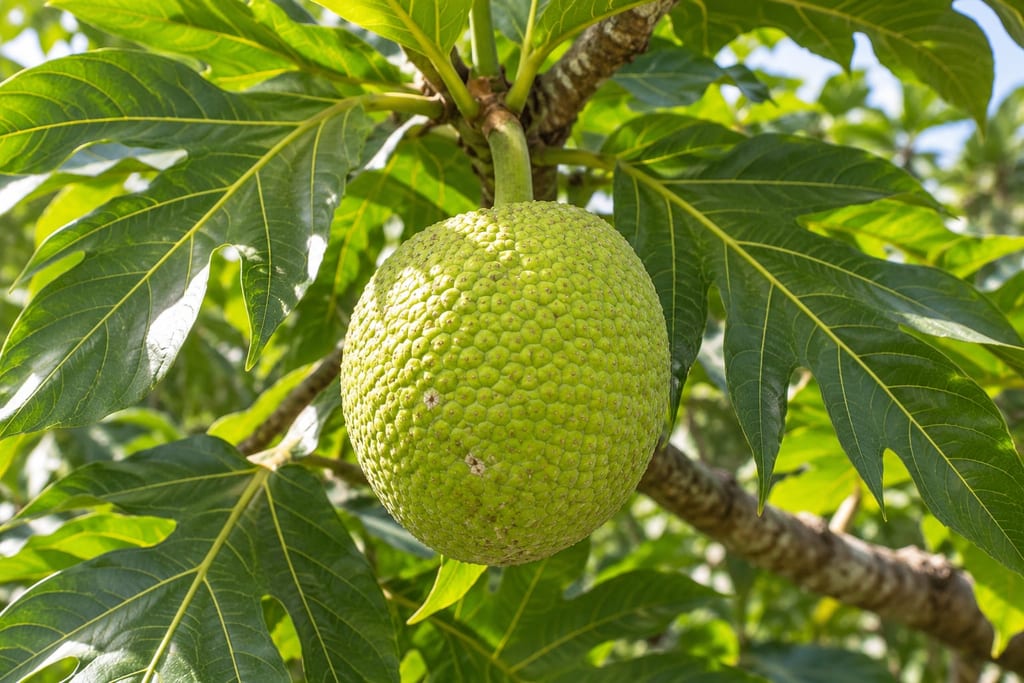
Sarfert's 1919 monograph on Kosrae names preserved breadfruit furo and excludes a separate Kosraean name, mos in Kosa. The monograph is available in a 2008 translation by the Kosrae Historic Preservation Office.
An 1827 to 1828 travel account by Kittlitz uses uro for a breadfruit kept in pits that soured and kept for a long time. Whether uro and furo are the same word is not established, so the two names are kept apart.
Sarfert records two methods. One uses seawater immersion before the fruit is preserved on the shore or by a river. The other, used inland, uses monak taro leaf sap before the fruit is buried.
Hunter-Anderson reports that breadfruit is a staple on Kosrae and that some is pit-preserved. Her survey places pits in streamside mangroves at Likinlulum, where a local preference for breadfruit preserved there is reported.
The sources do not establish one continuous method, the exact season, or the origin of furo.
Sarfert describes three cooked forms: kneaded cakes cooked in banana leaves, a version with grated coconut, and crumbled furo mixed with coconut and cooked as balls.
He also names furo peelers and a coral kneading slab. These are historical roles and do not establish modern equivalents or capacities.
The sources do not identify the microorganisms involved or measure the mechanism. Sarfert records that leaf liners were replaced because mould could spoil the furo, and gives readiness and keeping observations that are not validated controls.
No executable recipe is given here. Any practical method would need local Kosraean review and qualified process review. Sensory cues and elapsed time are not safety tests.
Sarfert's 1919 Kosrae monograph and Kittlitz's 1827-28 account document preserved breadfruit on Kosrae. Neither establishes an origin date.
The historical sources give no safe endpoint, failure criteria or validated storage period, and mould is recorded as a spoilage problem.
Hazard sourceDo not treat elapsed time, appearance or smell as a safety test for a home batch.
Historical readiness and keeping observations are not shelf-life guidance.
Sarfert's 1919 account and Hunter-Anderson's survey place the practice on Kosrae. The record does not establish an origin.
Pohnpeian mahr is breadfruit preserved in an earthen pit as an off-season reserve, then kneaded and prepared as bread. The FAO and NTBG accounts give no validated method or storage limit.
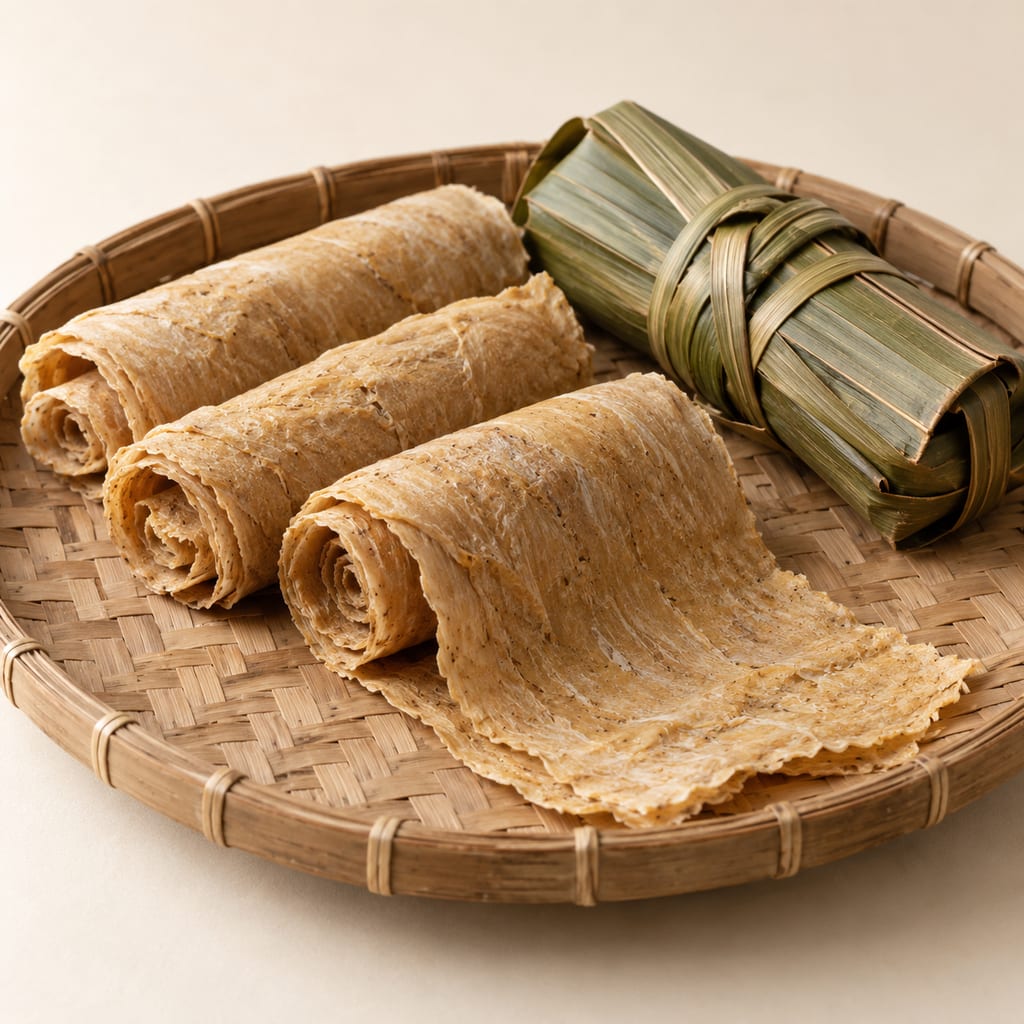
Tipak is a Kapingamarangi breadfruit product: cooked breadfruit mashed, spread into sheets, sun-dried, rolled and wrapped in pandanus leaves as provisions for later.
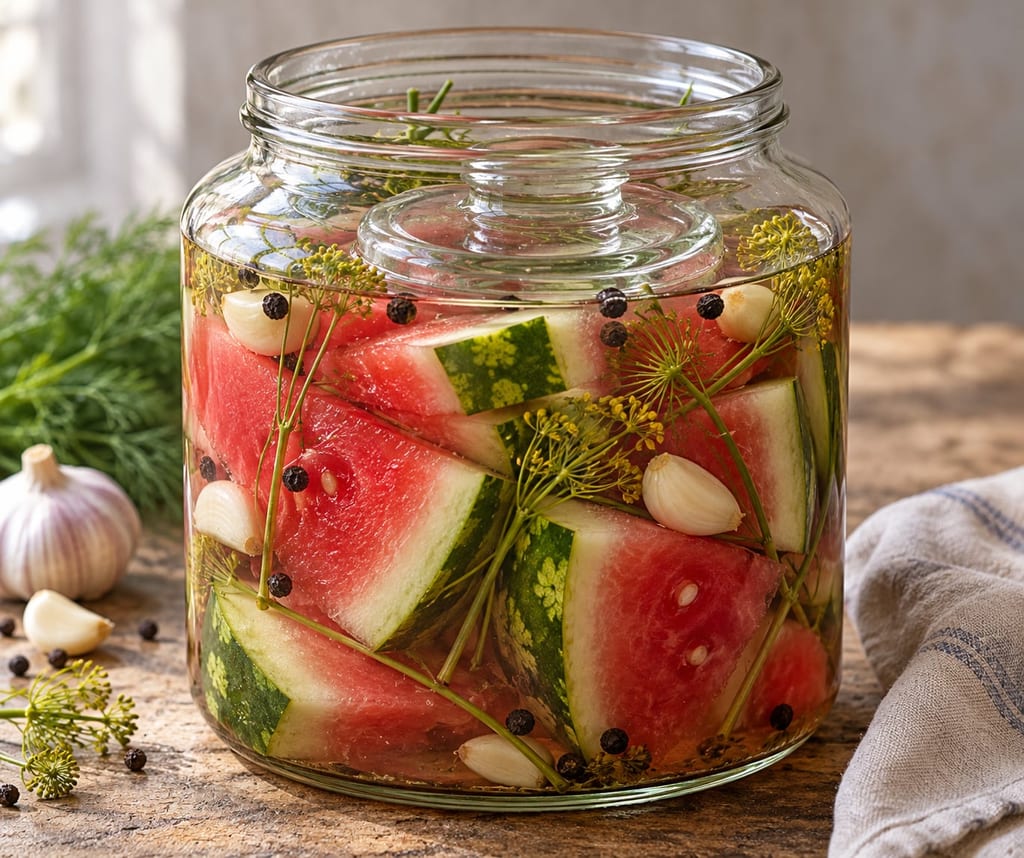
Watermelon pieces with rind ferment in a dill, garlic and pepper brine in a family preparation linked to Kishinev, Moldova.
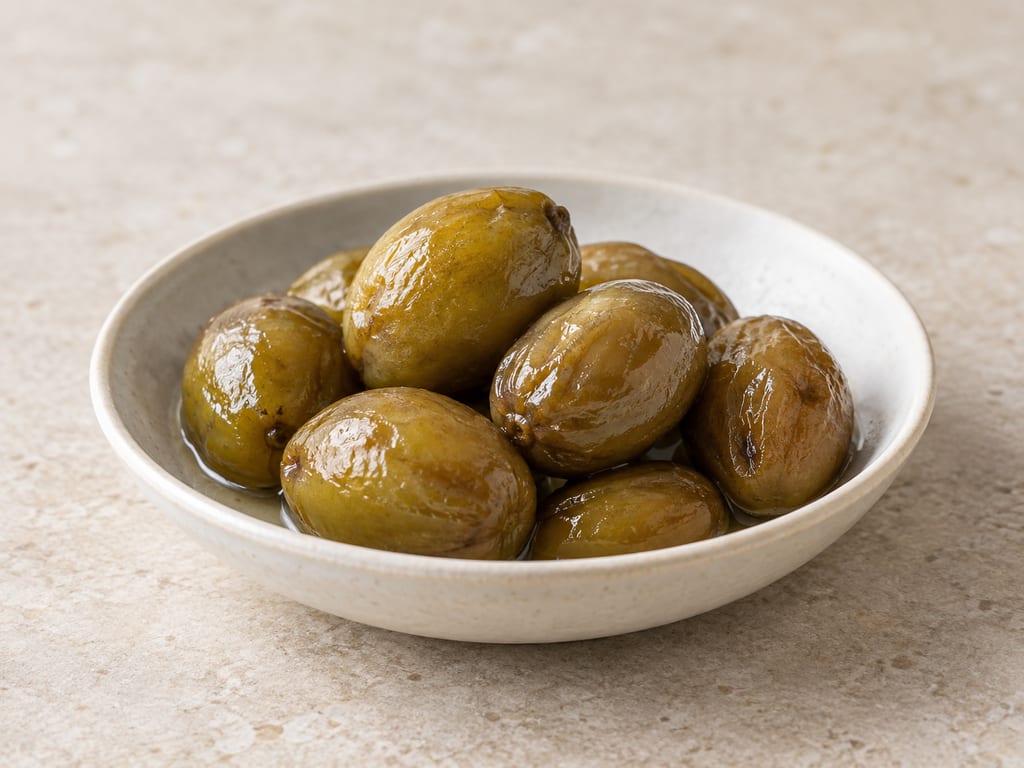
Mature Spanish plums are covered with a 20% volume salt solution and fermented under shade for ten days.
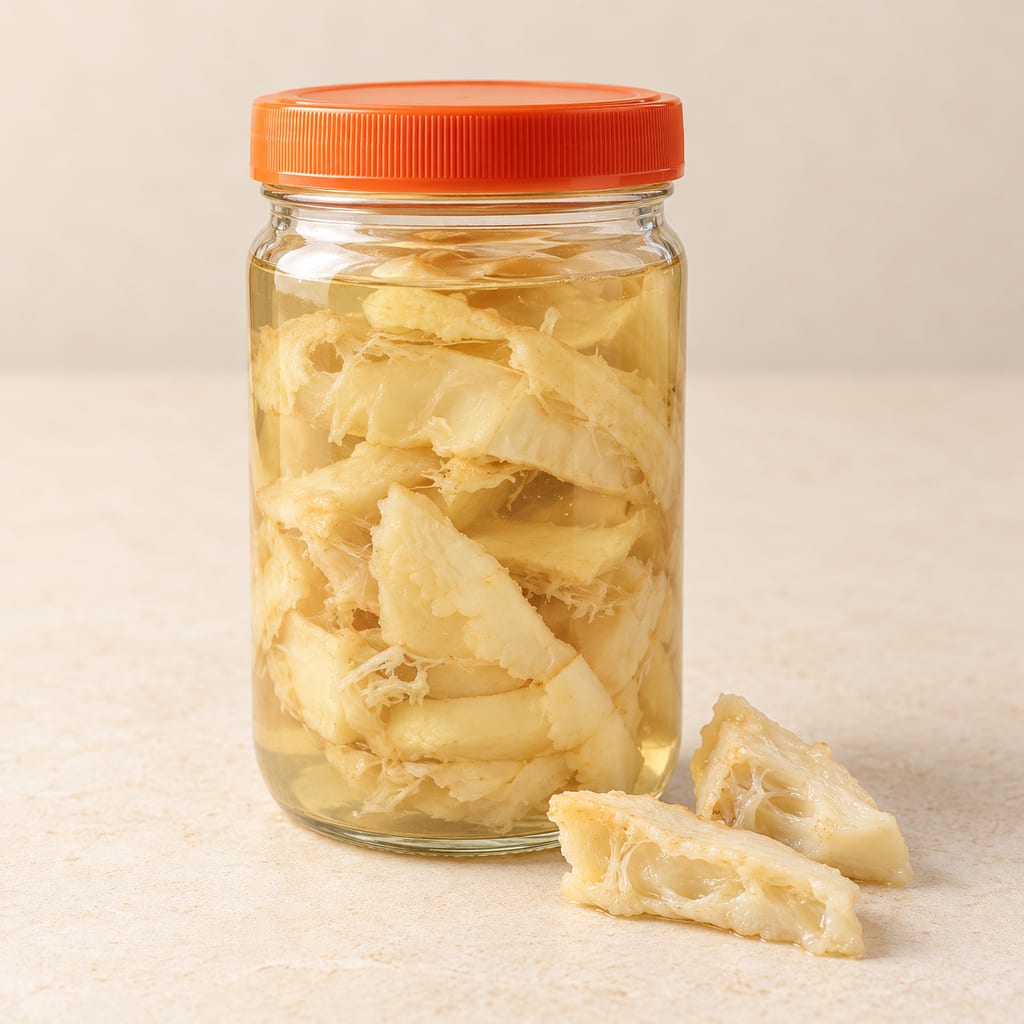
Cempedak inner rind is cut, salted and submerged in water for a short spontaneous fermentation used in Kalimantan home cooking.

Mochenye yabloki are whole apples held under prepared liquid for several weeks. Russian sources from 1892 and 1959 describe the method. It is not the same as vinegar pickling.
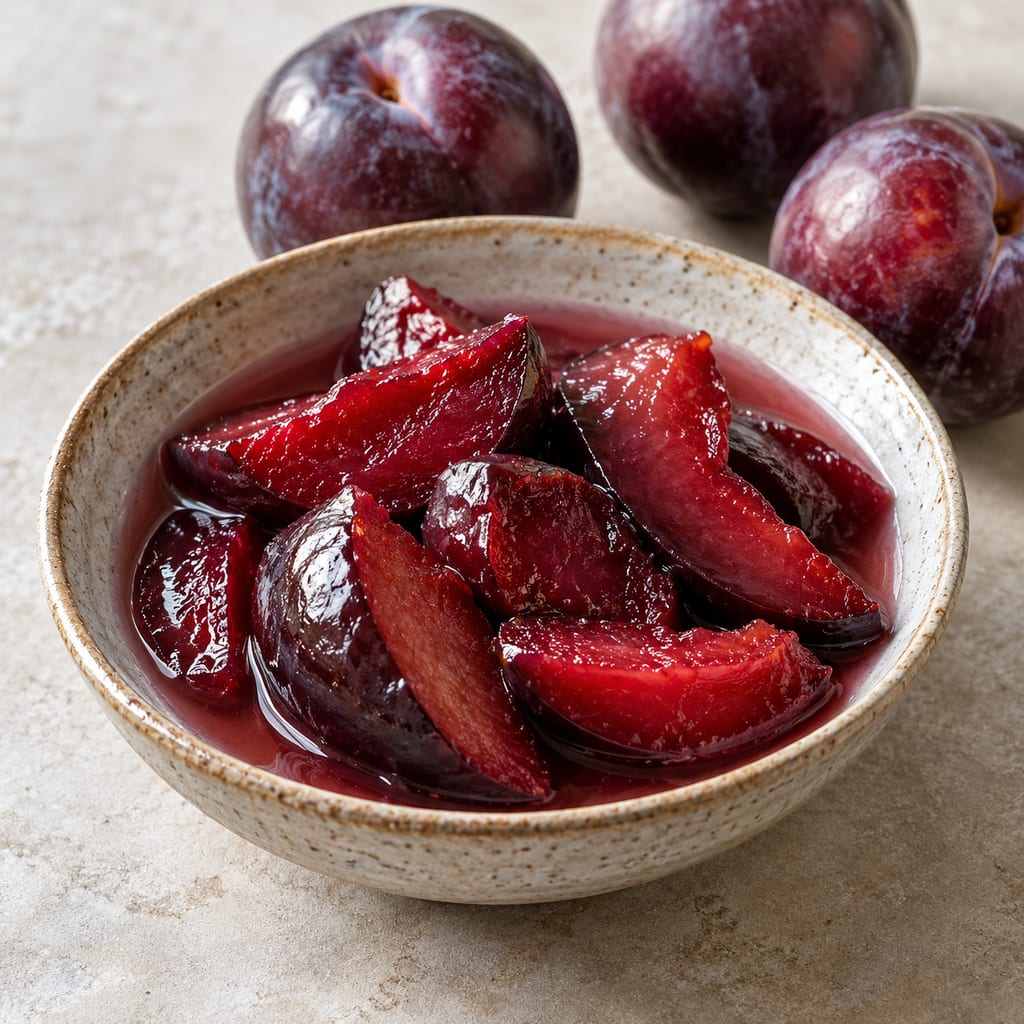
Pitted ripe plums release their own juice under a 2% salt cure, then ferment while weighted below the liquid.
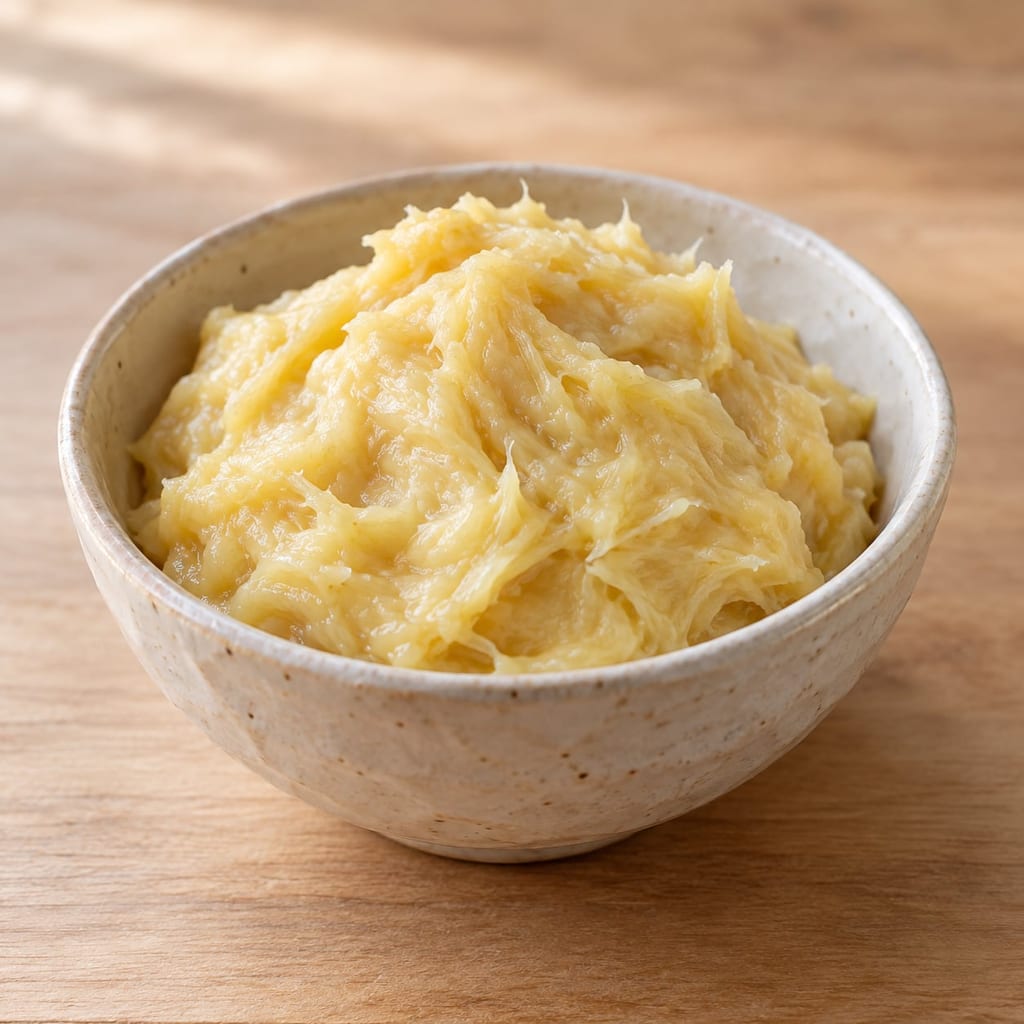
Durian flesh is mashed with salt and fermented in a covered container as a Malay condiment or cooking ingredient.
No community contributions have been published for this entry yet.
Sign in to contribute. Published comments and photos are free to read.
Japan Center for Area Studies, National Museum of EthnologyMethod
Breadfruit Storage and Preparation in the Pacific IslandsCited in: Name and identity; Two historical methods; Forms and tools; What the sources do not establish
Kosrae Historic Preservation Office translationMethod · Identity · Uses · Equipment
Sarfert 1919, Kosrae ethnography, 2008 Kosrae HPO translation (pp. 130-131)Cited in: Name and identity; Two historical methods; Forms and tools; What the sources do not establish
MicronesicaGeography · Uses
Hunter-Anderson, Kosrae breadfruit pit survey (Micronesica)Cited in: Name and identity; Two historical methods; Forms and tools; What the sources do not establish
Kosrae Historic Preservation OfficeHistory
Ritter and Ritter 1982, The European discovery of Kosrae Island (Kittlitz account)Cited in: Name and identity; Two historical methods; Forms and tools; What the sources do not establish
National Tropical Botanical GardenIdentity
NTBG breadfruit ethnobotany researchCited in: Name and identity; Two historical methods; Forms and tools; What the sources do not establish