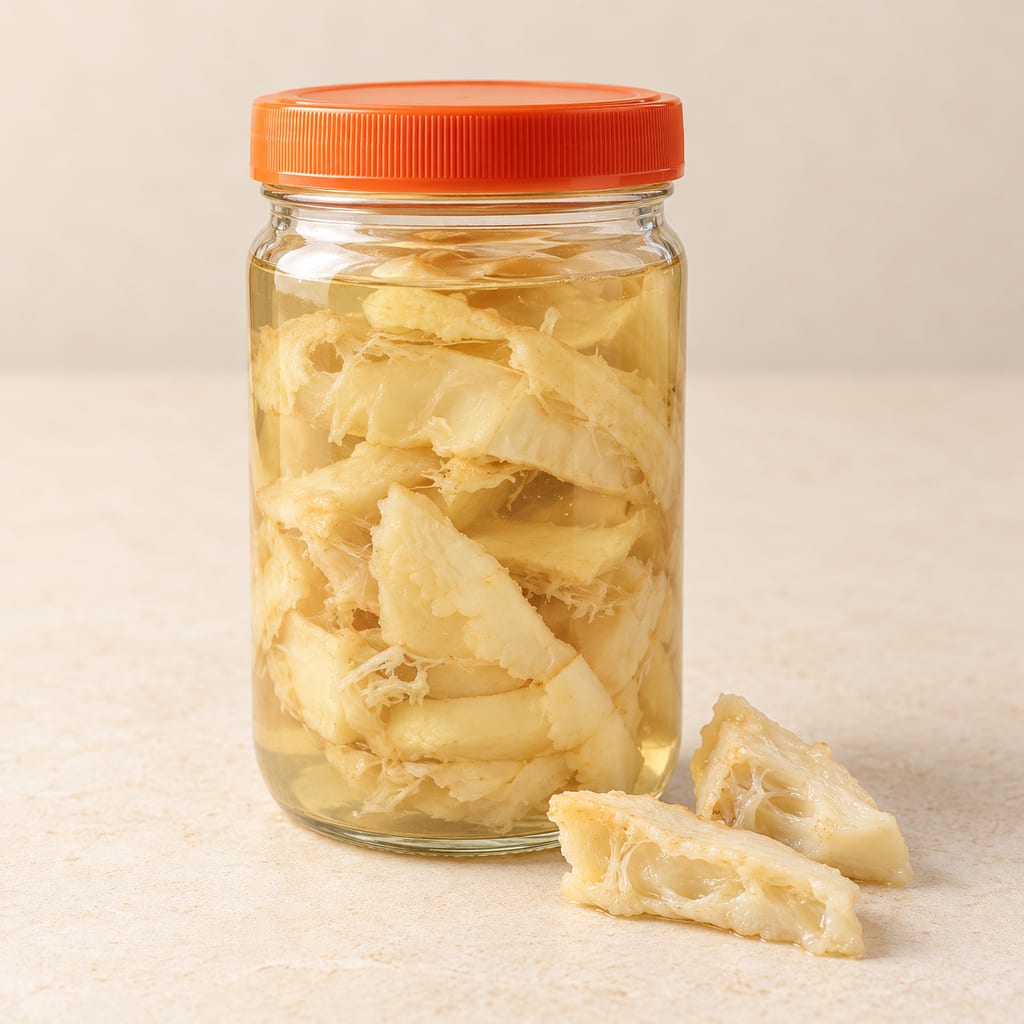
Mandai (fermented cempedak rind)
Cempedak inner rind is cut, salted and submerged in water for a short spontaneous fermentation used in Kalimantan home cooking.
 FermenteaWhere food goes to change
Traditional method
Tempoyak
Durian flesh is mashed with salt and fermented in a covered container as a Malay condiment or cooking ingredient.
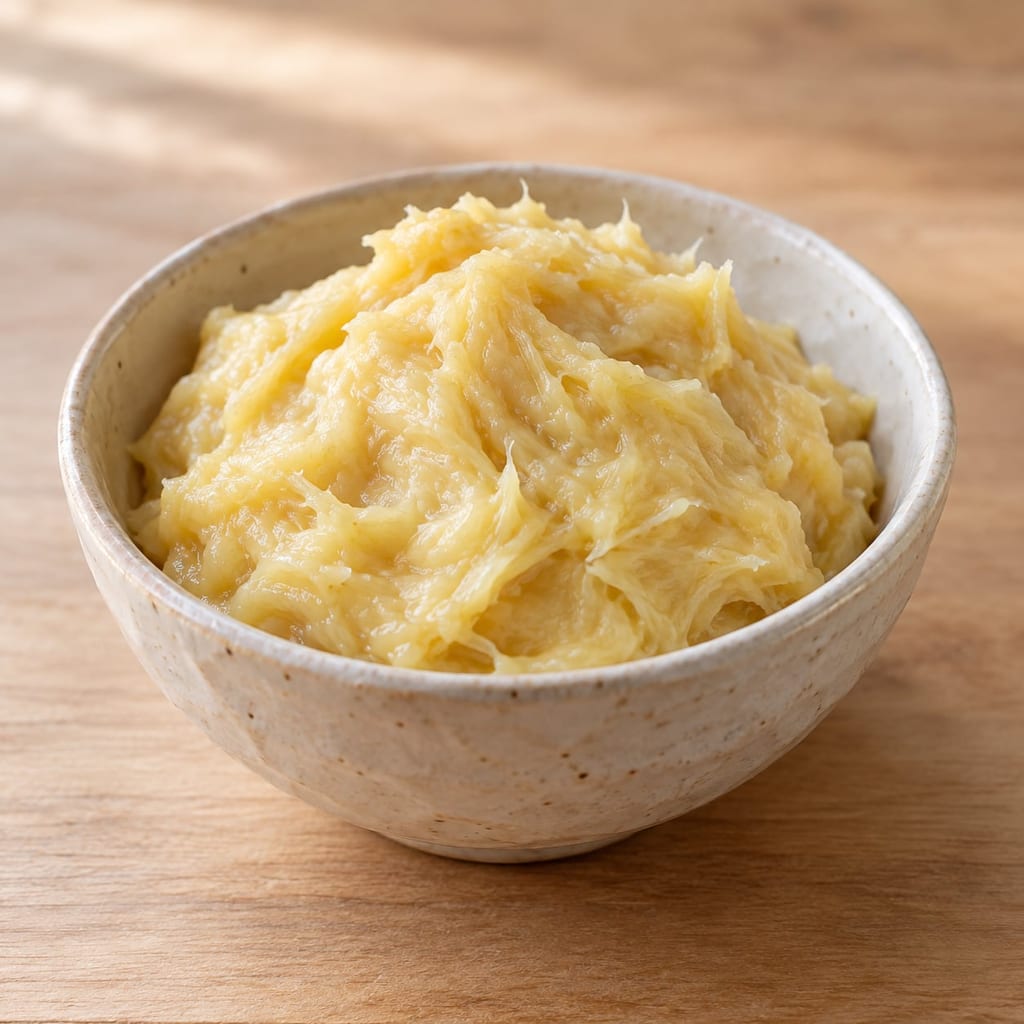
Tempoyak is a fermented durian condiment. Periuk describes it as a classic Malay condiment or ingredient; a 2023 review describes Indonesian tempoyak among Malay communities and distinguishes it from the Malaysian counterpart.
The review characterizes tempoyak as a semi-solid durian product with a strong acidic aroma. It also repeats a proposed derivation of the name from poyak (“torn”) through an earlier cited source; that original etymology has not been checked here.
The Periuk recipe is one measured household version: 250 g durian flesh after seed removal and 5 g non-iodized salt. Its one-cup yield and 4-day-to-2-week cool, dark fermentation schedule belong to that formula alone.
Periuk gives no numerical temperature, validated endpoint or finished-product storage method. The 2023 review describes other Indonesian methods and does not validate this Malaysian household batch.
Durian belongs to the genus Durio in the mallow family, Malvaceae.
Durio zibethinus is the most familiar cultivated species, although several other Durio species are eaten in Southeast Asia.
The fruit has a thick, spiny outer husk containing large seeds surrounded by edible flesh.
The flesh is rich in water and contains carbohydrates, fat and smaller amounts of protein.
Its creamy texture is distinctive among fruits.
Durian is also known for a powerful aroma resulting from a complex mixture of volatile compounds, including sulfur-containing substances.
The precise balance of aroma compounds differs between varieties and maturity stages.
This matters for fermentation.
A durian with a relatively mild, sweet aroma can produce a different tempoyak from a strongly flavored variety.
The original recipe emphasizes choosing durian that tastes good before fermentation.
Poor-quality or decaying fruit is not improved into a safe ingredient merely by adding salt.
Tempoyak is strongly associated with Malay food culture.
In Indonesia, it is particularly familiar in parts of Sumatra and Kalimantan, including Lampung, Jambi, South Sumatra, West Sumatra and West Kalimantan. The 2023 review's map identifies communities and production areas across Sumatra and Kalimantan, with particular concentration in South Sumatra and West Borneo; this is a review of cited literature, not a population survey or proof of a single birthplace.
In Malaysia, it appears in regional cuisines including Pahang and other Malay areas.
Its culinary importance is linked to the seasonal availability of durian.
When large quantities of ripe fruit are available, fermentation provides a way to transform part of the harvest into a savory ingredient that can be used later.
The precise invention date of tempoyak is unknown.
The modern scientific literature documents its cultural importance, household preparation and microbial composition.
A substantial 2023 review identifies tempoyak as an important traditional food associated with Malay identity and community life.
It records its use at gatherings and special occasions as well as in ordinary meals; in some Indonesian communities these are ceremonial uses, while Malaysian uses are as a condiment or ingredient in dishes such as curry and fried rice.
That evidence establishes a living regional tradition without permitting a confident claim that the exact modern recipe was invented in a particular ancient century.
A 2017 journal article and the 2023 review repeat a story that the writer Abdullah bin Abdulkadir Munsyi met tempoyak on an 1836 visit to Terengganu. Both attribute it to Hikayat Abdullah, but the passage and edition were not checked here, so it is a reported lead and not a verified earliest record or an origin date.
The 2017 article, which centres on Palembang, describes tempoyak as an accompaniment to rice and a seasoning for foods including brengkes, and describes salted, spontaneous fermentation in a closed vessel.
Periuk's formula uses 5 g salt for 250 g durian flesh (2% by flesh weight).
The 2023 review reports that salt levels vary among documented tempoyak preparations and that the amount affects reported texture, aroma and lactic-acid-bacteria counts. These are findings about other documented preparations; they do not explain or validate the Periuk formula's preservation performance.
Periuk does not state why salt is added or provide a safety endpoint for this batch.
The 2023 review describes ripe durian as a source of sugars and nutrients and reports that fermentable carbohydrates are converted to lactic acid during tempoyak fermentation.
Those are general findings from the literature reviewed, not measurements of the Periuk batch. Periuk lists only durian flesh and salt; its recipe does not add sugar.
Periuk specifies an airtight container and a clean, dry spoon for tasting after day four. It gives no material, capacity, headspace, cleaning method or pressure-management instruction for the container.
No other equipment or monitoring device is specified in this household recipe.
Choose durian whose fresh flesh is suitable to eat on its own; Periuk says the fruit's sweetness and flavor affect the finished tempoyak.
Remove the seeds and mash the flesh roughly. Weigh 250 g of flesh, then sprinkle over 5 g non-iodized salt and mix evenly.
Transfer the mixture to an airtight container, close the lid, and leave it in a cool, dark place for at least four days and up to two weeks. Periuk gives no numerical temperature.
After four days, taste with a clean, dry spoon. Cover the container and continue fermenting to the preferred flavor; longer fermentation produces a more sour taste, according to Periuk.
The source provides no objective fermentation endpoint, post-fermentation storage method or shelf life.
The 2023 review describes tempoyak as a spontaneous fermentation that relies on microbes associated with durian, particularly lactic acid bacteria. It reports Lactobacillus species, including L. plantarum, among organisms found in tempoyak.
The review also notes that microbial populations vary with durian type and fermentation conditions. A 2025 study reports different bacterial profiles in its regular-durian and Durian Lai experimental batches.
These studies describe other samples and experiments. They do not identify the microbes or establish acidification in the Periuk batch.
A 2023 review summarizes Indonesian studies reporting fermentation at about 28–34 °C for 4–7 days and cites a pH of 3.69 in one market sample. It also reports community salt additions ranging from 2.5% to 30%, with different levels reported for Indonesian and Malaysian preparations.
The review's figures come from different sources and preparations. They are not specifications for the Periuk method, which states no numerical temperature or final acidity.
A separate 2025 Durian Lai experiment reports an optimized formulation with 2.46% salt, 1.01% sugar and two days of fermentation, with pH 5.56. That experimental result is likewise not a control or endpoint for the Periuk batch.
A 2025 study investigated tempoyak made from ordinary durian and a durian hybrid called Durian Lai, involving Durio zibethinus × Durio kutejensis.
The research compared fermentation conditions and microbial communities.
For the hybrid material, one experimentally optimized formulation contained 2.46% salt and 1.01% sugar, with 2 days fermentation.
It yielded a reported pH of 5.56.
The reported pH belongs to this Durian Lai experiment. It is not a validated safety endpoint for the separate Periuk household formulation.
A high lactic-acid-bacteria count alone does not validate a safe preservation process for the Periuk batch.
A high lactic-acid bacterial count does not by itself establish that the finished food has crossed a suitable microbiological safety threshold.
The microbial community also differed between the durian types.
The Durian Lai sample was dominated by Pediococcus and Weissella in the study.
Ordinary durian tempoyak showed greater diversity, including Leuconostoc and Acetobacter.
These findings emphasize that the species of durian and its starting microbial population matter.
They also underline the need to distinguish a food-quality optimization experiment from a validated safe-storage protocol.
A 2023 review summarizes sensory studies that describe tempoyak samples with durian aroma and sour, salty, sweet and savoury tastes. These are reported observations from sampled products, not a promise that every batch or the Periuk formula will have the same profile.
The 2023 review describes tempoyak as a whitish-to-yellowish semi-solid and summarizes sensory reports of a silky, finely fibrous, slightly viscous and slightly translucent texture. It notes that panelists preferred slightly liquid samples over watery ones and criticized samples that were excessively soft.
These descriptions summarize other studies and consumer assessments. They do not define a target or a safety test for the Periuk batch.
Tempoyak is made in both Malaysia and Indonesia.
In Indonesia, it is associated with Malay communities in Sumatra and Kalimantan.
In Malaysia, it appears in several regional cooking traditions, including Pahang and Perak.
Some traditional preparations use very little salt.
Others are more heavily salted.
Some cooks include chili during or after fermentation.
The principal two-ingredient recipe should not be silently altered to include chili, however.
A chili-containing sambal made from tempoyak is a separate culinary preparation.
Different durian cultivars also produce distinct results.
Some fruits are sweeter, others more bitter or strongly aromatic.
Those characteristics can carry into the ferment.
Tempoyak is commonly used in savory cooking.
One of the best-known Malaysian dishes is tempoyak ikan patin, a preparation combining fermented durian with freshwater fish.
The fermented paste contributes sourness and aromatic depth to the cooking liquid.
Another common use is sambal tempoyak, which combines tempoyak with chili and other seasonings.
In Indonesian regional cooking, tempoyak can accompany fish and vegetables or form part of strongly flavored sauces.
Its sourness works particularly well with fatty or rich ingredients.
The concentrated flavor means a relatively small amount can influence an entire dish.
The original recipe is therefore best treated as a base ingredient rather than a finished meal.
Periuk recommends tasting the mixture after four days with a clean, dry spoon, then covering it again and continuing to the preferred flavor; it says longer fermentation produces a more sour taste.
This is the source's flavor guidance. The page does not give visual or aroma-based failure criteria, an objective endpoint or a validated safety test.
The original household recipe instructs use of an airtight container in a cool, dark location for up to two weeks.
It does not specify a numerical temperature, pressure-management method, finished pH or storage life.
Because tempoyak can have a high moisture content and contains substantial carbohydrates, uncontrolled fermentation requires caution.
The 2025 experimental finding of pH 5.56 in one tempoyak formulation shows why the presence of lactic acid bacteria cannot be used as a safety guarantee.
For modern production, the process requires appropriate validation of acidification, contamination control, salt distribution and storage.
Do not assume that a sealed jar of fermented fruit is shelf-stable.
The original source's absence of storage instructions should remain explicit in the database.
Any commercial manufacture requires a separate verified storage and packaging specification.
The review documents tempoyak as an Indonesian fermented durian food popular among Malay communities and distinguishes the Indonesian and Malaysian products. The measured 250 g, 2% salt method here is the separate Periuk recipe; no claim is made that it represents a specific Indonesian tradition.
Yield 1 cup · Scaling: source batch only
Contaminated equipment or uncontrolled fermentation can compromise the batch; the recipe is not professionally validated.
Hazard sourceUse clean food-grade equipment and follow the source method. Recipe-specific validated limits are not supplied; do not treat taste or appearance as proof of safety.
Control sourceThe recipe source does not specify how to store tempoyak after fermentation or give a storage life; no storage method is inferred here.
Unknown specific preparation location. Periuk gives this measured modern recipe and calls tempoyak a Malay condiment, but does not establish where this recipe was prepared.
The review describes Indonesian tempoyak among Malay communities and distinguishes it from the Malaysian counterpart; this Periuk household formula is not claimed as an Indonesian regional recipe.
Cempedak inner rind is cut, salted and submerged in water for a short spontaneous fermentation used in Kalimantan home cooking.
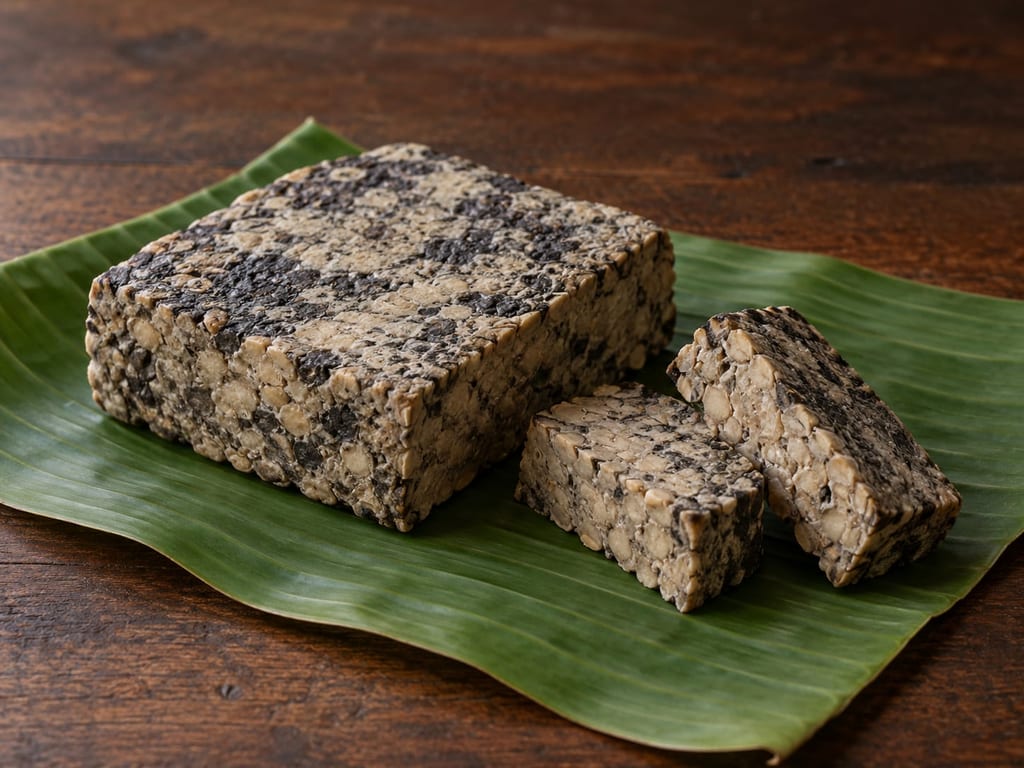
Black oncom is a mould-fermented cake made from defatted peanut cake, pressed to about 2 cm, steamed and then incubated for a day at ambient temperature.
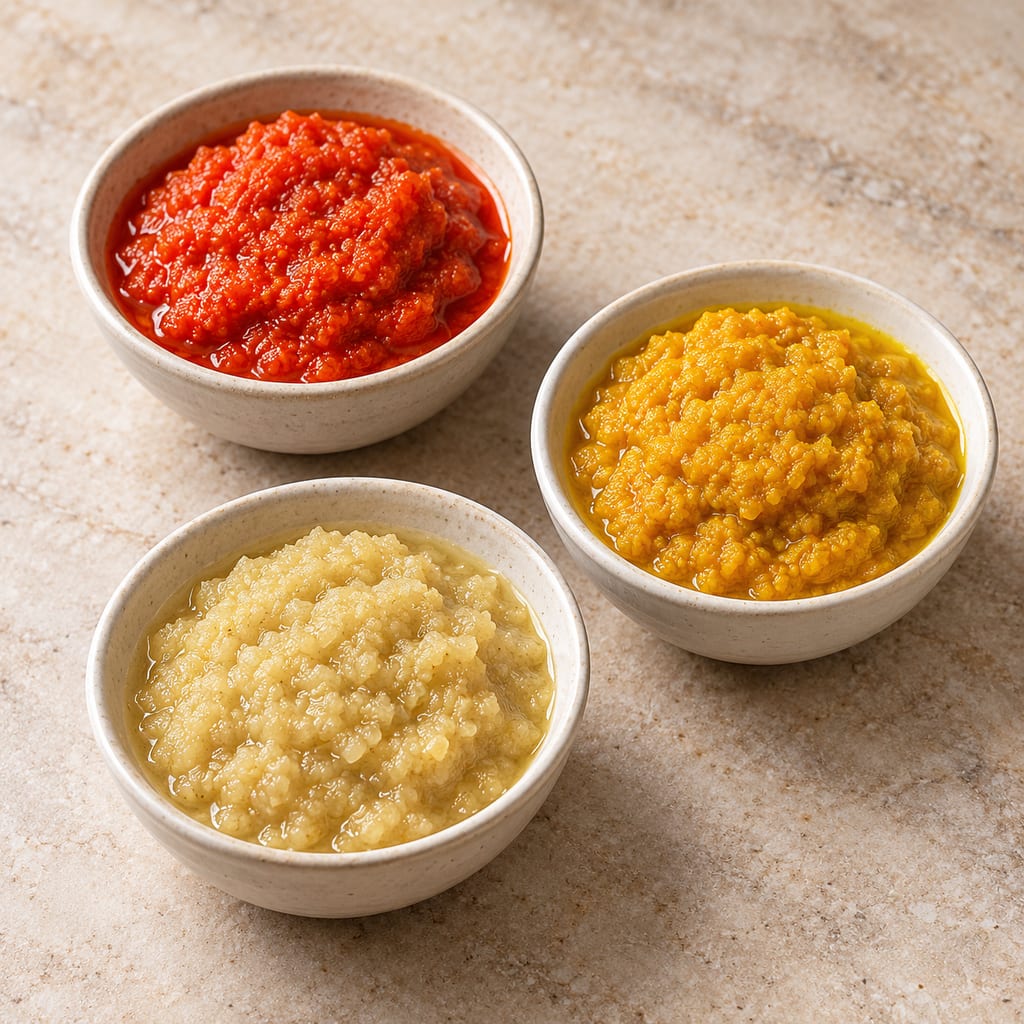
Bumbu dasar are the ground spice bases of Indonesian cooking: a white paste of shallot, garlic and salt, with chile added for red and turmeric for yellow, cooked into dishes.
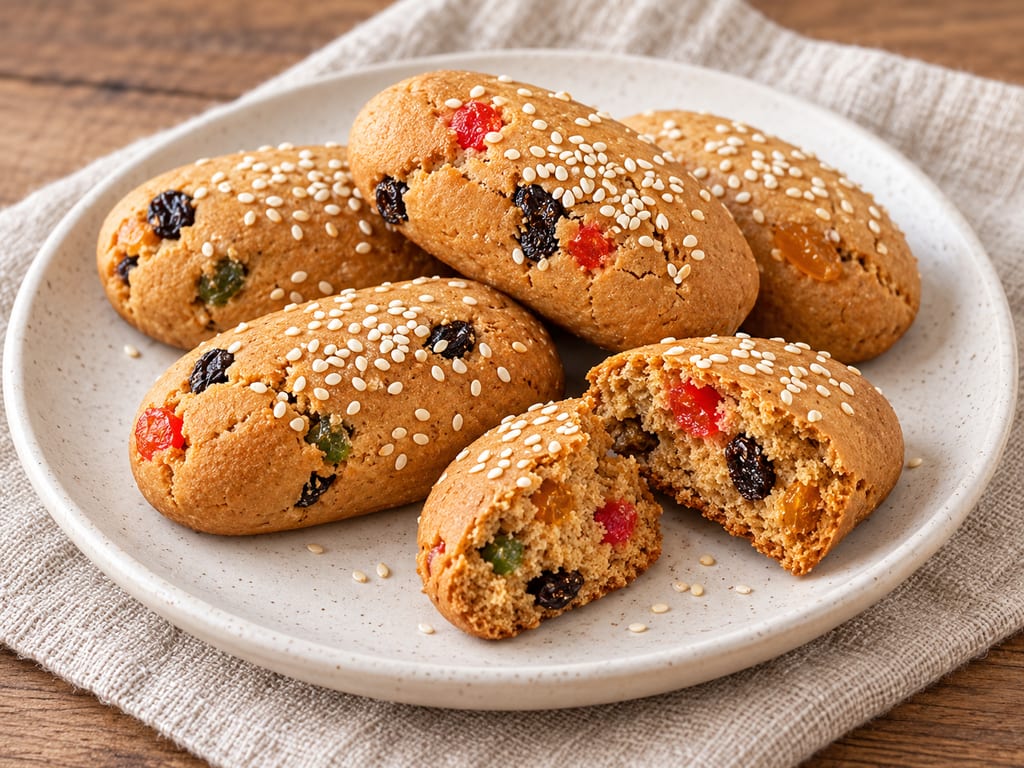
An Indonesian palm-sugar and cinnamon quick bread with dried fruit and sesame.
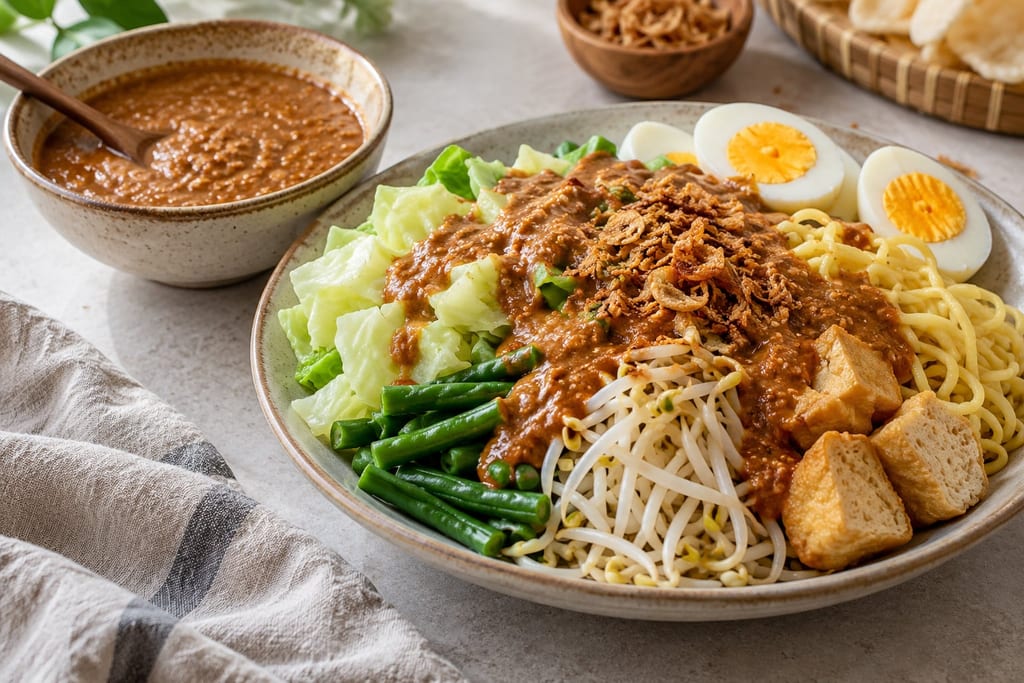
A cooked peanut sauce of ground roasted peanuts, aromatics, shrimp paste and coconut cream, as made for gado-gado; pecel and Malaysian satay sauces are close relatives with different formulas.
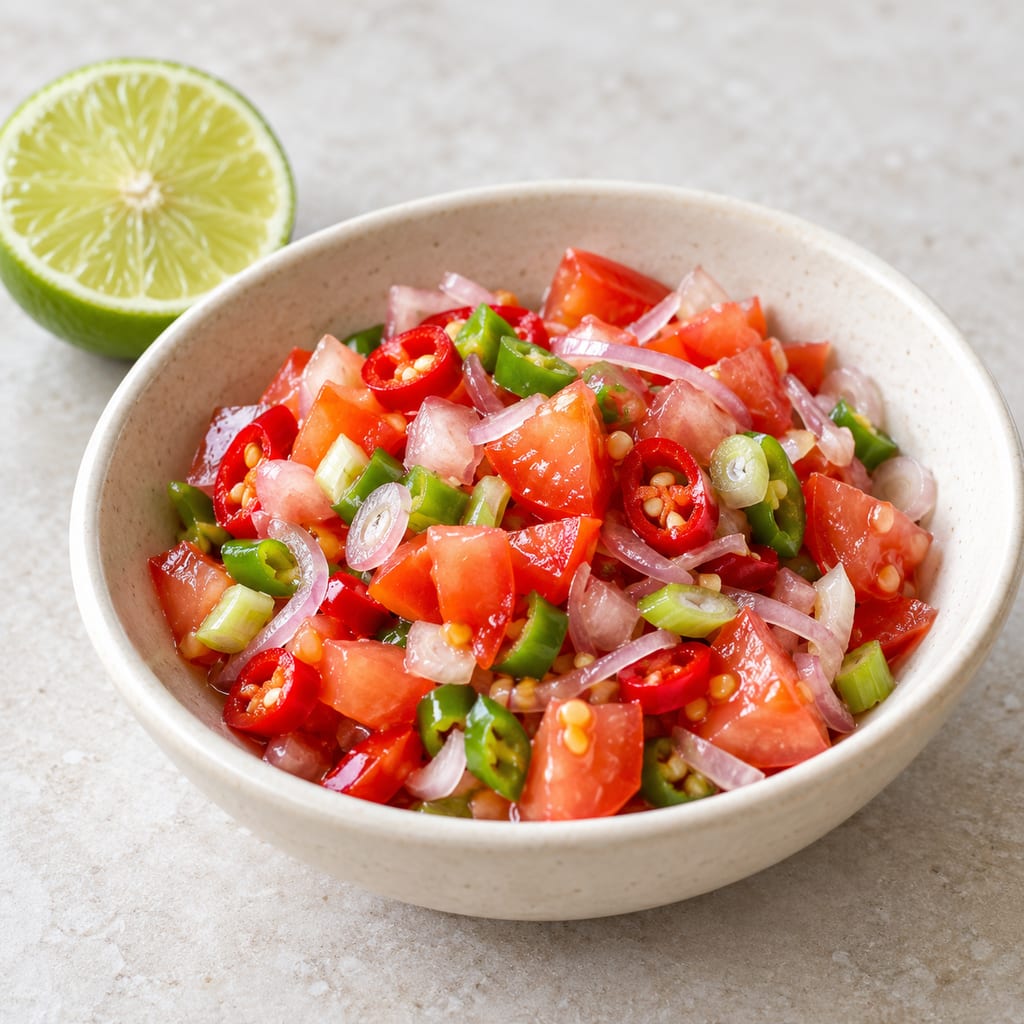
Dabu-dabu is a raw North Sulawesi relish of chopped chillies, shallot, scallion and tomato, dressed with salt and lime juice or coconut oil.
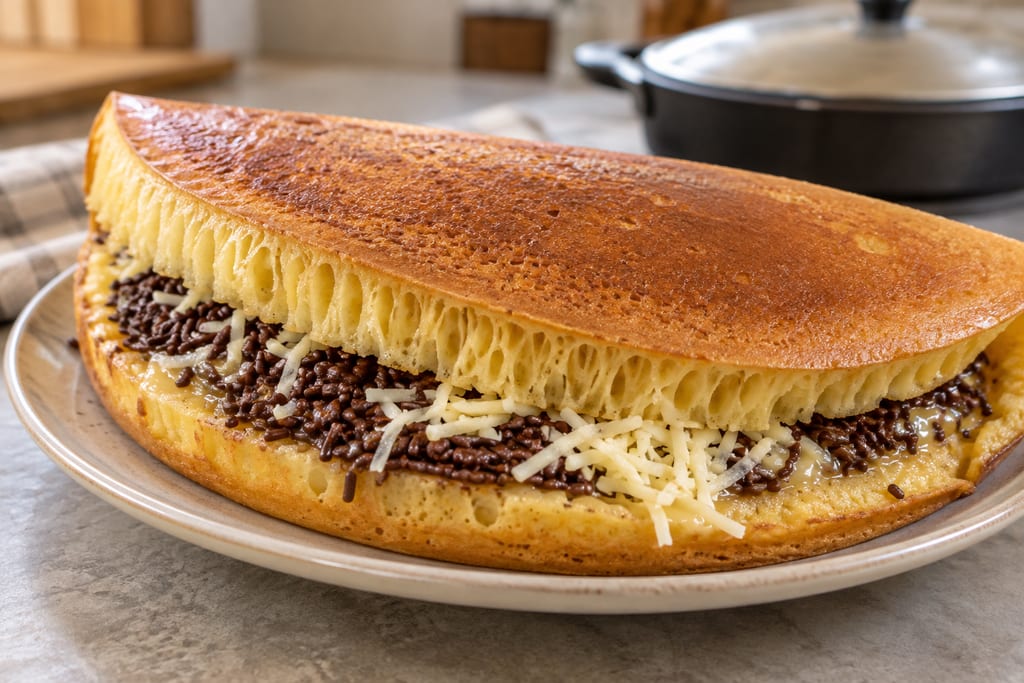
Martabak manis is a thick Indonesian griddle pancake with a porous, honeycomb crumb, cooked under a lid and finished with butter and sweet toppings.
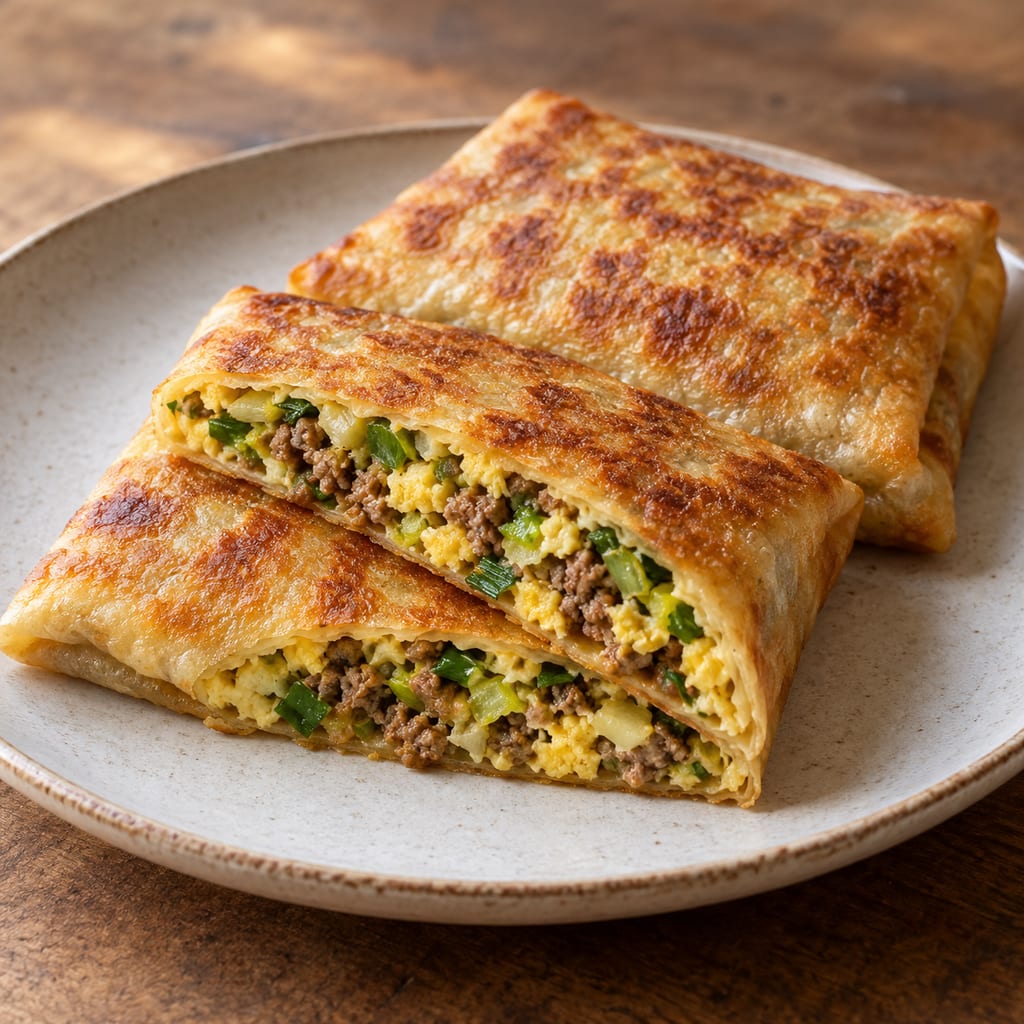
A Javanese-style Indonesian savoury parcel of thin rested wheat dough folded around curry-seasoned beef and egg, then cooked in an oiled skillet.
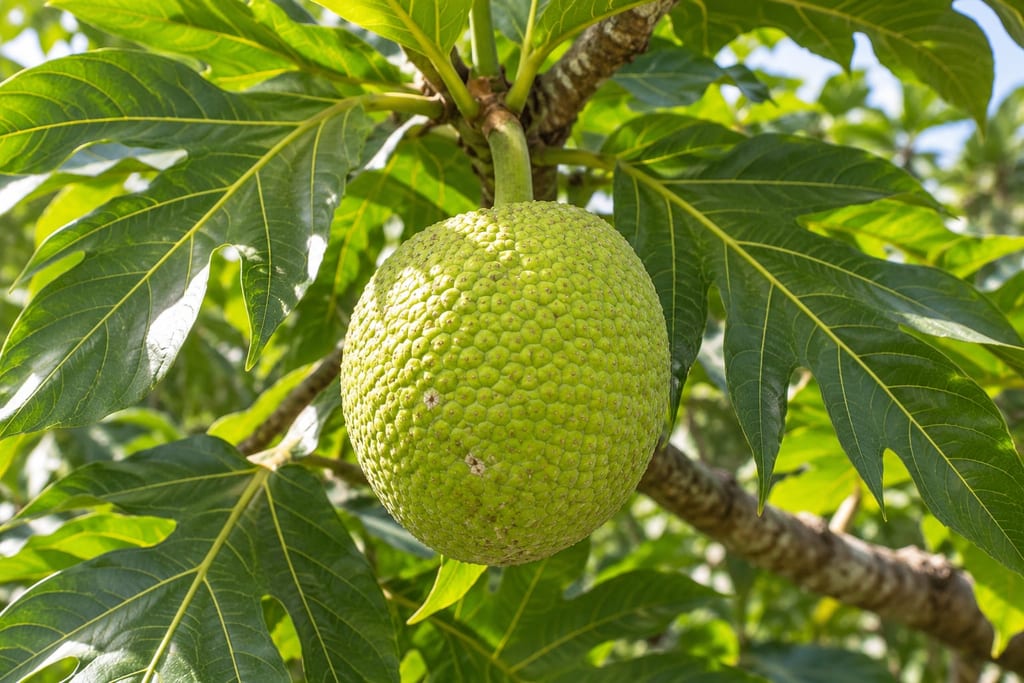
Kosraean preserved breadfruit called furo in a 1919 ethnographic monograph. Two historical pit methods are recorded; the sources give no validated household process.
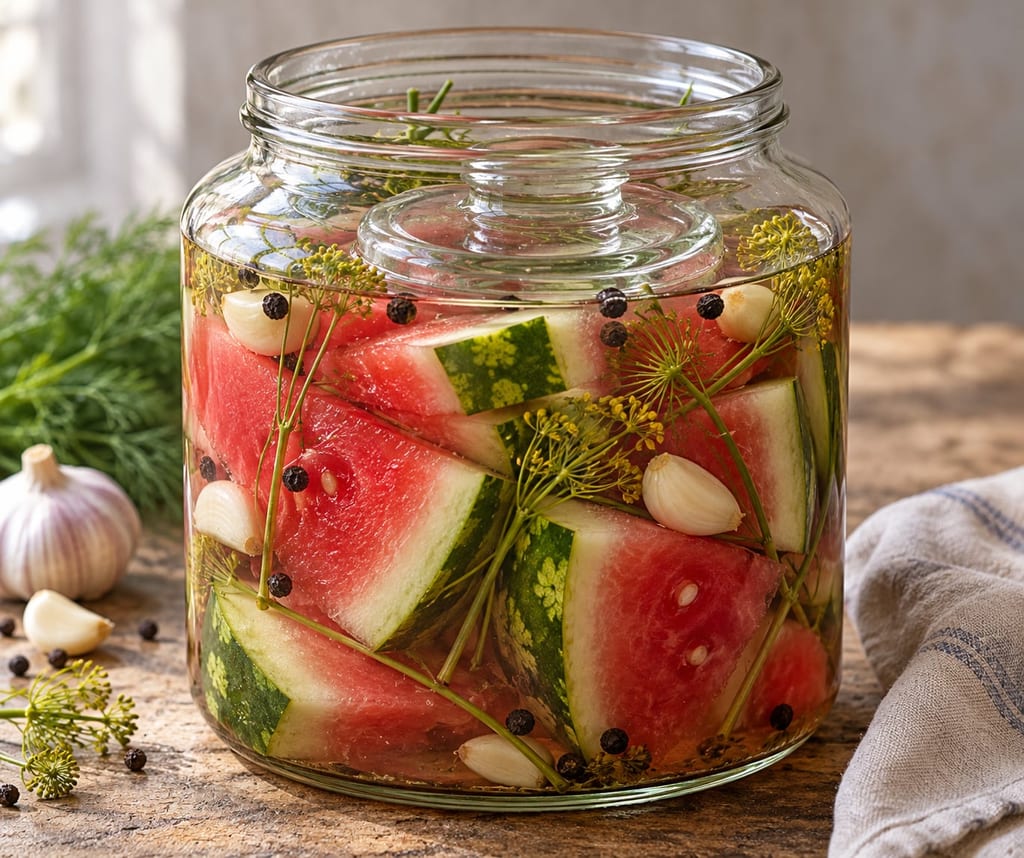
Watermelon pieces with rind ferment in a dill, garlic and pepper brine in a family preparation linked to Kishinev, Moldova.
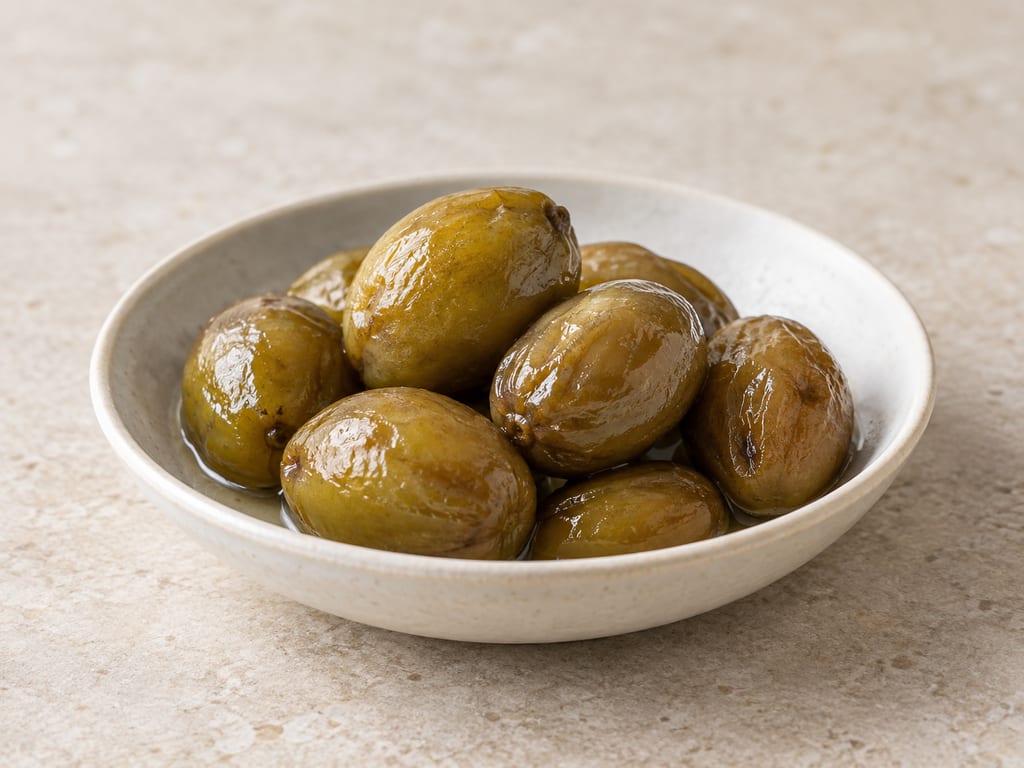
Mature Spanish plums are covered with a 20% volume salt solution and fermented under shade for ten days.

Mochenye yabloki are whole apples held under prepared liquid for several weeks. Russian sources from 1892 and 1959 describe the method. It is not the same as vinegar pickling.
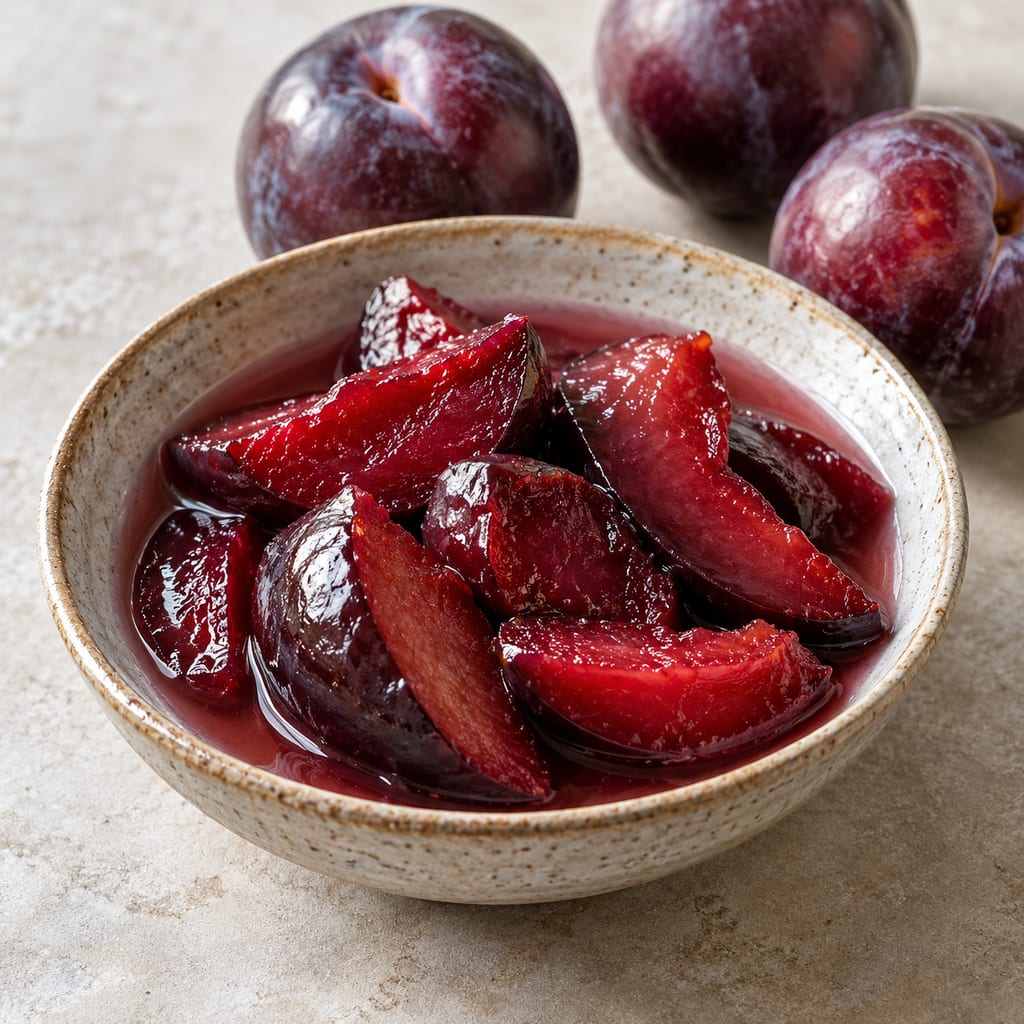
Pitted ripe plums release their own juice under a 2% salt cure, then ferment while weighted below the liquid.
No community contributions have been published for this entry yet.
Sign in to contribute. Published comments and photos are free to read.
Periuk.my; recipe by Tunku Muhammad Tunku FarahatMethod · Geography
Tempoyak: Make fermented durian in no timePeriuk describes tempoyak as a Malay condiment or ingredient and says the fresh durian's sweetness and flavor affect the result. Its batch yields one cup from 250 g durian flesh after seed removal and 5 g non-iodized salt. Directions: rough mash, mix salt evenly, place in an airtight container with lid closed in a cool, dark place for at least 4 days and up to 2 weeks; taste after day 4 with a clean, dry spoon, cover, and continue to preferred flavor. No numeric temperature, validated endpoint or finished-product storage method is given.
Cited in: Durian transformed into a sour condiment; The fruit and its botanical background; Historical and regional context; Why salt is added; The role of durian sugar; Equipment; Method; Regional variations; Culinary uses; What successful fermentation looks like
Journal of Ethnic FoodsGeography · Process · Microbiology · Culinary background
Exploring tempoyak, fermented durian paste, a traditional Indonesian indigenous fermented foodOpen-access 2023 review: Indonesian tempoyak is associated with Malay communities and distinguished from the Malaysian counterpart; it summarizes crushed durian with salt and reported variation in methods, salt amounts, temperature and duration. It reports microbial, sensory and texture findings from earlier studies. Its conditions and study results remain distinct from the Periuk formula and do not validate that household process.
Identifies communities and production areas across Sumatra and Kalimantan, concentrated in South Sumatra and West Borneo; describes ceremonial and gathering uses in some Indonesian communities and Malaysian use as a condiment or ingredient in dishes such as curry and fried rice; repeats an 1836 Terengganu encounter attributed to Hikayat Abdullah.
Cited in: Durian transformed into a sour condiment; The fruit and its botanical background; Historical and regional context; A reported early reference; Why salt is added; The role of durian sugar; How the fermentation works; What the science actually measures; Why tempoyak develops such an unusual aroma; Texture and color; Regional variations; Culinary uses
Jurnal Antropologi: Isu-Isu Sosial Budaya, vol. 19, no. 2 (2017)Geography · Culinary background · History
Makanan Etnik Melayu: TempoyakPalembang-focused article: tempoyak as an accompaniment to rice and a seasoning for foods including brengkes; salted, spontaneous fermentation in a closed vessel; repeats the 1836 Terengganu story attributed to Hikayat Abdullah, not checked against the original.
Cited in: A reported early reference
University of Minnesota ExtensionSafety
Preserving food at home: FermentationGeneral advice on equipment, brine coverage and acidity monitoring; not validation of this recipe.
Cited in: Safety and storage
Atlas ObscuraCulinary background
Atlas Obscura — TempoyakCulinary background and regional use.
Cited in: The fruit and its botanical background; Historical and regional context; Regional variations; Culinary uses
Jaya GrocerCulinary background
Jaya Grocer — Tempoyak Fermented Durian PasteContemporary Malaysian commercial ingredient record.
Cited in: The fruit and its botanical background; Historical and regional context; Regional variations; Culinary uses
Biodiversitas Journal of Biological DiversityMethod · Microbiology
Microbial diversity and fermentation optimization of tempoyak from Durian and Durian LaiThe abstract reports a 2025 response-surface experiment on Durian Lai and regular durian tempoyak. The optimized Durian Lai conditions were 2.46% salt, 1.01% sugar and 2 days; the reported result was pH 5.56. It also reports distinct bacterial communities. These experimental findings are not controls or safety validation for the separate Periuk recipe.
Cited in: How the fermentation works; What the science actually measures; Important findings from recent microbial research