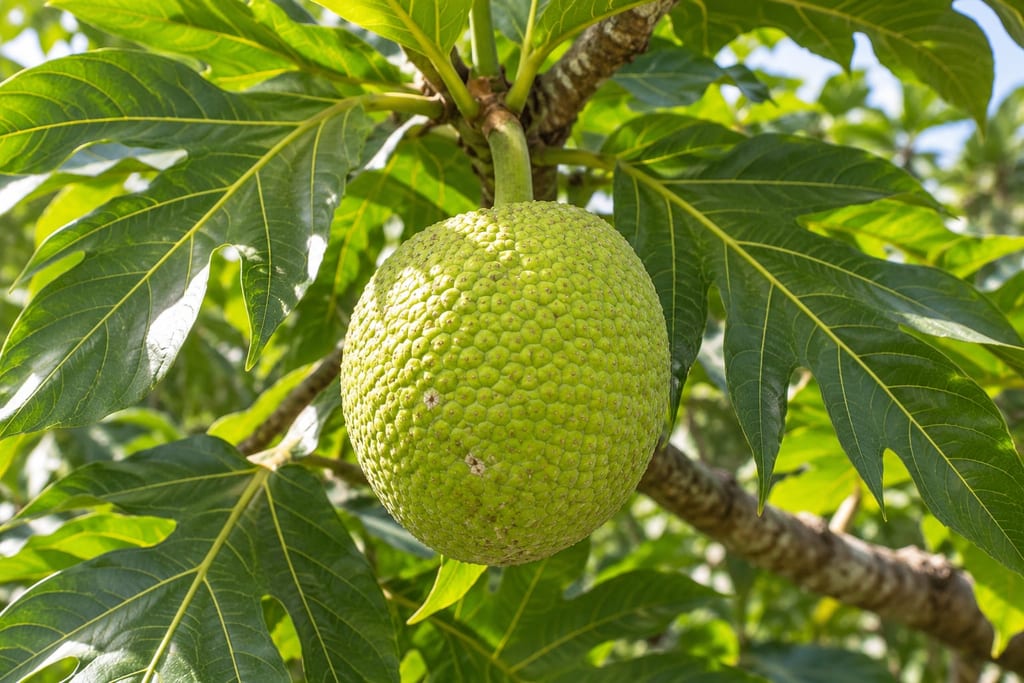
Furo (Kosraean preserved breadfruit)
Kosraean preserved breadfruit called furo in a 1919 ethnographic monograph. Two historical pit methods are recorded; the sources give no validated household process.
 FermenteaWhere food goes to change
Modern method
Lacto-fermented plums
Pitted ripe plums release their own juice under a 2% salt cure, then ferment while weighted below the liquid.
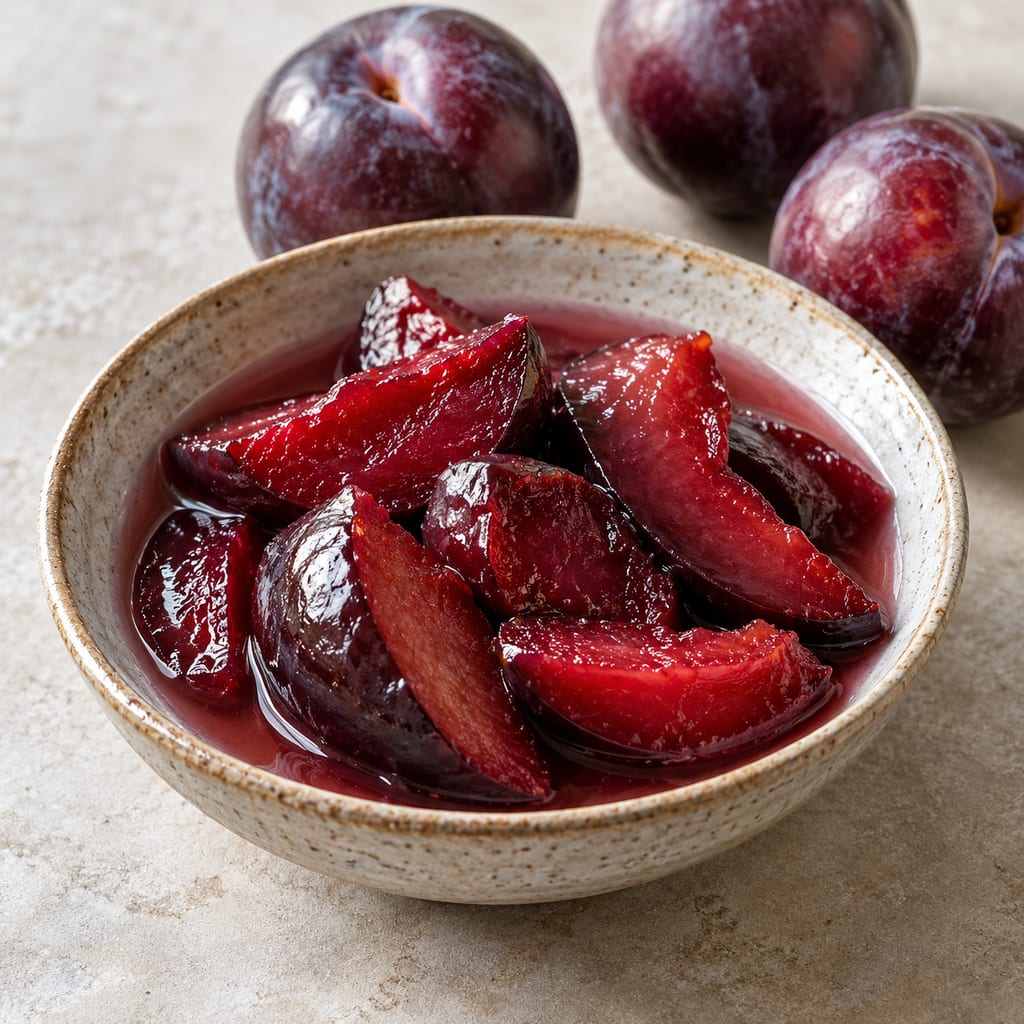
Salt-fermented plums are ripe plum pieces preserved through lactic-acid fermentation in their own expressed juices.
Unlike plums preserved in sugar syrup, alcohol or vinegar, this preparation uses salt and microbial activity to produce its characteristic acidic flavour.
The fruit retains some of its original identity but becomes softer, more aromatic and noticeably sour.
The liquid released during fermentation becomes a valuable ingredient in its own right.
Its flavour can combine fruit sweetness, salt, organic acidity and savoury complexity.
The technique belongs to the modern culinary fermentation movement represented by the Noma fermentation programme.
Although salted plums have long histories in several parts of the world, including East Asia, this exact recipe should not be equated with Japanese umeboshi or other distinct preserved-fruit traditions.
It is a contemporary lacto-fermented preparation using ripe culinary plums.
The recipe calls for firm, ripe plums.
It does not identify a cultivar or botanical species.
Common culinary plums include European plums, Prunus domestica, and Japanese-type plums, Prunus salicina, together with numerous cultivars and hybrids.
The supplied description does not justify assigning the entire recipe exclusively to one species.
The fruit's botanical identity matters because sugar content, acidity, skin structure and flesh firmness differ.
A firm European plum and a very ripe, juicy Japanese-type plum may respond differently to the same salt treatment.
The record should therefore retain plums as the ingredient, with cultivar recorded when known.
Fruit preservation through fermentation, salting and drying has a long global history.
However, distinct products should not be conflated merely because they involve plums.
Japanese umeboshi, for example, is associated with Japanese apricot or ume, Prunus mume, and uses its own established salting and drying traditions.
It is not simply the same recipe made with a different plum cultivar.
The present method comes from a modern culinary fermentation approach in which ripe fruit is salted at a measured proportion and fermented under controlled conditions.
A Spanish-language presentation of the Noma fermentation guide was published in 2019.
That provides a firm date for the documented contemporary recipe.
It does not establish an ancient geographical origin.
Firm ripe plums — 1 kg, after pitting
Non-iodised salt — 20 g
The salt proportion is 2% of the pitted fruit weight.
This is the crucial quantitative relationship.
The original method instructs the cook to weigh the prepared fruit after removing the stones.
For example, if the pitted fruit weighs 950 g, use 19 g salt.
The recipe does not require added water.
The fruit generates its own liquid during the initial salt treatment and fermentation.
Use a clean, food-grade fermentation container.
The documented method suggests a Fido-style jar with the rubber sealing gasket removed so that fermentation gas can escape.
A suitable fermentation weight is necessary to keep the fruit beneath its expressed liquid.
A clean strainer or muslin cloth is useful when separating the finished fruit and brine.
Accurate scales are particularly important because salt is calculated as a percentage of fruit weight.
Choose plums that are ripe but still firm.
Reject mouldy or rotten fruit.
Very soft, extensively bruised plums may behave differently from the firm fruit intended in the recipe.
Wash under cold water without excessive abrasion.
The skins are retained.
Halve the plums lengthwise.
Remove the stones carefully.
Cut the fruit into similarly sized wedges.
The documented method divides each plum into approximately eight pieces, depending on its size.
Uniform pieces make the physical fermentation process more consistent.
Weigh the fruit after the stones have been removed.
Calculate salt at 2% of this weight.
For 1 kg pitted plums, use 20 g salt.
Do not calculate against the unprepared fruit weight, including stones.
That would change the actual salt proportion.
Place the plum pieces in a clean bowl.
Add the measured salt.
Mix thoroughly so the salt is distributed across the fruit.
Transfer all the fruit, juice and salt into the fermentation container.
Do not leave valuable liquid or undissolved salt behind in the bowl.
The salt will begin drawing water from the fruit cells.
As liquid accumulates, it forms the brine in which the fermentation occurs.
Place a clean fermentation weight above the plum pieces.
As the fruit releases juice, keep the solids beneath the liquid.
The original method suggests a food-safe water-filled bag as a practical alternative.
If using this arrangement, prevent leakage or contamination.
Submersion reduces unnecessary oxygen exposure at the fruit surface.
It does not eliminate every possible food-safety hazard.
The documented controlled process uses 28°C.
At that temperature, the recorded method describes approximately five days to the preferred culinary endpoint.
At lower temperatures, fermentation may take longer.
No universal alternative time-temperature relationship is supplied.
The recipe does not establish a single endpoint measured by pH, titratable acidity or microbial count.
The original culinary method uses flavour development, but such sensory assessment is not sufficient on its own to validate food safety.
When the fermentation has reached an appropriate endpoint and the batch is satisfactory under applicable safety controls, strain the fruit from the liquid.
Collect both separately.
The original recipe reports approximately 100–125 ml of extracted fermented liquid from its one-kilogram batch.
This should not be represented as a guaranteed yield.
Plum variety, ripeness, cutting and handling can change the amount of juice released.
Transfer the fruit and brine into clean containers.
Refrigerate.
The original culinary source suggests approximately one week under refrigeration before significant changes in quality.
This is a recipe author's storage recommendation, not a validated universal shelf life.
Freezing the fruit and brine separately is another documented storage option.
Fresh plum cells contain water, sugars, acids, pigments and other soluble substances.
When salt contacts the cut fruit, it dissolves in surface moisture.
This changes the chemical potential of water across plant tissues.
Water moves out of cells and into the increasingly salty surrounding liquid.
The fruit gradually softens.
The released juice contains both water and soluble flavour compounds.
As fermentation proceeds, this liquid becomes more acidic and complex.
Unlike vegetables fermented in an added brine, the quantity of liquid depends substantially on the fruit itself.
This is why starting ripeness and cultivar matter.
Plums naturally contain sugars that microorganisms can metabolise.
Lactic-acid bacteria can transform these sugars into organic acids.
Yeasts can also grow in fruit-associated environments and may generate ethanol and carbon dioxide.
The relative contribution of lactic-acid bacteria and yeasts depends on the initial microbial population, fruit composition, salt, temperature and oxygen exposure.
A high natural sugar content makes fruit fermentation particularly sensitive to competition between different microbial pathways.
A plum fermentation can therefore develop acidity while also producing some alcohol.
The original recipe does not report a measured alcohol concentration.
It should not be labelled alcohol-free without testing.
The salt quantity is defined relative to the prepared fruit.
This differs from a brine recipe measured as grams of salt per litre of added water.
Salt affects microbial competition and the movement of water out of the fruit.
However, 2% added salt does not automatically establish shelf stability.
The actual safety of the process depends on acidity development, temperature, microbial conditions and handling.
The 2% figure should not be interpreted as a guarantee against all undesirable microorganisms.
It is a documented formulation within a particular culinary method.
Plums already contain natural organic acids before fermentation.
Their starting acidity varies by cultivar and ripeness.
Fermentation introduces additional acidity through microbial metabolism.
This means the final sourness reflects both the original fruit composition and the new acids produced during fermentation.
A naturally sour plum may taste sharply acidic even before significant fermentation has occurred.
Taste therefore cannot reliably distinguish initial fruit acidity from successful microbial acidification.
pH measurement can help evaluate the finished product, but it must be interpreted within the wider safety context.
Fresh plums contain cell-wall materials that hold the flesh together.
Salt draws water from the tissues, and fermentation changes the chemical environment.
The fruit softens as its cells lose turgor.
Enzyme activity can also affect pectin-associated structures and other components of the flesh.
The final texture depends on ripeness, cultivar, piece size and fermentation duration.
Firm ripe fruit is recommended because it is more likely to retain recognisable pieces.
Overripe fruit may become excessively soft or disintegrate during handling.
The preferred result is not a completely liquefied fruit mash.
The finished fruit combines its original aromatic compounds with products of fermentation.
Salt can make the perceived sweetness more complex.
Acidity brightens the flavour, while microbial metabolism can contribute additional notes.
The result may taste both recognisably like plum and substantially different from fresh fruit.
The brine can develop a concentrated balance of sweetness, salt and acid.
This makes it particularly useful as a seasoning liquid.
The exact flavour cannot be predicted from the weight of salt alone.
Umeboshi is a Japanese preserved fruit made from ume, Prunus mume, traditionally involving salting and often drying.
The raw material is different from the culinary plums used here.
Its salt practices, processing history and flavour expectations are also different.
Other preserved plum traditions involve sugar, alcohol, vinegar or long-term curing.
These are legitimate culinary relatives but not exact equivalents.
This modern salt-fermented plum recipe should therefore remain a distinct database record.
Its geographical location should remain unknown or contemporary rather than being assigned an invented traditional homeland.
The finished plum pieces can accompany salads, cheese and other dishes that benefit from a combination of fruit sweetness and acidity.
The original culinary application includes serving the fruit with mozzarella or burrata.
Creamy cheese contrasts particularly well with the salty-sour plum.
The fruit can also be used in salads containing green leaves, nuts or other contrasting textures.
The fermented brine can function as an ingredient in a vinaigrette.
Its acidity is variable, so it should be tasted and adjusted as a culinary dressing rather than treated as standard-strength vinegar.
It can add flavour to cold soups and other savoury preparations.
The fruit itself can be chopped into a relish-like accompaniment.
The fruit releases little juice: Variety, ripeness and cutting affect extraction.
Fruit pieces float above the brine: Maintain appropriate submersion.
The liquid becomes bubbly: Gas production may accompany fermentation.
A surface film develops: Do not assume an unidentified growth is harmless.
Visible mould: Discard the batch.
The plums become excessively soft: The starting fruit may have been too ripe, or the batch may have progressed beyond the desired texture.
The flavour becomes alcoholic: Yeast fermentation may be significant. Alcohol content cannot be inferred reliably from taste.
The acidity remains uncertain: Use appropriate measurement rather than relying exclusively on the starting sourness of the fruit.
The documented process gives 2% salt by pitted fruit weight and approximately five days at 28°C.
Those numbers describe a culinary formulation, not a professionally validated universal safety specification.
The recipe requires accurate weighing, clean equipment and careful management of the fermentation environment.
The original source's advice about removing a white surface film must not be interpreted as a guarantee that unidentified microbial growth is harmless.
Refrigerate or freeze after fermentation.
The one-week refrigerated period mentioned in the original culinary method is not an independently established food-safety limit.
The article attributes the method to Noma’s contemporary fermentation guide; it is a modern recipe, not a regional tradition.
Scaling: source batch only
Contaminated equipment or uncontrolled fermentation can compromise the batch; the recipe is not professionally validated.
Hazard sourceUse clean food-grade equipment and follow the source method. Recipe-specific validated limits are not supplied; do not treat taste or appearance as proof of safety.
Control sourceThe source’s approximately one-week refrigerated storage suggestion is not an independently validated safety period.
Unknown documented preparation location. This modern restaurant-derived method is not presented as a traditional regional recipe.
Kosraean preserved breadfruit called furo in a 1919 ethnographic monograph. Two historical pit methods are recorded; the sources give no validated household process.
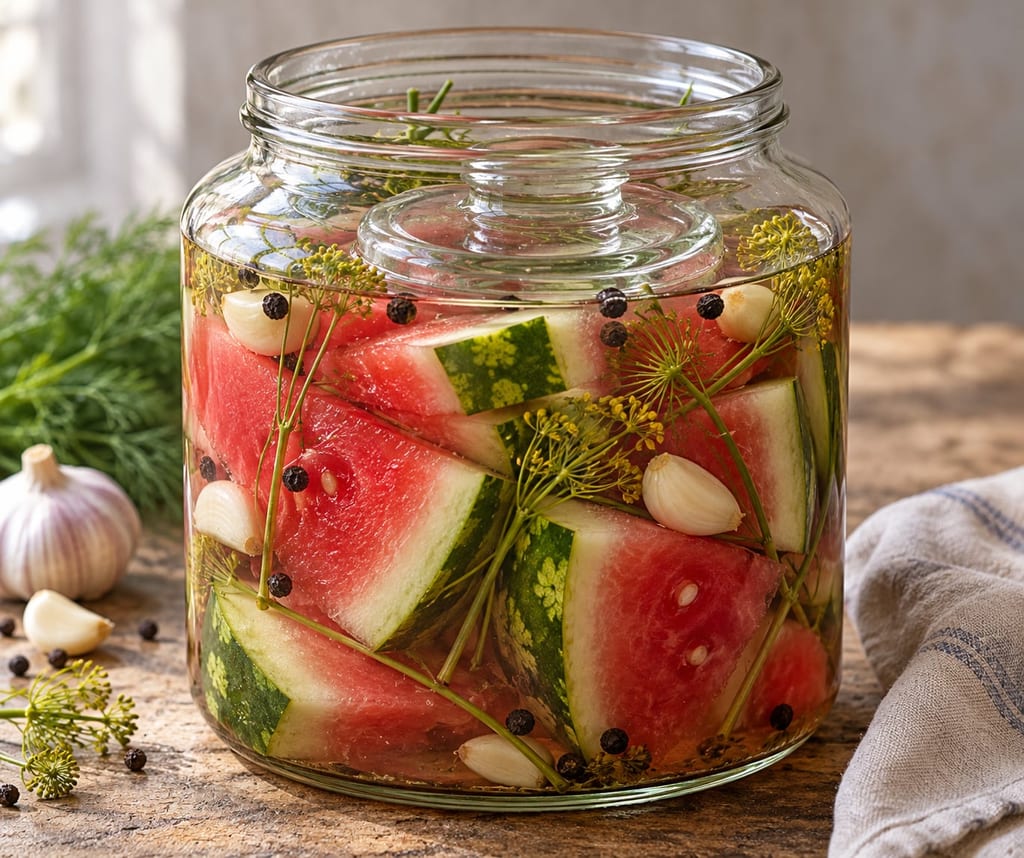
Watermelon pieces with rind ferment in a dill, garlic and pepper brine in a family preparation linked to Kishinev, Moldova.
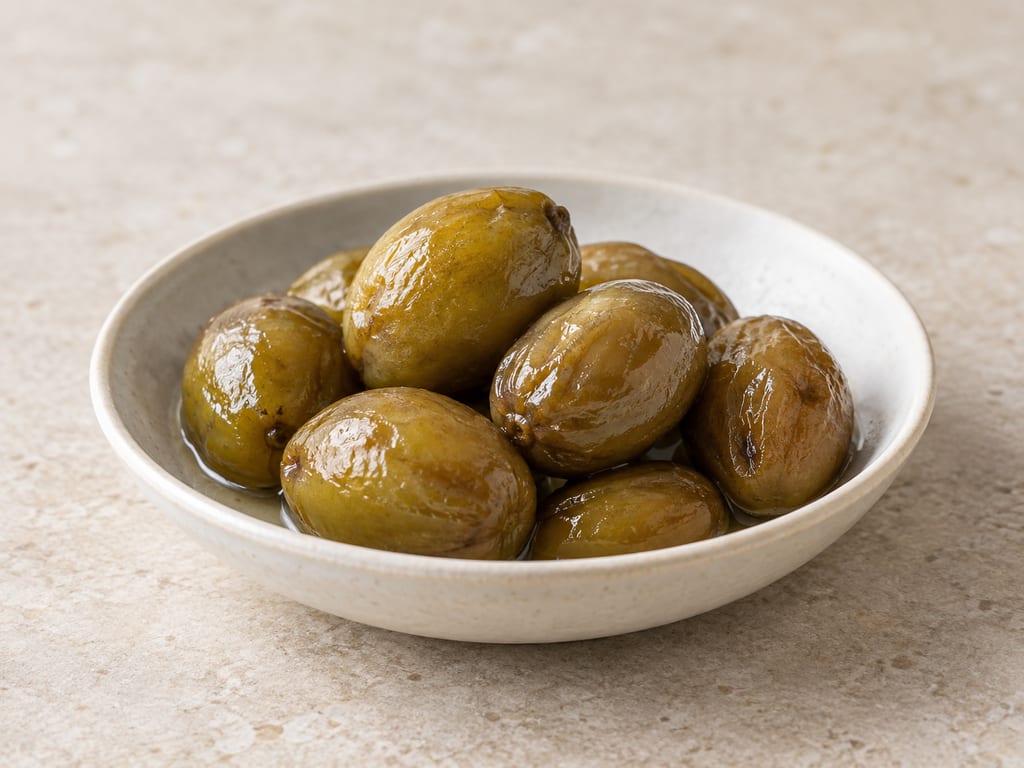
Mature Spanish plums are covered with a 20% volume salt solution and fermented under shade for ten days.
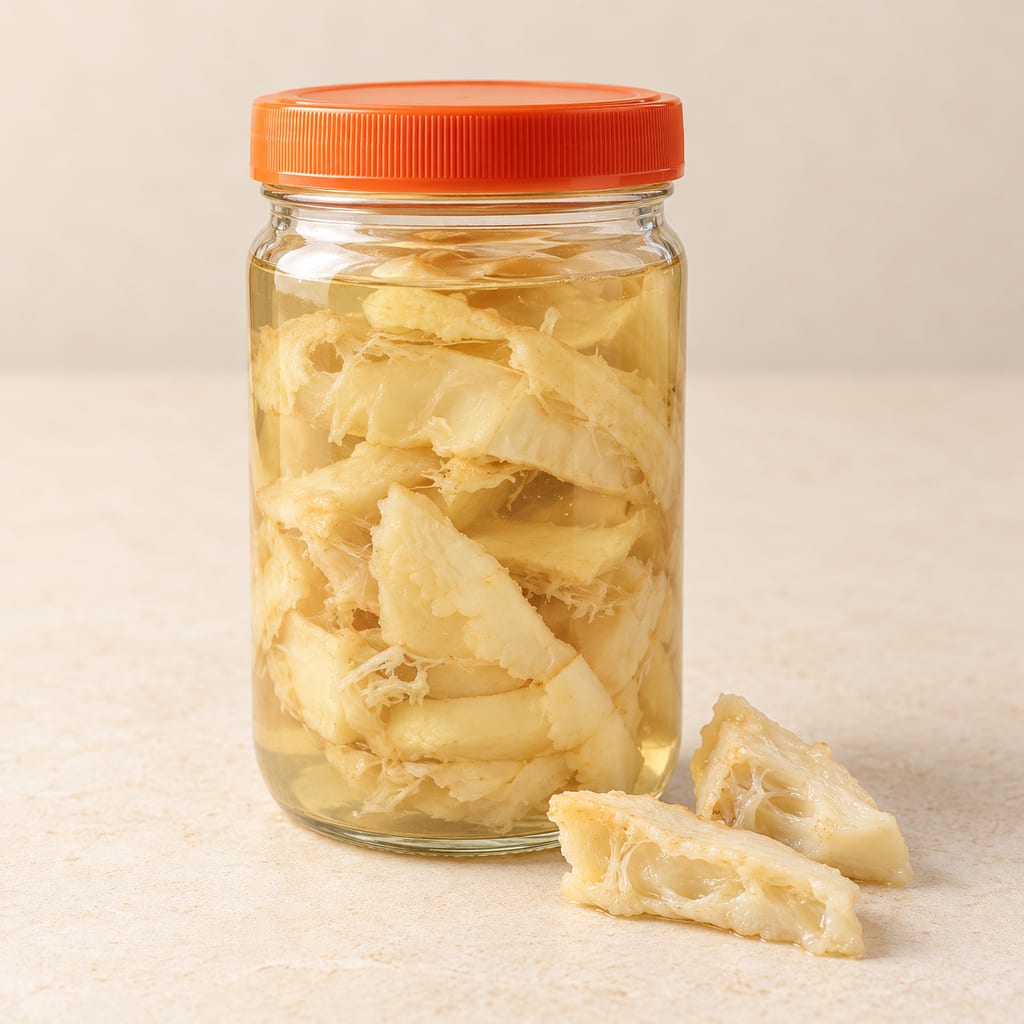
Cempedak inner rind is cut, salted and submerged in water for a short spontaneous fermentation used in Kalimantan home cooking.

Mochenye yabloki are whole apples held under prepared liquid for several weeks. Russian sources from 1892 and 1959 describe the method. It is not the same as vinegar pickling.
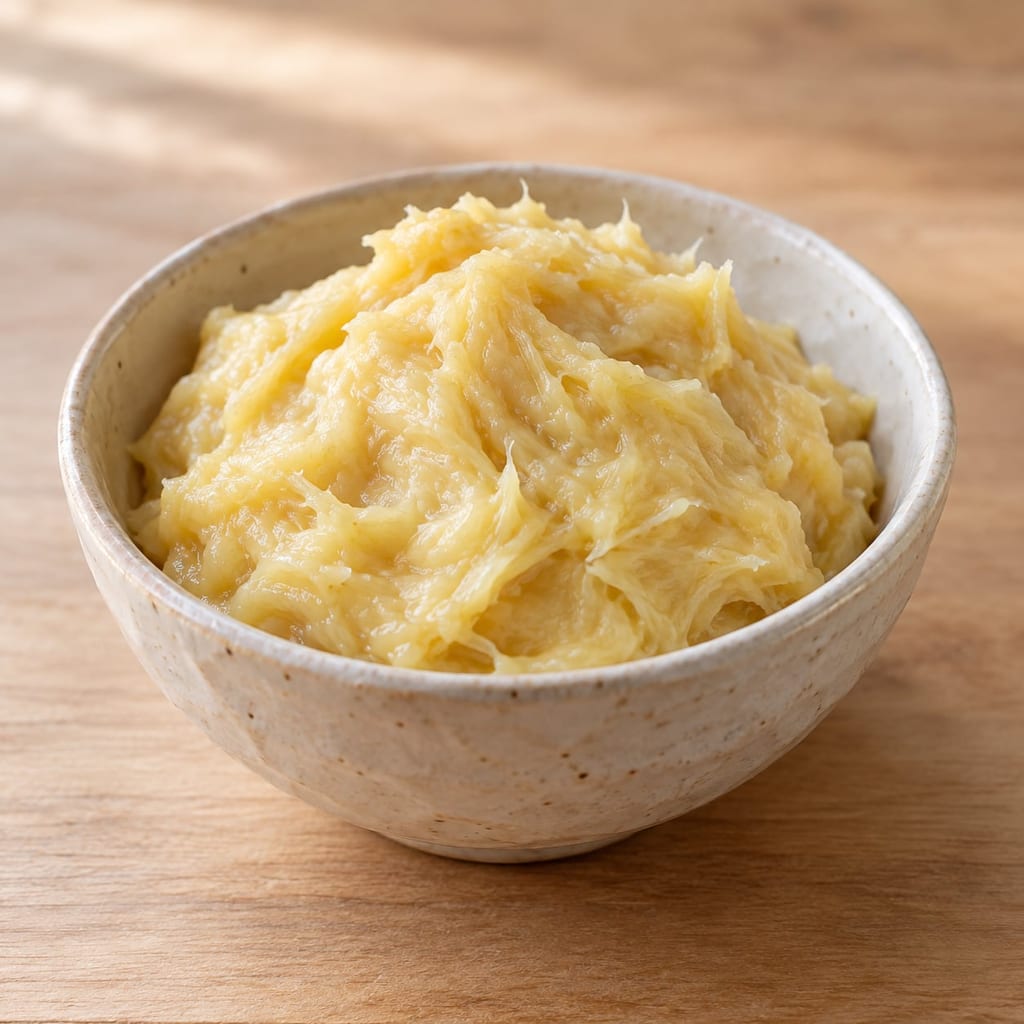
Durian flesh is mashed with salt and fermented in a covered container as a Malay condiment or cooking ingredient.
No community contributions have been published for this entry yet.
Sign in to contribute. Published comments and photos are free to read.
El País / El Comidista; recipe by Mònica EscuderoInspiration
Cuatro fermentados del libro de Noma y cómo integrarlos en tu cocinaNoma method; 1 kg plums, 2% salt, weight, 28°C schedule, approximate liquid yield and cold storage.
Cited in: What are salt-fermented plums?; Naming and botanical identity; Historical context; Ingredients; Equipment; Stage 1 — Select the fruit; Stage 2 — Cut and pit; Stage 3 — Weigh the prepared fruit; Stage 4 — Mix with salt; Stage 5 — Weight the fruit; Stage 6 — Ferment; Stage 7 — Separate fruit and brine; Stage 8 — Refrigerate or freeze; The role of fruit acids; Serving fermented plums
University of Minnesota ExtensionSafety
Preserving food at home: FermentationGeneral advice on equipment, brine coverage and acidity monitoring; not validation of this recipe.
Cited in: Ingredients; Equipment; Stage 1 — Select the fruit; Stage 2 — Cut and pit; Stage 3 — Weigh the prepared fruit; Stage 4 — Mix with salt; Stage 5 — Weight the fruit; Stage 6 — Ferment; Stage 7 — Separate fruit and brine; Stage 8 — Refrigerate or freeze; Serving fermented plums; Troubleshooting; Safety
The Noma Guide to FermentationReference
The Noma Guide to Fermentation — Publisher InformationCited by the written account of this record.
Cited in: Ingredients; Equipment; Stage 1 — Select the fruit; Stage 2 — Cut and pit; Stage 3 — Weigh the prepared fruit; Stage 4 — Mix with salt; Stage 5 — Weight the fruit; Stage 6 — Ferment; Stage 7 — Separate fruit and brine; Stage 8 — Refrigerate or freeze; Serving fermented plums
Penn State ExtensionReference
Penn State Extension — Research-Based Vegetable Fermentation GuidanceCited by the written account of this record.
Cited in: Ingredients; Equipment; Stage 1 — Select the fruit; Stage 2 — Cut and pit; Stage 3 — Weigh the prepared fruit; Stage 4 — Mix with salt; Stage 5 — Weight the fruit; Stage 6 — Ferment; Stage 7 — Separate fruit and brine; Stage 8 — Refrigerate or freeze; Why salt extracts plum juice; The fermentation microbiology; Why 2% salt matters; What happens to the texture?; Flavour development; Regional comparisons: why this is not umeboshi; Serving fermented plums; Troubleshooting; Safety