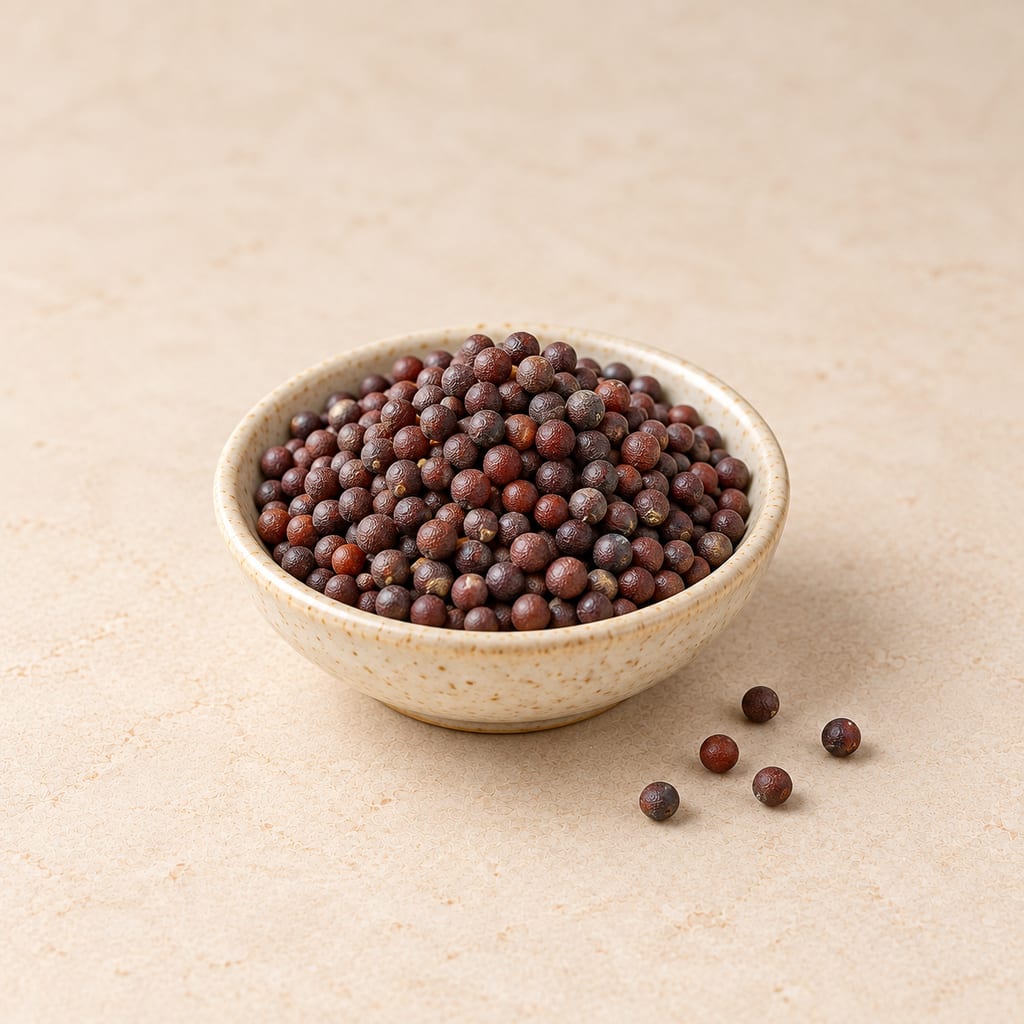
Black mustard seed
Black mustard seed is the small, dark, very pungent seed of Brassica nigra, the hottest of the three mustards. It gives its bite through sinigrin, which turns into allyl isothiocyanate when the crushed seed meets water.
 FermenteaWhere food goes to change
Spices and aromatics
White or yellow mustard seed comes from Sinapis alba, the mildest of the three mustards and the one behind American yellow mustard. Its pale seed is also prized by sausage makers and picklers.
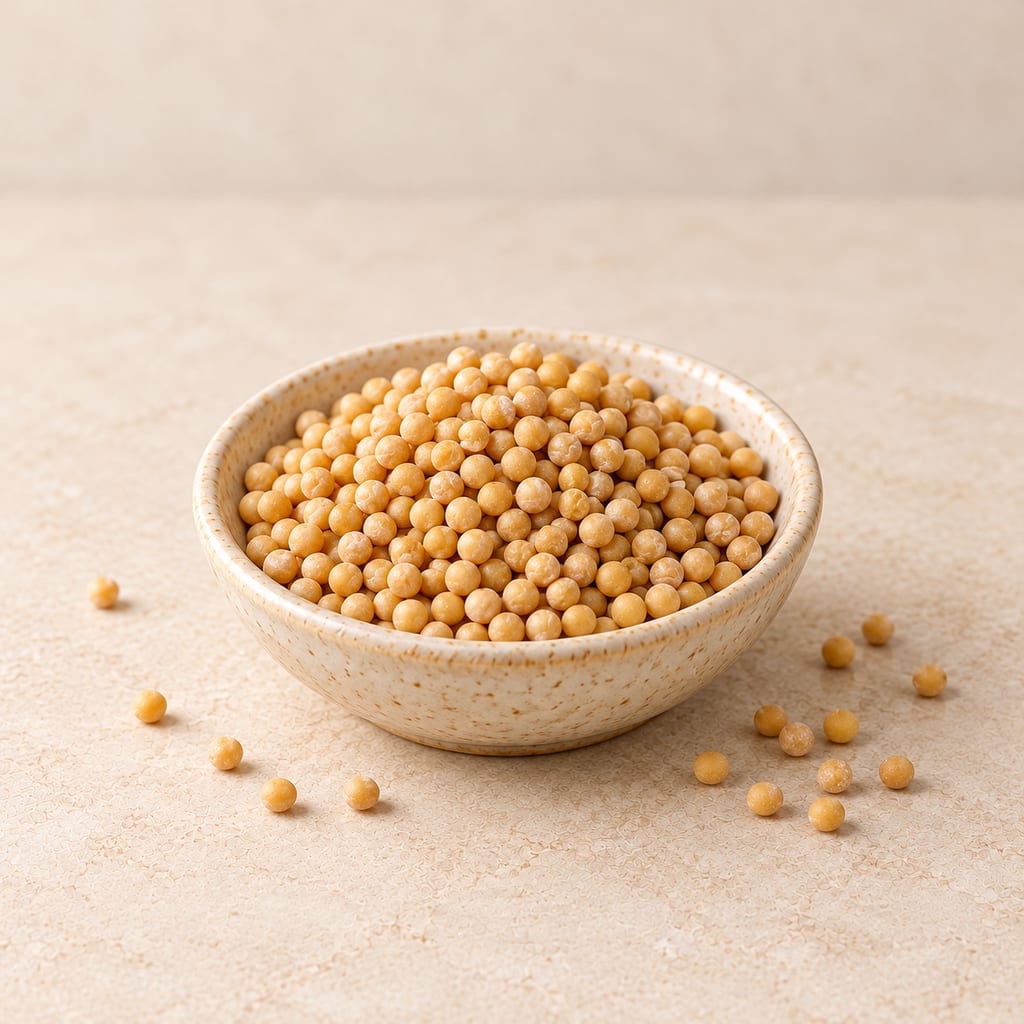
White mustard and yellow mustard are the same plant, Sinapis alba L., a relative of the cabbage and rapeseed genus Brassica that older books file as Brassica hirta or Brassica alba. White is the name of the species, yellow the colour of the seed that trade and kitchen prefer: the seeds are light straw yellow, yellow to yellowish-brown according to another description, and they give off an odour only when mixed with liquid. They are slightly larger than the seeds of black and brown mustard. Crop guides count about 100,000 seeds to the pound for yellow mustard and about 200,000 for brown and oriental types.
It is the mildest of the three mustards and the lowest in oil. Yellow varieties averaged about 24% oil in North Dakota trials, against about 35% for brown and oriental varieties, and plants are shorter and earlier maturing than brown. The seed is high in protein and low in starch. Lietzow's review calls it milder in taste than the other mustard species, and says its seeds are often used for pickling gherkins or mixed pickles and in sausages. The Agricultural Marketing Resource Center says its major market is the North American condiment industry.
The species is believed to be native to the Mediterranean. In Europe it is the most used mustard species, and in North America it is the only species in commercial production for food processing and condiments. Yellow mustard supplies about 90% of Upper Midwest production, according to the Wisconsin and Minnesota crop manual, which also notes that the plant is called Sinapis alba in Europe. More than 100 varieties are listed in the catalogue of agricultural plant species cited by the toxicology review, differing in earliness, nematode resistance and glucosinolate or erucic acid content.
Mustard seed has been used since antiquity. The first known cultivation and use of mustard plants is dated by the toxicology review to about 3000 BC, and the Wisconsin and Minnesota manual says ancient Greeks and Romans used the seed as paste and powder. Pliny the Elder, in the first century AD, called mustard the sharpest in taste and the most fiery in effect and said that it needed no cultivation. None of these accounts names the species, so they speak for mustard seed in general.
The North American crop is recent. Mustard supplies from western Europe were disrupted during the Second World War, and California and Montana were the main producers until the early 1950s. Upper Midwest production began in the early 1960s, and Canadian production rose for about twenty years and peaked in the mid-1980s; Alberta, Manitoba and Saskatchewan now grow a large share of the world's crop. The manual lists the yellow varieties that built the trade: Kirby, released in 1970 by Colman Foods, Gisilba and Ochre, and Tilney, released in 1978 and prized by processors for its high mucilage. France was the largest consumer, at 1.5 pounds a year per person, and bought about 70% of the Canadian crop, in the manual's older figures.
The best-known product of the yellow seed is American ballpark-style mustard, made from the white seed blended with vinegar and spices and usually coloured with turmeric. Add vinegar to a ground mixture of black and white seed and the result is a milder German-style blend. White mustard seed is also pressed for oil, which has served as a lubricant and for lighting, and more recently as a feedstock for biodiesel.
Every mustard seed keeps a glucosinolate and an enzyme apart until the seed is crushed. Black and brown seed hold sinigrin, which becomes the sharp, volatile allyl isothiocyanate. White mustard holds sinalbin instead, which myrosinase turns into 4-hydroxybenzyl isothiocyanate. That isothiocyanate contributes to the irritating odour and sharp flavour of the seed, but in water it is hydrolysed to 4-hydroxybenzyl alcohol, so the sting does not last. At physiological pH, between 5 and 7, sinalbin decomposes mainly to 4-hydroxybenzyl alcohol and the thiocyanate ion; in acid conditions a nitrile, 4-hydroxybenzyl cyanide, forms as well. A study of mild yellow mustard found 2-(4-hydroxyphenyl)acetonitrile as the main degradation product in ground seed and 4-(hydroxymethyl)phenol the most abundant in the finished paste.
The seed holds plenty of sinalbin: reports range from 165 to 250 micromoles per gram, and another gives 16.6 to 46.2 grams per kilogram of fresh seed within a glucosinolate total of 45.4 to 61.9. Its myrosinase is the least active of the three mustards, at 0.63 units per millilitre in one comparison, against 1.50 for black and 2.75 for brown. Research on white mustard seed myrosinase found an optimum temperature near 60 degrees Celsius, with activity falling at higher temperatures and depending on pH and ascorbic acid.
The yellow seed does work that has little to do with heat. North Dakota extension guidance says yellow mustard is used mainly in the meat packing industry as an aid to flavour, emulsification and texture in processed meats such as hot dogs and bologna. The Wisconsin and Minnesota manual says yellow mustard flour serves as an emulsifier and stabilizer in sausage, and that dry mustard seasons mayonnaise, salad dressings and sauces. A review of white mustard describes it as widely used as a binding agent and protein extender in meat processing and for hot dog mustard, mayonnaise and salad dressings. Its seed has a high protein and oil content and low starch, and its amino acid profile is described as well balanced.
The seed coat carries mucilage, a gel-forming carbohydrate, and processors have bred for it: the variety Tilney was released in 1978 and valued for high mucilage. Seed oil from white mustard is rich in erucic acid, at 32.8 to 60.3% of fatty acids in the range reported, a high content that the review calls a property of white mustards particularly from Europe, while the highest oleic acid content is found in oils from North and South America.
For picklers the seed is a classic. The toxicology review says white mustard seeds are often used for pickling gherkins or mixed pickles and for making sausages. The same review notes that unprocessed whole seed is also used as a seasoning in several dishes, and that mustard flour is made from ground, peeled, non-degreased seed.
Sinalbin's breakdown products are antimicrobial, and the white mustard literature says the seeds have strong disinfectant properties and can serve as a food preservative, and that the essential oil is antimicrobial. That is a statement about extracts and concentrations, not about a spoonful in a jar, but studies have started to show what mustard seed does inside living ferments.
The processing review reports that white mustard powder scored better in sensory evaluation than black or brown when added to meat products, and that in fermented sausage mustard seed improved storage stability by promoting phenolic acid production, lowering the redox potential and raising antioxidant activity. A study of nitrite-free organic fermented sausage found that native or autoclaved mustard seed combined with acid whey lowered the pH during fermentation and kept lipid oxidation over 90 days of vacuum storage similar to a nitrite-cured control; the abstract does not name the species. The review also reports that mustard seed extract promoted growth of lactic acid bacteria while reducing undesirable microorganisms, and that mustard seed extract improved storage stability and colour of dry-aged pork loin ham.
A Greek household tradition shows the same effect with a related plant. Pears kept in water with seeds of the wild mustard Sinapis arvensis developed more lactic acid bacteria, mainly Leuconostoc mesenteroides, and a lower pH, while Enterobacteriaceae declined. The fruit had higher titratable acidity and phenolic content than pears kept in water alone, and tasters preferred it. The authors suspect oxalic acid. The seed was wild mustard, not white mustard, so the result illustrates what a mustard seed can do in a water-based ferment and does not establish a method for white seed.
White mustard is an annual, cool-season plant with yellow four-petalled flowers that grows up to 100 cm high. It matures in 80 to 95 days depending on the guide, shorter than brown mustard. It tolerates drought and heat well enough for drier soils, is grown in rotation with cereals, and also serves as green manure and fodder. In the Upper Midwest it is seeded at 8 to 14 pounds an acre in spring, and a good small-grain crop follows it. It should not follow other crops that share its diseases, and the manual advises waiting at least four years between mustard crops.
Yellow mustard resists shattering better than brown. Growers straight-combine when maturity is uniform and the crop is free of green weeds, at 12 to 13% seed moisture, and dry the seed artificially; otherwise they swath when 60 to 70% of the seed has turned yellow-green. Seed is stored at 10% moisture or less in one guide and 9% or less in another, with drying air under 150 degrees Fahrenheit. North Dakota trials gave yellow varieties average yields of 1,279 to 1,507 pounds an acre. Old Upper Midwest guidance expected 800 to 900 pounds an acre from growers. Large-seeded yellow mustard has one advantage: wild mustard seed can be separated from it mechanically, which is not possible with brown or oriental seed.
World cultivation of white mustard is estimated at 60,000 to 80,000 hectares a year, producing up to 685,000 tonnes of seed, according to the white mustard review, which puts average yields at 770 to 930 kg per hectare worldwide and 1,500 to 1,800 kg in Serbia. Nepal and Canada led world mustard seed production of all species in 2017.
White mustard is the species with the best-documented allergens. Its 2S albumin Sin a 1 is the major allergen and the best marker for diagnosing sensitisation, and three more are known: Sin a 2, an 11S globulin called cruciferin, Sin a 3, a lipid transfer protein, and Sin a 4, a profilin. Sin a 1 is closely related to Bra j 1 of brown mustard, so people allergic to one mustard are likely to react to another. The proteins resist heat and trypsin digestion, which means cooking and making table mustard do not reduce the allergenic potential. About half the mustard-allergic patients in one report were sensitised to mugwort pollen and to some plant foods.
Mustard made from white seed also contains bisphenol F, a compound structurally similar to bisphenol A. It has been detected in mustard made from Sinapis alba but not in mustard made from Brassica juncea or Brassica nigra, nor in mustard flour. Researchers consider that it forms from sinalbin, which is hydrolysed to 4-hydroxybenzyl alcohol that can dimerise, rather than coming from packaging, and mild mustards had the highest levels: a mean of 3.2 mg per kilogram in 19 mild commercial mustards, against a mean of 1.84 mg per kilogram and a maximum of 8.4 across 61 commercial table mustards. The Swiss food safety office made a rudimentary assessment and found a daily intake of 0.67 mg tolerable for a 60 kg person. No health-based guidance values or legal limits for bisphenol F in food exist, and the review notes that no comprehensive evaluation of risk to humans is available.
The sources read do not date the first cultivation of Sinapis alba, and the Roman mustard they describe is not tied to a species. The white mustard review gives world area and yield figures that cover a mix of mustard in some tables and white mustard in others, so they are indicative only. The Upper Midwest manual dates from the early 1990s. No source gives a shelf life for the whole seed.
mustard
White mustard is believed native to the Mediterranean; no single site of first cultivation is claimed.
Yellow mustard is about 90% of Upper Midwest mustard production and the main type grown in North Dakota.
Canada is one of the largest mustard producers; the sources do not give the white-mustard share.
Black mustard seed is the small, dark, very pungent seed of Brassica nigra, the hottest of the three mustards. It gives its bite through sinigrin, which turns into allyl isothiocyanate when the crushed seed meets water.
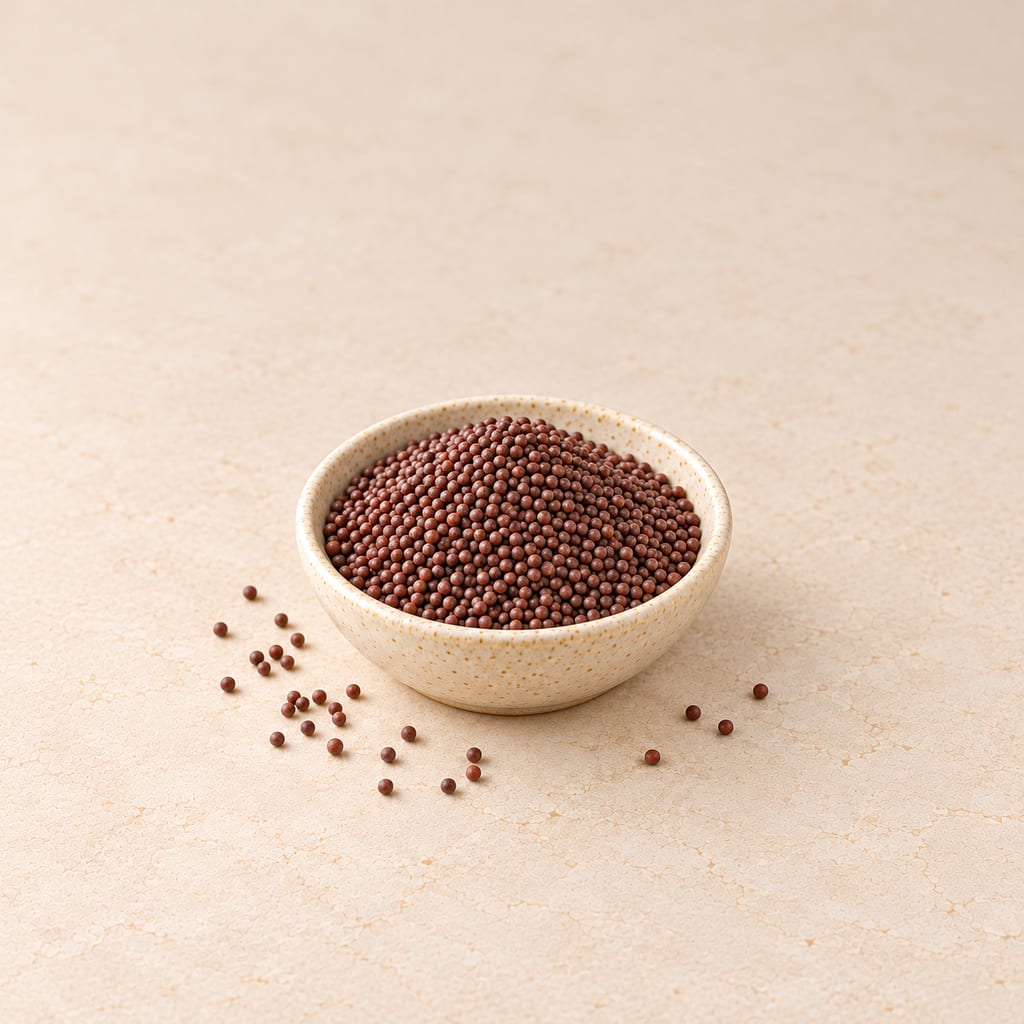
Brown or oriental mustard seed comes from Brassica juncea, a hybrid of black mustard and turnip rape. It is the hot, easily harvested seed behind Dijon, spicy brown mustards and much of the mustard oil of the Indian subcontinent.

A refined common-wheat flour blended for a broad range of baking; its protein and behavior vary with wheat, milling and market.

Toasted almonds are whole sweet almond kernels dry-roasted until golden to brown. Heat replaces their marzipan note with a roasted, nutty one; they thicken and flavour romesco.
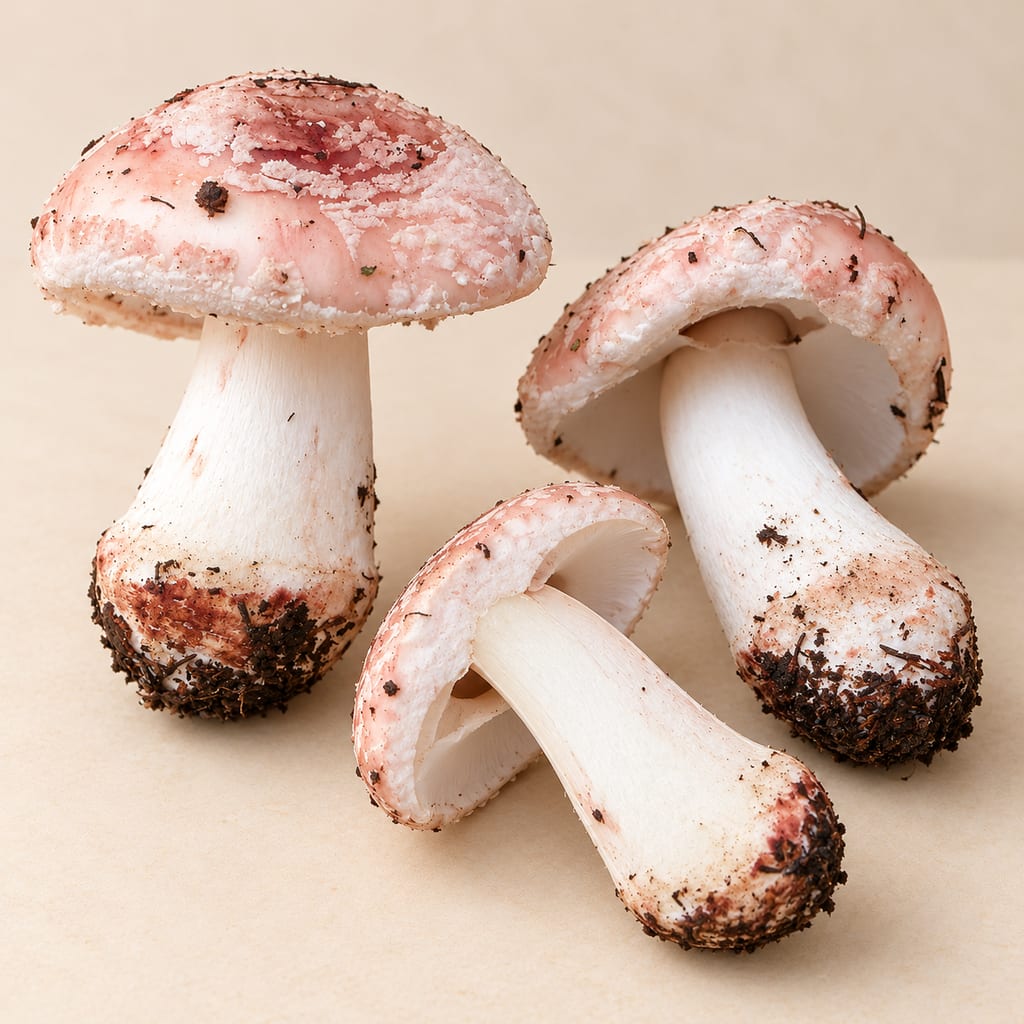
Amanita novinupta is a western North American blusher, a forest mushroom recorded as food in Mexico, and one that must be cooked because its raw flesh is toxic.
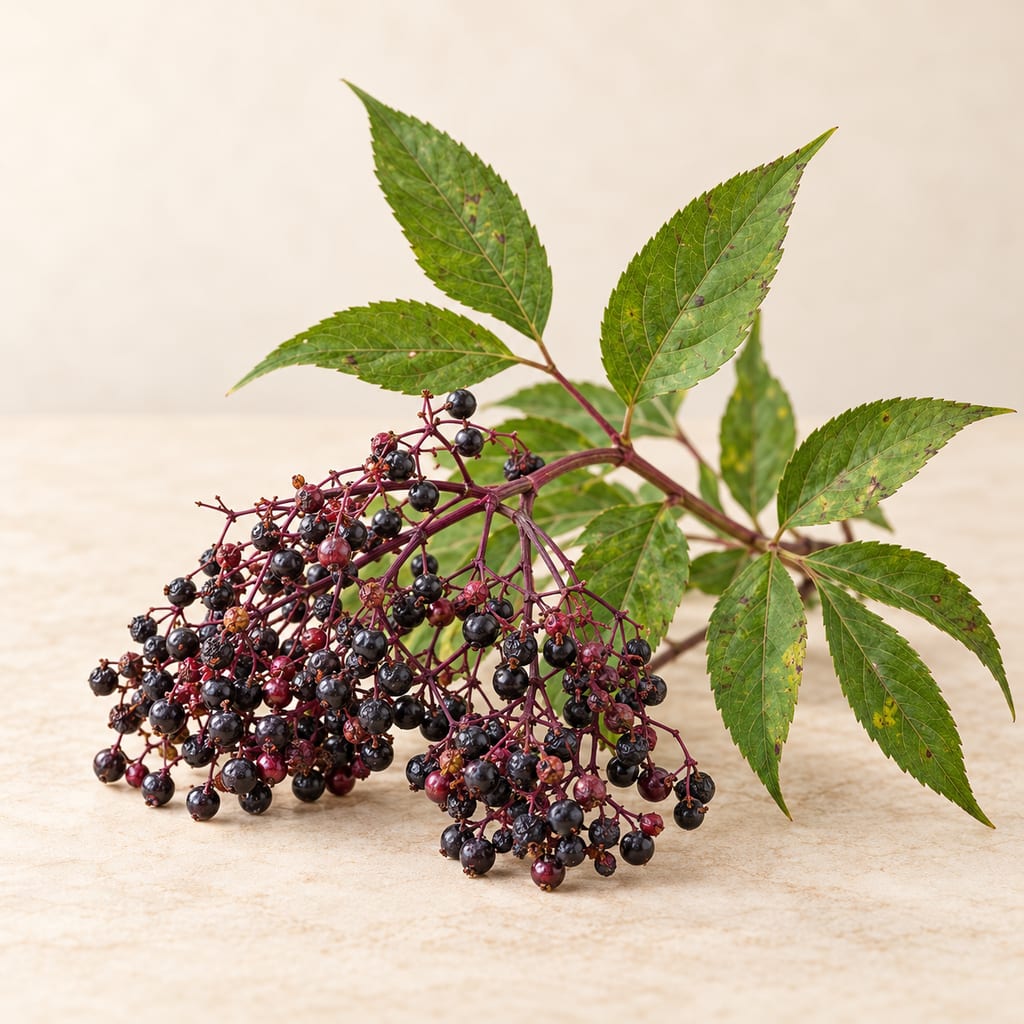
Sambucus canadensis is the accepted name used here for American elderberry. Missouri production guidance and named-cultivar studies give useful regional growing information, while food and analytical sources leave process questions open.
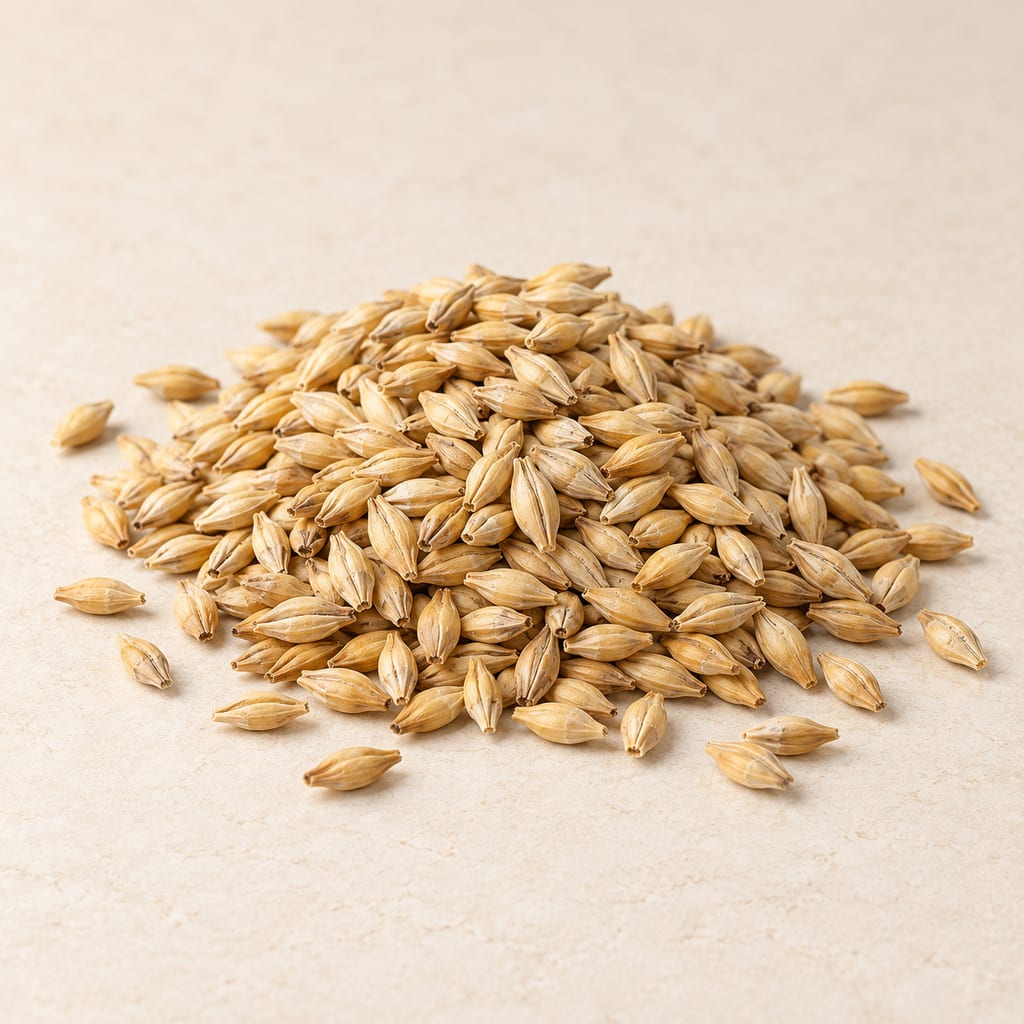
A lightly kilned brewing base made from two-row barley. It supplies starch and enzymes for the mash, with the maltster’s product and lot analysis defining its brewing properties.

Ripe avocado flesh is the soft, buttery, fat-rich pulp of Persea americana, eaten raw. It is low in acid, so it is a fresh ingredient that needs care in chilled dishes.
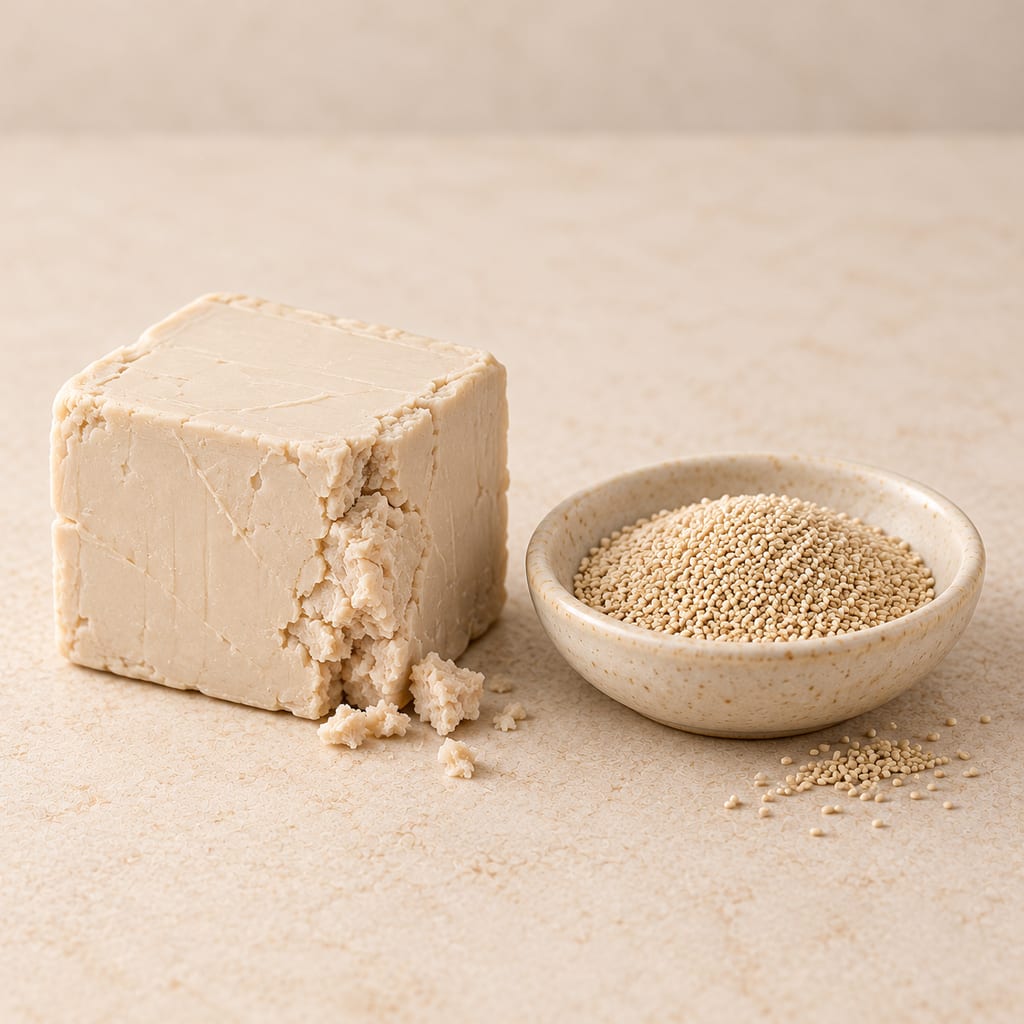
Baker's yeast is a cultivated living leavener, commonly sold fresh or dried. In dough, selected Saccharomyces cerevisiae cells make gas that can raise bread.
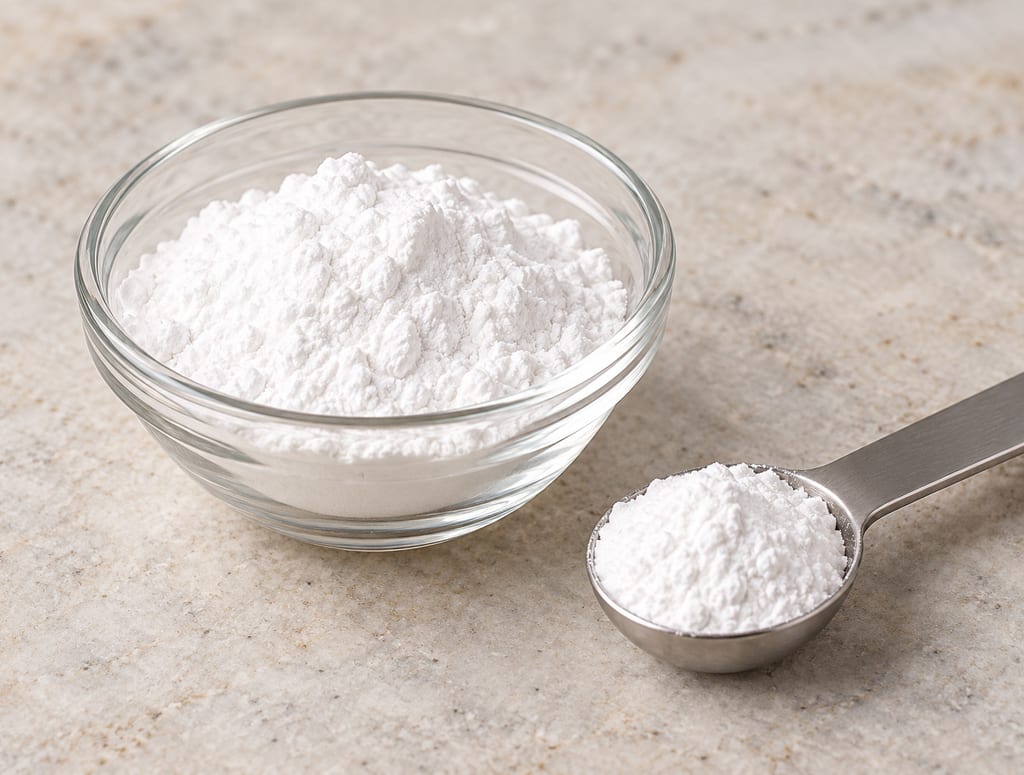
Baking powder is a dry chemical leavener that combines bicarbonate with acid-reacting ingredients and a carrier. Moisture and heat release carbon dioxide for quick breads, batters and griddle cakes.

At North Abydos in Egypt, a fixed early Dynastic brewery comprised parallel semi-subterranean installations with rows of ceramic mash vats; excavation reports revise their number, scale and estimated batch capacity.

Ají amarillo is the orange-yellow Peruvian chilli cultivar group of Capsicum baccatum, used to colour and season huancaína sauce and ají de gallina. Published heat estimates do not establish one range for the named cultivar.

Kodiak salmon, halibut and cod cut as seg'aq and hung on an initaq rack to become tamuuq, with kac'amaasaq and kupcuunaq named as different results.

Aniseed is the dried ripe fruit of Pimpinella anisum, an aromatic Apiaceae spice commonly called a seed. It adds a sweet, warm aroma to breads such as Moroccan krachel and South African mosbolletjies, and is distinct from star anise.

A fixed Late Chalcolithic installation in Areni-1 cave combined a shallow clay pressing basin with a large jar set into the cave floor and storage vessels nearby.

A portable dome and pan used over a hearth, with embers on the lid and heat from below. Regional peka and saç forms share this principle while differing in materials, pan shape and how the food is cooked.
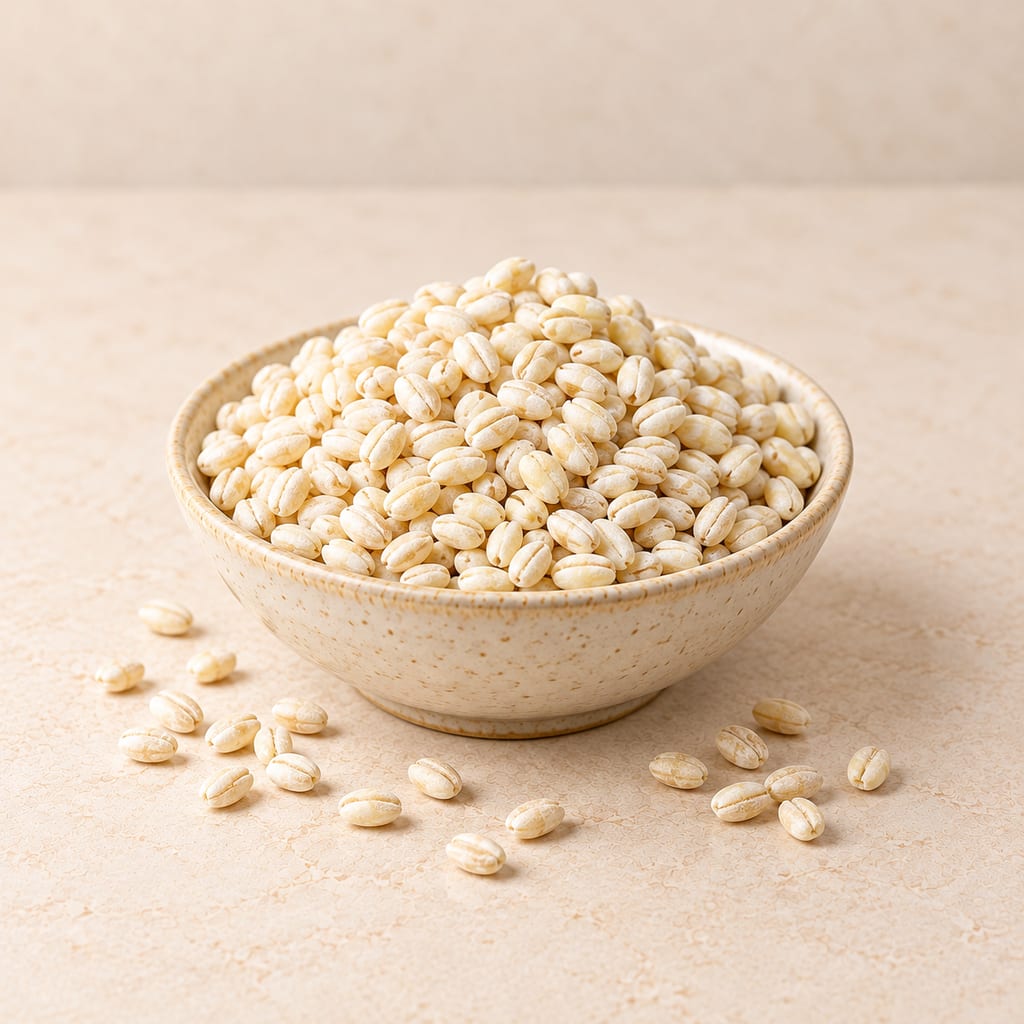
Barley is a hardy cereal, domesticated in the Middle East over 10,000 years ago, eaten whole, pearled or milled, malted for brewing, and grown with koji mold for barley miso.

Beef is the meat of domestic cattle, Bos taurus and Bos indicus, sold as steaks, roasts, ground meat and cured products, and used in broths, salami and koji seasonings.
No community contributions have been published for this entry yet.
Sign in to contribute. Published comments and photos are free to read.
Foods (MDPI), J. Lietzow, German Federal Institute for Risk Assessment, 2021Identity · Chemistry · Safety · History
Biologically Active Compounds in Mustard Seeds: A Toxicological PerspectiveTaxonomy and relationships of white, brown and black mustard; U triangle; seed colour, size and relative pungency; sinalbin and sinigrin; myrosinase hydrolysis and its products by pH; glucosinolate contents by species; Dijon and German blends; harvesting difficulty of black mustard; allergens Sin a 1 and Bra j 1; erucic acid; bisphenol F in white-mustard products
Cited in: The mildest mustard, with two names; How the crop spread; Why the sting is mild; Binder, emulsifier and pickling seed; Allergy and food-safety notes; Notes and open questions
Frontiers in Nutrition, Hu and Yan, 2025Chemistry · Processing
Comprehensive advances in phytochemical components, bioactive functionality, and processing applications of mustard (Brassica juncea)Seed composition of black, brown and yellow mustard; myrosinase activity by species (B. juncea 2.75 U/mL, B. nigra 1.50, S. alba 0.63) and thermal stability; mustard seed in meat and fermented sausage studies; leaves as substrates for lactic fermentation
Cited in: Why the sting is mild; A seed with a part in fermentation
Frontiers in Plant Science, Mitrovic and colleagues, 2020Botany · Use
White Mustard (Sinapis alba L.) Oil in Biodiesel Production: A ReviewWhite mustard originates from the Mediterranean region; most used mustard in Europe and the only commercial species for food processing in North America; use as a binding agent and protein extender in meat processing; seed oil composition including erucic acid 32.8-60.3%
Cited in: The mildest mustard, with two names; How the crop spread; Binder, emulsifier and pickling seed; A seed with a part in fermentation; Growing and harvesting
Purdue University NewCROP, from University of Wisconsin and University of Minnesota extensionHistory · Agronomy
Mustard (Alternative Field Crops Manual)Mustard native to temperate Europe and among the first domesticated crops; Greeks and Romans used sinapis as paste and powder; the name mustard dates from about 1300 and mustum; yellow mustard about 90% of Upper Midwest production; seeds per pound; maturity; harvest; storage moisture; yellow mustard flour as emulsifier and stabilizer in sausage
Cited in: The mildest mustard, with two names; How the crop spread; Binder, emulsifier and pickling seed; Growing and harvesting; Notes and open questions
North Dakota State University ExtensionAgronomy · Use
Tame Mustard Production (A935)Yellow mustard is the main type in North Dakota; oil about 24% in yellow and about 35% in brown and oriental varieties; seed size; yellow mustard used in meat packing for flavour and emulsification; oriental in Chinese mustards, mayonnaise, dressings and barbecue sauces; seed stored at 9% moisture or less
Cited in: The mildest mustard, with two names; Binder, emulsifier and pickling seed; Growing and harvesting
Agricultural Marketing Resource CenterMarket
MustardYellow mustard the mildest and lowest in oil; brown and oriental used for hot table mustard, oil and spices; Europe the main market for brown mustard such as Dijon, North America for yellow; largest producers Nepal, Russia and Canada
Cited in: The mildest mustard, with two names
Pliny the ElderHistory
Natural History, Book XIX, section 170 (Latin text)Sinapi described as the sharpest in taste and fiery in effect, most healthful, needing no cultivation and hard to remove once sown because fallen seed turns green at once
Cited in: How the crop spread
Journal of the Science of Food and Agriculture, Karwowska, Wojciak and Dolatowski, 2015Science · Fermentation
The influence of acid whey and mustard seed on lipid oxidation of organic fermented sausage without nitriteNative and autoclaved mustard seed with acid whey in nitrite-free organic fermented sausage lowered pH during fermentation and kept lipid oxidation over 90 days of vacuum storage similar to a cured control; mustard species not stated in the abstract
Cited in: A seed with a part in fermentation
International Journal of Food Microbiology, Papatsaroucha and colleagues, 2012Science · Fermentation
Preservation of pears in water in the presence of Sinapis arvensis seeds: a Greek traditionSeeds of wild mustard Sinapis arvensis added to pears in water enhanced lactic acid bacteria (Leuconostoc mesenteroides subsp. cremoris), lowered pH and reduced Enterobacteriaceae
Cited in: A seed with a part in fermentation