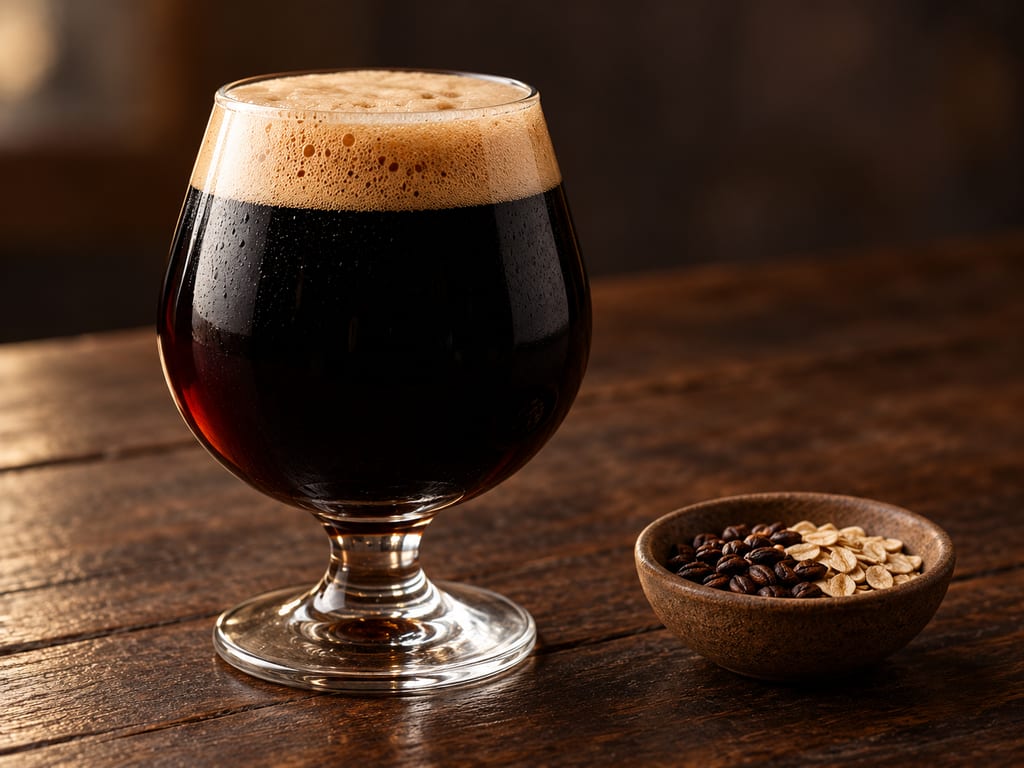
Dark Cellar imperial stout
An all-grain imperial stout with pale malt, roasted barley, dark malts and oats, fermented with an American ale-yeast starter.
 FermenteaWhere food goes to change
Substrates
A lightly kilned brewing base made from two-row barley. It supplies starch and enzymes for the mash, with the maltster’s product and lot analysis defining its brewing properties.
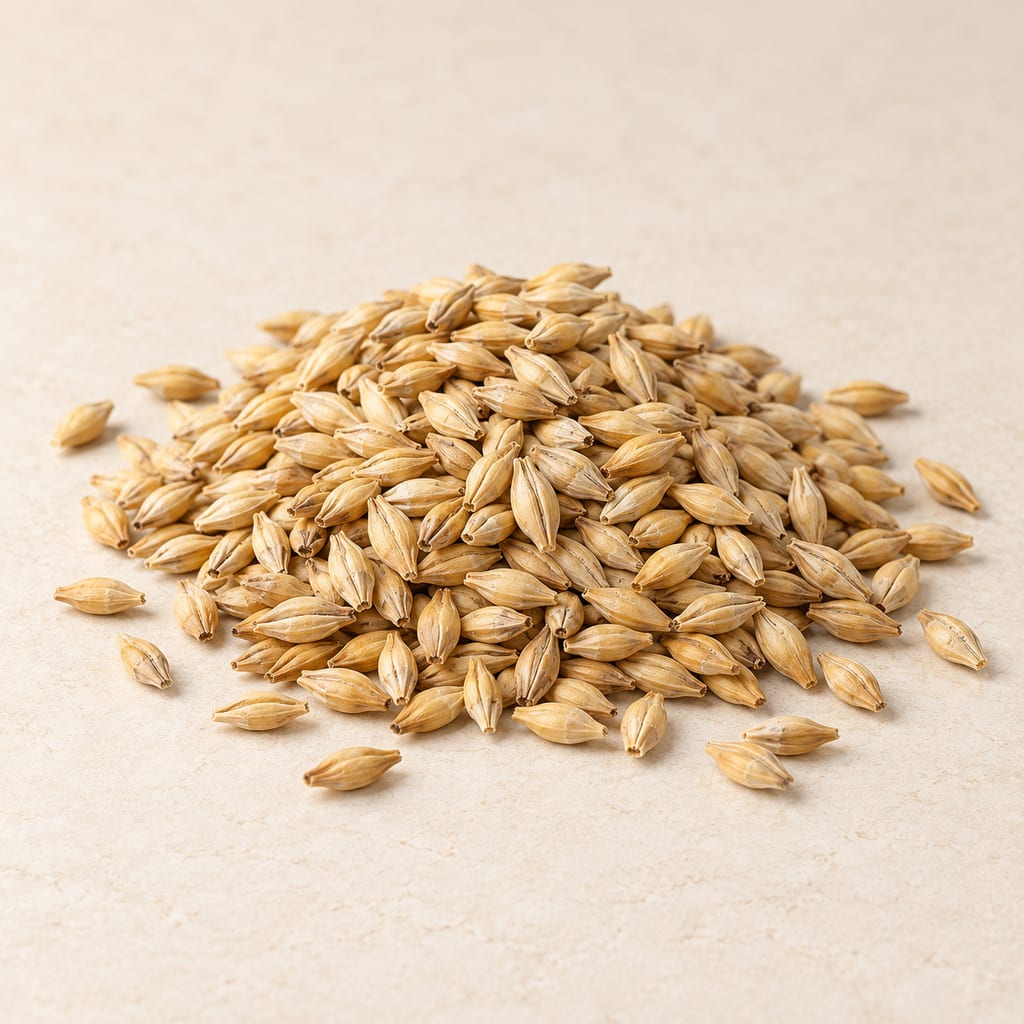
American two-row pale malt is a brewing base malt made from two-row barley. Its kernels may look modest beside chocolate malt or roast barley, but they can supply much of the material that becomes beer: starch, enzymes and nutrients, as well as a restrained grain character. Pale malt can form the foundation of a golden ale or sit underneath the dark grains of a stout. The colour of the finished beer does not tell us how much pale malt went into it.
The name combines several useful descriptions. Two-row refers to the arrangement of kernels on the barley head. Pale distinguishes the malt from more strongly coloured products. American places it within a brewing convention and supply context, while leaving the actual maltster, cultivar and lot unstated. A bag bearing a specific producer's name gives more information than this general ingredient name alone.
That distinction matters in Dark Cellar imperial stout, where a large pale-malt contribution accompanies several highly coloured grains. Here the pale malt supplies the base of the grist while smaller specialty ingredients help shape the roast and colour. It is an example of how a comparatively restrained ingredient can do substantial work without becoming the most immediately obvious flavour in the glass.
Cultivated barley, Hordeum vulgare, belongs to the grass family. A two-row head carries two rows of kernels along its length; a six-row head carries six. Both forms belong to barley. They are not different grains in the way that barley and wheat are different cereals, and counting rows does not identify a particular cultivar.
Barley also varies in other ways. A covered grain retains its outer hull after harvesting, while hulless barley sheds that loosely attached covering more readily. Winter and spring types differ in their cropping pattern. Row arrangement, hull behaviour and sowing habit describe different traits, so knowing one does not establish the others. The grain selected by a maltster has to be understood through the variety and intended use as well as its visible shape.
The hull is particularly useful to understand in brewing. It surrounds and protects the inner grain, and husk material can help form the bed through which wort drains after mashing. Inside is a starch-rich endosperm and the embryo capable of growing into a plant. Malting works with that living seed structure before the brewer ever mills the grain.
Barley belongs to the early cereal agriculture of Southwest Asia. Archaeological and genetic evidence describes a history of cultivation and selection rather than the invention of a modern brewing malt at a single moment. One important domestication trait is the non-brittle ear: grain remains attached where people can harvest it instead of dispersing as readily from a wild plant.
Genetic research has also investigated contributions from different geographic populations. Morrell and Clegg's study inferred more than one domestication contribution, distinguishing a Fertile Crescent component from one farther east. This is part of the crop's broad history. It does not establish the ancestry of an unnamed barley cultivar in a modern American malt bag.
The more immediate story is one of brewers, maltsters and growers selecting grain for particular jobs. Six-row barley played a substantial role in American brewing, including mashes containing other starch sources. Its commonly higher enzyme activity helped convert those additional starches. Two-row became increasingly important as breeding, growing regions and brewing requirements changed. Breeding can produce high- and low-enzyme varieties in either row type, so the arrangement of kernels alone cannot rank their brewing quality.
American two-row pale malt is therefore a modern specification built from a much older crop. Its identity depends on the combination of selected barley and malting practice. A familiar ingredient name can remain in use while the varieties grown to meet it change.
Malting barley has to do more than produce a large harvest. The kernels must be capable of germination, and their moisture, protein, size and condition must suit the intended malt. Grain that feeds animals successfully may fail a maltster's requirements. The value of the crop consequently depends on quality as well as weight.
Contracts connect this agricultural work with the needs of breweries. A maltster may specify varieties and intake requirements, while a grower accepts the risk that weather or the crop's condition could prevent it from meeting those requirements. Grain that fails malting specifications may move into another market. The eventual bag of malt stands at the end of those selections, rather than beginning as an anonymous quantity of interchangeable grain.
Crop conditions also help explain variation between seasons and places. Disease pressure, water and growing conditions influence the grain that reaches the maltings. Regional growing guidance is useful to farmers in its own climate; it is not a universal planting calendar for every place described as American. A brewer buying malt encounters those agricultural differences through the producer's specification and the analysis of the particular lot.
Malting begins by managing a seed's ability to grow. Water is introduced during steeping, with drainage and air rests forming part of the process. The aim is to bring the grain into controlled germination. Water, air and the condition of the incoming kernels all matter; malting is not simply prolonged soaking followed by roasting.
As germination proceeds, changes inside the kernel make its stored material more accessible. Enzymes act on cell walls and proteins around the starch-rich endosperm. This modification prepares material for later brewing. The maltster wants enough of that change to make useful brewing malt, while avoiding uncontrolled growth that consumes the reserves intended for the brewer.
The growing grain also produces heat. Traditional floor malting involved turning it, while modern systems can move air through a grain bed and use mechanical turning. These are ways of managing the germinating material physically. They support the biological changes inside the seed; they are not substitutes for them.
The term green malt refers to the germinated material before the finishing heat treatment. It is a stage in manufacture, rather than the dry pale malt a brewer ordinarily buys.
Drying and kilning bring controlled germination to an end and help create the finished malt's colour and flavour. The heat and airflow programme changes with the product being made. A pale brewing base and a dark specialty malt need different treatment, even when both start from barley.
Pale malt retains useful enzyme activity while acquiring the characteristics wanted for a base grist. At the dark end of the malt range, more severe heating can leave very little enzymatic activity. Colour therefore carries information about processing, but it is not a complete analysis. A brewer still needs to know the actual malt product and its performance.
After kilning, rootlets are removed and the malt is stored and prepared for dispatch. The finished kernels have passed through controlled hydration, growth and drying. That sequence has altered their internal structure as well as their colour and flavour, preparing the material for milling and extraction in the brewery.
There is no one drying temperature or duration that defines every American two-row pale malt. The producer balances the source grain, modification and finishing treatment to meet a particular specification.
Milling opens the malt so that water can reach the inner material. In the mash, grain and water meet under conditions that allow enzymes to act on starch. The resulting wort contains soluble material, including sugars that brewing yeast can ferment. This is the link between a dry grain ingredient and a liquid alcoholic drink.
Alpha-amylase and beta-amylase play important roles in starch breakdown. They work together on the starch structure, creating a mixture that includes fermentable sugars and larger carbohydrate material. Temperature and other mash conditions affect their activity. The brewer is managing conversion, rather than merely extracting a sweet flavour already complete inside the dry kernel.
Proteins and their breakdown products also have roles. Nitrogen-containing material can support yeast nutrition, while proteins and carbohydrates contribute to the physical qualities of wort and beer. Foam, body and clarity depend on their interactions with the rest of the process. More of one component is not automatically better for every intended beer.
Mashing is distinct from fermentation. Malt enzymes help supply soluble sugars; yeast later uses fermentable sugars and produces ethanol and carbon dioxide. Pale malt's contribution includes preparing that supply, while the eventual culture and fermentation conditions shape what happens to it.
Base malt, two-row, pale malt, pale ale malt and Pilsner malt are useful terms, but their boundaries need the producer's specification. A product marketed as two-row can be a blend of barley varieties chosen to achieve consistent brewing properties. It need not represent one cultivar from one field.
Rahr Standard 2-Row provides a concrete North American example. Its blend and manufacturing approach are intended to maintain a consistent product as the varieties used change. Rahr distinguishes it from both its lager-oriented and pale-ale-oriented malts. That example shows why two-row describes only part of an ingredient's identity; it does not establish that Dark Cellar used Rahr malt.
A certificate of analysis describes a lot more precisely than a style name. Moisture, extract, protein and diastatic power answer different questions. Extract concerns the material recovered under a defined analysis; diastatic power concerns starch-converting activity; protein is another part of grain composition. These figures help a brewer interpret a purchased malt, rather than serving as interchangeable measures of quality.
The basis of a reported extract figure also matters. A dry-basis result removes moisture from the calculation, while an as-is result includes the water in the purchased malt. Fine-grind and coarse-grind laboratory results describe different preparations of the test sample. A brewer comparing figures needs to compare the same basis, then consider the actual mill and brewhouse. The laboratory result is a way of understanding potential yield under defined conditions.
Whole and crushed malt are different purchase forms. Milling exposes the endosperm to brewing water and enzymes, while changing how the grain behaves during handling and wort separation. The choice belongs with the brewing equipment and method; the general ingredient name supplies no mill setting.
Drying during manufacture helps make malt a storable ingredient, but that does not make it immune to damp, pests or changes during storage. Keep the product dry and protected, and follow its producer's packaging and handling directions. A supplier's shelf-life statement for one product should remain attached to that product, rather than becoming a guaranteed duration for every unnamed bag of pale malt.
Barley malt contains gluten. A pale colour, a particular row type or alcoholic fermentation does not establish gluten-free suitability. Its identity needs to remain clear in ingredient information, including where malt appears in foods under names such as extract or flavouring. Any specially processed product makes a separate claim that requires its own evidence.
In a pale beer, a restrained base can leave hops or yeast expression prominent. In a stout, it can supply a large share of the grist beneath a small but forceful set of roasted ingredients. Those uses explain why pale malt is not confined to pale-coloured drinks.
Dark Cellar uses 25 lb of American two-row pale malt alongside its other grains. That is a recipe quantity, not a general dose or an ingredient specification. Its mash schedule belongs to the complete formulation. The source does not identify the maltster or provide a lot analysis, so the linked ingredient remains American two-row pale malt at that stated precision.
Barley malt also reaches food manufacture through malt extracts, baking ingredients and flavourings. Those are further processed products with their own composition and enzyme activity. For a grain-based brew, buying dry pale malt means retaining responsibility for milling and mashing; buying an extract means that extraction has already taken place. The shared word malt connects the products, while their form determines how they enter a recipe.
Barley (gluten)
Named American two-row pale malt in the Dark Cellar imperial stout formulation; the maltster and barley growing location are not stated.
An all-grain imperial stout with pale malt, roasted barley, dark malts and oats, fermented with an American ale-yeast starter.
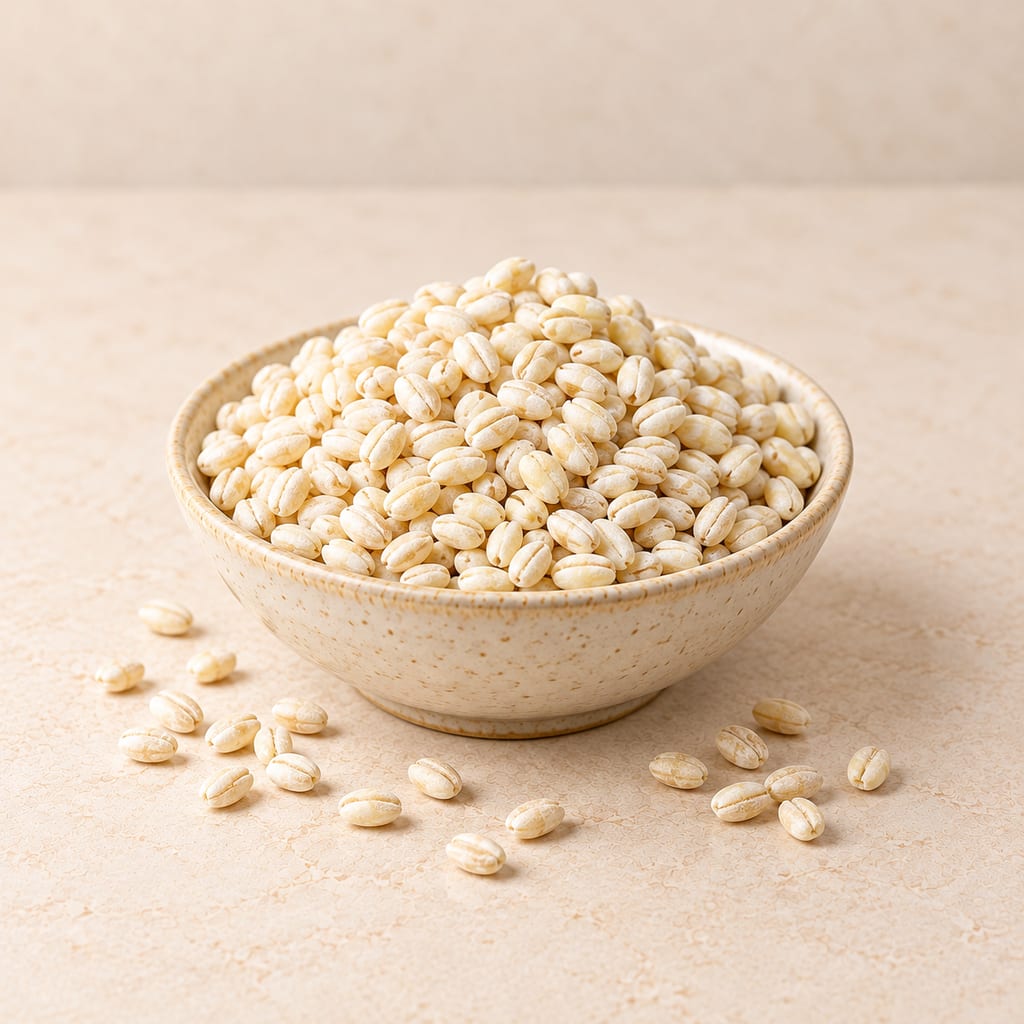
Barley is a hardy cereal, domesticated in the Middle East over 10,000 years ago, eaten whole, pearled or milled, malted for brewing, and grown with koji mold for barley miso.
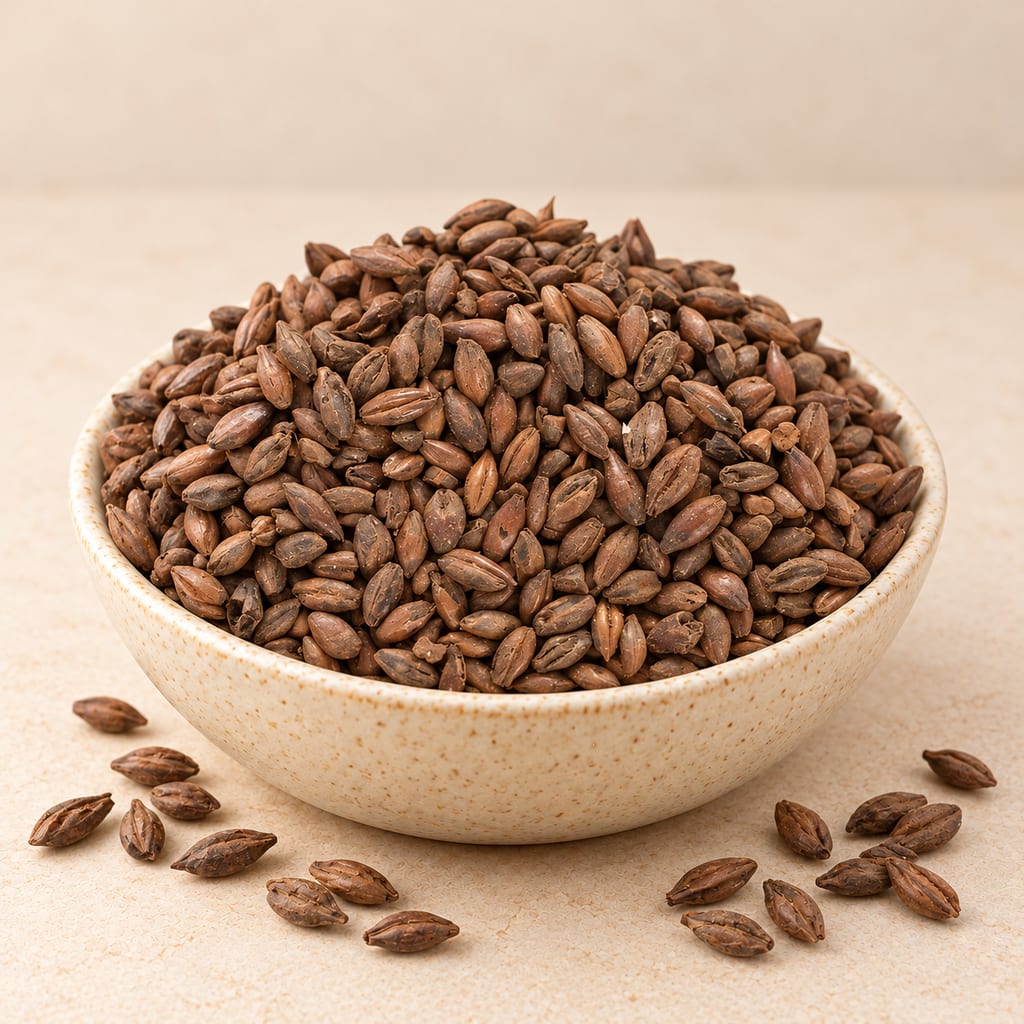
Chocolate malt is barley that has been malted and then roasted to a dark brown, used in porters, stouts and brown ales for colour and a bitter-cocoa, roasted-coffee flavour. It contains no cocoa.

A refined common-wheat flour blended for a broad range of baking; its protein and behavior vary with wheat, milling and market.

Toasted almonds are whole sweet almond kernels dry-roasted until golden to brown. Heat replaces their marzipan note with a roasted, nutty one; they thicken and flavour romesco.
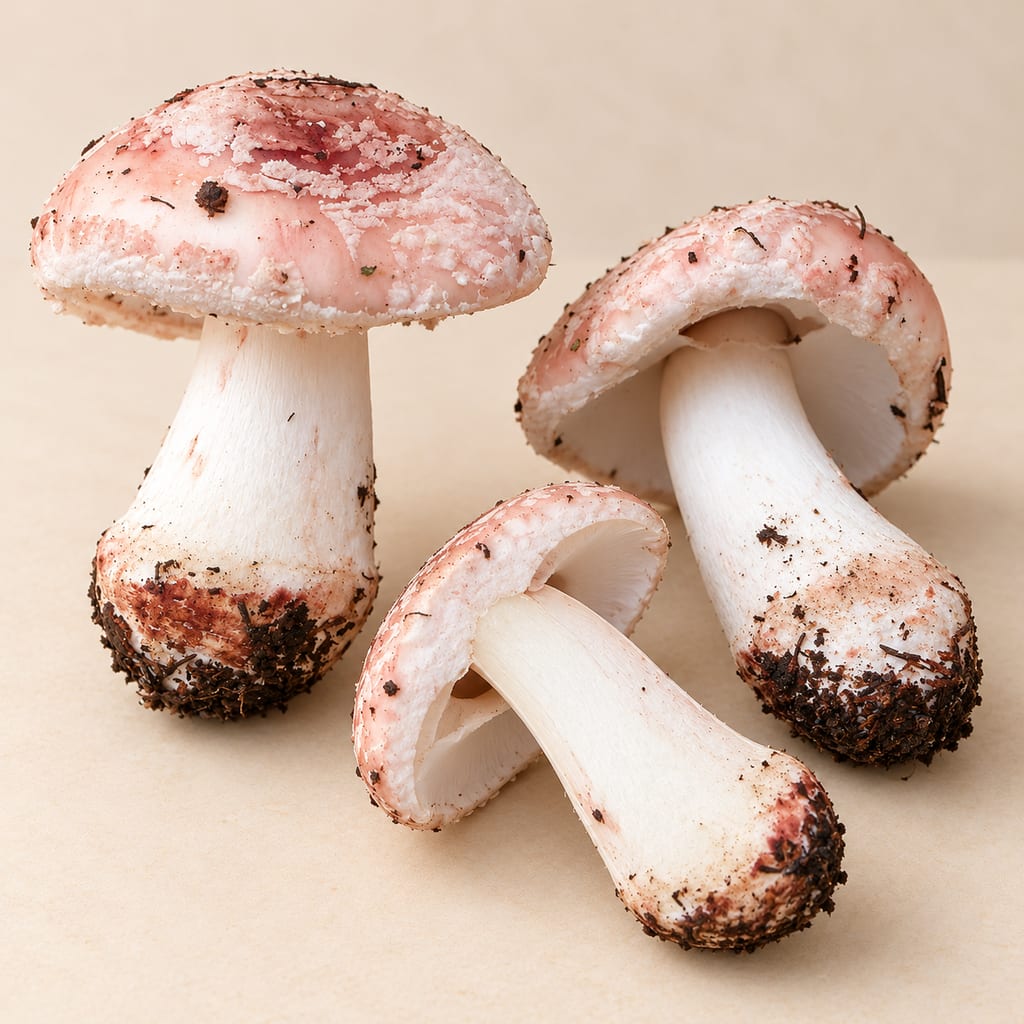
Amanita novinupta is a western North American blusher, a forest mushroom recorded as food in Mexico, and one that must be cooked because its raw flesh is toxic.
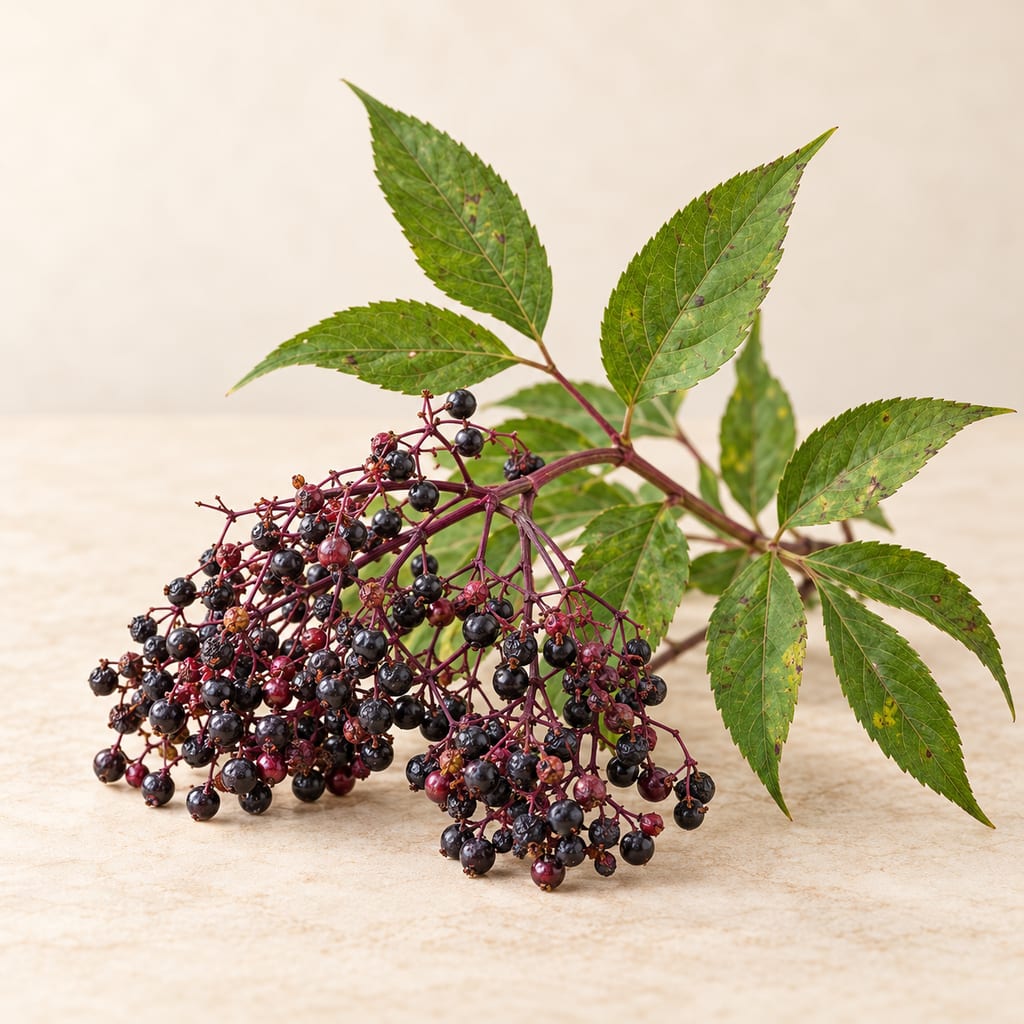
Sambucus canadensis is the accepted name used here for American elderberry. Missouri production guidance and named-cultivar studies give useful regional growing information, while food and analytical sources leave process questions open.

Ripe avocado flesh is the soft, buttery, fat-rich pulp of Persea americana, eaten raw. It is low in acid, so it is a fresh ingredient that needs care in chilled dishes.
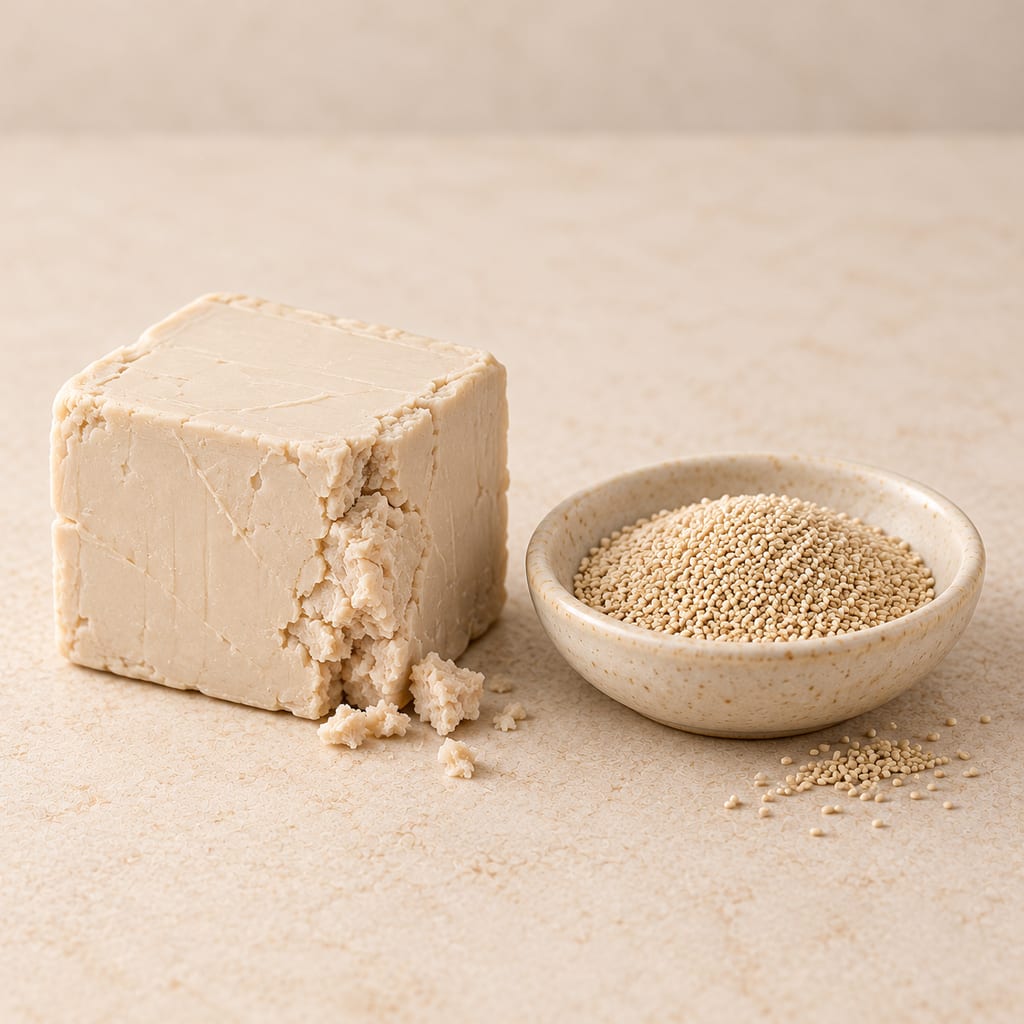
Baker's yeast is a cultivated living leavener, commonly sold fresh or dried. In dough, selected Saccharomyces cerevisiae cells make gas that can raise bread.
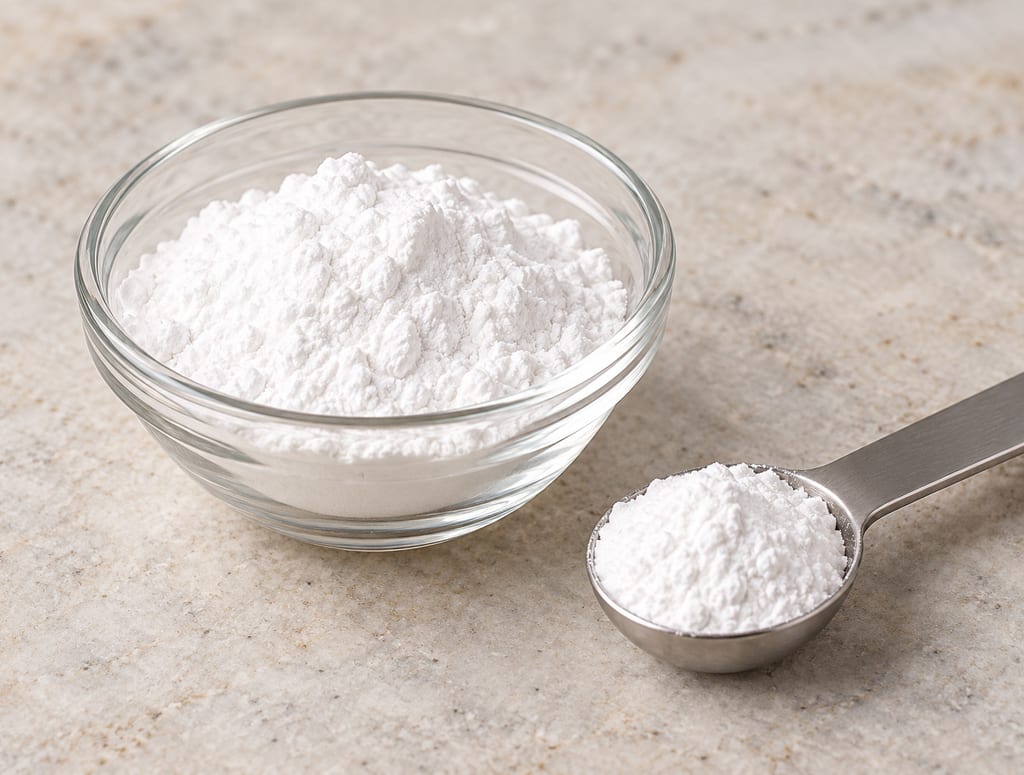
Baking powder is a dry chemical leavener that combines bicarbonate with acid-reacting ingredients and a carrier. Moisture and heat release carbon dioxide for quick breads, batters and griddle cakes.
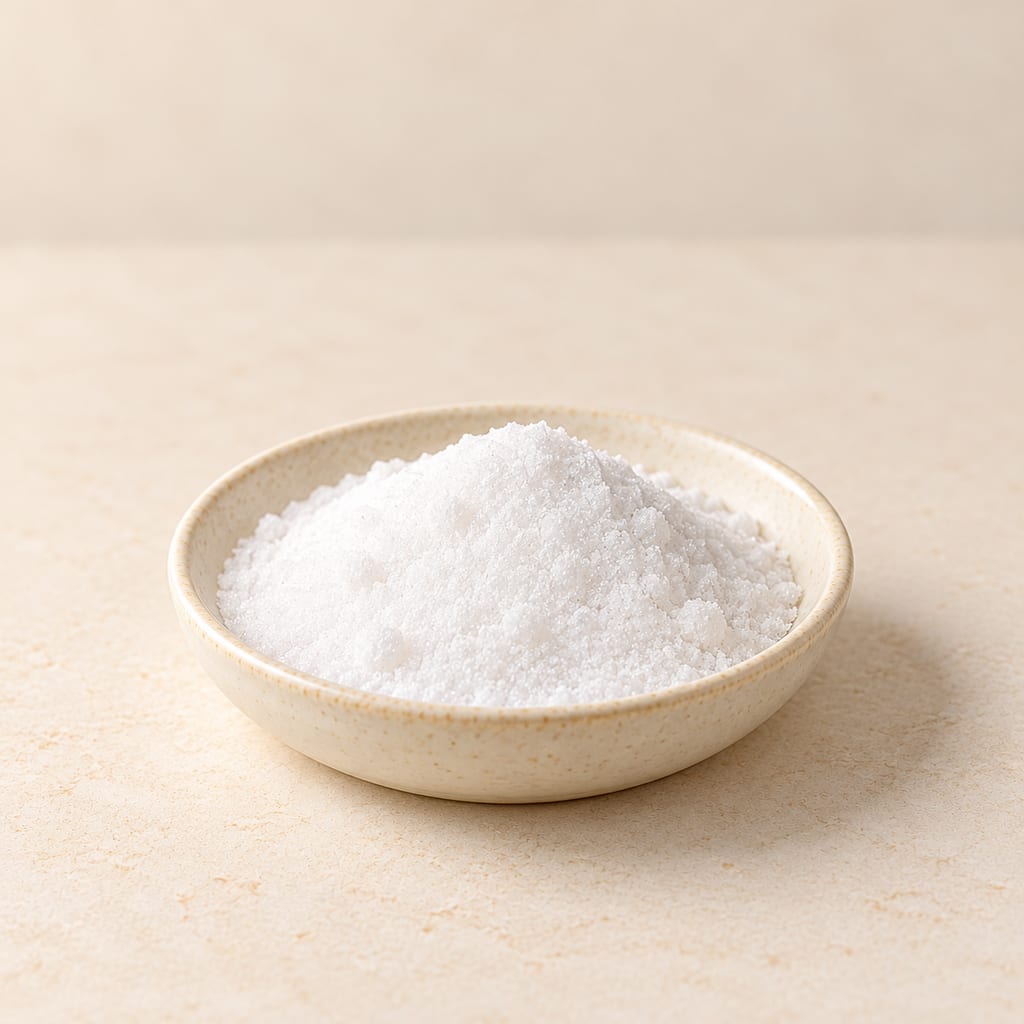
Baking soda is food-grade sodium bicarbonate, a single alkaline powder that releases carbon dioxide when it meets acid in a wet batter. It lifts quick breads without a living culture.
No community contributions have been published for this entry yet.
Sign in to contribute. Published comments and photos are free to read.
American Homebrewers AssociationRecipe use
2026 Official Big Brew Recipes: Dark Cellar Imperial StoutDark Cellar names 25 lb American two-row pale malt and mashes it with the other grains. No maltster, cultivar or lot analysis is stated.
Cited in: Pale grain behind many colours of beer; Using a base malt without losing its identity
Canadian Grain CommissionIngredient identity · Fermentation function
Barley: Classes, types and varietiesTwo-row and six-row kernel arrangement; covered and hulless barley. Canadian grading context does not identify the American recipe malt.
Cited in: A seed head with two rows
Oregon State University Extension ServiceIngredient identity · Fermentation function
Growing malting barley in and around the Willamette ValleyMalting and base-malt function; raw grain quality; independent growth-habit, hull and row-type traits; husk filtration; breeding and enzyme variation. Oregon growing advice remains regional.
Cited in: A seed head with two rows; A long crop history and a modern brewing ingredient; Growing grain that a maltster can use; Kilning fixes the direction of the malt; The second transformation happens in the mash
Proceedings of the National Academy of SciencesHistory
Genetic evidence for a second domestication of barley (Hordeum vulgare) east of the Fertile CrescentCrop domestication and non-brittle ear; authors infer multiple geographic domestication contributions. This does not establish a modern malt lot ancestry.
Cited in: A long crop history and a modern brewing ingredient
Montana State UniversityHistory · Ingredient identity
2-Row vs 6-RowNorth American brewing use of six-row and two-row, adjunct conversion and changing breeding; no universal quality ranking.
Cited in: A long crop history and a modern brewing ingredient
Agricultural Marketing Resource CenterCultivation · Regional use
Barley ProfileMalting contracts, quality requirements and weather risks; rejected malting barley may enter feed markets; malt use in baking and flavouring. Does not establish this malt lot origin.
Cited in: Growing grain that a maltster can use; Using a base malt without losing its identity
Maltsters’ Association of Great BritainIngredient identity · Fermentation function
How Malt is MadeSeed anatomy, steeping and controlled germination, heat and aeration, floor and modern malting, kilning and rootlet removal. General manufacture, no universal American pale-malt schedule.
Cited in: A seed head with two rows; Steeping wakes the grain; Kilning fixes the direction of the malt
Briess Malt & IngredientsIngredient identity · Fermentation function
The Malting ProcessSteeping, germination and modification expose starch reserves; green malt is dried; base and specialty malts receive different finishing treatments. Manufacturer process examples are not recipe-specific settings.
Cited in: Pale grain behind many colours of beer; Steeping wakes the grain; Kilning fixes the direction of the malt; Using a base malt without losing its identity
RahrIngredient identity · Fermentation function
What’s So Standard About Rahr 2-Row?Named Standard 2-Row example: North American barley blend, changing varieties and consistent brewing profile; positioning between lager and pale ale malts. Not identification of Dark Cellar malt.
Cited in: Pale grain behind many colours of beer; Reading a product name and an analysis
Briess Malt & IngredientsIngredient identity · Fermentation function
Understanding a Malt AnalysisLot variability; milling and kernel assortment; protein, extract and diastatic power; fine/coarse grind and dry/as-is analytical bases; roles in brewing performance. No numerical specification assigned to the generic ingredient.
Cited in: The second transformation happens in the mash; Reading a product name and an analysis; Whole kernels, crushed malt and keeping it dry
American Homebrewers AssociationIngredient identity · Fermentation function
Enzymes in Beer: What’s Happening In the MashAlpha- and beta-amylase act together during mashing; enzyme activity depends on mash conditions; protein breakdown, body and clarity. No generic rest schedule imported.
Cited in: The second transformation happens in the mash
RahrBSGStorage
Receipt, Storage, & Pest Management Best PracticesInspect packaging and pests; clean dry storage away from heat/moisture; protect milled partial bags. Product-sensitive storage recommendations do not establish a universal shelf life.
Cited in: Whole kernels, crushed malt and keeping it dry
Briess Malt & IngredientsIngredient identity · Fermentation function
Brewers Malt: Product Information SheetNamed North American two-row product sold whole kernel, preground and flour; specific storage and analysis apply only to that product.
Cited in: Whole kernels, crushed malt and keeping it dry
Celiac Disease FoundationAllergens
Sources of GlutenBarley and malt are gluten sources, including malt extract/flavouring; ordinary beer is not established gluten-free by fermentation.
Cited in: Whole kernels, crushed malt and keeping it dry