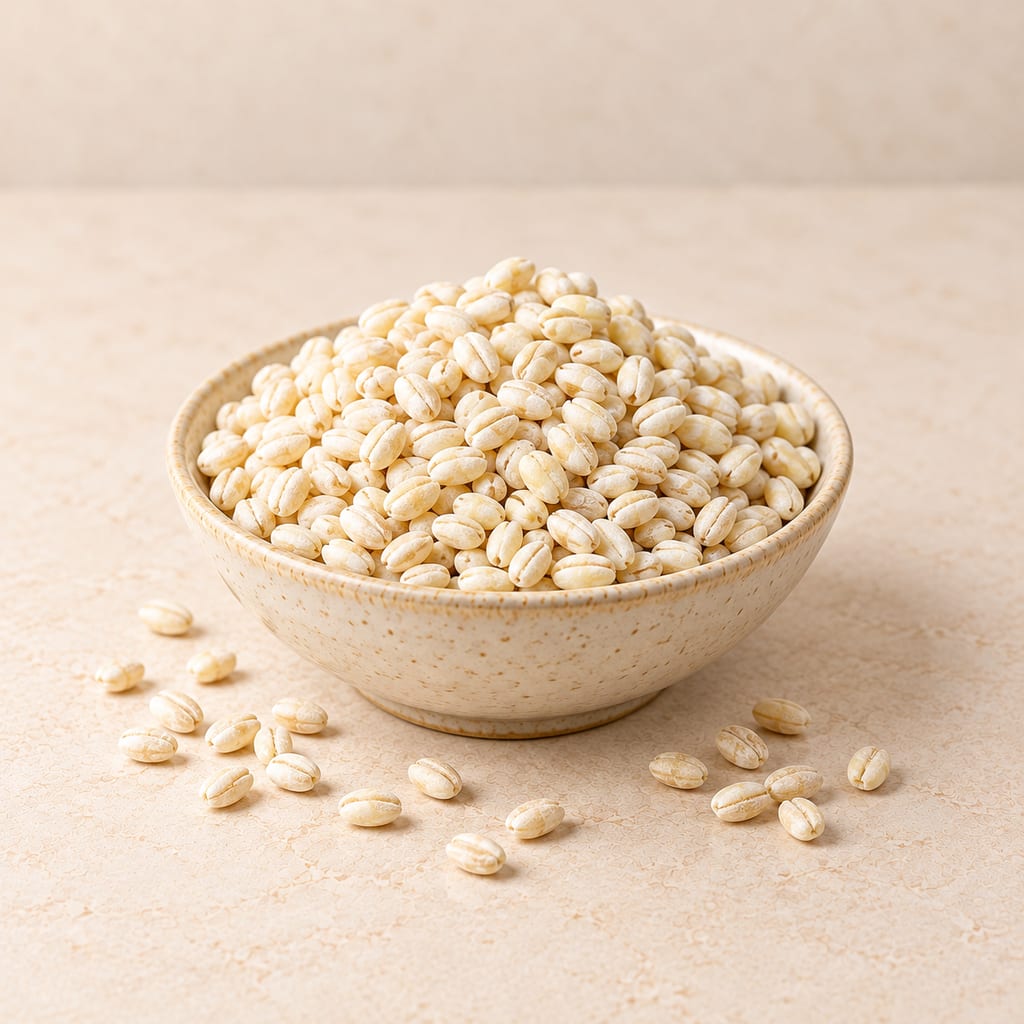
Barley
Barley is a hardy cereal, domesticated in the Middle East over 10,000 years ago, eaten whole, pearled or milled, malted for brewing, and grown with koji mold for barley miso.
 FermenteaWhere food goes to change
Substrates
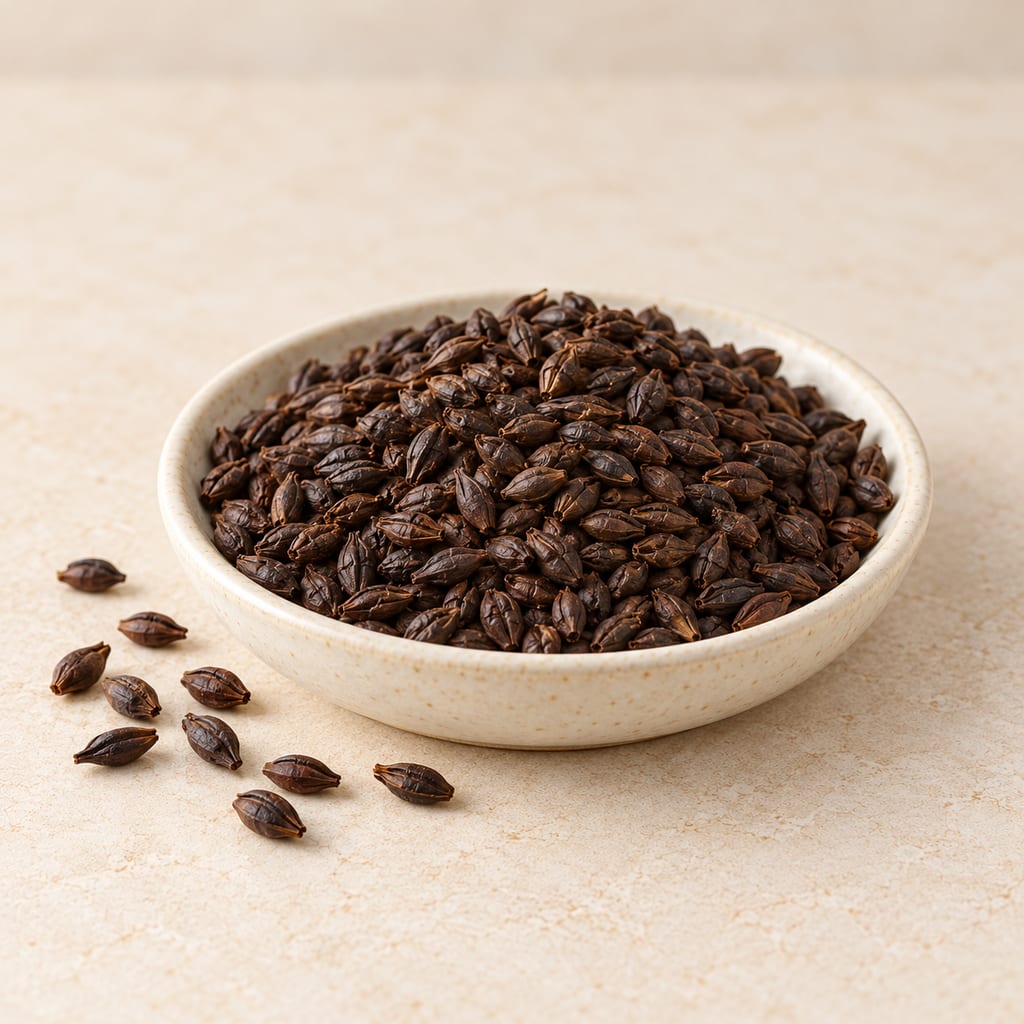
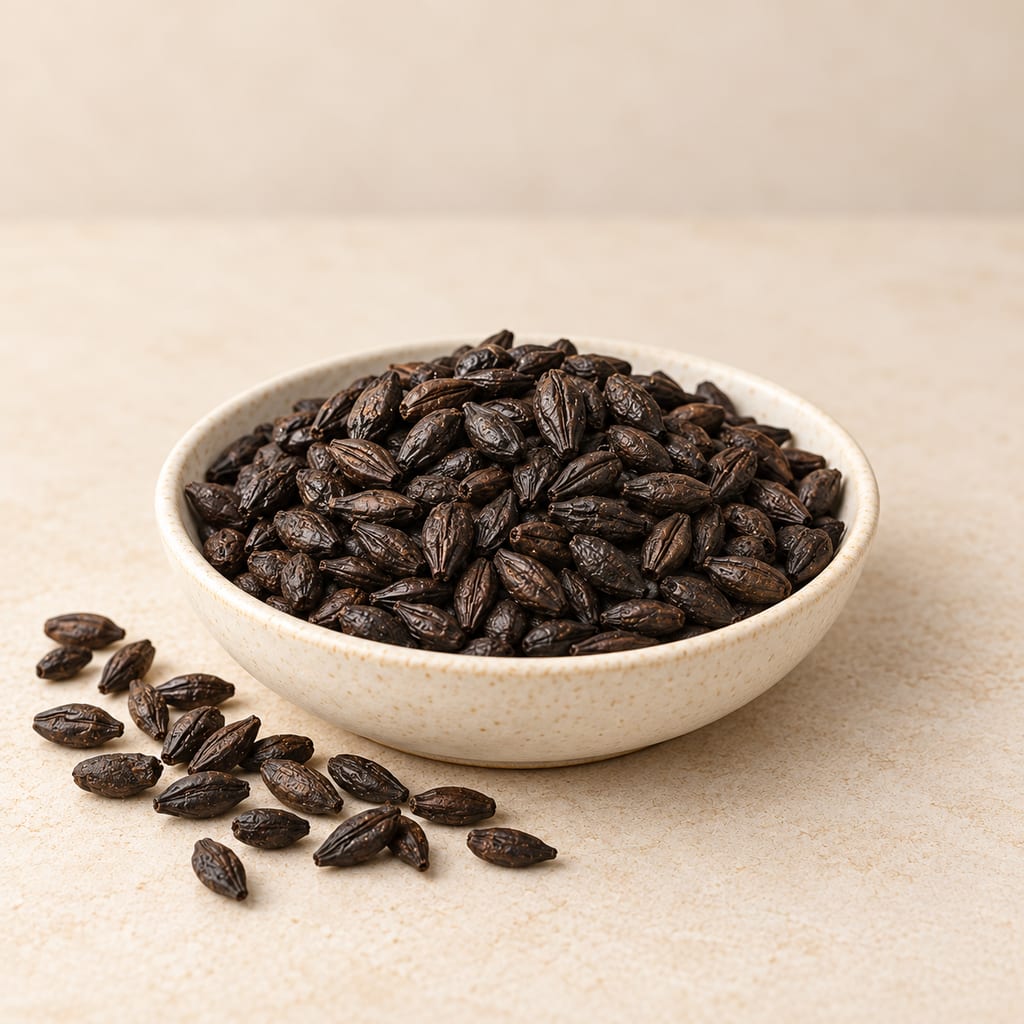
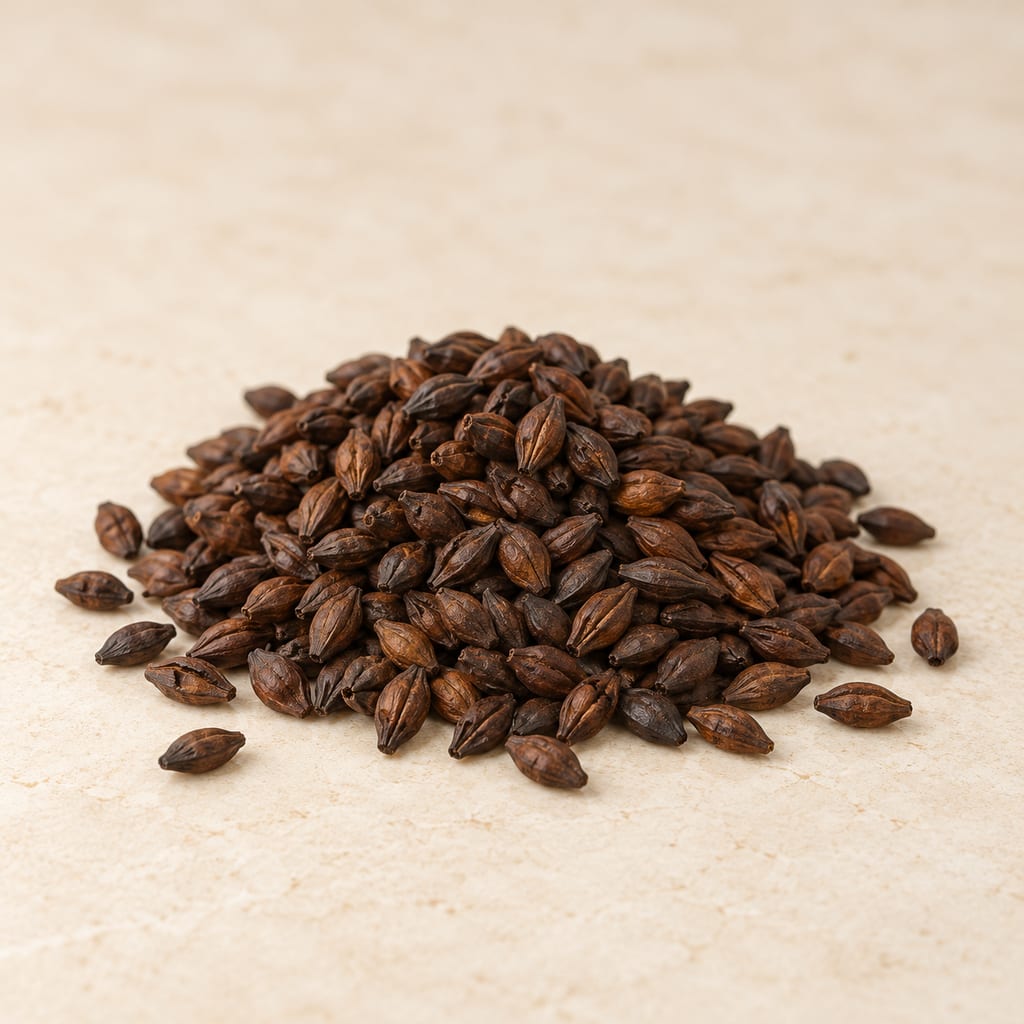
Chocolate malt is barley that has been malted and then roasted to a dark brown, used in porters, stouts and brown ales for colour and a bitter-cocoa, roasted-coffee flavour. It contains no cocoa.
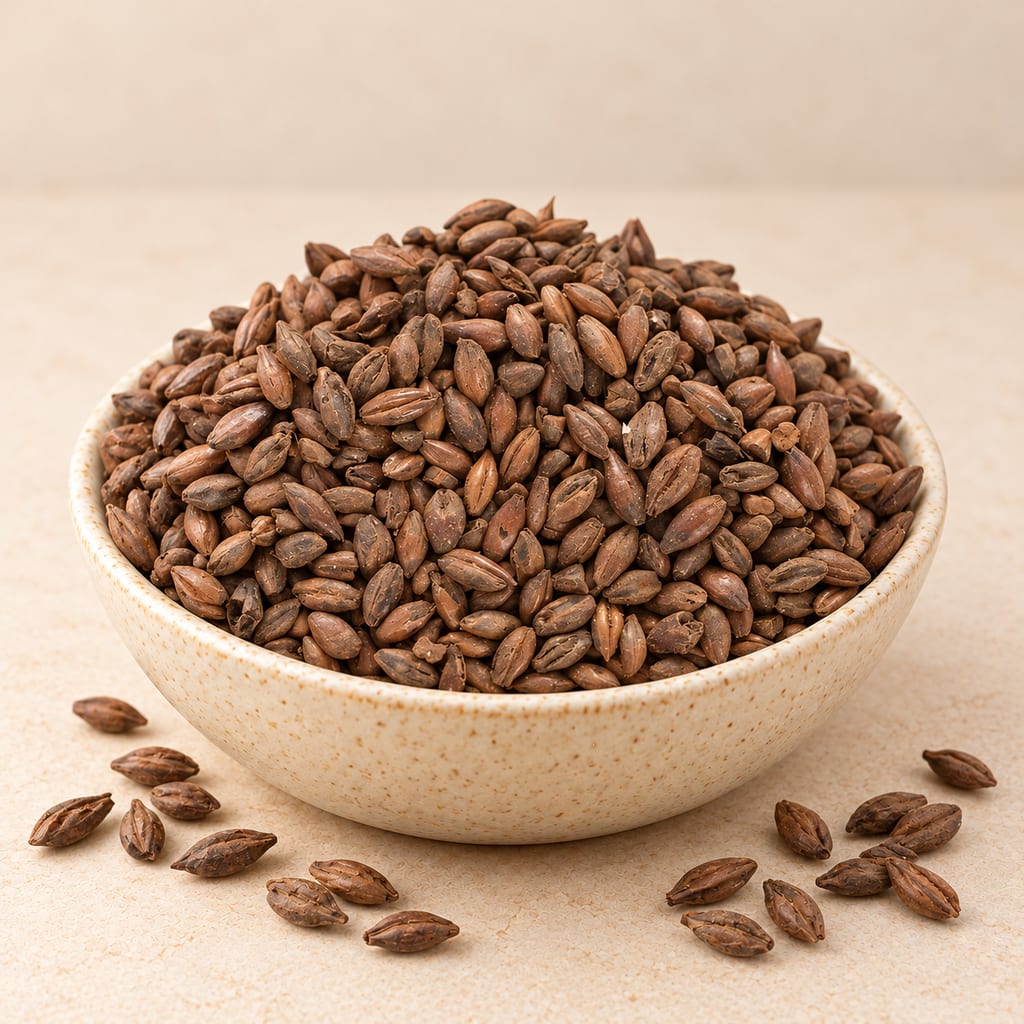
Chocolate malt is malted barley, Hordeum vulgare, that has been kilned like any malt and then roasted in a drum until it is dark brown. It contains no chocolate. The name describes the colour of the kernels and a flavour of bitter cocoa and dark chocolate that shares the foreground with roasted coffee. A brewer adds it to a beer for that colour and flavour: it gives a porter its brown-black body, a brown ale its roast and a stout a dry edge. It is a small part of the grist, never the base of it.
In numbers, chocolate malt sits between the sweet, brown malts and the nearly black ones. The English maltster French & Jupp’s lists its Chocolate Malt at 1,020 to 1,250 EBC, with a lighter Pale Chocolate Malt at 450 to 700 EBC and a Light Chocolate Malt at 205 to 250 EBC. The Bavarian maltster IREKS gives 800 to 1,000 EBC for its Chocolate Malt, and the American maltster Briess gives a typical 350 SRM for its Chocolate Malt and 430 SRM for a separate Dark Chocolate Malt. The scales differ, EBC being the European brewing colour scale and SRM the American one, and the products differ too, so the figures show a family of roasts and not one fixed colour.
The kernels stay whole and are sold whole or milled. IREKS describes its chocolate malt as roasted barley malt that gives beers a more intensive colour and impressions of dark chocolate or coffee. Briess makes its Chocolate Malt in the United States from two-row malting barley varieties recommended by the American Malting Barley Association and the Brewing and Malting Barley Research Institute, and sells it as whole kernel or preground in 50-pound bags. A related malt, chocolate wheat malt, is made from wheat, has no enzymatic activity and is sold at 900 to 1,200 EBC; its flavour is described as coffee, dark chocolate and well-toasted bread.
Chocolate malt belongs to the patent malts, a family named for the nineteenth-century licence once needed to sell roasted malt. French & Jupp’s lays out the range from lightly roasted to black. Amber malt runs at 23 to 45 EBC, with roast coffee, caramel and bread-crust notes. Brown malt, at 115 to 140 EBC, is darker, gives a mahogany colour and tastes of fresh roast coffee with pleasant bitterness and a light smokiness; it was historically made in a kiln fired with hornbeam and ash, and is rarely produced today. Then come the chocolate malts: Light Chocolate, Pale Chocolate and Chocolate Malt, at 205 to 250, 450 to 700 and 1,020 to 1,250 EBC. Black malt, at a minimum of 1,350 EBC, is the darkest of the malted grains.
Black malt, the black patent malt of the nineteenth century, differs from chocolate malt in degree and in character. It is roasted to the maximum colour the malt will reach. The result, in the maltster’s description, is a powerful bitterness, fresh roast coffee, a smoky astringency and a lingering taste of cold barbecue coals, with less sweetness than the chocolate malts; the malty character remains as toast, bread crust and rye bread. Briess describes its Black Malt as dry roasted, sharp to neutral, a colour source that does not overpower with flavour, at 1 to 10 percent of the grist, and recommends its Chocolate Malt at the same 1 to 10 percent in porters, stouts, brown ales and dunkels, with a chocolate flavour that is complementary at the higher percentages.
Roasted barley is a different grain treatment altogether. It is made from barley that has not been malted: the raw kernels go straight into the roasting drum, which is why it adds colour and a dry coffee edge but is not a malt. French & Jupp’s roasted barley is unmalted winter barley, roasted at high temperatures to a near-black finish at 1,350 to 1,700 EBC, with strong double-roast coffee aromas that dominate the palate, black treacle and caramelised sugar behind them. Briess lists a Roasted Barley at 300 SRM with a coffee flavour at 3 to 7 percent of the grist in porters and stouts, and a darker Black Barley at 550 SRM. In the maltsters’ descriptions, roasted barley is dominated by coffee, while chocolate malt carries more sweetness, treacle and cocoa.
The other dark malts have their own pages here. Carafa III is a dark roasted barley malt sold in graded types with a husk-reduced Special line, and coffee malt is a roasted specialty malt named for its aroma. Both are roasted malts in the same family, and neither is interchangeable with chocolate malt by name alone: a maltster’s product is defined by its colour and flavour, so an exact substitute is one with a matching analysis.
The dark malts of English brewing have a documented starting point. In 1816 all forms of colouring beer were made illegal, and the porter brewers of London, who brewed mostly from pale malt, had a problem: how to get the right colour into the beer. Daniel Wheeler’s answer was to roast malt in the way coffee beans are roasted, producing a malt that could colour a large volume of wort. British Patent 4112, “A New or Improved Method of Drying and Preparation of Malt”, was issued to him on 28 March 1817. Pale malt was roasted at 360 to 400°F in metal cylinders revolving over a furnace, as W. L. Tizard described the process in his Theory and Practice of Brewing in 1846. The product was called patent malt, black malt, porter malt or roast malt.
By 1828, according to the account that Jay Brooks quotes, Guinness had replaced its entire stock of brown malt with black patent malt. The malt was not welcomed by everyone. Tizard blamed it, in part, for a decline in the beauty and virtue of London beers, a “black sulky beverage” taking the place of the “nappy brown stout” made from amber malt. Black malt could clog the mash tun, and added to the copper its insoluble parts could stick to the bottom and burn. Quality varied: cheap versions made from poor barley, or not properly malted before roasting, came out as cinders puffed to an enormous size and stuck in clumps; charred into insolubility, they gave poor colour and flavour, and a porter brewed with them lost much of its colour within a couple of months. A well-made black malt had an even chocolate-brown colour, did not clump, and held more sugar and a superior colouring matter. Tizard added that the major London and Dublin breweries used good-quality black malt in moderate quantities, and advised mashing it separately.
These accounts concern black and patent malt. The chocolate grade is the lighter end of the same roasting tradition, and the date and maker of the first malt sold under the name chocolate malt are unknown. The English maltings that still make the whole range, French & Jupp’s at Stanstead Abbotts, record that it installed three Barth roasting drums in 1914, two for crystal malt and one for patent malts, and that it moved to gas-fired drum roasting in 1964.
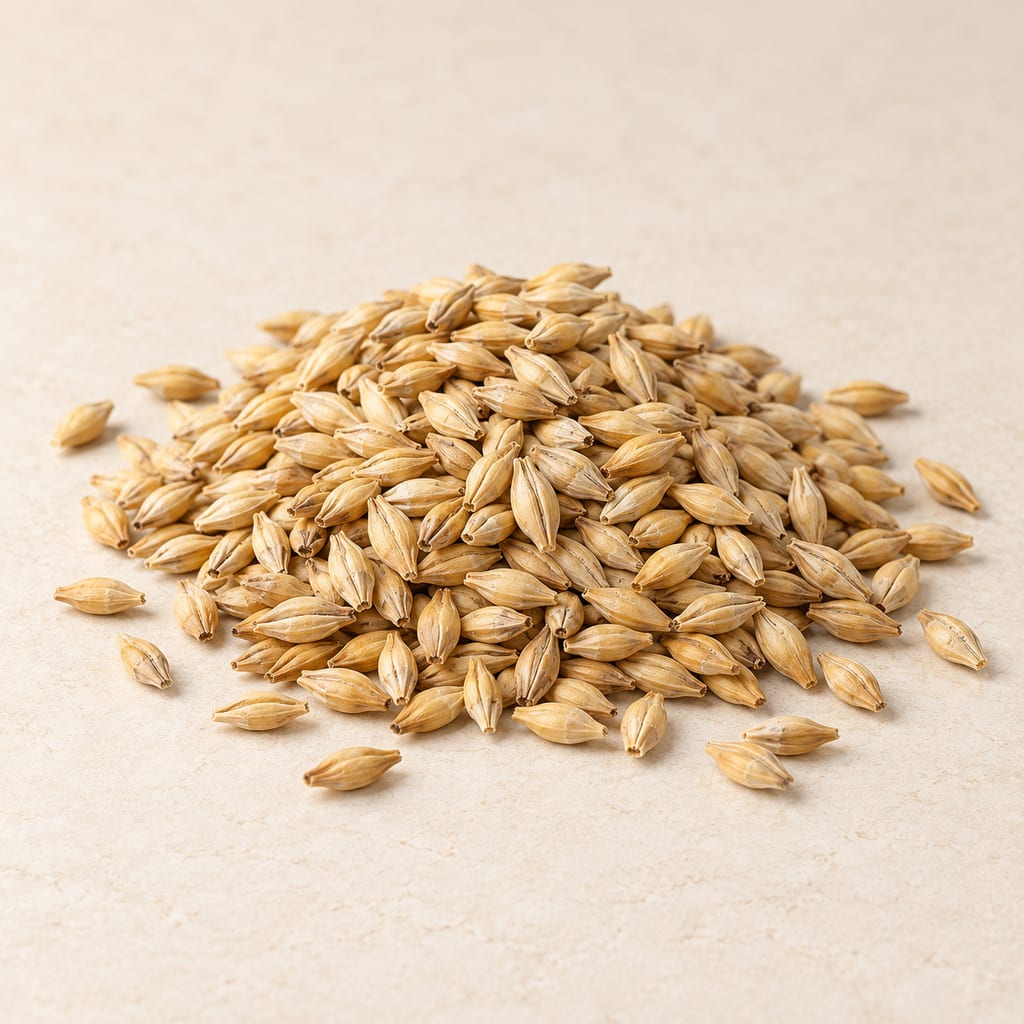
The barley is malted first. It is steeped in water, germinated under controlled conditions so that enzymes modify the starch reserves in the grain, and dried in a kiln to stop growth. The maltster turns the germinating bed to keep it loose and to limit the build-up of heat. What leaves the kiln is the green material for every malt, pale or dark. French & Jupp’s makes its patent malts either from barley or from kiln-dried malt, transferring freshly kilned malt into a small-batch roasting drum, raising the temperature gradually to a held optimum and stopping at the desired colour. Extended roasting times are what give its pale chocolate and chocolate malts their depth of flavour.
Pauls Malt describes the roast of its chocolate malt, Dark Glow, at its Knapton plant in North Yorkshire: kiln-dried malt is roasted in a drum, water is used to extend the roast and to quench and cool the grain at the end, and the cooling prevents combustion. The water does its work inside the roasting drum; the finished kernels are dry, at 2.5 percent moisture or less in the English specification and 5.5 percent in Briess’s typical analysis. Pauls lists no enzymatic potential.
The chemistry is browning. Roasting follows the Maillard reaction between amino compounds and sugars, caramelisation of sugars and pyrolysis. A time-course study sampled three classes of roasted product, roasted barley, crystal malt and black malt, throughout industrial manufacture and measured moisture, colour and volatiles. Despite their different flavours the three shared many compounds. Water sprays produced short-lived increases in some compounds, such as 2-cyclopentene-1,4-dione, and decreases in others, such as pyrrole, and the fastest changes in colour and, above all, flavour came at the end of roasting and on the cooling floor, which is why batch-to-batch consistency demands control of the final minutes of the roast.
The lightest chocolate malt is sweet. French & Jupp’s Light Chocolate Malt has slightly reduced roast notes and an enhanced sweet profile, with nuts and dried fruit, and suits porters, brown ales, Scotch ales and dark lagers; behind the roast coffee and smokiness it shows muscovado sugar, maple syrup, caramelised sugar, black treacle and a finish of dark chocolate and chocolate liquor, with dates and prunes.
Pale Chocolate and Chocolate Malt carry the classic flavour. Fresh roast coffee comes first, with a balanced bitterness and light smoke, then dark treacle, caramel, caramelised sugar and cocoa, hazelnut and peanut, and a long finish of dark chocolate. At low percentages in the grist they bring a hint of dark chocolate to dark lagers and ales; at higher inclusions roast coffee and a robust bitterness dominate, which suits strong ales, porters and stouts. Combined with crystal malts, which add sweetness, they can give a velvety milk-chocolate flavour. Briess describes its Chocolate Malt as rich roasted coffee and cocoa, brown in colour, and its Dark Chocolate Malt as rich, smooth coffee. Past this point the flavour turns toward the sharper, drier black malt.
Chocolate malt contributes colour and flavour extracted by hot water. It does not convert starch: roasting leaves a dark malt with little or no enzyme activity, and Pauls lists none for its chocolate malt. The mash therefore depends on a pale base malt, such as American two-row pale malt, which carries the enzymes that convert starch to fermentable sugars, and the roasted malt rides along in the same vessel. The English specification for chocolate malt gives an extract of 71 to 73 percent on the EBC basis, so the grain still dissolves into the wort, though not as a source of sugar to ferment.
The usual quantities are small. Briess suggests 1 to 10 percent of the grist; a stout or porter may carry more, and a brown ale or dark lager less. The Dark Cellar imperial stout in the American Homebrewers Association’s 2026 Big Brew recipes uses 2 pounds of chocolate malt, mashed with the other grains, together with 2 pounds of roasted barley, as separate ingredients. The two are not interchangeable in that formulation, and nor are any two dark grains: the choice sets the colour, the dryness and the type of bitterness of the finished beer.
Milling gives the water access to the inside of the kernel; chocolate malt is sold whole or preground, and the brewer chooses the form that suits the equipment.
Buy chocolate malt by its maltster’s name, grade and analysis, since the colour range runs from about 200 to 1,250 EBC across products carrying the word. Briess stores its roasted malts in a temperate, low-humidity, pest-free place below 90°F, warns that improperly stored malt loses freshness and flavour, and says whole-kernel roasted malts may begin to show a slight flavour loss after 18 months from manufacture. Receipt and storage guidance from the malt trade is to inspect packaging for damage and pests, keep malt clean and dry away from heat and moisture, and protect partly used milled bags.
Barley malt contains gluten, as do wheat malts, so chocolate malt and chocolate wheat malt are unsuitable for coeliac disease; ordinary beer is not shown to be gluten-free by fermentation.
When and by whom the first malt was sold as chocolate malt is unknown, as is the exact roasting schedule of any one maltster, which is proprietary.
Barley (gluten)
Documented manufacture of named products, not a claim of the category’s birthplace or the Dark Cellar supplier.
Barley is a hardy cereal, domesticated in the Middle East over 10,000 years ago, eaten whole, pearled or milled, malted for brewing, and grown with koji mold for barley miso.
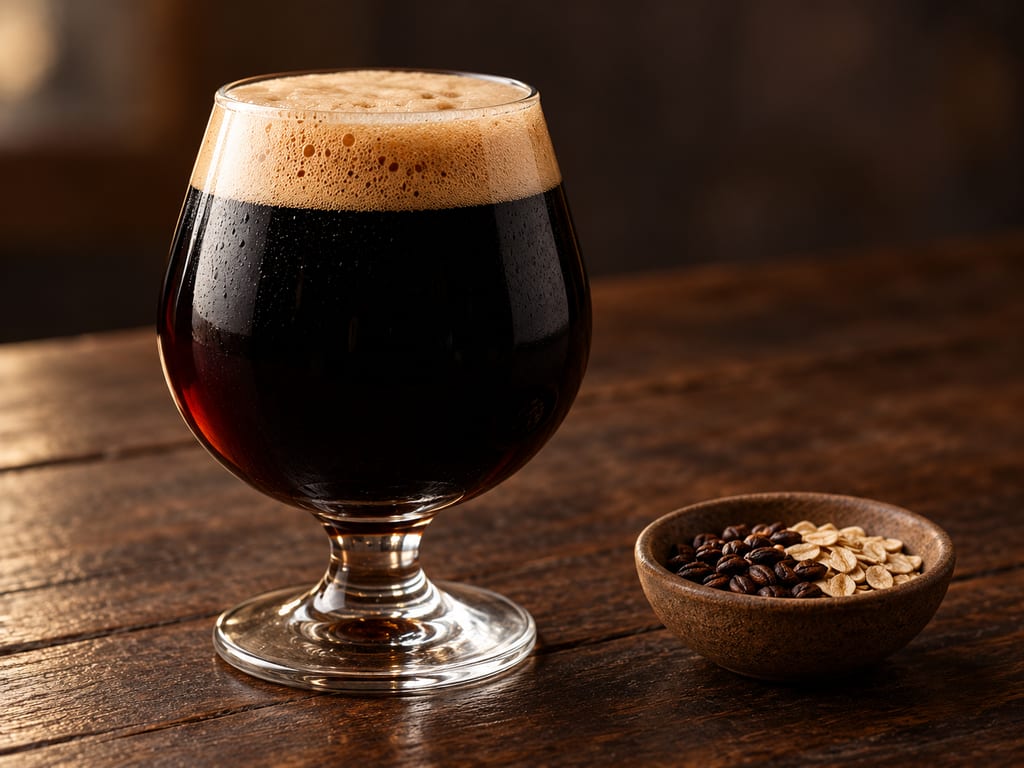
An all-grain imperial stout with pale malt, roasted barley, dark malts and oats, fermented with an American ale-yeast starter.
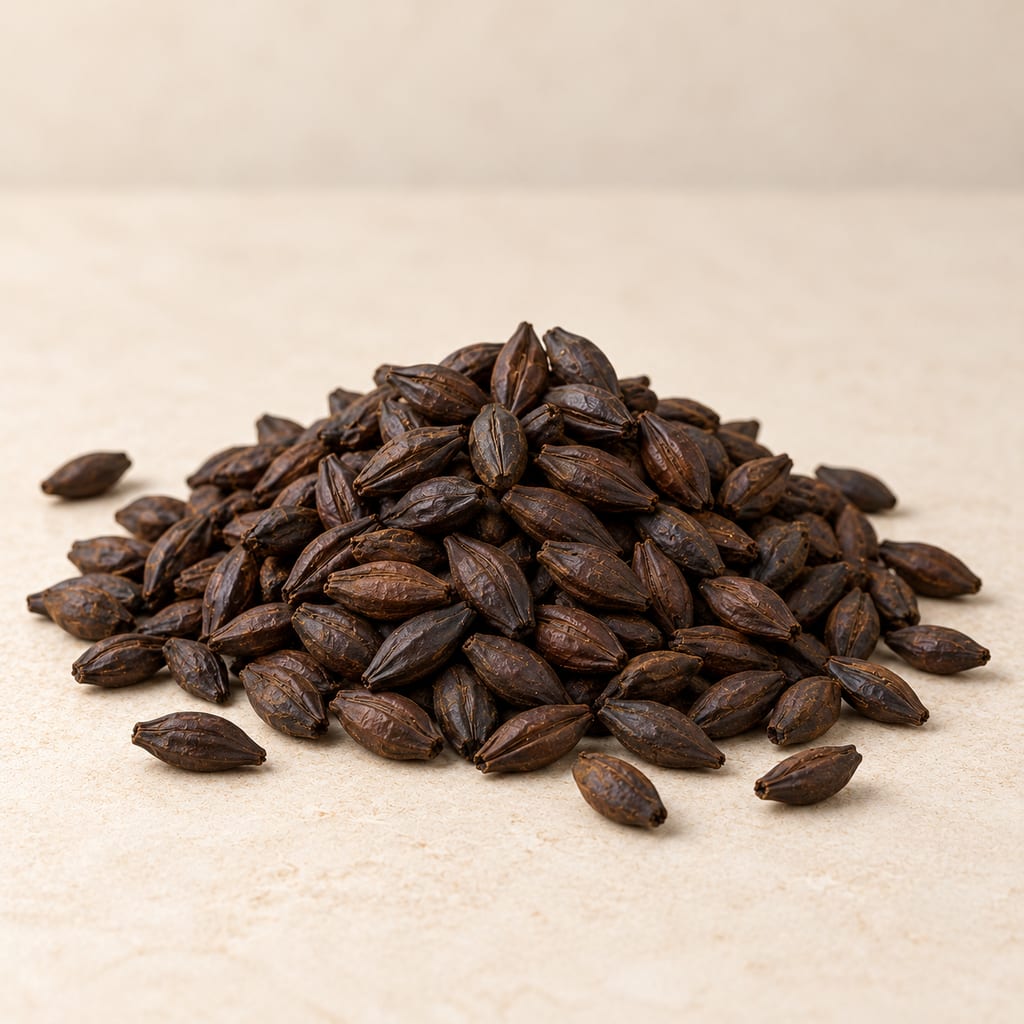
An intensely roasted malt used for dark colour and dry roasted flavour in beer, with a nineteenth-century patent name and distinct whole, milled and flour forms.
A dark roasted barley malt grade used for strong colour and coffee-to-chocolate roast character; standard Type3 differs from the husk-reduced Special line.
Roasted specialty malt named for coffee-like aroma, with the exact roast grade and colour varying by maltster; it is distinct from added coffee beans.
Dark-roasted unmalted barley used for colour and a dry roasted edge in stout, with other roast grades used in grain infusions and foods.
A lightly kilned brewing base made from two-row barley. It supplies starch and enzymes for the mash, with the maltster’s product and lot analysis defining its brewing properties.
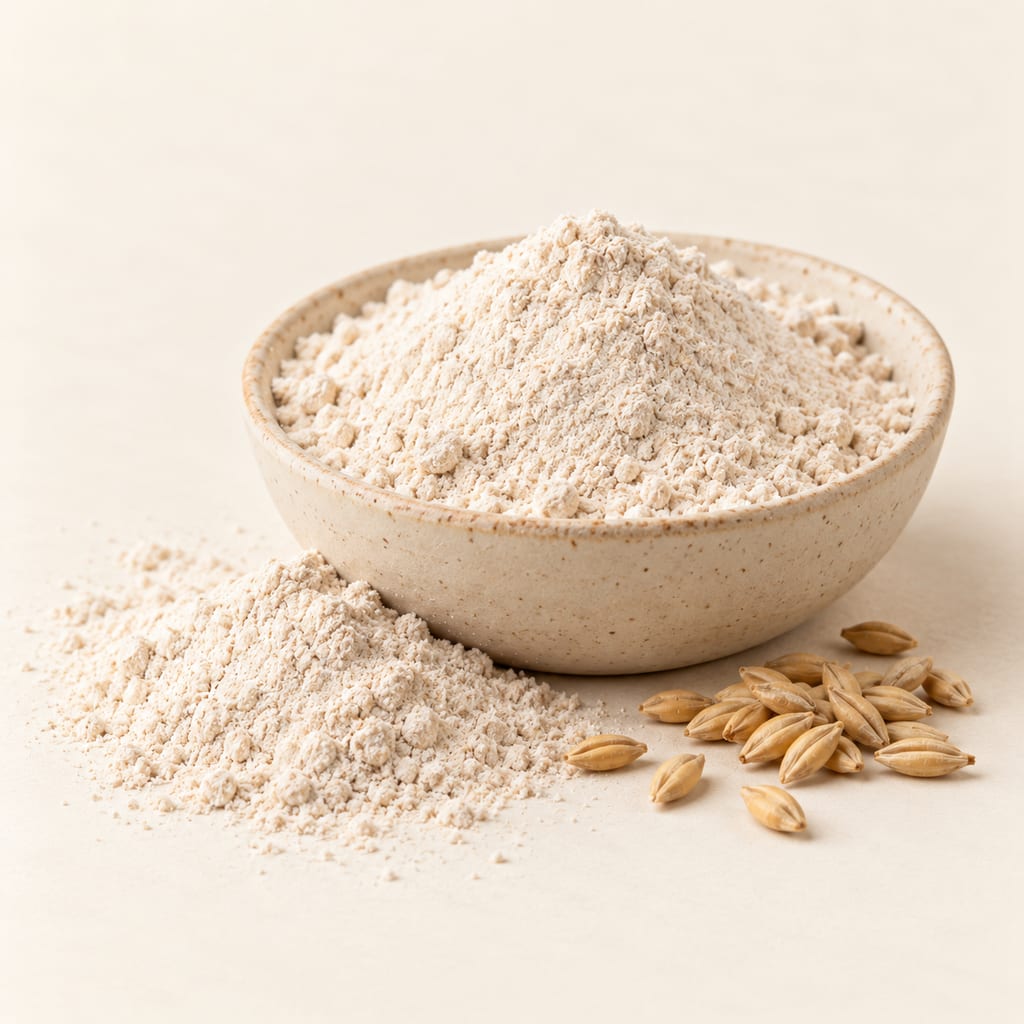
Barley flour is ground barley grain; whether it comes from pearled or hulless kernels, its milling and limited wheat-like gluten-forming ability shape the doughs and foods it can make.
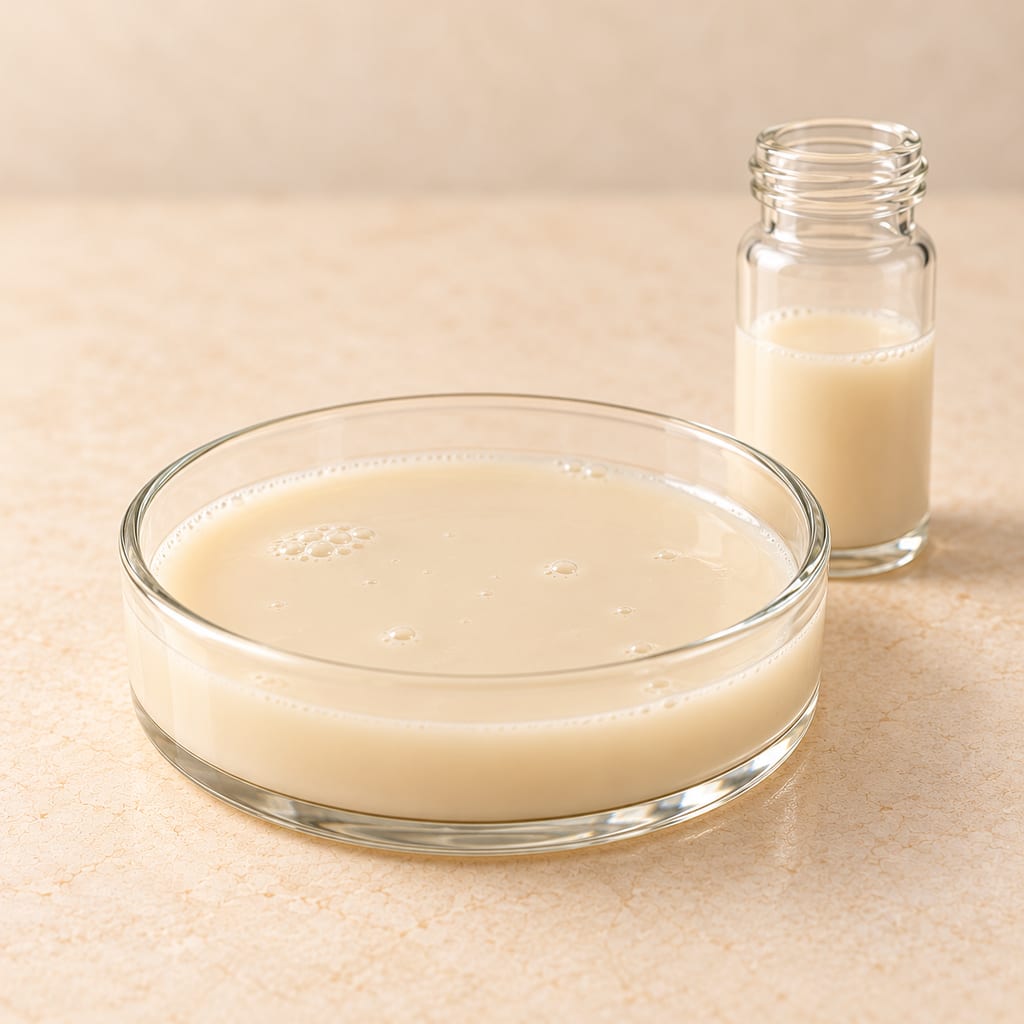
Brewer’s yeast is a working name for living cultures selected for brewing, not one strain or always one species. Ale and lager cultures differ, and older household books may use the term for foam or sediment from brewery beer.
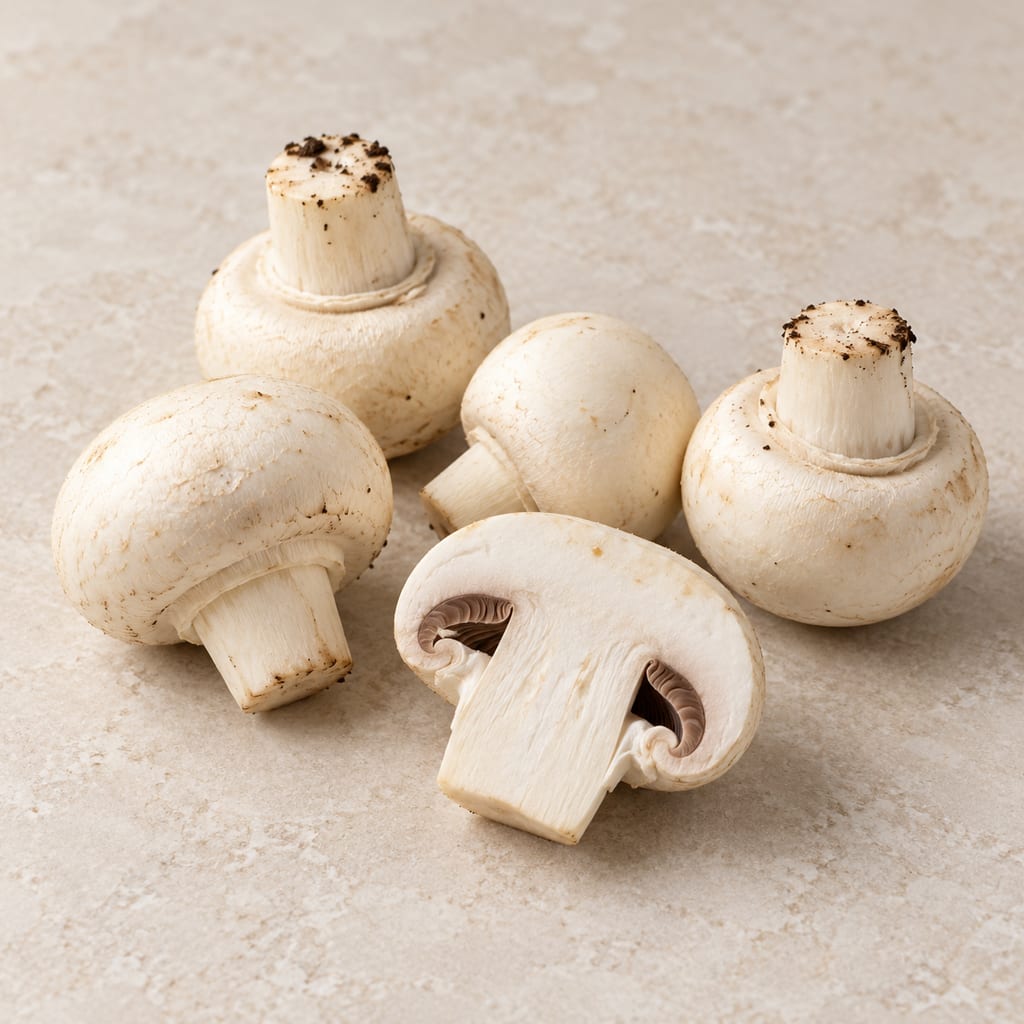
A cultivated form of Agaricus bisporus sold young as a button and at more mature stages as cremini or portobello, used fresh or preserved in everyday cooking.
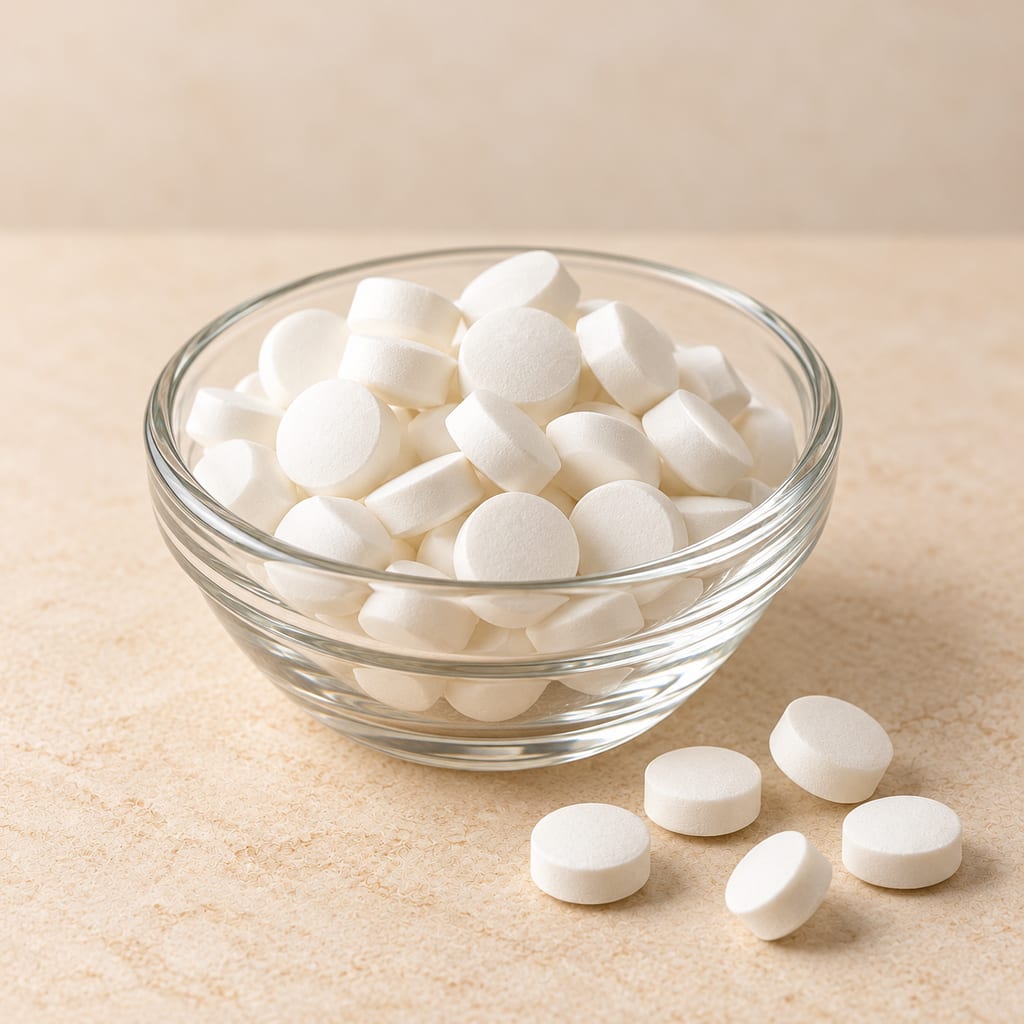
Campden tablets portion a metabisulfite salt for particular wine, cider or other fermentation uses. Tablet strength and the resulting free sulfur dioxide depend on the product and liquid.
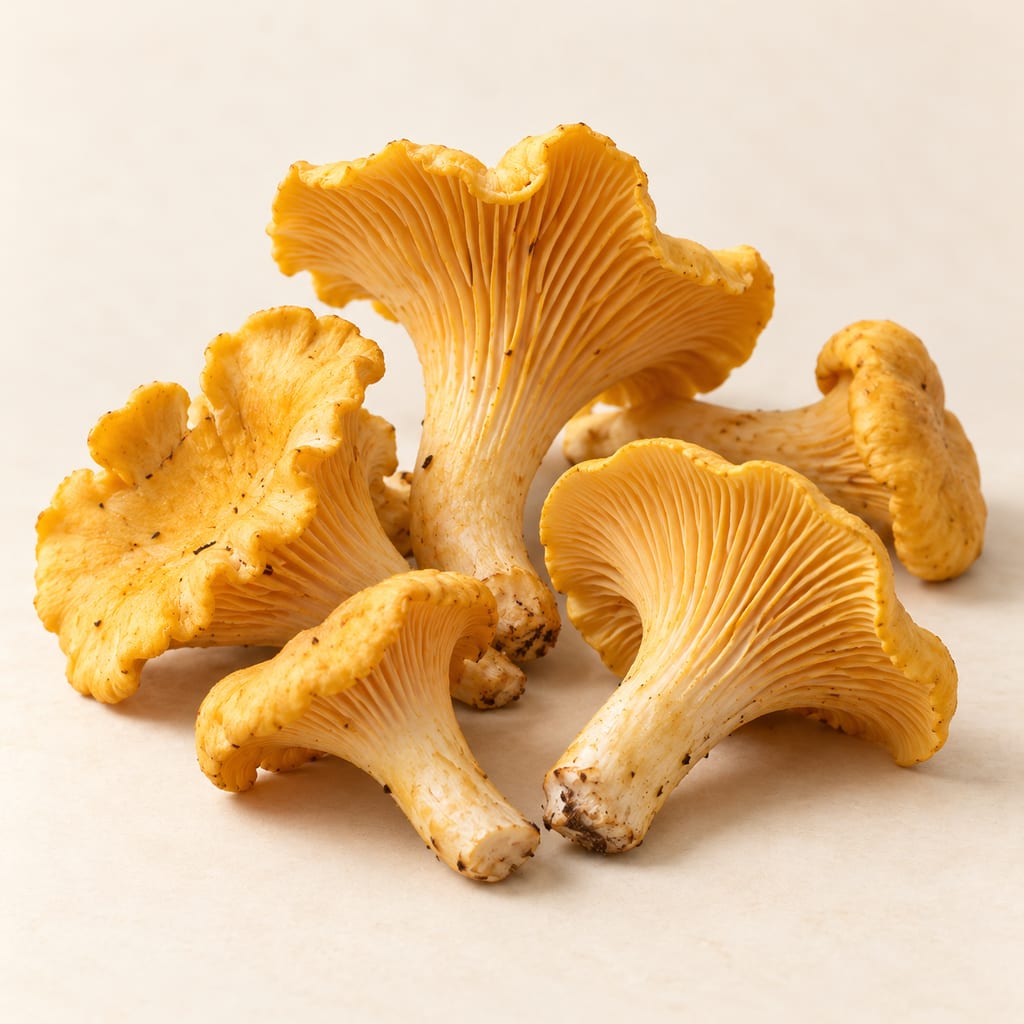
Chanterelles are wild, tree-associated edible mushrooms, particularly the European golden chanterelle Cantharellus cibarius, prized for their firm flesh, fruity aroma and use fresh, frozen, dried or pickled.
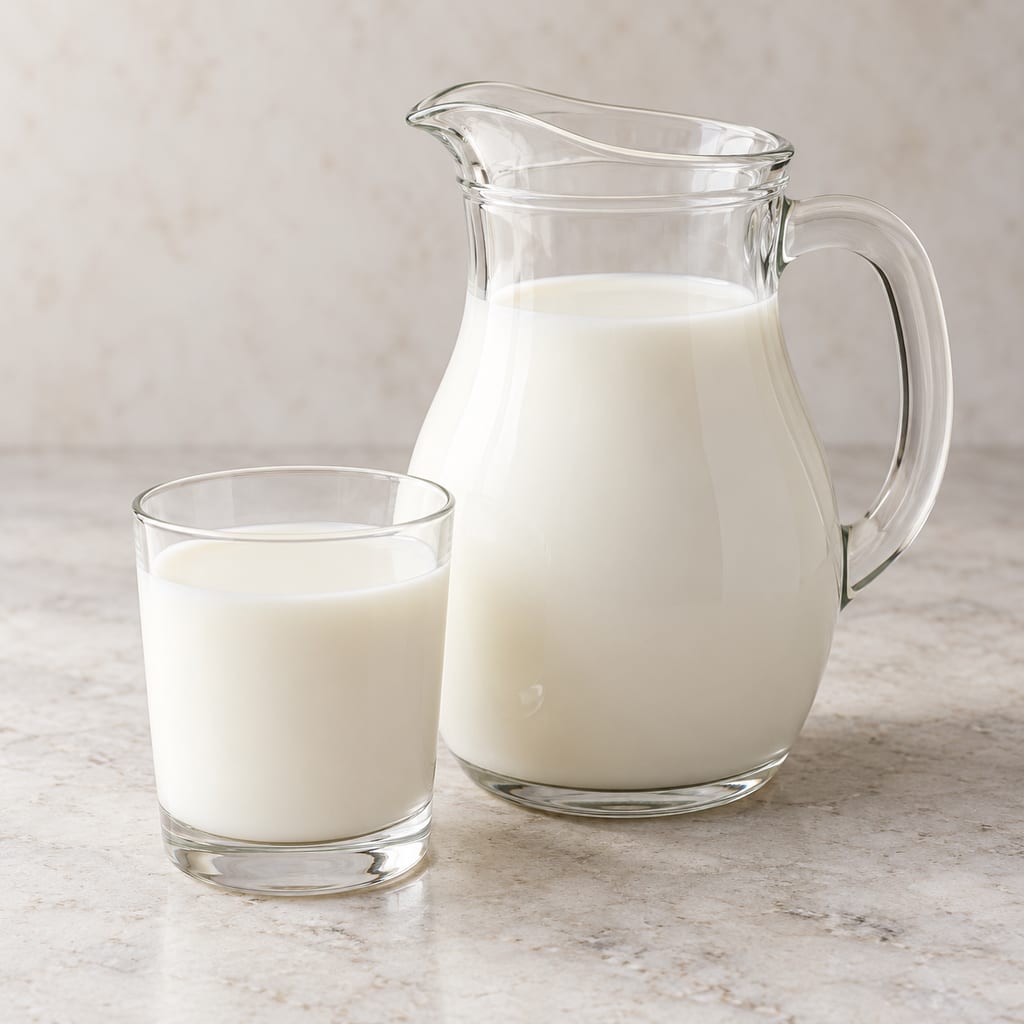
Cow milk and water-buffalo milk are distinct dairy substrates whose fat, protein and mineral balance affects cheese; this ingredient name preserves a choice rather than defining a blend.
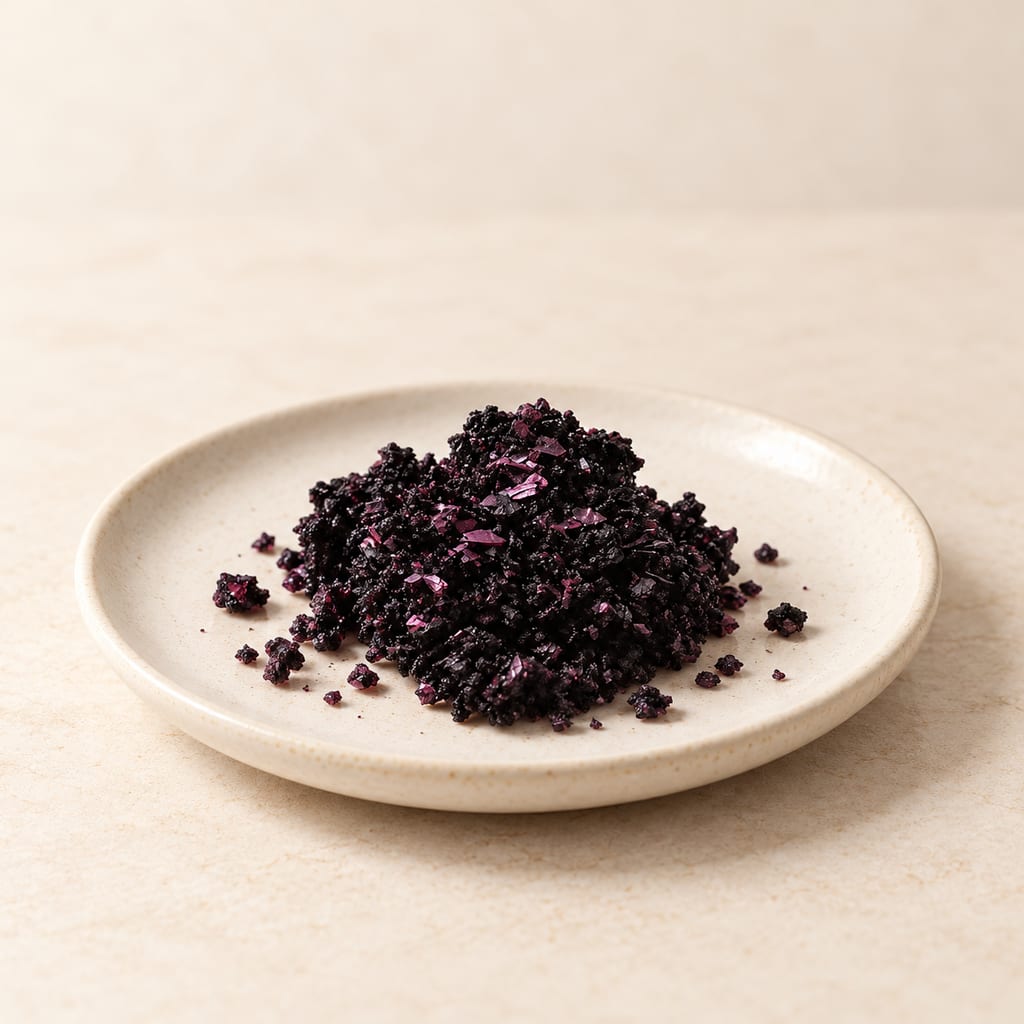
A mixed crystalline wine-vessel deposit, chiefly potassium hydrogen tartrate, used historically in wine recipes and recovered for refining into purer products.
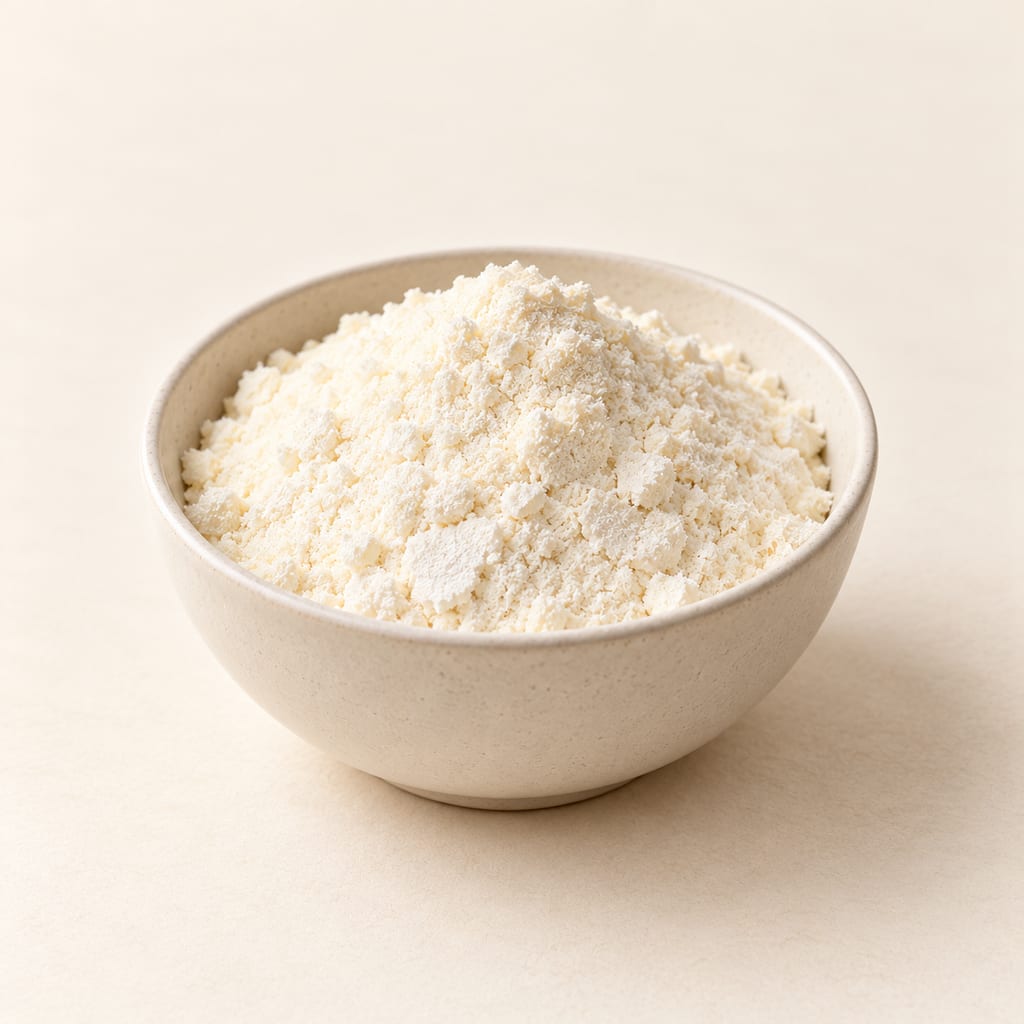
Dry milk is a family of dairy ingredients made by removing most water from milk or cream. The name includes distinct whole, partly skimmed and nonfat powders; fat level, heat treatment and particle form determine handling and use.

A Cap-Pelé boucanière is an Acadian herring-smoking building. The documented Willie Niles example is a one-storey wood-frame structure with a ridge smoke vent and interior bays for hanging fish-bearing cannes.

Achcharu is a family of Sri Lankan vinegar pickles made with mixed vegetables or seasonal fruit and a piquant spice dressing. This version is a quick, refrigerated, non-fermented mixed-vegetable pickle.

The acocote is a long, hollowed and dried gourd used to draw aguamiel from a mature maguey. It is a harvesting tool: the sap is transferred to a separate vessel before it ferments into pulque.

Adrak murabba preserves young ginger in sugar syrup, a sweet South Asian preparation recorded in Indian cookery and food-processing sources.

Parkia biglobosa seeds are fermented into regional West African seasonings, including nététou, iru, dawadawa and soumbala. The yellow fruit pulp is a separate food, and names and methods vary by place.

Japanese reddish-brown vinegar from sake lees matured about three years, turned to vinegar by acetic bacteria; the vinegar of Handa and Edomae sushi rice.

A refined common-wheat flour blended for a broad range of baking; its protein and behavior vary with wheat, milling and market.

The almond mushroom, Agaricus subrufescens, was cultivated in eastern North America in the 1800s, lost its market, and returned as a cultivated mushroom from Brazil, where it is grown under several names.
No community contributions have been published for this entry yet.
Sign in to contribute. Published comments and photos are free to read.
American Homebrewers AssociationRecipe use
2026 Official Big Brew Recipes: Dark Cellar Imperial StoutThe Dark Cellar ingredient table specifies 2 lb chocolate malt and, separately, 2 lb roast barley, mashed with the other grains. It does not name the chocolate malt’s producer or grade.
Cited in: In the mash
Maltsters’ Association of Great BritainIngredient identity · Fermentation function
How Malt is MadeSeed anatomy, steeping and controlled germination, heat and aeration, floor and modern malting, kilning and rootlet removal. General manufacture, no universal American pale-malt schedule.
Cited in: How it is made
Briess Malt & IngredientsIngredient identity · Fermentation function
The Malting ProcessSteeping, germination and modification expose starch reserves; green malt is dried; base and specialty malts receive different finishing treatments. Manufacturer process examples are not recipe-specific settings.
Cited in: How it is made
Briess Malt & IngredientsIngredient identity · Fermentation function
Understanding a Malt AnalysisLot variability; milling and kernel assortment; protein, extract and diastatic power; fine/coarse grind and dry/as-is analytical bases; roles in brewing performance. No numerical specification assigned to the generic ingredient.
Cited in: In the mash
RahrBSGStorage
Receipt, Storage, & Pest Management Best PracticesInspect packaging and pests; clean dry storage away from heat/moisture; protect milled partial bags. Product-sensitive storage recommendations do not establish a universal shelf life.
Cited in: Buying, keeping and diet
Celiac Disease FoundationAllergens
Sources of GlutenBarley and malt are gluten sources, including malt extract/flavouring; ordinary beer is not established gluten-free by fermentation.
Cited in: Buying, keeping and diet
Pauls MaltIngredient identity · Manufacture
Chocolate Malt – Dark GlowKnapton, North Yorkshire production; kiln-dried malt roasted with water used to extend the roast and to quench and cool; no enzymatic potential. Product-specific manufacture and sensory profile.
Cited in: How it is made; In the mash
IREKSIngredient identity · Manufacture
IREKS Chocolate Malt: Product InfoChocolate malt 800 to 1000 EBC; roasted barley malt with impressions of dark chocolate or coffee
Cited in: Barley that has been roasted nearly to chocolate brown; What it tastes like at each degree of roast
Briess Malt & IngredientsIngredient identity · Manufacture
Chocolate Malt: Product Information SheetChocolate Malt: typical analysis 350 SRM and 5.5 percent moisture; rich roasted coffee and cocoa flavour; suggested use 1 to 10 percent in porters, stouts, brown ales and dunkels; made in the USA from AMBA/BMBRI recommended two-row varieties; whole kernel and preground; store below 90 F, slight flavour loss possible after 18 months; typical values are not a specification or guarantee.
Cited in: Barley that has been roasted nearly to chocolate brown; What it tastes like at each degree of roast; Buying, keeping and diet
Briess Malt & IngredientsIngredient identity · Manufacture
Find Your Perfect MaltChocolate Malt 350 SRM; Dark Chocolate Malt 430 SRM; Roasted Barley 300 SRM; Black Barley 550 SRM; Black Malt dry roasted, sharp to neutral, 1 to 10 percent; roasted barley 3 to 7 percent
Cited in: Where it sits among the dark malts
Food ChemistryFermentation function
Flavour generation during commercial barley and malt roasting operations: a time course studyIndustrial roasted barley, crystal malt and black malt sampled through manufacture; Maillard reaction, caramelisation and pyrolysis; water sprays alter volatile formation; rapid change at the end of roasting and on the cooling floor; batch-to-batch consistency needed.
Cited in: How it is made
Weyermann Specialty MaltsIngredient identity · Manufacture
Weyermann Chocolate Wheat MaltChocolate wheat malt: made from wheat, no enzymatic activity, notes of coffee, dark chocolate and well-toasted bread, 900 to 1200 EBC
Shut up about Barclay Perkins (Ron Pattinson), quoting W. L. Tizard, The Theory and Practice of Brewing, 1846History
Patent malt in the early 19th century1816 ban on colouring; Wheeler’s roasted malt at 360 to 400 F in revolving cylinders; patent, black, porter or roast malt; Tizard 1846 on quality, mash-tun problems and use in moderation
Cited in: Where it sits among the dark malts; Wheeler’s cylinder and the origin of the dark malts; Open points
French & JuppsHistory · Manufacture
The Malt Collection: From Past to PresentPatent malt collection: amber 23 to 45 EBC, brown 115 to 140, light chocolate 205 to 250, pale chocolate 450 to 700, chocolate 1020 to 1250, black 1350 minimum, roasted barley (unmalted) 1350 to 1700; flavour descriptions; extended roasting times; brown malt history; roasting drums installed 1914 and gas-fired drum roasting 1964
Cited in: Barley that has been roasted nearly to chocolate brown; Where it sits among the dark malts; Wheeler’s cylinder and the origin of the dark malts; How it is made; What it tastes like at each degree of roast; In the mash
Brookston Beer Bulletin (Jay Brooks)History
Patent No. 4112: A New Or Improved Method Of Drying And Preparation Of MaltBritish Patent 4112 issued to Daniel Wheeler on 28 March 1817; Guinness replaced its dark malt stock by 1828
Cited in: Wheeler’s cylinder and the origin of the dark malts
