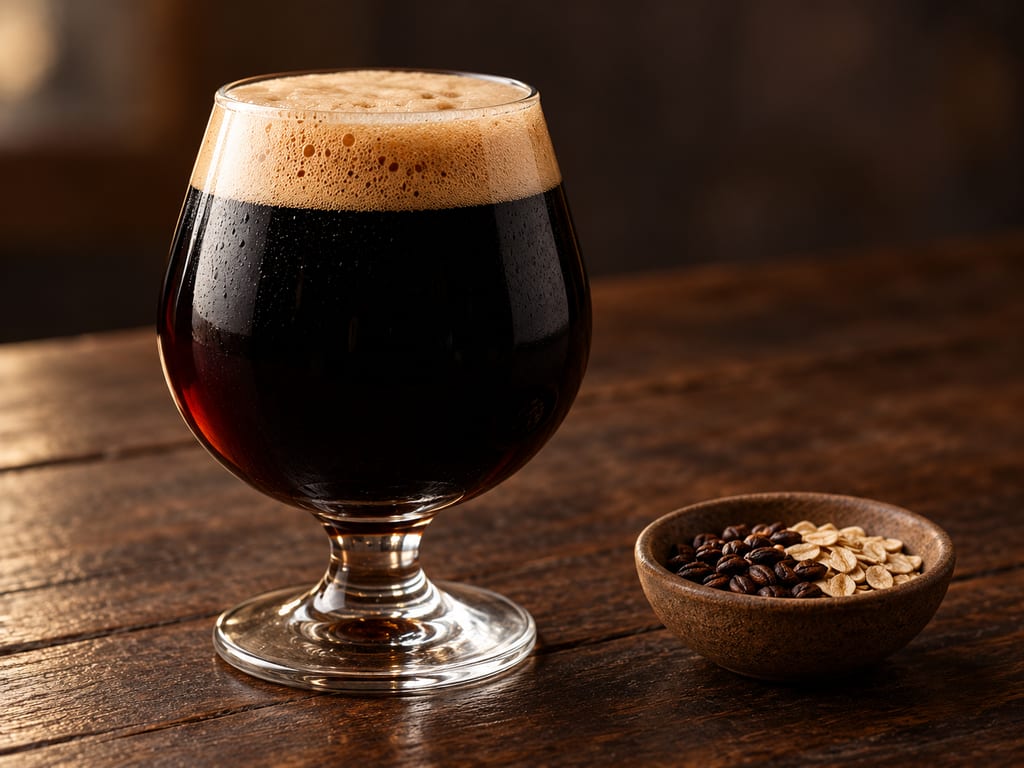
Dark Cellar imperial stout
An all-grain imperial stout with pale malt, roasted barley, dark malts and oats, fermented with an American ale-yeast starter.
 FermenteaWhere food goes to change
Substrates
Roasted specialty malt named for coffee-like aroma, with the exact roast grade and colour varying by maltster; it is distinct from added coffee beans.
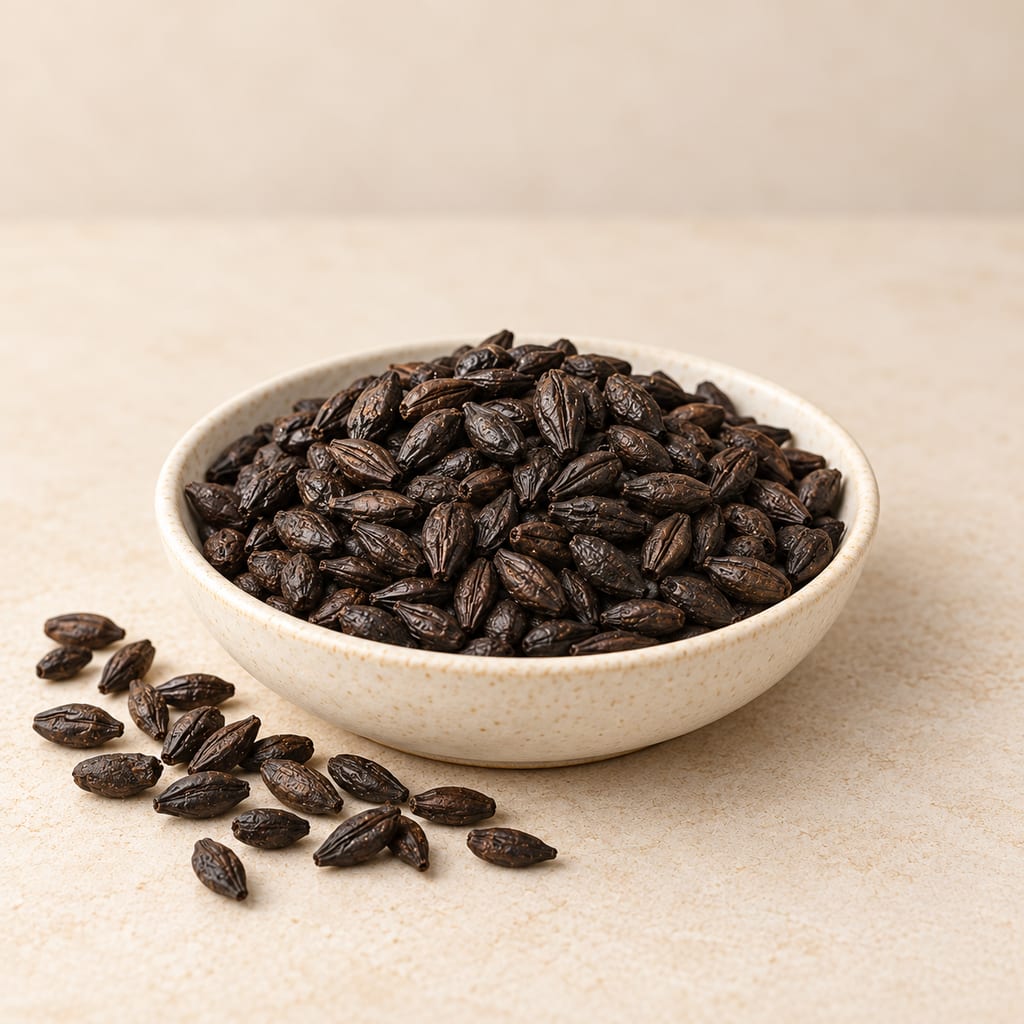
Coffee malt is a roasted specialty brewing grain named for a resemblance in aroma and flavour. Its kernels can bring coffee-like roast into beer without a separate addition of coffee beans or brewed coffee. The name describes a useful sensory direction, but it does not identify one universally standardized product. Different maltsters attach it to different positions in their ranges, from a lightly roasted brown malt to a darker chocolate-style malt.
The wider story belongs to the development of coloured brewing malts. In the 1857 edition of The Theory and Practice of Brewing, W. L. Tizard described brown malt made by rapidly drying moist germinated barley over a hot kiln. He also described a more concentrated black malt roasted in revolving cylinders, comparing the operation with coffee roasting. These were distinct nineteenth-century grain treatments, giving brewers different materials to blend for colour and flavour. Heat, grain moisture and the roast-house equipment were already central to the character of dark brewing ingredients.
Today's maltsters can select more narrowly for a particular roast character. They describe espresso, milky coffee, chocolate, nuts, pastry and toast across related products. The continuity lies in controlling grain treatment to shape a drink's flavour; it does not make every modern coffee malt identical to Tizard's brown or black malt. The ingredient is best understood through its producer's definition, its processing and the recipe in which it is used.
Crisp's roasted-malt range calls one product Chocolate Malt or Coffee Malt and describes prominent espresso notes. Its Brown Malt is listed separately, with milky-coffee and pastry impressions. Valley Malt takes another approach: its Coffee Malt is described as lightly roasted and also called brown malt. The naming overlap is useful information for a buyer. A request for coffee malt may need clarification even when every supplier is using the term honestly.
Castle Malting sells Château Café as a Belgian coffee malt, with a declared wort-colour range of 420–520 EBC. Valley Malt gives its own Coffee Malt a colour of 150 SRM. These are the makers' stated analytical descriptions, using their named scales, so the two figures cannot be compared directly, and neither product defines every grain sold as coffee malt.
In the linked Dark Cellar imperial stout, Coffee malt appears alongside a separately listed chocolate malt. The formulation brings the two into one large grain bill with other roast and caramel ingredients. That separation makes sense in a market where manufacturers arrange their specialty ranges differently. A brewer choosing the coffee component can look for the intended aroma and colour within the available maltster's range, while the chocolate component supplies another part of the stout's overall profile.
The usual grain behind these brewing malts is barley, Hordeum vulgare. Barley carries starch in its endosperm as well as proteins, outer tissues and an embryo. Those components make it both a potential source of wort material and a substrate for heat-generated flavour. A maltster's choice of grain and its preparation influence the reactions available during roasting. A familiar kernel shape does not mean that all the purchased products have the same internal condition.
Malting begins with water uptake and controlled germination, followed by drying. Enzymes formed or activated during germination modify the endosperm, breaking down parts of its structure. Pale base malts are prepared to retain useful enzyme activity for the mash. Specialty malts can instead receive treatments that favour a more pronounced colour and aroma. Producing a dark flavour ingredient and preserving maximum mash-conversion capacity are different manufacturing aims.
The starting material for a roast also varies between producers and product families. Simpsons distinguishes its green-malt crystal process from roasted products made with chit malt, while its roasted barley uses raw barley. Each starting condition gives the roast house a different material to heat. Germination and the grain's moisture affect the constituents available for later transformations. The supplier's processing description therefore helps explain why two dark grains can look related while having reached that appearance through different stages.
Drying and roasting both apply heat, but they can be directed toward different results. Gentle drying removes water while preserving important properties of a base malt. More intensive treatment develops strong colour and roast aroma. Castle describes Château Café as first lightly kilned and then roasted, while Crisp places its coffee/chocolate product in a distinct roasted-malt range. These descriptions identify a deliberate manufacturing stage before the brewer purchases the grain.
The general chemistry includes reactions between sugars and amino compounds, changes to sugars under heat and further thermal breakdown. These non-enzymatic pathways create mixtures of volatile aroma compounds and coloured material. Moisture, time, temperature and the starting substrate influence their development. A coffee-like impression can consequently arise from roasted cereal chemistry without coffee being an ingredient. It is a resemblance in sensory character, not proof that the grain shares coffee's complete chemical composition.
Cooling is part of controlling the finished roast. Simpsons describes discharging and cooling grain after the desired result has been reached, with different treatments producing different products. Its process also includes analysis and blending batches to achieve consistent specifications. The malt in a bag therefore reflects decisions about preparation, heating, stopping the roast and managing variation. The finished shade alone cannot reconstruct those decisions or supply an exact roasting schedule for another maker.
Darker processing can move a malt's sensory character toward coffee, chocolate, bitterness and burnt notes, but the relationship is not one simple sliding scale. A maltster may target a particular aroma within a chosen colour range. Its grain substrate, moisture and roast programme affect the balance. Two ingredients with similar analytical colour can differ in the flavours they bring to wort, while different-looking kernels can share some roast impressions.
Crisp's product descriptions illustrate that range within a single catalogue: Brown Malt has a lighter coffee association, its chocolate/coffee malt emphasizes espresso, and Pale Chocolate is described with creamy-coffee notes. Valley Malt's lighter-roast terminology adds another commercial perspective. For a brewer, those descriptions offer a range of roast effects to place within the beer's malt profile. The shared coffee vocabulary spans several positions between lighter brown and darker chocolate-style grain.
The external husk colour is also an incomplete guide. The material inside the kernel has undergone its own changes, and colour specifications normally concern a defined wort or extract assessment. The supplier's colour unit and sensory description give the brewer two different ways to assess the purchase: one describes an analytical result, the other a flavour and aroma profile. The physical grain may show visible roast variation, with husk and interior presenting different parts of the treated cereal.
Coffee malt enters a grain bill as an ingredient, not as a starter culture. During mashing, water extracts soluble grain material while enzymes from active malt convert accessible starch into smaller carbohydrates. Brewing yeast later uses the fermentable sugars in the collected wort. The roasted grain can contribute colour, flavour and extract, but its name alone does not establish how much enzyme activity survives its particular treatment.
Strong roasting can reduce enzyme activity and alter the carbohydrates available for fermentation. Research on roasted malts has also examined changes in wort fermentability as roast intensity increases. Those general findings help explain why specialty grains are used alongside an active base malt. They do not provide a measured diastatic power or a fixed fermentability for every product called coffee malt. The producer's analysis is the appropriate source for that precision.
Nor should roasted character be confused with residual sweetness. A coffee-like aroma may seem bitter or dry, while the complete wort still contains sugars and larger carbohydrates from other ingredients. Mash conditions and yeast performance affect the final beer. The balance that reaches the glass includes the roast grain, the rest of the grist, hops and fermentation products. Coffee malt supplies one contribution within that system.
The published Dark Cellar formulation includes 1 pound, or 454 grams, of Coffee malt. It sits alongside 25 pounds of American two-row pale malt and separate additions of chocolate malt, roasted barley, Carafa III, caramel 60, oats and black patent malt. The fact that chocolate malt and coffee malt have separate lines is worth preserving, even though some manufacturers use those names as synonyms. The brewer's formulation identifies two purchased ingredients rather than one automatically combined category.
The American Homebrewers Association's 2026 Big Brew publication presents the recipe after Joel McGormley's competition success in 2024. Its all-grain approach uses a mash followed by a boil and an American ale yeast fermentation. The coffee malt is part of that brewing material. No coffee infusion, bean addition or coffee extract appears in the ingredient list, so those would be changes to the documented preparation.
The extract alternative replaces the pale base malt with pale malt extract and retains the other grains for milling and steeping. This preserves a role for the specialty-grain selection while changing how the main wort base is supplied. Water takes up the selected grains' soluble contributions alongside the extract, so the coffee malt remains part of the flavour and colour mixture. The finished stout's roast and chocolate impressions come from that combined formulation and its subsequent brewing and fermentation.
Coffee-named malts appear in stouts and porters, but their uses extend to other darker beers. Castle's Château Café guidance includes Scottish ale and dark Belgian styles, with smaller additions suggested for a coffee hint in brown ale. Crisp's coffee/chocolate malt is presented for stout, porter and strong mild beer. These are product-specific brewing suggestions that help connect sensory character with intended use.
Begin with the exact recipe's ingredient name, then compare the available producer's description. Colour, roast intensity, husk status, malted or unmalted identity and the intended application all matter. A product called brown malt by one maker may resemble a coffee malt elsewhere, but that overlap is a reason to examine the details. It does not establish a one-for-one substitution across every grain bill.
Manufacturer usage recommendations also need their scope. They guide formulation with that maker's product; they do not define a food-safety limit or a target that every recipe must reach. Dark Cellar's amount is an actual example, not a universal dose. If a different product is selected, record it as part of the batch's ingredient information so a later comparison can distinguish a change of roast ingredient from a change in mash or fermentation.
Whole kernels and pre-milled malt offer different practical forms. Milling prepares the interior for extraction in the brewing method, while whole grain remains intact until the brewer needs it. The American Homebrewers Association recommends cool, low-moisture storage and keeping malt protected from moisture. It also notes that poor storage diminishes flavour and aroma. A product can therefore lose some of the very character for which a specialty malt was selected before its analytical identity has obviously changed.
Keep the malt in a clean, closed container and follow the producer's package directions for storage and freshness. The useful principle is to protect a dry grain from damp conditions and contamination, rather than apply one shelf life to all coffee malts. Producer, milling state, packaging and storage conditions differ. Retaining those details helps explain changes in aroma or brewing performance between purchases.
Barley-based coffee malt contains gluten. Read the actual cereal and ingredient declaration when dietary restrictions matter, alongside the finished beer's full formulation. Dark Cellar names no coffee-malt producer, colour specification or individual aroma contribution. The modern product family's first use is also unestablished, and the coffee-like trade name alone gives no particular caffeine content.
barley (gluten)
Dark Cellar gives no maltster, growing place or product grade. Named producer products are examples, not provenance of the recipe’s coffee malt.
An all-grain imperial stout with pale malt, roasted barley, dark malts and oats, fermented with an American ale-yeast starter.
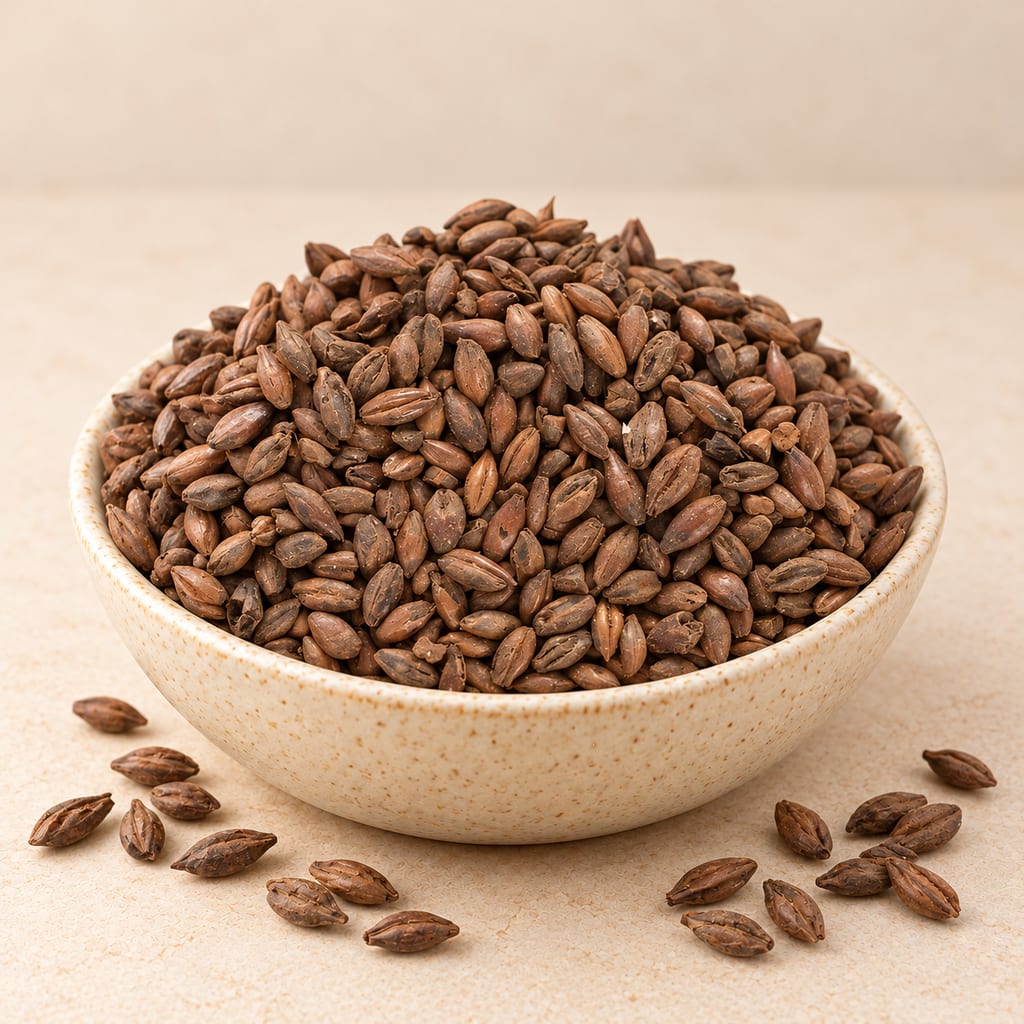
Chocolate malt is barley that has been malted and then roasted to a dark brown, used in porters, stouts and brown ales for colour and a bitter-cocoa, roasted-coffee flavour. It contains no cocoa.
No community contributions have been published for this entry yet.
Sign in to contribute. Published comments and photos are free to read.
Castle MaltingIngredient context
Château CaféChâteau Café: Belgian coffee malt made by kilning followed by roasting, with 420–520 EBC colour, its sensory profile and named brewing uses. These are this product’s specifications.
Cited in: A name that changes between maltsters; Why roasting tastes different from kilning; Colour and flavour are related, not identical; Choosing a product for a dark beer; Keeping the aroma in the grain
Valley MaltIngredient context
Coffee MaltValley Malt Coffee Malt: a lightly roasted product also called brown malt,150 SRM, with stout and porter applications.
Cited in: Coffee in the name, grain in the sack; A name that changes between maltsters; Colour and flavour are related, not identical
Crisp MaltIngredient context
Roasted MaltsCrisp’s brown, chocolate/coffee and pale-chocolate products illustrate different coffee-like roast profiles and positions within one malt range.
Cited in: Coffee in the name, grain in the sack; A name that changes between maltsters; Why roasting tastes different from kilning; Colour and flavour are related, not identical; Choosing a product for a dark beer
W.L.Tizard; London: sold by the author; Wellcome Library / Internet ArchiveIngredient context
The Theory and Practice of Brewing Illustrated, fourth edition,1857Tizard’s 1857 fourth edition, printed pages 86–88, describes blown brown malt and black malt roasted in revolving cylinders. The account documents period practice rather than the origin of the modern coffee-malt label.
Cited in: Coffee in the name, grain in the sack; Keeping the aroma in the grain
Simpsons MaltIngredient context
Malt Roasting ProcessSimpsons’ roast process distinguishes green malt, chit malt and raw barley, and describes heating, cooling, analysis and blending within its production system.
Cited in: Barley prepared for roasting; Why roasting tastes different from kilning
University of Minnesota ExtensionIngredient context
Understanding grain qualityBarley quality and malting: cleaning, steeping, germination, modification, drying and the role of enzymes in mash starch conversion.
Cited in: Barley prepared for roasting; Its contribution to wort and fermentation
Marčiulionytė et al.; Journal of the American Society of Brewing Chemists,2022Ingredient context
Roasted Malt for Distilling: Impact on Malt Whisky New Make Spirit Production and Aroma Volatile DevelopmentGeneral roasted-malt chemistry: Maillard reactions, caramelization, thermal breakdown, colour and aroma development. The original study concerns distilling malt; it does not measure the named recipe ingredient.
Cited in: Why roasting tastes different from kilning; Colour and flavour are related, not identical; Its contribution to wort and fermentation
American Homebrewers Association; Joel McGormleyIngredient context
2026 Official Big Brew Recipes: Dark Cellar Imperial Stout,p3Dark Cellar’s 1 lb(454 g) coffee malt is separate from chocolate malt and other roast grains, alongside 25 lb of pale base malt. The 2026 publication records the 2024 award and all-grain/extract alternatives; no coffee-malt maker is named.
Cited in: A name that changes between maltsters; Its contribution to wort and fermentation; Coffee malt in Dark Cellar; Choosing a product for a dark beer; Keeping the aroma in the grain
American Homebrewers AssociationIngredient context
How To Store Homebrew IngredientsMalt storage, moisture protection, whole and crushed forms, and the loss of flavour and aroma under poor conditions.
Cited in: Keeping the aroma in the grain
U.S.Food and Drug AdministrationIngredient context
Gluten and Food LabelingBarley is a gluten-containing cereal; the guidance explains gluten-related food labeling.
Cited in: Keeping the aroma in the grain
Lukinac and Jukić; Plants,2022Ingredient context
Barley in the Production of Cereal-Based ProductsBarley identity, Hordeum vulgare, kernel anatomy and changes during malting; a general cereal account rather than identification of the recipe malt’s cultivar.
Cited in: Barley prepared for roasting