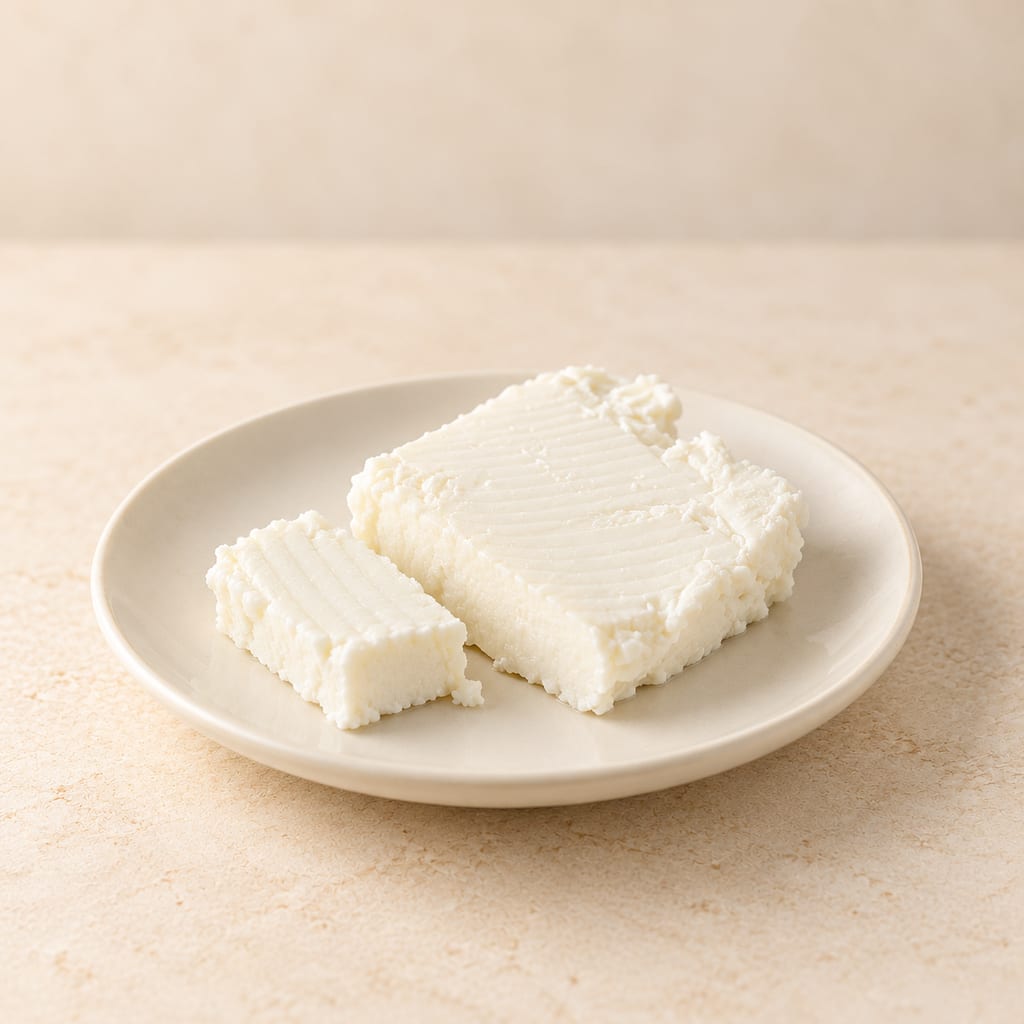
Domiati
Domiati is a soft Egyptian white cheese made by salting milk before renneting. It is eaten fresh or ripened in brine, with cow and buffalo milk used in varying proportions.
 FermenteaWhere food goes to change
Substrates
Cow milk and water-buffalo milk are distinct dairy substrates whose fat, protein and mineral balance affects cheese; this ingredient name preserves a choice rather than defining a blend.
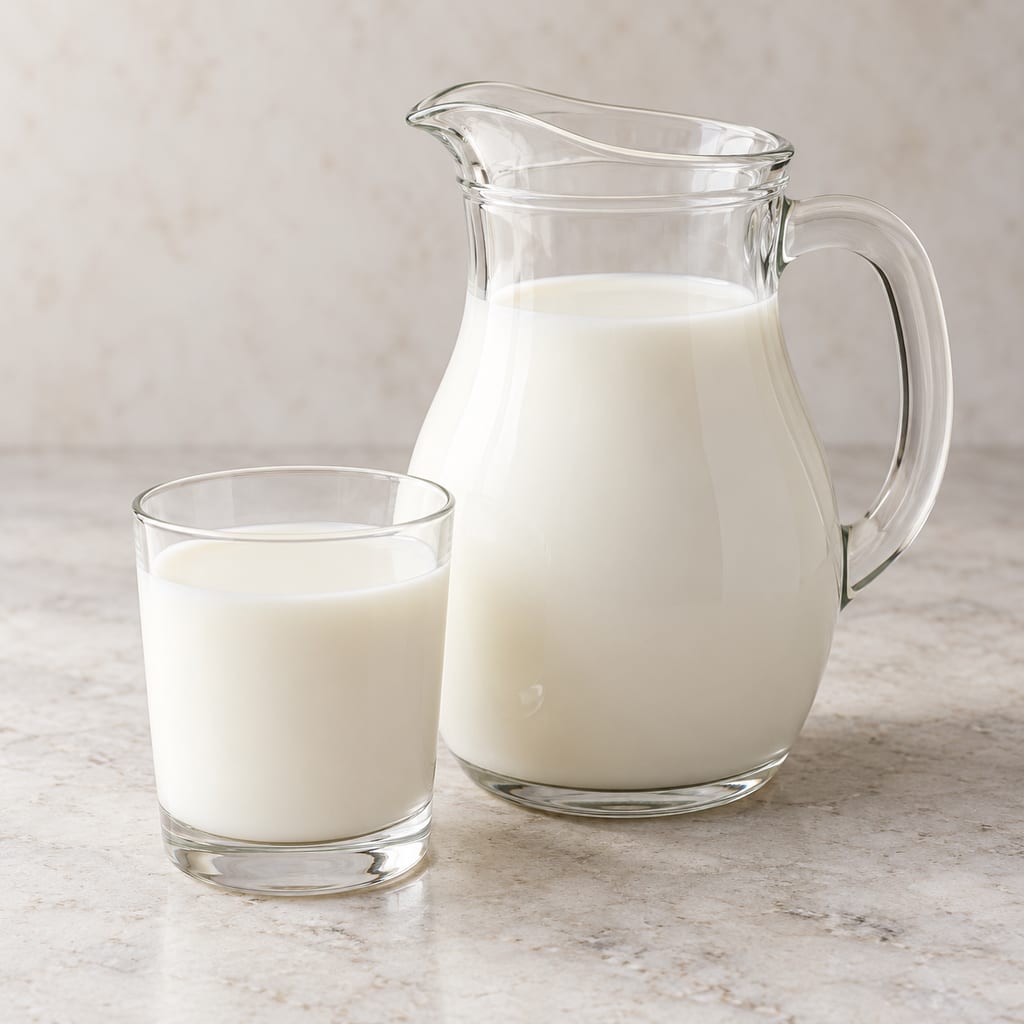
Cow milk and buffalo milk are distinct animal milks. The phrase cow or buffalo milk identifies alternatives available to a cheesemaker; it is not the name of a third animal, a standardized blend or a fixed composition. Both provide water, lactose, proteins, fat and minerals, but their proportions and processing behaviour can differ. Knowing which milk has actually been supplied is part of knowing the ingredient.
The buffalo relevant to dairying is the domestic Asian water buffalo, Bubalus bubalis. It is different from the African buffalo, Syncerus caffer. Cattle milk comes from animals in the genus Bos; dairy production includes cattle described as Bos taurus and Bos indicus. An ingredient choice needs this animal identity without assuming that every breed within a species gives chemically identical milk.
The Domiati cheese family provides a concrete reason to discuss the alternatives together. Its manufacture uses cow and buffalo milk, with varying proportions also documented. That breadth describes a family of dairy practice. It does not supply a generic mixing ratio for every batch, and an instruction allowing either milk should retain that choice rather than quietly become a requirement to blend them.
Milk processing has an archaeological record distinct from the domestication of livestock. Fats absorbed into pottery vessels can preserve evidence of dairying after the original food has disappeared. Research published in 2008 examined vessels from the Near East and southeastern Europe and identified milk use by the seventh millennium BCE. In northwestern Anatolia, milk use was particularly associated with evidence for cattle herding.
This evidence shows how dairy ingredients became part of agricultural economies. It does not identify every ancient residue as a particular modern cattle breed's milk, nor does it establish the use of water-buffalo milk in each vessel. The movement from animal husbandry to milk processing has to be reconstructed from material evidence, rather than from the later familiarity of a food in a region.
Water buffalo have a separate history within Asian agriculture. River and swamp types developed from different ancestral populations, with domestication histories associated with the western Indian subcontinent and the China–Indochina border region. River buffalo subsequently spread west towards Egypt, the Balkans and Italy. Their dairy history therefore includes movement between agricultural settings, rather than a single timeless association with one present-day cheese or cuisine.
Milk production is one part of livestock keeping. Water buffalo can also provide draught power and meat, and many are raised in mixed crop-and-livestock systems on small family farms. River buffalo are particularly important for milk in India, Pakistan and the Near East. Swamp buffalo are more associated with draught work in eastern Asia and generally have lower milk yields. These different roles help explain why the distribution of buffalo does not by itself map the distribution of a single dairy product.
Breeding and management also change a dairy supply. Selection for milk, feeding, reproductive cycles and the stage of lactation affect what reaches a milk collection point. The ingredient is the result of an animal and a farming system, not only an animal name. A cheesemaker working with a seasonal supply encounters those agricultural changes through the milk's composition and behaviour.
Buffalo dairying also exists outside its largest Asian production regions. A modern producer profile from Somerset describes a water-buffalo farm selling raw milk, mozzarella and ice cream. This is a useful example of an animal dairy serving several contemporary markets. It does not move the historical origin of buffalo milk to England or make the raw product equivalent to a pasteurized bottle with a different treatment history.
Milk is not a simple solution in which every component is dissolved. Its watery phase carries lactose and soluble constituents. Fat occurs in globules dispersed through the liquid, while much of the protein is organized into casein micelles. Whey proteins occupy the surrounding liquid. This physical organization allows milk to be separated, coagulated and concentrated in several different ways.
Cheese making changes the relationships between these fractions. Casein becomes a connected network that can hold water and trap fat. When whey leaves, much of the milk's casein and fat remains in the curd, while water and dissolved substances are lost. The finished cheese therefore does not preserve all the milk components in their original proportions. Its yield and texture depend partly on what the milk supplied and partly on what the process retains.
This is why comparing animal milks matters to a vat as well as to a label. A milk richer in a retained component gives the process a different starting material. A different balance of casein, whey proteins and fat also changes the system in which a curd forms. Total milk volume alone cannot describe all of these differences.
Buffalo milk generally has more fat than cow milk and a higher casein-to-total-protein ratio. Its calcium associated with casein is also relevant to cheesemaking. These are useful broad distinctions when considering dairy processing. They should not be read as an assay of an individual container, because breeds and production conditions vary within each group.
Age, diet, lactation stage, season, farming system and environment all influence milk composition, colour and flavour. A table of average milk composition summarizes particular measurements; it does not guarantee a recipe's milk. The same caution applies to an appealing claim that one species always gives a fixed yield or a single ideal curd. The actual supply and the chosen method remain part of the result.
Composition can also be adjusted during processing. A product sold as whole milk, reduced-fat milk or a standardized cheesemilk has a treatment identity alongside its animal identity. A comparison between cow and buffalo milk should therefore keep like with like where possible. Changing species and changing fat level at the same time would make it difficult to understand which part of the ingredient change affected the cheese.
Lactic-acid bacteria use lactose and produce acid. As acidity develops, the environment around casein and its minerals changes. This can destabilize the dispersed protein particles and contribute to a curd. Milk is consequently both a growth medium for suitable dairy cultures and a physical material whose structure responds to the products of fermentation.
Rennet supplies a different action. Its enzymes cut stabilizing protein components so that altered casein particles can aggregate. Calcium helps this aggregation. The amount and activity of enzyme, temperature and acidity influence the set. In a cheese using both a culture and rennet, one ingredient produces acid through microbial metabolism while the other performs protein cleavage. The milk responds to both.
The distinction also prevents animal milk itself from being called a fermentation. Fresh liquid milk has not become a cultured product merely because it contains lactose or microorganisms. Yogurt, fresh lactic cheese and rennet-set cheese are preparations that use milk through specified processes. A change in animal source can be a meaningful variant, but it does not replace the need for a complete method.
Domiati is a soft white Egyptian cheese whose distinctive sequence introduces salt before rennet. The coagulant therefore acts in an already salty milk. Cow and buffalo milk appear within that technology, rather than being brought together only as names on a shopping list. Milk composition, salt addition and the setting stage belong to one connected manufacturing problem.
In 1950, Fahmi and Sharara investigated varying salt additions to cow and buffalo milks, looking at rennet coagulation, whey drainage, composition and yield. The study's questions make the two substrates visible as distinct materials. They also show why a source allowing more than one milk does not prove that the resulting cheeses will be indistinguishable or that every operating condition can be copied without attention.
The source tradition includes both different milk choices and varying proportions. A specific make should preserve whichever identity its evidence gives: cow milk, buffalo milk, an explicit alternative or a documented combination. A ratio not supplied by that method should remain unassigned. That precision keeps a useful agricultural flexibility from turning into an invented standard blend.
After coagulation, curd handling determines how the initial milk is concentrated. Cutting increases the surface through which whey can escape. Resting allows pieces to strengthen, and gentle stirring can prevent uncontrolled matting while encouraging drainage. Rough cutting produces fine particles that can be lost with whey, carrying useful protein and fat away from the cheese body.
Heating and stirring can further encourage contraction, while moulding and pressing give the curd a manageable form and remove more liquid. Whey loss also removes some lactose, changing what remains available to ferment. Moisture, acidity and the physical handling of the particles are consequently linked. A cheese's final body reflects a history of operations as well as the milk's initial composition.
These transformations explain why substituting one milk for another should be considered within the particular preparation. A maker needs to know how the curd forms and drains, not merely whether both liquids are white dairy foods. Source-supported variants can make that comparison explicit. They are more useful than a universal substitution promise detached from the size of the batch, its culture, its coagulant and its handling.
Begin with the species and treatment information. Raw milk and pasteurized milk have different microbial starting conditions, while homogenization and fat standardization describe further processing choices. Pasteurization uses controlled heat and time to destroy harmful bacteria. It does not remove the milk's lactose or allergenic proteins, and the treated product still needs protected handling and refrigeration.
Follow the package's storage conditions and date rather than applying an invented shelf life to every cow or buffalo milk. Keep the supply cold during transport and storage, and use clean containers and equipment when it is opened for processing. Protecting the milk after treatment matters because heating earlier cannot prevent contamination introduced later at the vat or work surface.
Choose the milk for the intended preparation, including its stated heat treatment and fat level. The quantity specified in a recipe is a measure of that ingredient, not a compositional guarantee. If the method documents alternatives, preserve them as alternatives; if it specifies one milk, a different animal source needs its own evidence. A clear label and a complete method together make the choice usable.
Both milks participate in dairy cultures that extend beyond one cheese. Milk can be consumed as a liquid, fermented, concentrated or separated into products such as cream, butter and cheese. Buffalo milk's use in mozzarella and ice cream offers a contemporary example of the same animal supply serving quite different foods. The transformations differ even though the underlying dairy source is shared.
Cow and buffalo milk contain lactose and milk proteins. Lactose intolerance concerns digestion of milk sugar, while milk allergy is an immune reaction to proteins. A change of animal source should not be assumed to make a milk safe for someone with cow-milk allergy. Likewise, pasteurization does not convert ordinary milk into a lactose-free ingredient. Species choice, processing and dietary suitability are related questions that need distinct answers.
This alternative identity does not establish a fixed blend, the composition of an individual supply or a universal shelf life.
milk; contains lactose; buffalo milk is not an assumed substitute for cow-milk allergy
Documented buffalo-milk production; no origin assigned to generic cattle milk or alternative ingredient name.
Documented buffalo-milk production; not the birthplace of every preparation using milk.
One modern water-buffalo dairy sells raw milk and dairy products here; source treatment and species are explicit.
Domiati is a soft Egyptian white cheese made by salting milk before renneting. It is eaten fresh or ripened in brine, with cow and buffalo milk used in varying proportions.

A gelling polysaccharide extracted from red seaweeds, sold as kanten strips or powder; it sets firm at a low concentration and stays solid until about 85 °C.
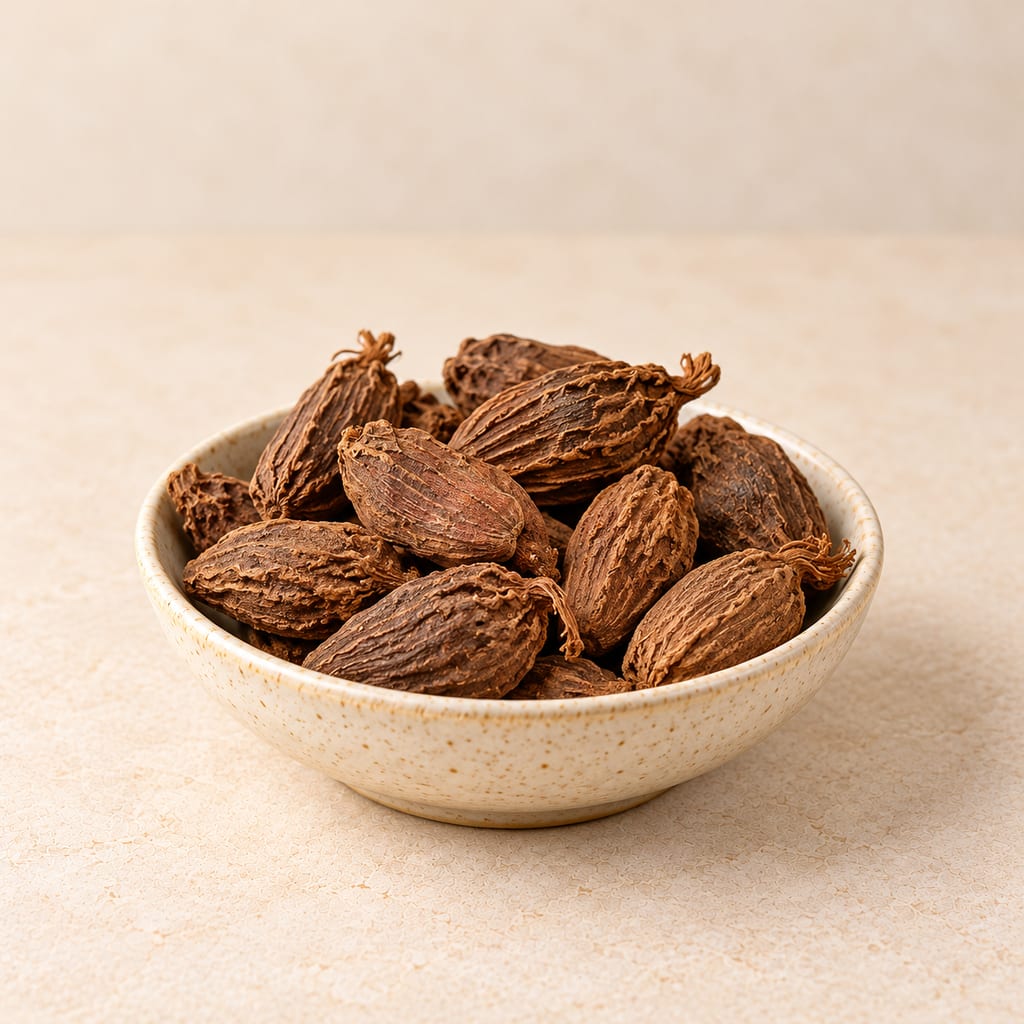
Alainchi is the large or black cardamom of the eastern Himalaya, the dark, smoke-dried pods of Amomum subulatum. Its camphor-cool, smoky seeds season Himalayan and North Indian cooking and a sweet Nepali lapsi achar.
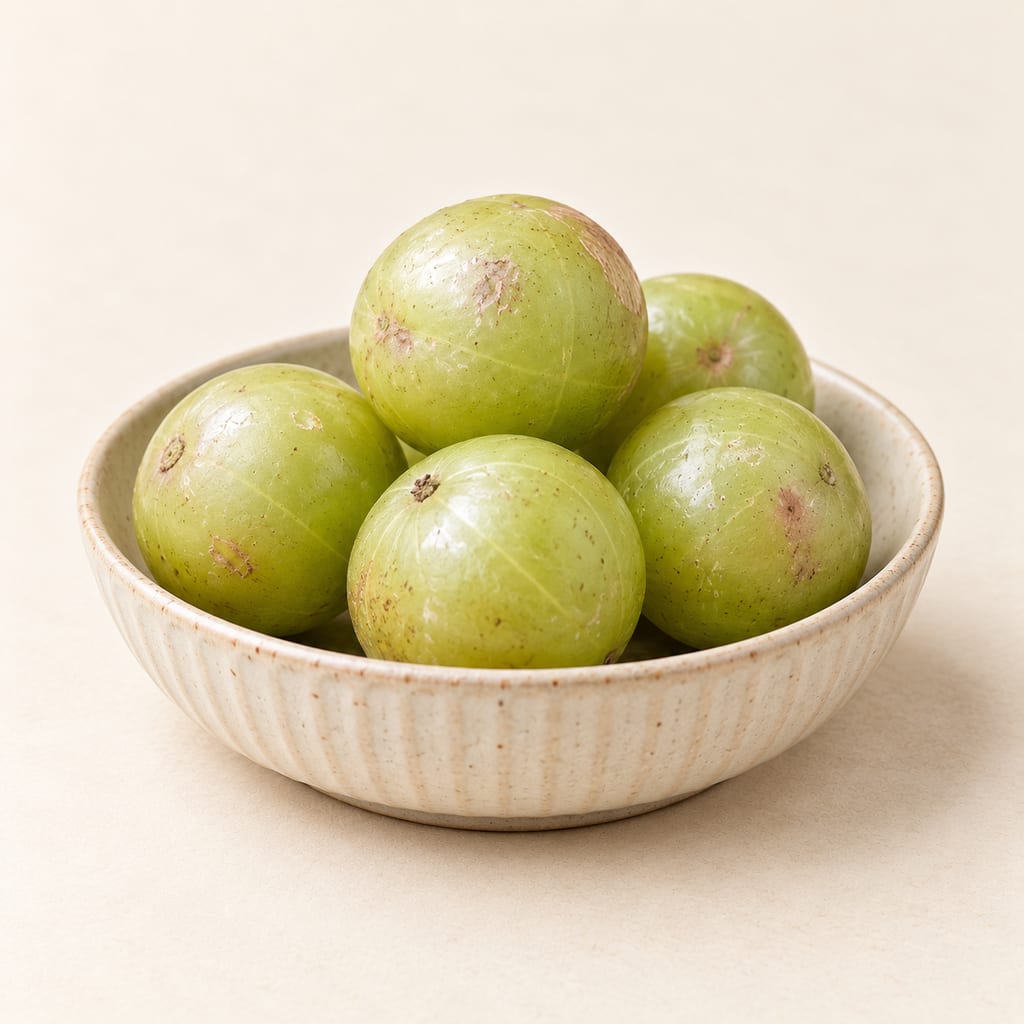
Amla is the firm, sharply sour fruit of Phyllanthus emblica. Cooks transform it into murabba, pickles, chutneys, drinks and dried snacks.
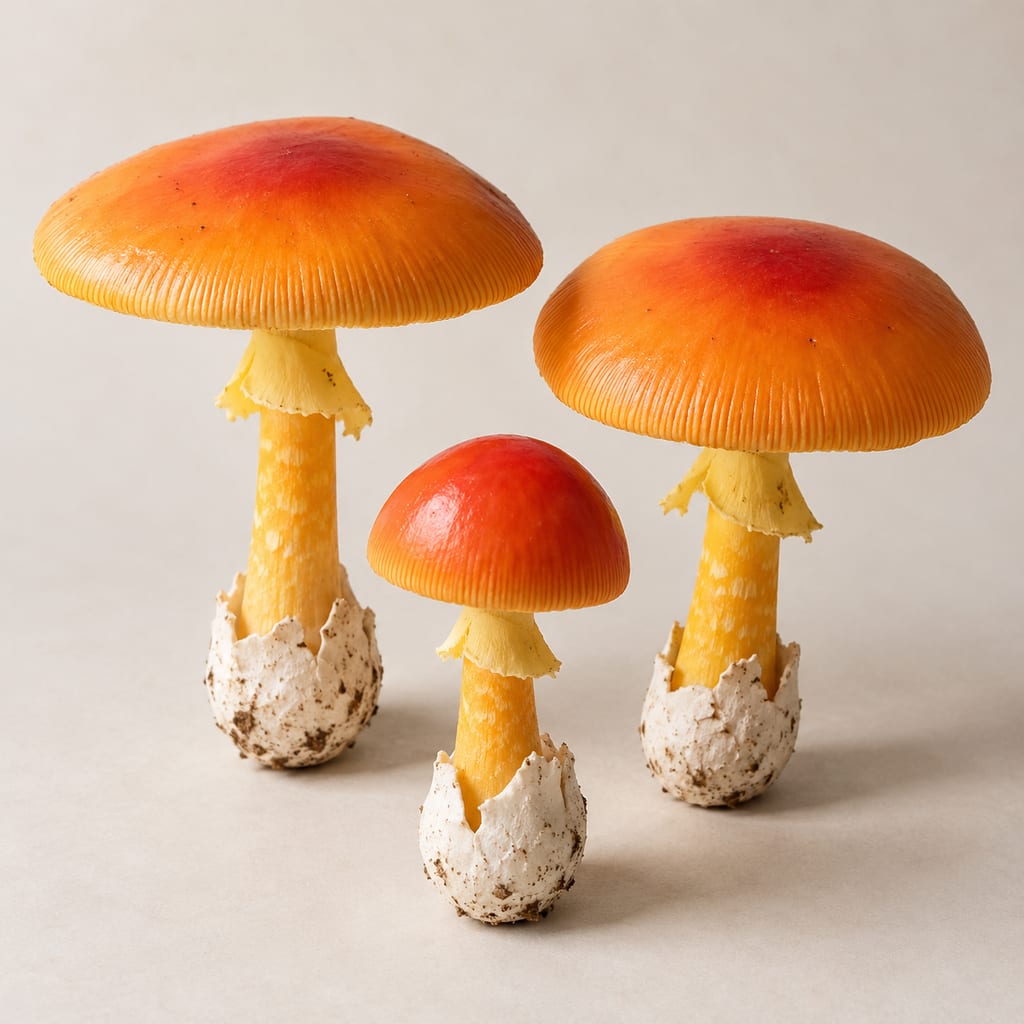
A wild Asian Amanita reported as food in regional literature and listed in China’s edible-fungi catalogue. Lookalikes include lethal species; this record is not a guide to identifying wild mushrooms.
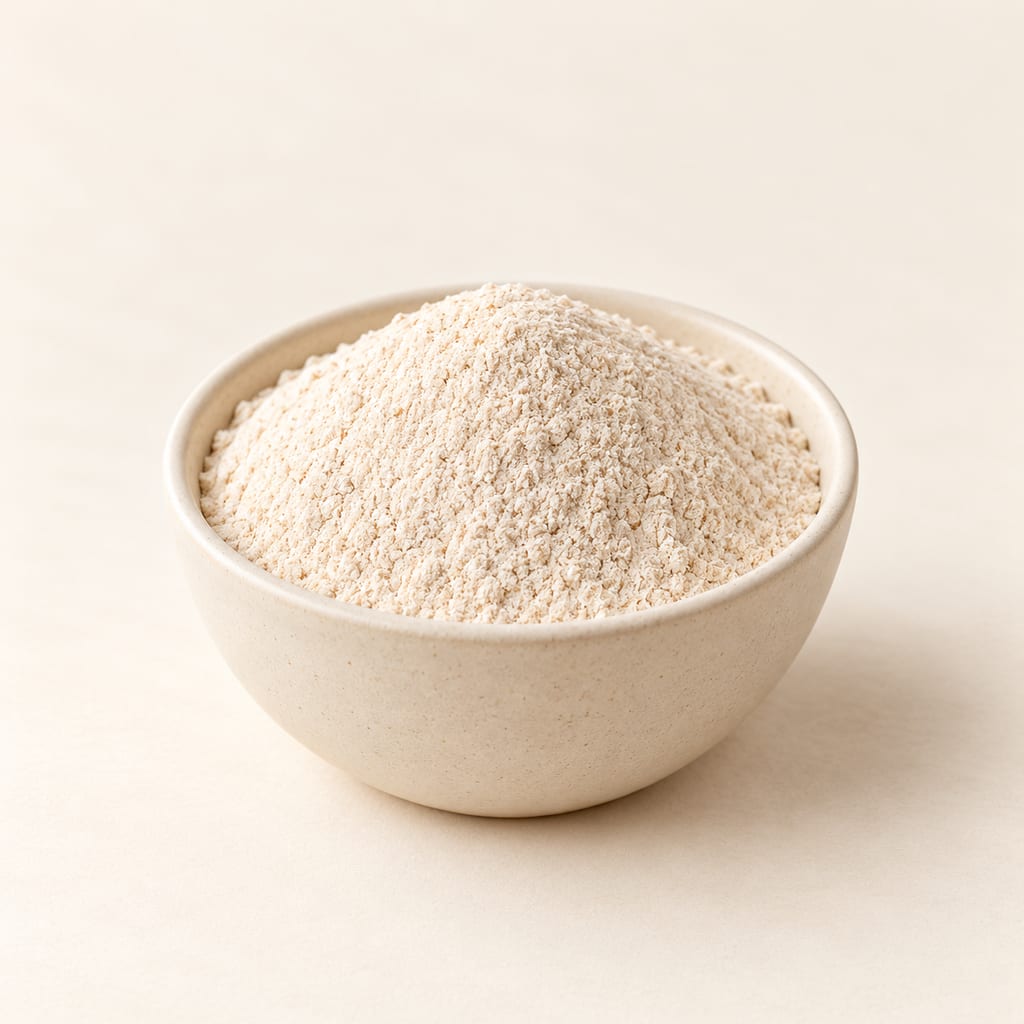
Atta is wheat flour used across South Asian bread traditions. Indian standards distinguish wheat flour (atta) from resultant atta; milling route and particle size shape its behavior in chapati dough.
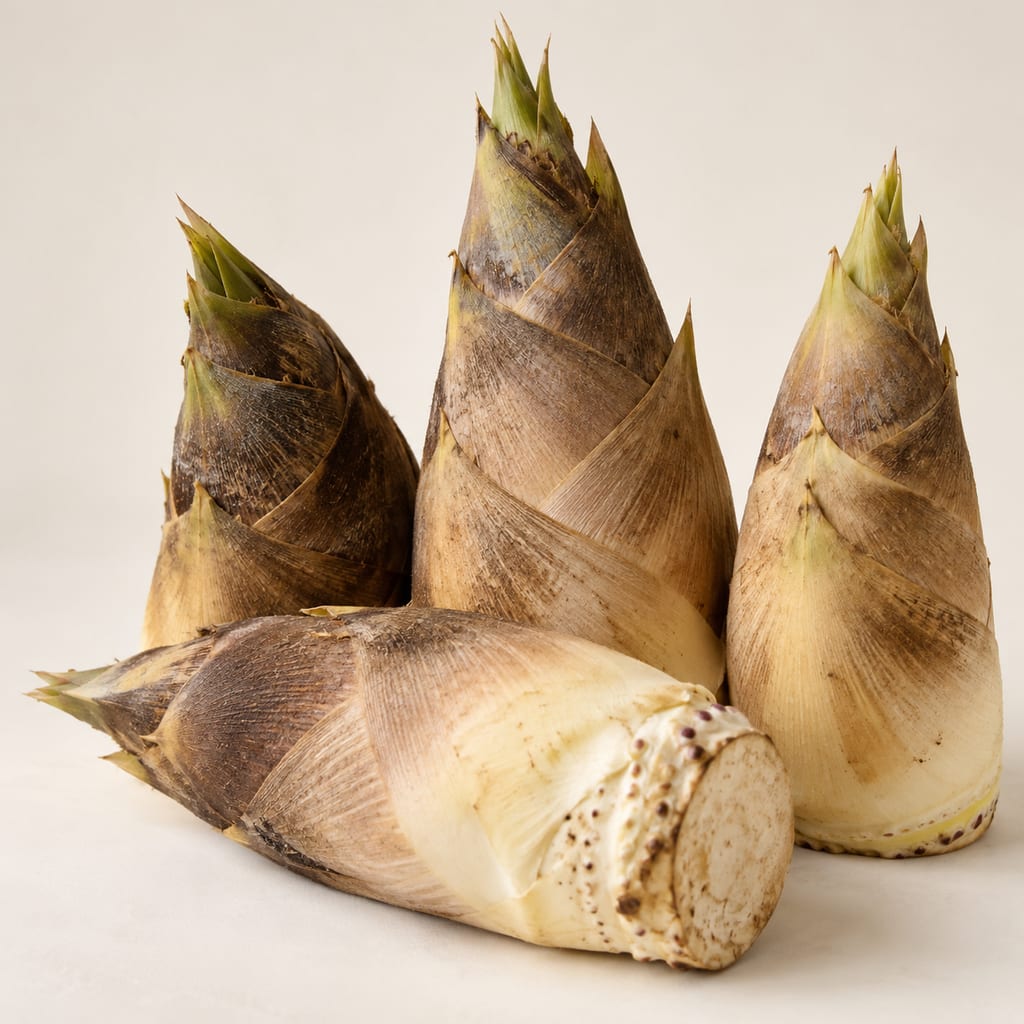
Bamboo shoots are the young culms of many bamboo species, eaten after boiling or leaching in Asia, and fermented into sour and preserved foods in the Himalayas, northeast India and Burma.
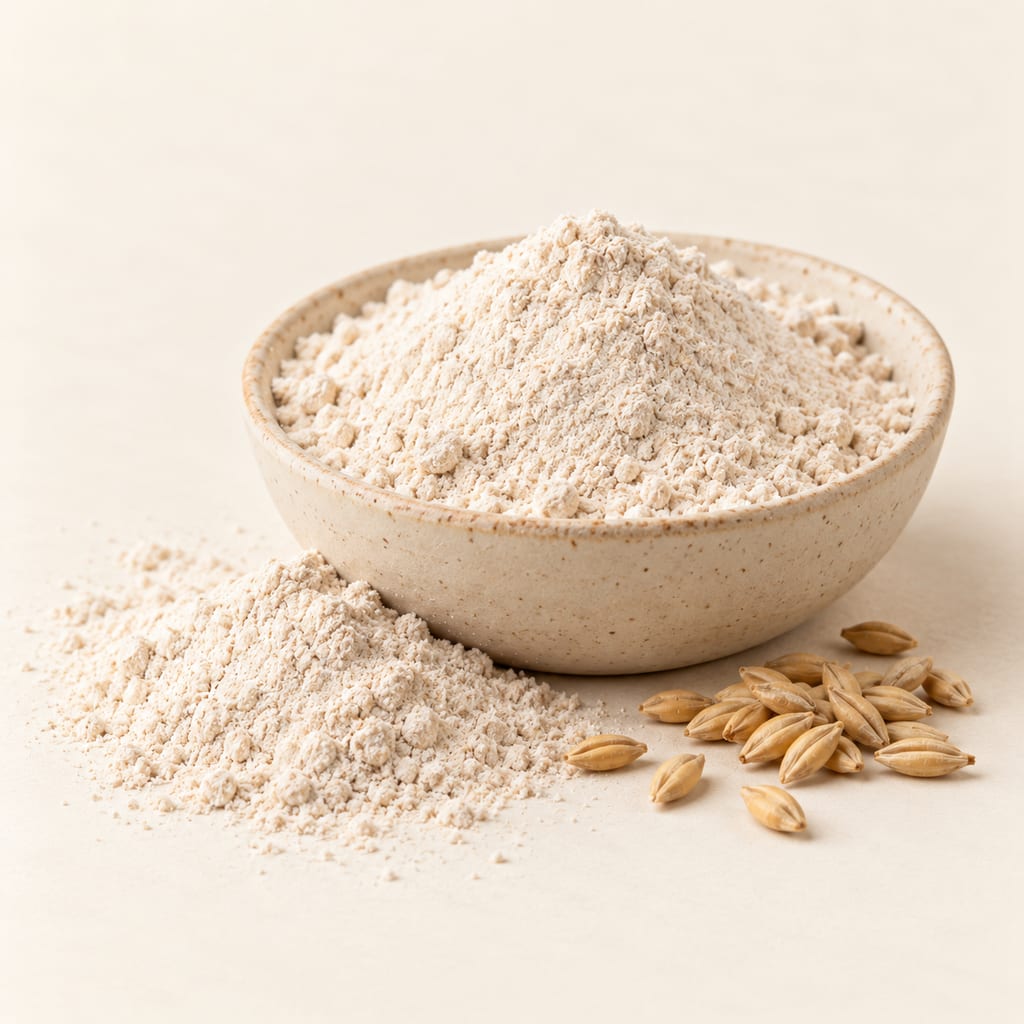
Barley flour is ground barley grain; whether it comes from pearled or hulless kernels, its milling and limited wheat-like gluten-forming ability shape the doughs and foods it can make.

Black carrot is the anthocyanin-pigmented Eastern carrot (Daucus carota var. atrorubens), the purple root that preceded orange types and still colours kanji and şalgam.
No community contributions have been published for this entry yet.
Sign in to contribute. Published comments and photos are free to read.
FAOIngredient context
Milk compositionPersonally read: species/Bos taurus/B.indicus, breed/age/diet/lactation/season variability; buffalo higher fat/casein ratio and calcium in casein relevant to cheese. No universal assay values used.
Cited in: Two dairy ingredients behind a shared choice; Composition differs, and also varies within each milk; Selecting and handling an actual supply
FAOIngredient context
Buffaloes: Gateway to dairy production and productsPersonally read: Bubalus bubalis, river and swamp husbandry, milk versus draught roles, India/Pakistan/Near East; no current production percentages imported.
Cited in: Two dairy ingredients behind a shared choice; Animals within working farms
FAOIngredient context
Buffaloes: Livestock SystemsPersonally read domestic Asian water buffalo versus African Syncerus caffer; mixed farms/draught work/distribution, no nutrition claims used.
Cited in: Two dairy ingredients behind a shared choice; Animals within working farms
Animal Genetics / WileyIngredient context
Asian water buffalo: domestication, history and geneticsZhang, Colli and Barker 2020 review, personally read summary/introduction: separate ancestral populations, western Indian and China–Indochina origins, westward river-buffalo spread; no uncertain exact dates used.
Cited in: Dairy history is evidence of use, not a universal recipe
Nature / PubMedIngredient context
Earliest date for milk use in the Near East and southeastern Europe linked to cattle herding2008 primary abstract and paper excerpt personally read: pottery residues, seventh millennium BCE and northwestern Anatolia/cattle association; not every milk residue species-identified.
Cited in: Dairy history is evidence of use, not a universal recipe
FAOIngredient context
Small-Scale Dairy Farming Manual: Small Scale Cheese MakingGeneral milk physical forms, lactose fermentation, acid/rennet/calcium, cutting/drainage/losses/pressing and milk selection.
Cited in: Water carries a dispersed food; Acid and enzymes act on the milk differently; What happens when whey leaves
FAOIngredient context
The technology of traditional milk products in developing countries: DomiatiRaw-material section allows cow/buffalo in varying proportions; salt before rennet and drainage. No fixed blend or uncorroborated332BCE claim adopted.
Cited in: Two dairy ingredients behind a shared choice; Domiati begins with salt in the milk
Journal of Dairy Research / Cambridge University PressIngredient context
429. Studies on Egyptian Domiati cheeseFahmi and Sharara1950 Extract only personally read: experiments vary salt in separate cow/buffalo milks; coagulation/drainage/composition/yield questions, no full-paper results asserted.
Cited in: Domiati begins with salt in the milk
US Food and Drug AdministrationIngredient context
Raw Milk Questions & AnswersPersonally read: controlled milk heat treatment, continued refrigeration, lactose and allergenic milk proteins remain. No universal storage life supplied.
Cited in: Selecting and handling an actual supply; Uses and dietary identity
NSW Food AuthorityIngredient context
MilkPersonally read milk-protein immune allergy versus lactose digestion, cross-species caution; no clinical replacement recommendation.
Cited in: Uses and dietary identity
FAOIngredient context
Milk and dairy products in human nutrition2013 institutional synthesis personally read relevant milk-composition, buffalo and allergy passages. P188 explicitly warns buffalo is not default substitute for cow-milk-allergic children; no dataset means or historical production shares treated as current facts.
Cited in: Water carries a dispersed food; Composition differs, and also varies within each milk; Uses and dietary identity
Somerset Food Trail / producer profileIngredient context
West Country Water BuffaloPersonally read2025 producer profile: Somerset farm sells raw buffalo milk, mozzarella and ice cream. Linked photo personally inspected actual poured milk in clear glass with buffalo behind; no pasteurization or blend inferred.
Cited in: Animals within working farms; Uses and dietary identity