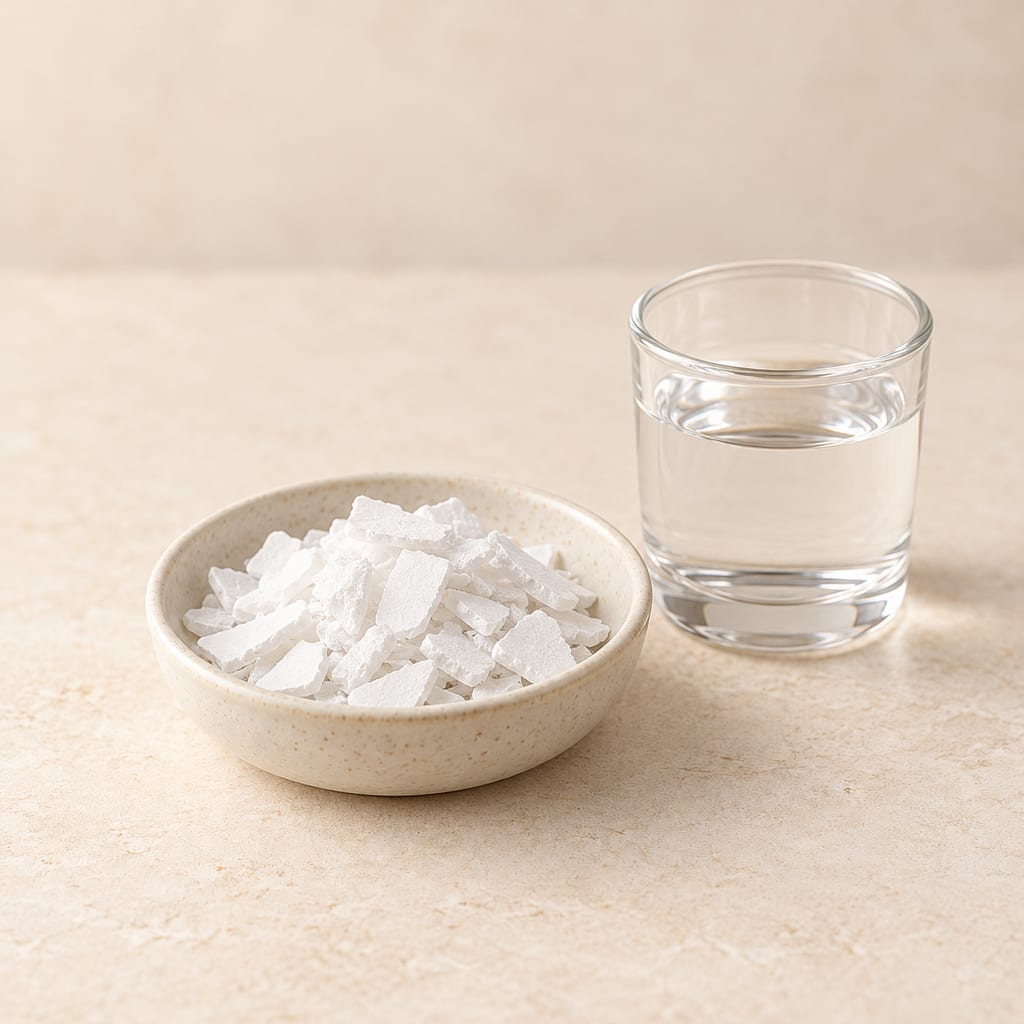
Calcium chloride
A soluble calcium salt used to support cheese curd formation, balance cheese brines, reinforce some plant tissues and adjust brewing water.
 FermenteaWhere food goes to change
Traditional method
Domiati (gibbneh beda) · Gibbneh beda · Damiati · Damietta
Domiati is a soft Egyptian white cheese made by salting milk before renneting. It is eaten fresh or ripened in brine, with cow and buffalo milk used in varying proportions.
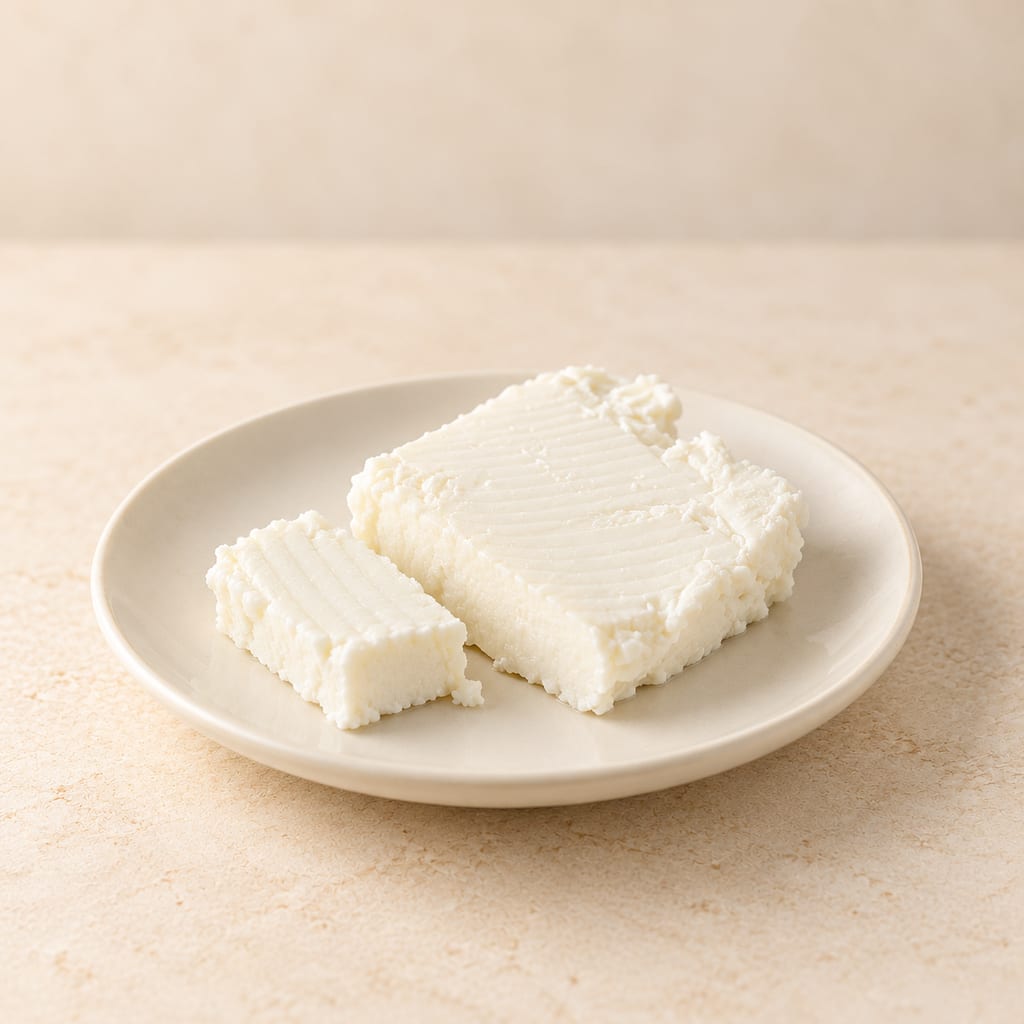
Domiati is a soft white cheese made from cow’s milk, water-buffalo milk or a mixture. It can be eaten fresh or kept in salty whey or brine to mature. FAO describes a homogeneous, very salty curd that may show small openings; the LACTIMED regional report describes it as mild when fresh and increasingly acidic as it ages. Cheese is drained in cloth or moulds, so finished pieces may be rectangular, cubic or cylindrical. The sources do not set one required shape, size or cow-to-buffalo ratio for all Domiati.
The names reflect both place and everyday description. Domiati is associated with Damietta, the northern Egyptian city and governorate. Gibbneh beda or gebnah baida means white cheese; gebnah tariyah refers to soft cheese. Such descriptions can apply to foods beyond Domiati, while Damiati and Damietta are also recorded spellings of its name. Feta is a useful comparison because both are white cheeses stored in brine, but it is not an interchangeable method. The central distinction recorded here is that Domiati’s salt enters the milk before rennet, whereas the FAO feta method salts the formed curd.
The name links the cheese with Damietta, but that association is not evidence that the cheese began there. FAO says its exact origin is unknown while reporting that Domiati was known in Egypt around 332 BCE, when cheese was a farmhouse product. The LACTIMED survey repeats the belief that it originated in Egypt after 332 BCE. Neither source identifies an ancient text, archaeological find or dated recipe connecting that date to the cheese now called Domiati. It is best read as a claim reported in later technical literature, not as a proven founding moment or an unbroken documented lineage.
The modern geography is clearer. FAO describes production throughout Egypt, and the 2014 regional diagnosis reports Domiati in all 25 governorates, including Damietta and areas beyond it. It describes a progression from farmhouse production to small workshops, private dairies and larger factories. The survey also documents dairy activity in Alexandria and Beheira, two Nile Delta governorates. This wide geography helps explain why no single set of directions describes every maker: milk sources, season, batch scale and storage practice differ.
Domiati belongs to an Egyptian dairy economy in which soft cheese could be made close to the milk supply, drained, eaten fresh or preserved in brine. The LACTIMED market account places it among familiar soft cheeses sold both unpackaged through small shops and in manufactured packages. That report dates from 2014 and relies on some 2012 market figures, so it documents a period rather than current sales. It shows traditional and industrial production alongside each other, not a simple replacement of one by the other.
Salt is not merely a finishing seasoning in Domiati. It is mixed into milk before rennet is added. FAO records 6–14 percent of milk weight in its method; LACTIMED documents other regional specifications, including 5–14 percent and seasonal ranges for refrigerator-stored Tallaga and ambient-stored Khazin. These are different technical accounts, not one universal target. The recipe’s quantities are preserved against a 100-kilogram reference batch and are not a validated household scaling formula.
Dissolved salt changes the aqueous environment around milk proteins and microbes. As whey drains, water and salt redistribute between the liquid and curd. Their concentrations, together with temperature and milk composition, influence moisture movement, microbial growth and how maturation proceeds. The sources show seasonal adjustment in some production settings but do not provide a model that predicts every batch’s texture or safety. Salt does not sterilise milk, and a high salt percentage cannot compensate for contaminated milk or poor handling.
Rennet performs a separate job. Its enzymes destabilise casein micelles, the suspended protein particles that keep milk fluid, so they aggregate into a gel. The curd traps fat and water; draining later removes some whey and concentrates the solids. Calcium chloride is listed by FAO as an optional addition when milk has been pasteurised, but neither source establishes one dose for every milk supply or rennet product. It belongs to the source-specific method, not as an automatic repair for a weak set.
The short rest after salting is described by FAO as natural acidification before renneting. A microbiology study confirms that traditionally sampled Domiati can develop without a defined starter, but it does not show that every milk supply or heat-treated batch will acidify reliably. For pasteurised milk, the cited FAO method gives no starter or reinoculation stage. That uncertainty is why the existing method notes do not present its broad heating range as a dependable home pasteurisation schedule.
Traditional Domiati is described as a spontaneous fermentation, with no single starter culture added in the method studied. Lactic acid bacteria associated with milk and its production environment can convert lactose into lactic acid. Acidity changes flavour and affects the protein network. Salt and temperature shape which organisms can grow, but they do not make the cheese sterile. Rennet coagulation, bacterial acidification and later protein breakdown are distinct changes that together influence the result.
El-Baradei, Delacroix-Buchet and Ogier examined 11 traditional samples from Alexandria, Beheira and Damietta. Their molecular survey found a diverse bacterial community, including Leuconostoc mesenteroides and Lactococcus lactis among the dominant lactic acid bacteria. The authors also detected non-lactic-acid bacteria and suggested that salt-tolerant organisms could contribute to ripening. These results describe the sampled cheeses and the methods used in that study. They do not establish that every named organism occurs in every batch or prescribe an inoculum for this recipe.
The researchers measured variation among samples: salt ranged from 5.46 to 9.50 percent, moisture from about 59.8 to 63.2 percent, and pH from 5.30 to 6.15. Those ranges show that samples differed; they are not a safety specification or target for a home batch. The paper’s contribution is evidence for a varied salt-tolerant ecosystem in traditional Domiati rather than one predictable culture. A pH reading and a salty taste alone cannot certify that cheese is safe.
Milk choice affects the material that enters the vat. Domiati can use cow’s or water-buffalo milk, separately or mixed, and the sources do not specify a universal ratio. Fat and protein content affect richness and curd formation; the milk’s microbial condition also matters to acid development. Where a report names a mixture, it records that formulation rather than a rule that every Domiati must contain both milks.
Salt is weighed against the milk in the FAO account, while rennet and the optional calcium chloride are expressed against a 100-kilogram reference basis. The method provides no measured finished yield, universal brine volume or single ripening endpoint. That context matters: these figures describe a technical reference process, not a tested small-batch formula.
Cloth-lined moulds let whey escape while holding the soft curd together. FAO describes moulded curd that drains without pressing for two to three days, and a bulk cloth-wrapped option pressed for 12–24 hours under a load equal to the curd’s weight. LACTIMED records cloth or net-lined moulds, turning small moulds and pressing large blocks. These are physical drainage operations rather than fermentation. Removing more whey concentrates the curd; mould shape and pressure influence form and moisture, although the sources do not quantify a universal relationship between pressure and final texture.
The FAO process retained in the structured recipe salts milk at 6–14 percent, allows a short rest described as natural acidification, then adds rennet at 35–40°C. After a two-to-three-hour set, curd is ladled into cloth-lined moulds or formed as a bulk block. Moulded curd drains without pressure for two or three days; the bulk option is pressed for 12–24 hours. Pieces are covered with brine containing 14–18 percent salt. Those ranges belong to that account and remain intact in the recipe fields.
The LACTIMED survey documents a different production account from Alexandria and Beheira. It describes milk that is usually raw, salt added before heating, warming salted milk, rennet setting, cloth drainage and overnight pressing. It also records seasonal salt schedules associated with refrigerator-stored Tallaga and ambient-stored Khazin. These accounts differ in heat treatment, proportions, scale, drainage and storage. Combining their figures into one recipe would create a method neither source actually gives.
Observed traditional practices include raw milk and ambient storage. These are context, not a validated home safety protocol, and this recipe does not treat salt concentration alone as controlling risk. Ambient holding conditions are not carried into the recipe.
Fresh Domiati can be eaten after drainage; another endpoint is to keep pieces in salty whey or brine as they mature. They should not be collapsed into a single finish. Fresh cheese is softer and milder, while brined cheese continues to change. Tallaga is described as refrigerated in the regional survey, while Khazin is described with ambient storage. These are meaningful named storage variants, but this record does not provide a validated process for reproducing ambient storage.
Brine holds cut pieces in a salty liquid while salt moves into the cheese and water moves out. The exchange takes time and depends on the curd, its dimensions, milk composition and surrounding liquid. The traditional samples in the microbiology study varied in salt and moisture, so ripening does not produce one identical composition. The study suggests that the organisms detected may have a role in maturation, but it does not assign a single species to a specific flavour or prescribe a universal ageing schedule.
The regional account describes fresh Domiati as mild and salty, becoming more acidic with age. It says the body often firms through about the third month, then mellows as proteins break down. Older cheese may become slightly flaky and brittle rather than elastic; cheese at twelve months or more is described as pungent and light brown. These are reported outcomes, not guarantees. Salt, milk, temperature and production conditions vary.
Proteolysis is the gradual breakdown of milk proteins by enzymes from milk, rennet and microbes. It can loosen curd structure and contribute savoury or pungent notes as cheese matures. This differs from simple water loss. Salt movement, acidification, moisture change and protein breakdown together help explain why young and long-held Domiati can feel and taste unlike one another even though both use the same name.
Sources describe preservation in brine or salted whey and, in one regional account, sealed tins. They do not establish a single home shelf life. Ambient storage practices in the technical literature should not be treated as a safety recommendation. The recipe’s safety notes call for pasteurised milk, clean equipment and prompt cooling, and retain the need for separate process validation.
FAO describes Domiati as an everyday Egyptian cheese eaten fresh or after pickling. The regional survey places white cheese in ordinary meals with bread and identifies Domiati among familiar soft cheeses. Its salty, milky character works as a simple accompaniment to bread or vegetables, but the sources here do not establish one canonical garnish or national breakfast plate. Domiati can also be cut or crumbled into dishes; cooks should account for its salt rather than seasoning it as if it were fresh unsalted curd.
Feta is a useful market comparison because both cheeses are white and brined, but their traditions and methods differ. The FAO feta account uses curd salting and a different maturation sequence, while Domiati’s defining feature is salting the milk first. Feta may fill a similar role in a dish, but acidity, saltiness and texture will vary. The product name matters more than a generic label such as “white cheese.”
Modern production spans local dairies and packaged brands. The LACTIMED analysis records Domiati and related cheeses in retail channels, alongside unpackaged cheese sold by small groceries. Its market snapshot is regional and dated; it helps explain the coexistence of household production, artisanal sale and industrial manufacture without claiming to measure the present market.
Firmness, salinity, colour and acidity vary with milk, drainage and maturation. A soft piece fits the fresh endpoint described by the sources; a firmer or slightly flaky one may reflect time in brine. FAO notes small openings in some curds, while the regional survey lists holes, gas, unpleasant odour, bitterness and shrinkage among production problems. It does not diagnose each cause, so those observations do not support an improvised fix or a declaration that a batch is safe.
Raw milk and handling present hazards that salting does not remove. The recipe’s safety record cites New Mexico State University Extension on pathogens in homemade cheese and recommends pasteurised milk, careful hand and surface sanitation, clean cloths and utensils, and prompt cooling. That is general cheese-safety advice, not validation of this Domiati method. The dairy research papers describe traditional microbial communities; they do not set safe limits or a home-control plan.
A clean smell, white colour, pleasantly sour taste or high salt level cannot prove safety. FAO and LACTIMED preserve different technical traditions, but together they do not establish a validated small-batch process for every milk supply. The recipe keeps its large reference quantities and source uncertainties visible rather than inventing a yield, brine volume, shelf life or safe acidity target.
Domiati is an everyday Egyptian white cheese, eaten fresh or after ripening in brine. Its precise origin is uncertain; an account places it in Egypt around 332 BCE, when cheese was a farmhouse product, without identifying an ancient text for that date. Production later extended from farmhouses to small workshops and industrial dairies. Salting the milk before renneting distinguishes its manufacture from cheeses salted only after the curd has formed.
Scaling: source batch only
Fresh cheese can carry Salmonella spp., Escherichia coli, Listeria monocytogenes or Staphylococcus aureus from milk or handling.
Hazard sourceUse pasteurized milk, wash hands, clean and sanitize equipment and food-contact surfaces, handle the curd cleanly and cool promptly.
Control sourceMilk and handling can introduce pathogens into fresh cheese. Use pasteurized milk, washed hands, clean and sanitized cloths, utensils and surfaces, and prompt cooling.
Natural milk flora — Spontaneous lactic acidification, not a defined starter. Studies of traditional Domiati found diverse lactic acid bacteria; those sample communities do not specify an inoculum for this method.
Source describes brine ripening but gives no temperature or humidity for that stage.
FAO records production throughout Egypt, while stating that the precise origin is unknown.
A soluble calcium salt used to support cheese curd formation, balance cheese brines, reinforce some plant tissues and adjust brewing water.

Cow milk and water-buffalo milk are distinct dairy substrates whose fat, protein and mineral balance affects cheese; this ingredient name preserves a choice rather than defining a blend.
An animal-derived liquid enzyme extract sets milk by changing casein proteins; its activity and formulation determine how a particular bottle is used in cheesemaking.

Food-grade sodium chloride seasons food and changes water movement in brines and cures; crystal size and the recipe's measurement method matter.
Follow milk into cheese, cultured drinks, butter, dried curds and sweets: a journey through the animals, seasons and household decisions behind the world's dairy foods.
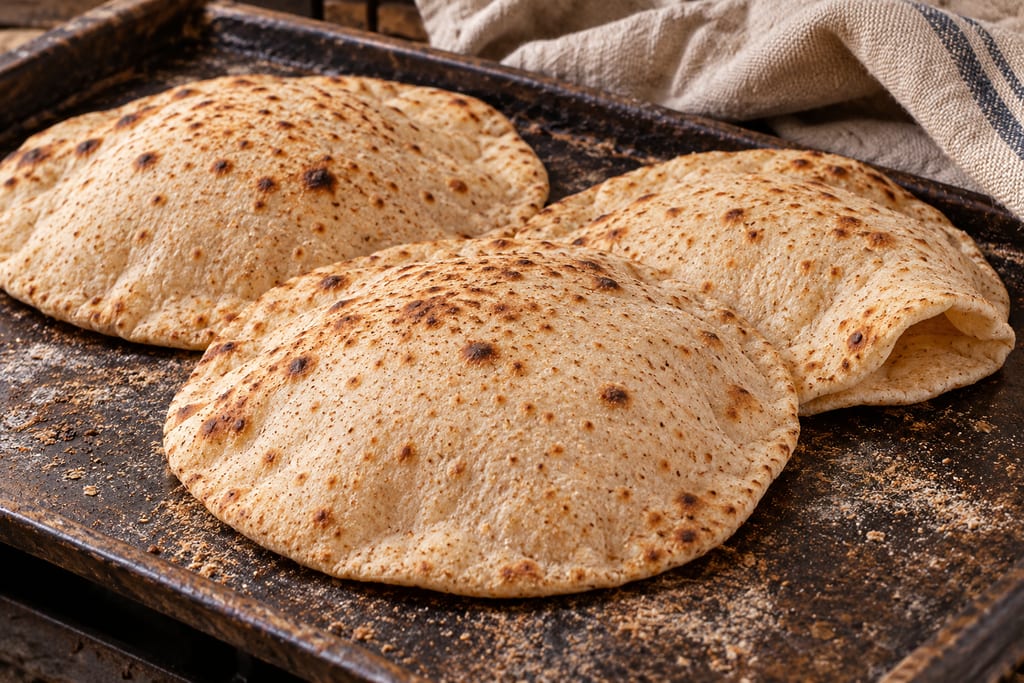
This home adaptation of Egyptian aish baladi uses a refrigerated yeast biga, whole-wheat dough, bran dusting and a very hot baking surface to make 16 pocketed rounds.

Amira Ibrahim’s Egyptian bosomat are yeast-raised wheat sticks scented with optional fennel and anise, topped with sesame and baked until dry and crisp.
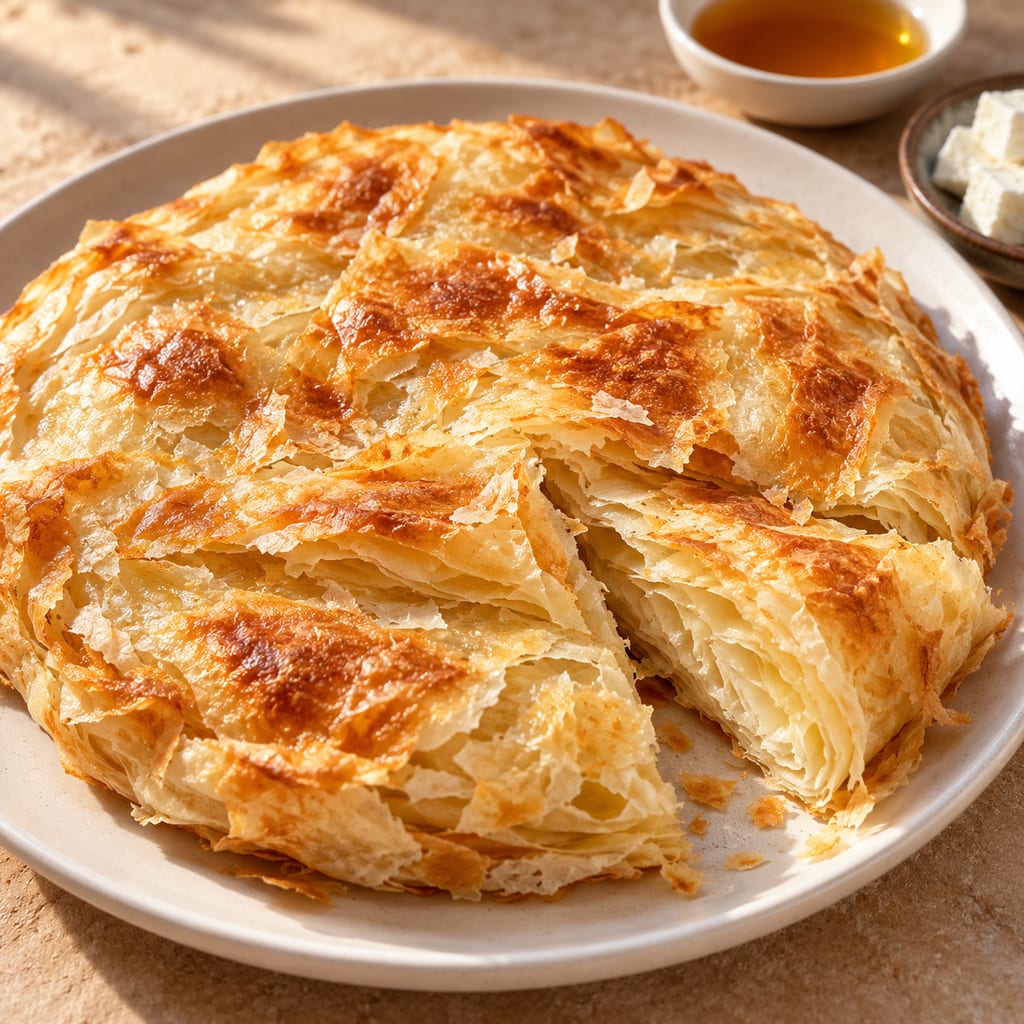
Egyptian layered pastry made from a soft wheat dough stretched thin, folded with ghee, and baked until crisp and golden. Serve plain with sweet or salty accompaniments.

Egyptian sweet wheat rolls shaped into coils or braids, enriched with milk, egg and fat and eaten at breakfast, with tea or milk, and at family celebrations.
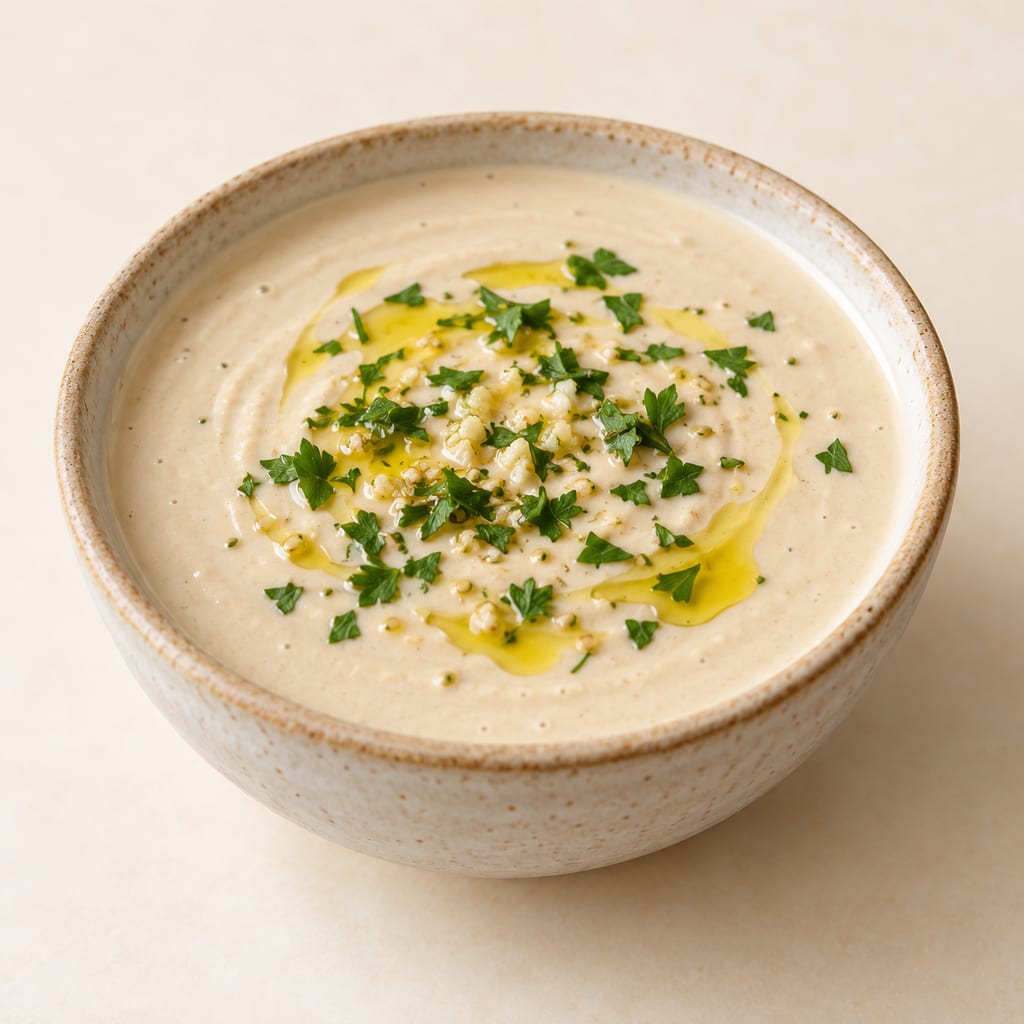
A Levantine sesame sauce of tahini thinned with water and brightened with lemon and garlic, the base of tarator served with falafel and shawarma, with Egyptian and Iraqi variants.
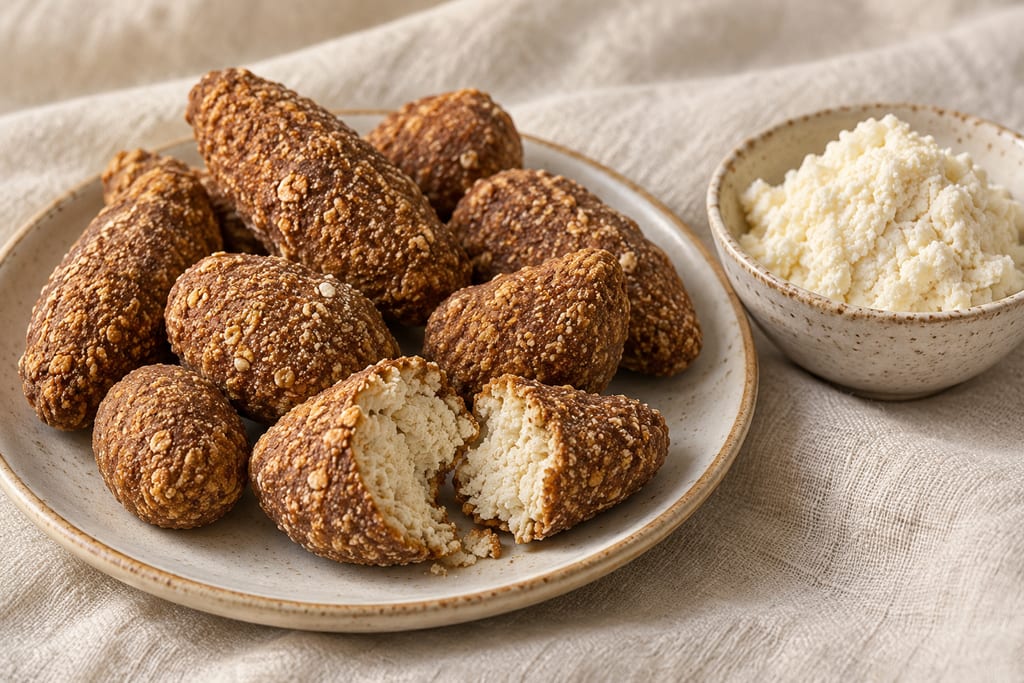
A two-stage Altai dairy preparation: sour chegen is heated into soft aarchi, then portions are drained, pressed and traditionally smoked into firm kurut.

A washed-curd cheese with propionic bacteria, warmed by hot water in two steps and then held in a warm room for weeks so the bacteria can form its holes.
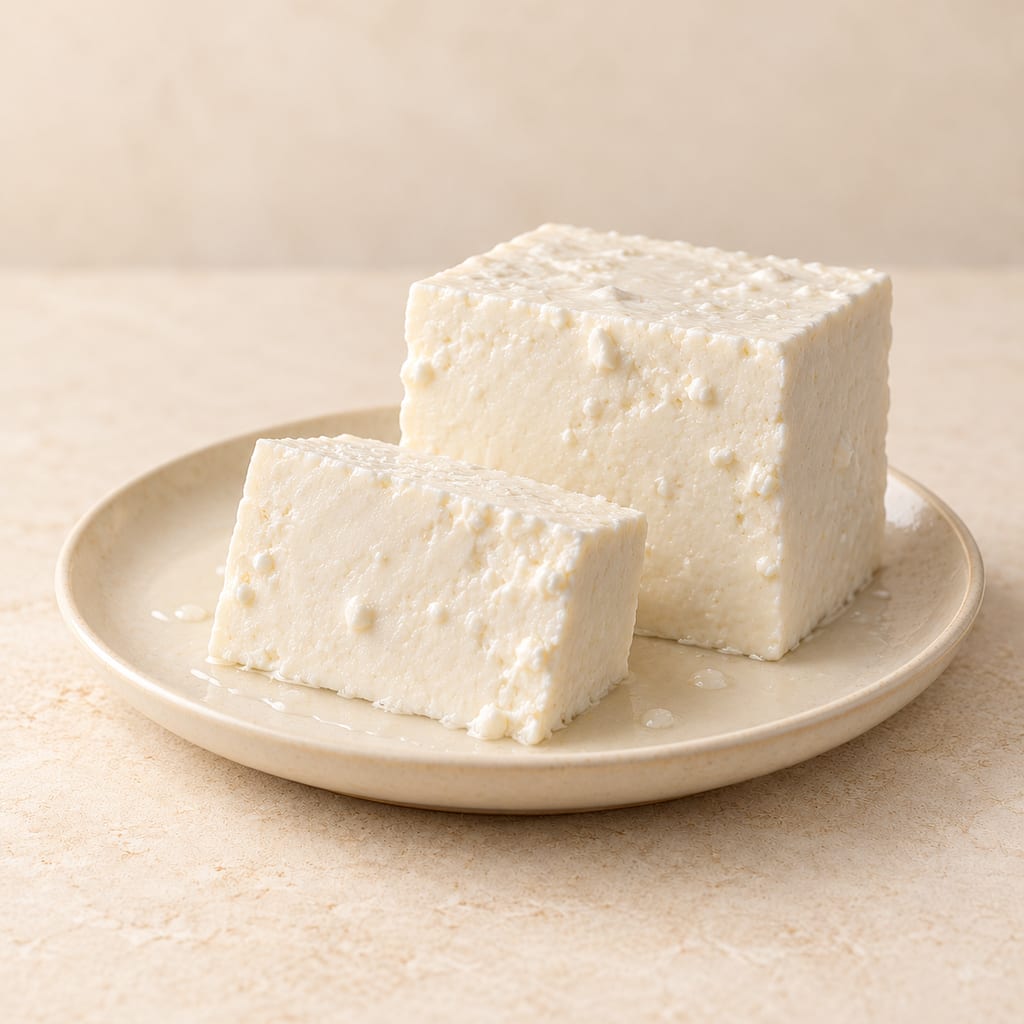
Beyaz peynir is a Turkish white cheese matured in brine. Sheep milk, alone or mixed with other milks, gives a close-textured cheese cut into blocks and packed in cans.
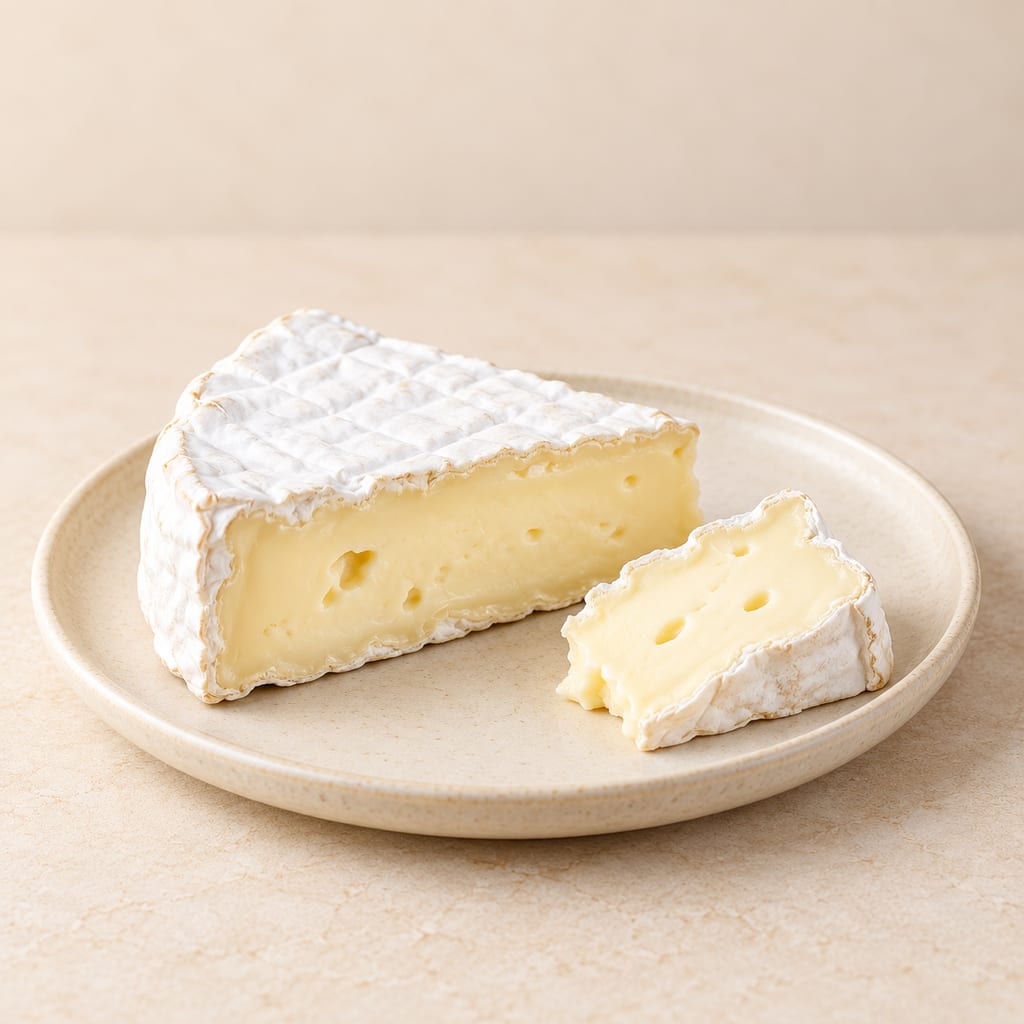
A cream-enriched Brie with a white bloomy rind and a softening center, made from pasteurized milk with lactic and surface cultures.
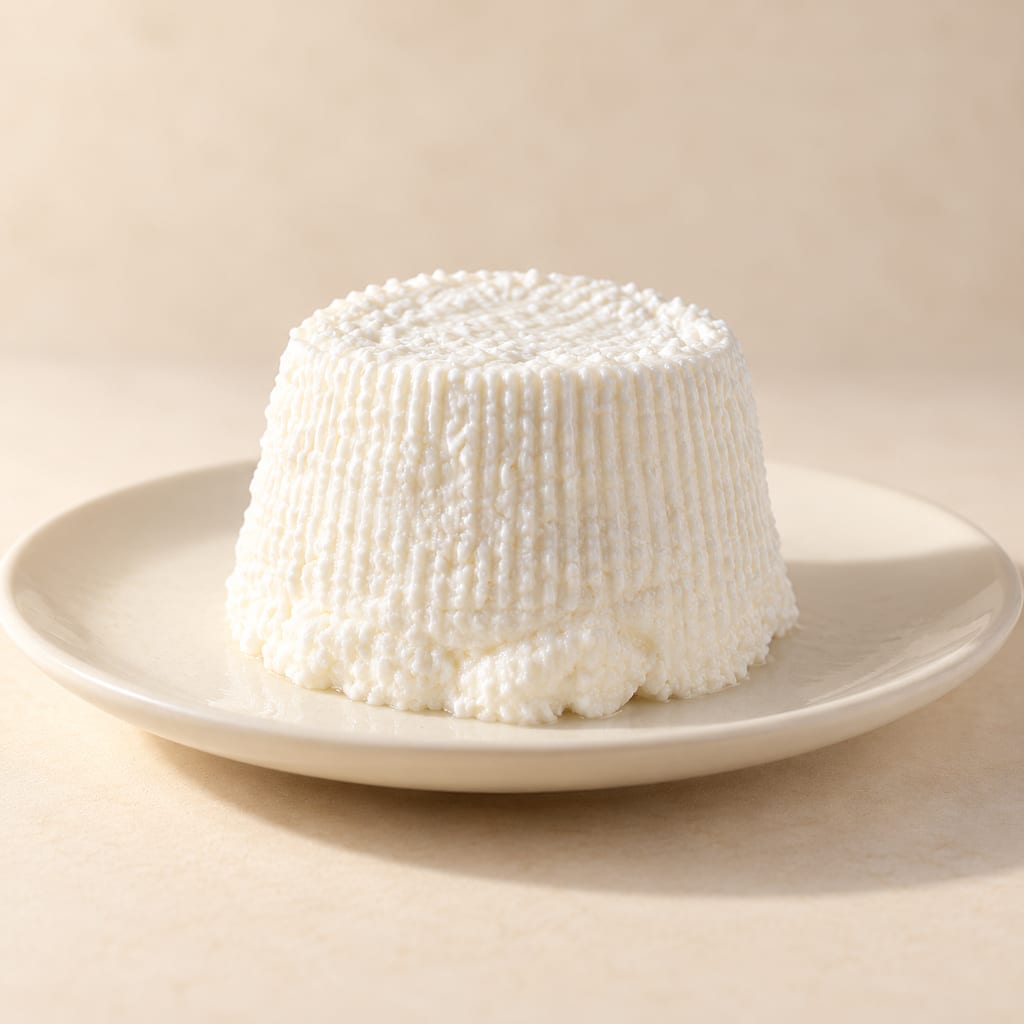
Corsican Brocciu is a whey cheese made by heating sheep's or goat's whey with whole milk and salt, then gently draining the flocculated curds. It is eaten fresh or salted and ripened as Brocciu passu.
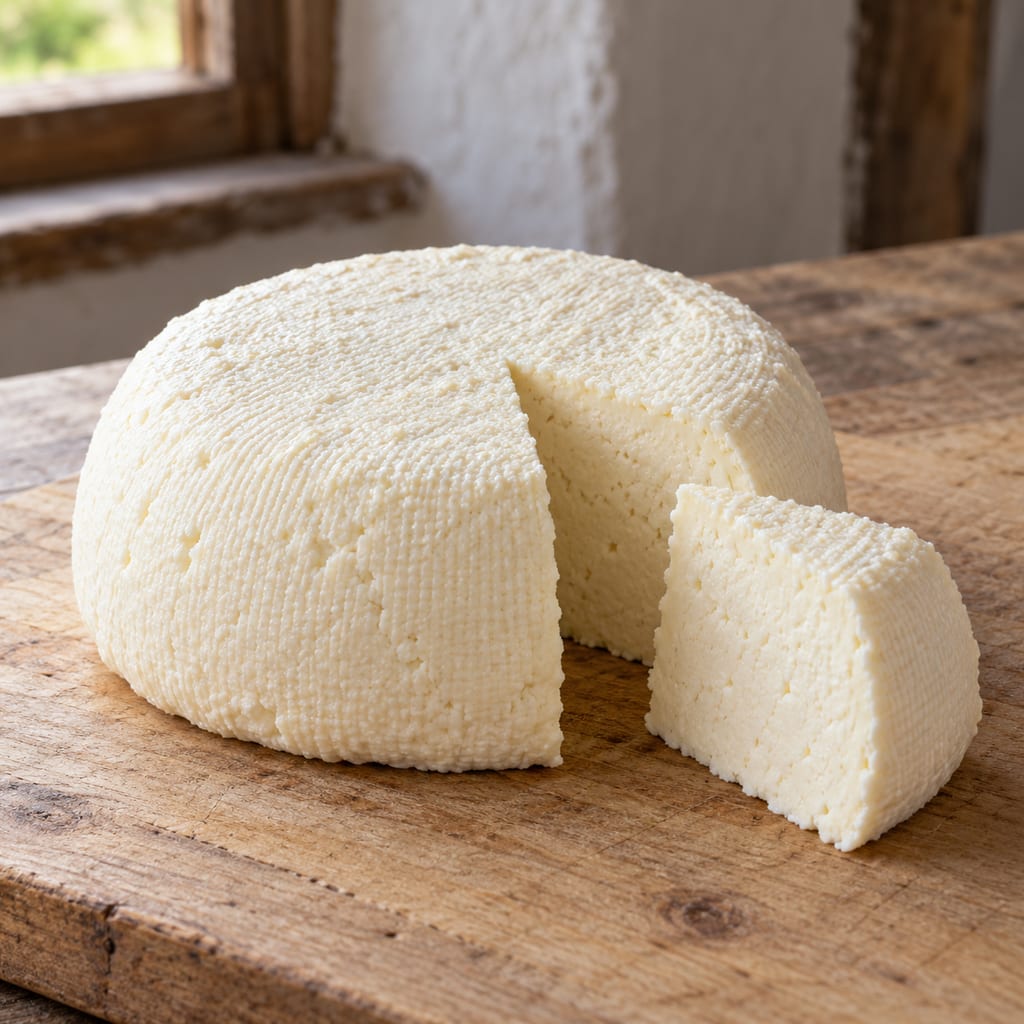
Budz is a traditional Hutsul rennet-set cheese made from sheep, cow or goat milk in the Ukrainian Carpathians, forming a fresh curd that can be eaten, smoked or processed into salted bryndza.
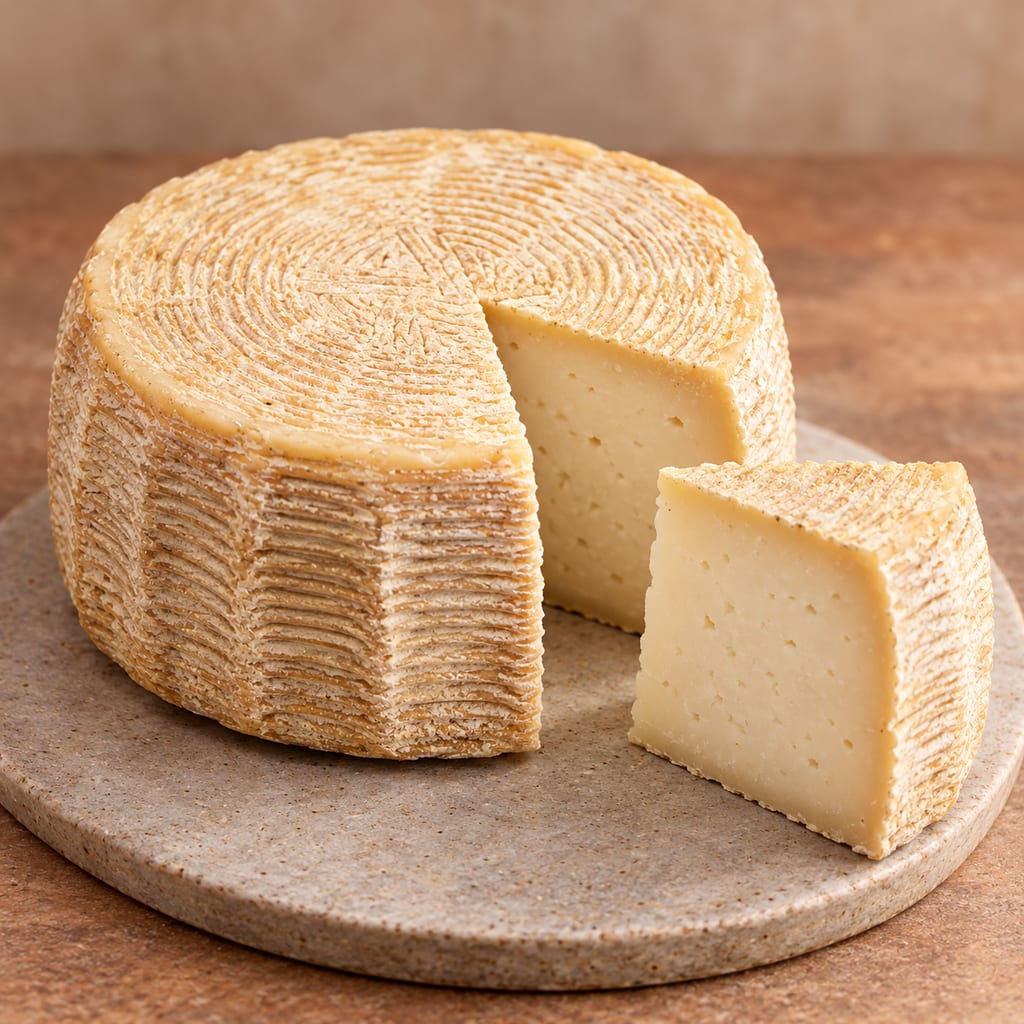
A scalded cheese moulded in baskets and re-cooked in its forms in hot whey, made alongside a ricotta from the same milk, then acidified, brined and aged for months.
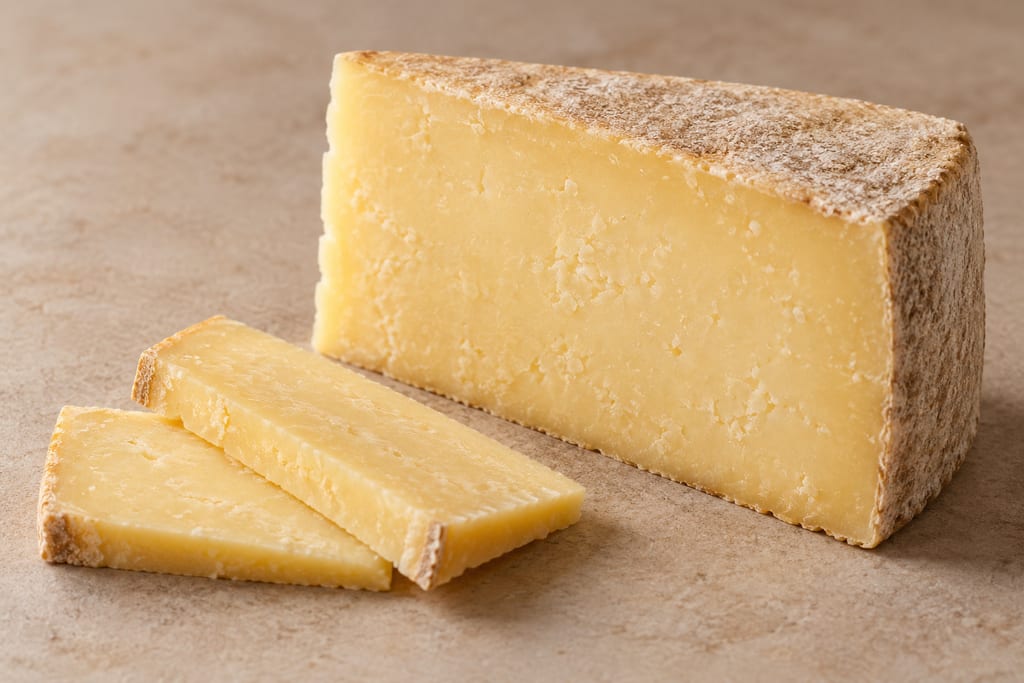
A pressed cheese whose curd is cooked slowly, then cheddared: kept warm in slabs that are turned and stacked for hours before milling, salting and pressing.

At North Abydos in Egypt, a fixed early Dynastic brewery comprised parallel semi-subterranean installations with rows of ceramic mash vats; excavation reports revise their number, scale and estimated batch capacity.

Ají amarillo is the orange-yellow Peruvian chilli cultivar group of Capsicum baccatum, used to colour and season huancaína sauce and ají de gallina. Published heat estimates do not establish one range for the named cultivar.

Toasted almonds are whole sweet almond kernels dry-roasted until golden to brown. Heat replaces their marzipan note with a roasted, nutty one; they thicken and flavour romesco.

Kodiak salmon, halibut and cod cut as seg'aq and hung on an initaq rack to become tamuuq, with kac'amaasaq and kupcuunaq named as different results.

Aniseed is the dried ripe fruit of Pimpinella anisum, an aromatic Apiaceae spice commonly called a seed. It adds a sweet, warm aroma to breads such as Moroccan krachel and South African mosbolletjies, and is distinct from star anise.

A fixed Late Chalcolithic installation in Areni-1 cave combined a shallow clay pressing basin with a large jar set into the cave floor and storage vessels nearby.

Ripe avocado flesh is the soft, buttery, fat-rich pulp of Persea americana, eaten raw. It is low in acid, so it is a fresh ingredient that needs care in chilled dishes.

A portable dome and pan used over a hearth, with embers on the lid and heat from below. Regional peka and saç forms share this principle while differing in materials, pan shape and how the food is cooked.
No community contributions have been published for this entry yet.
Sign in to contribute. Published comments and photos are free to read.
FAOHistory · Process
The technology of traditional milk products in developing countriesDomiati aliases, Egyptian production and historical note, milk species, heat-treatment and salt ranges, natural-flora acidification, rennet setting, drainage/pressing, and brining.
Cited in: A soft white cheese with an Egyptian name; Damietta, the Delta and an uncertain beginning; Why salt enters the milk first; A microbial community, not one named starter; Milk, curd and cloth; Documented methods should remain separate; Ripening changes texture and flavour; At the table and in the market; Interpreting results without guessing at safety
New Mexico State University ExtensionSafety
Making Homemade CheeseCheese pathogen hazard and handling context; not validation of Domiati.
Cited in: Interpreting results without guessing at safety
Applied and Environmental Microbiology / American Society for MicrobiologyMicrobiology · Process
Biodiversity of Bacterial Ecosystems in Traditional Egyptian Domiati CheeseTraditional Domiati uses spontaneous fermentation and salt added before renneting; sampled cheeses contained diverse lactic acid bacteria rather than a single defined starter.
Cited in: A soft white cheese with an Egyptian name; Why salt enters the milk first; A microbial community, not one named starter; Ripening changes texture and flavour; Interpreting results without guessing at safety
LACTIMED project; General Authority for Investment, CITL-AAST and CIHEAM-IAMMRegional method · Process · History
Developing the typical dairy products of Alexandria and Beheira: Diagnosis and local strategyAppendix 4 records a contemporary regional production specification for Domiati: raw buffalo/cow milk mixture, salt added before rennet, heated salted milk, coagulant, drainage and salting; it is distinct from the FAO method and is not combined with it.
The survey describes local dairy production and processing in Alexandria and Beheira; its regional evidence does not establish an ancient origin or represent every Egyptian producer.
Cited in: A soft white cheese with an Egyptian name; Damietta, the Delta and an uncertain beginning; Why salt enters the milk first; Milk, curd and cloth; Documented methods should remain separate; Ripening changes texture and flavour; At the table and in the market; Interpreting results without guessing at safety