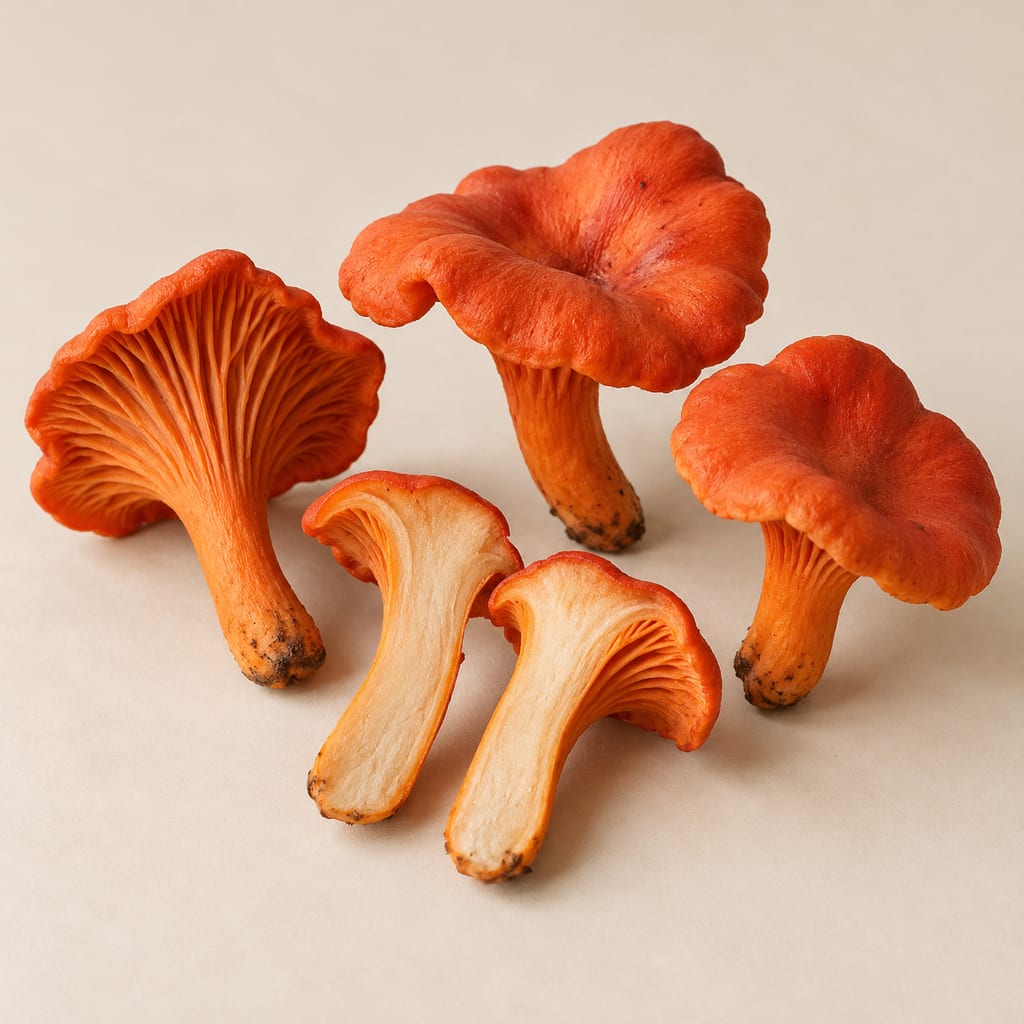
Cinnabar chanterelle
A small red-orange chanterelle of eastern North American hardwood forests, gathered as food for its mild flavour and vivid colour that persists through cooking.
 FermenteaWhere food goes to change
Substrates
Sambucus canadensis is the accepted name used here for American elderberry. Missouri production guidance and named-cultivar studies give useful regional growing information, while food and analytical sources leave process questions open.
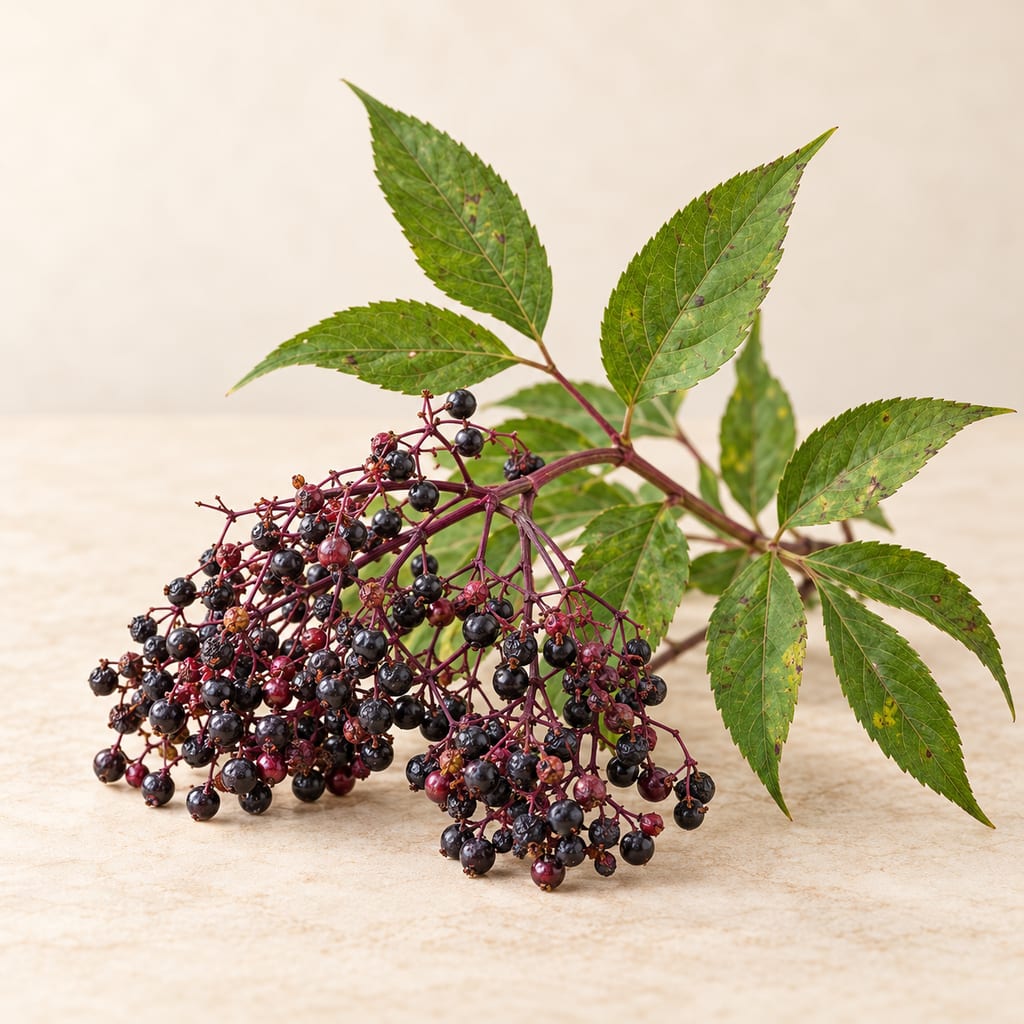
Kew accepts Sambucus canadensis L. in the Viburnaceae and records Sambucus nigra subsp. canadensis as a synonym. The synonym does not make every European elderberry source interchangeable with American elderberry. A Missouri organic-acid study included eight North American S. nigra subsp. canadensis genotypes and separately included the European S. nigra subsp. nigra cultivar Marge; its findings varied by genotype, location and year.
The University of Missouri's production guide describes fruit and flowers in products such as juice, wine, jam, jelly and colorant. It is a commercial-use overview, not a complete household recipe. A 2021 MU Extension preservation newsletter reports a narrow jam and jelly exception and credits a shortened reprint from University of Wisconsin–Madison Extension. Its text does not supply permission to adapt ordinary berry recipes to other products, and this article does not reproduce process directions.
The Missouri guide recommends full sun and moderately fertile soil with adequate surface and internal drainage. For commercial production in that region, it gives a soil pH range of 5.5 to 6.5 and 1 to 2 inches of water per week for growth and fruit development. It recommends elevated sites to reduce spring-frost risk. These values are Missouri grower guidance, not universal home-garden setpoints.
The guide describes dormant hardwood, softwood and root cuttings, as well as stratified seed. High humidity and intermittent mist appear in its softwood-cutting propagation advice. Greenhouse-grown plants are discussed as transplant stock. Those propagation and nursery contexts do not establish productive fruiting in pots or a greenhouse.
For Missouri, the guide reports June flowering and fruit harvest from late July into early September. It describes a partial crop the year after planting for vigorous plants and a full crop expected in year three, while noting that total productive life is unknown. Its planting, pruning, pollination and harvest advice reflects commercial orchard management in that region.
A Missouri field study tested eight American genotypes at three sites after establishment in 2008, with measurements in 2009 through 2011. Reported site-soil pH values were 5.7, 6.3 and 6.4; they are descriptions of trial sites, not a soil-pH experiment. A separate fruit-composition study reported twelve American genotypes, 429 samples and harvests from three US locations during 2004–2006. Its mean fruit pH was 4.92, with a reported range of 4.73 to 5.19. Fruit pH is not soil pH or a home-preservation endpoint.
The 2021 cyanogenic-glycoside study examined selected American elderberry fruit tissues and one commercial juice sample. Its methods list six genotypes and then describe whole-berry lots supplied from five. Those measurements do not establish a safe serving, preparation or process for every cultivar, plant part or product.
The Missouri Extension landing page identifies the production guide as AF1017. Its PDF cover and running headers identify AF1016–2022, while another footer gives AF1016–2014. The publication labels have not been reconciled. The 2015 field and composition studies describe named genotypes and specific sites or harvest years; their measurements do not validate a canning process. MU's 2026 processor roadmap discusses the need for validated formulations and limited standardization, but is not a household batch. No complete elderberry recipe with quantities, yield, endpoint and storage is presented here.
Missouri’s Department of Conservation describes common elderberry as a shrub that can reach about eight feet and form colonies from root sprouts. Its opposite leaves are compound, usually with five to seven sharply toothed leaflets. The flower clusters are broad and flat-topped; mature fruit is purple to black and grows in similar flat-topped heads. The agency lists these features to help readers recognize the Missouri plant, but this page is not a field identification service. Common names cover more than one Sambucus taxon, and a source that names elderberry generally may not establish which species was harvested.
Food-use records distinguish the edible materials from other parts. Missouri’s field guide describes flowers and ripe, cooked fruit as edible after correct preparation, while warning that stems, leaves and roots are poisonous. A current Missouri Extension processor guide identifies cyanogenic glycosides in raw berries, seeds, stems, leaves and other green parts. These are source-specific safety statements; this ingredient page does not supply a foraging method or turn a photograph or common name into a reliable plant identification.
Kew accepts Sambucus canadensis L. and places it in the Viburnaceae. Its record lists Sambucus nigra subsp. canadensis as a synonym. Missouri sources use both the American elderberry name and this wider synonym, while distinguishing American material from European S. nigra in their trials. A shared synonym does not make cultivars or study results interchangeable.
The Missouri cultivation guide places the species across much of eastern and midwestern North America and describes it as common in habitats throughout Missouri. The state field guide lists it statewide, including bottomland and upland forests, stream banks, pond margins, prairies, old fields, gardens and roadsides. These range and habitat records are not maps of food use, land access or suitability for cultivation elsewhere.
The cultivation guide reports white flower clusters in June and fruit from late July into early September. The Missouri Department of Conservation gives a wider field-calendar description: flowering from late May through July and fruit maturation from August through October. The difference reflects separate source scopes, not one universal harvest calendar. The state guide describes flower clusters at twig tips and glossy purple or black fruits; commercial cultivation advice in the extension guide is tied to Missouri orchard conditions.
Harvest timing matters to product identity as well as quality. MU’s guide says flowers are clipped when all blossoms have opened and fruit clusters are cut when berries are fully colored. The state field guide says the flowers and ripe cooked fruit are edible after proper preparation. Neither statement provides a complete household harvesting and processing method, so the dates and descriptions should not be used as a safety endpoint or a substitute for identification.
University of Missouri guidance describes elderberry as a crop with potential but limited commercial history. It says moderately fertile soils with good surface and internal drainage suit production, recommends full sun, and advises soil testing before a planting. Its suggested soil pH of 5.5–6.5 and water guidance of 1–2 inches per week belong to Missouri commercial production. They are not universal home-garden targets. The guide recommends raised planting rows where drainage is poor and elevated sites to reduce spring-frost exposure.
The guide says elderberry can tolerate cold after bud break but gives no minimum injury temperature. It identifies drought sensitivity without a universal irrigation schedule. Perennial weeds, pests, birds and disease are described as crop-management concerns. Information on fertility, yield, pest management and productive lifespan is incomplete, so commercial recommendations do not transfer directly to a garden, container or another climate.
The Missouri guide distinguishes tested selections rather than treating American elderberry as one uniform crop. It reports that some older northeastern cultivars performed less well in Missouri trials than newer Midwestern selections. ‘Bob Gordon’ was selected near Osceola, Missouri; ‘Wyldewood’ near Eufaula, Oklahoma. The guide describes both as producing large clusters on first-year shoots and reports regional differences in ripening. These observations apply to named cultivars and trial settings, not every plant sold under a general elderberry label.
The guide describes propagation by dormant hardwood cuttings, softwood and root cuttings, stratified seed, and rooted nursery plants. Its notes on humidity and intermittent mist concern propagation, not a setpoint for growing fruit in a greenhouse. Greenhouse-grown stock is discussed as transplant material. Commercial spacing and nursery practices do not establish pot size, container yield, or a household greenhouse schedule.
The USDA Natural Resources Conservation Service plant guide compiles ethnobotanical accounts under the older name Sambucus nigra subsp. canadensis. It reports that Cahuilla communities gathered berries in July and August, dried them, and later cooked them into a sauce; it also describes berry preparations and uses of flowers. The guide cites earlier ethnographic works, so these statements should remain attributed to that record rather than presented as a single timeless Indigenous practice. The sources do not establish one origin for elderberry foods or a complete historical recipe.
Missouri sources describe fruit and flowers in products including juice, wine, jelly, jam and colorant. The state conservation guide records pies, jellies, wine and flower syrup among regional uses. These are descriptions of products and practices, not evidence that their methods are interchangeable. The available information preserves a broad food-use context while leaving each named preparation to its own process-specific sources.
Missouri Extension’s 2026 processor guidance identifies raw elderberries, seeds, stems, leaves and green plant parts as sources of cyanogenic glycosides that can release cyanide. It advises removing stems and leaves, using ripe fruit and thoroughly cooking it before processing. The guidance describes jam and jelly production for very small processors; it does not validate a Fermenta recipe or a general home process. A reader should use a current tested preparation appropriate to the product and jurisdiction.
The same Missouri document calls elderberries naturally low-acid and says shelf-stable jam or jelly requires a validated formulation, verified finished equilibrium acidity and correct thermal processing. Its pH criterion is part of that commercial product guidance and does not by itself make a homemade formula safe. It warns that poor formulation, insufficient processing or a failed seal can permit dangerous or spoilage organisms. This page supplies no preserving ratios, processing time, storage duration or safe fermentation endpoint.
The Department of Conservation likewise cautions that stems, leaves and roots are poisonous and recommends proven recipes for berries. The evidence calls for careful species and plant-part identification and a tested process. Smell, taste, bubbling or an uncalibrated home observation cannot establish safety.
Missouri field and fruit studies describe particular genotypes, locations and years. One field trial followed eight American genotypes at three Missouri sites after establishment in 2008, with measurements from 2009 to 2011. The reported site soil pH readings describe those trial locations; they do not test an optimum soil range. A separate composition study included twelve American genotypes and 429 samples collected across three United States locations in 2004–2006. Its fruit-pH average and range describe those samples, not a preservation endpoint.
The 2021 cyanogenic-glycoside paper analyzed selected American elderberry tissues and a commercial juice sample. Its methods list six genotypes, while its whole-berry supply description names five. Those study materials do not cover every cultivar, part or product. The measurements should not be converted into a serving limit, a processing recipe or a general claim that all elderberry material is safe or unsafe.
A later processor roadmap points to the need for validated formulations; it is not a tested household batch.
No earliest food-use attestation, independently reviewed process, safe-serving conclusion or complete household method was verified. There is no validated storage duration for the plant material in the sources used here. Missouri growing figures remain regional recommendations, and the current draft does not assign a universal home-care or harvest schedule.
Missouri sources describe cultivation and fruit or flower products; this is not a claim that the species or its food use originated there.
A small red-orange chanterelle of eastern North American hardwood forests, gathered as food for its mild flavour and vivid colour that persists through cooking.
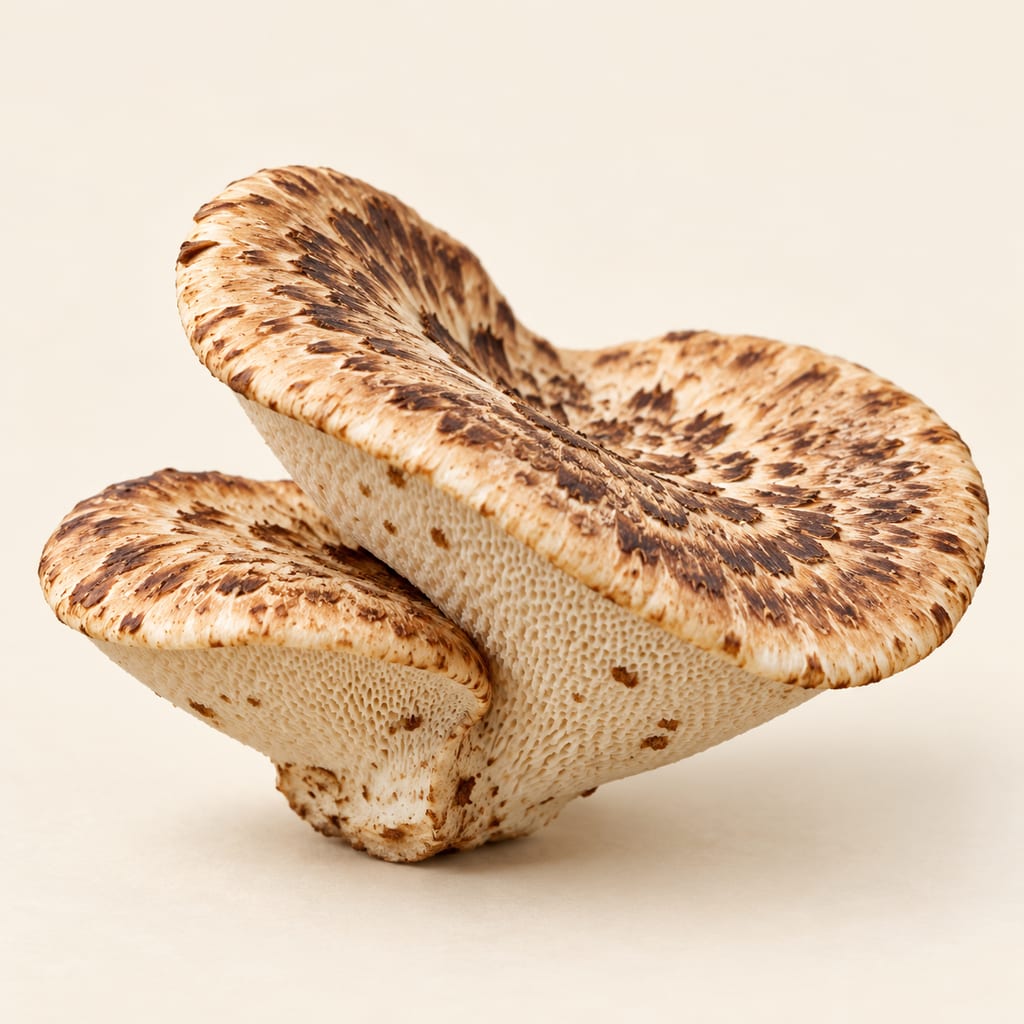
Dryad’s saddle is a wild hardwood polypore whose young tender margins are cooked in some regional food traditions; mature brackets quickly become tough.
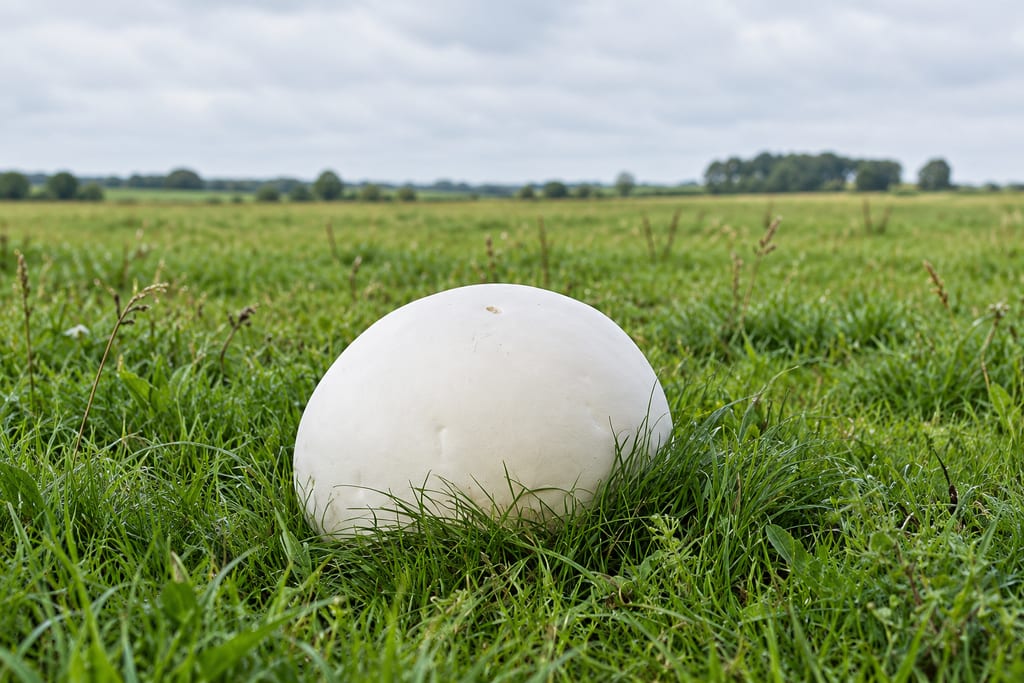
Young Calvatia gigantea is documented as a cooked food in Khiram, South Kashmir; mature or uncertain specimens are not food. Wild mushroom identification requires expert confirmation.
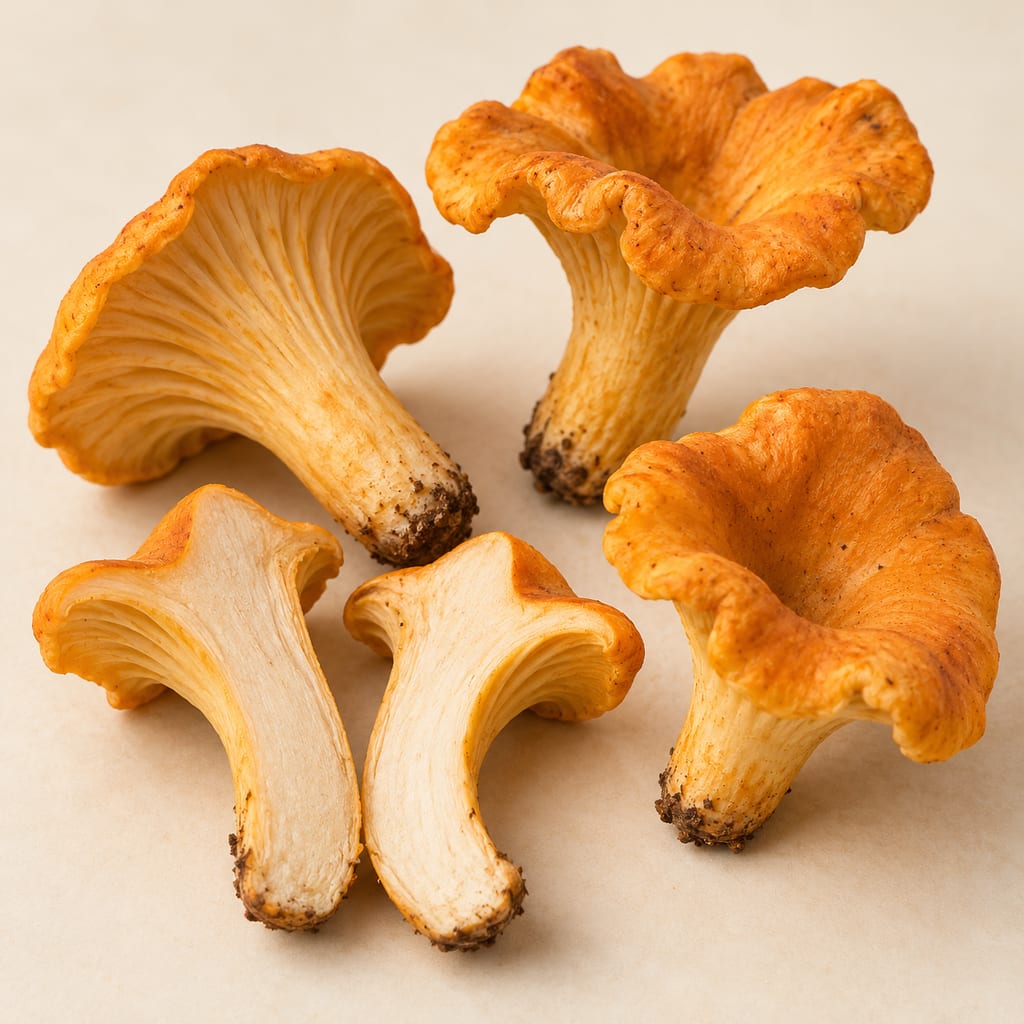
Cantharellus lateritius is a bright orange chanterelle of oak and mixed woodland. A Guatemalan market record and a Missouri field guide describe it as edible, with cautions about a poisonous lookalike.
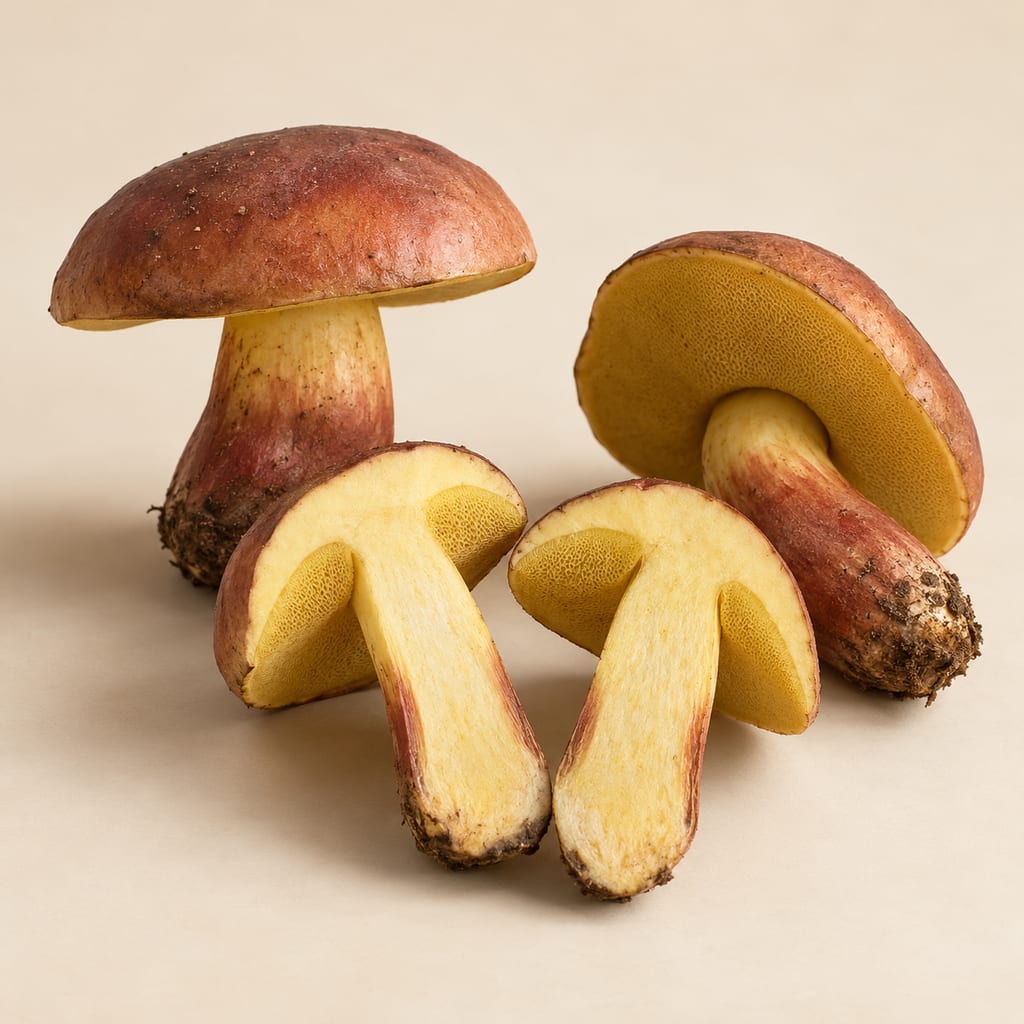
The two-colored bolete, Baorangia bicolor, is an oak-forest bolete of eastern North America. Field guides disagree on eating it because it is easily confused with poisonous boletes.
No community contributions have been published for this entry yet.
Sign in to contribute. Published comments and photos are free to read.
Royal Botanic Gardens, KewIdentity
Sambucus canadensis L. | Plants of the World OnlineAmerican elderberry and its name
Cited in: American elderberry and its name; Range and the limits of common names
University of Missouri ExtensionUse
Growing and Marketing Elderberries in MissouriFruit and flower uses reported in Missouri
Missouri orchard conditions
Evidence and publication limits
Cited in: Fruit and flower uses reported in Missouri; Missouri orchard conditions; Evidence and publication limits; Open evidence questions
University of Missouri Center for AgroforestryUse
Growing & Marketing Elderberries in Missouri, Agroforestry In ActionFruit and flower uses reported in Missouri
Missouri orchard conditions
Evidence and publication limits
Cited in: Fruit and flower uses reported in Missouri; Missouri orchard conditions; Evidence and publication limits; Range and the limits of common names; Flowers, fruit and season in Missouri; Growing evidence is regional; Cultivars, propagation and production scale; Historical and regional food accounts; Open evidence questions
Thomas et al.; HortScience 50(6) (2015)Use
Horticultural Performance of Eight American Elderberry Genotypes at Three Missouri LocationsWhat the field and fruit studies measured
Evidence and publication limits
Cited in: What the field and fruit studies measured; Evidence and publication limits; What the analytical studies establish
Perkins-Veazie et al.; HortScience 50(5) (2015)Use
Fruit Composition of Elderberry (Sambucus spp.) Genotypes Grown in Oregon and Missouri, USAWhat the field and fruit studies measured
Evidence and publication limits
Cited in: What the field and fruit studies measured; Evidence and publication limits; What the analytical studies establish
Thomas et al.; Journal of Agricultural and Food Chemistry (2015)Use
Occurrence of Polyphenols, Organic Acids, and Sugars among Diverse Elderberry Genotypes Grown in Three Missouri LocationsAmerican elderberry and its name
Cited in: American elderberry and its name
Appenteng et al.; Molecules 26(5):1384 (2021)Use
Cyanogenic Glycoside Analysis in American ElderberryWhat the field and fruit studies measured
Cited in: What the field and fruit studies measured; What the analytical studies establish
University of Missouri Extension; elderberry section credits a shortened University of Wisconsin–Madison Extension reprintSafety
Preserve It Fresh, Preserve It Safe: 2021, No. 4 (July/August)Fruit and flower uses reported in Missouri
Cited in: Fruit and flower uses reported in Missouri
University of Missouri Extension; Channaiah and Schmidt (2026)Use · Safety
Elderberry Jam and JellyCommercial jam-and-jelly context, low-acid hazard, cyanogenic-glycoside caution and validated-process requirement.
Cited in: Evidence and publication limits; Field identity and the edible material; Food safety and preservation limits; Open evidence questions
Missouri Department of ConservationIdentity · Use · Safety
Common Elderberry | Missouri Department of ConservationField description, habitat, edible parts, preparation warning and Missouri uses.
Cited in: Field identity and the edible material; Range and the limits of common names; Flowers, fruit and season in Missouri; Historical and regional food accounts; Food safety and preservation limits
USDA Natural Resources Conservation ServiceIdentity · History · Use · Safety
Common Elderberry Plant GuideOlder taxonomic synonym, reported ethnobotanical uses and source limits.
Cited in: Historical and regional food accounts