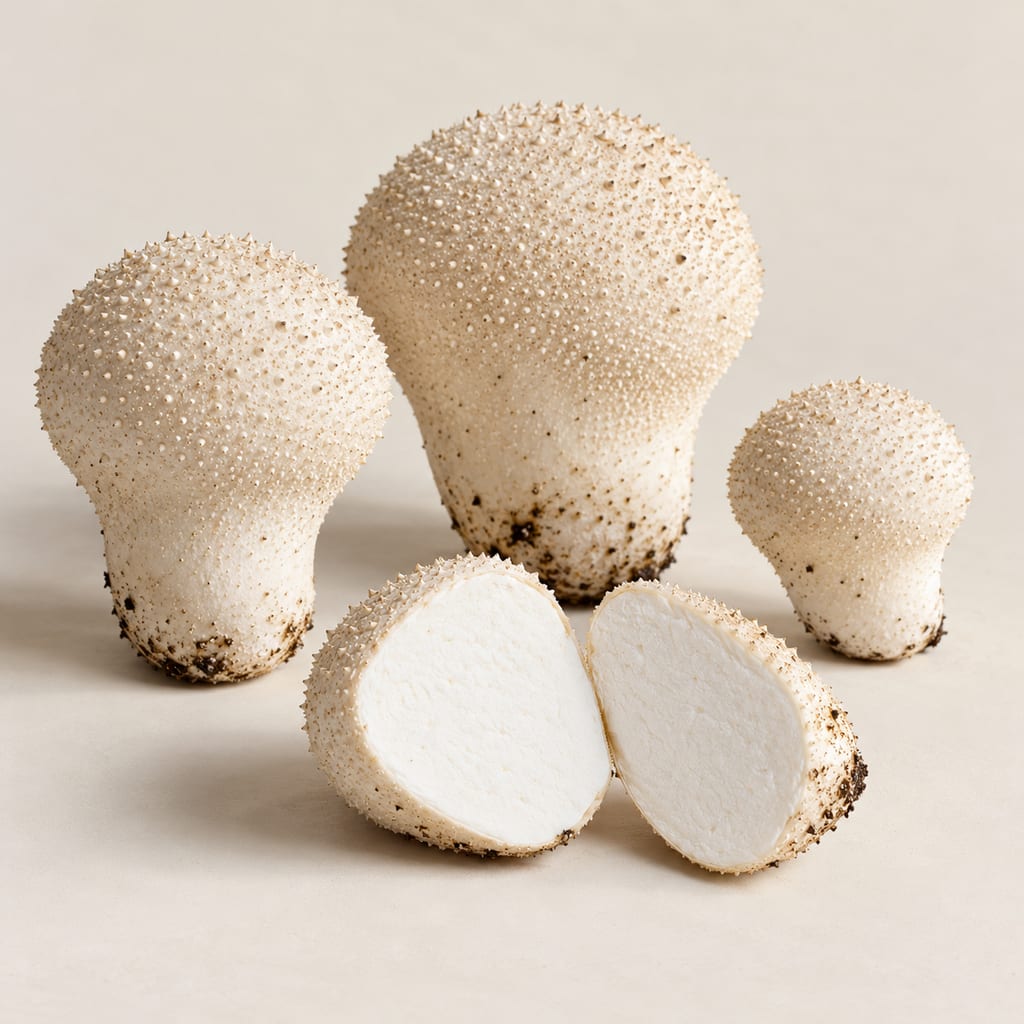
Common puffball
The common puffball, Lycoperdon perlatum, is a wild, ground-growing puffball. It is cooked as food in some traditions only while the flesh is still white, and its lookalikes must be excluded before any use.
 FermenteaWhere food goes to change
Mushrooms
Young Calvatia gigantea is documented as a cooked food in Khiram, South Kashmir; mature or uncertain specimens are not food. Wild mushroom identification requires expert confirmation.
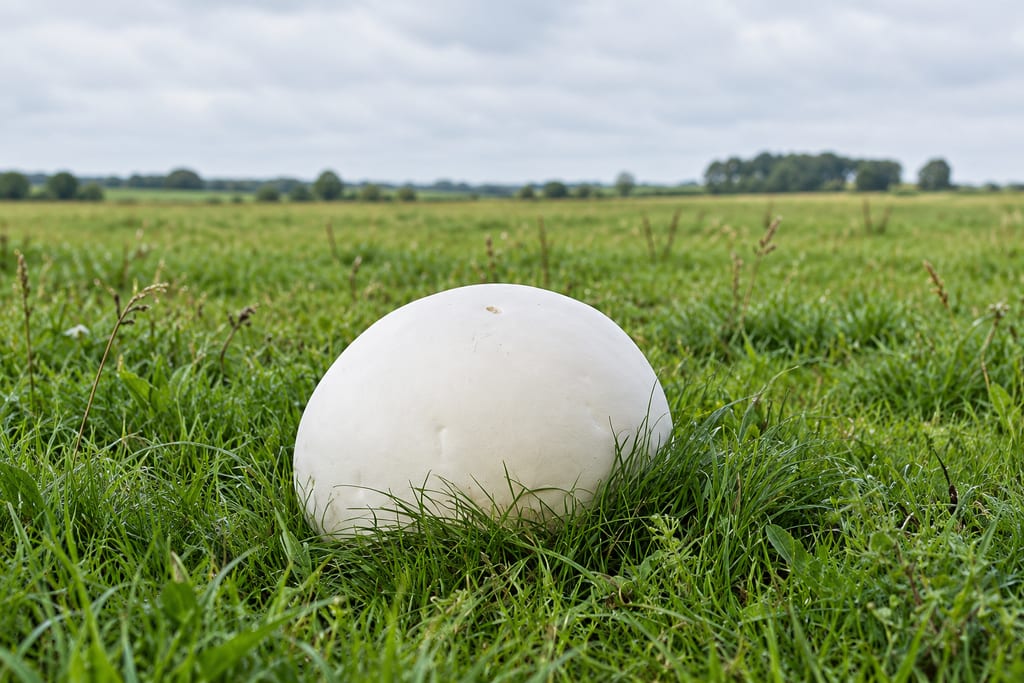
The catalogue label Bovista gigantea is an older name. GBIF treats it as a synonym of the accepted Calvatia gigantea; Langermannia gigantea is another synonym used by field guides. This page uses Calvatia gigantea as the principal name and keeps the catalogue spelling searchable. Field guides describe a large, round, smooth, white fruit body on soil in open pasture, lawns, woodland edges or clearings. Young flesh is firm, plain white and marshmallow-like. As the fruit body matures, its interior changes to yellow-green and then brown, softens and becomes a powdery spore mass. The Burke Herbarium describes fruit bodies around 8–60 cm across, though size varies. These traits are descriptive and do not establish an identification by themselves.
The white outer wall is the peridium, while the interior spore-producing tissue is the gleba. A giant puffball does not present the ordinary cap-and-gill form of a familiar umbrella mushroom. The fruit body can sit directly on soil with only a short basal attachment; the Washington herbarium notes that a cordlike root may appear even though a distinct sterile base is absent or rudimentary. Descriptions vary because fruit bodies change as they mature and weather. The field marks above are context for reading source descriptions, not a diagnostic key. The identity here rests on taxonomic records and voucher-backed surveys rather than on a reader matching a photograph.
A South Kashmir ethnomycology survey carried out from 2019 to 2021 interviewed 200 people and collected voucher specimens. It records Calvatia gigantea under the name Sisdeoong, notes young basidiomata eaten after cooking by tribal residents of Khiram, gives August–October as the collection period, and lists voucher 8770-KASH. This is direct but geographically bounded evidence; it does not establish one recipe or a practice across all India. The same local name appears in that table for Bovista plumbea, so the name is not species-specific. A Bangus Valley survey records voucher KASH-8804 in Upper Bangus, Lower Bangus and Nard Bek and calls the early stage edible. Its later-stage “toxic” wording is unexplained, so this page does not infer a toxin or mechanism from it. FAO’s 2004 overview also lists Bovista gigantea as edible, but that is a secondary historic catalogue record, not a detailed account of Indian practice.
The South Kashmir study connects the scientific name to a local name, an area, cooking, a collection period and a herbarium accession. Still, a table entry does not give a full recipe, frequency of use or current household practice beyond what respondents reported. The survey interviewed 200 people across a broad region, but the specific species entry is associated with Khiram. The survey's total sample should not be mistaken for 200 people personally reporting this mushroom. Its citation supports the narrow wording used here and no more.
The Bangus Valley article offers a different kind of evidence. It records collection sites and a voucher number, which support occurrence and the authors' reported stage-specific edibility assessment. It does not document a cooking practice or community use for this particular species. Its phrase that it “becomes toxic” at a later stage is not accompanied by a chemical analysis or explanation in the species row. Other field sources describe mature gleba as degraded and full of spores and advise against eating it. This page therefore keeps the practical caution without claiming a specific toxin appears as the puffball ages.
Season varies with region. The South Kashmir survey specifically associates the Khiram food-use entry with August–October. USDA Forest Service gives late summer to fall in its North American context; Missouri Conservation lists May–October for Missouri. A biodiversity manual for Argentina describes autumn fruiting in its Patagonian coverage. These windows are not interchangeable or a single worldwide season. The Bangus Valley survey supports occurrence in grassland at Upper and Lower Bangus and Nard Bek but does not establish a local food-use season in that entry. The strongest location for a food-use row is therefore Khiram, South Kashmir, India, as documented use. Bangus Valley supports occurrence and an early-stage edibility assertion but is not evidence of consumption by the people surveyed. The Patagonian account supports a separate regional culinary note, not an Argentina-wide claim.
Fruit body appearance depends on rain, soil moisture, temperature and local habitat, so a regional season is an observation rather than a fixed biological schedule. Missouri's May–October listing describes a broad state window; the US Forest Service's late-summer-to-fall summary is a separate regional account. The Kashmir August–October entry is closest to the food-use statement, while the Bangus Valley survey supports occurrence without a month-by-month record. These are geographically different observations. The available sources do not establish a peak season or year-to-year abundance for these locations.
The candidate source register also gives North America and Europe as broad places of use. Those catalogue regions are starting points, not a map of every locality where the fungus fruits or is eaten. The Missouri guide is a location-specific culinary source, while the inspected Hillewaert photo documents a Belgian pasture observation. That photograph's place is image provenance, not evidence of Belgian food use. The map rows distinguish occurrence from documented preparation so a species-distribution point is not mistaken for a local recipe.
Sources consistently describe the food form as the young fruit body while its flesh is firm and uniformly white throughout. The outside alone cannot show maturity. Missouri Conservation and the Burke Herbarium describe the internal change from white flesh to discoloured, softer tissue and eventually powdery spores. Do not use a specimen with yellow, green, brown, mushy, damaged or spore-filled tissue. Missouri advises cutting the whole specimen top to bottom: an immature Amanita can look like a small white puffball outside, but a developing cap or stem appears internally. Poison Control advises that wild mushrooms should not be eaten unless an experienced identification expert confirms them. This is a safety warning, not a do-it-yourself guarantee. Cook thoroughly; the Kashmir survey specifically records cooking before consumption. These sources do not support raw use, fermentation, curing or a standardized preservation method for this species.
The instruction to open a puffball is useful because an immature cap mushroom can still be enclosed in a white veil and look round before it expands. In an Amanita button, outlines of developing structures may be visible after cutting; in a puffball there should be no developing cap-and-stem form. Check the entire specimen, not only the top. A white interior alone does not confirm the giant puffball rather than another puffball, and it cannot rule out chemicals, roadside contamination or individual sensitivity. The expert-identification warning remains the controlling safety guidance.
Do not collect or eat specimens that are badly bruised, waterlogged, decomposing or exposed to lawn chemicals or other contamination. Missouri Conservation notes that puffballs often grow on lawns and advises checking whether lawn treatments were used. It also recommends thorough cooking and trying only a small amount initially because some people may react to a fungus even when it is correctly identified. These are conservative food cautions, not a promise that any portion or source is safe. People with known allergies or medical dietary restrictions should follow clinical advice.
The Kashmir source establishes that young fruit bodies are consumed after cooking but gives no recipe. Missouri’s guide offers puffball Parmesan as a North American example, while the Patagonian manual discusses cooking fresh slices as a regional preparation. These remain local examples, not one universal tradition. Vienna’s municipal mushroom guidance describes the taste as mild and notes that assessments of eating quality vary. The useful distinction in the sources is stage and texture: young gleba is firm and white; mature gleba is a spore mass, not a food texture. The sources reviewed here do not establish species-specific nutrition or health effects.
The sources do not establish taste as a stable quality marker. A mild flavor or pleasant texture cannot identify a species, and flavor changes with age and preparation. Vienna's municipal authority says taste is mild and notes that opinions on eating quality vary; this is more accurate than calling it a delicacy everywhere. An edible label in a field guide is not a recommendation to forage. Food history, biological identification and food-safety decisions are separate questions.
Fruit bodies may deteriorate quickly, but the sources do not establish a validated storage duration across climates. A Patagonian field manual recommends fresh use and does not recommend drying; that regional note is not a universal storage protocol. Missouri Conservation cautions against collecting lawn fungi from chemically treated areas. Keep collection-site cleanliness separate from identification: a clean site does not prove the mushroom is correctly identified, and correct identification does not establish that the site is uncontaminated. No fermentation process or fermented product use is documented in the sources consulted.
Freshness is a limitation, but the sources do not support a universal refrigerator life, drying schedule or canning process. The Patagonian guide discourages drying and recommends fresh cooking; a Wisconsin conservation article says mature puffballs may deteriorate in a day or two. That is a regional observation rather than a validated preservation specification. The page gives no storage duration because climate, harvest condition and handling affect deterioration. Any later preservation advice should have a method-specific source for this species.
Fermentation is separate from cooking. None of the cited ethnomycology surveys, field manuals or conservation guides reports fermentation, lactic pickling, curing or another preserved product made from Calvatia gigantea. Using this mushroom in a fermentation process would require a process-specific source and a separate safety assessment. The ingredient may be catalogued as a documented food raw material, but its presence in a fermented-food catalogue does not mean it is itself fermented or suitable for every process.
The South Kashmir survey independently supports a specific contemporary regional food practice, so the ingredient can be described as edible only with its stage and geography qualified. Do not call it a pan-Indian tradition, imply Sisdeoong uniquely names this species, or repeat “toxic when old” as a proven toxicology finding. Reliable sources reviewed here support taxonomy, habitat, regional season, young-stage food use and safety caveats; they do not establish a detailed Kashmir recipe, shelf-life standard, raw use, medical use or fermentation tradition. This page cannot identify a specimen for consumption.
Taxonomic sources sometimes differ in accepted combinations or author citations. This page keeps the species epithet and search aliases while anchoring its accepted name to GBIF's backbone record. Field sources use both Calvatia and Langermannia for the giant puffball. Bovista gigantea is retained for retrieval because it is the supplied catalogue spelling; it is not presented as another food species. A future authoritative taxonomic change should update the identity record without erasing historical names from source provenance.
Image captions identify the photographed taxon and license, but a photograph cannot show every diagnostic character or reveal whether a specimen is firm and white inside. The gallery offers visual context, not a foraging aid. The generated hero is editorial art and should remain labeled as generated; it is not a documentary record or proof of the edible stage. Keep image provenance and species identification claims separate.
The survey uses 'Khiram area'; young Calvatia gigantea eaten after cooking by tribal residents. Coordinates not supplied.
Voucher KASH-8804 and early-stage edibility assertion at Upper/Lower Bangus and Nard Bek; survey does not report consumption. This is occurrence, not food-use.
Regional biodiversity manual describes young-stage edible use and cooked slices; not generalized to Argentina.
Missouri Conservation describes young-stage edibility and a cooked puffball-Parmesan example; not a traditional-use claim.
The common puffball, Lycoperdon perlatum, is a wild, ground-growing puffball. It is cooked as food in some traditions only while the flesh is still white, and its lookalikes must be excluded before any use.
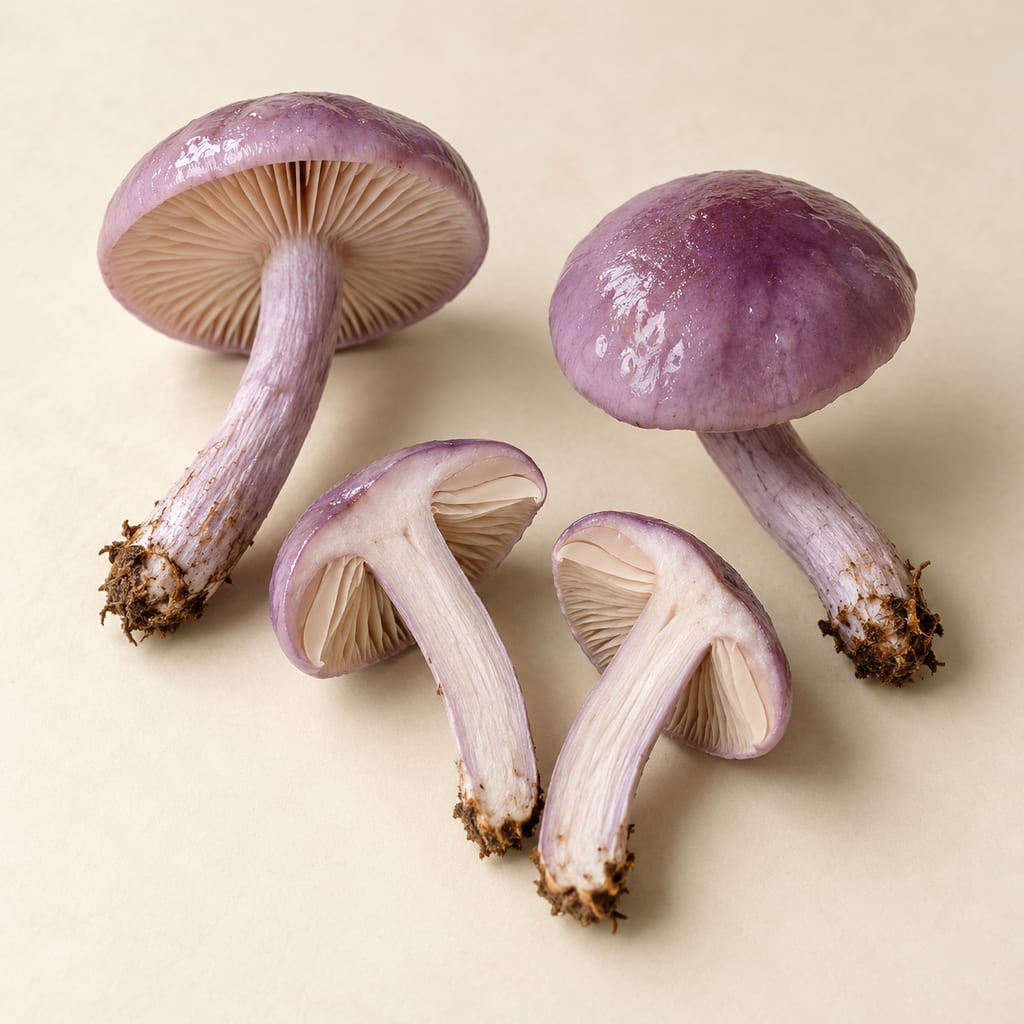
Cortinarius magellanicus is a webcap mushroom of Nothofagus forests in Patagonia, recorded in regional food use, but it belongs to a species complex and its genus contains deadly toxic species.
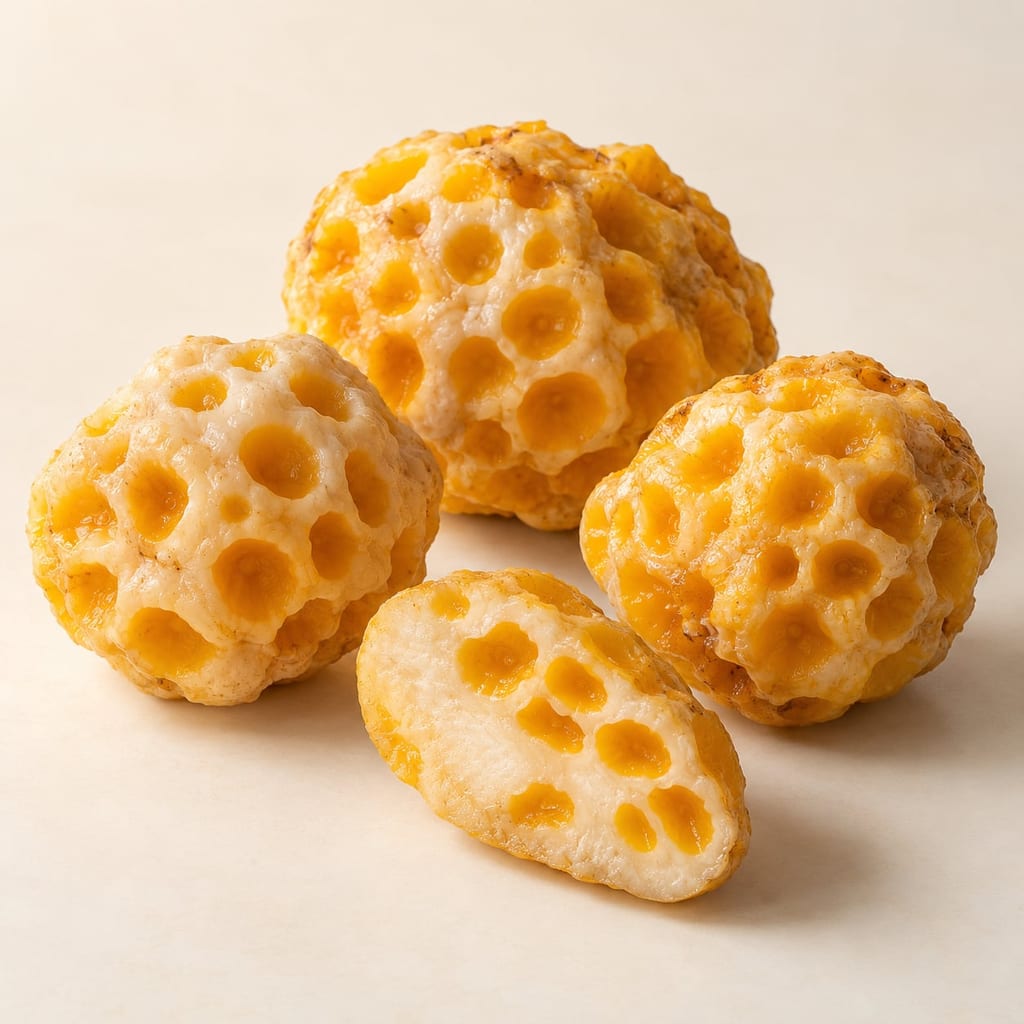
Llao-llao is the orange, gelatinous fruiting body of a southern-beech parasite in the Andean–Patagonian forests of Chile and Argentina. Regional sources document its food history, including Mapuche use in chicha.
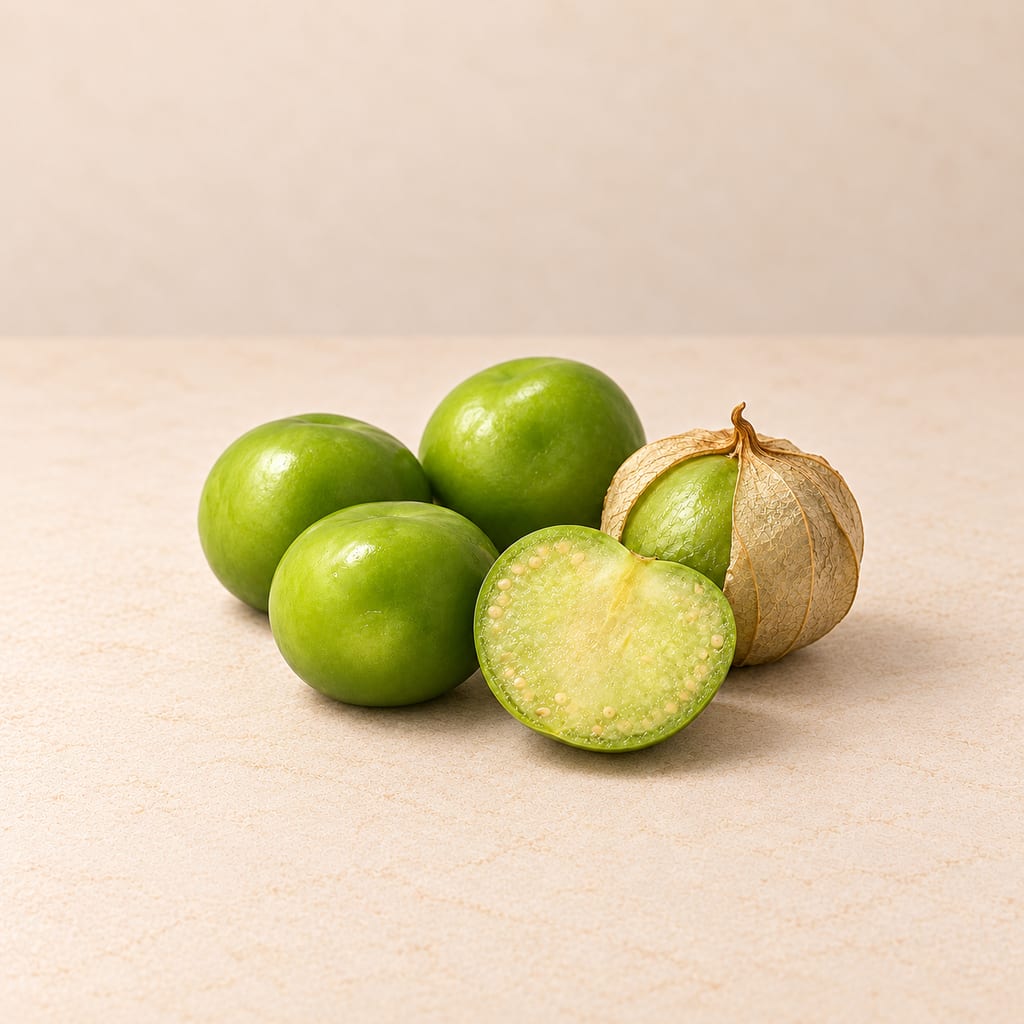
The tomatillo is the tart green fruit of Physalis ixocarpa, a Mexican relative of the tomato that grows inside a papery husk. It is the base of salsa verde.
No community contributions have been published for this entry yet.
Sign in to contribute. Published comments and photos are free to read.
GBIFTaxonomy
Bovista gigantea (Batsch) Gray — GBIF Backbone TaxonomyBovista gigantea is treated as synonym of Calvatia gigantea.
Cited in: Name and identity; Editorial limits
Plant Science TodayFood history · Geography · Season
Conspectus of traditional ethnomycological insights pertaining to wild mushrooms of South Kashmir, IndiaYoung C. gigantea eaten after cooking by tribal residents of Khiram; collection August–October; voucher 8770-KASH.
Cited in: Regional food evidence; Season and places; Food stage and handling; Culinary context; Editorial limits
Journal of Mycopathological ResearchTaxonomy · Geography · Food use
Taxonomic studies and diversity of some wild mushrooms of Bangus Valley, North Kashmir, IndiaVoucher KASH-8804; Upper and Lower Bangus, Nard Bek; early-stage edible assertion; late-stage toxic wording unexplained.
Cited in: Regional food evidence; Season and places; Editorial limits
Missouri Department of ConservationIdentification · Season · Culinary use · Safety
Giant PuffballMissouri May–October; young flesh pure white; pastures, woods, lawns; immature Amanita lookalike and full-length internal check; cook; avoid chemically treated lawns.
Cited in: Name and identity; Season and places; Food stage and handling; Culinary context; Collection and storage limits
USDA Forest ServiceSeason · Edibility
Field Guide to Mushrooms of the National Forests in AlaskaLate summer to fall; edible when young; US regional context.
Cited in: Season and places
Burke Herbarium Image CollectionIdentification · Edibility
Calvatia giganteaFruit body 8–60 cm; white firm gleba matures to yellow-green/mushy, then olive-brown/powdery.
Cited in: Name and identity; Food stage and handling
Sistema de Información de Biodiversidad, ArgentinaSeason · Habitat · Culinary use
Calvatia giganteaRegional Patagonian account: autumn; grasslands, pasture and clearings; young white compact edible stage and local cooked-slice examples.
Cited in: Season and places; Culinary context; Collection and storage limits
Poison ControlSafety
Mushroom poisoning: Don't invite 'the death angel' to dinnerWild mushrooms should not be eaten unless an experienced identification expert confirms them.
Cited in: Food stage and handling; Editorial limits
Food and Agriculture Organization of the United NationsFood history
Wild edible fungi: a global overview of their use and importance to peopleFAO 2004 overview includes Bovista gigantea among fungi reported edible; a secondary historical record.
Cited in: Regional food evidence