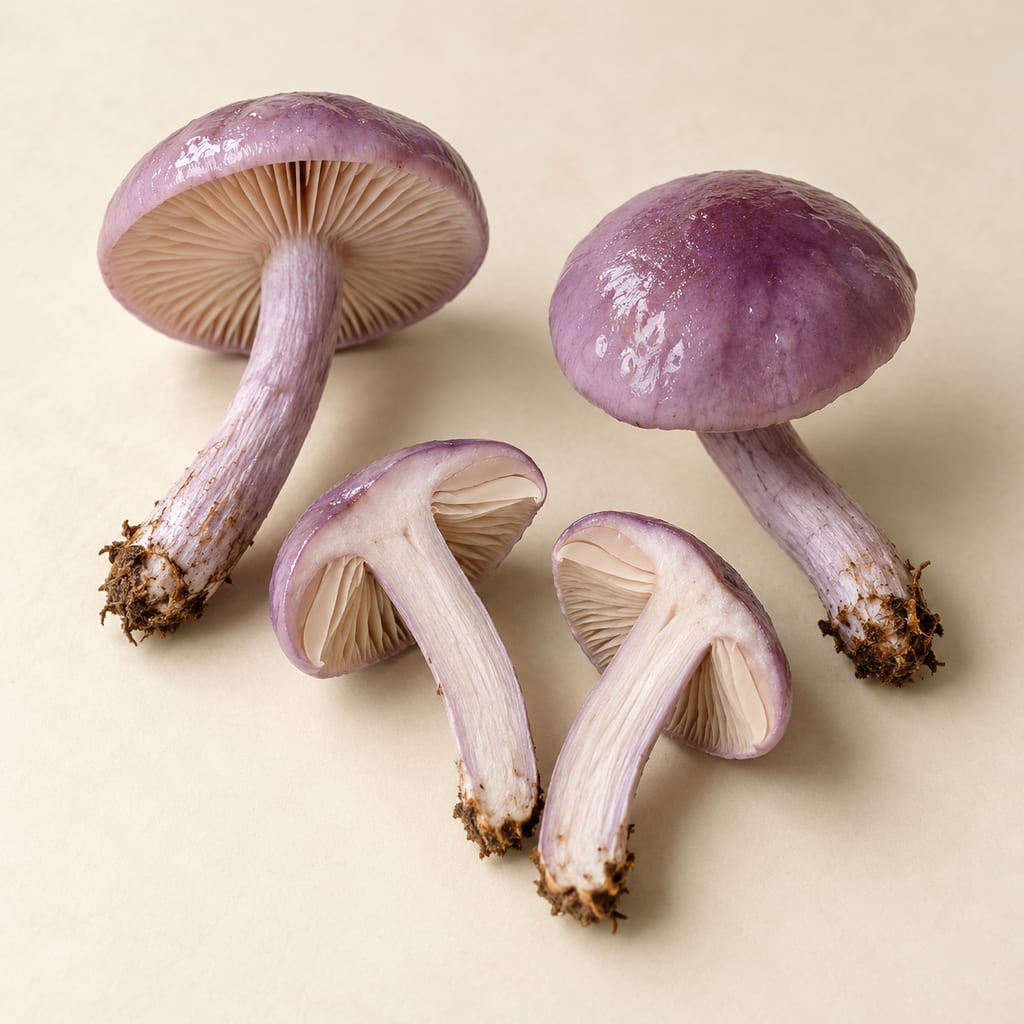
Cortinarius magellanicus
Cortinarius magellanicus is a webcap mushroom of Nothofagus forests in Patagonia, recorded in regional food use, but it belongs to a species complex and its genus contains deadly toxic species.
 FermenteaWhere food goes to change
Mushrooms
The common puffball, Lycoperdon perlatum, is a wild, ground-growing puffball. It is cooked as food in some traditions only while the flesh is still white, and its lookalikes must be excluded before any use.
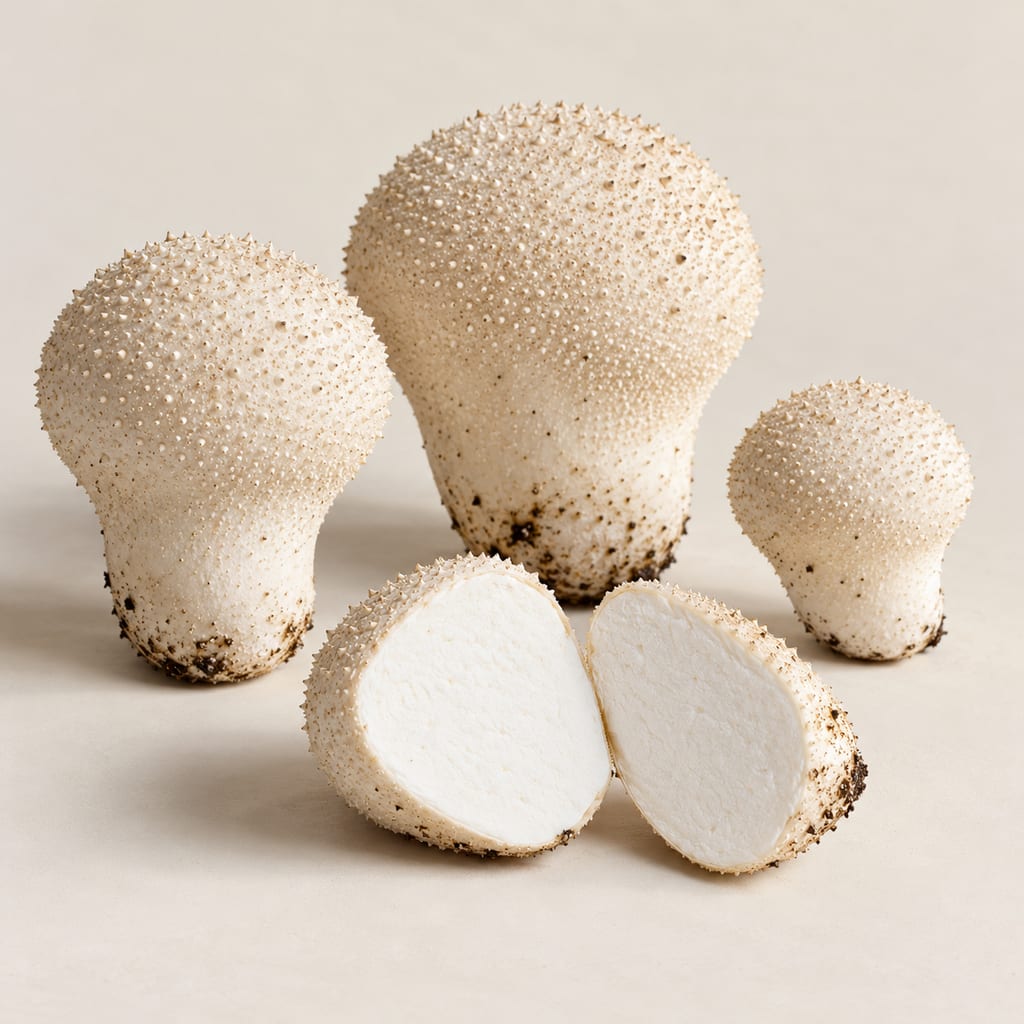
The common puffball, Lycoperdon perlatum, is a puffball fungus that grows on the ground. The catalogue records it as a wild, terrestrial species. Its common English name is the common puffball, and the Missouri Department of Conservation field guide uses the name gem-studded puffball for the same species.
The catalogue entry for this species is a food-use record with conditions: it names immature specimens only and requires lookalikes to be excluded.
The catalogue's food-use summary is a cooked immature puffball, recorded from Mexico and Patagonia. The field notes of Jim Conrad describe eating immature puffballs in Mexico. They refer to the stump puffball, Lycoperdon pyriforme, which grows on wood, and note that L. perlatum also occurs in central Mexico, almost always on the ground. The notes describe the author's own eating and give no preparation method for this species.
The flesh of an immature puffball is white. The Missouri guidance advises cooking puffballs. No source checked for this page gives a preparation method, a cooking time or a temperature for L. perlatum.
The catalogue warns that dangerous lookalikes require exclusion. The Missouri Department of Conservation advises cutting through every puffball from top to bottom to confirm that it is pure white inside before eating it.
The guidance names two lookalikes. The button stage of the destroying angel, Amanita bisporigera, can look like a puffball. The pigskin puffball, Scleroderma citrinum, has a dark interior. NatureMapR notes that Lycoperdon excipuliforme has a pockmarked surface and simple spines at maturity, which helps separate it from L. perlatum.
Identification by appearance alone is not established by these sources, and nothing on this page is an identification guide.
Catalogue inclusion is not an edibility verdict, and this page gives none. The Missouri guidance also advises that when eating a wild mushroom for the first time, even a well-regarded one, a small amount should be sampled first.
Smell, taste and bubbles are not evidence of safety. Any use of this species depends on exclusion of the dangerous lookalikes above, which these sources do not establish as a practical field test.
The field notes describe eating immature puffballs of a related stump species and state that L. perlatum also occurs in central Mexico. The 1963 Valle de Mexico survey lists L. perlatum; it does not record food use.
The catalogue names Patagonia as a food-use region. The sources checked for this page did not establish any Patagonian use, so no use is recorded here.
Cortinarius magellanicus is a webcap mushroom of Nothofagus forests in Patagonia, recorded in regional food use, but it belongs to a species complex and its genus contains deadly toxic species.
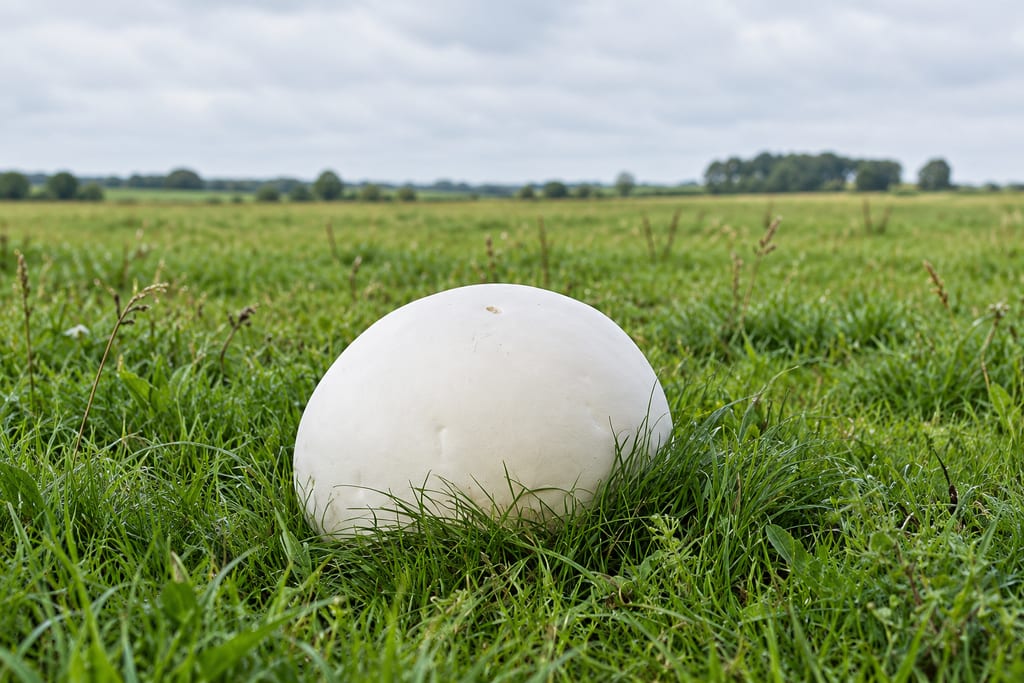
Young Calvatia gigantea is documented as a cooked food in Khiram, South Kashmir; mature or uncertain specimens are not food. Wild mushroom identification requires expert confirmation.
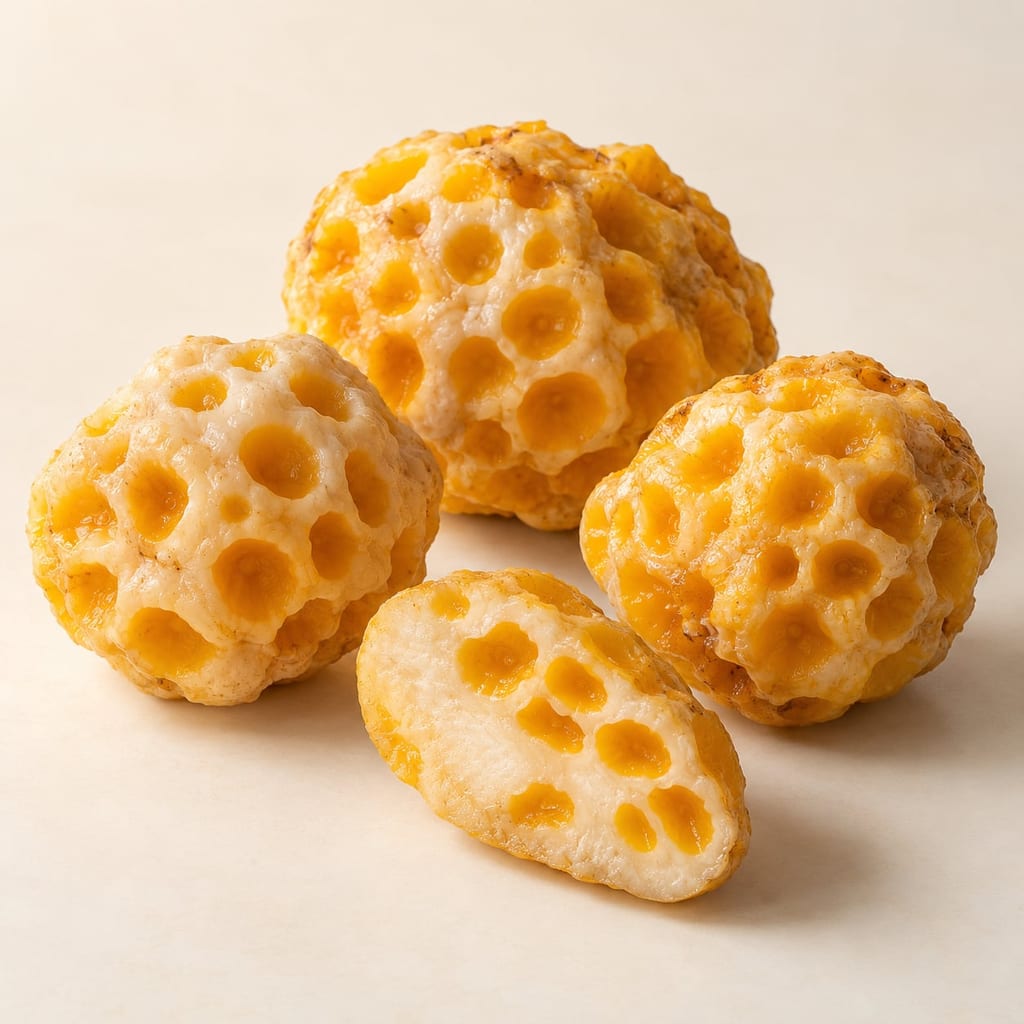
Llao-llao is the orange, gelatinous fruiting body of a southern-beech parasite in the Andean–Patagonian forests of Chile and Argentina. Regional sources document its food history, including Mapuche use in chicha.
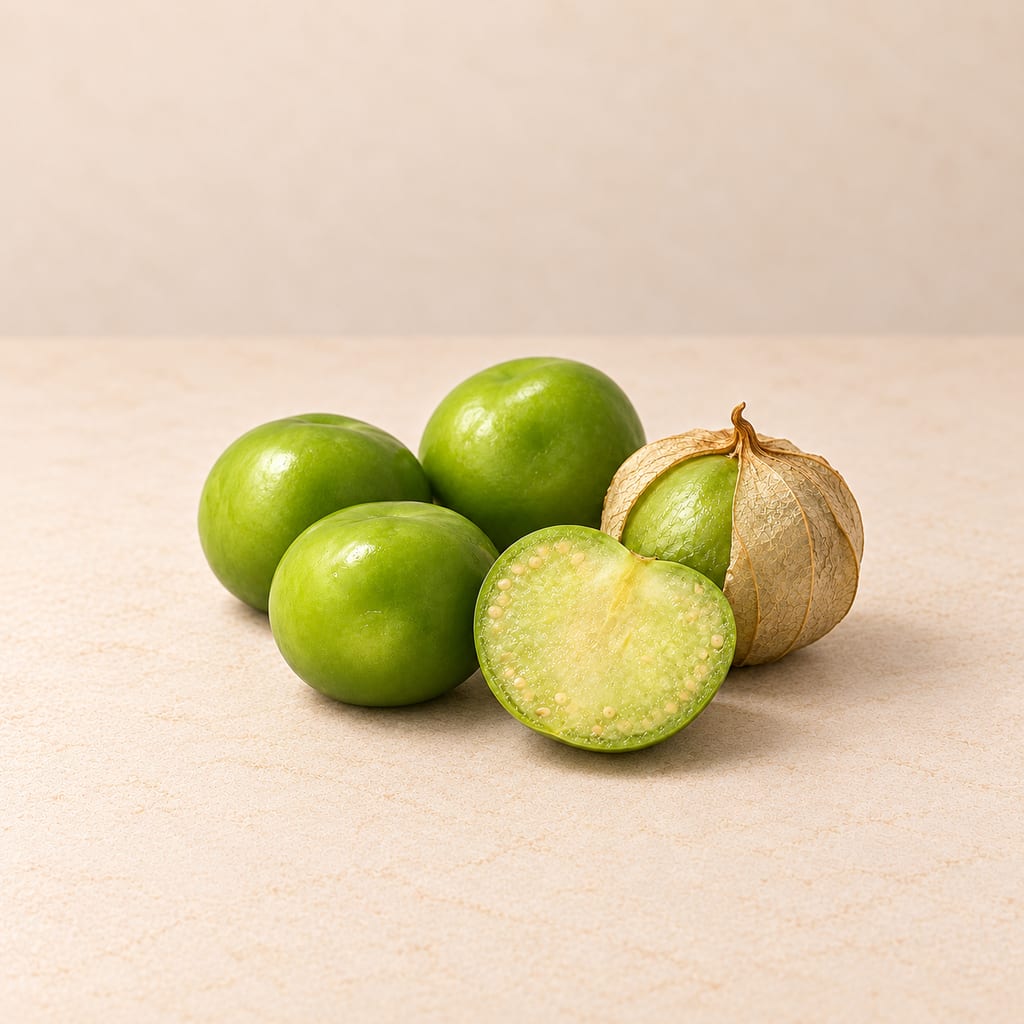
The tomatillo is the tart green fruit of Physalis ixocarpa, a Mexican relative of the tomato that grows inside a papery husk. It is the base of salsa verde.
No community contributions have been published for this entry yet.
Sign in to contribute. Published comments and photos are free to read.
Backyard NatureHistory · Reference
Excerpts from Jim Conrad's field notes on Mexican fungiImmature Lycoperdon pyriforme eaten in Mexico
Lycoperdon perlatum occurs in central Mexico, nearly always on the ground
Anales del Instituto de Biologia, UNAMReference
Survey of Lycoperdon species of the Valle de MexicoLists Lycoperdon perlatum and variety excipuliforme in a 1963 survey of Valle de Mexico
Missouri Department of ConservationSafety · Method
Gem-Studded PuffballCut puffballs from top to bottom to confirm white interior
Lookalikes: destroying angel button stage, pigskin puffball
Puffballs should be cooked; sample a small amount of a new wild mushroom first
NatureMapRReference · Safety
Lycoperdon excipuliforme (NatureMapR)Distinguishing L. excipuliforme by pockmarked surface and simple spines at maturity