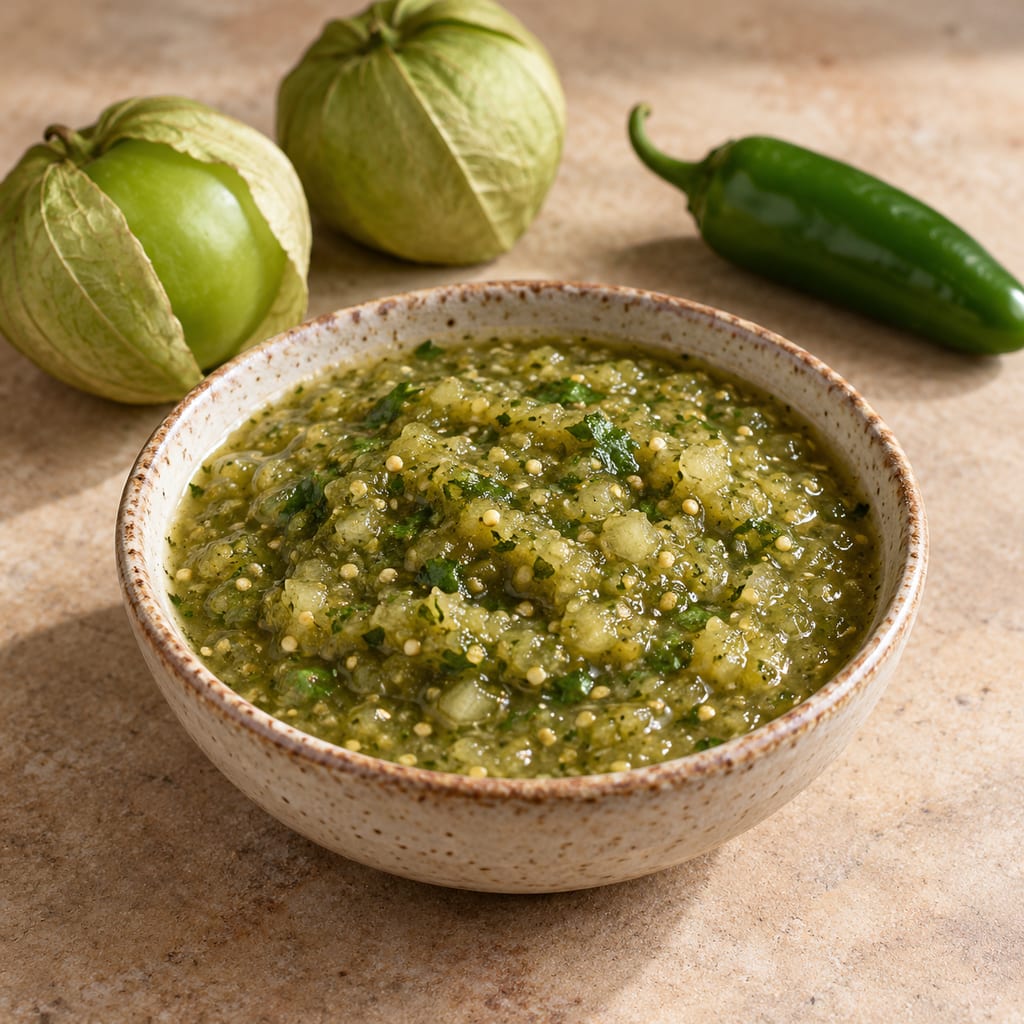
Fermented tomatillo salsa
Tomatillos, chiles, onion, lime and herbs are salted and fermented together as a mixed salsa.
 FermenteaWhere food goes to change
Substrates
The tomatillo is the tart green fruit of Physalis ixocarpa, a Mexican relative of the tomato that grows inside a papery husk. It is the base of salsa verde.
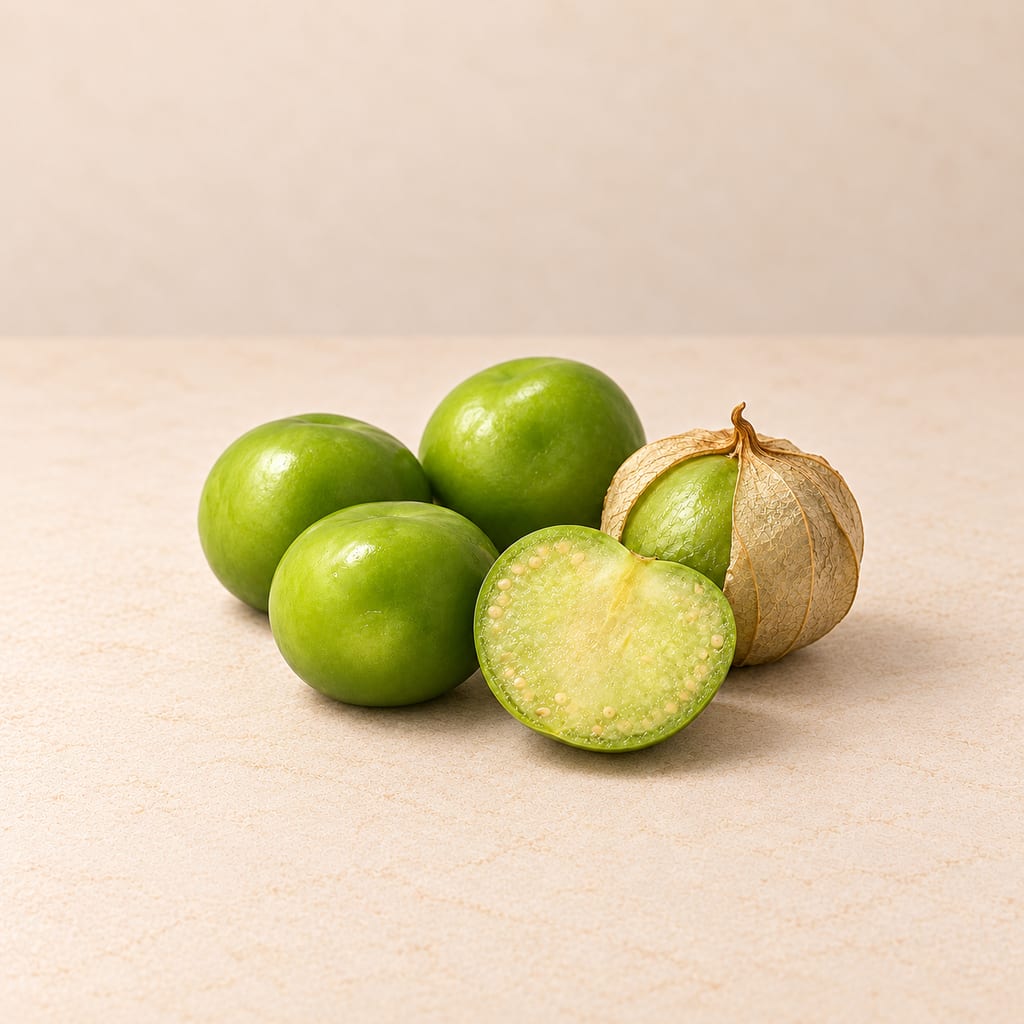
The tomatillo is the fruit of Physalis ixocarpa, a plant that many botanists also call Physalis philadelphica. It belongs to the nightshade family, as the tomato does, but to a different genus, and it is not an unripe tomato. The fruit is a berry one to two and a half inches (2.5 to 6.25 cm) across that grows inside a green, five-toothed calyx; as the berry swells, the calyx becomes straw-coloured and papery and often bursts. The skin may be green, yellow, purple and rarely reddish. Inside, the flesh is pale yellow, crisp or soft, and tastes acid, mildly acid, sweet or insipid, with many tiny seeds. A tomatillo's pulp has been described as glutinous and slightly sweeter than a tomato's, with a flavour a little like apple.
The names are many. In Spanish it is tomate de cáscara or tomate verde, as well as tomatillo, miltomate and farolito; English knows it as the Mexican husk tomato. The names go back to tomatl in Nahuatl, the language of the Aztecs, and a modern Nahuatl dictionary notes that tomatl without a qualifier may mean this green husk tomato; miltomatl names small wild tomatoes. The genus also holds the cape gooseberry and the ground cherry, grown for jam, and the Chinese lantern, grown as an ornamental. The plant is a semi-woody annual 1 to 1.5 metres tall, often spreading along the ground, with oval, pointed leaves and single yellow flowers 1.25 to 2 centimetres across with dark purple or brown spots in the throat; the berry has two carpels and many seeds. The chromosome base number is 12, as in the tomato. The botanical name is itself unsettled. The name philadelphica, given by Lamarck, was used for about four hundred years; one botanist placed it under ixocarpa in 1951 and another argued in 1974 that the two are distinct, and the boundary has not been resolved.
Tomatillo originated in Mexico and was probably domesticated before Columbus, though no source read for this page gives a date or a place. The physician Francisco Hernández described two varieties in 1651 among the many plants the Aztecs called tomate. Botanists suggest that the small-fruited miltomate is a wild type and that the tomatillo derives from plants like it. The plant still escapes as a weed in Mexico and Guatemala. It was a staple of Aztec and Maya economies, and it remains abundant in Mexico and the Guatemalan highlands, where it is sold in native markets.
The deeper history is older than any people. A fossil of a lantern fruit with an inflated, five-lobed calyx, found in Patagonia and dated to 52.2 million years ago, belongs to the genus Physalis, which shows that the husk is an ancient feature of the genus and that the nightshade family was already diverse long before the continents finished drifting apart.
The tomatillo travelled in the twentieth century. It had naturalised in the far western United States before 1863. A grower near Los Angeles raised about 20 acres in the 1930s for Mexican and Italian markets, and a trade journal promoted it in 1945 as the jamberry, followed by a seedsman's jumbo husk tomato in 1952. Iowa State College tested it for six years and reported in 1953 that only a few selections suited the American Midwest. It reached India in the 1950s, fruited abundantly in Queensland and South Africa, and became the most important weed of the Kenyan highlands in a 1967 report. In Mexico the main producing states are Morelos and Hidalgo; Morelos once held about 13,000 hectares that gave 101,366 tons. In 2021 Mexico had about 42,673 hectares under tomatillo, producing around 825,000 tons. In central Mexico, tomatillo consumption is about a tenth of tomato consumption.
Tomatillo is highly self-incompatible: a flower will not set fruit with its own pollen, and bagged flowers set none. The plant needs insects to carry pollen between plants, so growers must plant more than one, and every plant is in effect a hybrid, which is why the crop varies so much in size, leaf shape, fruit size, flavour and yield. Seed production requires isolation, because cross-pollination is possible within 500 metres. Cultivars include the Mexican selection Rendidora, which is more erect, has large green fruit and ripens about 15 days earlier than local types, and local landraces called criollas.
The crop wants warmth and a long enough summer. Growth is poor at 16 to 18 °C or below, and low temperature is the only limit. The plant is adapted to humid tropical and subtropical conditions, needs full sun and well-drained soil, and does not thrive on wet sites. Seed germinates in 7 to 10 days; a transplant is ready at 4 to 5 leaves, about four weeks old. In a Louisiana trial plants were set 120 centimetres between rows and 60 between plants. The first flower comes four to five weeks after emergence and the first fruit a week later; fruit reaches 3 centimetres across at eight weeks, and fruit set ends around weeks 10 and 11. The plant grows 1 to 1.5 metres tall and branches repeatedly, most of its late flowers aborting or giving fruit below commercial size.
Wild plants in Mexico flower from June to October; in the American Midwest flowering starts in mid-June and fruit ripens from late July to the autumn frost, in South Africa the plant bears in summer, and in northern India it fruits in both summer and winter. In Mexico there are usually four to six pickings, starting when three or four fruits per plant are mature, about 55 to 70 days after transplanting. Yields in Mexico are about 15,000 kilograms per hectare for criollas and 25,000 for Rendidora, and 64 to 200 fruits per plant over a season. Rendidora made up about 35 percent of Mexican production, with fruit 5 to 7 centimetres across, 85 percent of which was commercial quality, and 10 kilograms of fruit yield 100 to 200 grams of seed. The main Mexican pest is the whitefly Trialeurodes vaporariorum, which also carries a disease to common tomatoes; a complex of at least three viruses can cut yields by 30 to 40 percent.
Outside Mexico the crop works where summers are long and warm. In Louisiana a trial planted from June to August gave a crop in three to four months, so several overlapping crops are possible in a long summer, and plants grown through the state's hottest summer still produced marketable fruit. In Mexico planting runs from the second week of May to mid-December. In the American Midwest, seedlings are raised in a greenhouse and set out about three weeks old after the last frost, and the plants bear from 6 to 18 weeks later for about six weeks. Where caterpillars and cutworms attack the fruit, as they did in Florida and Jamaica, harvests fail. Propagation is usually by seed, at about 150 grams per hectare, and cuttings root easily. Breeders want a determinate plant with fewer side branches, uniform fruit size and a loose husk, so that the crop can be harvested mechanically.
Tomatillo is mostly water: 90 to 92 percent moisture, with about 5.8 grams of carbohydrate, 0.6 gram of fat and under 1 gram of protein per 100 grams of husked fruit. Per 100 grams the minerals include about 243 milligrams of potassium, 6 to 11 of calcium, 22 to 40 of phosphorus and 0.6 to 1.4 of iron, with 2.1 to 2.7 milligrams of niacin and a little carotene. Solids are 9 percent, against 6 percent for tomato. Vitamin C is 36 milligrams per 100 grams in the Louisiana analysis and 2 to 4.8 milligrams in the Guatemalan and Indian analyses that Morton collects.
The fruit is acidic. In an experiment on potassium dose and a bacterial biofertiliser, the cultivar cáscara morada measured a pH of 3.8 to 4.1, titratable acidity of 0.59 to 0.94 percent and total soluble solids of 5.5 to 6.1 degrees Brix, which is below pH 4.6, the dividing line between acid and low-acid foods, for that cultivar. The same study cites literature values of about 8.24 degrees Brix, 0.75 to 1.06 percent protein and 1.12 to 2.10 percent fat, and calls tomatillo one of the most cultivated vegetables of the American continent. The stems and leaves have yielded 29 withanolides, steroidal compounds studied for their effect on cancer cells in the laboratory; they are not part of the food.
Tomatillos keep better in their husks. Unhusked fruit holds for several months in single layers in a cool, dry place, and Mexican and Central American growers often pull up whole plants with the fruit attached and hang them upside down in a dry place until the fruit is needed. A commercial grower in California picked green-skinned fruit as soon as the husk burst and then held it for two to four weeks until the husk dried, which buyers preferred. The flavour declines if fruit stays on the plant too long, and fruit often drops before it ripens.
In Mexico the tomatillo is mainly a vegetable: the basis of salsa verde, the green sauce for meats, alone or with green chillies, and of green moles. Moriconi describes the fruit as normally cooked before eating, while Morton notes that it is often eaten ripe and raw, out of hand. Whole canned tomatillos are sold in Mexico and the western United States, and in South Africa the fruit has been processed commercially at Pietersburg. Iowa State College suggested stewing, frying, baking, cooking with chopped meat, soups, marmalade and dessert sauce; the fruit is also good in salads and curries, and in Australia it has been used for jam, judged inferior to cape gooseberry jam.
A fermented tomatillo salsa recorded by Oregon State University Extension combines chopped husked tomatillos with chiles, onion, lime juice, herbs, garlic and salt, presses them to release their juice, weights the solids under the liquid, and ferments for two to four days at room temperature before refrigerating; the recipe is on the site as fermented tomatillo salsa. The fruit's acidity, a pH of 3.8 to 4.1 in the cultivar measured, and its juicy flesh suit this kind of ferment.
The extension expert who answered the question knew of no research-based recipe for canning fermented salsa, recommended freezing it in small containers once fermentation was over, and warned against guessing processing times for home-canned foods. A fermenting jar that bubbles and smells pleasant does not prove the salsa is safe.
The date and place of domestication, the species name and the vitamin C content are unsettled in the sources. No source gives canning acidity or processing times for tomatillo products, and no validated fermentation method exists in them. The often-repeated claim that salsa verde dates from the Aztec era is not supported by a source read here. In Mexico a decoction of the calyces is said to cure diabetes; the claim is untested.
Region of origin and probable domestication; no precise site or date is given.
The main producing states.
Abundant and sold in native markets; the plant also grows as a weed there.
Fossil lantern fruits of the genus Physalis; evidence of the genus, not of the crop.
Tomatillos, chiles, onion, lime and herbs are salted and fermented together as a mixed salsa.
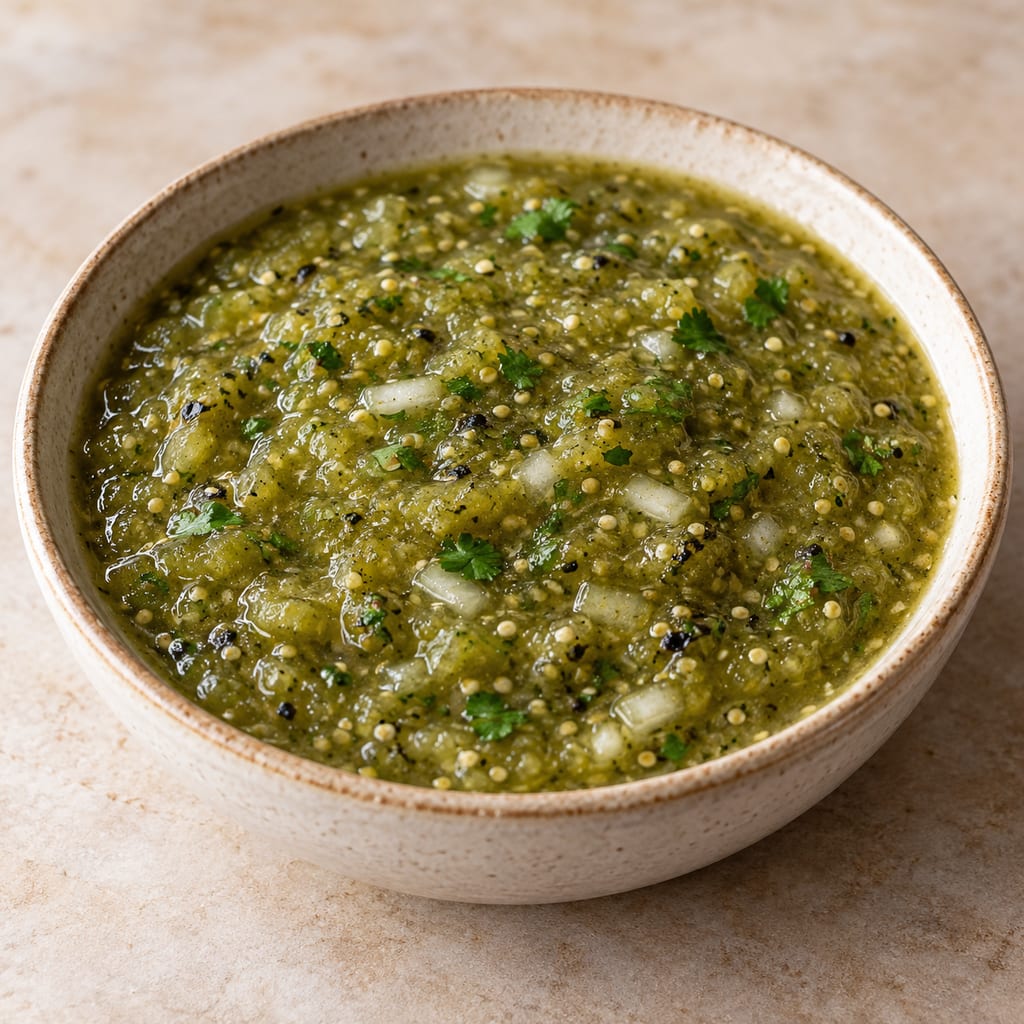
A modern small batch of roasted tomatillos and green chile finished with raw onion, coriander, lime and salt. Its measured weights are an untested adaptation; this is fresh salsa, not a canning recipe.
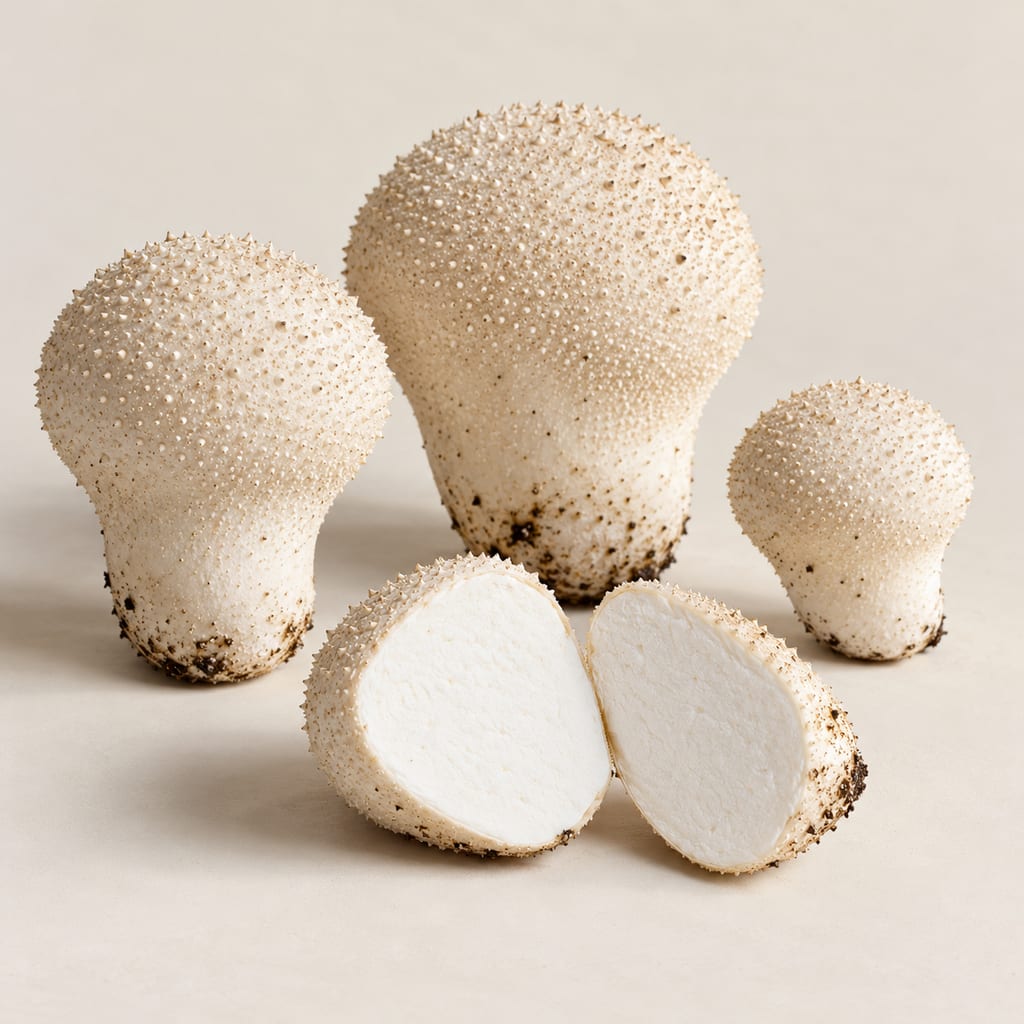
The common puffball, Lycoperdon perlatum, is a wild, ground-growing puffball. It is cooked as food in some traditions only while the flesh is still white, and its lookalikes must be excluded before any use.
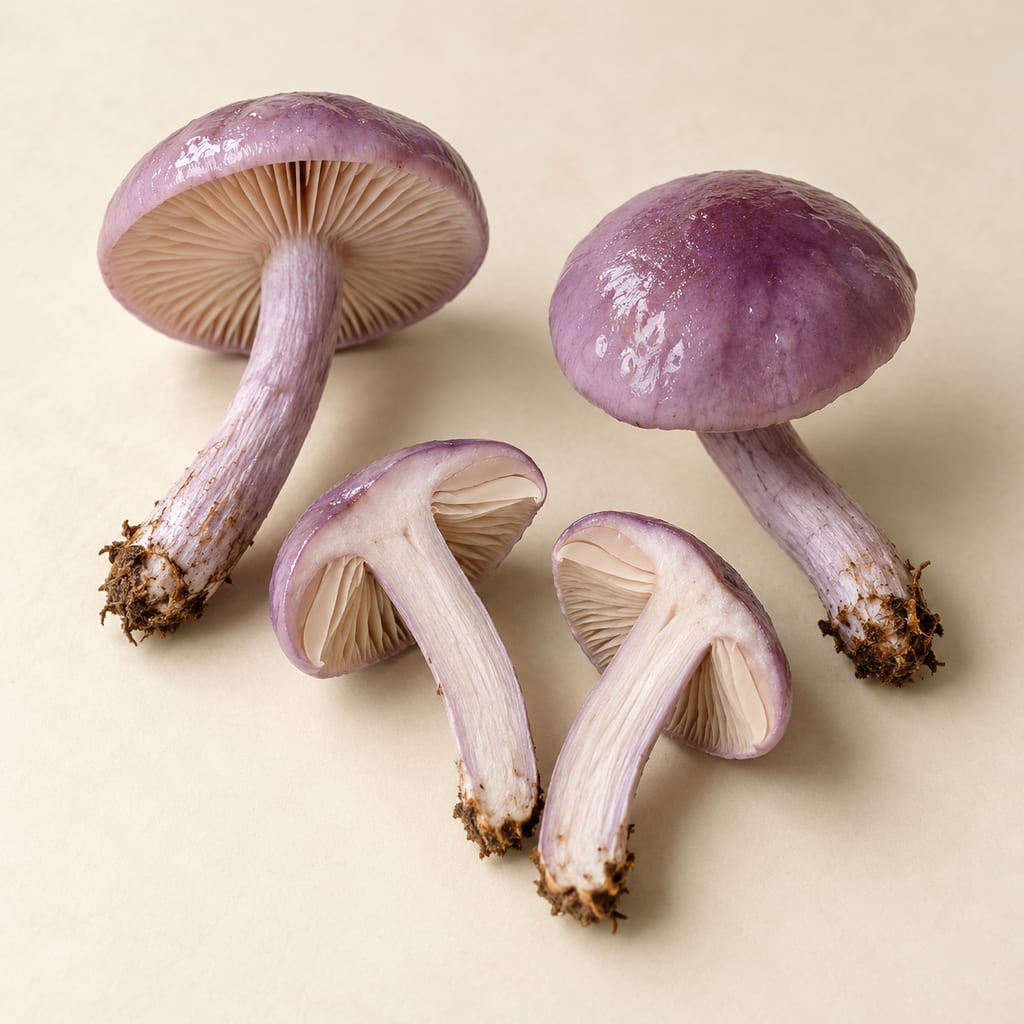
Cortinarius magellanicus is a webcap mushroom of Nothofagus forests in Patagonia, recorded in regional food use, but it belongs to a species complex and its genus contains deadly toxic species.
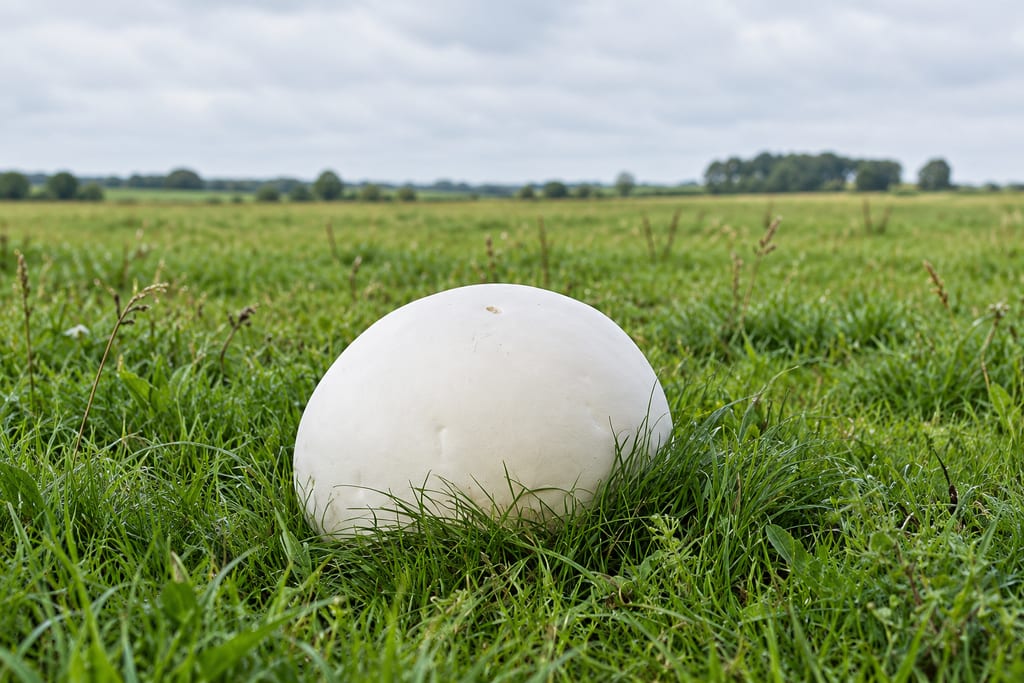
Young Calvatia gigantea is documented as a cooked food in Khiram, South Kashmir; mature or uncertain specimens are not food. Wild mushroom identification requires expert confirmation.
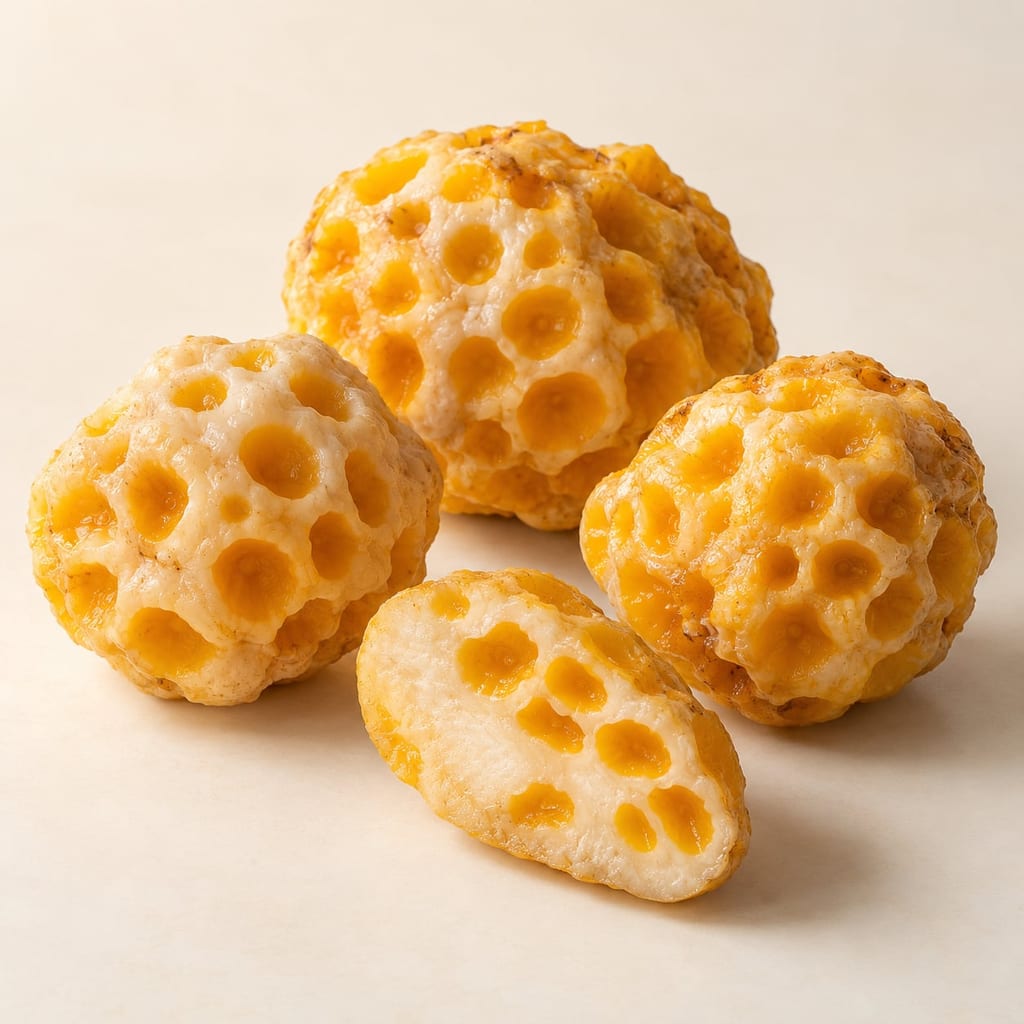
Llao-llao is the orange, gelatinous fruiting body of a southern-beech parasite in the Andean–Patagonian forests of Chile and Argentina. Regional sources document its food history, including Mapuche use in chicha.
No community contributions have been published for this entry yet.
Sign in to contribute. Published comments and photos are free to read.
Advances in New Crops, Purdue University New Crop Resource Online ProgramBotany · Cultivation · Composition
Tomatillo: A Potential Vegetable Crop for LouisianaGenus Physalis; species boundaries unresolved; self-incompatible; originated in Mexico, probably pre-Columbian domestication; Hernández 1651; miltomate wild type; weed in Mexico and Guatemala
Growth, harvest and yields; Rendidora; viruses reduce yields 30 to 40 percent
Solids 9 percent against 6 percent for tomato; vitamin C 36 mg per 100 g; uses in green sauces; usually cooked
Cited in: A fruit in a paper lantern; From a Mexican weed to a staple; How the plant is grown; Growing it elsewhere; What the fruit contains; Choosing, keeping and cooking; What is not settled
Fruits of Warm Climates, Purdue University New Crop Resource Online ProgramDescription · History · Storage · Uses
Mexican Husk Tomato (Physalis ixocarpa Brot.)Names, description, staple of Aztec and Maya economies; spread to the US, India, Africa; Mexican production; storage of unhusked fruit; food value; uses
Cited in: A fruit in a paper lantern; From a Mexican weed to a staple; How the plant is grown; Growing it elsewhere; What the fruit contains; Choosing, keeping and cooking; What is not settled
Science 355(6320):71-75History
Eocene lantern fruits from Gondwanan Patagonia and the early origins of Solanaceae52.2-million-year-old lantern fruits from Patagonia, a Physalis species with an inflated five-lobed calyx
Cited in: From a Mexican weed to a staple
Plants 12(3):466Composition
Combined Effect of the Potassium Dose and Plant Biofertilization by Acinetobacter calcoaceticus on the Growth, Mineral Content, Nutritional Quality, Antioxidant Activity, and Metabolomic Features of Tomatillo Fruits (Physalis ixocarpa Brot.)Cultivar cascara morada: pH 3.8 to 4.1, titratable acidity 0.59 to 0.94 percent, total soluble solids 5.5 to 6.1 Brix, moisture 91.3 to 92.4 percent; Mexico about 42,673 ha and 824,977 tons in 2021
Cited in: What the fruit contains; Preserving and fermenting tomatillos
Food Chemistry 439Chemistry
Cytotoxic withanolides from the stems and leaves of Physalis ixocarpa29 withanolides from stems and leaves, 15 of them new
Cited in: What the fruit contains
Ask Extension (Oregon State University Extension answer)Fermentation
Canning fermented salsaA posted fermented tomatillo salsa with quantities; 2 to 4 days at room temperature; refrigerated at least 4 months; expert knows no research-based canning recipe for fermented salsa and recommends freezing
Cited in: Preserving and fermenting tomatillos
Online Nahuatl Dictionary, Wired Humanities ProjectsNames
tomatlUnmodified tomatl may refer to the green husk tomato; miltomatl small wild tomatoes
Cited in: A fruit in a paper lantern