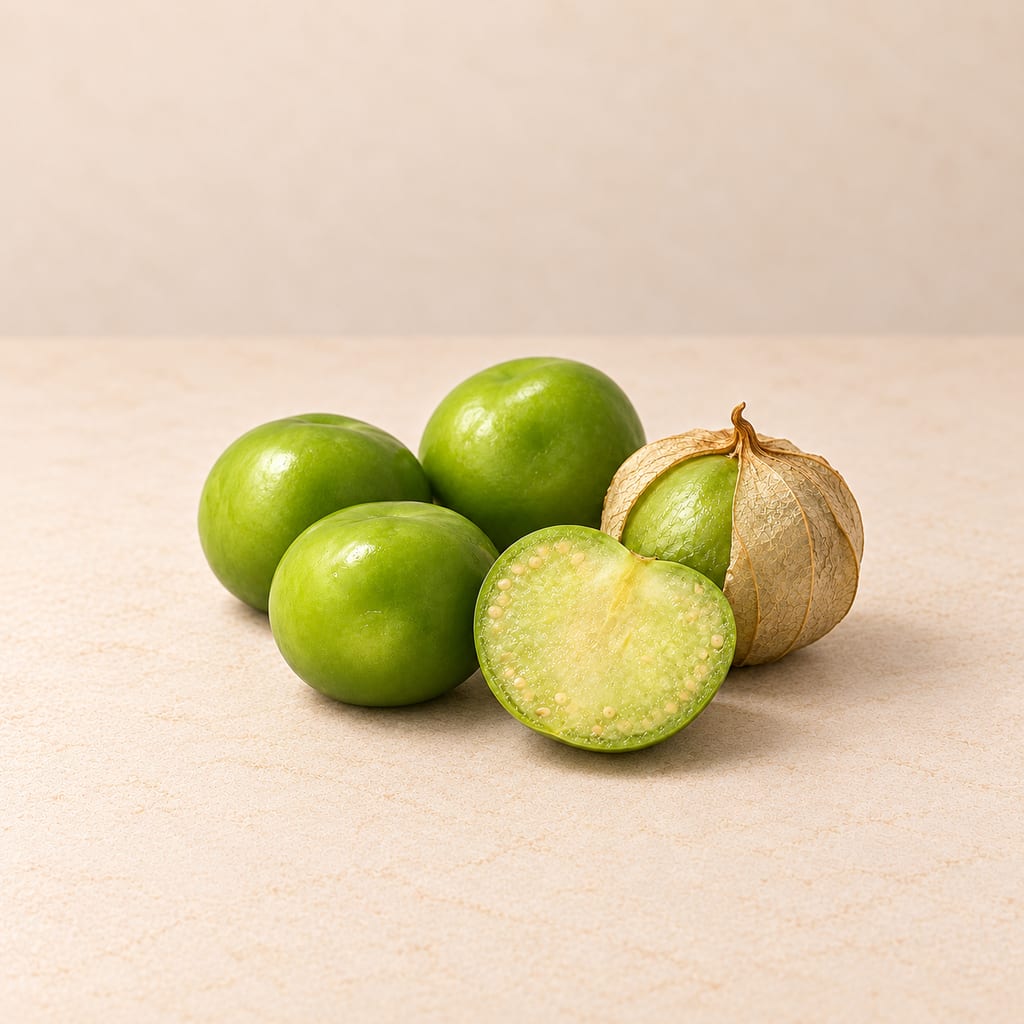
Tomatillo
The tomatillo is the tart green fruit of Physalis ixocarpa, a Mexican relative of the tomato that grows inside a papery husk. It is the base of salsa verde.
 FermenteaWhere food goes to change
Salsa de tomate verde asado
A modern small batch of roasted tomatillos and green chile finished with raw onion, coriander, lime and salt. Its measured weights are an untested adaptation; this is fresh salsa, not a canning recipe.
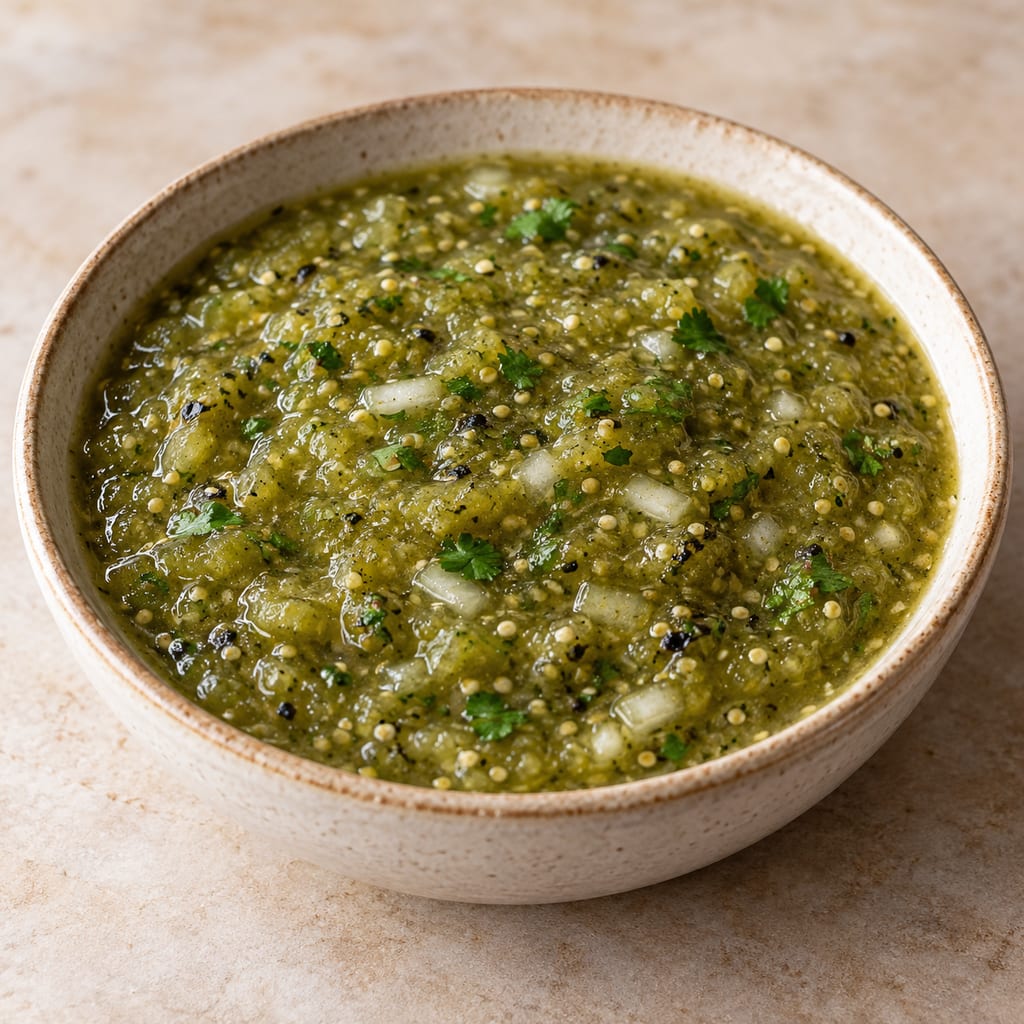
This is a fresh green salsa built around roasted tomatillos, green chile and garlic, then finished with raw white onion, coriander, lime and salt. It is a non-fermented preparation. The linked culinary reference calls this style salsa de tomate verde asado. Rick Bayless describes roasting salsa ingredients on a comal as common in Mexico and uses a broiler as his convenient method; that is a country-level culinary context, not evidence that this exact weighed formula is traditional to one locality.
The preserved seven-line formula is a separate small-batch adaptation with exact gram weights. It is not a transcription of Bayless's ingredient list: this version adds measured lime juice, weighs the chile, onion and herbs, and peels the garlic before roasting. Its approximate 400 g yield is the ingredient mass before roasting losses. The archive does not establish a tested scale-up method or a validated process.
Bayless describes tomatillos as acidic and says roasting brings sweetness into the balance. He also points to charred skins as a rustic note, roasted garlic as sweet, and roasted chiles as milder than raw ones. These are his observations about his roasted version; they explain why this method produces a different flavor balance from blending the same vegetables raw.
The recipe roasts the tomatillos, chile and garlic together, then uses the juices released during roasting. Garlic can brown ahead of the larger tomatillos, so the method asks the cook to watch it and remove it earlier if needed. The source reference gives a broiler example with turning and visible browning, while this archive adaptation keeps the endpoint sensory and does not claim a universal roasting time for every broiler, grill or batch.
After roasting, the vegetables cool enough to handle and are pulsed with their juices. Bayless prefers a smooth mixture that still has some texture, and his method leaves the final texture to the cook. Pulsing in short bursts makes it easier to stop before the salsa becomes completely uniform; blending longer is a texture choice, not a fermentation stage.
Raw onion and coriander go in after blending, along with lime and salt. This order keeps their fresh, uncooked character distinct from the softened roasted vegetables. Bayless also finishes his version with raw onion and cilantro, but his ingredient list does not include lime; the lime in this recipe belongs to the archive's separate adaptation. Add the measured salt and lime gradually because produce acidity, chile heat and personal preference vary.
The exact gram amounts are retained as supplied development weights, not as quantities tested by Bayless or established by a food-safety authority. Treat the batch as a trial in flavour and texture. The listed yield is approximate and measured before roasting losses, and no source supports doubling or another scale factor. If adapting it, change only the serving quantity you need and do not infer that a larger batch roasts, cools or stores in the same way.
This recipe differs from a fermented tomatillo salsa: no salt-driven fermentation or room-temperature hold occurs here. The fermented version is a separate preparation with its own ingredients and evidence. A shared main ingredient does not make the two procedures interchangeable.
This mixture has no measured pH, microbial testing or validated canning process. Lime juice provides flavor but does not make the formula shelf-stable. Do not can it or store it at room temperature. Transfer it to a shallow, clean covered container and refrigerate promptly, within two hours, keeping the refrigerator at or below 40°F (4°C). These are general U.S. consumer recommendations for perishable food, not a tested shelf-life limit for this salsa.
The archive's 48-hour period was used only as a prototype flavour-comparison convention. It is not an established storage period. Discard the salsa if it has been left outside safe refrigeration conditions; smell, taste, bubbling or appearance cannot establish that it is safe.
Rick Bayless's recipe documents a roasted Mexican tomatillo salsa approach, while noting that roasting on a comal is common and broiling is a practical alternative. The archive's new weighed formula adds lime and uses raw onion and coriander after blending; it is not Bayless's recipe.
Yield 400 g before roasting losses · Scaling: source batch only
This raw-finished, cooked-produce mixture has no measured pH or validated preservation process.
Hazard sourceRefrigerate promptly and keep at or below 40°F (4.4°C); do not can or store at room temperature.
Control sourceTransfer promptly to a shallow clean container and refrigerate within two hours; keep at or below 40°F (4.4°C).
Control sourceThis is an untested fresh salsa, not a canning recipe or preserve.
The source documents a contemporary Mexican culinary context and roasting method; this original weighted formula is not presented as a specific regional traditional recipe.
The tomatillo is the tart green fruit of Physalis ixocarpa, a Mexican relative of the tomato that grows inside a papery husk. It is the base of salsa verde.
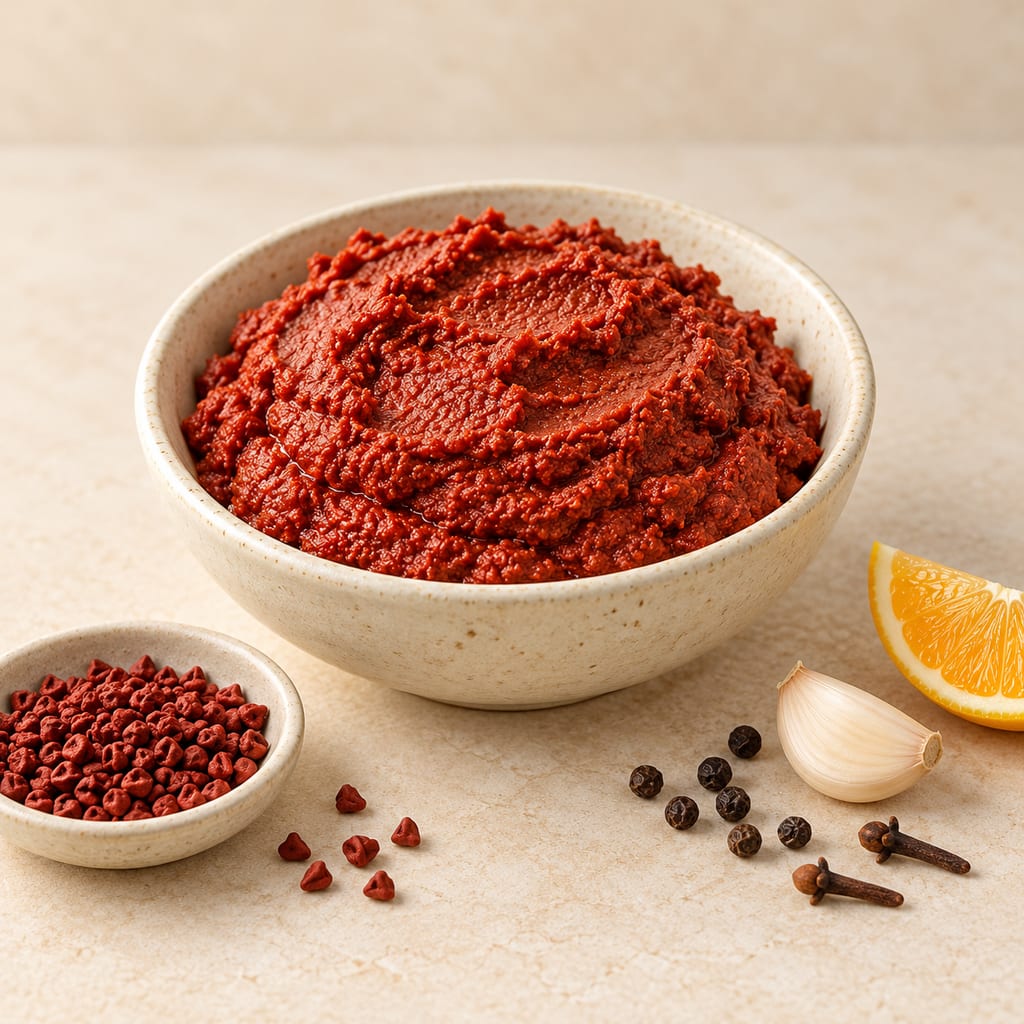
A Yucatecan recado rojo is a brick-red seasoning paste built on annatto seed, garlic and sour orange. This measured home version shows one route into a much wider family of market and household recados.
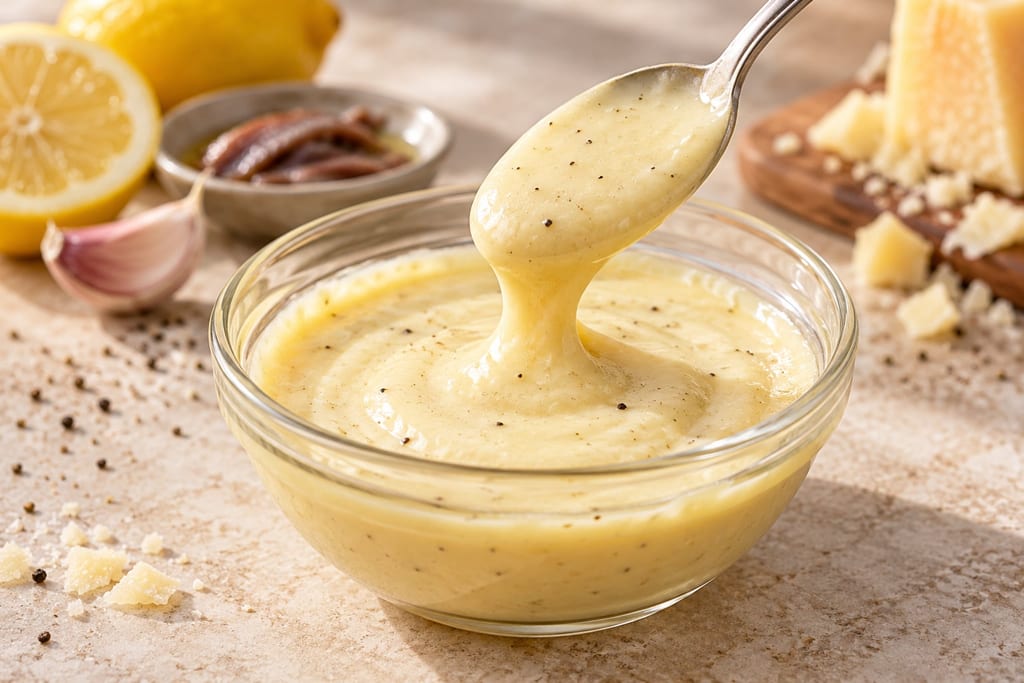
A source-specific Caesar dressing made with pasteurized egg yolks, Parmesan, lemon, anchovy, garlic, mustard and olive oil. This modern Vitamix formulation is distinct from the salad’s disputed 1924 origin accounts.
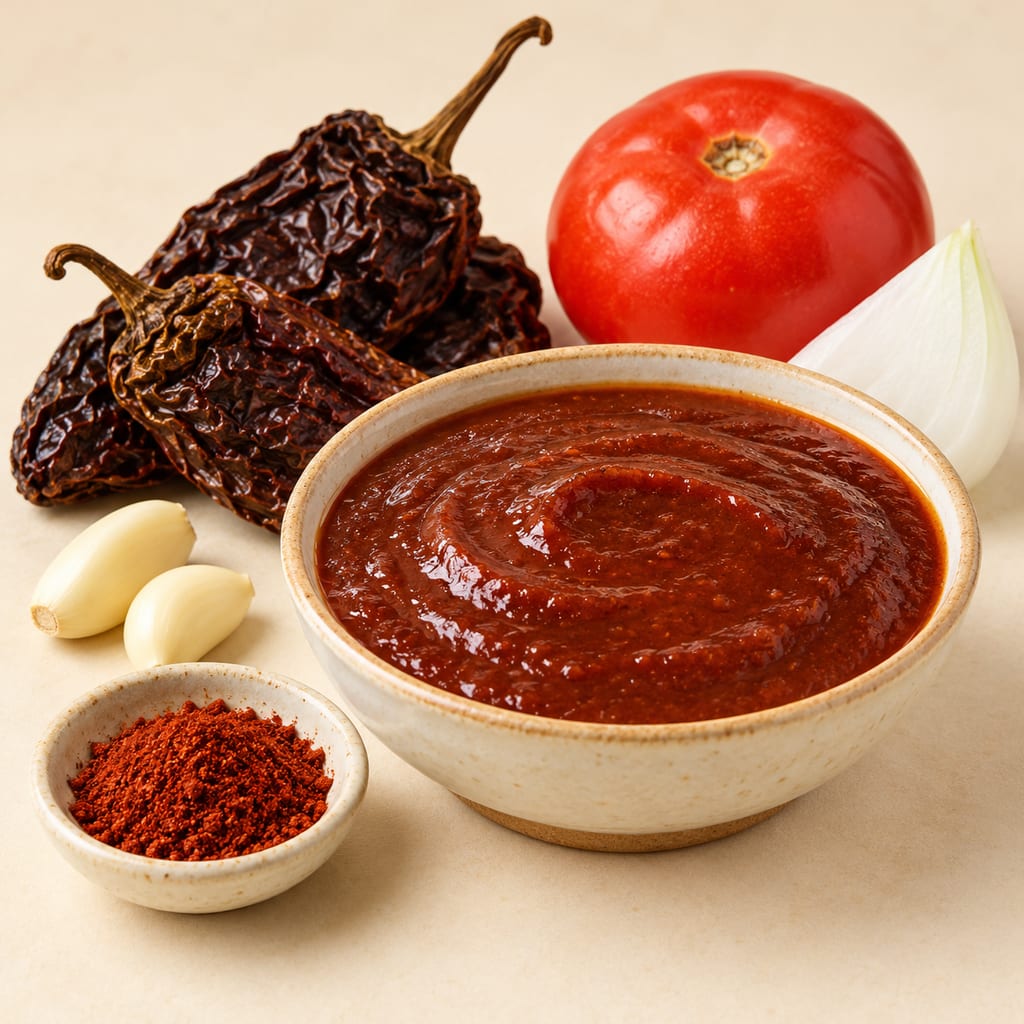
Chipotle adobo is a cooked sauce of smoked chipotle chiles, tomato, onion, garlic, dried chile powder, spices and vinegar, the form in which chipotles are most often sold in the United States.
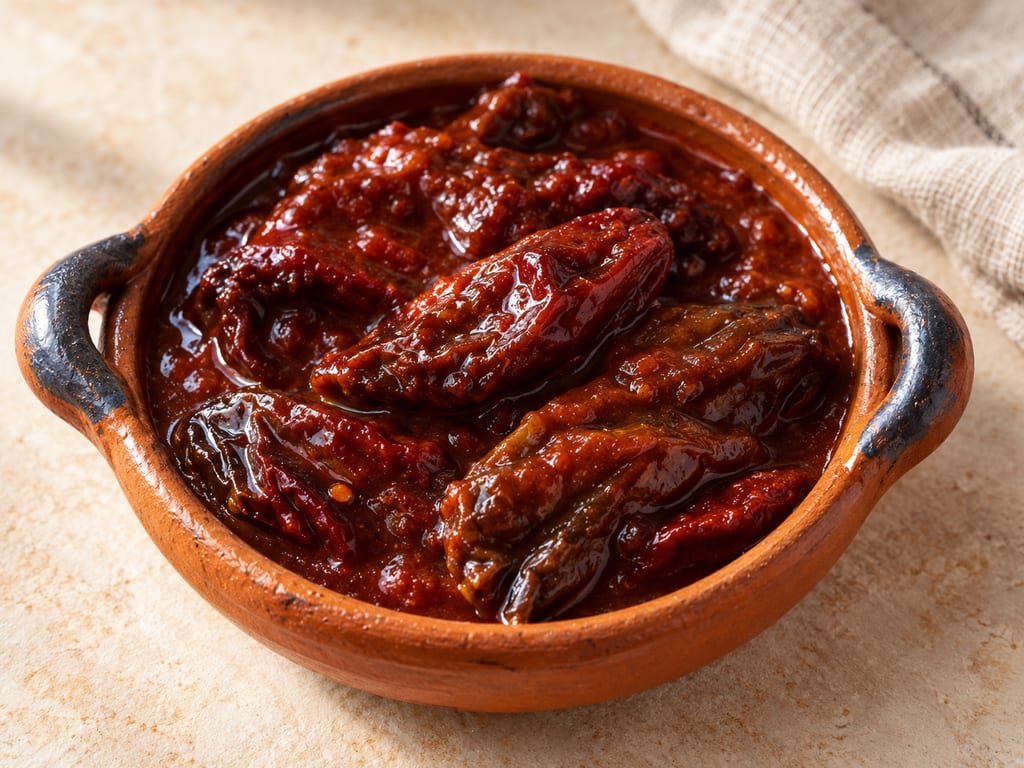
Whole smoked-dried chipotles simmer in a tomato, vinegar and spice adobo: a Mexican condiment with smoky heat and a sauce that seasons the chile as it softens.
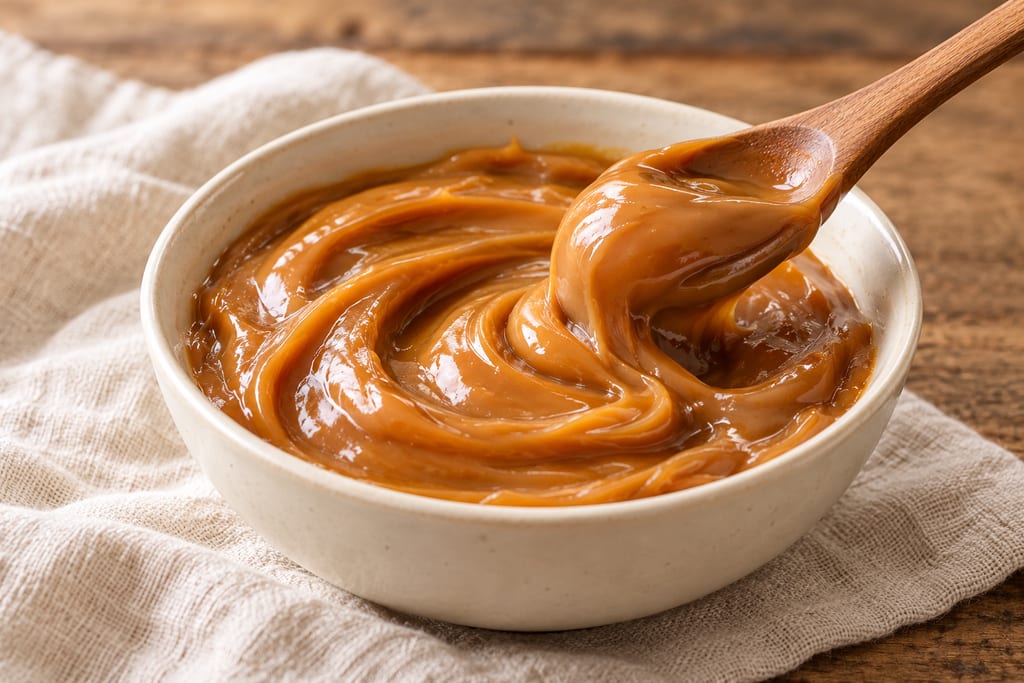
Dulce de leche and its relatives, including Mexican cajeta from goat's milk, are milk and sugar cooked slowly until thick and brown. The name changes across Latin America, and the browning gives each its character.
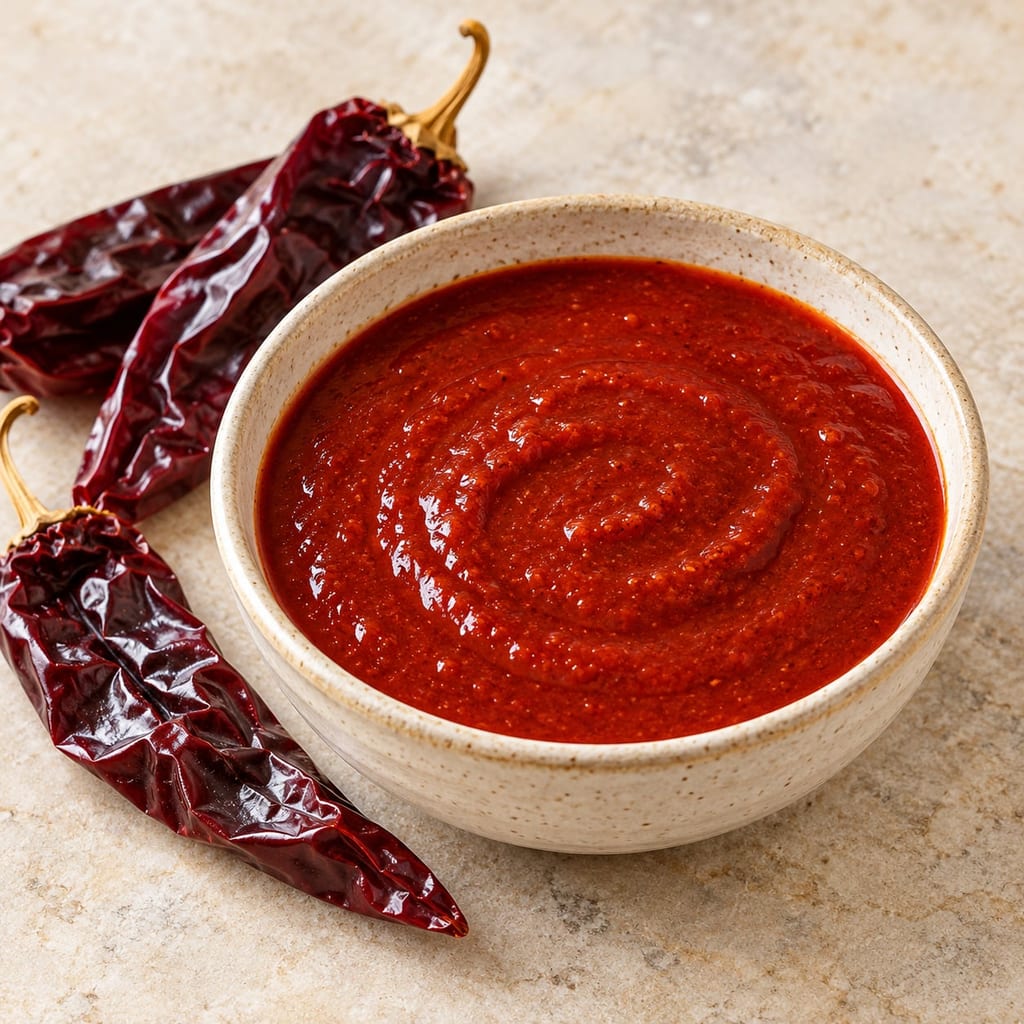
A Mexican sauce in which dried guajillo chiles, toasted and softened in hot water, supply most of the flavour. It is a family of dried-chile salsas, not a tomato sauce with chile added.
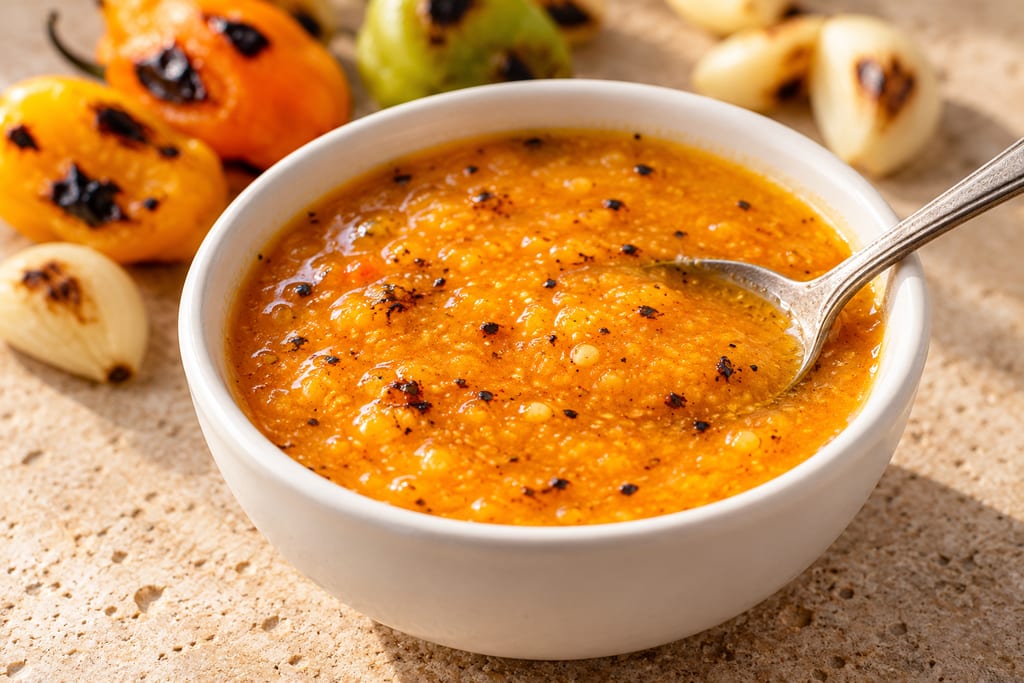
A hot, fruity chile sauce of the Yucatán, built on habanero peppers and often charred with garlic. It sits on the table as a condiment, and the recipes vary widely.
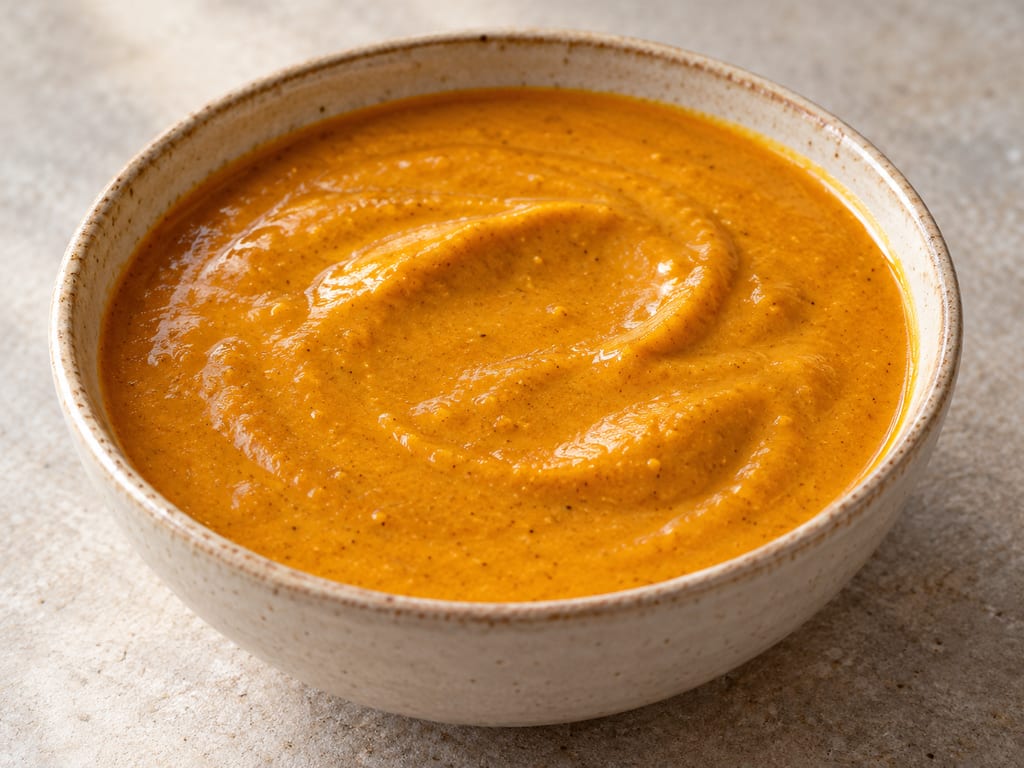
Mole amarillo, also called amarillito, is a yellow to orange Oaxacan mole built on cooked chile purée, thickened with corn masa and flavoured with herbs such as hoja santa, with no chocolate or dense nut mixture.
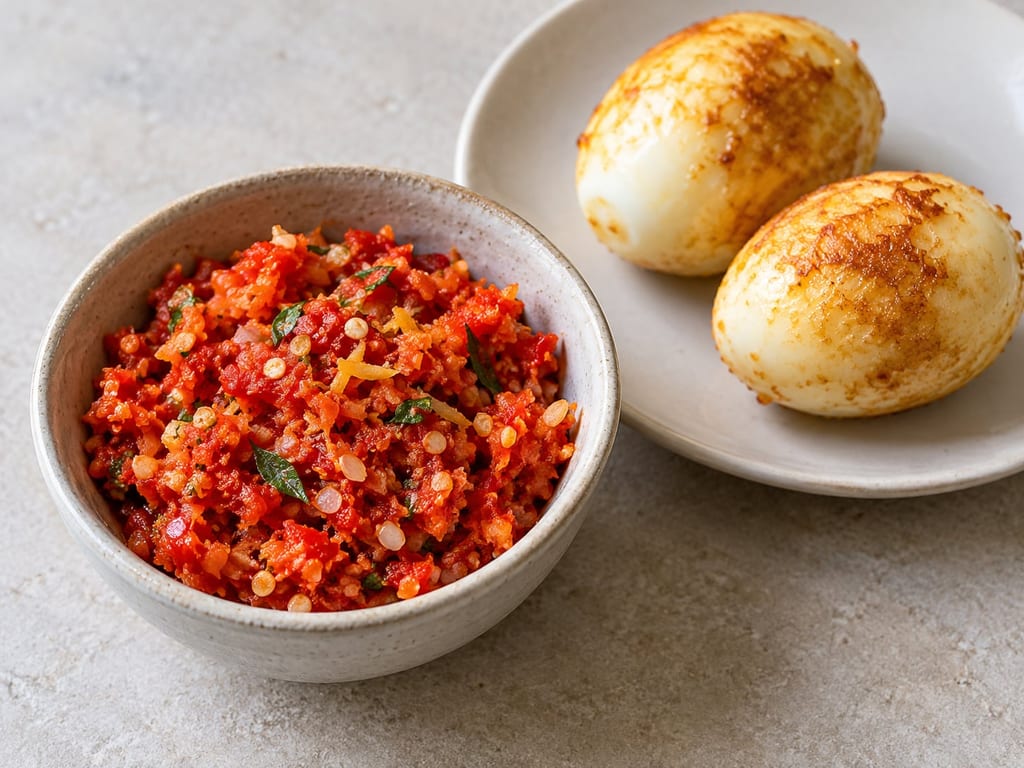
Ai-manas is described as a very hot chilli paste served with Timorese meals. One published version blends fresh chillies, shallots, garlic, Thai basil, ginger, lemon and salt, and serves it with eggs. Sources do not establish a standard formula, precise birthplace or earliest date.
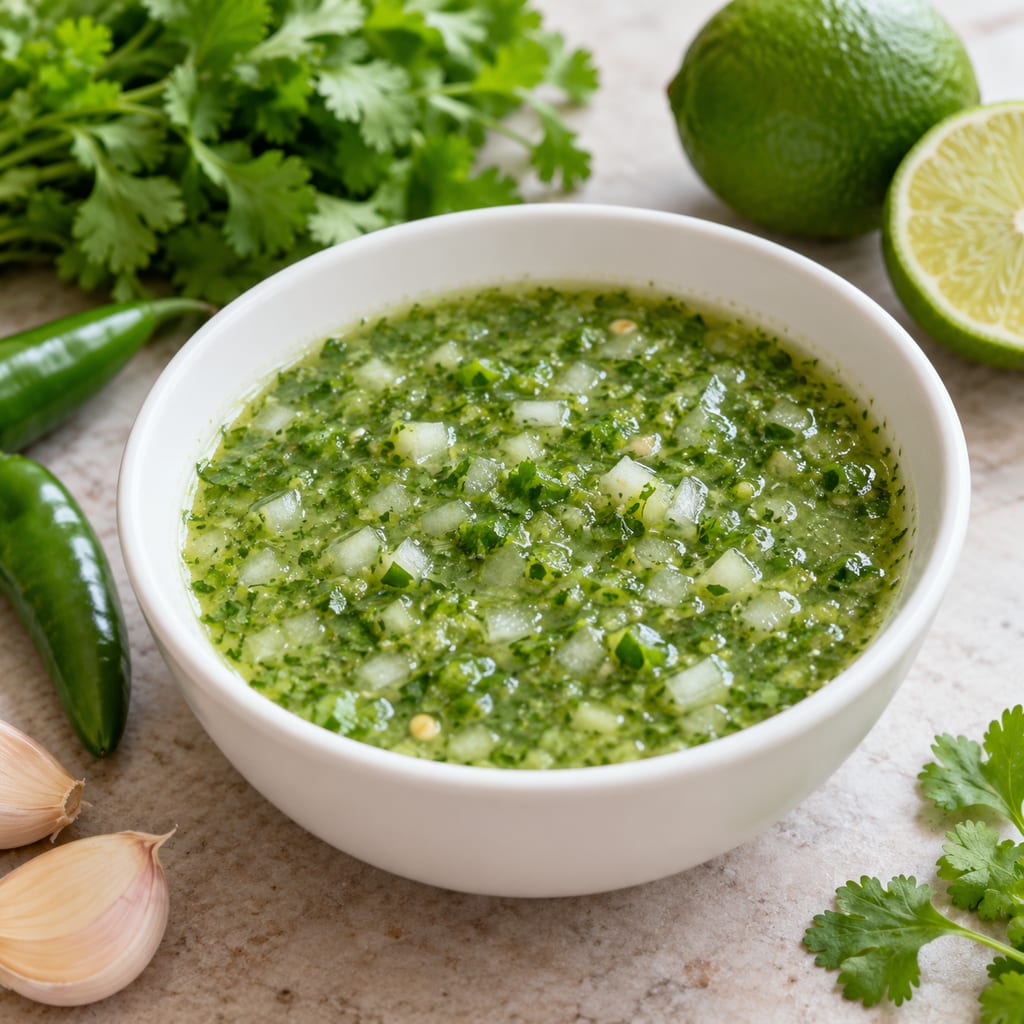
A fresh, uncooked Ecuadorian table sauce of hot pepper, cilantro, garlic and lime, served with most everyday dishes.
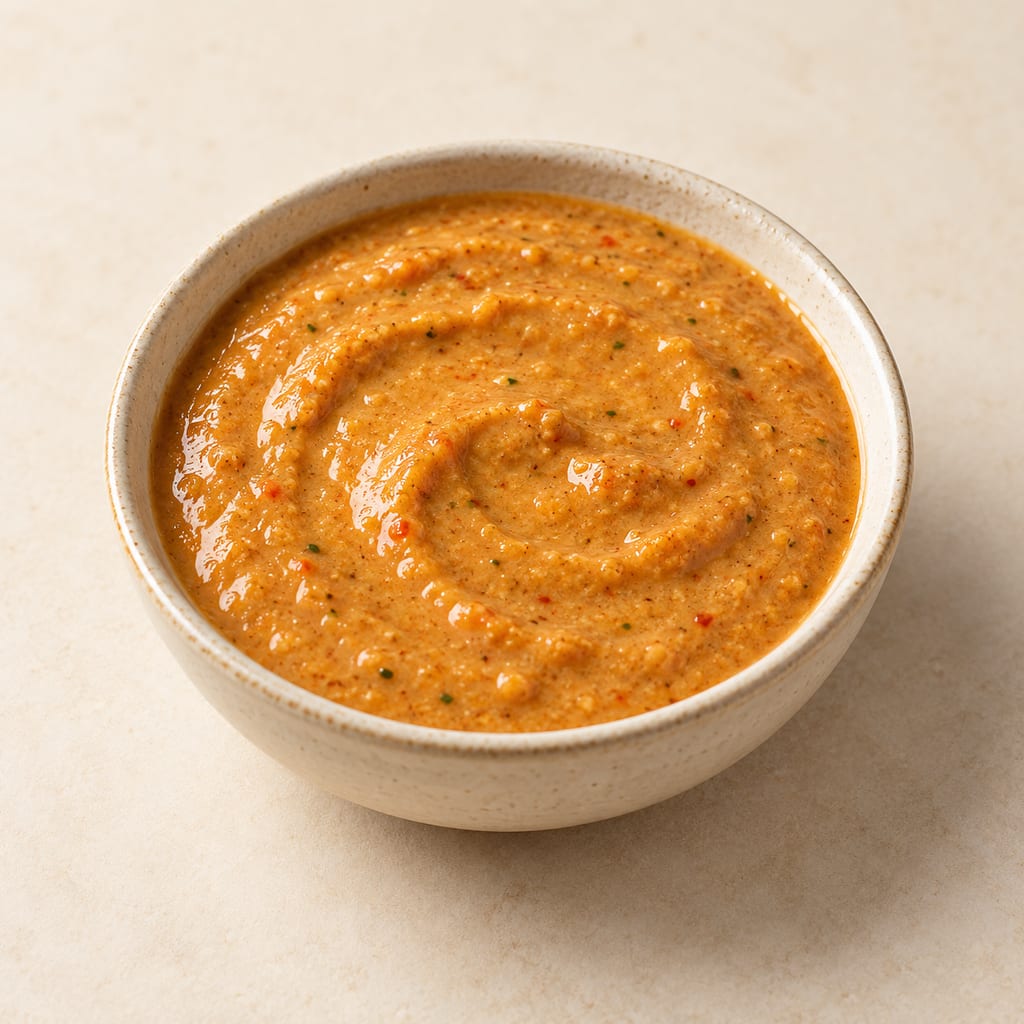
A spicy peanut hot sauce from the Popayán and Cauca region of Colombia, traditionally served with pipián empanadas and tamales.
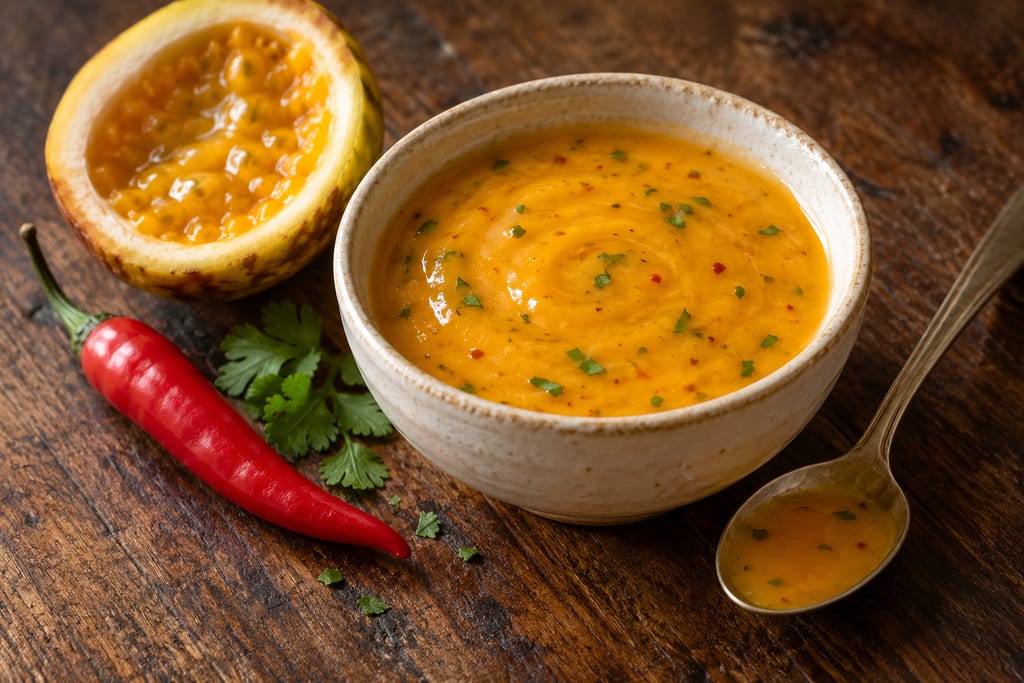
A contemporary Ecuadorian hot sauce that pairs passion fruit juice with boiled chile peppers, oil and lime.
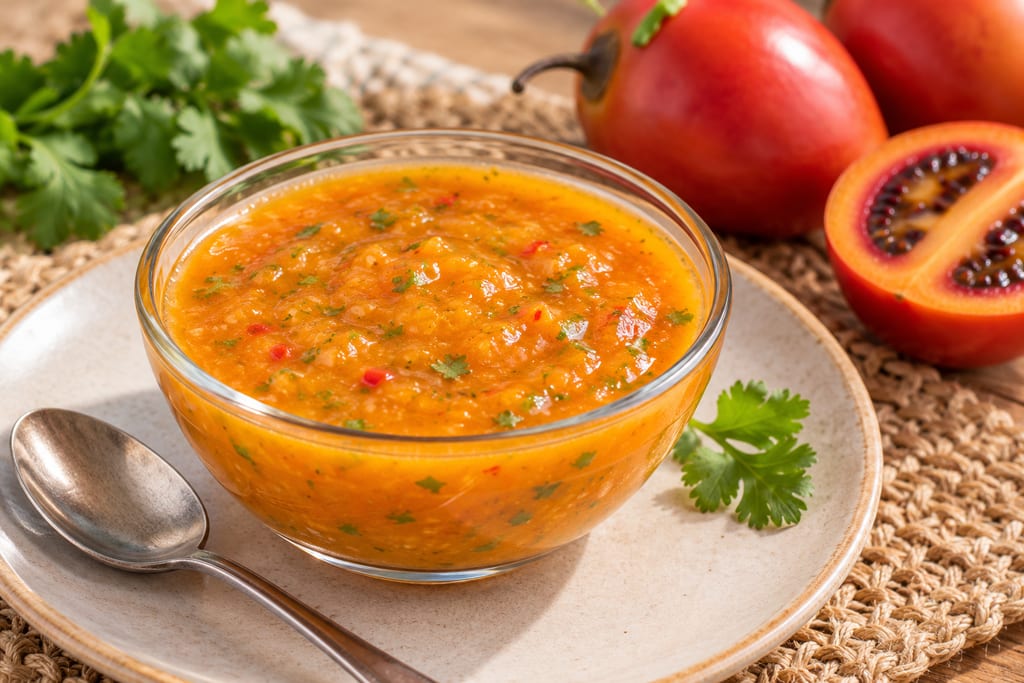
An Ecuadorian hot sauce built on tamarillo, a tart fruit that gives a sharper, fleshier base than ordinary tomato salsa.
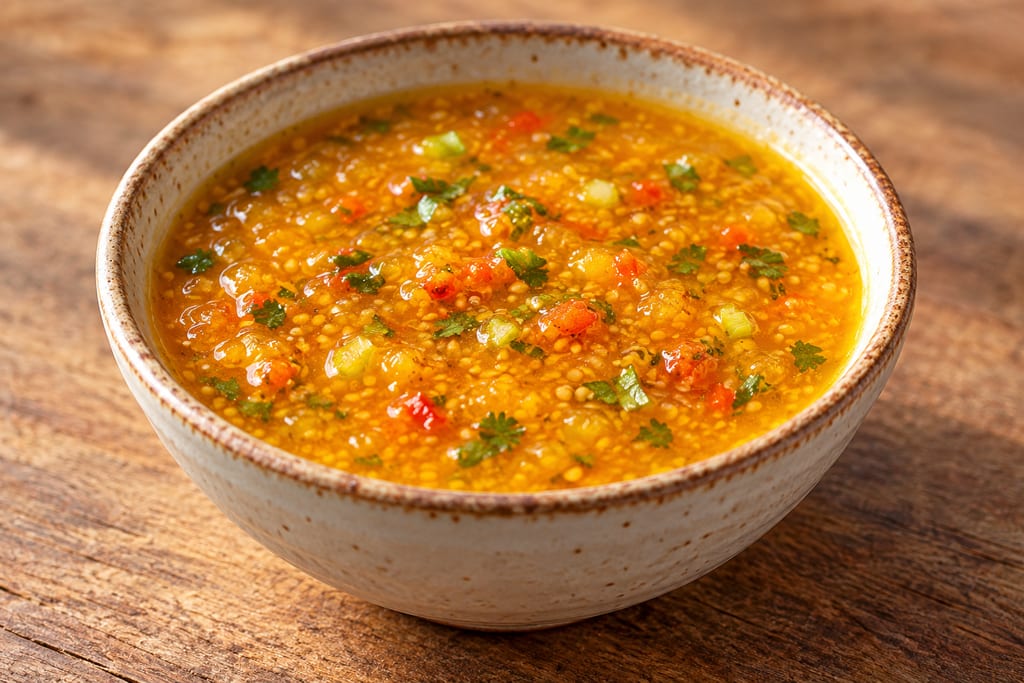
A sweet, tart and spicy Colombian sauce of uchuva, the yellow physalis fruit, with hot pepper, scallion, cilantro and lime.
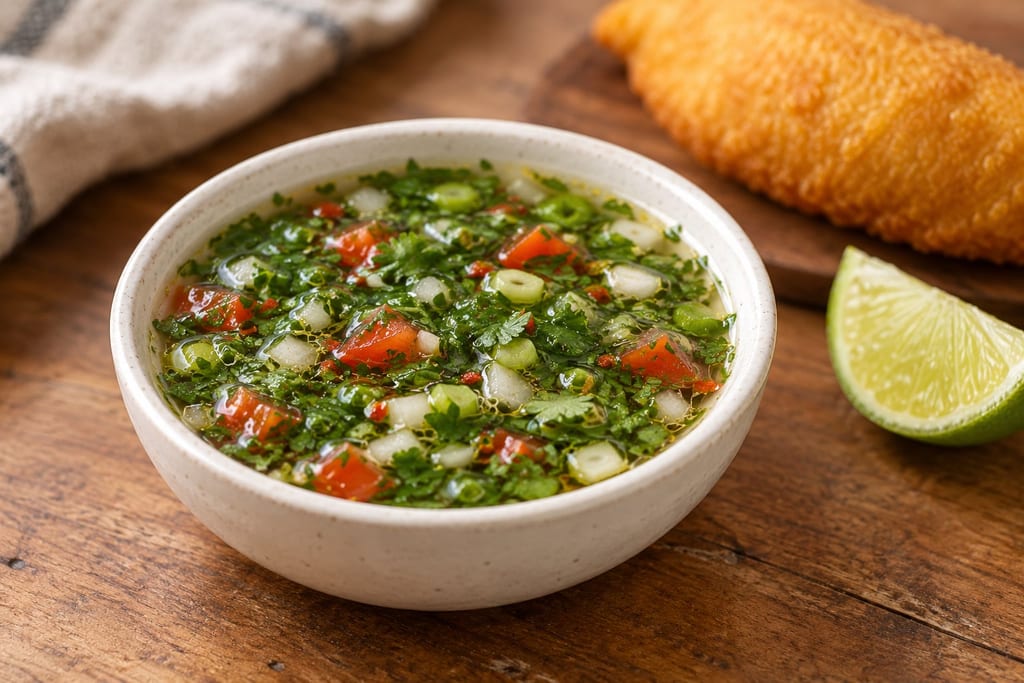
A fresh Colombian table condiment of chopped herbs, scallion and tomato in a vinegar and chile base, served beside fried and filled dishes.
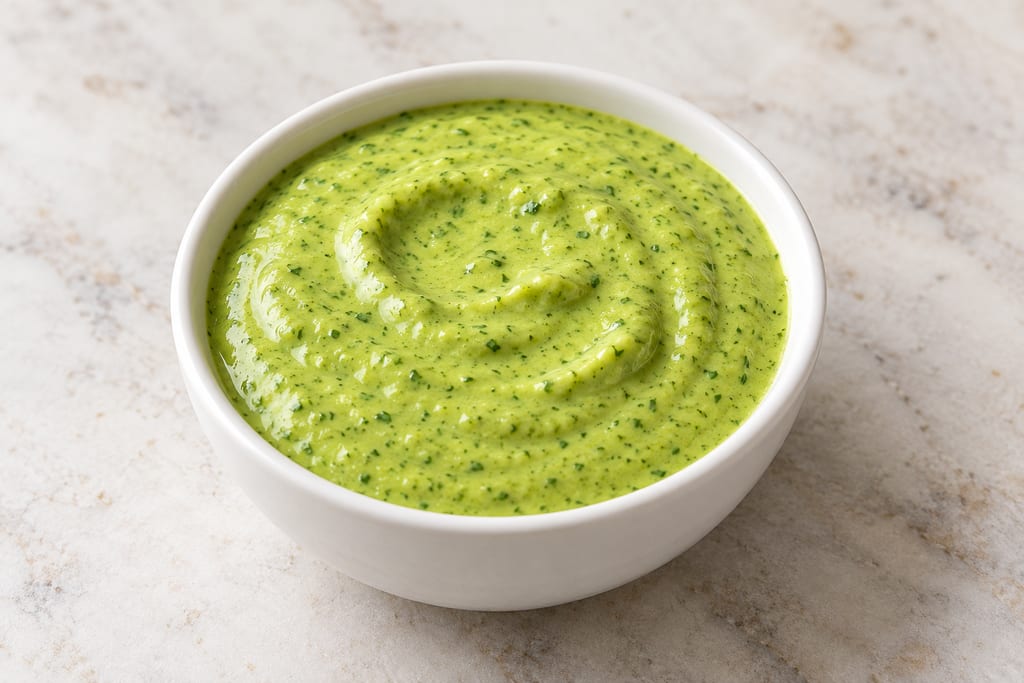
Ají verde is a Peruvian green sauce of coriander, chilli, onion and garlic in a mayonnaise or cheese base. It is best known through Peruvian restaurant cooking abroad.
No community contributions have been published for this entry yet.
Sign in to contribute. Published comments and photos are free to read.
Rick BaylessMethod · Culinary context · Style reference
Roasted Tomatillo SalsaBayless describes roasted tomatillo salsa, roasting under a broiler, blending, and adding onion and cilantro after roasting.
The archived recipe's exact weights and lime addition are original, untested development choices.
Cited in: A contemporary roasted salsa verde; What roasting changes; Blend, then add the fresh finish; A weighed trial, with clear limits
USDA Food Safety and Inspection ServiceSafety
How do you know the temperature of your refrigerator?Refrigerators should be kept at 40°F (4.4°C) or below.
Cited in: Serve fresh and refrigerate promptly
USDA Food Safety and Inspection ServiceSafety
At what temperature should perishable foods be stored?Perishable foods should be kept refrigerated at 40°F or below.
Cited in: Serve fresh and refrigerate promptly
FoodSafety.govSafety
4 Steps to Food SafetyPerishable foods should be refrigerated within two hours; leftovers should be put in shallow containers and refrigerated promptly.
FoodSafety.gov sets refrigerators at 40°F (4°C) or below and advises using an appliance thermometer.
Cited in: Serve fresh and refrigerate promptly