Milk, curd and the world's dairy stores
Follow milk into cheese, cultured drinks, butter, dried curds and sweets: a journey through the animals, seasons and household decisions behind the world's dairy foods.
 FermenteaWhere food goes to change
Dulce de leche · Doce de leite · Cajeta · Arequipe · Manjar · Leche quemada · Milk jam
Dulce de leche and its relatives, including Mexican cajeta from goat's milk, are milk and sugar cooked slowly until thick and brown. The name changes across Latin America, and the browning gives each its character.
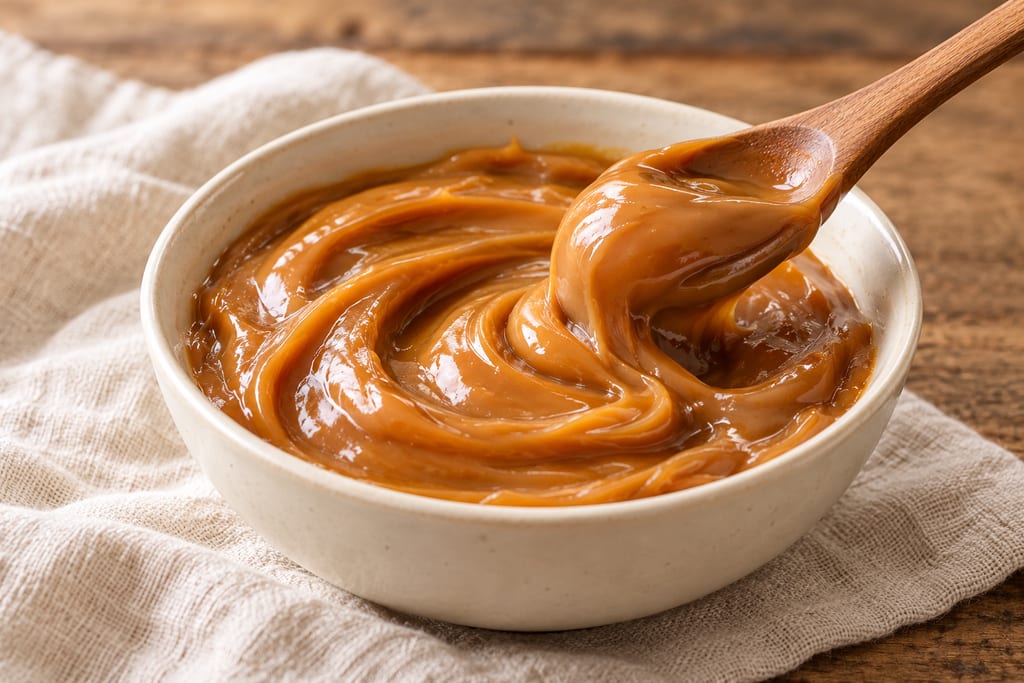
Dulce de leche is a thick, spoonable sweet made by cooking milk and sugar together until much of the water has gone and the mixture has turned golden brown. Its texture is soft and sauce-like when warm and firms as it cools. Its taste is caramel and cooked milk, and its colour and flavour come from browning, not from a second ingredient. Wikipedia describes it as a confection that is spread, used as a topping or used as a filling for sweets.
Cajeta is the goat's-milk relative. In Mexico and some Central American countries, a dulce de leche made with goat's milk is called cajeta, and cajeta de Celaya is a well-known example. The goat's milk gives a different character from cow's milk, but the sources give no comparison of flavour or texture, so the difference is recorded here as a difference in milk and name only.
The method is simple: milk and sugar simmer together, the sugar dissolves, and the pot is stirred for one and a half to two hours until the mixture thickens to a golden brown. Baking soda is sometimes added. Most of the water evaporates, so about a sixth of the original milk volume remains, and the sugar and milk proteins concentrate.
The colour and flavour come from two chemical routes that run together in the pot. Caramelisation breaks sugar down under heat, and the Maillard reaction joins sugars with milk proteins and their amino groups. Both are non-enzymatic and both need heat and time. The change is not fermentation: no microbe is added or needed, which is why the product sits with the cooked sweets rather than with the cultured milks.
The Spanish dulce de leche and the Portuguese doce de leite both mean a sweet made of milk. Chile and Argentina also use manjar, Colombia and Venezuela arequipe, and Bolivia, Ecuador and Peru manjar blanco. Leche quemada, meaning burnt milk, is another Spanish name for the same family.
These names do not always describe the same product. The names follow country and region as much as the recipe, and the sources do not map each name to one fixed formula. Cajeta is distinguished by its goat's milk. Dulce gatas, made with carabao milk in Negros Occidental, the Philippines, and confiture de lait in France are further relatives made with different milks and traditions.
The earliest dated records in the sources are the imports of Chilean manjar into Argentina recorded in 1693 and 1712, and the record of doce de leite in Minas Gerais in 1773. The Swiss naturalist Johann Rudolph Rengger reported its use in Paraguay between 1818 and 1825. The army of the Andes is said to have carried the sweet into Argentina in 1817, in an account from an Argentine historian.
Other origin stories are reported without support: the Indonesian origin of the sixth century, a Philippine account of the fourth century, an Indian link through the milk dish rabri, and a Napoleonic or Rosas story, which the article calls apocryphal. In 2003 Argentina proposed the sweet for heritage status, and other countries objected because it is eaten across the continent. The sweet is shared, and no single country owns its origin.
Dulce de leche is used as a topping, a filling for pastries and cakes, and a sweet spread. Cajeta is described as the same kind of product, so the same uses are recorded for it. The article's use section has no inline citation, so these uses are recorded as common practice.
Heating sweetened condensed milk inside its unopened can is not recommended by the can's manufacturer, which says the container is not designed for high temperatures. This page excludes that method. The manufacturer gives an open-vessel caramel method that transfers the milk from the can before heating it; follow the cited recipe rather than sealing a can or jar in a pressure cooker.
The sources give no storage time or tested shelf life for the traditional milk-and-sugar preparation described here. The manufacturer's refrigerated-leftovers advice applies to its separate open-vessel caramel recipe and should not be read as a validated shelf-life claim for this formulation.
Dulce de leche and its relatives are documented in Latin America from the 1600s and 1700s, including Chilean manjar imports into Argentina in 1693 and 1712 and doce de leite in Minas Gerais in 1773. Several origin stories circulate, and none is settled.
Scaling: source batch only
Hot dulce de leche is thick and can scald on contact.
Hazard sourceThe article gives no food-safety or storage guidance for the product.
No tested storage limit is given for the sweet at any temperature.
Doce de leite is recorded in Minas Gerais in 1773, which the article cites; it does not establish that the sweet began there.
Cajeta de Celaya is named as a well-known Mexican example; the article gives no further history of the place.
Made across South and Central America under different names; no single country is the source of the category.
Follow milk into cheese, cultured drinks, butter, dried curds and sweets: a journey through the animals, seasons and household decisions behind the world's dairy foods.
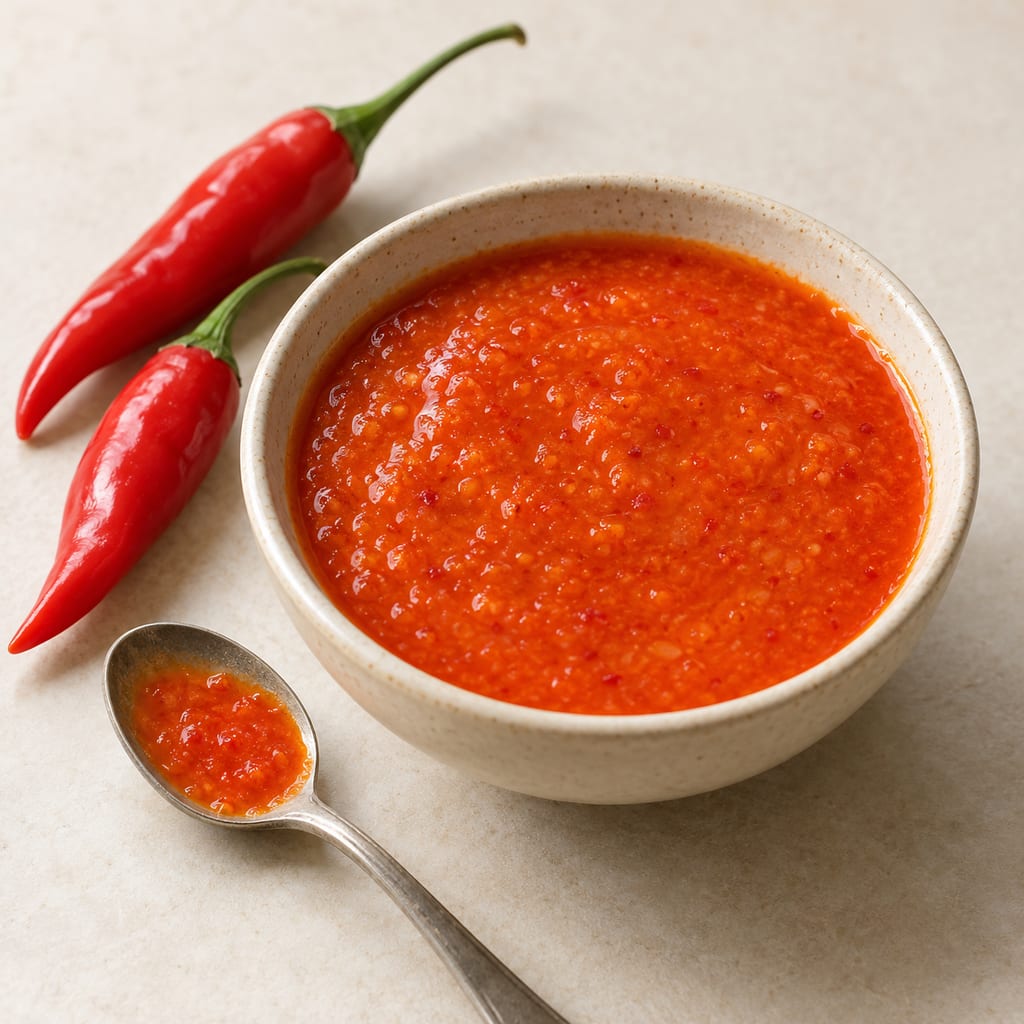
A Brazilian table sauce made from hot peppers, most often dedo-de-moça, cooked briefly with onion, garlic and vinegar and then blended smooth. Household versions differ widely.
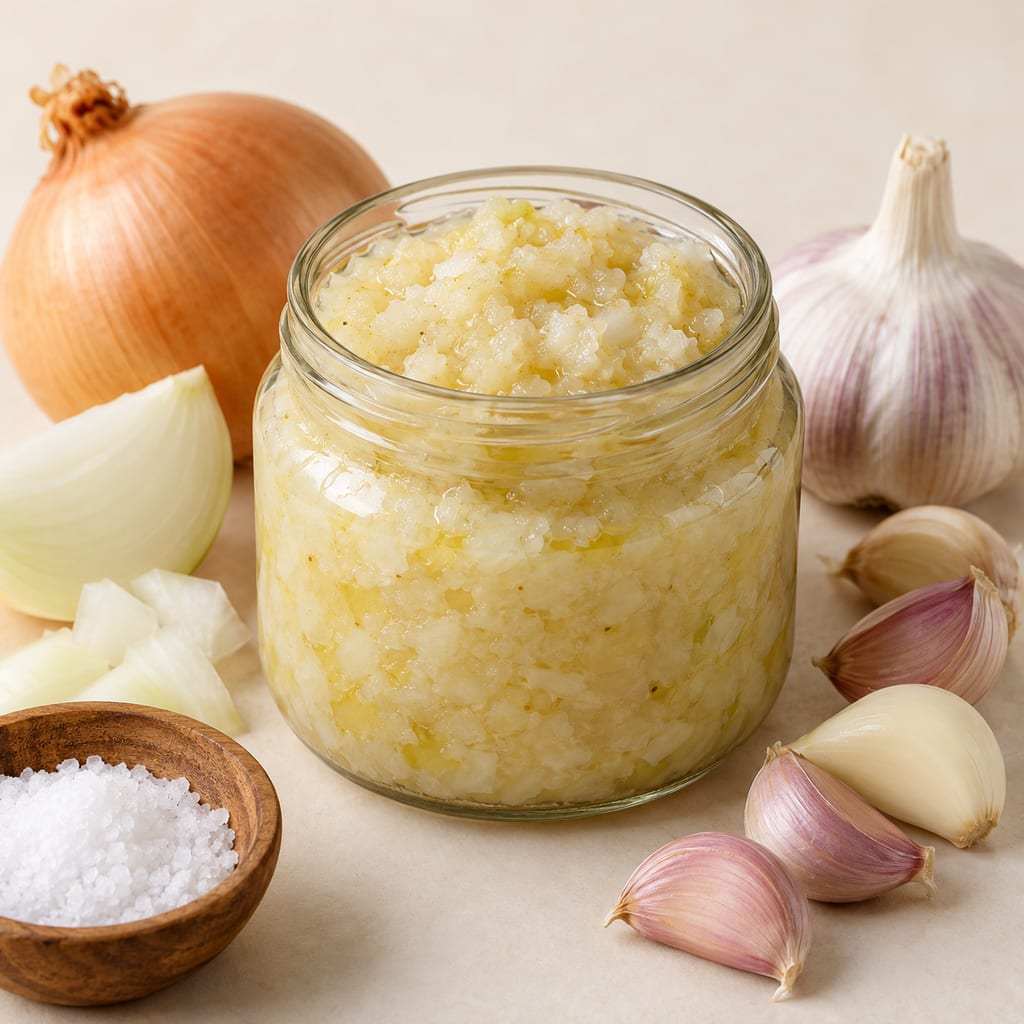
Tempero pronto is a fresh Brazilian paste of garlic, onion and salt, ground with oil and kept ready to start a dish. It is the Brazilian counterpart of sofrito and refogado.
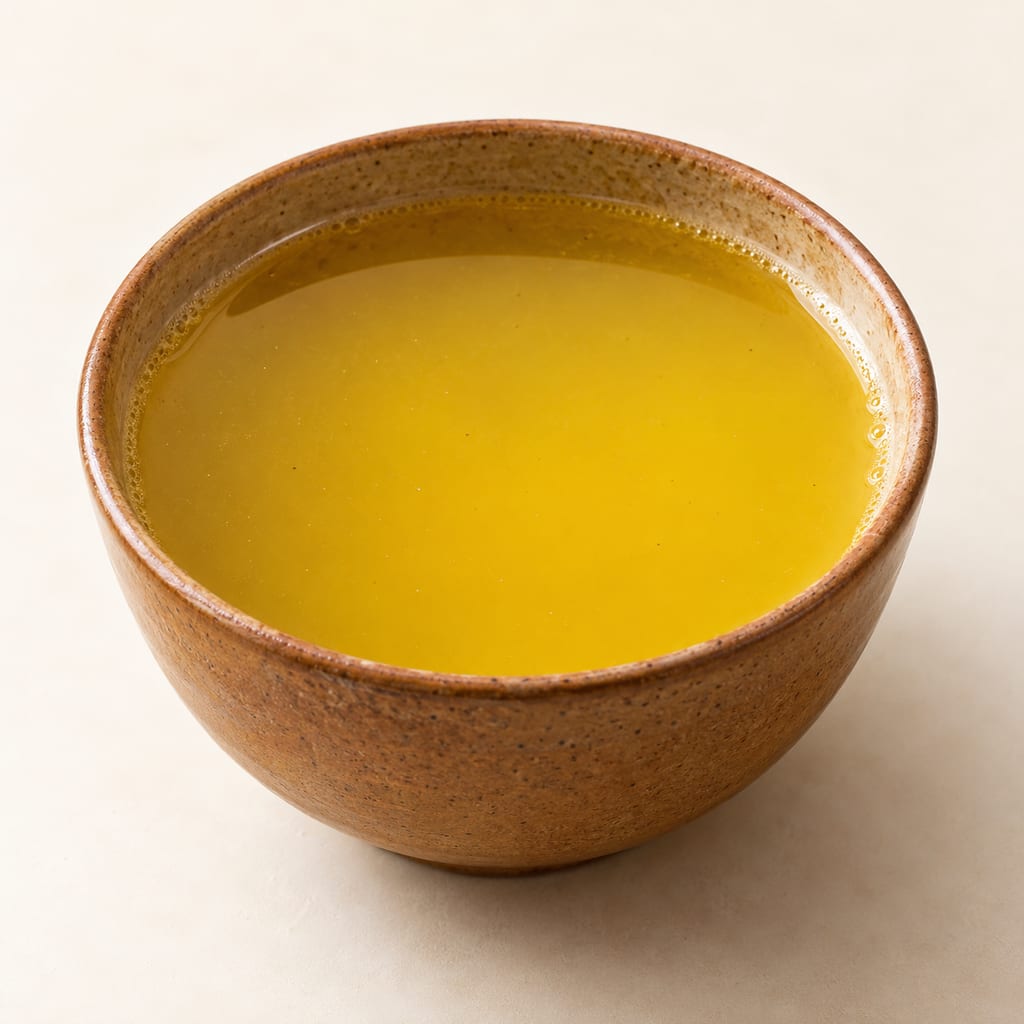
Tucupi is a yellow, sour liquid from the Brazilian Amazon, made from the juice of bitter manioc that is settled, fermented and cooked. It is the base of duck in tucupi and tacacá.
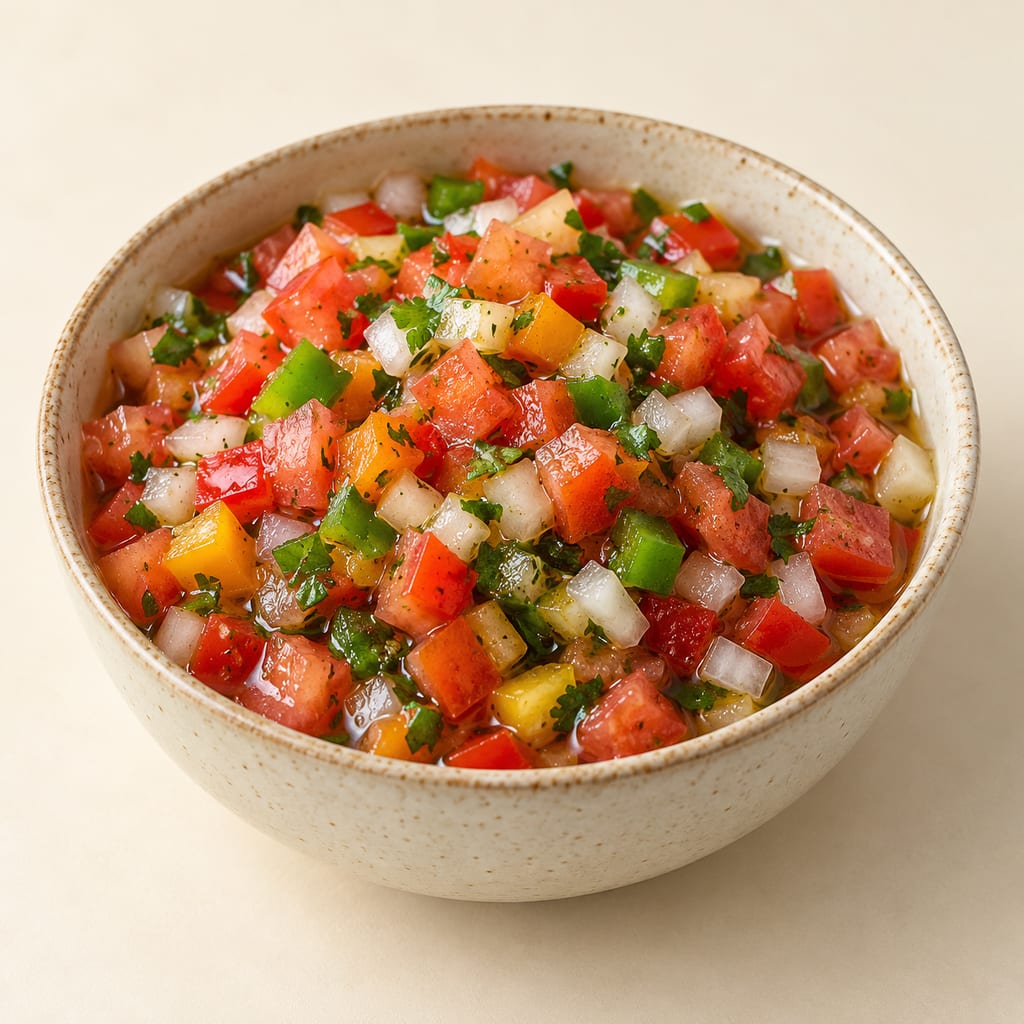
Vinagrete, also called molho à campanha, is a Brazilian relish of finely chopped tomato, onion and peppers dressed with vinegar and olive oil. It is served with grilled meat and feijoada.
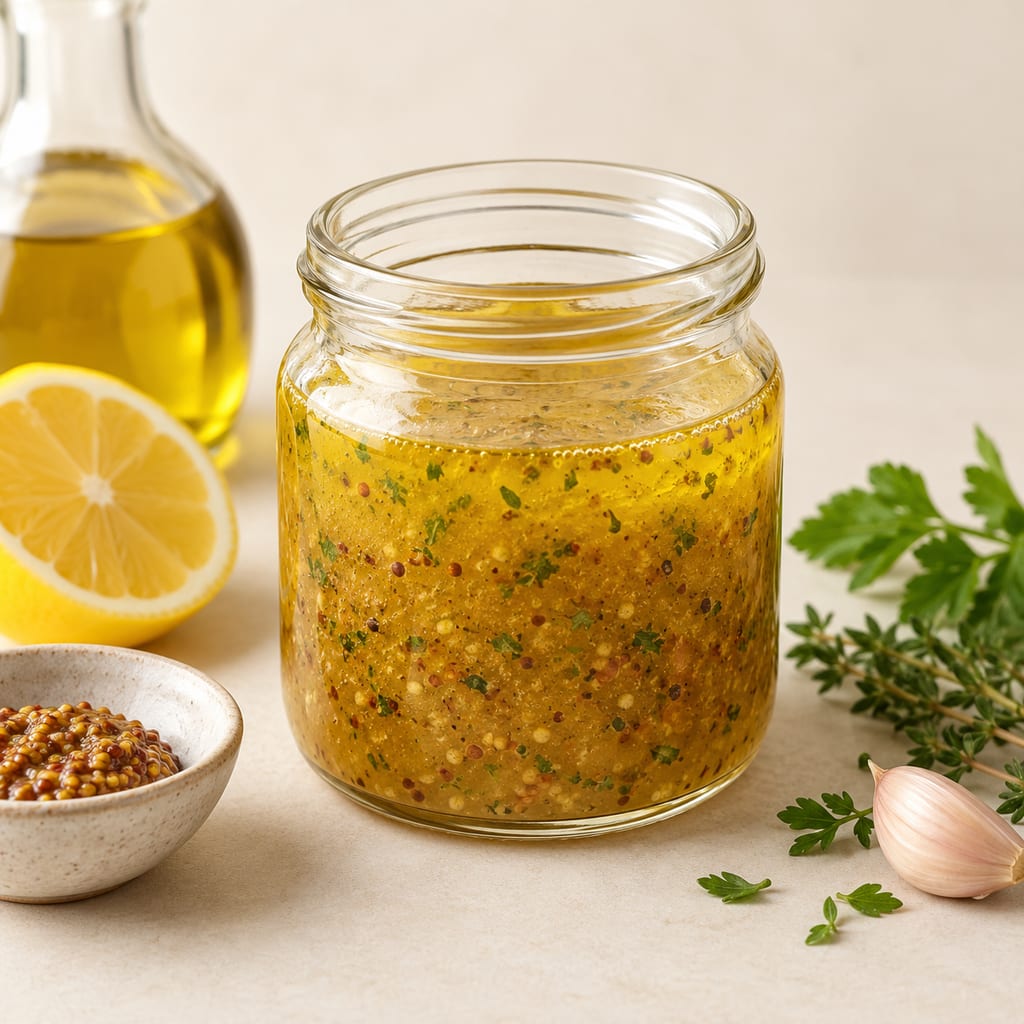
A dressing of edible oil whisked with a mild acid, usually vinegar or lemon juice, seasoned with salt, herbs and mustard, used on salads and as a marinade.
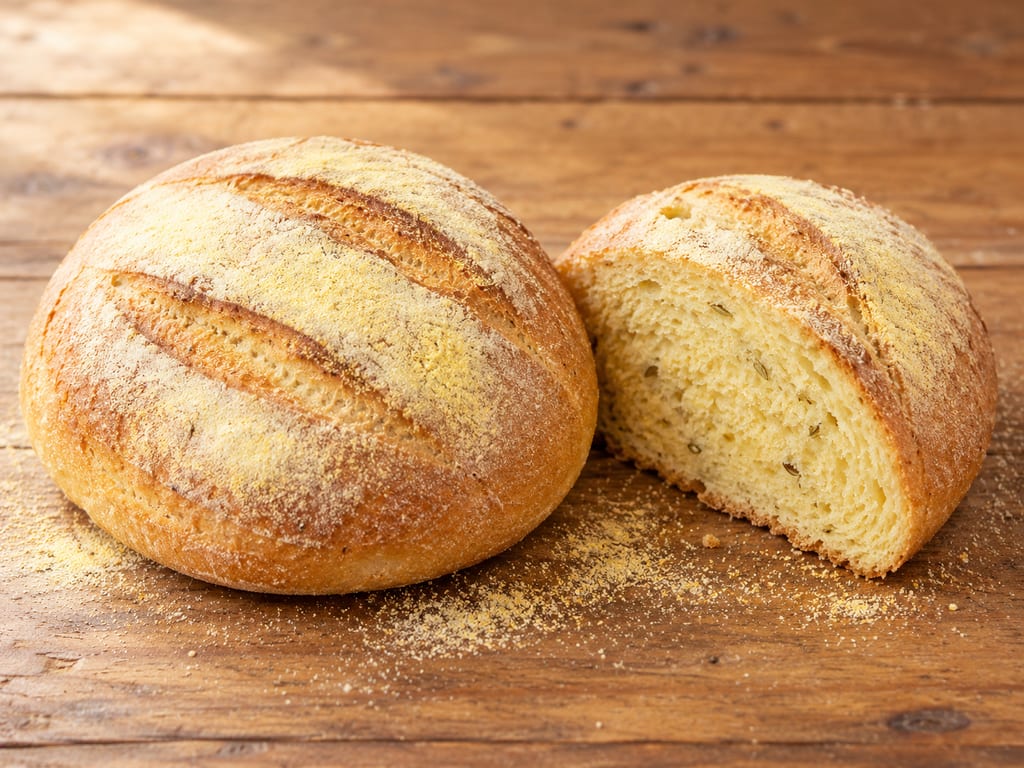
Brazilian broa de milho is a lightly sweet wheat-and-fine-maize bread with fennel and dry yeast, shaped into two small loaves for a Festa Junina or coffee break.
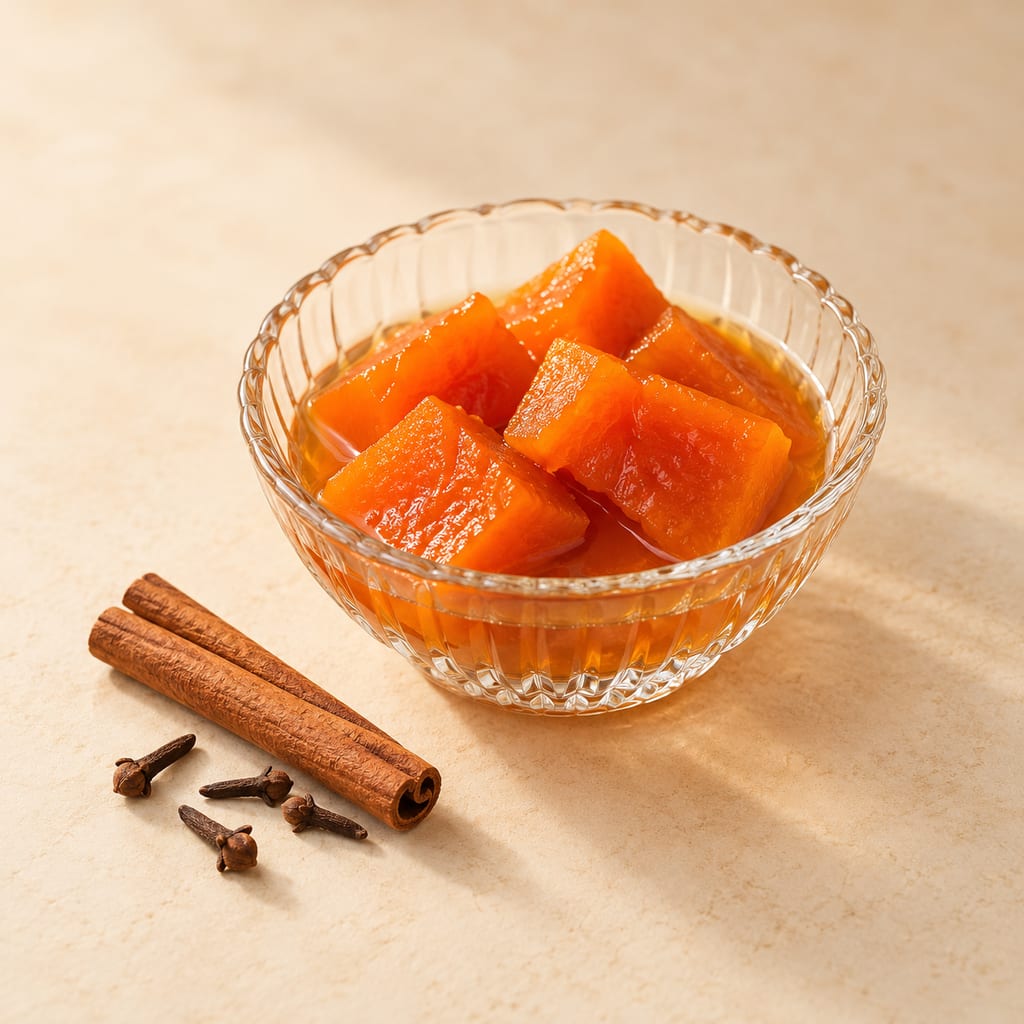
Brazilian doce de abóbora: Freeze for winter; small fresh portion refrigerated up to 48 hours.
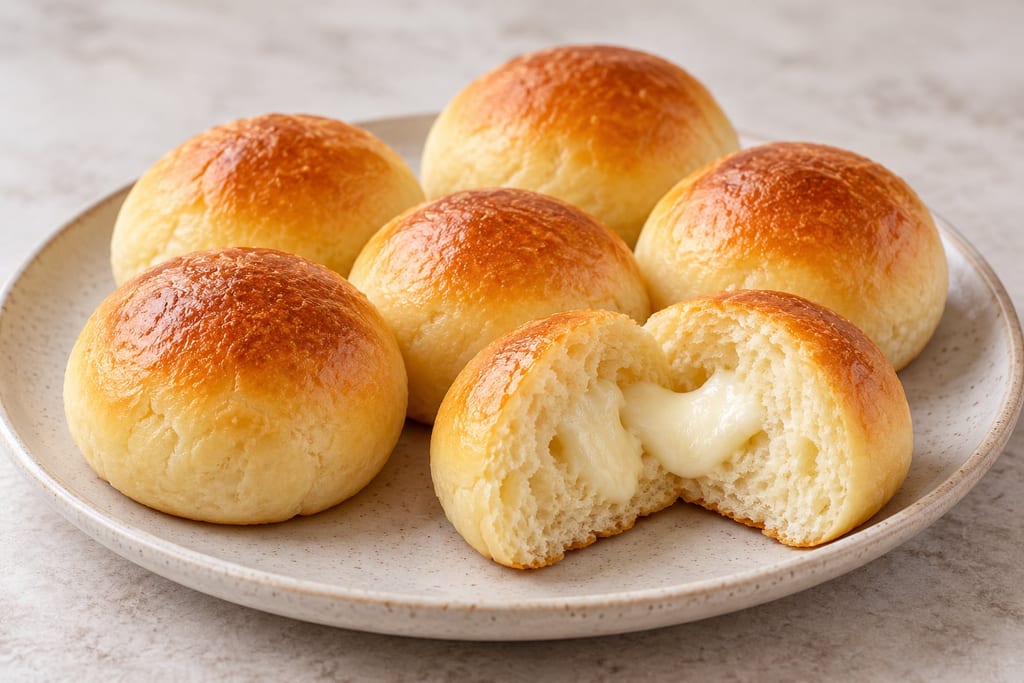
Soft Brazilian yeast rolls use cooked mashed potato in an enriched dough, with mozzarella cubes enclosed before baking.
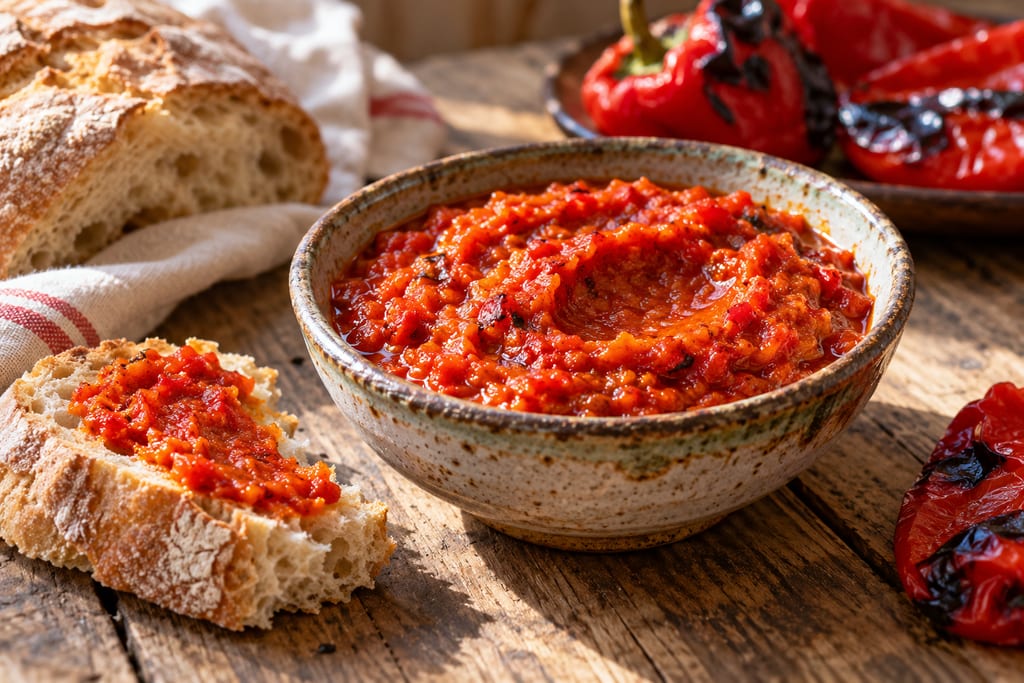
Ajvar is a cooked Balkan pepper preserve built around roasted red peppers, peeled, drained, ground and slowly fried with oil and seasoning. Leskovac’s protected version is a pepper specialty; regional versions vary.
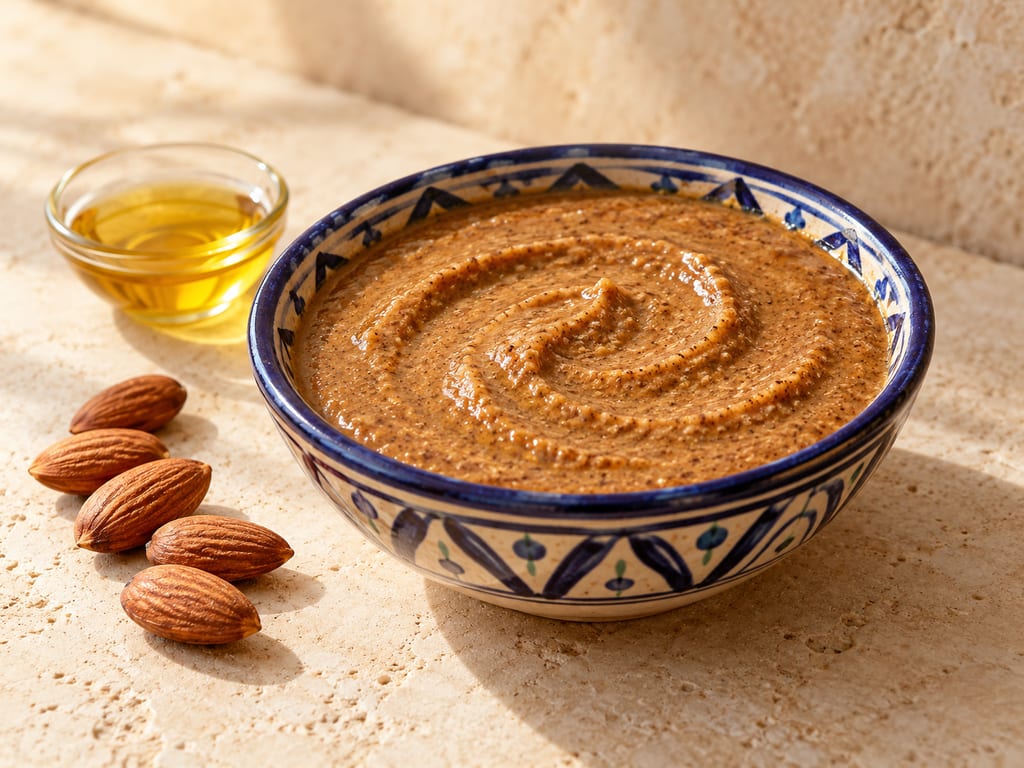
Amlou is a nutty, lightly sweet Moroccan spread of roasted almonds, culinary argan oil and honey. The almonds are ground first, then loosened with oil and sweetened; the balance can range from a thick spread to a dip.
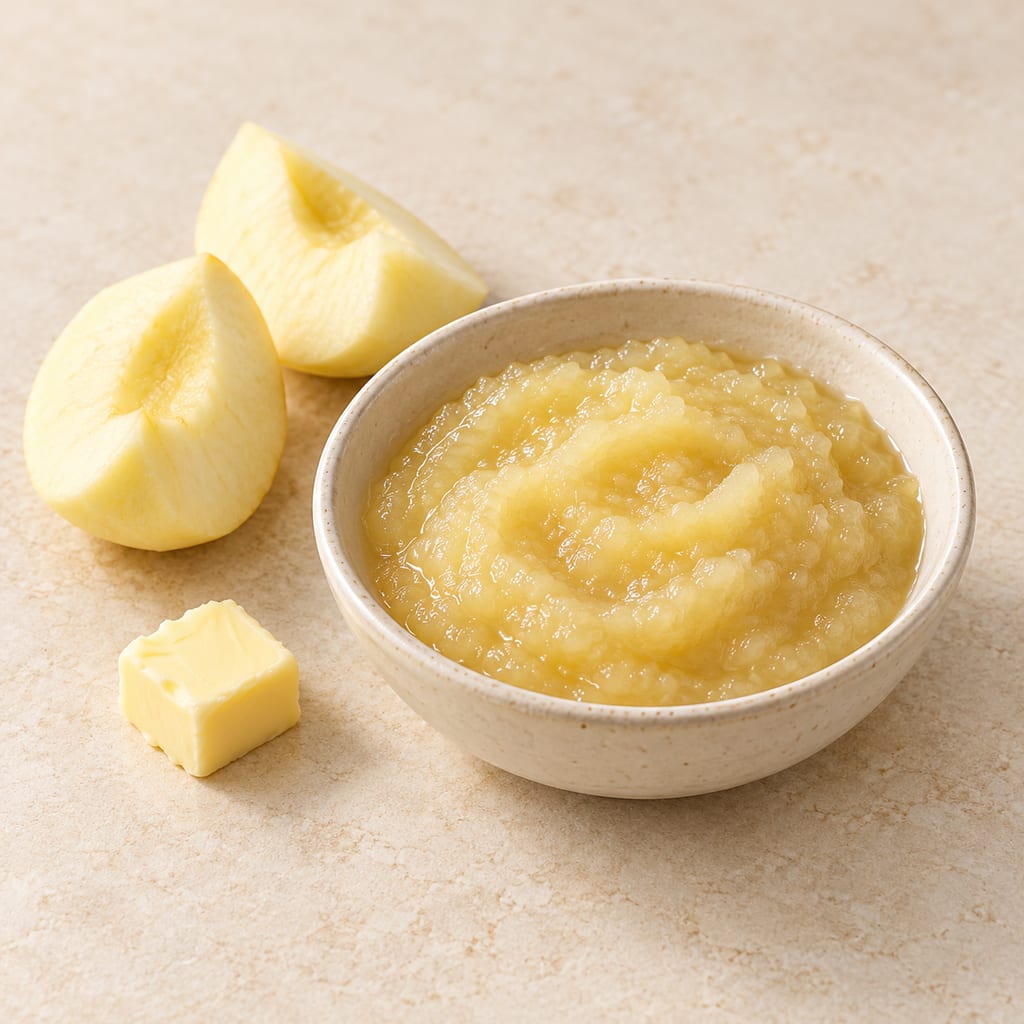
Apple sauce for goose and pork is a plain English accompaniment: cooked apples pulped with water, then sweetened with sugar and finished with a little butter.

A warm dip of garlic, anchovy and olive oil, often enriched with butter, that Piedmont serves over a flame with raw and cooked vegetables and bread.
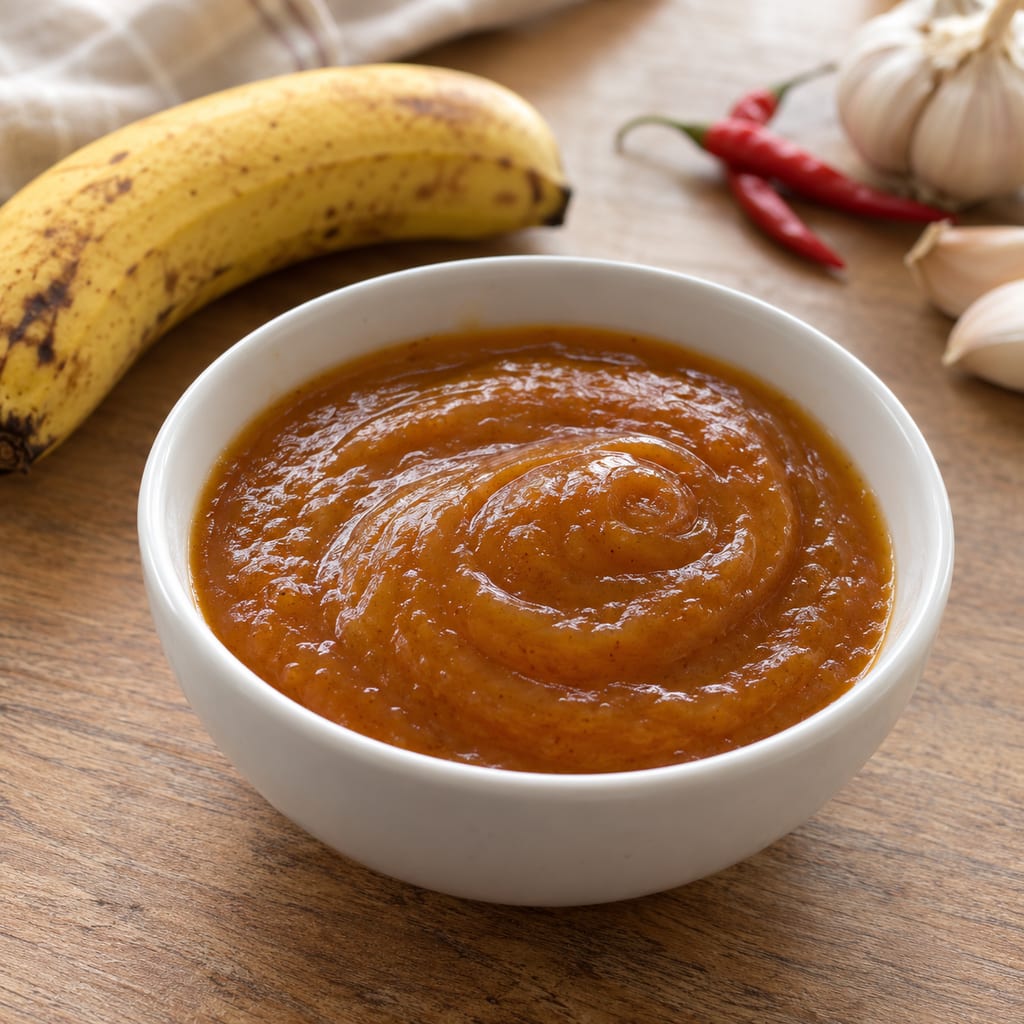
A sweet-hot table sauce of ripe banana simmered with vinegar, sugar, onion, garlic and fresh chilli, in the manner of Philippine banana ketchup. An untested development batch of about 500 g.
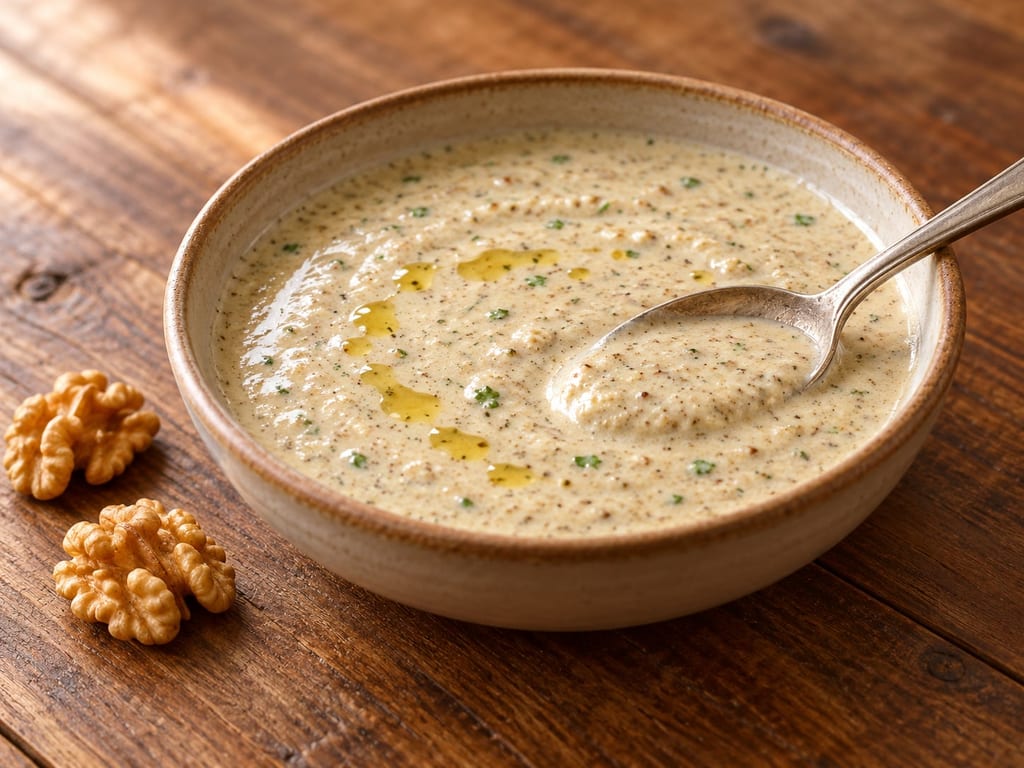
A Georgian walnut sauce of ground walnuts, garlic, vinegar and spices, thinned with water or broth. It is served with poultry, vegetables and bread, and is the sauce of the dish satsivi.
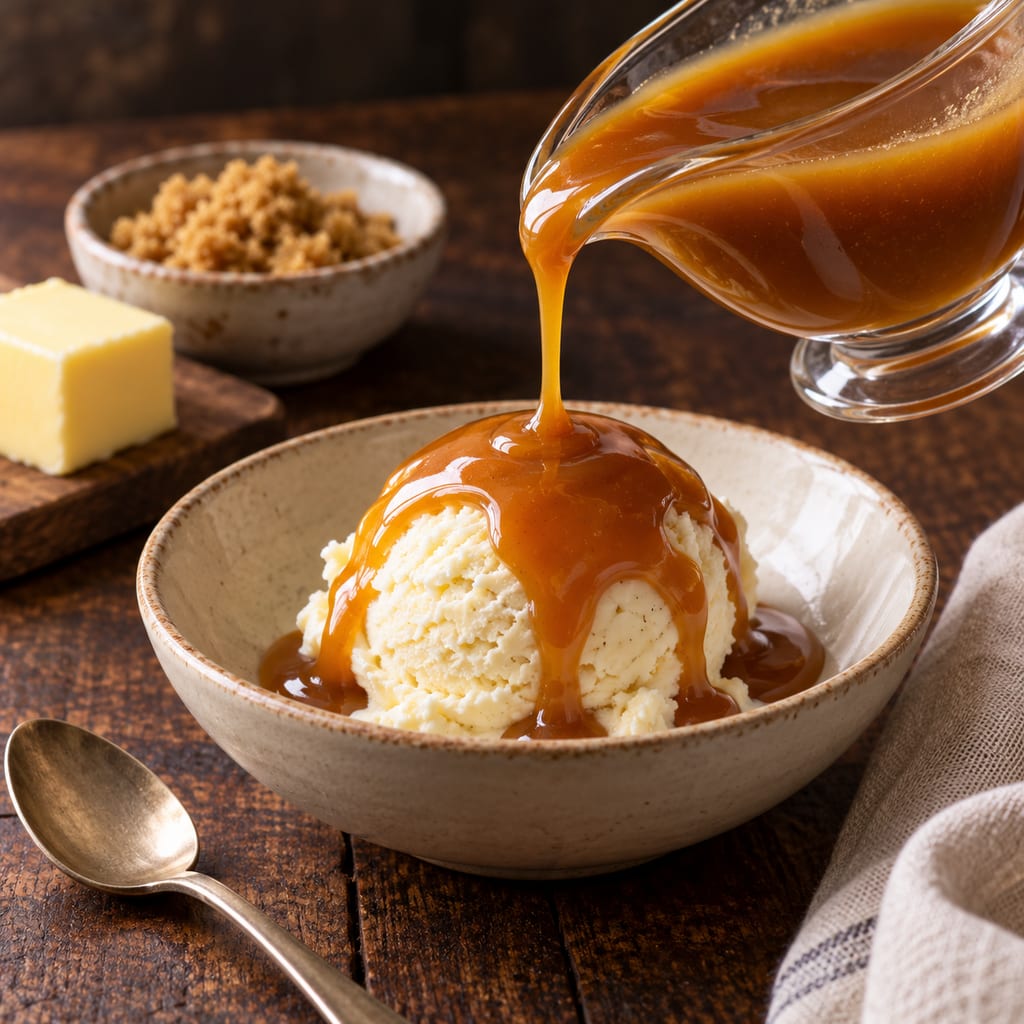
A pourable dessert sauce of brown sugar, butter and cream, with a little corn syrup and salt. It is the sauce form of the butterscotch confection and is made without water, unlike caramel.
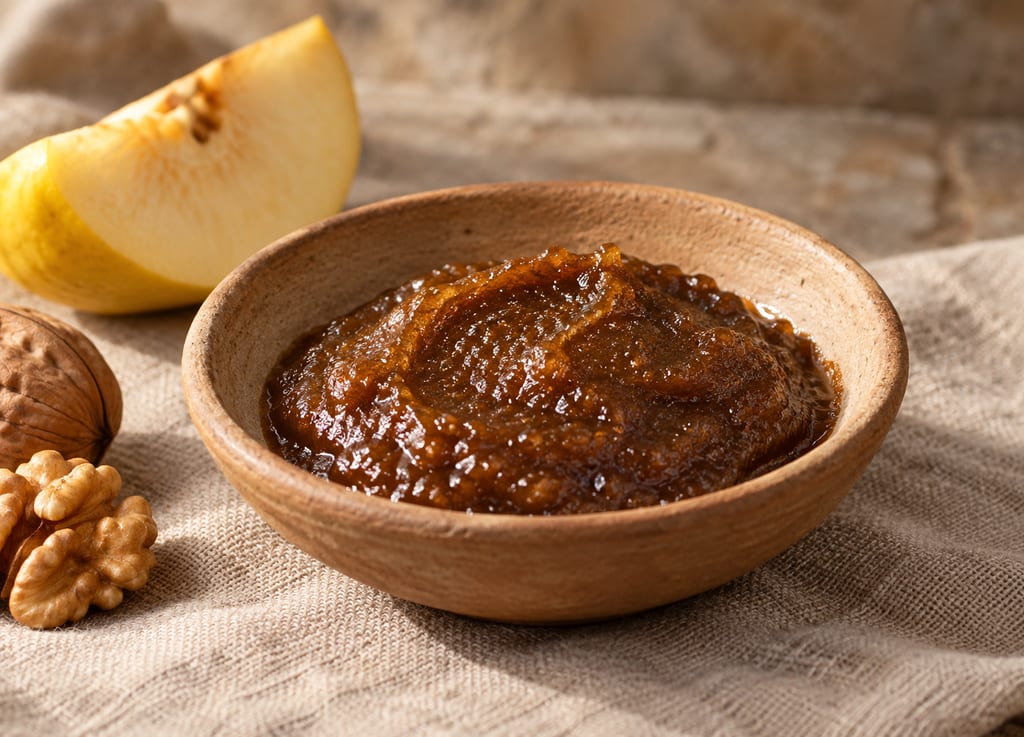
Byzantine murrī is a cooked imitation of murrī from the medieval Arabic repertoire, made from scorched honey, toasted bread, walnuts, quince, carob and spices rather than from a long grain fermentation.

A gelling polysaccharide extracted from red seaweeds, sold as kanten strips or powder; it sets firm at a low concentration and stays solid until about 85 °C.

A Dominican table and seasoning condiment of sour orange juice, mixed with lime and salt and bottled raw; garlic, oregano or a hot pepper may be added for meat or a spicier bottle.

Cicerbita alpina is an alpine perennial whose tender shoots and leaves have been eaten raw or cooked. Sámi milk preparations and modern Carnian dishes are distinct uses, with serious identification and preservation limits.

Japanese skipjack tuna cooked, then repeatedly smoked and dried over a wood fire by the hand-fired tebiyama method into a hard block for shaving into dashi: the first stage of katsuobushi.

A Swedish-style spirit vinegar made by fermenting neutral alcohol with live vinegar bacteria, with a separate guide to commercial ättika strengths.

A yeast-raised wheat ring shaped from a firm dough, briefly boiled and baked. This source-batch formula gives a gently malted crust and a chewy crumb.

Bechamel is a white sauce of milk thickened with a butter and flour roux, one of the French mother sauces, and the base from which Mornay and other cheese and cream sauces are made.
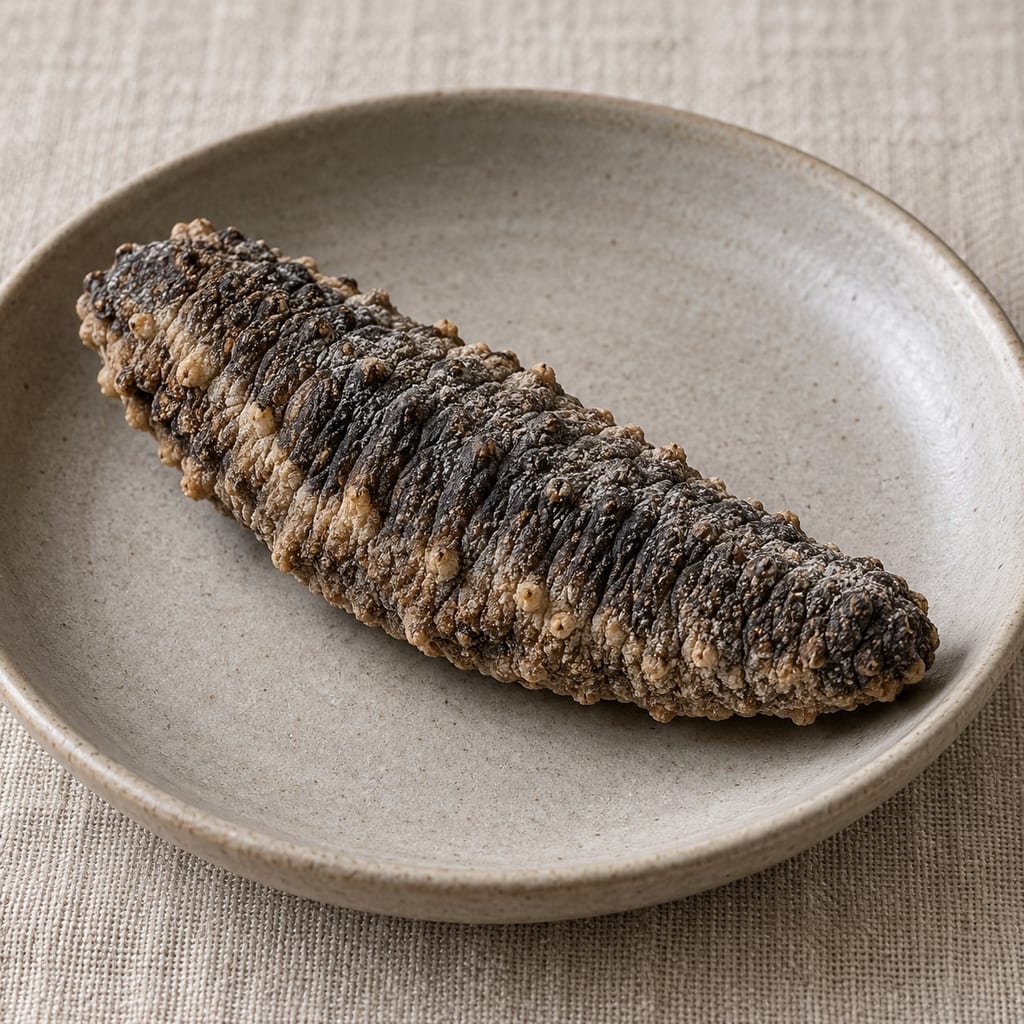
Sea cucumber cleaned, boiled and dried, sometimes with smoke, into a long-keeping trade product; Makassan processing in Arnhem Land is documented from at least the eighteenth century.
No community contributions have been published for this entry yet.
Sign in to contribute. Published comments and photos are free to read.
WikipediaMethod · History · Background
Dulce de lecheMilk and sugar simmered and stirred 1.5 to 2 hours until golden brown
Browning from caramelisation and the Maillard reaction; about a sixth of the milk volume remains
Names: doce de leite, manjar, arequipe, leche quemada, dulce gatas, confiture de lait, kajmak
Records: manjar imports 1693 and 1712; doce de leite in Minas Gerais 1773; Rengger in Paraguay 1818 to 1825
Cited in: A milk sweet that turns brown; How the browning happens; Names across Latin America; Early records and the disputed origin; Eating it and what the sources leave open
WikipediaBackground · History
CajetaCajeta as goat's-milk dulce de leche in Mexico and some Central American countries
Cajeta de Celaya named as a well-known example
Cited in: A milk sweet that turns brown; Names across Latin America; Eating it and what the sources leave open
Eagle BrandSafety
Eagle Brand Product FAQsThe manufacturer says it does not recommend heating sweetened condensed milk in its can, opened or unopened, because the current can is not designed to withstand high temperatures.
Cited in: Eating it and what the sources leave open
Eagle BrandMethod · Storage
Homemade Caramel SauceThe manufacturer's open-vessel methods transfer sweetened condensed milk from the can and heat it in a covered double boiler for 1.5 to 2 hours, with occasional stirring.
The recipe says to cool the caramel and refrigerate leftovers.
Cited in: Eating it and what the sources leave open