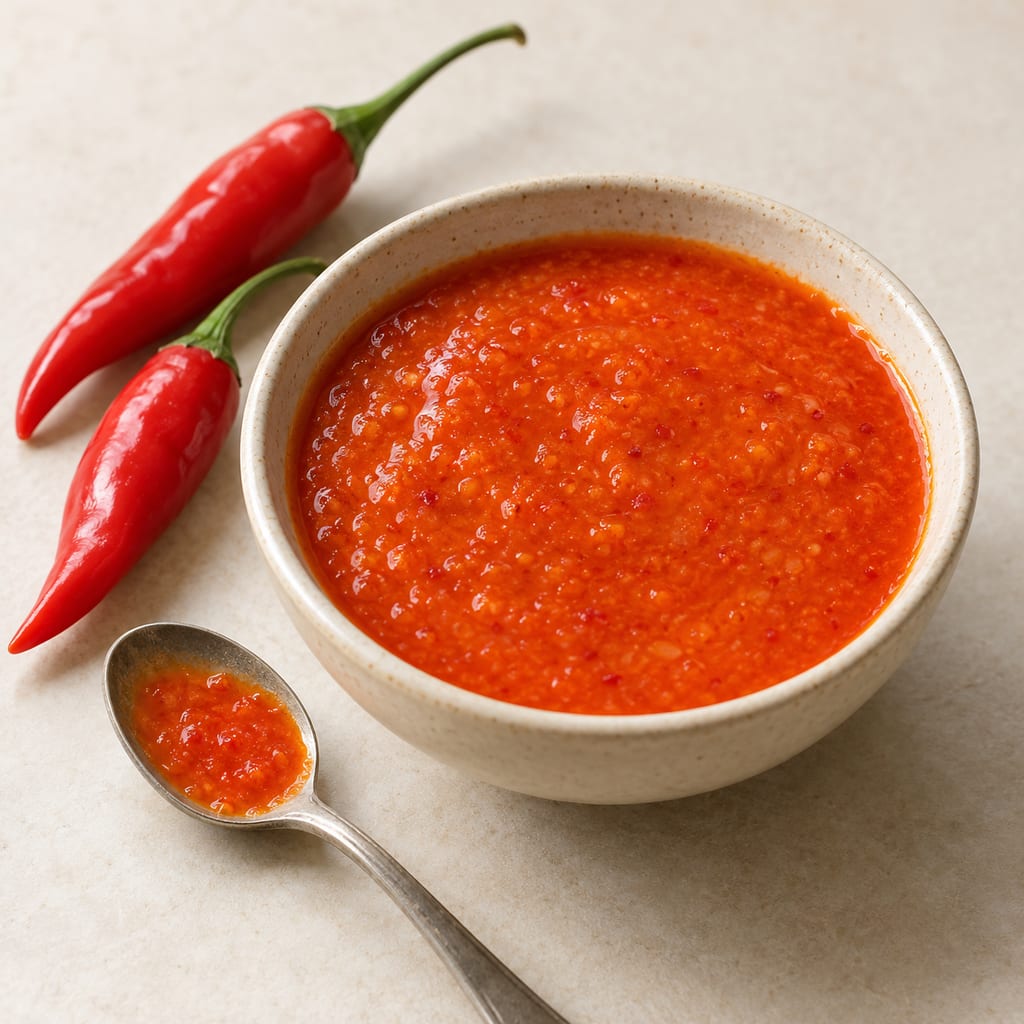
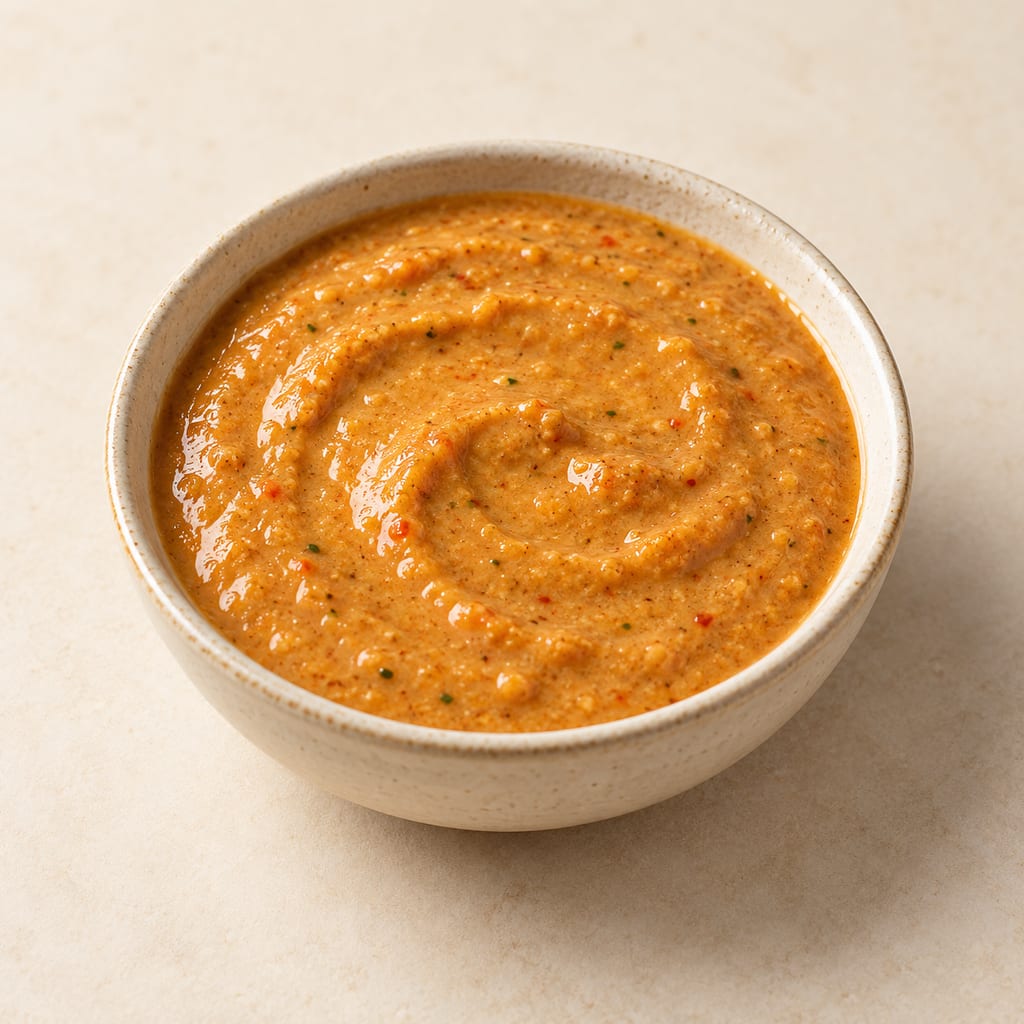
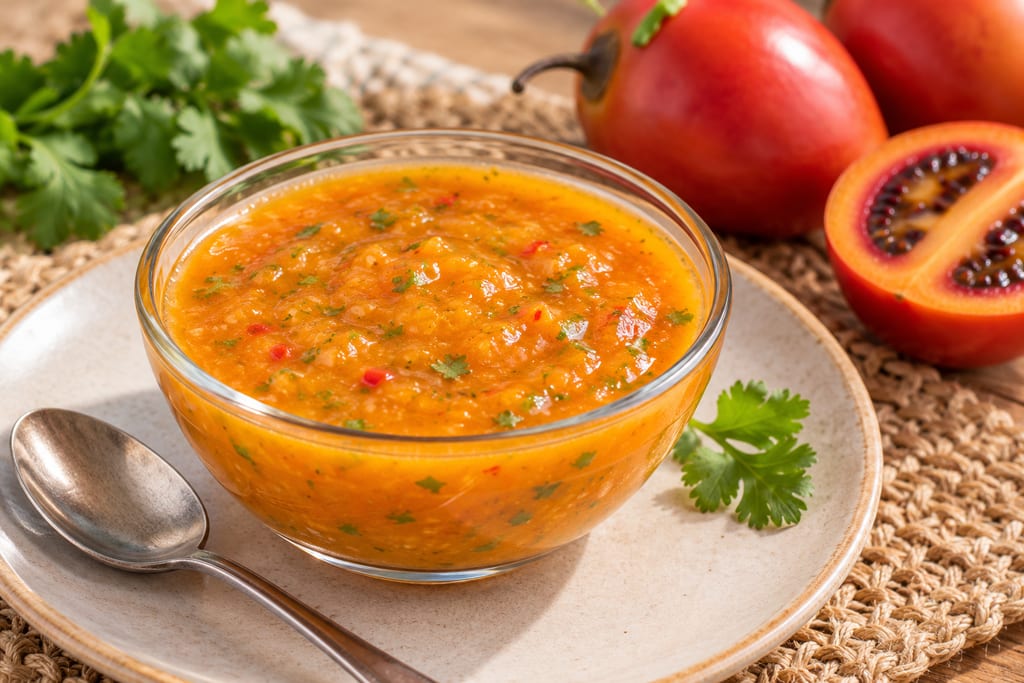
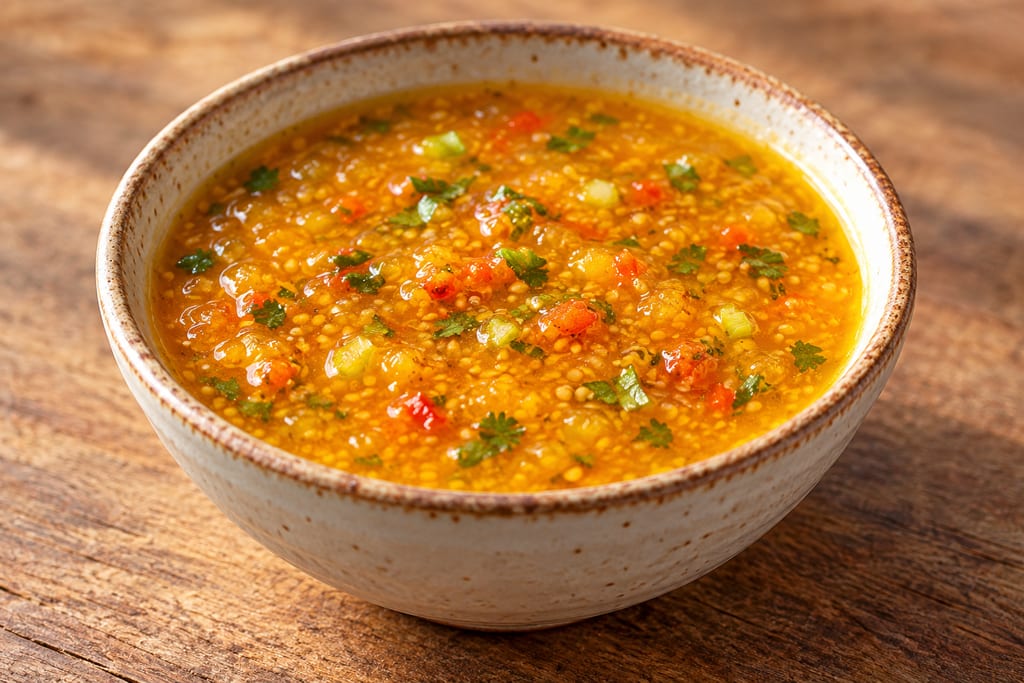
A Brazilian table sauce made from hot peppers, most often dedo-de-moça, cooked briefly with onion, garlic and vinegar and then blended smooth. Household versions differ widely.
Molho de pimenta means pepper sauce, and in Brazil it names a family of table sauces built on hot peppers, vinegar and a few aromatics rather than one fixed recipe. The chile changes with region and household. The recipe used here calls for dedo-de-moça, a small hot pepper, and other local peppers take its place in other kitchens.
The sauce is cooked and then blended. The peppers are softened in a pan with onion and garlic, simmered with vinegar, water, sugar and salt, and then blended into a smooth sauce. Some versions add tomato sauce; some recipes found in the same search add fresh herbs or black pepper instead.
The source method cooks the onion first, then the garlic for about one minute, then adds the peppers with the liquids and seasonings. The mixture is brought to a boil, covered and simmered for about ten minutes, then left to cool for fifteen to twenty minutes before blending. The source does not say why the cooling step is there, so this page does not add a reason.
The bay leaf is added during simmering and removed before blending. The recipe gives a yield of 420 ml from these quantities.
The recipe advises wearing gloves when handling the peppers, or rinsing them under running water to reduce the burning sensation on the hands.
The source recommends sterilized glass jars with airtight lids and refrigeration after opening, but it does not provide a tested canning process or establish room-temperature storage. This cooked, blended sauce should be treated as a fresh condiment: transfer it to a clean, shallow container and refrigerate promptly. Do not store it at room temperature or infer shelf stability from a sterilized jar. No storage duration is established.
No dated source has been found for the sauce, its earliest regional forms or the local names used across Brazil. The sources read are recipes, not food-history texts. Variants that use other chiles, fermented peppers or no vinegar would each need separate research.
This is a fresh cooked sauce, not a tested canning recipe. Do not store it at room temperature or treat a sterilized jar as shelf-stable; refrigerate promptly after preparation.
The sources do not establish a storage duration for this sauce.
Wear gloves when handling hot peppers and wash hands before touching eyes or face.
Dice the onion and garlic. Halve the peppers, remove the stems and seeds, and roughly chop them.
Heat the oil in a pan and soften the onion. Add the garlic and cook for about one minute, stirring occasionally.
Add the peppers, salt, sugar, tomato sauce, water, vinegar and bay leaf, and stir well.
Bring to a boil over medium heat, then lower the heat, cover and simmer for about ten minutes.
Turn off the heat, remove the bay leaf and let the mixture cool for 15 to 20 minutes.
Blend until smooth and homogeneous, transfer to a clean, shallow container, and refrigerate promptly after cooling. A sterilized jar alone does not make this sauce shelf-stable; this recipe has no tested canning process.
Conditions
Yield420 ml
Active time30 min
Places
Brazil
Documented preparation · Country evidence
A recipe documenting a Brazilian pepper sauce. It does not establish a single national formula.
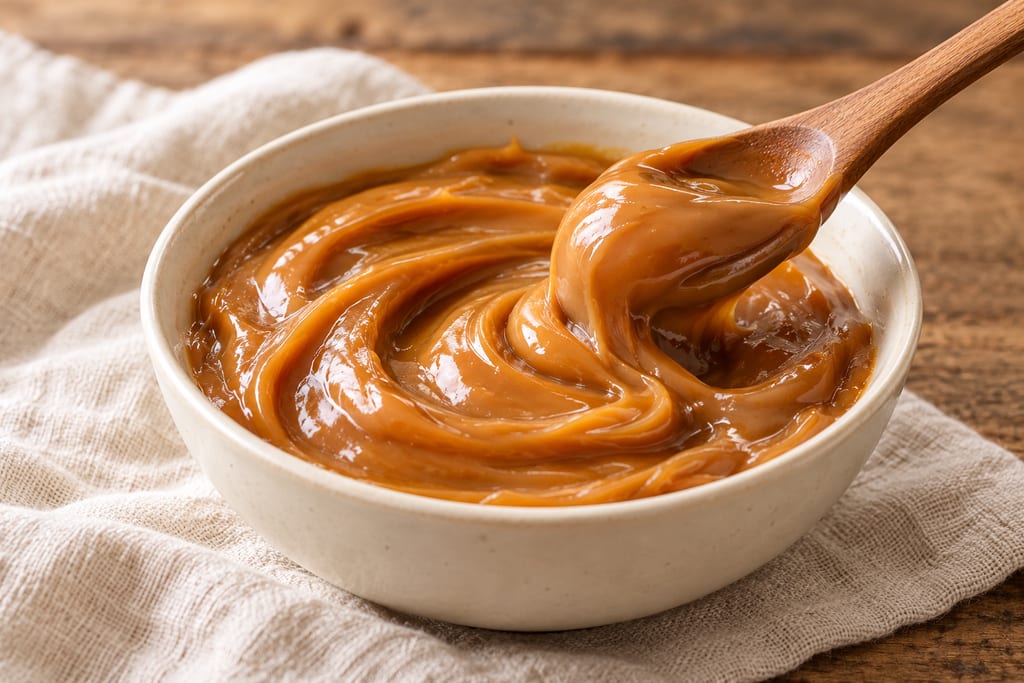
Dulce de leche and its relatives, including Mexican cajeta from goat's milk, are milk and sugar cooked slowly until thick and brown. The name changes across Latin America, and the browning gives each its character.
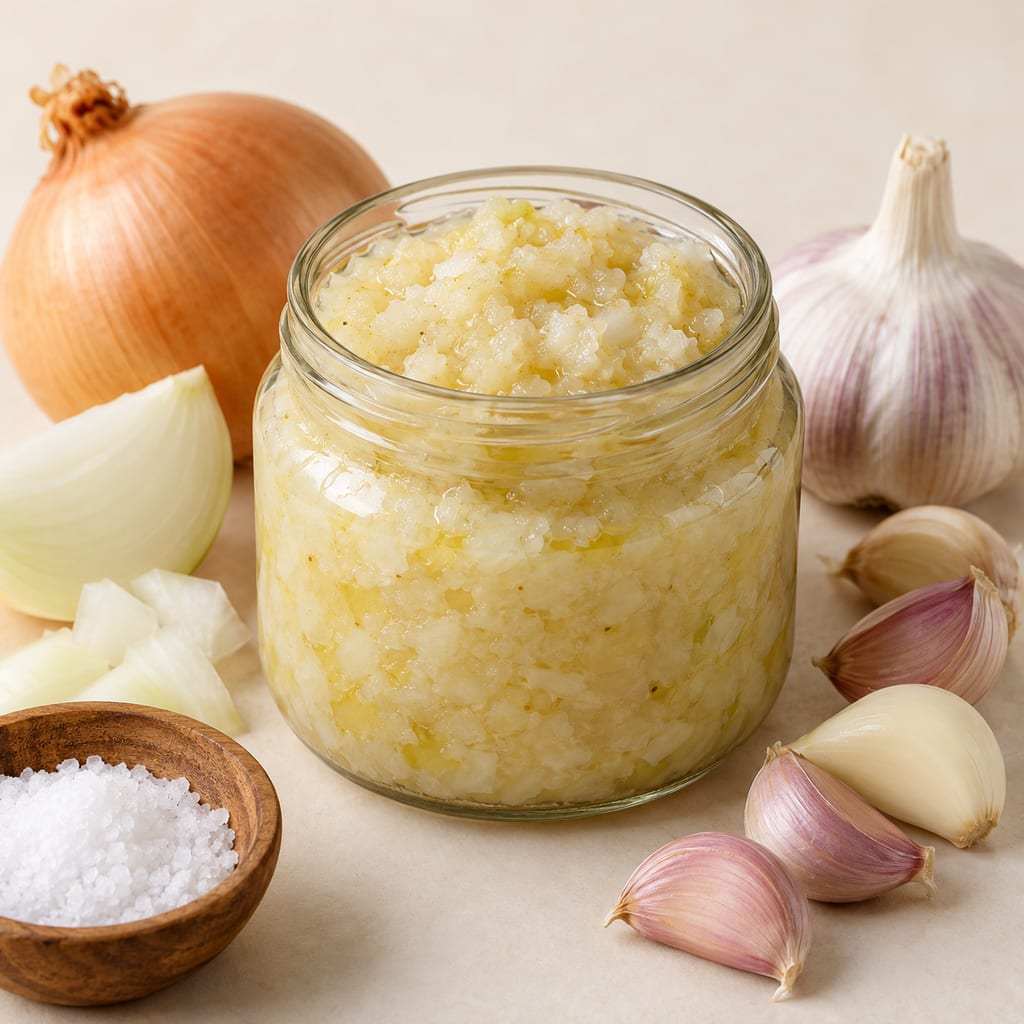
Tempero pronto is a fresh Brazilian paste of garlic, onion and salt, ground with oil and kept ready to start a dish. It is the Brazilian counterpart of sofrito and refogado.
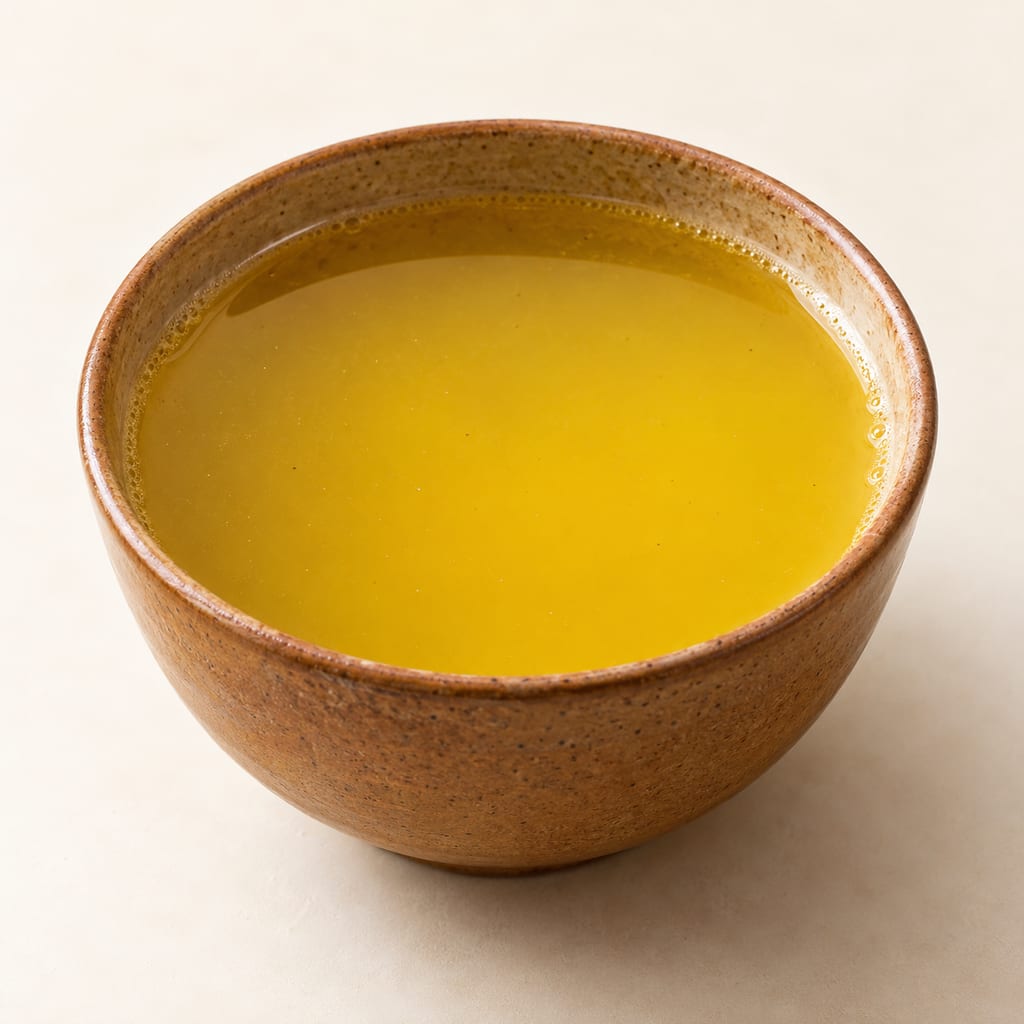
Tucupi is a yellow, sour liquid from the Brazilian Amazon, made from the juice of bitter manioc that is settled, fermented and cooked. It is the base of duck in tucupi and tacacá.
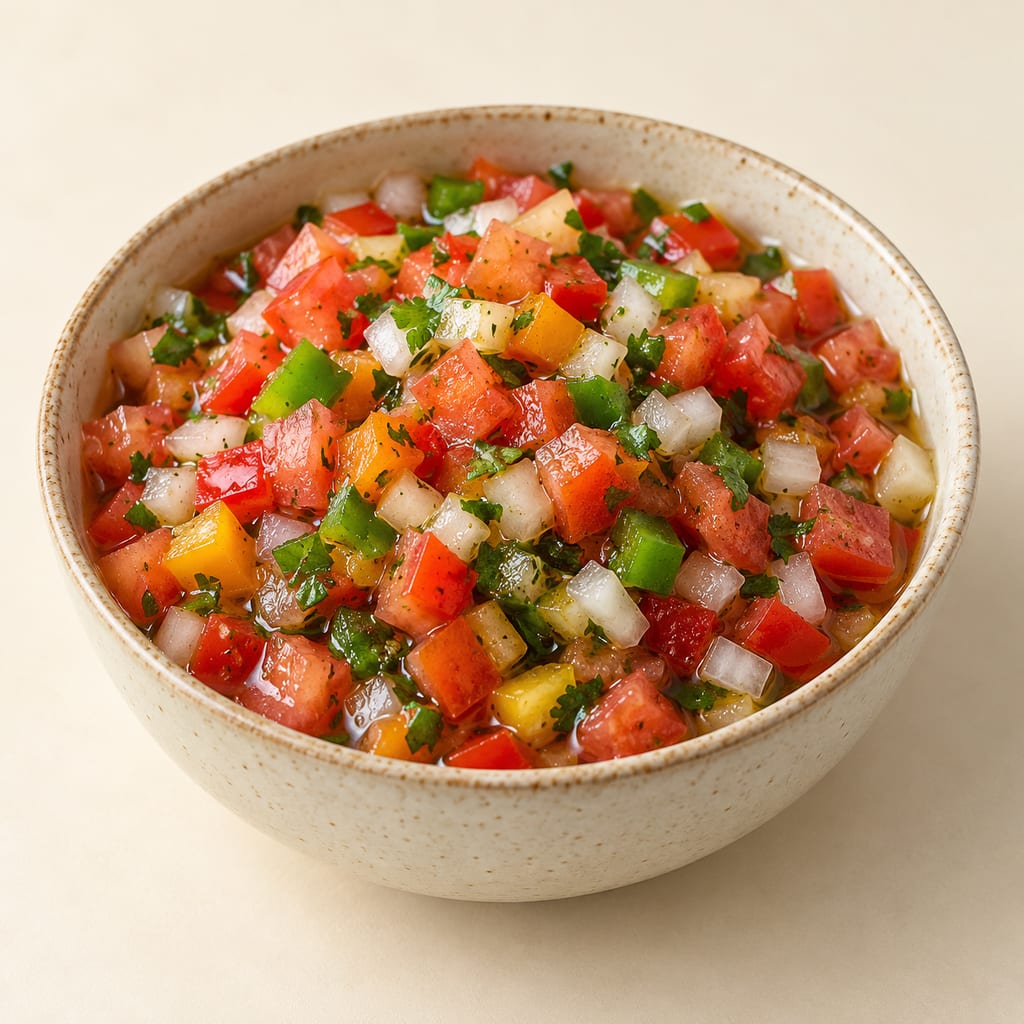
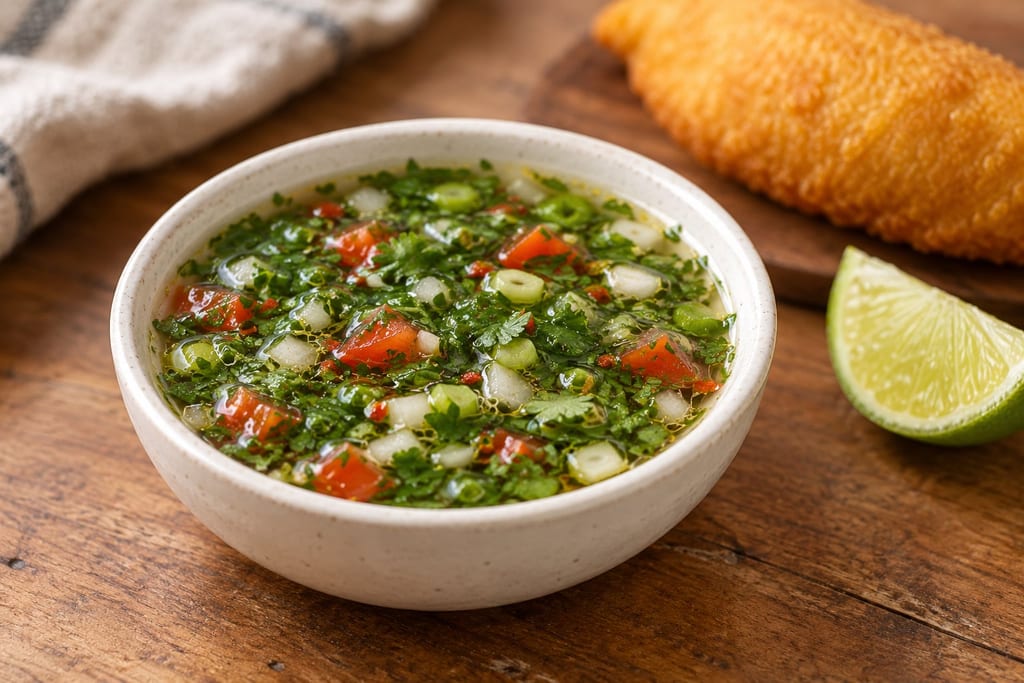
Vinagrete, also called molho à campanha, is a Brazilian relish of finely chopped tomato, onion and peppers dressed with vinegar and olive oil. It is served with grilled meat and feijoada.
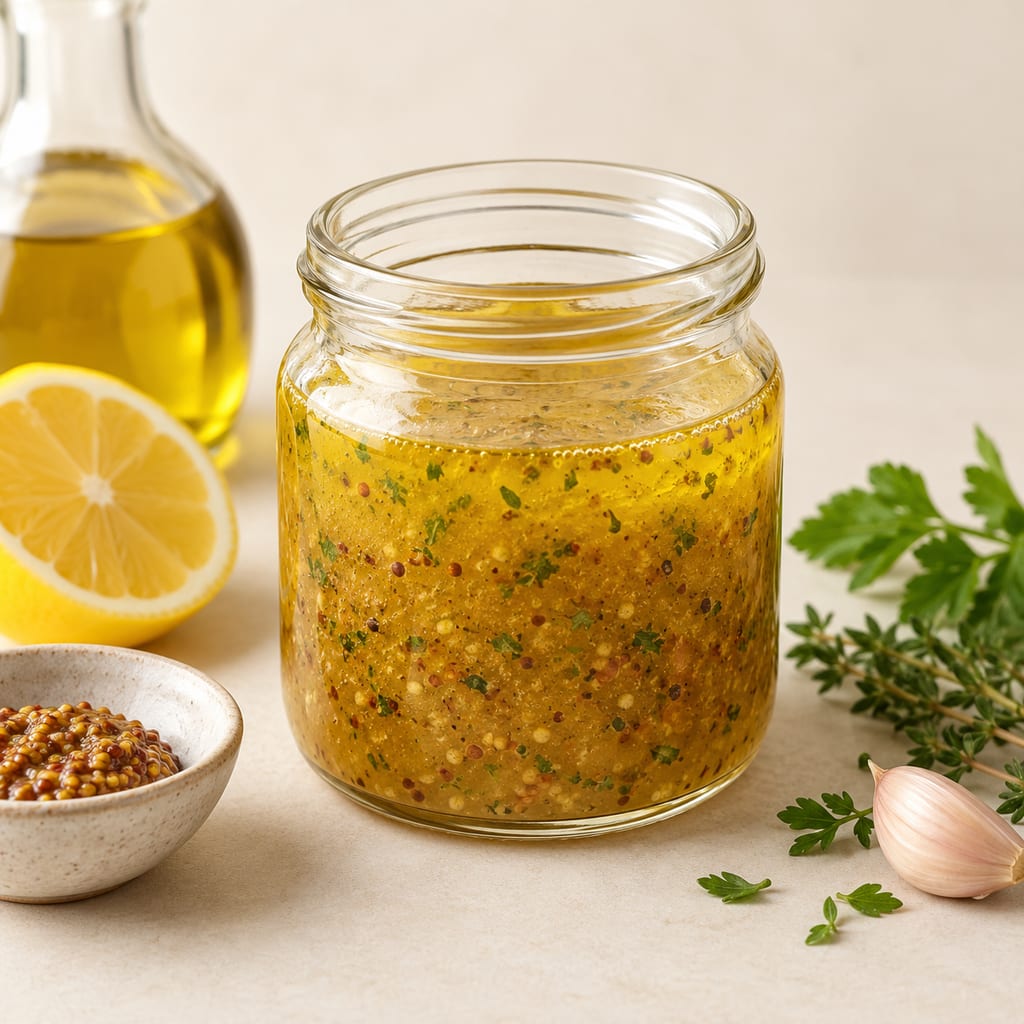
A dressing of edible oil whisked with a mild acid, usually vinegar or lemon juice, seasoned with salt, herbs and mustard, used on salads and as a marinade.
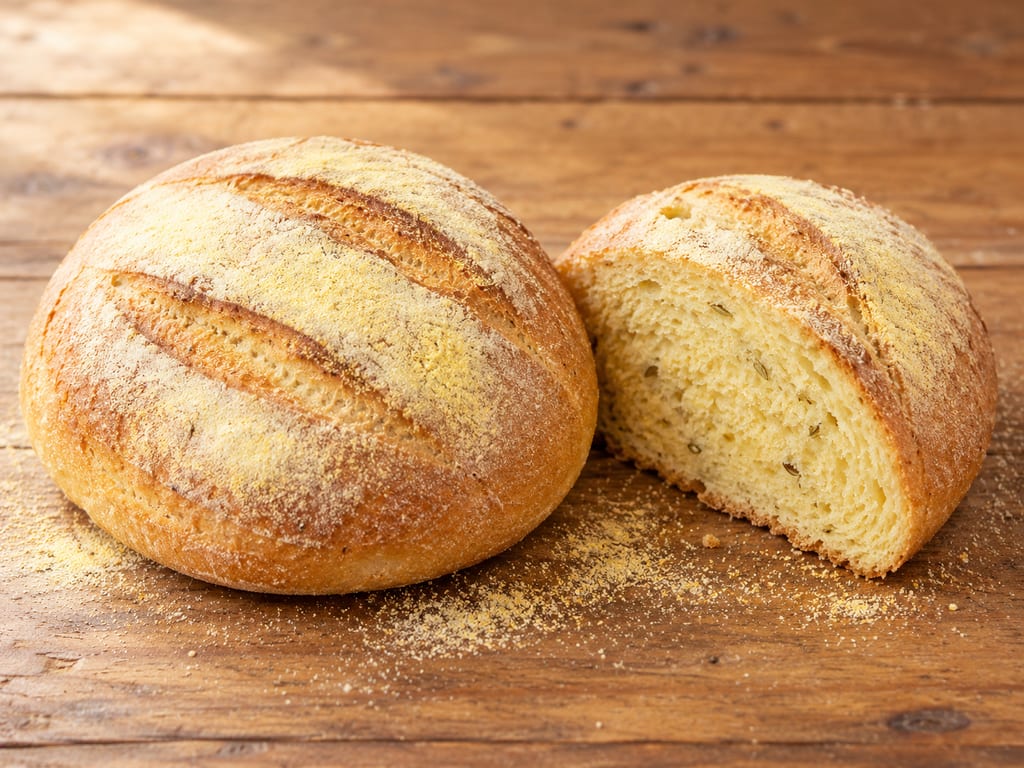
Brazilian broa de milho is a lightly sweet wheat-and-fine-maize bread with fennel and dry yeast, shaped into two small loaves for a Festa Junina or coffee break.
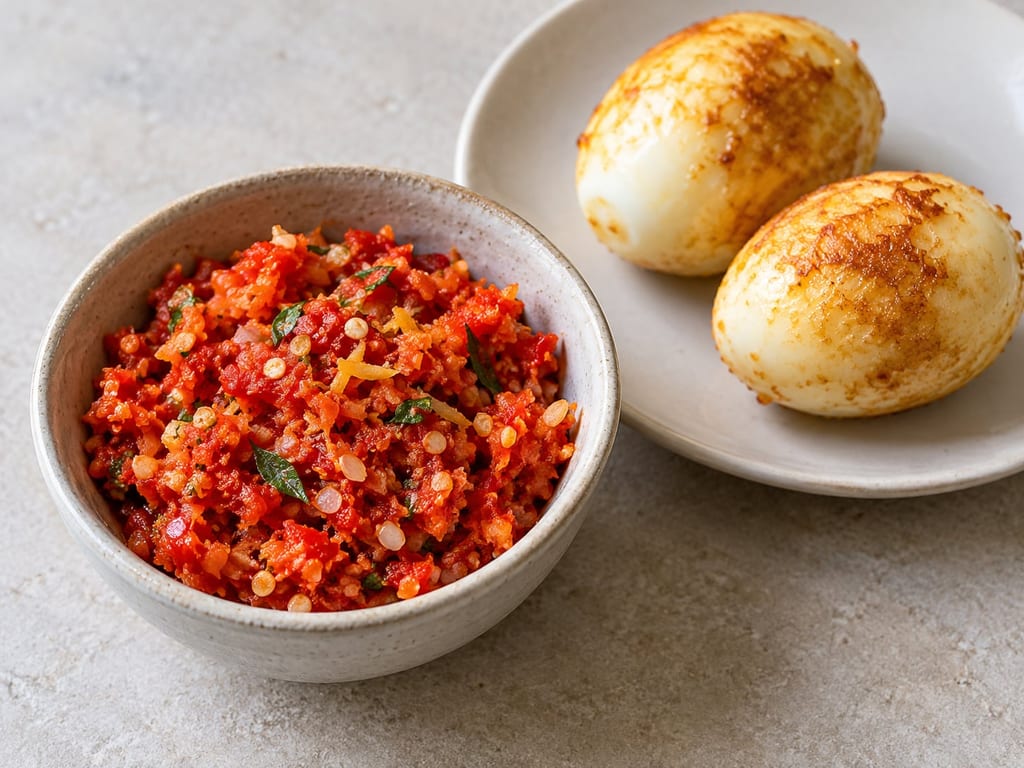
Ai-manas is described as a very hot chilli paste served with Timorese meals. One published version blends fresh chillies, shallots, garlic, Thai basil, ginger, lemon and salt, and serves it with eggs. Sources do not establish a standard formula, precise birthplace or earliest date.
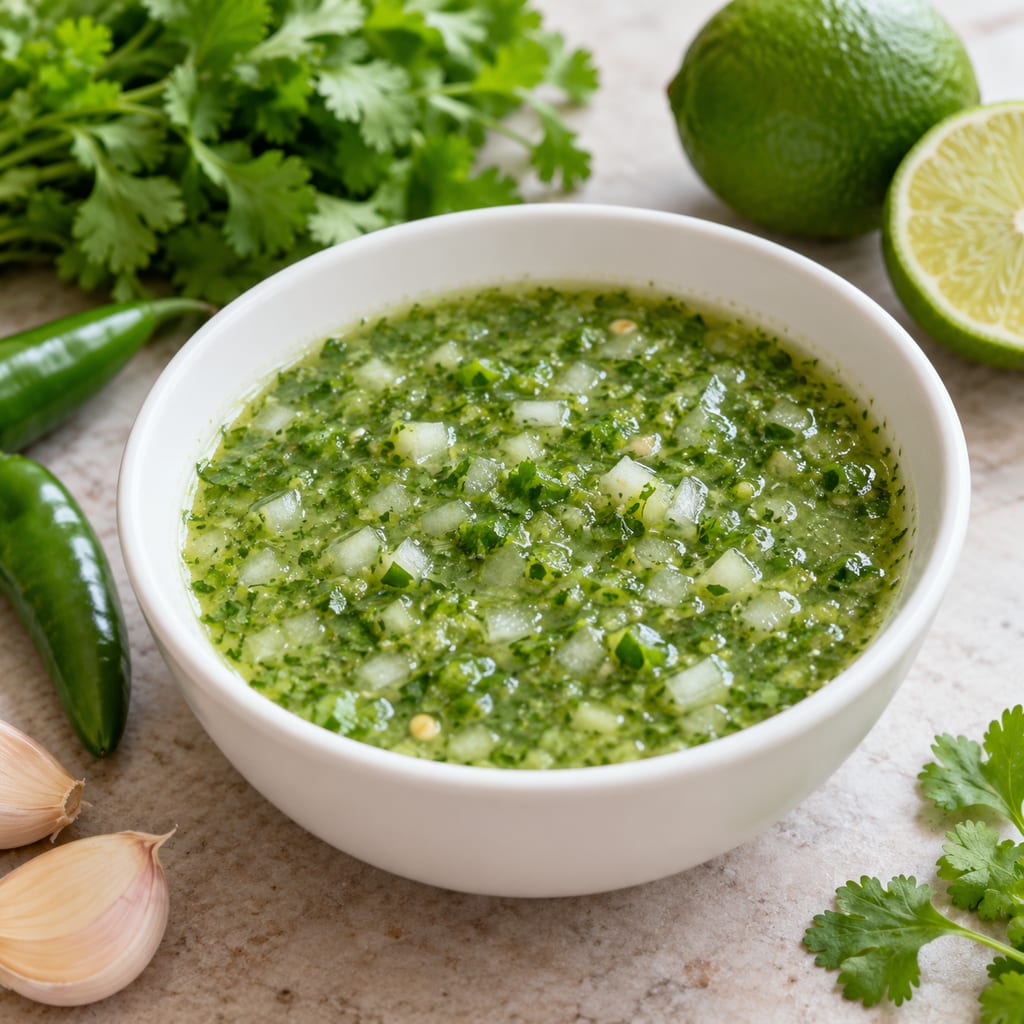
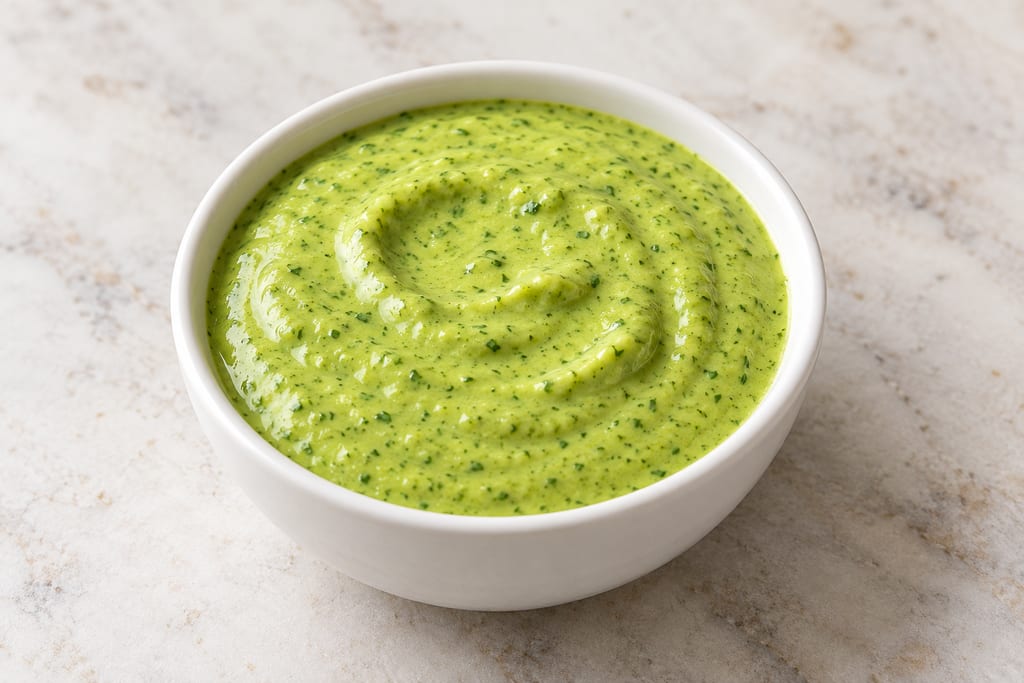
Ají verde is a Peruvian green sauce of coriander, chilli, onion and garlic in a mayonnaise or cheese base. It is best known through Peruvian restaurant cooking abroad.
Community
No community contributions have been published for this entry yet.
Share what you made
Sign in to contribute. Published comments and photos are free to read.
Safe canning times apply to the exact tested recipe and accompanying preparation procedure.
The Center explains that puréed or mashed vegetables can heat differently and that processing methods for pieces may not be safe when the product is puréed.
Cited in: Handling the peppers and keeping the sauce