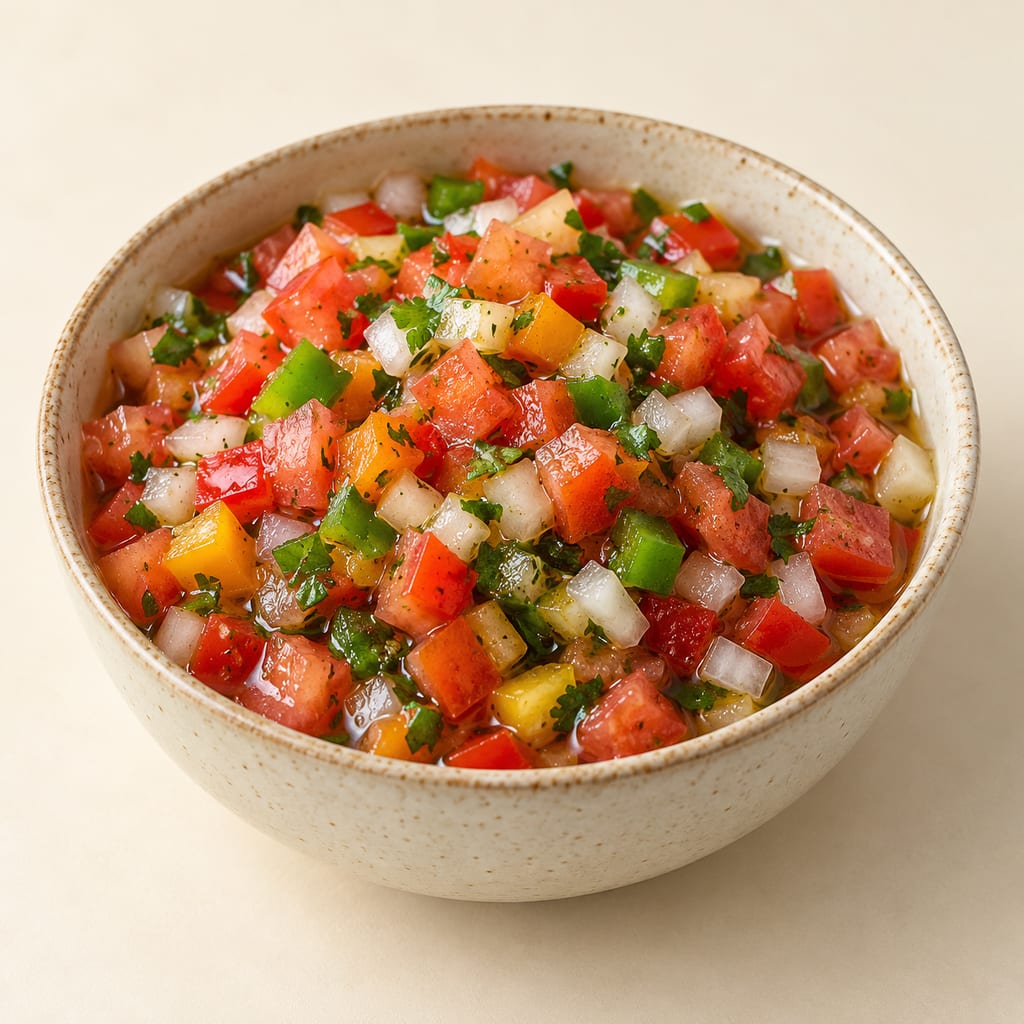
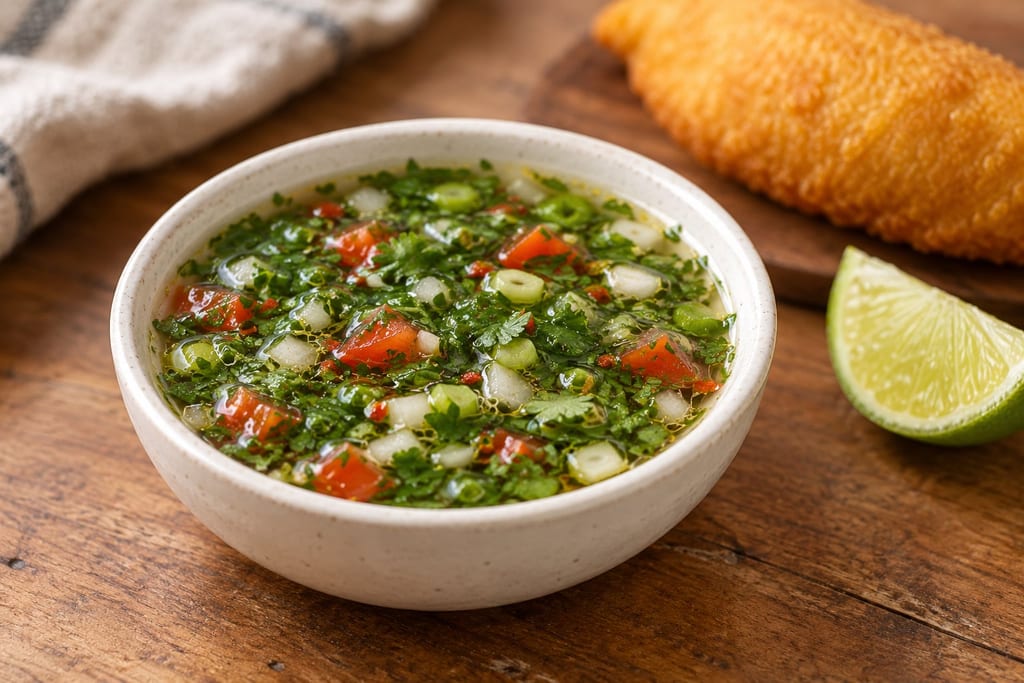
Vinagrete, also called molho à campanha, is a Brazilian relish of finely chopped tomato, onion and peppers dressed with vinegar and olive oil. It is served with grilled meat and feijoada.
Vinagrete is a relish of finely chopped tomato and onion, with green pepper and herbs, dressed with vinegar and olive oil. It is a condiment rather than a smooth dressing: the vegetables keep their shape and their juice, so the sauce is spooned over food and the pieces stay visible. In Brazil it is one of the most familiar companions of grilled meat.
Wikipedia calls it a typical Brazilian condiment and gives the alternative name molho à campanha. It usually accompanies salads, grilled meat, feijoada, pastel and roast chicken. The mixture is raw, and its acid and oil are what give it its sharpness and its glossy texture in the bowl.
Vinagrete and molho à campanha are used for the same tomato and onion relish in much of Brazil, but the names carry different histories. Popular accounts in the search results say molho à campanha is the name used most in Rio de Janeiro, where a public campaign has defended it, while vinagrete is the usual name in São Paulo and other states.
The French vinaigrette is an oil and vinegar emulsion without vegetables. The Brazilian relish is a chopped vegetable condiment. That difference is the reason the English word vinaigrette misleads: a reader who expects a smooth dressing will find a bowl of chopped tomato and onion.
The origin of the name molho à campanha is disputed, and no authoritative historical source settles it. One account links it to the army, where the sauce is said to have fed soldiers and been prepared in field kitchens, which are called cozinhas de campanha. Another links it to the tropeiros, the drovers of the Campanha Gaúcha in southern Brazil. Wikipedia ties the name to the Campanha Ocidental of Rio Grande do Sul, but gives no citation for the claim.
Some popular accounts say the relish has roots in Mexican pico de gallo or Chilean pebre, and that it may have absorbed elements from them. These are comparisons, not documented origins. Other popular pages claim that the Romans or Greeks used a similar vinegar condiment, and those claims are not documented in the sources used here.
A Nestlé recipe gives the classic tomato version with two tomatoes, one onion, one green pepper, two tablespoons each of chopped parsley and green onion, three tablespoons of vinegar and six of olive oil, with a tablespoon of a stock concentrate. The method is to chop the vegetables finely, put everything into a bowl, mix and serve. The source suggests a firm tomato such as caqui and removes the seeds before chopping.
Formulas differ by region and household. Some versions use sweet peppers, others use parsley alone, and the source's list of variants includes mint, cider and pineapple versions. This page therefore treats the relish as a family of preparations rather than one fixed recipe.
Vinagrete is most often served with churrasco, the Brazilian barbecue, where it cuts through grilled beef, chicken and sausage. The same source lists feijoada, pastel, sandwiches, roast meat and salads, and suggests it with chicken fillet or grilled chicken with farofa.
A relish of this kind works because it is served cold beside hot meat, and the acid and the raw onion refresh the palate between bites. It is not usually cooked into the meat or used as a marinade.
The sources give no shelf life for vinagrete and no measured acidity. It is a raw relish and should be kept chilled and used within a short time, like other fresh salads. Smell and taste are not reliable checks for a stored batch.
Several questions are open: the true origin of the name, the regional spread of the vinegar-based relish, and the proportions that suit different tastes. The sources record the classic formula and the arguments about its name, and they do not settle either.
A commercial seasoning named in the recipe; optional in other versions
Method
Risks and precautions · Standard risk
Raw vegetables in oil and vinegar held too long
A raw, moist relish of chopped vegetables spoils like other fresh salads when held warm or for long periods. The sources give no tested shelf life.
Hazard source
Keep leftover vinagrete chilled and do not leave it out at room temperature for long
Control source
No source gives a storage life for the relish.
Smell and taste are not reliable checks of a stored batch.
Chop the tomatoes, onion and green pepper finely, removing the seeds from the tomatoes.
Put the vegetables, parsley and green onion into a bowl.
Add the vinegar and the olive oil, and the stock concentrate if used.
Mix well and serve. Some versions rest for a short time before serving so the flavours join, and the source for the mint variant gives about 20 minutes in the refrigerator.
Conditions
Active time10 min
Places
Brazil
Traditional use · Country evidence
Described as a typical Brazilian condiment; the sources do not fix a single state or city as its origin.
Dulce de leche and its relatives, including Mexican cajeta from goat's milk, are milk and sugar cooked slowly until thick and brown. The name changes across Latin America, and the browning gives each its character.
A Brazilian table sauce made from hot peppers, most often dedo-de-moça, cooked briefly with onion, garlic and vinegar and then blended smooth. Household versions differ widely.
Tempero pronto is a fresh Brazilian paste of garlic, onion and salt, ground with oil and kept ready to start a dish. It is the Brazilian counterpart of sofrito and refogado.
Tucupi is a yellow, sour liquid from the Brazilian Amazon, made from the juice of bitter manioc that is settled, fermented and cooked. It is the base of duck in tucupi and tacacá.
A dressing of edible oil whisked with a mild acid, usually vinegar or lemon juice, seasoned with salt, herbs and mustard, used on salads and as a marinade.
Brazilian broa de milho is a lightly sweet wheat-and-fine-maize bread with fennel and dry yeast, shaped into two small loaves for a Festa Junina or coffee break.
Ai-manas is described as a very hot chilli paste served with Timorese meals. One published version blends fresh chillies, shallots, garlic, Thai basil, ginger, lemon and salt, and serves it with eggs. Sources do not establish a standard formula, precise birthplace or earliest date.
Ají verde is a Peruvian green sauce of coriander, chilli, onion and garlic in a mayonnaise or cheese base. It is best known through Peruvian restaurant cooking abroad.
Community
No community contributions have been published for this entry yet.
Share what you made
Sign in to contribute. Published comments and photos are free to read.
A typical Brazilian condiment also called molho à campanha
Accompanies salads, grilled meat, feijoada, pastel and roast chicken
Naming claim about Campanha Ocidental in Rio Grande do Sul is uncited
Cited in: A chopped tomato and onion relish; Two names for one sauce; Where the name comes from; Serving it with grilled food; Storage and open questions