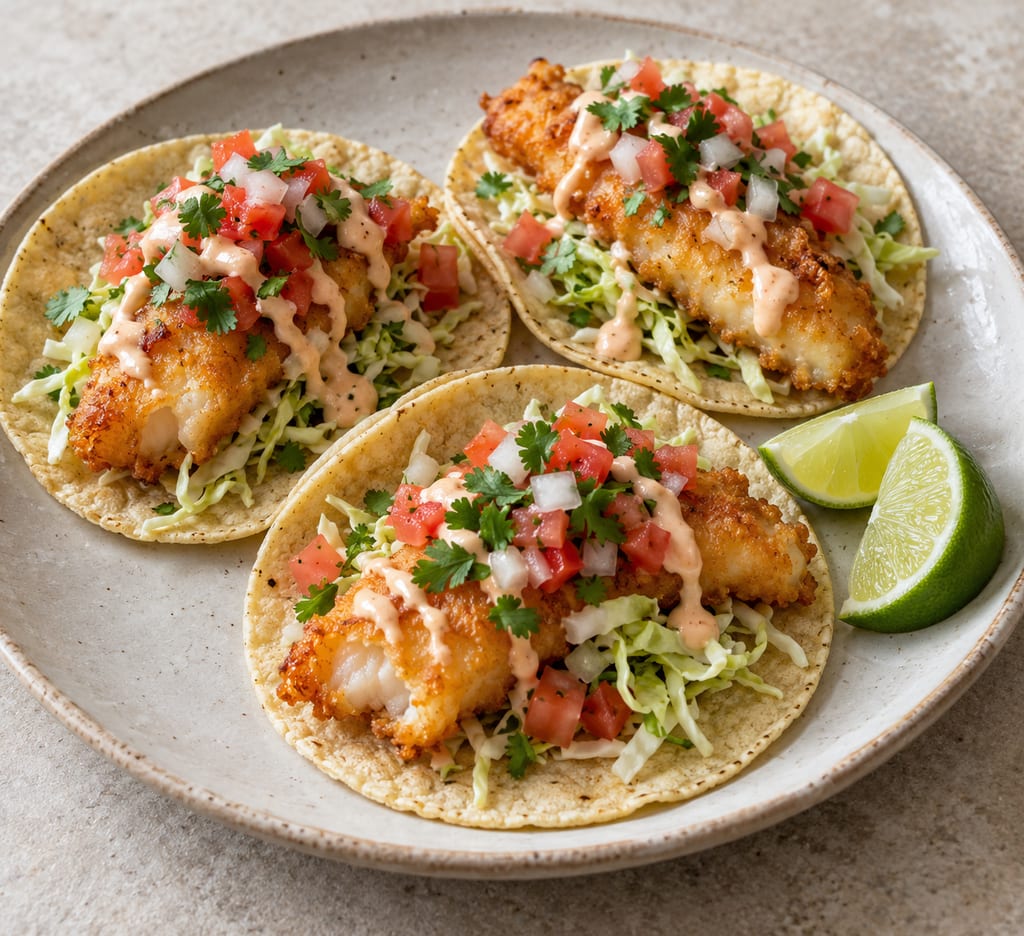
Baja-style fish tacos
Crisp battered white fish in warm corn tortillas with shredded cabbage, lime and fresh salsa. This home version draws on the Ensenada style without claiming to be a definitive historic formula.
 FermenteaWhere food goes to change
Caesar salad dressing
A source-specific Caesar dressing made with pasteurized egg yolks, Parmesan, lemon, anchovy, garlic, mustard and olive oil. This modern Vitamix formulation is distinct from the salad’s disputed 1924 origin accounts.
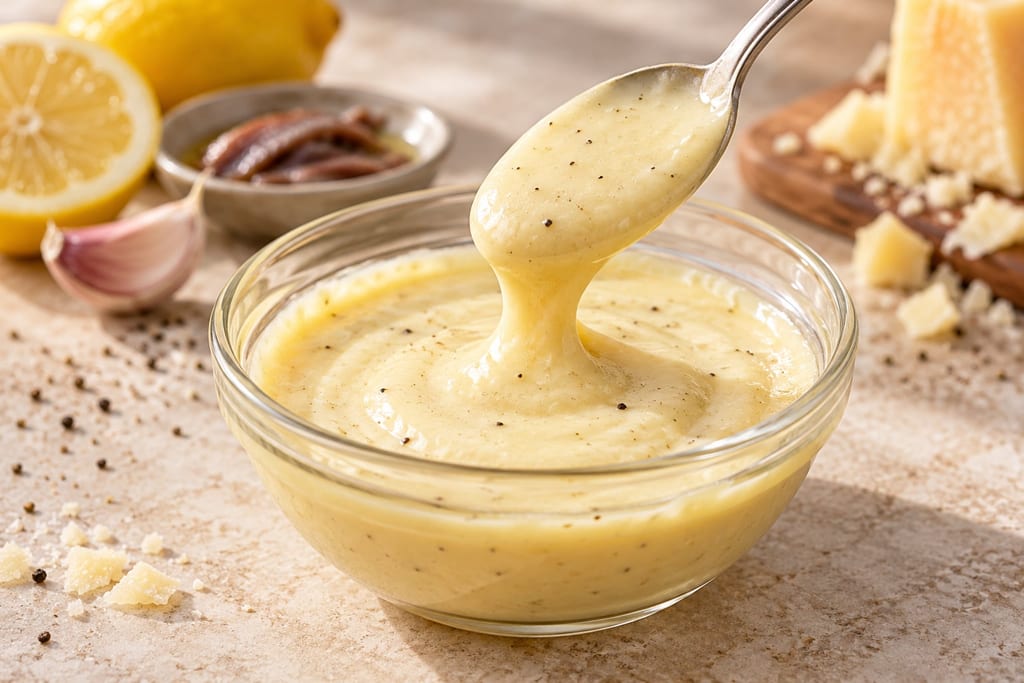
Caesar dressing is a rich, savoury emulsion of egg and oil, sharpened with lemon and given depth by Worcestershire, garlic and Parmesan. It clings to crisp romaine leaves and is the dressing that defines the salad of the same name.
Its flavour structure is distinct from ranch or Thousand Island. Garlic, cheese and a fish note carry the dressing, and citrus lifts it, rather than dairy tang or sweet relish.
Caesar Cardini ran restaurants in San Diego and, after Prohibition halted alcohol sales in the United States from 1920, opened one in Tijuana across the border. On July 4, 1924 the kitchen was overwhelmed by a holiday rush and short of supplies, and the salad was assembled from what was left. Cardini's daughter Rosa described the table-side tossing that followed.
The restaurant still operates in Tijuana, and the 100th-anniversary coverage describes it selling about 300 Caesar salads a day.
Not every account gives Cardini the credit. Some attribute the recipe to his brother Alex, whose version was called Aviator's Salad. Others credit chef Livio Santini, whose mother's recipe may have inspired the dish. The sources do not settle the question beyond the documented 1924 date and place, and this record gives Cardini's restaurant as the place of origin without claiming a single inventor.
This page now presents the measured Vitamix version rather than an unquantified generic dressing: blend the listed ingredients in the Vitamix container, starting at Variable 1 and slowly increasing to Variable 4, then blend for 20 seconds. The source specifies two large pasteurized egg yolks and a yield of 1¼ cups.
The FDA advises pasteurized shell eggs or pasteurized egg products for Caesar dressing served uncooked. This formulation uses pasteurized yolks as the source specifies. Refrigerate it in an airtight container and use within the source’s stated three to four days.
The dressing method and quantities here follow a modern Vitamix recipe; they are not presented as Caesar Cardini’s 1924 formulation. Historical attribution remains disputed in the sources summarized above.
Caesar Cardini is generally credited with the salad on July 4, 1924, at his restaurant in Tijuana, Mexico, when the kitchen was short of supplies on a holiday rush. Prohibition in the United States had pushed him to open across the border. Some accounts credit his brother Alex's Aviator's Salad or a recipe of chef Livio Santini's mother; a 2024 book backed Cardini's claim, according to Wikipedia.
Yield 1.25 cups · Scaling: source batch only
FDA lists Caesar salad dressing among foods that may contain raw or undercooked egg and recommends pasteurized shell eggs or pasteurized egg products for these recipes.
Hazard sourceUse only pasteurized shell eggs or pasteurized egg products for this dressing served uncooked; this recipe specifies pasteurized yolks.
Control sourceContains egg. Keep refrigerated in an airtight container and use within the source-stated three to four days.
The sources place the first salad at Caesar's restaurant in Tijuana; competing claims exist for the cook or inventor.
Crisp battered white fish in warm corn tortillas with shredded cabbage, lime and fresh salsa. This home version draws on the Ensenada style without claiming to be a definitive historic formula.
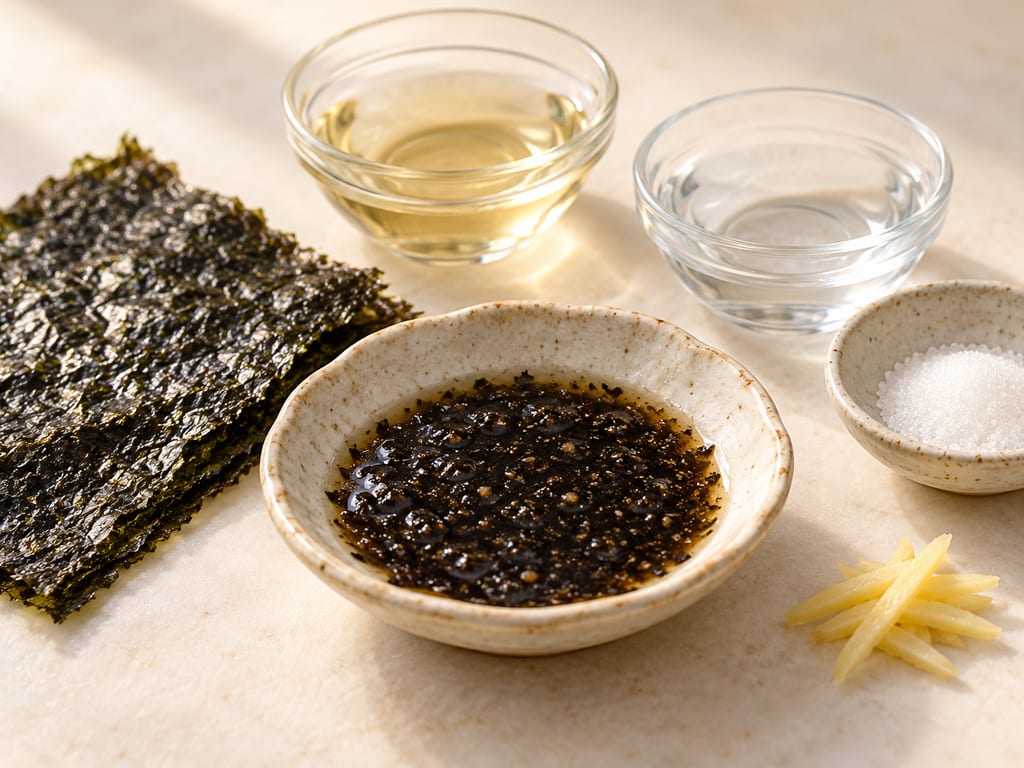
A fresh condiment in which crumbled nori softens in lightly sweetened vinegar and water. It is not vinegar fermented from seaweed.
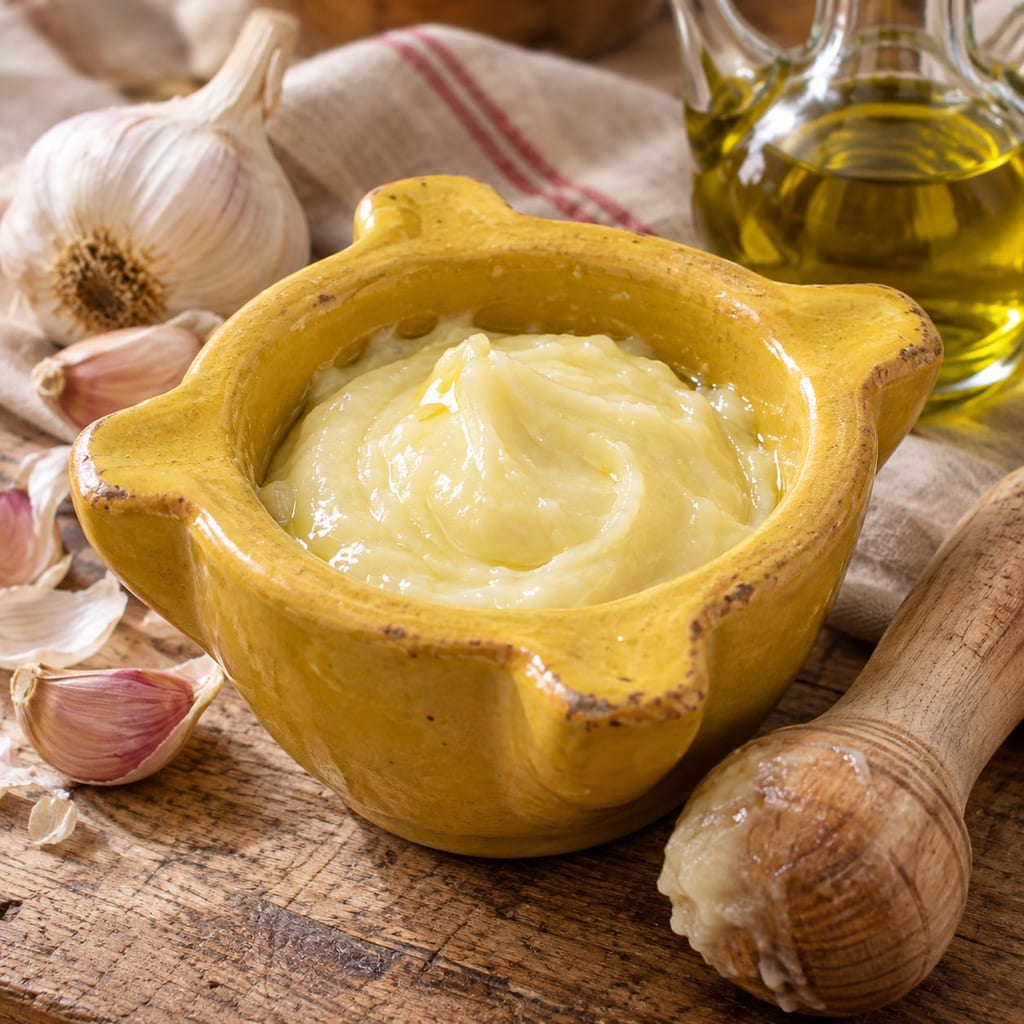
Traditional Catalan allioli is a dense emulsion of garlic, olive oil and salt made slowly in a mortar. This measured Barcelona-style version keeps egg-based garlic mayonnaise distinct.
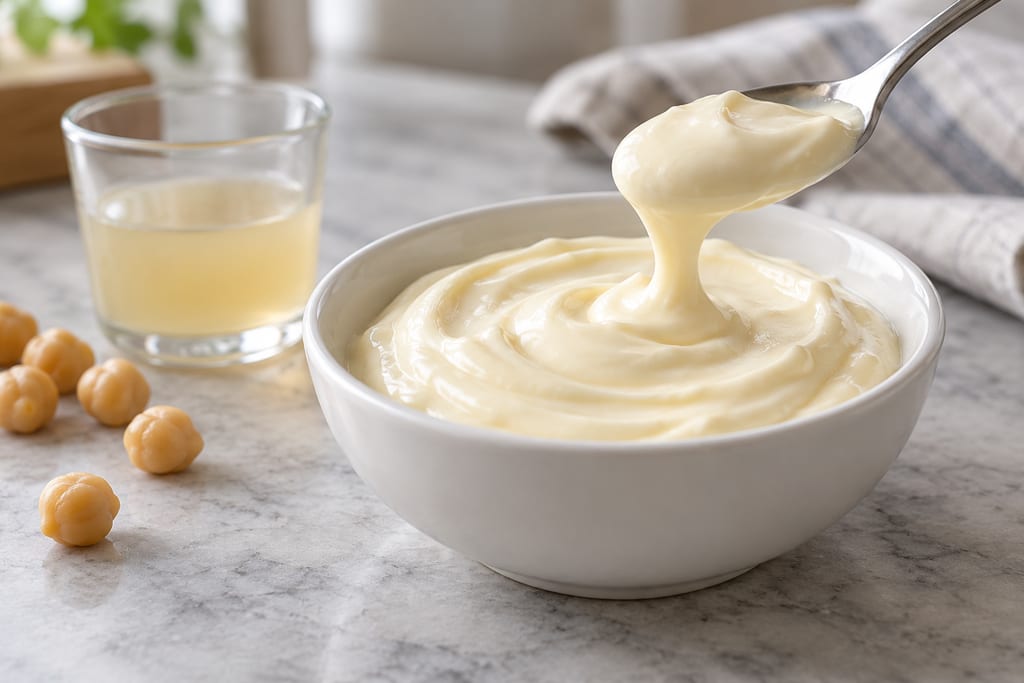
An eggless, untested emulsion made with canned chickpea liquid. Nominal yield 255 g.
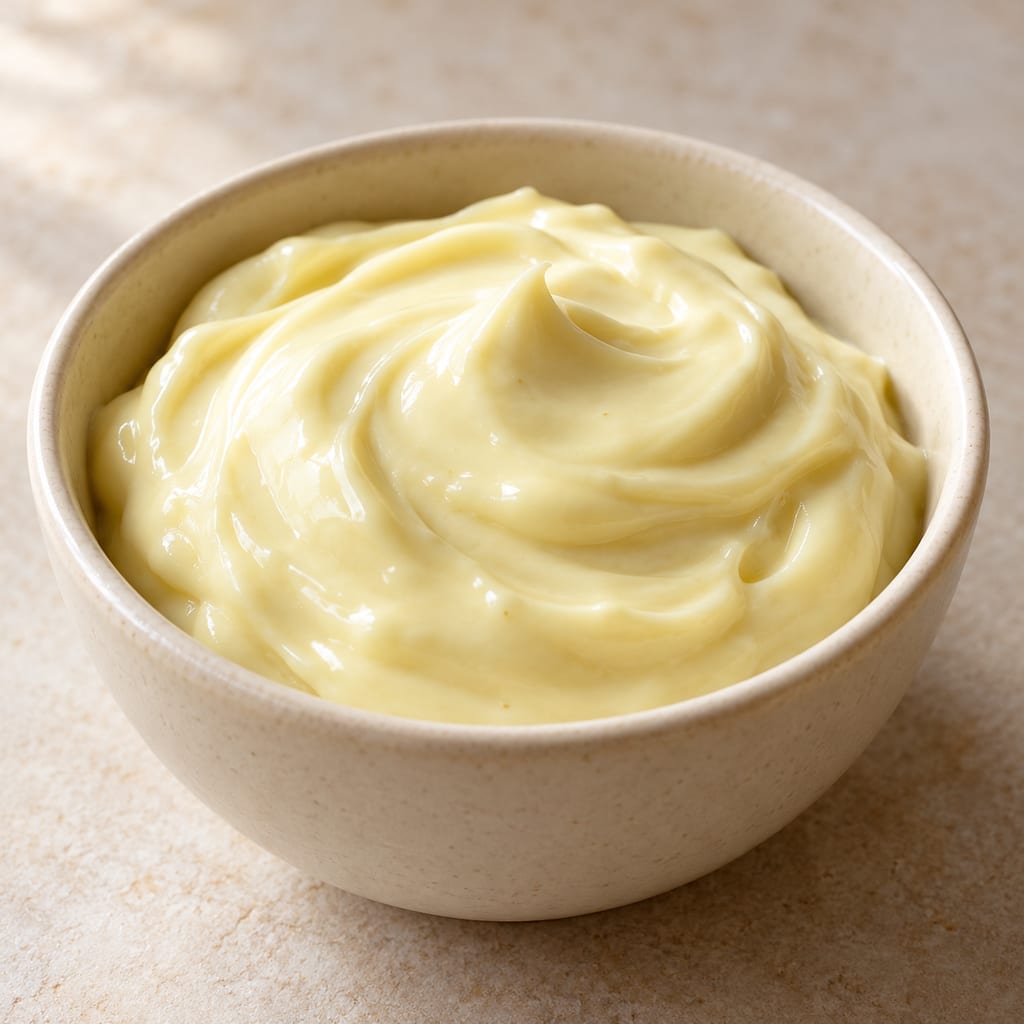
Avocado-oil mayonnaise is an ordinary egg-and-oil emulsion in which avocado oil supplies the oil phase. The oil changes flavour and colour, and it does not preserve the sauce.

Bechamel is a white sauce of milk thickened with a butter and flour roux, one of the French mother sauces, and the base from which Mornay and other cheese and cream sauces are made.
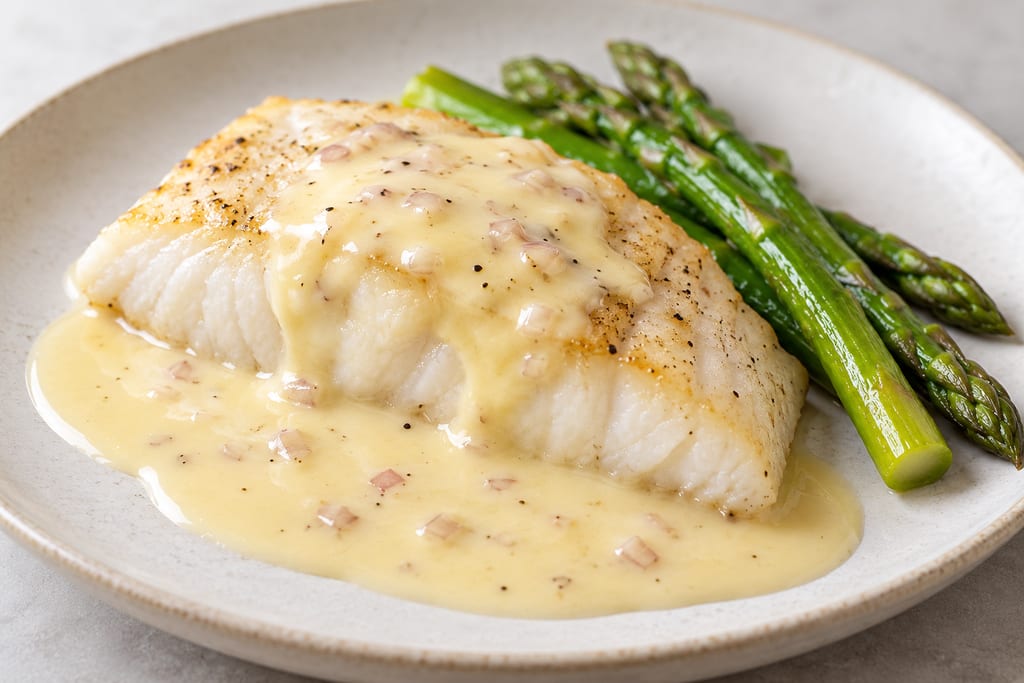
Beurre blanc is a warm emulsion of cold butter whisked into a reduction of white wine, vinegar or lemon juice and shallot, a sauce from the Loire Valley and its red-wine version, beurre rouge.
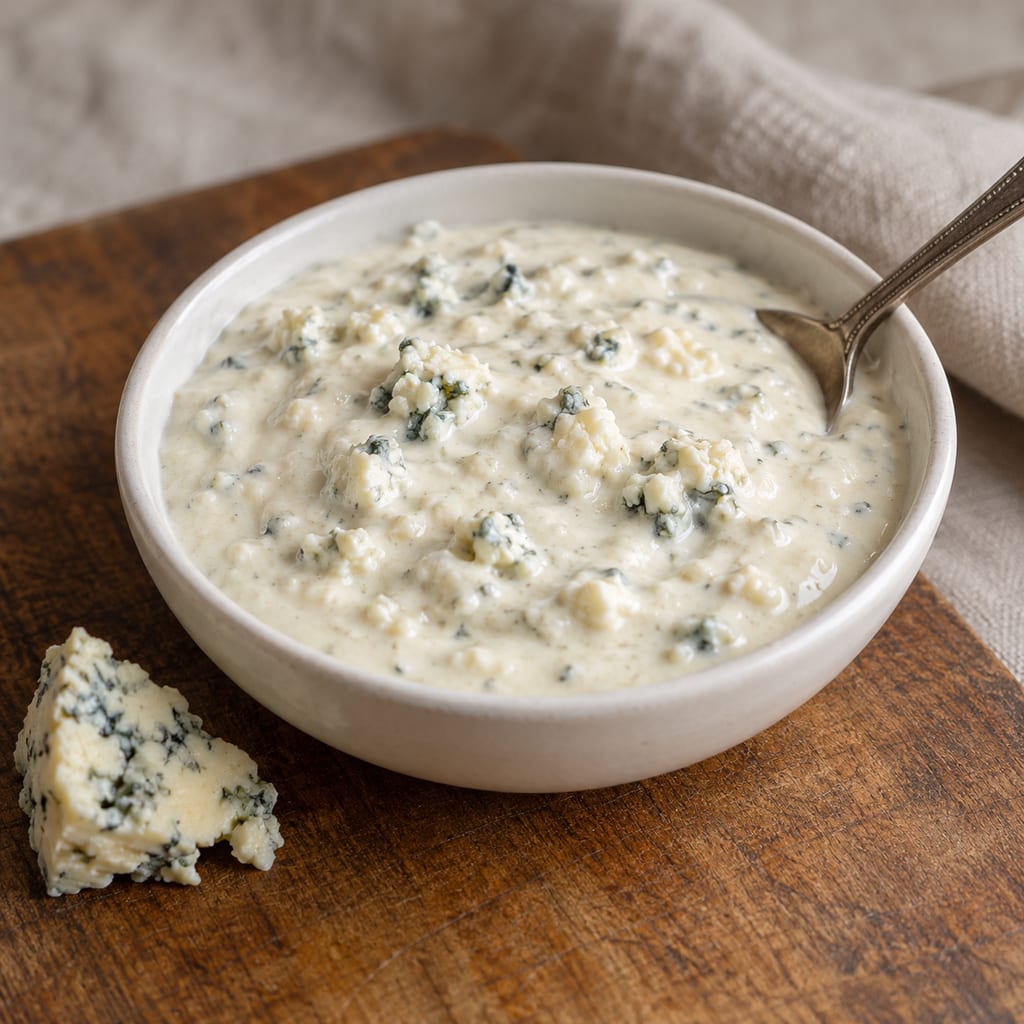
Blue cheese dressing is a creamy dressing built on crumbled blue cheese mashed into buttermilk, with sour cream, mayonnaise, vinegar and seasoning, and kept cold for up to two weeks.
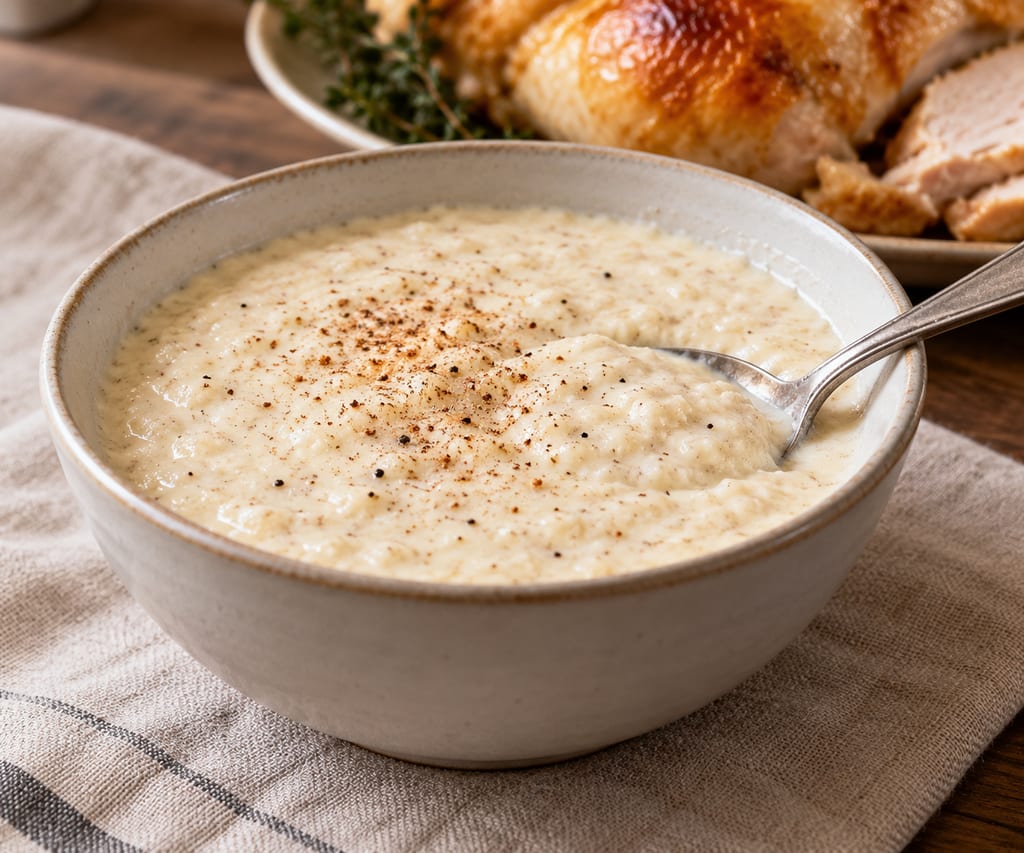
Bread sauce is a British sauce of milk infused with onion, clove and bay, thickened with stale breadcrumbs and finished with butter, served with roast chicken or turkey.

Soft, spreadable Calabrian pork sausage made with a great deal of red chilli and fatty pork, stuffed into natural casings, sometimes smoked and matured while staying soft.

A way to add independent temperature logging to an existing food dehydrator without changing its built-in controls or protections. It is a monitoring method, not a rewiring plan.

Pleurotus cystidiosus is the abalone mushroom, a cultivated oyster-type fungus with dark brown caps that grows more slowly and is more demanding than other Pleurotus species.

A dark, balanced vinegar from Emilia-Romagna made by combining cooked or concentrated grape must with wine vinegar, then acetifying and refining it in wood under a protected specification.

A living dairy inoculum that starts controlled cream fermentation, developing acidity and aroma before sour cream or cultured butter is finished.

A small electric incubator holds jars at a selected temperature for yogurt and other documented warm food preparations. Controls, capacity and vessel arrangement vary by model.

Adygean salt is a seasoned table salt associated with Adygea and the wider North Caucasian culinary tradition. Salt is blended with garlic and a variable selection of herbs and spices; the exact mix depends on the named style and maker.

The African Caesar-group mushroom, Amanita masasiensis, is a wild ectomycorrhizal species of central and southern African woodlands, eaten locally. The genus contains deadly poisonous species, so identification needs care.
No community contributions have been published for this entry yet.
Sign in to contribute. Published comments and photos are free to read.
WikipediaHistory
Caesar saladCompeting claims for the salad's origin: Caesar Cardini, his brother Alex (Aviator's Salad) and chef Livio Santini's mother.
Cited in: What it is; Competing claims; Notes
KTVU (AP syndicated)History
Caesar salad origins: Iconic dish, invented in Mexico, turns 100Caesar salad created on July 4, 1924 at Caesar's in Tijuana; Prohibition pushed Cardini across the border; the restaurant still operates.
Cited in: Tijuana and the 1924 salad
Food Network; recipe courtesy of VitamixSource recipe
Caesar Salad DressingThe source specifies a 1¼-cup yield, measured ingredients including two large pasteurized egg yolks, blending in a Vitamix for 20 seconds, and refrigeration in an airtight container for three to four days.
Cited in: Making it; Notes
U.S. Food and Drug AdministrationSafety
What You Need to Know About Egg SafetyFor recipes such as Caesar dressing in which eggs are raw or undercooked when served, use shell eggs treated to destroy Salmonella by pasteurization or use pasteurized egg products.
Cited in: Making it