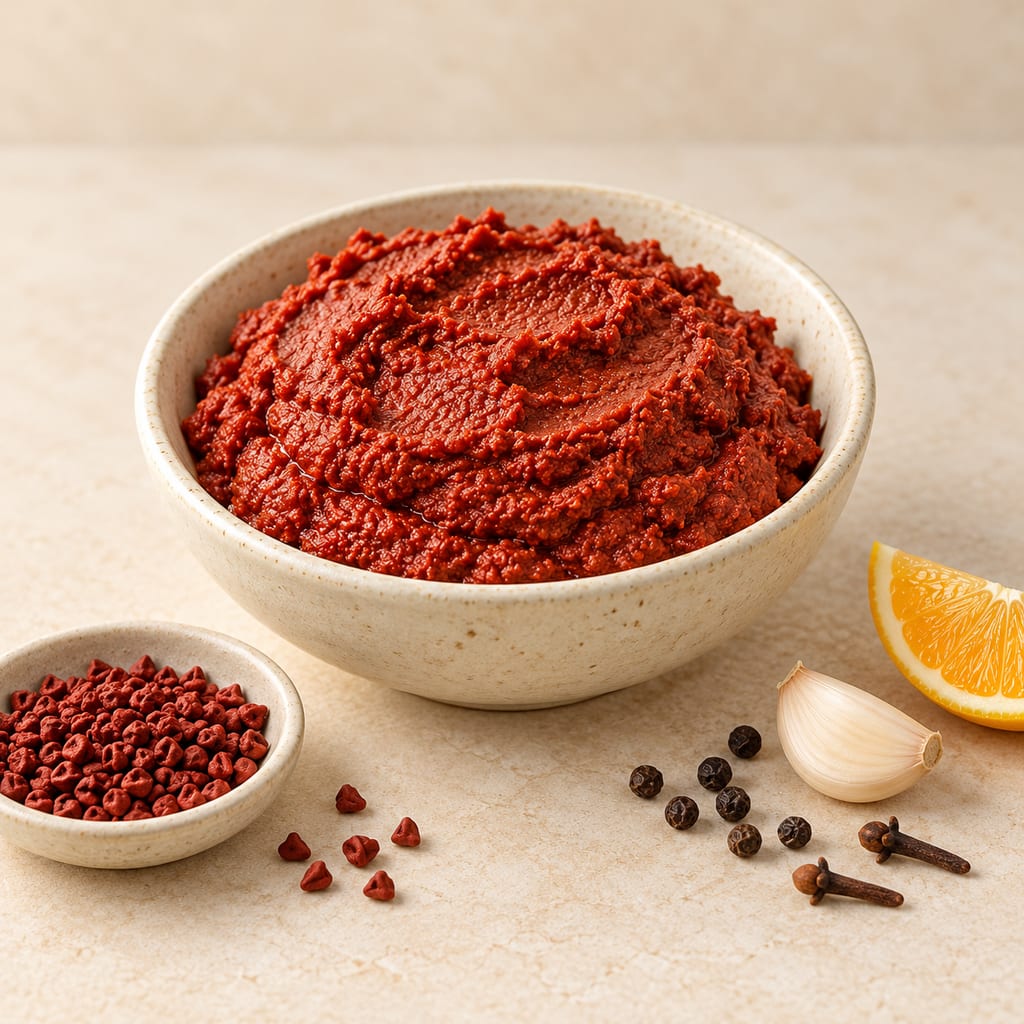
Achiote paste
A Yucatecan recado rojo is a brick-red seasoning paste built on annatto seed, garlic and sour orange. This measured home version shows one route into a much wider family of market and household recados.
 FermenteaWhere food goes to change
Traditional method
Green tomatillo salsa · Tomatillo salsa
The green Mexican sauce of tomatillos and green chiles, which may be raw, boiled or roasted before grinding. It is distinct from European herb-based green sauces.
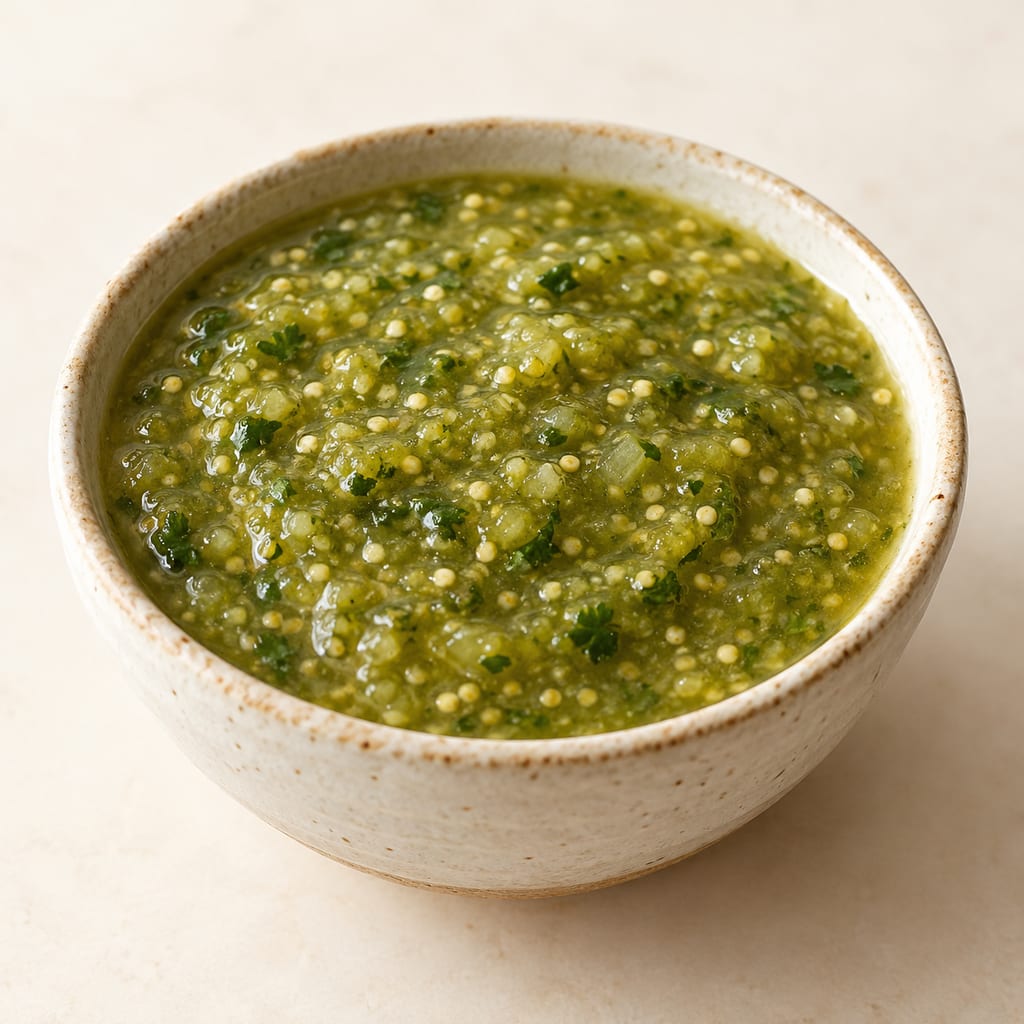
Salsa verde, the green sauce, is a Mexican sauce built on tomatillos and green chiles. The tomatillo is a husked fruit in the same family as the tomato, and its acidity and firm texture give the sauce its sharp green character. Wikipedia separates this Mexican sauce from the European herb-based green sauces, such as the parsley sauces of medieval Europe, and from the Italian sauces that share its name.
The article attributes the Mexican sauce to the Aztec Empire, citing the Spanish physician Francisco Hernández, who recorded it in his scientific expedition reports. The sources read do not date a particular preparation, so the page does not give a year for the first salsa verde.
Wikipedia describes four styles: cooked, where the ingredients are cooked and then ground; roasted, where they are roasted on a comal and then ground; raw, where they are ground and eaten uncooked; and a combination, where some ingredients are cooked and others are not. The choice changes the sauce. Cooking or roasting the tomatillos enhances their flavour and makes the sauce sweeter, and roasting is the route the article ties to a smokier and more concentrated result.
The sauce can also be fried briefly in a little oil after it is ground, a step the article mentions as an option. The grinding can be done in a molcajete or a blender.
The sauce is served with Mexican and Tex-Mex dishes, and Wikipedia names enchiladas and chicharrón, pork rinds, as typical partners. It is also one of the common Mexican salsas used as a dip or sauce, alongside the red salsa and the raw pico de gallo.
The dates of the boiled and roasted methods are not established by the sources read; a food-history source would be needed. Recipe blogs that date these methods were not used for this page.
Wikipedia dates the tomatillo salsa verde to the Aztec Empire, citing Francisco Hernández, and separates it from European herb-based green sauces.
The tomatillo-and-chile salsa is described as Mexican. Wikipedia notes that New Mexico's version is mostly green chile.
A Yucatecan recado rojo is a brick-red seasoning paste built on annatto seed, garlic and sour orange. This measured home version shows one route into a much wider family of market and household recados.
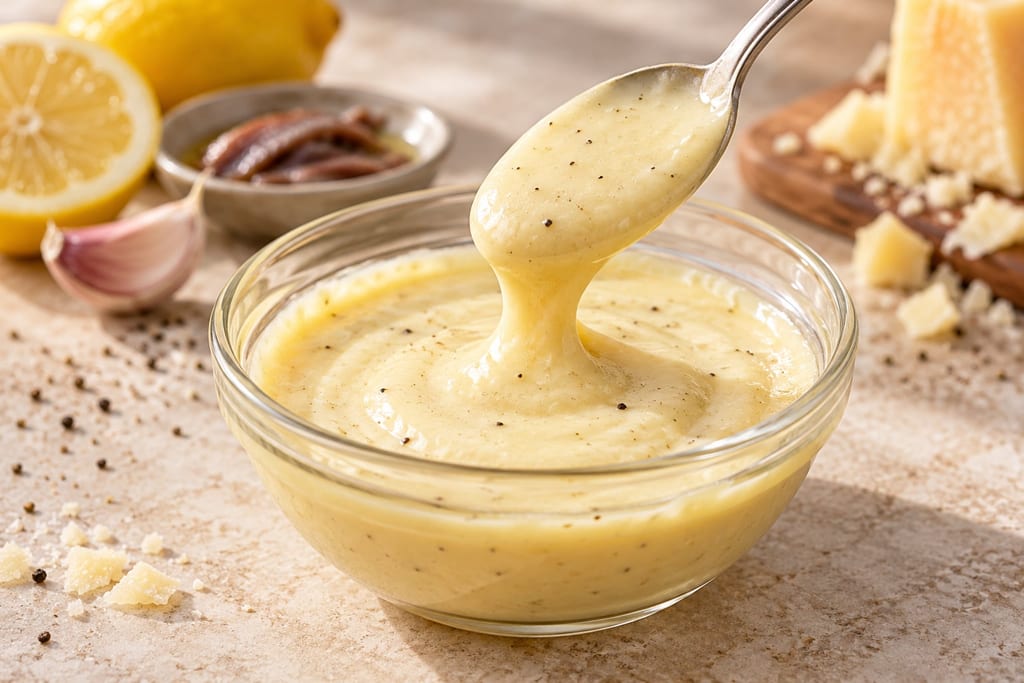
A source-specific Caesar dressing made with pasteurized egg yolks, Parmesan, lemon, anchovy, garlic, mustard and olive oil. This modern Vitamix formulation is distinct from the salad’s disputed 1924 origin accounts.
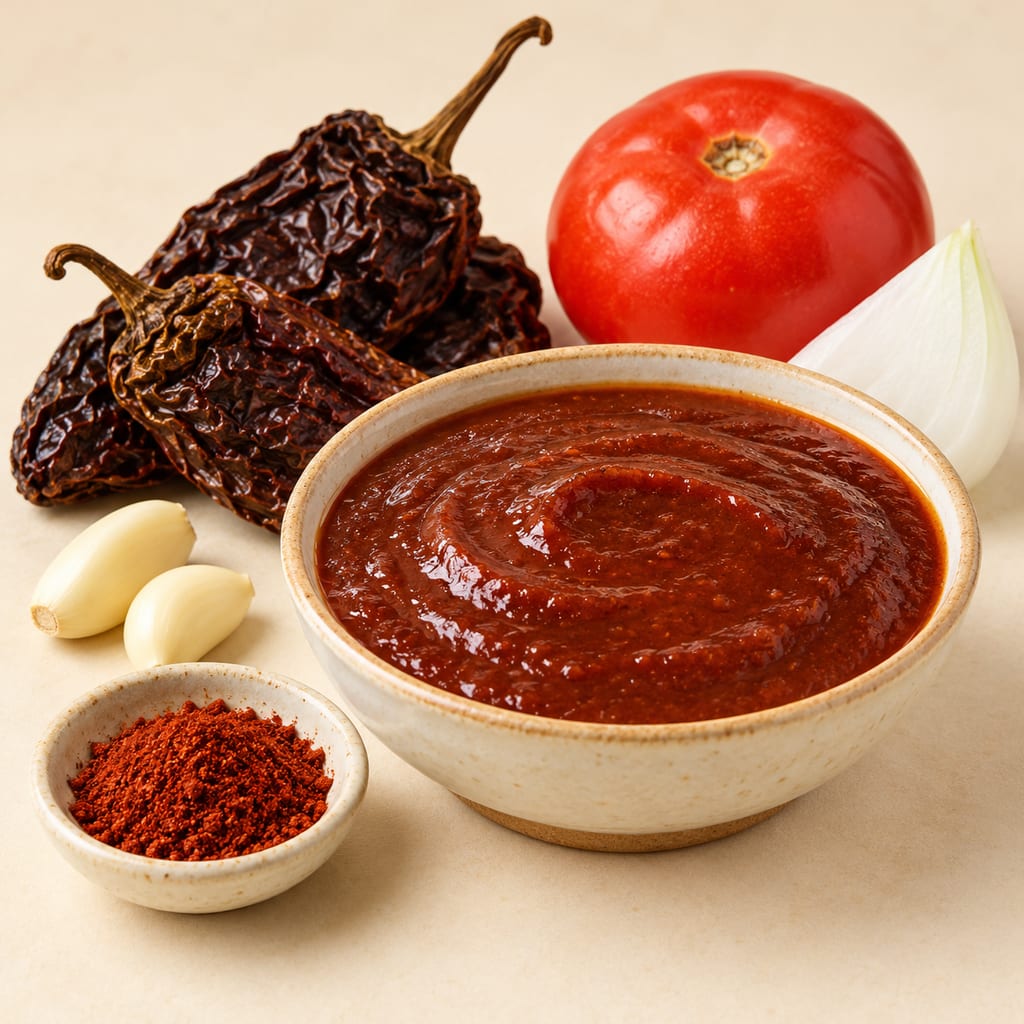
Chipotle adobo is a cooked sauce of smoked chipotle chiles, tomato, onion, garlic, dried chile powder, spices and vinegar, the form in which chipotles are most often sold in the United States.
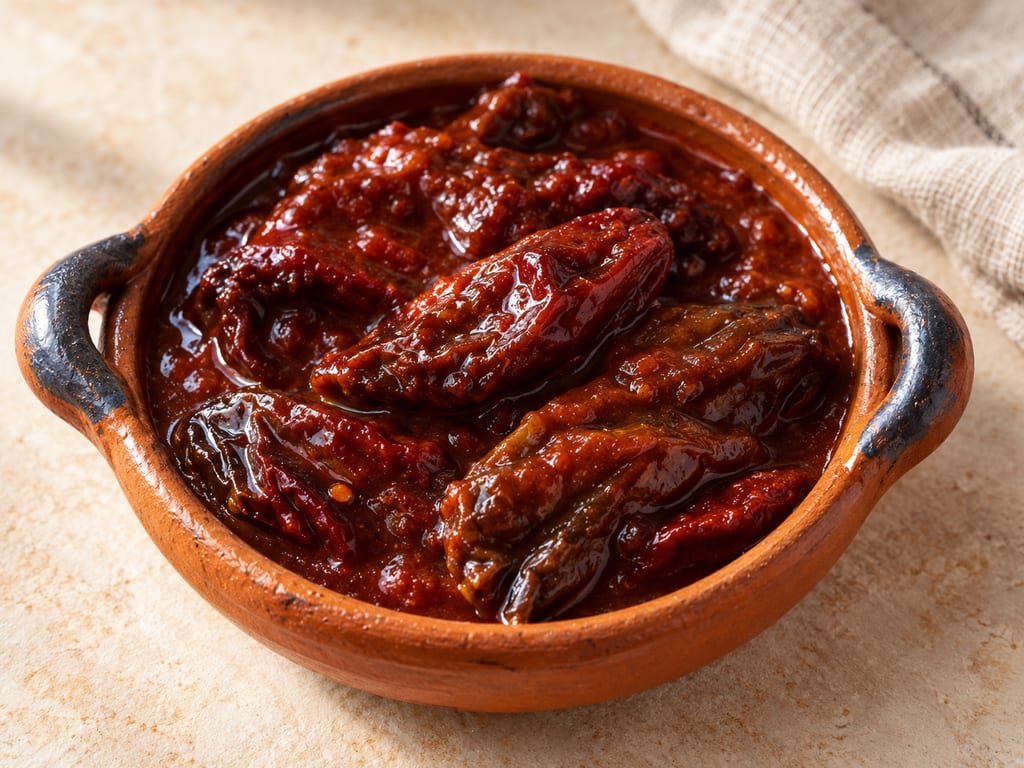
Whole smoked-dried chipotles simmer in a tomato, vinegar and spice adobo: a Mexican condiment with smoky heat and a sauce that seasons the chile as it softens.
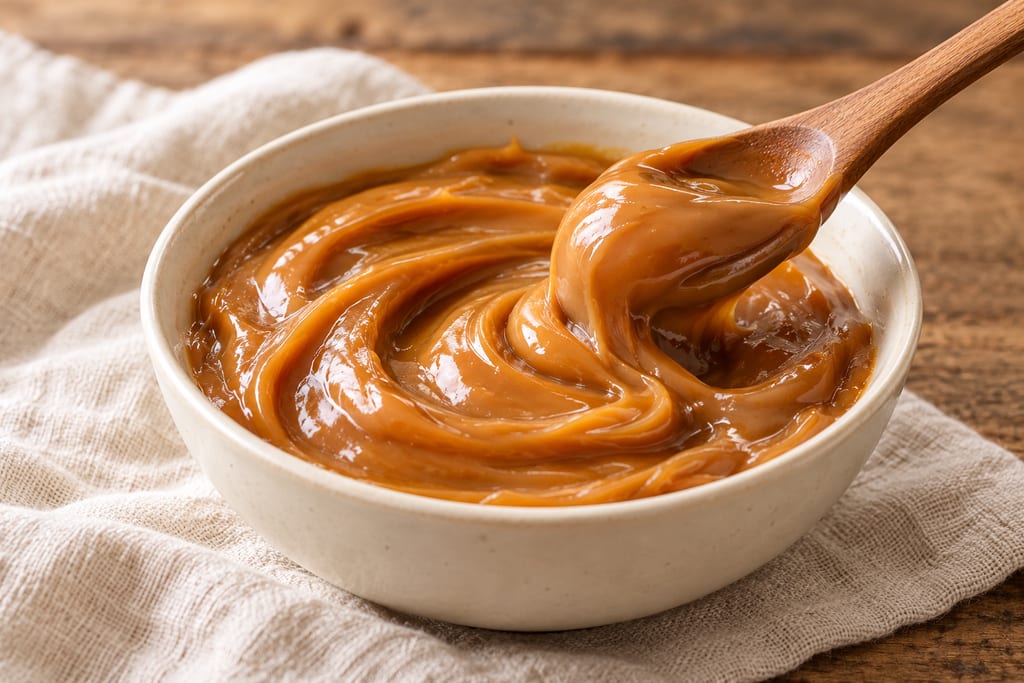
Dulce de leche and its relatives, including Mexican cajeta from goat's milk, are milk and sugar cooked slowly until thick and brown. The name changes across Latin America, and the browning gives each its character.
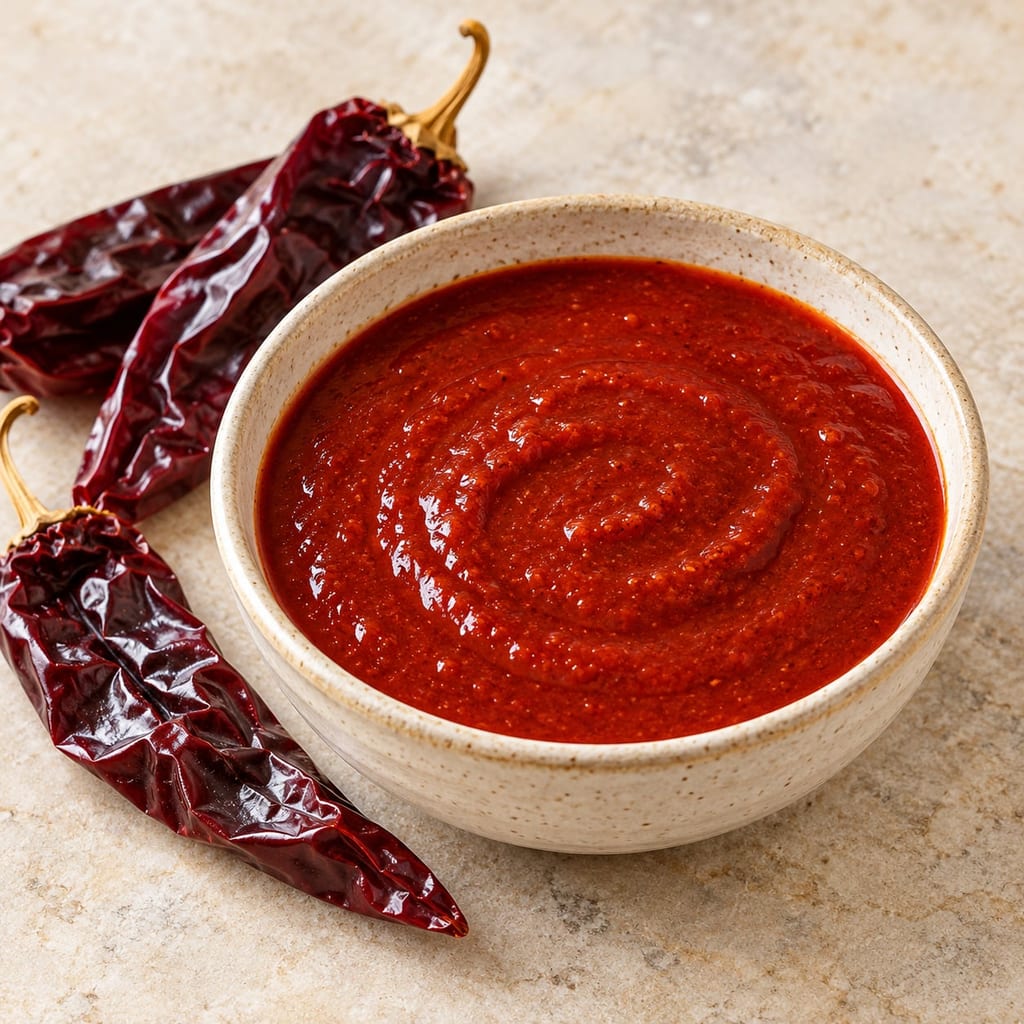
A Mexican sauce in which dried guajillo chiles, toasted and softened in hot water, supply most of the flavour. It is a family of dried-chile salsas, not a tomato sauce with chile added.
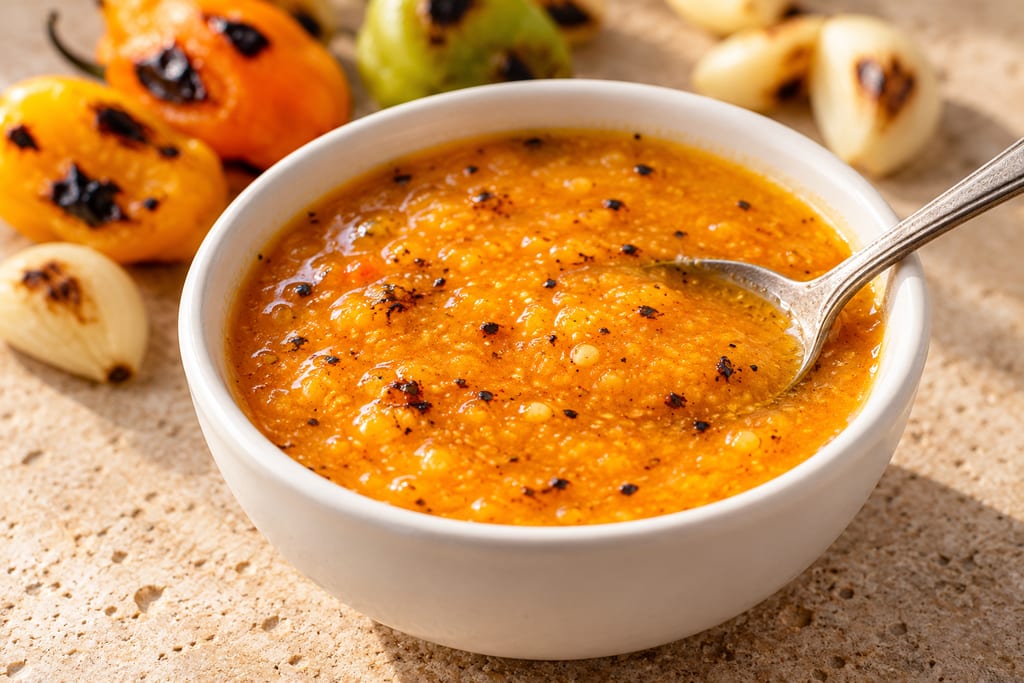
A hot, fruity chile sauce of the Yucatán, built on habanero peppers and often charred with garlic. It sits on the table as a condiment, and the recipes vary widely.
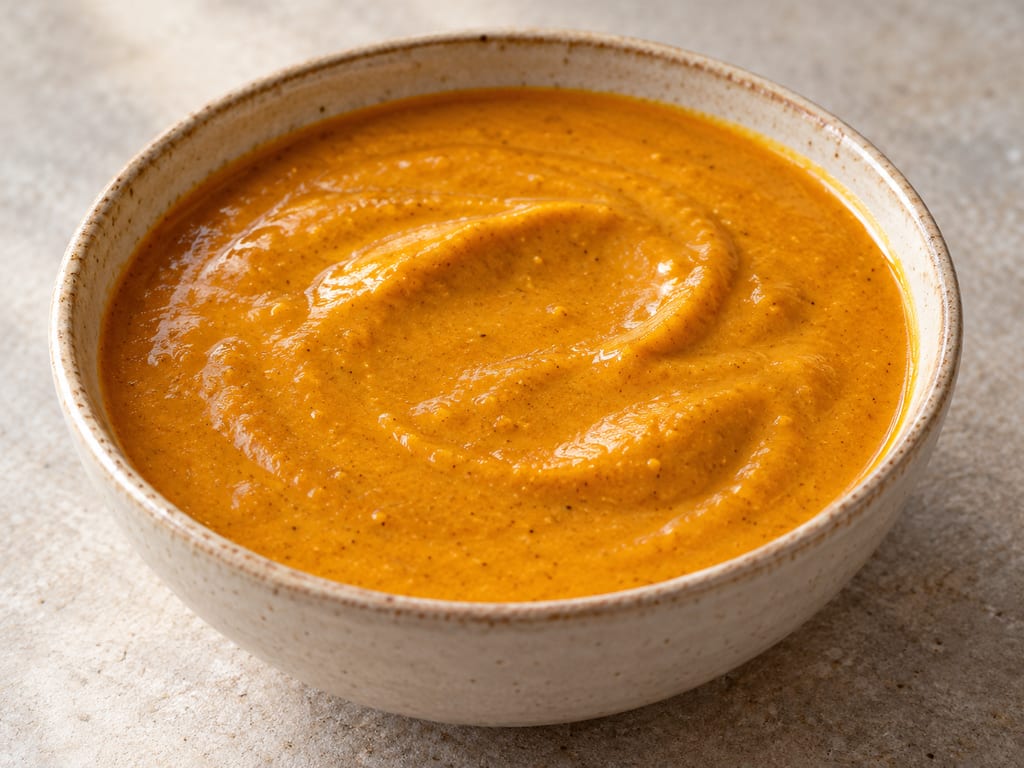
Mole amarillo, also called amarillito, is a yellow to orange Oaxacan mole built on cooked chile purée, thickened with corn masa and flavoured with herbs such as hoja santa, with no chocolate or dense nut mixture.
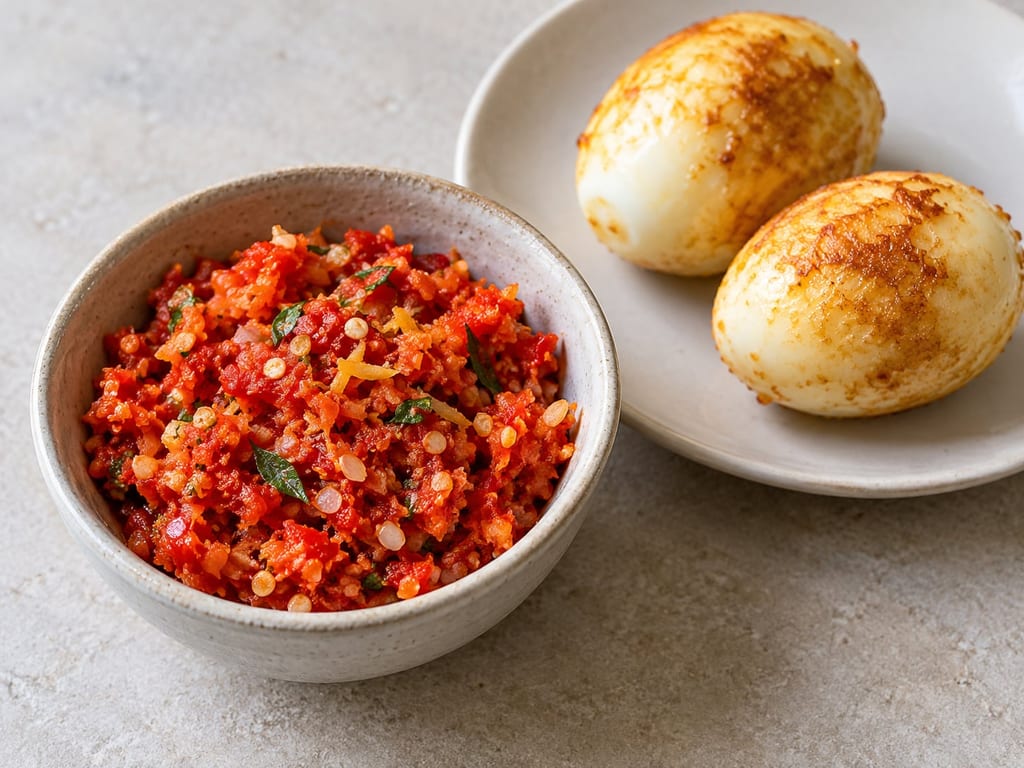
Ai-manas is described as a very hot chilli paste served with Timorese meals. One published version blends fresh chillies, shallots, garlic, Thai basil, ginger, lemon and salt, and serves it with eggs. Sources do not establish a standard formula, precise birthplace or earliest date.
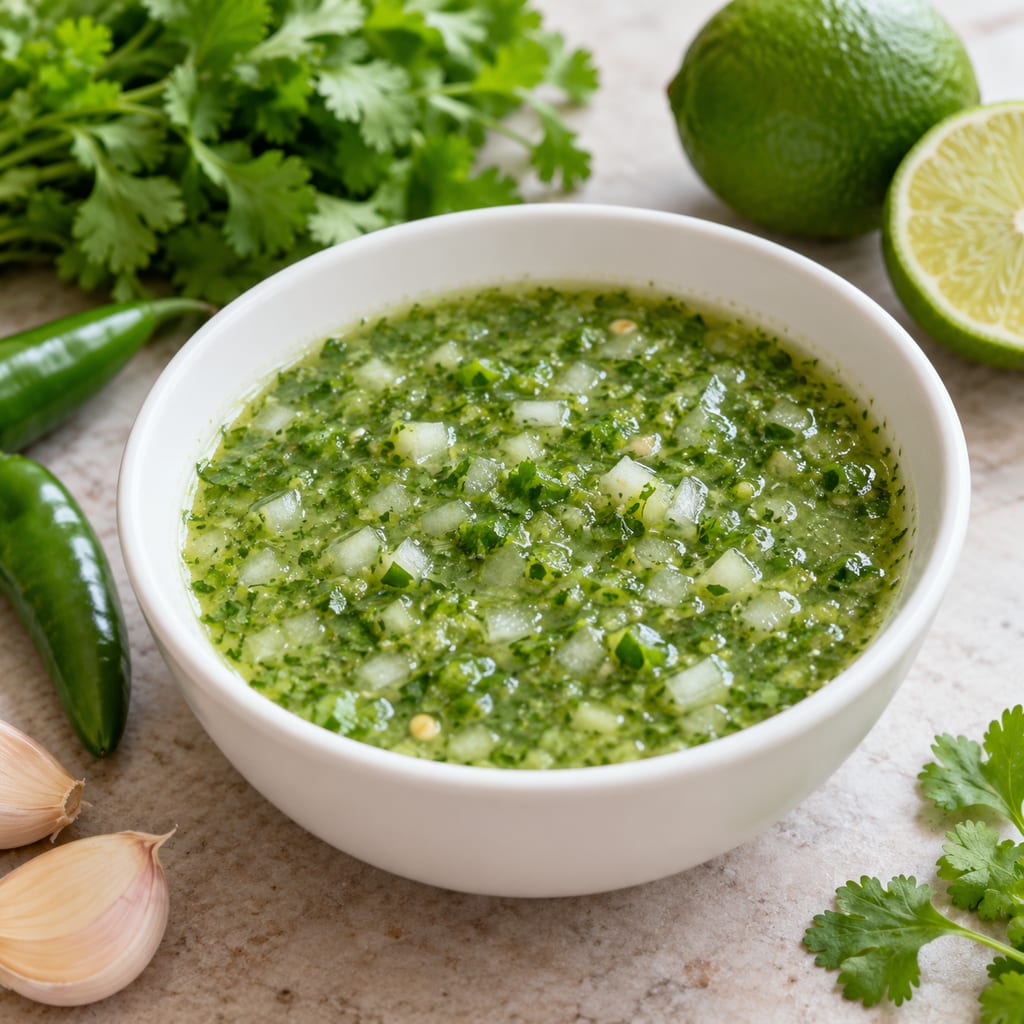
A fresh, uncooked Ecuadorian table sauce of hot pepper, cilantro, garlic and lime, served with most everyday dishes.
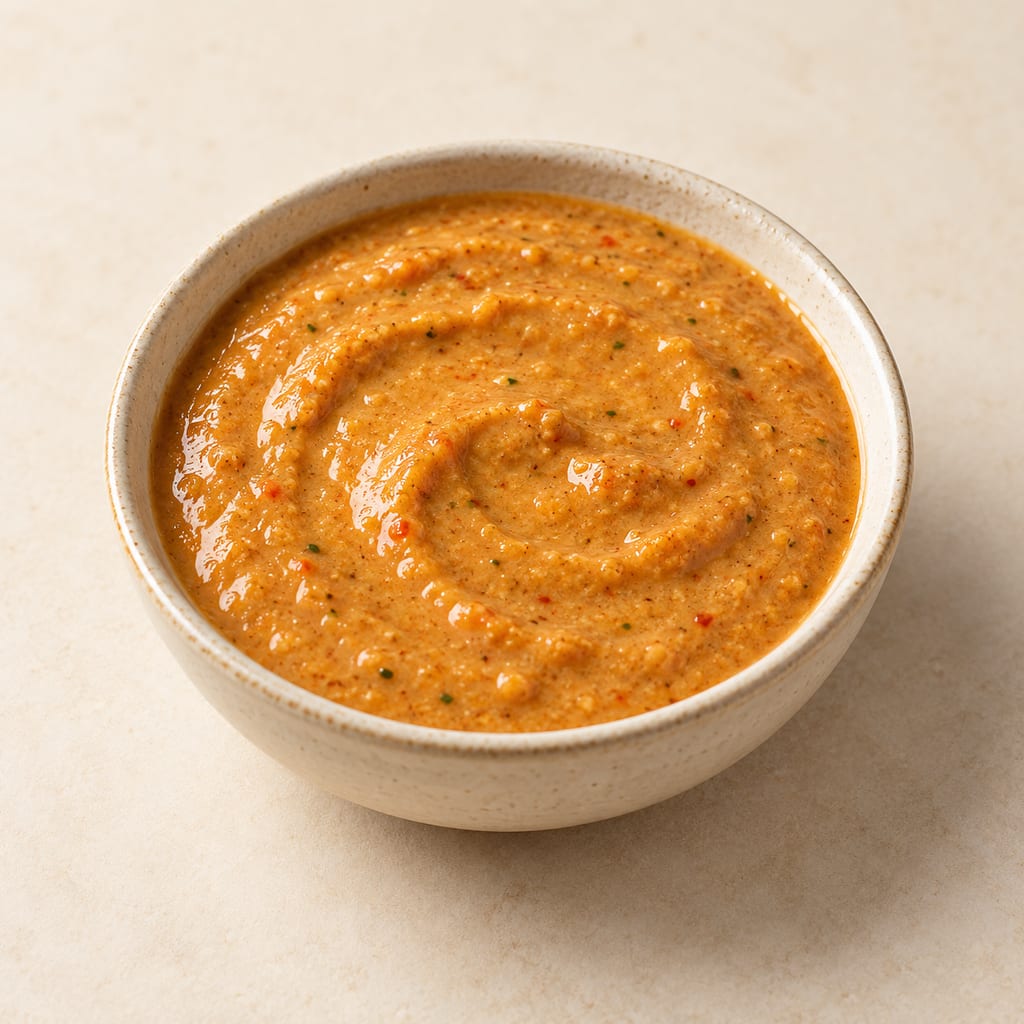
A spicy peanut hot sauce from the Popayán and Cauca region of Colombia, traditionally served with pipián empanadas and tamales.
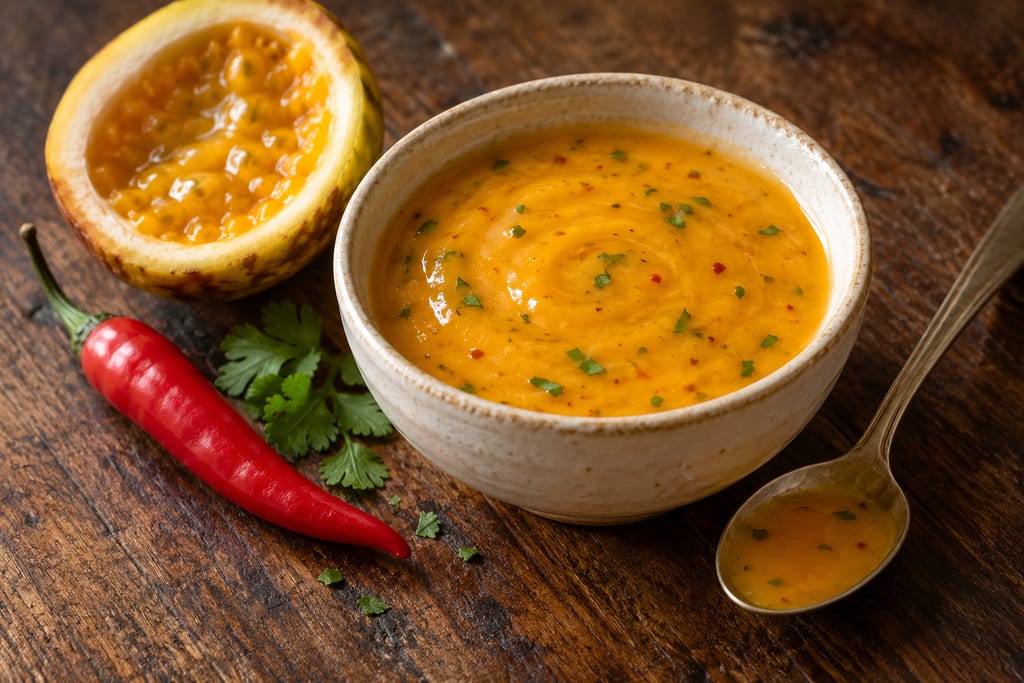
A contemporary Ecuadorian hot sauce that pairs passion fruit juice with boiled chile peppers, oil and lime.
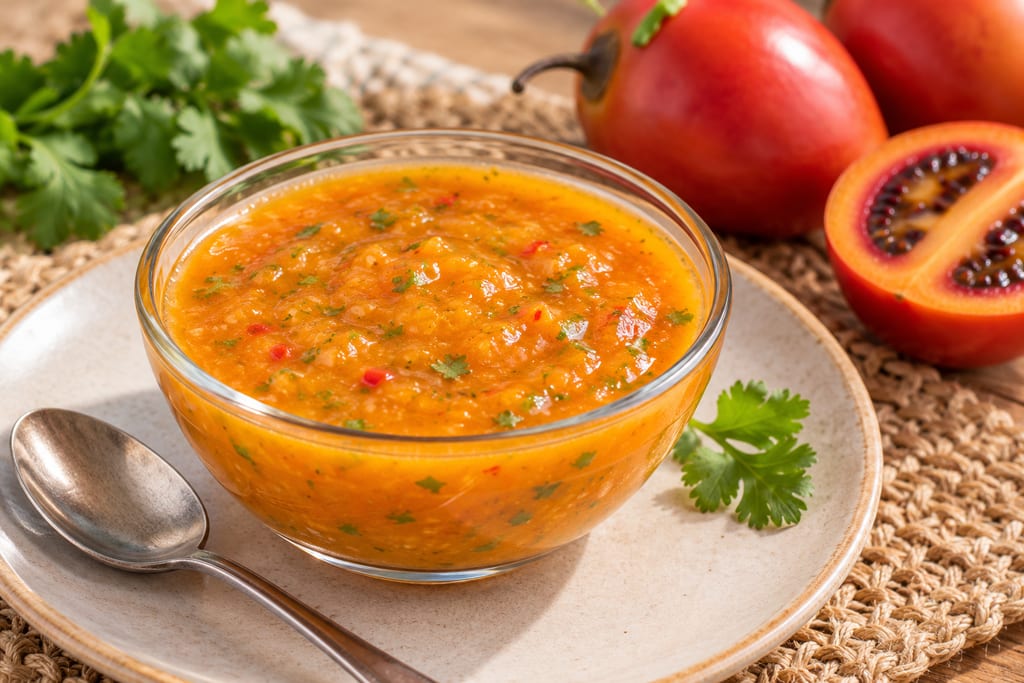
An Ecuadorian hot sauce built on tamarillo, a tart fruit that gives a sharper, fleshier base than ordinary tomato salsa.
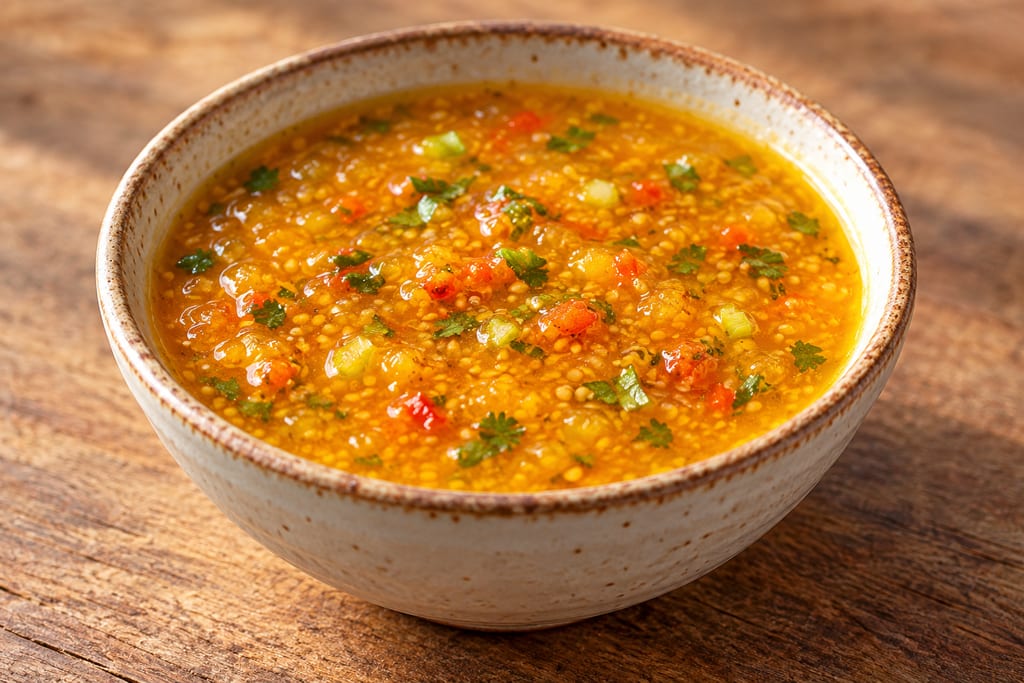
A sweet, tart and spicy Colombian sauce of uchuva, the yellow physalis fruit, with hot pepper, scallion, cilantro and lime.
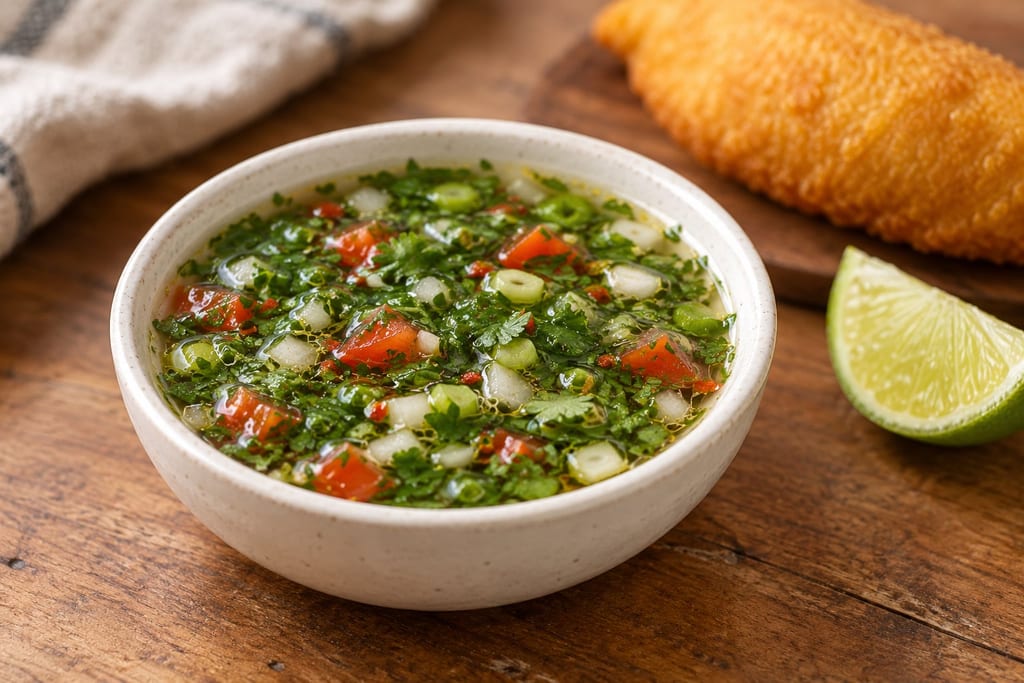
A fresh Colombian table condiment of chopped herbs, scallion and tomato in a vinegar and chile base, served beside fried and filled dishes.
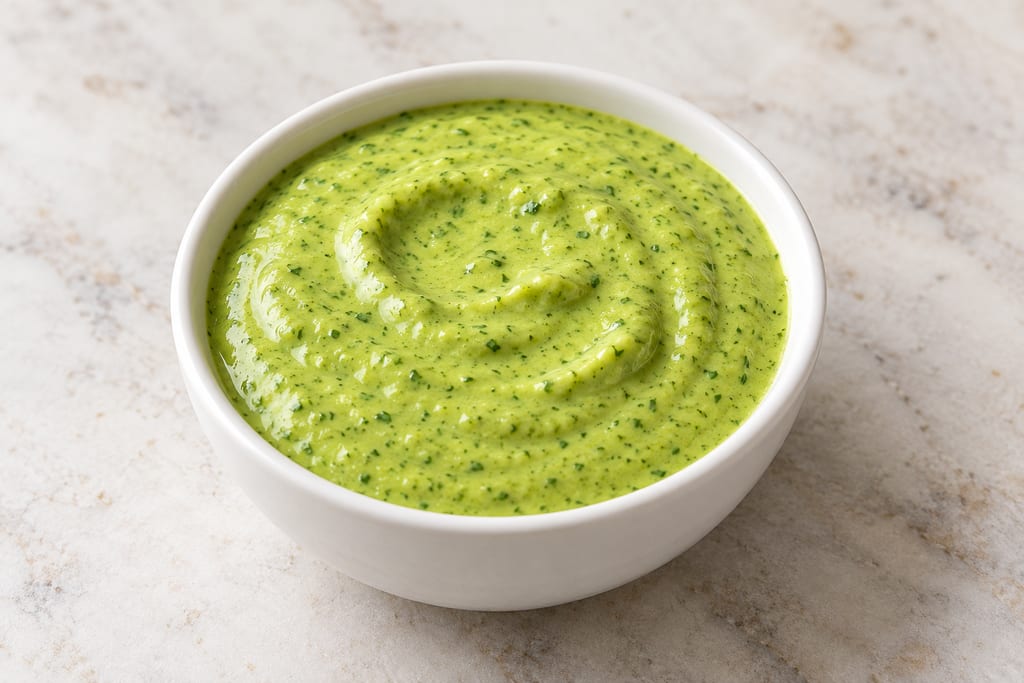
Ají verde is a Peruvian green sauce of coriander, chilli, onion and garlic in a mayonnaise or cheese base. It is best known through Peruvian restaurant cooking abroad.

At North Abydos in Egypt, a fixed early Dynastic brewery comprised parallel semi-subterranean installations with rows of ceramic mash vats; excavation reports revise their number, scale and estimated batch capacity.

Ají amarillo is the orange-yellow Peruvian chilli cultivar group of Capsicum baccatum, used to colour and season huancaína sauce and ají de gallina. Published heat estimates do not establish one range for the named cultivar.

Toasted almonds are whole sweet almond kernels dry-roasted until golden to brown. Heat replaces their marzipan note with a roasted, nutty one; they thicken and flavour romesco.

Kodiak salmon, halibut and cod cut as seg'aq and hung on an initaq rack to become tamuuq, with kac'amaasaq and kupcuunaq named as different results.

Aniseed is the dried ripe fruit of Pimpinella anisum, an aromatic Apiaceae spice commonly called a seed. It adds a sweet, warm aroma to breads such as Moroccan krachel and South African mosbolletjies, and is distinct from star anise.

A fixed Late Chalcolithic installation in Areni-1 cave combined a shallow clay pressing basin with a large jar set into the cave floor and storage vessels nearby.

Ripe avocado flesh is the soft, buttery, fat-rich pulp of Persea americana, eaten raw. It is low in acid, so it is a fresh ingredient that needs care in chilled dishes.

A portable dome and pan used over a hearth, with embers on the lid and heat from below. Regional peka and saç forms share this principle while differing in materials, pan shape and how the food is cooked.
No community contributions have been published for this entry yet.
Sign in to contribute. Published comments and photos are free to read.
WikipediaHistory · Method · Ingredients
Salsa verde (Mexican)Tomatillo and green chile base
Four styles: cooked, roasted, raw and combination
Cooking or roasting enhances flavour and sweetness
Aztec origin attributed to Francisco Hernández
Served with enchiladas and chicharrón
New Mexico version mostly green chile
Cited in: A green sauce that is not an herb sauce; Raw, cooked and roasted; Serving and use; Open questions