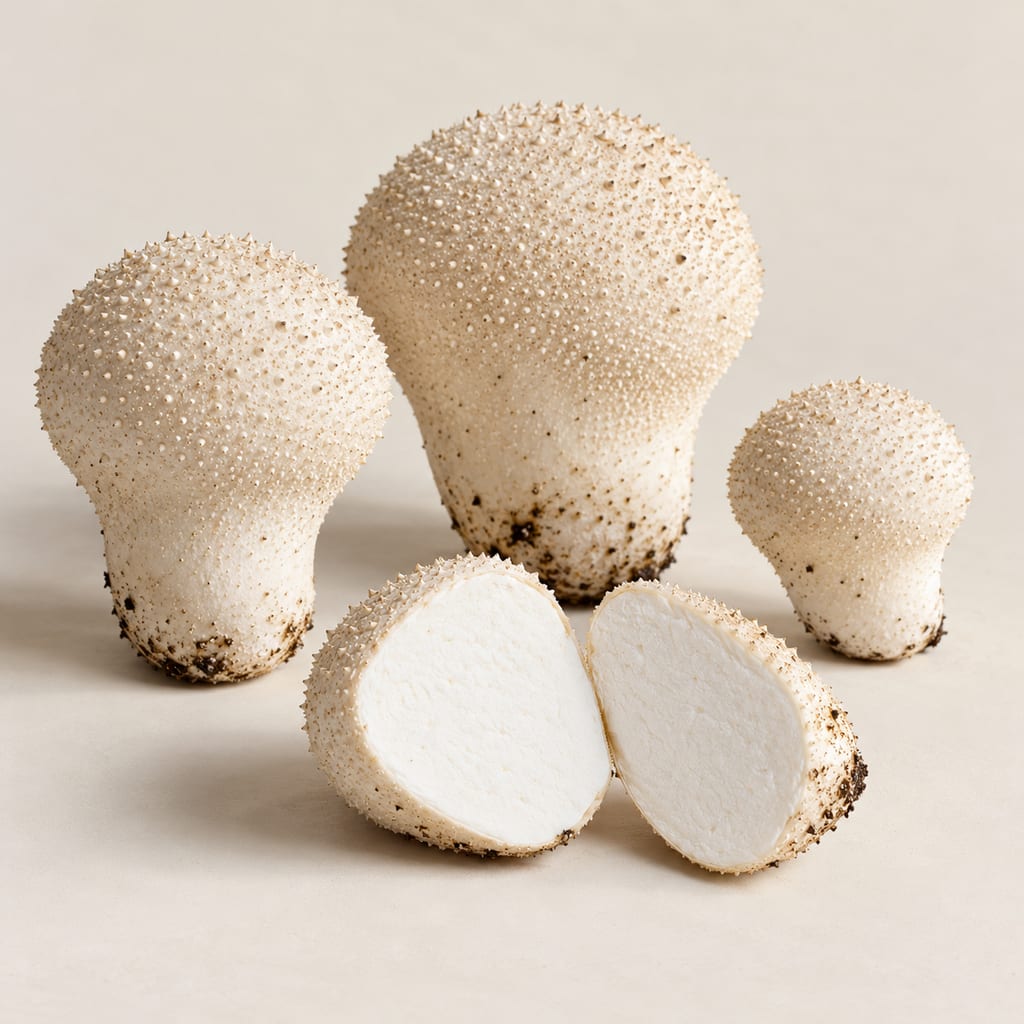
Common puffball
The common puffball, Lycoperdon perlatum, is a wild, ground-growing puffball. It is cooked as food in some traditions only while the flesh is still white, and its lookalikes must be excluded before any use.
 FermenteaWhere food goes to change
Mushrooms
Llao-llao is the orange, gelatinous fruiting body of a southern-beech parasite in the Andean–Patagonian forests of Chile and Argentina. Regional sources document its food history, including Mapuche use in chicha.
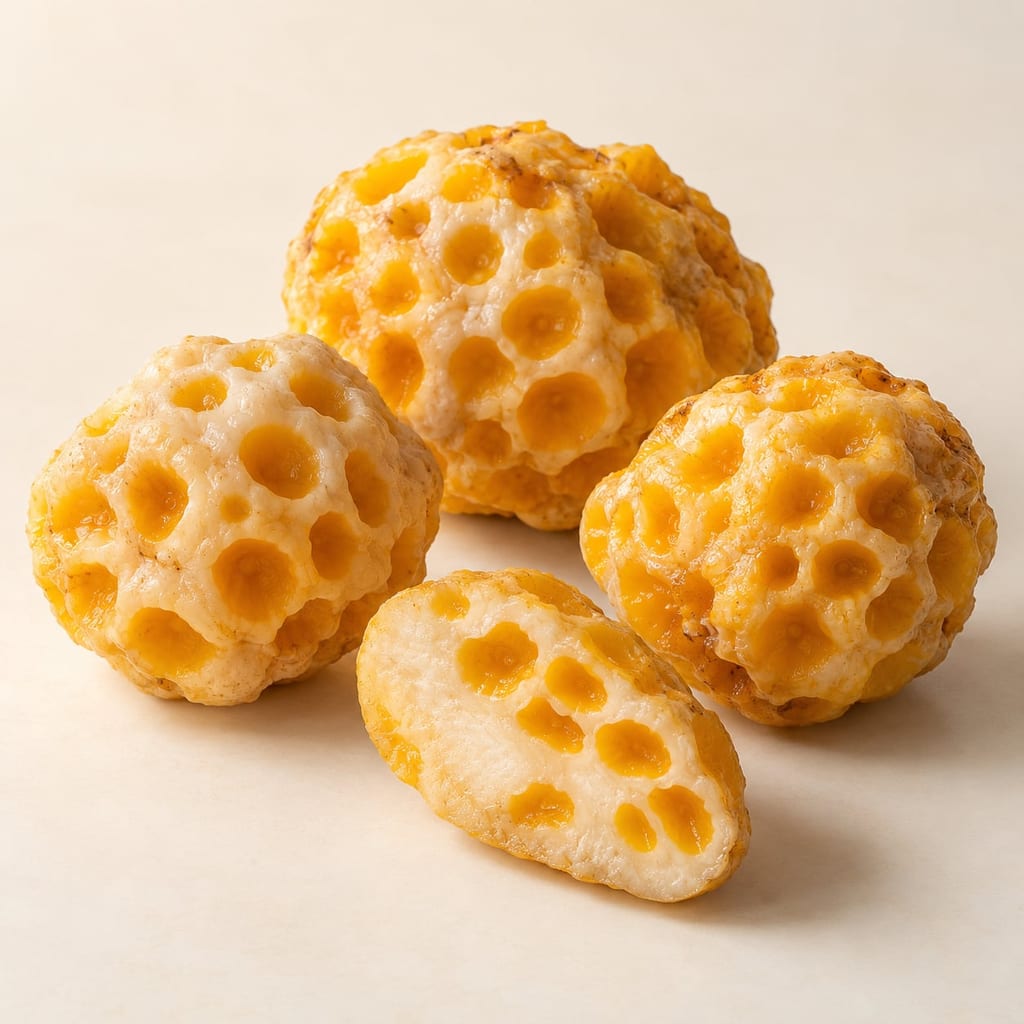
Llao-llao is the regional name most closely associated with Cyttaria hariotii, a fungus of the southern-beech forests shared by Chile and Argentina. Unlike a cap-and-stem mushroom, it produces rounded, soft fruiting bodies, called stromata, from swollen knots on living branches and trunks. Mature stromata are usually described as yellow-orange to bright orange, gelatinous inside, and about 3–7 cm across. Their upper surfaces carry multiple small spore-bearing cavities. The fungus is a parasite of its tree host, rather than a fungus growing from leaf litter or dead wood.
The Argentine national-park account records five host trees: ñire (Nothofagus antarctica), lenga (N. pumilio), coihue (N. dombeyi), guindo (N. betuloides) and N. nitida. The Chilean forestry sheet lists a similar host set, though its printed spelling of N. pumilio is erroneous. Host association describes the ecology; it does not identify a specimen. Color, rounded shape and a familiar local name cannot establish identity on their own.
Cyttaria hariotii was named by Émile Fischer in 1888. Index Fungorum lists that name as current and records the original publication’s spelling “harioti.” Species-level usage is relatively stable in the sources consulted, but higher classification is not. Many field guides and government databases place the genus in Cyttariales. A multilocus study instead proposed treating Cyttariales as part of Helotiales, and a 2025 revision of the genus uses Helotiales. The family Cyttariaceae and species name remain useful reference points across these classifications.
A 2025 multilocus revision described Cyttaria pumilionis on Nothofagus pumilio and found it morphologically similar to C. hariotii. A record identified only from a lenga host, vernacular name or old photograph therefore should not be treated as a modern voucher-confirmed determination without checking its underlying material. Common names such as llao-llao, pan del indio and digüeñe vary between places and species; this account does not transfer the food history of one relative to another.
The fungus fruits on a Southern Hemisphere calendar. Chilean forestry material describes collection in spring and early summer and gives a distribution from Maule to Aysén. Argentina’s national-park account calls the season spring to summer, with a short maturation window from November through January. A 2024 study sampled C. hariotii in October–December from native Nothofagaceae forests in Chubut, Río Negro and Neuquén; representative collections were deposited in the Andean Patagonian Forest Research and Extension Center herbarium. A regional review summarizes a broader autumn-to-spring span. These sources differ in scale and method, so they describe regional observations rather than one reliable calendar for every site or year.
The documented range follows southern-beech forests. Chile’s environmental assessment records the species from the O’Higgins precordillera south to Cape Horn, with named records in Maule, Ñuble, Biobío and La Araucanía. Its table combines historic collections, herbarium material and more recent observations, and distinguishes records by their evidence source. In Argentina, the 2024 collections establish regional presence in Chubut, Río Negro and Neuquén; the national-park biodiversity account also lists sites in protected areas. This supports a southern South American range, not presence at every forest or harvest site.
Cyttaria hariotii is treated as an edible wild fungus in Argentine and Chilean regional references, and an Argentine review lists it among native edible fungi. Species-specific accounts describe Mapuche food use and fermentation into chicha; an Argentine park source also records Yámana consumption fresh in Tierra del Fuego. These are regional historical attestations, not a standardized recipe or proof that every community used the fungus in the same way. Broader statements about the genus are not proof of a particular practice for each Cyttaria species.
The food is the fleshy stroma itself. A Patagonian culinary guide describes it as soft and fleshy, with a mild fungal or apricot-like aroma and sweet, fungal taste; it suggests fresh use, pickling and desserts. The Chilean forestry sheet says Mapuche consumers used it in small amounts because it ferments quickly and that it was commonly fermented for chicha. These descriptions explain its place in a fermentation ingredient catalogue, but this entry is not a chicha recipe: ingredient lists, proportions, fermentation conditions and safety controls were not established by the sources reviewed.
Llao-llao is a wild, seasonal ingredient, not a cultivated commodity in the sources consulted. The Chilean forestry guide notes quick fermentation after harvest, while the Argentine species account reports that fallen fruit bodies darken and are often infested with fly larvae. Those observations make freshness and condition part of the food context, but they do not provide validated storage limits or a safe processing schedule. No shelf life, preservation temperature, recipe ratio or fermentation control should be inferred from them.
Identity matters as much as the culinary story. Cyttaria darwinii is also called pan del indio in some sources, and C. espinosae is another prominent edible species. C. pumilionis, described in 2025, resembles C. hariotii. Common names overlap and fruiting bodies can be misapplied in older reports. This account records documented food use without serving as permission to harvest or eat an unknown specimen. The consulted sources establish no species-specific toxicological assessment, and genus-level familiarity is not a substitute for expert identification.
Species-specific Chilean forestry source records Mapuche consumption and chicha use; country-level only.
Species account records Yámana fresh use in Tierra del Fuego; national food review includes the species. No more precise location is inferred from this row.
Research collections from native Nothofagaceae forest; this is a regional collection record, not a specific foraging or market site.
Research collections from native Nothofagaceae forest; no point location is inferred.
Research collections from native Nothofagaceae forest; no point location is inferred.
The forestry sheet gives this as a distribution interval, not separate verified collection sites or food-use localities.
The common puffball, Lycoperdon perlatum, is a wild, ground-growing puffball. It is cooked as food in some traditions only while the flesh is still white, and its lookalikes must be excluded before any use.
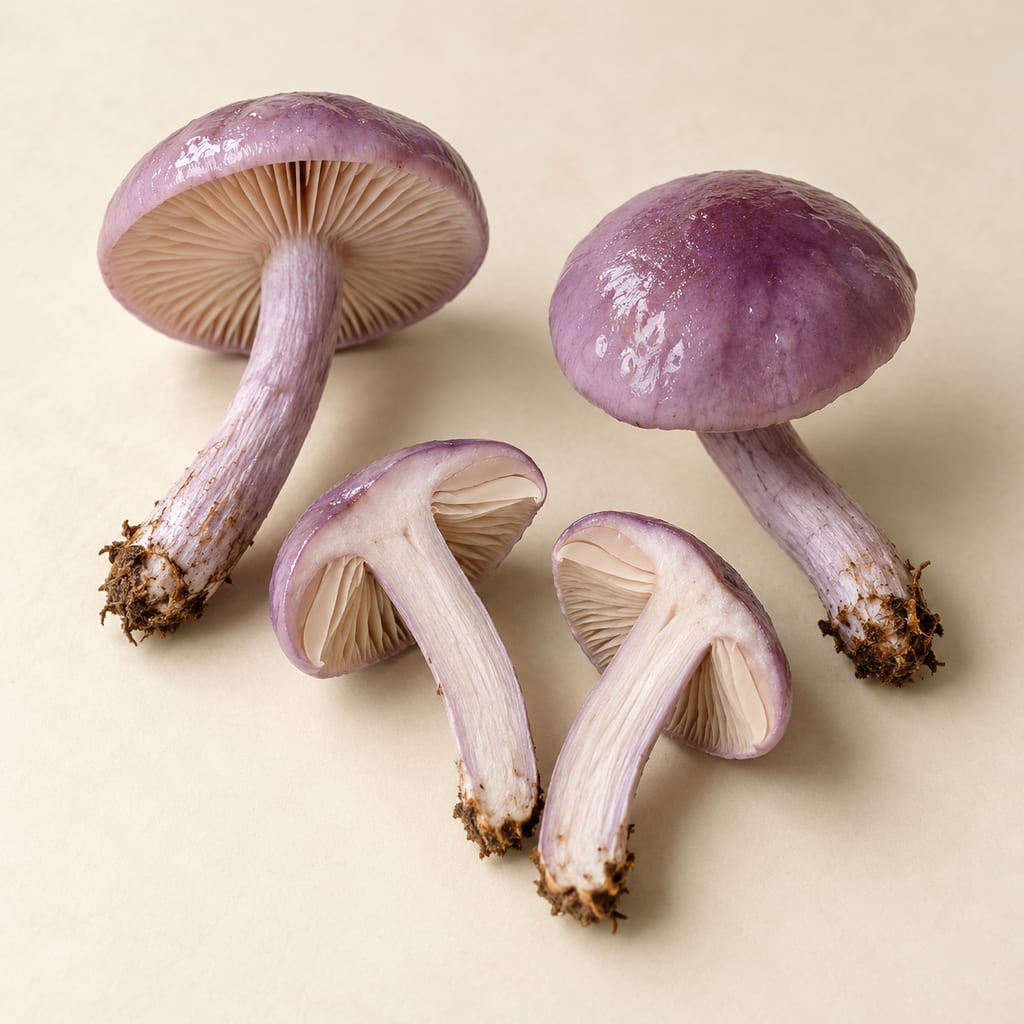
Cortinarius magellanicus is a webcap mushroom of Nothofagus forests in Patagonia, recorded in regional food use, but it belongs to a species complex and its genus contains deadly toxic species.
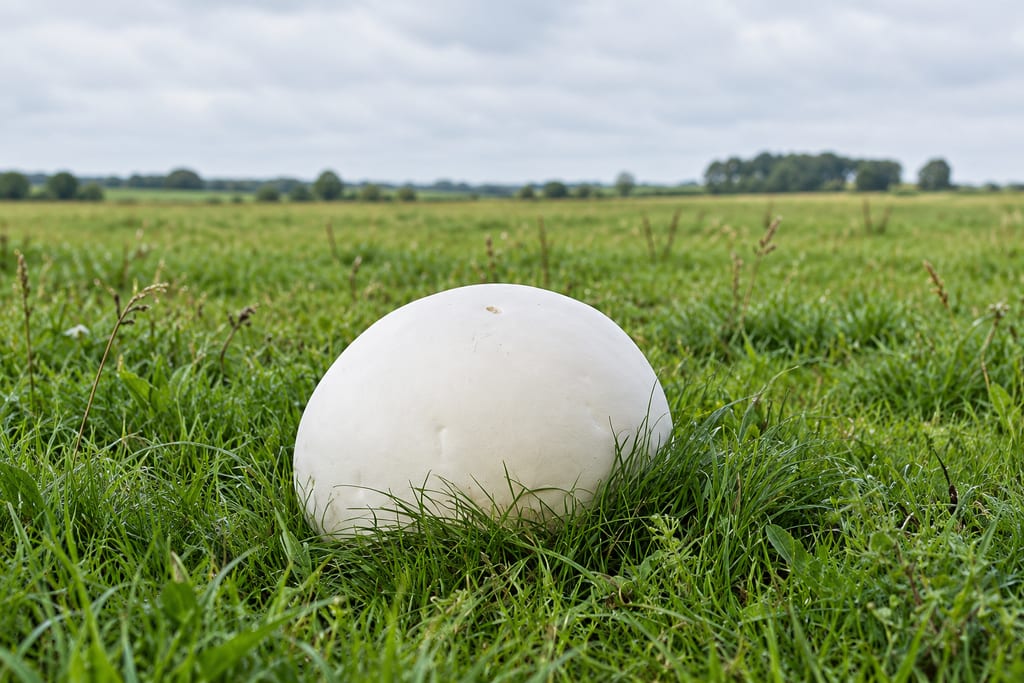
Young Calvatia gigantea is documented as a cooked food in Khiram, South Kashmir; mature or uncertain specimens are not food. Wild mushroom identification requires expert confirmation.
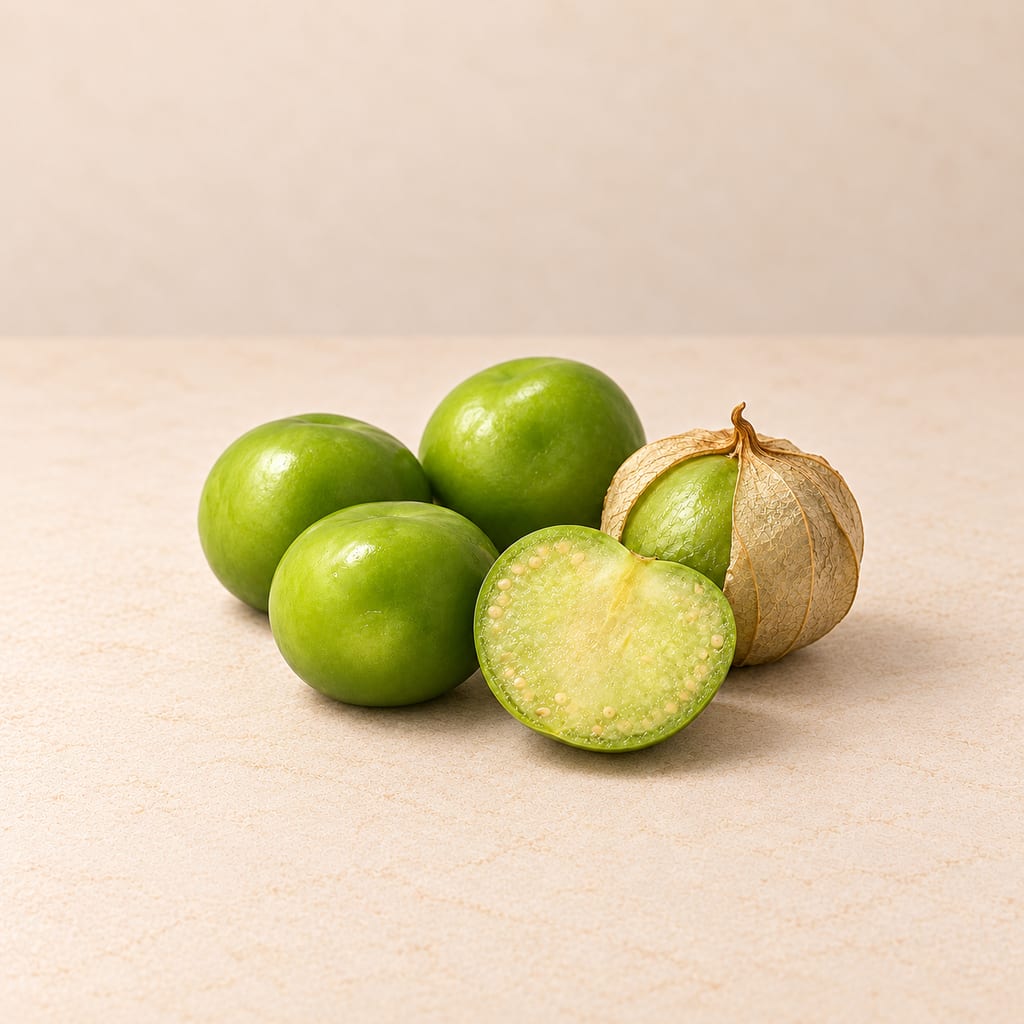
The tomatillo is the tart green fruit of Physalis ixocarpa, a Mexican relative of the tomato that grows inside a papery husk. It is the base of salsa verde.
No community contributions have been published for this entry yet.
Sign in to contribute. Published comments and photos are free to read.
Index FungorumTaxonomy
Cyttaria hariotii E. Fisch. [as 'harioti']Current species name, authority, 1888 publication and original spelling note.
Cited in: A name with a changing taxonomic frame
Sistema de Información de Biodiversidad, Administración de Parques Nacionales, ArgentinaIdentity · Ecology · Season · Food history · Safety
Cyttaria hariotii (llao llao)Stroma morphology and size; five Nothofagus hosts; spring-summer maturation November-January; edible designation; Mapuche chicha and Yámana fresh-use reports; fallen-body condition and fly-larva infestation.
Cited in: A fruit body on a living southern beech; Spring fruiting across local calendars; A wild food and fermentation tradition; Freshness, identification and limits
Instituto Forestal (INFOR), ChileEcology · Season · Food history · Handling
Cyttaria hariotiiMaule-to-Aysén distribution; hosts; spring and early-summer collection; Mapuche consumption and quick-fermentation context.
Cited in: A fruit body on a living southern beech; Spring fruiting across local calendars; A wild food and fermentation tradition; Freshness, identification and limits
FoodsFood use · Season · Geography
Sensory Characteristics and Volatile Organic Compound Profile of Wild Edible Mushrooms from Patagonia, ArgentinaC. hariotii sampled in 2015-2016 in Chubut, Río Negro and Neuquén; Table 1 gives October-December and edible fresh use; representative collections deposited in HCFC herbarium.
Cited in: Spring fruiting across local calendars
Ministerio del Medio Ambiente, ChileTaxonomy · Distribution
Ficha final de antecedentes de especie para clasificación: Cyttaria hariotiiNative Argentina/Chile; Chilean range from O'Higgins to Cape Horn; named locality records with source types and evidence levels; hosts.
Cited in: Spring fruiting across local calendars
Mycological ProgressTaxonomy · Identity limit
Re-examination of the Southern Hemisphere edible genus Cyttaria (Ascomycota, Helotiales) and characterization of two new species from PatagoniaMultilocus revision; C. pumilionis described on N. pumilio and morphologically resembles C. hariotii.
Cited in: A fruit body on a living southern beech; A name with a changing taxonomic frame; Freshness, identification and limits
Mycological ProgressTaxonomy
Multilocus phylogenetic analysis reveals that Cyttariales is a synonym of HelotialesMultilocus study proposes treating Cyttariales as a synonym of Helotiales.
Cited in: A name with a changing taxonomic frame
Boletín MicológicoTaxonomy · Food history · Identity limit
Actualización del conocimiento del género Cyttaria Berk. (Cyttariales, Ascomycota) en ChileReview of Chilean Cyttaria species and broader Indigenous food history; genus-level claims are not automatically species-specific.
Cited in: A name with a changing taxonomic frame; A wild food and fermentation tradition; Freshness, identification and limits
Centro de Investigación y Extensión Forestal Andino PatagónicoCulinary use
Cocinar con hongosSpecies-specific sensory description; suggested fresh, pickled and dessert uses; Mapuche chicha context; not a safety assessment.
Cited in: A wild food and fermentation tradition
Forest SystemsFood use · Season · History
Edible fungi for local and sustainable development in the Patagonian Andes forests of Argentina: A reviewRegional review includes C. hariotii as edible raw or cooked and summarizes autumn-spring fruiting; first attestation not dated.
Cited in: Spring fruiting across local calendars; A wild food and fermentation tradition