Overview
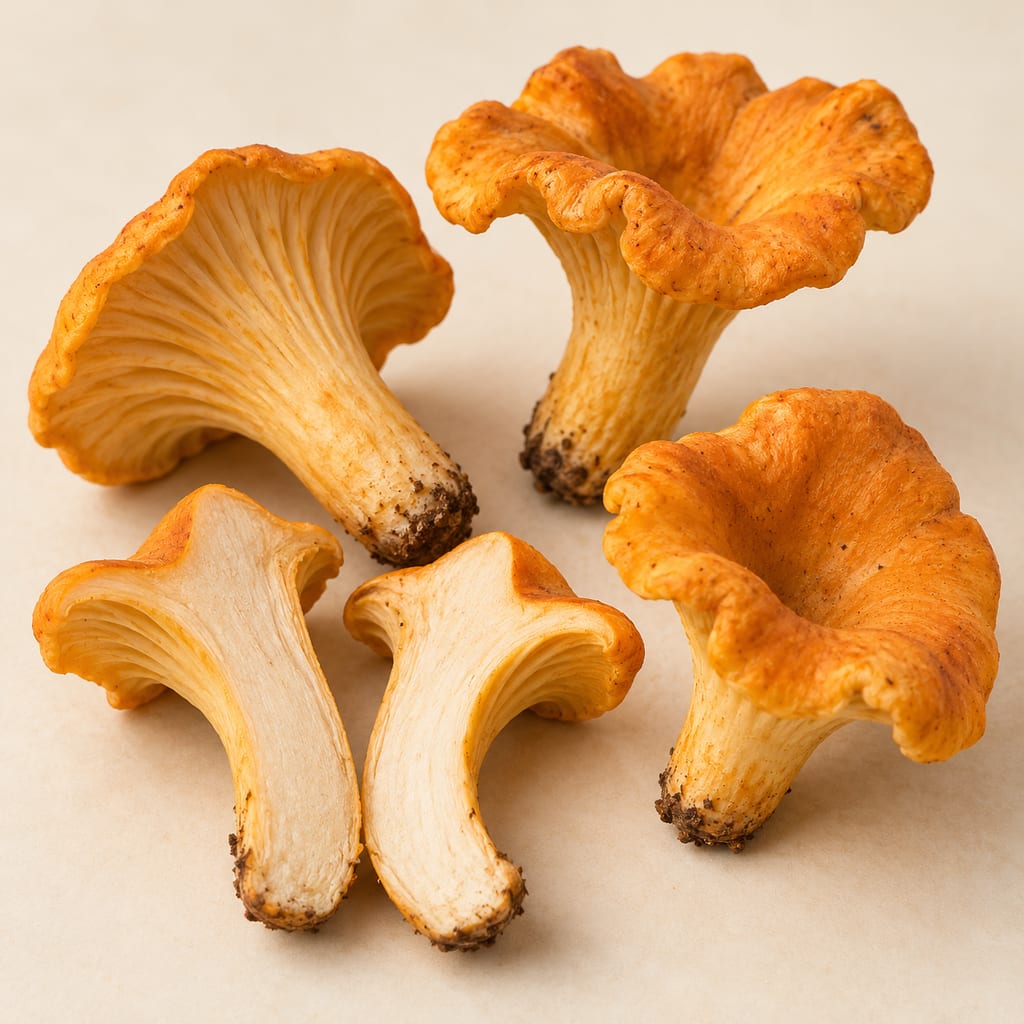
The smooth chanterelle is a wild fungus of the chanterelle group, Cantharellus lateritius. Its common name refers to the underside: where most chanterelles show forked ridges, this species has a surface that is smooth or only slightly ridged, with no true gills.
The name is a research label, not a settled one. The supplied catalogue lists it under the synonym Craterellus lateritius and does not treat it as a reconciled current name. Records of food use under this name should be read against that caveat.
Sources for this section
Identification
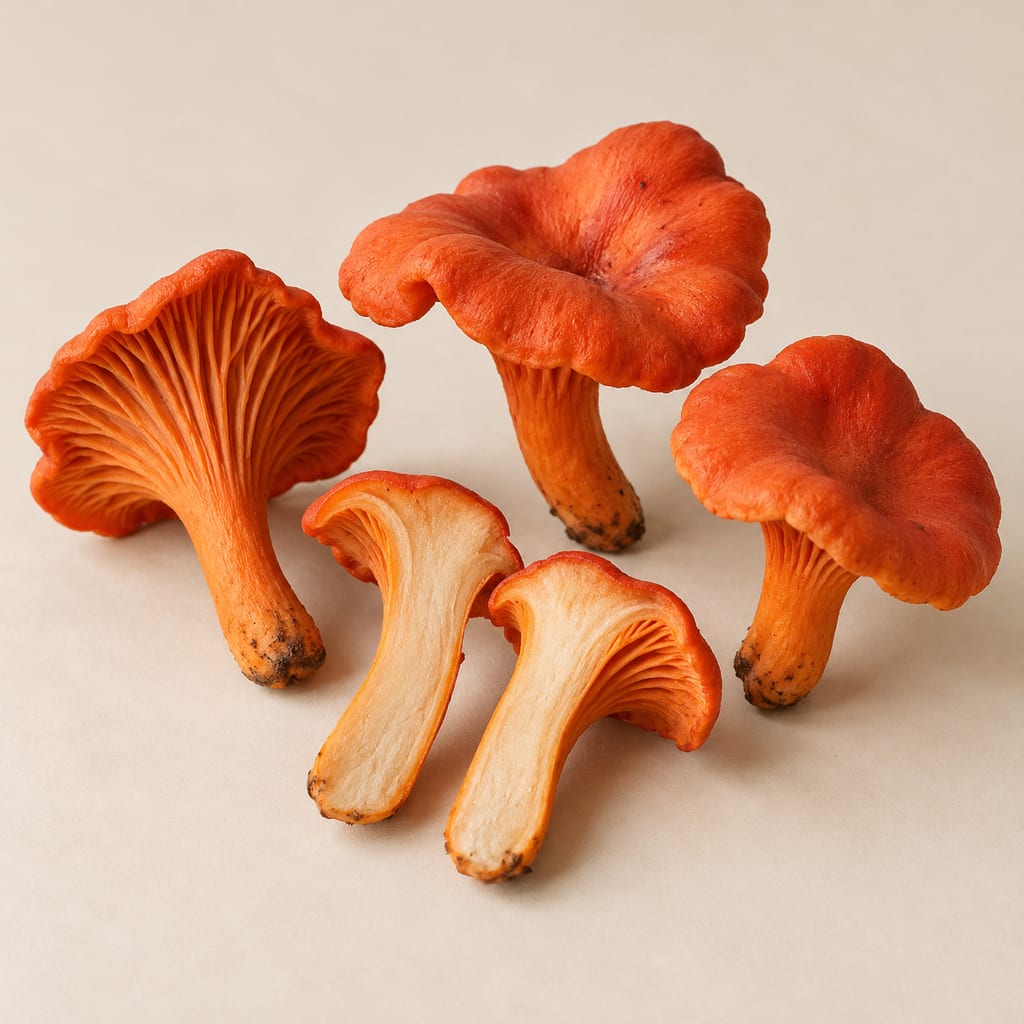
The Missouri field guide describes a bright orange to yellow, funnel-shaped cap with wavy margins, often sunken at the centre. The stalk is orange to whitish. The cap is about half an inch to six inches across, and the stalk is one to three inches long and half an inch to an inch wide. The spore print is pinkish yellow.
The underside has no true gills. It is smooth or slightly ridged, which separates the species from the hedgehog fungi, whose underside is toothed.
Sources for this section
Habitat and season
The fungus is mycorrhizal, growing in association with tree roots rather than on wood. It grows singly or in groups in moss, leaves and grass, and along paths, especially under oaks. The field guide reports that it is common in Missouri oak-hickory forest and returns to the same areas year after year.
In Missouri the fruiting season runs from late June to early August. The guide gives the range as statewide.
Sources for this section
Food use
The supplied catalogue records the smooth chanterelle as market food in Guatemala, used in tamales and rice dishes. Its evidence is classed as food, market or specialist edible-fungi evidence, and its supply is recorded as wild.
The Missouri field guide calls it a choice edible mushroom and says to eat with caution. The guide advises that the eater be certain of the identification and eat only a small amount at first, to watch for a reaction. A food use in one market does not establish that every wild collection is safe to eat.
Sources for this section
Lookalikes and safety
The Missouri guide names the poisonous jack-o'-lantern as the main confusion. The jack-o'-lantern grows in clusters on stumps or buried wood, has close, sharp-edged gills and fruits in autumn. The guide also separates the smooth chanterelle from the hedgehog, which has a toothed underside, and from the golden chanterelle, which has forked ridges.
Identification from a description, a colour or a single photograph is not reliable for a wild specimen. The supplied record does not establish identification, edibility or a safe preparation for this species, and it gives no household preparation method. Anyone who wants to eat a wild chanterelle should have it checked by an experienced identifier first.
Sources for this section
Sources and gaps
The catalogue's regional record for eastern North America is kept as catalogued. The Missouri guide confirms occurrence only for Missouri. The name's taxonomy is unreconciled, and no regional evidence beyond the two cited sources is recorded here. The next research question is whether the Guatemalan market record refers to this species or to a related chanterelle.
Sources for this section
Places
Guatemala
Documented use · Country evidenceThe supplied catalogue records tamales and rice dishes as market food here. It records no locality.
Missouri
Documented use · Region evidenceThe Missouri Department of Conservation field guide lists it as statewide and as a prized edible with caution. The catalogue's broader eastern North America entry is not confirmed by this source.