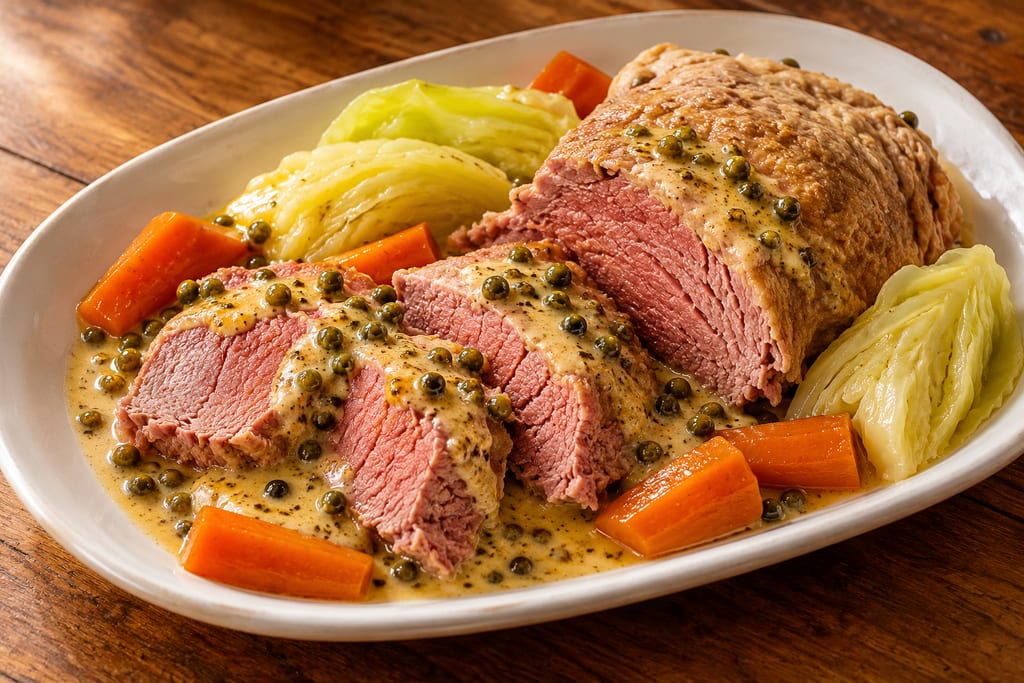
Salt beef with green peppercorn and mustard sauce
A Karoo-style festive dish of already cured salt beef simmered with vegetables and aromatics, served with a cream sauce of brined green peppercorns and wholegrain mustard.
 FermenteaWhere food goes to change
Modern adaptation
Whole-grain mustard · À l'ancienne-style mustard · Coarse-grain mustard
A coarse mustard of brown and yellow seeds soaked whole in cider or white-wine vinegar, with about a third blended to a paste and folded back so the rest stay whole.
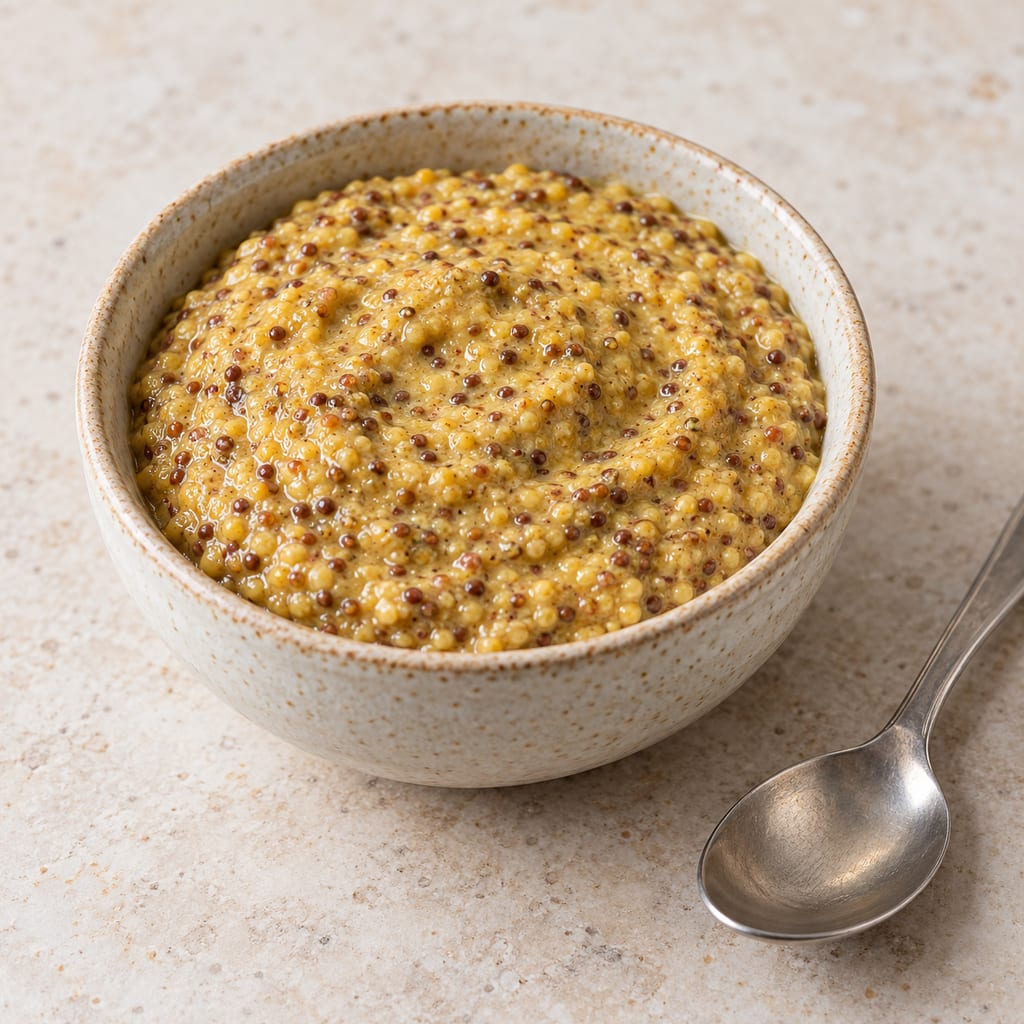
Wholegrain mustard is defined by its texture: a paste carrying whole and partly broken seeds, sour and savoury, with the seeds giving it texture as well as flavour. Coarse grinding and visible seed fragments are what set it apart, and France's mustard rules, Décret n° 2000-658 of 6 July 2000, define this style separately from smooth mustard. The French call it à l'ancienne, in the old manner. Under the specification for Moutarde de Bourgogne, Burgundy's protected mustard, a mustard that skips the sieving step may carry the complementary legal name moutarde à l'ancienne, and it is distinguished by grains that are only partly crushed. The home method follows from the definition: soften the seeds in the liquid, blend only part of the batch, and never strain away the seed material.
The specification also shows how the two textures differ in substance. Its smooth, sieved mustard must contain at least 24 per cent dry extract from the seed and at least 9 per cent seed lipids; the à l'ancienne version needs at least 20 per cent dry extract and 5 per cent lipids, and its Burgundy white wine must make up at least 15 per cent of the dilution liquid rather than 25. Wholegrain is the English gloss for the style, not the specification's term. A home mustard made anywhere is wholegrain-style. It is not Moutarde de Bourgogne, which requires Burgundy seed processed in Burgundy and a Burgundy appellation wine.
The texture comes from a deliberate partial grind, and that is the method in miniature. Grind every seed and the result is a coarse smooth mustard, not a wholegrain one, however rough the blender leaves it. This formula soaks all its seed whole, blends about a third of it and folds that paste back through the rest, so the finished mustard is part sauce and part seed. Set beside the smooth Dijon-style mustard on this site, the design is a mirror image. That recipe grinds 70 g of brown seed before it soaks, wakes the enzyme in plain water, then blends and sieves everything. This one soaks 65 g of mixed seed whole with all its liquid at once, blends only a third and sieves nothing.
The formula uses 40 g of brown mustard seed, Brassica juncea, and 25 g of yellow, Sinapis alba: 65 g of seed in a 250 g batch, 26 per cent, with brown outweighing yellow by 1.6 to 1. The two species bring different strengths of the same reaction. Once the seed is broken and wet, brown seed's enzyme, myrosinase, turns its sinigrin into allyl isothiocyanate, the volatile compound behind mustard's nasal heat. Yellow seed, which is associated with a different glucosinolate, sinalbin, is the milder partner: in Okunade and colleagues' comparison of enzymes extracted from the three species, yellow mustard's myrosinase was the least active, at 0.63 units per millilitre against 2.75 for brown. The blend tempers the brown seed's sharpness with a gentler seed rather than leaving it to stand alone.
The ratio is a dial. A useful trial holds the total seed and liquid constant and changes only the share of yellow seed, comparing yellow-to-brown ratios of 3:1, 1:1 and 1:3, so that the effect of the blend is not tangled up with a change in the amount of seed or the strength of the liquid.
Whole seeds behave differently from ground ones. Mustard's heat is made when the seed's cells are broken and its glucosinolates meet the enzyme, so a seed that stays whole keeps that reaction in reserve until it is chewed. Processing leaves its mark on the chemistry too. Cools and Terry, who processed three cultivars from two seasons into Dijon-style and wholegrain-style mustards, found that wholegrain processing changed the total isothiocyanates and sinigrin less than the Dijon-style process did.
Mustard seed is a field crop, and the bag in the kitchen has a history. Edmond Fallot's account of Burgundy mustard says that as seed growing in Burgundy declined, the region's makers bought seed abroad, notably in Canada and the United States, and a programme to relaunch Burgundy seed production was later supported; the protected Moutarde de Bourgogne now requires seed grown, stored and processed within its four departments. The cultivar inside the bag matters as much as its country. In Cools and Terry's comparison, the Canadian cultivar Centennial tended to contain more glucosinolates than the French cultivar AZ147, and the Canadian cultivars produced wholegrain-style mustard with higher total isothiocyanates and sinigrin.
For a home cook that means two habits. Buy whole seed labelled by type rather than judging it by colour, and write the brand and batch of each seed on the batch record, because two bags of brown seed can make two different mustards. Store the unused seed dry and tightly closed, following its date and storage instructions. Those instructions describe the dry seed and stop applying the moment it goes into liquid: a soaked seed is part of a fresh sauce, with a fresh sauce's short life.
Everything goes into the bowl at once: both seeds, 75 g of cider or white-wine vinegar, 98 g of water, 7 g of sugar and 5 g of salt. The bowl is covered and refrigerated for 12 to 24 hours. In that time the seeds take up liquid and soften, which is what lets a third of them blend to a smooth paste and lets the rest stay pleasant to eat whole. The soak happens in the fridge because this is an uncooked mixture, and uncooked whole-seed mustards in this collection rest cold.
There is no water-only stage here, unlike in the smooth Dijon-style mustard, and no cooking either. The formula does not chase maximum heat. Most of the seed stays whole, and the character it wants comes from texture, acid and the balance of the two seeds. The choice of vinegar is a flavour decision: cider vinegar and white-wine vinegar each bring their own aroma to the acid, and either suits the style, provided it is labelled 5 per cent acidity.
The 7 g of sugar and 5 g of salt are 2.8 and 2 per cent of the batch. Added sugar is not the same measure as a label's total sugars, but for orientation SPAK's classic Czech mustard declares 6.8 g of sugars per 100 g and Auran's Finnish sweet mustard 41 or 42 g, so this formula sits at the restrained end: enough sugar to round the acid, not enough to make a sweet mustard.
Coarse texture and sweetness often travel together in Central Europe, and two jars show how differently the pairing can be read. Händlmaier's sweet Hausmacher mustard from Bavaria contains brown sugar made with glucose syrup and beet molasses, and its retailer label declares 38 g of sugars per 100 ml. The maker calls it a classic of more than 100 years, now also sells a version with 30 per cent less sugar, and sets it on the table with Weißwurst, Leberkäse, Nürnberger sausages, cold roast pork and meatloaf. What it offers is a coarse texture, substantial sweetness, caramel and molasses notes, and only restrained fresh heat in the nose.
Mautner Markhof describes its Austrian Kremser mustard as made from coarsely crushed seed with a sweet, piquant flavour, and its current page lists 17 g of sugars per 100 g. It is a sweet coarse mustard too, but not automatically one with Bavaria's sugar level or spice blend. The two figures also sit on different bases, one per 100 ml and one per 100 g, and cannot be ranked against each other without the density. This formula takes the texture of these mustards and little of their sweetness. The house's Bavarian-inspired recipe on this site goes the other way, cooking coarse seed with brown sugar and molasses.
After the soak, take out about one third of the mixture with its share of the soaking liquid and blend it to a paste. Fold that paste back into the whole seeds. The paste is the binder: it thickens the liquid, holds the seeds in suspension and turns a bowl of soaked seed into a spreadable mustard.
The one-third ratio is a starting point, and the method carries its own corrections. If the mustard is still very loose, crush another small portion of the seed into it. If it is too firm, add 5 g of water, chill it and look again, because its texture straight from the fridge is the texture that matters at the table. Make one change at a time and write it down, so that the next batch can start from the corrected proportion.
A comparison shows the point of the method. From the same soak, blend all the seed in one portion and only a third in another: the first gives a coarse smooth mustard, the second a wholegrain one. The difference between the two bowls is the definition of the style. Blending also breaks more seed cells, so the share you blend is mainly a texture decision but can have some bearing on heat as well; taste each version as well as looking at it.
Two variations change the liquid or the sweetener and keep everything else. The beer version replaces 40 g of the water with 40 g of beer, leaving 58 g of water. Beer changes the mustard's aroma, in whatever direction the chosen beer leans, and it brings a possible gluten allergen with it. It does nothing to preserve the mustard, and because the mustard is never cooked, the beer's alcohol is not driven off either.
The honey version replaces the 7 g of sugar with 12 g of honey and cuts the water by 5 g, to 93 g. The arithmetic keeps the batch at 250 g: 40 + 25 + 75 + 93 + 12 + 5 = 250. Sweeteners are one of the controls a mustard maker turns: white sugar gives a straightforward sweetness, brown sugar or a little molasses a darker flavour, and honey adds aroma as well as sweetness. Trimming the water by the 5 g that the honey adds over the sugar keeps the total unchanged.
Both are culinary variations of a fresh mustard. They are not adjustments to a canning recipe, and they change nothing about how long the mustard keeps. Make either one beside the plain version from the same seeds, so that the beer or the honey is the only difference you taste.
A wholegrain mustard is judged as much by the hand as by the tongue, so the record for each batch should cover texture as carefully as taste: the brand and type of each seed, the ingredient masses, how long the soak ran, roughly how much was blended, any water or extra crushed seed added, and the final mass. Taste a small plain amount and then a measured amount on the same food, a piece of cheese or cold roast meat, and score graininess, thickness, sourness, sweetness, saltiness, nasal heat, bitterness and aftertaste separately. Freshly made mustard keeps changing, so taste again after chilling and the next day rather than trusting the first spoonful. If you are aiming at a particular shop-bought wholegrain mustard, photograph its label and taste the two at the same temperature. Until blind comparisons show a real match, call the home version inspired by the style.
The formula suggests three places for it: a cheese sandwich, a dressing for potatoes, and alongside roast meat. In each, the whole seeds bring texture as well as heat and acid. A potato dressing made with it is a new perishable sauce in its own right: once the mustard meets oil, mango, fresh dill, garlic, egg or cream, the mixture is handled as freshly prepared food, and it cannot outlast the mustard that went into it.
This is an untested development formulation, a reasoned starting point that has not been made in a test kitchen, compared blind with a commercial wholegrain mustard or tested for how long it keeps. Keep it in a clean covered container in a fridge running at 0 to 5 °C, as the UK food agencies advise, and use it within 48 hours, or freeze suitable portions promptly while fresh. The 48 hours is a house convention borrowed from the UK Food Standards Agency's general advice on leftovers, not a shelf life and not a safe limit. It runs from the moment the seeds first went into the liquid, so a 24-hour soak leaves about a day of it.
Vinegar, salt and the seed's own pungent compounds give this mustard its flavour; none of them has been tested here as a preservation system, and a jar of sour seeds is not a preserved food because it tastes sharp. Do not can this formula or keep it at room temperature. A mustard meant to keep for months needs a complete, published and tested preserving recipe followed in full, with its own vinegar strength, proportions, jar size, headspace, processing and altitude adjustment. Ball's Cranberry Mustard is one such published fruit-mustard route, and it shows the boundary: adding another fruit or changing the thickness makes a different product that the published process does not cover. A shop-bought wholegrain mustard's label belongs to that product alone.
A modern development formula using coarse texture as a point of comparison with European mustard styles. It is not a protected Moutarde de Bourgogne and does not claim that origin.
Scaling: weigh every ingredient; scale by mass
This recipe contains mustard seed; people with mustard allergy need this ingredient identified.
Hazard sourceIdentify mustard clearly in ingredient and allergen information.
Control sourceThis original formulation is untested and has no measured shelf life. Refrigerate promptly at 4 °C or colder; its 48-hour window is a conservative house convention, not a validated shelf life. Do not store at room temperature or use for home canning.
Contains mustard, an allergen; identify it clearly.
The supplied report gives a French wholegrain style association, but no source identifies the origin of this particular experimental formula.
A Karoo-style festive dish of already cured salt beef simmered with vegetables and aromatics, served with a cream sauce of brined green peppercorns and wholegrain mustard.
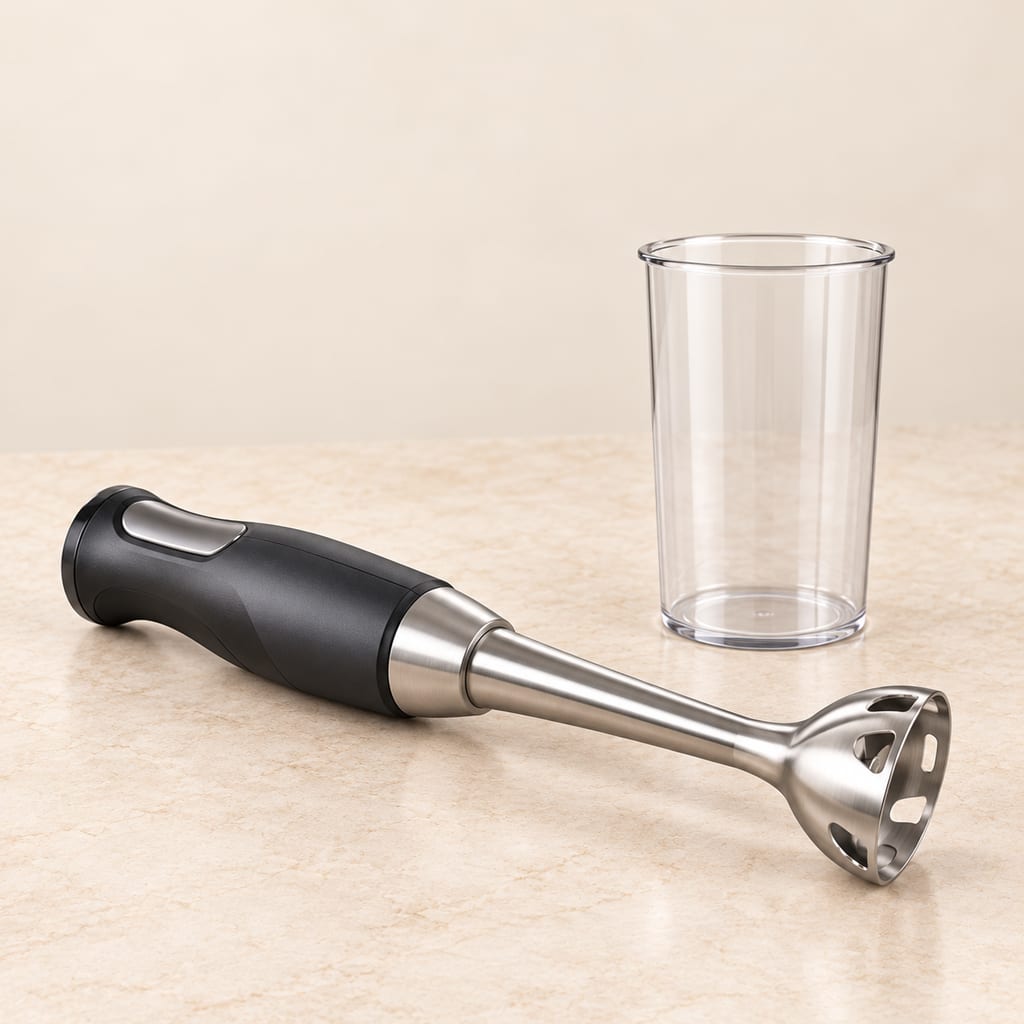
A handheld electric blender with a guarded blade shaft lowered into food in a suitable vessel; a modern tool for sauces and some condiments, not a traditional fermentation vessel.

A model-specific countertop blender with a 2 L low-profile Classic container, ten manual speeds and five presets. “Pro 750” is the European short name for Professional Series 750; electrical ratings differ by region.
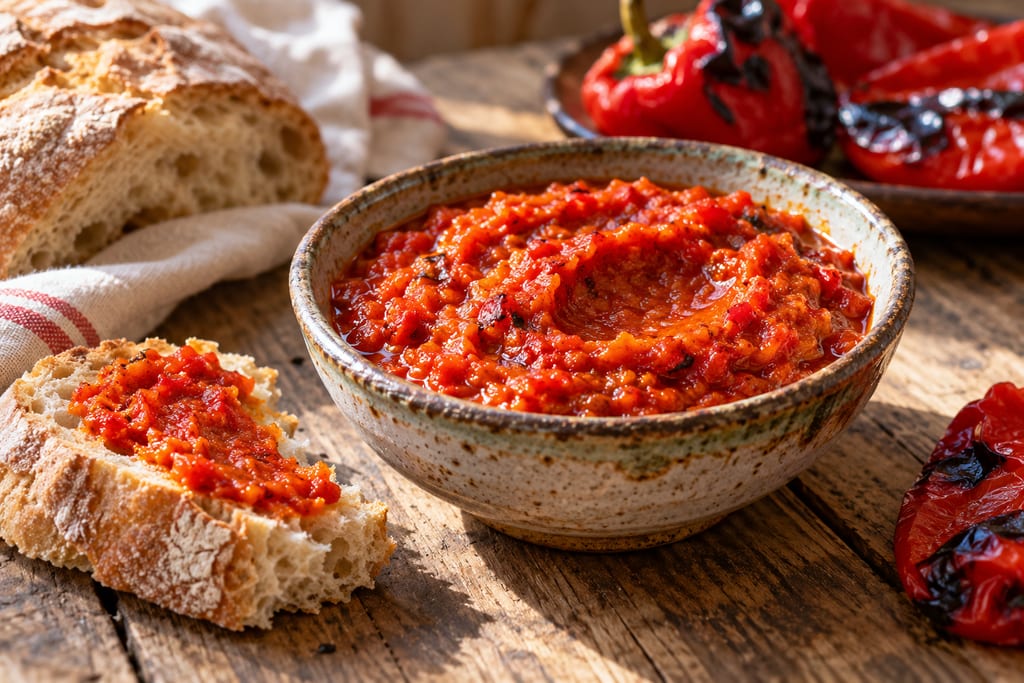
Ajvar is a cooked Balkan pepper preserve built around roasted red peppers, peeled, drained, ground and slowly fried with oil and seasoning. Leskovac’s protected version is a pepper specialty; regional versions vary.
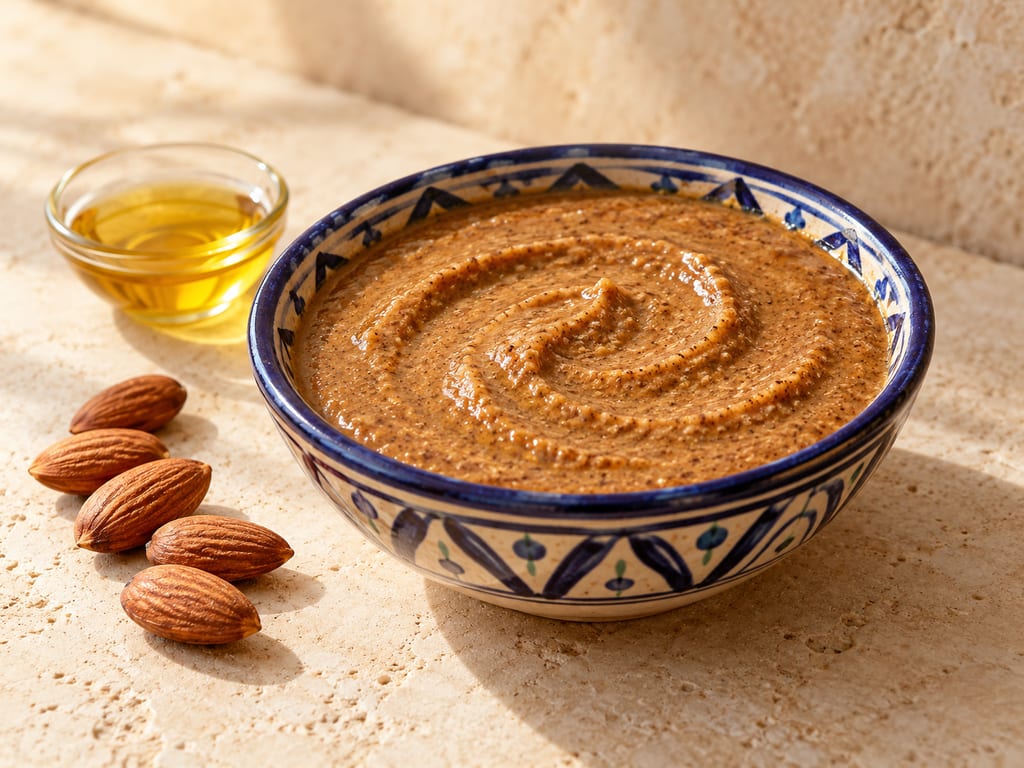
Amlou is a nutty, lightly sweet Moroccan spread of roasted almonds, culinary argan oil and honey. The almonds are ground first, then loosened with oil and sweetened; the balance can range from a thick spread to a dip.
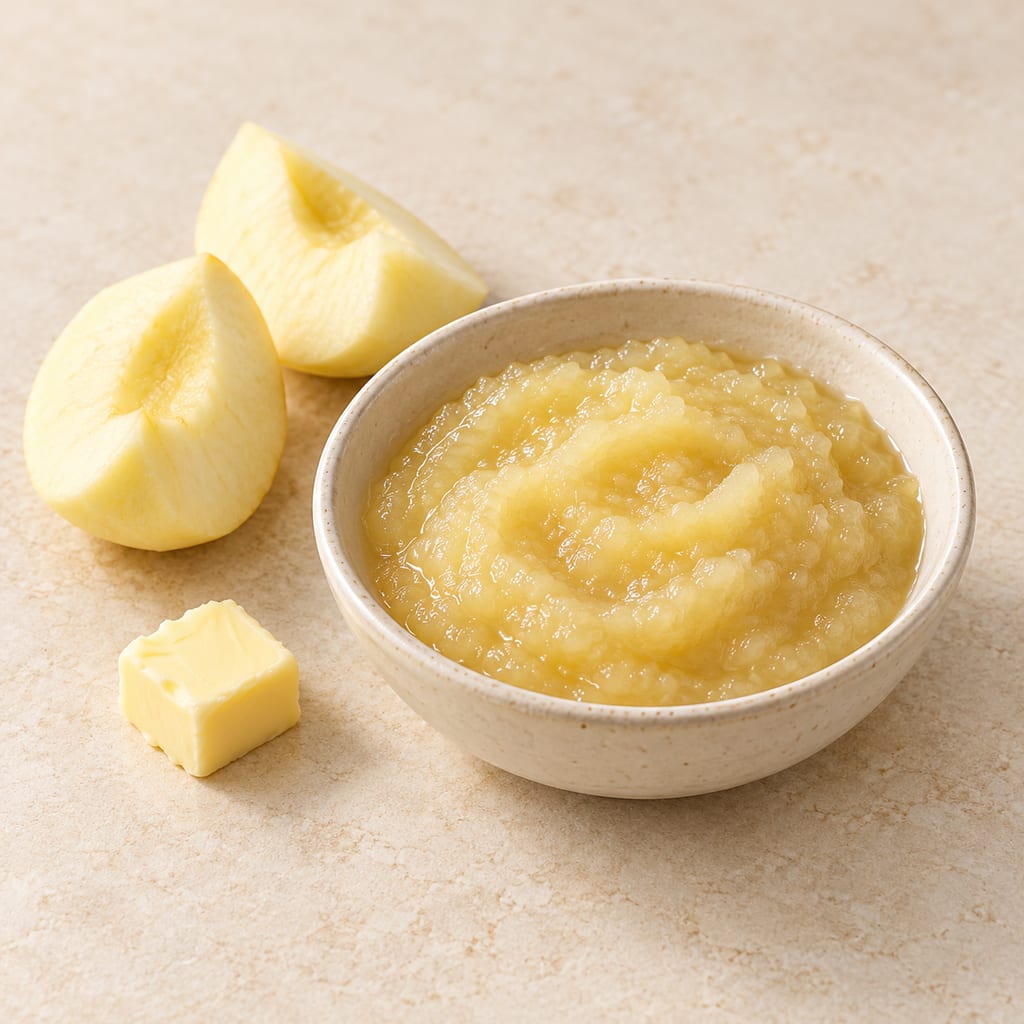
Apple sauce for goose and pork is a plain English accompaniment: cooked apples pulped with water, then sweetened with sugar and finished with a little butter.

A warm dip of garlic, anchovy and olive oil, often enriched with butter, that Piedmont serves over a flame with raw and cooked vegetables and bread.
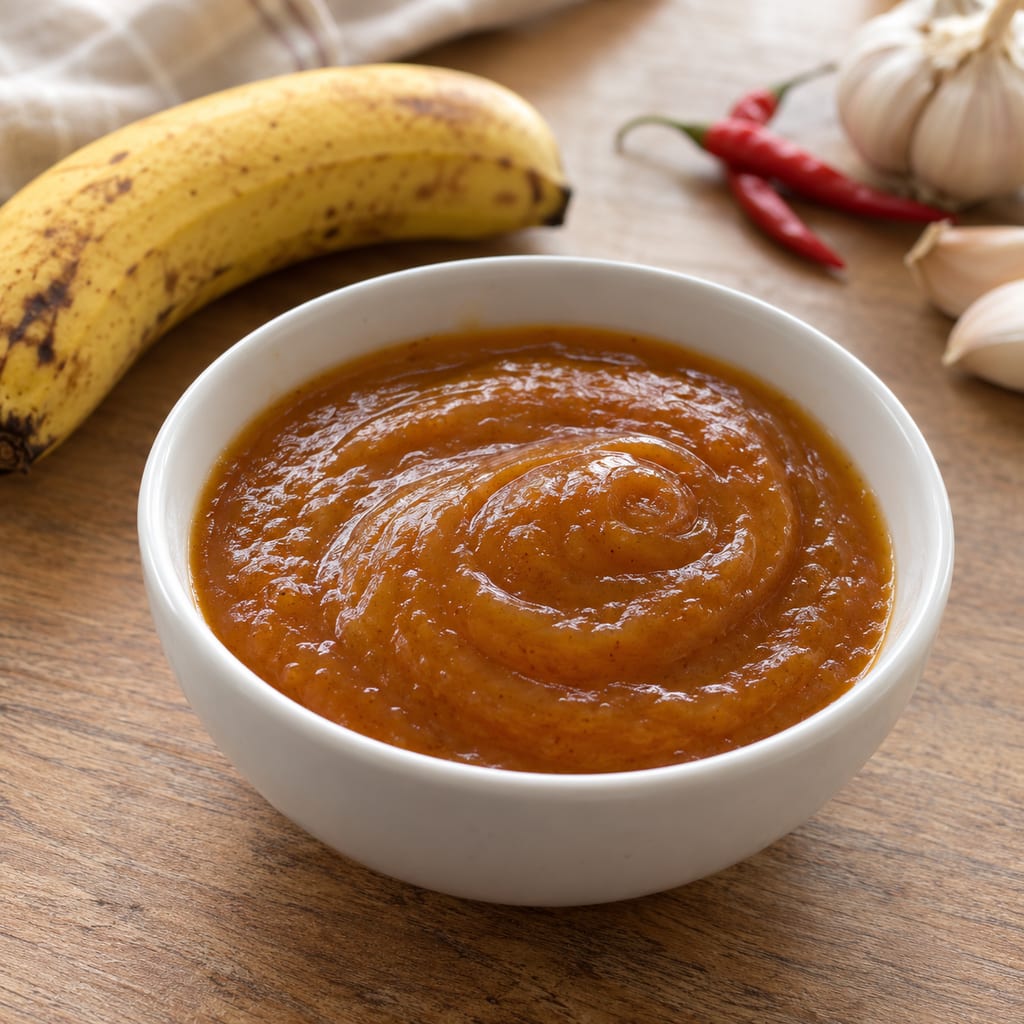
A sweet-hot table sauce of ripe banana simmered with vinegar, sugar, onion, garlic and fresh chilli, in the manner of Philippine banana ketchup. An untested development batch of about 500 g.
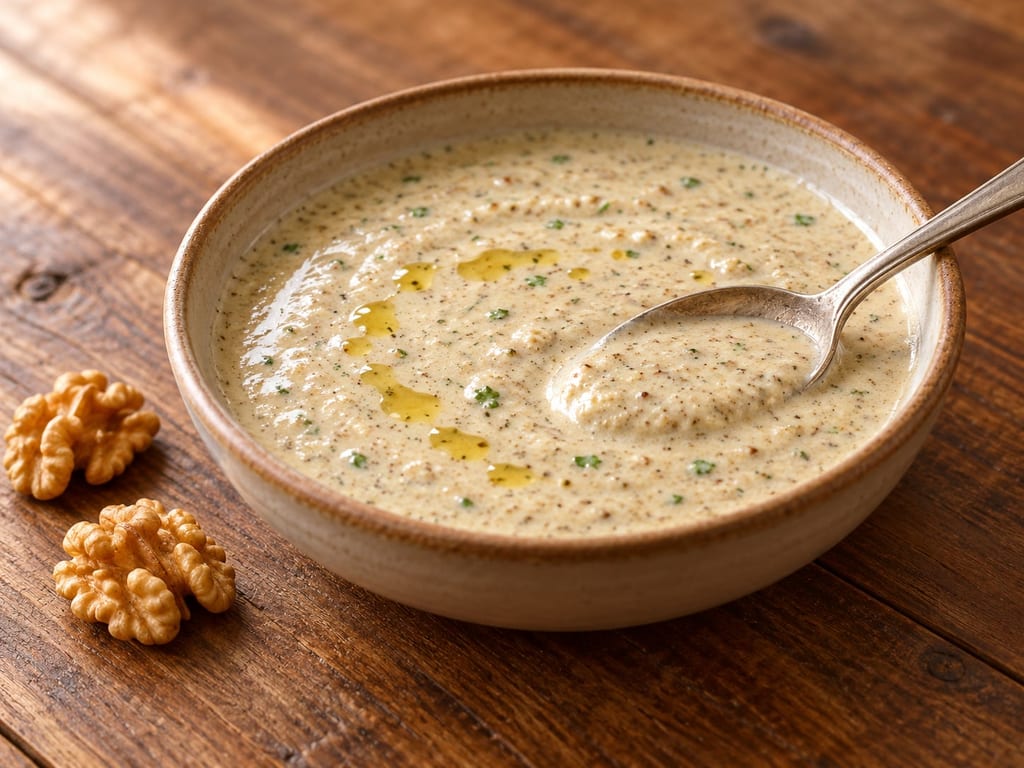
A Georgian walnut sauce of ground walnuts, garlic, vinegar and spices, thinned with water or broth. It is served with poultry, vegetables and bread, and is the sauce of the dish satsivi.
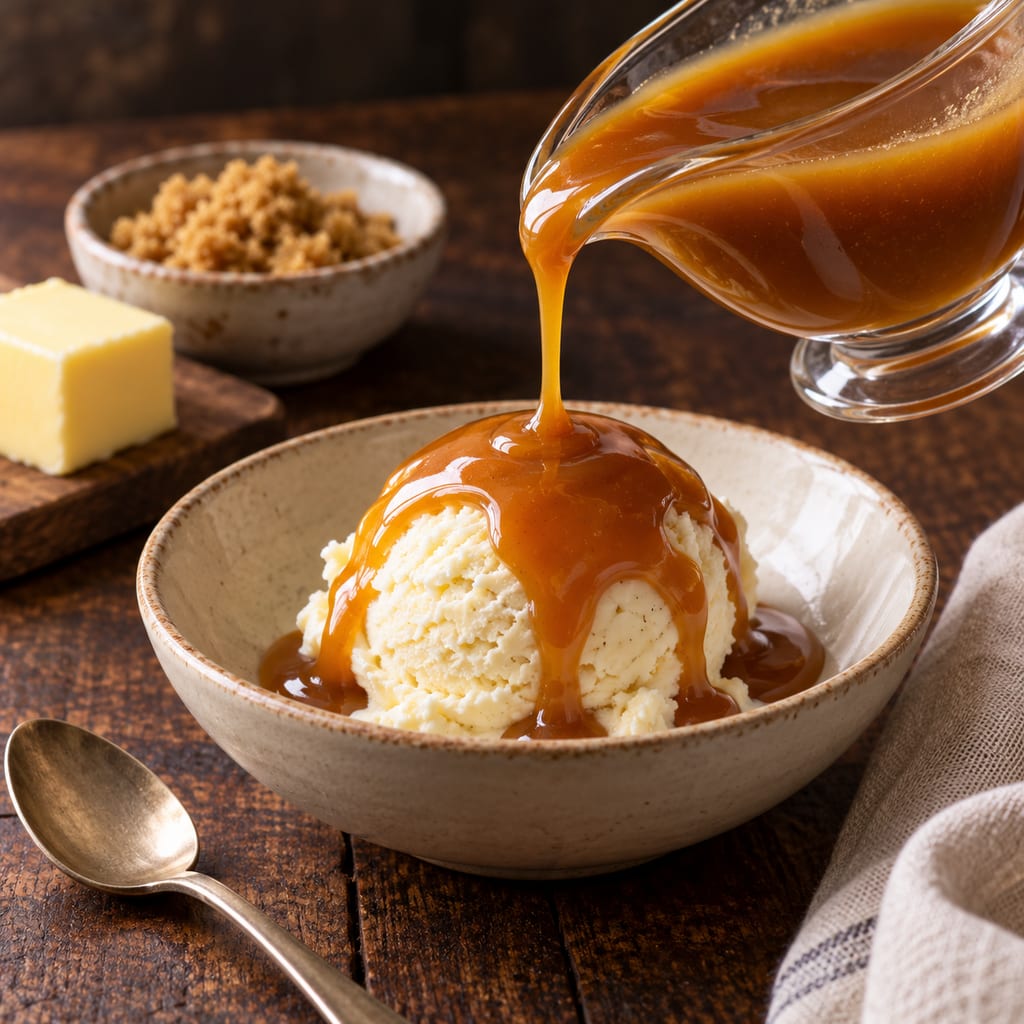
A pourable dessert sauce of brown sugar, butter and cream, with a little corn syrup and salt. It is the sauce form of the butterscotch confection and is made without water, unlike caramel.
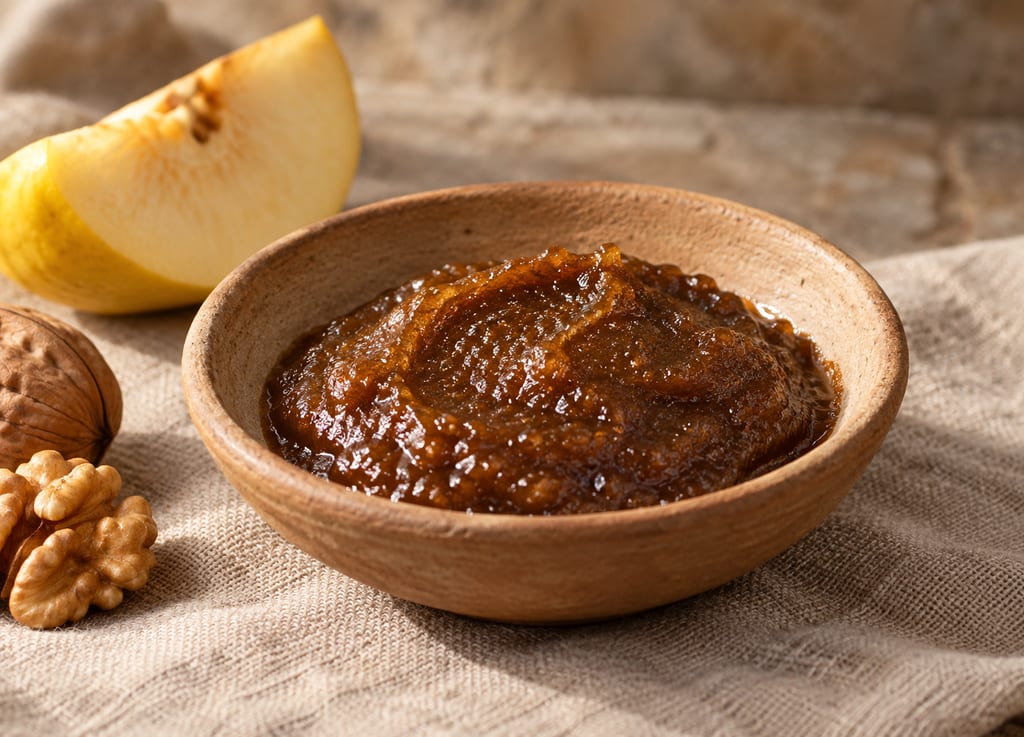
Byzantine murrī is a cooked imitation of murrī from the medieval Arabic repertoire, made from scorched honey, toasted bread, walnuts, quince, carob and spices rather than from a long grain fermentation.
No community contributions have been published for this entry yet.
Sign in to contribute. Published comments and photos are free to read.
Ministère de l'agriculture et de l'alimentation (Bulletin officiel 2021-36); INAO as service compétentInspiration · Method
Cahier des charges de l'indication géographique protégée Moutarde de Bourgogne, homologué par arrêté du 23 août 2021Supports the account in “A mustard you can see the seeds in”.
Supports the account in “Where the seed comes from”.
Cited in: A mustard you can see the seeds in; Where the seed comes from
Elsevier, Food ChemistryInspiration · Method
Thermal and pressure stability of myrosinase enzymes from black mustard (Brassica nigra L. W.D.J. Koch. var. nigra), brown mustard and yellow mustard (full title continues beyond the record's display limit; the brown and yellow entries are Brassica juncea and Sinapis alba)Supports the account in “Two seeds”.
Cited in: Two seeds
Elsevier, Food ChemistryInspiration · Method
The effect of processing on the glucosinolate profile in mustard seedSupports the account in “Two seeds”.
Supports the account in “Where the seed comes from”.
Supports the account in “Blend a third, fold it back”.
Cited in: Two seeds; Where the seed comes from; Blend a third, fold it back
La Moutarderie Edmond FallotInspiration · Method
La Moutarde en Bourgogne (La Moutarderie Edmond Fallot)Supports the account in “Where the seed comes from”.
Cited in: Where the seed comes from
SPAKInspiration · Method
SPAK | Klasická hořčice 500 g - SPAKSupports the account in “The long, cold soak”.
Cited in: The long, cold soak
Auran (Turku, Finland)Inspiration · Method
Auran Makea sinappi 275g - Auran (tuotenumero 170084)Supports the account in “The long, cold soak”.
Cited in: The long, cold soak
HändlmaierInspiration · Method
Süßer SenfSupports the account in “Coarse and sweet: Bavaria and Krems”.
Supports the account in “Beer, honey and other turns”.
Cited in: Coarse and sweet: Bavaria and Krems; Beer, honey and other turns
Food Standards Agency (published on GOV.UK)Safety
How to chill, freeze and defrost food safely - GOV.UKSupports prompt chilling and refrigerator handling guidance.
Cited in: Reading the batch; Serving and keeping
Food Standards ScotlandInspiration · Method
Chilling foodSupports the account in “Serving and keeping”.
Cited in: Serving and keeping