A blender used in the food itself
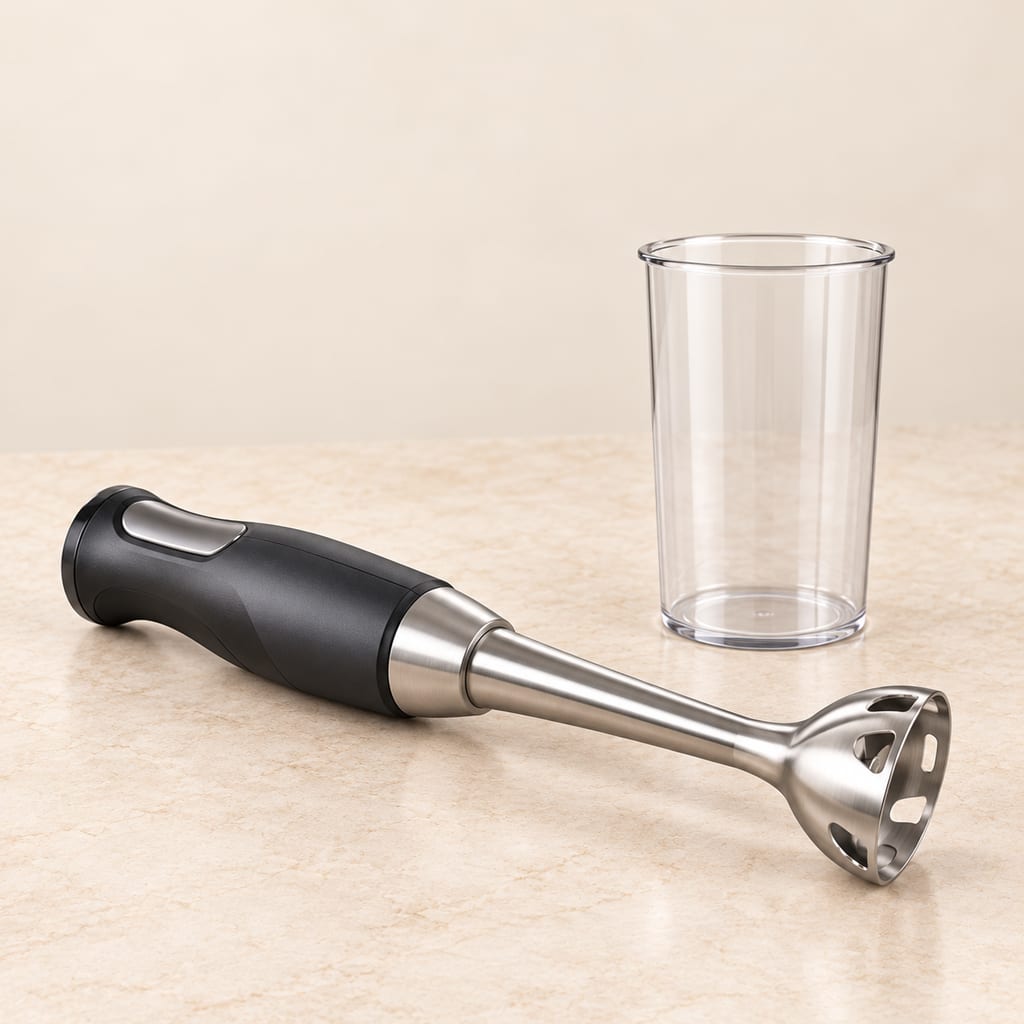
An immersion blender, also called a hand, stick or wand blender, is a powered handheld appliance. The motor is held above the food while a narrow shaft carries a rotating blade into a bowl, pan or jar. A bell-shaped guard around the blade is common on modern examples, but blade geometry, speed controls, detachable shafts and attachments differ by model. Rather than transfer ingredients into a countertop blender jar, the operator generally works in the vessel where the food already sits. It is not a storage or fermentation vessel.
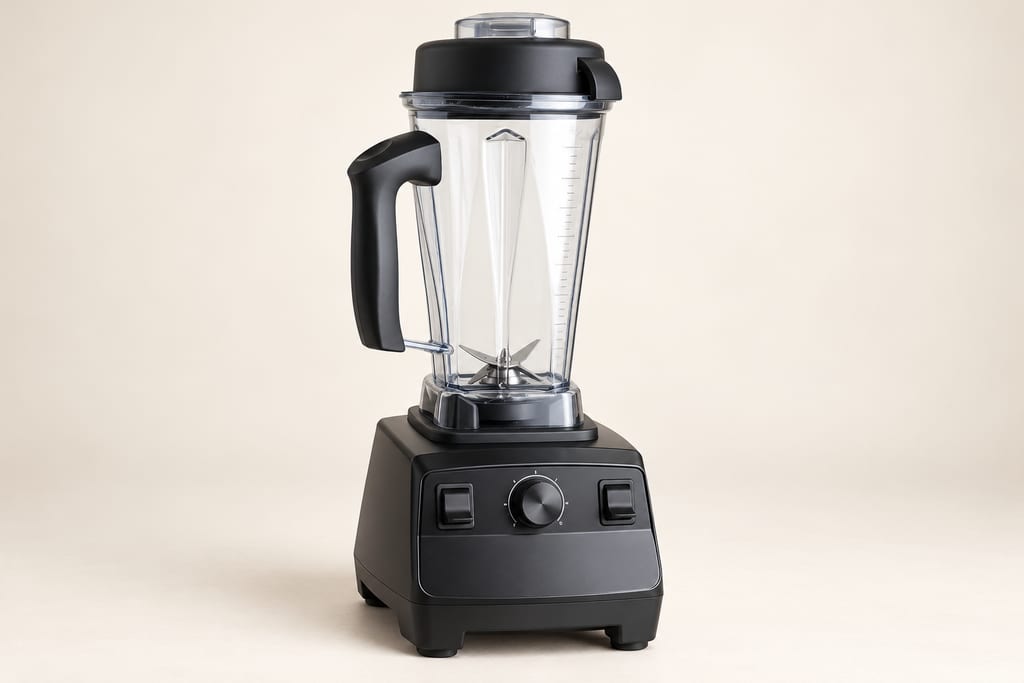
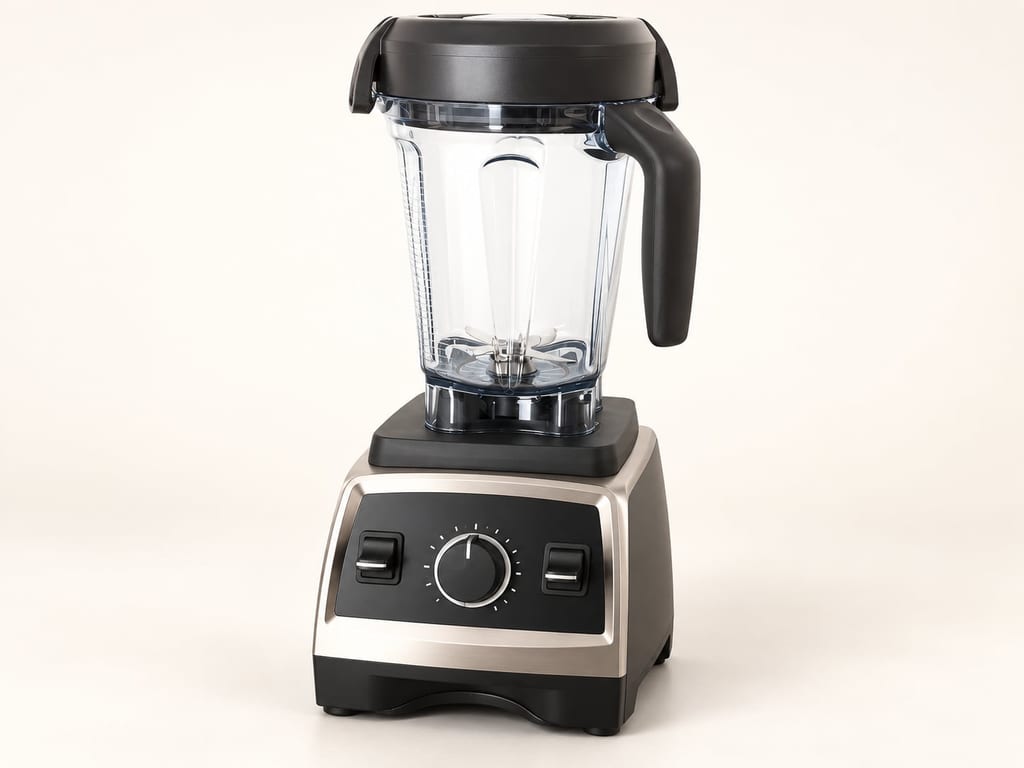
The head must reach the food and fit the container. This type is distinct from the broader blender category, which also includes countertop jar blenders and may include food processor attachments. Braun's company history dates its first hand blender to 1966. That supports a milestone in Braun's own product history, not a claim that the company invented the global equipment class.
Sources for this section
A modern tool in a mustard example
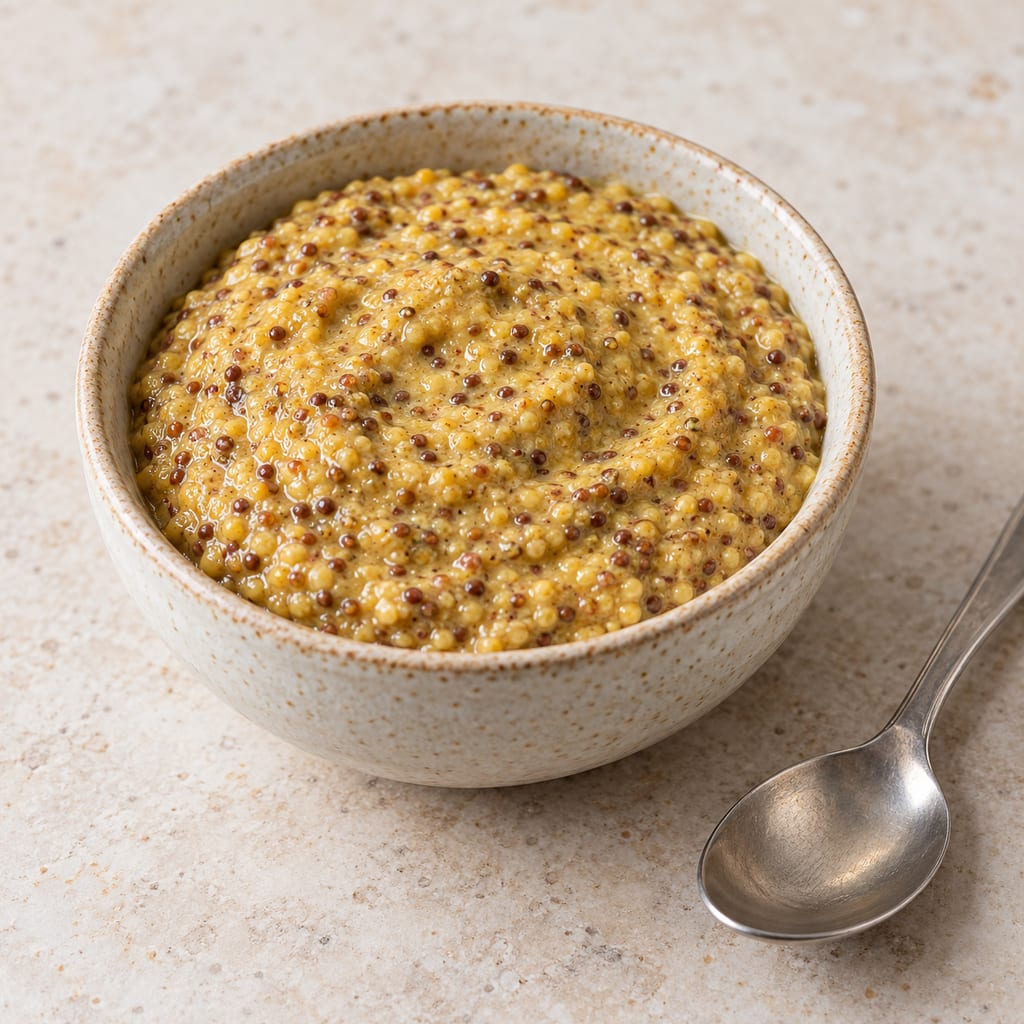
The supplied equipment dossier points to Vitamix's whole-grain mustard recipe as a documented example of immersion blending soaked mustard seed. The current manufacturer recipe combines yellow and brown seeds with apple-cider vinegar and ale, refrigerates the mixture overnight, then adds honey and blends in the Vitamix immersion jar or a suitably sized container. Its directions keep the blade head below the liquid and blend for about a minute, stopping at the desired texture.
This is an appliance-assisted condiment method, not evidence that immersion blending is traditional mustard equipment. The recipe describes soaking and grinding, not a validated fermentation process; it does not establish ambient stability or a general preservation method. The food's cultural history and the recipe's preservation choices remain separate from the tool used to change its texture.
Sources for this section
What blending does and does not describe
A rotating blade cuts and disperses ingredients within the container. Pulsing can leave seed fragments intact while sustained blending makes a finer paste. In the cited recipe, soaking hydrates seeds before the appliance is used; the motor changes particle size rather than adding a culture or fermenting food. Vinegar and other ingredients belong to that recipe, not to the definition of a hand blender.
Hand blenders are useful for sauces, purees and some condiments in appropriately sized containers, but they are not interchangeable with mixers, grinders or food processors. Their cutting geometry, batch capacity and handling differ. Manufacturer manuals govern immersion limits, container compatibility, temperature, runtime and cleaning. Braun's catalog shows several series and accessory configurations, so no one model's wattage or features are assigned to the entire type.
Sources for this section
Geography and historical limits
Braun's timeline places the company's first hand blender in 1966 within its own household-appliance history. Its current pages describe products designed in Germany, while Vitamix's recipe is published on a US site. These are a company history, design statement and publication context; they do not establish where the first hand blender was invented or where appliances are manufactured.
The broader equipment origin and manufacturing geography therefore remain unknown. This is contemporary domestic food-preparation equipment. Its documented use with wholegrain mustard illustrates one modern way to process a condiment without transferring the food's historical identity to the machine.
Sources for this section
History
The date is a Braun company milestone, not proof of worldwide invention.
Equipment details
How you get oneBought, manufactured A powered domestic appliance; exact construction, power, attachment set and production location vary.
CareFollow the specific model manual. Motor units, detachable shafts, blade guards and attachments can have different immersion and cleaning limits.
Made of
- Metal, plastic and electrical components — common contemporary form; varies by model
Manufacturer pages show motor handle and detachable shaft with guarded blade; not a universal material specification.
Limits
The Vitamix mustard recipe's proportions, soak and blend time are recipe-specific and do not establish a universal formula or preservation method.
Source →Use the exact model manual for permitted containers, immersion, cleaning and attachment compatibility.
Source →Places
Unknown
Relationship not established · Place not establishedBraun dates its own first hand blender to 1966 and Vitamix hosts a US recipe; neither establishes a worldwide origin or the manufacture location of any particular unit.