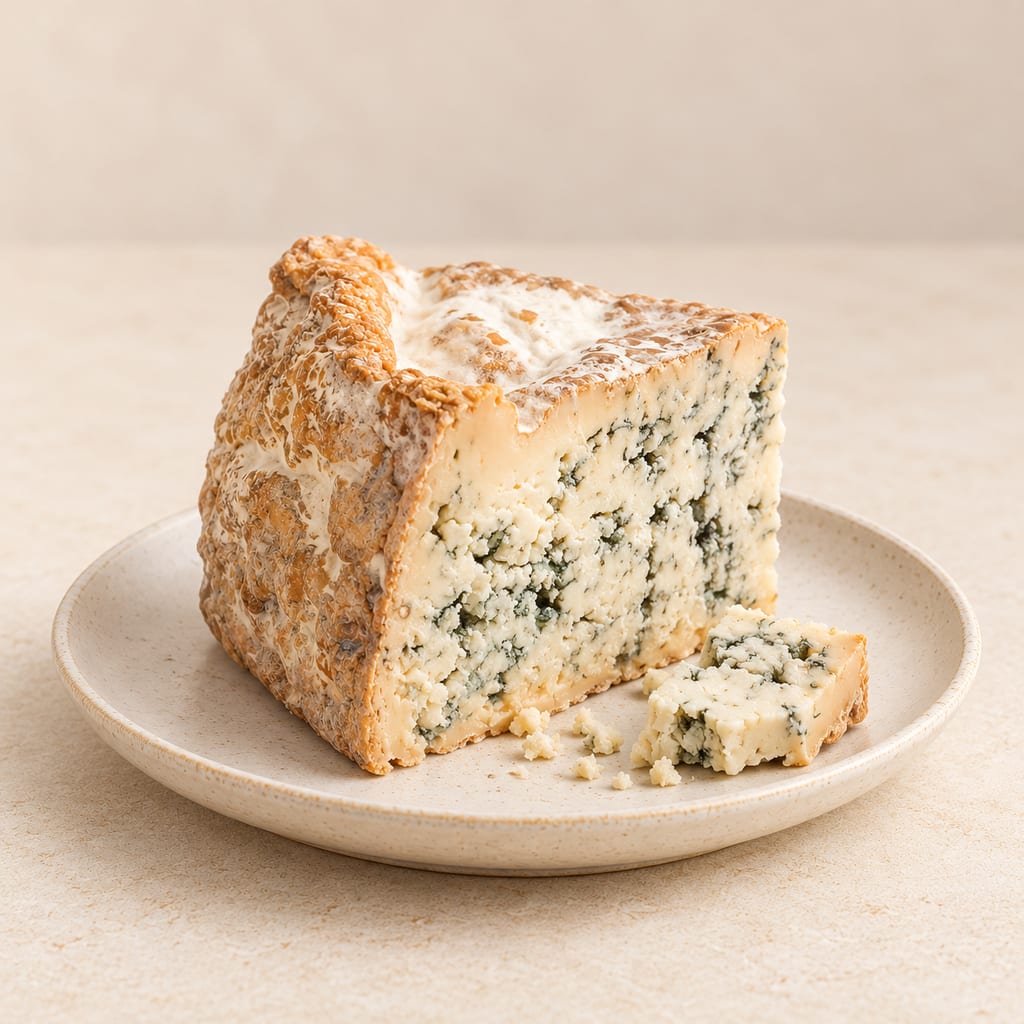
Spanish-style blue cheese
A moist blue cheese inspired by Cantabrian styles, made with pasteurized milk, a lactic starter and Penicillium roqueforti, then ripened in two stages.
 FermenteaWhere food goes to change
Cultures
A selected fungal culture for blue cheese. Growth in air spaces and enzymes acting on casein and fat help develop the marbled paste and characteristic aroma.
Penicillium roqueforti culture supplies selected fungi for ripening blue cheese. A prepared inoculum enters milk or curd, then grows where the cheese offers suitable nutrients and access to air. Its blue-green growth marks the cavities and channels inside a wheel, while enzymes help change the surrounding paste. The powder added to a vat and the marbled cheese eventually cut at the table are different stages in that living ingredient's work.
The familiar veins therefore depend on more than color. A cheese-maker builds a curd structure in which the fungus can grow, manages moisture and salt, and allows maturation to change the proteins and fat. The culture participates in this system alongside the milk-clotting enzyme, lactic bacteria and other organisms. Its value is the combination of visible growth and biochemical activity, developed within a particular cheese rather than simply mixed in as blue seasoning.
The history reaches beyond the age of commercial culture packets. In 2021, Frank Maixner and colleagues investigated preserved human feces from the salt mines at Hallstatt in Austria. Molecular analysis of an Iron Age sample recovered abundant Penicillium roqueforti evidence. Comparisons with modern fungal genomes placed the ancient organism near a cheese-associated lineage. Together with the archaeological setting, the results supported an interpretation of food processing that probably produced a blue-cheese-like food.
That evidence captures a meal indirectly through what survived digestion and preservation. It does not preserve a wheel, a complete recipe or the modern preparation in a sachet. Its interest lies in showing how much of food history can reside in microbial traces. A fungus associated today with a distinctive ripened cheese was present in an ancient dietary context, and its genetic affinities help distinguish that interpretation from the accidental presence of an arbitrary environmental mold.
A different kind of record appears in Charles Thom's 1906 USDA bulletin on Camembert and Roquefort fungi. Thom cut open market cheeses, examined their internal channels and cultured organisms from them. He described the green Penicillium lining air spaces and distinguished the consistent interior growth from a more variable surface. The cheese's structure and its biology could be studied together: holes, cracks and ripening organisms were connected features of the same food.
Thom also examined related blue cheeses, including Gorgonzola and Stilton. His work asked how similar fungi could occur in cheeses with different materials and handling. He carried out culture experiments on curd, observing digestion and changes in flavor as the fungus acted. These were early attempts to separate the organism's activity from the many other events hidden within the word ripening. Their historical observations do not provide a present-day home maturation schedule.
The accepted name Penicillium roqueforti is recorded by Index Fungorum with Thom's 1906 publication. It belongs to the fungal family Aspergillaceae. A scientific name identifies the organism at species level; a commercial product name adds information about a particular preparation. The naming date records a taxonomic description, while the Hallstatt evidence concerns much older food use. Neither fact establishes the launch of a modern powder or the identity of its selected strain.
A colony is built from fine branching threads called hyphae. Together they form mycelium, while specialized structures produce chains of spores called conidia. Thom described the brush-like branching of those spore-bearing structures and treated microscopic characters and culture behavior as part of identifying the fungus. The familiar blue or green patch is consequently a colony with both growing tissue and reproductive structures. Its color alone does not establish its identity. For a prepared cheese culture, selection and identification happen before the maker measures the ingredient; recognizing a colored patch on an unrelated food cannot replace that work.
A dairy culture is shaped by selection as well as naming. Fungi that grow successfully on cheese can differ from populations encountered in spoiled food or other environments. Repeatedly propagating a useful culture favors organisms suited to the conditions and qualities a producer values. Growth in salted curd, production of spores, cavity colonization and enzyme activity can all matter to that choice. The species encompasses variation across these traits.
Genomic and experimental work published in 2020 reconstructed independent cheese-domestication histories within Penicillium roqueforti. Cheese-associated populations differed in growth, spore production and biochemical activity. Their diversity makes the culture more interesting than a single universal agent of blueness. It also gives a practical reason to retain commercial product distinctions: a species label alone cannot guarantee one rate of ripening, one aroma profile or one response to a cheese-making environment.
Earlier culture supply included multiplication on bread, followed by the collection of spores for cheese-making. More controlled culture production and the preservation of selected strains changed that supply chain. A purchased freeze-dried preparation now allows a maker to introduce a named ingredient without carrying out that propagation process. The history explains how specialist microbial work became a compact input to the vat; it is not a procedure for cultivating an unknown household mold.
Commercial codes describe another level of choice. A supplier may offer a product such as PV, while another manufacturer supplies LyoPro PR with its own formulation and stated properties. The Spanish-style blue recipe linked here names Penicillium roqueforti without identifying its strain or commercial code. Its spoon measure should therefore remain attached to that recipe, rather than being used to infer the manufacturer or to convert between products with different activity declarations.
The fungus needs a physical setting as well as an inoculation. In a blue cheese, openings between curd pieces provide routes through the interior. If those pieces collapse into a dense mass, the potential growing space changes. If they remain too separate or dry, the cheese may fail to consolidate as intended. Draining and forming are consequently part of the culture's environment, even though neither operation is microbial metabolism.
The linked Spanish-style method makes that relationship explicit. It aims for moist curds with enough structure to retain internal gaps, drains them separately before filling the form and avoids an added pressing weight. These stages build the network in which later blue growth develops. The lactic starter continues changing the curd during forming, while salting changes the conditions encountered by the ripening community. The young cheese is still developing after it first takes its final shape.
Piercing introduces further air paths. A skewer's channels connect the interior with the surroundings and support mold growth beyond the surface. The visible result can follow existing cavities as well as the deliberately made holes, creating irregular veins rather than a uniform blue block. Fresh-air exchange and later wrapping are additional parts of the linked method's management of growth. Their exact sequence belongs to that cheese and its specified ripening environment.
This interior ecology differs from a white bloom covering the outside of Brie. Penicillium roqueforti and Penicillium candidum are separately named ripening ingredients, and their characteristic applications organize fungal growth in different places. In both cases a maker combines biological activity with a carefully formed food structure. A visible mold coat or vein is one result of the process, while much of the change in texture and flavor happens in the material around it.
Protein breakdown helps turn a young curd into a mature paste. Proteases cut casein into smaller fragments; further enzymes can act on the resulting peptides. As this material changes, the original protein framework and the pool of flavor precursors change with it. The fungus can therefore affect the cheese beyond the points occupied by visible blue growth. Texture is a consequence of the altered matrix as well as the pattern seen on a cut surface.
Fat supplies a second route to characteristic aroma. Lipases free fatty acids from milk fat, making smaller molecules available for further metabolism. Penicillium roqueforti cultures can transform fatty-acid substrates into methyl ketones associated with blue-cheese flavor. Research using a cheese-derived culture has investigated a pathway involving incomplete fatty-acid oxidation and subsequent decarboxylation. This is a mechanistic model supported through experiments, rather than a claim that every metabolic detail is identical in every cheese strain.
The distinction between releasing a precursor and transforming it is useful. Lipolysis makes fatty acids available; later reactions produce another set of compounds. Protein digestion likewise generates material for further changes. Ripening combines these connected transformations with activity from the milk, the coagulant and other microorganisms. A single fungus need not account for every aroma or every softened region for its contribution to be central to the finished cheese.
Conditions influence the balance of those activities. The organism receives curd already affected by milk composition, bacterial acidification, coagulation and drainage. Salt and moisture then shape its growing environment. The particular strain contributes its own characteristics within that setting. This is why a culture's catalogue description and the cheese method belong together: neither a species name nor an isolated laboratory result predicts the complete eating quality of a wheel.
Prepared cultures can contain carriers alongside the fungal material. LyoPro PR provides a concrete example: its manufacturer lists Penicillium roqueforti with maltodextrin and lactose and declares milk in the allergen table. It is described as a freeze-dried direct-vat ripening culture. Those facts concern that named formulation, while another product can have different carriers, activity units and handling directions.
The distinction matters for both storage and dosing. A freeze-dried packet, a measured dry portion and a rehydrated suspension have different conditions of use. Manufacturer instructions address the exact preparation supplied. They may specify how to handle a frozen sachet before opening or how to prepare a suspension for a particular application. Such directions should remain with their product rather than becoming one universal procedure for all blue-mold cultures.
Dietary information also belongs to the complete chain. A milk-containing culture preparation needs its own declaration, and a blue cheese made from dairy milk retains the milk proteins of its substrate. Selecting a different culture does not remove those proteins from the cheese. Species identity alone establishes neither the presence nor the absence of a particular carrier in a packet; the current package and manufacturer information provide that answer.
For the linked make, the mold preparation is hydrated and added with a separately named lactic culture before rennet. The bacteria establish the milk-phase acid development, the enzyme sets the curd, and the fungal culture participates principally in ripening. Keeping those roles distinct makes the method intelligible without adding a new spray, propagation or dosing procedure to it.
Roquefort supplies an important French cultural setting, while selected Penicillium roqueforti cultures are used in other blue-cheese traditions. The LyoPro manufacturer names applications including Danablu, Gorgonzola and Stilton. These cheeses organize milk, curd handling and maturation differently. Their shared use of the species does not make their strains, recipes or protected identities interchangeable.
The immediate documented use on this site is a modern Spanish-style blue make inspired by northern Spanish cheeses. Its finished paste develops blue-green veins within a cheese whose moisture, lactic fermentation and handling follow that particular method. The culinary destination is the matured cheese, with its contrast between pale paste, colored channels and a developing piquant aroma. The concentrated culture starts that journey; the rest of the make gives its growth and enzymes a place to work.
Exact culture formulation governs. LyoPro PR declares milk and lactose carrier; dairy cheese retains milk allergens.
Roquefort cheese biology in Thom1906, not origin of every culture preparation.
IronAge paleofecal molecular evidence interpreted as blue-cheese-like food, not modern product provenance.
Country of origin of illustrative LyoProPR formulation only; recipe commercial strain unspecified.
A moist blue cheese inspired by Cantabrian styles, made with pasteurized milk, a lactic starter and Penicillium roqueforti, then ripened in two stages.
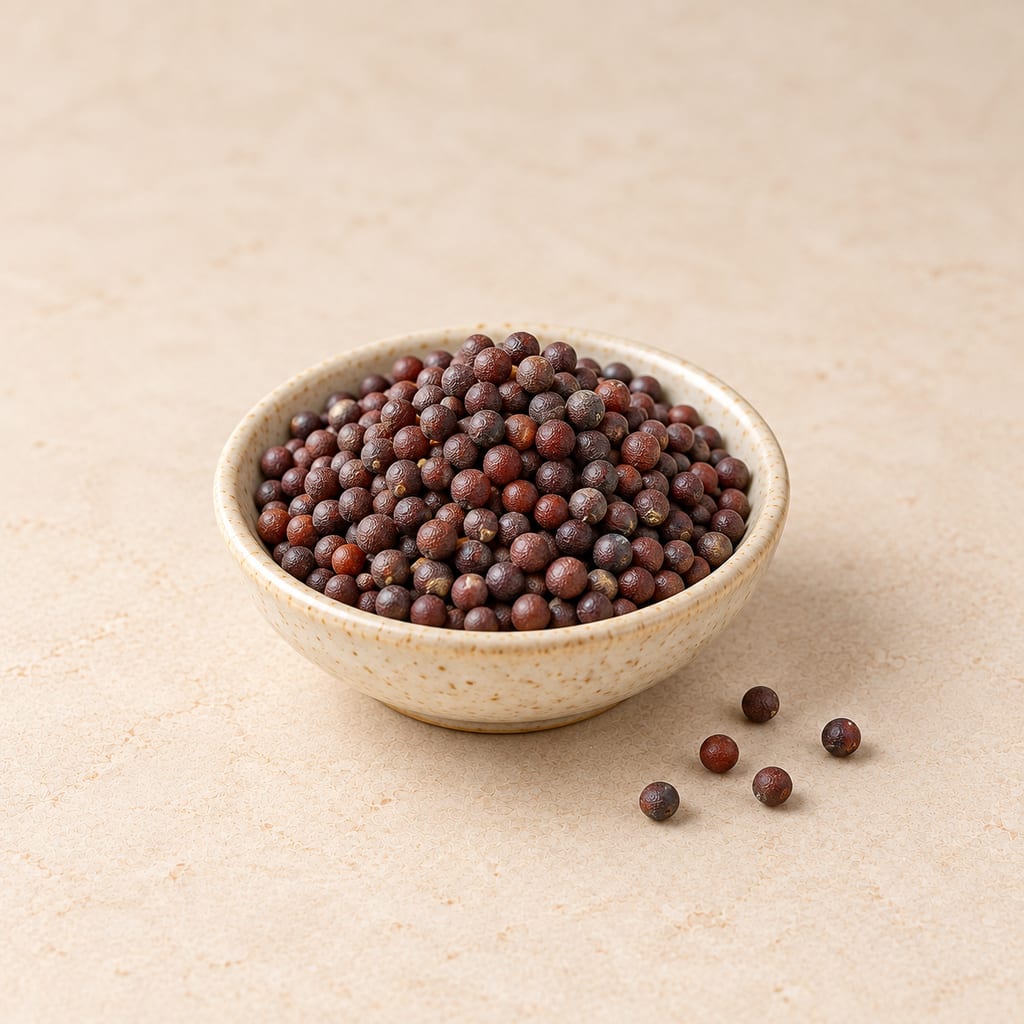
Black mustard seed is the small, dark, very pungent seed of Brassica nigra, the hottest of the three mustards. It gives its bite through sinigrin, which turns into allyl isothiocyanate when the crushed seed meets water.
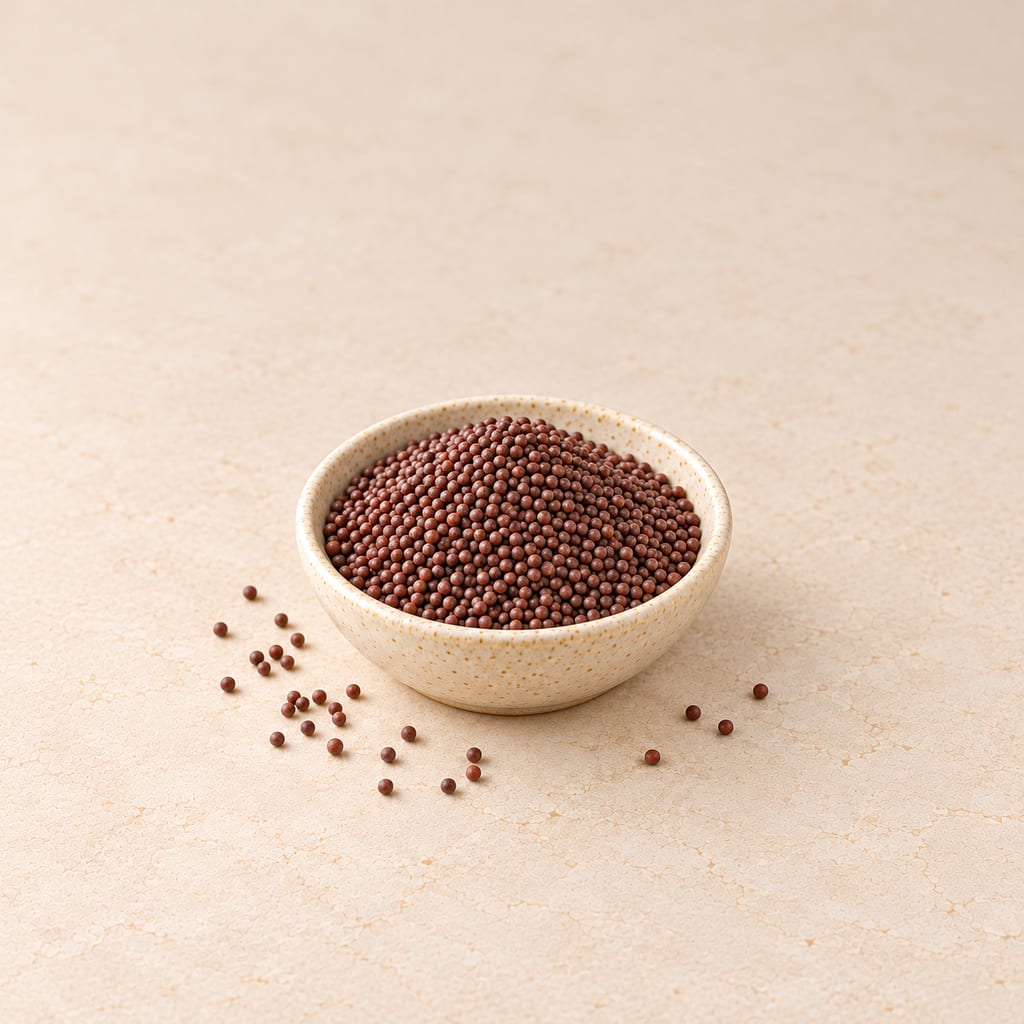
Brown or oriental mustard seed comes from Brassica juncea, a hybrid of black mustard and turnip rape. It is the hot, easily harvested seed behind Dijon, spicy brown mustards and much of the mustard oil of the Indian subcontinent.
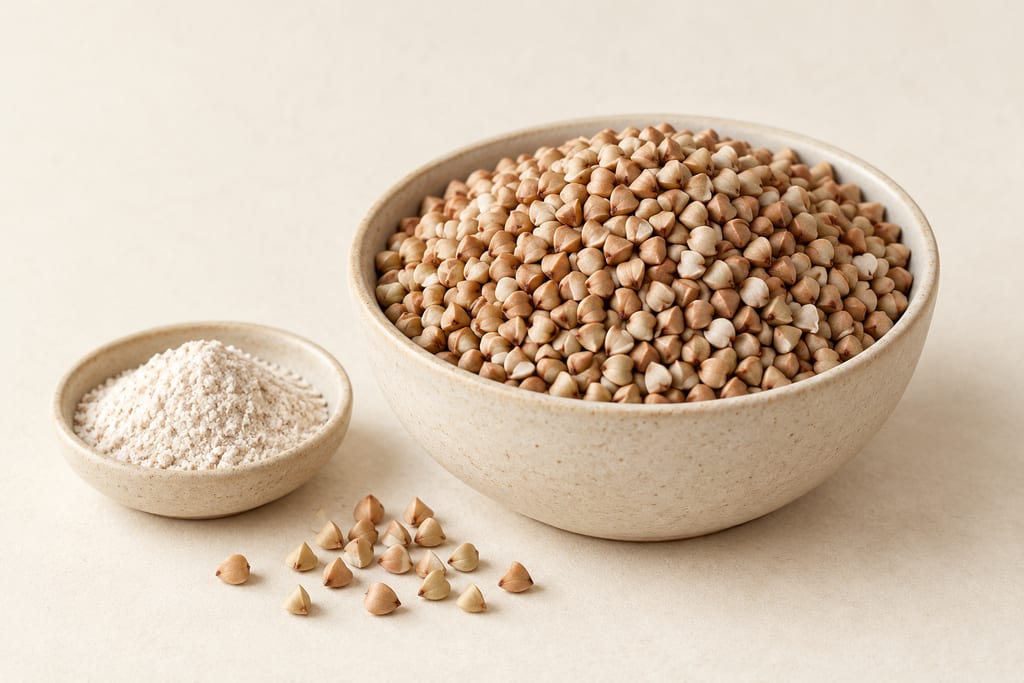
Buckwheat is a triangular-seeded flowering plant whose whole groats and flour cross regional food traditions, from porridge and pancakes to modern sourdough and gluten-free bread.
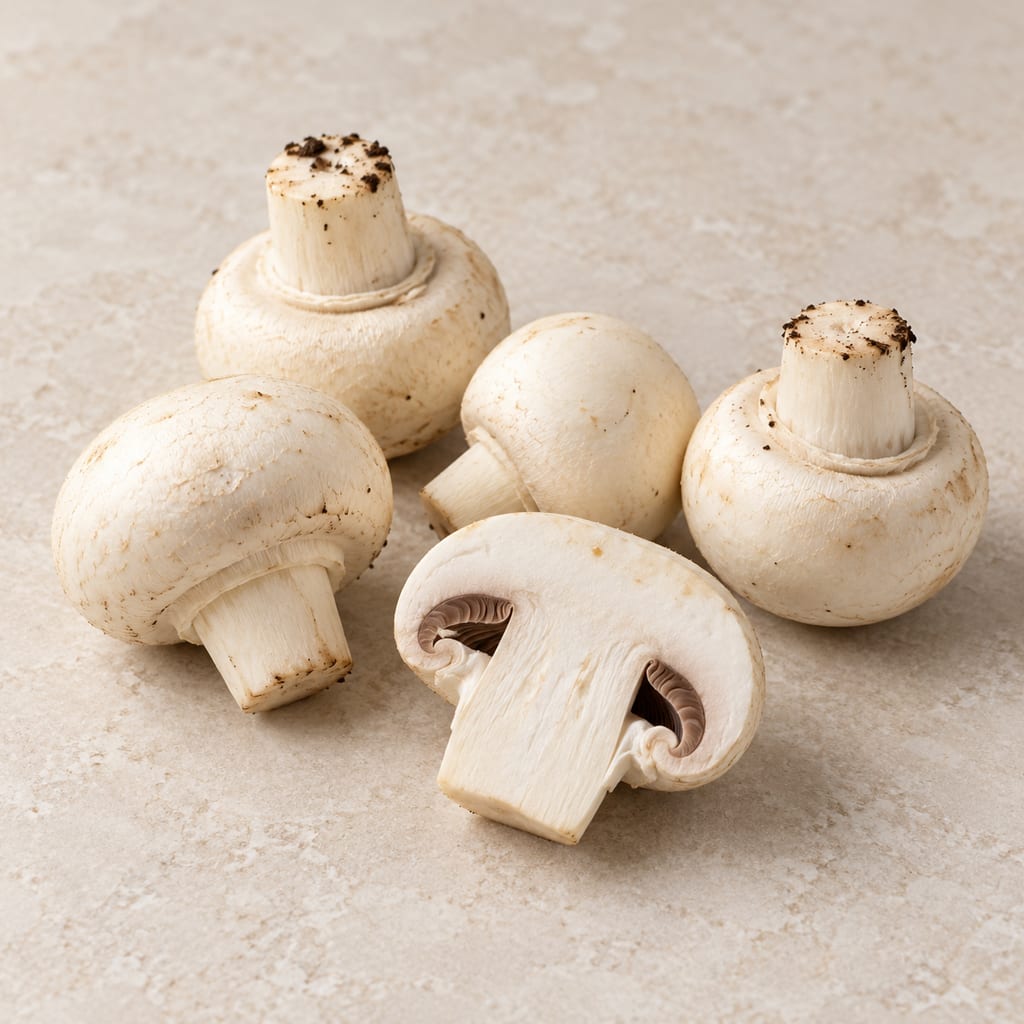
A cultivated form of Agaricus bisporus sold young as a button and at more mature stages as cremini or portobello, used fresh or preserved in everyday cooking.
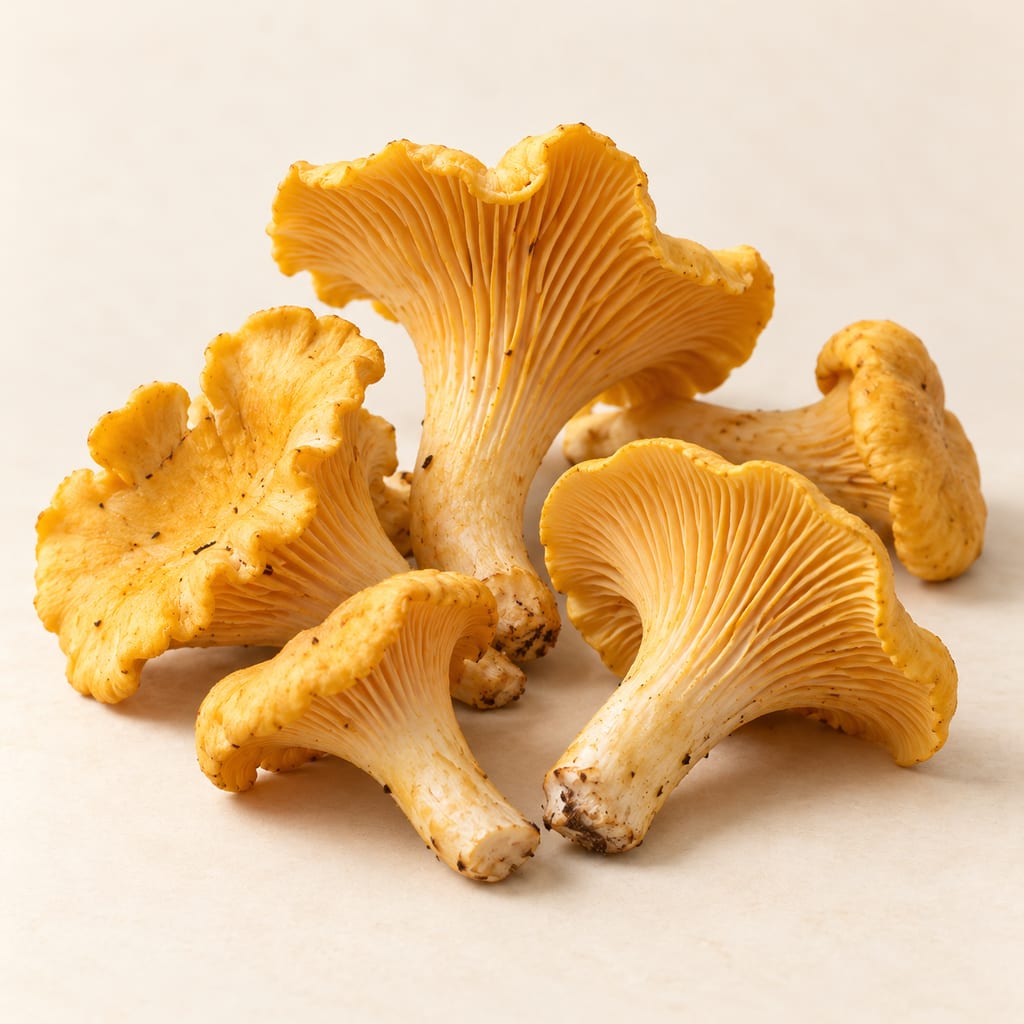
Chanterelles are wild, tree-associated edible mushrooms, particularly the European golden chanterelle Cantharellus cibarius, prized for their firm flesh, fruity aroma and use fresh, frozen, dried or pickled.

Chicken eggs supply proteins and yolk fats that set and emulsify. Atlas breads use them in enriched doughs, surface washes and a sourdough pancake batter mixed after fermentation.
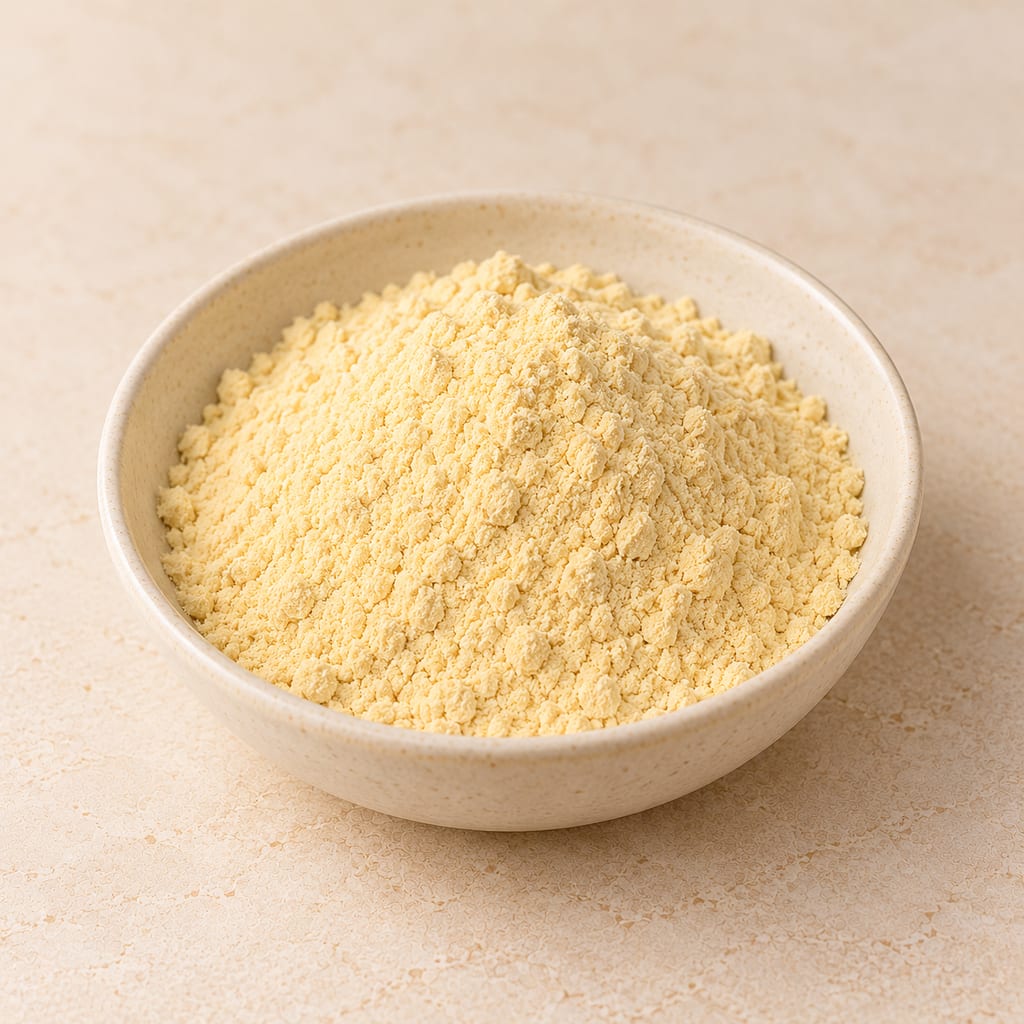
Chickpea flour is milled Cicer arietinum, used as besan in many Indian dishes and as the base of breads such as socca and farinata.
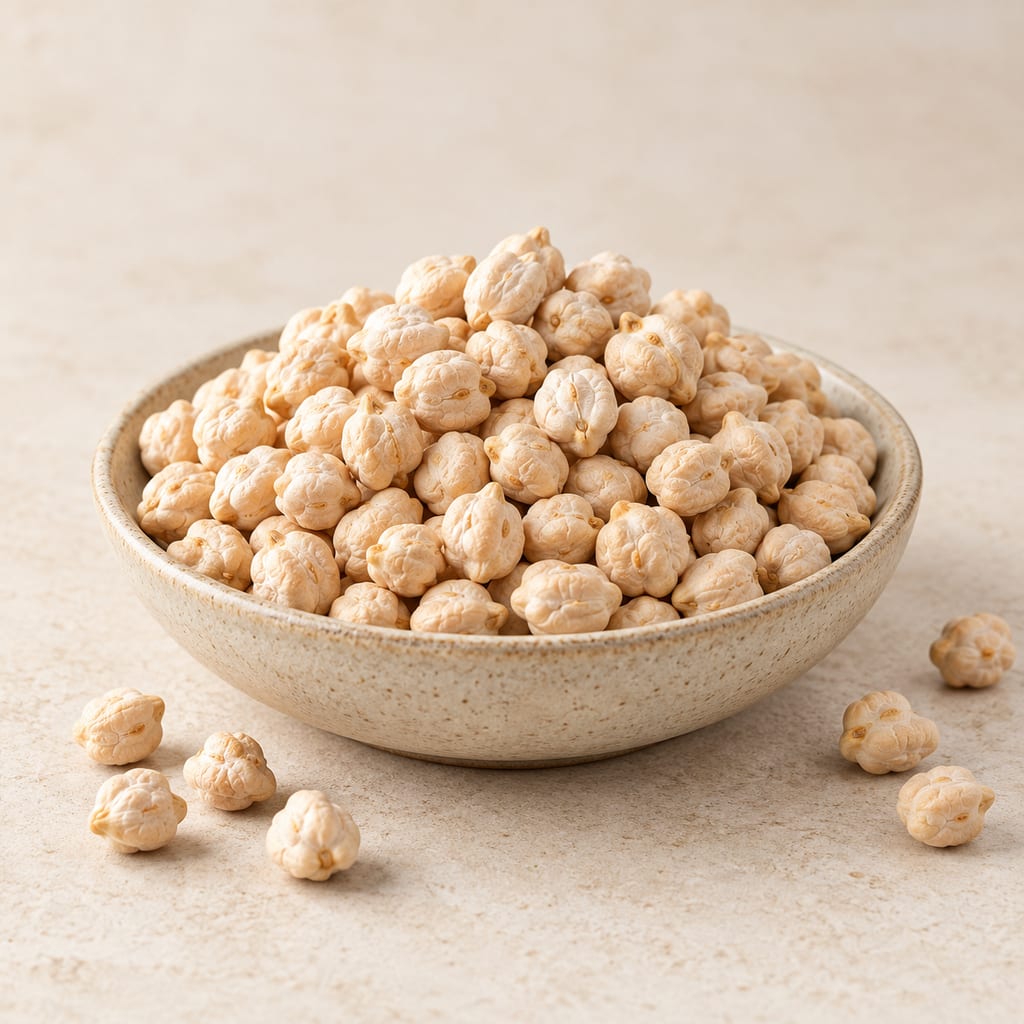
Chickpeas (Cicer arietinum) are dry pulses eaten whole or milled into flour, which gives socca, farinata and other breads a dense, nutty batter or dough.
No community contributions have been published for this entry yet.
Sign in to contribute. Published comments and photos are free to read.
Index Fungorum, Royal Botanic Gardens KewIdentity · History · Science · Handling · Use
Penicillium roqueforti Thom, NamesRecord213525Penicillium roqueforti Thom 1906 is recorded in Aspergillaceae;1906 dates the scientific name.
Cited in: A culture that gives blue cheese an interior life; Salt-mine traces and the naming of a cheese fungus
USDA Bureau of Animal IndustryIdentity · History · Science · Handling · Use
Fungi in Cheese Ripening: Camembert and Roquefort,1906Thom's historical account examines market cheeses, internal air spaces, fungal isolation, casein digestion and microscopic structures.
Cited in: A culture that gives blue cheese an interior life; Salt-mine traces and the naming of a cheese fungus; Making room for the blue; From casein and fat to a ripening paste; Different cheeses, shared fungal work
Current BiologyIdentity · History · Science · Handling · Use
Hallstatt miners consumed blue cheese and beer during the Iron Age and retained a non-Westernized gut microbiome until the Baroque periodIron Age Hallstatt fungal DNA and proteins support a cheese-associated organism and a probable blue-cheese-like food, interpreted from ancient dietary remains.
Cited in: Salt-mine traces and the naming of a cheese fungus
Molecular EcologyIdentity · History · Science · Handling · Use
Independent domestication events in the blue-cheese fungus Penicillium roquefortiThe species includes independent cheese-domestication histories and population variation, with documented bread propagation and industrial selection.
Cited in: Selection within a species; From casein and fat to a ripening paste
The Scientific World JournalIdentity · History · Science · Handling · Use
2-Pentanone Production from Hexanoic Acid by Penicillium roqueforti from Blue Cheese: Is This the Pathway Used in Humans?The fungal experiment connects fatty-acid substrates with methyl ketones and discusses incomplete beta-oxidation and decarboxylation as a pathway model.
Cited in: From casein and fat to a ripening paste
Codex-ing Biotech IngredientsIdentity · History · Science · Handling · Use
LyoPro PR Technical Data SheetLyoPro PR is a freeze-dried Penicillium roqueforti product with maltodextrin and lactose, Italian origin and a milk-positive allergen declaration.
Cited in: Selection within a species; The preparation in the packet; Different cheeses, shared fungal work
New England Cheesemaking Supply CompanyIdentity · History · Science · Handling · Use
Penicillium Roqueforti(PV)PV is a distinct named retail preparation; the linked recipe's commercial culture is unspecified.
Cited in: Selection within a species; The preparation in the packet
New England Cheesemaking Supply CompanyIdentity · History · Science · Handling · Use
Blue Cheese Recipe(A Spanish Blue)The Spanish-style blue method hydrates blue culture separately, adds cultures before rennet, retains spaces among moist curds and uses salting, piercing, air access and later wrapping.
Cited in: A culture that gives blue cheese an interior life; Selection within a species; Making room for the blue; The preparation in the packet; Different cheeses, shared fungal work