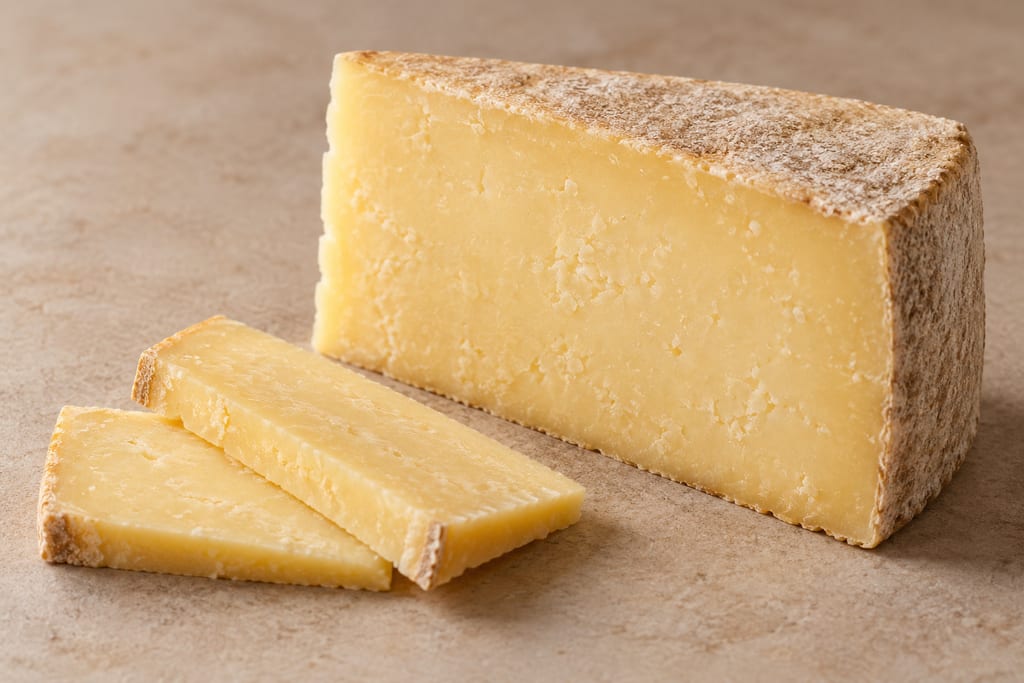
Cheddar-style cheese
A pressed cheese whose curd is cooked slowly, then cheddared: kept warm in slabs that are turned and stacked for hours before milling, salting and pressing.
 FermenteaWhere food goes to change
Equipment · Kettles, coppers and boilers
rim-supported pot · nested cheese pot · double-boiler insert · inner stainless pot
A separate inner pot holds milk or curd while a larger vessel holds hot water. In a documented cheesemaking setup, the inner pot’s handles rest on the outer vessel’s rim; this differs from a rack or trivet bearing a pot from below.
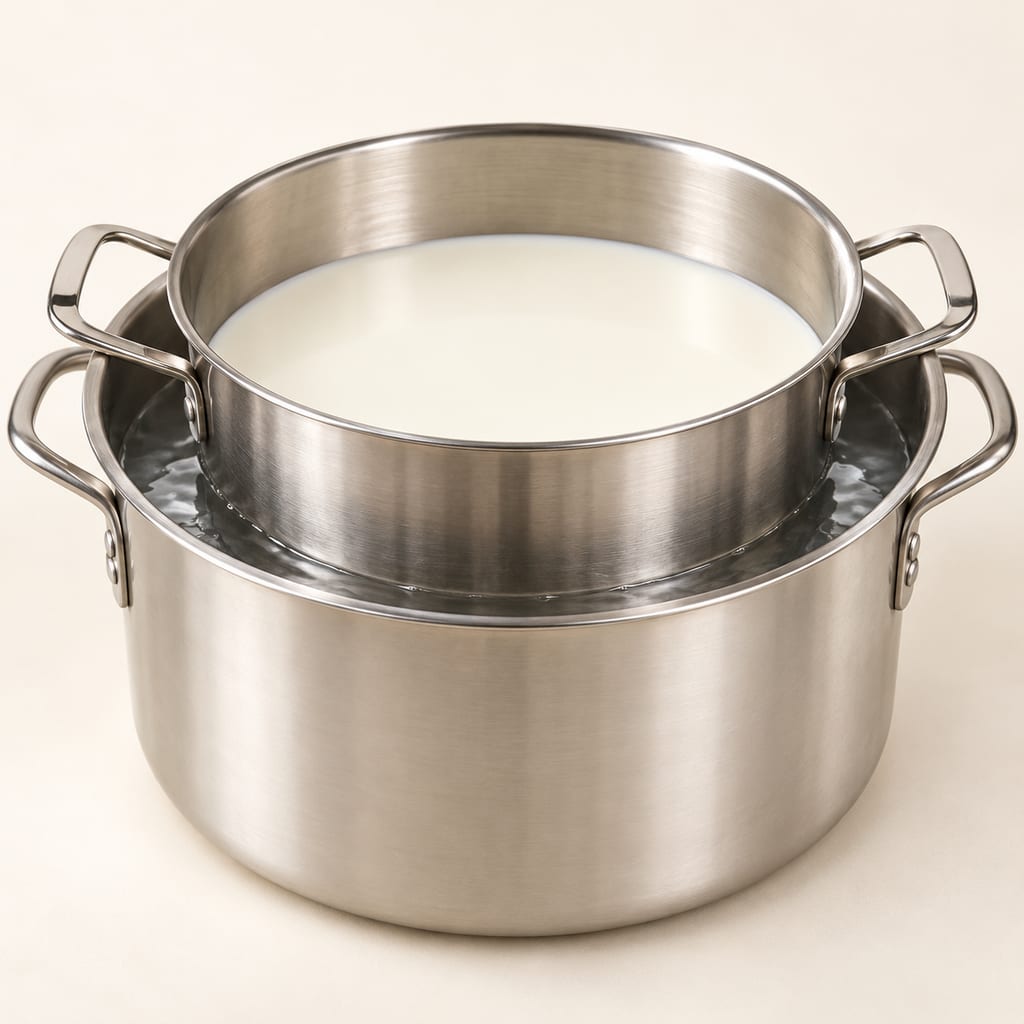
This is the pot that holds the milk, curd or whey. A larger pot or kettle holds the surrounding water, so the two vessels have different jobs: the inner pot contains the food while the outer one forms the water jacket. Here “rim-supported” describes how the inner vessel stays in place: its handles or rim rest on the edge of the larger vessel.
That arrangement is distinct from the separate rack, bridge or trivet record. A rack or trivet sits below a pot and carries its base; a rim-supported pot is itself the food-holding vessel, and its handles carry it at the outer rim. Tony Hamblyn’s account documents this second arrangement. It does not document a rack beneath his cheese pot.
Tony Hamblyn described adapting his home brewery in New Zealand for cheesemaking. His brewery used 70-litre pots; he removed the false bottom from the mash tun and lowered a 50-litre pot inside, resting its handles on the larger vessel’s rim. He called the result a double boiler. The account documents one workable arrangement, not a standard product specification or a recommendation for every brewer.
In that setup, water was heated separately, fed by gravity into the space around the cheese pot and returned by a pump. A ball valve regulated the return flow, and temperature controllers governed the water system. The inner pot kept the milk in a separate, open vessel: Hamblyn added culture and rennet there and used the setup for milk heating and holding. His description provides no load rating for the inner-pot handles or outer rim.
A later update describes the same broad system as a versatile home brewery and cheesemaking arrangement. The vessels were still separate: one held hot water, others served cheesemaking, and another was used for brewing. This distinction matters when reading the photographs: the pot containing milk is not the kettle that heats or circulates its surrounding water.
Heat moves from the bath water through the wall of the inner pot to the milk. The contents therefore remain separate from the brewer’s heating element and water circuit. Hamblyn’s arrangement circulated bath water around the inner vessel rather than pumping milk through the brewery’s hoses. The double-boiler photograph shows the same nested-pan principle in ordinary stovetop cookware, although it does not show a water line or a cheesemaking batch.
The bath and milk do not change temperature at the same pace. In the interview, Hamblyn reported that heating a typical 25–30 litres of milk to 72 °C took more than an hour in his setup. That figure describes his system and batch, not a target or expected heating time for another pot. The inner pot is not a temperature controller: a probe in the water reports the bath, while a separate reading in the food is needed to know the milk’s temperature.
The sources show stainless-steel cookware as a suitable form, but they do not identify the alloy or grade of Hamblyn’s 50-litre pot in writing. Penn State Extension recommends food-grade stainless steel or sturdy plastic for cheesemaking utensils and says equipment kept for cheese should, if possible, be dedicated to that use. This page concerns a stainless-steel inner-pot form; it does not imply that every ordinary pot is food-contact suitable.
The 50-litre figure belongs to Hamblyn’s single example. No general capacity or dimensions apply to the wider class, and the sources do not state the load rating of the handles, rim or outer pot. A full inner pot may be heavy; do not treat the described hobby setup as a manufacturer rating. The false bottom is a different brewer component: KegLand’s manual says the BrewZilla false bottom is not designed to support a grain bill, so it must not be assumed to support a second pot.
A separate inner pot can serve as the food vessel in a water-bath adaptation for cheeses that require heating milk or curd. Halloumi and feta recipes on Fermenta describe cheese-making processes that may be paired with an appropriately sized water-bath vessel; their own recipe steps remain the operative instructions and do not prescribe Hamblyn’s nested-brewery setup. The equipment link records an adaptation, not a required traditional vessel or a claim that every recipe was made in this exact pot.
Tony Hamblyn's account describes adapting his home brewery for cheesemaking; it documents a contemporary setup but does not date the origin of the double-boiler vessel form.
Use a food-grade food-contact vessel; Penn State recommends food-grade stainless steel or sturdy plastic utensils and dedicated cheesemaking equipment when possible.
Control sourceHamblyn's account gives no safe load rating for a full inner pot suspended by its handles from the outer rim.
Source →KegLand says the BrewZilla perforated false bottom is not designed to support the weight of a grain bill; it is not evidence of support for an inner pot.
Source →Tony Hamblyn's account documents his home-brewery cheesemaking setup in New Zealand; it does not establish the equipment's place of origin.
A pressed cheese whose curd is cooked slowly, then cheddared: kept warm in slabs that are turned and stacked for hours before milling, salting and pressing.
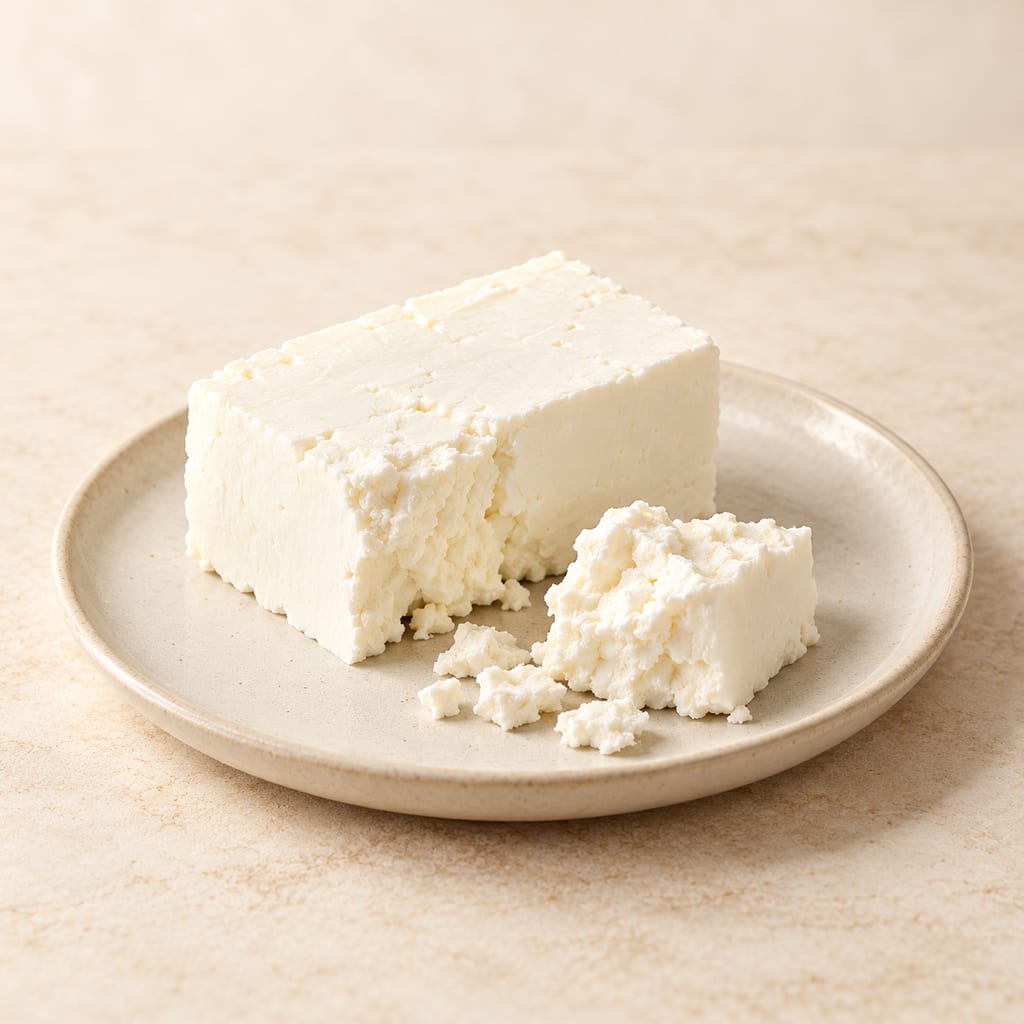
White cheese made with a lactic starter and rennet, drained without pressing, dry-salted and covered in brine. This home adaptation allows whole milk from different dairy animals.
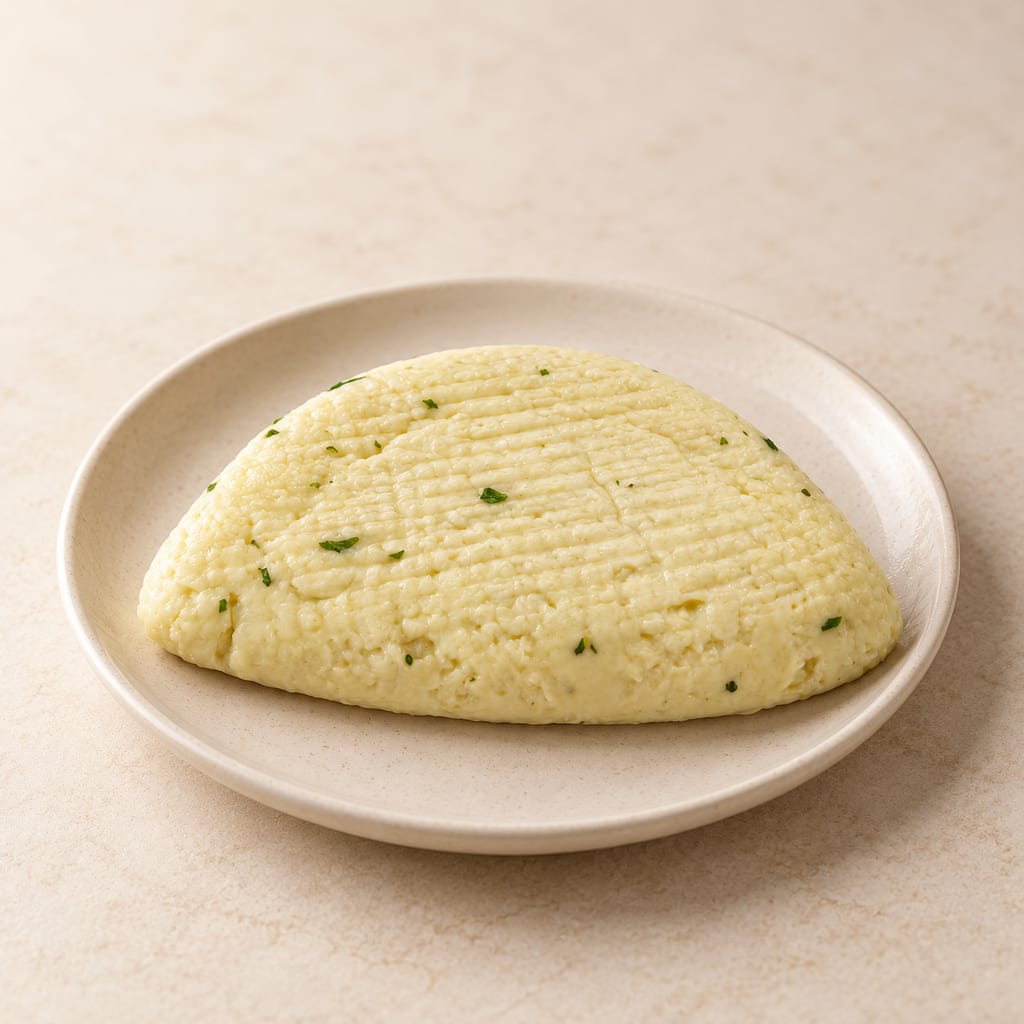
A firm cow-milk cheese cooked in hot whey, salted and folded with optional mint. This fresh halloumi keeps its shape when grilled or pan-fried.
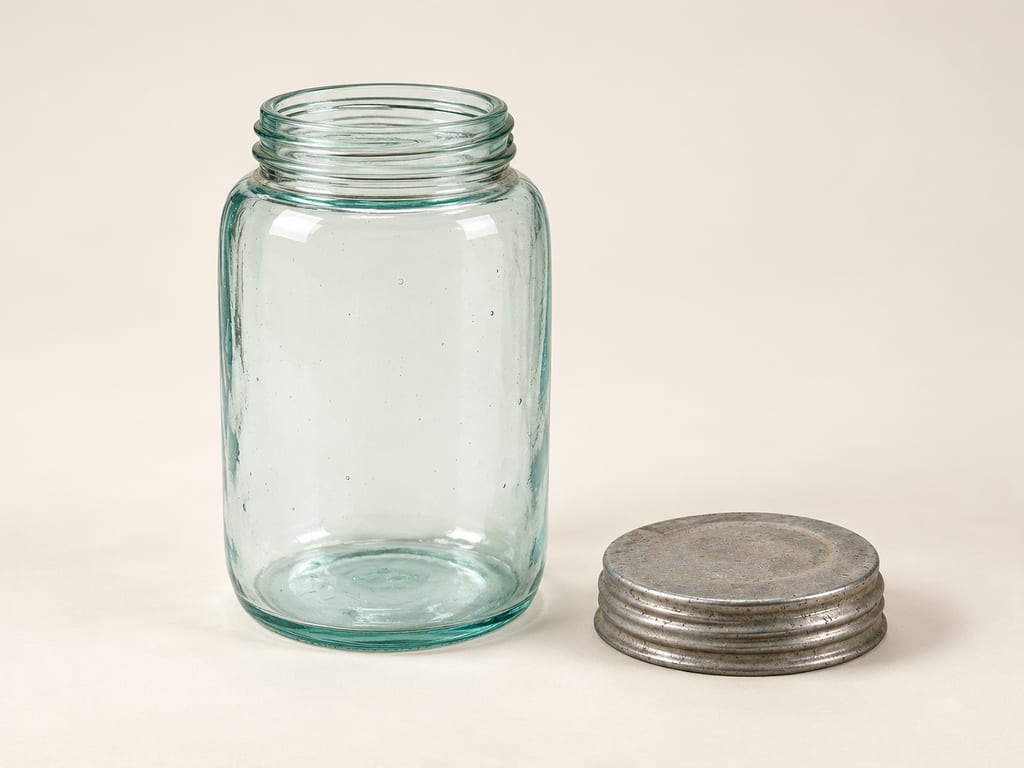
Threaded, heat-processing jars hold food and a fitted lid during a tested canning process; jar size and process belong to the specific recipe.
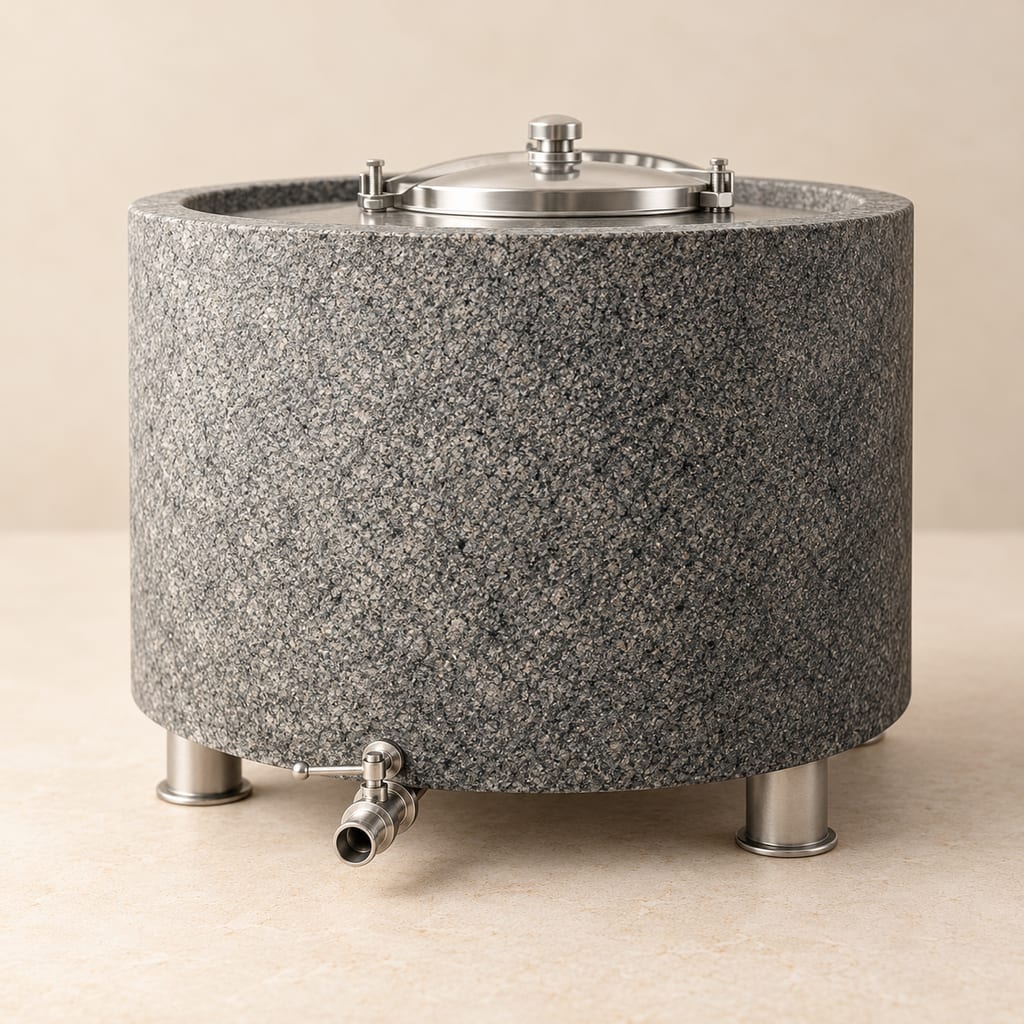
A wine fermentation and maturation tank carved from a single granite block, with a thick mineral shell and fitted metal closures and taps.
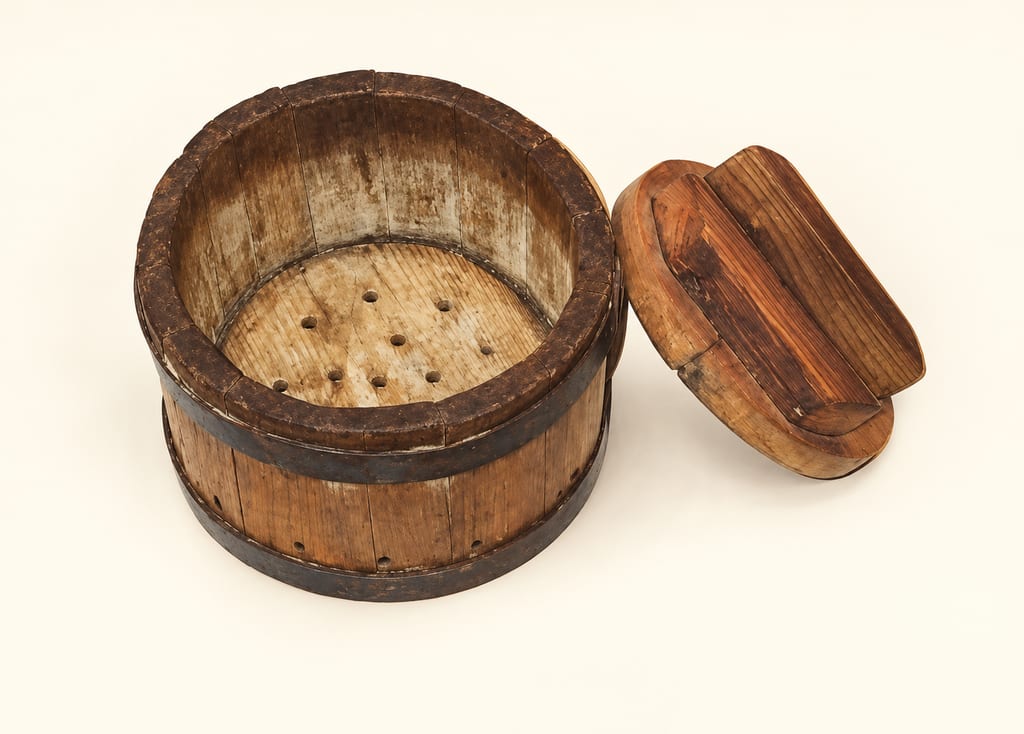
A cheese press applies weight or mechanical force to curds in a draining vat or mould. Tiree’s wooden fiodhan, stone weights, screw presses and a documented New Zealand lever press show distinct forms, not one standard design.
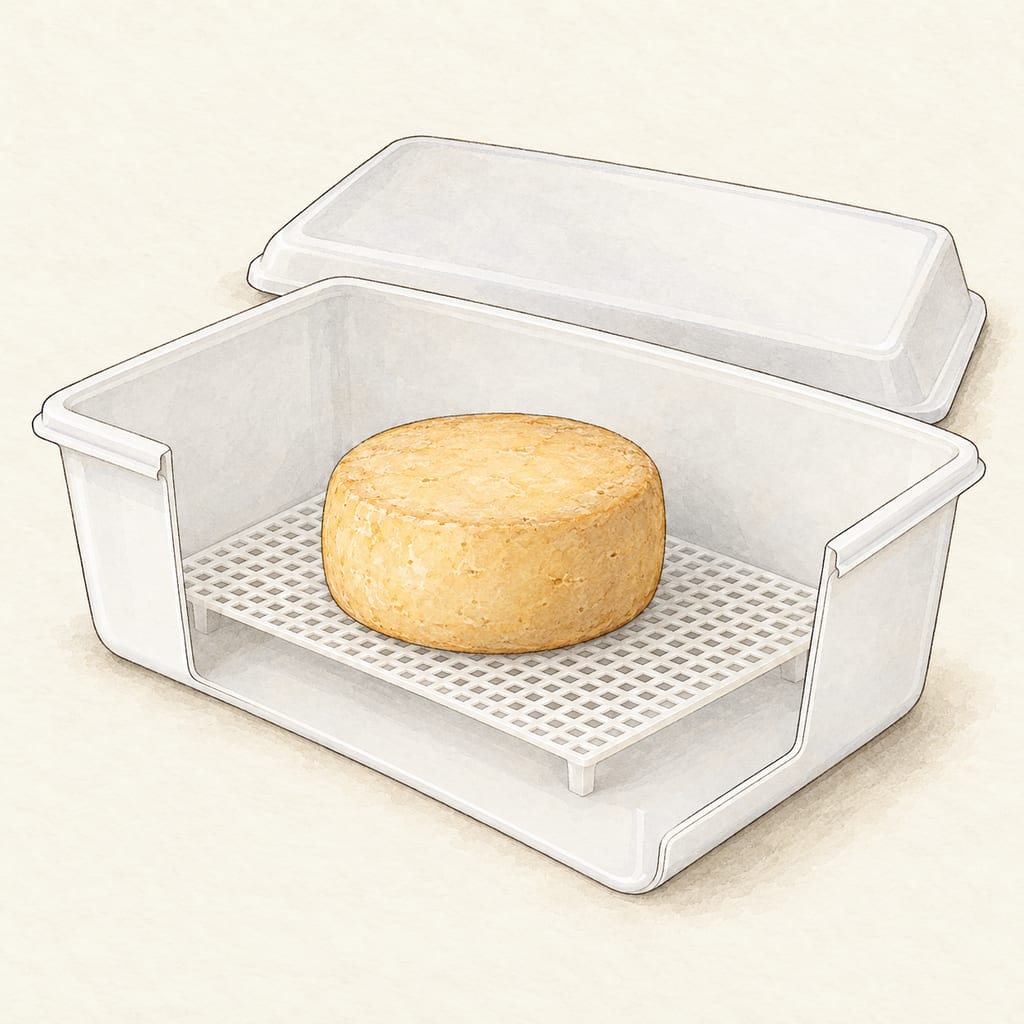
A lidded box used inside a cheese cave or cool cellar to create a small humid ripening space. A raised mat keeps cheese off the base so its underside can breathe and drain.
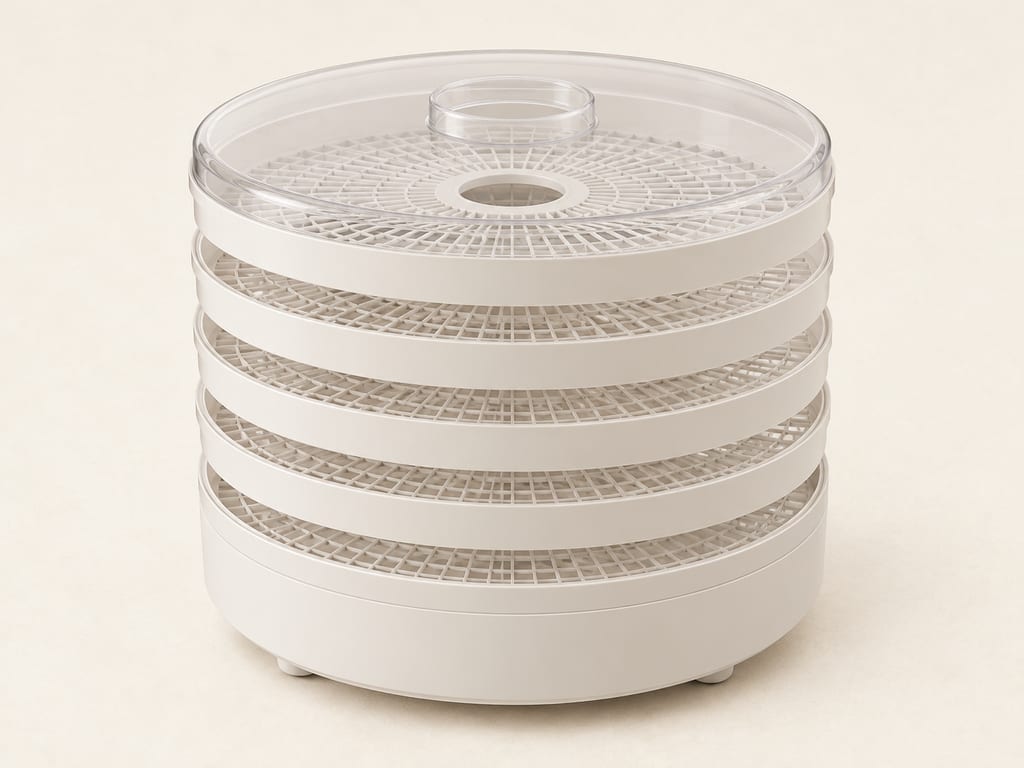
A countertop electric appliance circulates warmed air across food on open trays to remove moisture. Round stackable and rectangular cabinet designs use different airflow paths; materials, capacity and controls vary by model.
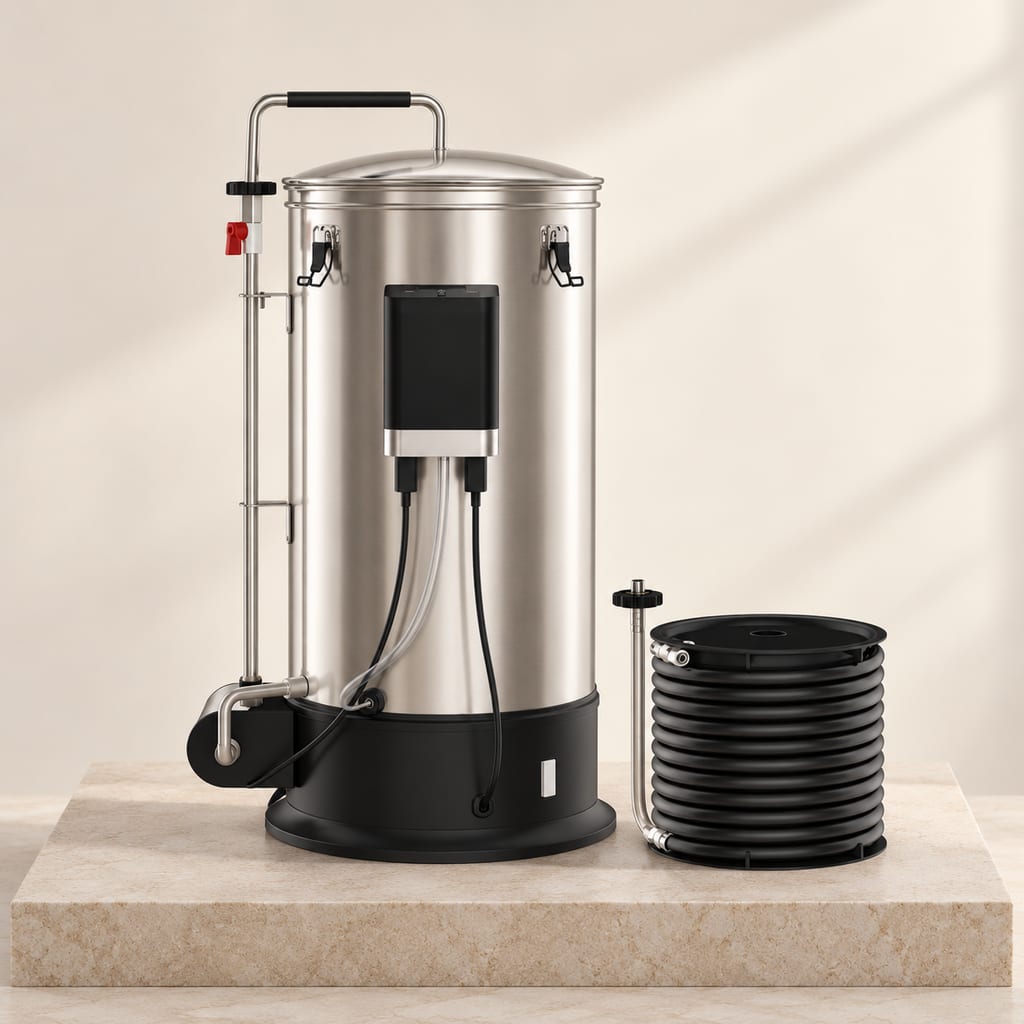
A 30-litre stainless electric all-grain brewing system with a removable grain basket, controlled heat, pump-driven wort recirculation and counterflow chilling. Electrical ratings and controls vary by revision.
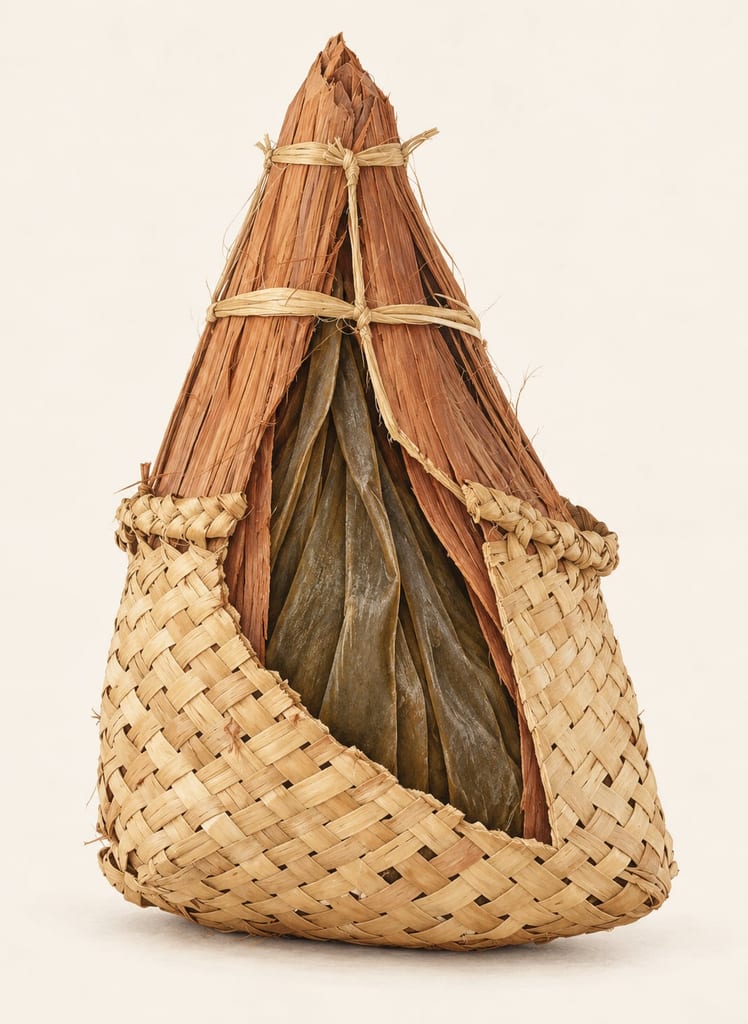
Pōhā are traditional southern Māori storage bags made from bull kelp. Ngāi Tahu accounts describe tītī stored in the kelp bag, with bark and a woven kete protecting some documented examples during transport.
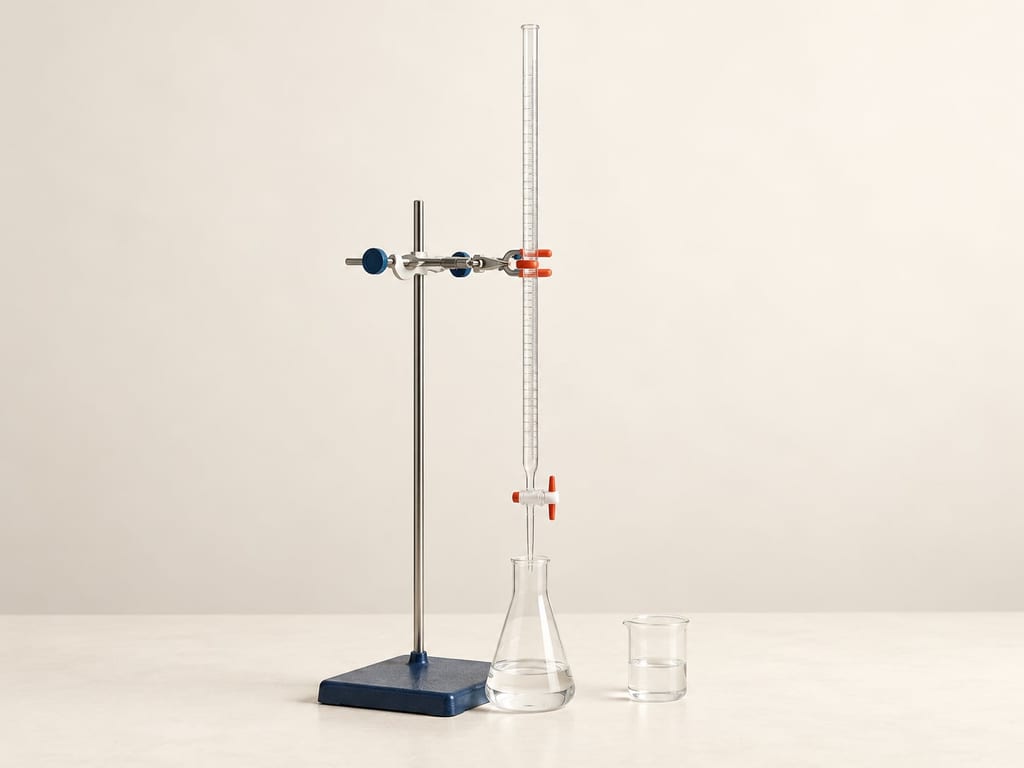
Titration equipment measures how much reagent reacts with a sample to reach a defined endpoint. Glassware, indicators and electronic endpoint detection vary; titratable acidity and pH are related but distinct measurements.

Soft, spreadable Calabrian pork sausage made with a great deal of red chilli and fatty pork, stuffed into natural casings, sometimes smoked and matured while staying soft.

A way to add independent temperature logging to an existing food dehydrator without changing its built-in controls or protections. It is a monitoring method, not a rewiring plan.

Pleurotus cystidiosus is the abalone mushroom, a cultivated oyster-type fungus with dark brown caps that grows more slowly and is more demanding than other Pleurotus species.

A dark, balanced vinegar from Emilia-Romagna made by combining cooked or concentrated grape must with wine vinegar, then acetifying and refining it in wood under a protected specification.

A living dairy inoculum that starts controlled cream fermentation, developing acidity and aroma before sour cream or cultured butter is finished.

A small electric incubator holds jars at a selected temperature for yogurt and other documented warm food preparations. Controls, capacity and vessel arrangement vary by model.

Adygean salt is a seasoned table salt associated with Adygea and the wider North Caucasian culinary tradition. Salt is blended with garlic and a variable selection of herbs and spices; the exact mix depends on the named style and maker.

The African Caesar-group mushroom, Amanita masasiensis, is a wild ectomycorrhizal species of central and southern African woodlands, eaten locally. The genus contains deadly poisonous species, so identification needs care.
No community contributions have been published for this entry yet.
Sign in to contribute. Published comments and photos are free to read.
New England Cheesemaking Supply CompanyDocumented rim supported pot · Water jacket setup · Geography · Heating performance
Tony Hamblyn Cheesemaker in New ZealandHamblyn placed a 50-litre pot inside a 70-litre mash tun with its handles resting on the rim, after removing the false bottom.
He heated water separately, fed it by gravity into the jacket and pumped it back; a ball valve regulated the return flow.
He reported 25–30 litres of milk as a typical batch and more than an hour to heat milk to 72 °C in his setup.
Cited in: The food vessel, not its support; A cheesemaker’s nested-pot setup; How the water jacket heats the contents; Material, fit and limits; Cheesemaking applications
New England Cheesemaking Supply CompanyLater account of the cheesemaking setup
Tony Hamblyn in New Zealand UpdateThe update describes separate hot-water, cheesemaking and brewing vessels in Hamblyn's home brewery.
It reports a 50-litre cheese pot used with 70-litre brewery pots.
Cited in: A cheesemaker’s nested-pot setup; How the water jacket heats the contents
KegLand Distribution Pty Ltd; copy hosted by The Malt MillerFalse bottom limit · Equipment distinction
BrewZilla 35L - Gen 4 Instruction Manual (Last Updated 30/08/2022)The manual says the BrewZilla false bottom is not designed to hold the weight of a grain bill.
Cited in: Material, fit and limits
Penn State Extension (copy hosted by UC ANR)Food contact materials · Cheesemaking equipment care
Home Cheesemaking (Penn State Extension ART-4803, Kerry E. Kaylegian, 2019)The guide recommends food-grade stainless steel or sturdy plastic utensils and says pots and utensils should, if possible, be kept only for cheesemaking.
Cited in: Material, fit and limits
New England Cheesemaking Supply CompanyCheese milk heating context
Cheddar Cheese Making RecipeThe source gives a home Cheddar method that heats milk and curd; it does not specify Hamblyn's inner-pot setup.
New England Cheesemaking Supply CompanyHalloumi recipe context
Halloumi Cheese Making Recipe InstructionsThe recipe heats milk and curd in a pot; the nested water-bath setup is not specified.
Cited in: Cheesemaking applications
New England Cheesemaking Supply CompanyWhey heating recipe context
Ricotta Cheese Making RecipeThe recipe heats whey; it does not specify a rim-supported inner pot.
Wikimedia CommonsSubject reference image · Stainless double boiler form
File:Double Boiler (4328917977).jpgThe photograph shows a stainless upper pan resting at the rim of a lower saucepan over a gas burner; it does not show water in the lower vessel.
Cited in: The food vessel, not its support; How the water jacket heats the contents
Bacillus BulgaricusFeta style recipe adaptation context
Greek Feta Cheese Making InstructionsThe published Fermenta feta-style recipe uses this source; it documents cheesemaking context, not Tony Hamblyn's specific nested-pot setup.
Cited in: Cheesemaking applications