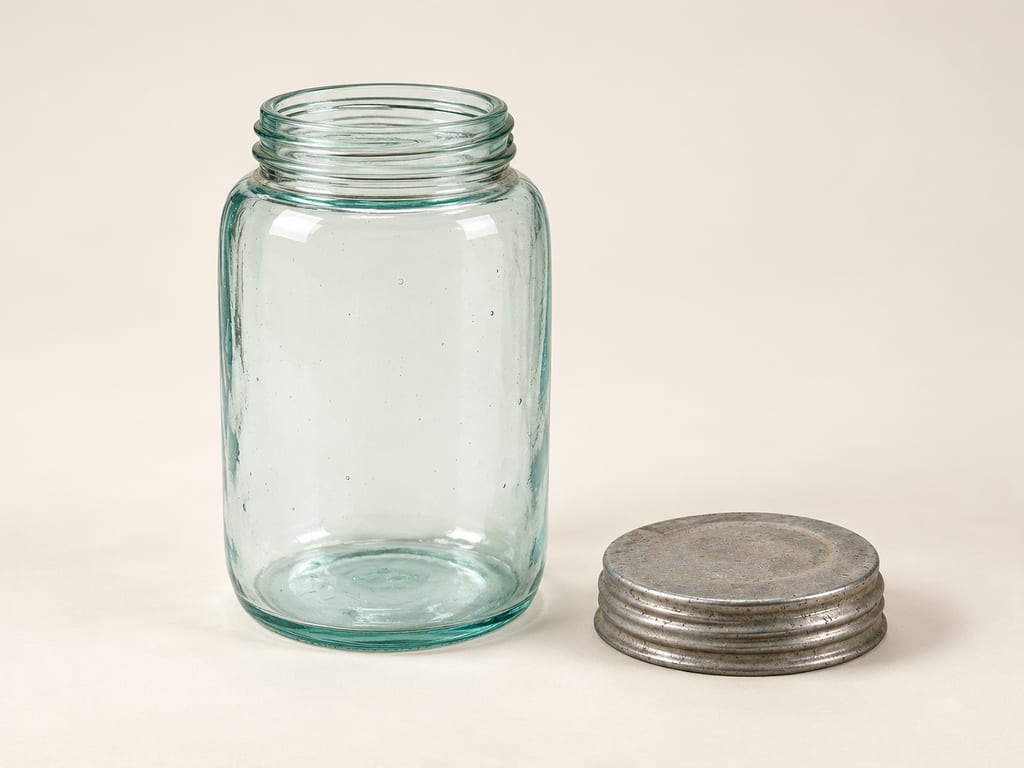
Canning jars
Threaded, heat-processing jars hold food and a fitted lid during a tested canning process; jar size and process belong to the specific recipe.
 FermenteaWhere food goes to change
Equipment · Bags, sacks and casings
Pōhā
Pōhā are traditional southern Māori storage bags made from bull kelp. Ngāi Tahu accounts describe tītī stored in the kelp bag, with bark and a woven kete protecting some documented examples during transport.
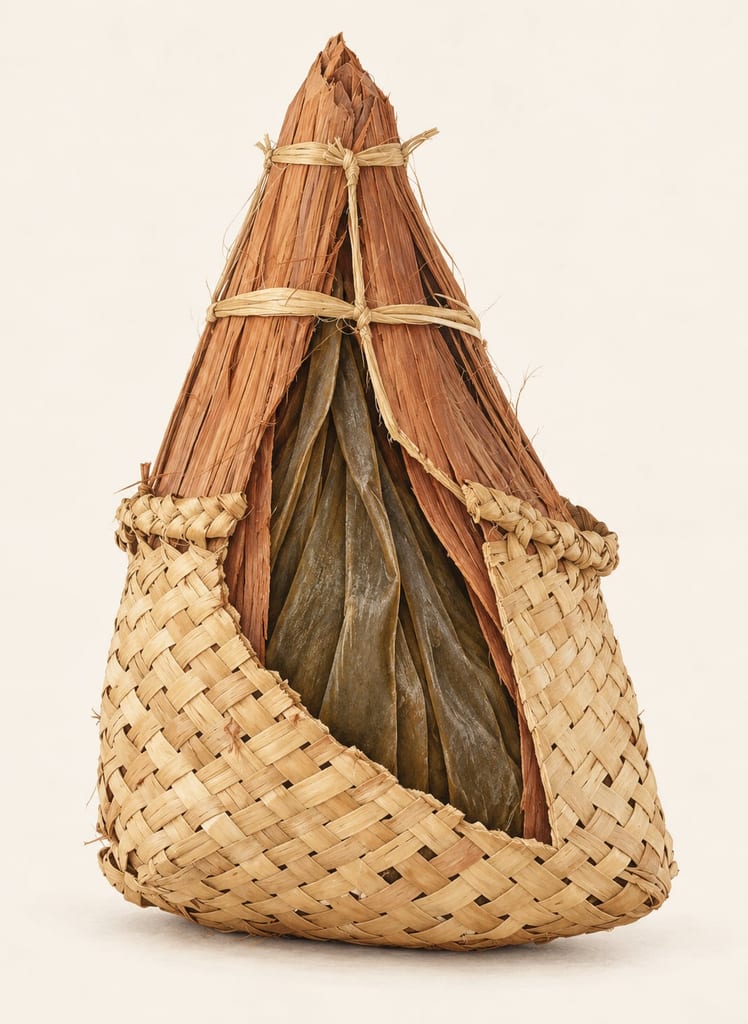
Pōhā are flexible storage bags made from the broad blade of bull kelp, called rimurapa. South Island Māori, including Ngāi Tahu communities, used them for tītī (muttonbirds) and other preserved foods. The kelp is a plant material, not an animal skin or an intestinal casing. The bag’s role is to contain stored food and travel with it; the name pōhā should not be reduced to a generic leather pouch or treated as a uniform design used across every Māori community.
A 1910 photograph and accompanying Ngāi Tahu oral account show the bag as part of a layered transport package: a softened kelp vessel is tied, placed in a flax basket, and protected with tōtara bark. Te Papa’s 1997 pōhā tītī ME015916 is one surviving example with kelp, bark and muka fibre, catalogued as a kelp bag covered in bark strips and placed inside a woven kete. This composite is useful evidence for the equipment’s real materials, but it is not a template proving that every pōhā had the same outer layers.
Bull-kelp blades can be opened, hollowed and inflated, then dried, rolled up and carried for seasonal use. In the described tītī process, birds are stored in the pōhā under their own fat and the top is tied to exclude air. The Te Ara transcript preserves an elder’s recollection that birds in kelp bags were still good after at least three years; this is a personal account, not a general storage guarantee. Te Papa gives bird counts for common and larger bags, but does not make them a single capacity standard.
The inspected accounts place pōhā use among South Island Māori and Ngāi Tahu, with tītī gathering and storage connected to Rakiura (Stewart Island) and nearby islands. A dated 1910 photograph and a 1997 museum object show two points in a longer tradition, but neither supplies an origin date. The sources do not establish a standard size, capacity, seam, closure, maker or care routine for all pōhā; museum measurements belong only to their named object.
A Te Ara caption dates a photograph of men preparing pōhā to 1910, and a 1997 Te Papa object documents a later composite example. These are dated attestations, not a first-use date.
The Te Papa dimensions and object materials describe one 1997 composite pōhā tītī, not a standard pattern or measurement for every bag.
Source →The 1910 photograph and testimony are dated attestations, not a first-use date; the oral account's storage-duration memory is not a universal shelf-life guarantee.
Source →These sources associate pōhā with South Island Māori and Ngāi Tahu food storage; this does not establish a universal pan-Māori practice.
Te Papa links tītī collection and storage customs with Rakiura communities and nearby islands; it does not claim this is the only pōhā use area.
Threaded, heat-processing jars hold food and a fitted lid during a tested canning process; jar size and process belong to the specific recipe.
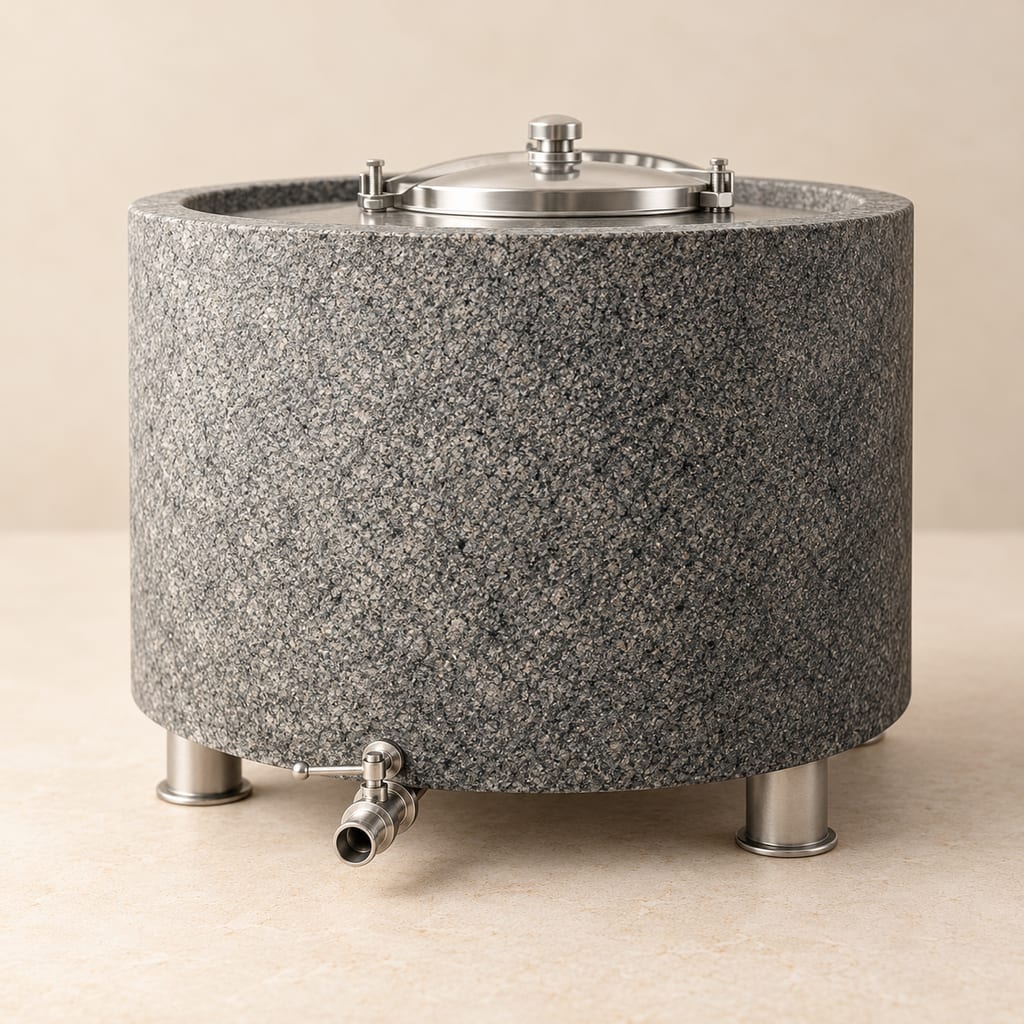
A wine fermentation and maturation tank carved from a single granite block, with a thick mineral shell and fitted metal closures and taps.
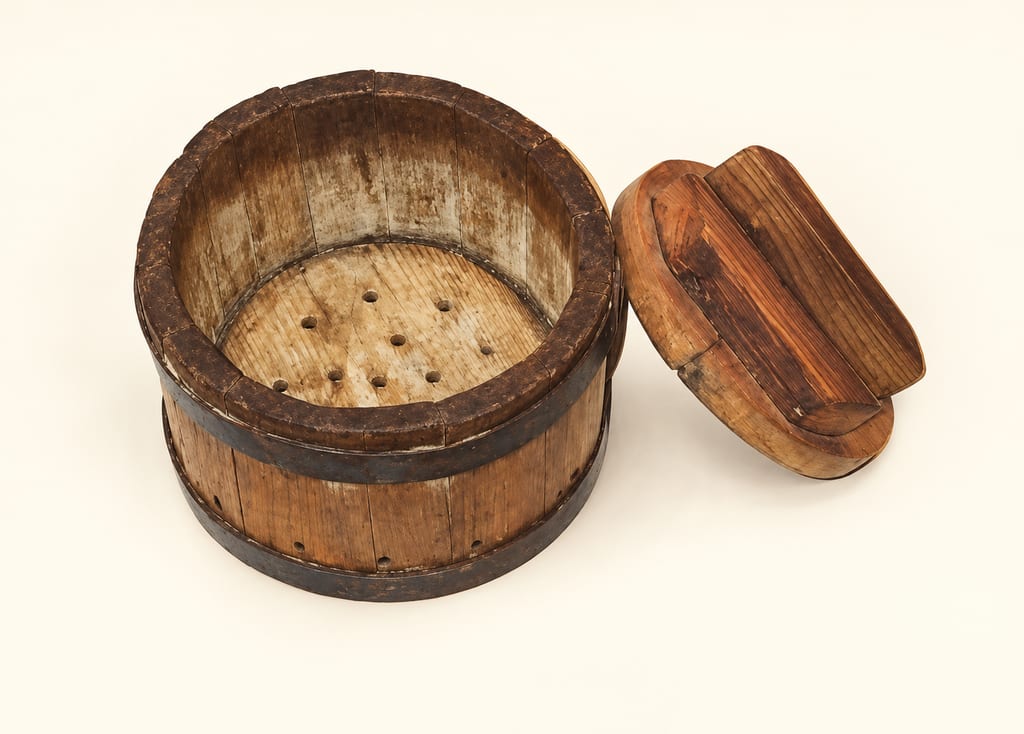
A cheese press applies weight or mechanical force to curds in a draining vat or mould. Tiree’s wooden fiodhan, stone weights, screw presses and a documented New Zealand lever press show distinct forms, not one standard design.
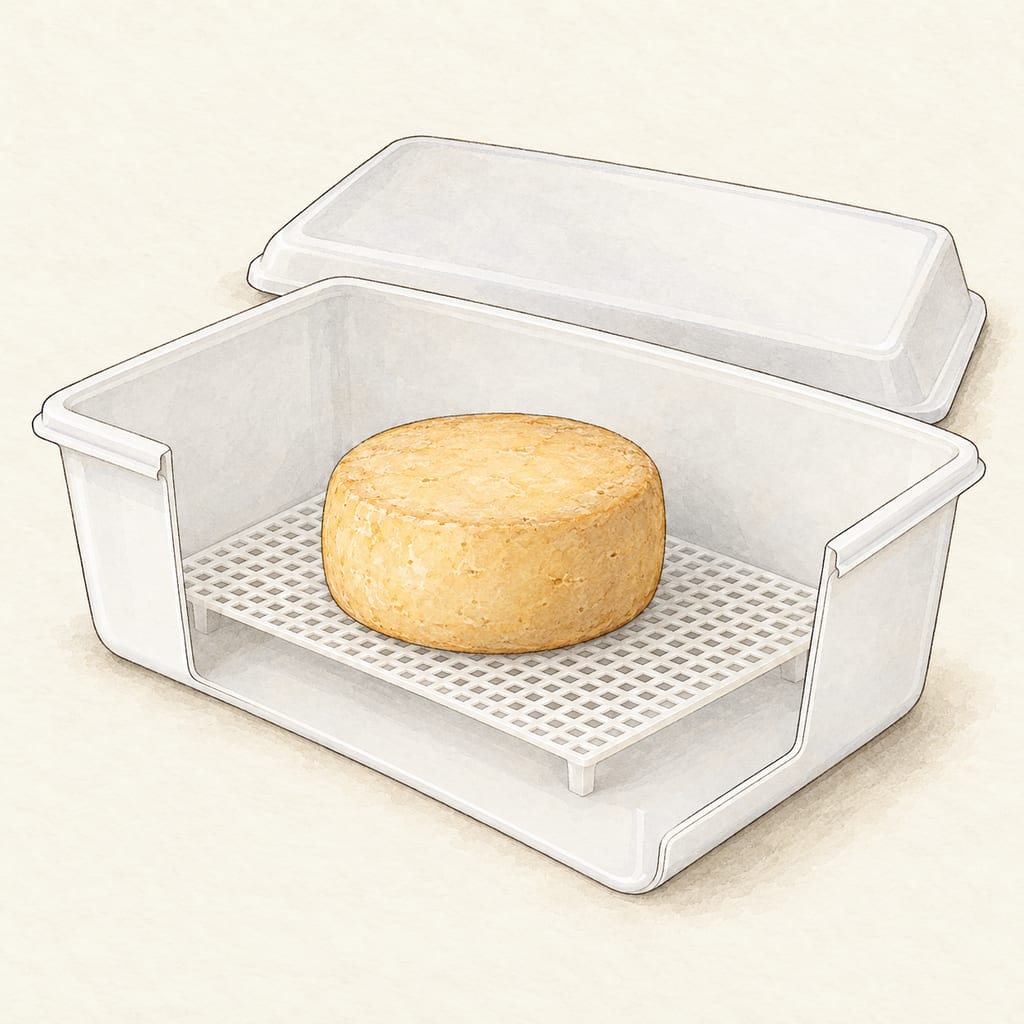
A lidded box used inside a cheese cave or cool cellar to create a small humid ripening space. A raised mat keeps cheese off the base so its underside can breathe and drain.
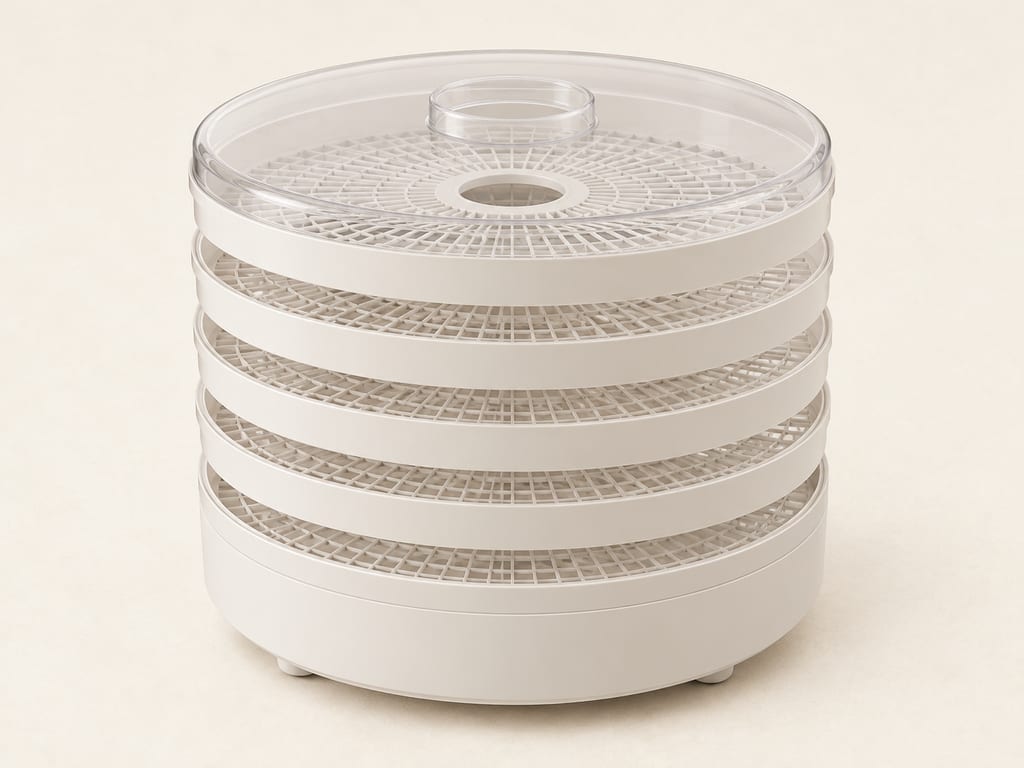
A countertop electric appliance circulates warmed air across food on open trays to remove moisture. Round stackable and rectangular cabinet designs use different airflow paths; materials, capacity and controls vary by model.
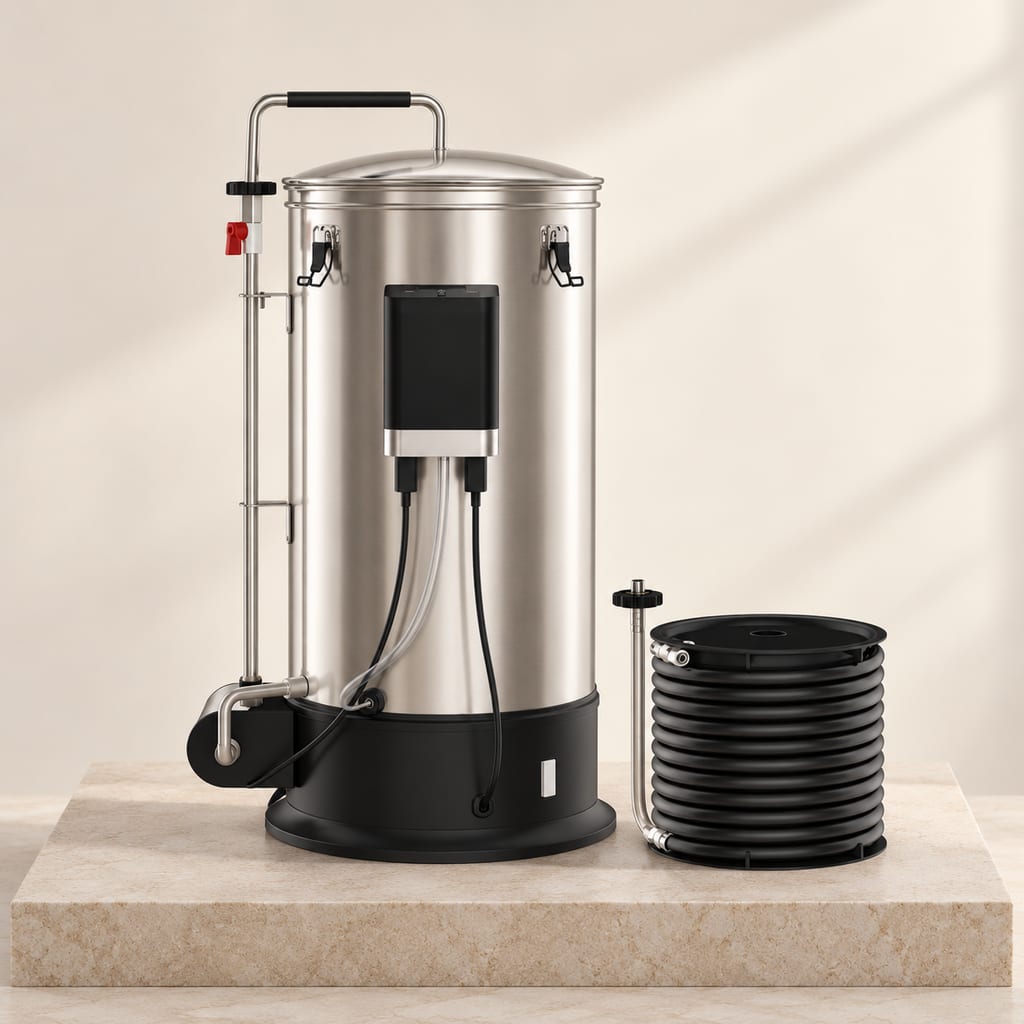
A 30-litre stainless electric all-grain brewing system with a removable grain basket, controlled heat, pump-driven wort recirculation and counterflow chilling. Electrical ratings and controls vary by revision.
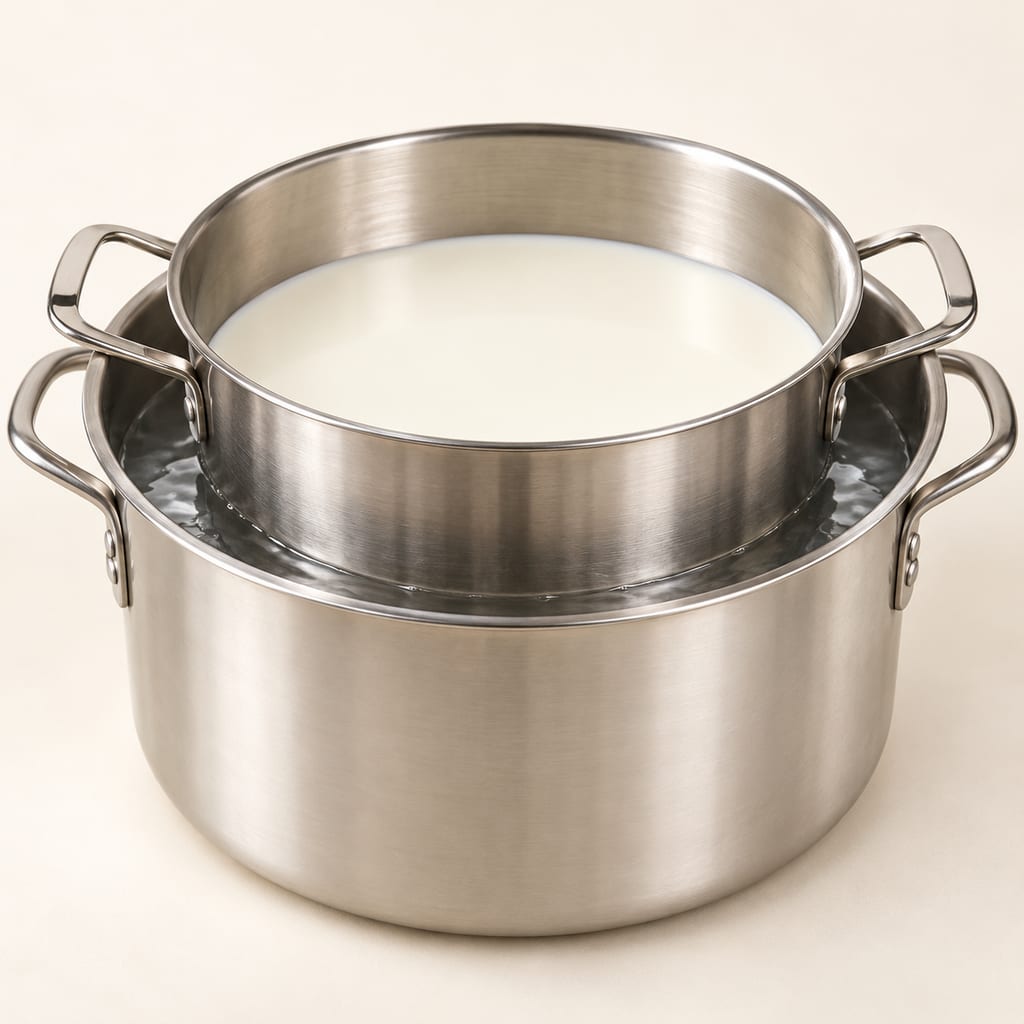
A separate inner pot holds milk or curd while a larger vessel holds hot water. In a documented cheesemaking setup, the inner pot’s handles rest on the outer vessel’s rim; this differs from a rack or trivet bearing a pot from below.
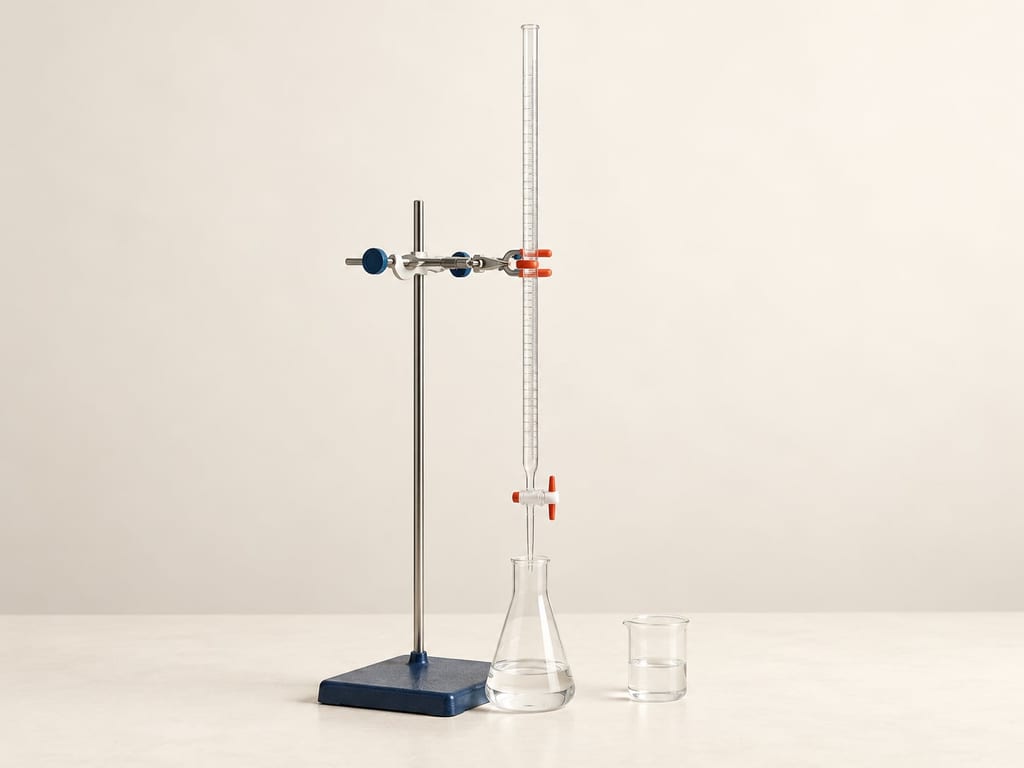
Titration equipment measures how much reagent reacts with a sample to reach a defined endpoint. Glassware, indicators and electronic endpoint detection vary; titratable acidity and pH are related but distinct measurements.

Soft, spreadable Calabrian pork sausage made with a great deal of red chilli and fatty pork, stuffed into natural casings, sometimes smoked and matured while staying soft.

A way to add independent temperature logging to an existing food dehydrator without changing its built-in controls or protections. It is a monitoring method, not a rewiring plan.

Pleurotus cystidiosus is the abalone mushroom, a cultivated oyster-type fungus with dark brown caps that grows more slowly and is more demanding than other Pleurotus species.

A dark, balanced vinegar from Emilia-Romagna made by combining cooked or concentrated grape must with wine vinegar, then acetifying and refining it in wood under a protected specification.

A living dairy inoculum that starts controlled cream fermentation, developing acidity and aroma before sour cream or cultured butter is finished.

A small electric incubator holds jars at a selected temperature for yogurt and other documented warm food preparations. Controls, capacity and vessel arrangement vary by model.

Adygean salt is a seasoned table salt associated with Adygea and the wider North Caucasian culinary tradition. Salt is blended with garlic and a variable selection of herbs and spices; the exact mix depends on the named style and maker.

The African Caesar-group mushroom, Amanita masasiensis, is a wild ectomycorrhizal species of central and southern African woodlands, eaten locally. The genus contains deadly poisonous species, so identification needs care.
No community contributions have been published for this entry yet.
Sign in to contribute. Published comments and photos are free to read.
Museum of New Zealand Te Papa TongarewaForm · Material · Method · Use · Geography
Traditional Māori food gatheringPōhā are bull-kelp bags used by South Island Māori for storing and transporting preserved food, including tītī.
The page describes bull-kelp blades being opened, hollowed and inflated, then dried, deflated and rolled before use.
It describes tītī stored in pōhā under their own fat, with tōtara bark and woven kete used as outer protection in the described process.
It reports typical and larger bird counts rather than a standard volume capacity.
Cited in: A storage bag made from bull kelp; A flexible vessel for food storage and transport; Geography and evidence limits
Te Ara – The Encyclopedia of New ZealandMethod · Geography · History
Preparing muttonbird containersThe page caption dates a pōhā-preparation photograph to 1910 and identifies the containers as bull-kelp bags for tītī.
The oral account describes a softened kelp bag being tied, placed in a flax basket and surrounded by tōtara bark.
The speaker recalls preserved muttonbirds in kelp bags lasting at least three years; this is personal testimony, not a general shelf-life guarantee.
The page identifies the historical image as Hocken Collections, University of Otago S07-053c – E2918/10 and warns that reproduction may require clearance.
Cited in: Kelp bag with bark and kete protection; A flexible vessel for food storage and transport; Geography and evidence limits
Museum of New Zealand Te Papa TongarewaForm · Material · History · Geography
Pōhā tītī (kelp bag), ME015916The particular object was made by Harold Ashwell in Bluff in 1997 and is catalogued with kelp, bark and muka fibre.
The museum describes it as a kelp bag covered in tōtara-bark strips and placed inside a woven kete.
Its listed dimensions are 300 × 480 × 220 mm; these belong to that object, not a standard size.
The museum connects tītī collecting and storage with Rakiura (Stewart Island) communities and nearby islands.
The object photograph has an All Rights Reserved rights statement.
Cited in: Kelp bag with bark and kete protection; Geography and evidence limits